Understanding the Wage Garnishment Process
Learn how wage garnishment works in the United States, when creditors can take money from your paycheck, which federal protections may apply, and how state laws can affect your rights.

What you’ll need
Tap to tick things off before you start.
What Wage Garnishment Means
Wage garnishment is a legal collection method that directs an employer to withhold part of an employee's earnings and send the money to a creditor or another authorized recipient. Instead of receiving the full amount otherwise payable, the employee receives a reduced paycheck while the withheld funds are applied toward an obligation. The impact depends on the amount withheld, the applicable rules, and the employee's regular expenses. Understanding the process helps clarify what may happen when unpaid debt escalates.

Which Debts Can Lead to Garnishment
Several types of unpaid obligations can lead to wage garnishment or other forms of legally authorized collection. Common examples include credit card balances, medical bills, personal loans, and certain other consumer debts. Child support, some tax obligations, and particular government debts can follow different enforcement procedures. The type of debt matters because it can affect whether a court judgment is required, which withholding limits apply, and what protections may be available. Never assume every debt follows the same process.

Collection Efforts Before a Lawsuit
Before pursuing litigation, creditors or collection agencies commonly contact consumers about overdue balances and possible payment arrangements. These communications may include letters, telephone calls, account statements, or settlement proposals. A collection demand does not automatically mean a lawsuit has been filed or wages can be withheld. Review the amount claimed, compare it with your records, and preserve relevant correspondence. If a debt appears unfamiliar or inaccurate, investigate it promptly rather than assuming the demand is correct or ignoring it.

How a Creditor Files a Lawsuit
If collection efforts do not resolve a qualifying consumer debt, a creditor may file a civil lawsuit seeking payment. The complaint identifies the parties, describes the claim, and states the relief requested. The court process provides an opportunity for the consumer to respond and raise applicable defenses. Filing a lawsuit does not itself establish that the claimed balance is correct. Court procedures, filing requirements, and available defenses depend on the jurisdiction and circumstances of the case.

Summons, Service, and Response Deadlines
A summons and complaint generally notify a consumer that a lawsuit has been filed and explain how a response must be made. Formal service requirements and response deadlines vary by jurisdiction, so the dates and instructions on the documents deserve immediate attention. Keep the complete paperwork, note the deadline, and confirm which court is handling the matter. If anything is unclear, contact a qualified attorney or legal aid organization promptly. Missing a deadline can seriously affect the opportunity to contest a claim.

What Happens If You Do Not Respond
When a defendant fails to respond to a lawsuit within the required period, the creditor may seek a default judgment if the applicable legal requirements are satisfied. A default judgment can establish liability without the court hearing the defendant's full response to the claim. It does not mean every creditor automatically wins, because procedural requirements still apply. If you discover a lawsuit or judgment you missed, promptly review the court record and seek qualified legal assistance to understand whether any remedies remain available.

Understanding a Court Judgment
A court judgment is a formal determination resolving a claim and may establish that a consumer owes a specified amount. Depending on the case, it can provide the legal basis for further collection efforts. However, a judgment and a wage garnishment order are not necessarily the same document or procedural step. Consumers should check the court record, the amount awarded, and any instructions accompanying the judgment. Understanding what the court actually decided helps distinguish an established obligation from a collection demand or unresolved allegation.

From Judgment to Garnishment Order
After obtaining a judgment for a covered consumer debt, a creditor generally must follow the applicable procedures to obtain and serve the documents authorizing wage withholding. Depending on the jurisdiction, this may involve a garnishment writ, order, or other required process. The relevant documents identify the parties and establish the legal basis for the employer's obligations. Review any notice carefully to understand its scope, deadlines, and available procedures for contesting an error or claiming an exemption. Requirements differ by state and debt type.

What Employers Must Do
When an employer receives a valid garnishment order, payroll staff generally must follow its instructions and the governing law. This may require calculating the permitted withholding, deducting the applicable amount from wages, and sending the funds to the designated recipient. Employers must also observe relevant limits and procedures rather than withholding an arbitrary portion of a paycheck. If a deduction appears incorrect, employees can request information through appropriate channels and review the order. The employer's exact duties depend on the applicable rules and documents.

Wage Assignment Versus Garnishment
Wage assignment and wage garnishment are distinct concepts. A wage assignment involves an arrangement intended to direct wages toward a creditor, while garnishment generally involves legally authorized withholding under applicable collection procedures. The Federal Trade Commission's Credit Practices Rule prohibits certain contractual provisions involving irrevocable advance assignments of wages in covered consumer credit transactions. That restriction does not eliminate otherwise lawful court-authorized garnishment. Consumers should examine the actual agreement or order rather than treating every wage-related clause as equivalent, and should check the relevant federal and state requirements.

The FTC Credit Practices Rule
The Federal Trade Commission's Credit Practices Rule addresses certain unfair provisions in consumer credit contracts. Among its protections, the rule prohibits covered creditors from including provisions for the irrevocable assignment of wages in advance. This matters because borrowers may have limited bargaining power when signing loan agreements. Understanding the rule helps consumers distinguish prohibited contractual arrangements from other collection methods. The FTC's guidance explains the scope of these restrictions and the consumer credit practices they address.

How Advance Wage Assignment Clauses Work
An advance wage assignment clause attempts to arrange for wages to be directed toward a creditor before a borrower defaults. Historically, such provisions could give creditors a contractual claim on future earnings without first obtaining a judgment through the ordinary court process. The FTC's Credit Practices Rule restricts certain irrevocable advance wage assignments in covered consumer credit transactions. Consumers reviewing loan agreements should understand what these clauses attempt to do and distinguish them from legally authorized garnishment procedures.

Limits of the Credit Practices Rule
The FTC Credit Practices Rule does not eliminate every legal route for collecting unpaid debt. Its restrictions on certain advance wage assignment clauses are distinct from garnishment authorized through applicable legal procedures. For many ordinary consumer debts, a creditor may pursue a lawsuit, obtain a judgment, and seek an authorized garnishment order. The important distinction is that restricting a contractual shortcut does not automatically prevent lawful enforcement. Applicable requirements depend on the debt and jurisdiction.

Federal Wage Garnishment Limits
Federal law limits how much of an employee's disposable earnings may be garnished for many ordinary debts. These limits help preserve part of a worker's income for everyday living expenses, but they do not apply identically to every obligation. Child support, certain federal debts, and other categories may follow different rules. State laws may also provide stronger protections. Before estimating a possible withholding amount, identify the debt category and determine which federal and state requirements govern the situation.

Calculating Disposable Earnings
Disposable earnings generally means compensation remaining after deductions required by law have been made. It is not necessarily the same as gross wages or the take-home amount shown on a paycheck. Voluntary deductions, such as certain retirement contributions or insurance premiums, do not automatically reduce earnings used in the federal garnishment calculation. Understanding this distinction is important because the applicable withholding limit depends on the legally defined earnings amount. Review payroll records carefully and confirm the governing calculation before drawing conclusions.

The Federal Garnishment Formula
For many ordinary consumer debts, the federal limit is generally the lesser of 25% of disposable earnings or the amount by which weekly disposable earnings exceed 30 times the applicable federal minimum hourly wage. Both calculations matter, so the percentage alone does not establish the permitted withholding. Different rules can apply to particular debts, and state protections may be stricter. Because earnings and legal requirements vary, consumers should verify the current formula and applicable exceptions before estimating an amount.

Debts With Different Garnishment Rules
Not every garnishment follows the limits used for ordinary consumer debts. Child support and alimony obligations can be subject to separate federal withholding limits, while certain federal taxes and debts owed to government agencies may involve distinct collection procedures. These differences can affect both the amount collected and whether a standard court judgment is required. Identify the legal category of the obligation before relying on general garnishment guidance, and consult official agency information for the rules that apply.

How State Garnishment Laws Differ
Federal law establishes important baseline protections, but state law can change the practical outcome of a wage garnishment. Some states limit withholding more strictly, recognize additional income exemptions, or impose specific procedural requirements. The relevant rules may depend on where the consumer works, where the case was filed, and the type of debt involved. Consult official state court resources and applicable statutes rather than assuming a rule from another state applies to your circumstances.

Social Security Benefit Protections
Section 207 of the Social Security Act generally protects Social Security benefits from assignment, levy, or garnishment. This protection is particularly important for people who depend on retirement, survivor, or disability benefits to cover essential expenses. It can limit the ability of private creditors to collect ordinary consumer debts from these benefits. However, the protection has exceptions, and other rules may affect deposited funds. The Social Security Administration provides information about federal protections and the circumstances consumers should understand.

When Social Security Protections Apply
Social Security retirement, survivor, and disability benefits generally receive protection from private creditors collecting ordinary consumer debts, including credit card balances and medical bills. A creditor's judgment does not automatically remove that federal protection. However, exceptions may permit collection for qualifying obligations, including certain federal taxes, federal agency debts, and court-ordered support. The exact treatment depends on the obligation and circumstances. The Social Security Administration explains benefit protections, and consumers should verify any claimed exception through authoritative sources.

Exceptions to Social Security Protection
Section 207 of the Social Security Act provides important protection for Social Security benefits, but certain obligations are exceptions. Qualifying child support or alimony orders, past-due federal taxes, and some debts owed to federal agencies may permit collection from these benefits under applicable law. Federal student loan debt can also involve special collection rules. These exceptions mean that benefit recipients should identify the exact obligation and verify the applicable requirements rather than assuming every payment is exempt.

Social Security Benefits in Bank Accounts
Federal protections can also matter after Social Security benefits reach a bank account. Under federal regulations, financial institutions generally must protect qualifying amounts of directly deposited Social Security benefits when processing certain garnishment orders. The amount protected can depend on the applicable lookback period, deposit records, and account circumstances. This protection does not mean every dollar in an account is automatically exempt. Review bank notices carefully and consult official government guidance or qualified legal assistance if funds are frozen or withheld.

The Fair Debt Collection Practices Act
The Fair Debt Collection Practices Act, commonly called the FDCPA, establishes federal protections against abusive, unfair, and deceptive practices by covered debt collectors. It addresses conduct such as misleading representations, improper threats, and certain prohibited collection communications. These protections help consumers evaluate whether collection efforts comply with federal requirements. The law does not eliminate legitimate collection activity or apply identically to every creditor. Understanding its scope helps distinguish lawful collection efforts from conduct that may warrant further investigation.

Original Creditors Versus Third-Party Collectors
The FDCPA generally covers third-party debt collectors, including collection agencies and attorneys who regularly collect debts for others. Original creditors collecting their own debts are generally outside the statute's standard coverage, although other federal or state laws may restrict their conduct. Some businesses can act in different capacities depending on the circumstances. Identifying who contacted you and whom they represent is therefore important when assessing possible protections. Do not assume that every debt-related communication is governed by identical legal requirements.

Recognizing Unlawful Collection Threats
A debt collector cannot lawfully use false or misleading statements to pressure consumers into paying. Warning signs may include falsely claiming to be an attorney or government official, misrepresenting the balance, or threatening garnishment without the required legal basis. The FDCPA restricts deceptive representations and certain improper threats by covered collectors. A threatening statement alone does not establish that a court order exists. Preserve the communication, verify claims through appropriate records, and seek qualified guidance if the conduct appears unlawful.

Employer Contacts and Collection Records
Covered debt collectors face restrictions on communicating with third parties about a consumer's debt. Contact with an employer is generally limited, with exceptions that can include verifying employment or carrying out a valid garnishment. Consumers should keep records of collection calls, letters, messages, dates, and the names of people involved. Accurate documentation can help establish what happened if a dispute arises. Preserve original communications and avoid relying solely on memory when describing potentially improper contact to a regulator or attorney.

Reporting Suspected Collection Violations
If a covered debt collector appears to have violated federal requirements, consumers can preserve supporting evidence and consider filing a complaint with the Federal Trade Commission. Keep letters, messages, call logs, and a factual timeline of relevant events. A complaint can alert regulators to suspected misconduct, but it does not automatically cancel a debt, stop a garnishment, or extend a court deadline. Depending on the circumstances, a consumer law attorney can explain whether additional remedies may be available and whether prompt legal action is necessary.

Checking State Garnishment Laws
State law can provide protections beyond federal wage garnishment limits, including stricter withholding caps, additional exemptions, and specific procedures for challenging collection. Requirements differ across jurisdictions, and the relevant rules can depend on the debt and circumstances. Start with official state court websites, statutes, and government resources rather than relying on generalized online summaries. The Federal Trade Commission and Social Security Administration provide useful federal information, but neither replaces checking applicable state requirements when determining local procedures or available exemptions.

Practical Steps When Garnishment Is Threatened
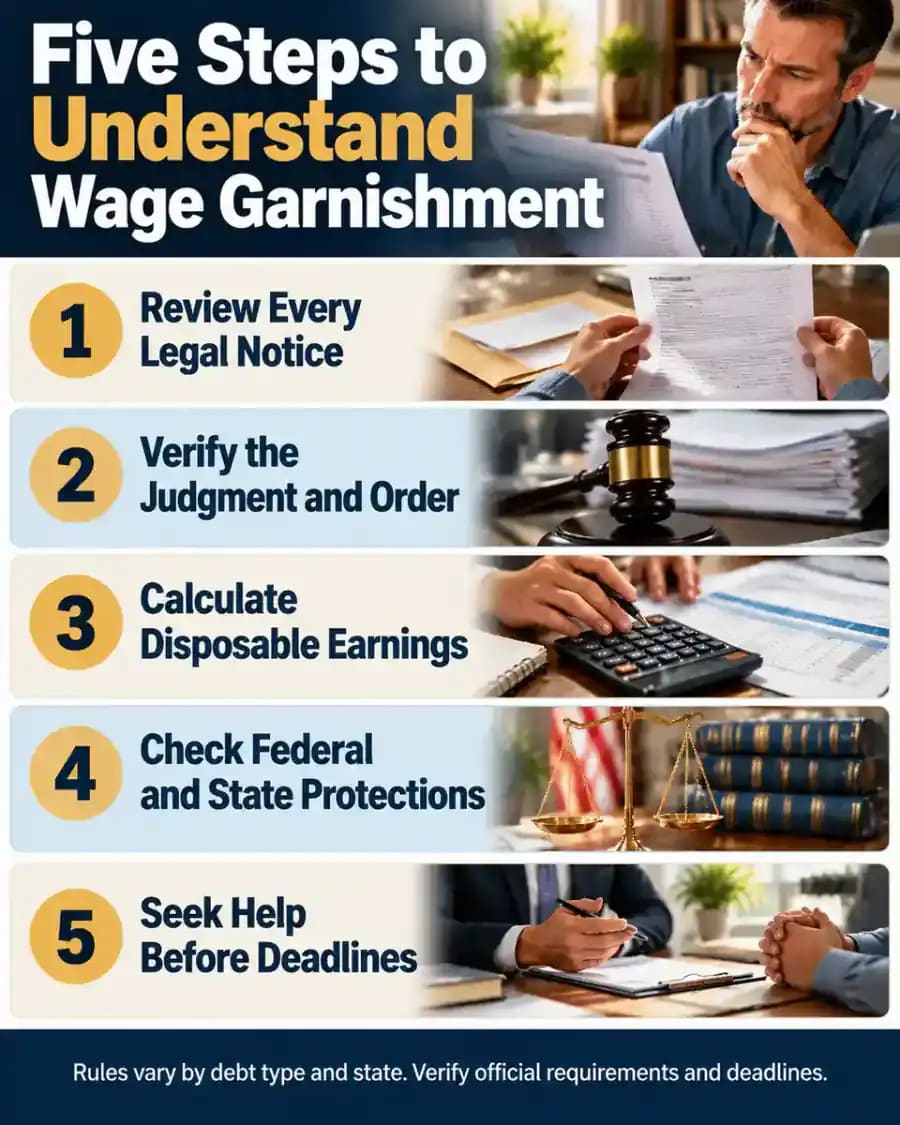
When wage garnishment is threatened, organize every collection letter, court notice, account statement, and relevant pay stub. Confirm whether a lawsuit or judgment exists by checking the appropriate court records, and identify every response or objection deadline. Determine the type of debt and investigate applicable federal and state protections. If Social Security benefits or other potentially exempt funds are involved, preserve supporting deposit records. Contact a qualified consumer law attorney or legal aid organization promptly when the documents are unclear or a deadline is approaching.

Assessing Your Rights and Next Steps
Understanding wage garnishment requires looking at several separate issues: whether the collection process is legally authorized, how much earnings may be withheld, whether particular income is protected, and whether collection conduct complies with federal law. State-specific procedures can add further requirements or exemptions. No single rule resolves every case, especially when special debts or disputed court judgments are involved. Use official government resources to establish the general requirements, preserve relevant records, and seek qualified legal assistance when your circumstances require an individualized assessment.

A wage garnishment can disrupt your household budget by directing part of your paycheck toward an unpaid debt. If you are behind on credit cards, medical bills, or personal loans, understanding the process can help you recognize important notices, identify possible protections, and respond before a deadline passes.
For many ordinary consumer debts, a creditor must file a lawsuit, properly serve the required documents, obtain a judgment, and follow applicable garnishment procedures before your employer can be required to withhold wages. A collection letter or threatening phone call is not, by itself, proof that a garnishment order exists. Different rules can apply to taxes, child support, and certain government debts.
Federal law provides several important safeguards. The Federal Trade Commission's Credit Practices Rule restricts certain advance wage assignment provisions in consumer credit contracts. Section 207 of the Social Security Act generally protects Social Security benefits from private creditors collecting ordinary consumer debts, subject to legal exceptions. The Fair Debt Collection Practices Act also restricts abusive, unfair, and deceptive conduct by covered debt collectors.
These protections do not mean every paycheck or bank account is automatically safe from collection. Federal law generally limits how much disposable earnings may be garnished for covered debts, while state laws may impose stricter limits or additional exemptions. Special rules can apply to child support, certain federal debts, and taxes. Deposited benefits may also require careful attention to account protections and exceptions.
Keep copies of notices and court papers, verify deadlines, and consult official government resources or a qualified consumer law attorney when your circumstances require case-specific guidance. This material is educational and is not individualized legal, financial, or tax advice.
Where people go wrong
Ignoring court papers. A lawsuit can proceed even when you do not respond. Missing the applicable deadline may allow a court to enter a default judgment, making later challenges more difficult. Read every notice, confirm the response date, and promptly seek qualified assistance if necessary.
Assuming a collection threat is a court order. A collector's statement that your wages will be garnished does not establish that a judgment or valid withholding order exists. Verify the status through official court records and appropriate authorities, recognizing that different debt categories can follow different legal procedures.
Confusing wage assignments with garnishment. Federal restrictions on certain advance wage assignment clauses do not eliminate court-authorized garnishment. These are legally distinct mechanisms. Understand which process is being invoked, examine the documents carefully, and check applicable federal and state rules before drawing conclusions about your rights.
Assuming every state follows identical limits. Federal law establishes baseline limits for many garnishments, but state law can provide stronger protections or different procedures. The amount withheld, available exemptions, and filing requirements depend on the relevant jurisdiction and debt type. Verify the rules that apply to your circumstances.
Treating every income source the same. Social Security benefits generally receive federal protection from private creditors collecting ordinary consumer debts, but statutory exceptions exist. Other income sources may follow different rules. Identify where each payment originates, preserve supporting records, and investigate applicable protections before assuming funds are exempt.
Failing to document collection misconduct. Threats, misleading statements, and improper contacts may be relevant to a consumer protection complaint. Record dates, preserve letters and messages, and keep a factual account of calls. Documentation can help an attorney or regulator assess whether a covered debt collector violated applicable law.
Waiting too long to seek qualified help. Exemption claims, objections, and other court procedures can have strict deadlines. Waiting until a paycheck is reduced may limit practical options. If a garnishment appears incorrect or protected benefits may be affected, promptly contact a consumer law attorney or legal aid provider.
Questions people ask
For many ordinary consumer debts, a creditor generally must obtain a court judgment and follow applicable garnishment procedures before requiring an employer to withhold wages. Certain obligations, including some tax and support debts, can follow different administrative or statutory processes. Verify the rules for your debt and state.
Fixed it?
Get one guide like this every Thursday.