How to Read a Health Insurance Explanation of Benefits
Received an Explanation of Benefits showing a $2,000 medical charge? Learn how to identify key amounts, understand patient responsibility, compare your EOB with a provider bill, and know who to contact when details do not match.

What you’ll need
Tap to tick things off before you start.
Is That $2,000 Charge Actually a Bill?
Imagine opening a health insurance document at your kitchen table and seeing a $2,000 medical charge. Before assuming you must pay that amount, check the heading at the top of the page. If it says Explanation of Benefits, or EOB, it generally explains how your insurer processed a claim rather than requesting payment. Look for the document type first, and keep any separate provider bill nearby so you can compare them later.

Know the Difference Between an EOB and a Bill
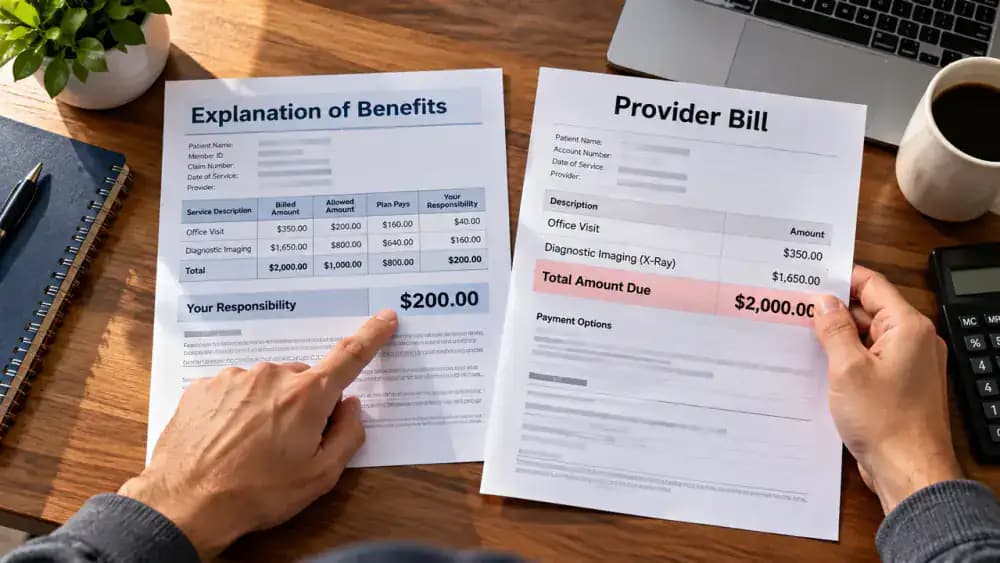
Place your Explanation of Benefits beside any statement from your doctor, clinic, or hospital. Compare the titles and look at what each document asks you to do. The EOB generally describes how your insurer processed the claim, while the provider bill requests payment. Check for payment instructions and account details, but remember that document layouts vary. If the purpose of either document is unclear, contact the insurer or billing office before drawing conclusions.
Gather the Right Paperwork Before You Begin
Gather the EOB, any provider bill for the same visit, your insurance card, and relevant claim letters. Organize them into separate sections of a paper folder or organizer so you can find each document quickly. Before reviewing anything, check that the paperwork relates to the same patient and service. Keep these records in a secure location, and avoid leaving personal or insurance information visible to others.

Protect Your Personal Information
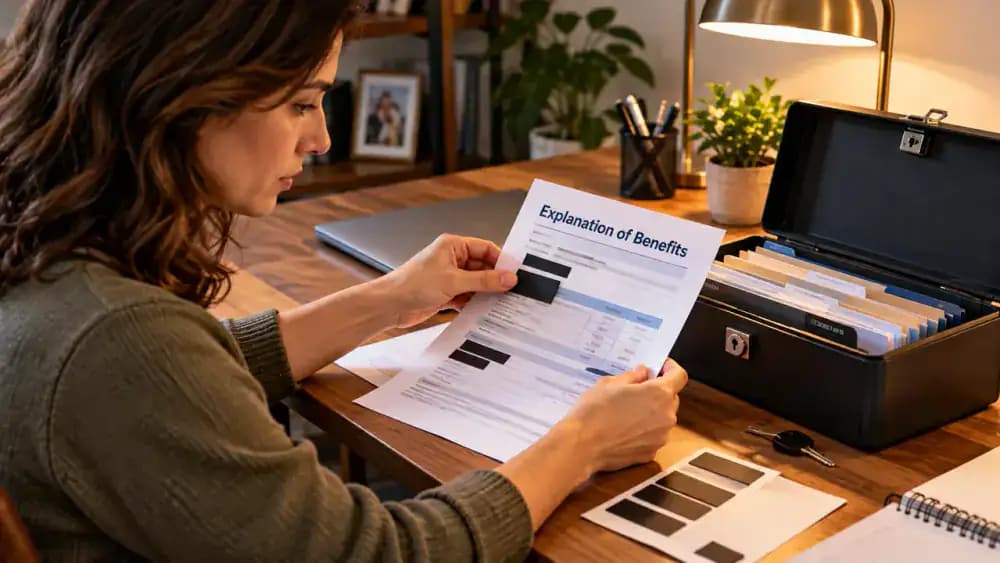
Before reviewing your EOB, cover sensitive details such as your member ID, address, and claim identifier if you need to share a copy. Keep the original paperwork in a secure place, such as a lockable document case. For online discussions, avoid uploading unredacted documents through unsecured channels. Focus on general labels and amounts when reviewing examples, and use fictional information for demonstrations.
Find the Key Sections on Your EOB
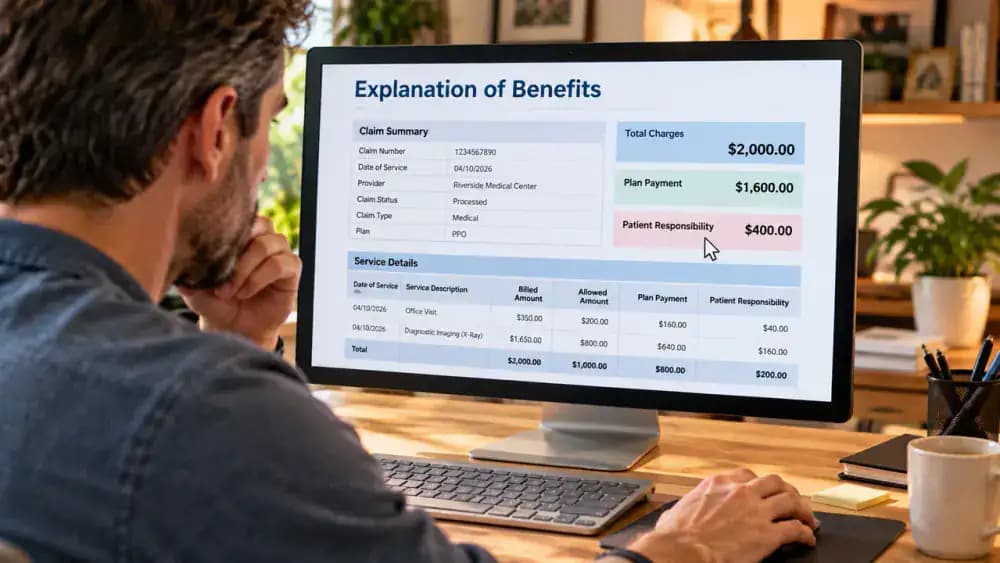
Open your EOB on screen or lay the printed page where you can read it comfortably. Start by locating the claim summary, then identify sections labeled charges, plan payment, and patient responsibility. Do not worry about understanding every line yet. Insurers use different layouts and wording, so focus on each section's purpose rather than expecting your document to match the example exactly.
Confirm Who and What the Claim Is For
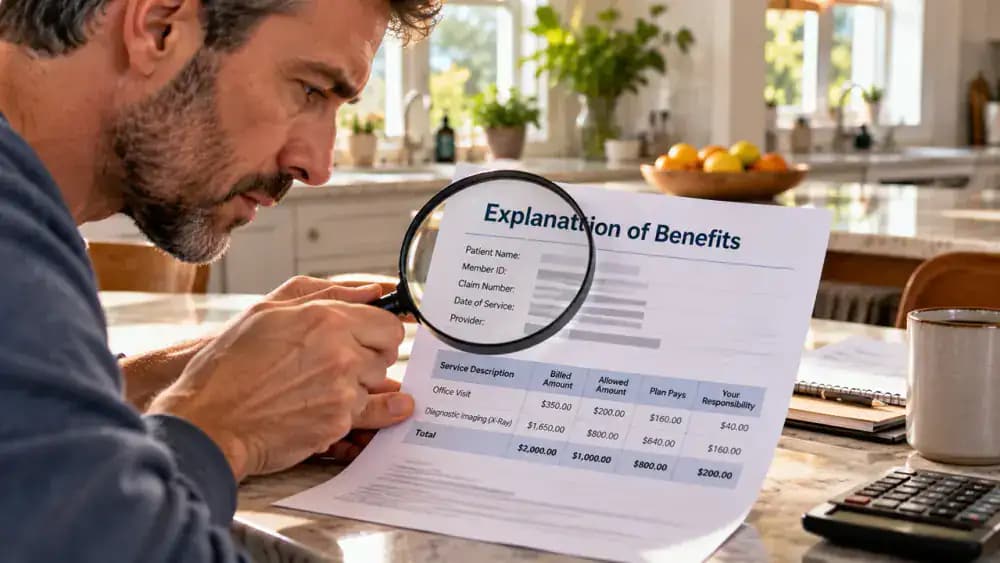
Use a magnifying glass or read the printed fields closely to verify the patient name, provider or facility, date of service, and claim number. These details help you match the EOB to the correct appointment, especially when reviewing multiple visits or family members' claims. If a name, date, or provider seems unfamiliar, write down the specific detail and contact your insurer for clarification.
Check the Claim Status Before Going Further
Highlight the claim status on your EOB and note the exact wording, such as pending, processed, or additional information requested. These labels describe the claim's handling, but their meaning can vary by insurer. Do not assume a status confirms a charge is correct or establishes what you owe. If the wording is unclear, write down your question and ask your insurer what happens next.

Understand the Billed Charge
Locate the Billed Charge row on your EOB and note the amount the provider submitted for the service. In this fictional example, the charge is $2,000. You can trace the row with a ruler and write a brief note explaining what the figure represents. Do not treat the billed charge as the amount you owe; review the allowed amount and other claim figures before drawing conclusions.

Find the Allowed Amount
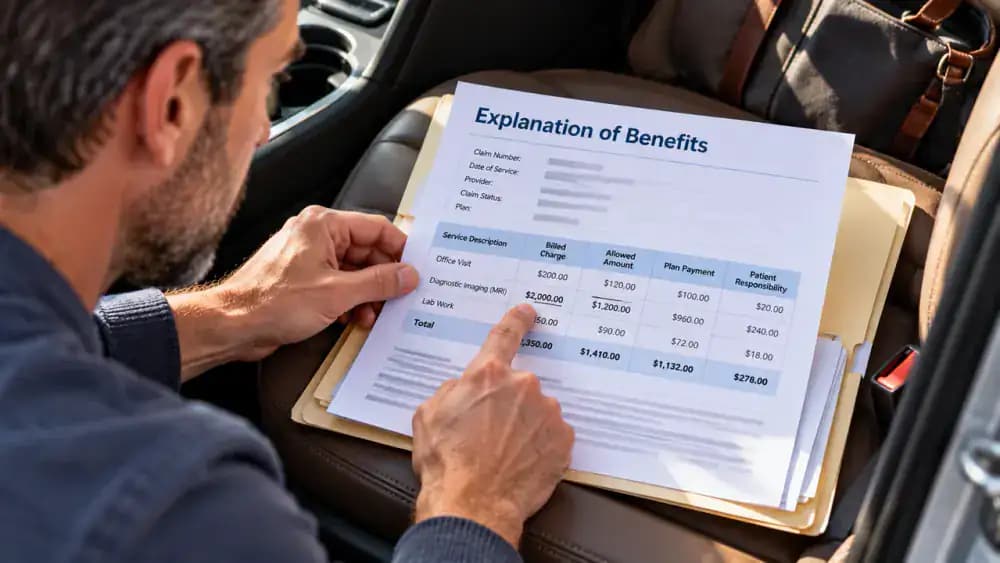
Locate the Allowed Amount on your EOB and compare it with the billed charge. In this fictional example, the provider submitted $2,000, while the plan recognizes an allowed amount of $1,200. Note both figures and ask your insurer if the difference is unclear. Do not assume the difference is automatically your responsibility; how amounts are handled depends on the plan, provider arrangements, and claim details.
Understand Insurance Adjustments
Find the Adjustment row on your EOB and read any explanation or code key provided with the statement. In this fictional example, the $2,000 billed charge is reduced to a $1,200 allowed amount, with an $800 adjustment. Trace the entry and note anything you do not understand. Adjustments can reflect negotiated rates or plan rules, so ask your insurer to explain how a specific amount was calculated.
Find the Insurance Plan Payment
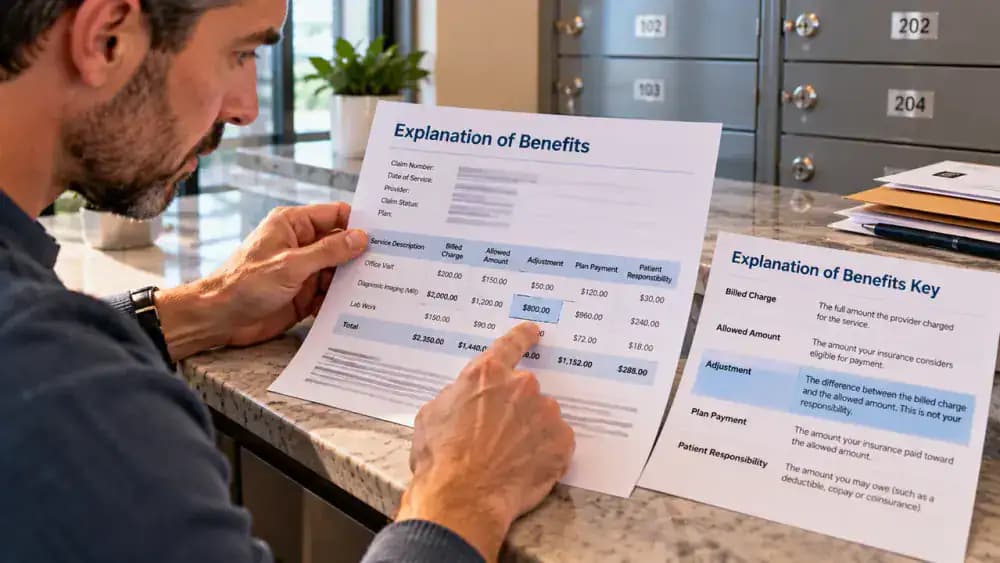
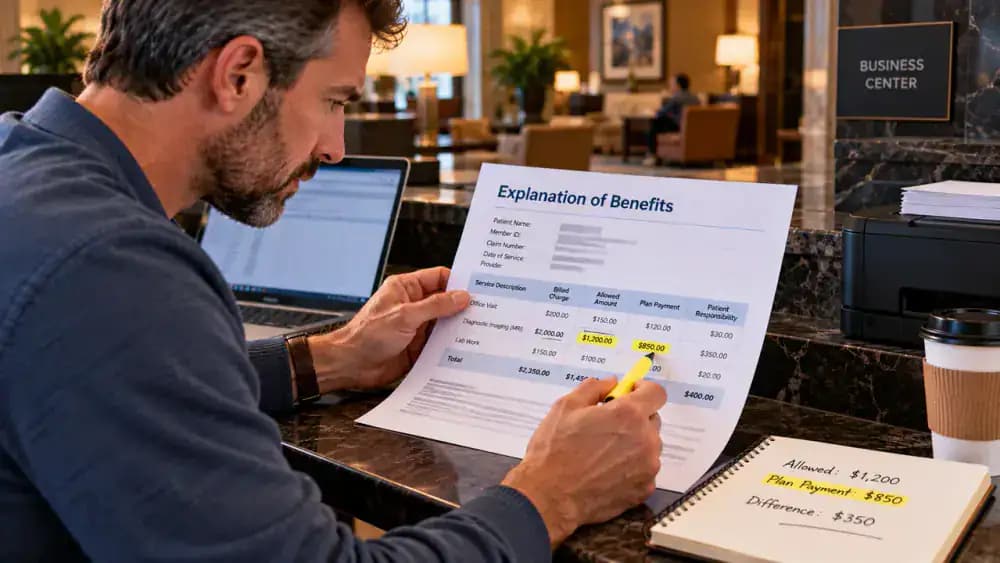
Locate the Plan Payment row on your EOB and mark it so you can compare it with the allowed amount. In this fictional example, the plan payment is $850 and the allowed amount is $1,200. The insurer's payment may not cover the full allowed amount because deductible, copay, coinsurance, or other plan rules can apply. Read the accompanying explanation before assessing your share.
Understand Your Deductible
Find the Deductible section on your EOB, then compare its wording with the deductible information in your plan benefits summary. A deductible is the amount you pay for certain covered services before your plan begins paying under its terms. In this fictional example, the plan summary lists a $1,500 deductible, but that does not establish how it applies to this claim. Ask your insurer about unclear details.

Locate Copay and Coinsurance Amounts
Use your tablet or plan benefits summary to find the sections explaining copays and coinsurance. A copay is usually a fixed amount for a service, while coinsurance is generally a percentage of the allowed amount. Match each term to the relevant plan information and note any unclear entries. Check whether the rules apply to the service listed on your EOB, and ask your insurer to explain uncertain amounts.

Find the Patient Responsibility Amount
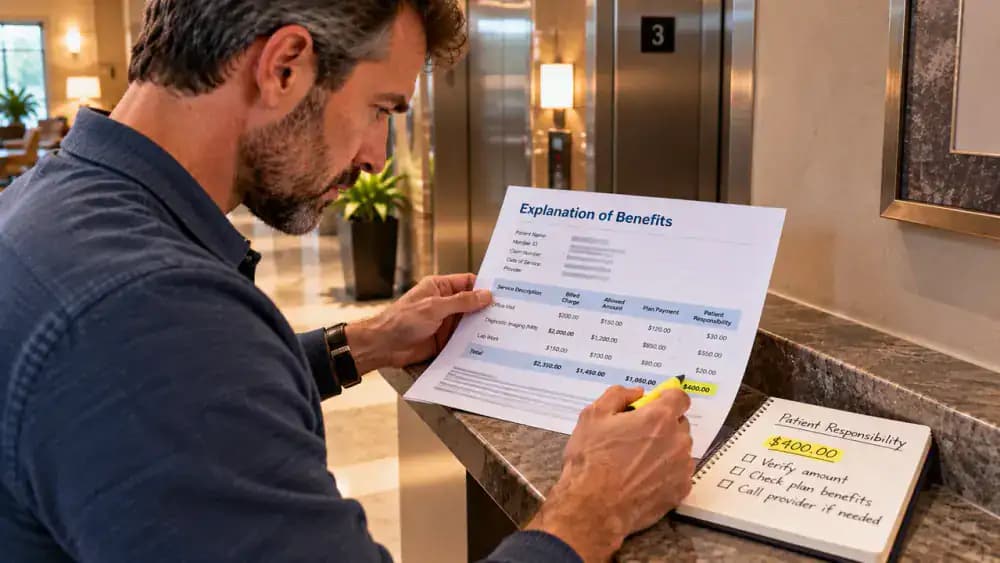
Locate the Patient Responsibility field on your EOB and underline it so you can find it easily when comparing documents. This figure generally reflects the amount assigned to you for the processed claim under your plan's rules. Write it on a note card as a reminder to verify it against the provider bill. If the figures or their meaning remain unclear, contact your insurer or billing office.
Compare the EOB With Your Provider Bill
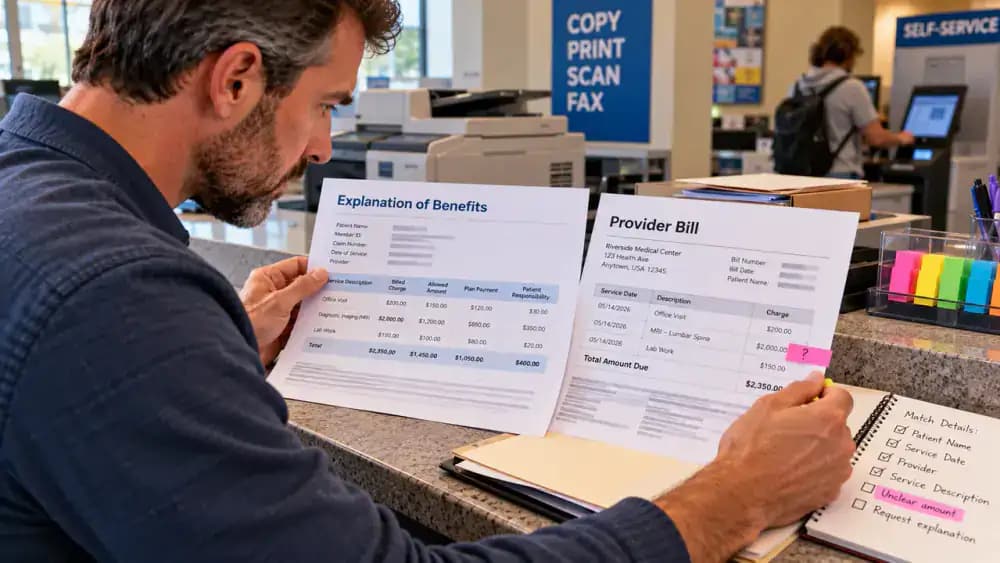
Place the EOB and provider bill side by side, then match the patient, provider, service date, and claim details on both documents. Compare the billed amount and any patient balance listed, marking differences you cannot explain with a removable tab. Bills and EOBs may be updated at different times, so do not assume a mismatch proves an error. Record specific questions for the insurer or billing office.
Check for Differences Without Assuming an Error
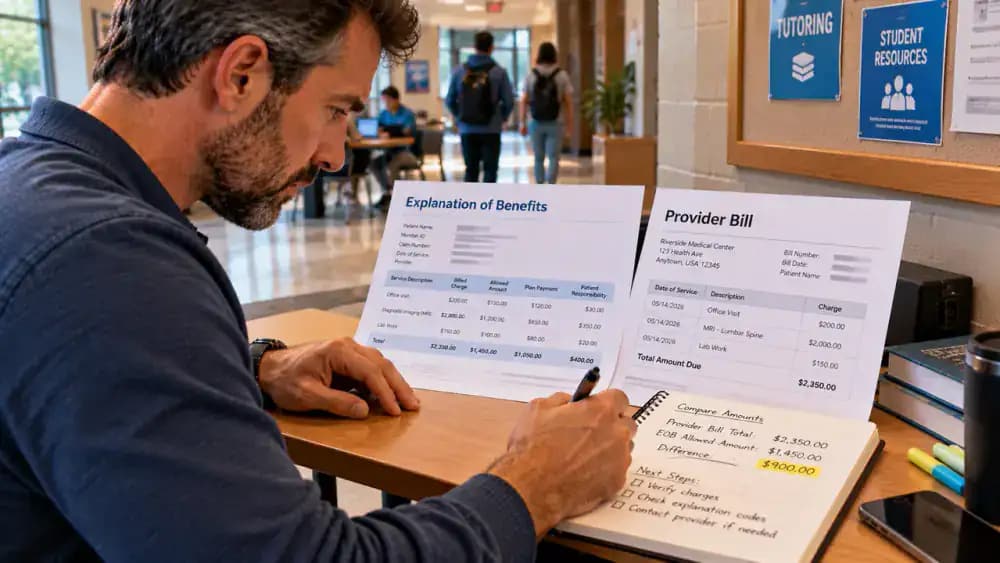
If the amounts differ, write down exactly which figures do not match rather than crossing out a number or labeling it wrong. Check that both documents refer to the same service, provider, and date. Differences can reflect updates, adjustments, or different processing stages. If you cannot explain the discrepancy, contact the insurer about claim processing or the provider's billing office about its statement.
Check Dates and Look for Updated Statements
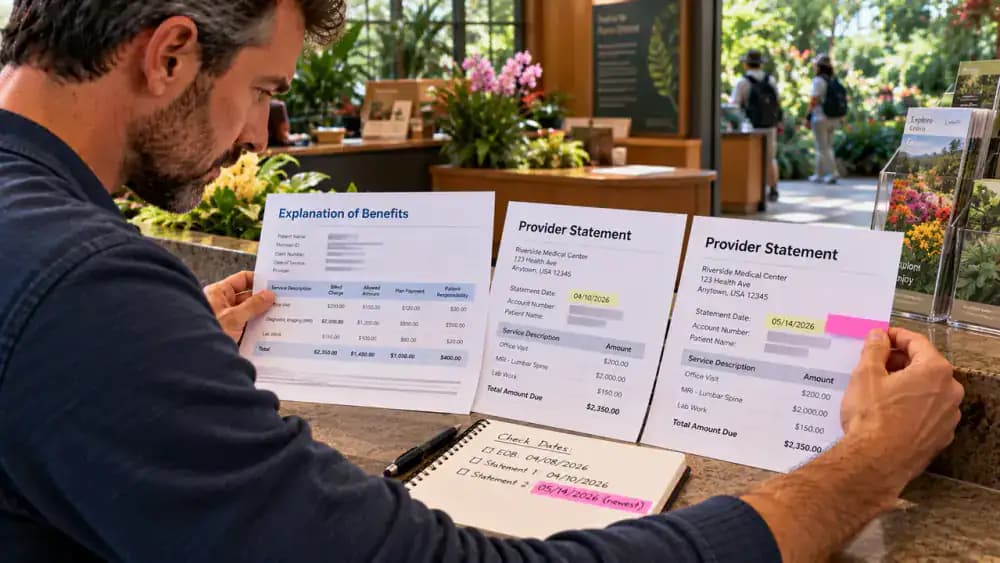
Compare the dates printed on your EOB and provider bills, especially if you have received more than one statement for the same visit. Place the documents in date order and mark the newest version for easy reference. A bill may have been prepared before claim processing finished or updated information reached the provider. Keep earlier copies, but contact the insurer or billing office to confirm the latest status if needed.
Prepare Clear Questions Before You Call
Write a short checklist before calling your insurer or the provider's billing office. Include the service date, claim number, amount in question, and the specific explanation you need. For example, ask how a particular amount was calculated. Contact the insurer about claim processing or the billing office about its statement. During the call, record the representative's name, date, answer, and any recommended follow-up.

Call the Insurer About Claim Processing
Call the customer service number on your insurance card or use the insurer's official website to find its contact information. Have your EOB ready and provide the claim number and service date. Ask specifically about the amount or adjustment you noted, rather than describing the issue generally. Record the representative's name, call date, explanation, and any next steps so you can follow up consistently.

Contact the Provider's Billing Office
If your insurer has explained the claim processing but the provider bill remains unclear, call the provider's billing office using the number on the statement or its official website. Ask how the current balance was calculated and whether recent insurance updates have been applied. Keep the bill nearby and record the representative's name, call date, explanation, and any promised follow-up so you can track unresolved questions.

Keep a Record of Every Conversation
After speaking with the insurer or billing office, record the call date, representative's name, department, claim reference, explanation, and promised follow-up in a claim log. Keep confirmation numbers and written messages with your notes when available. Store the log alongside the related EOB and provider bill in a secure folder. This record helps you track unresolved questions, remember agreed next steps, and avoid repeating explanations unnecessarily.

Store Your Claim Documents Securely
File your EOB, provider bill, call notes, and related correspondence together in one folder for the same claim. Add newer statements and responses as they arrive so you can find the latest information quickly. Store physical copies in a locked cabinet and digital copies in a password-protected account. Limit access to people who need the records, since these documents may contain sensitive personal and health information.

Check Whether You Need More Information
Review your EOB, provider bill, and call log, then list any questions that remain unresolved. You may still need an explanation of an adjustment, confirmation that claim processing is complete, or an updated provider statement. Mark each item as answered only when you have a clear response. For anything still uncertain, contact the insurer or billing office and record the information needed to follow up.

Review Denial and Explanation Codes
If your EOB shows a denial, restriction, or unfamiliar explanation code, compare it with the description printed on the document or in the accompanying code guide. Underline the relevant entry and write down what you need clarified. Do not assume the code tells the whole story. Ask your insurer what it means for this claim and whether additional information or further review may be available.

Confirm the Next Steps and Any Deadlines
Review the insurer's follow-up instructions and write down any documents needed, who must provide them, and the expected timeline. Use a checklist to track each request and mark items complete only when addressed. If an appeal or further review is mentioned, ask where to find the official instructions and applicable deadlines. Do not guess at requirements or timelines; confirm them directly with your insurer.

Prepare and Submit Requested Documents
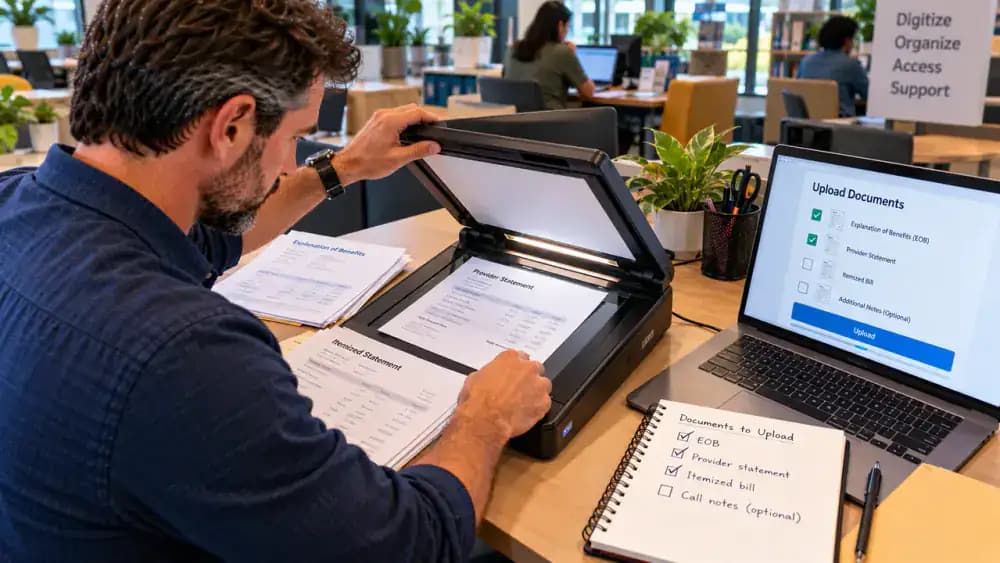
Gather only the supporting documents your insurer specifically requests, such as an itemized statement or corrected provider record. Scan or copy each document, then verify that it matches the request before sending it. Confirm the approved submission method and whether copies are acceptable. Keep a copy of everything you submit, record the submission date, and save any confirmation with your claim records.
Verify That Your Documents Were Received
After submitting the requested paperwork, look for a confirmation email, receipt, or delivery record. Compare its date with your submission log, then mark the receipt as confirmed only when you have evidence of delivery or acknowledgment. Save the confirmation with your claim notes and list the documents sent. If no confirmation arrives, contact the insurer or billing office through its official channel to verify receipt.

Create a Reusable EOB Checklist
Create a one-page checklist you can reuse whenever you receive an EOB. Include tasks to identify the document, match the patient and service details, review the financial amounts, compare the provider bill, record questions, and save responses securely. Check each item as you complete it for a claim. Keep a blank copy with your insurance paperwork so the same review process is easy to repeat.

Know When to Ask for Further Clarification
Review your EOB checklist for any unresolved questions, especially about a coverage decision, denial, or patient responsibility amount. Write down the exact entry you do not understand and prepare a specific question for your insurer or provider's billing office. An EOB generally explains claim processing; it does not guarantee coverage or determine every payment obligation. Ask the appropriate office to clarify the next step for your particular claim.

Review Your EOB With Confidence
Use your checklist to review the document type, match the claim details, examine the financial amounts, and compare the EOB with the provider bill. Check off each task, gather your notes, and store the paperwork securely in a labeled folder. Keep unresolved questions visible so you remember to follow up. An EOB explains claim processing, not guaranteed coverage or exactly what you owe. Contact your insurer or billing office for specific answers.

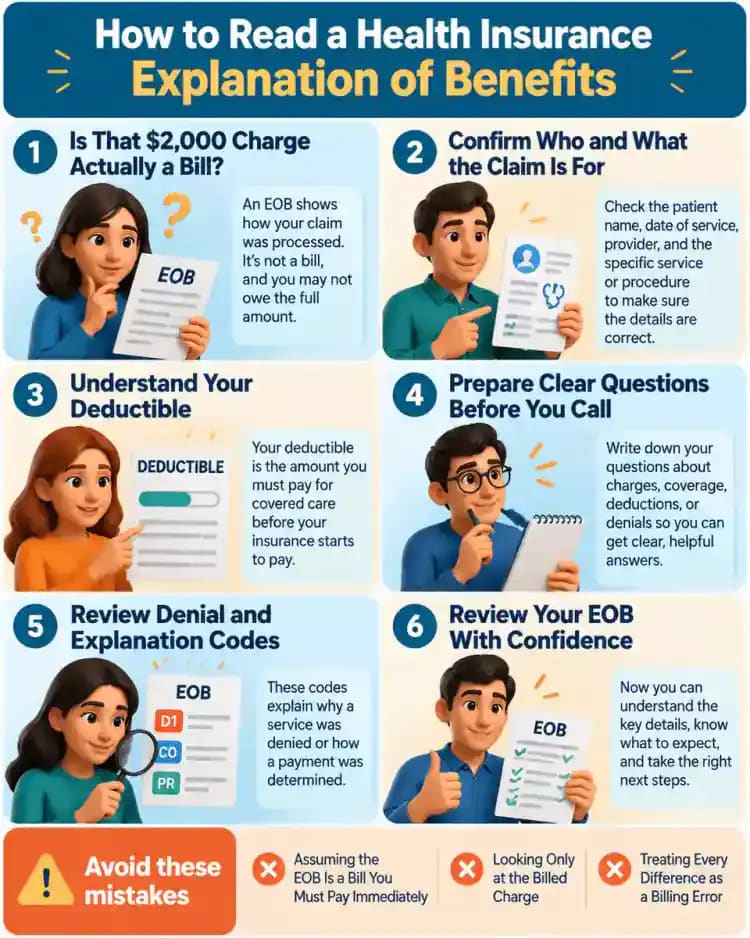
An Explanation of Benefits (EOB) arrives in the mail or online, and one number jumps out: $2,000 for a medical service. Before assuming you owe the entire amount immediately, take a closer look. An EOB generally explains how your health insurance company processed a claim; it is not the same as a provider bill requesting payment. Knowing the difference can help you avoid unnecessary worry and ask the right questions before paying a medical bill. The amounts and terminology can vary by insurer, plan, and claim, so it is important to review your own documents rather than rely on a single number.
To read your EOB, gather the statement, any related provider bill, your insurance card, and relevant claim correspondence. You will learn how to identify the billed charge, allowed amount, insurance payment, deductible, copay, coinsurance, and listed patient responsibility. You will also see how to compare the EOB with a provider bill, spot details that need clarification, and keep useful records of follow-up calls. This guide provides general administrative information, not a determination of what you owe or a guarantee of coverage. For questions about your specific claim or payment responsibility, contact your insurer or the provider's billing office.
Where people go wrong
Assuming the EOB Is a Bill You Must Pay Immediately. An Explanation of Benefits generally shows how your insurer processed a claim, while a provider bill requests payment. Do not assume the full billed charge is immediately due just because it appears on your EOB. Review both documents before deciding what questions to ask.
Looking Only at the Billed Charge. The billed charge is only one part of the claim. Check the allowed amount, adjustments, insurance payment, deductible, copay, coinsurance, and listed patient responsibility. These figures serve different purposes, and their meaning depends on your plan and how the claim was processed.
Treating Every Difference as a Billing Error. An EOB and provider bill may show different amounts or claim statuses for reasons that need clarification. Compare the provider, service date, and claim details, then write down specific questions. A discrepancy alone does not prove that the insurer or provider made an error.
Calling the Wrong Office or Losing Track of Answers. Contact your insurer about how the claim was processed and the provider's billing office about charges on the bill. Keep the claim number, call dates, contact names, and responses in a secure folder. For unresolved questions, request clarification rather than guessing about coverage or payment obligations.
Questions people ask
No. An Explanation of Benefits (EOB) generally describes how your insurer processed a medical claim. A provider bill requests payment for services. Review both documents before assuming you owe the amount shown on the EOB. If you are unsure what a charge means, contact your insurer or the provider's billing office.
Fixed it?
Get one guide like this every Thursday.