How to Turn Your Dog's Mealtime into a Rewarding Enrichment Routine
Make your dog's daily meals more engaging with simple food puzzles, beginner-friendly dispensing toys, and supervised kibble searches that encourage exploration without adding extra calories.

What you’ll need
Tap to tick things off before you start.
Mealtime Can Be More
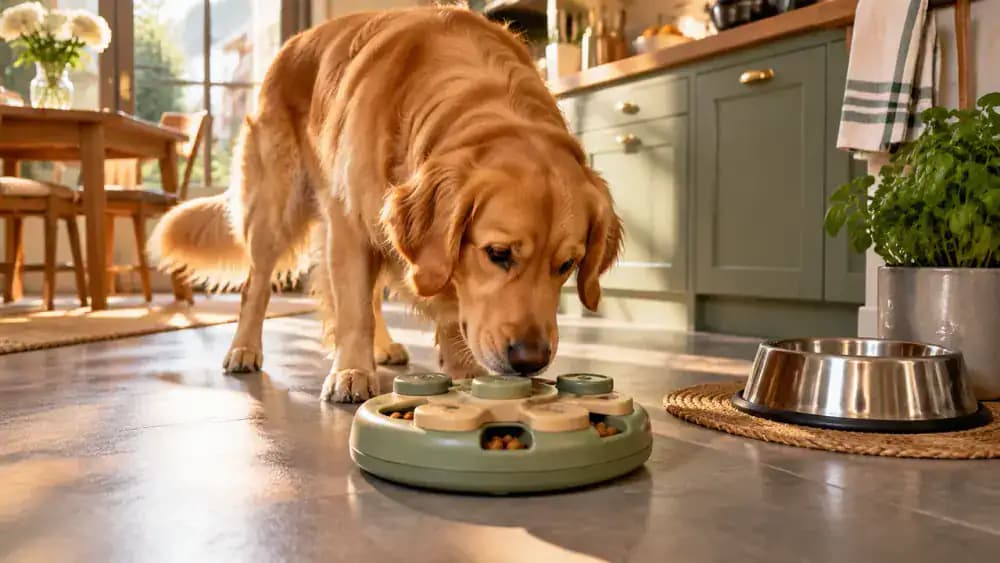
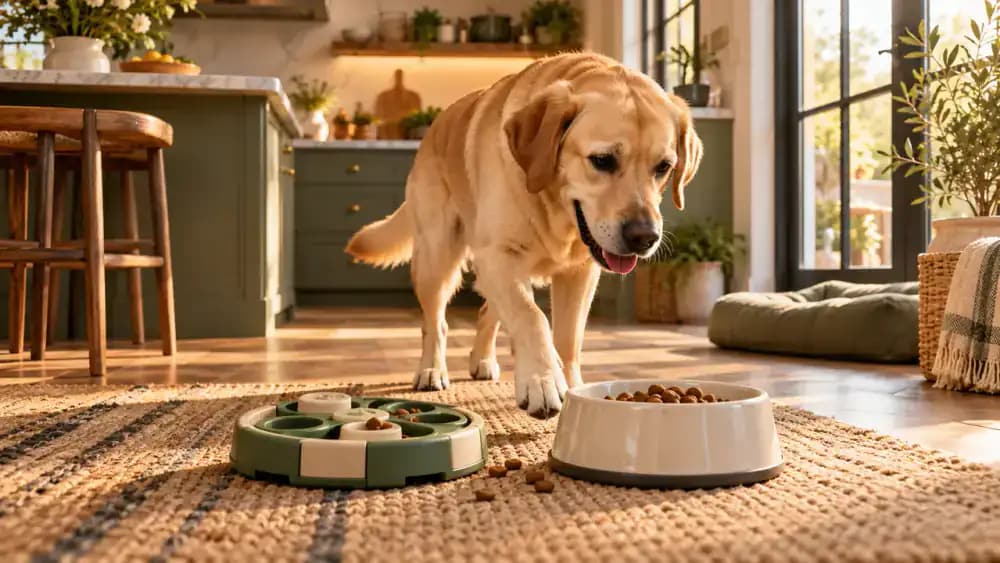
Your dog's regular meal can offer more than a familiar bowl of kibble. Simple enrichment activities encourage sniffing, exploration, and small choices while keeping feeding enjoyable. Start by introducing a basic food puzzle beside the usual bowl and let your dog investigate at its own pace. The goal is engagement, not making meals difficult.
Choose Activities for Your Dog
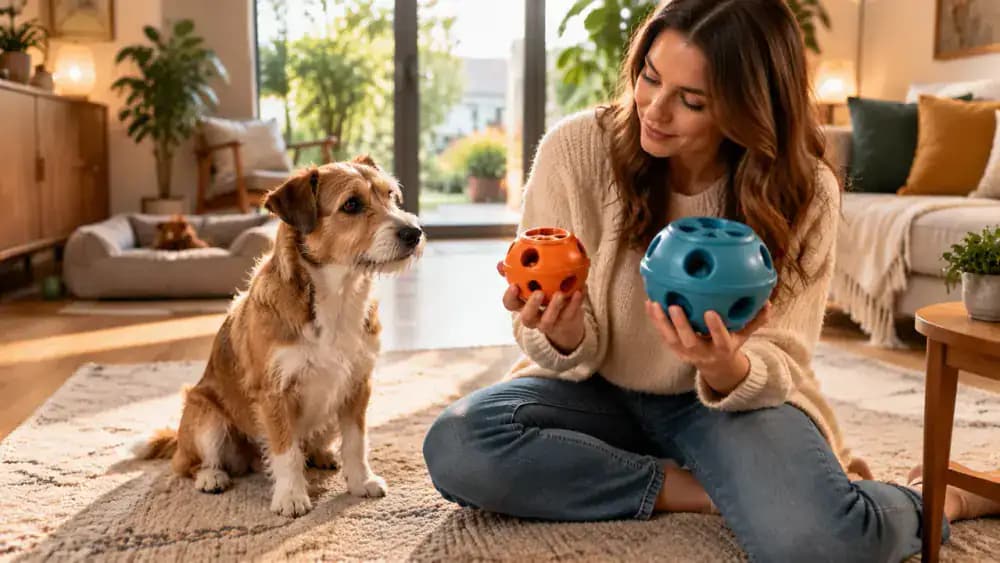
Choose an enrichment activity that suits your dog's size, age, chewing habits, and experience with toys. Prepare a quiet area with a clear, nonslip surface, and remove small objects or other hazards before starting. Select sturdy equipment that fits your dog comfortably, then stay nearby to supervise. A safe, inviting activity matters more than a complicated challenge.
Measure Before You Play
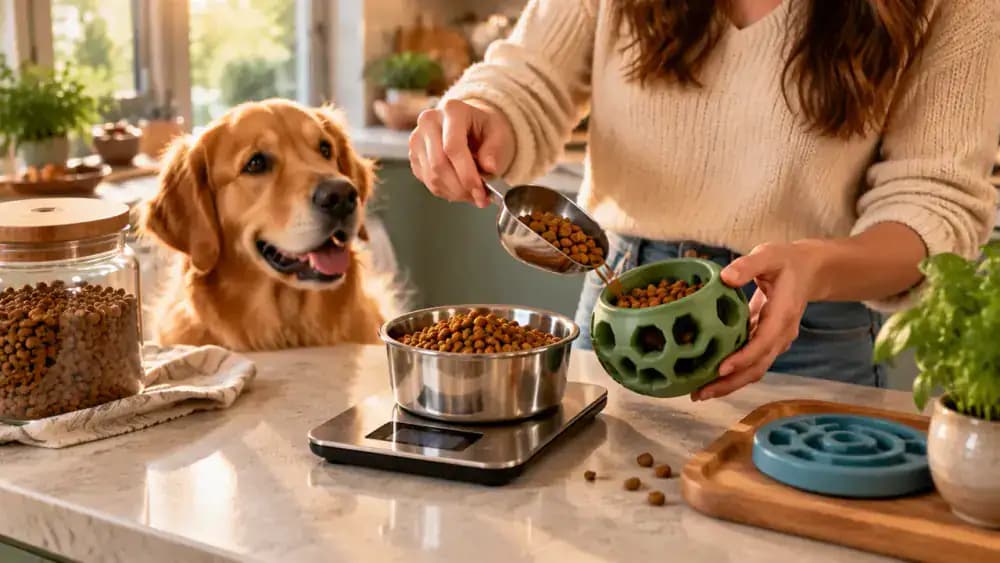
Measure your dog's usual daily food portion before setting aside kibble for enrichment. Transfer a small amount into a separate container for food puzzles or search games, and keep the remaining portion available for regular meals. Using food from the existing daily allowance helps prevent unplanned extra calories and makes enrichment easier to incorporate into your dog's routine.
Introduce a Food Puzzle
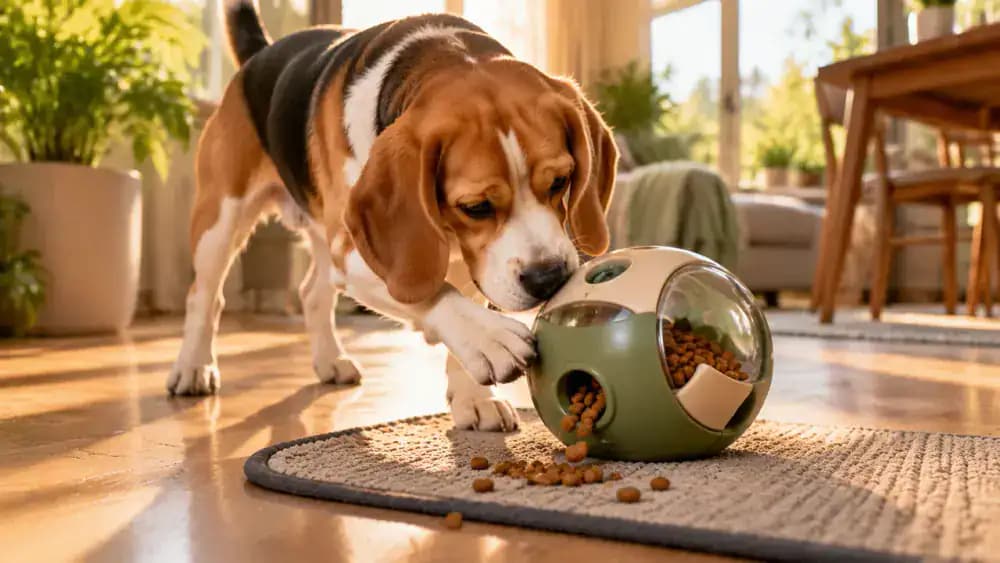
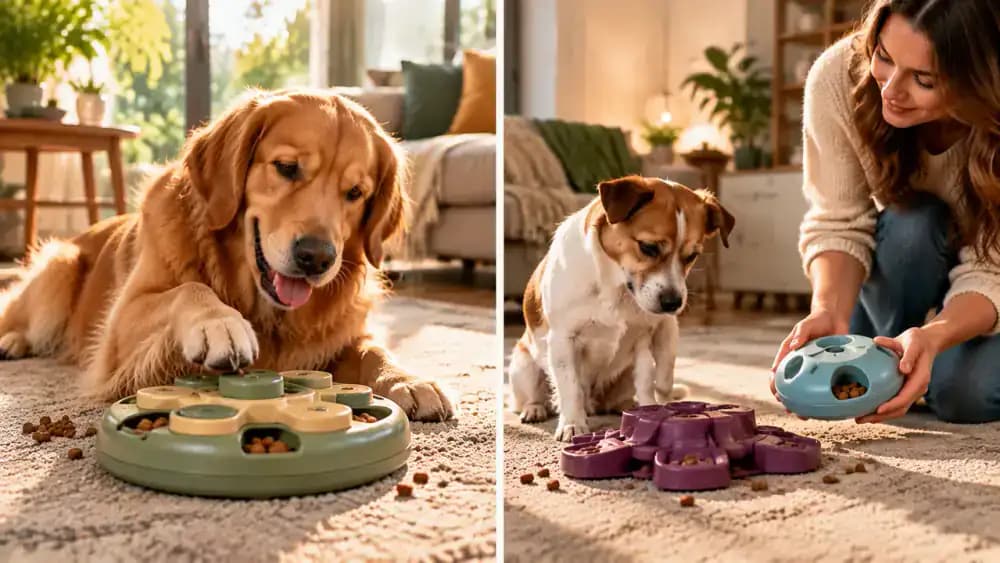
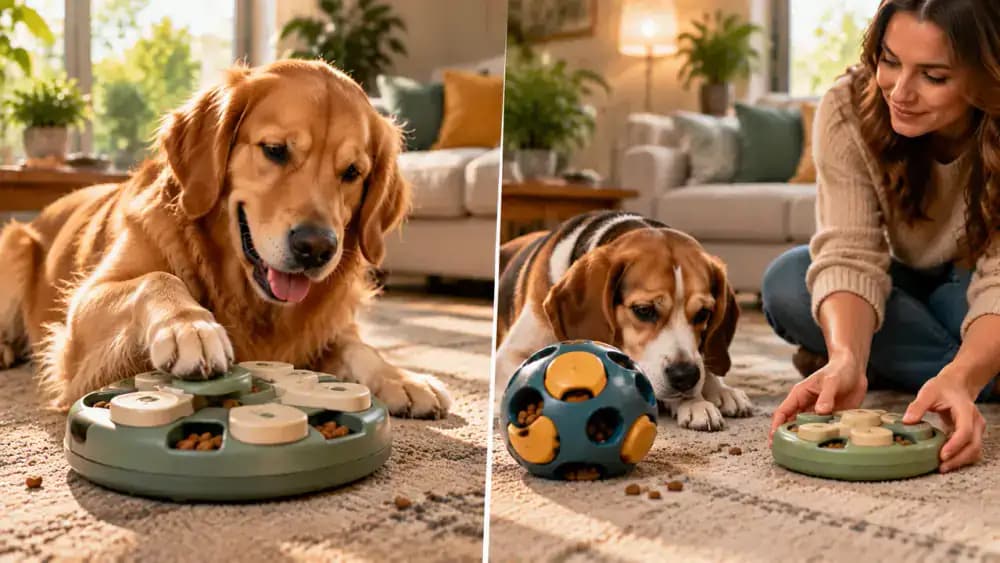
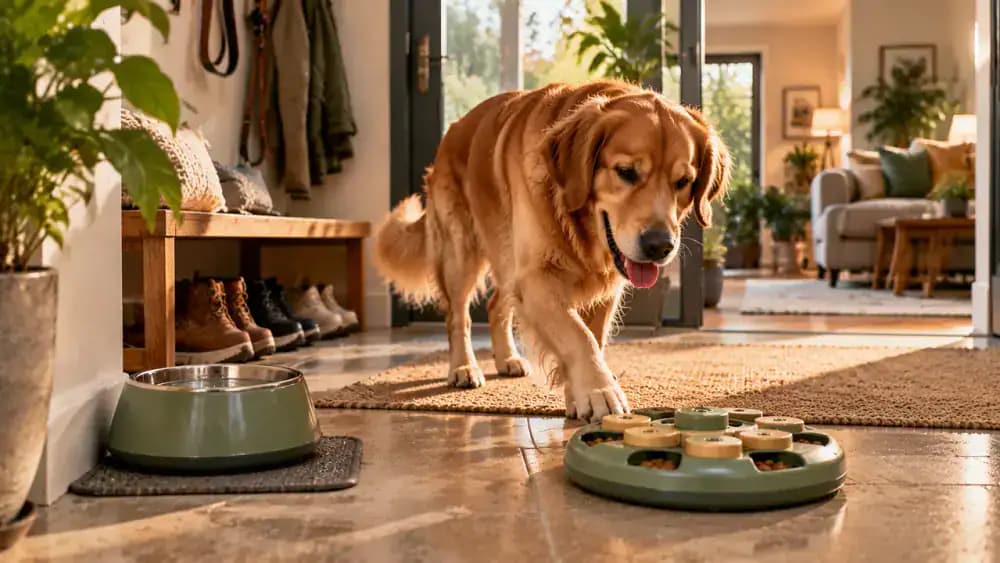
Begin with a sturdy food-dispensing toy designed for your dog's size and chewing style. Place a few kibble pieces in openings where they are easy to reach, then give your dog time to sniff and nudge the toy. Stay close and observe without directing every movement. An easy first experience helps your dog explore comfortably and learn how the toy works.
Create a Simple Food Search
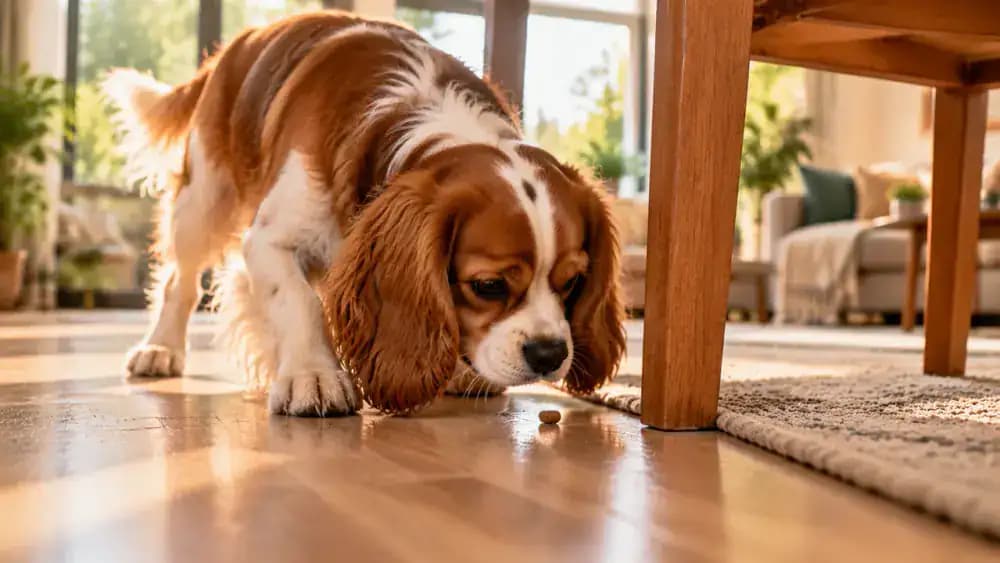
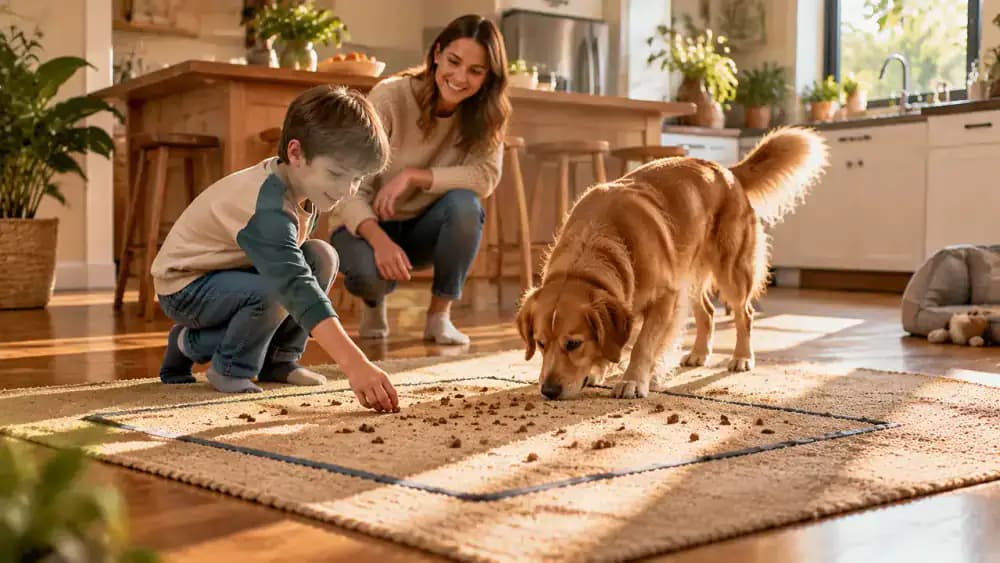
When your dog is comfortable with enrichment, introduce a short kibble search in a familiar room. Place a few pieces beside a sturdy chair leg or near a floor mat, keeping each location easy to access. Invite your dog to sniff out the food while you supervise. Use a clear, level area and avoid stairs, fragile objects, and other hazards.
Adjust the Challenge
Pay attention to how your dog responds during each enrichment activity. Relaxed sniffing, steady exploration, and repeated attempts can indicate that the challenge is manageable. If your dog paws frantically, walks away, or appears frustrated, simplify the puzzle or offer a break. Keep the experience positive, and let your dog's comfort guide the difficulty level.
Keep Every Session Safe
Inspect food-dispensing toys before each session, checking for cracks, loose parts, or damage that could create a hazard. Choose equipment appropriate for your dog's size and chewing style, and supervise throughout the activity. Remove small household objects from search areas and clean toys according to the manufacturer's instructions. Follow your veterinarian's feeding guidance when special dietary needs apply.
Build a Repeatable Routine
Make enrichment part of your regular feeding schedule by measuring the daily food allowance, offering a simple puzzle or search, and serving the remaining meal as usual. Rotate familiar activities when your dog is ready, changing one element at a time. Start with a few manageable minutes, observe what your dog enjoys, and gradually adapt the routine to fit your day.

Follow Your Dog's Preferences
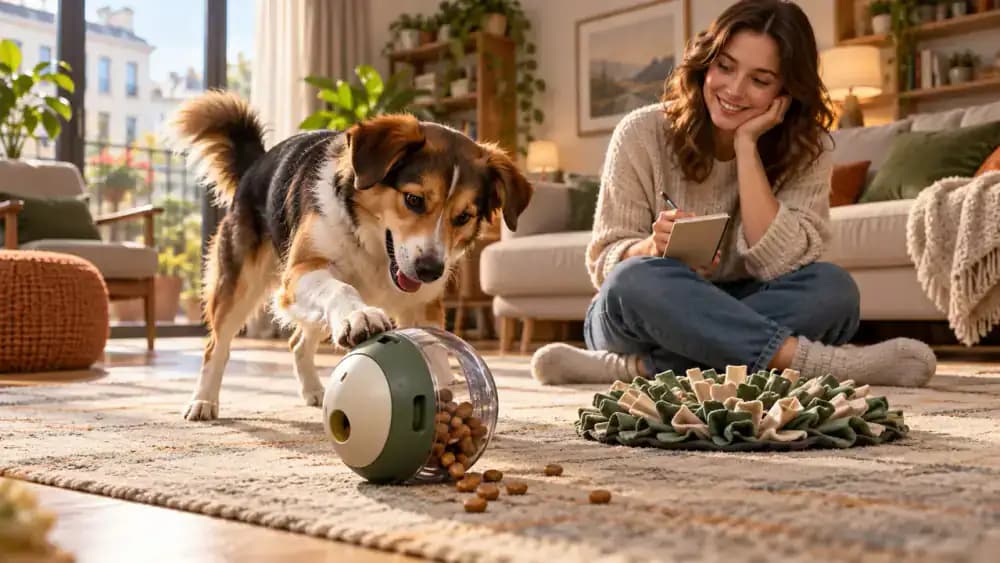
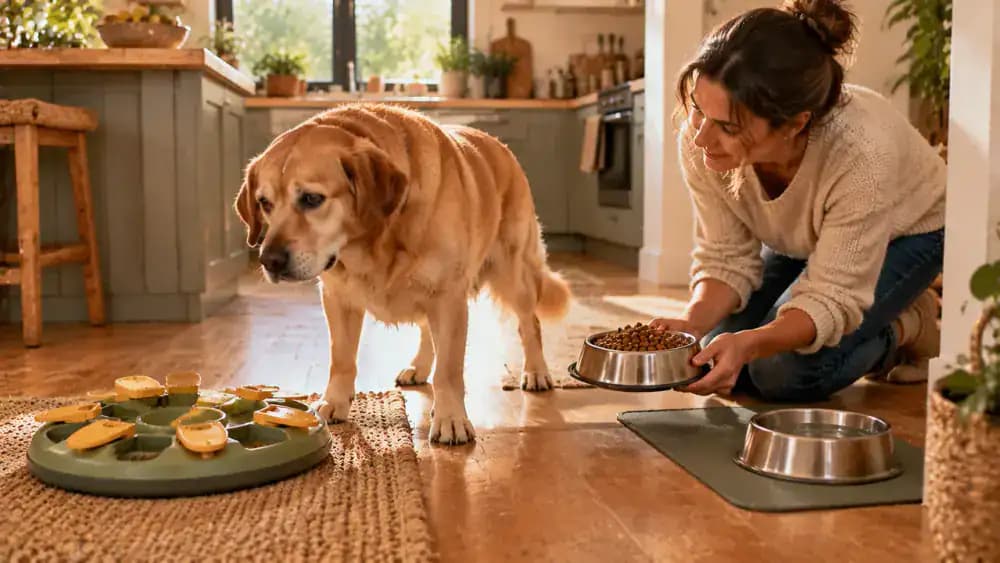
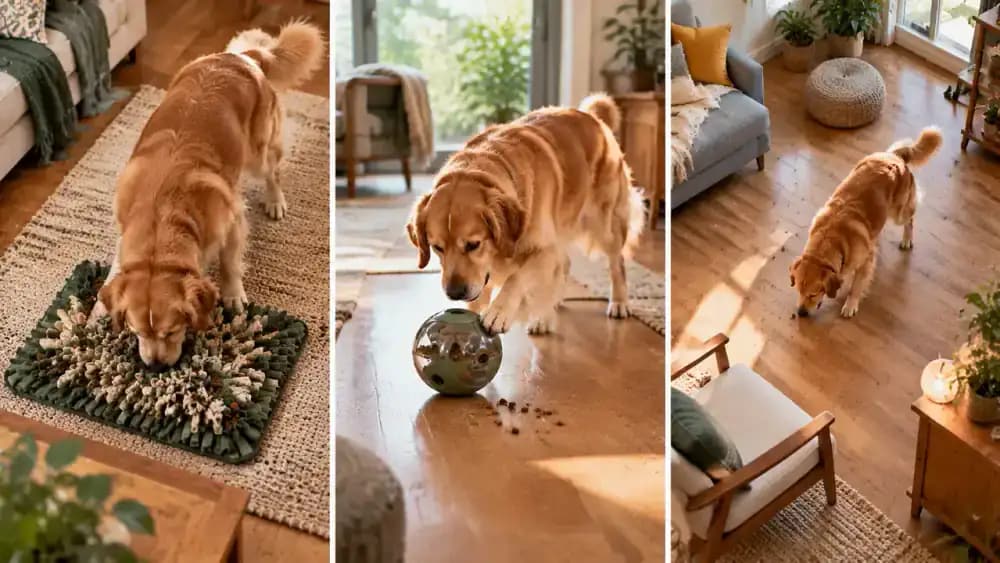
Dogs can enjoy different kinds of food enrichment, so offer a choice between two safe, easy activities when practical. Set a rolling food dispenser beside a shallow snuffle mat and observe which one your dog explores more willingly. Notice relaxed interest and repeated returns without forcing a choice. Use these preferences to guide future activities and keep mealtime enjoyable.
Use the Environment to Help
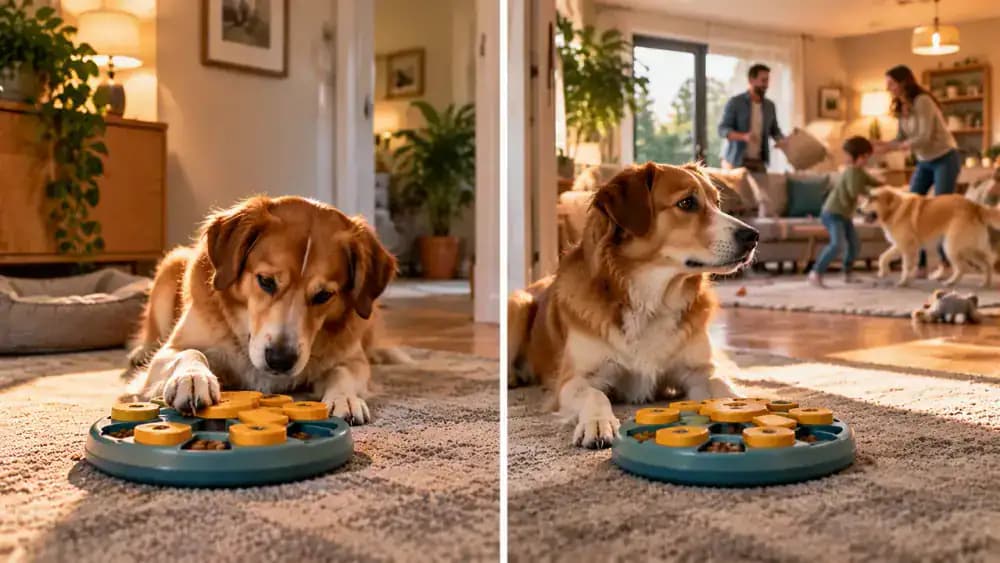
The setting can influence how easily your dog engages with a food puzzle. Begin in a familiar, quiet room where distractions are limited, especially if your dog is new to enrichment. Once the activity feels comfortable, try a nearby space if appropriate. Watch your dog's attention and return to the quieter area whenever the change makes the activity harder to enjoy.
Try a Snuffle Mat
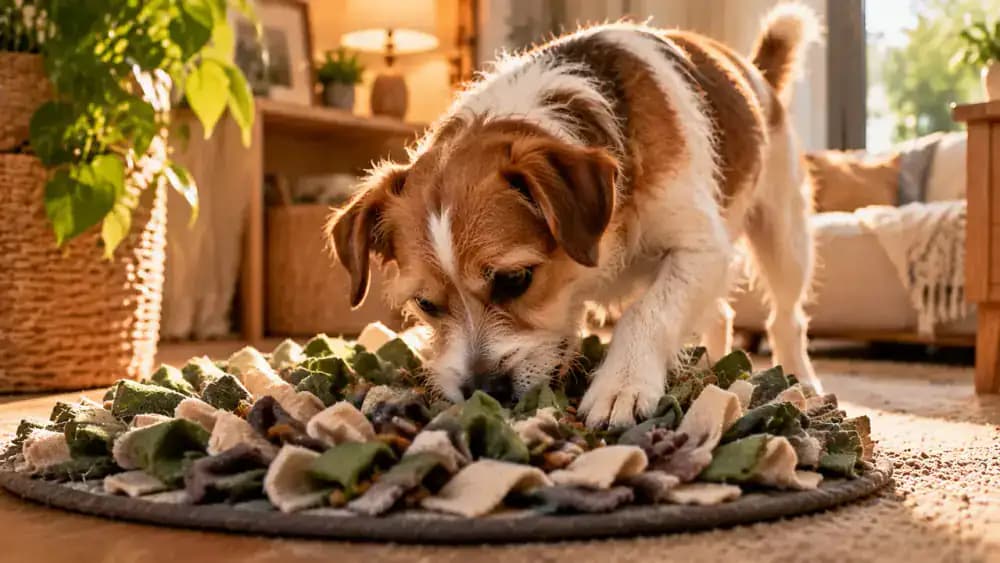
A snuffle mat offers another way to make ordinary kibble more engaging without requiring a complicated puzzle. Scatter a small portion of your dog's measured food across the mat's fabric folds and let your dog sniff at a comfortable pace. Supervise closely, especially if your dog chews fabric, and remove the mat when the activity ends.
Make Feeding Interactive
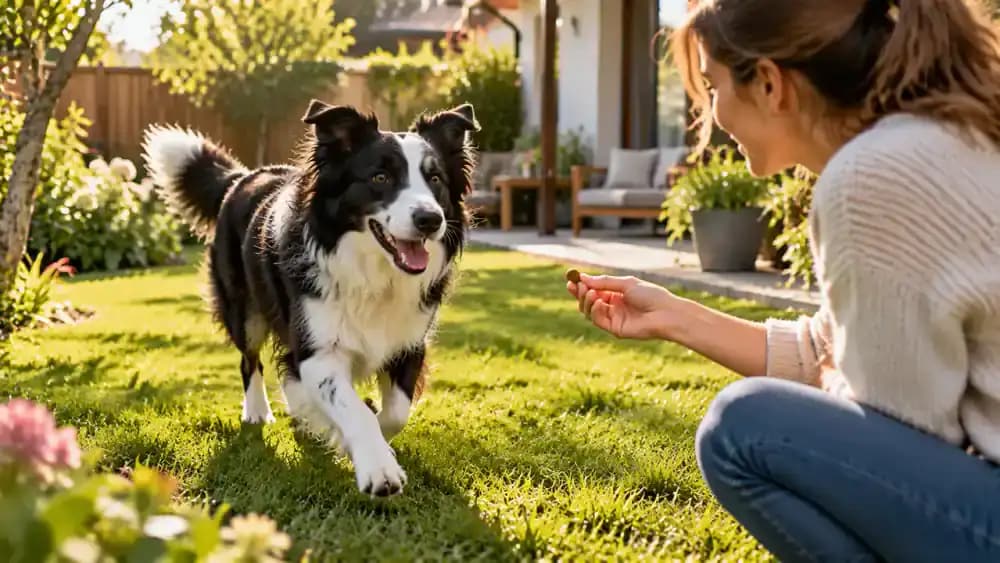
If your dog enjoys spending time with you, make part of mealtime a simple shared activity. Call your dog using a familiar cue, then reward its response with a piece of kibble from the measured daily portion. Keep interactions relaxed and requests easy to follow. If your dog seems distracted or tired, return to its usual feeding routine without pressure.
Find a Comfortable Time
Choose a time when your dog can explore food without feeling rushed or overwhelmed by household activity. Some dogs settle comfortably after a gentle walk, while others prefer a quiet pause before eating. Offer fresh water, allow time to relax, and introduce a familiar puzzle when your dog seems ready. Consistent timing can help enrichment fit naturally into everyday life.
Include Children Safely
Children can help prepare simple food searches when an adult manages the setup and supervises the entire activity. Show them how to place kibble in designated spots, then have them step back while the dog explores. Teach children never to grab the toy, crowd the dog, or reach toward its food. Calm boundaries help protect both the child and the dog.
Notice What Works
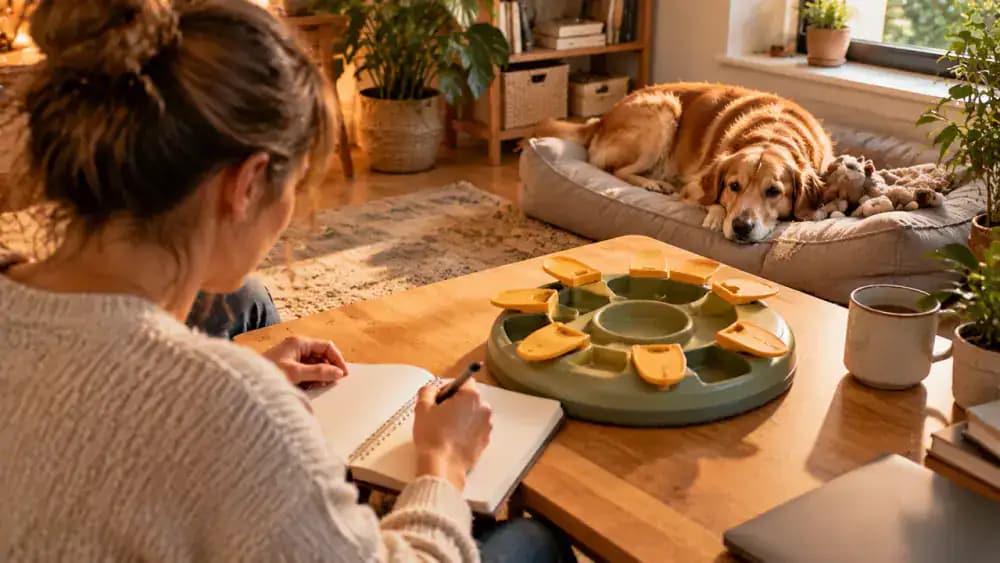
After each session, take a moment to consider which activity your dog enjoyed, how easily the food was found, and whether anything seemed frustrating. A few brief notes can help you remember successful choices without creating extra work. Repeat activities that suit your dog, adjust those that prove difficult, and let your observations guide changes rather than increasing the challenge automatically.
Let Enjoyment Lead
Keep your dog's enrichment routine flexible instead of treating every meal like a task to complete. Some days, a short kibble search may be enjoyable; other days, a familiar food dispenser may be a better fit. Focus on comfortable engagement rather than finishing a puzzle. Repeat activities your dog enjoys, and allow the routine to change naturally over time.
Adapt Enrichment as Your Dog Ages
Your dog's enrichment preferences and abilities may change with age, so adjust activities to keep them accessible. A younger dog may enjoy searching for scattered kibble, while an older dog may prefer food arranged in a shallow tray or on an easy-to-reach mat. Watch for changes in mobility, vision, appetite, or stamina, and consult your veterinarian when feeding needs change.
Manage Enrichment in Multi-Dog Homes
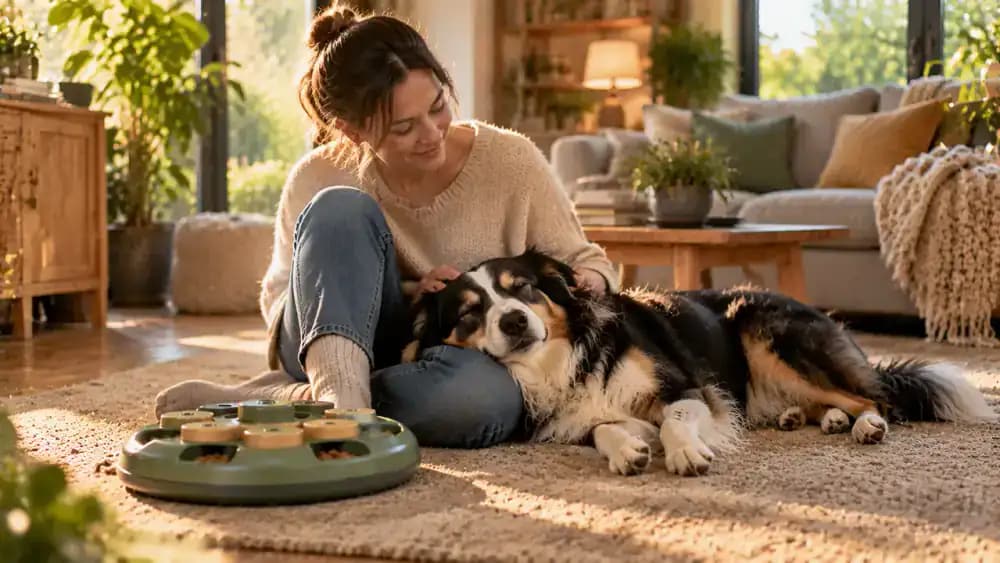
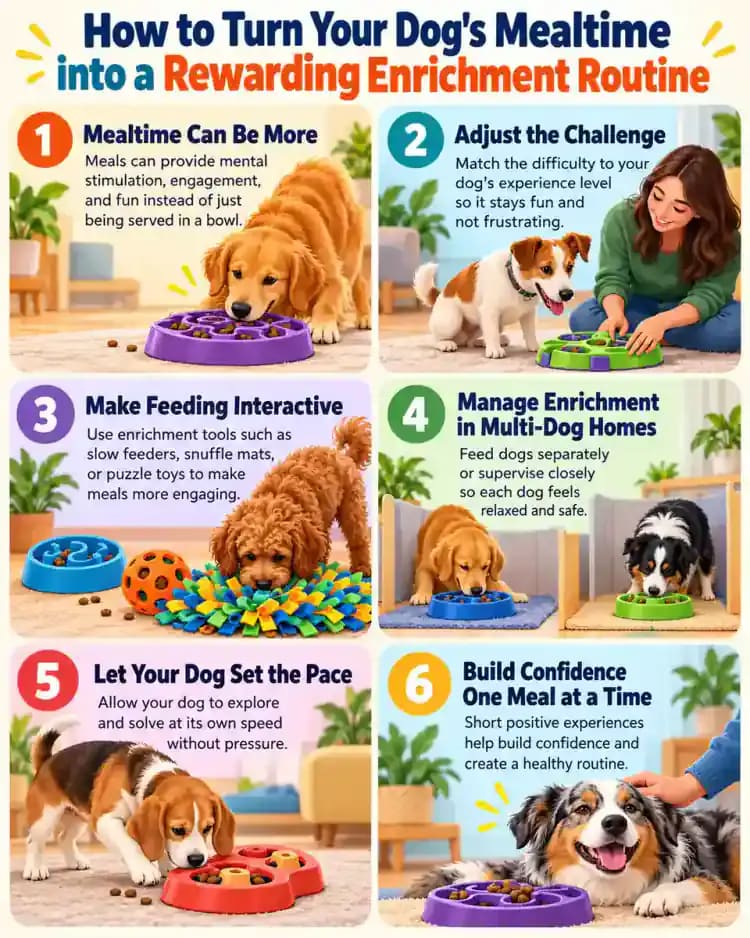
When several dogs share a home, give each one a separate space for food puzzles or kibble searches. Use secure barriers or separate rooms to prevent dogs from competing for food or interfering with one another's activities. Supervise each dog and pay attention to any signs of tension around food. Individual sessions can help make enrichment calmer and more manageable.
Keep Enrichment Portable
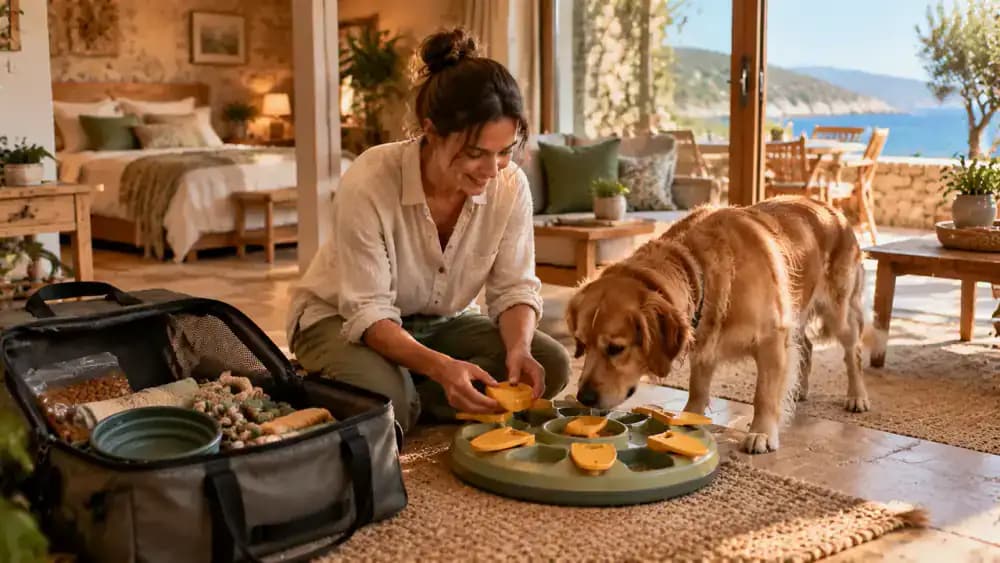
A familiar food puzzle can make it easier to maintain your dog's enrichment routine while traveling or adjusting to a new schedule. Pack a clean, undamaged toy and use part of the measured daily food portion. Set up in a secure, tidy room, away from luggage, cleaning products, and other hazards. Keep the activity simple so your dog can explore comfortably in unfamiliar surroundings.
Respect Changing Appetite
If your dog sniffs a puzzle and walks away, avoid forcing participation. The timing, surroundings, or activity may not suit that moment, so calmly offer the usual meal in a familiar spot. Keep track of noticeable changes in eating habits. If reduced appetite persists or occurs alongside other concerning changes, contact your veterinarian rather than relying on enrichment adjustments alone.
Refresh Familiar Activities
You can keep enrichment interesting without buying new equipment or making every activity harder. Try spacing kibble differently across a familiar mat, using a dispenser your dog already knows, or moving a simple search to another safe room. Introduce one variation at a time, supervise closely, and return to an easier setup if your dog loses interest.
Make Enrichment Part of Balanced Care
Food enrichment works best as one part of your dog's everyday care. Continue providing appropriate walks, comfortable rest, social interaction, and balanced nutrition alongside short, supervised feeding activities. Choose options that fit your dog's needs and daily schedule rather than relying on one puzzle for everything. Inspect equipment regularly, clean it as directed, and put it away when the session ends.
Start Small and Celebrate Progress
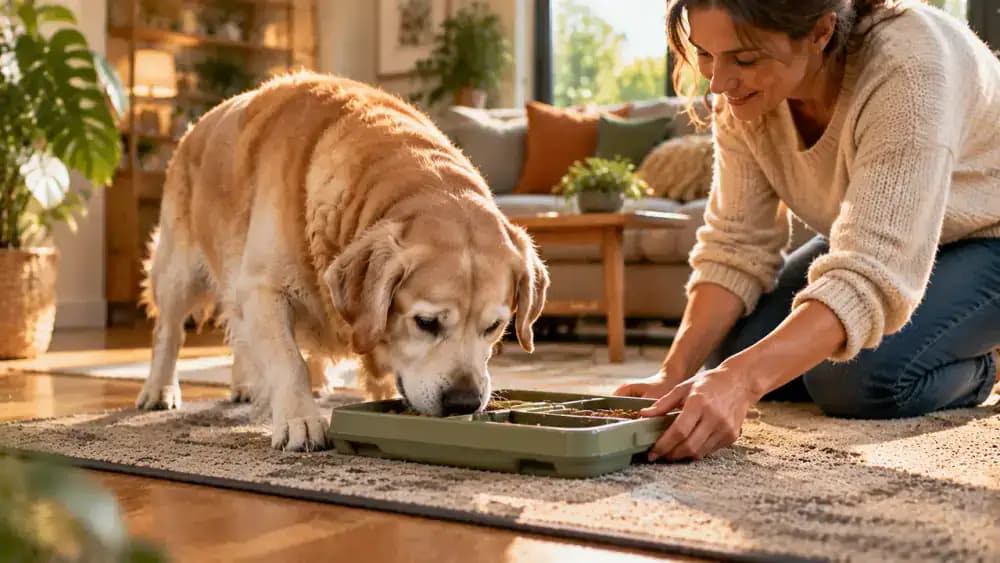
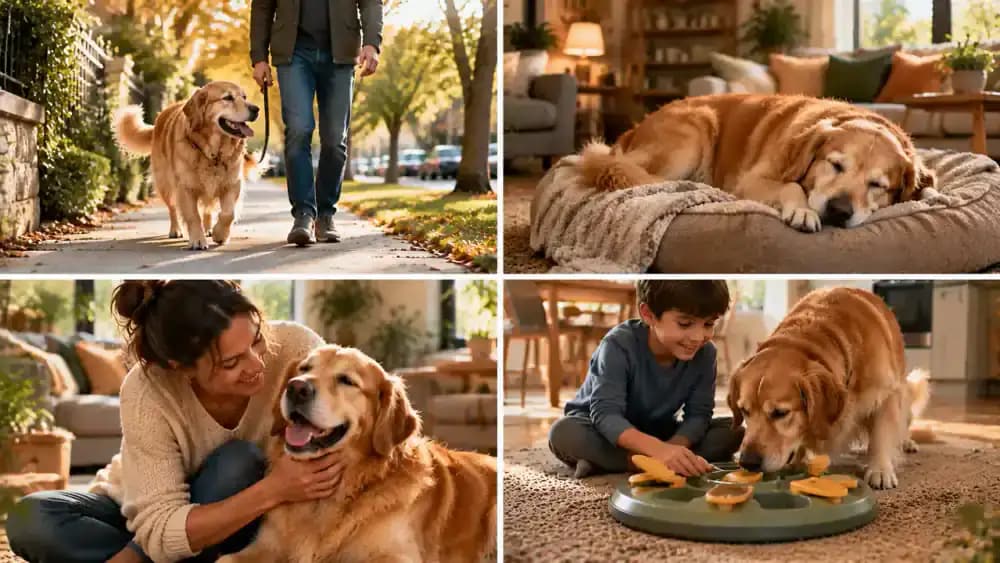
Begin with one simple activity and a small portion of your dog's regular measured meal. Offer a beginner-friendly food puzzle, stay nearby, and notice how your dog responds. Repeat what works and simplify anything that feels difficult. There is no need to buy several toys or create elaborate games. Small, enjoyable changes can make ordinary feeding more engaging over time.
Let Your Dog Set the Pace
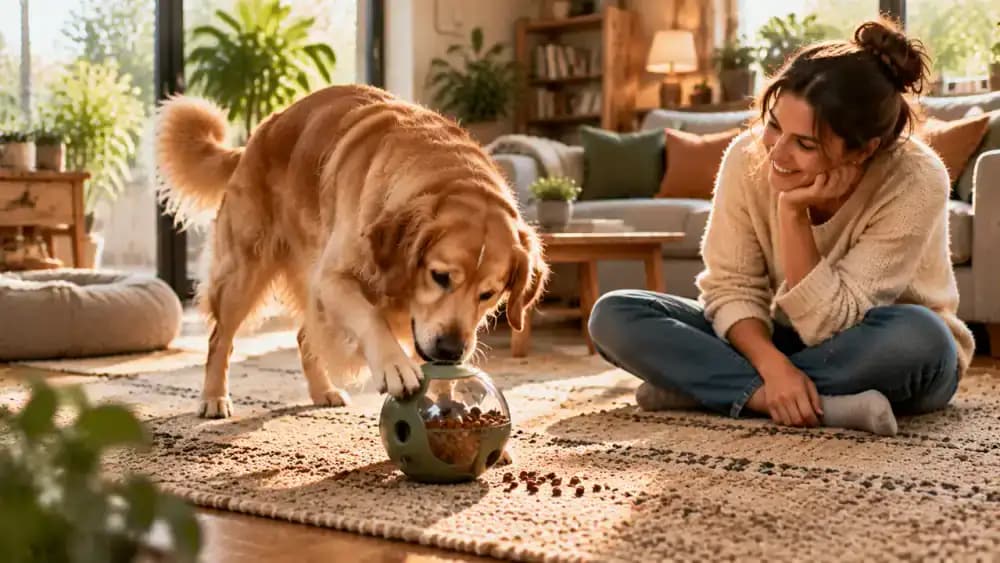
Give your dog enough time to explore an enrichment tray without rushing or adding extra obstacles. Some dogs investigate each piece carefully, while others move through the activity more quickly. Allow your dog to make choices at a comfortable pace, and keep the surroundings calm. Once the food is gone, remove the tray and let your dog relax.
Vary the Search Without Adding Difficulty
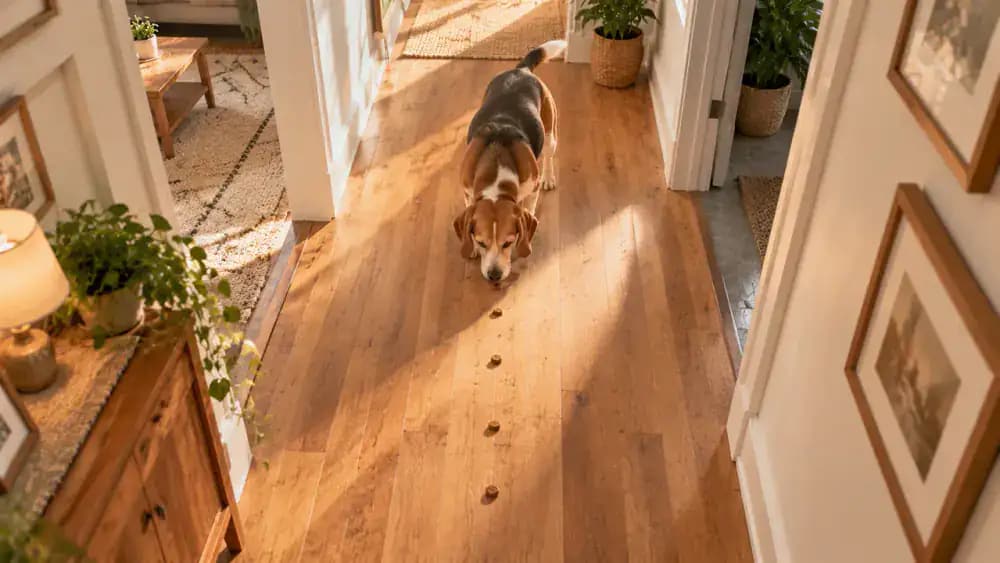
Once your dog understands a simple food search, change the arrangement without making the task harder. Place a few individual kibble pieces in plain sight along a clear, level path and invite your dog to investigate. Keep each piece easy to reach, leave plenty of room to move, and avoid stairs, sharp edges, unstable furniture, or other hazards.
Read Your Dog's Body Language
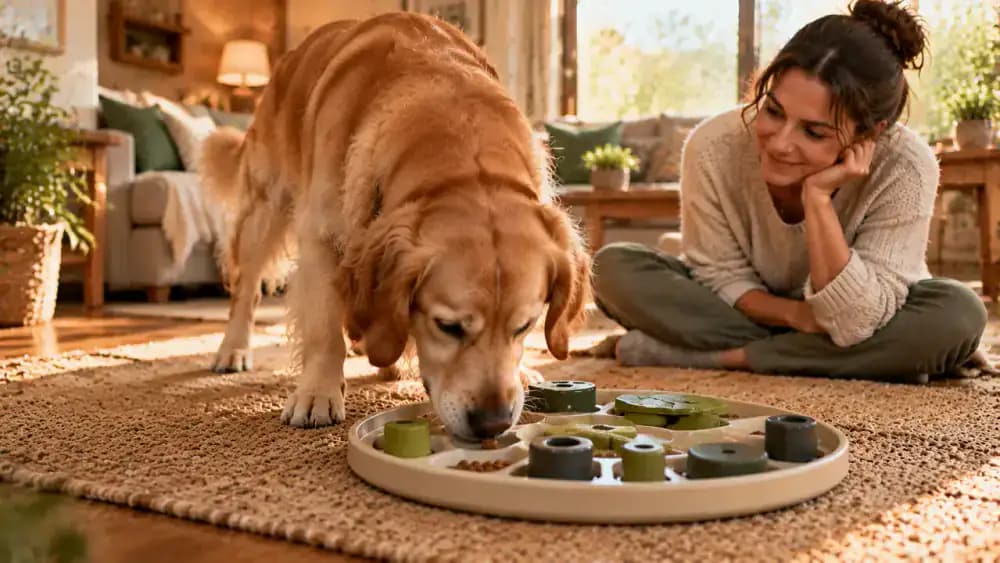
Pay attention to your dog's overall body language throughout each enrichment session. Relaxed movement, steady sniffing, and willingly returning to the activity can suggest the task is manageable. Repeated pawing, whining, or walking away may indicate frustration, distraction, or a lack of interest. Simplify the activity, offer a break, or stop for now rather than insisting your dog continue.
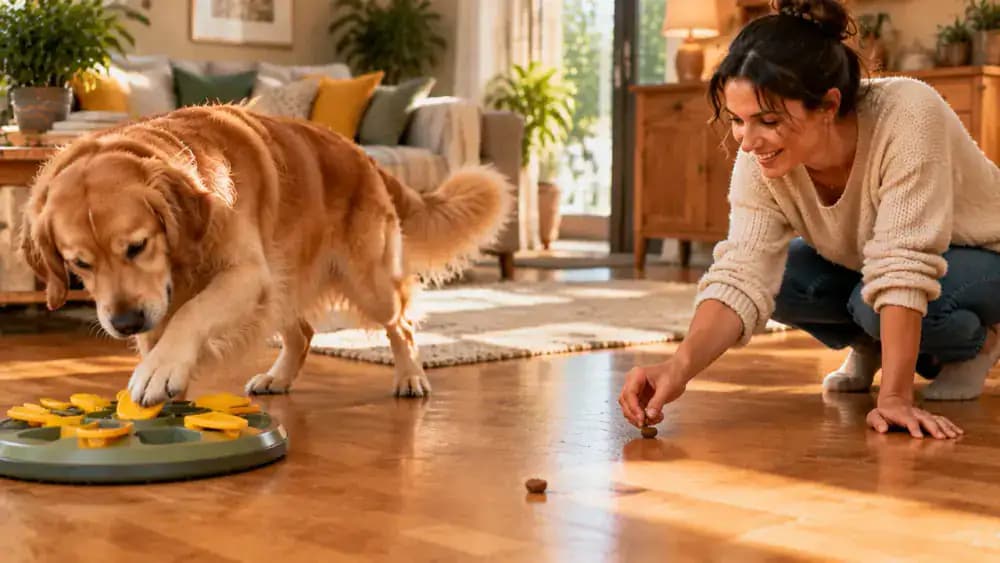
Choose Equipment That Stays Safe
Select food-dispensing equipment that suits your dog's size, chewing habits, and ability to handle the toy safely. Avoid items with detachable pieces that could be swallowed, and discard toys that are cracked or damaged. Place the toy on a stable surface and stay close while your dog uses it. Put enrichment equipment away after each supervised session.
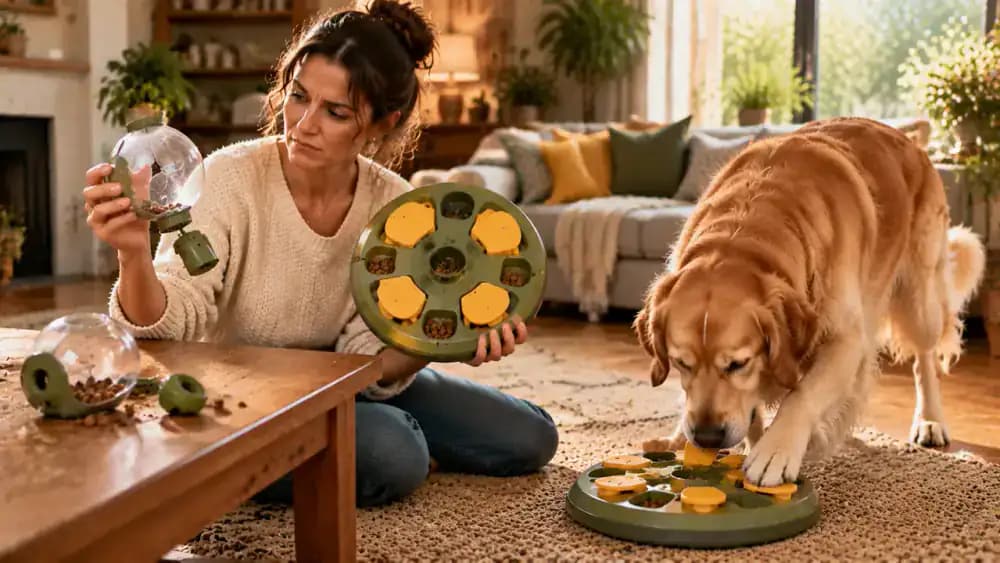
Finish With a Quick Cleanup
When the activity ends, collect uneaten kibble and check nearby areas for pieces that rolled beneath furniture. Wash the food toy according to the manufacturer's instructions and allow it to dry properly before storing it. Keep equipment in a closed cupboard or another secure location beyond your dog's reach. A quick cleanup keeps the feeding area tidy and ready for next time.
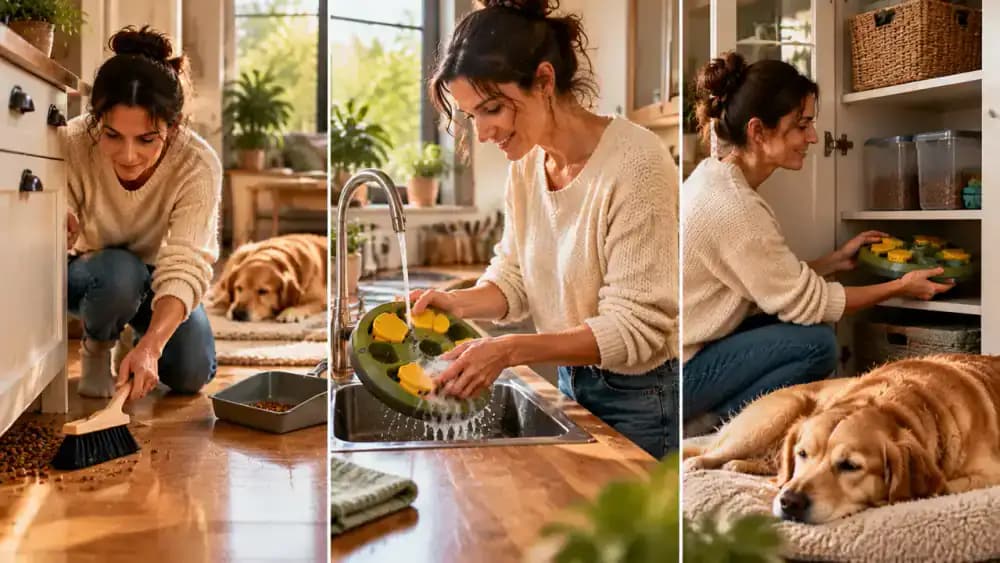
Fit Enrichment Into Everyday Life
Make enrichment easier to maintain by connecting it to meals already in your daily schedule. A food dispenser may suit a busy morning, while a short kibble search may fit a quieter evening. Keep portions measured and choose activities that suit your dog's interest and energy. A flexible routine is easier to repeat than one that requires extra time or complicated preparation.
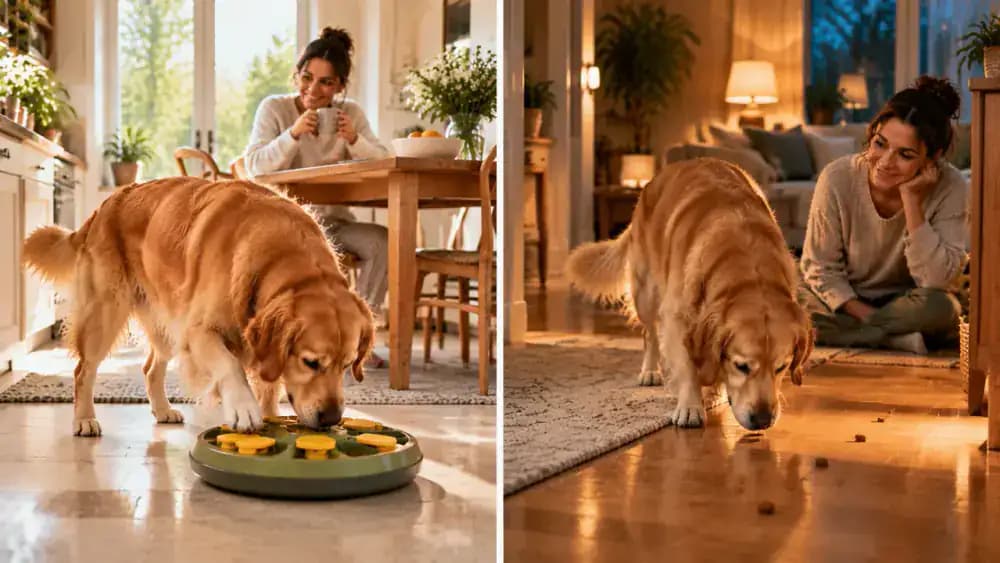
Build Confidence One Meal at a Time
Use your observations to decide when to repeat a familiar activity and when to introduce a small variation. Your dog does not need a harder puzzle at every meal to benefit from enrichment. Keep activities safe, accessible, and enjoyable, and supervise throughout each session. By building on familiar successes and respecting your dog's pace, you can develop a routine that feels rewarding and sustainable.
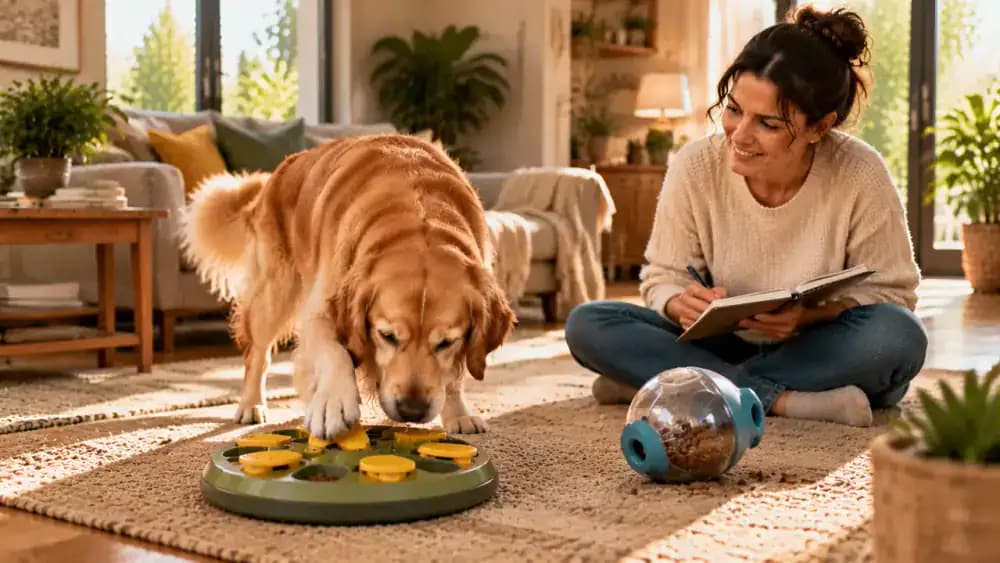
Your dog's daily meals can do more than fill a food bowl. With a few simple changes, feeding time can become an opportunity to sniff, explore, and solve small problems while enjoying familiar food. Dog mealtime enrichment does not need to involve expensive equipment or complicated games. Often, a beginner-friendly food-dispensing toy or a short kibble search is enough to make an ordinary meal more interesting.
The key is to keep each activity safe, rewarding, and appropriate for your individual dog. Start with a portion of your dog's regular, measured daily food rather than adding extra treats or calories. Choose an activity your dog can understand quickly, and make the first session easy enough to encourage success. A toy that releases food readily or a handful of kibble placed in a few accessible spots can provide a useful starting point.
Stay nearby while your dog explores, particularly when introducing new equipment or hiding food. Watch for signs that the activity is enjoyable, such as relaxed movement, interested sniffing, and continued engagement. If your dog becomes frustrated, loses interest, or starts chewing equipment aggressively, simplify the activity or end the session. Individual preferences and abilities vary, so there is no need to rush toward harder challenges.
By combining simple food puzzles, supervised searching, and consistent portion management, you can build a flexible routine around your existing schedule. Start with one activity, make adjustments as needed, and let your dog set a comfortable pace.
Where people go wrong
Making the first challenge too difficult. A complicated puzzle or deeply hidden kibble can leave a beginner unsure how to participate. Start with a toy that releases food easily or place a few pieces in plain sight. Let your dog experience success before introducing additional difficulty. If interest drops or frustration appears, simplify the setup rather than encouraging your dog to keep struggling.
Adding enrichment food on top of regular meals. Treats and puzzle food still contribute to your dog's daily calorie intake. Using extra food for every activity can gradually increase the amount your dog receives. Set aside part of the normal daily ration before feeding begins, and count any additional treats toward the overall allowance. Follow veterinary guidance if your dog has specific nutritional or weight-management needs.
Choosing a toy that does not suit your dog. A toy that is too small, fragile, difficult to clean, or easy to swallow may create avoidable risks. Consider your dog's size, jaw strength, chewing style, and previous experience with food puzzles before selecting equipment. Inspect the toy for damage before and after use, follow the manufacturer's guidance, and remove it if pieces crack, loosen, or break off.
Leaving a dog unsupervised with enrichment equipment. Even a product designed for dogs can become unsafe if it is chewed apart or used in an unexpected way. Stay present during new activities and observe how your dog handles the equipment. Avoid toys with accessible loose parts or damaged components. If your dog tends to swallow nonfood objects or aggressively dismantles toys, choose a simpler supervised activity and ask your veterinarian for individualized guidance.
Hiding kibble in unsuitable locations. Food searches should encourage exploration without sending your dog into unsafe or inaccessible spaces. Avoid areas near cleaning products, electrical cords, hot appliances, stairs, unstable furniture, or objects that could be swallowed. Begin with a few visible pieces on a clear floor, then use only easy-to-reach hiding spots. Count the food afterward so you can account for the portion used.
Ignoring signs of frustration or discomfort. Not every dog enjoys the same feeding activity, and a lack of interest does not mean the dog needs a harder challenge. Watch for repeated unsuccessful attempts, disengagement, tense behavior, or increasingly forceful chewing. Pause the session and make the next attempt easier, shorter, or more familiar. Stop if your dog appears uncomfortable, and seek veterinary advice for persistent eating difficulties or concerning changes.
Turning enrichment into a long, demanding session. A feeding game should fit comfortably into everyday life rather than becoming another source of pressure. Lengthy sessions or repeated challenges can be frustrating for dogs that are new to the activity, easily distracted, or uncomfortable with the equipment. Start with a few minutes, end while the activity remains manageable, and adjust the duration to your dog's interest and abilities.
Forgetting cleanup and equipment maintenance. Food residue, moisture, and damaged surfaces can make feeding equipment less suitable for continued use. Remove leftover food, clean toys according to the manufacturer's instructions, and allow them to dry appropriately. Check for cracks, sharp edges, loose components, or trapped debris before the next session. Keep enrichment supplies stored safely so they remain clean and unavailable for unsupervised chewing.
Questions people ask
Dog mealtime enrichment means offering some of your dog's regular food through activities that encourage natural behaviors such as sniffing, exploring, and working out simple ways to access food. Examples include beginner-friendly dispensing toys and supervised kibble searches. The aim is to make feeding more engaging while keeping the experience safe, manageable, and appropriate for your dog's individual preferences and abilities.
Fixed it?
Get one guide like this every Thursday.