The True Cost of Payday Loans: Fees, APR, and Debt Traps
Payday loans can turn a small emergency expense into expensive debt. Learn how fees work, why APRs can approach 400%, how rollovers increase borrowing costs, and which alternatives may help you avoid the debt cycle.
What you’ll need
Tap to tick things off before you start.
What Is a Payday Loan and How Does It Work?
A payday loan is a short-term, high-cost loan generally intended to cover expenses until the borrower's next paycheck. According to the Consumer Financial Protection Bureau (CFPB), these loans typically involve $500 or less and often require repayment within two to four weeks. Borrowers receive money upfront and agree to repay the principal plus finance charges. Unlike installment loans, traditional payday loans usually require one lump-sum payment rather than smaller payments spread across several months.

How Payday Lenders Collect Repayment
Payday lenders commonly collect repayment through a post-dated check or authorization to withdraw funds electronically from a borrower's checking account. The agreed amount generally becomes payable on the scheduled due date. Traditional payday lenders often rely on income verification and access to an account rather than a comprehensive evaluation of existing financial obligations. This limited underwriting does not eliminate the borrower's responsibility to repay. Understanding the payment authorization is particularly important because withdrawals may occur automatically.

Understanding Payday Loan Fees
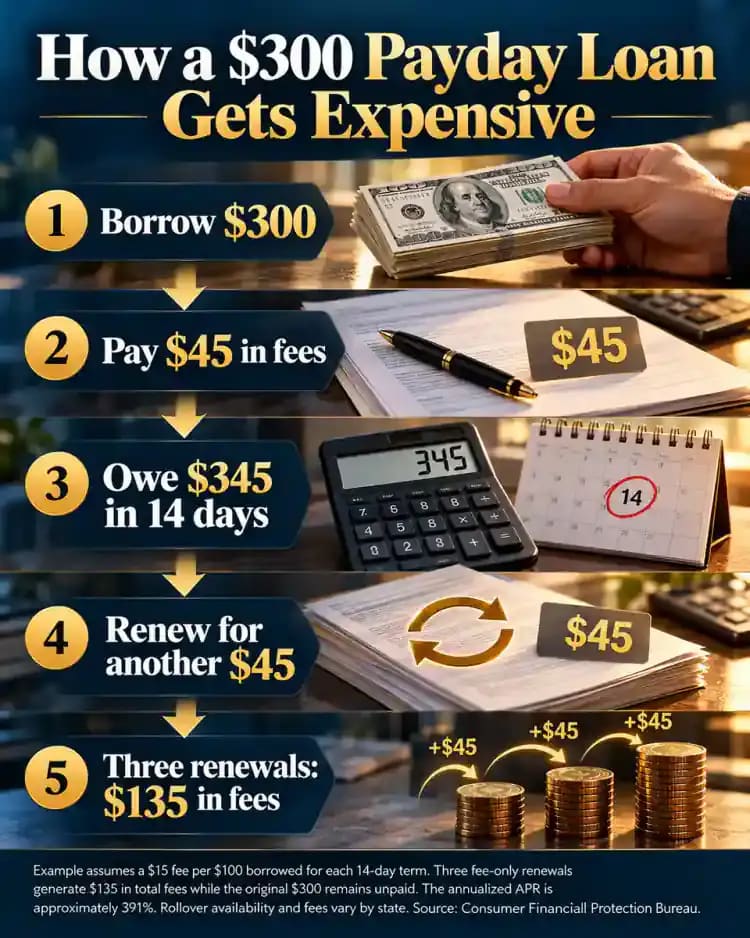
Payday loan costs are commonly expressed as a fixed finance charge for every $100 borrowed. The CFPB identifies typical charges ranging from $10 to $30 per $100, although actual fees vary. At $15 per $100, borrowing $300 produces a $45 finance charge. The borrower receives $300 but owes $345 at repayment. A higher fee of $30 per $100 would increase the charge to $90. These examples exclude any other applicable charges.

Why the Two-Week Repayment Deadline Matters
A two-week repayment deadline can create pressure when household income is already committed to essential expenses. Consider someone expecting a $1,200 paycheck but needing $750 for rent, $200 for groceries, and $150 for utilities. Only $100 remains before transportation and other obligations. A $345 payday loan payment would exceed that available amount. The central concern is cash flow: receiving a paycheck does not necessarily mean enough money remains to repay a loan comfortably.

How Payday Loan Rollovers Increase Costs
When permitted by state law, a payday loan rollover extends the repayment deadline in exchange for another fee. Suppose a $300 loan carries a $45 charge. Paying $45 to renew it may leave the entire $300 principal outstanding. Three such renewals would generate $135 in additional fees, beyond the original $45 charge. The borrower would have paid $180 in total fees while still owing $300. These charges accumulate through repeated renewals, not necessarily compound as interest.

Why Payday Loans Can Become Debt Traps
Research published by the CFPB in 2014 found that four out of five payday loans were rolled over or renewed within 14 days. The study also reported that 22% of new loans were renewed six times or more. These historical findings highlight the risk of repeated borrowing. Some borrowers continue paying charges while making little progress toward eliminating debt. Over time, cumulative fees can exceed the original amount borrowed, placing additional strain on household finances.

How to Calculate Payday Loan APR
Annual percentage rate, or APR, expresses borrowing costs as an annualized percentage. Consider a $100 payday loan with a $15 finance charge and a 14-day term. Divide $15 by $100 to obtain 15%, then multiply by 365 divided by 14. The result is approximately 391% APR using this simplified calculation. The CFPB describes this as nearly 400%. This annualized comparison does not mean a borrower automatically pays 391% for one two-week loan.

Payday Loan Laws and State Consumer Protections
Payday lending regulations differ significantly across the United States. Some states prohibit conventional high-cost payday loans through interest rate caps, while others allow them subject to restrictions. Rules may limit loan amounts, finance charges, renewals, or repayment periods. Certain states also require eligible lenders to provide extended repayment arrangements, sometimes without additional finance charges. These protections are not universal. Consumers can consult their state financial regulator to understand which requirements apply to lenders operating in their jurisdiction.

Questions to Ask Before Taking a Payday Loan
Before signing a payday loan agreement, several questions help clarify the obligation. What is the exact finance charge, disclosed APR, and total repayment amount? When is payment due, and what happens if funds are unavailable? Does the lender require automatic bank withdrawals? What additional charges or renewal conditions apply? Does the written agreement clearly explain these terms? Finally, is the repayment affordable after essential expenses? Clear answers make the financial commitment easier to evaluate.

Lower-Cost Alternatives to Payday Loans
Several options may provide emergency funds at lower cost than payday loans. Some federal credit unions offer Payday Alternative Loans with regulated terms and fees. Community nonprofits and local assistance programs may help cover urgent housing, utility, or food expenses. Creditors and service providers sometimes offer payment extensions or hardship arrangements. Eligibility, availability, and costs vary considerably. Comparing total repayment obligations and contacting assistance organizations can reveal options that avoid the expense of conventional payday lending.

What to Do If You Cannot Repay Your Payday Loan
If a payday loan payment appears unaffordable, contacting the lender before the due date may help clarify available options. Review the original agreement, current balance, payment deadline, and outstanding charges. Explain the repayment difficulty and request information about possible arrangements in writing. Essential household expenses, including housing, food, and utilities, should be considered when evaluating payment commitments. Ignoring the deadline can complicate matters, while early communication creates an opportunity to understand potential consequences.

How Extended Repayment Plans Work
An extended repayment plan allows an eligible borrower to repay an outstanding payday loan through smaller installments rather than one large payment. Some state laws require qualifying lenders to offer these arrangements, sometimes without additional finance charges. Eligibility requirements, application deadlines, and installment schedules vary by jurisdiction. Borrowers may need to request the plan before the original due date. Written confirmation should identify payment amounts, deadlines, remaining principal, and whether additional fees apply.

What Happens When a Payday Loan Payment Fails
When an authorized payday loan withdrawal exceeds the available checking account balance, the transaction may be declined or trigger an overdraft, depending on bank policies. Lenders may also impose returned payment charges where permitted. Repeated withdrawal attempts can create additional complications. Bank account monitoring helps identify attempted debits, insufficient funds charges, and unexpected transactions. The Consumer Financial Protection Bureau provides information about federal restrictions on certain repeated withdrawal attempts and applicable consumer protections.

Payday Loan Collections and Your Rights
Unpaid payday loans may be transferred or sold to collection agencies, depending on the lender and agreement. Federal debt collection protections generally prohibit covered third-party collectors from using harassment, deception, or unfair practices. Consumers may have rights to receive debt validation information and dispute inaccurate claims within applicable deadlines. Collection rules differ depending on who owns and collects the debt. A qualified consumer attorney can explain available protections when collection demands appear improper or legally questionable.

Can Payday Loans Affect Your Credit Score?
Traditional payday lenders often do not report routine repayment activity to the three major credit bureaus, meaning timely payments generally do not help establish credit history. However, reporting practices vary by lender and loan product. An unpaid balance transferred to collections may eventually appear on a credit report if a collection account is reported. Credit scoring consequences depend on the reporting information and scoring model. Reviewing credit reports can help identify inaccurate or unexpected entries.

How to Compare Emergency Borrowing Offers
Comparing emergency loan offers requires more than examining the advertised payment amount. Review each lender's APR, finance charges, total repayment obligation, loan duration, and payment schedule. A longer repayment period may reduce individual payments while increasing overall interest costs. Consider whether installments fit within ordinary income after essential expenses. Compare identical borrowing amounts whenever possible and examine penalties or additional charges. Written disclosures provide a more reliable basis for comparison than promotional claims alone.

How to Spot Predatory Lending Warning Signs
Warning signs of potentially predatory lending include unclear fee disclosures, pressure to sign immediately, misleading affordability claims, and refusal to provide complete written terms. Excessive charges or promises of guaranteed approval without meaningful explanations deserve scrutiny. Another concern is a lender encouraging repeated borrowing rather than discussing repayment obligations. Suspicious requests for upfront payments through gift cards or cryptocurrency may indicate fraud. Verifying lender information and examining documentation can expose problems before an agreement is signed.

Where to Get Free or Low-Cost Debt Help
Nonprofit credit counseling organizations can explain budgeting, debt management, and possible repayment approaches. Some provide an initial consultation without charge, although other services may carry fees. State financial regulators can help consumers understand licensing requirements and complaint procedures. The Consumer Financial Protection Bureau also accepts complaints about financial products and services. Legal aid organizations may assist eligible individuals with consumer debt disputes. Checking credentials, service costs, and organizational reputation helps distinguish legitimate assistance from questionable debt relief businesses.

How to Break the Payday Loan Borrowing Cycle
Escaping repeated payday borrowing begins with understanding every outstanding balance, payment deadline, and recurring household obligation. A realistic repayment budget distinguishes essential spending from expenses that can temporarily change. Negotiating manageable payment arrangements may reduce pressure from immediate deadlines. Taking another expensive loan to cover an existing one can extend the problem rather than resolve it. Tracking progress against principal balances helps reveal whether payments are actually reducing debt instead of merely covering charges.

Building an Emergency Fund to Avoid Future Payday Loans
An emergency fund creates a financial buffer for unexpected expenses without requiring immediate borrowing. Starting with a modest target, such as $100 or $500, can make saving more approachable. Small automatic transfers after payday help establish consistency, while separate savings accounts reduce the temptation to spend reserves. Irregular expenses, including vehicle maintenance and medical bills, can also be anticipated through planned contributions. Rebuilding savings after each emergency gradually strengthens household financial resilience.

The Difference Between APR and Total Loan Costs
APR and total loan costs describe different aspects of borrowing. APR expresses the cost of credit as an annualized percentage, making loans with different terms easier to compare. Total loan costs represent the actual dollar amount paid in finance charges. For example, a $100 payday loan with a $15 fee over 14 days has an approximate APR of 391%, but the initial finance charge is $15. The borrower does not automatically pay a year's worth of charges.

How Payday Loan Costs Change With Loan Duration
The longer a payday loan remains outstanding, the more expensive it may become when additional renewal fees apply. Consider a $300 loan with a $45 charge every 14 days. One term costs $45 in fees, two terms cost $90, and four terms cost $180, assuming permitted fee-only renewals. These amounts represent accumulated flat charges rather than automatically compounded interest. Actual costs depend on repayment timing, lender terms, applicable restrictions, and whether principal payments reduce the outstanding balance.

Why Payday Lending Regulations Differ Across the US
Payday lending is regulated through a combination of federal consumer protection laws and state requirements. States establish many of the rules governing whether conventional payday lenders can operate and under what conditions. Some jurisdictions impose strict restrictions, while others permit higher-cost lending with specific safeguards. There is no universal federal interest rate ceiling covering every civilian payday loan. Federal protections address certain lending practices, but the rules governing a particular transaction often depend on the borrower's state.

How Interest Rate Caps Restrict Payday Lending
Interest rate caps limit the amount lenders can charge for covered loans. Depending on state law, these ceilings may apply to interest, certain fees, or the total cost of credit. Strict caps can make conventional payday lending financially unattractive, effectively restricting that business model. Other jurisdictions permit higher charges under different conditions. A cap does not necessarily eliminate every form of short-term borrowing, since alternative products may operate under separate rules. Coverage and exemptions require careful attention.

Loan Amount Limits and Minimum Repayment Terms
Some states regulate payday lending by limiting principal amounts or requiring minimum repayment periods. A maximum loan amount restricts how much a borrower can receive through a covered transaction. Minimum loan terms provide more time before repayment becomes due, potentially reducing pressure from extremely short deadlines. These protections operate differently from interest rate restrictions because they address loan size and repayment timing. Specific thresholds, exceptions, and eligible products vary, making current state requirements essential for accurate comparisons.

How to Verify a Payday Lender's Legal Status
Checking a payday lender's legal status begins with identifying its registered business name, physical address, and relevant operating entity. State financial regulators often maintain searchable licensing databases or provide verification assistance. A lender's advertising name may differ from its registered legal name, making accurate identification important. Licensing requirements also vary by jurisdiction and business model. A license alone does not guarantee favorable terms or lawful conduct, but discrepancies between business claims and regulatory records deserve further examination.

How to Request and Keep Loan Documentation
Accurate loan records help borrowers track obligations and identify discrepancies. Useful documents include the signed agreement, original disclosures, payment receipts, transaction history, fee statements, and current payoff balance. Any changes to deadlines, repayment arrangements, or charges should ideally be confirmed in writing. Keeping dated copies of correspondence can also establish what was communicated and when. Digital records should be stored securely, while paper documents need protection from loss, damage, or unauthorized access.

What to Check Before Authorizing a Bank Debit
Before authorizing electronic withdrawals, borrowers should understand the amount, scheduled date, and frequency of each debit. The agreement should explain whether the lender can attempt additional withdrawals after an unsuccessful payment and how authorization changes are handled. Unexpected transactions can be reviewed against account statements and reported through the bank's dispute process. Revoking authorization may stop certain future debits but does not cancel the underlying debt. Federal rules and bank procedures can affect available protections and deadlines.

How to Calculate Your True Repayment Capacity
Repayment capacity measures how much money remains after unavoidable expenses are covered. For example, someone expecting $1,500 in take-home pay might have $900 in housing expenses, $250 for groceries, $150 for transportation, and $100 in utilities. That leaves $100 before other obligations or unexpected costs. A required $345 payment would therefore create a $245 shortfall. This calculation illustrates why gross income or paycheck size alone cannot establish affordability. Timing and existing commitments also matter.

Making a Final Payday Loan Decision
A payday loan decision involves several connected considerations: the immediate need for funds, the full borrowing cost, repayment certainty, lender transparency, and applicable consumer protections. A manageable transaction requires more than approval from a lender. Its obligations must also fit the borrower's financial circumstances without creating an unavoidable shortage. Unclear disclosures, uncertain repayment funds, or dependence on future renewals signal elevated risk. Evaluating these factors together provides a more complete picture than considering loan availability alone.

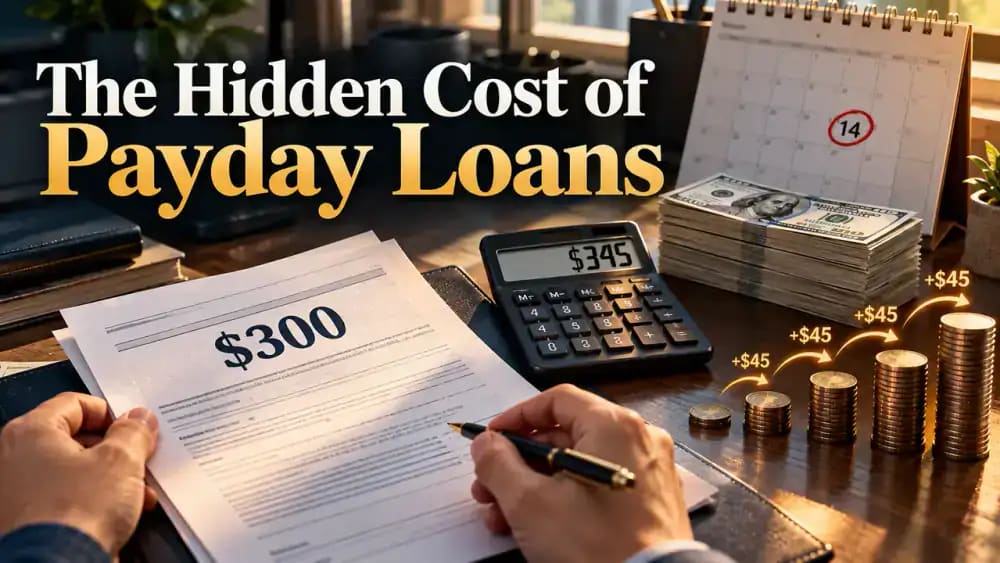
A $300 payday loan might seem like a simple way to cover an unexpected car repair, utility bill, or medical expense. But what happens when borrowing $300 means repaying $345 just two weeks later, and you still need money for rent, groceries, and other essentials?
That $45 fee represents 15% of the amount borrowed in just 14 days. Expressed as an annual percentage rate, or APR, the borrowing cost is approximately 391%. You do not have to keep the loan for an entire year to face substantial costs. The APR simply makes it easier to compare short-term borrowing with other forms of credit.
The bigger problem often begins when the payment comes due. If your state permits payday loan rollovers, you may be able to pay another fee to extend the deadline. However, paying that fee typically does not reduce your original loan balance. Three $45 renewal fees would cost another $135 while leaving the $300 principal unpaid.
The Consumer Financial Protection Bureau has reported that four out of five payday loans in its research were rolled over or renewed within 14 days. That finding illustrates how frequently short-term borrowing can lead to repeated transactions and additional costs.
Before accepting a payday loan, you need to understand the total repayment amount, finance charges, APR, withdrawal authorization, and consequences of missing a payment. State laws may provide additional protections, including restrictions on renewals or extended repayment options.
This guide explains how payday loan costs accumulate, which warning signs matter, and how to compare potentially cheaper alternatives before committing to expensive debt.
Where people go wrong
Looking Only at the Dollar Fee. A $45 charge on a $300 loan may sound manageable until you consider the repayment deadline. Compare the APR and total amount due, not just the advertised fee, to understand how expensive the credit really is.
Assuming the Next Paycheck Will Cover Everything. Borrowers sometimes assume their next paycheck will comfortably repay the loan without calculating essential expenses. Subtract rent, utilities, groceries, transportation, and existing obligations first. If repayment creates another cash shortage, the loan may worsen the emergency.
Treating a Rollover as Progress. Paying a renewal fee can extend the deadline without reducing the principal. Repeated renewals may consume significant income while leaving the original balance untouched. Ask for the full repayment schedule and compare available alternatives before extending.
Ignoring State Lending Protections. Payday lending rules differ across states, including restrictions on fees, loan amounts, renewals, and repayment plans. Assuming every lender follows identical rules can mean overlooking valuable protections. Verify current requirements through your state regulator before accepting or renewing a loan.
Overlooking Automatic Bank Withdrawals. Some payday lenders require authorization to debit your checking account. If the withdrawal arrives before sufficient funds are available, additional bank charges or payment complications may follow. Understand the authorization terms and monitor your account balance carefully.
Skipping Lower-Cost Alternatives. Taking the first available payday loan may mean missing cheaper assistance. Credit unions, utility hardship programs, nonprofit organizations, and negotiated payment arrangements can sometimes reduce borrowing costs or eliminate the need for a loan entirely.
Borrowing Again to Repay an Existing Loan. Using another high-cost loan to cover an existing balance can create overlapping deadlines and additional fees. Instead of automatically refinancing the problem, contact the lender about repayment arrangements and consider speaking with a nonprofit credit counselor.
Questions people ask
Payday loan fees commonly range from $10 to $30 for every $100 borrowed, according to the Consumer Financial Protection Bureau. At $15 per $100, a $300 loan costs $45 in fees, making the total repayment $345. Actual costs depend on the lender, loan terms, and applicable state law.
Fixed it?
Get one guide like this every Thursday.