Totaled Car Insurance Payouts: Actual Cash Value, Depreciation, and Gap Insurance Explained
A totaled car can leave you owing more than your insurance pays. Learn how actual cash value is calculated, why depreciation creates loan shortfalls, when gap insurance may help, and how to review your settlement.
What you’ll need
Tap to tick things off before you start.
What Happens When Your Car Is Totaled?
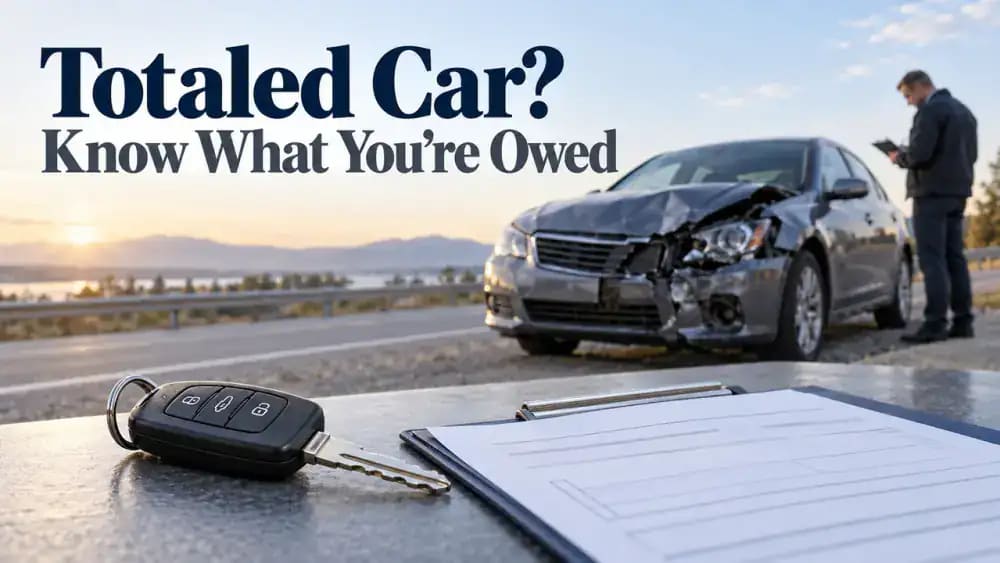
A serious accident, theft, or other covered event can leave your vehicle unusable and trigger a total loss insurance claim. After reporting the incident, the insurer typically investigates coverage, evaluates the vehicle, and determines whether a settlement is appropriate. Meanwhile, you may face transportation expenses, missed work, and ongoing vehicle payments. Understanding the totaled car insurance payout process matters because losing a vehicle can create financial obligations that continue long after the car disappears from your driveway.

When an Insurer Declares a Total Loss
An insurer may declare a vehicle a total loss when repairing it is economically impractical under applicable rules. Adjusters examine structural damage, estimated repair costs, salvage value, and the vehicle's pre-accident worth. Some states establish numerical total loss thresholds, while others apply formulas involving repair expenses and salvage proceeds. Policy language also matters. A car does not necessarily need to be completely destroyed to qualify. Even repairable damage can justify a total loss determination when costs become excessive.

Why Your Auto Loan Does Not Determine Your Payout
Your auto loan and your insurance coverage serve different purposes. The loan establishes how much you must repay under a financing agreement, while standard physical damage coverage generally compensates for the insured vehicle's value under policy terms. A lender's payoff amount does not automatically increase the insurer's valuation. The Consumer Financial Protection Bureau explains that financing agreements and insurance products involve distinct obligations. Consequently, two owners of otherwise identical vehicles may receive similar valuations despite owing dramatically different loan balances.

The Financial Risk of an Unpaid Car Loan
A totaled vehicle does not automatically cancel its financing agreement. Consider a driver with an $18,000 outstanding loan whose covered insurance settlement provides only $14,000 toward that debt. The remaining $4,000 generally remains the borrower's responsibility unless another applicable protection covers it. The lender retains contractual repayment rights even though the collateral has been destroyed. Missed payments may create additional financial consequences. This situation illustrates why a covered insurance loss and complete loan repayment are not necessarily the same outcome.

What Actual Cash Value Really Means
Actual cash value, commonly abbreviated ACV, generally represents what an insured vehicle was worth immediately before the covered loss. It reflects the vehicle's used-market value, including depreciation from age and ordinary wear. ACV is not necessarily what the owner originally paid, what the dealership charged, or what remains on a financing agreement. The precise valuation standard depends on applicable insurance terms and state requirements. Understanding this distinction establishes the basis for interpreting most conventional totaled vehicle settlement offers.
How Insurers Estimate Your Car's Value
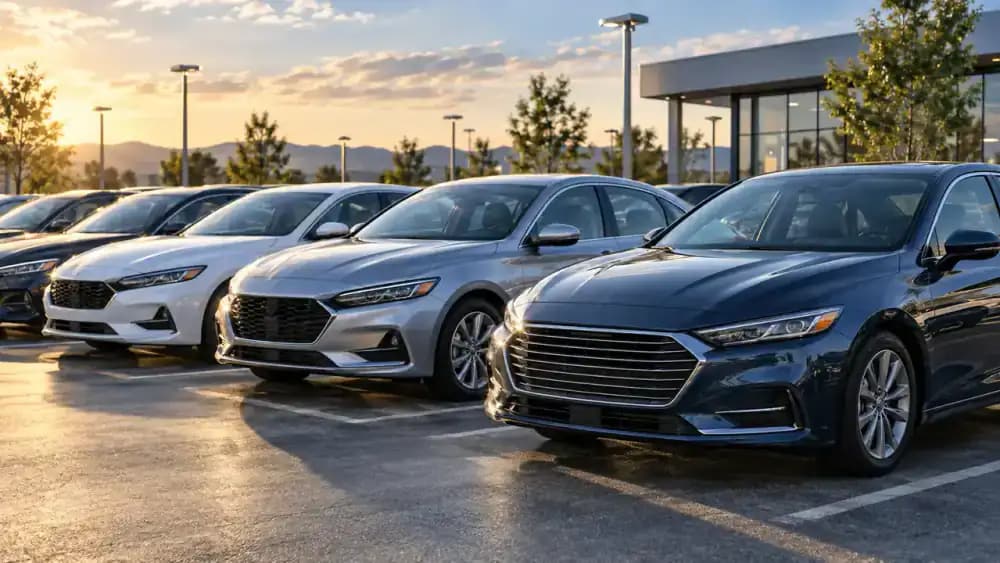
Insurers frequently use vehicle valuation services, market databases, and comparable automobile listings to estimate pre-loss value. A report may identify reference vehicles, establish starting prices, and apply adjustments for differences between those vehicles and the insured car. Adjusters may also consider documented sales information and relevant market conditions. The resulting figure is subject to policy provisions and applicable state standards. Reviewing the report's underlying assumptions can reveal whether the insurer used accurate information and appropriate comparisons.

Why Local Vehicle Prices Matter
Vehicle prices differ across geographic markets because inventory, consumer demand, transportation costs, and regional preferences vary. An appropriate comparison should reflect vehicles reasonably available in the relevant market, rather than relying on unusually cheap listings hundreds of miles away. Comparable vehicles should also match important characteristics such as model year and body style. An advertised asking price is not necessarily a completed sale price. These distinctions matter when evaluating whether market evidence fairly represents what a particular vehicle was worth.

Mileage, Condition, Trim, and Equipment
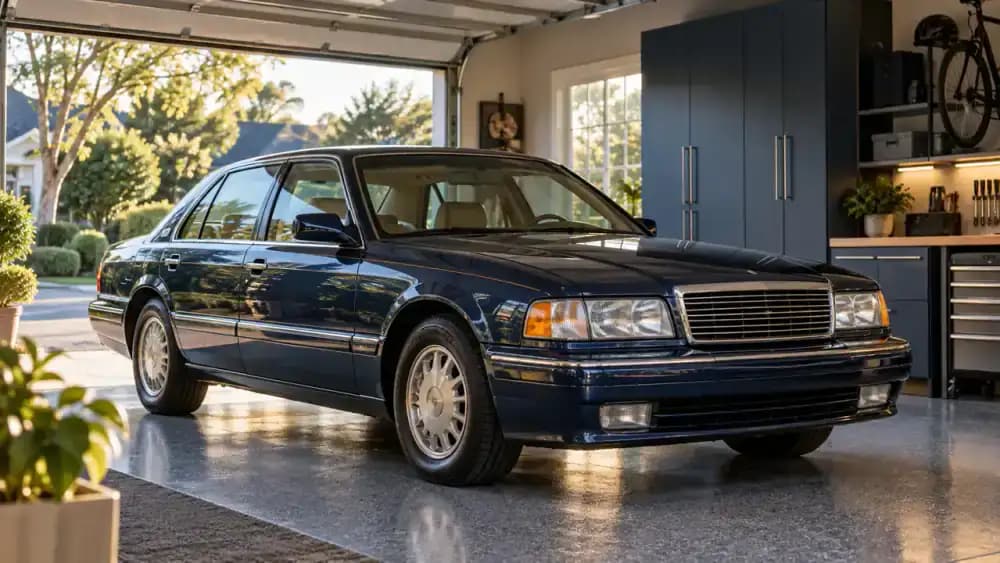
Two cars sharing the same model year can have substantially different values. Higher mileage, prior damage, worn upholstery, and mechanical problems may reduce a valuation, while desirable factory equipment or superior documented condition may support adjustments. Incorrect trim identification or missing options can also distort a report. Service records, photographs taken before the loss, purchase specifications, and equipment lists can help establish factual accuracy. Recent maintenance expenses, however, do not automatically increase value by their full cost.

Actual Cash Value vs. Replacement Cost
Actual cash value and replacement cost answer different financial questions. A conventional ACV settlement reflects the depreciated worth of the specific vehicle lost, while buying a newer or brand-new equivalent may require substantially more money. Some insurers offer optional new-car replacement or better-car replacement coverage, usually subject to eligibility limits, exclusions, and additional premiums. These benefits are not automatically included in standard policies. The distinction helps explain why a settlement can satisfy policy obligations without funding an identical new vehicle.

How Deductibles Affect Your Settlement
The insurer's assessed vehicle value is not always the amount ultimately paid. Under applicable collision or comprehensive coverage, the deductible generally reduces the settlement. For example, a $20,000 covered valuation with a $1,000 deductible produces $19,000 before other applicable adjustments. State rules and policy provisions may require certain sales taxes, title fees, or registration expenses to be included or handled separately. Salvage retention and lender payment arrangements can further affect the calculation. A detailed settlement breakdown clarifies each component.

Understanding Vehicle Depreciation
Vehicle depreciation is the reduction in a car's market value as time passes. A new vehicle generally begins losing value after purchase because buyers typically pay less for a used example than an otherwise comparable new one. The rate varies by vehicle, age, condition, usage, and consumer demand. Some models retain value remarkably well, while others decline quickly. This matters because a totaled car insurance payout generally reflects the vehicle's depreciated value immediately before the covered loss.

What Makes Cars Lose Value?
Several measurable factors influence how quickly a car loses value. Higher mileage generally indicates greater use and potentially more component wear. Scratches, interior damage, accident history, and mechanical problems can further reduce buyer interest. Meanwhile, outdated safety features, infotainment systems, and fuel efficiency may make older vehicles less competitive. Redesigned models can also shift demand away from previous generations. Resale prices ultimately depend on what buyers are willing to pay for comparable vehicles in the current market.

Why Maintenance Cannot Prevent All Depreciation
Consistent maintenance can preserve a vehicle's mechanical reliability, appearance, and resale appeal. Oil changes, tire care, timely repairs, and documented service history may help distinguish a well-kept car from neglected alternatives. However, maintenance cannot reverse the calendar or make an older vehicle equivalent to a newer model. Buyers also consider manufacturing year, remaining useful life, and available alternatives. Consequently, even exceptionally maintained vehicles can experience substantial depreciation when broader market preferences and expectations change.
Loan Repayment vs. Falling Vehicle Value
Auto loan amortization and vehicle depreciation follow different schedules. Each monthly loan payment generally includes interest and principal, but only the principal portion directly reduces the balance owed. Consider a hypothetical $30,000 vehicle financed with a $27,000 loan. After one year, its market value might be $24,000 while the outstanding principal remains $25,000. These figures are illustrative, not forecasts. The $3,000 decline in vehicle value and $2,000 principal reduction demonstrate how ownership value and borrowing obligations can diverge.

What Is an Underwater Car Loan?
An underwater car loan, also called an upside-down loan, exists when the outstanding loan balance exceeds the vehicle's current market value. This difference is known as negative equity. For example, a car worth $18,000 with a $22,000 outstanding balance has $4,000 in negative equity. Selling or losing that vehicle does not automatically erase the debt. If a covered total loss occurs, the owner may face a remaining obligation even after receiving an insurance settlement.

Why Low Down Payments and Long Loans Increase Risk
Small down payments leave more of a vehicle's purchase price financed from the beginning. Longer repayment terms, including 60, 72, and 84 months, generally spread principal reduction across additional payments, potentially prolonging negative equity. Financing sales taxes, dealer fees, optional products, or negative equity from a previous vehicle can increase the initial balance further. Although extended terms may reduce monthly payments, they can increase total interest costs and financial exposure if the vehicle becomes a total loss early.

A Practical Total Loss Shortfall Example
Consider a hypothetical financed vehicle declared a covered total loss. Its actual cash value is $20,000, and the collision deductible is $1,000, producing a $19,000 net insurance settlement. Suppose the lender confirms an outstanding payoff of $24,000. After applying the settlement toward the debt, $5,000 remains unpaid. The borrower generally remains responsible for this shortfall unless another applicable product covers it. Actual outcomes depend on policy provisions, deductible treatment, lender calculations, and applicable state requirements.

What Gap Insurance Actually Covers
Gap insurance, commonly called Guaranteed Asset Protection, addresses certain differences between a vehicle's insured value and the amount still owed after theft or a covered total loss. The Consumer Financial Protection Bureau describes it as an optional product that may cover some or all of that difference on an auto loan or lease. Eligibility depends on the agreement, financing arrangement, and qualifying loss. Gap coverage does not increase the vehicle's actual cash value or automatically replace ordinary comprehensive and collision insurance.

How Gap Insurance Works After a Total Loss
The gap claim process typically begins after the primary auto insurer confirms a covered total loss and determines the settlement. The lender then provides a payoff statement showing the remaining obligation. A gap insurer or product administrator reviews these records alongside the financing agreement and applicable coverage terms. Supporting documents may include the settlement breakdown and payment history. If the claim qualifies, the approved benefit generally goes toward the lender's remaining balance rather than becoming unrestricted cash for the borrower.

What Gap Insurance May Not Pay
Gap protection has important contractual limits. Some agreements exclude overdue payments, late fees, extended warranties, or negative equity carried forward from an earlier loan. Others impose maximum benefit amounts or restrictions tied to the original financing balance. Deductible coverage also varies: certain products cover eligible deductibles up to a stated limit, while others exclude them entirely. Coverage may require an active primary insurance policy and a qualifying total loss. The exact agreement determines which remaining charges are covered.

When Gap Insurance May Be Worth Considering
Gap insurance may be worth examining when a vehicle's loan balance is likely to exceed its market value. Common risk factors include a small down payment, a 72- or 84-month loan, rapid depreciation, and negative equity carried over from a previous vehicle. Limited savings can make an unexpected loan shortfall especially difficult to absorb. However, substantial equity or a rapidly declining loan balance may reduce the potential benefit of additional protection. The relevant question is how long a meaningful shortfall could persist.

Where to Shop for Gap Insurance
Gap coverage may be available through auto insurers, dealerships, lenders, credit unions, or independent providers, depending on the market and vehicle. Insurance company offerings sometimes operate as endorsements to existing policies, while dealership products may be separate contractual agreements. Availability also varies between financed and leased vehicles. Compare eligibility requirements, covered events, benefit limits, deductible treatment, and exclusions rather than assuming similarly named products provide identical protection. Request written terms from each provider so differences remain clear before any purchase decision.

Gap Insurance Costs and Cancellation Terms
Gap protection may be priced as a recurring insurance charge or a single upfront premium. When an upfront premium is financed into an auto loan, interest can increase its total cost. Contract duration may follow the financing period or end earlier under specified conditions. Some agreements allow cancellation and potentially provide refunds of unused charges, although calculations and eligibility vary. Review whether coverage terminates automatically after refinancing, early payoff, or vehicle sale, and obtain written confirmation of any cancellation and refund procedures.

Force-Placed Insurance Is Not Gap Insurance
Force-placed insurance serves a different purpose from gap protection. When required comprehensive or collision coverage lapses, a lender may purchase insurance to protect its financial interest in the vehicle and charge the borrower. The Consumer Financial Protection Bureau explains that lender-placed coverage generally protects the lender rather than providing the broad protection associated with a personal auto policy. It can also be expensive. Importantly, it does not automatically eliminate an outstanding loan balance after a total loss or replace the borrower's normal insurance obligations.

Consumer Protection Concerns With Auto Loan Add-Ons
Optional auto financing products deserve scrutiny because charges can be difficult to notice within a larger loan agreement. The Consumer Financial Protection Bureau has identified problems involving consumers charged for add-ons they did not authorize, as well as improper administration of certain products. Review the itemized financing agreement, retail installment contract, and product enrollment forms for unfamiliar charges. Confirm whether each product was expressly accepted and whether its price matches the disclosure. Preserve signed copies and payment records when questioning a disputed charge.

How to Review Your Total Loss Valuation
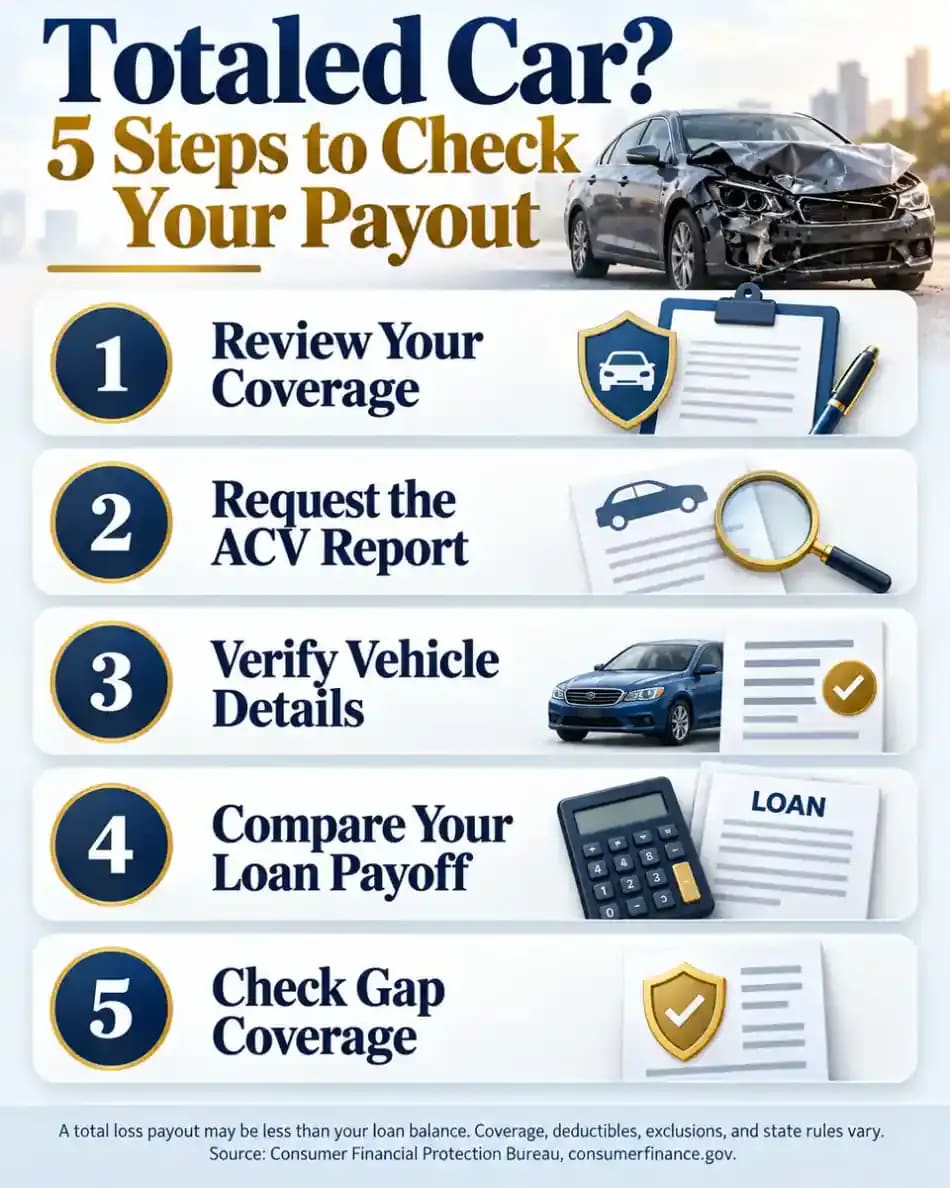
A totaled car insurance payout often depends on a detailed vehicle valuation report. Request the insurer's report and examine its vehicle identification details, recorded mileage, trim level, factory options, and pre-loss condition assessment. Review the comparable vehicles used to establish market value, including their locations, equipment, mileage, and listing dates. Pay particular attention to adjustments for condition or differences between vehicles. Supporting photographs, service records, original equipment information, and relevant market listings can help identify factual inaccuracies requiring correction.

What to Do If the Settlement Looks Too Low
If a settlement appears understated, identify specific valuation errors rather than relying only on disagreement with the offered amount. Submit documented corrections and relevant comparable vehicle evidence to the claims adjuster, then request a written explanation of the insurer's response. Ask about internal reconsideration procedures and any appraisal or dispute provisions in the policy. State insurance departments can explain complaint processes and applicable consumer protections. Keep communication records, supporting documents, and settlement correspondence organized throughout the review process.

How to Check Your Loan and Gap Documents
A complete document review begins with a current lender payoff quote, which may differ from the balance displayed on a monthly statement because of accrued interest and other amounts. Locate the original financing agreement and identify optional protection charges. Examine the gap contract for benefit caps, exclusions, deductible provisions, required claim documents, and submission deadlines. Check whether overdue payments, fees, or negative equity receive different treatment. Finally, identify provisions governing cancellation, early termination, and any possible refund of unused protection charges.

Reliable Resources for Auto Insurance Questions
Reliable information starts with the actual agreements governing a claim or financed vehicle. An insurer can clarify valuation methodology and policy coverage, while a lender can explain payoff balances and financing obligations. The Consumer Financial Protection Bureau provides educational resources at consumerfinance.gov/consumer-tools/auto-loans/ and explanations of insurance options associated with vehicle financing. State insurance departments offer additional guidance on insurance rules, claims, and complaints. Because requirements differ by jurisdiction and contract, general educational resources should supplement, not replace, the applicable written policy and financing documents.

Build a Financial Safety Check Before Your Next Car Purchase
Before purchasing another vehicle, build a simple financial review around five checkpoints. Estimate how quickly the model may depreciate, then examine the down payment, loan duration, interest rate, and projected outstanding balance. Review the insurance policy's total loss provisions and deductible. Compare any optional shortfall protection against its documented limitations and total cost. Finally, calculate the combined purchase, financing, insurance, and optional product expenses. Keeping these figures together makes potential exposure easier to understand before signing a purchase agreement.

Your car is totaled. The insurance company offers a settlement, but the number is thousands of dollars below what you still owe on your auto loan. Who pays the difference?
For many American drivers, this is the most confusing part of a total loss insurance claim. Having comprehensive or collision coverage does not necessarily mean your insurer will pay off your remaining loan or provide enough money to purchase another vehicle.
Most standard total loss settlements are based on actual cash value, commonly called ACV. This represents the vehicle's value immediately before the accident or theft, accounting for factors such as age, mileage, condition, equipment, and comparable vehicles in the local market. Your original purchase price and outstanding loan balance generally do not determine that valuation.
The problem is depreciation. Vehicles usually lose value over time, sometimes faster than borrowers repay their loans. A driver who financed a vehicle with little money down or selected a lengthy repayment term may owe more than the car is worth. This situation is known as being underwater or upside-down on an auto loan.
Gap insurance, also called Guaranteed Asset Protection, may help cover an eligible shortfall between the primary insurance settlement and the remaining loan or lease balance. However, coverage limits, exclusions, deductible treatment, and eligibility requirements matter.
This guide explains how totaled car payouts work, how to examine an insurer's valuation, where gap insurance fits, and which documents to check before accepting a settlement. It also identifies consumer protection resources from the Consumer Financial Protection Bureau. The information is educational, not individualized financial, legal, or tax advice.
Where people go wrong
Assuming Insurance Automatically Pays Off Your Loan. Comprehensive and collision insurance generally compensate for the covered vehicle loss according to policy terms, not the amount owed to your lender. If the settlement falls below your payoff balance, you may remain responsible for the difference unless additional coverage applies.
Confusing Actual Cash Value With Replacement Cost. Actual cash value normally reflects what your used vehicle was worth immediately before the loss. Replacement cost coverage, when available, follows different rules. Assuming every total loss settlement funds a brand-new replacement can create unrealistic expectations and financial problems.
Ignoring the Effect of Long Loan Terms. Financing a vehicle over 72 or 84 months can reduce monthly payments while slowing principal repayment. When depreciation exceeds the rate at which your balance falls, you may remain underwater longer, increasing exposure to a potential total loss shortfall.
Accepting a Valuation Without Checking Its Inputs. Incorrect mileage, missing factory options, unfavorable condition assumptions, or poorly matched comparison vehicles can affect a settlement estimate. Review the valuation report carefully and provide documented corrections. An apparent discrepancy does not automatically establish that the insurer acted improperly.
Assuming Gap Insurance Covers Every Remaining Charge. Gap protection may exclude overdue payments, certain fees, negative equity carried from an earlier loan, or other amounts. Some products also limit benefits or deductible reimbursement. Read the agreement before relying on gap coverage to eliminate your entire outstanding balance.
Mistaking Force-Placed Insurance for Gap Coverage. A lender may obtain force-placed insurance when required vehicle coverage lapses. This insurance primarily protects the lender's financial interest and may be expensive for the borrower. It is not equivalent to gap insurance and should not be treated as comprehensive personal protection.
Overlooking Add-Ons and Potential Refunds. Optional protection products can increase the cost of financing, particularly when their prices are rolled into the loan. Failing to inspect purchase agreements or ask about applicable cancellation refunds may result in unnecessary costs or missed opportunities to recover eligible amounts.
Questions people ask
Most standard comprehensive or collision total loss settlements are based on the vehicle's actual cash value immediately before the covered incident. The applicable deductible is generally subtracted, while taxes, fees, and other adjustments depend on the policy and state. Your remaining loan balance does not automatically determine the payment.
Fixed it?
Get one guide like this every Thursday.