How to Set Up Separate Feeding Stations for Multiple Cats
Stop food stealing and reduce mealtime competition with separate cat feeding stations. Learn how to choose locations, arrange bowls, manage portions, and help every cat eat comfortably.

What you’ll need
Tap to tick things off before you start.
When One Cat Controls Mealtime
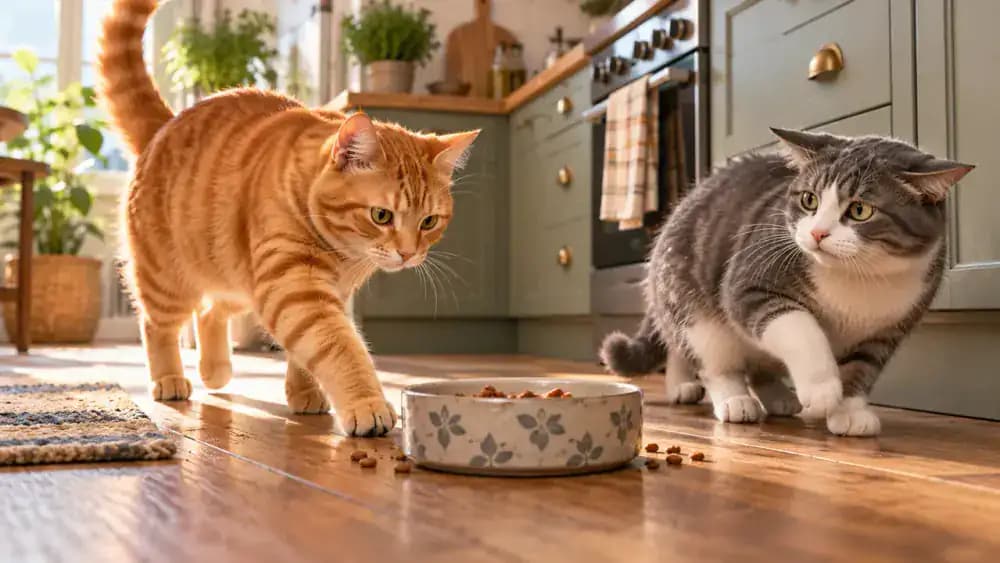
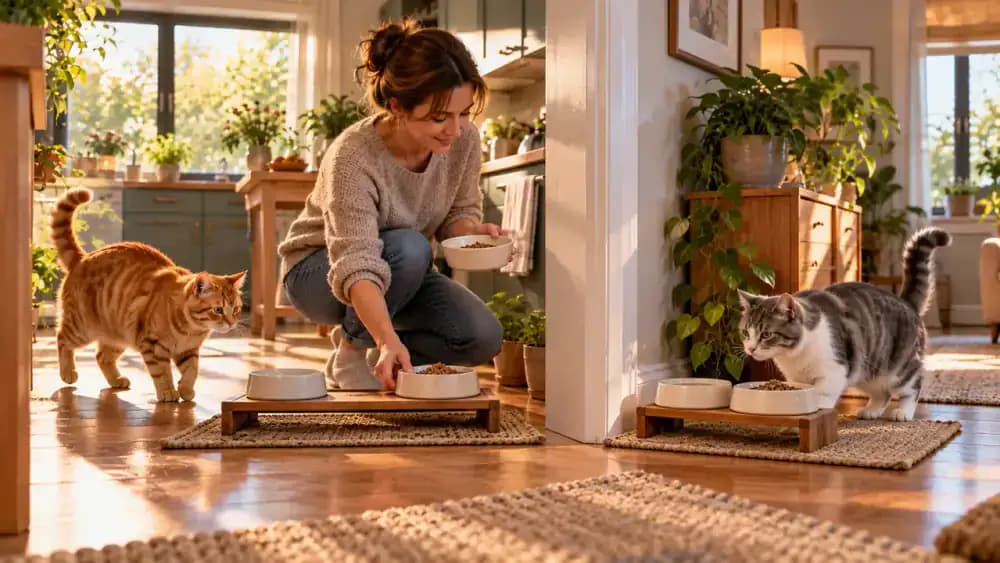
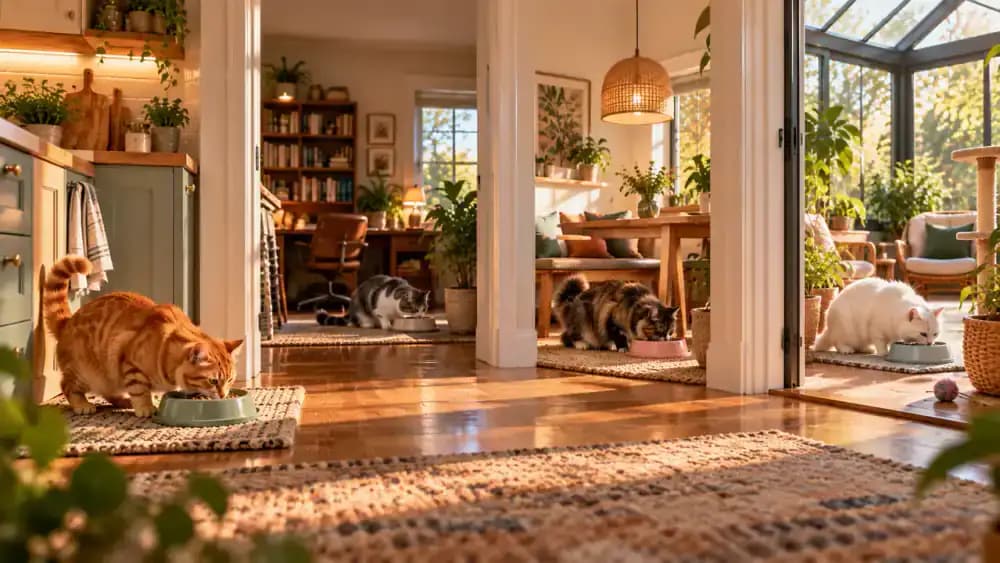
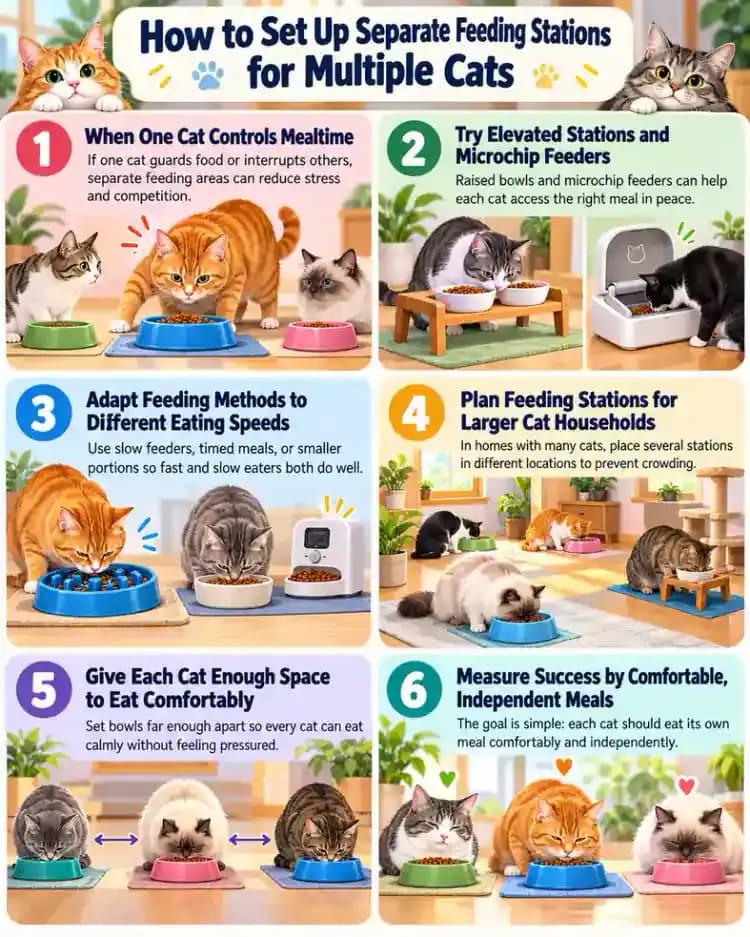
Watch what happens when your cats eat together. A fast-eating orange tabby may finish its meal and immediately approach a slower cat's bowl, causing the quieter cat to retreat. Repeated interruptions can leave one cat hungry and make mealtimes stressful. Separate feeding stations help protect each cat's access to its own food.
Recognize Hidden Feeding Competition
Before rearranging bowls, observe your cats during several meals. Notice which cat approaches food confidently, which one hesitates, and whether either cat blocks doorways or watches the other intensely. An empty shared feeding area does not prove both cats ate enough. Tracking individual eating habits helps identify where separate stations are needed.
Choose Comfortable Feeding Locations
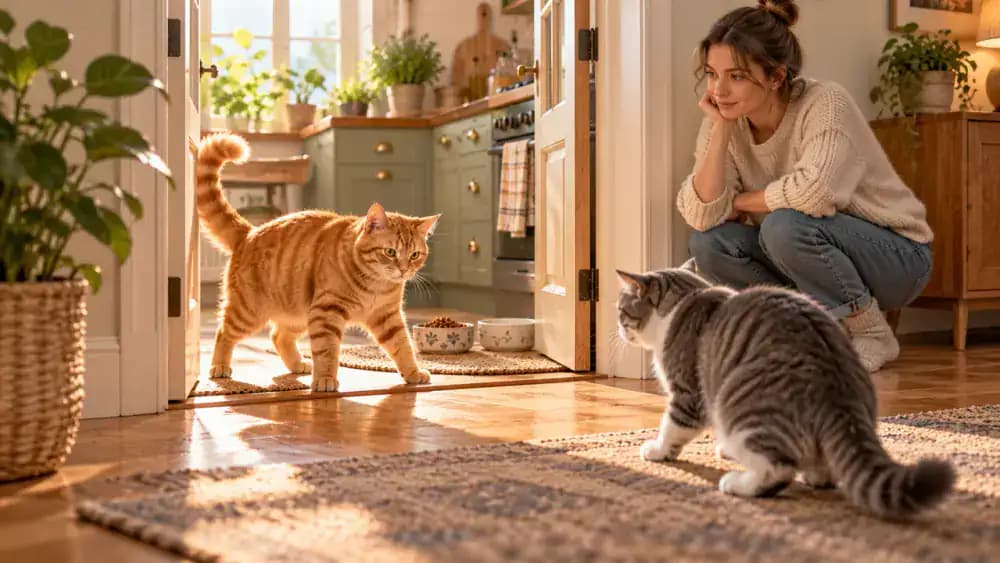
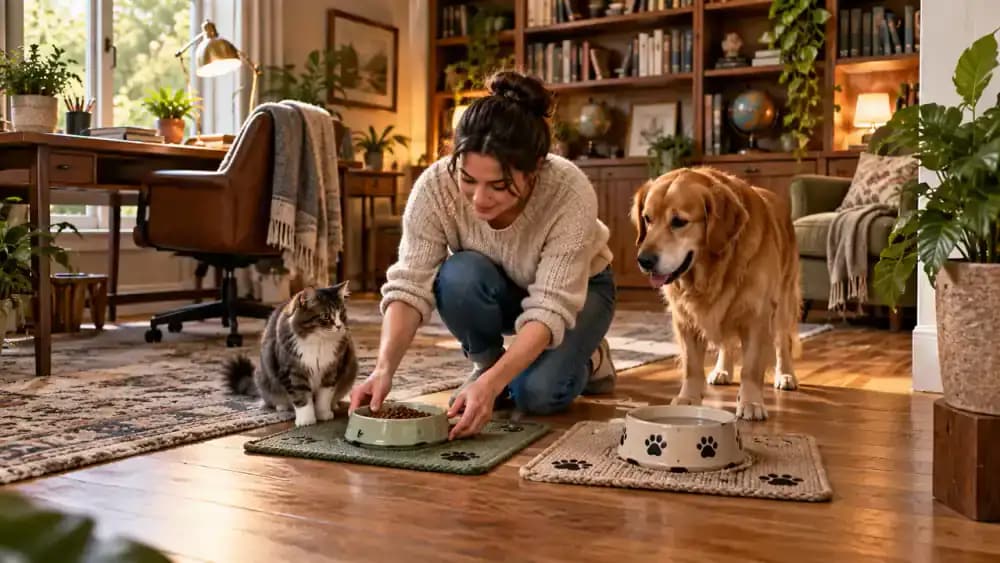
Select a quiet, accessible feeding location for each cat, away from busy hallways, noisy appliances, and litter boxes. Consider individual preferences and mobility when choosing spots. An older cat may appreciate an easy-to-reach ground-level corner, while a timid cat might prefer a peaceful study. Let each cat explore its new location before introducing meals.
Create Distance and Visual Privacy
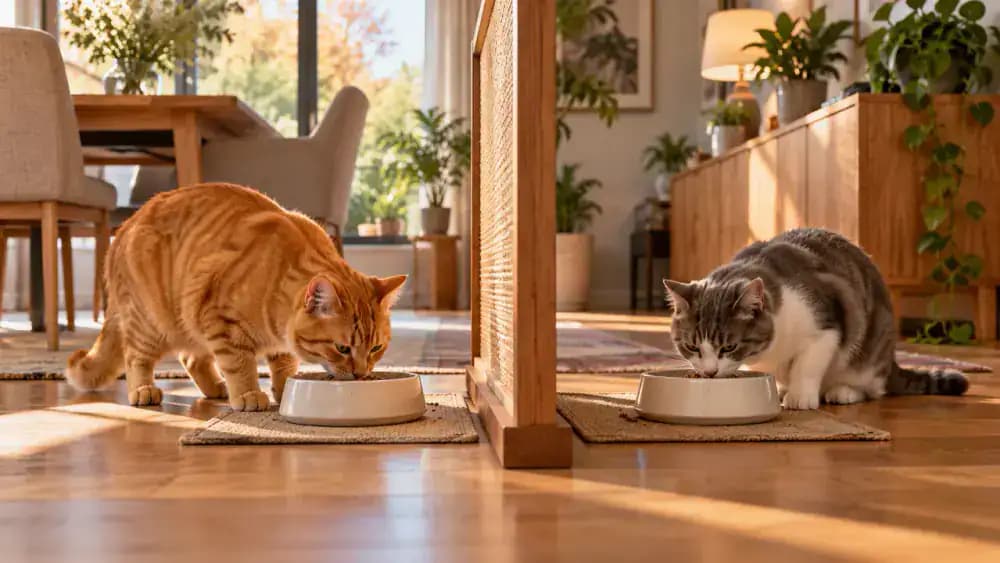
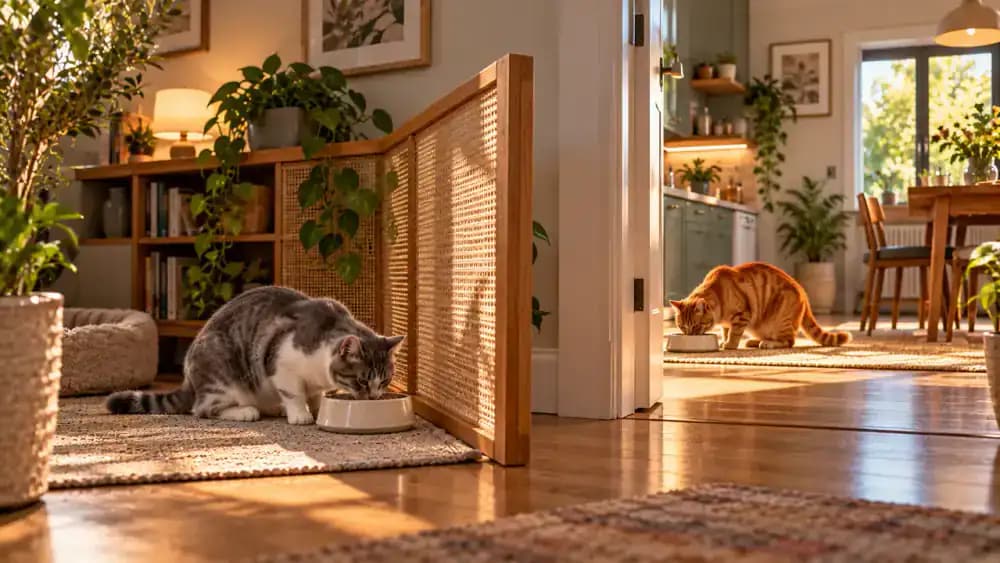
Place each food bowl at an individual station with enough separation to prevent unwanted encounters. Use corners, solid furniture, or a sturdy room divider to block direct sightlines between cats. Simply placing bowls farther apart in the same open space may not provide sufficient privacy. Choose arrangements that allow both cats to eat without watching or confronting each other.
Use Separate Rooms When Necessary
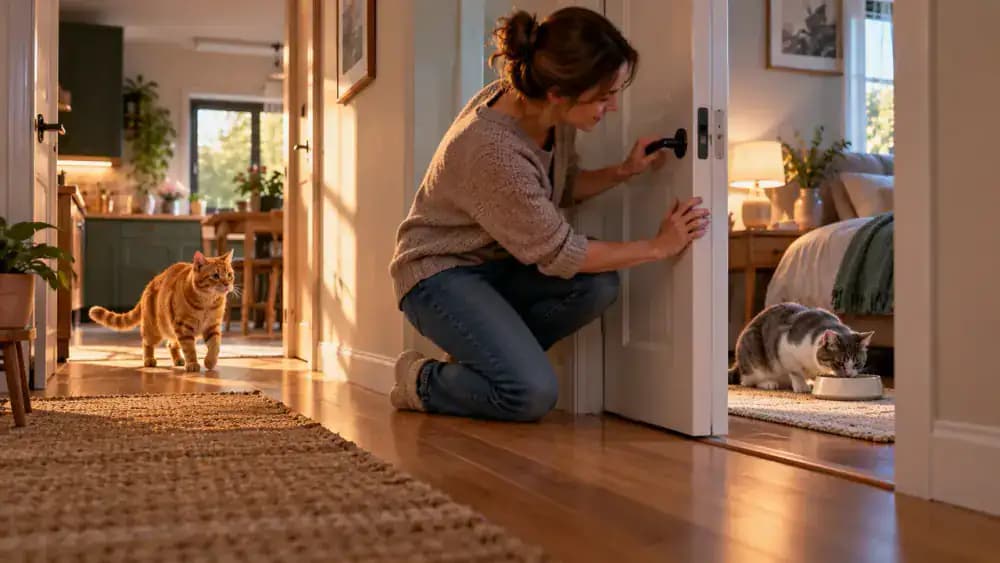
If one cat continues leaving its food, establish feeding stations in separate rooms. Gently guide each cat to its designated space, close the doors during meals, and remove leftover food before reopening them. This prevents faster eaters from stealing additional portions. Keep feeding times consistent, introduce closed doors gradually, and ensure both cats remain comfortable with the routine.
Try Elevated Stations and Microchip Feeders
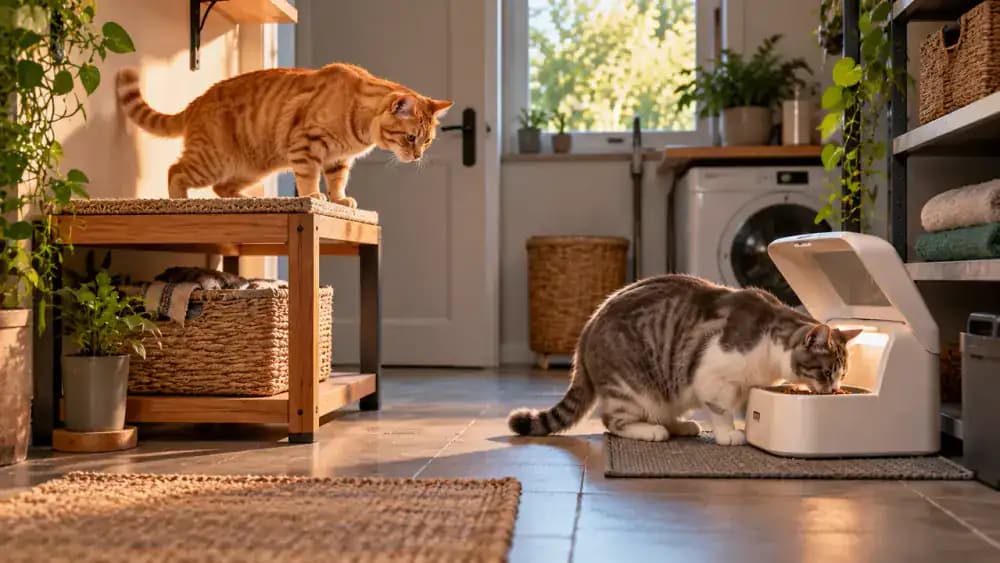
Some multi-cat households benefit from flexible feeding arrangements. A broad, stable elevated platform can give an agile cat a comfortable eating spot, provided it can climb up and down safely. If food stealing or special diets are concerns, consider microchip-activated feeders. Test the mechanism carefully to ensure other cats cannot access food when the lid opens.
Measure Portions and Track Individual Intake
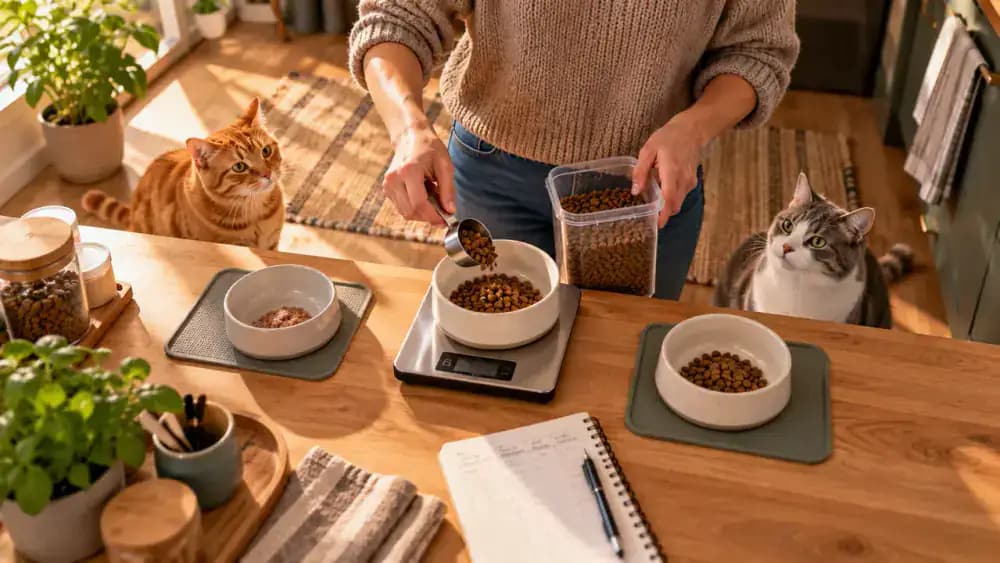
Measure each cat's food separately using a kitchen scale or appropriate measuring tool. Keep portions in labeled containers and record how much you serve at every meal. After feeding, check and note any leftovers. A simple daily log helps you spot changes in individual eating habits that might otherwise go unnoticed when several cats share a household.
Adjust the Layout Until Both Cats Feel Safe
Observe both cats during meals and adjust their stations if either seems uncomfortable. Moving a bowl away from a busy hallway or adding a visual barrier can create a more protected eating space. Prioritize relaxed, uninterrupted meals over a perfectly arranged room. Contact your veterinarian if you notice sudden appetite changes, persistent food refusal, or unexplained weight loss.
Establish a Predictable Feeding Routine
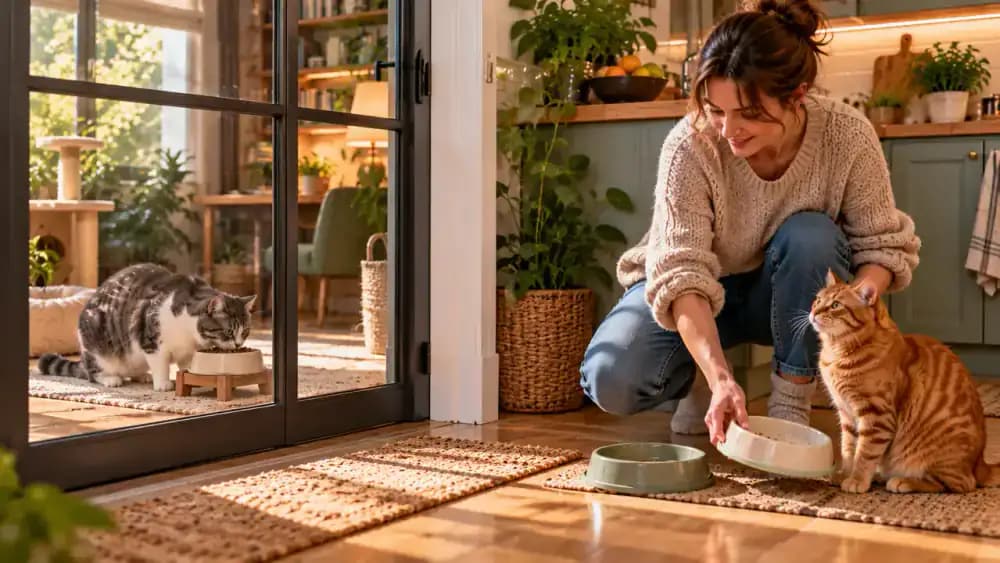
Serve meals at approximately the same times every day to help both cats develop familiar expectations. Calmly guide each cat to its assigned station without forcing or rushing the process. Initially, remain nearby to provide reassurance and prevent interference. As both cats become comfortable, gradually reduce supervision while maintaining consistent feeding locations, portions, and mealtime habits.
Recognize Subtle Signs of Feeding Stress
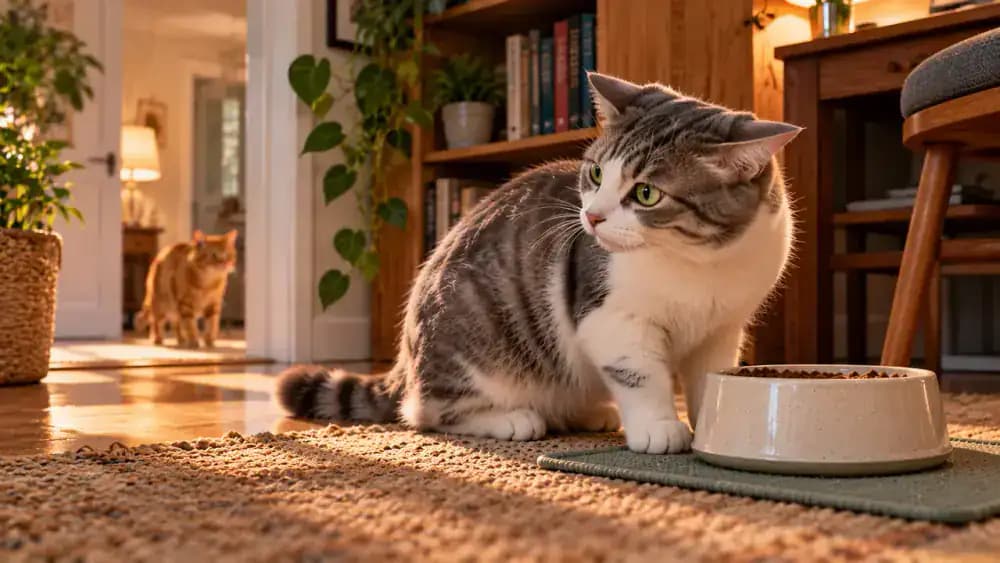
Watch how each cat approaches its feeding station, not just whether the bowl ends up empty. Repeatedly looking behind itself, freezing near an entrance, or hesitating several feet from food can suggest discomfort. Observe quietly from a distance without adding pressure. If these behaviors persist, reconsider the station's location, visibility, and proximity to household activity.
Redirect Cats That Finish First
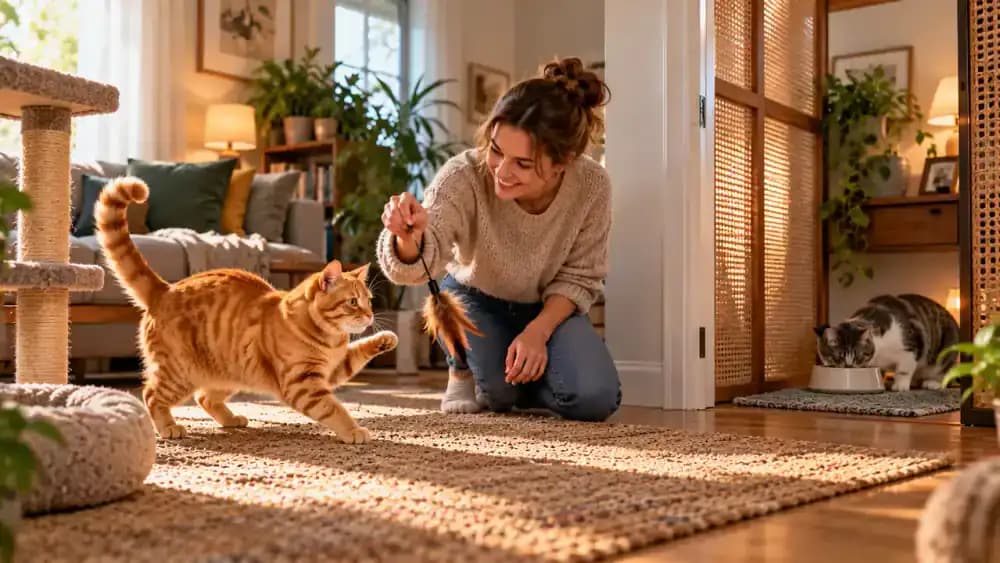
When one cat finishes eating before the other, prevent it from wandering into the occupied feeding area. Gently redirect your faster eater with a feather wand, favorite toy, or quiet activity in another room. Avoid scolding, chasing, or creating excitement around mealtime. Consistent, calm redirection helps both cats feel secure during meals.
Adapt Feeding Methods to Different Eating Speeds
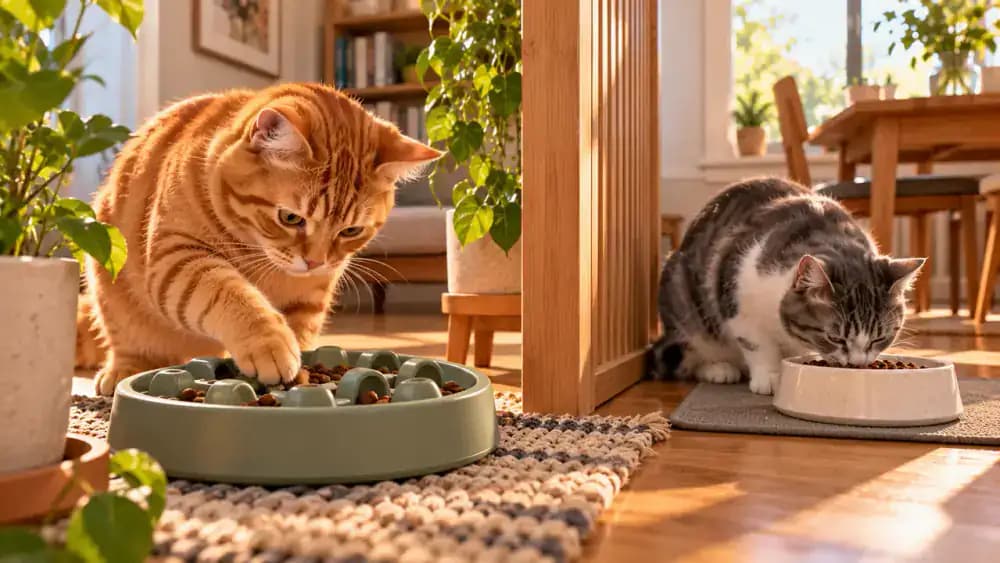
Adjust each feeding station to match your cat's natural eating pace. Fast eaters may benefit from shallow puzzle feeders or slow-feeding bowls, while cats that prefer small, gradual meals need longer periods of protected access. Introduce feeding tools slowly, watch for frustration, and make sure every cat can comfortably finish its appropriate daily portion.
Keep Feeding Stations Clean and Comfortable
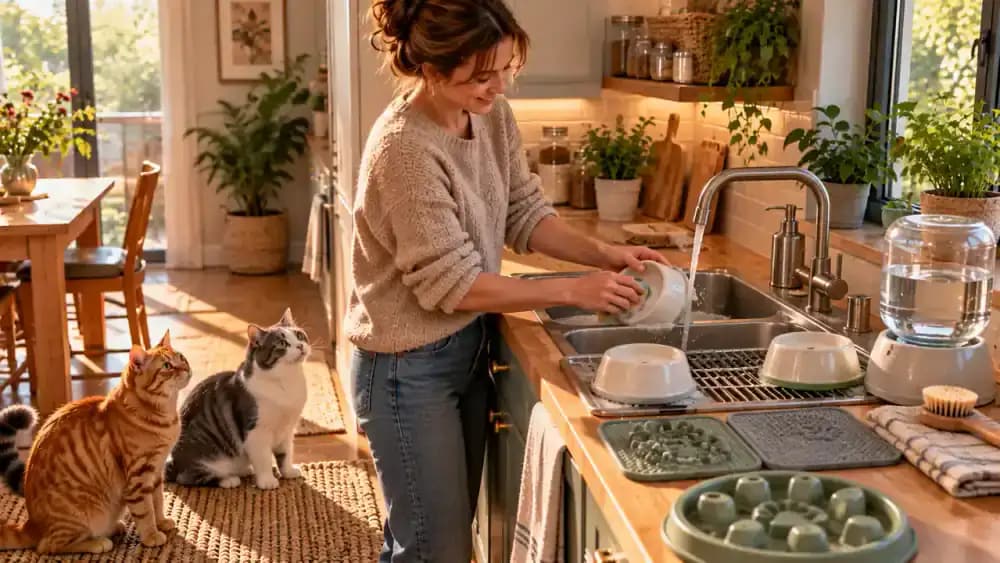
Wash food bowls after wet meals, discard uneaten food promptly, and provide fresh drinking water regularly. Use washable mats and easy-to-clean surfaces that do not retain strong cleaning fragrances. Rinse dishes thoroughly and let them dry before refilling. Check underneath bowls for crumbs, spills, or moisture so each feeding station stays comfortable and hygienic.
Prevent Cats From Sharing Different Diets
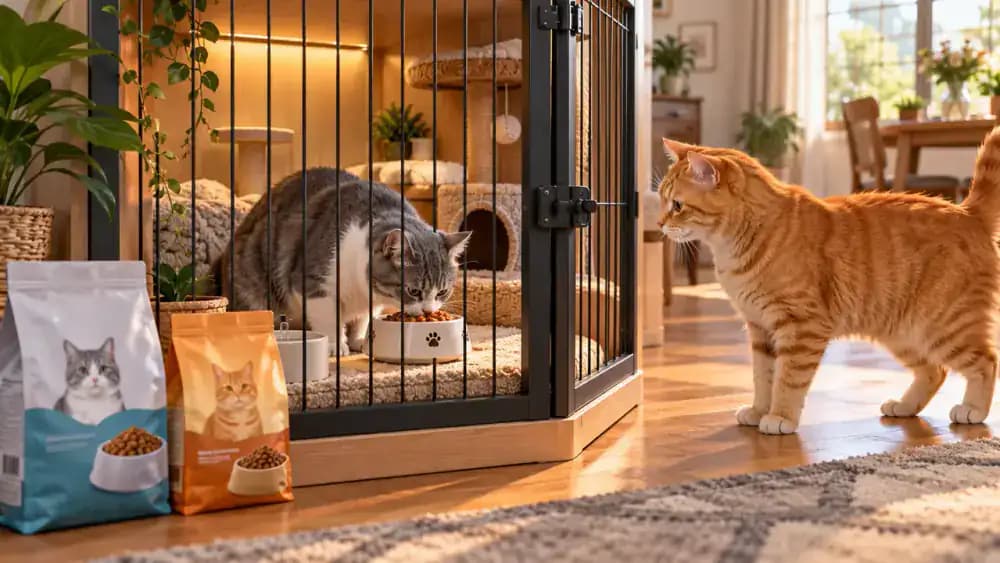
When cats require different diets, keep their food packages, portions, and feeding locations clearly identified. This is particularly important when one cat eats veterinarian-prescribed food and another receives a standard diet. Prepare meals separately and verify that each cat reaches only its assigned bowl. For unsupervised feeding, use secure enclosures or controlled-access feeders to prevent food swapping.
Know When Appetite Changes Need Veterinary Attention
Review feeding records regularly so you can recognize changes in appetite, portions eaten, or body weight. Contact your veterinarian if a cat suddenly refuses food, becomes unusually hungry, vomits repeatedly, or loses weight unexpectedly. Do not assume another cat is causing the problem. Prompt veterinary guidance is especially important when a cat stops eating altogether.

Build a Feeding Setup That Works Long Term
Measure success by how comfortably each cat eats over time, not how organized the feeding stations look. Each cat should approach its bowl willingly, finish meals without interruptions, and maintain a stable, appropriate weight. Monitor eating habits as routines and needs change. A successful setup provides reliable individual access while keeping daily feeding manageable.
Keep Access Routes Open and Comfortable
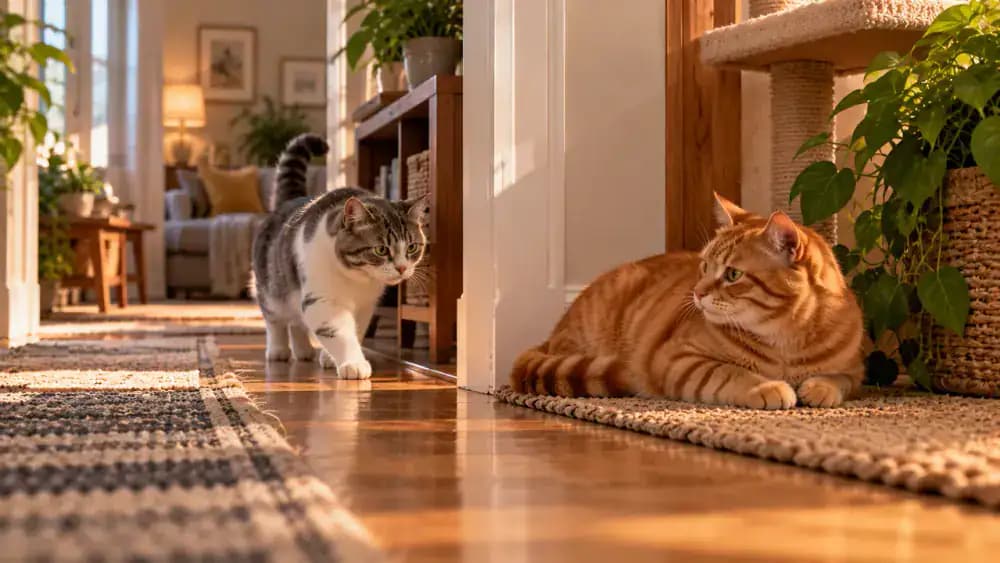
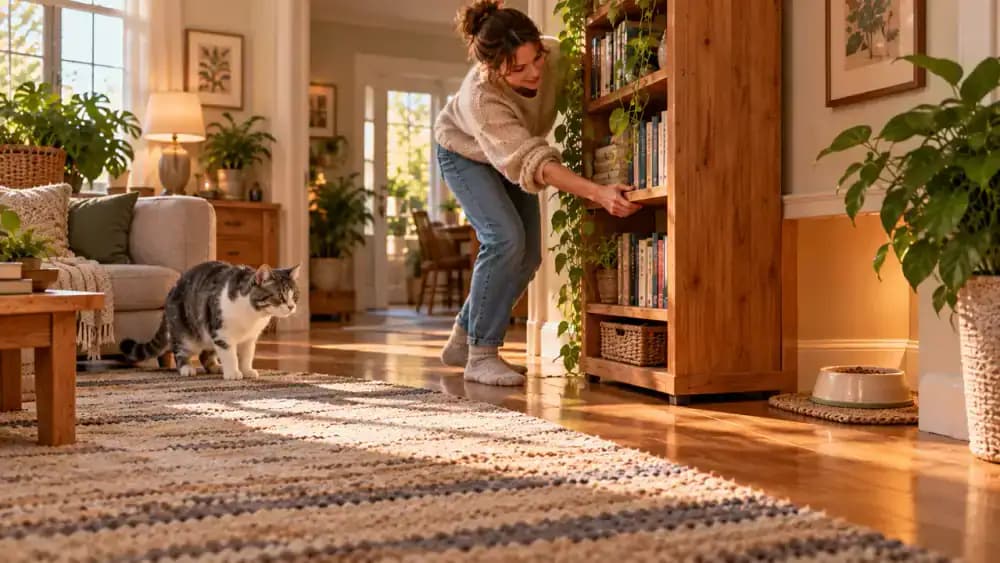
Check the route each cat takes to reach its feeding station. Even a private corner can become stressful if another cat blocks the hallway or rests near the entrance. Rearrange furniture to create clear pathways and alternative exits whenever possible. Watch cats approaching and leaving their bowls to identify potential bottlenecks before they disrupt meals.
Plan Feeding Stations for Larger Cat Households
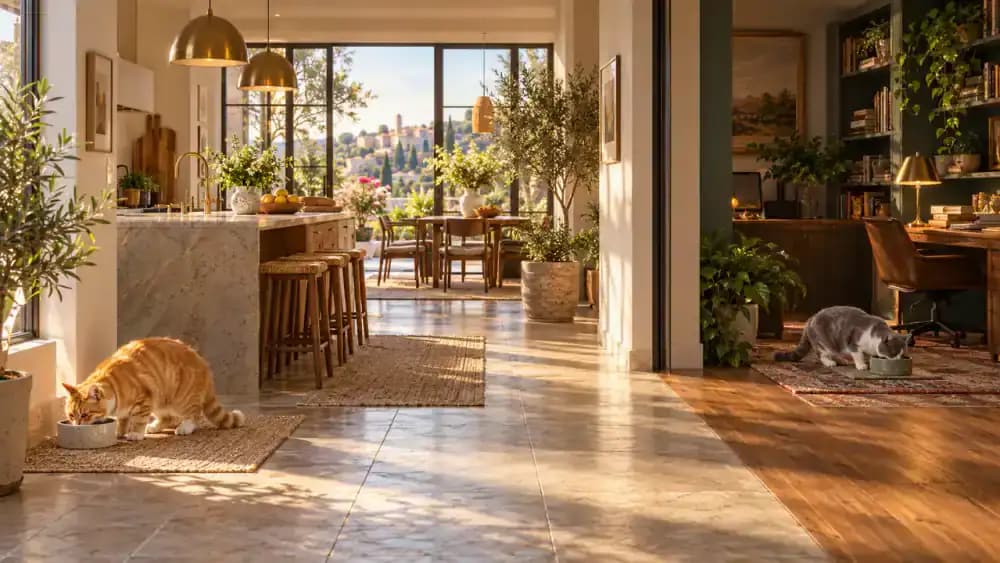
For three or more cats, provide an individual feeding station for each cat and consider additional separation when needed. Spread bowls across different rooms rather than lining them up together. Observe which cats tolerate company and which need privacy. Separate locations make it harder for one assertive cat to control access to everyone's food during mealtimes.
Adapt Station Accessibility to Each Cat
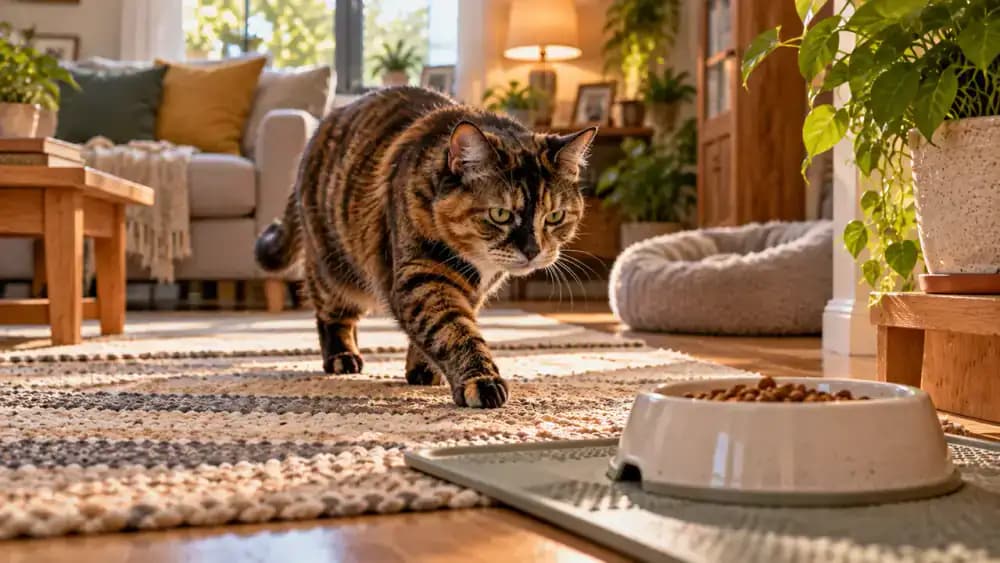
Adjust each station to suit the cat's mobility, confidence, and physical comfort. An older cat may benefit from a stable, floor-level bowl reached across a non-slip surface. A shy younger cat might prefer a sheltered nook with a wide exit. Avoid locations requiring difficult jumps, tight squeezes, or awkward stretching, and regularly reassess accessibility as needs change.
Introduce New Feeding Locations Gradually
Move feeding stations gradually instead of changing every location at once. Begin with each cat's familiar bowl and usual food, shifting it a short distance toward the intended spot over several meals. Encourage relaxed exploration between feedings and observe the cat's response. If hesitation appears, return to a comfortable position and progress more slowly without withholding food.
Manage Leftovers Without Creating New Competition
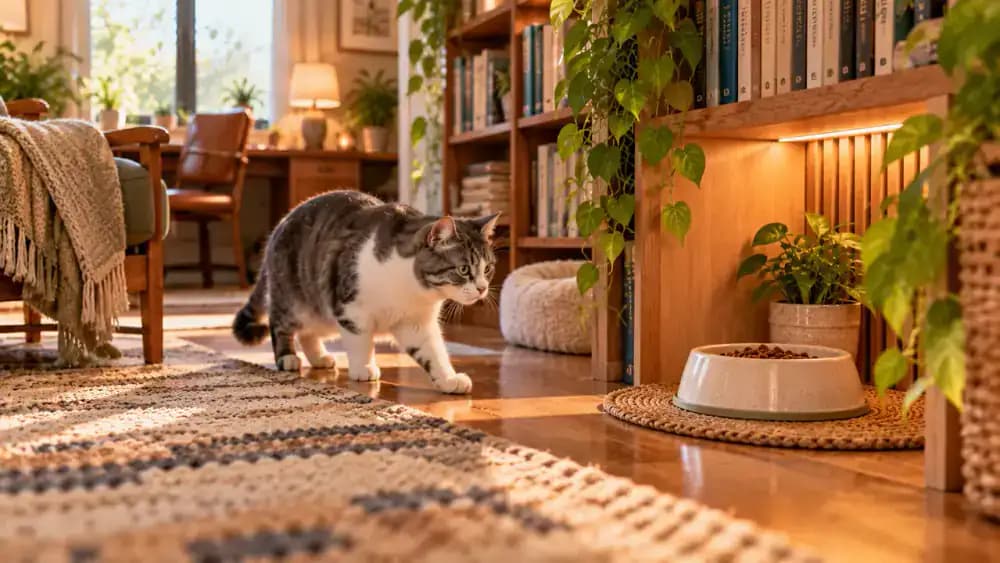
Leftover food can tempt another cat to visit a feeding station, even when meals are served separately. Establish a consistent feeding window or consider a protected feeder for cats that eat slowly. Remove unattended food when appropriate, but always confirm that each cat has finished before collecting its bowl. This helps prevent food stealing and unnecessary competition.
Make Your Feeding System Easy for Pet Sitters
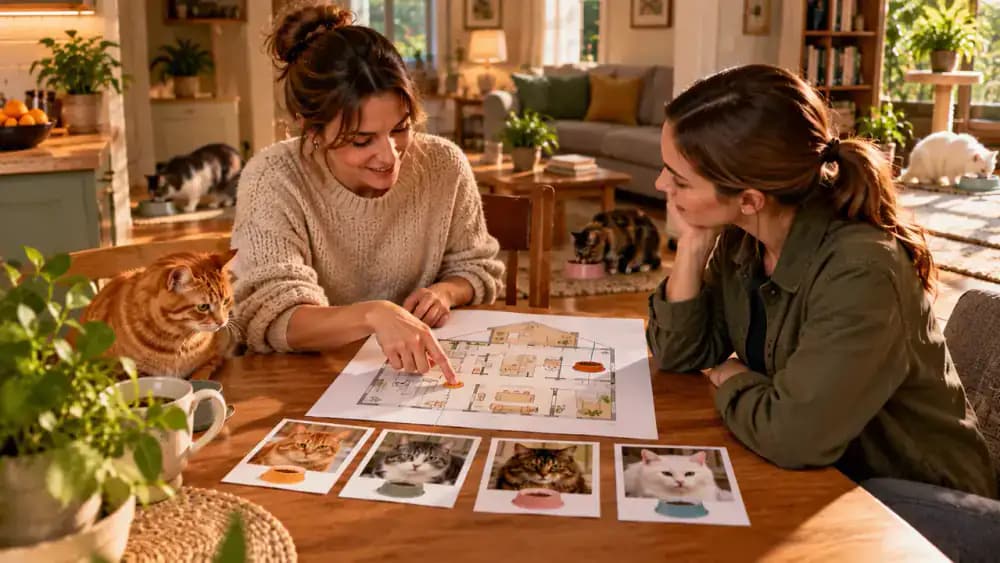
Make your feeding routine easy for anyone caring for your cats. Provide a simple map showing each feeding station, along with labeled food containers, portion sizes, and access instructions. Ask your pet sitter to confirm that each cat actually eats rather than relying on empty bowls. A brief feeding checklist helps maintain consistency and catch missed meals.
Reassess Feeding Stations as Household Needs Change
Review your cats' feeding arrangement whenever something changes at home. New furniture, additional pets, moving, or changes in mobility can affect access to familiar stations. Watch how each cat approaches its bowl and notice any hesitation or blocked pathways. Adjust station locations or furniture as needed so every cat can reach food independently and comfortably.
Give Each Cat Enough Space to Eat Comfortably
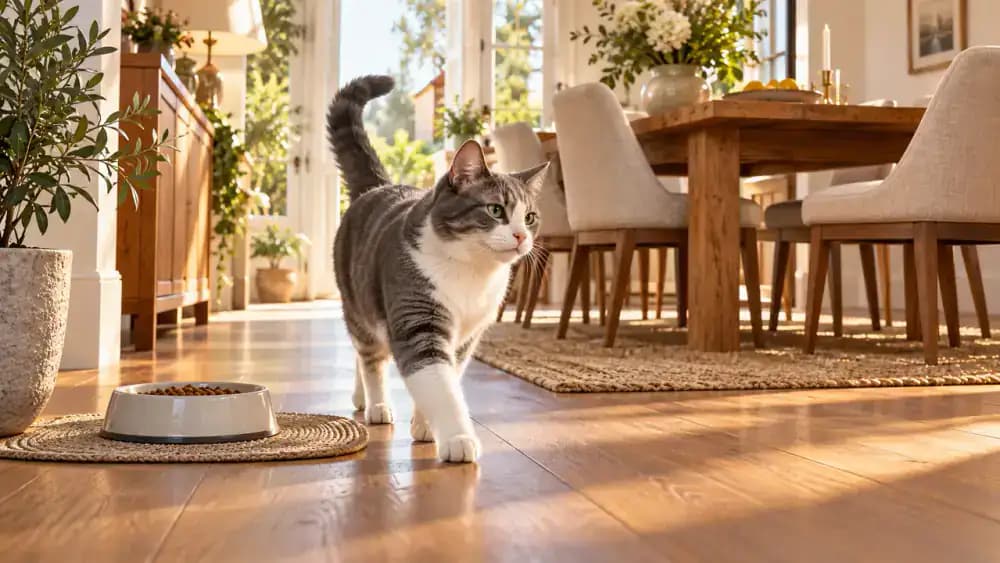
Check each feeding station from your cat's perspective, especially after rearranging furniture. Avoid placing bowls in cramped corners where cats must squeeze between objects or face a wall without room to turn. Leave enough clearance for a natural eating posture, comfortable movement, and an easy exit. A stable bowl and unobstructed floor space encourage relaxed, independent meals.
Prepare Meals Without Creating Excitement
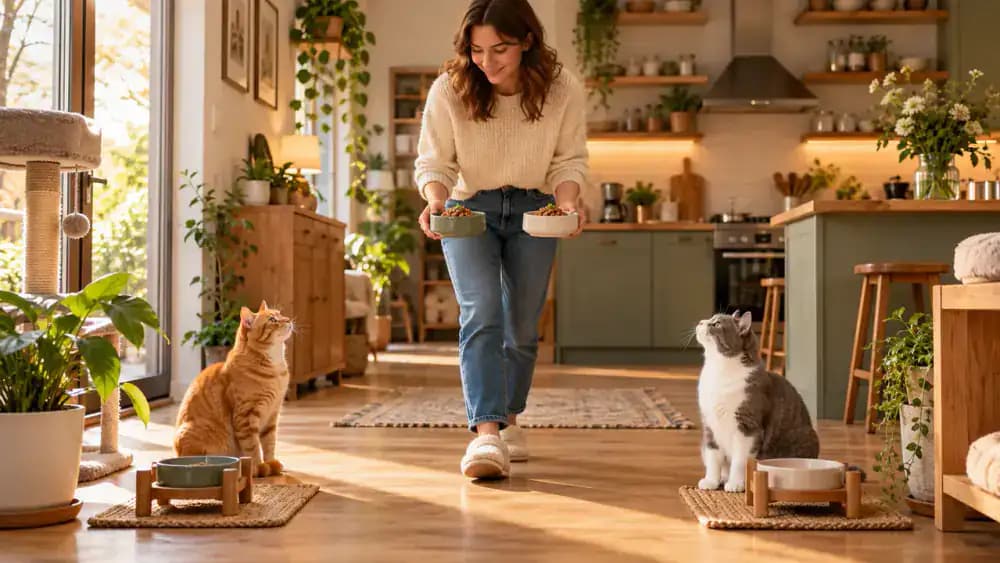
Keep meal preparation calm to avoid building excitement or encouraging cats to crowd one another. Measure portions at a dedicated counter while each cat remains away from the preparation area. Carry the bowls directly to their assigned feeding stations without inviting the cats to follow. When necessary, position both cats in their separate spaces before serving meals at the same time.
Observe Meals Without Interrupting
Once food is served, give each cat enough space to eat without distractions. Frequent check-ins can make cautious cats nervous or cause them to walk away. Observe quietly from another room or use a discreet pet camera when appropriate. Look for relaxed posture, steady eating, and signs that each cat feels secure.
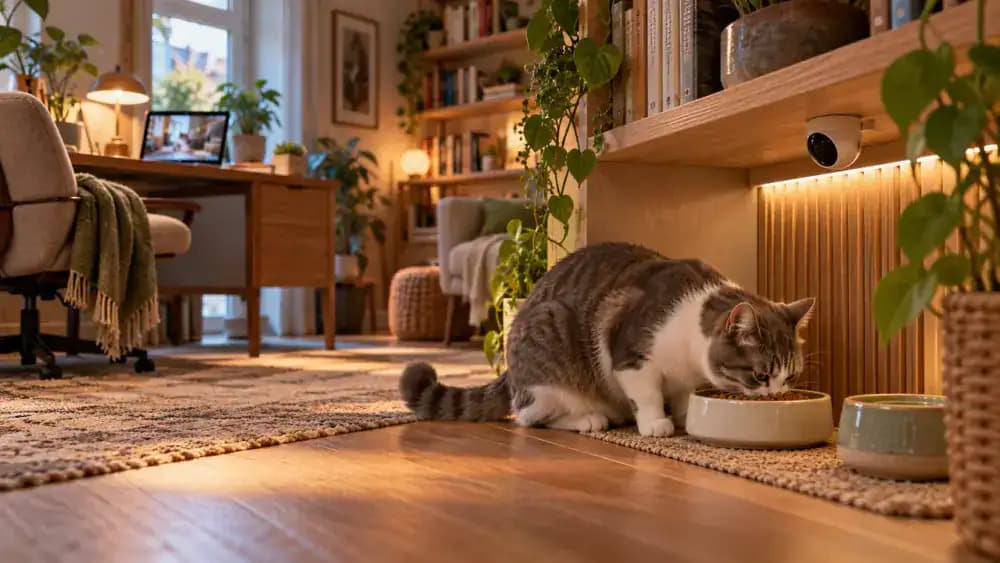
Respect Each Cat's Preference for Privacy
Cats have different preferences about human company during meals. Some feel safest eating alone, while others relax with a familiar person nearby. If one cat waits until you leave, provide a quiet, private space. If another eats comfortably while you sit nearby, maintain that distance. Let each cat's behavior guide your approach.
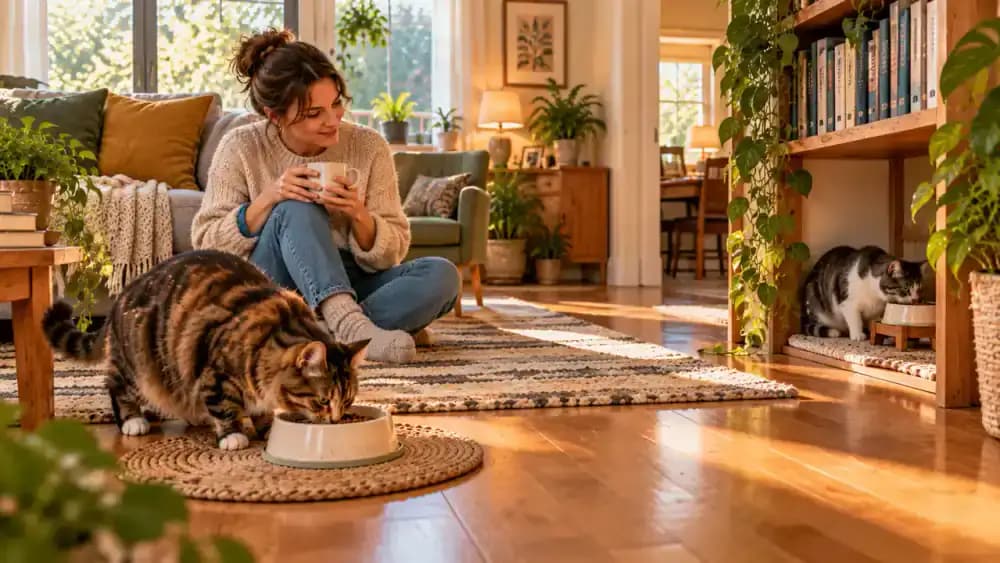
Reduce Environmental Disturbances Around Meals
Pay attention to noise, odors, and household activity around each feeding station. A running dishwasher, strong fragrance, or unexpected visitor may discourage a cat from eating. If hesitation occurs at predictable times, identify the disturbance and reduce it when possible. Preserve the familiar bowl location rather than moving the station whenever something changes.
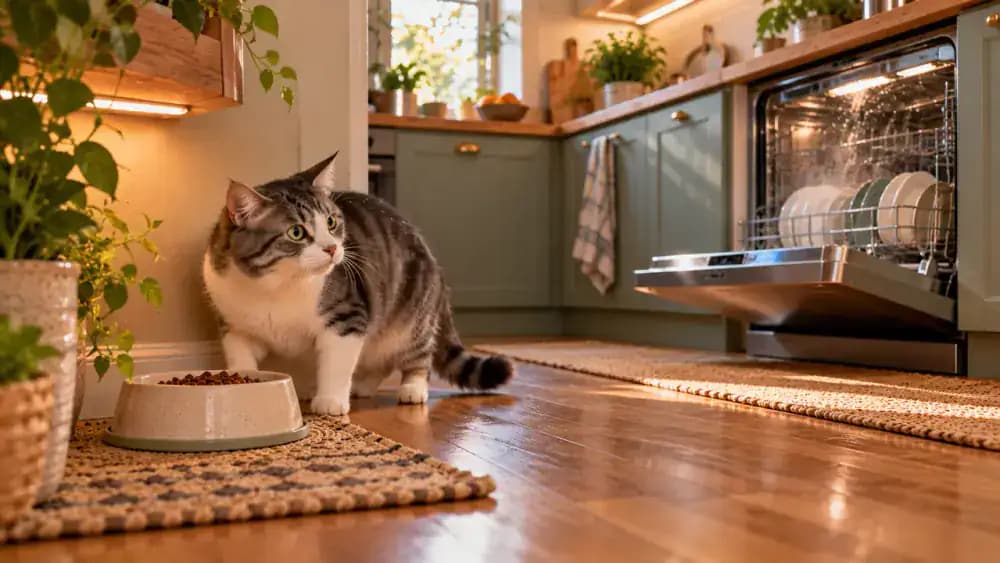
Identify and Fix Remaining Food Stealing
If one cat still steals food, watch carefully to discover how it reaches another station. Check for doors left ajar, poorly secured barriers, or feeders that allow unauthorized access. Address the specific weakness before adding equipment. Test your solution during a regular meal to confirm both cats can finish their portions without interference.
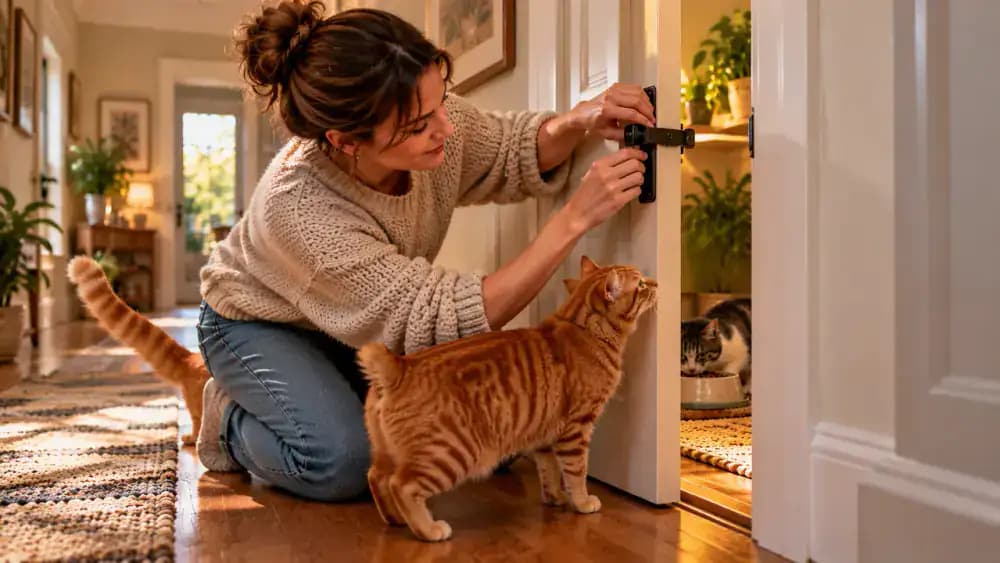
Measure Success by Comfortable, Independent Meals
A successful feeding arrangement allows every cat to approach its bowl, eat comfortably, and leave without competition or interruption. Watch for relaxed behavior rather than focusing only on how organized the stations appear. Continue tracking portions and eating habits as routines change. The best setup supports each cat's independence while simplifying daily care.
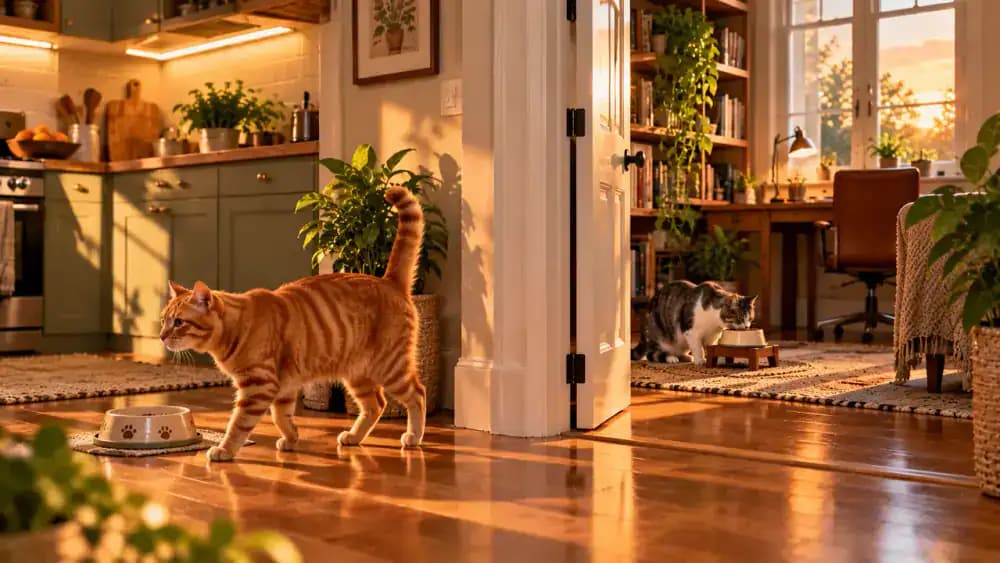
Dinner starts peacefully enough. You put down two bowls, both cats approach, and everything seems fine. Then your confident cat finishes first and heads straight for the other bowl. The slower eater pauses, backs away, and leaves part of its dinner behind. Meanwhile, the faster cat gets an unexpected second helping.
Sound familiar? In a multi-cat household, sharing a feeding area doesn't always mean sharing comfortably. Even cats that get along throughout the day may behave differently around food. Close feeding arrangements can encourage competition, food guarding, and subtle intimidation. They also make it difficult to know exactly how much each cat is eating.
Setting up separate feeding stations for multiple cats is a practical way to give every cat more control over mealtime. The idea isn't simply to move bowls farther apart. It's to create individual eating spaces where cats can access their food without being watched, crowded, chased, or interrupted by another pet.
Depending on your home and your cats' personalities, that might mean feeding in opposite corners, using furniture as visual barriers, or serving meals in separate rooms with closed doors. Elevated stations and microchip-activated feeders can offer additional options in certain situations.
This guide covers the supplies, placement decisions, common mistakes, and practical adjustments that help make separate feeding stations work. With a little observation and a consistent routine, you can make meals calmer while keeping better track of every cat's appetite.
Where people go wrong
Placing Food Bowls Too Close Together. Two bowls beside each other may look like separate feeding stations, but they can still create competition. A confident cat may block access, watch another cat eat, or move between bowls. Increase the distance between stations and observe how each cat responds. If tension continues, use different rooms rather than assuming a few extra inches will solve the problem.
Ignoring Visual Contact Between Cats. Physical distance isn't always enough when one cat feels uncomfortable being watched during meals. A cat may hesitate, eat quickly, or abandon its bowl while another cat stares from across the room. Arrange stations around corners or behind stable furniture to interrupt direct sightlines. Watch for relaxed eating behavior instead of judging success by distance alone.
Choosing Locations That Are Difficult to Access. A feeding station should match the cat's physical abilities and preferred movement patterns. High shelves, steep stairs, slippery surfaces, and cramped corners can discourage older cats or those with mobility limitations. Select stable, accessible locations with enough room to approach and leave comfortably. Avoid placing a bowl where another pet can easily block the only exit.
Allowing the Fastest Eater to Visit Other Bowls. A fast eater can finish its portion and reach another cat's meal before the slower cat is ready. This undermines portion control and may make the slower cat reluctant to return. Supervise meals, remove finished bowls, or use closed doors for stronger separation. Microchip-activated feeders may also help when managing controlled access to food.
Changing Every Feeding Location Overnight. Sudden changes to a familiar routine can confuse cats that depend on predictable feeding locations. Some may hesitate to approach an unfamiliar station or wait near their original bowl. Introduce changes gradually when practical, maintaining familiar bowls and feeding times. Give each cat opportunities to investigate its new location without pressure, and adjust the arrangement according to its behavior.
Assuming Every Cat Eats the Same Amount. Cats may have different portion requirements depending on their age, size, activity, food, and veterinary guidance. Filling every bowl equally can make individual intake difficult to manage. Measure each cat's assigned portion and record leftovers separately. Avoid guessing which cat ate what, especially when one cat has dietary restrictions or a prescribed feeding plan.
Ignoring Small Changes in Eating Behavior. A cat that approaches its station reluctantly, repeatedly leaves food, or begins eating noticeably less may need closer attention. Don't automatically assume the behavior is caused by competition or station placement. Observe interactions, record food intake, and check whether the location feels secure. Contact your veterinarian promptly about persistent appetite changes, unexplained weight loss, or refusal to eat.
Questions people ask
There isn't one ideal distance that works for every household. Start by placing bowls in separate, quiet areas where cats aren't forced to face each other. Different corners may work for relaxed companions, while more competitive cats may need entirely separate rooms. Observe whether each cat approaches, eats, and leaves comfortably. If one cat still intimidates another, increase separation or block visual contact.
Fixed it?
Get one guide like this every Thursday.