How to Create Safe Vertical Climbing Spaces for Your Cat
Create a cat-friendly vertical space with stable shelves, secure perches, and accessible climbing routes. Learn how to choose safe locations, prevent falls, and adapt elevated spaces to your cat's age, confidence, and mobility.
What you’ll need
Tap to tick things off before you start.
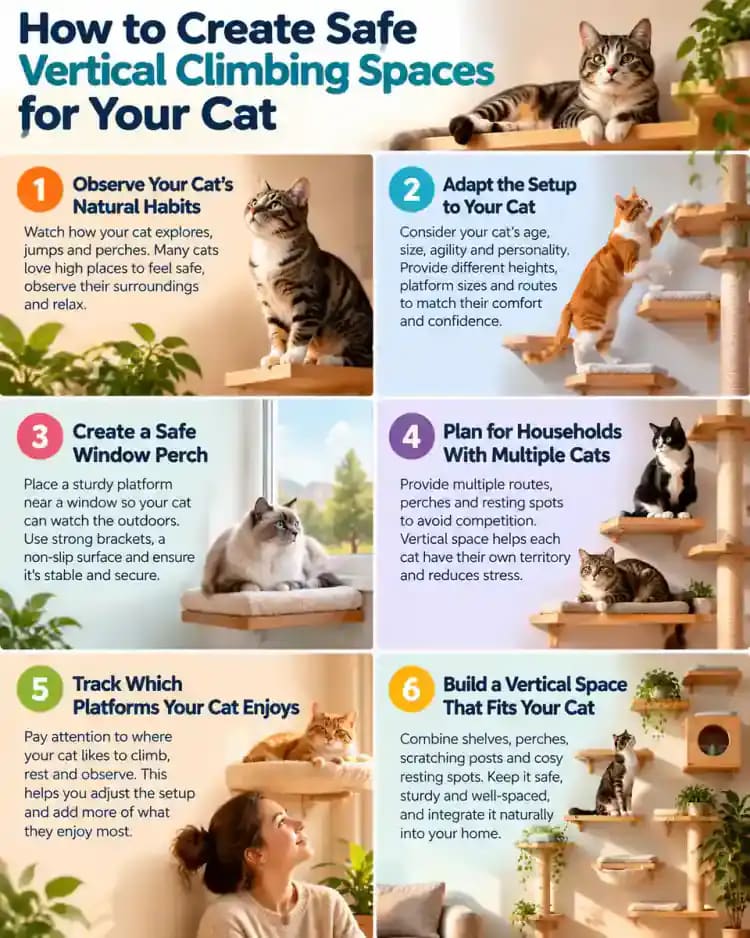
Observe Your Cat's Natural Habits
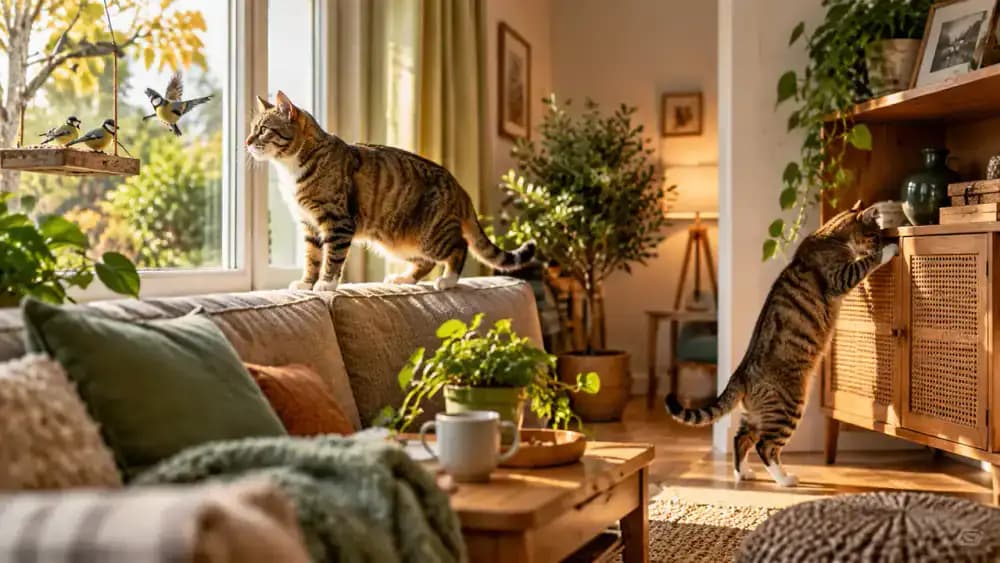
Spend some time watching how your cat moves through the room before choosing where to add climbing shelves or elevated resting spots. Notice whether it enjoys sitting on the sofa back, watching birds from a windowsill, or resting on a cabinet. These preferences help you create a layout that feels familiar and encourages voluntary exploration.
Choose the Right Location
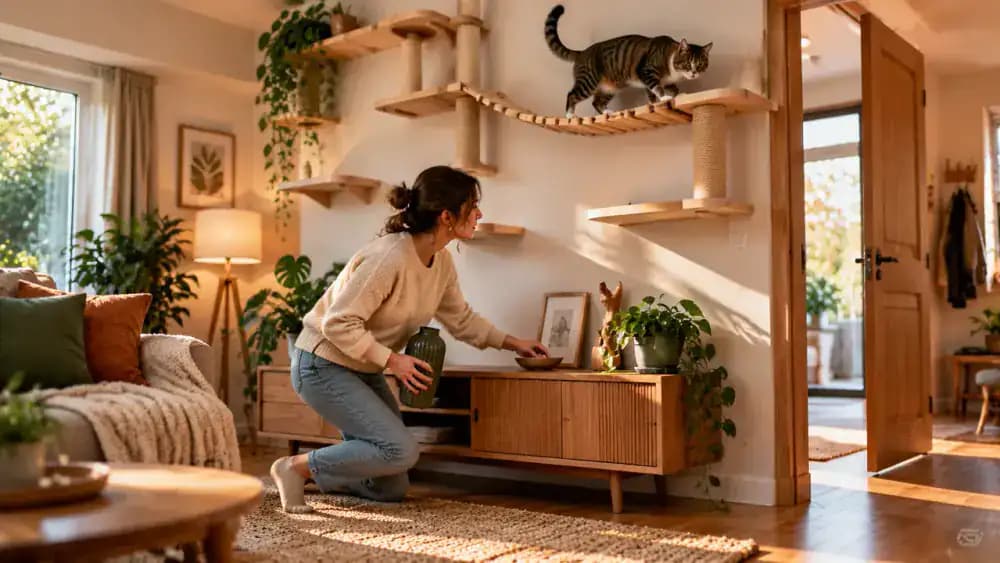
Select a quiet wall away from swinging doors, busy walkways, hot appliances, and areas where people regularly carry bulky items. Look carefully at the floor beneath potential climbing platforms, too. Move fragile decorations, clear sharp-edged objects, and remove nearby hazards. A thoughtful location gives your cat room to explore without creating obstacles for your household.
Map Out an Accessible Route
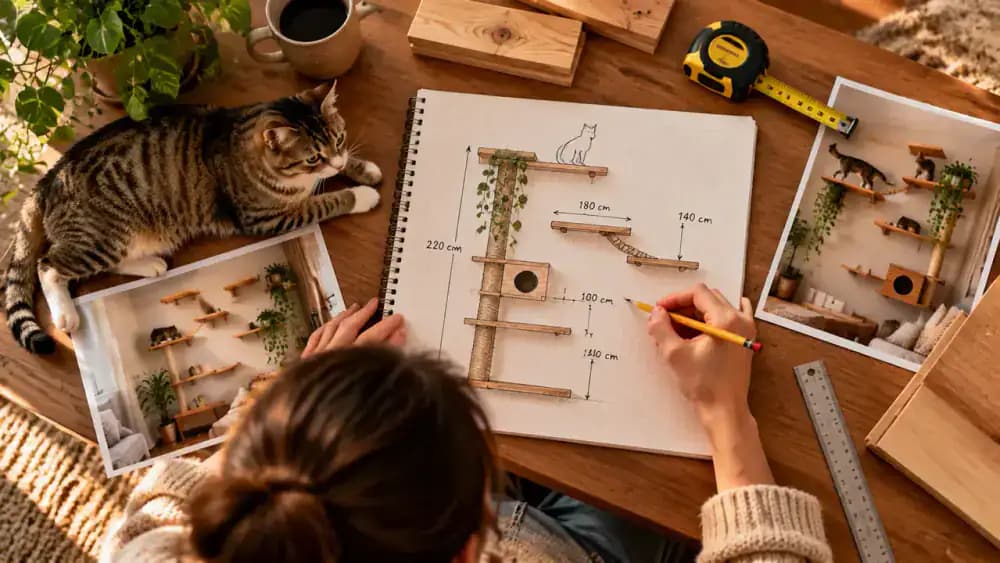
Measure the available wall and sketch your proposed layout before purchasing shelves or drilling holes. Mark each platform's height, the distance between landings, and a low starting point. Allow enough space for your cat to turn around and settle comfortably. A simple paper plan helps identify awkward gaps and makes it easier to adapt the route to your cat's abilities.
Secure Every Shelf Properly
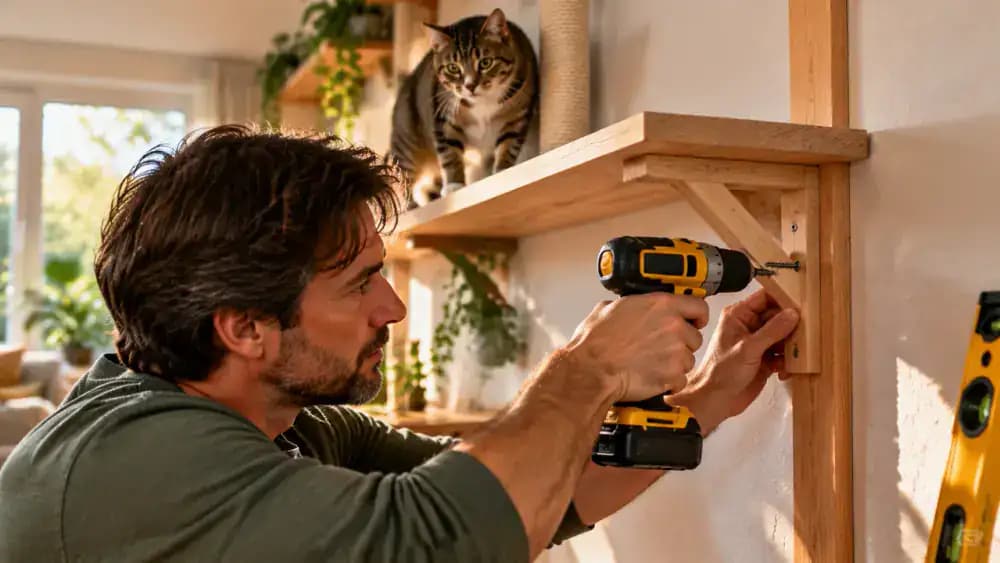
Choose shelves, brackets, and fasteners rated for the intended load, allowing for the forces created when a cat jumps or lands. Identify suitable structural supports and follow the shelf manufacturer's installation instructions. Match the mounting hardware to the wall material rather than relying on guesswork. If you are unsure about the wall construction or installation method, consult a qualified professional.
Choose Stable, Grippy Surfaces
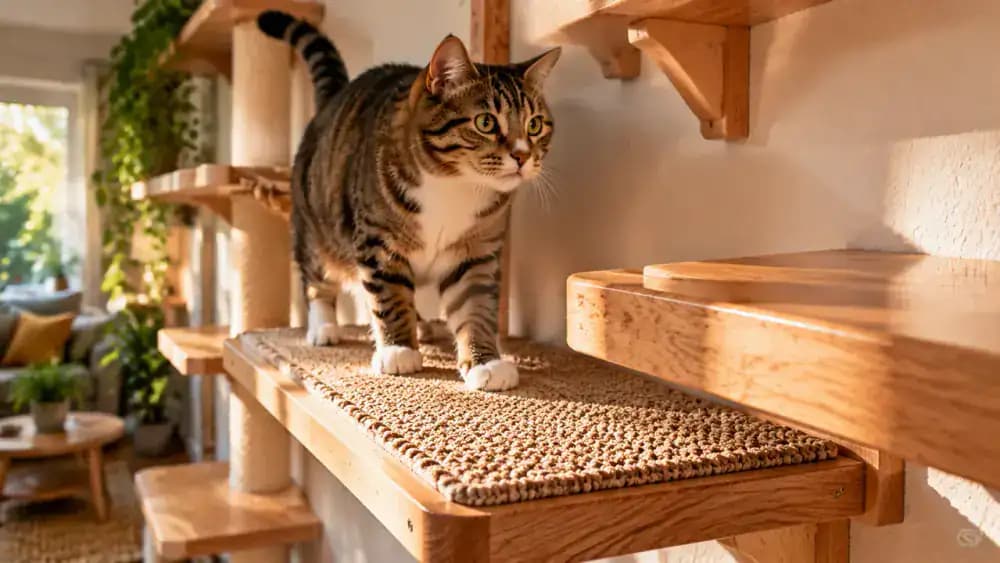
Give every platform a stable surface that provides reliable traction during climbing, landing, and turning. Avoid smooth finishes that may become slippery under your cat's paws. Choose platforms wide enough for comfortable sitting or resting, and secure any added nonslip matting so it cannot shift or bunch up. Inspect the coverings regularly and replace worn materials when needed.
Adapt the Setup to Your Cat
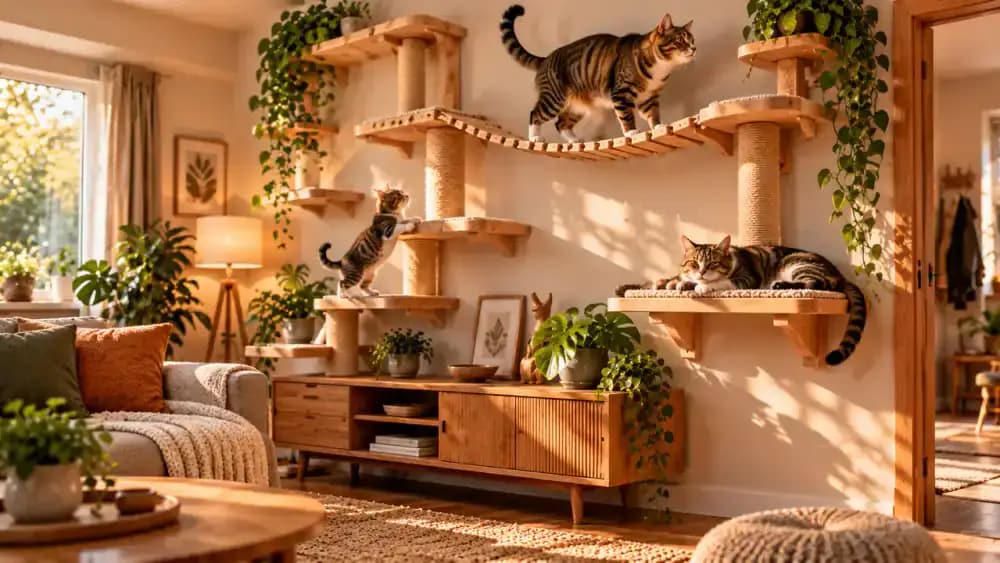
Design the climbing route around your cat's age, size, confidence, and physical abilities. An agile adult may enjoy several connected shelves, while a kitten or older cat may benefit from lower platforms, shorter gaps, and broad resting areas. Avoid requiring a single large jump to reach the next surface. Ask your veterinarian for guidance if mobility or balance is a concern.
Introduce the Climbing Space Gradually
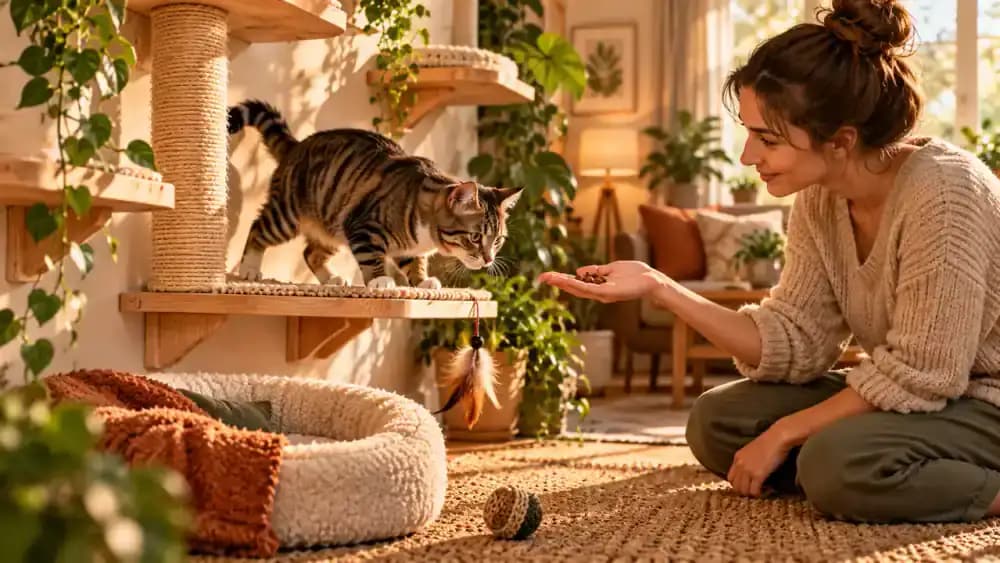
Make the new climbing area inviting without pressuring your cat to use it. Place a familiar blanket on a low perch and offer a favorite toy or a few treats nearby. Allow your cat to investigate, approach, and climb voluntarily. Avoid lifting, chasing, or coaxing it onto high platforms, and let confidence develop through calm, positive experiences.
Inspect, Observe, and Improve
Before allowing regular use, gently check every shelf for movement and inspect brackets, fasteners, edges, and nonslip coverings. Repeat these checks regularly and whenever furniture is moved or a platform becomes unstable. Observe how your cat climbs up, changes direction, and descends. If a transition looks difficult, adjust the layout or add an intermediate platform to improve access.
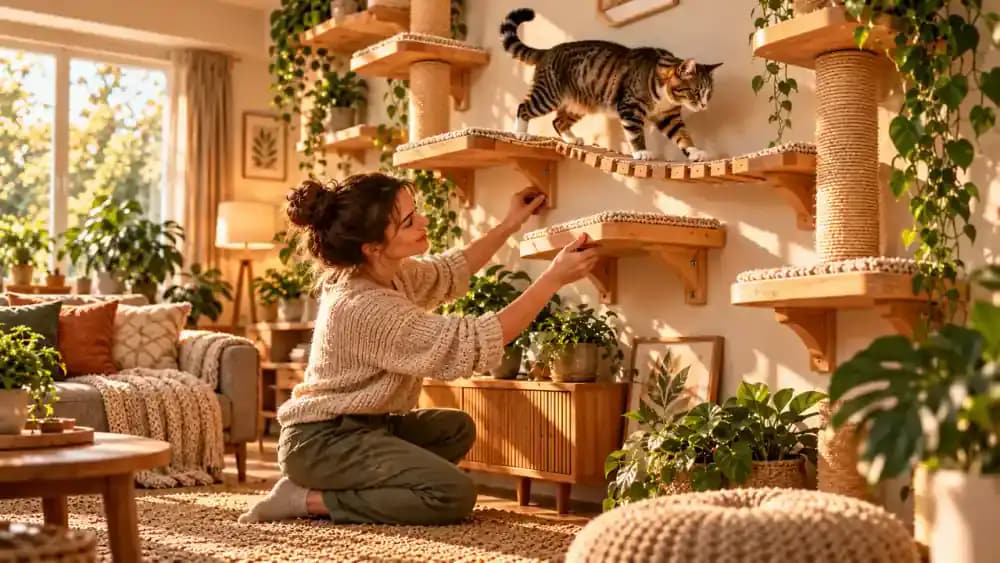
Clear the Landing Zones
Inspect the areas around and beneath every platform, including the spaces your cat may reach when jumping down or changing direction. Move lamps, fragile decorations, and sharp-edged furniture away from likely landing zones. Secure dangling electrical cords and protect accessible windows with reliable screens. Check the route from different angles to identify hazards that may be easy to overlook.
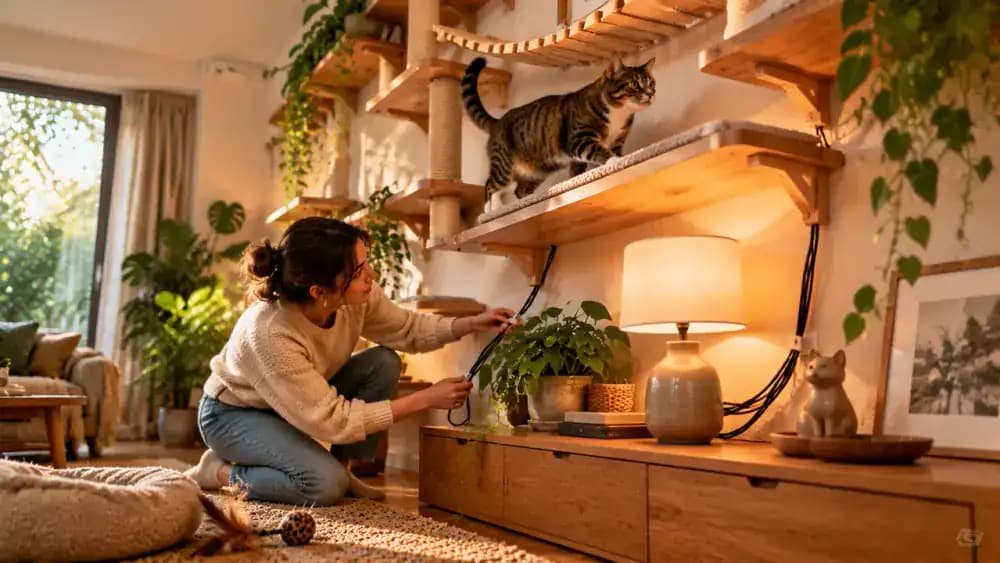
Give Every Platform Enough Room
Choose landing platforms that allow your cat to turn around, sit comfortably, and step down without balancing on a narrow edge. Wider surfaces are especially useful where the route changes direction or connects to another shelf. Position platforms away from busy walkways and frequently used doorways, giving your cat room to move without being startled by passing household members.
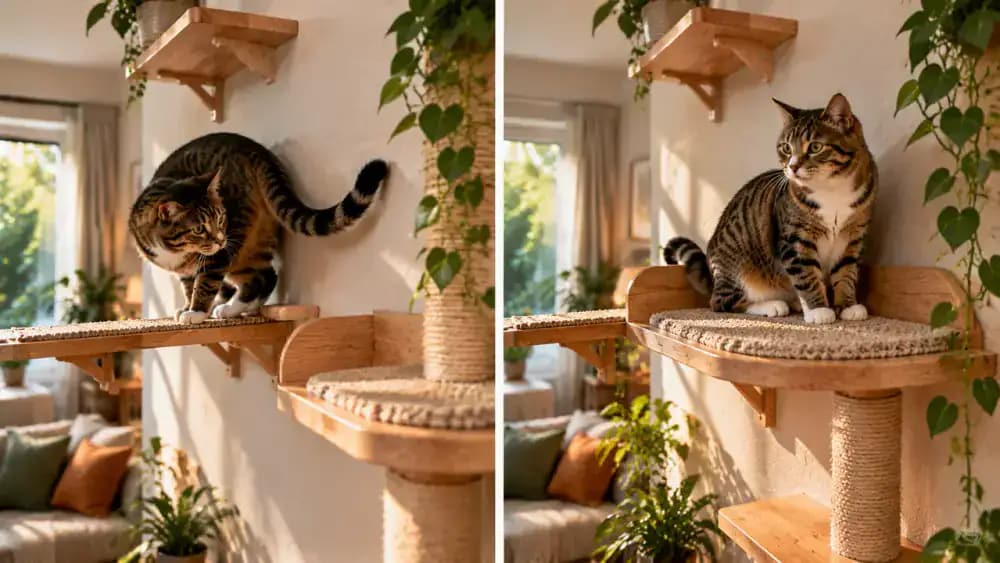
Check Weight Capacity and Wall Support
Before allowing your cat onto any platform, review the manufacturer's weight limits and installation requirements for the shelf, brackets, and fasteners. Account for the additional force created when a cat jumps or lands, and choose mounting hardware suited to the wall construction. Check each installed platform for movement. If you are uncertain about structural support, consult a qualified professional.
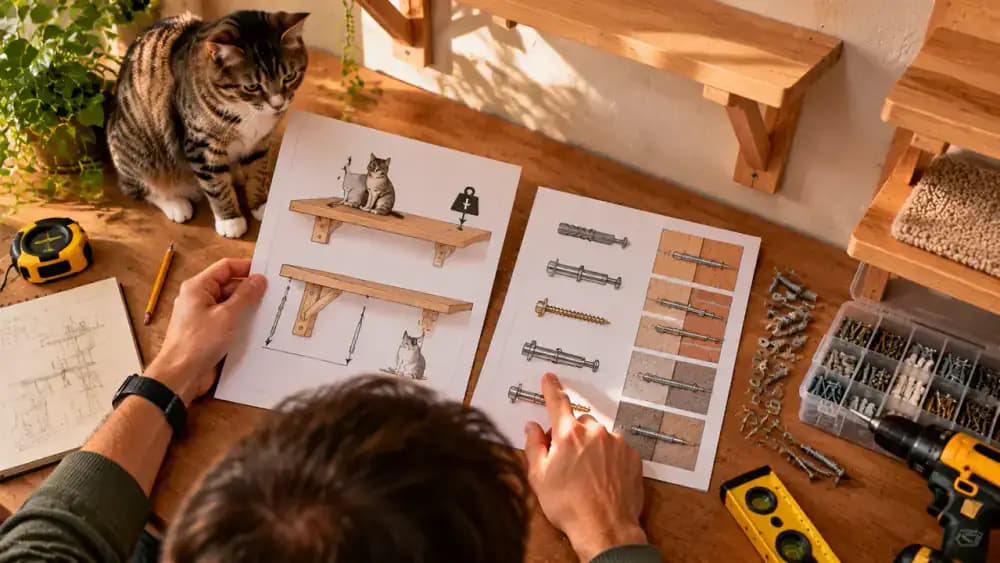
Create a Safe Window Perch
Give your cat a comfortable window perch that connects easily to the climbing route and provides a secure place to watch outdoor activity. Ensure the window cannot open unexpectedly and that any screen is firmly secured and suitable for preventing escapes. Check the perch's temperature throughout the day, and offer a shaded resting alternative when direct sunlight makes the surface uncomfortable.
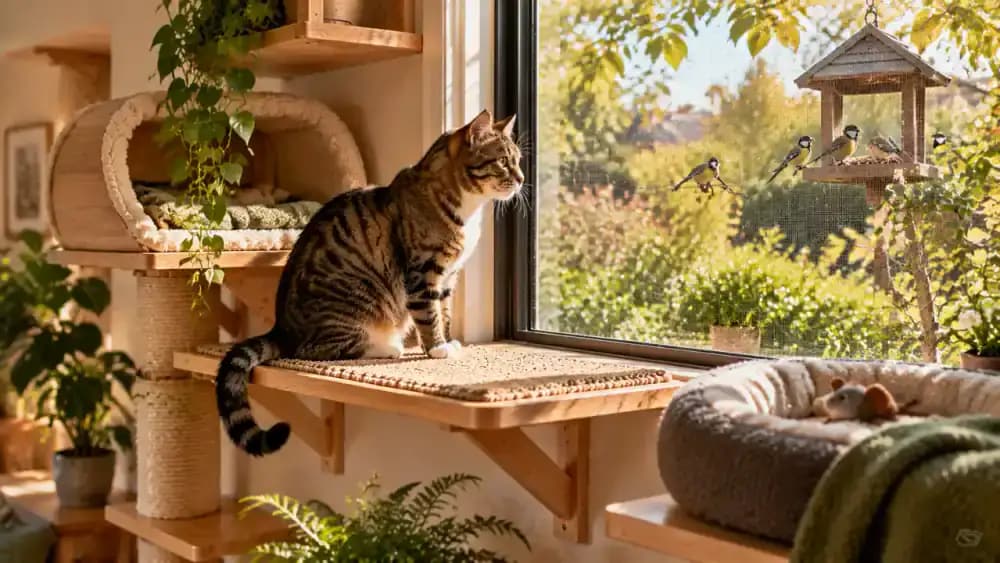
Add Comfortable Elevated Resting Spots
Make your climbing route useful by including destinations for resting, grooming, and observing household activity. A padded nook, a wide shelf, or an open viewing platform can offer different choices throughout the day. Ensure each resting area has enough room for your cat to stretch and change position. Arrange bedding so it does not cover nonslip surfaces or conceal mounting hardware during inspections.
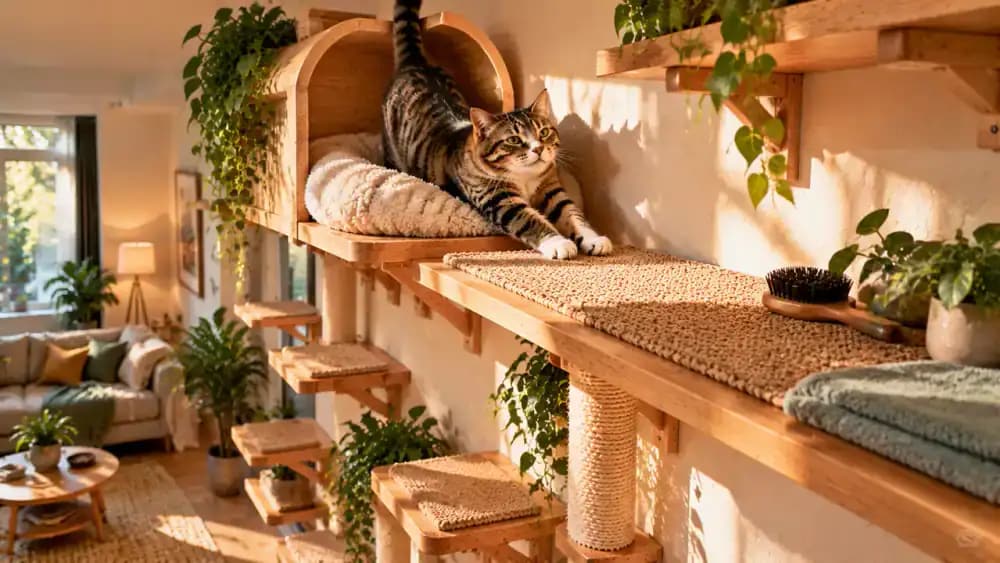
Make Vertical Space Work in Small Homes
Use a few thoughtfully placed wall platforms to add climbing opportunities without sacrificing valuable floor space. Arrange the route away from shelves holding plants, ornaments, food, or other hazards. Keep walkways, cupboards, and cleaning areas accessible even when your cat is climbing or resting. A compact, well-planned arrangement is often more practical than filling every available wall with platforms.
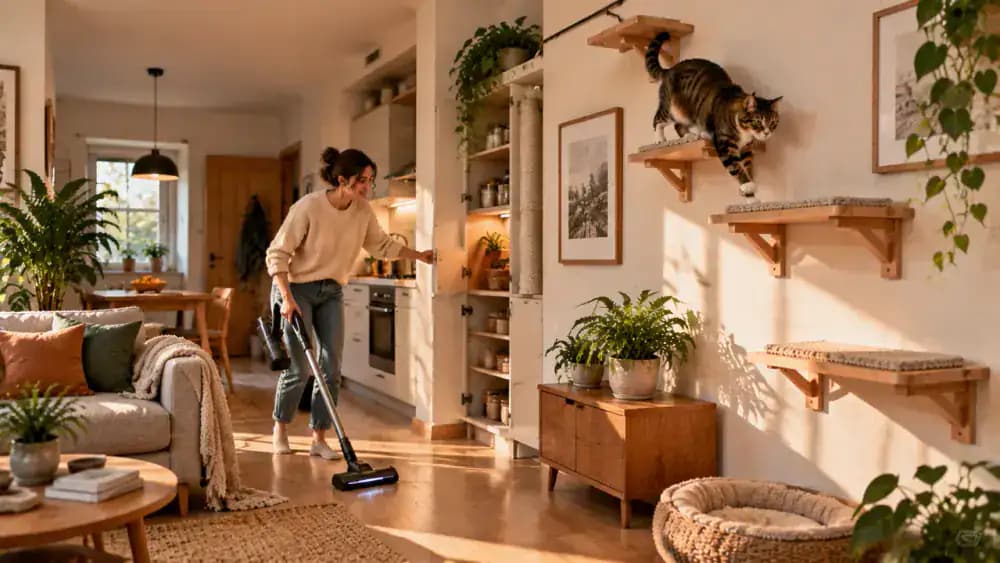
Let Your Cat Set the Pace
Allow your cat to decide when and how far to explore the new climbing space. Place a treat or familiar toy near the lowest platform and wait quietly while your cat investigates. Reward voluntary exploration without lifting, pushing, or chasing your cat onto a shelf. If it hesitates, make the route easier to access and allow time for confidence to develop.
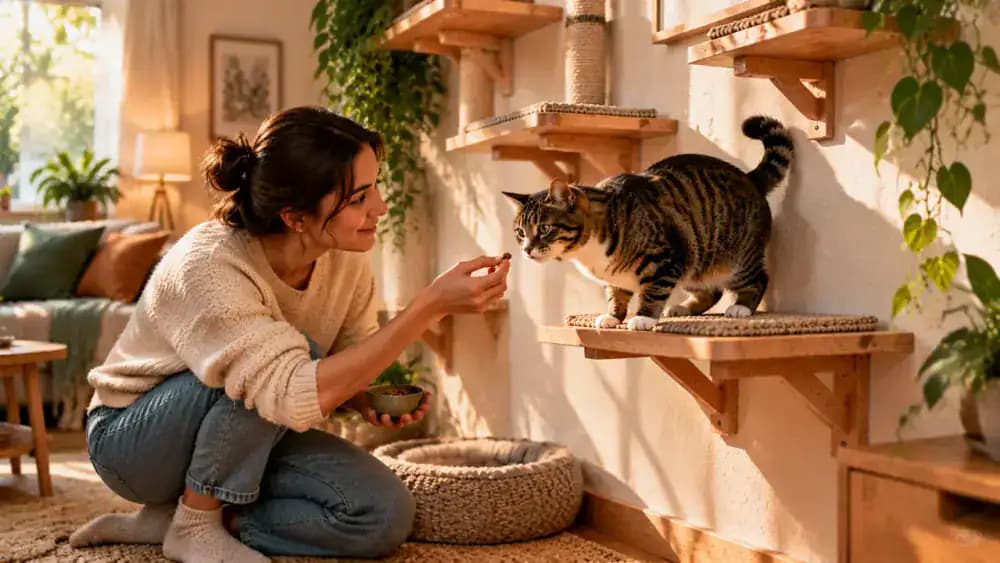
Build a Simple Safety Check Routine
Make regular inspections part of caring for your cat's climbing space. Gently test each empty platform for movement, examine brackets and fasteners, and look for worn nonslip coverings or newly introduced obstacles. After moving furniture, repeat the checks and observe how your cat lands and turns. Adjust awkward transitions to keep climbing and resting comfortable.
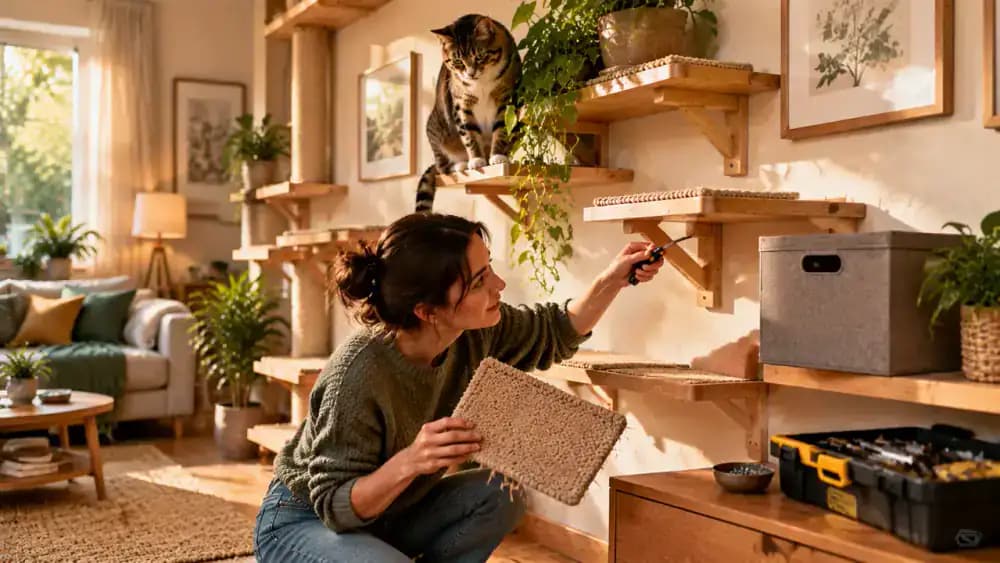
Keep Enrichment Part of Daily Life
Make vertical climbing part of your cat's everyday environment by keeping familiar toys and comfortable resting places available. Rotate a few safe enrichment activities occasionally to maintain interest without overwhelming your pet. A puzzle feeder placed nearby can encourage exploration, while quiet periods let your cat rest undisturbed. Allow your cat to choose which activities and platforms to use.
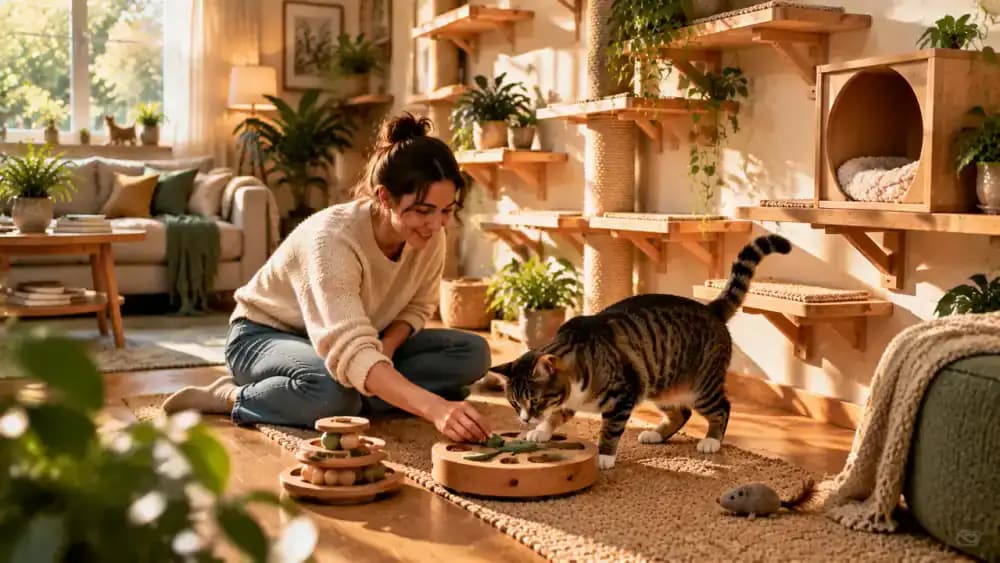
Plan for Households With Multiple Cats
When several cats share a climbing area, provide enough resting spots and alternative routes to reduce competition. Avoid layouts where one cat can block the only entrance or exit from a favored perch. Observe how the cats interact and whether each can move comfortably. Adding a separate low platform or another resting nook can provide useful choices without crowding the space.
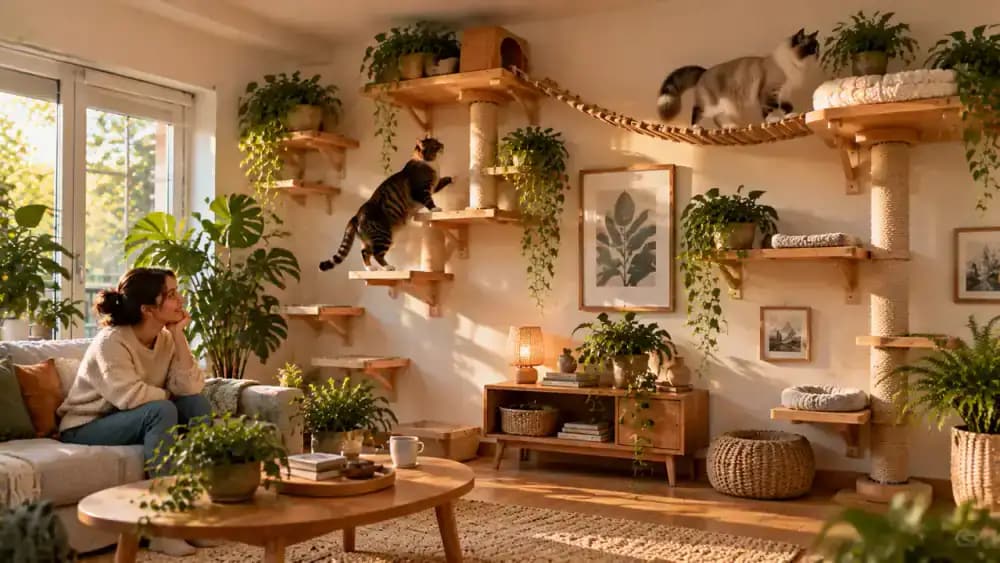
Choose Materials That Stay Clean
Select climbing surfaces and bedding that are easy to clean and inspect regularly. Removable, washable cushion covers can keep resting spots fresh, while durable textured inserts provide traction without hiding damage. Check seams for loose threads, remove dangling cords, and avoid detachable decorations that could become chewing or snagging hazards. Refit cleaned covers securely and keep mounting points accessible for inspection.
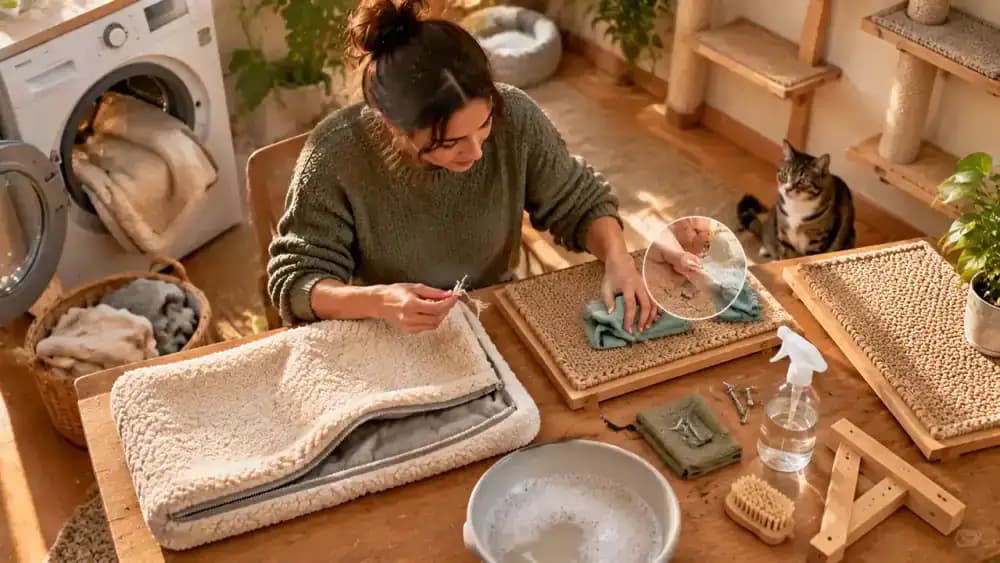
Consider Safe Options for Rental Homes
If you rent or cannot drill into walls, choose a purpose-built cat climbing tower instead of stacking boxes or relying on unstable furniture. Assemble the tower according to the manufacturer's instructions and place it on a level floor. Check its base, connections, and overall stability before use, and position it where your cat can approach and leave without obstruction.
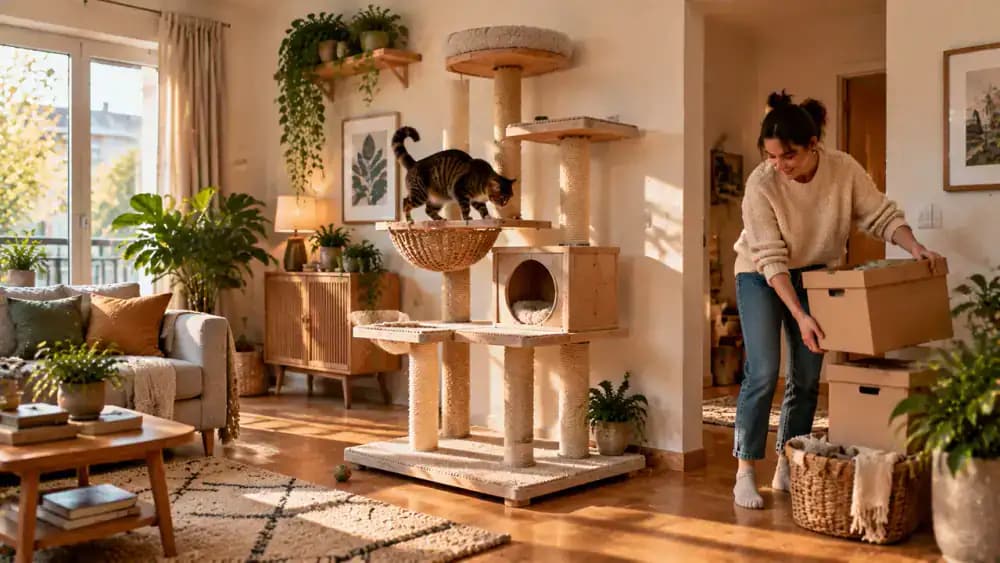
Recognize Signs of Discomfort
Watch for changes in how your cat approaches familiar platforms, including repeated slipping, missed landings, hesitation, or suddenly avoiding a favorite perch. Do not assume these behaviors are stubbornness or encourage challenging climbs. Make lower resting places available and pause activities that seem difficult. If changes persist or your cat appears to have balance problems, contact your veterinarian for guidance.
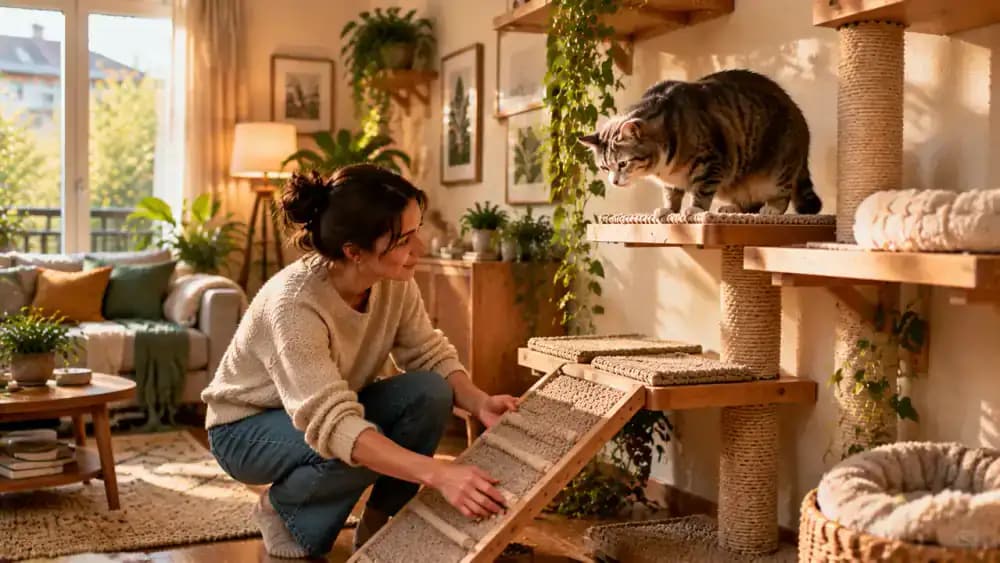
Respect Individual Preferences
Give your cat choices that reflect its personality and preferred surroundings. Some cats enjoy open shelves where they can watch family activities, while others favor sheltered cubbies in quieter rooms. Observe which locations your cat chooses and adjust the environment accordingly. Providing both social lookout spots and secluded resting areas helps make vertical space useful for different moods and preferences.
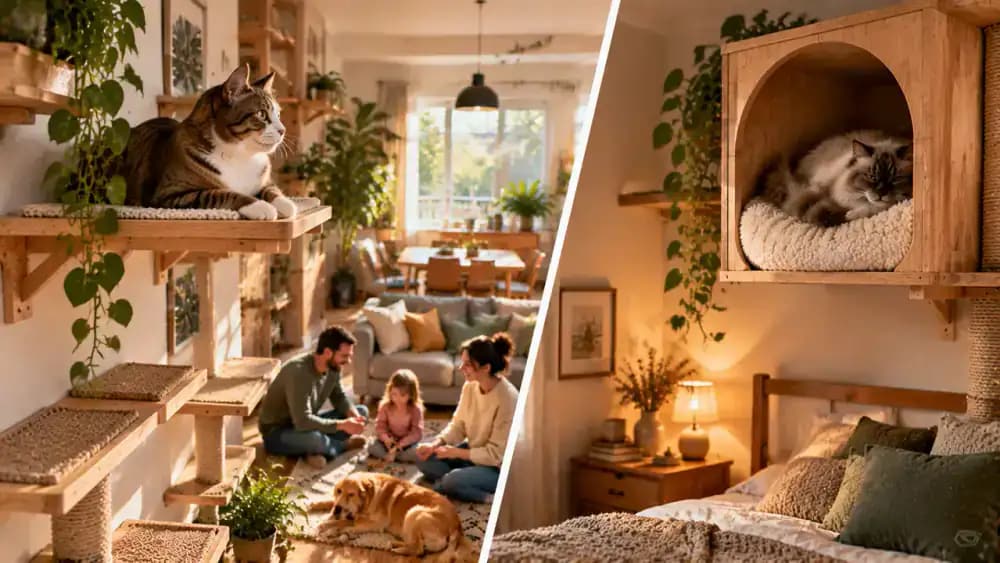
Create Choices, Not Maximum Height
A useful climbing area does not need to reach the ceiling or fill every available wall. Begin with a secure route featuring accessible entry points, broad platforms, and a comfortable resting place. Observe how your cat uses the arrangement and make improvements gradually. Prioritize reliable support, manageable transitions, and freedom of choice rather than encouraging higher or more difficult climbs.
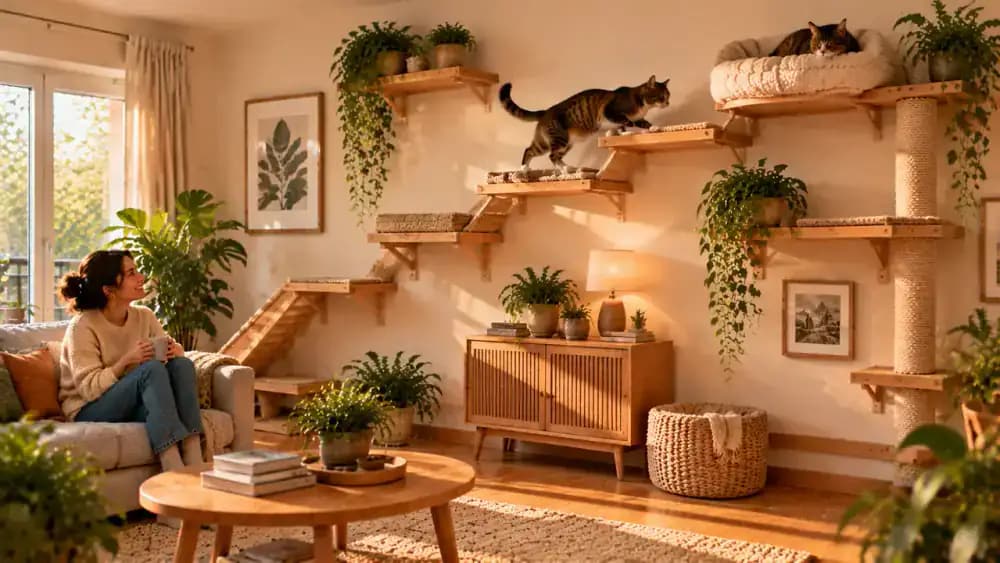
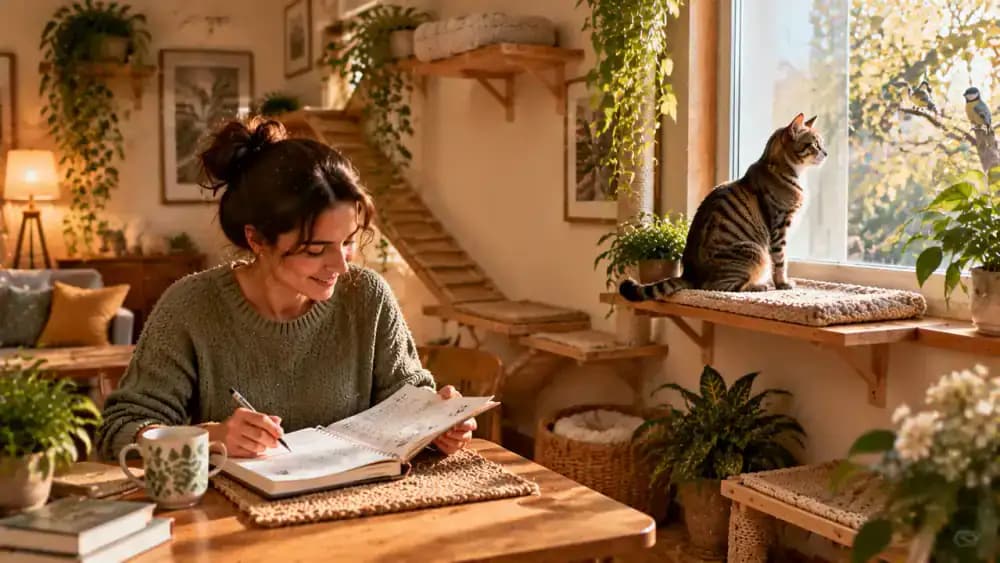
Track Which Platforms Your Cat Enjoys
Observe which platforms your cat uses during different parts of the day and record any patterns in a notebook or phone. Your cat might prefer a window-facing shelf for morning birdwatching, a middle platform for afternoon exploration, or an elevated nook for evening rest. If a platform remains unused, review its location, comfort, and accessibility before making changes.
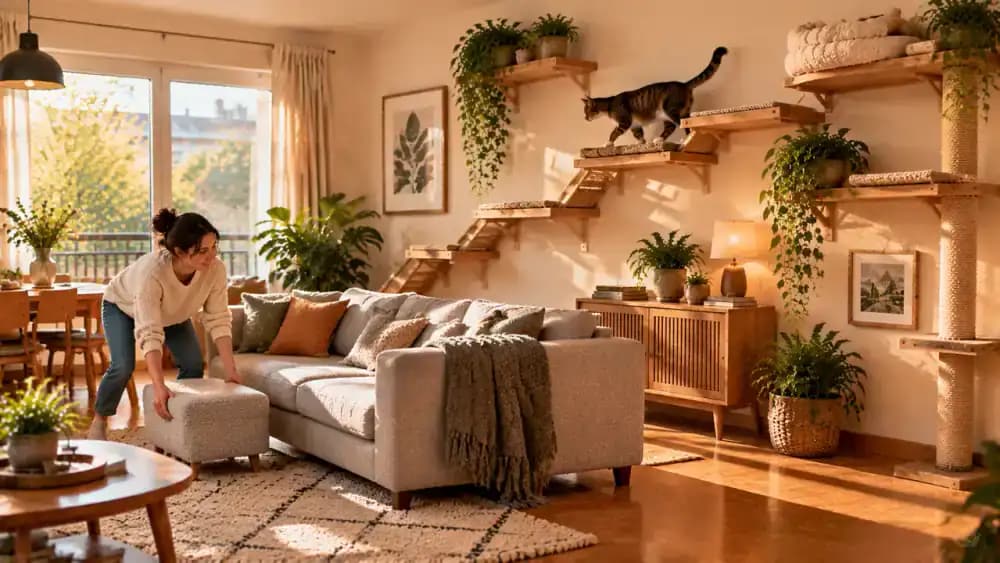
Recheck the Route After Room Changes
Reassess your cat's climbing route whenever you rearrange furniture, move a sofa, or change access to a doorway. Even a stable shelf may become harder to reach when the surrounding layout changes. Watch how your cat approaches each platform, remove unstable shortcuts such as temporary footstools, and restore clear access to the starting point and every landing.
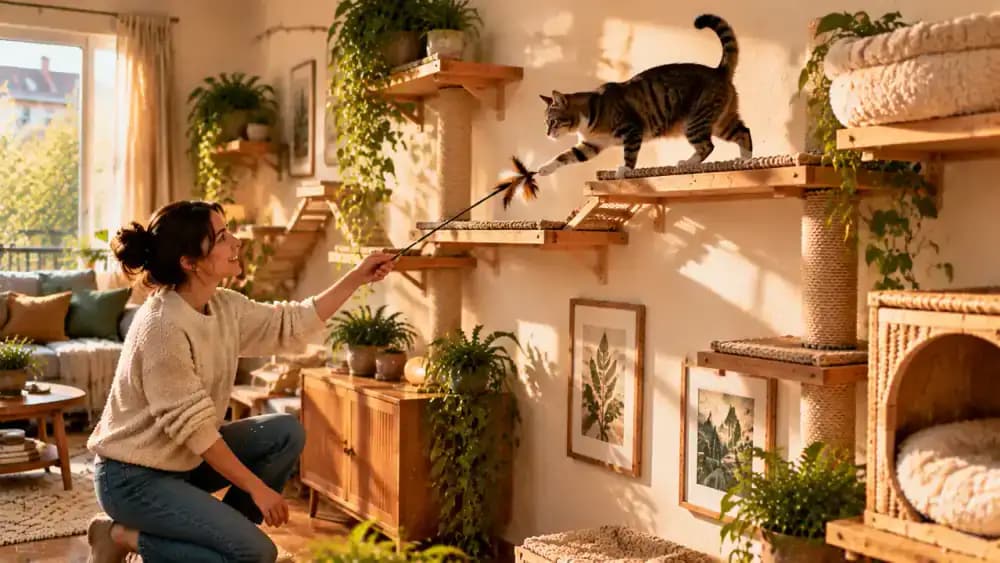
Make Playtime Safe on the Climbing Route
Use interactive play to encourage your cat to explore its climbing route without pushing its physical limits. Guide a wand toy slowly toward broad platforms and comfortable landing areas instead of encouraging sudden leaps or frantic chasing. Let your cat finish at its own pace, offer a small reward if appropriate, and store toys with strings safely after playtime.
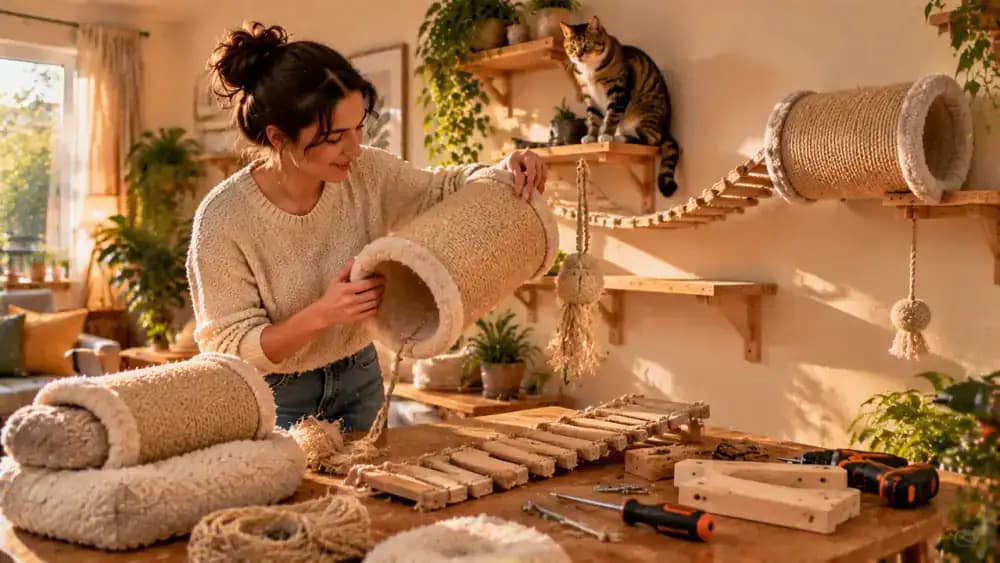
Choose Extra Features Carefully
Consider the safety of tunnels, bridges, and hanging accessories before adding them to your cat's climbing route. Choose products designed for cats, follow installation instructions, and inspect every attachment point. Avoid frayed fabric, loose parts, and accessories that could snag claws or limbs. Observe your cat using each addition and remove anything that shifts or interferes with comfortable movement.
Teach Children to Respect the Climbing Space
Explain to children and visitors that elevated cat spaces are places for resting and observing, not opportunities for chasing or grabbing. Ask everyone to avoid shaking platforms, reaching for the cat, or blocking its way down. Show children how to watch quietly from the floor and give the cat room to leave whenever it chooses. Respectful household habits support a calmer environment.
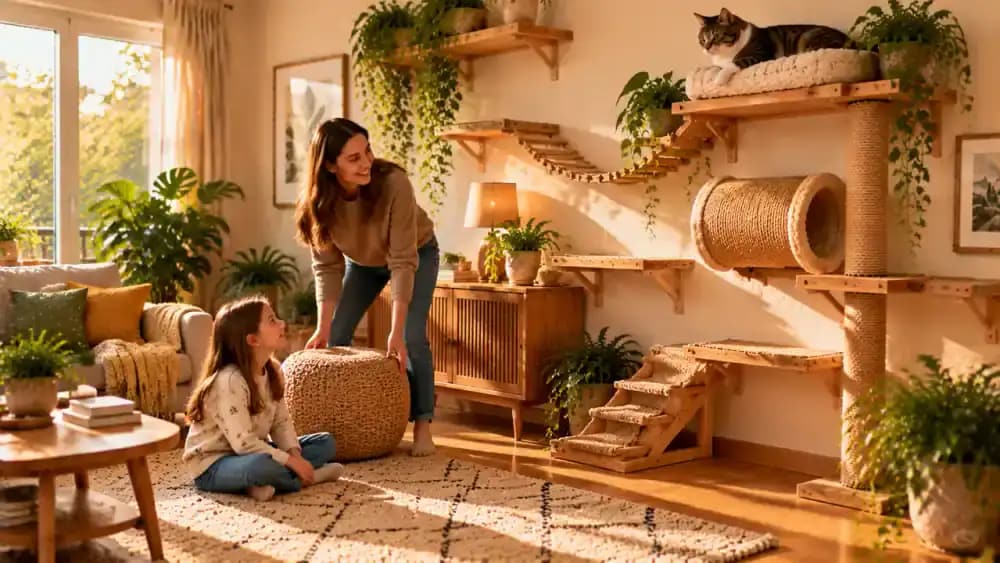
Prepare the Climbing Area Before Trips
Before leaving home for an extended period, inspect the climbing area for loose decorations, unstable components, tangled cords, and blocked routes. Confirm that your cat can still reach its usual resting places safely. Ask a trusted caregiver to check the setup during visits, watch for visible damage or unusual changes in behavior, and record any concerns for follow-up.
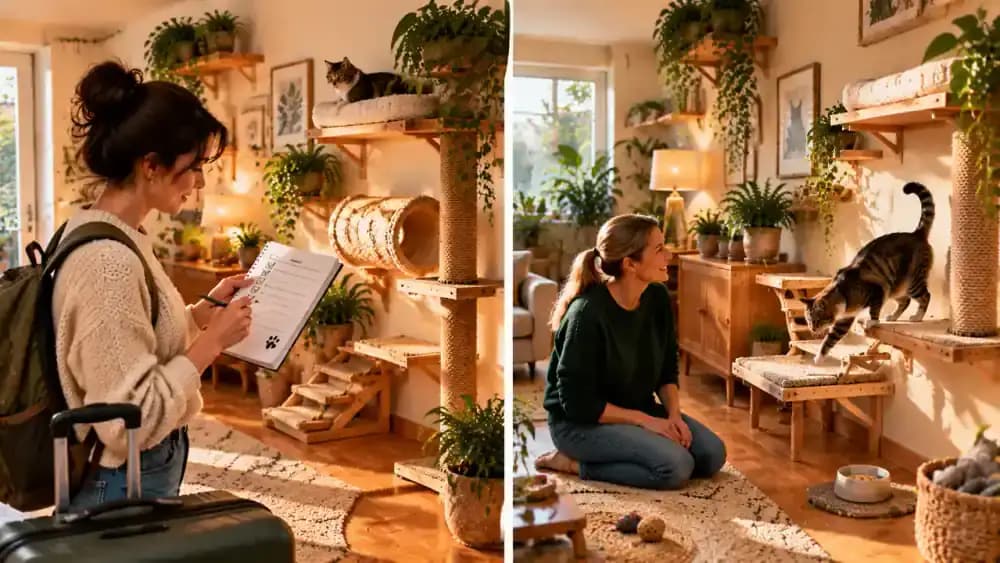
Build a Vertical Space That Fits Your Cat
Create a climbing arrangement that offers your cat accessible steps, useful observation points, and comfortable elevated resting places. Continue watching how your cat uses the space and make small adjustments when necessary. Keep safety inspections part of your routine, and seek professional advice when installation concerns or changes in mobility arise. The goal is a dependable environment that respects your cat's individual preferences.
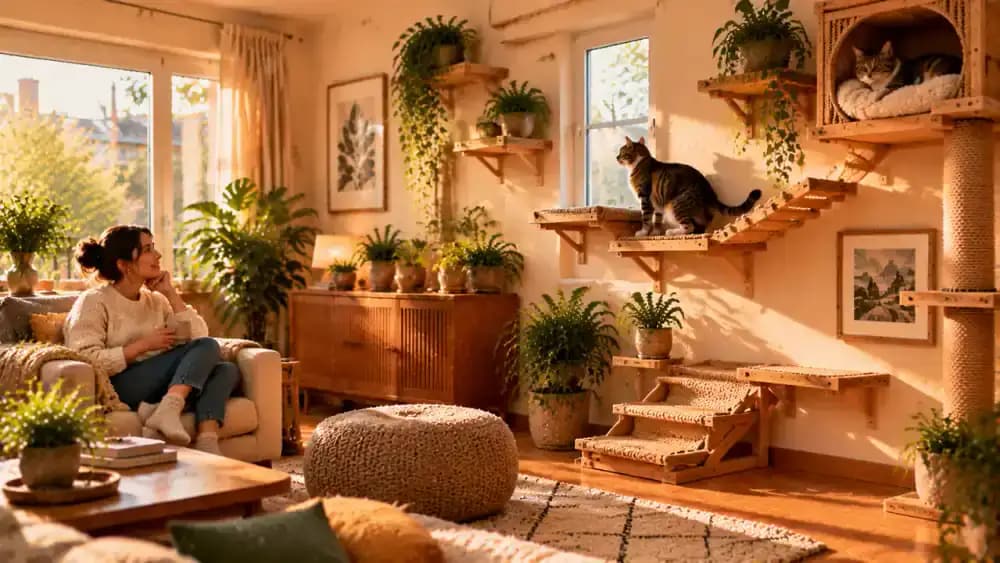
Cats naturally enjoy exploring elevated spaces, watching their surroundings, and finding quiet places to rest. Creating safe vertical climbing spaces for cats can add valuable enrichment to your home without taking up much floor space. A well-planned arrangement of shelves, climbing towers, window perches, and elevated beds gives your cat more opportunities to exercise, observe household activity, and choose a comfortable resting spot.
The best setup is not necessarily the tallest or most elaborate one. It should reflect your cat's age, mobility, confidence, body size, and preferred activities. An energetic young cat may enjoy several connected platforms, while a senior cat or a less agile companion may benefit from lower surfaces, wider landings, and shorter transitions. Cats that are unfamiliar with elevated furniture may also need time to explore at their own pace.
Safety starts with choosing an appropriate location and securing every climbing surface properly. Shelves must support your cat's weight, provide reliable footing, and connect through manageable distances. Nearby windows, ceiling fans, furniture edges, electrical cords, and breakable objects also deserve attention when planning the layout.
Whether you are adding a simple window perch or creating a complete climbing route, thoughtful preparation makes the space more useful and comfortable. This guide covers the supplies to consider, common design mistakes to avoid, and practical ways to encourage exploration while allowing your cat to decide how much vertical space feels right.
Where people go wrong
Prioritizing Height Over Accessibility. The tallest climbing route is not necessarily the most enjoyable or safest choice for your cat. Large gaps between platforms can discourage exploration or make a descent difficult. Plan the layout around your cat's abilities, with manageable transitions, comfortable landing areas, and more than one accessible resting place whenever possible.
Using Inadequate Mounting Hardware. A shelf that appears sturdy when empty may shift or pull away from the wall under a moving cat's weight. Hardware must match the wall construction, bracket design, and manufacturer's requirements. Do not rely on adhesive strips, unsuitable drywall anchors, or improvised fasteners for load-bearing climbing platforms.
Ignoring Traction and Landing Space. Smooth surfaces, narrow platforms, and crowded landings can make climbing and turning around unnecessarily difficult. Provide secure, nonslip footing and enough space for your cat to approach, pause, and change direction. Keep coverings firmly attached and replace materials that become slippery, frayed, or loose through regular use.
Placing Platforms Near Household Hazards. An elevated perch can become dangerous when it provides access to open windows, hot appliances, ceiling fans, unstable furniture, or fragile decorations. Review the entire climbing route, including its highest points and likely jumping destinations. Secure window screens appropriately, remove nearby hazards, and prevent access to unsafe ledges.
Choosing One Design for Every Cat. Kittens, senior cats, large-bodied cats, and less agile companions have different needs. A setup designed for a confident, athletic adult may have difficult jumps or unsuitable surfaces for another cat. Adjust platform dimensions, height, spacing, and resting options to the individual animal rather than assuming every cat enjoys the same climbing challenges.
Forcing Exploration Too Quickly. Placing a cat on a high shelf or repeatedly coaxing it toward an unfamiliar platform can create unnecessary stress. Allow your cat to investigate from the floor and approach new surfaces voluntarily. Familiar bedding, favorite toys, and small treats may help build positive associations, but patience and freedom of choice are essential.
Skipping Routine Safety Inspections. Even a properly installed climbing space can become less safe as fasteners loosen, brackets shift, and coverings wear out. Check each platform for movement, damage, sharp edges, and deteriorating traction. Inspect more frequently after installation and whenever a shelf receives heavy use, and stop access immediately if a component appears unstable.
Questions people ask
Elevated spaces let cats observe their surroundings, rest away from busy household activity, and explore their environment in different ways. Shelves and climbing structures can also encourage movement and provide additional usable space in smaller homes. Individual preferences vary, so offer several comfortable choices rather than assuming every cat wants to climb high.
Fixed it?
Get one guide like this every Thursday.