The Tenant's Guide to Rental Utility Billing and Consumer Rights
Learn how rental utility billing works, including shared meters, RUBS formulas, and landlord fees. Discover how to review your lease, find utility payment assistance, dispute incorrect charges, and protect your rights as a renter.

What you’ll need
Tap to tick things off before you start.
What Rental Utility Billing Includes
Rental utility billing covers essential services that make an apartment livable, including electricity, natural gas, water, sewer service, and trash collection. Depending on the property, residents may also pay separately for heating, cooling, or other building services. These expenses can significantly increase total monthly housing costs beyond advertised rent. For example, an apartment renting for $1,500 with $180 in monthly utilities actually requires $1,680 before other living expenses. Understanding these costs helps renters evaluate affordability realistically.

How to Review Utility Terms in Your Lease
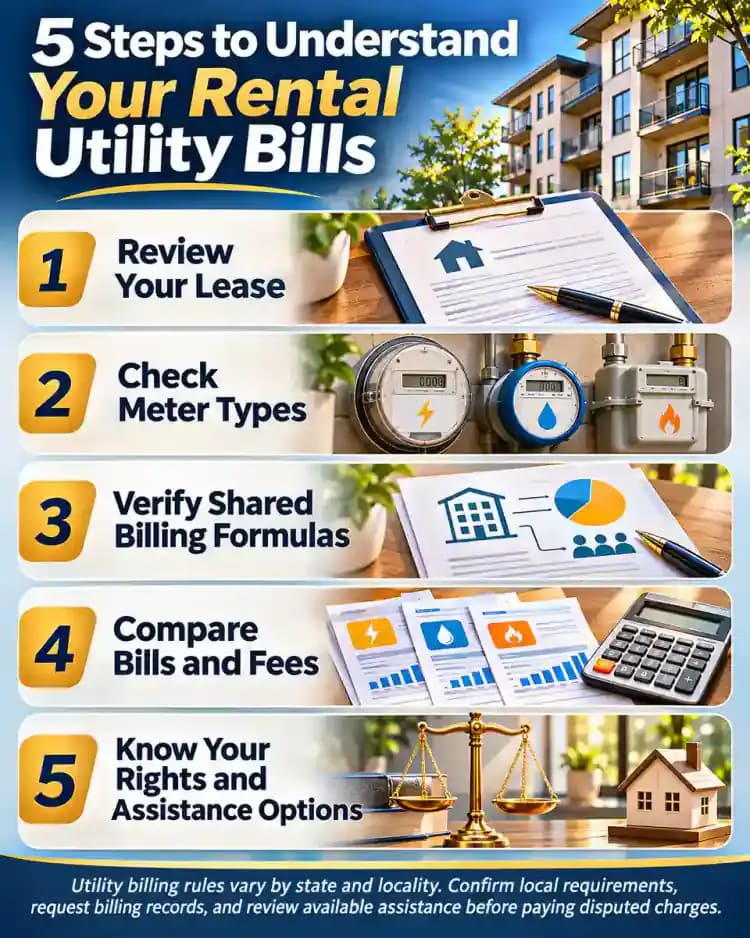
Your rental lease establishes important responsibilities for utility payments. Locate provisions identifying which services are included in rent, which are billed separately, and when payments become due. Examine language covering service activation, account transfers, billing adjustments, and charges after moving out. Also review any attachments addressing utilities because obligations may appear outside the main agreement. If a provision seems unclear, request written clarification before signing. Disclosure requirements and enforceability depend on applicable state and local laws.

Direct Utility Accounts vs. Landlord Billing
Utility payments generally follow one of three arrangements. With direct billing, the tenant opens an account and pays the utility provider. Under landlord-managed billing, the property owner pays the provider and subsequently charges residents. A third-party company may instead prepare statements and collect payments on the property's behalf. Each arrangement creates different customer service and payment processes. Knowing the billing entity helps identify where to submit payments, report account problems, and obtain explanations about charges.

Individual Meters vs. Shared Utility Meters
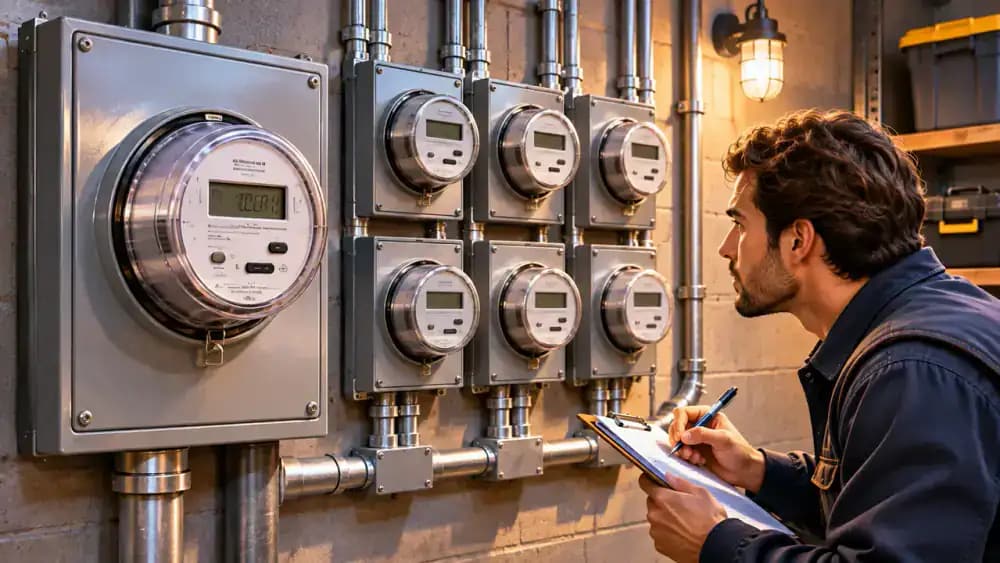
An individual utility meter measures consumption associated with a particular apartment. A shared or master meter measures usage across multiple units or an entire building. Individual metering generally provides a clearer relationship between consumption and charges, although meter accuracy and billing practices still matter. Shared metering cannot directly identify each household's consumption without additional measurement equipment. Some properties also use submeters that track individual units beneath a master account. Understanding the equipment explains what billing information is available.
How Ratio Utility Billing Systems (RUBS) Work
A Ratio Utility Billing System, or RUBS, distributes shared utility expenses using a predetermined allocation formula. Common factors include apartment square footage, occupancy, or plumbing fixtures. Consider a building with a $1,000 water bill and ten equally weighted apartments. Each unit would receive a $100 allocation before any permitted adjustments. Different apartment sizes or occupant counts could produce unequal shares. RUBS estimates responsibility rather than measuring actual household consumption, making the formula essential to understanding individual charges.

State and Local Laws Governing Utility Charges
Rental utility billing regulations differ substantially across the United States. State and local laws may limit shared billing arrangements, establish disclosure requirements, restrict administrative fees, or regulate how costs are allocated. A billing method permitted in one jurisdiction may face additional requirements elsewhere. There is no single nationwide RUBS standard covering every rental property. State attorneys general, local housing authorities, and tenant organizations can provide jurisdiction-specific guidance. Federal consumer protection resources do not replace these local utility billing rules.

How to Check and Dispute Incorrect Utility Bills
Start by comparing the billing period, service type, charges, and payment history against your records. Look for duplicate amounts, unexplained adjustments, incorrect occupancy information, or charges covering dates outside your tenancy. Request an itemized explanation and supporting documentation from the responsible billing party. Submit discrepancies in writing and retain copies of statements, emails, and responses. Follow applicable dispute procedures and deadlines. A disputed bill does not automatically suspend payment obligations or prevent additional consequences.

Where Renters Can Find Utility Payment Assistance
Households struggling with utility payments may qualify for assistance through federal, state, local, or nonprofit programs. The Low Income Home Energy Assistance Program, known as LIHEAP, helps eligible households with certain home energy expenses. Local housing agencies and community action organizations may identify additional resources. The Consumer Financial Protection Bureau previously offered a Rental Assistance Finder for emergency programs, but historical funding does not guarantee current availability. Utility providers may also offer hardship arrangements, installment plans, or other assistance options.

Your Rights When Utility Debt Goes to Collections
The Fair Debt Collection Practices Act, or FDCPA, generally prohibits covered third-party debt collectors from harassment, deceptive statements, and unauthorized charges. According to the Consumer Financial Protection Bureau and Federal Trade Commission, consumers also have important debt validation and dispute protections. A written dispute submitted within 30 days after receiving required validation information generally requires the collector to pause collection until verification is provided. Coverage depends on the collector and debt circumstances, and state laws may provide additional protections.

Your Rental Utility Billing Checklist Before Signing
Before committing to an apartment, ask the landlord four essential questions: Are utilities individually metered or shared? If shared, what allocation method determines each household's charges? Are administrative fees added, and where are they disclosed? Can the property provide historical utility costs, preferably covering twelve months? Request answers in writing and compare estimates across available apartments. These questions help reveal potential expenses before move-in and establish a clearer understanding of the property's utility billing arrangements.

How to Estimate Your Monthly Utility Budget
Historical utility bills provide a practical starting point for estimating future expenses. Add twelve months of charges and divide the total by twelve to calculate a monthly average. For example, $2,160 in annual utility expenses equals $180 per month. Consider seasonal differences because heating and cooling costs can fluctuate significantly. Household size, energy rates, and personal consumption also influence expenses. Adding a reasonable cushion for unusually expensive months can make your housing budget more realistic.

How Third-Party Utility Billing Companies Operate
Some apartment communities hire specialized companies to calculate utility charges, prepare statements, process payments, and maintain billing accounts. These companies typically receive consumption or allocation information from property management or utility providers. Their responsibilities depend on contractual arrangements, so they may not control every billing decision. When an error occurs, the billing administrator might investigate calculations while the landlord addresses underlying property information. Identifying each party's responsibilities helps tenants direct questions and correction requests appropriately.

How to Verify Shared Utility Allocation Calculations
Checking a shared utility allocation requires understanding the total expense and your assigned portion. Suppose a building's eligible water charges total $1,200 and your apartment receives a 7 percent allocation. Multiplying $1,200 by 0.07 produces an $84 charge before any separately permitted fees. Verify which expenses enter the calculation and whether occupancy or apartment size information is accurate. Differences may result from rounding, excluded common-area usage, adjustments, or incorrect allocation assumptions.

How to Request Utility Billing Records
Supporting records can clarify how rental utility billing amounts were determined. A written request may identify the specific billing periods and documents needed, such as master utility statements, individual meter readings, historical charges, or allocation worksheets. Include the apartment number, disputed service, and relevant dates to avoid confusion. Ask whether records can be provided electronically and retain the response. Access rights vary by jurisdiction, so landlords may not be required to release every requested document.

How Utility Billing Changes Affect Existing Tenants
A property may change its utility billing method, administrator, payment schedule, or allocation formula during a tenancy. Whether these changes can take effect immediately depends on the lease and applicable law. Some arrangements require advance notice, written amendments, or tenant consent. Review communications carefully and identify the proposed effective date and financial impact. A new billing policy does not automatically override existing contractual protections. Questions about enforceability require consideration of local landlord-tenant requirements.

What to Do When Utility Charges Remain Unresolved
When ordinary billing inquiries fail, renters can consider additional channels for resolving disputed charges. A written escalation to property management should describe the issue, supporting evidence, previous communications, and requested resolution. Depending on the circumstances, a state attorney general's consumer protection office, local housing authority, utility regulator, or tenant organization may provide guidance. Not every agency oversees landlord-managed utility charges. Identifying the appropriate authority helps avoid unnecessary delays and directs complaints toward organizations with relevant responsibilities.

Understanding Utility Shutoff and Eviction Risks
Utility disconnections and eviction proceedings involve different legal processes. A utility provider may disconnect service for nonpayment under applicable regulations, while landlord-initiated shutoffs are restricted or prohibited in many jurisdictions. Unpaid charges may also create lease enforcement disputes, depending on the agreement and local law. Shutoff notices, court documents, and formal deadlines require prompt attention. Local legal aid, housing authorities, and utility providers can explain available protections, emergency procedures, and service restoration options.
How to Respond to a Utility Debt Validation Notice
A covered debt collector generally must provide validation information identifying the creditor, amount claimed, and dispute procedures. Review this information for inaccurate balances, unfamiliar accounts, or charges already paid. Under federal rules explained by the Consumer Financial Protection Bureau, a written dispute submitted within 30 days after receiving the required validation notice generally requires collection activity to pause until verification is provided. Preserve copies of correspondence and delivery records. Disputing a debt does not necessarily eliminate the obligation.

When to Seek Legal Help for Utility Billing Problems
Professional assistance becomes particularly important when billing disputes involve threatened eviction, utility shutoffs, substantial disputed balances, or potentially unlawful collection practices. Tenant rights attorneys can evaluate lease obligations and applicable regulations, while legal aid organizations may serve eligible low-income households. Housing counselors and tenant organizations can also explain available resources and complaint procedures. Bring relevant leases, statements, notices, and correspondence to any consultation. Early assistance may help clarify deadlines, available remedies, and potential financial consequences.

How to Maintain Long-Term Control of Utility Expenses
Consistent recordkeeping makes utility expenses easier to understand over time. Maintain a monthly spreadsheet or digital folder containing charges, payment dates, consumption figures, and billing contacts. Set reminders before due dates and periodically compare current expenses with previous months. Where individual consumption data is available, monitor changes after adjusting heating, cooling, or appliance habits. Save payment confirmations and important correspondence. Reviewing these records regularly can reveal developing problems and support more accurate household financial planning.

How Federal Rental Assistance Programs Developed
Federal rental assistance expanded during the COVID-19 pandemic as households faced widespread income losses and housing insecurity. Emergency programs received substantial funding to help eligible renters cover housing expenses and reduce eviction risks. The Consumer Financial Protection Bureau highlighted these resources and helped connect households with local administrators. However, emergency appropriations were temporary, and many pandemic-era programs have closed or exhausted their funding. Historical announcements about billions in assistance should not be interpreted as guarantees of currently available benefits.

Understanding Eligibility for Utility Assistance
Utility assistance programs establish eligibility rules based on their funding sources and local requirements. Common considerations include household income, number of residents, geographic location, and responsibility for utility expenses. Applicants may need identification, proof of residence, income statements, utility bills, and documentation of financial hardship. Some programs prioritize households facing disconnection or containing vulnerable residents. Income thresholds and required documents vary, so meeting one program's criteria does not establish eligibility for another. Applications generally require accurate, current information.
Preparing for a Utility Payment Emergency
When a utility payment becomes unaffordable, timing can affect available options. Identify the service involved, outstanding balance, payment deadline, and any scheduled disconnection date. Essential electricity, heating, and water services may require immediate attention, particularly when household health or safety is affected. Utility providers sometimes offer hardship extensions, installment arrangements, or special protections for qualifying customers. Ask about applicable conditions and obtain agreements in writing. Keep notices and payment confirmations organized to prevent misunderstandings during an emergency.

Using CFPB Resources to Find Rental Assistance
The Consumer Financial Protection Bureau introduced its Rental Assistance Finder to connect renters and landlords with local emergency assistance programs. The resource was developed during the pandemic-era federal funding response, so listings and program availability may have changed. Renters researching assistance today can consult current CFPB guidance, state housing agencies, community action organizations, and local government websites. Verify that an administrator is accepting applications before providing personal information. Official government and nonprofit resources can help distinguish legitimate assistance opportunities from misleading offers.

What Utility Assistance Programs May Cover
The expenses covered by utility assistance depend on each program's rules. Some programs address overdue electricity or heating balances, while others may cover current charges, deposits, reconnection costs, or limited future payments. Water, sewer, and trash expenses may qualify under certain housing assistance programs but not others. Coverage can also depend on whether utilities are billed directly or through a landlord. Review eligible expense categories, payment limits, and excluded services before assuming a particular charge qualifies for assistance.

How Renters and Landlords Coordinate Assistance Payments
Some assistance applications require cooperation between tenants, property owners, and program administrators. Renters may submit income information and outstanding balances, while landlords provide rental agreements, account statements, or payment instructions. Depending on program rules, approved funds may go directly to a utility provider, landlord, or another authorized recipient. Payment processing can take time, and approval does not always mean immediate credit. Both parties should retain confirmation documents and verify that assistance payments appear correctly on the relevant account.

What Happens When Unpaid Utility Debt Is Transferred
An unpaid utility balance may remain with the original creditor, be assigned to a collection agency, or be sold to a debt buyer. These arrangements affect who owns the account and who is authorized to request payment. A collection agency may pursue repayment on another company's behalf without purchasing the debt. Consumers receiving collection communications can examine the identified creditor, account details, and claimed balance. Transfer to collections does not independently establish that every charge is accurate or legally enforceable.

How the Fair Debt Collection Practices Act Applies
The Fair Debt Collection Practices Act, or FDCPA, establishes federal standards for collecting consumer debts primarily incurred for personal, family, or household purposes. Residential utility debts generally fall within this category. The law mainly regulates covered third-party collectors and debt buyers, rather than original creditors collecting their own accounts under their own names. The Federal Trade Commission and Consumer Financial Protection Bureau oversee aspects of federal debt collection compliance. State laws may extend protections beyond the federal statute's coverage.

Recognizing Harassment and Deceptive Collection Tactics
Federal law prohibits covered debt collectors from using abusive, deceptive, or unfair collection practices. Examples include repeated calls intended to harass, profane language, false claims about legal authority, and threats of actions collectors cannot legally take or do not intend to pursue. Misrepresenting a debt's amount or pretending to represent a government agency can also violate federal requirements. The Consumer Financial Protection Bureau explains these restrictions in its consumer guidance. Document suspicious communications, including dates, statements, and identifying information.

When Debt Collectors Can Add Fees and Interest
Debt collectors generally cannot add interest, fees, or other charges unless the agreement creating the debt authorizes them or applicable law permits them. This restriction appears in the Fair Debt Collection Practices Act, published by the Federal Trade Commission. A collection statement may include legitimate additional amounts, but their legal basis matters. Consumers can compare charges with contractual provisions and request an itemized explanation. An unexplained collection fee should not automatically be considered valid merely because it appears on a bill.

Your monthly rent is not always the full cost of living in an apartment. Electricity, water, natural gas, sewer service, and trash collection can add substantial expenses to your housing budget. Understanding rental utility billing before signing a lease can help you avoid surprises, recognize questionable charges, and plan your monthly spending more accurately.
Utility bills are not calculated the same way in every rental property. Some apartments have individual meters that measure your actual consumption. Others use shared meters and divide building-wide expenses among residents. One common approach, called a Ratio Utility Billing System (RUBS), allocates charges using factors such as apartment size or the number of occupants. These formulas do not necessarily reflect your actual usage, and their legality depends on state and local regulations.
Your lease should explain which utilities you pay, who sends the bills, and whether additional administrative charges apply. Before moving in, ask your landlord about the billing method and request historical utility costs. If you already rent, compare each statement with your lease and keep copies of questionable charges.
You also have options when bills become unaffordable or disputed. Local assistance programs may help eligible households with utility expenses, although funding and eligibility vary. If an unpaid balance reaches a third-party debt collector, federal consumer protection laws may limit collection practices and provide important dispute rights.
This guide explains how to examine rental utility charges, identify potential billing problems, find available assistance, and take practical steps to protect your finances and consumer rights.
Where people go wrong
Signing a Lease Without Reviewing Utility Terms. Renters sometimes focus exclusively on monthly rent and overlook separate utility obligations. Before signing, identify every service you must pay for, who bills you, and whether the agreement includes additional fees or shared billing provisions.
Assuming Every Utility Bill Reflects Actual Usage. Shared-meter systems may allocate building-wide expenses using apartment size, occupancy, or other factors rather than individual consumption. Ask whether your property uses individual meters, submeters, or RUBS, and request a written explanation of the calculations.
Accepting Administrative Fees Without Checking Their Basis. Third-party billing companies and landlords may include processing or administrative charges. Do not automatically assume these fees are valid or invalid. Compare them with your lease and applicable state or local regulations before challenging or paying disputed amounts.
Ignoring Unexpected Increases in Utility Charges. A sudden increase might reflect seasonal consumption, higher utility rates, an allocation change, or a billing mistake. Compare previous statements, request supporting calculations, and report discrepancies promptly instead of assuming every increase is unavoidable.
Assuming RUBS Is Legal Everywhere. There is no universal nationwide rule authorizing every shared utility billing formula. State and local requirements may restrict particular allocation methods, impose disclosure obligations, or prohibit certain practices. Verify the regulations governing your rental property's location.
Waiting Until a Utility Shutoff Is Imminent. Delaying action after falling behind can limit your available options. Contact the utility provider or billing administrator, ask about payment arrangements, and investigate local assistance programs early. Eligibility, funding availability, and shutoff protections vary by jurisdiction.
Ignoring Debt Collection Notices. Unpaid rental utility charges may be transferred to a collection agency. Ignoring notices can mean missing important dispute deadlines. Review the debt validation information, request verification when appropriate, and preserve records of all communications with the collector.
Withholding Payment Without Understanding the Consequences. Even when charges appear incorrect, refusing payment without considering your lease and local law can create additional risks. Document the dispute, seek clarification promptly, and consult qualified tenant assistance before withholding money or disregarding a formal payment demand.
Questions people ask
Generally, landlords may charge tenants separately for utilities when the arrangement complies with the lease and applicable state and local laws. Permitted billing methods, disclosure requirements, and fees vary by location. Review your lease to determine which services are included in rent and which are billed separately.
Fixed it?
Get one guide like this every Thursday.