How to Remove Burned Sugar From a Glass Cooktop Without Damaging It
Burned sugar can bond to a glass cooktop and cause permanent surface damage if removed incorrectly. Learn how to handle caramelized spills, loosen stubborn deposits, and clean safely using manufacturer-approved tools and techniques.

What you’ll need
Tap to tick things off before you start.
Identify the Hardened Sugar on Your Glass Cooktop
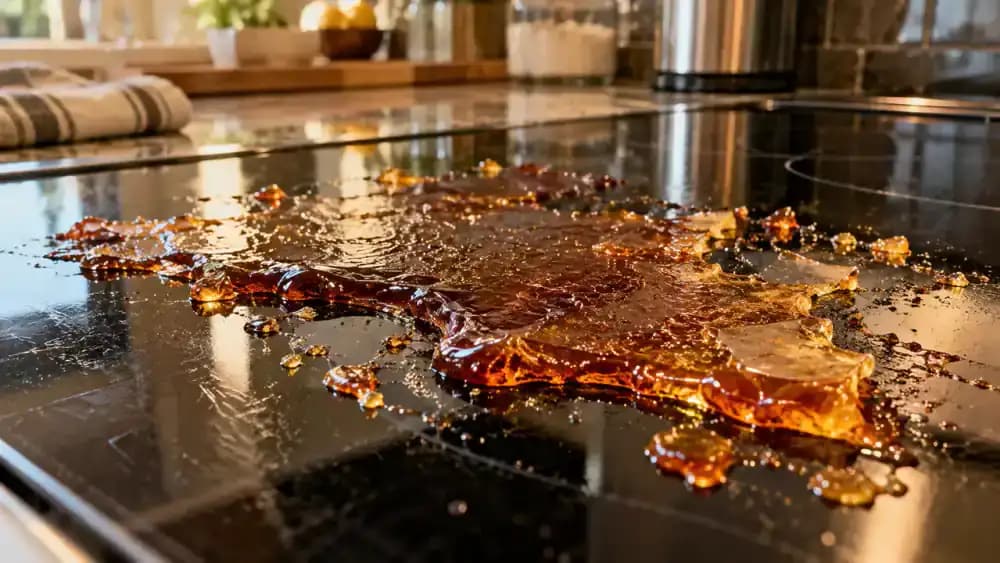
Examine the dark, hardened patch on your glass cooktop without touching or scraping it. Notice the glossy amber and brown crust, raised edges, and smooth glass surrounding the deposit. Caramelized sugar can bond tightly to the surface and requires different handling than ordinary grease. However, appearance alone cannot confirm the residue is sugar. Before attempting removal, identify what spilled and consult your cooktop manufacturer's instructions to avoid permanent damage.
Identify Sugar Residue Before Choosing a Cleaner
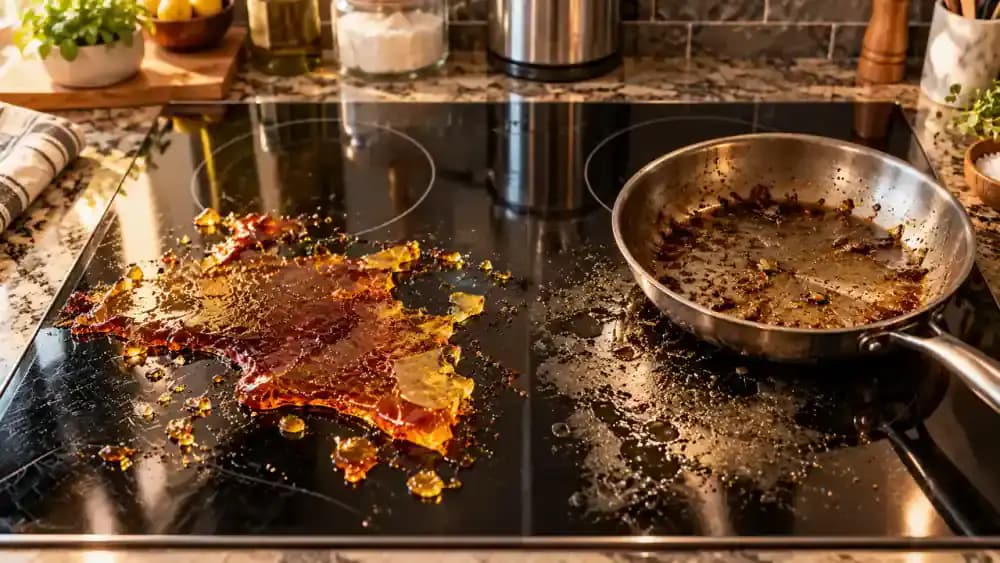
Compare the two residue types shown on the cooktop. The amber patch beside the syrup bowl has glossy, raised edges typical of hardened sugar, while the brown grease stain appears flatter and duller. Think back to what was cooking when the spill occurred. Syrup, jam, candy, and sweet sauces can leave stubborn sugary deposits. Visual clues are useful, but knowing the spill's source helps you choose the appropriate manufacturer-approved cleaning method.
Check the Manufacturer's Instructions for Hardened Sugar
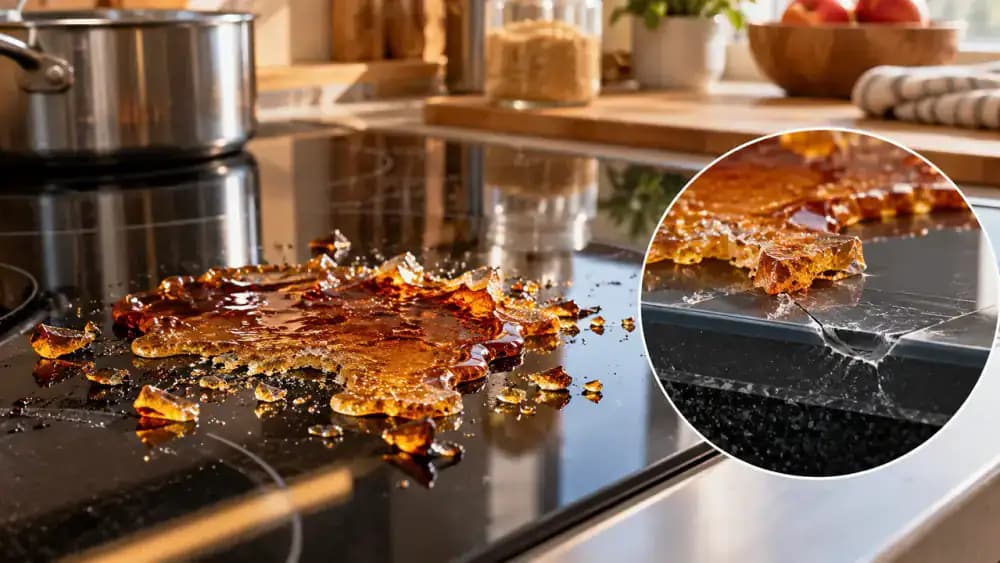
Open your cooktop's care manual to the section covering sugary spills, as shown beside the hardened amber deposit. When melted sugar cools, it can adhere tightly to glass-ceramic surfaces, making forceful removal risky. Aggressive scraping may scratch the glass or cause tiny chips. Check the recommended cleaning tools, surface temperature, and removal procedure before proceeding. Some manufacturers require immediate attention while the cooktop is still hot.
Verify Your Cooktop Model and Its Sugar-Spill Instructions
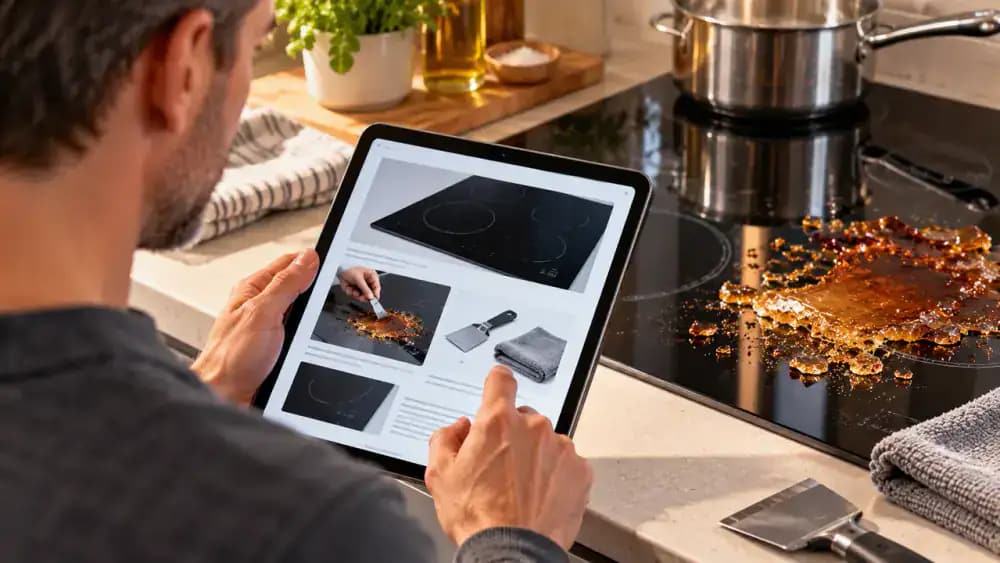
Find your cooktop's model number and open the manufacturer's official care instructions, as shown on the tablet. Locate the section covering sugar, syrup, or melted plastic spills. Check whether the manufacturer specifies immediate removal, a particular surface temperature, or an approved scraper. Keep the scraper unused until you understand the procedure. Instructions vary between appliances, so never assume a method recommended for another cooktop is safe for yours.
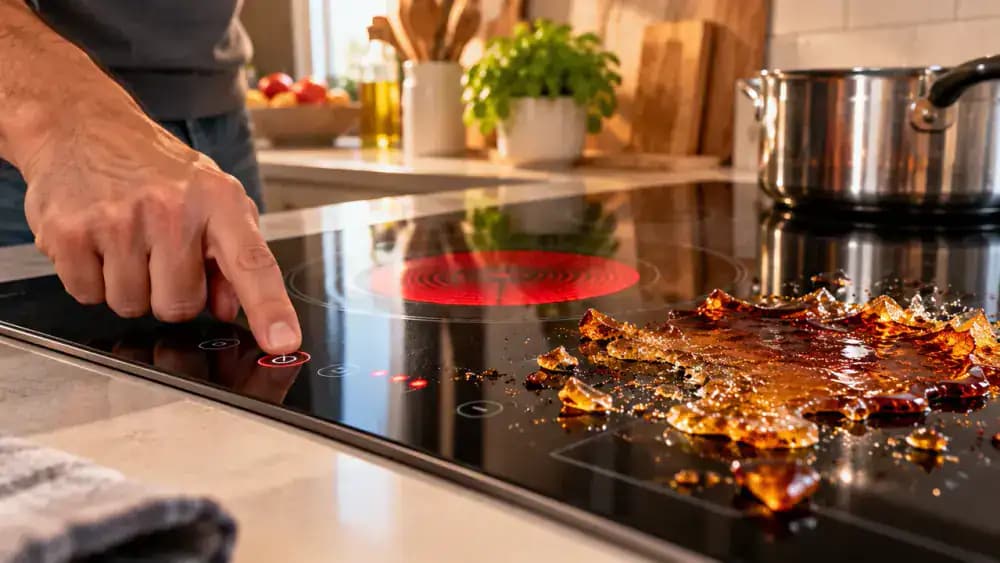
Turn Off the Burner and Check the Residual Heat Warning
Press the cooktop's power control to turn off the heating element, as shown in the image. Notice that the residual heat warning remains illuminated even after the burner switches off. Keep your hands away from the cooking zone and follow your manufacturer's temperature requirements. Some models require prompt sugar removal while the glass is hot, using approved tools and precautions. Never attempt hot-surface cleaning without proper instructions.
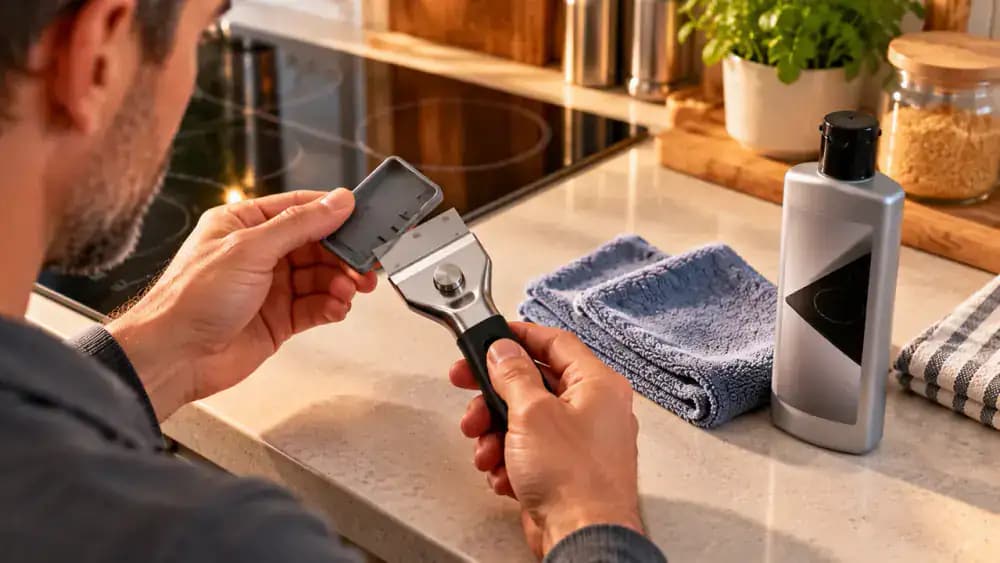
Gather and Inspect Manufacturer-Approved Cleaning Tools
Arrange your approved cleaning supplies on a clean towel beside the cooktop, as shown. Depending on your manufacturer's instructions, these may include a dedicated glass cooktop scraper, a soft microfiber cloth, and compatible ceramic cooktop cleaner. Keep the scraper's protective cover secured while checking for damage, and verify the cleaner's label against your appliance manual. Avoid kitchen knives, loose razor blades, steel wool, and unapproved abrasive pads.
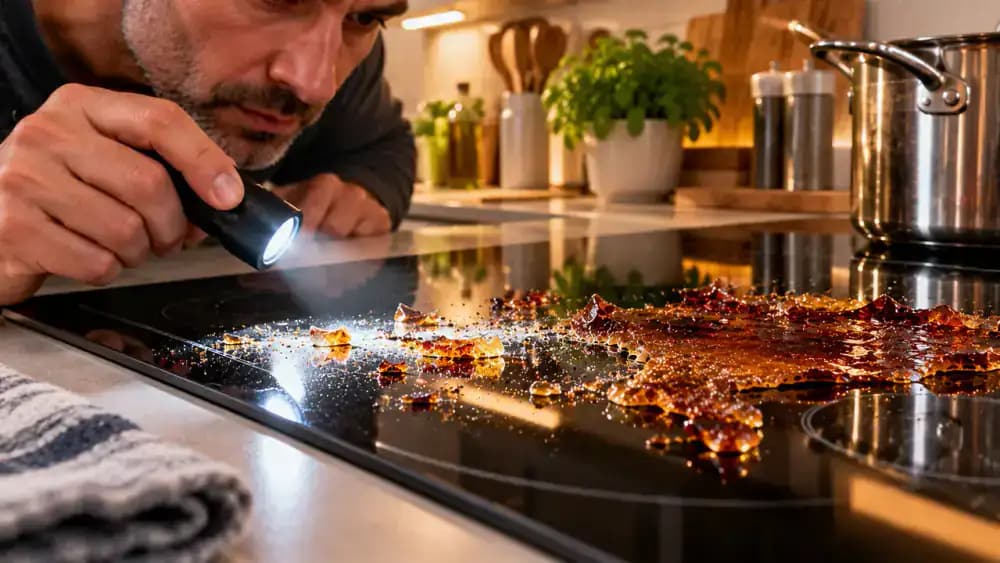
Inspect the Cooktop for Loose Sugar Fragments
Hold a small flashlight at a low angle above the cooktop, as shown, to reveal loose sugar fragments and the raised edges of the hardened deposit. Look for particles that could scratch the glass if dragged across it. Keep a clean collection tray nearby for later removal. Confirm the surface is at the temperature specified by your manufacturer, and avoid rubbing, pressing, or scraping attached residue during this inspection.
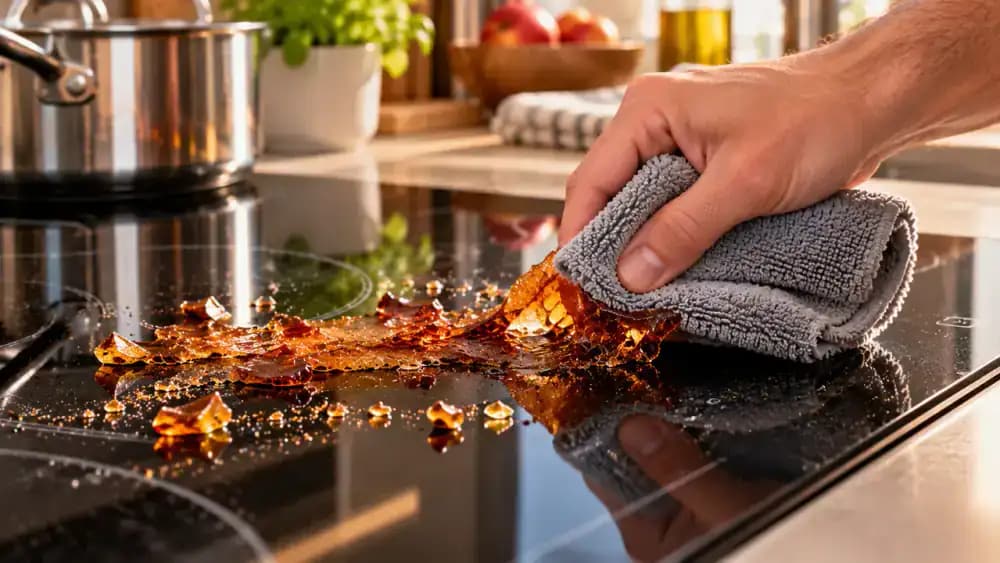
Gently Lift Loose Sugar Fragments Without Dragging
Using a clean, folded microfiber cloth, gently lift individual sugar fragments that are already detached from the glass, as shown. Transfer each fragment into a collection dish instead of sliding it across the cooktop. Work around the hardened central deposit without disturbing its edges. Make sure the surface is at the manufacturer-approved cleaning temperature before starting. If a particle resists lifting or remains attached, leave it for the next cleaning stage.
Wipe the Surrounding Glass Without Disturbing Hardened Sugar
With loose fragments removed, use a fresh, dry microfiber cloth to gently wipe clear areas surrounding the hardened sugar deposit, as shown. Confirm the cooktop is cool and your manufacturer permits wiping before proceeding. Make short, outward strokes away from the deposit, lifting the cloth between passes. Fold it to expose a clean section each time. Keep the attached sugar untouched and avoid spreading leftover particles across the glass.
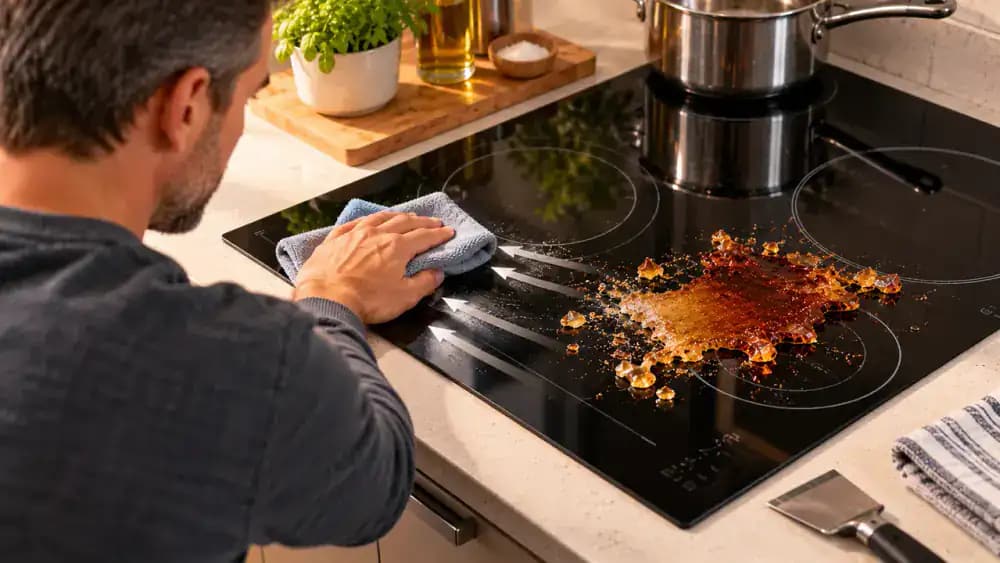
Examine the Hardened Sugar for Raised Edges and Surface Damage
Hold a magnifying lens above the remaining sugar deposit without touching the glass, as shown. Look for raised edges, thin translucent patches, and darker areas where sugar appears firmly attached. Check the surrounding surface for visible scratches or chips. Avoid probing the deposit with your fingernails or attempting to pry it loose. These observations help you select the appropriate manufacturer-approved treatment and recognize possible damage requiring professional assessment.
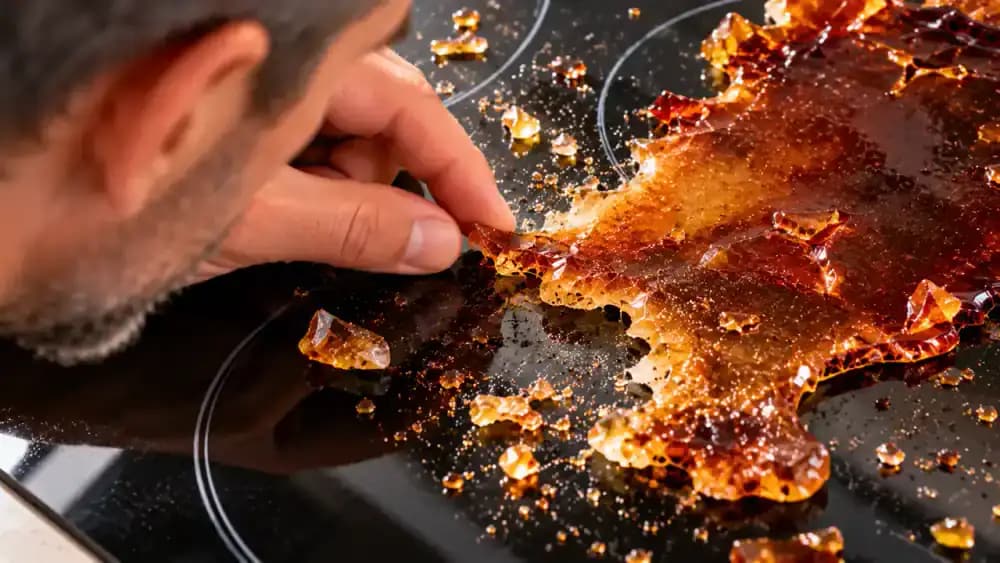
Match Your Cleaning Product to the Manufacturer's Instructions
Compare the ceramic cooktop cleaner's compatibility label with your appliance's care instructions, as shown. Check whether the manufacturer recommends a specific cleaner, a dedicated scraper, or another treatment for hardened sugar. Verify the permitted surface temperature and application requirements before proceeding. Do not assume that water or cleaning products will safely soften the deposit. Keep the scraper covered and unused until you confirm the approved removal procedure.

Apply an Approved Cleaner to Soften Hardened Sugar
If your cooktop manufacturer permits softening hardened sugar, confirm the glass is at the required temperature before applying the recommended cleaner. As shown, use a small applicator to place the specified amount directly onto the deposit, keeping the surrounding glass clear. Follow the manufacturer's stated contact time without guessing or extending it. Never pour liquids onto hot glass, use homemade cleaning mixtures, or substitute products not approved for your appliance.
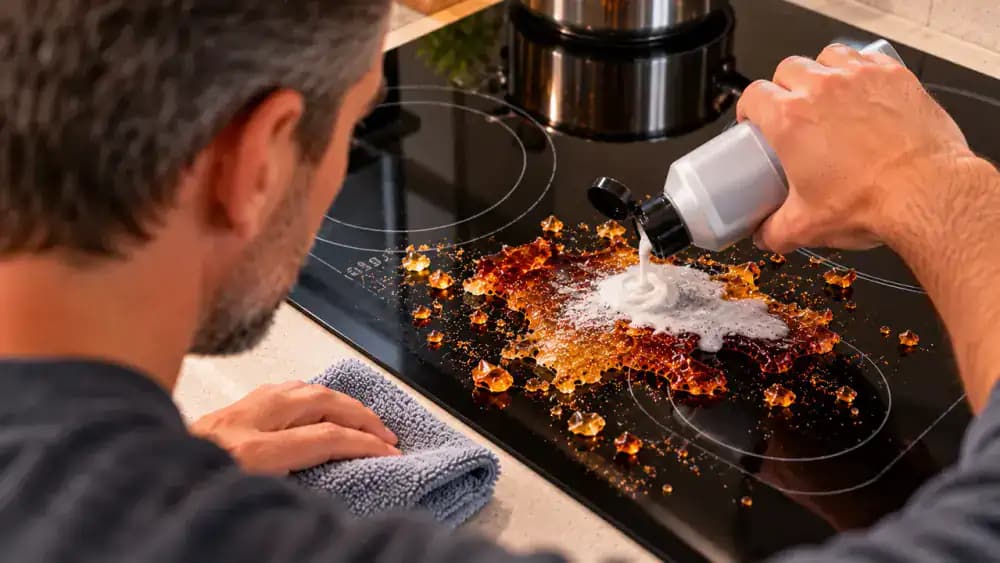
Inspect the Sugar Deposit After the Cleaning Treatment
After the manufacturer-approved contact time has passed, examine the treated sugar deposit under good lighting, as shown. Look for changes around its edges without assuming the residue has loosened completely. Check the product instructions, then use a clean microfiber cloth to remove excess cleaner from the surrounding glass only as directed. Keep the cloth away from firmly attached sugar. Never increase pressure, add more cleaner, or extend treatment beyond the manufacturer's instructions.
Inspect Your Approved Cooktop Scraper Before Use
Hold the dedicated cooktop scraper securely by its handle and inspect the working edge over a clean towel, as shown. Check for damage, trapped debris, or an improperly seated blade. Compare the tool with your manufacturer's instructions to confirm the required scraping angle, surface temperature, and handling precautions. Keep the scraper away from the glass during inspection. Never substitute a kitchen knife or loose razor blade, and never scrape cracked or chipped glass.
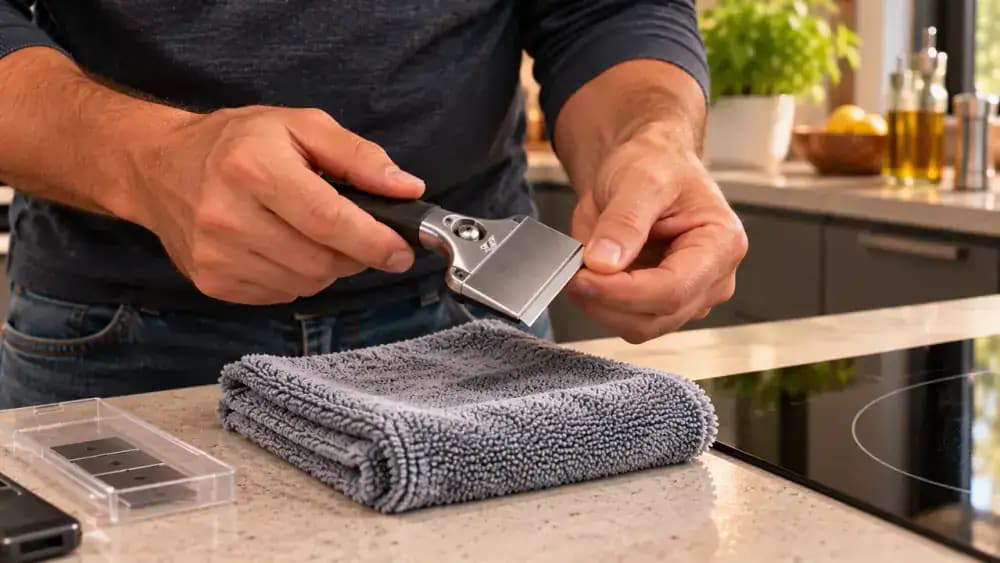
Position the Cooktop Scraper Against the Sugar Deposit
Hold the manufacturer-approved cooktop scraper securely by its handle, keeping your fingers behind the working edge. As shown, carefully position the tool beside the raised edge of the hardened sugar without moving it across the glass. Match the scraping angle and surface temperature specified in your appliance manual. Keep your hand steady and avoid digging beneath the deposit or applying downward pressure. Controlled positioning helps prevent accidental scratches and surface damage.
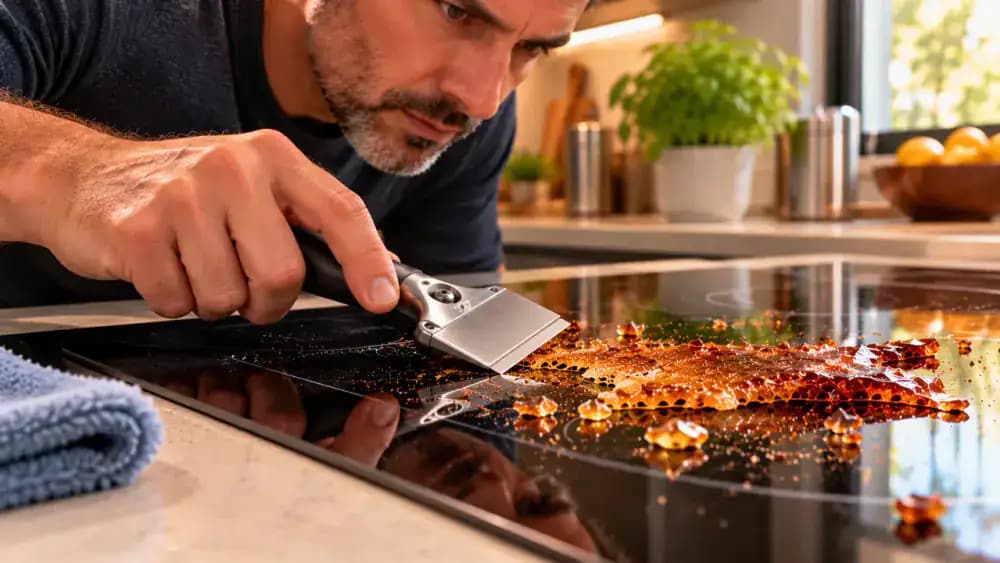
Make One Gentle Scraping Pass Along the Sugar's Edge
With the approved scraper correctly positioned, make one short, gentle pass along the outer edge of the hardened sugar, as shown. Maintain your manufacturer's specified angle and surface temperature without increasing pressure. If a small fragment separates easily, lift the scraper away and collect the fragment without dragging it across the glass. Leave the remaining deposit untouched if it resists. Never force the blade underneath stubborn sugar or repeat aggressive strokes.
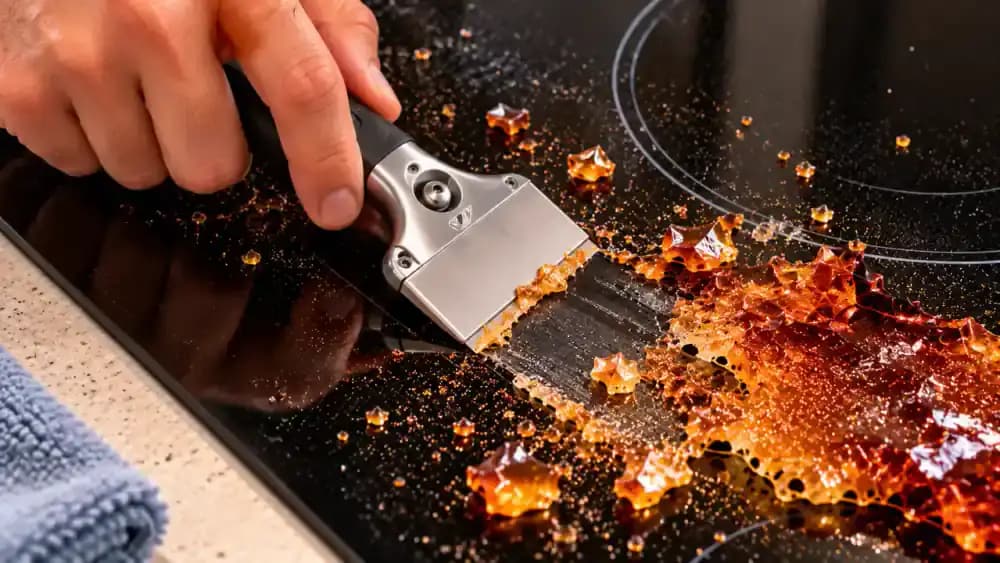
Lift Away Loose Sugar Fragments Before Scraping Again
Set the approved scraper safely in its protective holder, then use a clean corner of a folded microfiber cloth to lift the detached sugar fragment, as shown. Transfer it directly into a collection dish without dragging it across the glass. Confirm the surface is at the manufacturer-approved cleaning temperature before touching it with the cloth. Check for remaining debris around the deposit before considering another controlled scraping pass.
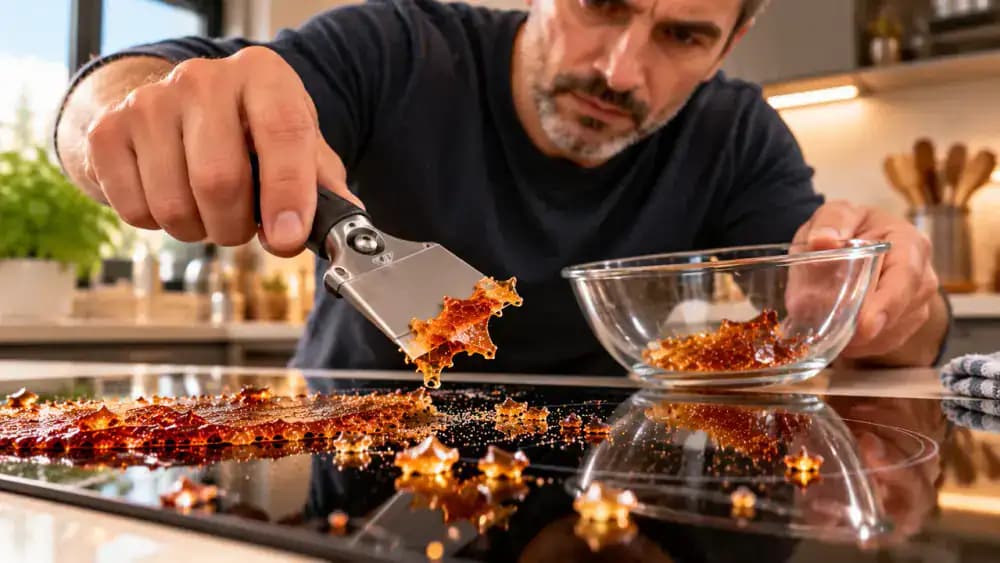
Make Another Gentle Scraping Pass Only if the Sugar Releases Easily
After clearing loose fragments, inspect the remaining sugar before continuing. If your manufacturer permits additional scraping and the deposit's edge releases easily, make one short, gentle pass with the approved scraper, as shown. Maintain the specified angle and light pressure, then lift the tool away to inspect the glass. Check for newly loosened particles before another pass. Stop immediately if the scraper catches, residue resists, or surface damage appears.
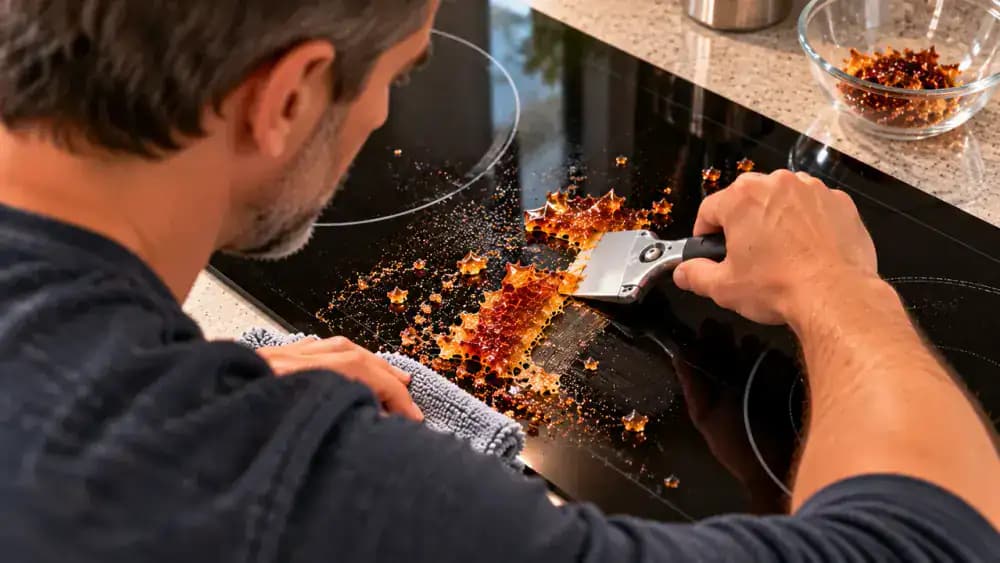
Stop Scraping When Hardened Sugar Resists Removal
If the remaining sugar refuses to release, lift the scraper completely away from the cooktop, as shown. Secure its protective cover and place it on a folded towel. Inspect the glass for visible chips or cracks without touching the deposit. Never increase pressure or force the blade beneath stubborn residue. Review your manufacturer's instructions before proceeding. Persistent deposits may require professional advice, while damaged glass needs assessment before further use.
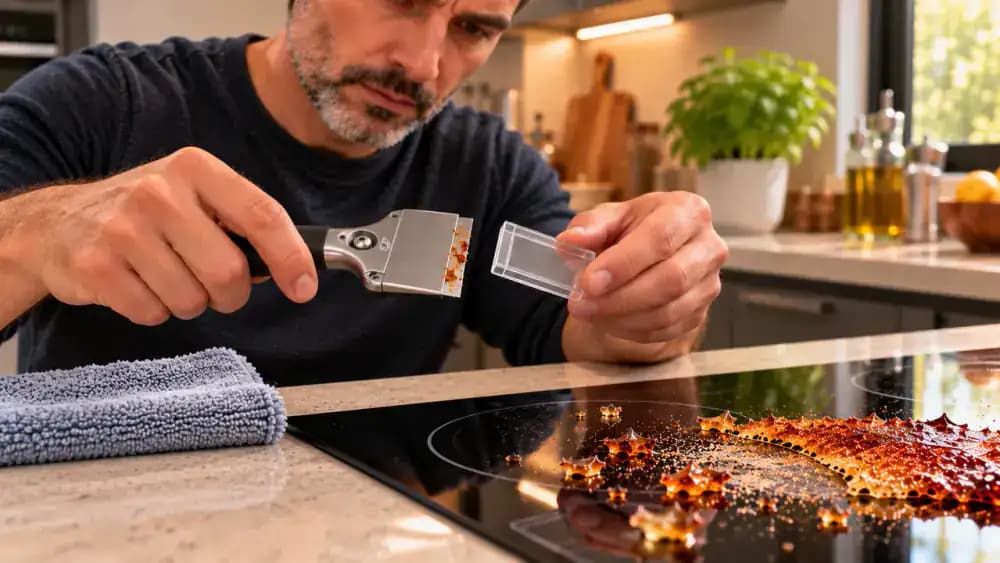
Prepare the Undamaged Cooktop for Final Cleaning
Once scraping is finished, store the covered scraper safely and gather a fresh microfiber cloth and compatible ceramic cooktop cleaner, as shown. Confirm the glass has no visible cracks or chips and has reached the temperature specified by your manufacturer. Check the cleaner's compatibility instructions before applying anything. Leave any firmly attached sugar untouched. If you notice surface damage, stop cleaning and arrange professional assessment before using the cooktop again.
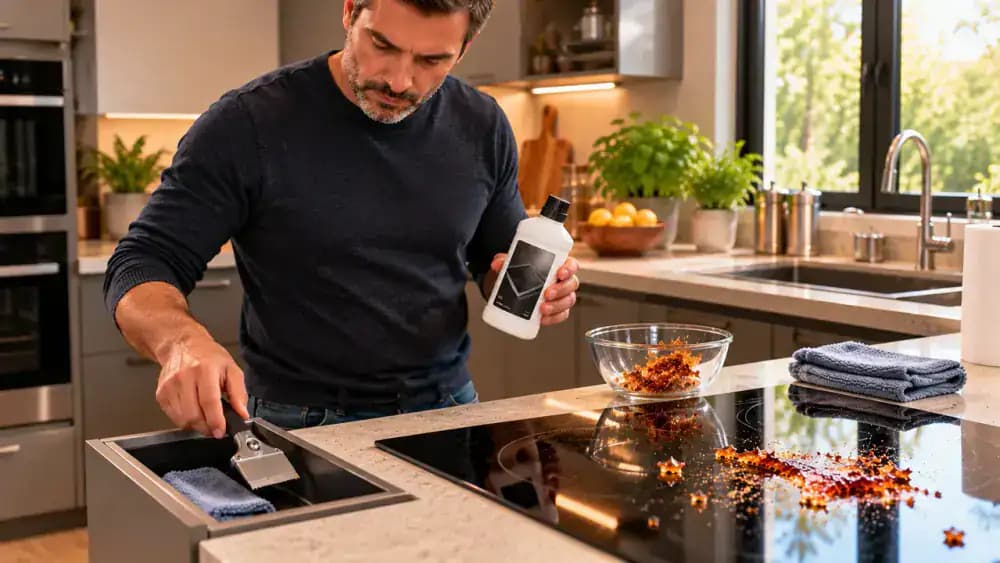
Apply Approved Cooktop Cleaner Away From Stubborn Sugar
Hold the manufacturer-approved ceramic cooktop cleaner above a clear section of glass, as shown, and dispense only the amount specified on the product label. Keep the cleaner several inches away from any stubborn sugar deposit requiring separate treatment. Confirm the cooktop is undamaged and at the temperature permitted for cleaning. Avoid splashing or spreading product beyond the approved area. Never apply cleaner to hot glass unless your manufacturer explicitly instructs you to.
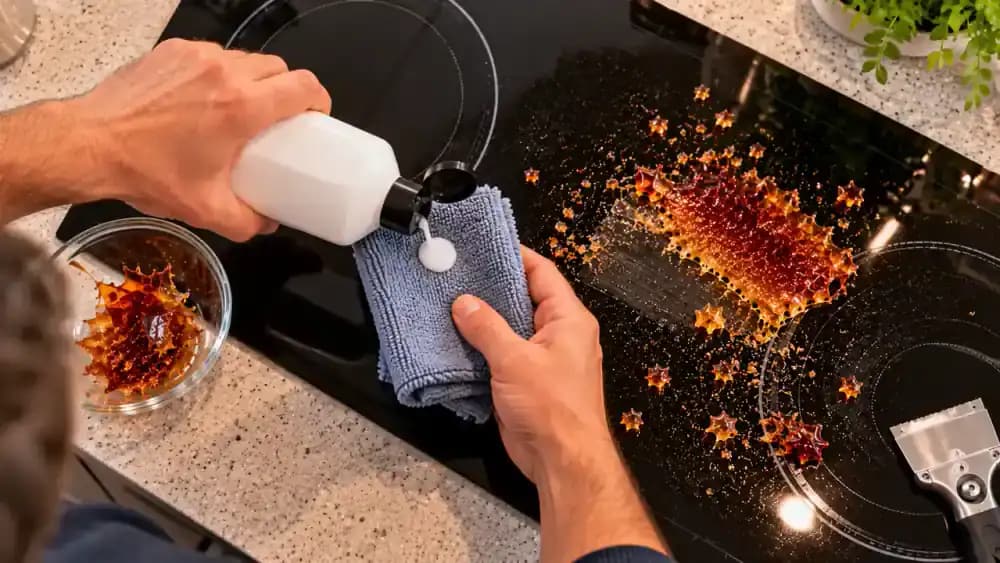
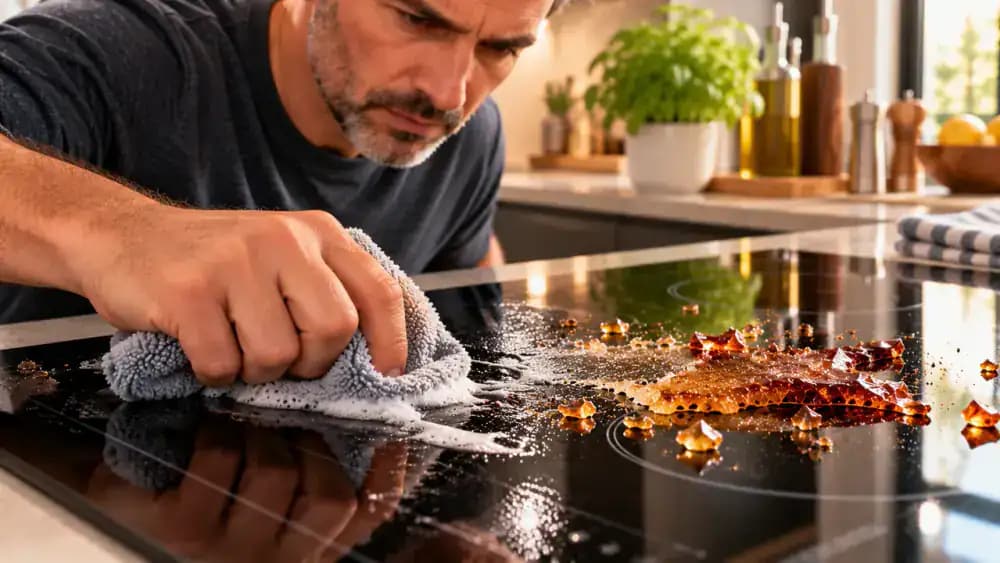
Gently Wipe the Glass With a Clean Microfiber Cloth
Use a clean, folded microfiber cloth to gently spread and remove the approved cleaner from the treated glass, as shown. Make short, controlled wiping motions while keeping the cloth several inches away from the hardened sugar deposit. Lift and refold the cloth to expose a fresh section whenever it becomes dirty. Follow the cleaner's label instructions and avoid heavy pressure or abrasive scrubbing. Leave stubborn sugar untouched for separate treatment.
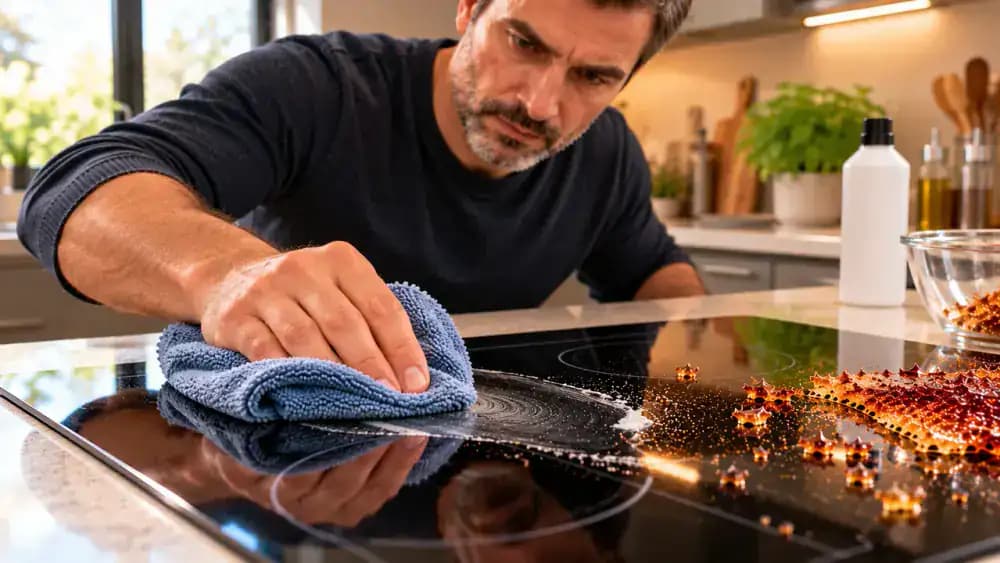
Remove Cleaner Streaks and Dry the Glass Surface
Inspect the cleaned glass for cloudy streaks or leftover cleaner, using the reflected window light to spot remaining film. As shown, gently wipe the approved cleaning area with a fresh, dry microfiber cloth, following the cleaner's label instructions. Keep the cloth away from the hardened sugar deposit on the neighboring cooking zone. Use light, controlled movements until the permitted area is clean and dry, making later surface inspection easier.
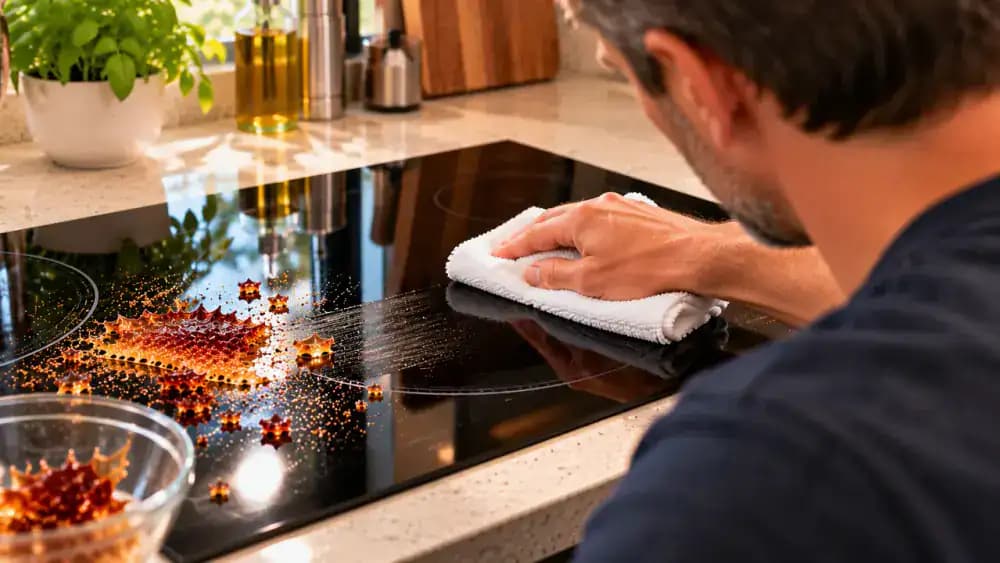
Check the Glass for Scratches, Pitting, and Remaining Sugar
Hold an LED inspection light above the clean, dry cooktop and direct its beam diagonally across the glass, as shown. Slowly change the light angle to identify cloudy patches, scratches, tiny pits, or remaining sugar deposits. Compare marks from different viewing positions to distinguish reflections from possible damage. Avoid touching or rubbing suspicious areas. If you notice cracks, chips, or possible structural damage, keep the cooktop off and seek professional evaluation.
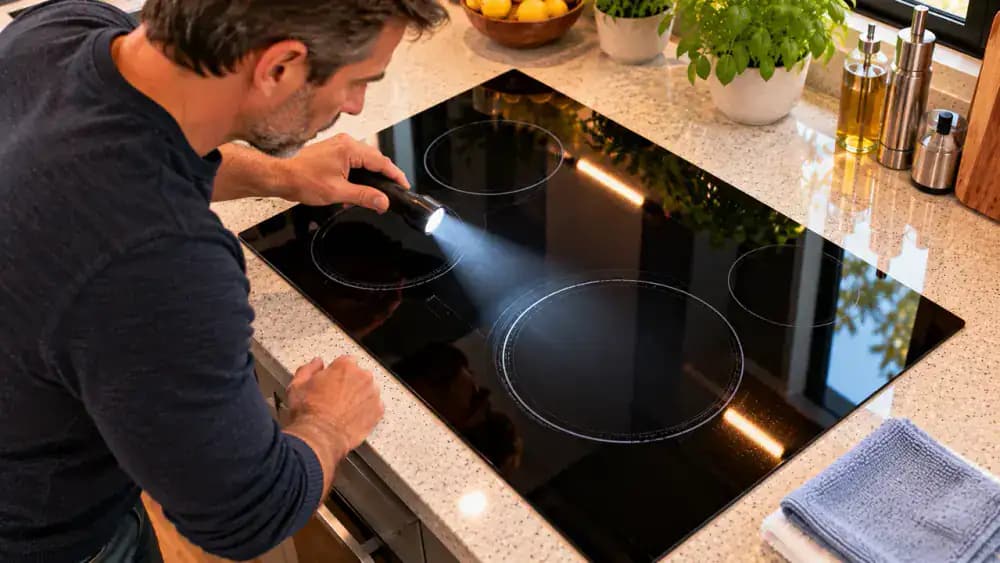
Tell Remaining Sugar Residue Apart From Glass Surface Damage
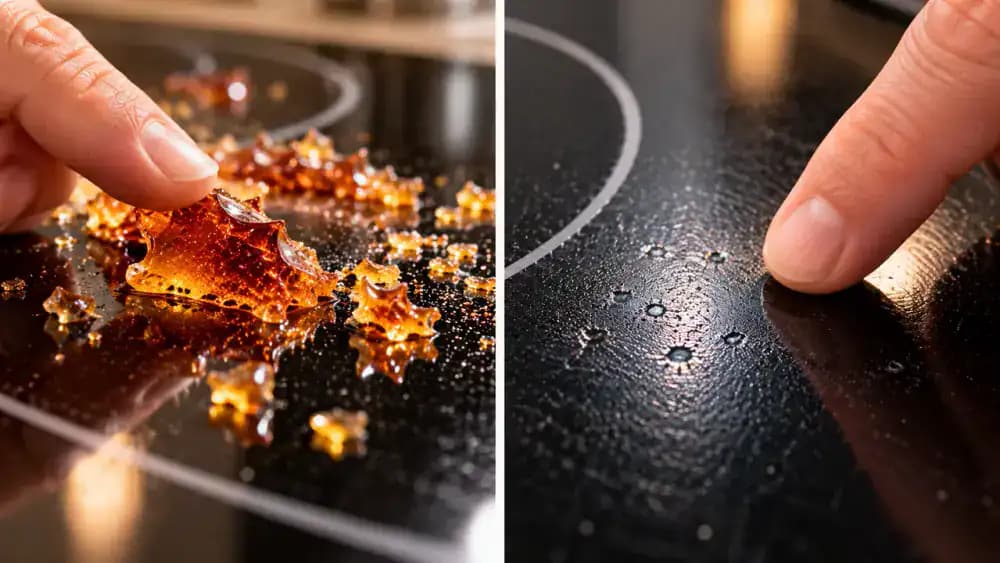
Compare the two illustrated cooktop samples, noting the raised amber deposit on the left and the tiny surface depressions on the right. Hardened sugar often has defined edges, while pitting may appear as shallow indentations in the glass. Use angled lighting to examine suspicious marks without touching them. Visual clues cannot confirm the cause. If marks remain after approved cleaning, consult your manufacturer or a qualified appliance technician before proceeding.
Document the Damage and Contact an Appliance Technician
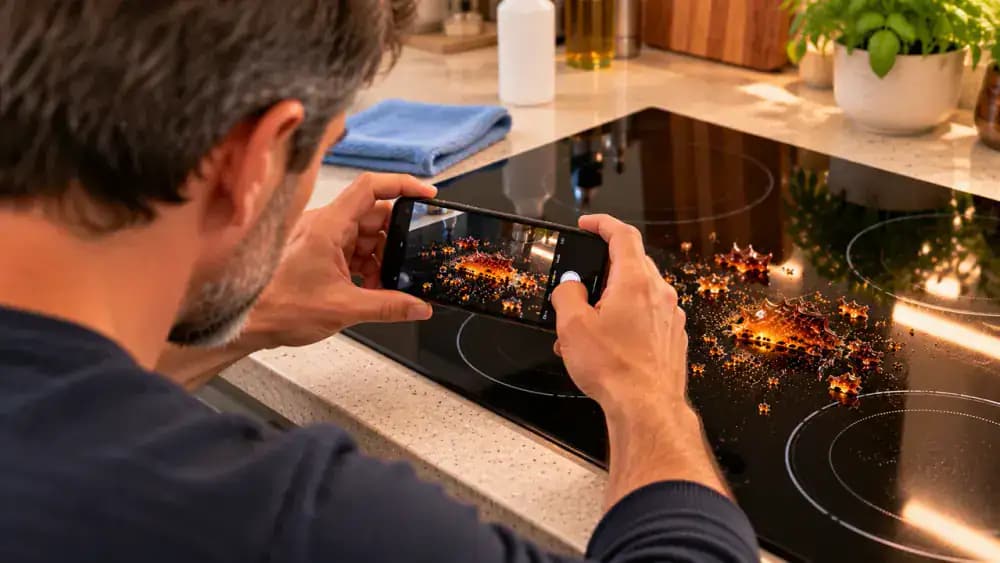
Use your smartphone to photograph the affected cooktop area without touching the glass, as shown. Record the appliance model number, what originally spilled, and which cleaning methods you attempted. Include close-up photos of any suspicious marks or remaining sugar. Contact the manufacturer or an authorized appliance technician for guidance. Keep the cooktop switched off if damage is suspected, and never operate cracked glass before a qualified professional confirms it is safe.
Prevent Sugary Spills With Proper Cookware and Heat Control
Choose a saucepan with tall sides and enough empty space to contain bubbling syrup, jam, or candy, as shown. Monitor the mixture closely and adjust the burner to maintain a controlled simmer without overflowing. Keep your cooktop manufacturer's sugar-spill instructions accessible on a nearby counter, safely away from heat. If sugar spills, follow those directions promptly, including any required hot-surface precautions. Never improvise with blades, abrasive pads, or unapproved cleaners.

Establish a Regular Glass Cooktop Cleaning Routine
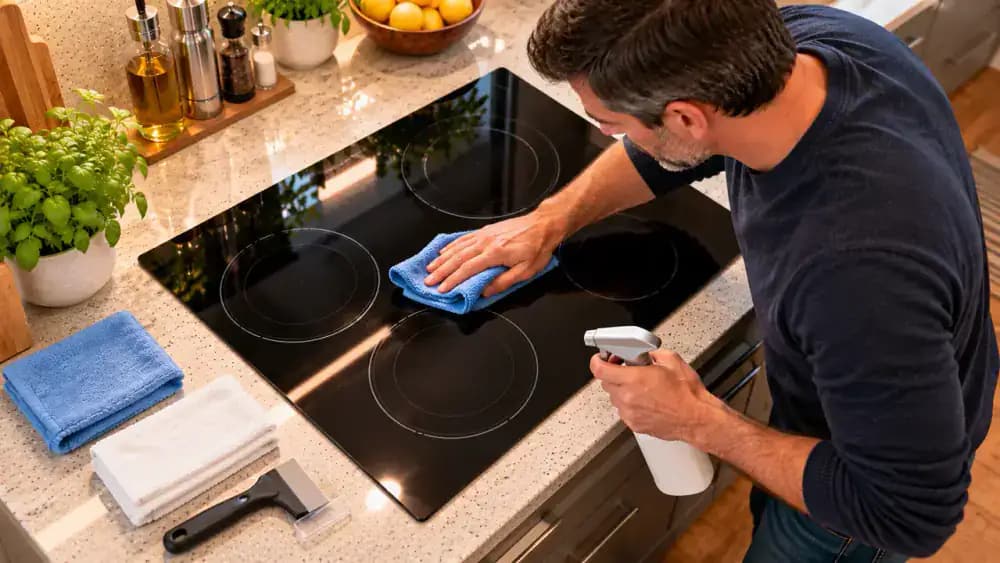
After everyday cooking, confirm the cooktop has reached the temperature specified for routine cleaning. As shown, carefully lift loose food crumbs with a soft microfiber cloth, then apply the manufacturer-approved amount of ceramic cooktop cleaner to clear glass. Gently wipe according to the product instructions and inspect for remaining residue before cooking again. Keep a simple maintenance checklist nearby, remembering that sugary spills may require immediate, specialized handling.
Review the Five Rules for Safe Burned Sugar Removal
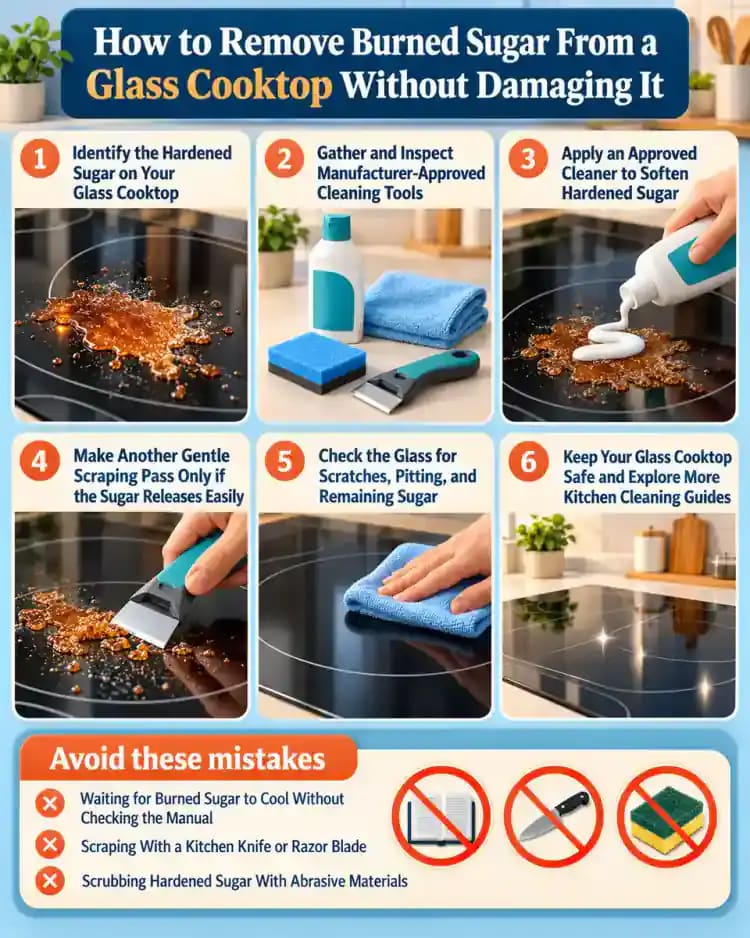
Use the five illustrated reminders to check your approach before considering the cleanup complete. Identify the spill, consult your cooktop manual, choose approved tools, remove residue gently, and inspect the glass. Remember to lift loose fragments rather than dragging them across the surface. Never force hardened sugar that resists removal. If you notice cracks, chips, or possible damage, stop cleaning and seek professional guidance before using the appliance again.
Keep Your Glass Cooktop Safe and Explore More Kitchen Cleaning Guides
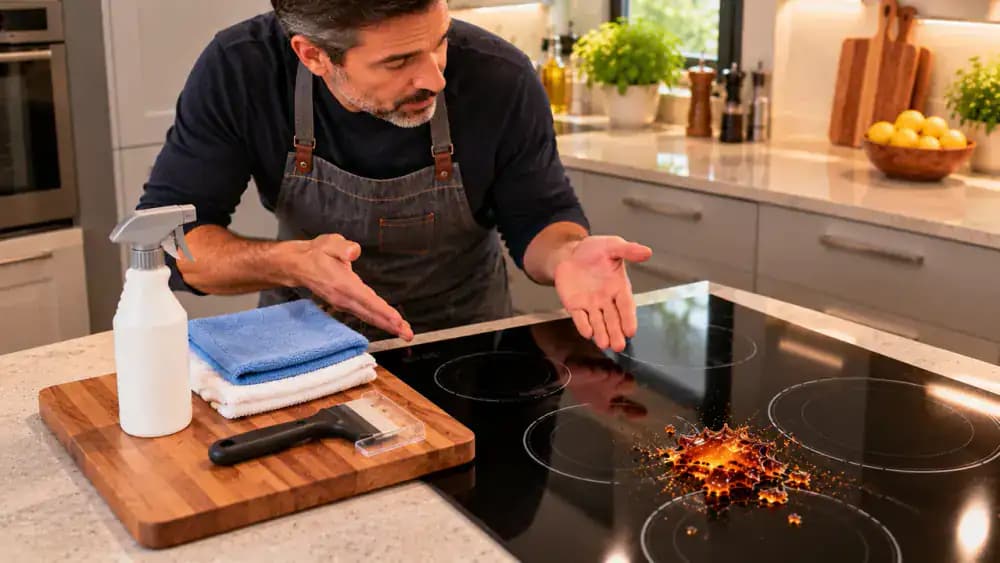
Before putting your cooktop back into service, remember that safe sugar removal depends on following your manufacturer's instructions, using approved tools, and recognizing when to stop. The remaining amber deposit shown here illustrates why stubborn residue should never be forced off the glass. If damage is suspected, seek professional guidance before further use. For more practical cleaning advice, explore the Kitchen Cleaning Fixes collection covering cooktops, sinks, appliances, and everyday kitchen messes.

A patch of hardened, caramelized sugar stuck to your black glass cooktop can be surprisingly difficult to remove. Unlike ordinary cooking grease, melted sugar can bond tightly to the surface as it cools, leaving behind a stubborn, glossy deposit. Syrup and sugary sauces can create similar problems, although appearance alone cannot tell you exactly what caused a stain. Reaching for a kitchen knife, scrubbing aggressively, or using the wrong cleaner may turn a manageable spill into permanent scratches, pitting, or other damage to the glass.
The safest approach starts with your cooktop manufacturer's instructions, not a one-size-fits-all cleaning trick. Some manufacturers recommend removing sugary spills immediately while the surface is still hot, using specific tools and precautions. Others may require different handling. This guide explains how to assess the residue, carefully remove loose particles, address hardened deposits with approved methods, and finish cleaning without unnecessary abrasion. You'll also learn how to recognize possible surface damage and prevent future sugar spills from becoming expensive problems.
Where people go wrong
Waiting for Burned Sugar to Cool Without Checking the Manual. Unlike ordinary grease, melted sugar can bond tightly to glass as it cools. Some cooktop manufacturers require immediate removal of sugary spills while the surface is hot. Always check your appliance manual first and follow its temperature requirements and safety precautions before attempting cleanup.
Scraping With a Kitchen Knife or Razor Blade. Using a kitchen knife, improvised razor blade, or other unapproved tool can scratch or permanently damage the glass. If your manufacturer permits a dedicated cooktop scraper, use it carefully along the deposit edges without excessive pressure. Never substitute an improvised blade for an approved cleaning tool.
Scrubbing Hardened Sugar With Abrasive Materials. Steel wool, harsh scouring pads, and unapproved abrasive cleaners can leave permanent scratches on a glass cooktop. Aggressive scrubbing may also drag hardened sugar particles across the surface. Instead, use the cleaning or softening method recommended by the manufacturer and gently remove loosened residue.
Mistaking Permanent Glass Damage for Leftover Sugar. A cloudy patch or rough-looking mark does not always mean more burned sugar remains. After cleaning at the manufacturer-approved temperature, inspect the glass under angled lighting. If the mark persists, avoid repeated aggressive scraping. Scratches or pitting may be permanent and require professional assessment.
Questions people ask
Follow your cooktop manufacturer's instructions before attempting removal. Some manufacturers recommend removing sugary spills immediately while the surface is still hot because cooling sugar can bond tightly to the glass. Use only approved tools and follow the specified temperature and safety precautions. Never touch hot glass directly.
Fixed it?
Get one guide like this every Thursday.