How to Reduce Your Dog's Window-Watching Barking Habit
Learn how to reduce your dog's window-watching barking with simple changes to your home, rewarding training techniques, and enrichment activities that encourage calmer behavior.

What you’ll need
Tap to tick things off before you start.
Recognize the Window-Watching Barking Cycle
A quiet afternoon can quickly become noisy when your dog barks at passing cyclists, cats, pedestrians, or cars. Start by recognizing when this behavior disrupts your household and which outdoor movements seem to trigger it. Rather than shouting or punishing your dog, focus on understanding the pattern and creating opportunities to practice calmer responses.
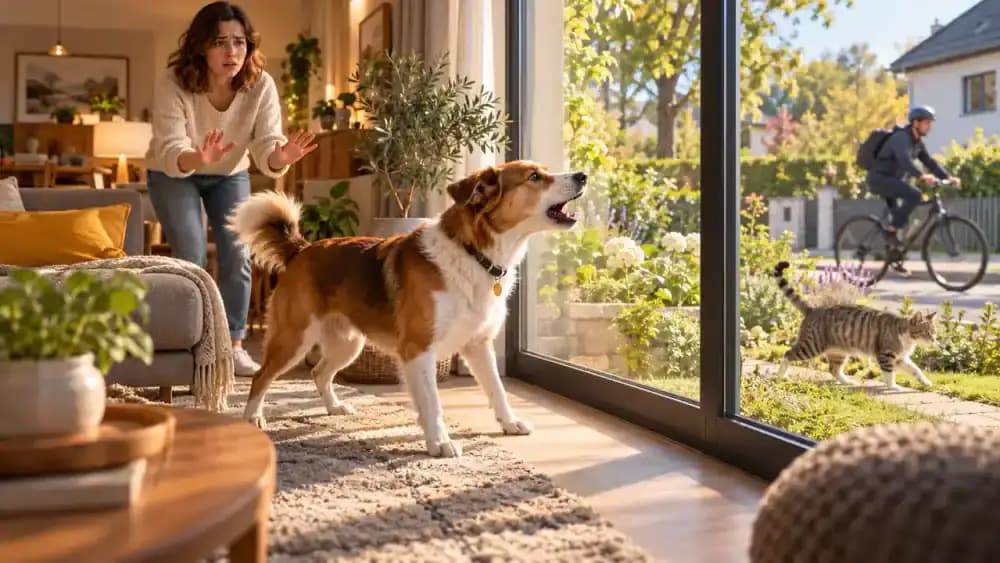
Identify Your Dog's Main Triggers
Spend several days observing what happens before your dog starts barking. Note whether pedestrians, passing vehicles, other animals, or sudden movements attract the most attention. Watch for early signs such as staring, stiffening, lifting the ears, or rushing toward the glass. Recording these patterns helps you anticipate challenging moments and adjust your dog's environment before barking begins.

Reduce Visual Stimulation at the Window
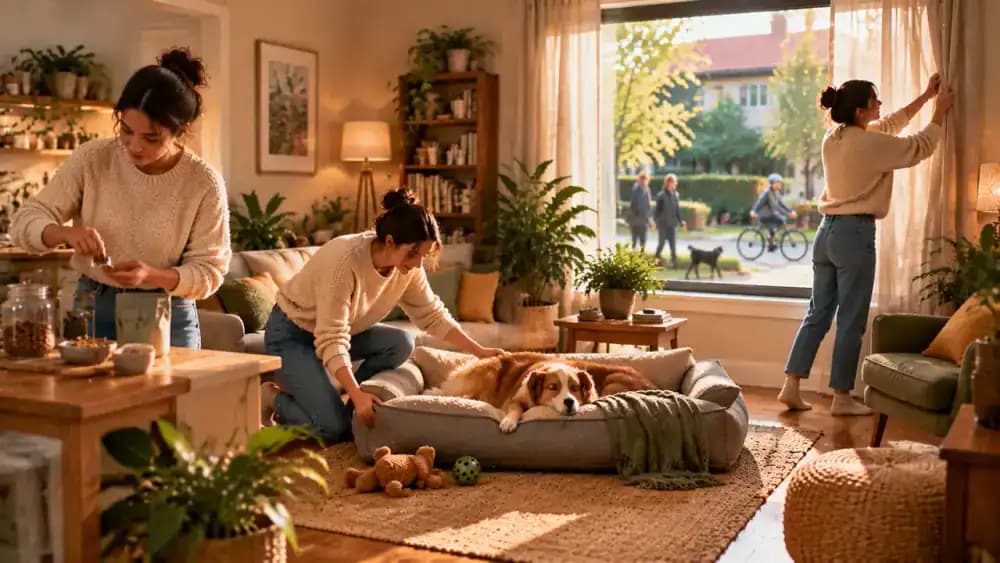
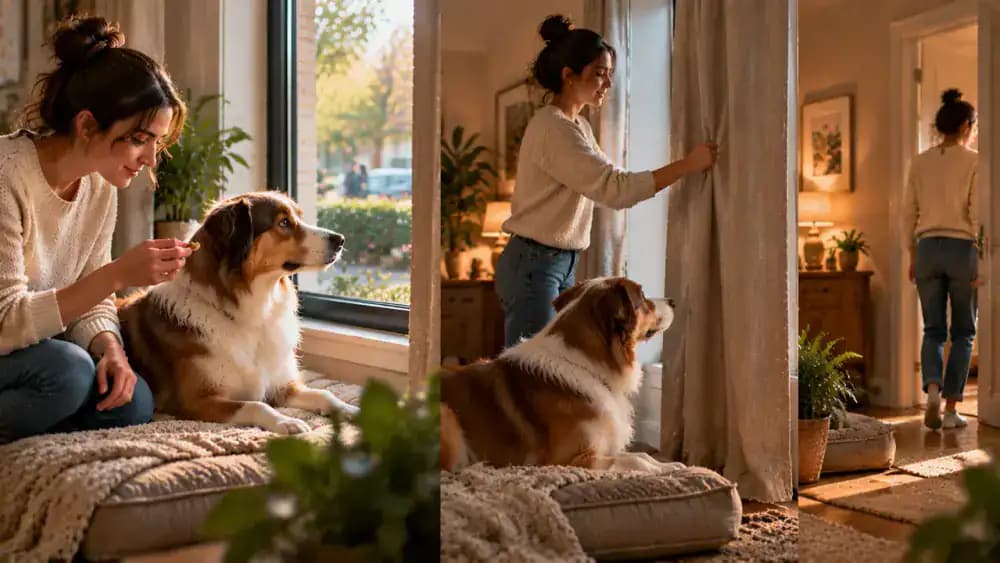
Make barking less likely by limiting your dog's view of busy outdoor areas. Close curtains during high-traffic periods, cover the lower glass, or apply suitable translucent window film according to the product instructions. When you cannot supervise, guide your dog to a comfortable area away from the window. Reducing repeated exposure creates more opportunities to develop calmer habits.
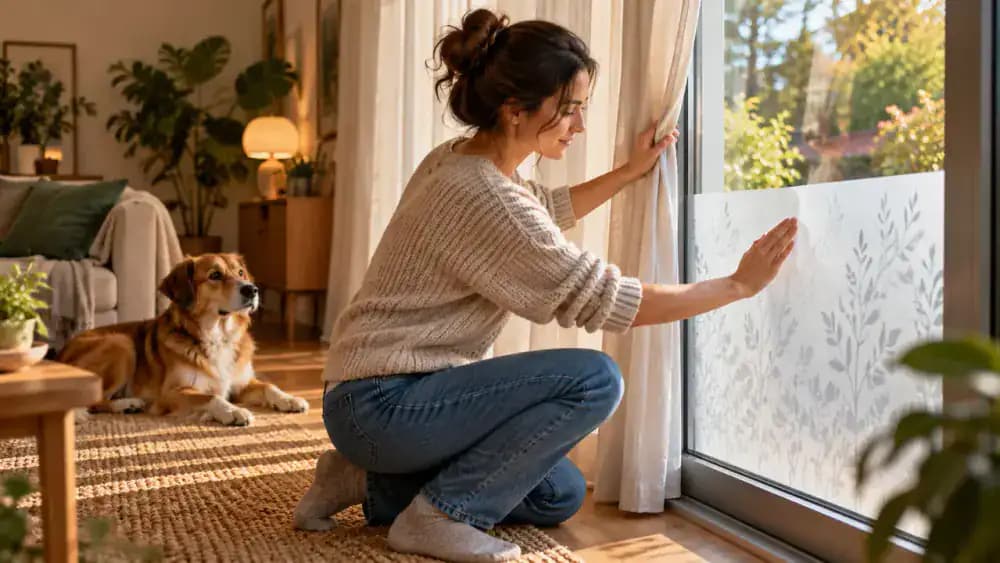
Create a Comfortable Resting Area Away From the Window
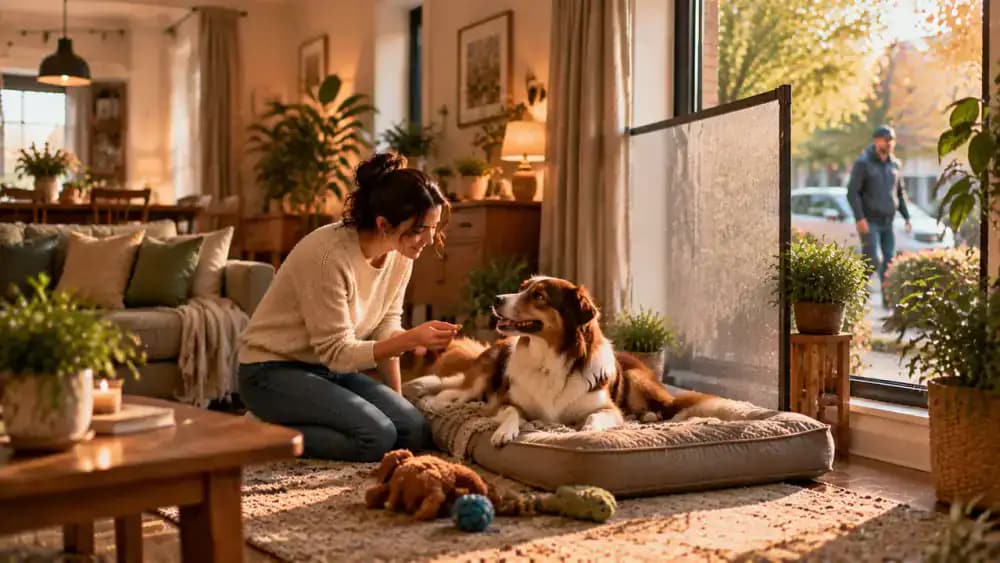
Set up a welcoming resting area away from the busiest window using a comfortable bed, a training mat, and a suitable food puzzle or safe chew. Introduce this space when outdoor distractions are minimal, and reward your dog for exploring, lying down, or relaxing there. Building positive associations first makes the area a more appealing alternative when activity outside increases.
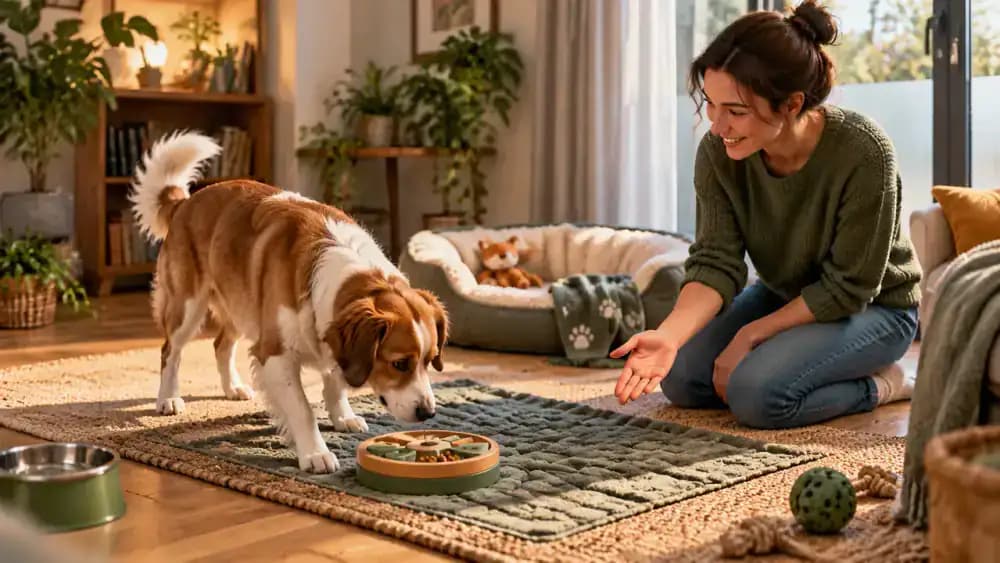
Reward Your Dog for Turning Away From Triggers
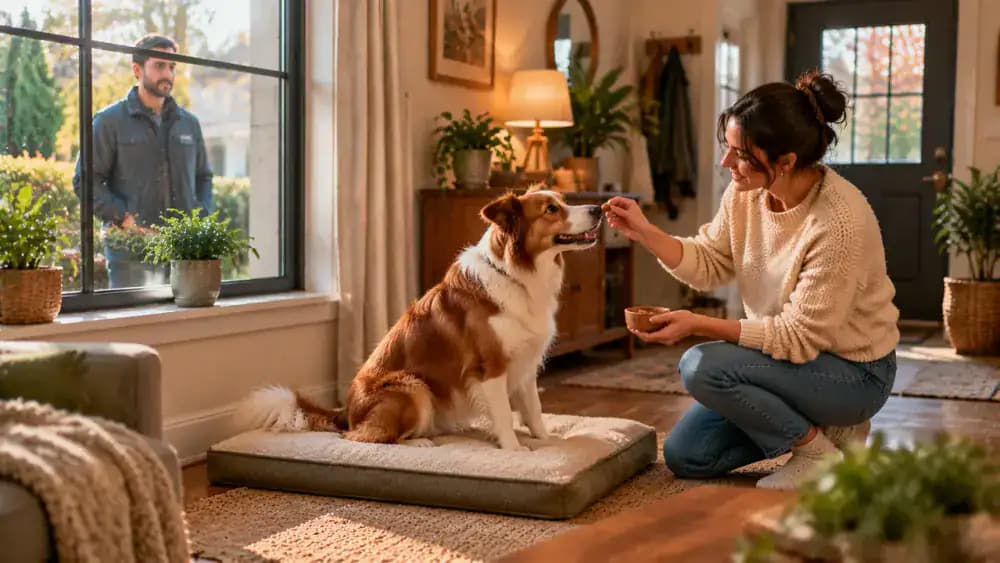
When your dog notices a passerby through the window and remains calm enough to respond, reward the moment they turn toward you. Use a cheerful marker word followed immediately by a small, appealing treat. Keep early practice short and manageable. If barking escalates or your dog struggles to disengage, increase distance or block the view before trying again.
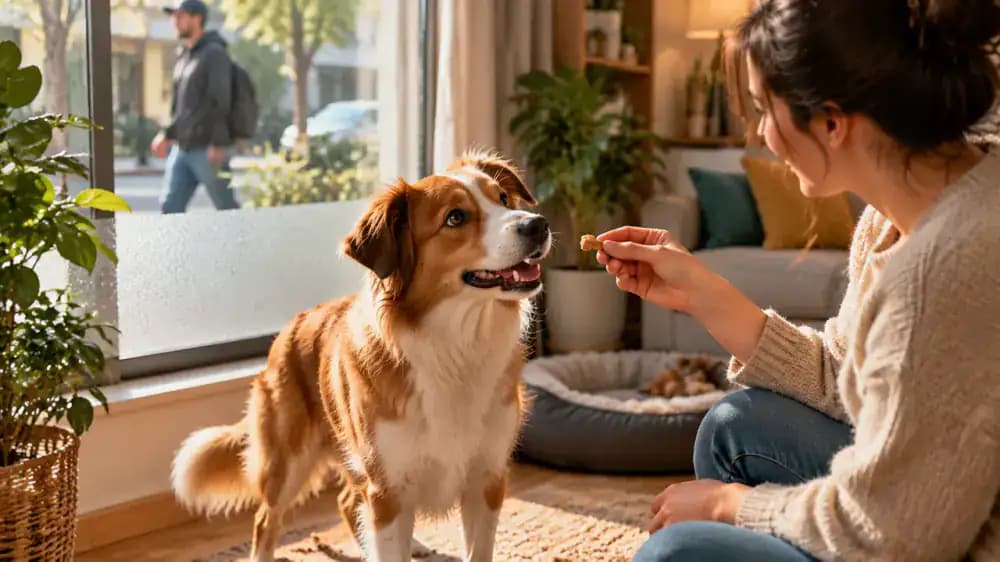
Teach a Simple Cue to Redirect Attention
Once your dog begins checking in with you more consistently, introduce a simple cue such as "this way" or "mat." Practice in a quiet room first, guiding your dog toward the mat and rewarding them for following. When the cue becomes familiar, use it around mild outdoor distractions, keeping sessions short and rewarding successful responses.
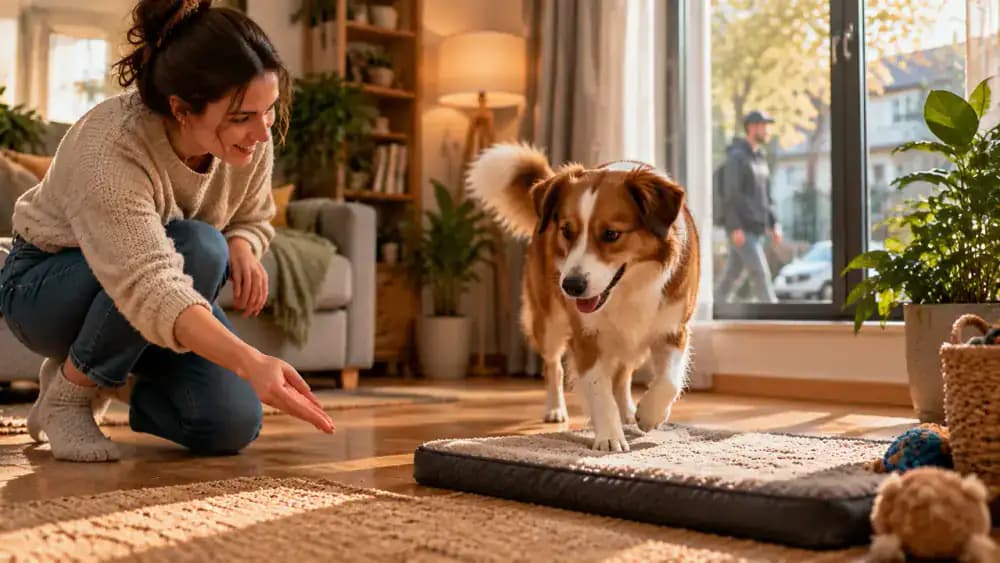
Increase Training Difficulty Gradually
Build your dog's confidence by starting with distant pedestrians or brief movements outside the window. Once your dog can remain calm and check in with you, gradually practice around closer walkers and passing cyclists. Reward relaxed behavior throughout each session. If barking returns or your dog struggles to respond, reduce the distraction and return to an easier level of practice.
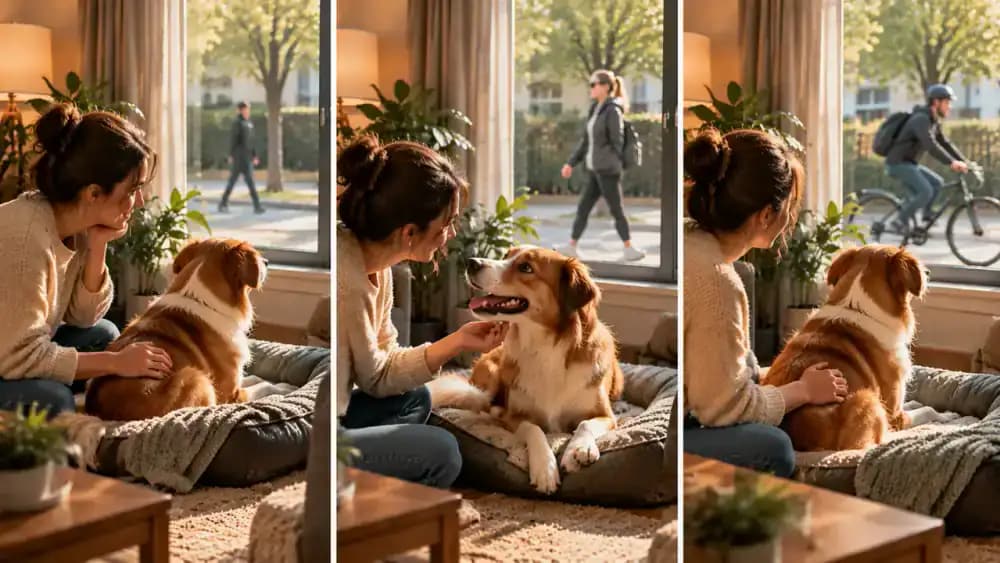
Make Calm Behavior Part of Your Daily Routine
Combine window management, short training sessions, and enrichment to help your dog practice calmer behavior every day. Encourage your dog to relax on a mat with a suitable chew while you reward quiet choices. Avoid shouting or scolding, which can increase excitement or distress. If reactions remain intense or appear fear-related, seek help from a qualified, reward-based professional.
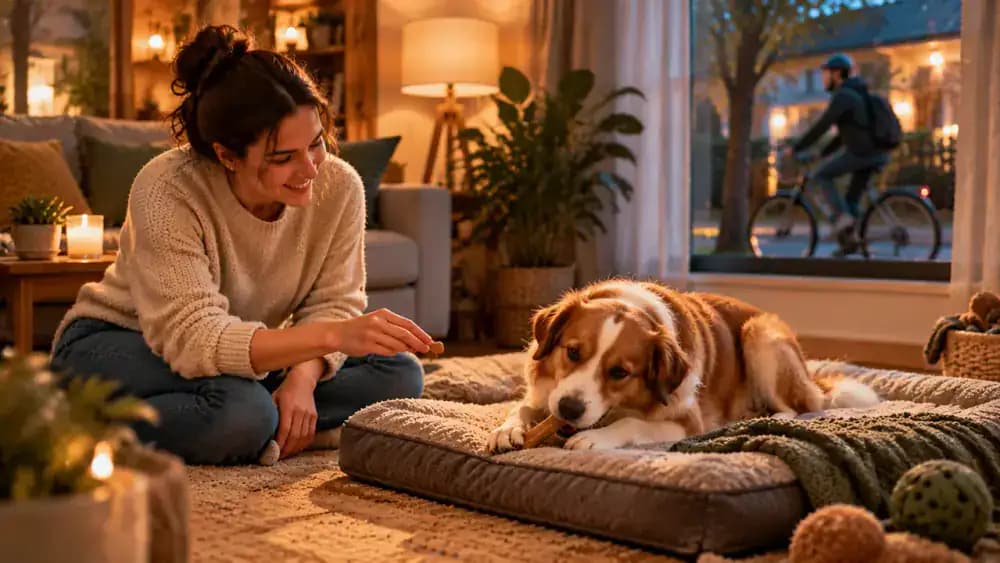
Choose the Best Times for Practice
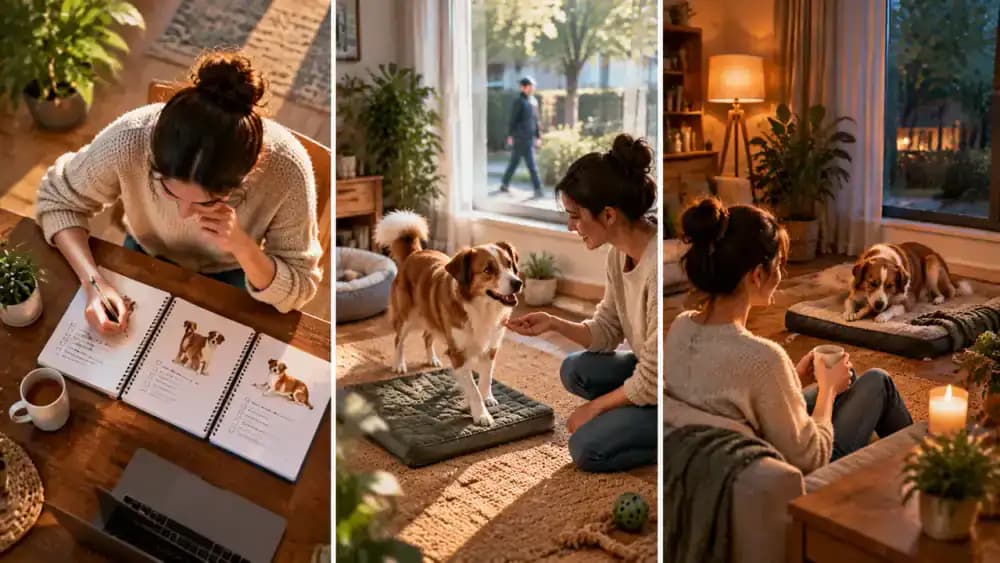
Review your observations to discover when your dog can practice most successfully. Compare morning, afternoon, and evening activity, noting which periods bring fewer distractions and calmer responses. Schedule short training sessions during quieter times before gradually introducing busier conditions. Adjust curtains or other barriers ahead of predictable activity, and use your notes to recognize progress and identify situations that need more support.
Give Your Dog an Engaging Alternative
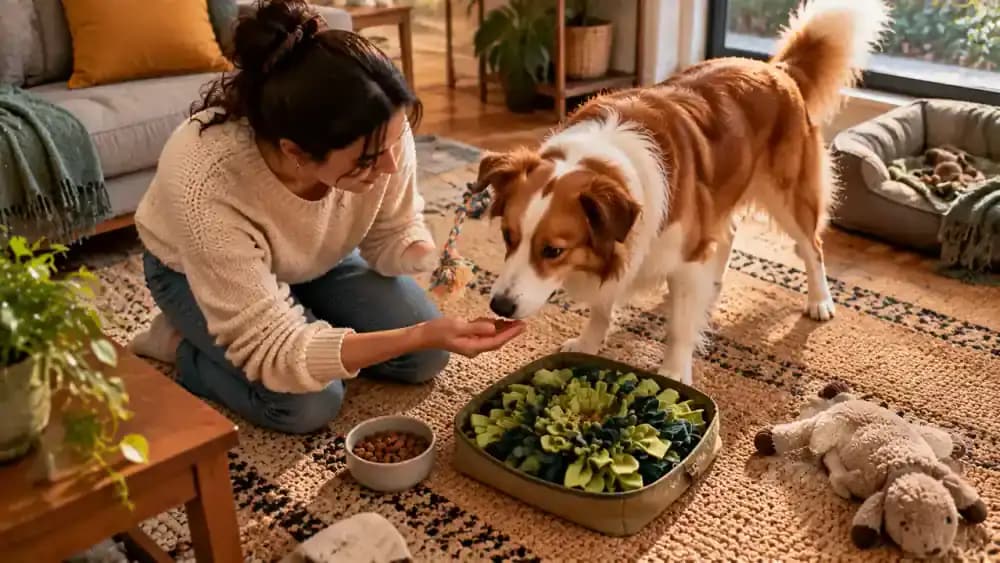
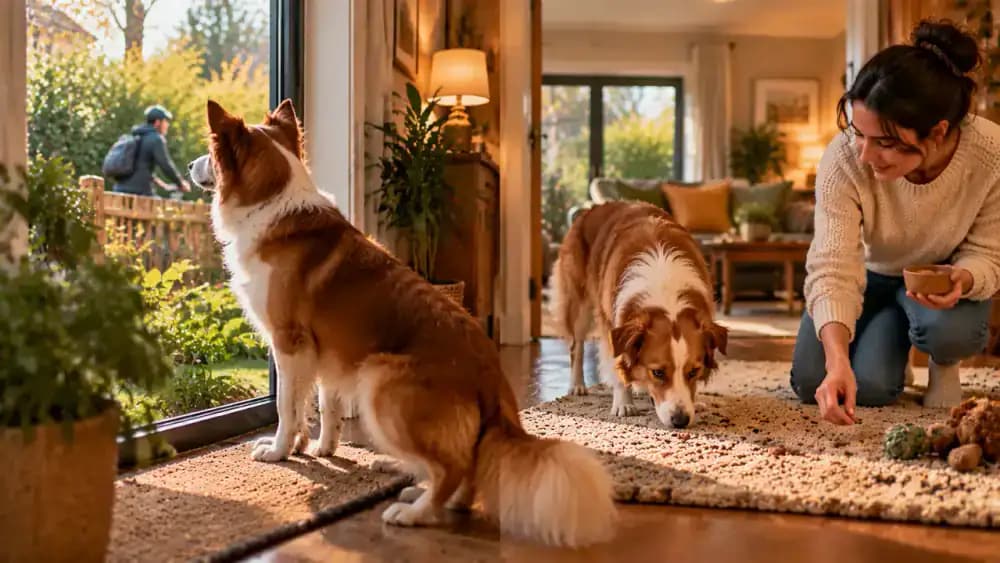
Offer your dog a constructive activity when outdoor movement would otherwise dominate their attention. Scatter a portion of their regular kibble across a snuffle mat, hide a few treats around a rug, or provide an appropriate food puzzle. Supervise as needed and choose activities suited to your dog's size and chewing habits. Sniffing and searching provide enrichment while encouraging attention away from the window.

Manage Greetings Through the Window
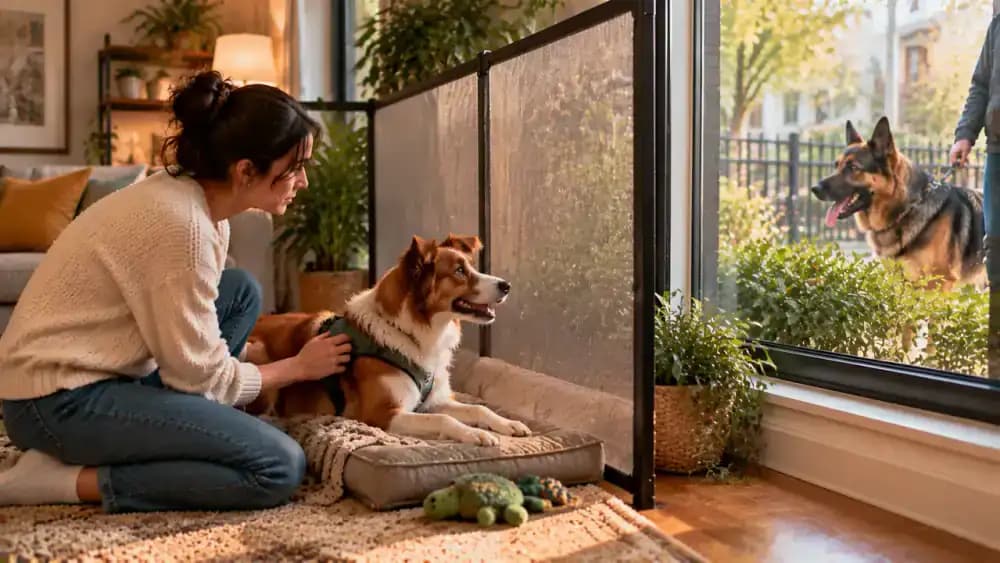
When your dog barks at a neighbor outside, avoid encouraging an excited exchange through the glass. Calmly guide your dog behind a room divider or toward a quieter area, then reward settling. Later, practice watching the neighbor from a greater distance where your dog can remain relaxed and responsive, gradually building tolerance for everyday outdoor interactions.
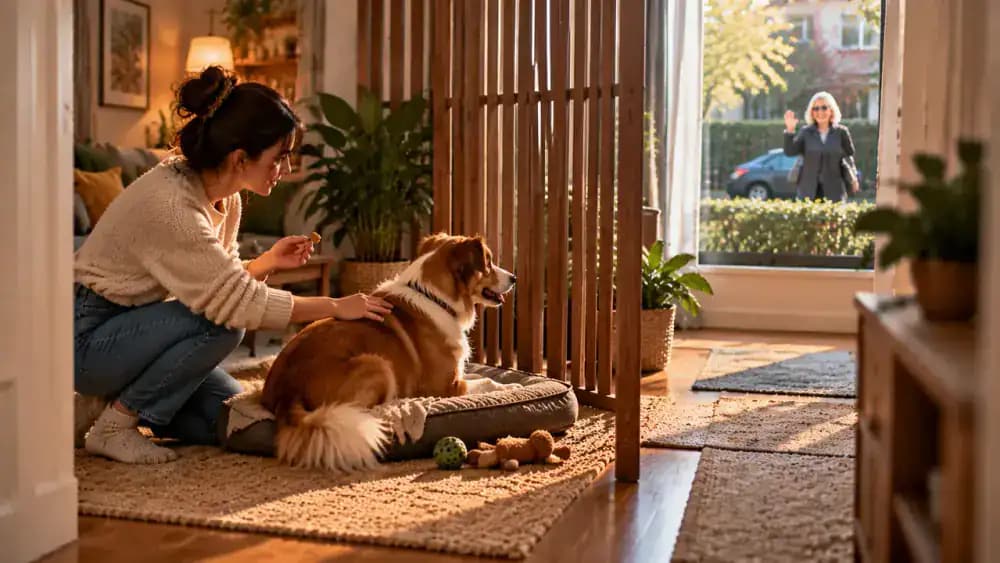
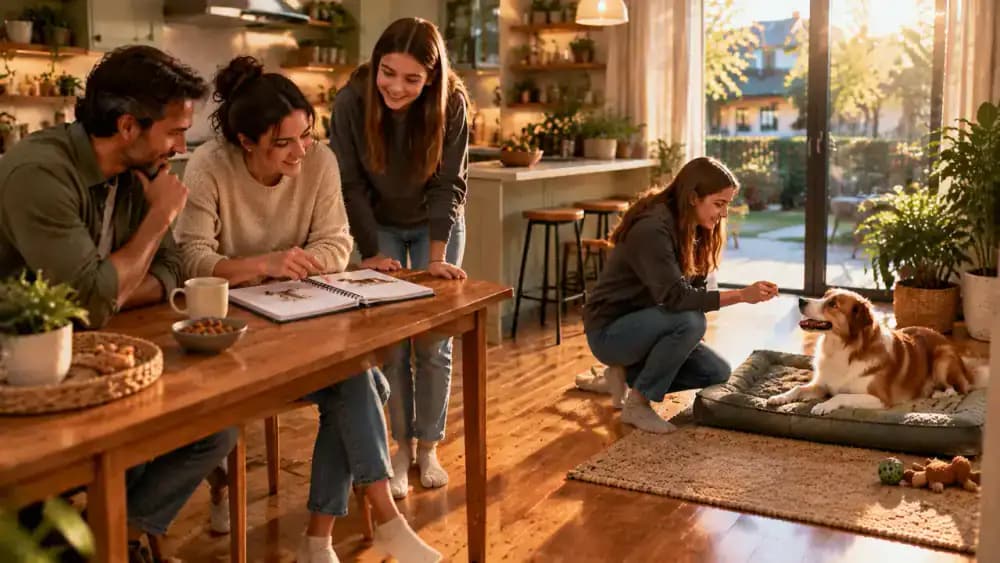
Get Everyone in the Household on the Same Page
Make a simple household plan so everyone responds to window barking consistently. Agree on the verbal cue, the designated resting spot, and which calm behaviors earn rewards. Ask family members to avoid shouting, teasing the dog through the window, or turning barking into a game. Consistent responses help your dog learn what to expect and which choices are worthwhile.
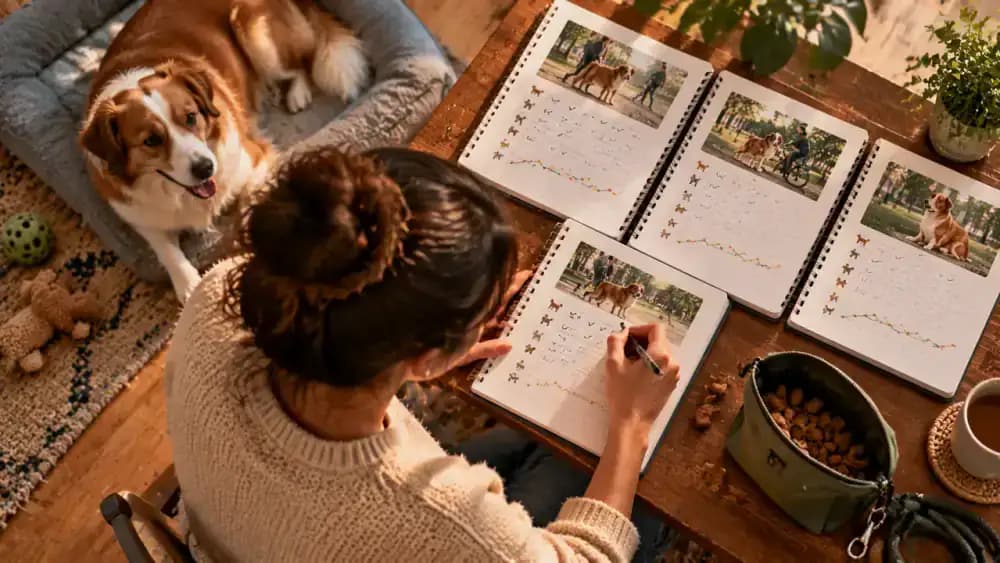
Track Small Improvements Over Time
Keep a training log to see how your dog responds to different outdoor triggers. Record what appeared outside, the approximate distance, whether your dog accepted treats, and how quickly they recovered. Review your notes every few days to identify encouraging patterns and situations that remain difficult. If your dog repeatedly struggles, make future sessions easier rather than increasing pressure.
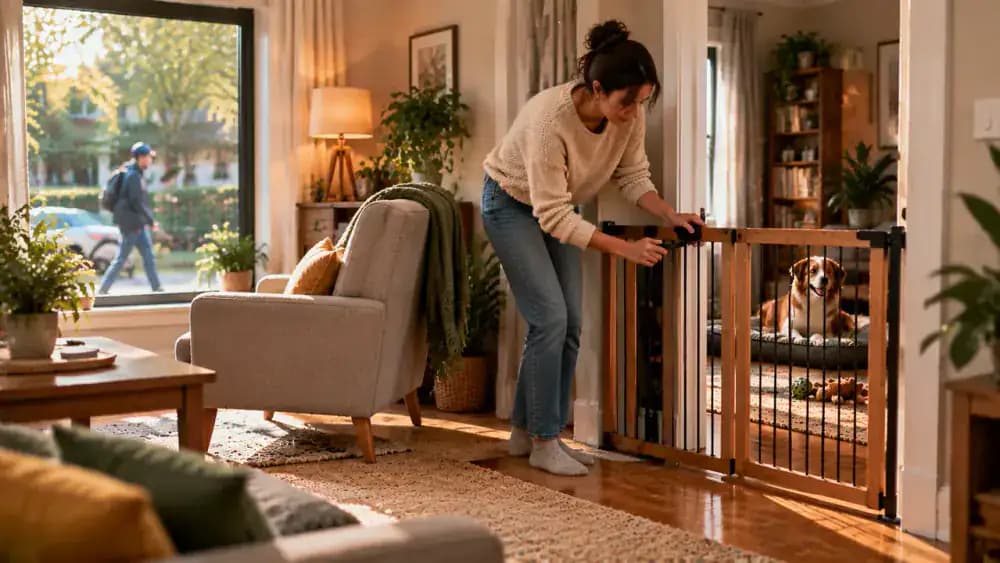
Keep Your Dog and Home Safe
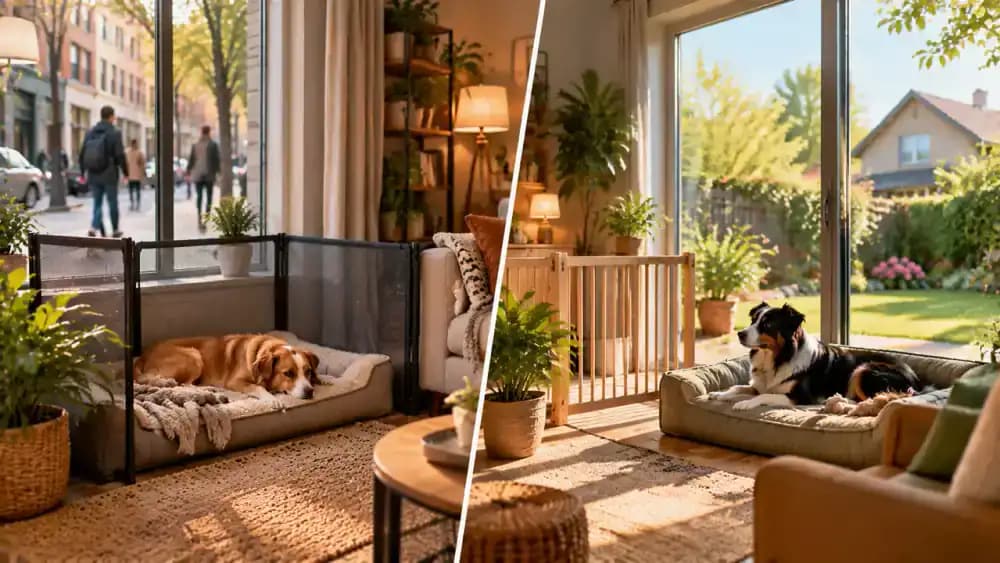
Prevent window-related excitement from creating unnecessary safety risks. Secure windows and doors, move unstable furniture away from tempting jumping spots, and use a suitable gate to limit access when needed. During especially busy periods, offer your dog a quiet adjoining room with comfortable bedding and enrichment. Managing access is a responsible way to prevent accidents while calm behavior develops.
Respond Calmly When Barking Returns
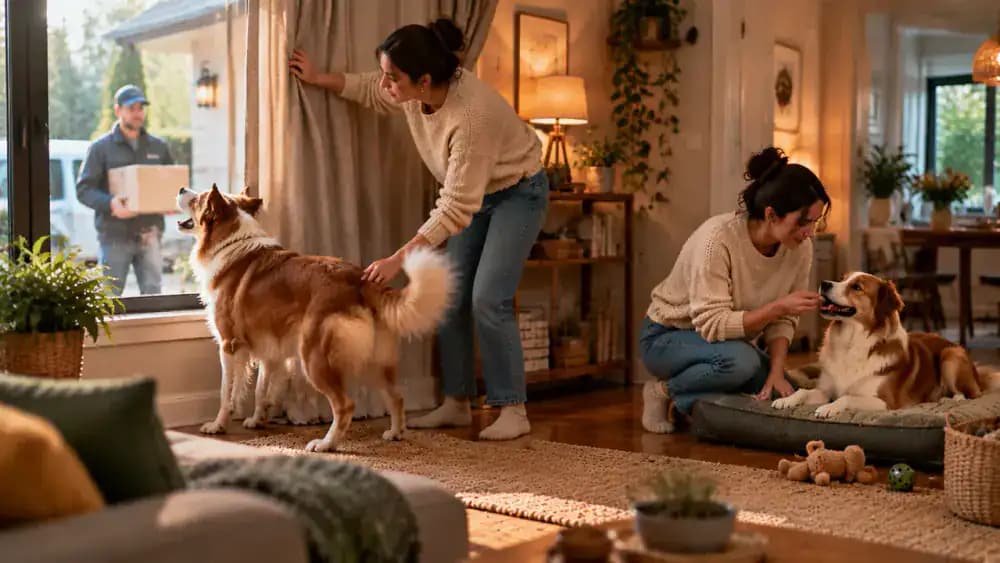
Expect occasional setbacks when visitors arrive, deliveries occur, or outdoor activity suddenly increases. Instead of repeating commands or becoming frustrated, close the curtains, guide your dog to a quieter area, and reward signs of relaxation. Avoid repeatedly testing whether the barking has stopped. Return to manageable training conditions and build progress through consistent practice rather than expecting immediate perfection.
Build a Calmer Everyday Routine
Choose one manageable change to begin today, such as adjusting the curtains, preparing a comfortable resting area, or keeping treats nearby to reward calm choices. Notice which adjustments help your dog settle and maintain them consistently over the coming weeks. The goal is not to eliminate curiosity about the neighborhood, but to make disengaging and relaxing easier.
Recognize Early Signs of Excitement
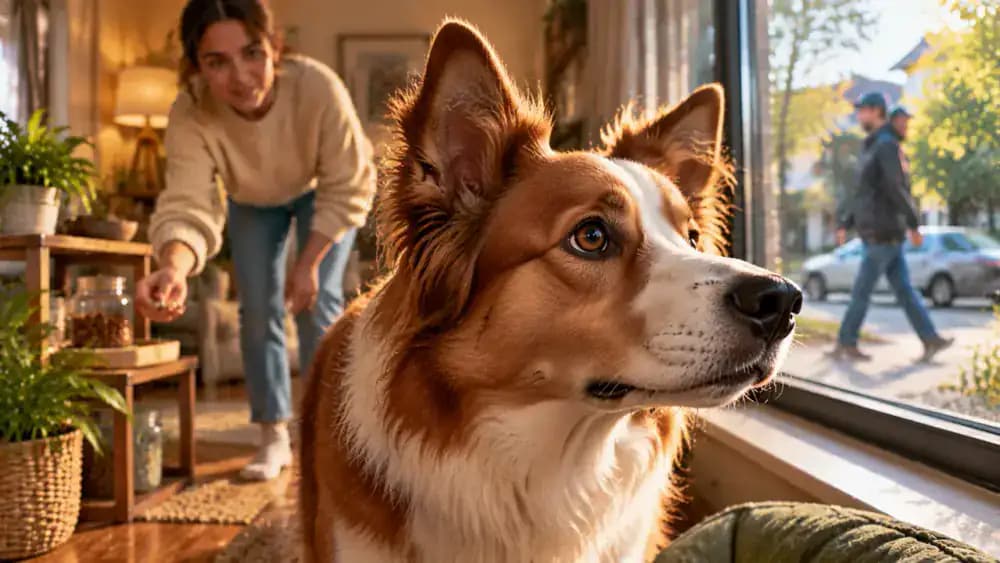
Learn to notice subtle changes in your dog's body language before barking begins. A fixed stare, raised ears, a closed mouth, or a suddenly stiff posture may signal increasing interest or tension. When you spot these changes, calmly invite your dog away from the window and reward the response. Intervening early can make it easier to reinforce calm behavior.
Choose Rewards Your Dog Truly Enjoys
Find out which rewards motivate your dog most effectively. Offer small treats, a favorite toy, or a brief sniffing game during quiet indoor practice and observe what holds your dog's attention. Use an appealing reward when your dog turns away from the window or checks in with you. Individual preferences vary, so choose options that encourage calm participation.
Keep Training Sessions Short and Positive
Practice for just a few minutes at a time, rewarding calm check-ins and successful responses to your cue. End the session while your dog is still comfortable and engaged, then offer a break with water or quiet rest. Short, successful sessions can help maintain focus without adding frustration. If your dog becomes overwhelmed, reduce distractions before practicing again.

Avoid Reinforcing Barking by Accident
Pay attention to what happens immediately after your dog barks. Opening the window, rushing over excitedly, or allowing an animated greeting may unintentionally make the behavior more rewarding. Instead, keep your response calm, manage the trigger safely, and guide your dog toward a mat or another suitable alternative. Reward quiet behavior without scolding or adding unnecessary excitement.
Know When to Get Professional Help
If your dog lunges at the window, struggles to settle after outdoor activity, or appears frightened by everyday sights for extended periods, consider seeking professional support. A qualified reward-based trainer or veterinary behavior professional can assess the situation and develop an appropriate plan. Contact your veterinarian if the behavior changes suddenly or becomes unexpectedly more intense over time.

Adapt the Training Plan to Your Home
Choose adjustments that suit your home's layout and the outdoor activity your dog can see. An apartment facing a busy sidewalk may benefit from privacy film and carefully positioned curtains, while a house overlooking a yard may offer quieter spaces for supervised activities. Create a separate resting area and review your setup as neighborhood routines, daylight, and seasonal activity change.
Choose One Practical Next Step
Start with one manageable trigger, prepare a reward your dog enjoys, and practice when they can still respond comfortably. Celebrate each calm glance away from the window, successful check-in, or relaxed moment on the mat. Progress does not require eliminating every bark. The goal is to help your dog recover more easily and return to a rewarding everyday activity.
Practice Calm Responses in Different Rooms
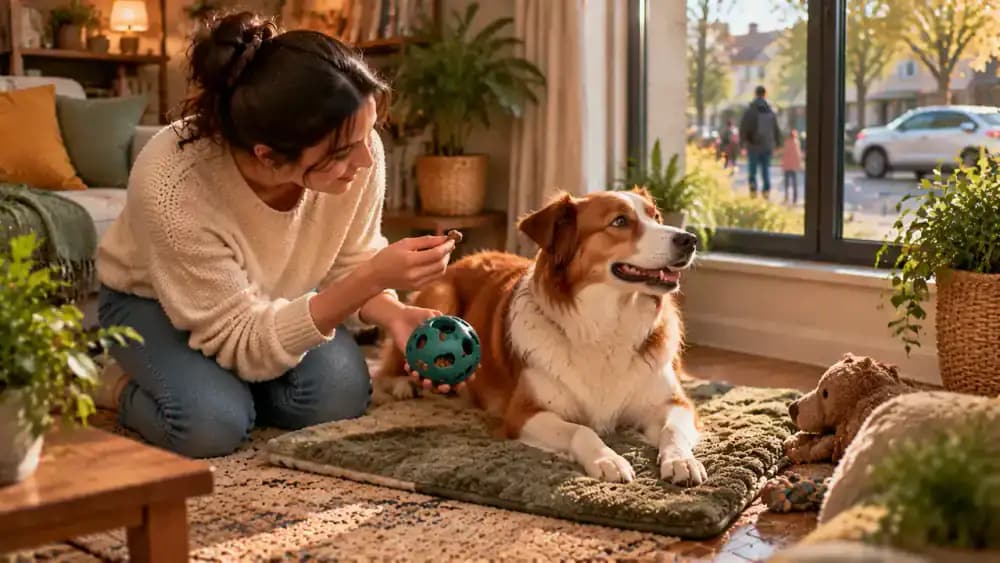
When your dog responds reliably in one location, practice the same check-in cue in another room before introducing a different window. New viewing angles can make familiar outdoor activity more distracting, so begin with easy situations and reward successful responses. If your dog starts pacing, staring intensely, or ignoring cues, reduce the challenge and return to a more comfortable setup.
Help Your Dog Relax After a Trigger Disappears
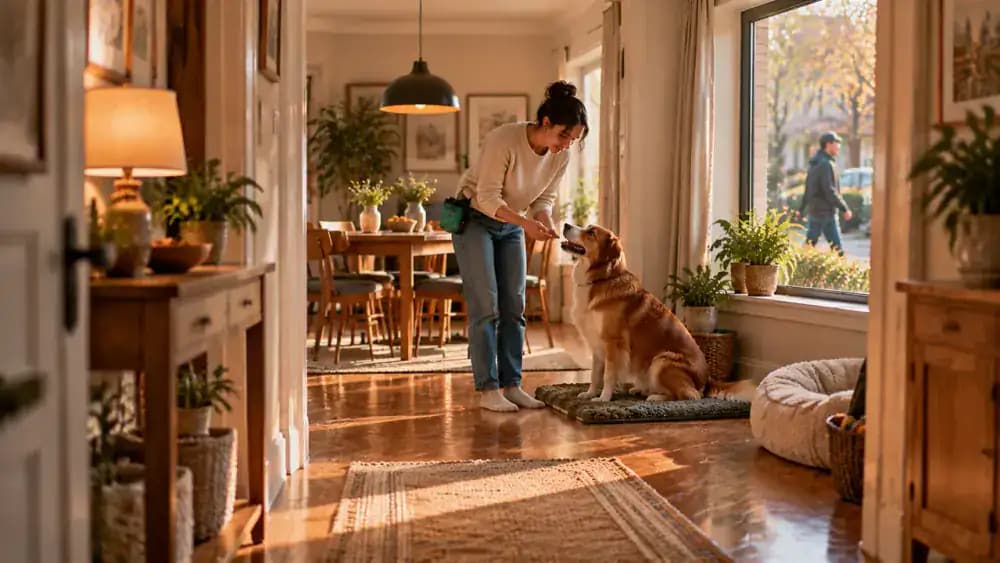
Some dogs remain alert even after a cyclist, pedestrian, or cat has disappeared from view. Rather than waiting for your dog to settle alone, calmly invite them to another room and offer a simple sniffing activity. Scatter a few suitable treats across a rug or use a food puzzle. These predictable activities can encourage disengagement and a smoother return to normal routines.
Prepare Your Dog's Environment Before Leaving Home
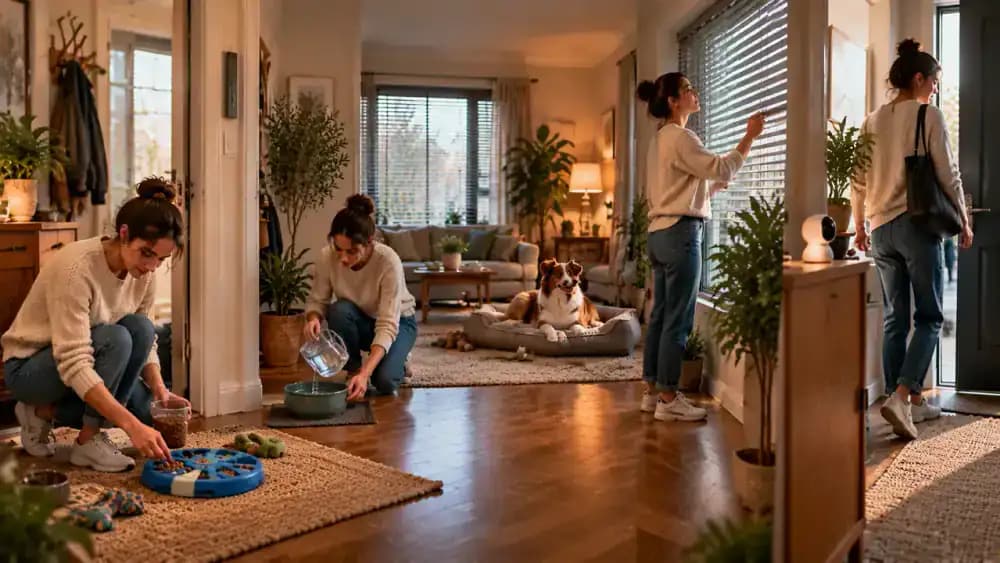
If your dog stays home alone, reduce window distractions before you leave rather than relying on training alone. Close blinds facing busy areas, provide a suitable food puzzle, and make sure fresh water and a comfortable resting spot are available. A home camera may help you identify when barking begins and whether particular outdoor activities trigger it.
Avoid Forcing Your Dog Into Difficult Situations
Do not deliberately bring your dog close to a window or trigger that causes significant distress just to test progress. Instead, adjust visibility and distance so your dog can notice outdoor activity without becoming overwhelmed. Allow your dog to turn away and reward calm choices. If the reaction intensifies, make the environment easier and give your dog time to recover.
Pay Attention to Sounds as Well as Sights
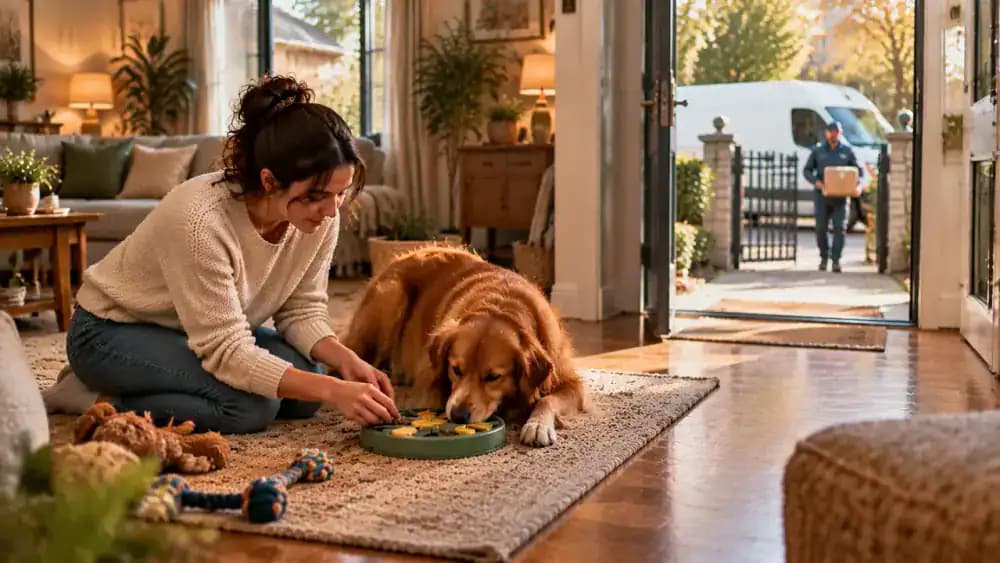
Window barking may also involve sounds such as delivery vans, footsteps, voices, or a gate clicking outside. Notice whether these noises appear before your dog starts reacting, even when the source is not visible. Offer a quiet enrichment activity at a comfortable distance and keep the sound exposure manageable. Seek qualified guidance if sound-related reactions remain intense or difficult to manage.
Maintain Progress Without Rushing
As your dog becomes more comfortable, continue reinforcing calm check-ins and relaxed behavior. You can gradually vary the rewards, using praise and occasional favorite treats, but avoid withdrawing encouragement too quickly. Keep curtains or other visual barriers in place whenever supervision is limited. A dependable routine combines positive reinforcement with practical environmental management rather than expecting your dog to remain silent in every situation.
Choose Your Next Step Toward a Quieter Home
Begin your next practice session with one window, one manageable outdoor trigger, and one alternative behavior, such as turning toward you or settling on a mat. Prepare your rewards and reduce distractions before starting. End after a successful response, even if the session is brief. Consistent, manageable practice helps build calmer habits while keeping expectations realistic for your individual dog.
Does your dog rush to the living room window and bark at every passing cyclist, pedestrian, cat, or car? What starts as an occasional alert can quickly become a daily habit that interrupts conversations, work, and quiet time at home. If you find yourself repeatedly calling your dog away from the glass, you are not alone.
Window-watching barking is often encouraged by a combination of visual stimulation, excitement, alerting behavior, and repetition. Your dog spots movement, starts barking, and eventually the person or animal disappears from view. From your dog's perspective, barking may seem to have worked, making the behavior more likely to happen again. Scolding or shouting can add excitement to the situation without teaching your dog what to do instead.
The good news is that you can make meaningful progress with a few practical adjustments. Reducing your dog's view of busy areas, creating a comfortable resting spot away from the window, and offering engaging activities can lower the number of opportunities to bark. Positive reinforcement training can then help your dog notice outdoor activity without immediately reacting to it.
The goal is not to prevent your dog from noticing the world outside. Instead, you want to make calm behavior more rewarding and barking less of an automatic response. With consistent practice, realistic expectations, and patience, you can help your dog settle more comfortably while making your home more peaceful for everyone.
Where people go wrong
Shouting at Your Dog to Stop Barking. Raising your voice can add excitement to an already stimulating situation. Your dog may interpret the noise as participation in the commotion or become more unsettled by your reaction. Instead, calmly create distance from the window, reduce visual access when necessary, and reward your dog for turning toward you or settling in a quieter area. Consistency is more useful than confrontation.
Leaving the Window Unrestricted All Day. Repeated exposure to passing people, animals, and vehicles can give your dog many opportunities to rehearse barking. If the behavior happens dozens of times daily, training may be harder because your dog rarely gets a break from the triggers. Use curtains, suitable privacy film, or supervised access to reduce unnecessary stimulation while you build calmer responses.
Waiting Until Barking Becomes Intense. Once your dog is barking repeatedly and struggling to disengage, responding to a cue or accepting a treat may become more difficult. Watch for early signs of interest, such as staring, stiffening, or moving toward the glass. Reward calm attention or a voluntary turn away before barking starts, and increase distance from the trigger when your dog becomes too excited.
Expecting Your Dog to Learn Without Rewards. Simply telling your dog to be quiet does not explain which behavior you want instead. Rewarding a glance toward you, a turn away from the window, or a relaxed stay on a mat gives your dog a clear alternative. Use appealing rewards at first, then reinforce calm behavior consistently as your dog becomes more comfortable with outdoor movement.
Increasing Training Difficulty Too Quickly. A dog that can remain calm when a distant pedestrian passes may still bark when a cyclist rides close to the window or another dog approaches. Moving too quickly from easy practice to intense distractions can undermine progress. Start with manageable triggers, increase difficulty gradually, and make the exercise easier whenever your dog struggles to disengage or settle.
Using the Resting Area as Punishment. A designated bed or mat should be a comfortable place to relax, not somewhere your dog is sent angrily after barking. If the area becomes associated with frustration, your dog may resist going there. Introduce the space positively with treats, toys, and calm attention, then reward voluntary visits and gradually build a relaxed resting habit.

Questions people ask
Windows provide a steady stream of movement, sounds, and unfamiliar activity that can trigger alerting, excitement, frustration, or fear. Some dogs also learn that barking coincides with people and animals disappearing from view, which can reinforce the habit. Observe when the barking occurs and which triggers are most challenging. Reducing visual stimulation while rewarding calm responses can help make the behavior less frequent.
Fixed it?
Get one guide like this every Thursday.