The Real Cost of Authorized Users: Who Pays the Credit Card Bill?
Adding an authorized user can help build credit, but it also puts the primary cardholder at financial risk. Learn who is responsible for charges, how credit scores can be affected, and five ways to protect your account.

What you’ll need
Tap to tick things off before you start.
What Is an Authorized User on a Credit Card?
An authorized user is someone the primary cardholder allows to make purchases through an existing credit card account. The person typically receives a separate card linked to the same credit line, although physical card access is not always necessary. Families often use this arrangement to share household purchasing access or introduce younger relatives to credit. Authorized users can generally shop online and in stores, but their spending draws from the primary account's available credit rather than a separate credit line.

Authorized User vs. Joint Account Holder
An authorized user and a joint account holder have fundamentally different legal relationships with a credit card issuer. Joint account holders typically apply together and accept contractual responsibility for repayment. An authorized user usually does not submit a full credit application or become a co-owner. The primary cardholder retains control over major account decisions, including credit limit requests and closure. Understanding this distinction prevents confusion about ownership, management authority, and who has agreed to repay the lender.

Who Is Legally Responsible for Authorized User Charges?
The Consumer Financial Protection Bureau explains that primary cardholders generally must repay charges made by their authorized users. Under Regulation Z, including the official commentary to Section 1026.12, permission to use a card matters when determining liability. Transactions made within an authorized relationship generally remain the account holder's responsibility. Unauthorized use is treated differently and may qualify for federal liability protections. The circumstances of authorization and any notice withdrawing permission can affect how disputed transactions are evaluated.

What Happens When an Authorized User Overspends?
Suppose you permit an authorized user to spend $200 monthly, but that person makes $2,000 in purchases. Your private agreement does not automatically restrict transactions processed by the issuer. The resulting balance generally remains your repayment obligation because the purchases occurred while spending permission existed. You may request reimbursement, but disagreements can become difficult if expectations were poorly documented. Unexpected balances can also strain your monthly budget and create interest charges when amounts remain unpaid.

How Authorized Users Can Build Credit History
Many issuers report authorized user accounts to one or more major credit bureaus, potentially helping someone establish credit history. When reported, an account with consistent on-time payments and a long positive history may strengthen the user's credit profile. However, reporting practices, age requirements, and scoring models vary. Some models also evaluate authorized user accounts differently. Before relying on this strategy, confirm the issuer's reporting policy and understand that appearing on an established account does not guarantee a higher score.

How Shared Account Activity Can Damage Credit Scores
Shared account activity can create credit consequences for both people when the issuer reports the account under their names. Late payments may appear on both credit reports, while larger balances can increase credit utilization. For example, a reported $4,000 balance against a $5,000 limit represents 80% utilization, which may negatively affect scoring. Even timely payments do not necessarily offset the effect of high reported balances. Credit scoring outcomes depend on each person's complete credit profile.

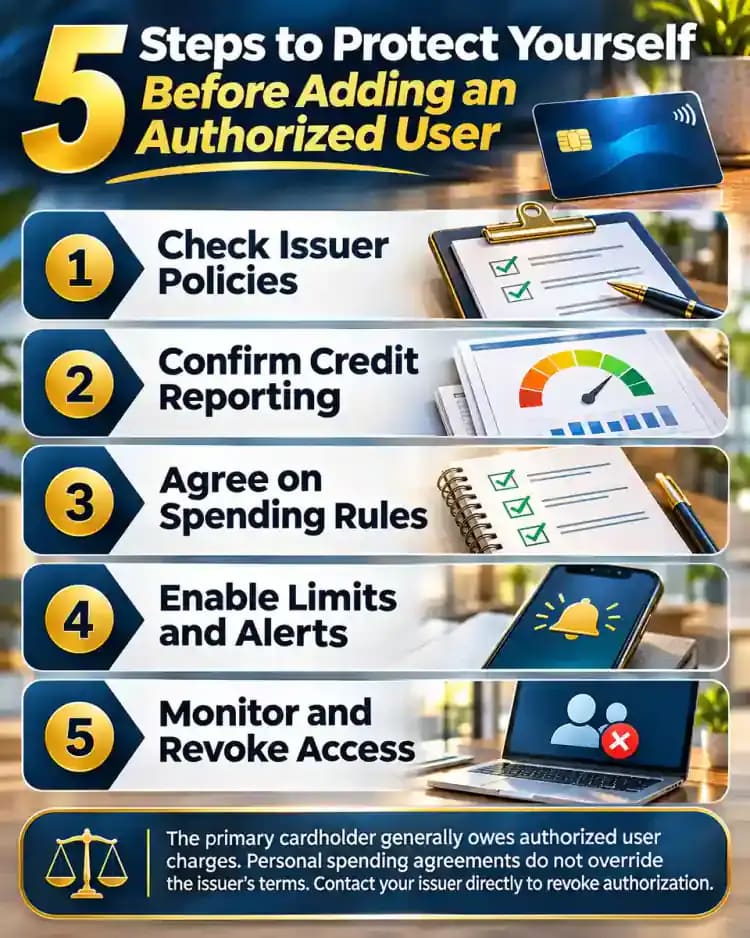
Check Your Credit Card Issuer's Authorized User Rules
Authorized user eligibility and account privileges differ among credit card issuers. Some accept young children, while others establish minimum ages or require additional identifying information. Certain cards charge fees for extra users, particularly premium products with added benefits. Issuers may also provide different levels of online account visibility or customer service access. Review your card agreement and contact the issuer directly to verify eligibility, applicable charges, and available permissions before assuming another bank's policies apply.

Set Spending Boundaries and Repayment Expectations
A written agreement can help both parties understand permitted purchases and reimbursement expectations. Specify acceptable spending categories, a monthly budget, payment deadlines, and how receipts should be shared. Discuss what happens if a purchase exceeds the agreed amount or reimbursement arrives late. Because personal agreements do not replace the credit card contract, consider whether your household budget could absorb unexpected charges. Clear expectations reduce misunderstandings, although they cannot eliminate financial exposure or guarantee repayment.

Use Spending Controls and Transaction Alerts
Some credit card issuers provide individual spending controls that restrict authorized user purchases, while others offer notifications without enforceable limits. Check whether controls apply per transaction, per month, or only to selected purchase categories. Enable available alerts for large purchases and review pending transactions through your banking app. Notifications can help identify unexpected activity quickly, but they do not prevent completed purchases. Confirm whether recurring payments, offline transactions, or delayed authorizations can bypass particular restrictions.

How to Remove an Authorized User Safely
To end an authorized user's access, contact your credit card issuer and explicitly withdraw permission for that person to use the account. Request confirmation that the removal has been processed and ask whether replacement card numbers or additional security measures are necessary. Physical card collection alone may leave saved online credentials accessible. Keep records of your request and its effective date. Review subsequent transactions and promptly report any attempted or completed purchases that appear unauthorized.

Should You Add a Child or Teen as an Authorized User?
Adding a child or teenager as an authorized user can create opportunities to teach responsible credit habits. Before providing purchasing access, consider whether the young person understands budgeting, borrowing, and the difference between available credit and disposable income. Some families begin with supervised purchases or retain the physical card. Age alone does not establish financial readiness. Regular conversations about spending decisions, account statements, and repayment expectations can make the arrangement more educational and manageable.

Adding a Spouse or Partner: Financial Risks to Consider
Adding a spouse or romantic partner may simplify shared household purchases, but it also requires financial transparency. Partners sometimes have different spending habits, savings priorities, or expectations about discretionary expenses. These differences can become more significant during financial hardship or relationship changes. Discuss whether shared card access supports your household's goals and how each person views financial responsibility. Marriage or a relationship does not automatically make an authorized user a contractual account holder.

Can an Authorized User Make Changes to Your Account?
Authorized users generally cannot make major administrative changes to the underlying credit card account. Activities such as requesting a higher credit limit, closing the account, or changing ownership usually require the primary cardholder's authorization. Some issuers nevertheless allow authorized users to view transactions, access statements, or make payments through limited online profiles. Administrative permissions vary by institution. Distinguish ordinary customer service access from the authority to modify contractual terms or account security settings.

What Happens When Authorized User Charges Go Unpaid?
Unpaid authorized user purchases can generate the same financial consequences as other unpaid credit card balances. Depending on the account terms, interest may accumulate, late fees may apply, and prolonged delinquency can lead to collections or legal proceedings. The issuer generally seeks repayment from the person contractually responsible for the account. Minimum payments may temporarily prevent delinquency but can leave substantial balances accumulating interest. Reviewing payment due dates and statements helps clarify potential consequences.

Authorized Purchases vs. Unauthorized Credit Card Use
A purchase that violates a personal spending agreement is not automatically an unauthorized transaction under federal credit card rules. If someone had permission to use the account, the issuer may treat purchases made during that authorization as valid charges. Genuine unauthorized use involves circumstances where the person lacked authority to transact. Disputes require careful attention to when permission existed, what occurred, and what the issuer was told. Fraud protections should not be confused with personal reimbursement disagreements.

What Federal Consumer Protection Rules Actually Cover
The Consumer Financial Protection Bureau administers Regulation Z, which implements the Truth in Lending Act. Section 1026.12 addresses credit card liability for unauthorized use and related protections. Federal rules generally limit qualifying unauthorized-use liability, but the definition depends on whether actual, implied, or apparent authority existed. Notifying the issuer that another person's authority has ended is particularly important. These protections do not automatically cancel previously authorized charges, and individual disputes depend on specific facts.

What Happens to Credit History After User Removal?
Removing an authorized user may change how the account appears on that person's credit reports. Some issuers stop reporting the relationship, while previously reported account information may disappear after bureau updates. Losing an established account can affect the average age of reported accounts or overall utilization calculations. The resulting score change may be positive, negative, or negligible. Reporting practices differ, so former authorized users can review their credit reports to understand which information remains.

Safer Alternatives to Sharing Your Credit Card
Several financial products offer alternatives to sharing an existing credit line. Secured credit cards typically require refundable deposits and may help users establish independent credit history. Student credit cards can serve eligible applicants with limited histories. Debit cards allow purchases using available bank funds rather than revolving credit. Certain credit-builder loans provide another route to establishing payment history. Each option has different eligibility requirements, fees, reporting practices, and risks, making comparisons important before choosing.

Calculate Your Financial Exposure Before Adding Someone
Consider a hypothetical account with a $5,000 credit limit and an authorized user expected to spend $200 monthly. If unexpected purchases create a $3,000 balance, the account holder could face substantial repayment pressure. At a hypothetical 24% annual percentage rate, carrying $3,000 for one month would cost roughly $60 in interest using a simplified calculation. Actual charges depend on daily balances, grace periods, and account terms. Comparing potential balances with available savings reveals financial exposure.

Final Decision: Is Adding an Authorized User Worth the Risk?
Adding an authorized user can provide meaningful convenience and potential credit-building benefits, but those advantages must justify the financial exposure. Consider whether the arrangement serves a clear purpose, whether trust is supported by responsible behavior, and whether unexpected purchases would be affordable. The decision should also reflect the primary cardholder's willingness to supervise shared access. When these conditions are uncertain, delaying the arrangement or choosing another financial product may offer greater flexibility and protection.

How to Add an Authorized User to Your Credit Card
Most credit card issuers let primary cardholders add authorized users through online banking, a mobile app, or customer service. The enrollment process typically requires the person's legal name and may request a date of birth, address, or Social Security number. The issuer verifies eligibility and processes the request according to its policies. If approved, a separate card may arrive by mail. Activation instructions and delivery timelines vary, so review the issuer's confirmation before expecting access.

Does Adding an Authorized User Trigger a Credit Check?
Adding an authorized user typically does not require the person to complete a traditional credit application or undergo a hard credit inquiry. The primary cardholder already holds the credit account, so the issuer generally evaluates the request differently from a new application. However, identity verification requirements and approval procedures vary. Some issuers may perform additional checks before granting access. Ask whether enrollment involves any credit inquiry rather than assuming every institution follows identical procedures.

Can You Add Someone Without Giving Them a Card?
Some families add authorized users primarily for potential credit reporting benefits without providing a physical card for everyday purchases. Whether this arrangement is available depends on the issuer's enrollment and card issuance policies. Keeping the card secured may reduce spending opportunities, but it does not necessarily eliminate access. Card numbers might remain available through account credentials, saved payment methods, or digital wallets. Confirm how your issuer handles card activation, online access, and transaction permissions.

How Quickly Does Authorized User Activity Appear on Credit Reports?
Authorized user account information does not necessarily appear on credit reports immediately after enrollment. Many issuers transmit account updates during regular reporting cycles, often around monthly statement periods. Processing times can differ among Equifax, Experian, and TransUnion, and an issuer may not report to every bureau. Newly added users might therefore see account information appear at different times. A reporting delay does not automatically indicate an enrollment problem, although prolonged absence warrants checking the issuer's reporting policy.

How to Check Whether Authorized User Information Is Accurate
Authorized users can review their credit reports from Equifax, Experian, and TransUnion through AnnualCreditReport.com. Check whether the account appears, whether its status identifies the authorized user relationship correctly, and whether reported balances and payment history match available records. Incorrect information can be disputed with the credit bureau and, when appropriate, the card issuer. The Consumer Financial Protection Bureau provides guidance on credit reporting disputes. Keep copies of supporting documents and review investigation results carefully.

What Happens to Authorized Users When an Account Is Closed?
Closing a credit card account generally ends the authorized user's ability to make new purchases using that credit line. However, account closure does not erase outstanding balances or eliminate the primary cardholder's existing repayment obligations. Previously reported account information may remain on credit reports, although its treatment varies by bureau and scoring model. Closing an account can also affect available credit calculations. Existing recurring payments may require replacement payment information to prevent interrupted services.

Do Authorized Users Receive Credit Card Rewards?
Purchases made by authorized users often earn rewards under the primary credit card account's existing rewards program. Depending on the card, qualifying purchases may generate cash back, travel points, or other benefits. However, the primary cardholder generally controls accumulated rewards and redemption options. Some premium cards also provide authorized users with selected travel or purchase benefits, sometimes for an additional fee. Reward eligibility, exclusions, and benefit access depend on the issuer's specific program terms.

Can Authorized Users Make Balance Transfers or Cash Advances?
Authorized user privileges do not always extend to balance transfers or cash advances. Some issuers reserve these transactions for primary cardholders, while others permit certain additional users to initiate them. Cash advances commonly involve transaction fees and interest that begins accruing immediately, without the usual purchase grace period. Balance transfers may carry separate fees and promotional conditions. Because these transactions can be expensive, reviewing issuer permissions and pricing terms is essential before assuming ordinary purchasing access includes them.

How to Handle a Reimbursement Dispute With an Authorized User
When an authorized user fails to reimburse agreed purchases, organized documentation can help clarify the disagreement. Gather transaction records, receipts, written spending agreements, and relevant messages. Compare disputed amounts against the original expectations and communicate a specific repayment request without assuming the issuer will enforce it. If discussions fail, voluntary mediation may offer a structured way to resolve the conflict. Significant disagreements may warrant guidance from a qualified consumer credit attorney regarding available options.

Your First 30 Days After Adding an Authorized User
During the first week, confirm that enrollment and card activation occurred as expected. During the second week, review initial transactions and verify that purchasing access matches expectations. In the third week, check whether the account's monitoring features are functioning properly. By day 30, review spending patterns, discuss any concerns, and evaluate whether the arrangement remains manageable. Credit bureau updates may take longer than one month, so reporting confirmation may require additional follow-up.

Adding someone to your credit card as an authorized user might seem like a simple favor. You could help a teenager establish credit history, give your spouse convenient access to household funds, or help a family member manage everyday expenses. But there is a financial responsibility that many cardholders overlook: you generally have to pay for purchases made by the person you authorize.
Imagine adding your adult child to a credit card with a $10,000 limit. You agree they can spend no more than $200 per month. A few weeks later, they make $2,500 in purchases without asking. Although they broke your agreement, the credit card issuer can generally hold you responsible for those charges. Your private spending rules do not change your payment obligations to the bank.
The consequences can extend beyond the immediate bill. Higher balances may increase your credit utilization, potentially affecting your credit score. If the issuer reports the account to credit bureaus under the authorized user's name, late payments or high balances could also affect that person's credit profile.
Fortunately, adding an authorized user does not have to mean accepting unlimited financial uncertainty. Some issuers provide individual spending controls, transaction notifications, and tools for managing account access. Understanding these options before sharing your credit line can substantially reduce your exposure.
This guide explains authorized user credit card responsibility, how the arrangement differs from a joint account, what happens when spending exceeds your agreement, and which precautions can help protect both people's finances.
Where people go wrong
Assuming Authorized Users Must Pay Their Own Charges. An authorized user may promise to reimburse every purchase, but that promise does not automatically create a payment obligation to the card issuer. The primary cardholder generally remains responsible for authorized spending, even when the other person refuses to contribute.
Confusing Authorized Users With Joint Account Holders. Joint account holders generally share contractual repayment responsibility, while authorized users typically receive spending privileges without becoming responsible for the account balance. Confusing these arrangements can lead to incorrect assumptions about who owes the money and who controls the account.
Relying on Verbal Spending Limits. Telling an authorized user to spend only $100 per month does not necessarily prevent a $1,000 purchase. Unless the issuer offers and enforces a separate spending limit, your personal agreement provides no automatic protection against additional charges.
Assuming Authorized User Status Always Builds Credit. Not every issuer reports authorized user accounts to every credit bureau, and scoring models may treat those accounts differently. Before adding someone specifically to build credit, verify reporting practices and remember that positive account history does not guarantee a score increase.
Ignoring Credit Utilization. Large purchases can increase the percentage of available credit being used, potentially lowering credit scores even when payments remain current. Monitor statement balances and overall utilization instead of assuming that paying at least the minimum protects both credit profiles.
Failing to Monitor Account Activity. Waiting until the monthly statement arrives can allow unexpected spending to accumulate. Enable available transaction alerts, review recent purchases regularly, and address concerning activity promptly. Early detection provides more opportunities to intervene before balances become difficult to manage.
Taking Back the Card Without Revoking Authorization. Collecting a physical card does not necessarily eliminate access because the authorized user may have saved payment details or a digital wallet. Contact the issuer to revoke authorization, request appropriate credential changes, and obtain confirmation that removal was processed.
Questions people ask
The primary cardholder is generally responsible for repaying purchases made by an authorized user. The authorized user typically has permission to spend but no contractual obligation to repay the issuer. A private reimbursement agreement may establish expectations between individuals, but it does not change the issuer's account terms.
Fixed it?
Get one guide like this every Thursday.