How to Prepare a Starter Room for a Newly Adopted Cat
Set up a calm, secure starter room that helps a newly adopted cat adjust safely, find essential resources, and explore your home at a comfortable pace.

What you’ll need
Tap to tick things off before you start.
Start With a Smaller Territory
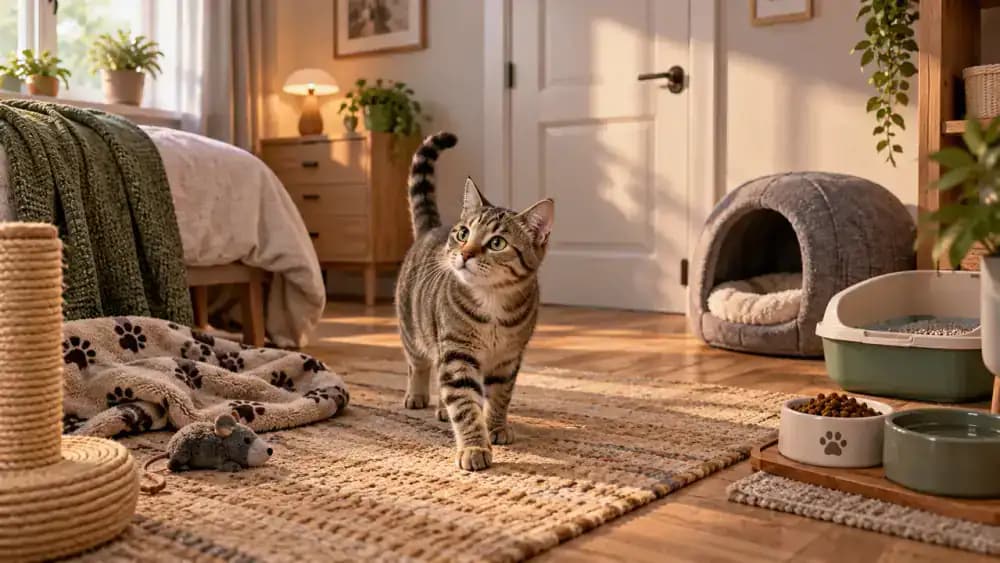
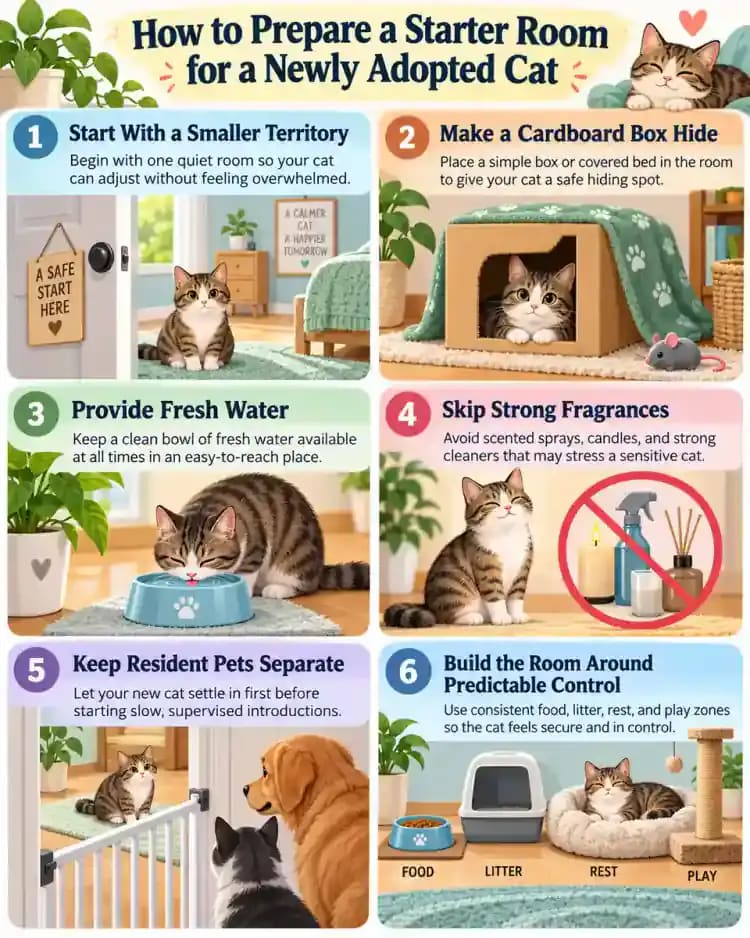
Give your newly adopted cat one quiet room rather than immediate access to the entire home. A smaller territory is easier to understand and lets the cat quickly locate food, water, litter, hiding places, and resting areas. Reducing the amount of unfamiliar space can make the first few days more manageable.
Choose a Quiet Room
Pick a climate-controlled room that can be closed off from heavy household traffic. A spare bedroom, office, or calm bathroom may work well. Avoid spaces with loud appliances, frequently slamming doors, or constant visitors. The room should feel predictable without making the cat completely isolated from normal household life.

Remove Floor-Level Hazards
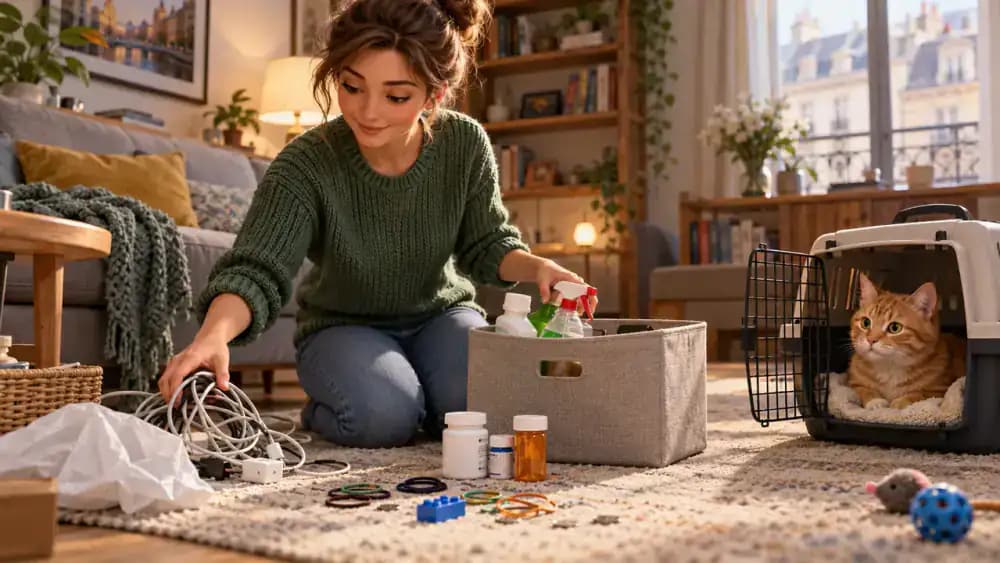
Inspect the room from a cat's perspective before arrival. Remove loose electrical cords, plastic bags, string, medications, cleaning products, fragile objects, and small items that could be swallowed. Check floors, shelves, furniture, and windowsills because a curious cat may climb, paw, sniff, or squeeze into surprisingly small spaces.
Secure Windows and Hanging Cords
Test every window and screen before allowing the cat into the room. Screens should fit securely and resist pressure. Keep windows closed unless you know they are safe. Tie blind and curtain cords out of reach to reduce entanglement risk. A secure window can later provide a useful and calming outdoor view.

Block Unsafe Hiding Places
Prevent access to hiding spaces that are dangerous or difficult to reach, including gaps behind appliances, unstable cabinets, or reclining furniture. Do not eliminate hiding altogether. Instead, replace risky gaps with deliberate refuges that the cat can enter comfortably and that you can monitor without pulling the cat out.

Make a Cardboard Box Hide
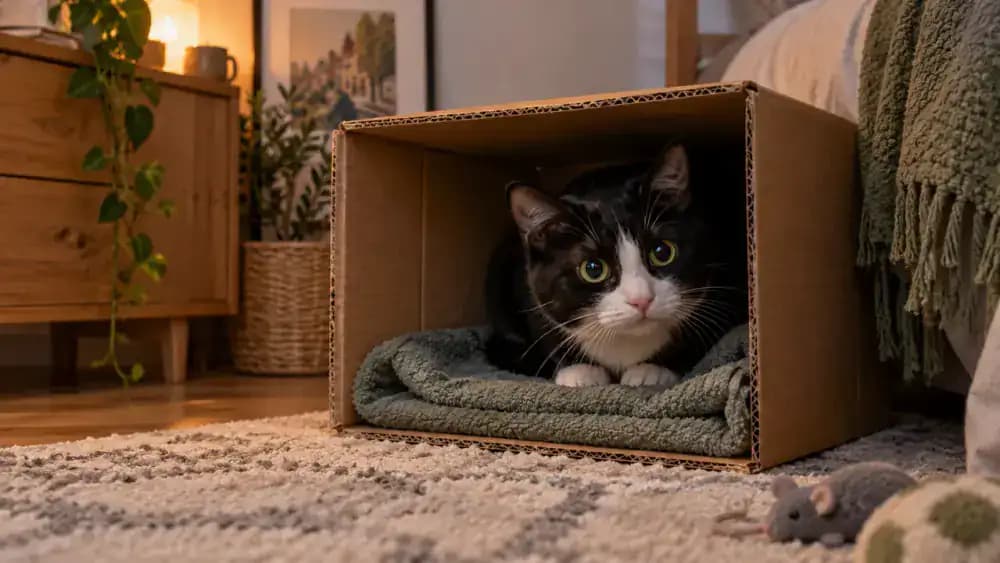
Place a cardboard box on its side and add a folded towel inside. Keep one entrance completely clear so the cat can enter and leave easily. This inexpensive refuge provides visual cover while maintaining airflow. Many cats feel more secure when they can observe an unfamiliar room without sitting fully exposed in the open.
Provide a Second Refuge
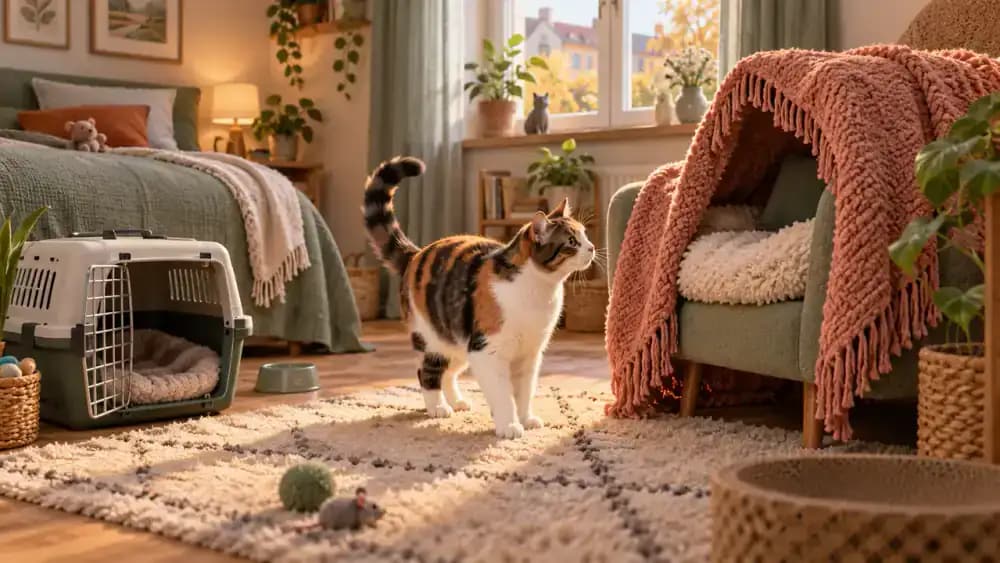
Add another hiding option with a different level of enclosure or height. You might use a covered cat bed, an open carrier, or a blanket draped securely over a sturdy chair. Giving the cat choices allows it to select what feels safest. Never push or place the cat into a refuge against its will.
Keep the Carrier in the Room
Leave the transport carrier available after arrival if there is enough space. Secure or remove the door so it cannot swing closed unexpectedly. Because the carrier already carries familiar smells from the trip, the cat may use it as a refuge. Continued access can also reduce its association with stressful travel alone.
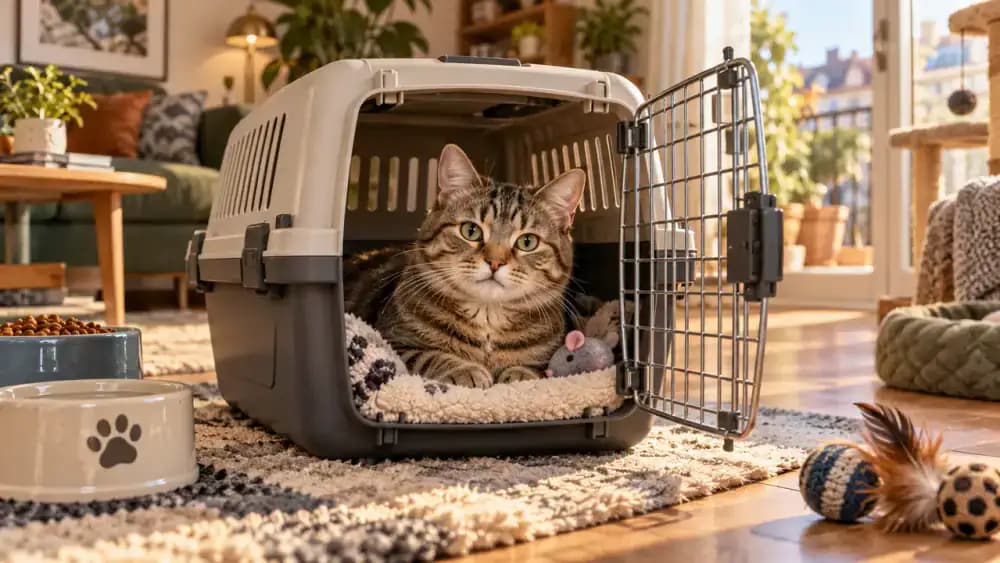
Position the Litter Box Carefully
Place a roomy litter box in a private corner that remains easy to reach. Keep it away from food and water, and avoid forcing the cat to pass noisy equipment or squeeze behind furniture. The box should provide enough space for comfortable turning and digging. Simple unscented litter is a practical starting point.
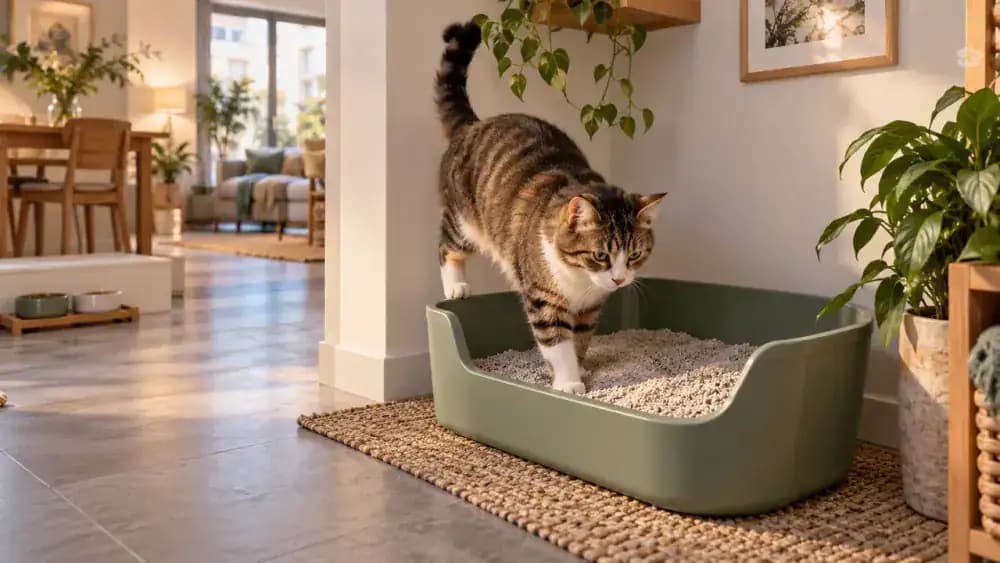
Start With Familiar Litter
If you know which litter the cat used previously, use the same type during the first days when practical. Familiar texture and scent remove one unnecessary change. Avoid immediately introducing heavily scented litter, unusual pellets, or automatic litter boxes. Changes can be made later after the cat is using the box consistently.

Set Up the Food Station
Put the food station on the opposite side of the room from the litter box. Choose a shallow, stable bowl that will not slide while the cat eats. Whenever possible, begin with the same food provided by the shelter, foster, breeder, or previous owner instead of combining adoption stress with an abrupt diet change.

Provide Fresh Water
Place water away from the litter box, and consider separating it slightly from the food as well. Use a wide ceramic or stainless steel bowl that is easy to clean and does not crowd the cat's whiskers. Refresh the water every day. If the cat already knows a fountain, one can be included quietly.

Create an Open Resting Area
Not every resting place should be hidden. Add a folded blanket, washable cat bed, or thick towel in an open but protected location. Position it away from the doorway while still allowing a view of the room. As the cat becomes more confident, it may begin resting openly rather than remaining inside a refuge.

Add Safe Elevation
Provide a simple way for the cat to sit slightly above floor level, such as a sturdy chair, low cat tree, or secure shelf. Avoid creating an immediate climbing challenge. The goal is stable, easily accessible elevation that gives the cat a broader view and another way to control its distance from people.
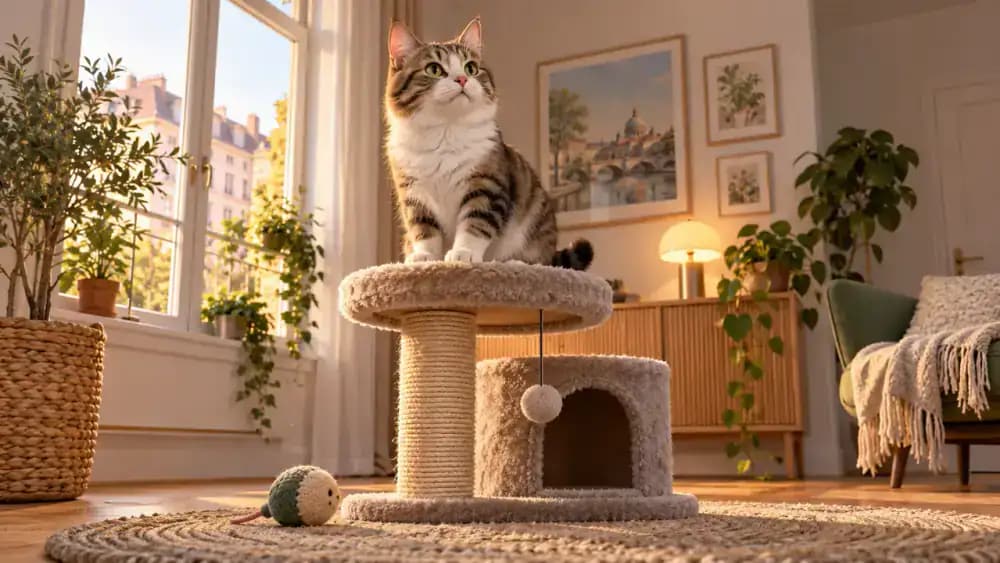
Include a Stable Scratching Surface
Add a sturdy scratching option before the cat experiments with furniture. A vertical post, horizontal cardboard scratcher, or both can work. Place one near a bed or hiding place because cats often stretch and scratch after resting. Prioritize stability over appearance, since a scratcher that tips or wobbles may go unused.
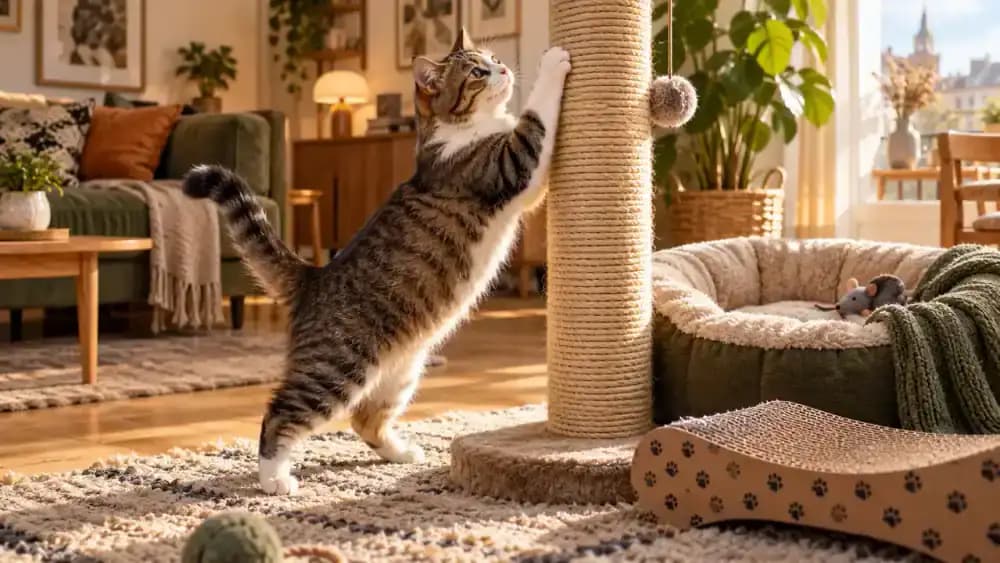
Keep Toys Simple
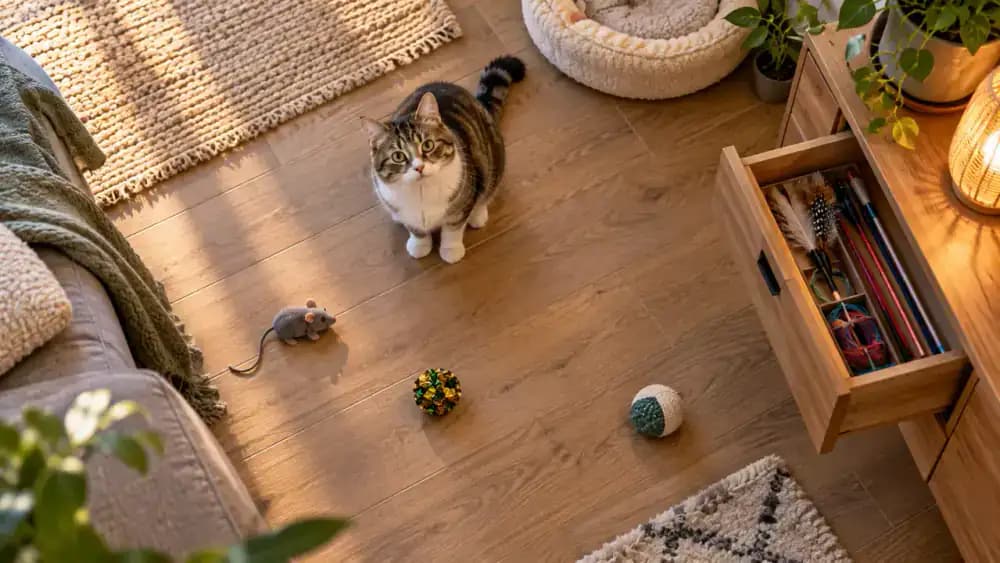
Offer only a few quiet toys at first, such as a soft ball, lightweight mouse, or kicker toy. Avoid crowding the room with constant stimulation. Wand toys, ribbons, string, and elastic items should be stored when you are not supervising. The room should offer enrichment while remaining calm and easy to understand.
Add Familiar Scent
If the shelter or foster sends home a blanket, towel, or bedding item that smells familiar, place it near a resting or hiding area. Familiar scent can make an unfamiliar room easier to recognize and accept. Avoid washing that item immediately unless it is soiled enough that cleaning is genuinely necessary.

Skip Strong Fragrances
Keep the room's scent profile neutral. Remove air fresheners, scented candles, essential oil diffusers, heavily perfumed cleaners, and strongly scented litter. Cats use scent extensively when learning territory, so layering unfamiliar fragrances over a new environment can make that process harder. A clean room does not need to smell perfumed.
Use Gentle Predictable Lighting
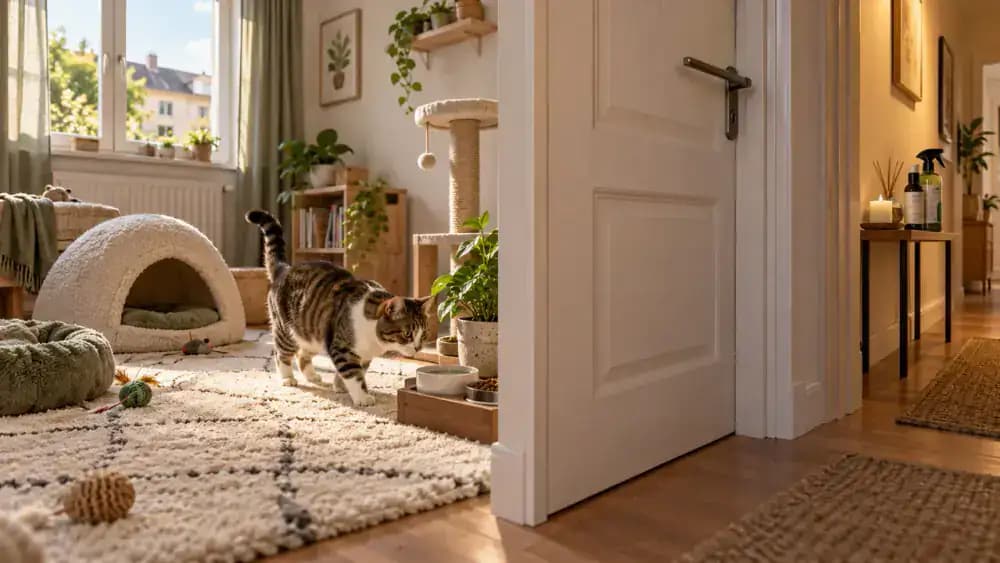
Keep lighting comfortable during the first evening. Normal daylight is useful during the day, followed by gentle room lighting after dark. There is no need for harsh overhead brightness. Make sure the cat can still find food, water, and litter easily, and avoid flashing lights, loud television, or other abrupt stimulation.
Open the Carrier Only After Closing the Door
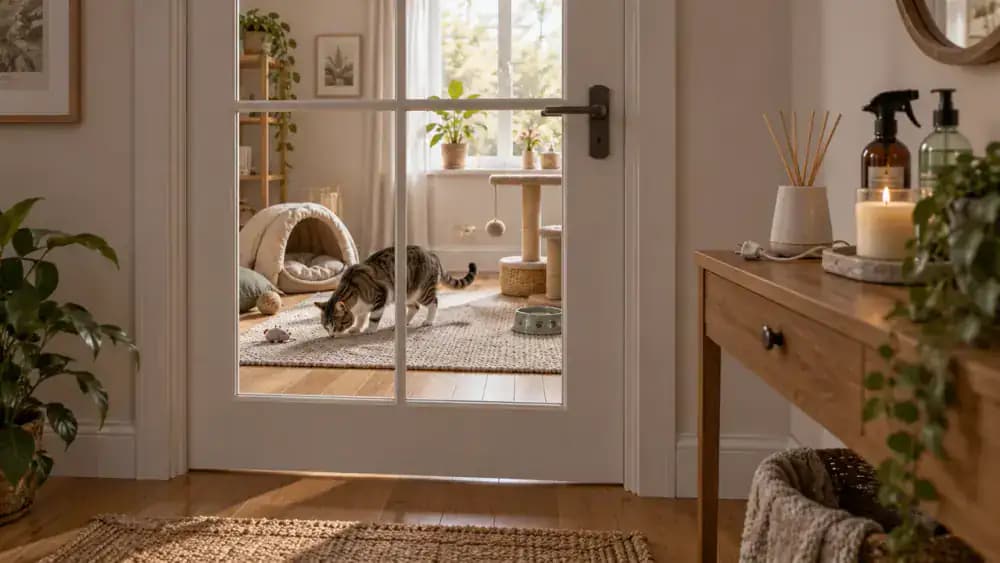
Carry the closed carrier into the prepared room and shut the room door before opening it. Place the carrier securely on the floor, open its door, and allow the cat time to respond. Never tip, shake, or drag the cat out. Allowing a voluntary exit preserves control during a stressful transition.
Let the Cat Come Out on Its Own
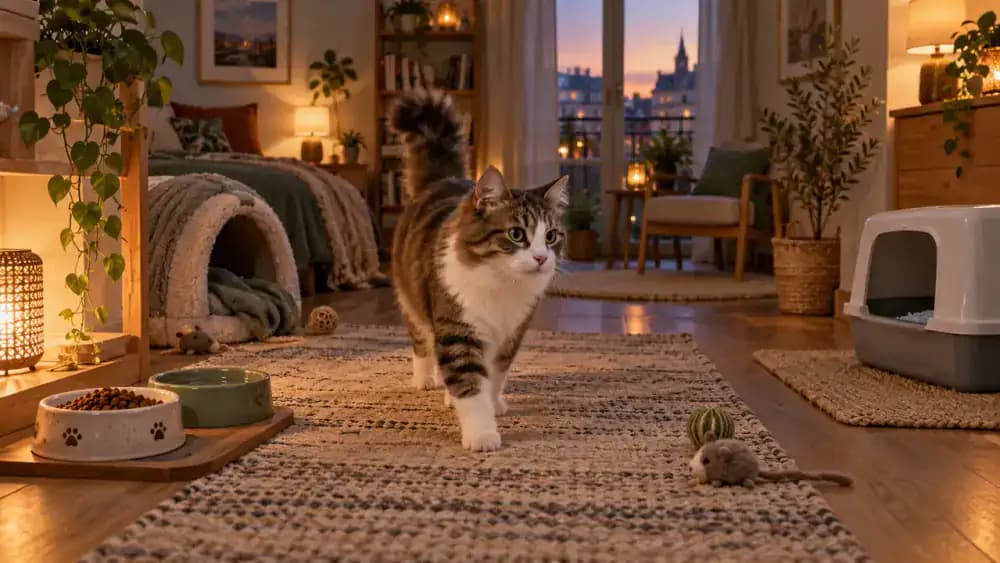
After opening the carrier, sit several feet away and wait. Some cats emerge quickly, while others may remain inside much longer. Avoid staring continuously or reaching into the carrier simply to speed things up. Speak softly and give the cat room to decide when the environment feels safe enough to investigate.

Keep Early Contact Low Pressure
Make first interactions brief and optional. You can offer a treat, hold out a relaxed hand from a distance, or introduce a quiet toy if the cat shows interest. If the cat chooses to hide, leave it alone. Hiding is a coping strategy, and forcing contact can work against the confidence you want to build.

Give Everyone the Same Rules
Make sure everyone in the household handles the starter room consistently. Limit visitors during the first day or two, supervise children, enter slowly, and use quiet voices. Let the cat approach people rather than surrounding it. Predictability becomes difficult when each family member uses a completely different style of interaction.

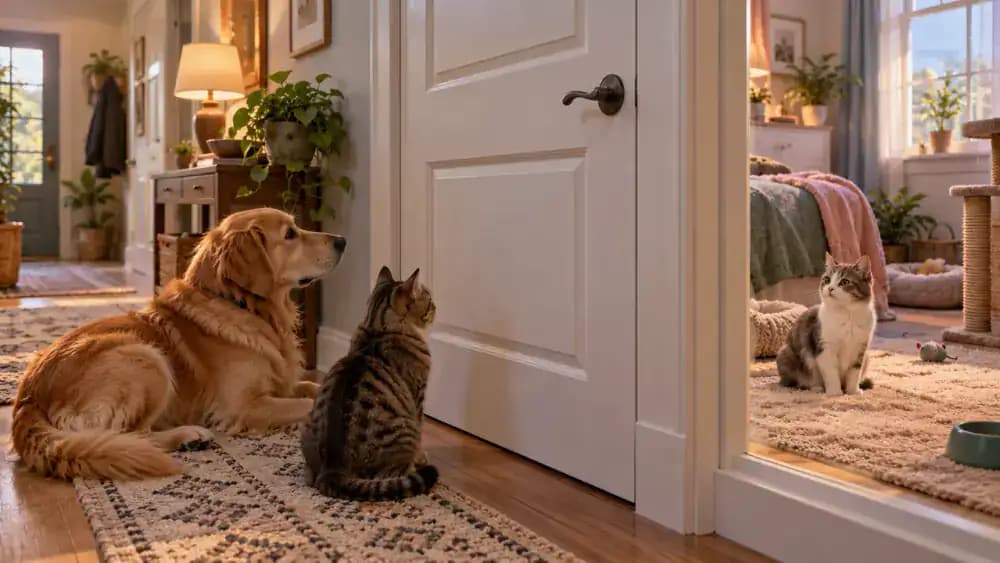
Keep Resident Pets Separate
Keep dogs and resident cats outside the starter room initially. Do not allow another pet to rush the doorway or enter simply to test the reaction. Let the newcomer establish basic security first. Controlled scent swapping and more structured introductions can happen later according to the comfort and behavior of the animals involved.

Monitor Everyday Basics
Pay attention to food intake, water use, litter box activity, and general behavior every day without hovering constantly. You should have a basic idea whether the cat is eating, drinking, urinating, and passing stool. These observations can reveal adjustment problems and provide useful details if you later need veterinary guidance.
Recognize Veterinary Red Flags
Some nervous behavior can occur during adjustment, but do not assume every unusual sign is stress. Contact a veterinarian if the cat appears seriously ill, has trouble breathing, repeatedly vomits, or strains without producing urine. Cats may hide illness, so concerning physical symptoms deserve professional assessment rather than guesswork at home.

Clean Without Erasing Familiarity
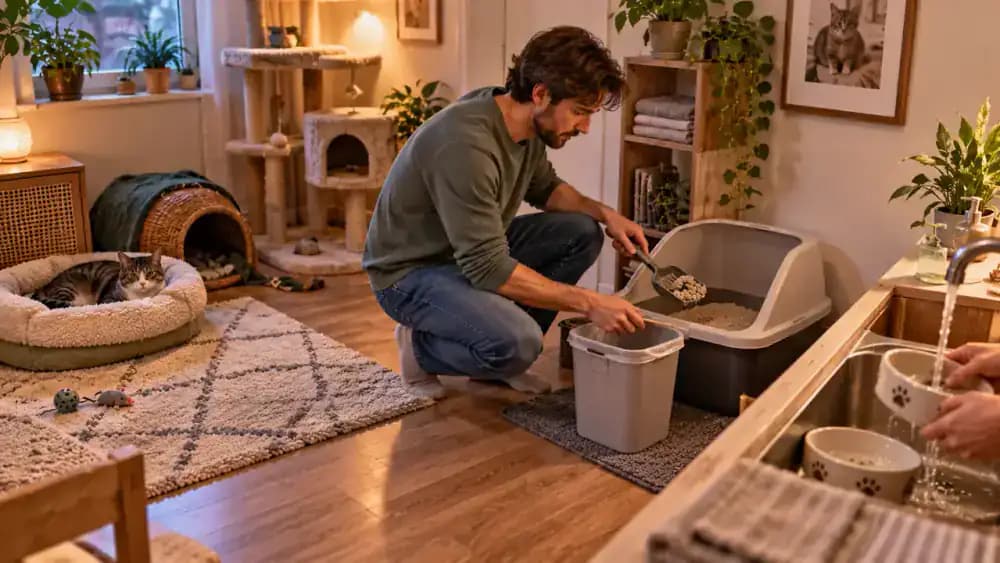
Keep the room sanitary without constantly resetting it. Scoop litter, wash food and water bowls, remove obvious messes, and replace heavily soiled bedding. Avoid repeatedly moving furniture or washing every blanket at once. Leaving familiar items and their normal scent in place helps the cat continue recognizing the room as established territory.

Look for Multiple Confidence Signals
Do not expand access just because the cat has stopped hiding. Look for several signs together, including regular eating, reliable litter use, relaxed grooming, curiosity, play, and comfortable movement while you are present. There is no universal deadline. Let the cat's behavior determine when the starter room has served its initial purpose.
Expand the Cat's Territory Gradually
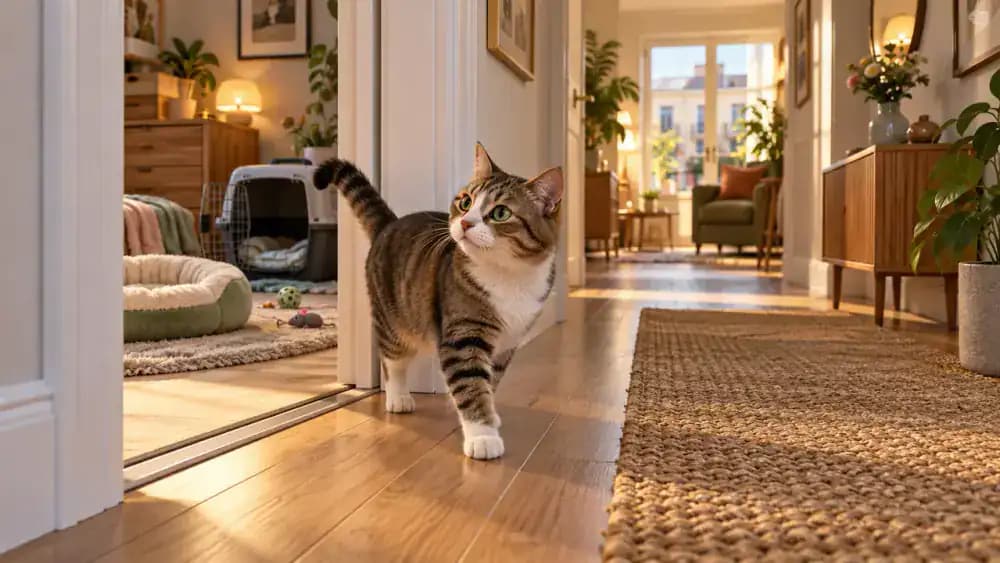
When the cat appears comfortable, open access to one nearby area rather than the whole home. Keep the starter room available as a retreat and let the cat return freely. Continue managing exterior doors, resident pets, and household hazards. Gradual expansion makes exploration reversible and reduces pressure during each new stage.

Build the Room Around Predictable Control
An effective starter room does not need expensive equipment. It needs security, quiet, clear access to litter, food, water, hiding, rest, scratching, and controlled enrichment. By limiting territory initially and widening it as confidence develops, you give the cat something especially valuable during adoption: meaningful control over an unfamiliar environment.
Bringing home a newly adopted cat is exciting, but immediately giving the cat access to an entire house can create unnecessary stress. A carefully prepared starter room provides a smaller, predictable territory where food, water, litter, hiding places, rest, and safe enrichment are easy to find. The goal is not confinement for its own sake. It is to give the cat control over how quickly it explores, interacts, and expands into its new environment.
Where people go wrong
Giving Full-House Access Immediately. More space is not automatically better. A large unfamiliar territory can make essential resources harder to locate and remove the security of a clearly defined home base.
Forcing the Cat Out of Hiding. Pulling a cat from a carrier, box, or refuge removes control from an already stressful situation. Let the cat emerge and interact voluntarily whenever safety allows.
Putting Everything Together. Avoid clustering litter, food, and water in one corner. Separate the litter area from feeding and drinking stations so each resource has an appropriate location.
Changing Food and Litter Immediately. Adoption already creates substantial change. Familiar food and litter can reduce unnecessary variables during the first days, with gradual changes made later if needed.
Overstimulating the Room. Too many toys, visitors, fragrances, loud sounds, bright lights, and constant interaction can undermine the calm environment the starter room is meant to provide.
Expanding Access on a Fixed Schedule. Cats adjust at different speeds. Use behavior such as normal eating, litter use, grooming, play, and confident movement instead of deciding that every cat should be ready after a certain number of days.
Questions people ask
There is no fixed number of days. Expand access when the cat is eating normally, using the litter box reliably, grooming, showing curiosity, and moving comfortably around the room while people are present.
Fixed it?
Get one guide like this every Thursday.