Overdraft Fees: Your Opt-In Choices and Transaction Ordering Explained
Learn how overdraft fees work, why transaction ordering matters, and how Federal Reserve rules give consumers choices about ATM and debit card overdraft coverage.

What you’ll need
Tap to tick things off before you start.
Why Overdraft Fees Surprise Consumers
This section will introduce why overdraft fees can feel unexpected for consumers by exploring the gap between everyday account use and later charges. It will focus on common reasons people are surprised by fees and explain why payment systems can create confusion. The goal is to establish the basic problem before examining account mechanics and regulatory choices in later sections without discussing specific solutions or decisions yet.

How Bank Balances Change
This section will explain how bank balances move as deposits and withdrawals enter an account over time. It will focus on the relationship between available funds and processed transactions while showing why balances can change after purchases are made. The discussion will cover account movement concepts only and prepare readers for understanding overdrafts without analyzing fee rules or consumer choices covered later in this article.

What Creates an Overdraft
This section will describe what creates an overdraft when spending exceeds available account funds. It will focus on the basic relationship between transactions and insufficient balances without exploring regulatory protections or bank processing policies. Readers will learn the fundamental concept behind overdraft situations and why an account may enter a negative position after certain financial activity. This foundation supports later explanations of more complex processing issues.

FDIC Consumer Concerns
This section will explain FDIC concerns about overdraft practices and why regulators examine certain consumer impacts. It will focus on the FDIC's observations regarding unexpected and unavoidable fees linked to complex payment systems. The section will highlight regulatory attention and institutional review efforts without providing personal financial guidance or recommendations. It establishes why these issues receive oversight and continued examination by financial regulators today across banking systems.

Complex Payment Processing
This section will explore how complex payment processing can affect overdraft outcomes through timing and transaction sequences. It will focus on how authorization and settlement stages differ and why account balances may not reflect final processing immediately. The discussion will introduce hidden timing factors that influence fees without repeating earlier explanations about basic overdrafts or later sections about opt-in choices. The aim is to clarify payment flow mechanics.

Understanding Consumer Choices
This section will introduce the different choices consumers can consider when managing overdraft services. It will focus on understanding that account holders may have options related to certain coverage decisions and bank policies. The section will explain the importance of reviewing available information and understanding service terms before making choices. It will avoid detailing specific regulations and transaction categories reserved for upcoming sections. The focus remains on informed awareness.

Federal Reserve Regulation E
This section will explain the Federal Reserve Regulation E framework governing opt-in requirements for certain overdraft services. It will focus on the rules that require affirmative consumer consent before specific charges can apply. The section will describe the purpose of these protections and how Regulation E creates clearer choices without offering individualized financial advice or legal interpretation beyond general education.

ATM And Debit Card Rules
This section will describe how ATM and one-time debit card transactions are treated under overdraft rules. It will focus on the transaction types covered by consumer opt-in requirements and explain why these categories have specific protections. The discussion will remain limited to general regulatory concepts and will not address unrelated payment methods or individual account situations. It prepares readers for understanding how choices operate within these transaction types.

How Opt-In Works
This section will explain how the opt-in process works when consumers decide whether to receive overdraft coverage for applicable transactions. It will focus on affirmative selection and the role of consumer decisions rather than automatic enrollment. The section will describe the basic process of choosing preferences and understanding available options before services apply. It will avoid repeating earlier regulatory details while emphasizing the importance of informed choice.

Required Fee Notices
This section will explain why banks provide fee notices and disclosures before consumers make overdraft service decisions. It will focus on the information financial institutions must present about services and potential charges. The discussion will describe disclosure requirements as part of consumer awareness and transparency. It will avoid repeating the opt-in process itself while showing how notices support informed understanding of overdraft services and related fees.

No Penalty For Declining
This section explains consumer protections when choosing not to opt in to overdraft coverage for ATM and one-time debit card transactions. It focuses on the Federal Reserve rules under Regulation E, which require affirmative consent before certain overdraft fees can be charged. The section will clarify that declining coverage should not result in reduced account access, higher fees, or different account terms from the financial institution.

Transaction Ordering Basics
This section introduces how financial institutions process deposits, withdrawals, and payments through transaction ordering systems. It explains that the sequence used by a bank can influence when an account reaches a negative balance and when overdraft fees may appear. The focus is on understanding processing methods rather than assuming transactions always clear in the exact order they occur during daily account activity.

Large Transactions First
This section examines a processing approach where larger payments are handled before smaller transactions. It explains how prioritizing high-dollar transactions can reduce available funds quickly and potentially cause additional overdraft events for later payments. The goal is to show why transaction ordering policies matter and how the same group of purchases can create different outcomes depending on the method used by the institution.

Small Transactions First
This section compares the alternative approach of processing smaller transactions before larger ones. It explains how this ordering method may affect the timing of balance reductions and the number of transactions that could potentially exceed available funds. The section highlights that banks may use different procedures and that consumers should understand their institution's disclosed transaction processing practices.

Why Timing Matters
This section focuses on the relationship between transaction timing, authorization, and final settlement. It explains why a purchase may appear approved while the account balance can later change before funds are fully withdrawn. The section will describe how delays between payment stages contribute to unexpected overdraft situations and why monitoring only the visible balance may not always reveal future account changes.

Different Bank Policies
This section highlights that overdraft practices are not identical across financial institutions. It explains that banks may have different rules for organizing transactions, handling payments, and applying overdraft policies. The discussion references the FDIC's recognition that payment systems can be complex and emphasizes why consumers should review account disclosures to understand how their specific institution manages transactions.

APSN Transaction Example
This section explains the FDIC's authorize positive, settle negative, or APSN scenario. It describes how a transaction can be approved when funds appear available but later settle after other payments have reduced the account balance. The focus is on the sequence between authorization and settlement and why these situations can create unexpected overdraft concerns for consumers.

Positive Balance Authorization
This section covers the first stage of an APSN transaction, where a consumer makes a purchase while the account shows sufficient available funds. It explains that authorization confirms the transaction can proceed at that moment but does not necessarily represent the final removal of funds. The section establishes the starting point of the payment process before later account activity occurs.

Other Payments Clear
This section explains how additional withdrawals, payments, or debits can affect the account after an initial transaction authorization. It focuses on how these intervening transactions reduce available funds before the original payment completes settlement. The section helps readers understand the role of payment timing and sequencing in changing an account balance between different stages of processing.

Negative Settlement Result
This section explains the final stage where an authorized transaction settles after the account balance has become negative. It describes why an overdraft fee may occur in this situation and connects the outcome to payment system complexity discussed by the FDIC. The focus remains on explaining the mechanism rather than providing individual financial guidance or recommendations.

Why APSN Is Difficult
Authorize positive, settle negative (APSN) transactions create uncertainty because approval and final settlement happen at different times. A debit card purchase may be approved while sufficient funds are available, yet intervening withdrawals can leave the account negative when the purchase settles. Consumers generally cannot control every processing delay or posting sequence. The FDIC has identified associated overdraft fees as potentially unanticipated and unavoidable, highlighting why responsible spending alone cannot eliminate every risk created by payment processing.

Review Your Bank Agreement
Your deposit account agreement explains the institution's overdraft practices, although important details may appear in separate fee schedules or disclosures. Look for overdraft charges, daily fee limits, transaction posting rules, and conditions under which fees are waived. Pay attention to terminology distinguishing available balances from ledger balances. Review any amendments sent after account opening, since policies can change. Keeping current copies of these documents makes it easier to understand applicable charges and compare account features.

Ask Your Financial Institution
When overdraft policies are unclear, contact your bank or credit union and request specific explanations. Ask whether transactions are posted chronologically, by amount, or in separate payment categories. Find out whether the institution assesses APSN fees, offers fee reversals, or limits the number of charges per day. Request clarification about how deposits affect available funds. If an unfamiliar charge appears, ask for the relevant transaction history and a written explanation of how the fee was calculated.

Monitor Account Activity
Mobile banking and online account access can help you recognize developing balance problems. Review available funds, pending card authorizations, scheduled withdrawals, and recently posted deposits rather than relying only on the displayed account balance. Consider enabling notifications for low balances, completed transactions, and overdraft activity when your institution provides them. Remember that alerts may arrive after processing has occurred, and pending amounts can change. Monitoring improves visibility, but it cannot guarantee that every overdraft will be prevented.

Understand Payment Types
Different payment methods operate under different overdraft rules. Under Regulation E, institutions generally need affirmative consumer consent before charging overdraft fees for paying ATM withdrawals and one-time debit card transactions. Checks, recurring debit card payments, and ACH transfers are not covered by that particular opt-in requirement and may still trigger charges under account terms. Some institutions also offer linked savings transfers or overdraft lines of credit with separate conditions and costs. Understanding these distinctions prevents misleading assumptions about universal coverage.

Update Overdraft Preferences
Your overdraft coverage decision for ATM and one-time debit card transactions is not permanent. Federal Reserve rules allow consumers to revoke their affirmative consent at any time, and institutions must implement revocation as soon as reasonably practicable. Banks may provide preference controls through account settings, customer service, or branch visits. Before changing coverage, understand which transactions the adjustment affects and when it becomes effective. Retain confirmation of the request so your records reflect the instructions you provided.

Avoid Common Mistakes
Several misconceptions can create unnecessary exposure to overdraft fees. A successful card authorization does not guarantee that funds will remain available until settlement. Declining optional debit overdraft coverage does not eliminate charges associated with checks or recurring payments. Likewise, a pending deposit may not be immediately available for spending. Another mistake is assuming every institution applies identical fee limits or posting rules. Recognizing these misunderstandings helps consumers evaluate account activity without relying on incomplete or misleading information.

Build Better Banking Habits
A consistent banking routine can reduce uncertainty around everyday spending. Maintain a simple record of upcoming bills, expected deposits, and regular account withdrawals. Consider leaving a modest balance cushion when circumstances permit, particularly before weekends or holidays when processing schedules may differ. Review automatic subscriptions periodically and cancel services that are no longer needed. Scheduling payments around reliable income dates can also improve predictability. These habits support better cash flow management without depending entirely on bank notifications.

Review Key Concepts
The essential distinction is between transaction authorization, settlement, and posting. Authorization indicates that a payment has received initial approval, while settlement involves the transfer of funds and posting records the transaction on the account. An overdraft occurs when covered transactions exceed available funds under the institution's applicable accounting practices. Regulation E establishes a separate consent requirement for certain debit and ATM overdraft fees. Transaction ordering and APSN practices explain why final charges may differ from what consumers initially expect.

Stay Informed About Fees
Overdraft policies and regulatory expectations can evolve, making periodic account reviews worthwhile. Watch for updated fee schedules, revised deposit agreements, and notices announcing changes to account services. The FDIC publishes consumer information and supervisory guidance addressing overdraft practices, while the Federal Reserve provides background on Regulation E requirements. Compare newly introduced fees with the benefits your account provides, and investigate unfamiliar charges promptly. Staying informed helps you evaluate banking services as your circumstances and available options change.

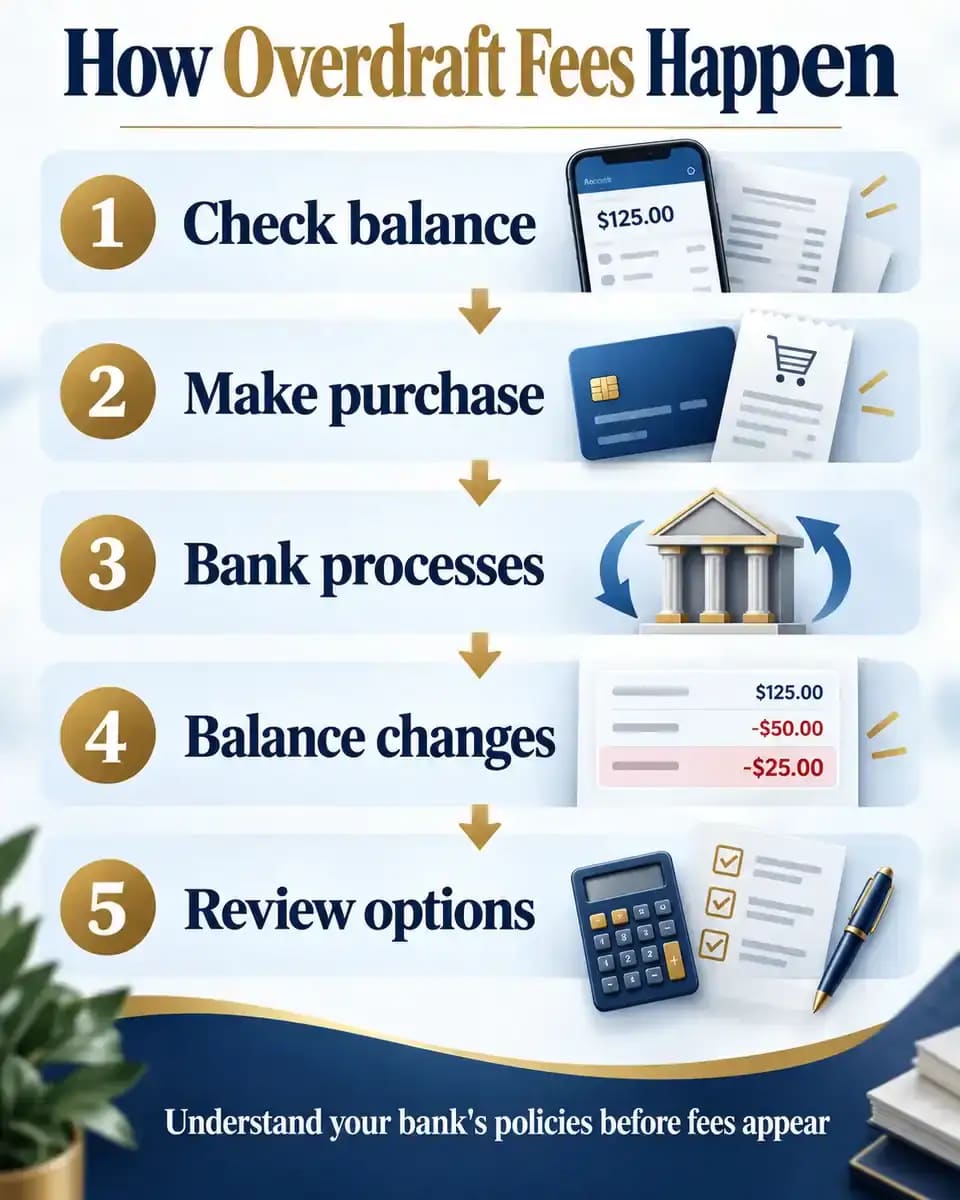
Unexpected overdraft fees can feel confusing because the final charge often depends on more than the balance you saw when making a purchase. Banks use processing systems that determine when deposits, withdrawals, debit card purchases, checks, and electronic payments affect your account. Understanding these systems can help you ask better questions and make more informed decisions about your banking options.
A major part of overdraft management involves your choice about certain overdraft services. Under Regulation E rules discussed by the Federal Reserve, financial institutions generally cannot charge overdraft fees for ATM and one-time debit card transactions unless you have affirmatively opted in. This gives consumers control over whether these transactions may be covered when funds are unavailable.
Transaction ordering is another important factor. A bank may process multiple transactions according to its own policies, which can influence whether an account becomes overdrawn and how many fees may appear. The FDIC has also highlighted concerns around authorize positive, settle negative transactions, where a payment is approved when funds are available but settles later after the balance has changed.
This guide explains the mechanics behind overdraft fees, the choices available to consumers, and practical ways to understand your financial institution's policies.
Where people go wrong
Assuming Available Balance Tells the Whole Story. Many consumers believe the displayed balance always reflects every pending transaction. However, authorization timing, settlement delays, and processing methods can change the final outcome and may result in unexpected overdraft fees.
Ignoring Transaction Ordering Policies. Banks may process transactions using different ordering methods. Ignoring these policies can make it difficult to understand why multiple fees appear after several purchases or withdrawals affect an account balance.
Confusing Opt-Out With Complete Protection. Declining overdraft coverage for ATM and one-time debit card transactions does not eliminate every possible overdraft fee. Other transaction categories, including checks and recurring payments, may still affect account balances.
Not Reading Fee Disclosures. Overdraft services include important terms about fees, coverage choices, and account behavior. Skipping these disclosures can leave consumers unaware of how their financial institution handles specific transactions.
Assuming All Banks Work the Same Way. Financial institutions create their own processing practices within applicable rules. Comparing experiences between banks without reviewing policies can lead to incorrect assumptions about how future transactions will be handled.
Questions people ask
Overdraft fees are charges that may occur when transactions exceed the available funds in a bank account. The exact circumstances, amounts, and policies vary by financial institution, so consumers should review their account agreement and understand how their bank handles different payment types.
Fixed it?
Get one guide like this every Thursday.