How to Organize a Pet-Safe Household Cleaning Kit
Keep everyday pet messes manageable with a dedicated cleaning caddy. Learn which supplies to include, how to evaluate cleaning products, and how to store everything safely away from curious paws and noses.
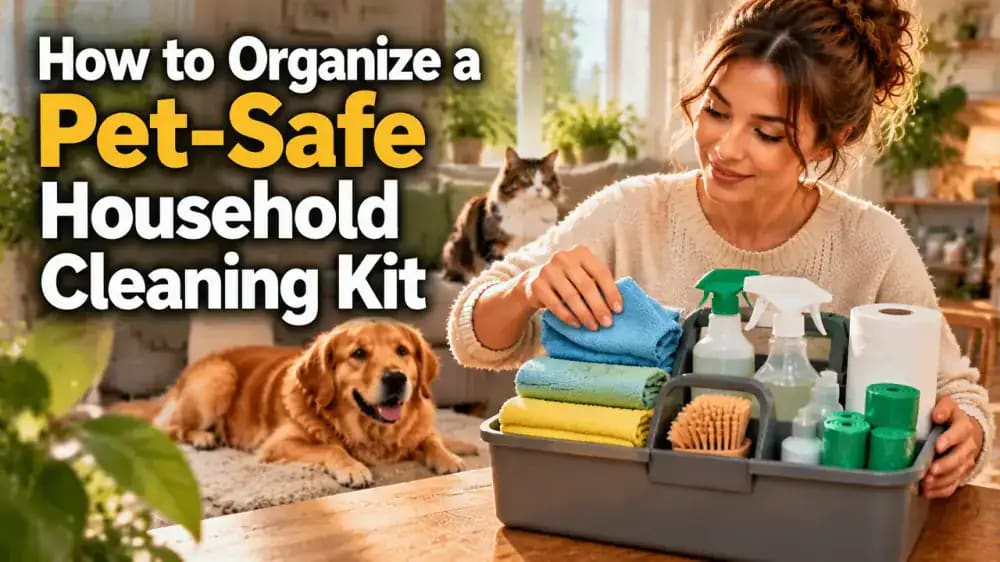
What you’ll need
Tap to tick things off before you start.
Why a Dedicated Cleaning Kit Helps
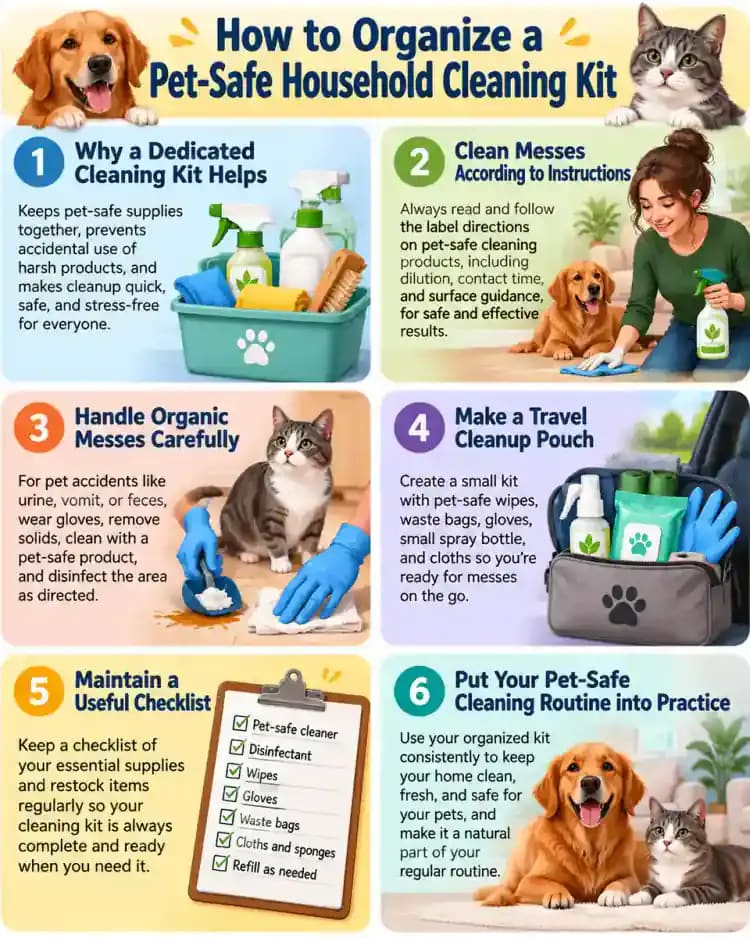
Pet messes are easier to manage when everyday cleanup supplies are organized in one place. A dedicated cleaning caddy saves time when muddy paws, spilled water, or tracked-in dirt interrupt your routine. It also encourages safer habits by keeping products clearly labeled and supplies organized. Remember that convenience never replaces careful product selection and secure storage.
Choose the Right Caddy
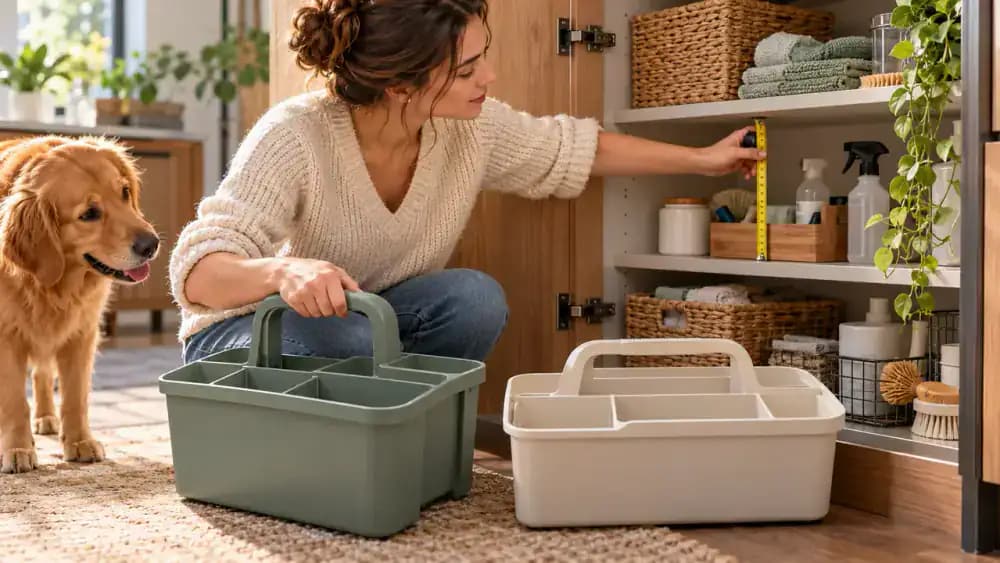
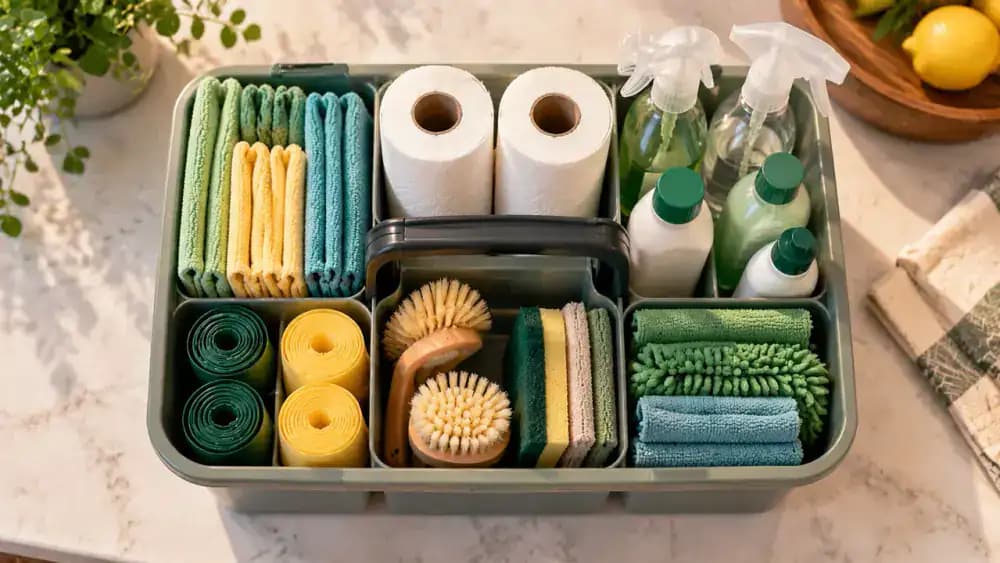
Choose a sturdy cleaning caddy with a comfortable handle and enough compartments to keep supplies organized and containers upright. A washable, wipe-clean surface makes maintenance easier after everyday messes. Avoid a container that is too small or unstable for your essentials. Before filling it, check that it fits comfortably inside your planned storage cupboard.
Gather Everyday Cleanup Essentials
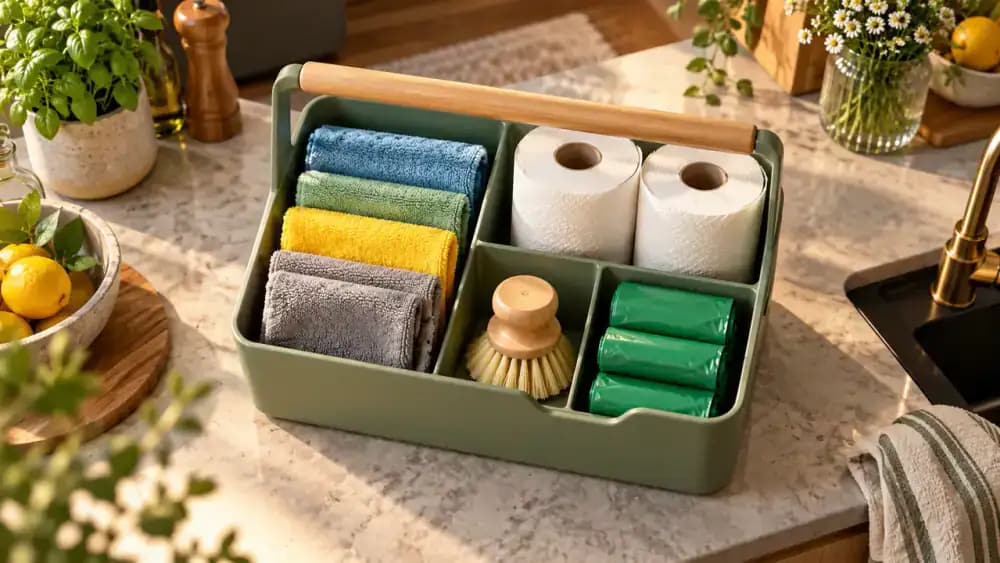
Collect clean microfiber cloths, paper towels, a small scrub brush, and disposable waste bags for routine household messes. Fold the cloths neatly and keep them dry before storing them in the caddy. Assign separate cloths to different cleaning tasks to reduce cross-contamination. Choose only the tools you regularly need so the kit stays compact and easy to use.
Check Every Cleaning Product Label
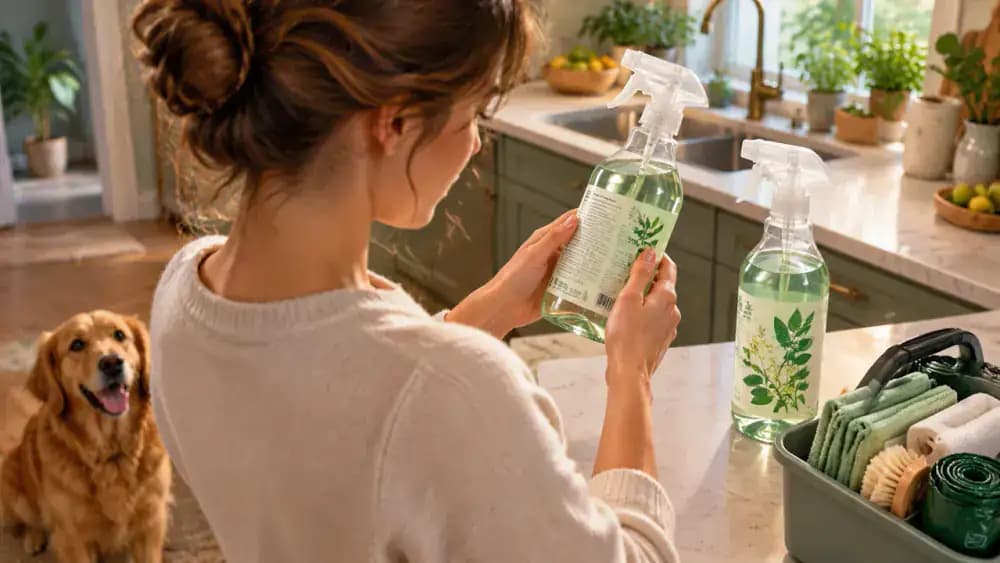
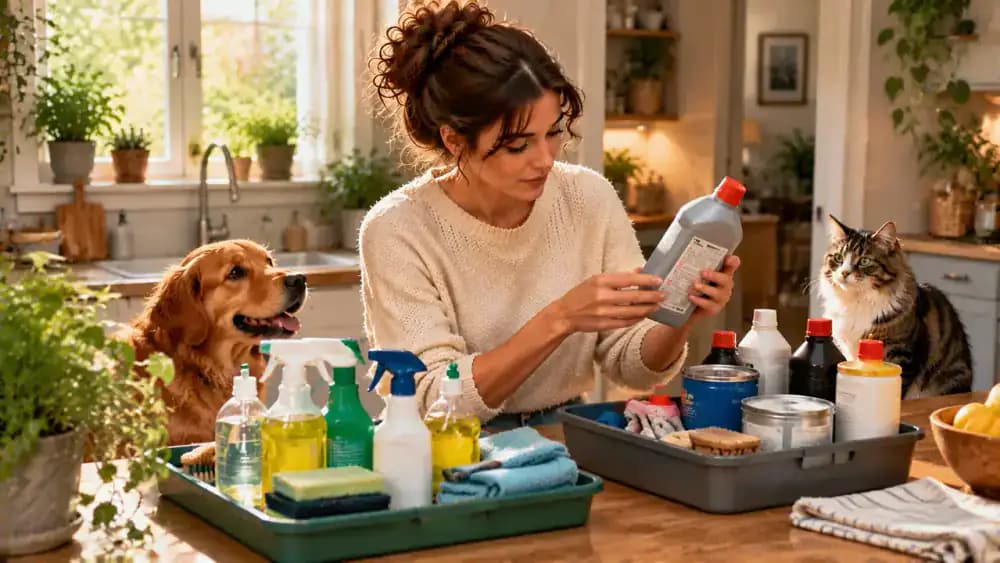
Read the full label before adding a cleaning product to your kit. Confirm that it suits the intended surface and review directions for dilution, application, ventilation, rinsing, and drying. Words such as natural or green do not guarantee pet safety. Keep every product in its original container with instructions intact, and never transfer chemicals into unmarked bottles.
Organize Supplies by Task
Arrange supplies in separate sections so each item is easy to find without disturbing the rest of the kit. Place clean, dry cloths and paper towels together, group waste bags in a small compartment, and keep tightly closed cleaning products upright in a separate section. If a container leaks, remove it and clean the caddy thoroughly before restocking.
Clean Messes According to Instructions
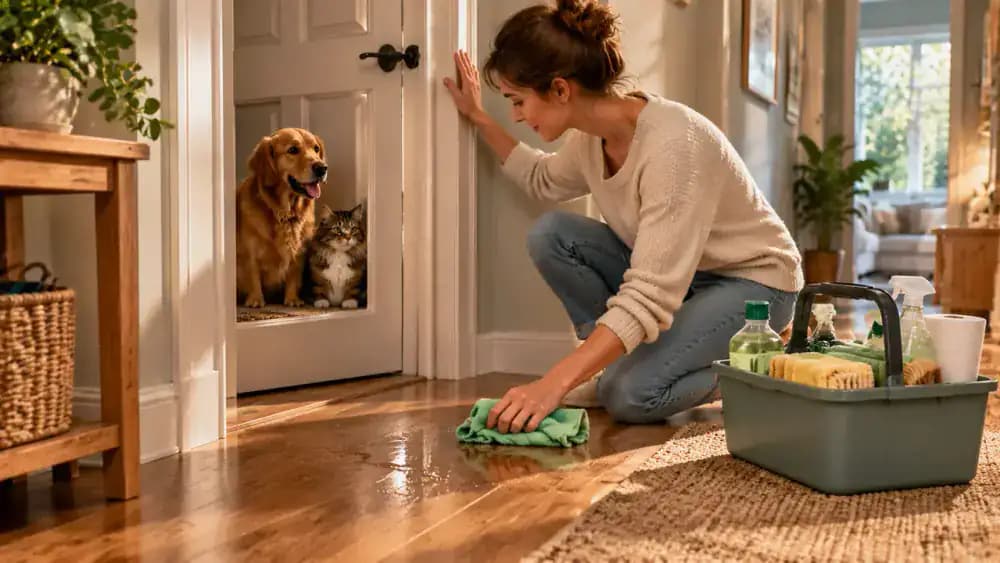
Before cleaning a spill, move pets to another room and read the product label carefully. Follow all directions for dilution, application, ventilation, contact time, rinsing, and drying. Never mix cleaning products, even if both seem suitable for household use. Keep animals away from treated areas until the label's safety and re-entry requirements have been met.
Store the Kit Securely
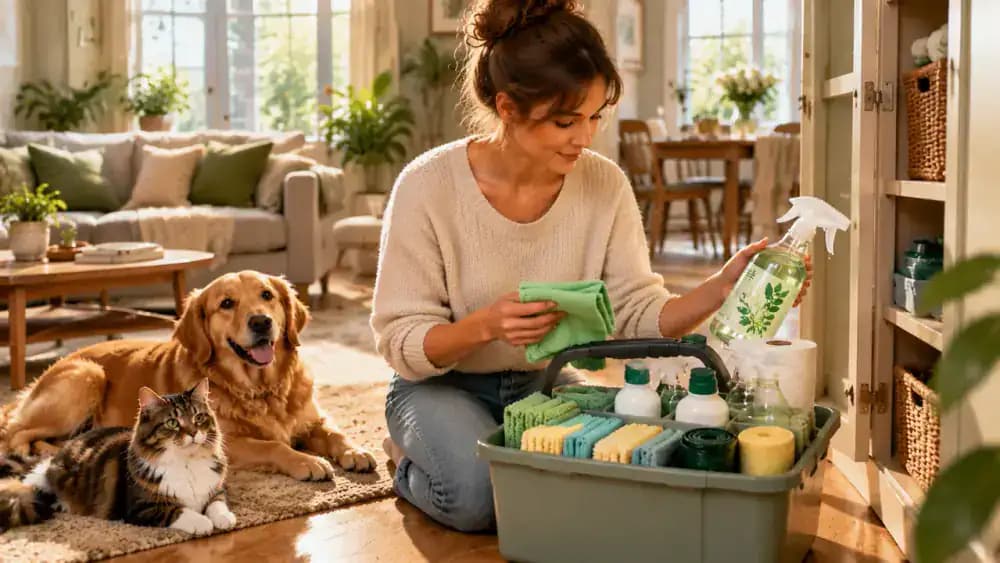
Store your completed cleaning caddy inside a closed cupboard or another secure location that pets cannot access. Keep cleaning chemicals away from pet food, water bowls, toys, and other animal supplies. Close every lid firmly and return products after each use. Check containers regularly for leaks, damaged packaging, expired products, and supplies that need replacing.

Complete a Final Safety Check
Before putting your kit away, confirm that cloths are clean, waste bags are stocked, labels are readable, and every container is tightly closed. Keep product instructions available for future reference and review them before use. If you are unsure whether a cleaner is appropriate for your animal, ask your veterinarian for guidance before using it.
Keep Cleaning Cloths Separate
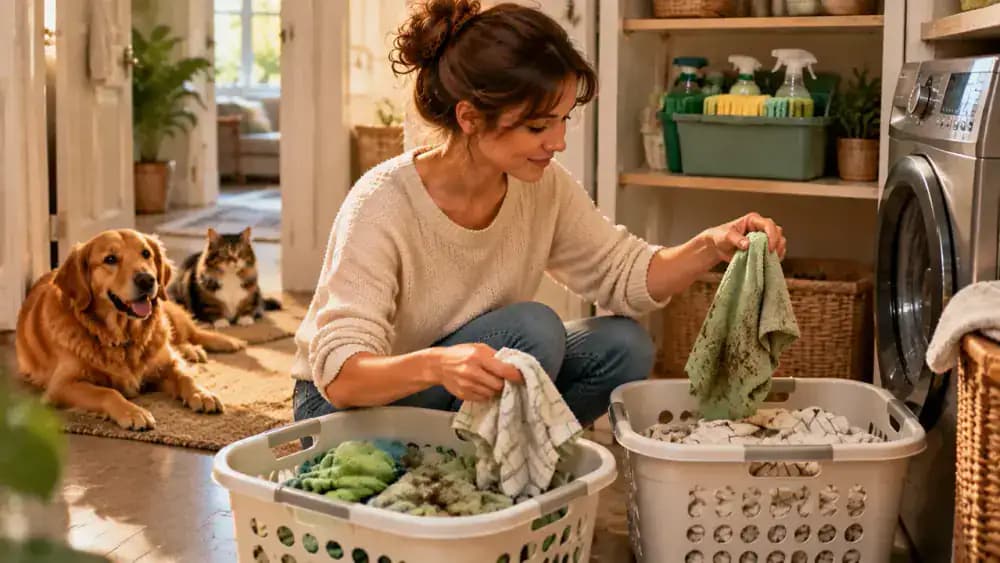
Assign microfiber cloths to specific tasks, such as cleaning floors, general surfaces, and counters near feeding areas. Never use a cloth that has contacted pet waste on a food-contact surface. After cleaning, place used cloths in a separate laundry container rather than returning them to the caddy. Wash them according to their care labels and dry them thoroughly before reuse.
Create a Simple Restocking Routine
Choose a regular time to review your cleaning supplies, and check the kit after especially messy days. Replenish paper towels and waste bags, inspect brushes for trapped residue, and replace damaged tools when needed. Wash reusable materials according to their care labels and allow them to dry completely before storage. A short checklist helps prevent missing essentials when another mess occurs.

Clean Around Pet Feeding Stations
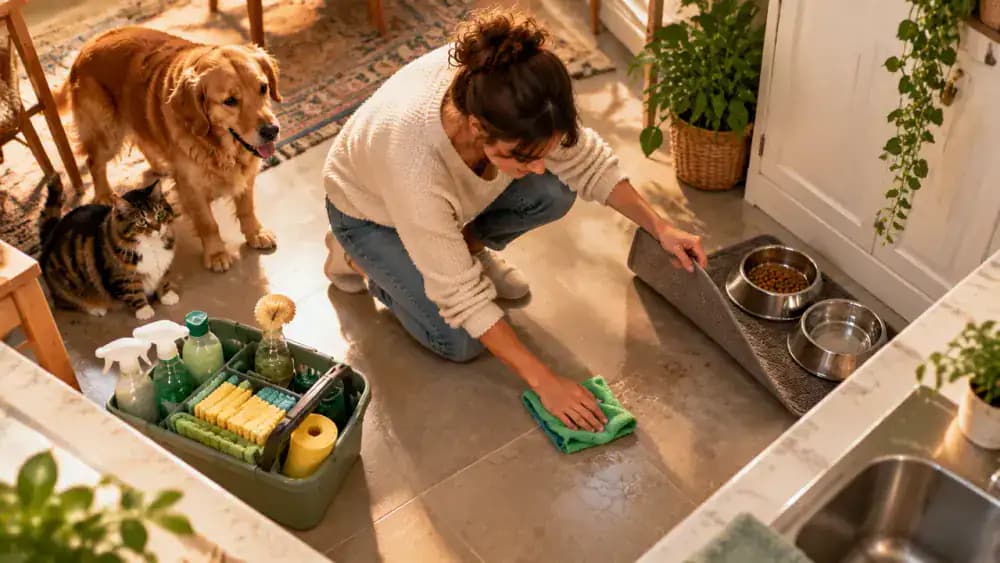
Move food and water bowls away before cleaning the surrounding feeding area. Lift the feeding mat and remove loose debris, then use a product suitable for the floor or surface material. Follow label directions for application, rinsing, and drying. Return the bowls only when the area is completely dry and ready for normal use.
Handle Organic Messes Carefully
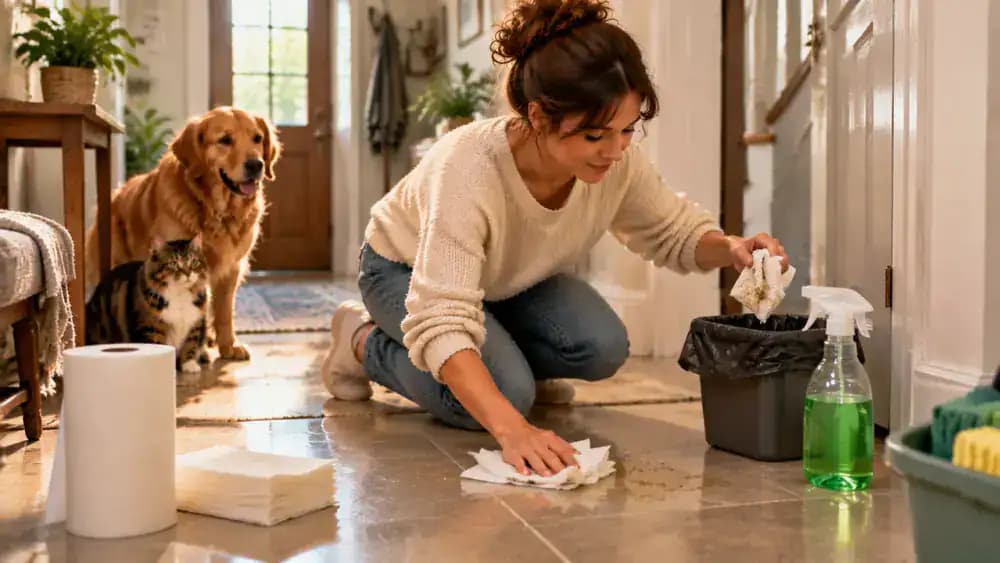
For urine, vomit, or other organic messes, remove visible material first with disposable towels or a dedicated cleaning cloth. Place used disposable materials directly into a waste bag, then select a cleaner labeled for the specific mess and surface. Follow its instructions carefully, never combine products, and keep pets away during treatment and drying.
Avoid Risky Cleaning Shortcuts
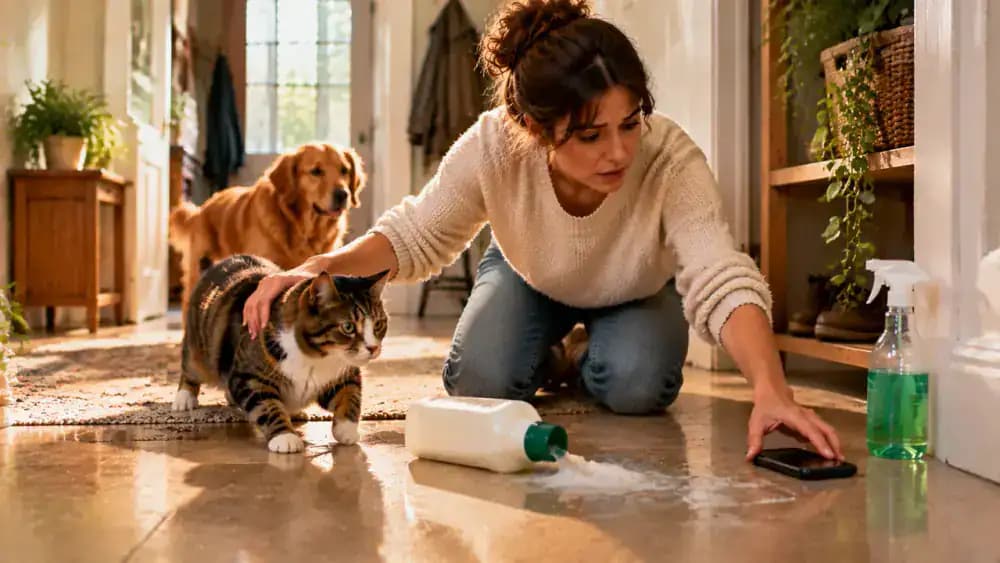
Avoid experimenting with homemade mixtures or using essential oils and concentrated disinfectants around pets without reliable, species-specific safety guidance. Never assume a strong scent means a product cleans better or is safe. Follow ventilation instructions, keep aerosols away from animals, and never spray household cleaners directly onto pets, bedding, toys, or feeding equipment unless specifically approved for that use.

Make the System Easy for Everyone
Keep supplies in the same compartments whenever the caddy is restocked so everyone in the household can find what they need. Add a simple inventory note inside the storage cupboard listing essential cloths, waste bags, and approved cleaning products. Show other household members where supplies belong and remind them to check product directions before every use.

Know What to Do After Exposure
If your pet may have licked a cleaning product or walked through a wet chemical, move it away from the source and contact a veterinarian or animal poison control service promptly. Keep the original container available so you can share the product name and ingredients. Do not induce vomiting or attempt home treatment unless a veterinary professional directs you to do so.
Keep Your Pet-Safe Routine Going
Make your cleaning kit part of a consistent household routine by returning supplies to their designated compartments after each use. Keep reusable tools clean, check product labels before restocking, and replace items when necessary. Choose products based on actual cleaning needs rather than adding unnecessary chemicals. Regular maintenance helps you manage everyday messes while keeping pets safer.

Review Surface Compatibility
Different surfaces require different cleaning approaches, so check both the product label and the manufacturer's care guidance before use. Natural stone, finished wood, sealed tile, and fabric may react differently to cleaners. When appropriate, test an approved product on a discreet area first. Stop using it if you notice discoloration, tackiness, or other visible surface changes.

Make a Travel Cleanup Pouch
Prepare a compact travel pouch with waste bags, paper towels, and sealable bags for soiled items. These basics help manage small messes during walks, car rides, and outings without carrying your entire household caddy. Avoid adding household chemicals unless a product is specifically intended and safely packaged for travel. Secure the pouch where pets cannot chew or reach it.

Plan for Wet Weather
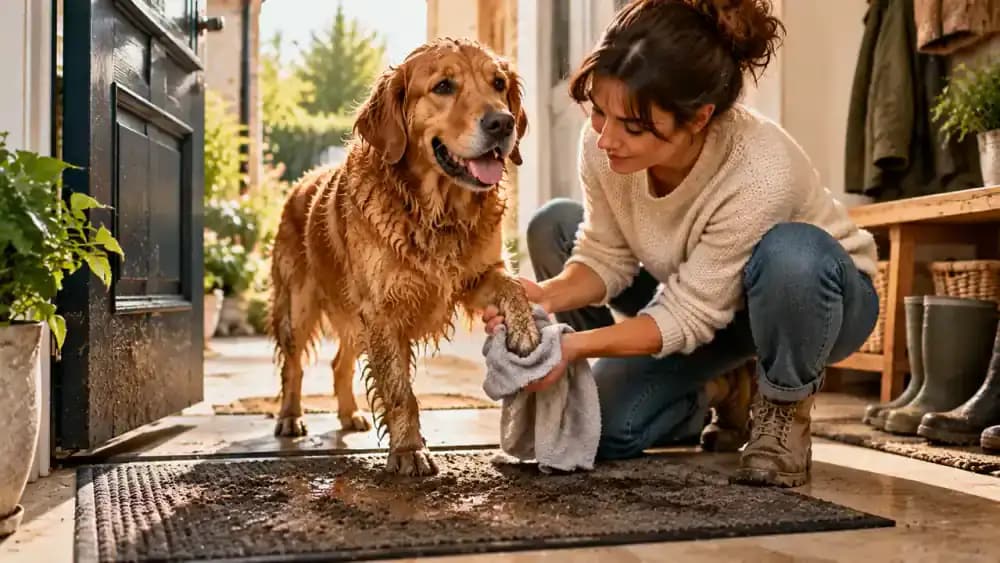
Prepare for rainy walks by placing a washable mat near the entry and keeping a dedicated paw towel within reach. Wipe away mud before it dries and spreads across the floor. Afterward, place the used towel in the laundry and wash it according to its care instructions. This simple routine can reduce tracked-in dirt and frequent chemical cleaning.
Protect Upholstery and Bedding
Before cleaning pet beds, blankets, or upholstered furniture, check the manufacturer's care instructions and the cleaner's label. Some fabrics require special treatment, and unsuitable products can leave residue or cause discoloration. Remove washable covers when possible and launder them as directed. Keep pets away from freshly treated fabrics until they are completely dry and all label requirements are satisfied.

Reduce Clutter Around the Kit
Keep the cupboard around your cleaning caddy organized so supplies remain easy to identify and remove safely. Clear away unrelated household items, avoid stacking heavy objects above the kit, and leave the cupboard latch unobstructed. Stand original product containers upright with labels visible, allowing enough space to lift each item out without knocking other supplies over.

Adapt Supplies to Your Pets
Adjust your cleaning kit to suit the animals and routines in your household. Puppies may create frequent small messes, while other pets may require different cleanup arrangements. Add only supplies that serve a clear purpose, and consult your veterinarian when product suitability is uncertain. Keep relevant care notes accessible so everyone helping with pet care can follow the same precautions.

Finish with a Practical Reset
End each cleanup session by checking the entryway, refreshing the paw towel, and returning all supplies to their secure storage location. Make sure reusable materials are clean and dry before putting them away, and confirm that product lids are tightly closed. This simple reset keeps essentials ready for the next mess while maintaining a consistent safety routine around pets.

Maintain a Useful Checklist
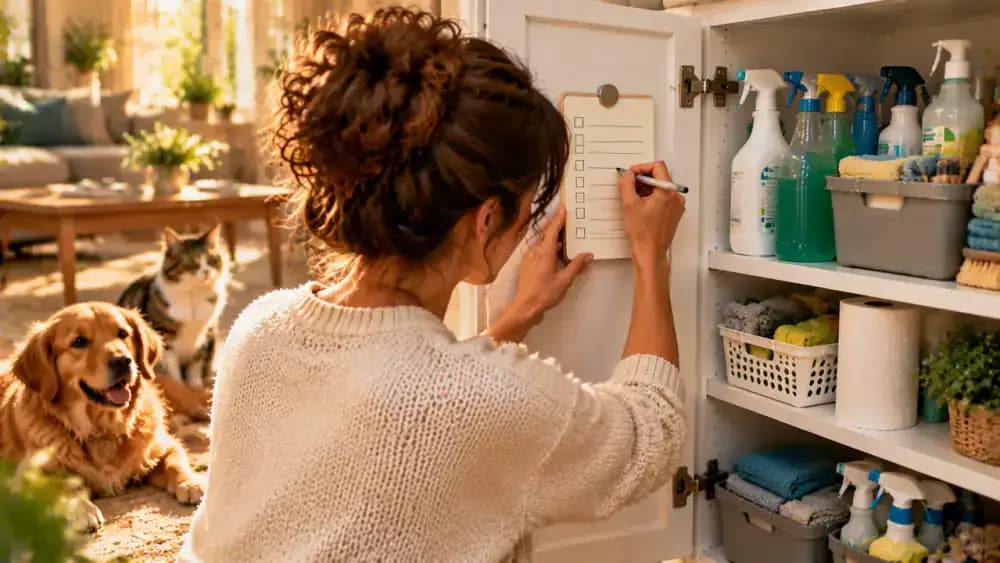
Keep a compact inventory checklist inside the cupboard door to make restocking straightforward. Include frequently used items such as microfiber cloths, paper towels, and waste bags, along with reminders about product-specific precautions. Review the list whenever supplies or household needs change. Checking each item against the actual contents helps prevent shortages and keeps your cleaning routine consistent.
Manage Damp Supplies Properly
Never return damp or dirty towels directly to the clean cleaning caddy. Place used materials in a separate washable pouch or leak-resistant laundry bag until you can clean them. Empty the bag promptly, inspect it for residue, and wash and dry it according to its care instructions. Keeping wet items separate helps prevent moisture, odors, and contamination from spreading to clean supplies.

Review Products and Dispose of Extras
Review your cleaning products periodically to confirm that each one suits your household's actual needs and intended surfaces. Remember that detergents and disinfectants serve different purposes and are not automatically interchangeable. Separate products you no longer need, read their disposal instructions, and follow local waste guidance. Never pour unwanted chemicals down a drain unless disposal instructions specifically permit it.
Balance Adult Access and Pet Safety
Store your cleaning caddy where responsible adults can retrieve it comfortably but pets cannot reach the contents. Use a securely latched cupboard, and close it immediately after removing or returning supplies. If children live in your home, explain that cleaning products are off-limits and maintain appropriate locked storage. Never leave an open container unattended during a cleanup.

Adjust the Kit for Each Season
Review your cleaning supplies as seasonal conditions change, adding only tools that address real household needs. Shedding periods may call for a lint roller, while rainy weather can make extra paw towels useful. Store grooming tools separately when appropriate, and keep the main caddy uncluttered. Clean reusable items regularly so seasonal messes do not create additional maintenance problems.

Customize Care for Multiple Pets
When several pets share your home, establish consistent cleaning habits while accounting for each animal's individual needs. Use identifiable cloths for different rooms and tasks, and return tools to their designated storage spots. If a pet has special sensitivities, ask your veterinarian which cleaning products are appropriate. Record relevant guidance so everyone involved in pet care can follow it reliably.

Put Your Pet-Safe Cleaning Routine into Practice
With your cleaning caddy organized, focus on maintaining simple habits that make everyday messes easier to handle. Follow product directions, keep chemicals securely stored, and allow treated surfaces to meet all required rinsing and drying conditions before pets return. Wash used cloths promptly and restock essential supplies when needed. Consistent preparation helps keep your home cleaner and your animals safer.

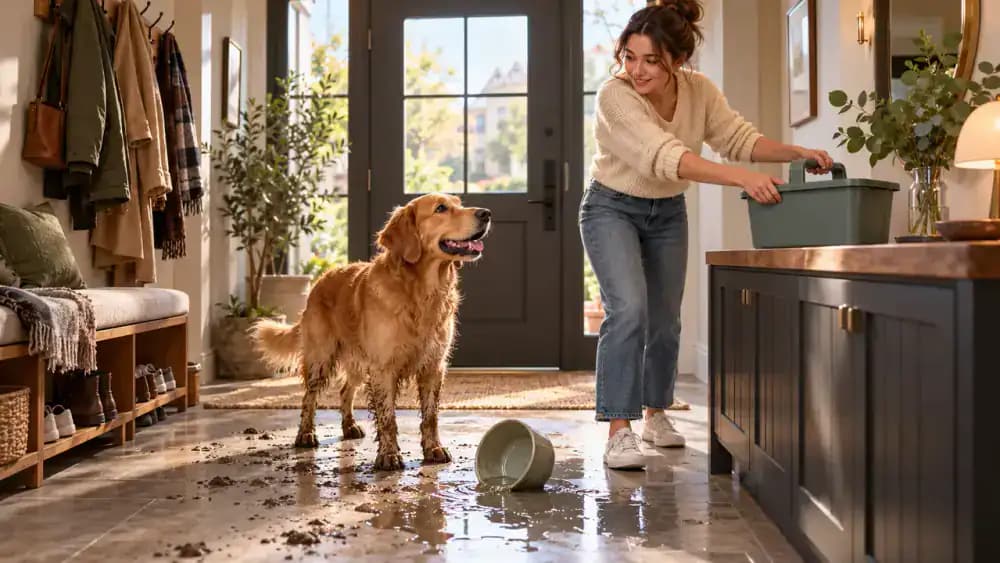
A muddy paw print beside a spilled water bowl can turn an ordinary afternoon into an unexpected cleanup session. When your pet tracks dirt across the floor or knocks over a bowl, having the right supplies within reach makes it easier to handle the mess without scrambling through cabinets. A dedicated pet-safe cleaning kit keeps everyday essentials together and helps you build safer cleaning habits around your animals.
You do not need a complicated collection of specialty products. A practical cleaning caddy can hold reusable cloths, paper towels, waste bags, disposable gloves, and a few carefully selected cleaning products suited to your home's surfaces and your pet's needs. Keeping these supplies organized also makes it easier to separate tools used for pet accidents from those reserved for food preparation or other household tasks.
Choosing products deserves particular attention. Natural, plant-based, or fragrance-free labels do not automatically mean a cleaner is safe for every animal. Ingredients, concentration, exposure route, and application instructions all matter. Cats, dogs, birds, and other pets can have different sensitivities, so avoid assuming that one product is appropriate for every household. Always follow the manufacturer's directions for dilution, ventilation, rinsing, and drying, and prevent pets from accessing treated areas until the label says they can return.
With a well-organized caddy and secure storage, routine cleanup becomes more convenient without compromising household safety. The goal is simple: keep essential supplies accessible to responsible adults while keeping potentially hazardous products out of your pet's reach.
Where people go wrong
Assuming natural ingredients are automatically pet-safe. Plant-derived ingredients, essential oils, and products marketed as green or natural are not automatically safe for animals. Risk depends on the substance, concentration, species, and type of exposure. Read the complete product label, check relevant animal safety information, and consult a veterinarian if you are uncertain about a particular ingredient or intended use.
Leaving cleaning products in accessible locations. A caddy left beside a feeding station or on an open shelf may be easy for a curious pet to investigate. Chewing packaging, licking residue, or spilling a concentrated product can create unnecessary hazards. Store the entire kit in a secure location that pets cannot reach, and return supplies promptly after every cleanup.
Transferring chemicals into unmarked containers. Pouring cleaners into decorative bottles or unmarked spray containers removes important information about ingredients, concentration, warnings, and first aid. It can also increase the risk of accidental misuse or mixing. Keep products in their original containers with labels intact, and never use food or drink containers for household chemicals.
Mixing cleaning products to make them stronger. Combining cleaners can produce dangerous reactions or irritating fumes, even when the individual products are familiar household staples. Never mix products unless their manufacturers explicitly direct you to do so. In particular, bleach must not be mixed with ammonia, acids, vinegar, or other cleaners. Follow each product's instructions and use separate products only as directed.
Using the same cloth for every cleaning task. One cloth used for a litter spill, a pet accident, and a kitchen counter can transfer dirt and microorganisms between surfaces. Assign reusable cloths to specific tasks or areas and keep them separate in storage. Wash them appropriately after use, and replace any cloth that remains soiled or cannot be cleaned thoroughly.
Allowing pets back onto wet or recently treated surfaces. A surface that looks clean may still contain product residue or remain wet enough for paws and fur to pick up a cleaner. Follow the label's requirements for rinsing, ventilation, drying, and re-entry. Keep animals away for the full recommended period, and do not assume that a pleasant smell or a dry-looking surface proves that an area is safe.
Ignoring differences between animal species. A product suitable for a particular household use is not necessarily suitable around every animal. Cats, birds, dogs, and small mammals can differ in their sensitivity to chemicals and airborne irritants. Consider every species in your home when choosing products, maintain appropriate ventilation, and seek species-specific veterinary guidance when a product's safety is uncertain.
Keeping expired or poorly labeled supplies in the caddy. Old products may have changed in quality, and damaged packaging or faded labels can make safe use more difficult. Review the kit periodically for leaks, expiration dates, missing instructions, and worn cleaning tools. Dispose of unwanted products according to their labels and local requirements, and replace damaged or contaminated supplies before they are needed.
Questions people ask
Start with reusable cloths, paper towels, waste bags, disposable gloves, and a small brush and dustpan. Add a limited selection of surface-compatible cleaning products whose labels and safety information you have reviewed. Keep original product containers and instructions available. The best kit contains only supplies you regularly use, organized so adults can find them quickly without leaving hazardous materials accessible to pets.
Fixed it?
Get one guide like this every Thursday.