The Myth of the Perfect Credit Score: Why 850 Isn't Necessary
Think you need an 850 credit score to get the best interest rates? Think again. Discover how lender thresholds work, why excellent credit is enough, and which financial habits matter more.

What you’ll need
Tap to tick things off before you start.
Why Everyone Chases an 850 Credit Score
The number 850 has become a symbol of financial perfection. Many consumers believe reaching this maximum is the only way to qualify for the lowest interest rates, premium credit cards, and the most favorable borrowing terms. This belief can create unnecessary anxiety, encourage constant score monitoring, and even discourage people from making sensible financial decisions. The real question is whether those final few credit score points actually deliver measurable financial benefits.

What a Credit Score Actually Measures
A credit score is not a measure of personal wealth, financial success, or how much money someone earns. It is a statistical indicator designed to help lenders estimate the likelihood that a borrower will repay debts as agreed. The Consumer Financial Protection Bureau explains that credit scores are based on information contained in credit reports. This information helps financial institutions evaluate potential borrowers and make more informed lending decisions.

Understanding the 300 to 850 Credit Score Range
Many commonly used credit scoring models operate on a scale ranging from 300 to 850. Within these models, higher scores generally indicate lower estimated credit risk. However, the number alone does not tell the entire story of a borrower's financial situation. Credit scores are interpreted within broader categories that help lenders assess applications. Understanding this range makes it easier to recognize why an excellent score does not necessarily need to reach 850.

Why You Have More Than One Credit Score
One reason consumers become confused about credit is that they do not have just one universal score. FICO and VantageScore use different scoring methodologies, while Equifax, Experian, and TransUnion maintain separate credit files. Lenders may also use specialized scoring versions for mortgages, auto financing, or credit cards. Consequently, the score displayed by a monitoring service might differ from the version a lender actually evaluates when reviewing an application.

How Lenders Define Excellent Credit
There is no single definition of an excellent credit score that every financial institution must follow. The Consumer Financial Protection Bureau explains that lenders and scoring models can apply different criteria when evaluating creditworthiness. A bank offering mortgages might establish different qualification standards from an auto finance company or credit card issuer. This means that a score considered excellent by one lender may receive a different classification elsewhere, depending on the product and underwriting requirements.

Credit Score Thresholds: When Extra Points Stop Helping
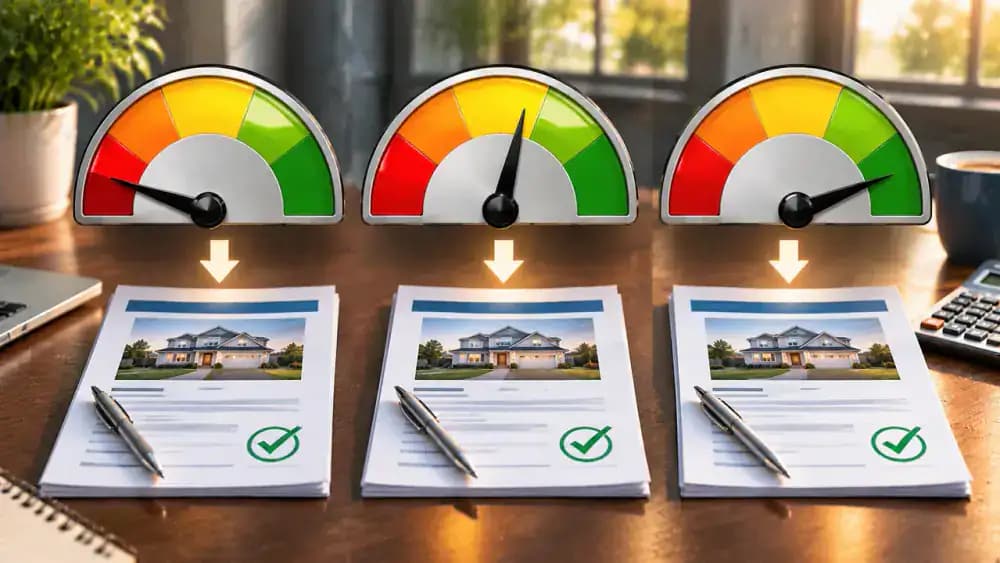
Many lenders organize credit scores into pricing tiers rather than rewarding every additional point with a lower interest rate. Consider an illustrative mortgage lender that offers its most competitive pricing to qualified applicants scoring 740 or higher. A borrower with 750, 800, or 850 might therefore receive identical pricing, assuming all other relevant factors are equal. Crossing the required threshold can matter financially, while exceeding it may provide no additional pricing advantage.
Why Your Income and Debt Matter More Than You Think
A strong credit score does not automatically mean someone can afford additional borrowing. Lenders also examine income and existing financial obligations to understand repayment capacity. Someone earning a modest income may struggle to qualify for a large mortgage despite having excellent credit. Meanwhile, another applicant with a somewhat lower score and substantially stronger income may demonstrate greater capacity to handle monthly payments. Creditworthiness and affordability are related, but they are not interchangeable.

How Your Down Payment Changes Loan Eligibility
A down payment can influence how lenders evaluate the risk of financing a home or vehicle. Contributing more money upfront generally reduces the amount borrowed and lowers the loan-to-value ratio. This gives the lender greater equity protection if the borrower defaults. In mortgage financing, a larger down payment may also help reduce or avoid private mortgage insurance, depending on the loan program and applicable requirements. Therefore, savings can matter as much as credit scores.

The Credit Habits That Actually Build Excellent Credit
Maintaining strong credit is more about consistent financial behavior than achieving a perfect number. Payment history is particularly important, making on-time payments a fundamental habit. Keeping credit card balances relatively low compared with available limits also supports a healthy credit profile. Consumers should avoid unnecessary applications for multiple new accounts and periodically review their credit reports. These habits help establish a dependable borrowing history without requiring constant attention to minor score fluctuations.

Preparing Your Credit Profile Before Applying for a Loan
Before applying for a major loan, evaluate your overall financial readiness instead of concentrating exclusively on your credit score. Organize income documentation, review existing monthly debt obligations, and consider how much you can comfortably contribute toward a down payment. Check your credit reports for inaccuracies and understand the lender's qualification requirements. These preparations provide a clearer picture of affordability and borrowing capacity than attempting to increase an already excellent score by a few additional points.

Who Uses Your Credit Score Beyond Banks?
Credit information can influence decisions beyond traditional lending. Landlords may review credit information when evaluating rental applications because payment history can provide insight into how applicants manage financial obligations. Some insurance companies also use credit-based insurance scores as one factor in determining premiums, subject to state regulations and applicable restrictions. These uses demonstrate that credit information can affect different areas of everyday life, although the rules and evaluation methods vary across industries.

Why Different Lenders See Different Credit Risks
Financial institutions do not all approach lending risk in exactly the same way. A mortgage lender evaluates long-term housing debt, while an auto finance company considers vehicle financing and its associated collateral. Credit card issuers assess revolving credit exposure and repayment behavior. Each institution establishes underwriting policies reflecting its products, risk tolerance, and business objectives. Consequently, two lenders reviewing similar financial profiles may reach different approval decisions or offer different borrowing terms.

Why Creditworthiness Matters More Than Perfection
Creditworthiness is fundamentally about demonstrating a dependable history of managing borrowed money. Lenders are interested in patterns of financial behavior, including whether obligations are fulfilled and existing credit is managed responsibly. An applicant does not need a flawless numerical record to demonstrate reliability. Consistent responsible borrowing over time can establish a strong credit profile. The objective is to demonstrate manageable financial risk, not to collect the maximum possible number of credit score points.

How Credit Score Fluctuations Affect Borrowing Opportunities
Credit scores can change as account balances, reported payments, and credit information are updated. A movement from 810 to 795 might feel significant, but its practical effect depends on the lender's requirements. If both scores remain within the same pricing tier, the borrower may qualify for identical terms. However, a fluctuation near an important cutoff could affect eligibility or pricing. Understanding these thresholds helps put ordinary score changes into perspective.

Good Credit Is Valuable Even Before You Reach Excellent
You do not need an excellent credit score before your credit profile becomes financially useful. Borrowers with good credit may already qualify for credit cards, auto financing, and other products with competitive terms. The specific opportunities depend on lender requirements and the complete application. Improving your credit remains worthwhile at different starting points, but progress should be measured by better financial opportunities and responsible borrowing rather than an unrealistic requirement to reach 850.

Why Lenders Evaluate Your Ability to Repay
Having a strong credit history does not automatically establish that a borrower can afford another loan. Lenders also examine repayment capacity, including regular earnings, employment information, and available financial resources. A person with excellent credit but insufficient income may struggle to qualify for a substantial loan. Conversely, someone with a lower score and stronger documented earnings may demonstrate greater repayment capacity. Creditworthiness describes borrowing history, while affordability considers the ability to make future payments.

Understanding Debt-to-Income Ratio and Borrowing Capacity
Debt-to-income ratio, commonly called DTI, measures how much of a borrower's gross monthly income goes toward monthly debt obligations. The calculation generally divides qualifying monthly debt payments by gross monthly income and expresses the result as a percentage. For example, someone earning $6,000 monthly and paying $2,400 toward qualifying debts has a 40% DTI. Lenders use this measure to assess existing financial commitments and determine whether additional borrowing appears affordable.

How Down Payments Reduce Lender Risk
A down payment reduces the amount a borrower needs to finance when purchasing a home or vehicle. This also affects the loan-to-value ratio, which compares the outstanding loan amount with the asset's value. A lower ratio generally means the borrower has more equity and the lender has less exposure relative to the collateral. For eligible mortgages, a sufficiently large down payment may also help avoid private mortgage insurance, depending on loan requirements.

Why Payment History Is the Foundation of Strong Credit
Payment history is generally the most influential factor in widely used FICO credit scoring models. It reflects whether borrowers make required payments on time and how frequently serious delinquencies appear in their credit records. A history of consistent payments helps demonstrate responsible credit management, while missed payments can have lasting consequences. Setting payment reminders or arranging automatic payments can help prevent accidental oversights, although account balances and available funds should always be monitored.

Credit Utilization: Managing Balances Against Available Limits
Credit utilization measures how much revolving credit you are using compared with your available credit limits. For example, a $1,000 balance on a card with a $5,000 limit represents 20% utilization. Lower utilization generally supports stronger credit scores because it indicates less dependence on available borrowing capacity. Both individual card balances and overall utilization can matter. Keeping balances manageable is useful, but there is no need to carry interest-bearing debt to build credit.

Why Opening Too Many Credit Accounts Can Backfire
Opening several credit accounts within a short period can create unnecessary complications for your credit profile. Each application may trigger a hard inquiry, while newly opened accounts can affect the average age of your credit history. Multiple applications can also make lenders question whether you are becoming overly dependent on borrowed money. New credit is not inherently harmful, but applications should reflect genuine financial needs rather than attempts to manipulate your score.

How Hard Inquiries Affect Your Credit Profile
Credit inquiries generally fall into two categories: hard inquiries and soft inquiries. A hard inquiry usually occurs when you apply for credit and authorize a lender to review your credit file. It can temporarily lower your score, although the effect is often relatively small. Soft inquiries, such as checking your own credit, generally do not affect scores. Certain mortgage, auto, and student loan inquiries may receive rate-shopping treatment when made within applicable time windows.

Why Regular Credit Report Reviews Matter
Your credit reports contain the underlying information used by scoring models, making their accuracy important. Reviewing reports from Equifax, Experian, and TransUnion can help identify incorrect account balances, unfamiliar creditors, outdated personal information, or payment records that do not match your history. Information can differ between bureaus because creditors do not necessarily report to all three. Checking each report provides a more complete picture than relying on a single monitoring dashboard.

How to Dispute Errors on Your Credit Reports
If you discover inaccurate information, document exactly what appears incorrect before submitting a dispute. Gather supporting records such as account statements, payment confirmations, or correspondence with the creditor. You can generally dispute errors directly with the credit bureau reporting the information and, where appropriate, with the company that supplied it. Explain the specific problem and include relevant evidence. Keep copies of submissions and responses so you can track the investigation and its outcome.

How to Recognize Unauthorized Accounts and Credit Fraud
An account you do not recognize, an unfamiliar collection entry, or an unexpected credit inquiry could indicate identity theft or reporting errors. Do not automatically assume fraud, but investigate unfamiliar activity promptly. Contact the relevant creditor using independently verified contact information and review your other credit reports for additional suspicious entries. If identity theft is suspected, consider using the Federal Trade Commission's IdentityTheft.gov recovery resources and appropriate credit freezes to help limit further misuse.

Free Credit Reports and Where to Get Them
Consumers can obtain free credit reports from Equifax, Experian, and TransUnion through AnnualCreditReport.com, the federally authorized website for requesting these reports. Reviewing them does not require purchasing a credit monitoring subscription or paying for a credit score. The reports provide detailed account information that can help you check balances, payment records, and unfamiliar activity. Remember that a credit report and a credit score are different products, and obtaining a report does not automatically provide every scoring model.

What to Do Before Applying for a Mortgage or Auto Loan
A major loan application deserves preparation beyond checking a credit score. Review your credit reports, organize recent income documentation, and understand your existing monthly debt commitments. Consider the down payment you can afford without exhausting essential savings. Research lender eligibility requirements and identify the documents needed to verify your financial situation. Preparing these details early can reduce surprises during underwriting and help you evaluate whether the proposed monthly payment fits your household budget.

Why Comparing Loan Offers Matters More Than Chasing Points
A credit score is only one part of the cost of borrowing. When comparing loan offers, examine the annual percentage rate, interest rate, origination charges, lender fees, repayment period, and total amount payable. A slightly lower monthly payment may simply reflect a longer repayment term and greater overall interest expense. Request comparable written estimates from multiple lenders and evaluate the complete cost structure. The most attractive offer is not necessarily the one with the lowest advertised rate.

Build a Credit Strategy Around Your Financial Goals
Your credit strategy should support practical financial objectives rather than an arbitrary numerical target. Someone planning to purchase a home may prioritize mortgage readiness, while another consumer may focus on managing existing balances and maintaining reliable payment habits. Establish measurable goals that reflect your circumstances, review progress periodically, and avoid unnecessary applications or expensive credit-building products. A sustainable approach should strengthen your overall financial position while keeping borrowing costs and household obligations manageable.

The Real Definition of Excellent Credit
Excellent credit should be understood as a useful financial position, not a competition to achieve the highest possible number. Responsible borrowing, accurate credit records, manageable obligations, and access to suitable financing are more meaningful measures of progress. As the Consumer Financial Protection Bureau explains, lenders can apply different standards when interpreting scores. Once your credit profile supports your financial goals, pursuing the final points toward 850 may offer little practical benefit.

An 850 credit score is often treated as the ultimate financial achievement. Consumers monitor their credit reports, pay down balances obsessively, and worry about every minor fluctuation because they believe a perfect score guarantees the lowest interest rates and best borrowing opportunities. But is reaching 850 actually worth the effort?
The reality is more practical. Credit scores help lenders estimate how likely you are to repay borrowed money, but lenders do not necessarily reward every additional point. Many use credit score thresholds or pricing tiers. Once you qualify for their top tier, increasing your score further may not improve the interest rate or loan terms available to you.
There is another important detail: you do not have just one credit score. Different scoring models, credit bureaus, and financial products can produce different results. A mortgage lender may evaluate your credit differently from an auto lender or credit card issuer. Consequently, chasing an identical perfect score across every model is neither realistic nor necessary.
Your overall financial profile matters too. Income, existing debt, debt-to-income ratio, payment history, and down payment can influence lending decisions. Someone with an excellent but imperfect credit score and strong finances may be in a better borrowing position than someone with an 850 score and significant financial obligations.
The smarter goal is to build and maintain healthy credit, not pursue numerical perfection. Understanding lender requirements, paying bills on time, controlling credit utilization, and checking your credit reports can deliver more meaningful financial benefits than chasing those final few points. Here is what deserves your attention instead.
Where people go wrong
Treating 850 as the Only Successful Credit Score. An 850 is the maximum on many commonly used credit scoring models, but reaching it is not necessary for excellent credit. Many lenders offer their most competitive pricing to borrowers who meet lower score thresholds.
Assuming Every Additional Point Saves Money. Credit scores do not always produce progressively better interest rates. Lenders frequently use pricing tiers, meaning borrowers with different scores can qualify for identical terms once they cross the same eligibility threshold.
Ignoring Different Credit Scoring Models. Monitoring only one credit score can create a misleading picture of your borrowing profile. Different scoring models and credit bureaus can produce different results, and lenders may use specialized versions for particular financial products.
Prioritizing Credit Scores Over Debt Management. A high credit score cannot compensate for an unsustainable debt burden. Large monthly obligations can increase your debt-to-income ratio and make lenders question whether you can comfortably afford another loan.
Opening New Accounts Just to Improve Your Score. Applying for multiple credit cards without a clear financial reason can generate hard inquiries and temporarily affect your score. New accounts can also change your average account age and increase borrowing temptations.
Neglecting Credit Report Errors. Focusing exclusively on the score itself can distract you from incorrect account information, inaccurate payment records, or fraudulent activity. Review your credit reports regularly and dispute information you believe is inaccurate.
Sacrificing Financial Flexibility for a Few Points. Avoiding necessary financial decisions simply because they might temporarily affect your score can be counterproductive. Evaluate the actual costs and benefits of a financial decision rather than treating every score fluctuation as a setback.

Questions people ask
No. Many lenders use credit score tiers to determine eligibility and pricing. Once you reach the threshold for their most favorable tier, additional points may not improve your rate. However, thresholds vary by lender, loan type, scoring model, and market conditions, so always compare actual loan offers.
Fixed it?
Get one guide like this every Thursday.