What Happens When You Miss a Credit Card Payment? A Complete Timeline
A missed credit card payment can trigger late fees, credit reporting, and eventually a charge-off. Learn what happens at 1, 30, 60, and 90 days past due, how federal protections work, and what you can do to limit the damage.
What you’ll need
Tap to tick things off before you start.
When Is a Credit Card Payment Officially Late?
According to the Consumer Financial Protection Bureau (CFPB), credit card issuers generally cannot treat a payment as late if they receive a qualifying payment by 5 p.m. on the due date. The applicable time zone matters. For example, a 5 p.m. Eastern Time deadline equals 2 p.m. Pacific Time. Your billing statement and issuer's payment instructions establish the relevant deadline. Missing that cutoff can make your payment late, even if you submit it on the correct calendar date.

Payment Processing, Weekends, and Holidays
Electronic payment timing depends on your issuer's accepted payment methods and processing rules. A properly submitted online payment may receive credit before funds finish transferring. For mailed checks, the CFPB emphasizes that receipt matters, not the postmark. If a due date falls on a Sunday or holiday when the issuer does not accept payments, qualifying payments received by 5 p.m. the next business day generally receive protection. Verify submission instructions and retain payment confirmations.

What Happens Immediately After a Missed Payment?
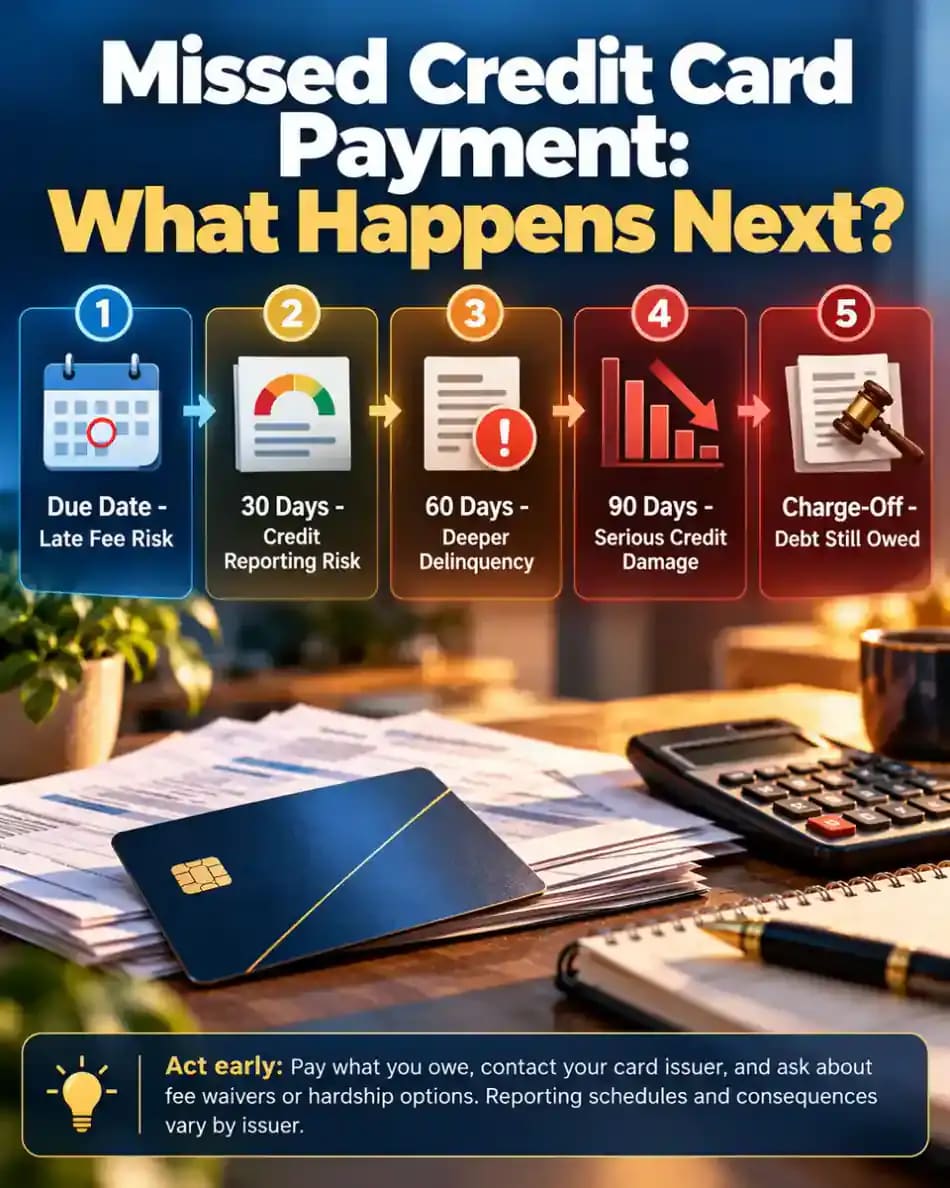
After a missed credit card payment, the issuer may assess a late fee under your card agreement. Interest may continue accruing, and losing promotional terms or other benefits is possible depending on the agreement. The issuer can mark your account overdue internally and send payment reminders. However, missing the deadline does not automatically create an immediate negative credit bureau entry. These initial financial consequences are separate from the reporting thresholds used to classify delinquent accounts.

How Regulation Z Protects You From Excessive Penalty Fees
Regulation Z, which implements the Truth in Lending Act, establishes federal protections against certain unreasonable credit card penalty fees. The Federal Reserve Board's rules prohibit issuers from imposing multiple penalty fees for a single violation of account terms. For example, one event cannot justify overlapping late-payment and over-limit penalties when the prohibition applies. These safeguards do not eliminate legitimate fees, interest, or repayment obligations. Applicable fee limits and specific circumstances determine what an issuer may lawfully charge.

The First 30 Days: Your Critical Window to Act
The period immediately following a missed payment creates an important opportunity to limit damage. Before an account reaches 30 days past due, an overdue payment generally has not become a reportable 30-day delinquency. Making the required payment promptly can prevent that milestone from being reached. Confirm the amount necessary to bring the account current rather than assuming any payment will suffice. Keep the transaction confirmation and verify that the issuer has properly credited your account.

At 30 Days Late: Credit Bureau Reporting Begins
Once a payment reaches 30 days past due, the issuer may report a delinquency to Equifax, Experian, or TransUnion. Reporting is not necessarily instantaneous because creditors follow their own submission schedules. A reported late payment can lower credit scores, although the impact varies with payment history, existing credit conditions, and scoring models. Consumers with previously strong credit histories may experience substantial changes. The precise score reduction cannot be predicted from the delinquency alone.

At 60 Days Late: Financial Consequences Escalate
At 60 days past due, an unresolved account may receive a more serious delinquency classification on subsequent credit reports. Collection contacts can intensify, and some issuers may restrict purchases or reduce available credit. Federal rules also permit certain penalty APR increases on existing balances after payments become more than 60 days late, subject to specific conditions and notice requirements. The issuer's agreement and applicable regulations determine the consequences. Not every account experiences identical restrictions or rate changes.

At 90 Days Late: Serious Delinquency and Collection Risk
A payment that reaches 90 days past due represents serious delinquency and may receive a corresponding negative credit report classification. Other lenders can interpret prolonged nonpayment as evidence of increased borrowing risk. The issuer may intensify collection efforts, suspend purchasing privileges, or close the account under applicable terms. A closed account does not automatically erase the outstanding balance. Although policies vary, continued nonpayment increases the likelihood of additional collection measures and difficulty obtaining favorable credit terms.

What Happens When a Credit Card Is Charged Off?
A charge-off occurs when a creditor classifies an unpaid account as a loss for accounting purposes, commonly after approximately 180 days of credit card delinquency. It does not automatically forgive the debt. The creditor may continue collection activities or transfer or sell the account to a debt collector. Charge-offs can remain on credit reports for approximately seven years from the original delinquency that led to the charge-off. Collection rights and obligations remain subject to applicable laws.

How to Recover From a Missed Credit Card Payment
Start by checking your account balance and determining the amount required to become current. Make an affordable payment promptly and confirm its posting. Contact the issuer to request a courtesy late fee waiver or discuss hardship assistance if necessary. Review your credit reports through AnnualCreditReport.com and dispute any inaccurate information. Finally, consider payment reminders or automatic minimum payments with sufficient funds available. Consistent future payments can support credit recovery, although accurate historical delinquencies may remain.

Can You Get a Late Payment Removed From Your Credit Report?
You can dispute a late payment if the reported information is inaccurate, incomplete, or cannot be verified. Submit your dispute to the credit bureau displaying the error and consider contacting the creditor directly. Include payment confirmations or statements supporting your claim. Accurate late payments generally cannot be removed through the dispute process. Some consumers request goodwill adjustments after an isolated mistake, but creditors are not required to grant them. Beware of companies promising guaranteed deletion.

How Long Does a Late Payment Stay on Your Credit Report?
Under the Fair Credit Reporting Act, accurate late payment information can generally remain on a credit report for up to seven years. Paying the overdue amount does not automatically erase the historical record, although the account's current status should reflect subsequent payments accurately. The effect of older delinquencies on credit scores may diminish as positive payment history accumulates. Different scoring models weigh payment history differently, so there is no universal timetable for complete credit score recovery.

How a Missed Payment Affects Future Loan Applications
A reported missed credit card payment can influence how lenders evaluate future borrowing applications. Mortgage lenders, auto finance companies, and personal loan providers may examine delinquency history alongside income, existing debt, and credit scores. Depending on underwriting standards, borrowers could face higher interest rates, smaller approved amounts, additional conditions, or rejection. Recent and repeated delinquencies may raise greater concerns than isolated older incidents. Each lender applies its own approval criteria and risk assessment procedures.

How to Request a Late Fee Waiver
Credit card issuers sometimes waive late fees as a courtesy, particularly for customers with otherwise reliable payment histories. Contact customer service through an official channel and explain the missed payment briefly. Mention your previous payment record and provide confirmation if the overdue amount has been paid. Ask whether a one-time courtesy adjustment is available. Record the representative's name, conversation date, and decision. If approved, review a subsequent statement to confirm the credit actually appears.

What to Ask Your Credit Card Issuer About Reporting
When discussing a missed payment, ask your issuer how many days past due the account currently stands and whether any delinquency information has already been submitted. Request the usual credit bureau reporting schedule and the date your latest payment was credited. Ask when updated account information will be transmitted and which bureaus receive it. Confirm whether additional funds are required to restore current status. Document the answers, recognizing that representatives cannot guarantee credit score outcomes.

How Credit Card Hardship Programs Work
Some credit card issuers offer hardship programs for customers experiencing temporary financial difficulties. Depending on eligibility, assistance may include reduced monthly payments, lower interest rates, or modified repayment schedules. Programs can also restrict purchases or require account closure. Before accepting an arrangement, request written details covering payment amounts, duration, interest treatment, credit reporting, and consequences of missed installments. Not every issuer offers identical assistance, and participation does not necessarily prevent negative credit reporting or eliminate outstanding debt.

What If You Can Only Make a Partial Payment?
Paying less than the required minimum does not ordinarily satisfy a credit card's monthly payment obligation. Although a partial payment reduces the amount owed, the issuer may still consider the account overdue and continue applicable delinquency procedures. An agreed repayment arrangement can change what payments are required, but the issuer must approve its terms. Ask how any proposed amount will affect account status and future obligations. Avoid assuming that accepting funds means the creditor accepted modified terms.

How to Handle Debt Collectors After a Missed Payment
If a delinquent account enters third-party collections, verify who is contacting you before sharing financial information. Under the Fair Debt Collection Practices Act, covered collectors must provide required debt information, and consumers have rights to dispute debts and restrict certain communications. Review validation notices carefully and retain copies of correspondence. Be cautious about acknowledging or paying unfamiliar older debts without understanding applicable state laws. Collection rules differ depending on the collector, account circumstances, and jurisdiction.

How to Prevent Future Missed Credit Card Payments
Automatic minimum payments can reduce the risk of forgotten deadlines, provided the linked account contains sufficient funds. Consider setting additional reminders several days before each due date and enabling payment confirmation alerts. Many issuers also allow customers to request a different monthly due date. Maintain a small funding buffer where possible and review statements regularly for unexpected charges or payment failures. Autopay requires monitoring because expired account details, insufficient funds, or technical problems can interrupt transactions.

When to Seek Professional Credit or Debt Help
Professional assistance may be useful when credit card balances remain unaffordable, collection activity intensifies, or repayment negotiations become overwhelming. Reputable nonprofit credit counseling organizations can review budgets and explain possible debt management options. A qualified consumer attorney may help evaluate disputed debts, lawsuits, or potential legal violations. Before hiring anyone, verify credentials, examine fees, and understand promised services. Avoid providers guaranteeing credit repair results, demanding suspicious upfront payments, or encouraging consumers to ignore creditors without explaining consequences.

How to Calculate the True Cost of a Missed Payment
The cost of a missed credit card payment can exceed the initial late fee. Consider a hypothetical $2,000 balance with a 24% annual percentage rate. At that rate, 30 additional days of interest would cost approximately $39.45, assuming a constant balance and simple daily interest. Adding a hypothetical $30 late fee produces roughly $69.45 in additional costs. Actual charges depend on your agreement, balance changes, interest calculation method, and any subsequent rate adjustments.

What Happens to Your Credit Card Grace Period?
Many credit cards provide a purchase interest grace period when you pay your statement balance in full by the required deadline. Failing to meet that condition can cause new purchases to accrue interest immediately, depending on your agreement. Restoring the grace period may require paying the full balance for one or more billing cycles. Cash advances generally do not receive the same protection. Review your card's terms to understand when purchase interest begins accruing again.

Can Your Credit Card Issuer Raise Your Interest Rate?
Credit card agreements may permit penalty annual percentage rates after specified payment violations. Under federal rules, increasing the rate on certain existing balances generally requires a payment to become more than 60 days late, subject to statutory exceptions. Issuers must follow applicable notice requirements. When a penalty increase results from serious delinquency, federal rules also provide conditions for restoring the previous rate after six consecutive timely minimum payments. Terms governing new purchases can differ from those protecting existing balances.

Can a Missed Payment Affect Your Other Credit Cards?
A delinquency reported by one credit card issuer can become visible to other lenders reviewing your credit history. Those lenders may reassess account risk, potentially reducing credit limits or adjusting available borrowing privileges when permitted by law and account terms. A lower limit can increase your credit utilization ratio even without additional spending. However, one missed payment does not automatically trigger changes across every account. Individual issuers use different risk models and review procedures.

What If Your Payment Was Returned or Rejected?
A credit card payment may be returned because of insufficient bank funds, incorrect account information, or a closed payment account. Even if the transaction initially appears pending, a rejection can leave the original obligation unpaid. Your issuer may assess a returned payment fee where permitted, while your bank may impose separate charges. Check both accounts, identify why the transaction failed, and verify any replacement payment. Repeated returned payments can also affect available payment methods.

What If Your Payment Was Late Because of a Bank Error?
When a processing problem appears responsible for a late payment, preserve screenshots, confirmation numbers, bank statements, and transaction timestamps. Contact the institution that initiated the transfer and the credit card issuer to determine where the delay occurred. Request an investigation and ask whether any resulting charges or inaccurate payment records can be corrected. Federal billing error protections may apply in qualifying circumstances, but deadlines and procedures matter. Keep written records of responses and any promised adjustments.

How to File a Complaint About an Improper Late Fee
If you believe a late fee violates your card agreement or applicable consumer protections, begin by requesting an explanation from the issuer. Provide the statement, payment confirmation, and relevant dates. Ask for a written response and retain copies of all correspondence. If the matter remains unresolved, the Consumer Financial Protection Bureau accepts credit card complaints through its official website. Describe the problem factually and specify the correction requested. A complaint initiates review but does not guarantee reimbursement.

How to Prioritize Bills When You Cannot Pay Everything
When available money cannot cover every obligation, compare the consequences of each unpaid bill before allocating funds. Housing, essential utilities, food, transportation, and necessary healthcare often carry immediate household implications. Credit card minimum payments remain important, but paying unsecured debt at the expense of basic necessities can create additional hardship. Build a realistic cash flow overview showing available income and upcoming deadlines. Understanding potential service interruptions, penalties, and repayment options helps clarify competing financial priorities.

How to Rebuild Credit After a Reported Late Payment
Rebuilding credit after a reported delinquency generally requires consistent financial behavior rather than a quick fix. Future on-time payments strengthen your payment history, while reducing revolving balances can improve credit utilization. Avoid unnecessary applications that could generate additional hard inquiries. Monitor credit reports for accuracy and allow time for positive information to accumulate. Recovery speed varies with the severity of the delinquency, other account activity, and the scoring model used. No specific score increase is guaranteed.

Your Missed Credit Card Payment Action Checklist
Use a simple checklist to organize the response to a missed credit card payment. First, verify the due date, outstanding minimum, and account status. Next, submit an affordable payment and save its confirmation. Contact the issuer to clarify remaining obligations and available assistance. Record important conversations and review credit reports for inaccuracies. Finally, establish reminders, monitor payment activity, and revisit your monthly budget. These steps create a practical record of actions taken without guaranteeing a particular credit outcome.

You missed your credit card payment deadline. Maybe you forgot, your bank transfer took longer than expected, or you simply did not have enough money available. Now you are wondering whether you will face a late fee, lose credit score points, or end up with a delinquency on your credit report.
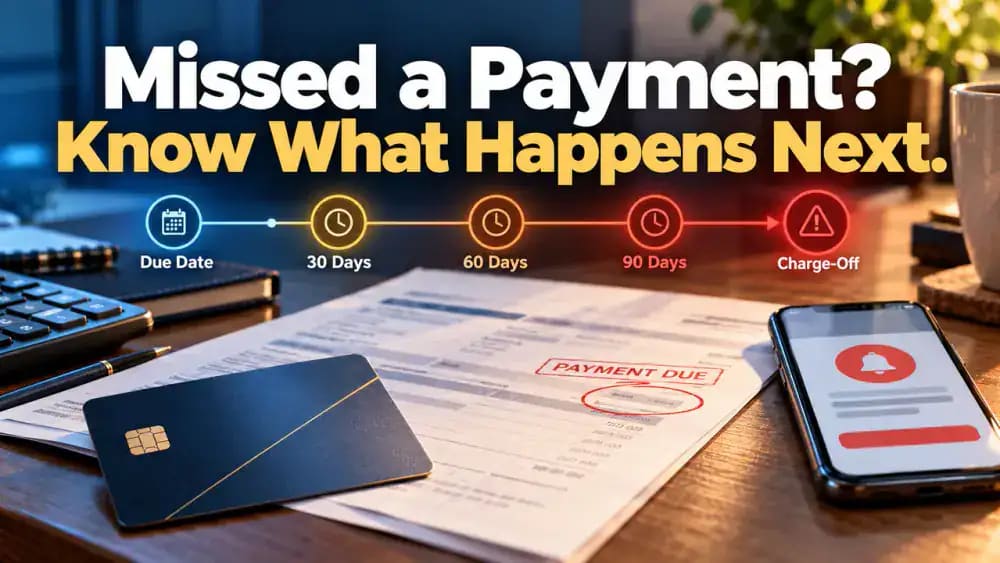
The good news is that missing a payment by one day is not the same as being 30, 60, or 90 days behind. Although your credit card issuer may charge a late fee shortly after the deadline, a payment generally must become at least 30 days past due before it can appear as a reported late payment on your credit report.
That distinction matters because acting quickly can prevent a relatively small problem from becoming a lasting financial setback.
Federal consumer protections also establish important rules. Credit card companies generally must accept qualifying payments received by 5 p.m. on the due date, using the applicable time zone. Regulation Z restricts certain penalty fees, including multiple penalty fees arising from a single violation.
However, these protections do not eliminate interest charges, guarantee a fee waiver, or prevent creditors from reporting qualifying delinquencies.
This guide explains what typically happens immediately after a missed payment, how consequences escalate at 30, 60, and 90 days, and what a charge-off actually means. More importantly, you will learn which actions to take now, what to ask your credit card issuer, and how to reduce the risk of long-term damage to your credit.
Where people go wrong
Assuming One Day Late Means Immediate Credit Damage. A late fee and a reported delinquency are different consequences. Credit card payments generally must be at least 30 days past due before a late payment can appear on your credit report. Do not confuse an issuer's internal delinquency status with credit bureau reporting.
Waiting Until Day 30 to Make a Payment. Treating the first month as a guaranteed grace period is risky. Fees and interest may already apply, and processing delays can complicate matters. Pay as soon as possible, confirm the payment was accepted, and ask your issuer about its reporting schedule.
Ignoring the Payment Cutoff Time. Submitting a payment late in the evening does not necessarily satisfy the deadline. Federal rules generally protect qualifying payments received by 5 p.m. in the applicable time zone. Check your issuer's stated cutoff and payment processing rules before assuming you paid on time.
Mailing a Check on the Due Date. A postmark normally does not establish that a credit card payment arrived on time. Your issuer generally must receive a properly submitted payment by the applicable deadline. Mail checks early enough for delivery and processing, or use an approved electronic payment option.
Assuming Federal Law Eliminates All Late Fees. Regulation Z restricts certain penalty fees, including multiple penalty fees for a single violation, but does not prohibit every late fee. Interest and other lawful charges may still apply. Review your card agreement and ask the issuer to explain any disputed charges.
Avoiding Your Credit Card Issuer. Ignoring messages or collection notices can eliminate opportunities to negotiate before the situation worsens. Contact your issuer, explain the circumstances, and ask about a one-time fee waiver, hardship assistance, or affordable payment arrangement. Document any agreement and its conditions.
Believing a Charge-Off Cancels Your Debt. A charge-off is an accounting action, not automatic debt forgiveness. The creditor or a collector may still seek payment, subject to applicable laws. Verify the debt and your rights before paying or negotiating, particularly if the account is old or disputed.
Questions people ask
Your issuer may charge a late fee, and interest consequences may apply depending on your account terms. However, a payment that is only one day late generally will not appear as a 30-day delinquency on your credit report. Pay promptly, confirm receipt, and ask whether the issuer will waive the fee.
Fixed it?
Get one guide like this every Thursday.