How to Introduce a Newly Adopted Dog to Your Resident Dog
Help your newly adopted dog and resident dog get comfortable together with calm introductions, parallel walks, separate resources, and supervised interactions that build trust at their own pace.
What you’ll need
Tap to tick things off before you start.
Friendship Takes Time
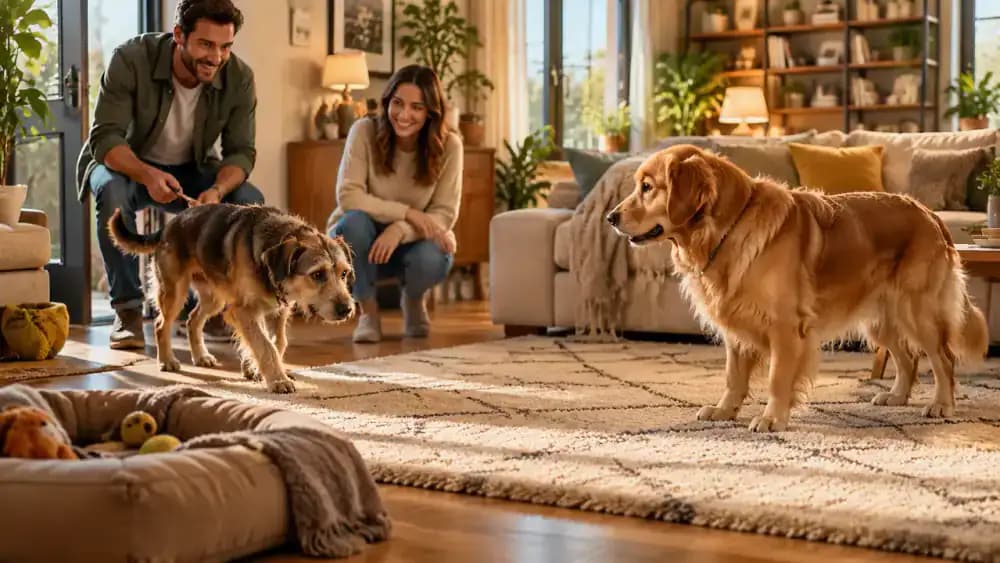
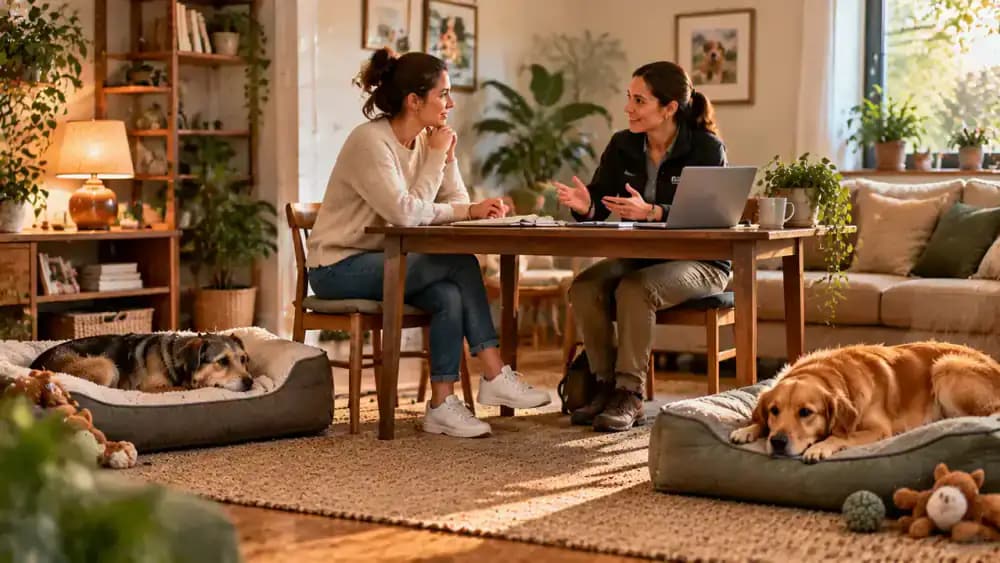
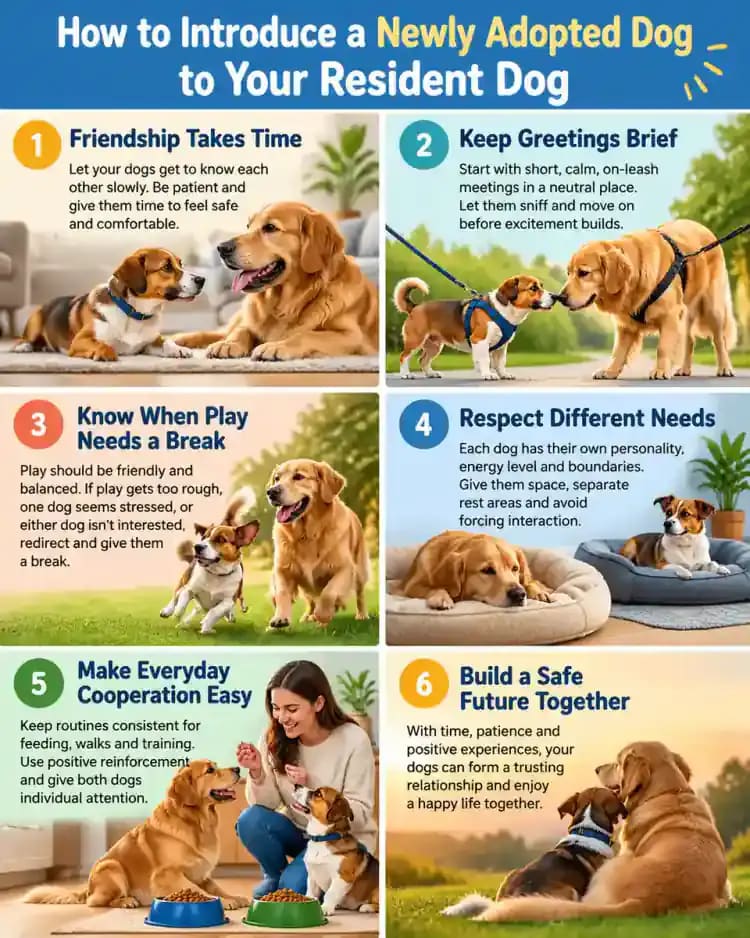
Give both dogs time to adjust to sharing a home. Your newly adopted dog may feel uncertain about unfamiliar smells, people, and routines, while your resident dog may need time to accept changes to familiar spaces. Keep the first interactions calm and low-pressure. Let both dogs observe each other without forcing contact or expecting an immediate friendship.
Prepare Before They Meet
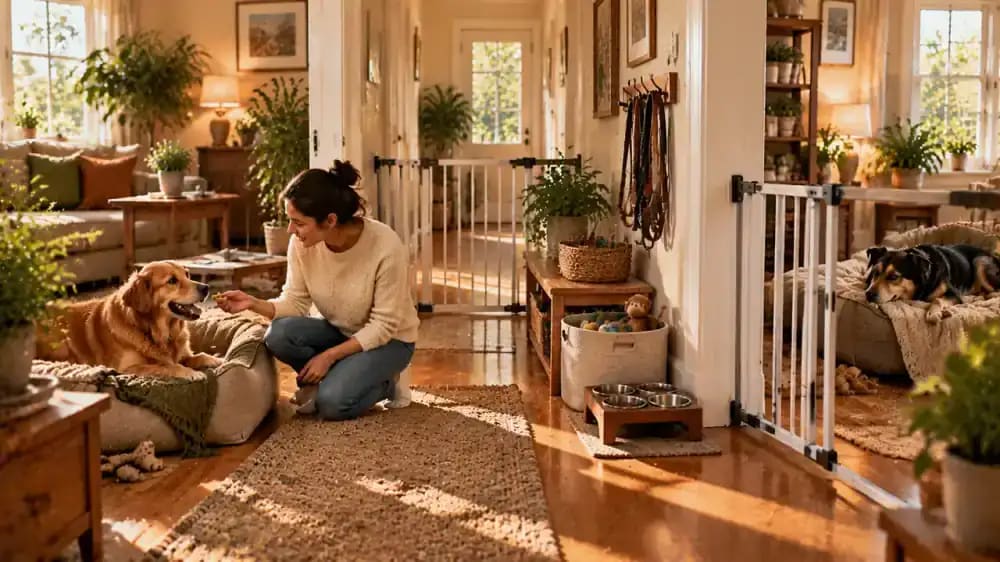
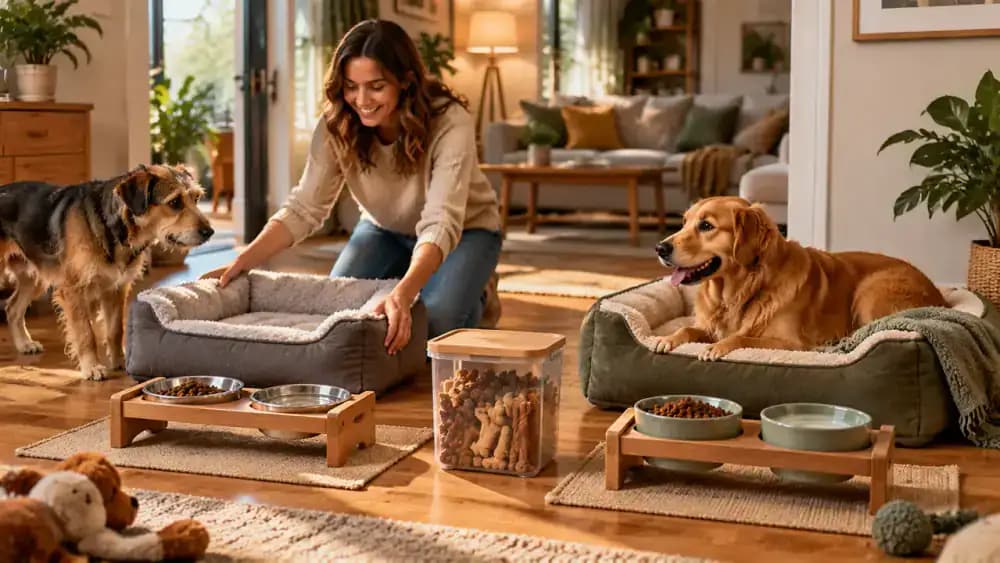
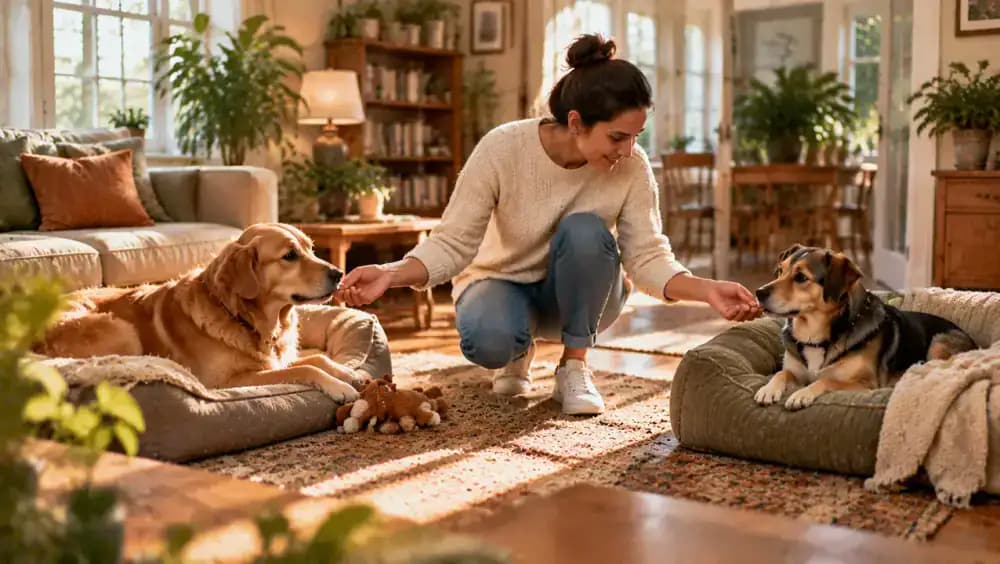
Set up the home before introducing the dogs so neither has to compete for food, resting places, or favorite belongings. Provide separate beds, water bowls, feeding stations, and quiet retreat areas. Store high-value chews and toys until shared time is better established. Prepare a secure way to separate the dogs calmly whenever supervision is limited or either dog needs a break.
Choose Neutral Ground
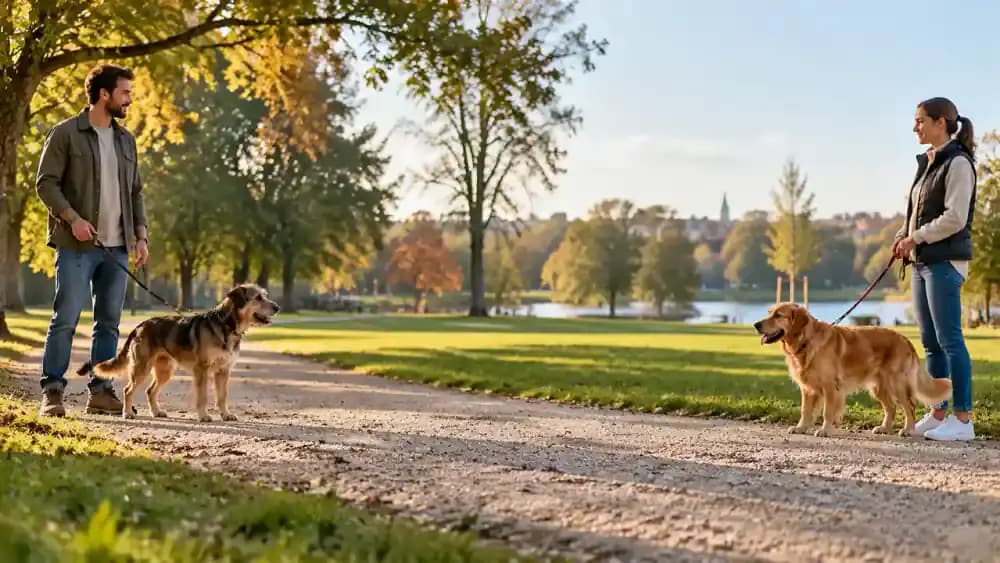
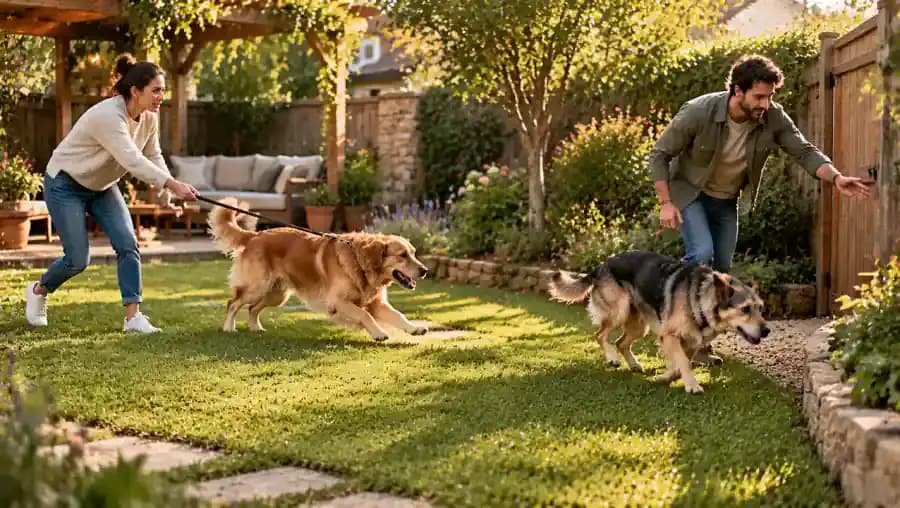
Arrange the first meeting in a quiet outdoor location with plenty of room to move apart. Avoid narrow doorways and spaces your resident dog strongly values. Have one capable handler for each dog, using secure, well-fitted equipment and comfortable leash control. Start several yards apart, allowing both dogs to notice each other naturally instead of pulling them together for a greeting.
Start With Parallel Walking
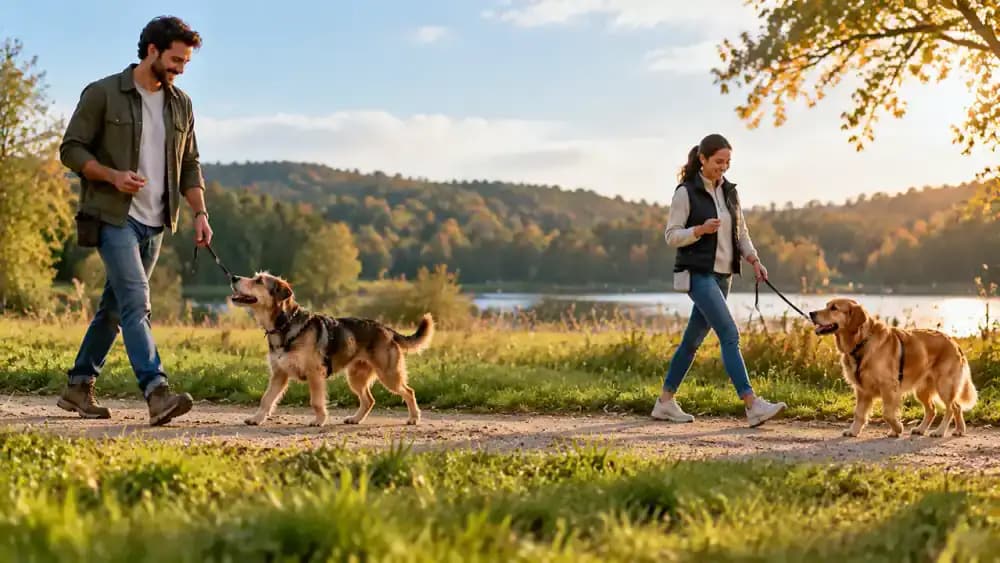
Walk the dogs in the same direction while maintaining several yards of separation. Let them sniff, explore, and check in with their handlers without requiring direct contact. Reward calm behavior individually when appropriate. Watch both dogs throughout the walk. If either freezes, fixates, barks repeatedly, or tries to move away, increase the distance and give them time to settle before continuing.
Read Their Body Language
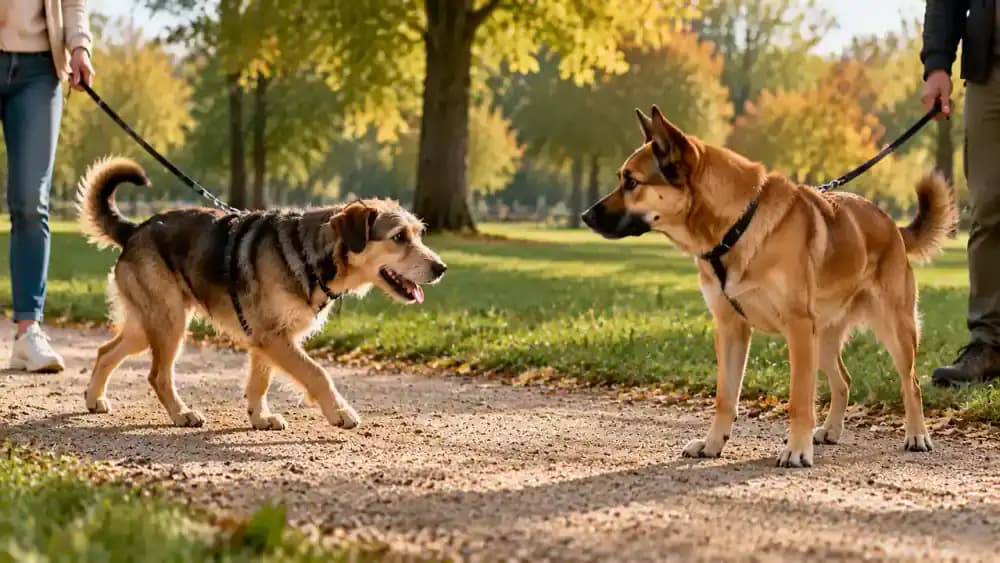
Only consider moving closer when both dogs consistently appear comfortable at their current distance. Look for loose muscles, relaxed movement, gentle curved approaches, and the ability to look away or disengage. Stiff posture, prolonged staring, a tucked tail, repeated lip licking, or attempts to retreat are reasons to pause. Calmly increase the distance and let the dogs reset without pressure.
Keep Greetings Brief
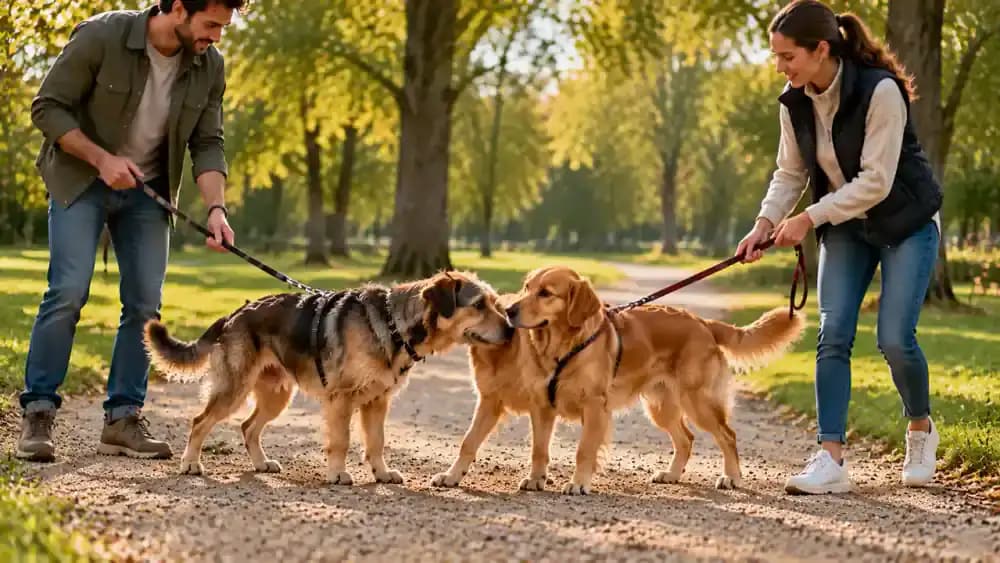
If both dogs remain relaxed during the parallel walk, allow a brief greeting with loose leashes and room to move away. Let them approach in a gentle curve rather than forcing a face-to-face encounter. After a few seconds, cheerfully guide them apart and continue walking. Repeat only while both remain comfortable, and create more distance if tension appears.
Manage Their Shared Home
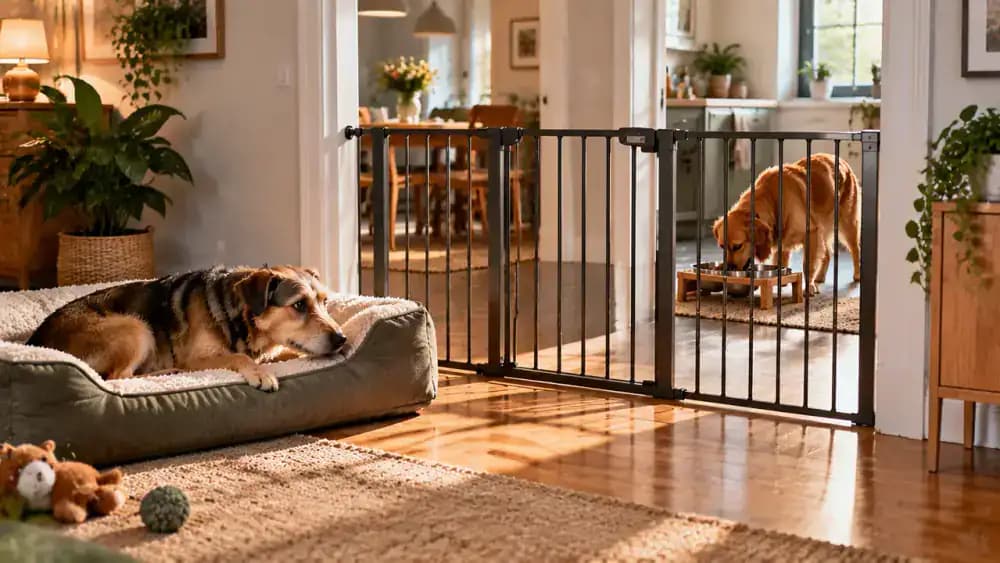
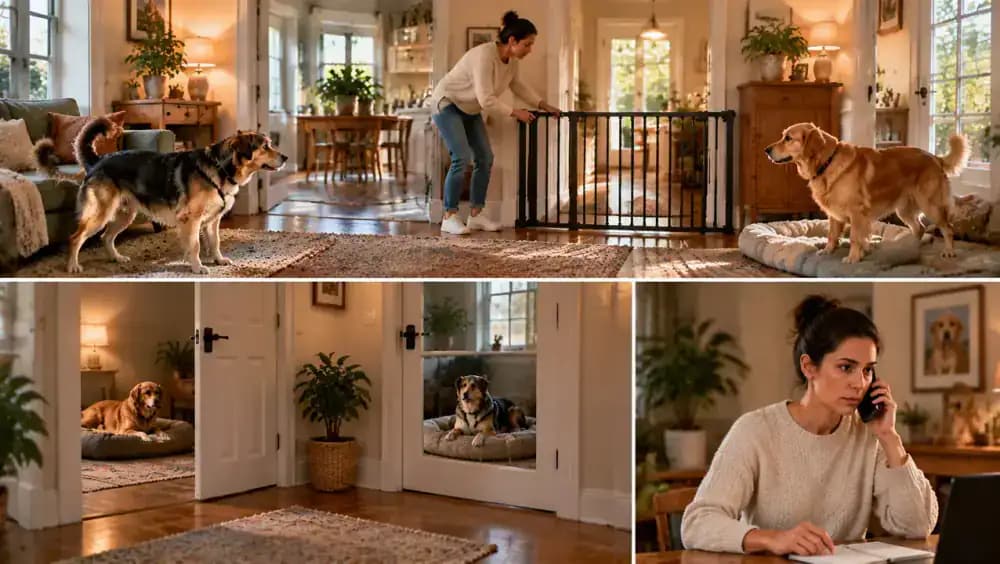
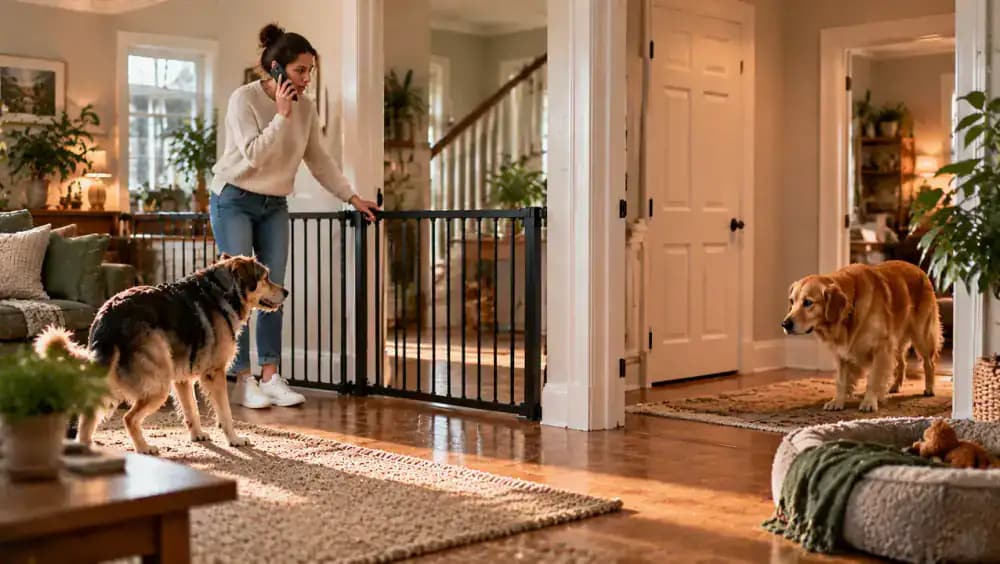
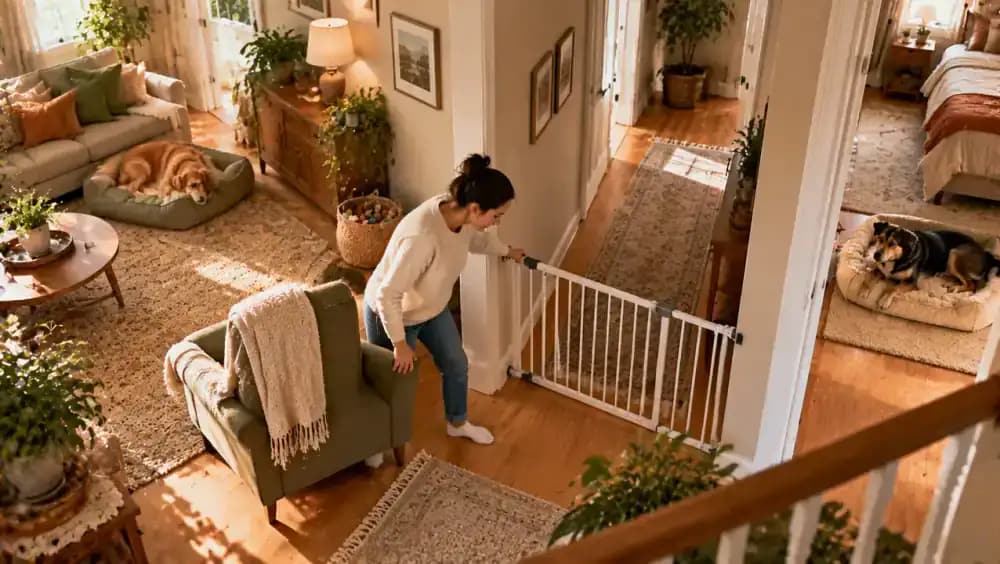
Once the dogs return home, use sturdy gates, exercise pens, or separate rooms to provide safe individual spaces. Supervise all shared interactions and keep feeding stations, beds, toys, and other valued resources separate. Maintain familiar routines for both dogs so neither feels displaced. Whenever you cannot actively supervise, separate them securely rather than assuming they are ready to stay together.
Build Trust at Their Pace
Let the dogs set the pace instead of expecting them to become companions within a few days. Keep interactions brief, maintain familiar routines, and allow either dog to retreat without being followed. Peaceful coexistence is a worthwhile goal, even if they never play together. If tension persists, fights occur, or safe separation becomes difficult, pause introductions and seek qualified professional guidance.
Build Familiarity Between Meetings
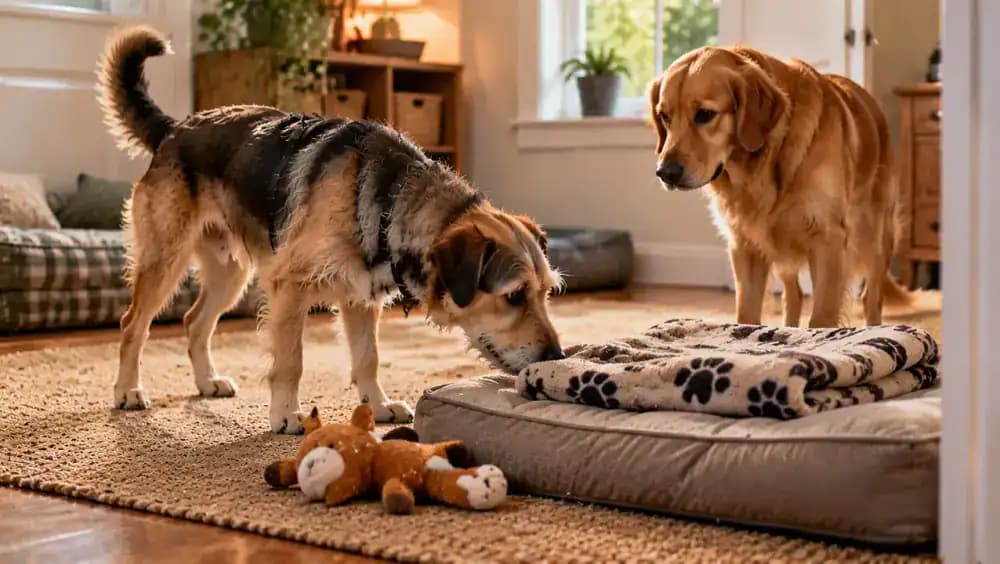
Help the dogs become familiar with each other's scent while keeping them physically separated. Place a blanket or bedding item used by one dog in an area where the other can investigate voluntarily. Allow sniffing or walking away without pressure, and keep the exchange brief. Remove the item if either dog becomes tense, guards it, or avoids the surrounding space.
Make Household Routines Predictable
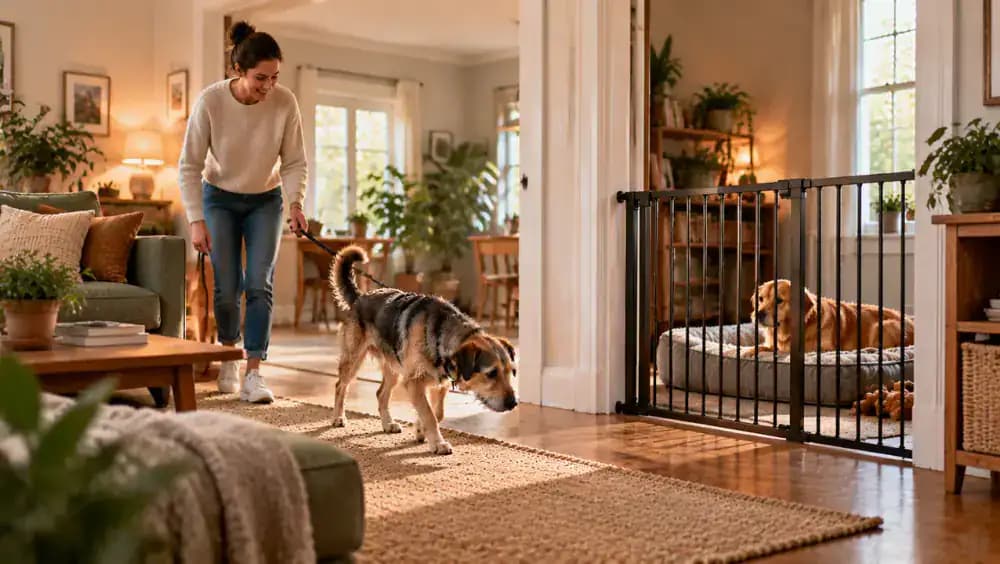
Create predictable opportunities for each dog to explore shared rooms without competing for space. Let one dog investigate while the other relaxes behind a secure barrier, then switch roles. Reward calm behavior and avoid crowding both dogs in narrow hallways or doorways. Keep escape routes clear, guide dogs through tight spaces one at a time, and maintain a routine that gives each dog individual attention.
Reward Calm Togetherness
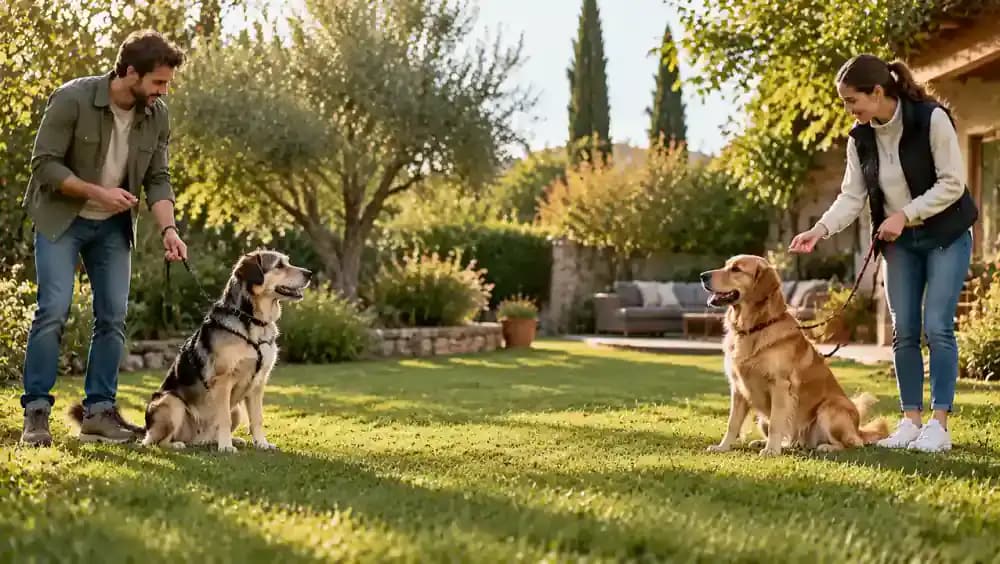
Help both dogs build positive associations by rewarding calm behavior while they remain at a comfortable distance. With one handler per dog, offer small treats when a dog notices the other and calmly turns back toward its handler. Keep rewards well separated to prevent competition, and increase the distance or pause if either dog becomes overly excited or uncomfortable.
Know When Play Needs a Break
Watch how both dogs participate when play begins. Comfortable play often includes loose, bouncy movements, natural pauses, and opportunities for either dog to disengage or rejoin voluntarily. If one dog repeatedly chases, pins, corners, or ignores the other's attempts to stop, calmly interrupt and separate them. Give both dogs time to recover before considering another supervised interaction.
Prepare for Exciting Situations
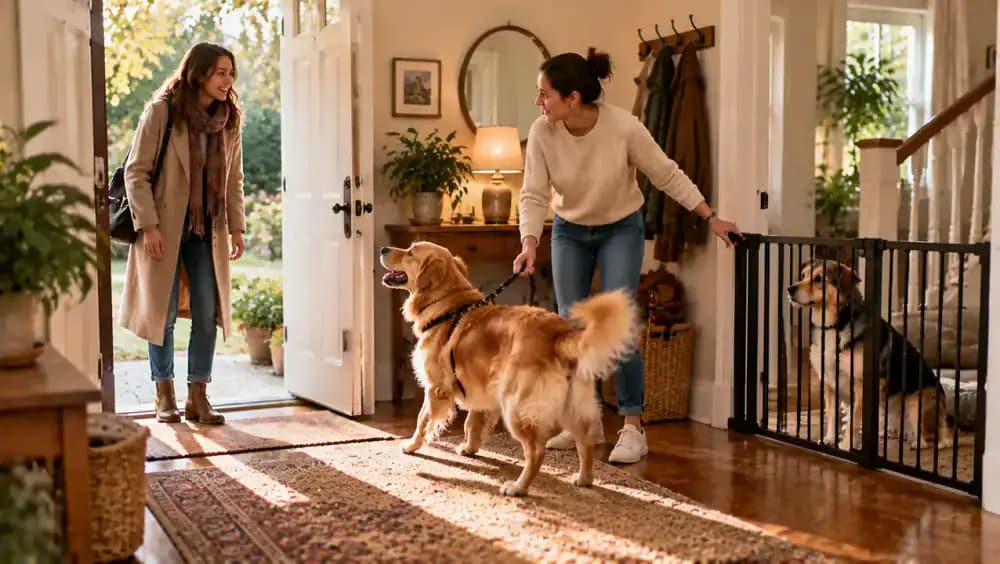
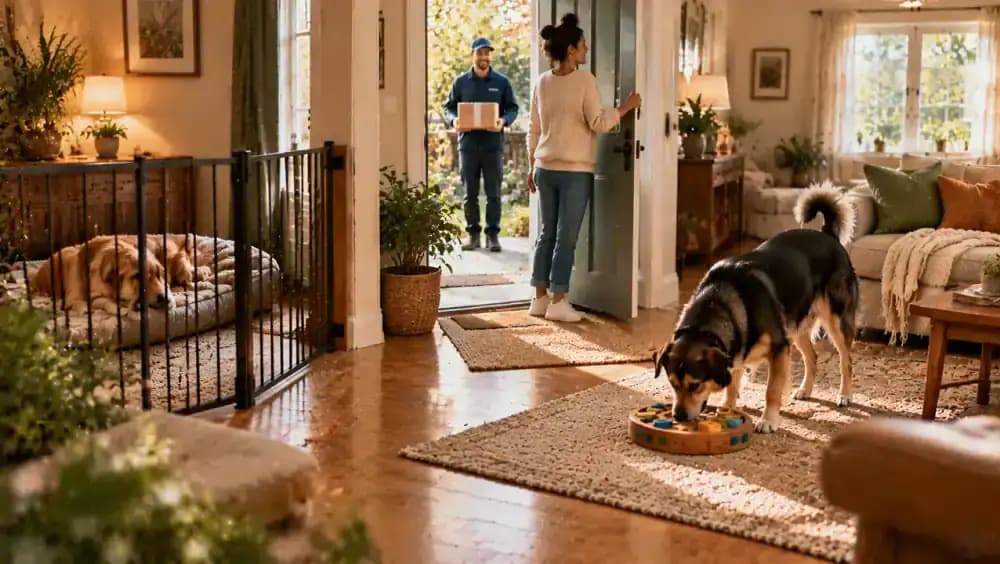
Plan ahead for visitors, doorbell excitement, and moments when one dog receives attention. These situations can increase arousal and create competition for people or space. Use secure barriers and separate greetings to keep interactions manageable. Give each dog an individual activity or quiet space when guests arrive, and offer attention separately if sharing the moment makes either dog uncomfortable.
Track Progress Without Rushing
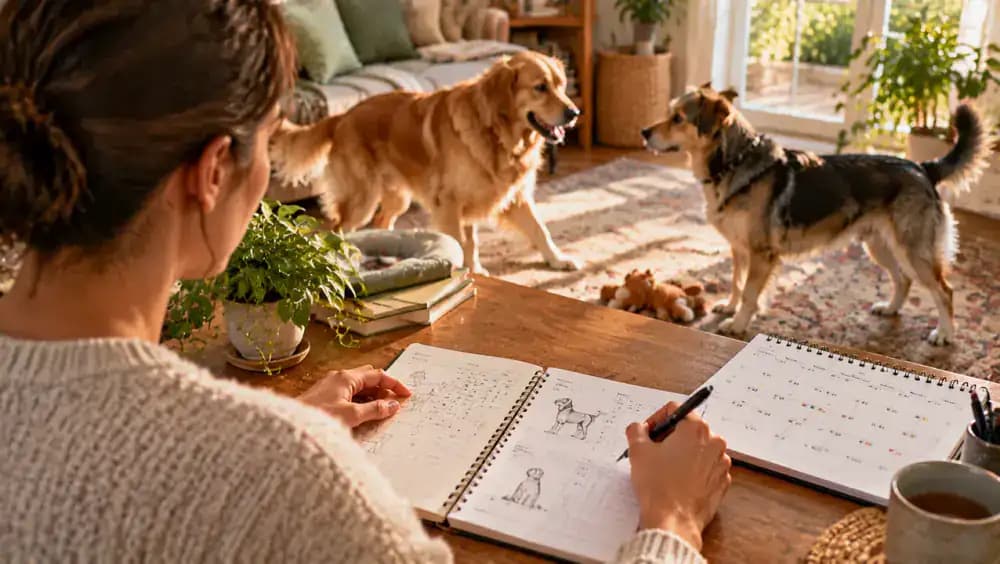
Record brief notes after supervised interactions, including the location, distance between the dogs, session length, body language, and what helped them remain comfortable. Look for patterns around food, resting areas, visitors, or busy periods. Use these observations to adjust your approach gradually rather than following a rigid deadline. Recognize small improvements, including relaxed coexistence without direct interaction.
Know What to Do if Conflict Occurs
If the dogs fight, prioritize safety and avoid reaching between them or grabbing their collars, as redirected bites can cause serious injuries. If possible, use a sturdy barrier to separate them without putting yourself in danger. Keep the dogs securely apart afterward, arrange veterinary care for any injuries, and contact a qualified dog behavior professional before attempting another introduction.
Choose Safety Over Instant Friendship
Focus on creating a safe, peaceful household rather than expecting the dogs to become best friends or share a bed. Some dogs develop close bonds, while others prefer comfortable distance and separate routines. Continue at a pace that suits both dogs, celebrate relaxed behavior, and maintain safe management whenever needed. Seek qualified professional guidance if progress stalls or safety becomes uncertain.
Practice Calm Exits
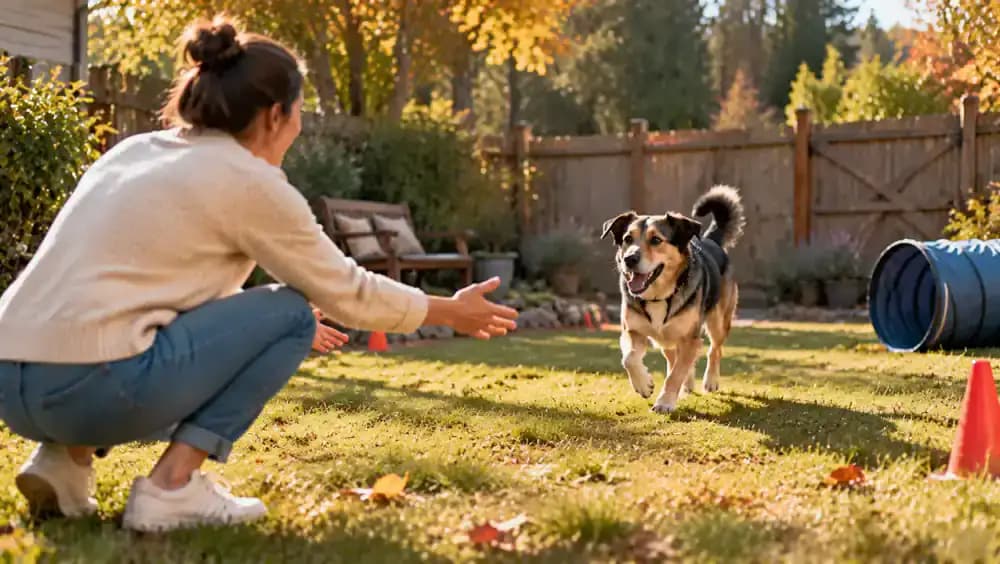
Teach each dog to turn toward you and move away on cue before practicing together. Start separately in a quiet area, rewarding a cheerful recall or simple change of direction. During shared sessions, use these familiar skills to guide the dogs apart when excitement rises. Keep movements calm, maintain distance, and avoid pulling the dogs toward each other.
Respect Different Needs
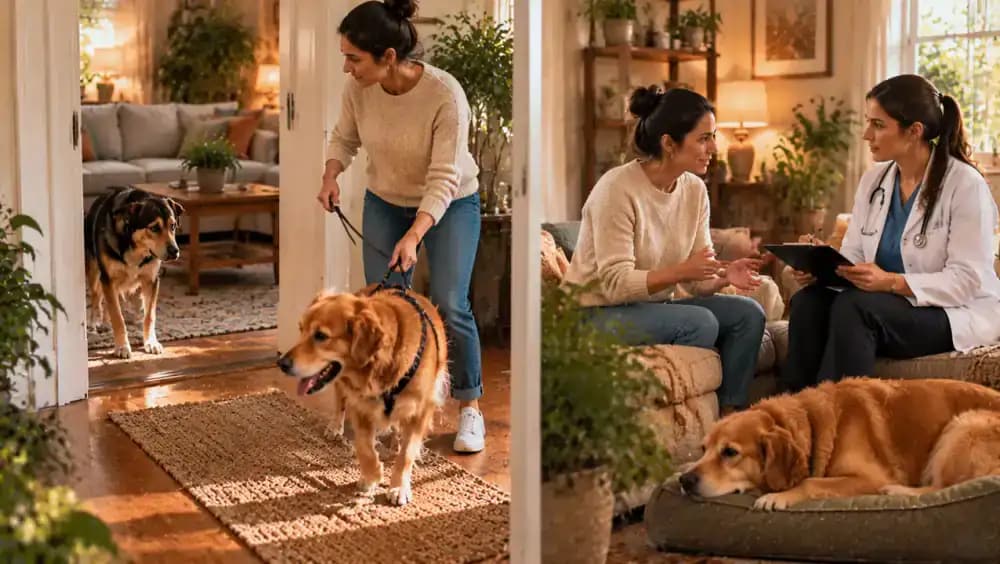
Plan shared time around each dog's age, history, health, and energy level. A lively young dog may need exercise and enrichment before spending quiet time near an older companion. Provide individual activities and comfortable resting places so neither dog feels overwhelmed. If behavior changes suddenly or movement seems uncomfortable, consult a veterinarian before increasing contact or changing the introduction plan.
Include the Whole Household
Make sure everyone in the household understands how to keep interactions safe and predictable. Teach children not to hug, chase, crowd, or disturb either dog while resting or eating. An adult should supervise all child-dog interactions, and children should never be responsible for separating dogs. Consistent rules help prevent accidental pressure and give both dogs room to settle comfortably.
Know When to Allow More Freedom
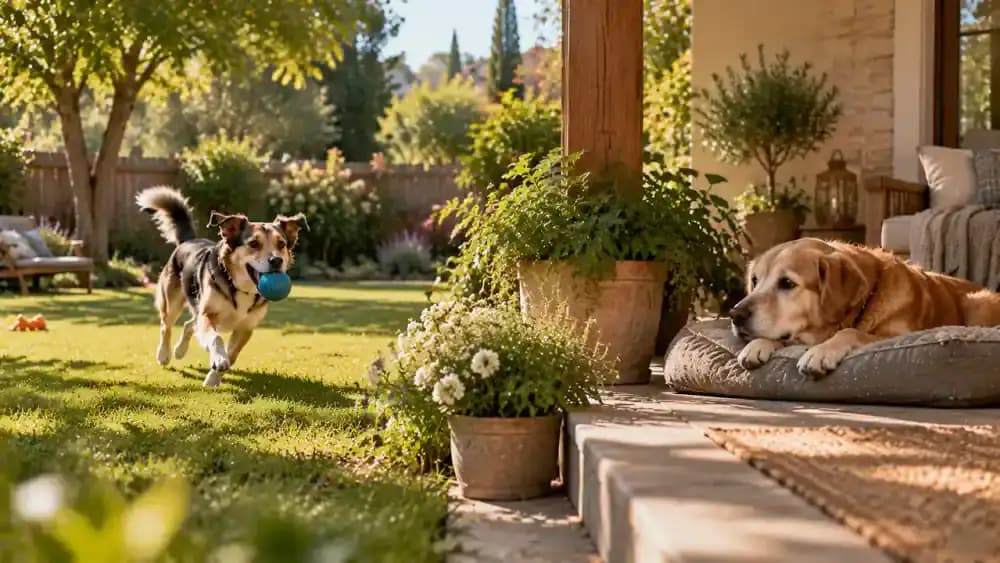
Increase shared freedom only when both dogs consistently move around, rest, respond to their handlers, and disengage without persistent tension. Continue supervising closely and watch for following, blocking, fixation, or difficulty settling. If these behaviors appear, calmly guide the dogs into separate areas and return to shorter, managed sessions. Let their comfort and behavior determine progress, not an arbitrary timeline.
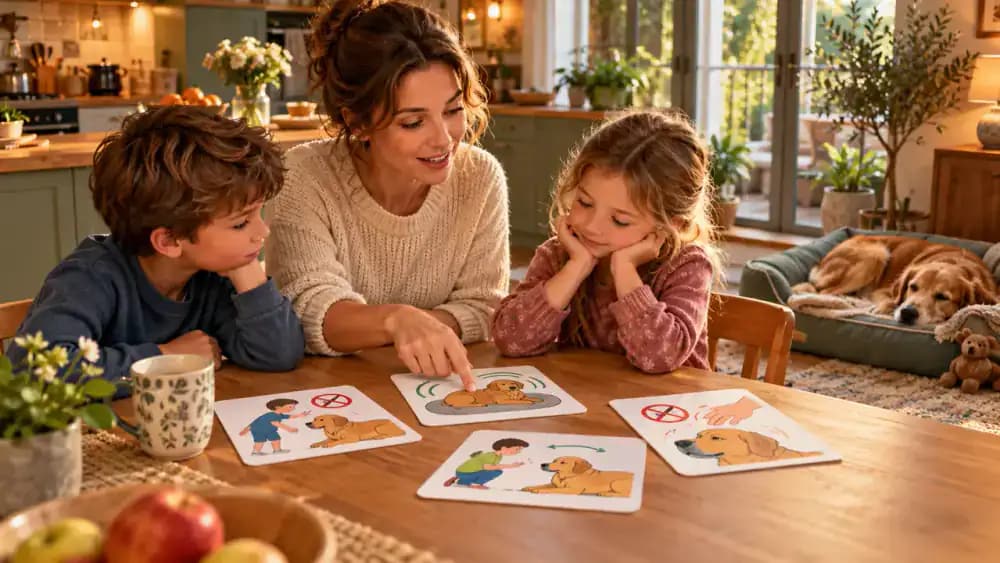
Create a Household Management Plan
Write down the household routines everyone should follow while the dogs adjust. Include feeding locations, gate arrangements, walking responsibilities, visitor procedures, and where each dog rests when supervision is unavailable. Keep leashes, barriers, and professional contact information easy to find. Review the plan with everyone at home so daily decisions remain consistent, even when schedules become busy.
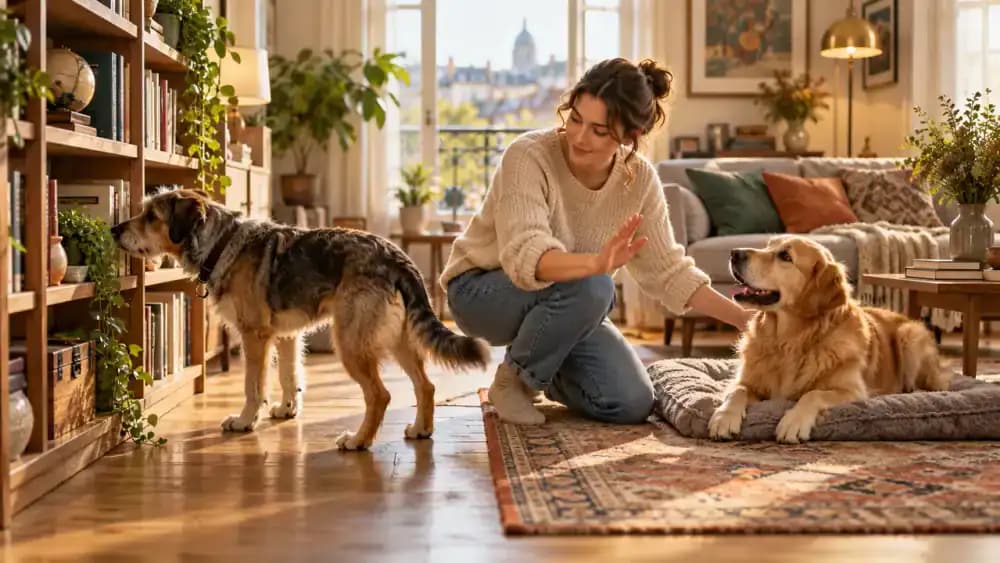
Listen to Warning Signals
Treat a growl as useful information that a dog may need more space, not as misbehavior to punish. Calmly guide the dogs apart without forcing further contact, then consider what happened before the warning. Adjust the next interaction to reduce pressure, whether that means greater distance, shorter sessions, or separate spaces. Seek qualified professional guidance if warning signals persist or escalate.
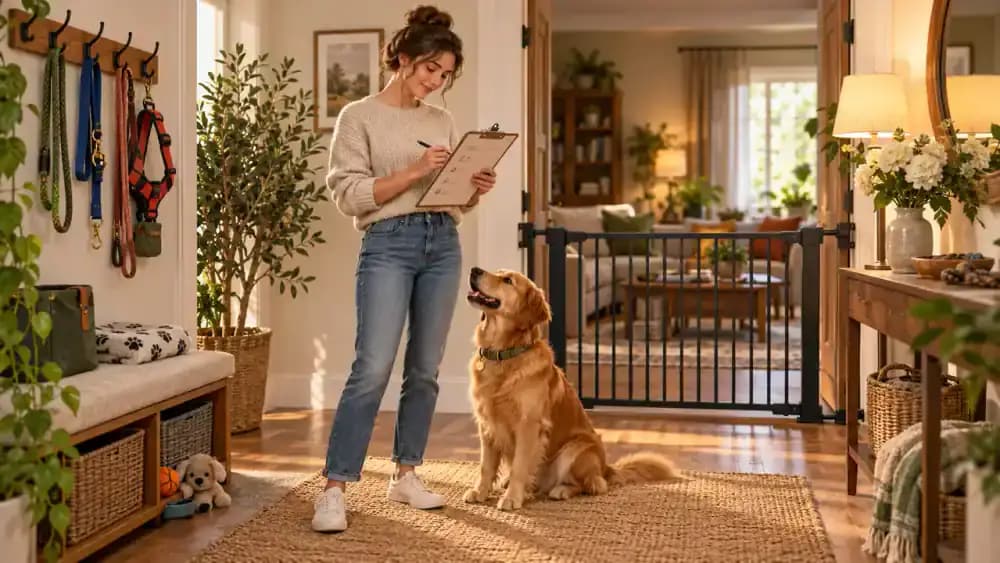
Celebrate Sustainable Progress
Measure progress by how safely and comfortably the dogs share their environment, not by whether they become inseparable companions. They may eventually play or rest near each other, or they may prefer separate beds and activities. Continue rewarding relaxed behavior, preserve individual options, and maintain supervision as needed. If concerns persist, consult a qualified professional for guidance tailored to both dogs.
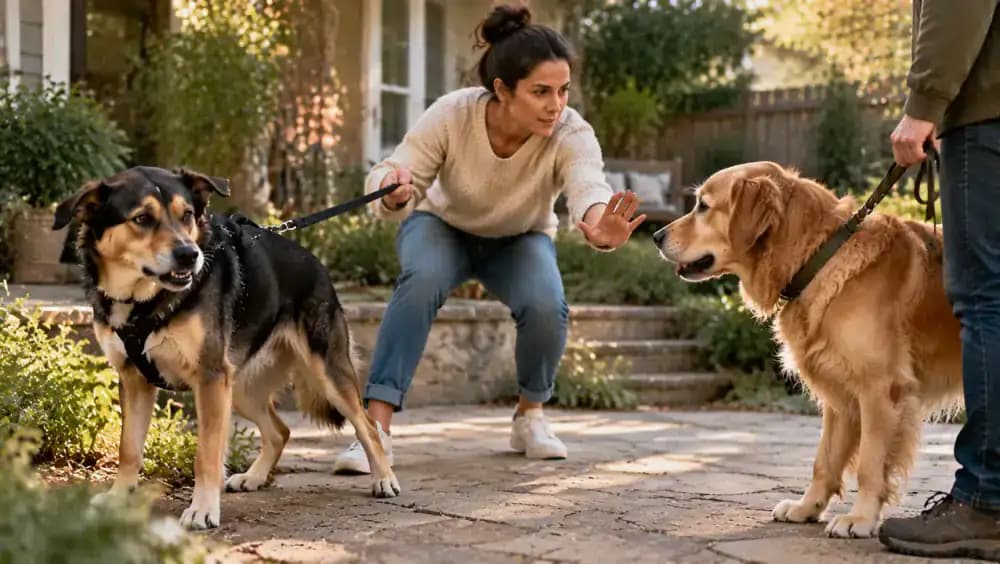
Make Everyday Cooperation Easy
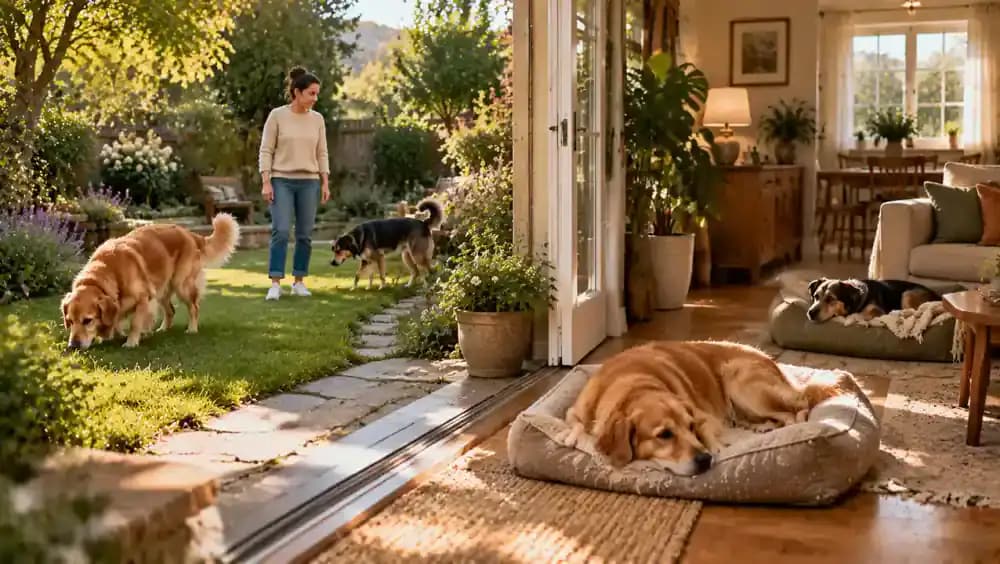
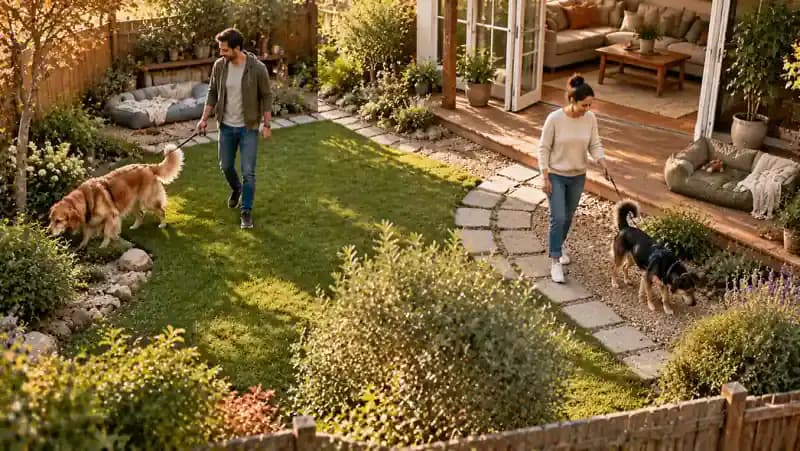
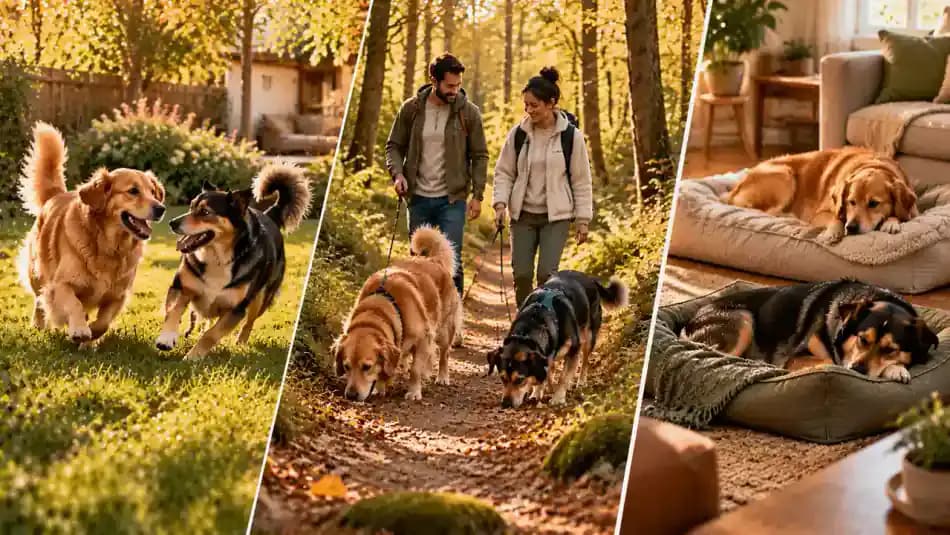
Build cooperation into ordinary routines without expecting the dogs to participate in every activity together. Offer individual walks when needed, followed by brief shared garden time if both remain comfortable. Give each dog room to explore without competition, and watch for changes in body language. End shared activities while things are going well, then guide each dog to its own comfortable resting area.
Give Each Dog Individual Attention
Make time for individual walks, training, play, and quiet companionship so neither dog has to compete for your attention. Their needs and preferred activities may differ, and equal care does not require identical routines. Give each dog space to enjoy activities separately, using another household member or a secure barrier when helpful. Predictable one-on-one time can support a calmer transition for everyone.
Arrange Shared Spaces Thoughtfully
Look for areas where tension could develop, such as favorite couches, sunny windows, narrow hallways, or garden entrances. Arrange furniture and gates to provide clear pathways, alternative routes, and comfortable resting places. If one dog repeatedly blocks another's movement or access to a space, manage access instead of forcing them to share. Small environmental changes can make everyday interactions easier.
Plan for Unexpected Excitement
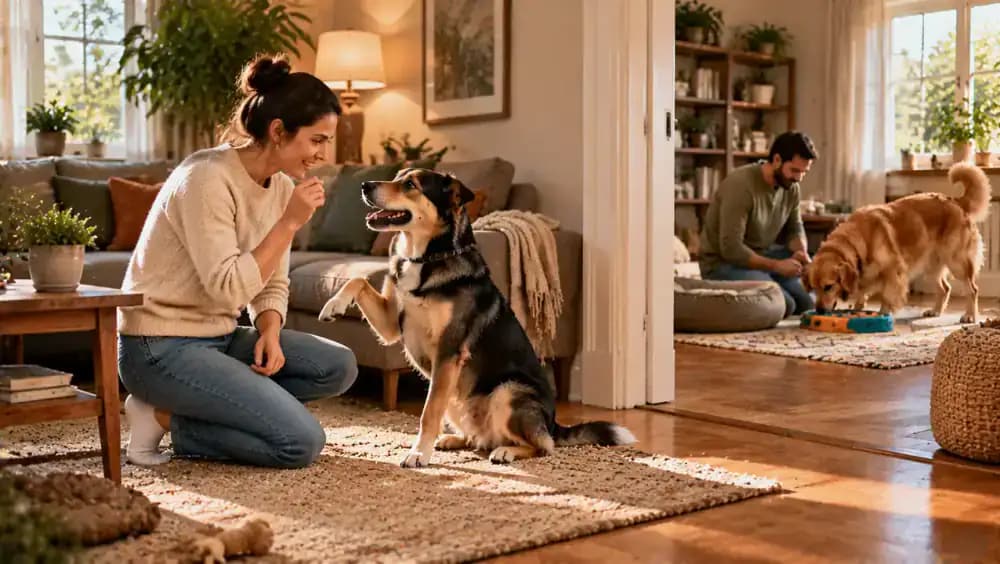
Doorbells, deliveries, visitors, and sudden noises can increase excitement even after the dogs have made progress. Prepare separate activities and comfortable spaces before busy moments occur. Offer a food puzzle to one dog and a familiar bed to the other, keeping them securely separated as needed. Once the disturbance has passed, check that both dogs are settled before considering shared time again.
Recognize Changes in Confidence
Pay attention if either dog becomes increasingly withdrawn, restless, watchful, or reluctant to enter shared rooms. These changes may indicate that current interactions or arrangements are too demanding. Reduce exposure, restore comfortable separation, and avoid coaxing a hesitant dog into contact. Keep notes about recurring patterns and consult a veterinarian or qualified dog behavior professional if concerning changes persist or interfere with daily routines.
Accept Different Kinds of Friendship
Allow the relationship to develop without expecting a particular outcome. Your dogs might become playful companions, enjoy occasional interactions, or simply share rooms peacefully while maintaining their own space. All can be workable arrangements when both dogs feel secure. Avoid encouraging closeness they have not chosen, and focus on relaxed movement, comfortable rest, and the ability to disengage without repeated conflict.
Build a Safe Future Together
Keep the essential habits in place as your dogs adjust: introduce contact gradually, supervise shared time, separate valuable resources, and respond to discomfort by creating space. There is no universal timetable, and taking longer does not mean the introduction has failed. Maintain secure resting areas and predictable routines, and seek qualified professional guidance whenever ongoing tension or safety concerns make progress difficult.
Bringing a newly adopted dog into a home with a resident dog can be exciting, but a smooth transition takes more than putting two friendly-looking dogs in the same room. Even dogs that enjoy meeting other dogs may feel uncertain when sharing a home, familiar resting spots, people, toys, and food. New smells, unfamiliar routines, and limited personal space can make the first few days especially challenging.
The goal is not to make your dogs become best friends immediately. Instead, give them opportunities to become familiar with each other while keeping both dogs safe and comfortable. A calm introduction begins with preparation, a suitable neutral meeting area, and enough distance for each dog to observe the other without feeling pressured. Walking in the same direction with separate handlers can help them adjust before any direct interaction takes place.
At home, thoughtful management matters just as much as the first meeting. Separate feeding stations, individual resting areas, and controlled access to toys and other valued resources can reduce competition. Supervision allows you to notice changes in body language, provide breaks, and prevent uncomfortable encounters from escalating.
Progress may look different for every pair of dogs. Loose bodies, relaxed movement, and the ability to disengage are encouraging signs, while stiff posture, prolonged staring, or attempts to retreat mean it is time to create more space. With patience, consistent routines, and appropriate support when needed, you can give both dogs a better chance to adjust to their shared home.
Where people go wrong
Expecting the dogs to become friends immediately. A friendly first impression does not guarantee that two dogs will feel comfortable sharing a home. They may need time to adjust to unfamiliar smells, household routines, and each other's presence. Avoid judging the relationship by one meeting or forcing interaction to speed things up. Allow progress to happen gradually, and treat calm coexistence as meaningful progress.
Introducing the dogs too close together. Starting face-to-face at close range can leave dogs feeling trapped or pressured, especially when they are on tight leashes. Begin far enough apart that both can notice each other without persistent staring, lunging, or attempts to escape. Reduce the distance gradually only when both remain comfortable. If either dog becomes tense, increase space instead of insisting on a greeting.
Letting food and toys become points of conflict. Food bowls, chews, favorite toys, and even resting places can become valuable resources in a shared home. Leaving these items scattered around during early introductions may create unnecessary competition. Feed the dogs separately, remove high-value toys from shared spaces, and provide individual resting areas. Do not test whether they will share by deliberately placing prized items between them.
Ignoring subtle body language. Not every sign of discomfort involves barking, growling, or snapping. A dog may become still, stare for a prolonged period, turn away repeatedly, tuck its tail, or try to increase distance. These signals deserve attention before tension escalates. Observe both dogs rather than focusing only on the more vocal one, and pause or create space when either dog appears uncomfortable.
Leaving the dogs together unsupervised too soon. A few calm interactions do not establish that dogs can safely share space without supervision. Stress, competition, and changing household circumstances can affect how they respond to each other. Use secure separation whenever you cannot actively supervise, including overnight and when leaving home. Increase freedom gradually as their behavior remains consistently relaxed, and maintain separate resources even after they begin spending time together.
Punishing growling or other warning signals. Growling can communicate that a dog is uncomfortable and needs more space. Punishing the signal may add stress without resolving the underlying concern. Stay calm, avoid forcing contact, and safely increase distance. Do not assume every growl means a fight is inevitable, but do take repeated warning signals seriously. If tension continues or escalates, seek guidance from a qualified professional.
Rushing shared time or forcing contact. Holding dogs close together, pushing them toward one another, or preventing them from moving away can make an introduction more stressful. Dogs need the freedom to disengage, explore, and take breaks. Keep early interactions brief and voluntary, and end them while both dogs are still comfortable. If either dog repeatedly retreats or cannot settle, return to greater distance and slower introductions.
Waiting too long to seek professional guidance. Repeated confrontations, escalating lunges, attempted bites, or persistent tension can make introductions harder to manage safely. Do not rely on repeated exposure to resolve serious conflict, and avoid arranging confrontations to see whether the dogs improve. Separate them securely and consult a qualified dog behavior professional who uses humane, evidence-informed methods. A veterinary assessment may also be appropriate when behavior changes suddenly.
Questions people ask
There is no fixed timeline for dogs to become comfortable living together. Some begin relaxing around each other within days, while others need several weeks or longer. Their histories, temperaments, previous experiences, and responses to shared resources all influence the pace. Focus on relaxed behavior and safe routines rather than a deadline, and continue separating them whenever supervision is unavailable.
Fixed it?
Get one guide like this every Thursday.