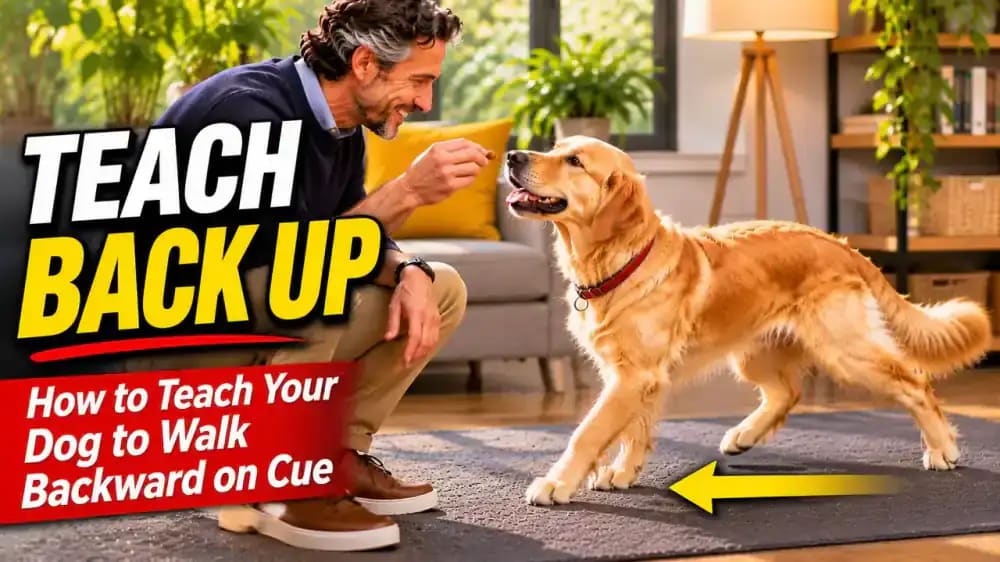
How to Teach Your Dog to Walk Backward on Cue
Teach your dog to walk backward on cue using positive reinforcement, small treats, and short practice sessions. This fun trick builds body awareness, coordination, and confidence without pushing or pulling your dog.
What you’ll need
Tap to tick things off before you start.
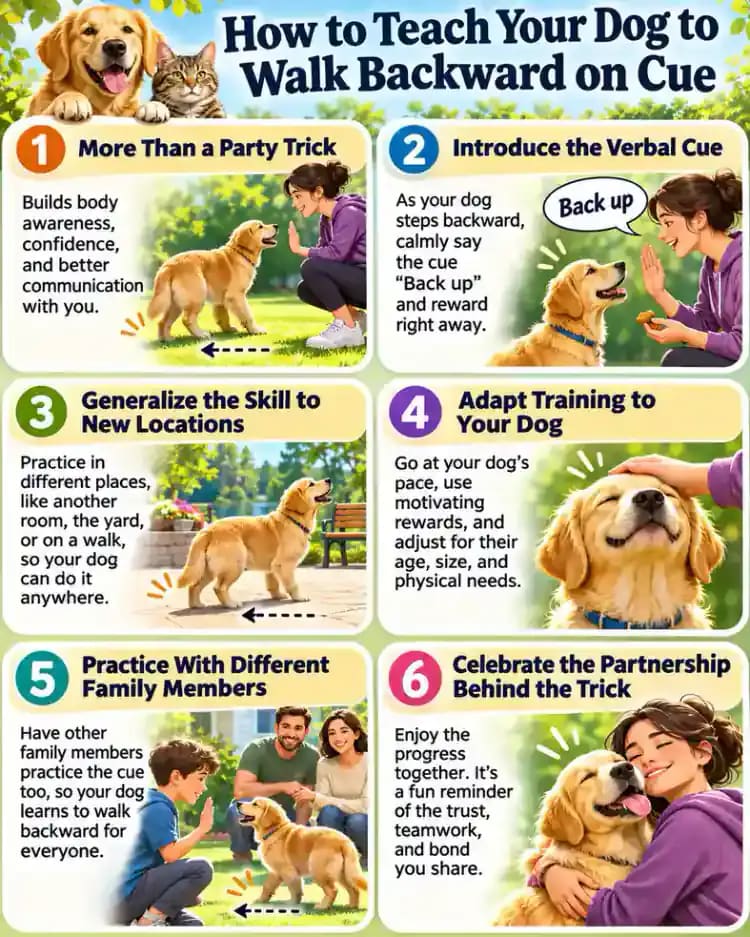
More Than a Party Trick
Ask your dog to take three smooth backward steps on a familiar cue. Beyond being an entertaining trick, backward walking helps dogs develop body awareness, balance, and coordination by practicing movements they rarely use. The goal is not speed or distance. Focus on comfortable, controlled steps that your dog performs willingly and confidently.
Prepare a Safe Training Space
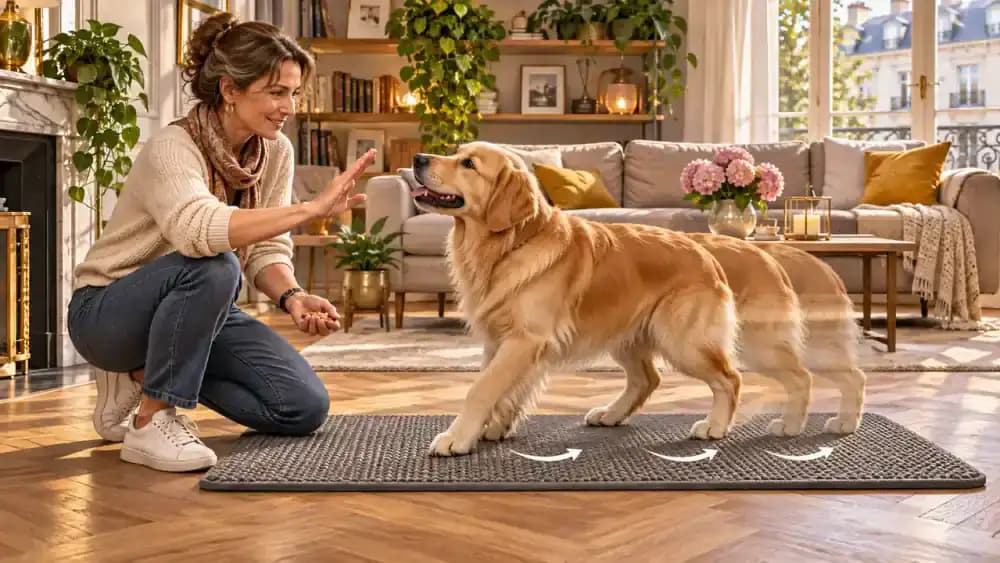
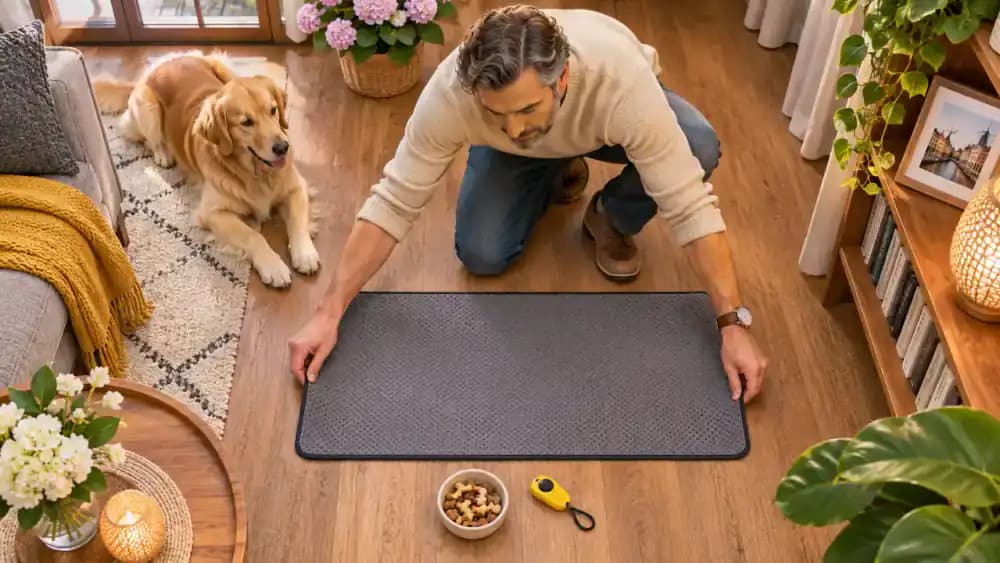
Choose a quiet room with minimal distractions and plenty of unobstructed space behind your dog. Place a textured, non-slip mat on the floor to provide secure footing. Prepare small, appealing treats for immediate rewards. Keep an optional clicker nearby, or use a consistent marker word like "Yes." Begin when your dog appears relaxed and interested.
Encourage the First Backward Movement
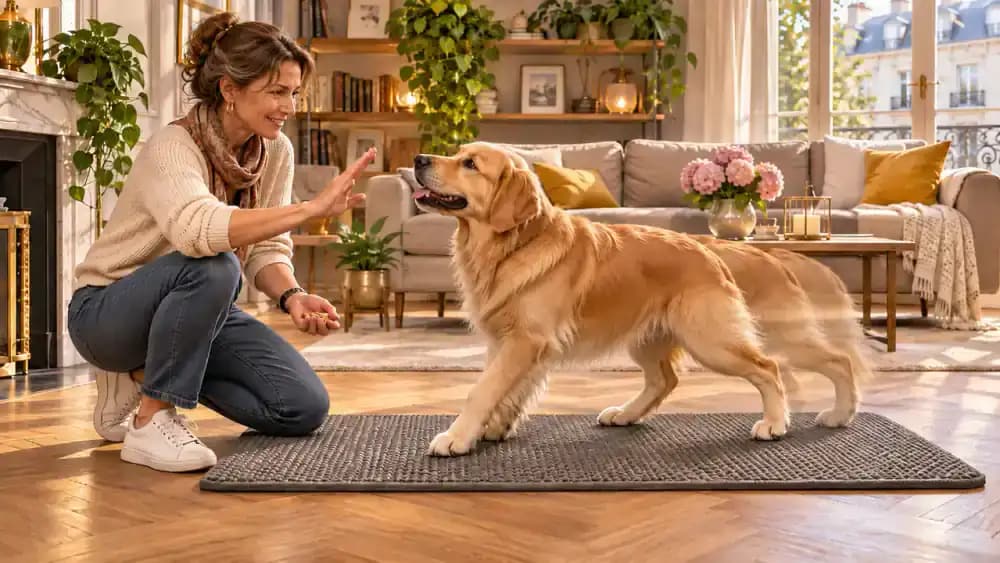
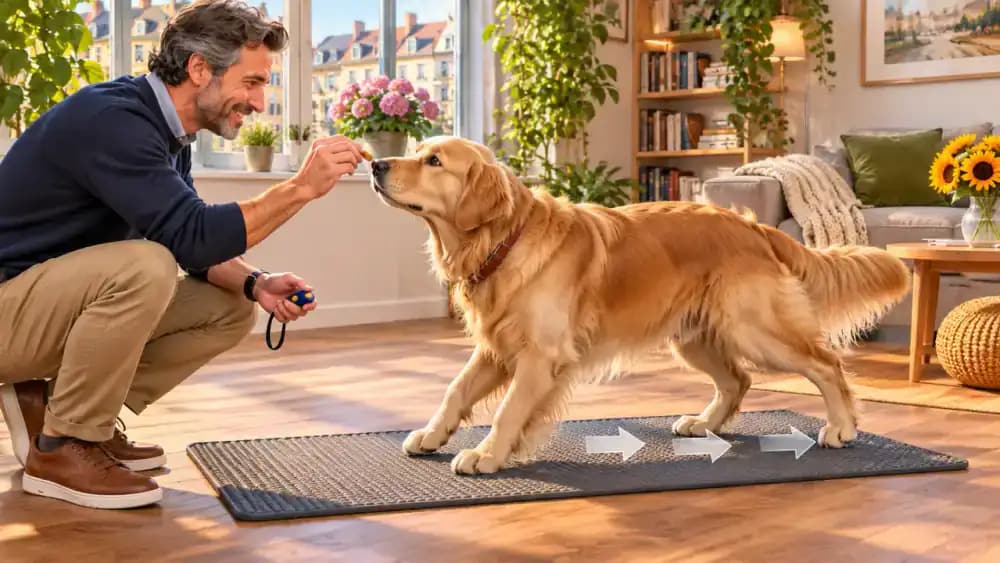
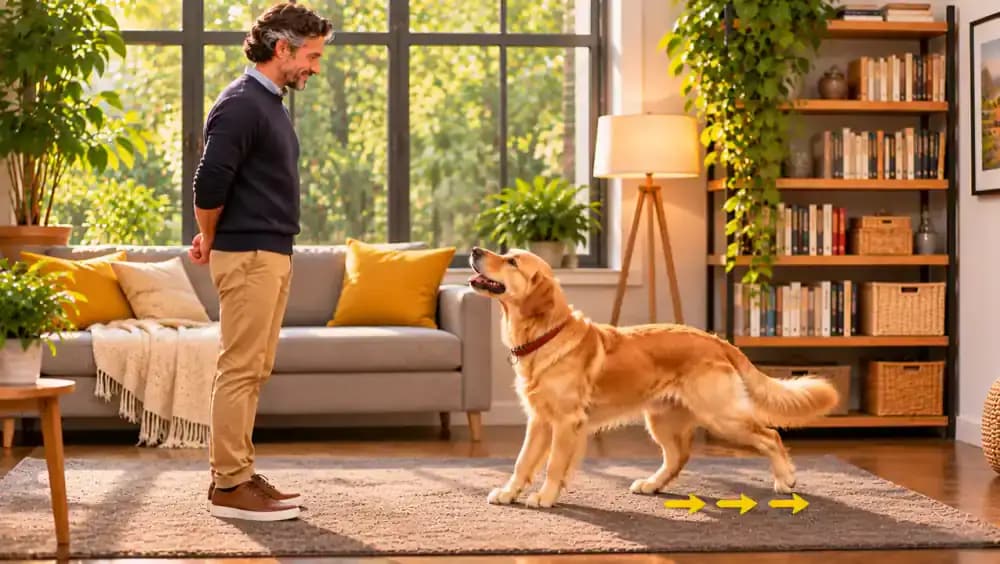
Stand facing your dog and hold a small treat near their nose without lifting it overhead. Take one gentle step forward while watching their paws. Your dog may naturally shift their weight backward or move one paw to create space. Never push or crowd them. Allow enough room for the movement to happen voluntarily.
Mark and Reward the Right Action
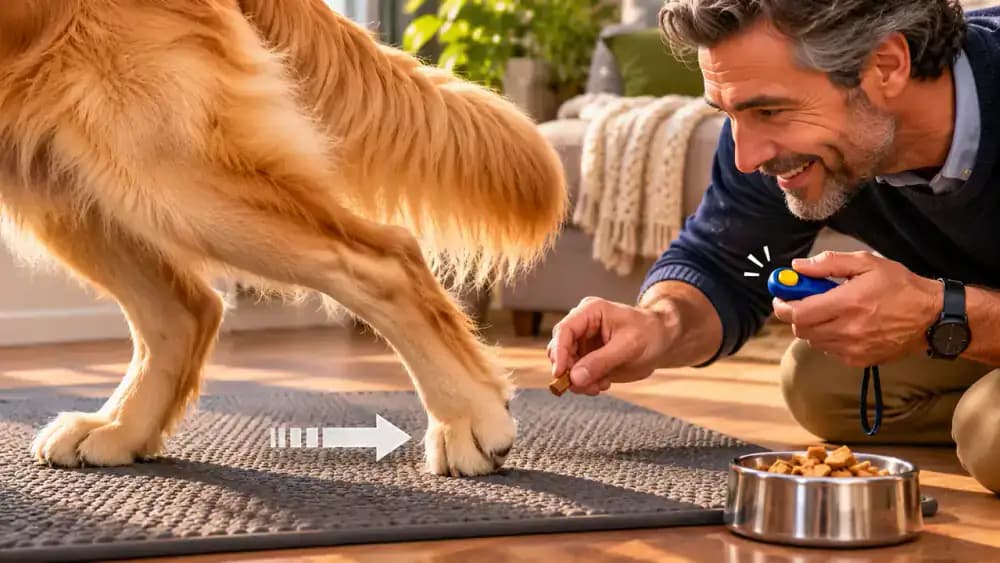
Watch closely for the first backward paw movement, even if it is barely noticeable. Immediately say "Yes" or click your clicker, then offer a small treat. Reset your positions and repeat the exercise. Consistent timing helps your dog connect the reward with stepping backward rather than sitting, looking up, or moving in another direction.
Build Two or Three Backward Steps
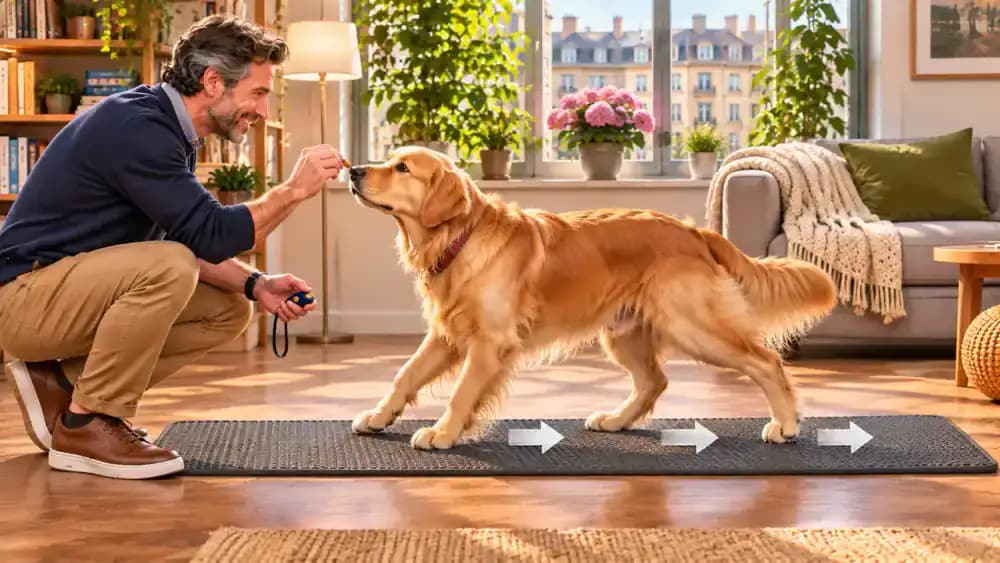
When your dog reliably offers one backward step, gradually increase the requirement to two steps before marking and rewarding. Once two steps become comfortable, try three. Keep your movements gentle and maintain clear space behind your dog. Reward successful attempts frequently. If your dog hesitates or becomes confused, return to rewarding one easy step.
Introduce the Verbal Cue
Once your dog consistently steps backward with your familiar movement prompt, introduce the word "Back." Say it clearly, pause briefly, and then give your usual prompt. Immediately mark and reward the backward movement. Repeat this sequence across several successful attempts. Avoid repeating the word unnecessarily, since each cue should have a clear, consistent meaning.
Fade Physical Prompts
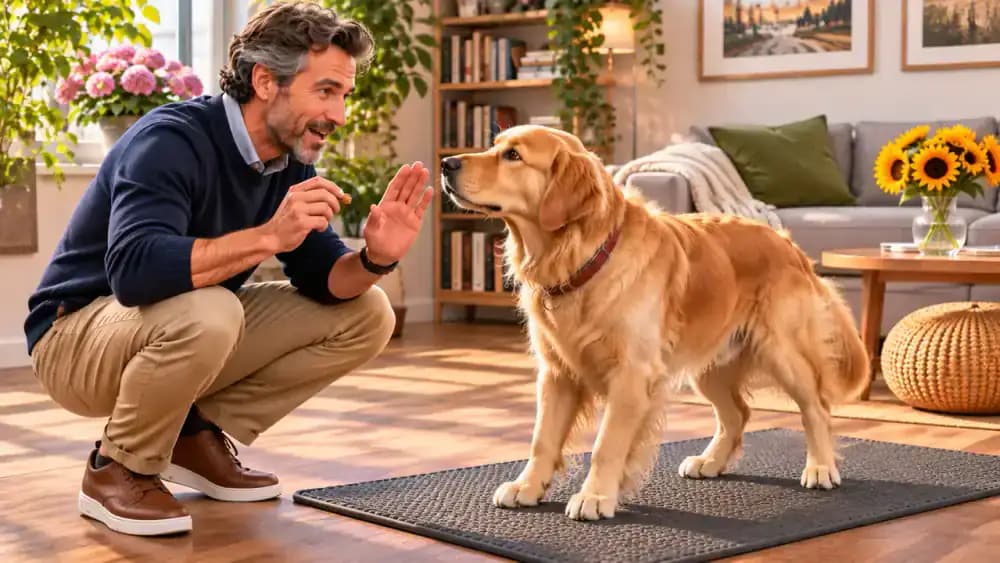
Gradually reduce how much you move when asking your dog to back up. Replace your forward step with a slight lean, then try a smaller hand gesture. Eventually, stand still and say "Back" without additional assistance. Reward successful responses throughout the process. If your dog hesitates, temporarily restore the previous prompt and reduce assistance more gradually.
Troubleshoot and Celebrate Success
If your dog sits instead of backing up, simplify the exercise and reward a small backward weight shift. Check that the mat provides secure traction, and stop if movement appears uncomfortable. Consult your veterinarian if discomfort persists. Finish with an easy, successful attempt, offer a generous reward, and continue practicing in short, enjoyable sessions on another day.
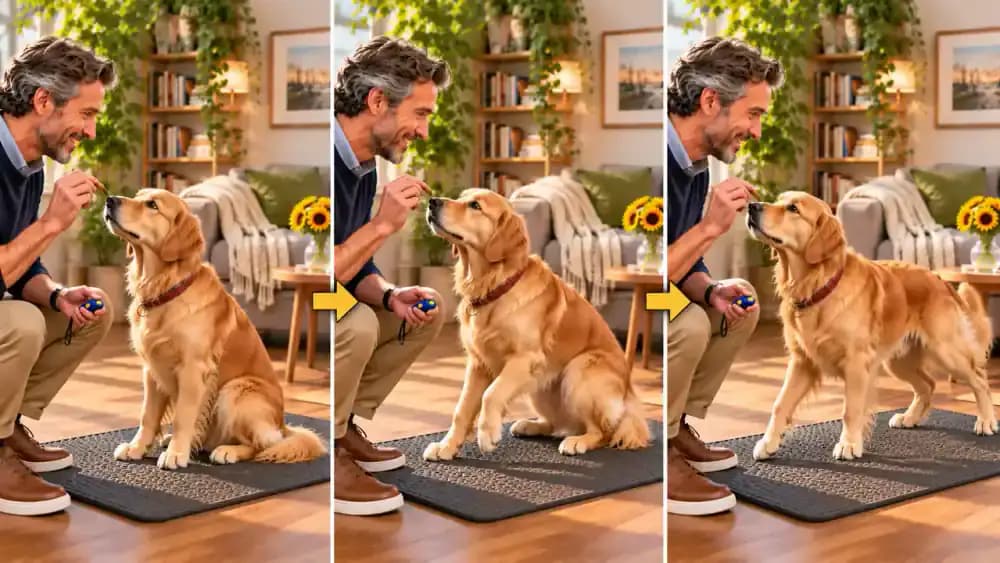
Create a Consistent Starting Position
Begin each repetition with your dog standing comfortably on a non-slip surface, with all four paws supported. Reward a relaxed standing posture before introducing the backward cue. If your dog automatically sits, calmly reset and reinforce standing separately. A predictable starting position helps distinguish walking backward from sitting and makes each training attempt easier to understand.
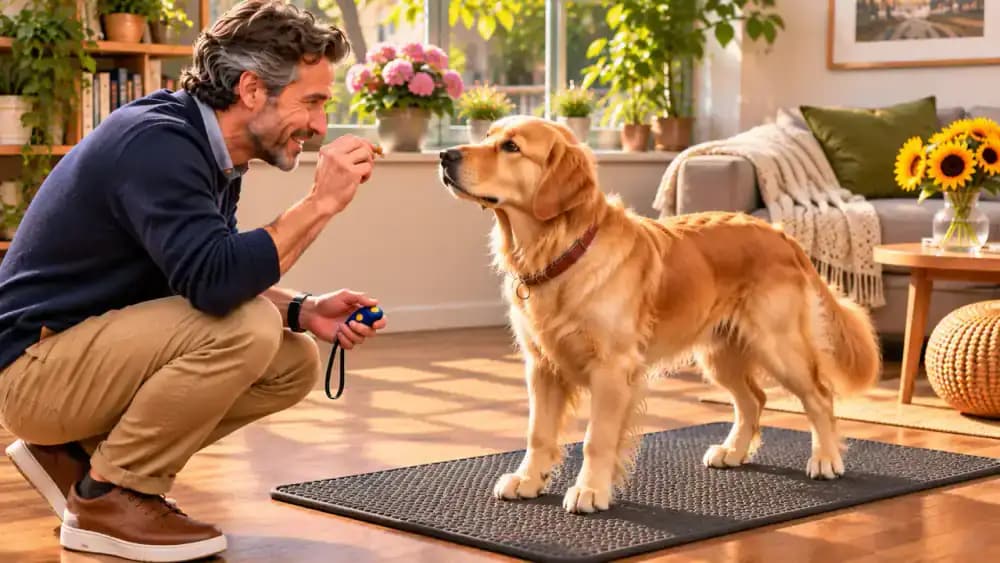
Encourage Straight Backward Movement
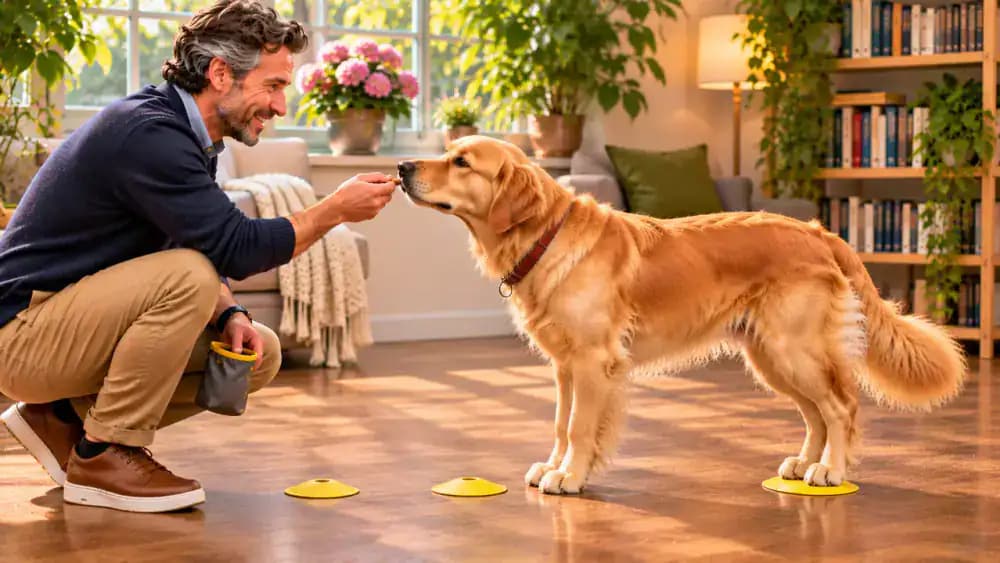
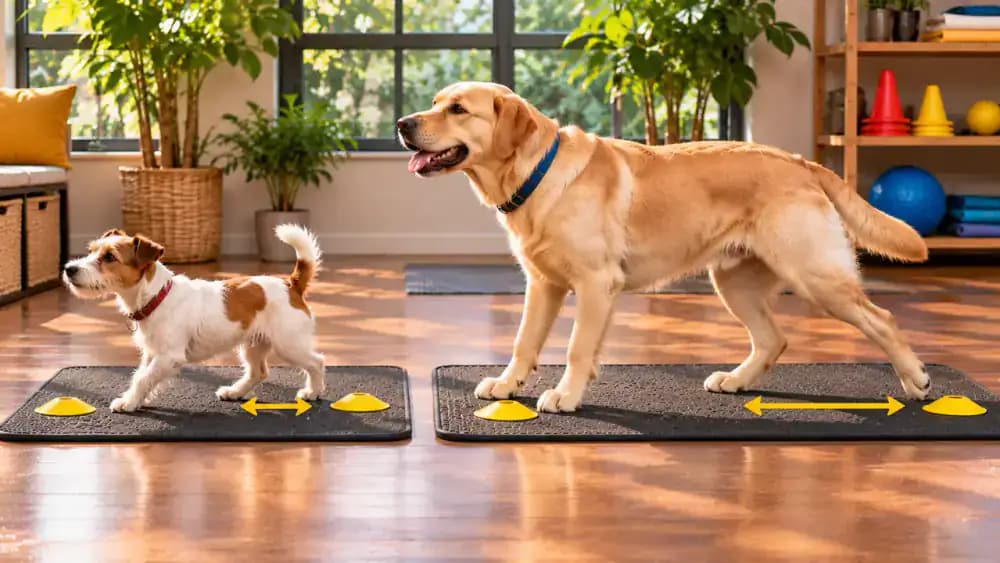
Watch whether your dog moves straight backward or drifts sideways during practice. Place two flat, widely spaced floor markers alongside an open training path to provide visual reference points. Reward naturally occurring straight steps without physically guiding your dog between the markers. Keep both ends unobstructed, and remove the markers gradually as your dog's coordination improves.
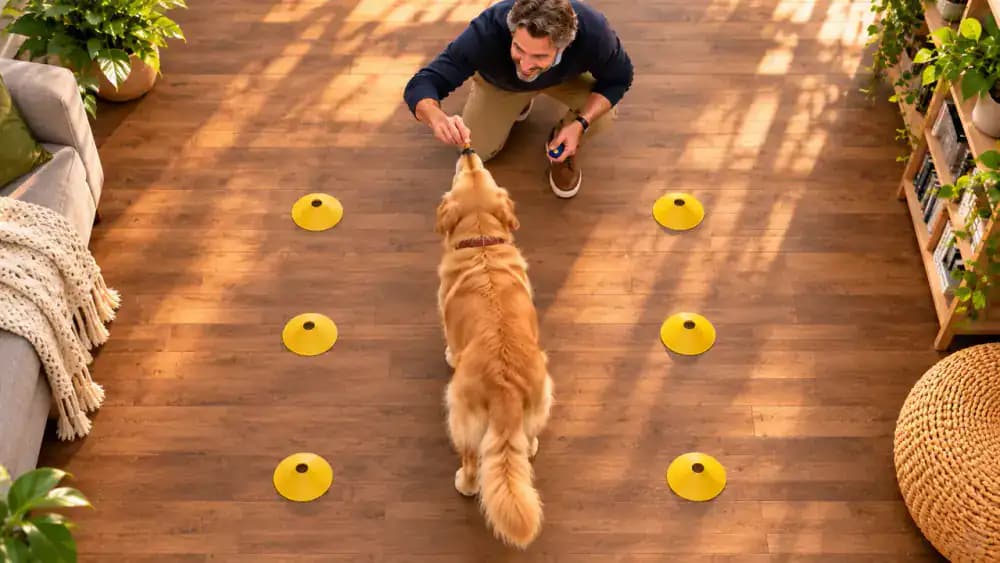
Practice From Different Positions
Once your dog responds reliably, practice giving the "Back" cue while standing in slightly different positions. Move a little to one side, ask for one backward step, and reward success. Return to your usual position before trying another angle. Keep changes small so your dog learns to follow the verbal cue regardless of your exact stance.
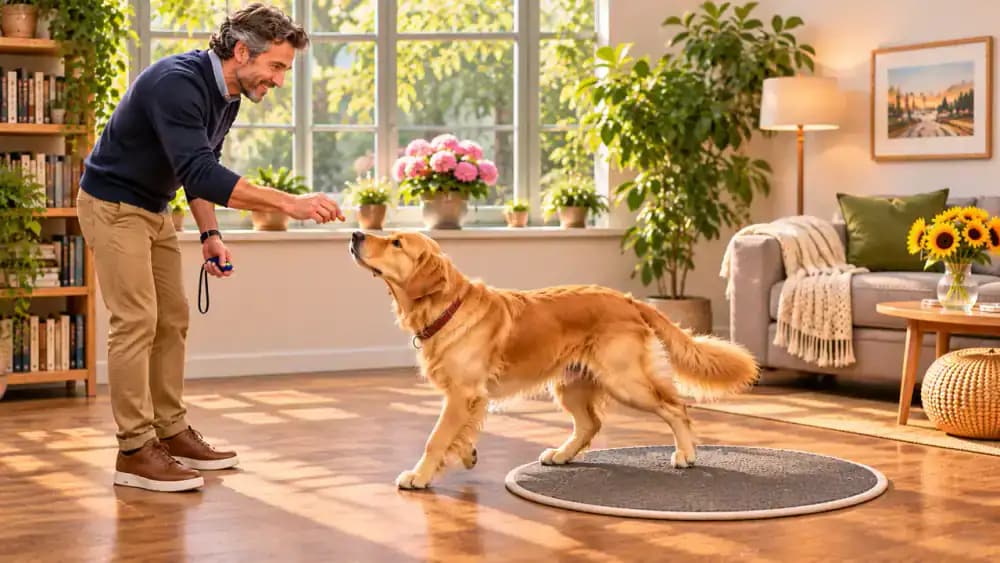
Generalize the Skill to New Locations
When your dog confidently walks backward in one room, introduce the exercise in another quiet indoor space. Use a non-slip mat and clear away nearby obstacles. Start by rewarding one backward step, even if your dog previously managed three. Gradually rebuild the sequence as confidence grows. Practicing in different safe locations helps strengthen the learned behavior.
Keep Rewards Motivating
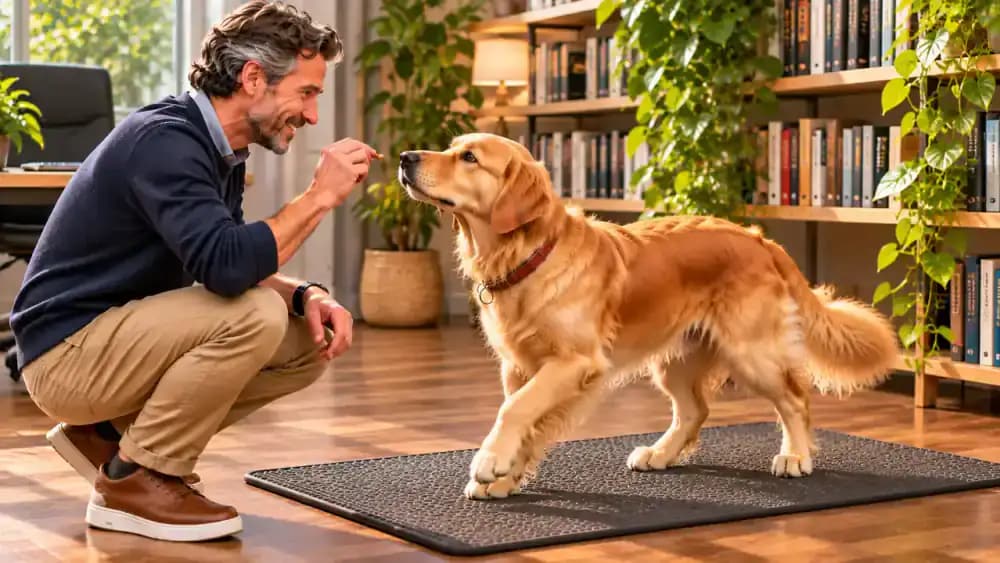
Continue rewarding successful backward movements with small treats, especially when introducing new challenges. As your dog becomes more confident, occasionally add enthusiastic praise, a favorite toy, or a brief game. Observe which rewards maintain your dog's interest. Avoid suddenly eliminating treats or making rewards unpredictable too early. Positive experiences help keep training enjoyable and responses consistent.
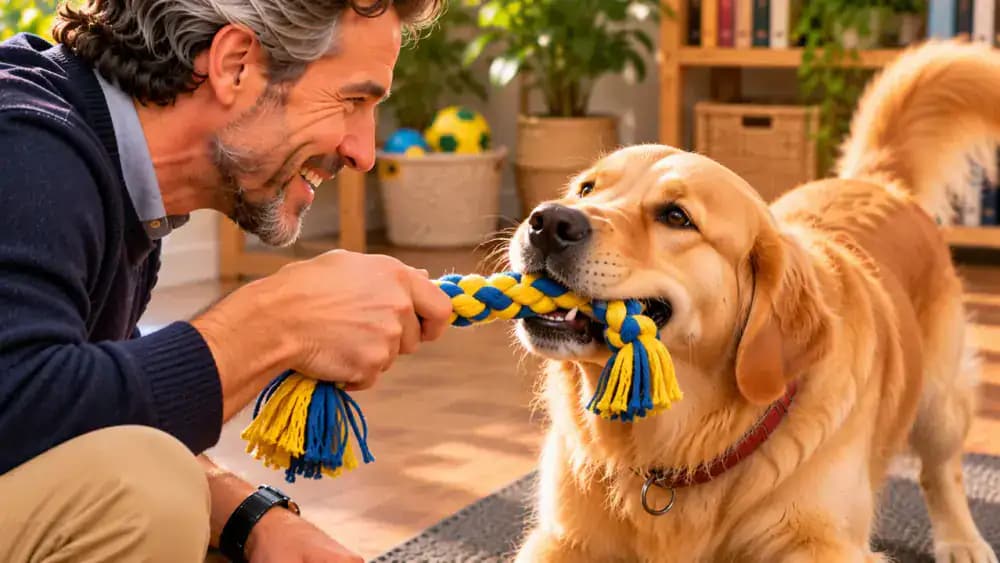
Teach a Clear Ending and Reset
Give the "Back" cue once and allow your dog to complete the requested backward steps. Immediately mark the finished movement and offer a reward. Then invite your dog forward to the original starting position using a separate signal. This clear reset prevents confusion between repetitions and teaches your dog when the backward movement has ended.
Recognize Comfort and Stress Signals
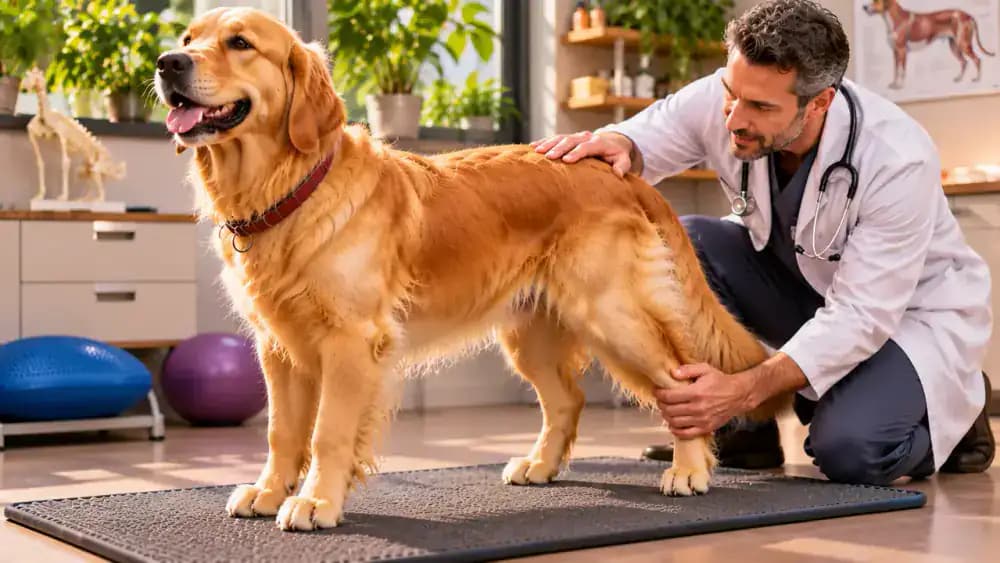
Monitor your dog's entire body during backward walking, not just their paws. Relaxed posture, steady footing, and willing participation suggest the exercise is comfortable. If your dog freezes, repeatedly stumbles, or hesitates, reduce the difficulty or stop. Never pull the collar or push the hips. Consult your veterinarian if movement difficulties or signs of discomfort persist.
Maintain the Skill With Short Practice
Keep your dog's backward walking skills fresh by including a few easy repetitions in occasional training sessions. Give the familiar cue, reward three comfortable steps, and finish while your dog remains interested. Transition to a favorite toy or relaxing activity afterward. Prioritize smooth, confident movements over increasing speed or distance, and avoid repetitive drilling.
Track Progress Without Rushing
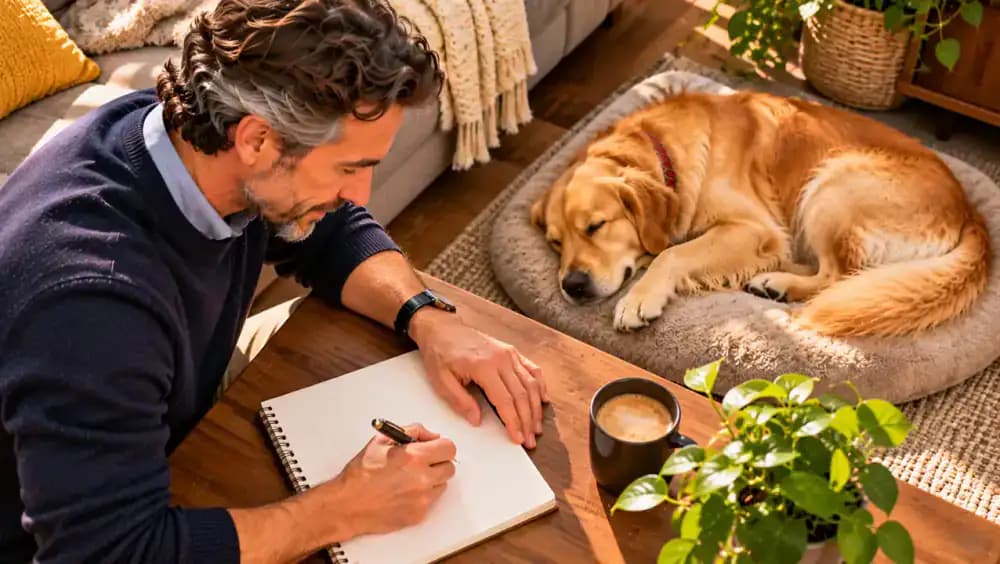
Use a simple training journal to record your dog's progress after each practice session. Note the date, number of comfortable backward steps, whether your dog responded to the verbal cue alone, and the training location. Review these notes periodically to identify improvements or recurring difficulties. Focus on relaxed, consistent performance rather than setting new distance records.
Adapt Training to Your Dog
Adjust your expectations to your dog's size, age, and individual movement patterns. A small terrier may need four short steps to cover the distance a large Labrador travels in two. Reward deliberate, comfortable paw movements rather than measuring inches. Provide appropriately sized training mats and treats, and allow each dog to progress at a comfortable pace.
Recognize Unsafe Training Situations
Never practice backward walking near stairs, crowded doorways, sharp furniture corners, or moving objects. Your dog cannot easily see obstacles directly behind them, making a clear path essential. Before giving the cue, inspect the floor and surrounding area. Choose a spacious location with secure footing, and leave enough room for your dog to stop or move away safely.
Manage Unrequested Backward Steps
If your dog begins stepping backward without hearing the cue, remain calm and avoid automatically rewarding the movement. Your dog may be experimenting with a previously successful behavior. Reinforce relaxed standing or another appropriate behavior between exercises. Then say "Back" once and reward the requested movement. This distinction helps your dog understand when backward walking is expected.
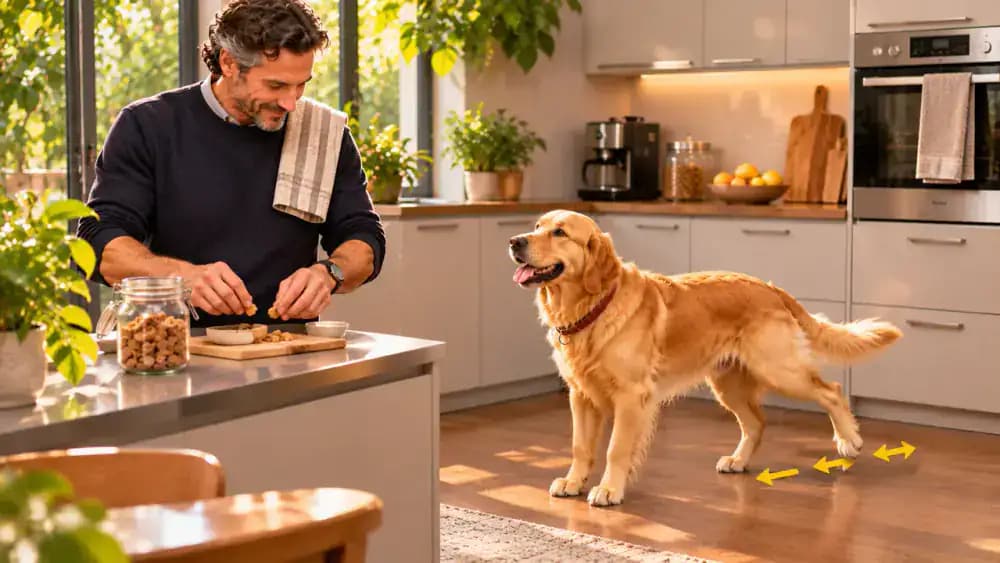
Test Understanding Without Visible Treats
Check whether your dog understands the verbal cue without relying on visible treats or hand movements. Stand naturally in a familiar, safe training area with rewards concealed in a pouch. Say "Back" once and observe the response. If your dog hesitates or watches your hands, return to an easier prompted repetition and reward successful movement.
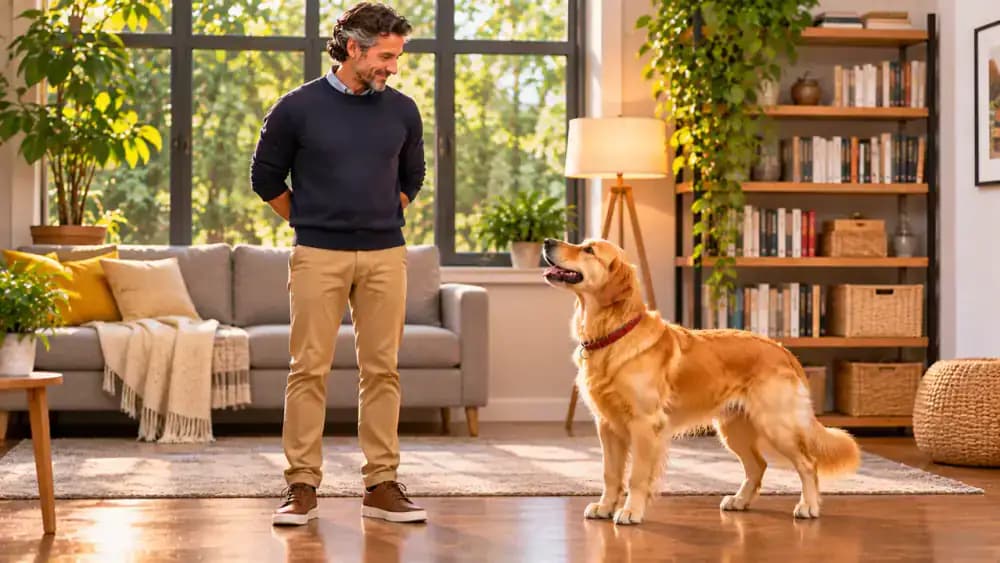
Use Video to Improve Your Training
Record a short backward walking session using a smartphone positioned at your dog's side. Review the footage to examine paw placement, weight shifts, and whether your dog moves straight or turns. Compare a few repetitions and focus on one improvement at a time. If movement appears uncomfortable or persistently uneven, stop and consult your veterinarian.

Build a Confident Backward Walking Habit
Strengthen your dog's confidence by practicing a few comfortable backward steps with clear cues and consistent rewards. Keep the surface secure, maintain realistic expectations, and celebrate willing participation. When your dog responds to "Back" with three relaxed steps, reward promptly and end positively. Regular, enjoyable practice supports reliable communication and coordination without unnecessary pressure.
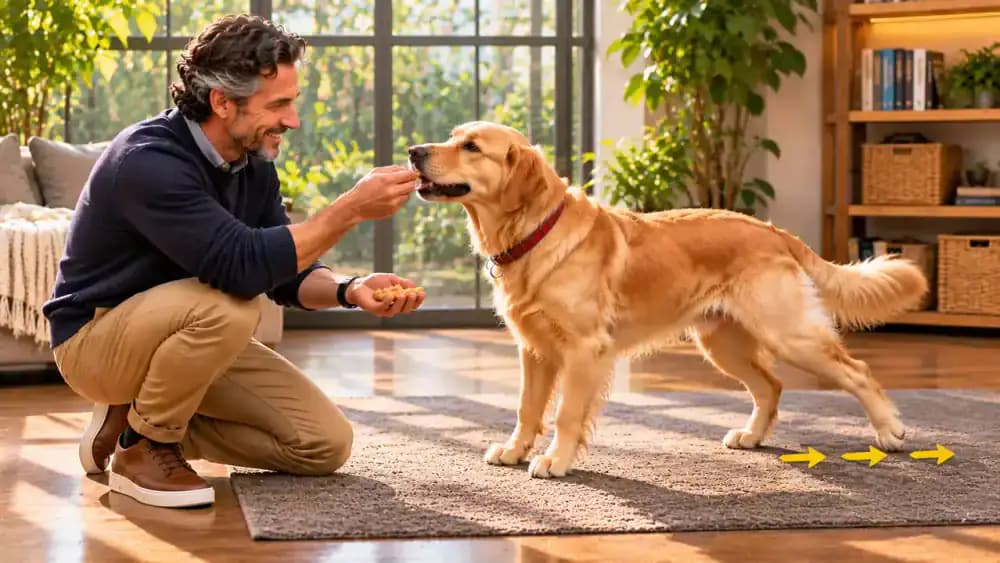
Practice With Different Family Members
Once your dog responds consistently to you, invite another family member to practice the same cue. Stay nearby initially while the new trainer says "Back" and provides the familiar gentle prompt if needed. Reward even one voluntary backward step. Make sure everyone uses identical wording, clear reward timing, and patient expectations to prevent confusion.
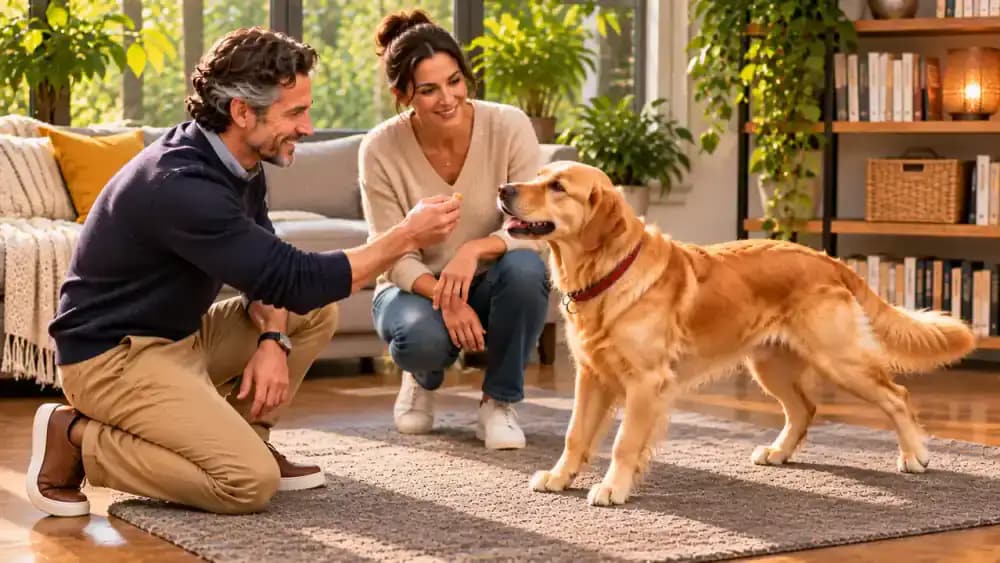
Improve Your Reward Delivery
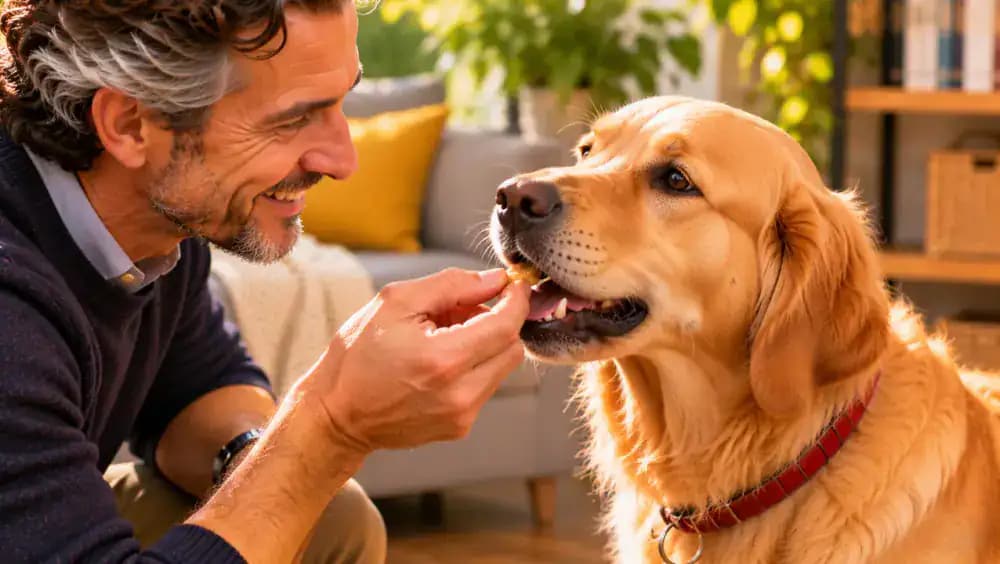
Mark the exact moment your dog completes the requested backward movement before reaching forward with a treat. Bring the reward directly to your dog's current position instead of encouraging them to step toward your hand. Keep delivery consistent across repetitions. This prevents accidental forward movement from interrupting the exercise and reinforces the intended backward action.
Avoid Accidental Body Language Cues
Pay attention to your posture and eye contact when asking your dog to walk backward. Try giving the same verbal cue while looking directly at your dog, then repeat with a relaxed, upright stance and neutral gaze. Notice which position encourages comfortable movement. Gradually eliminate unnecessary body signals while keeping your dog confident and engaged.
Practice Around Visitors Without Pressure
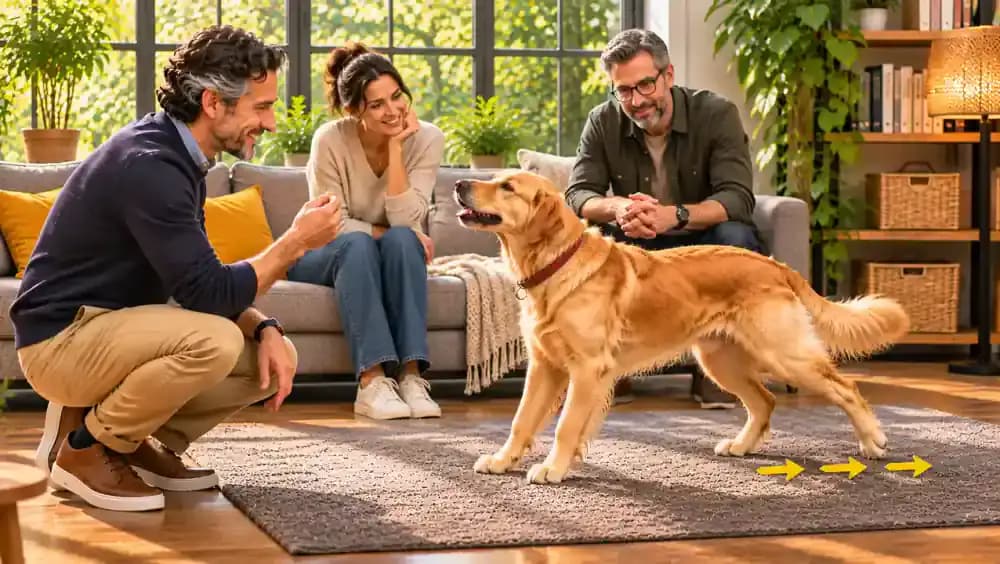
Allow your dog to greet visitors and settle before attempting backward walking in company. Wait until everyone is seated calmly, then invite your dog onto a secure training mat. Ask for just one familiar backward step and reward success. If your dog seems distracted, excited, or uncomfortable, skip the demonstration and practice privately another time.
Combine Backward Walking With Other Skills
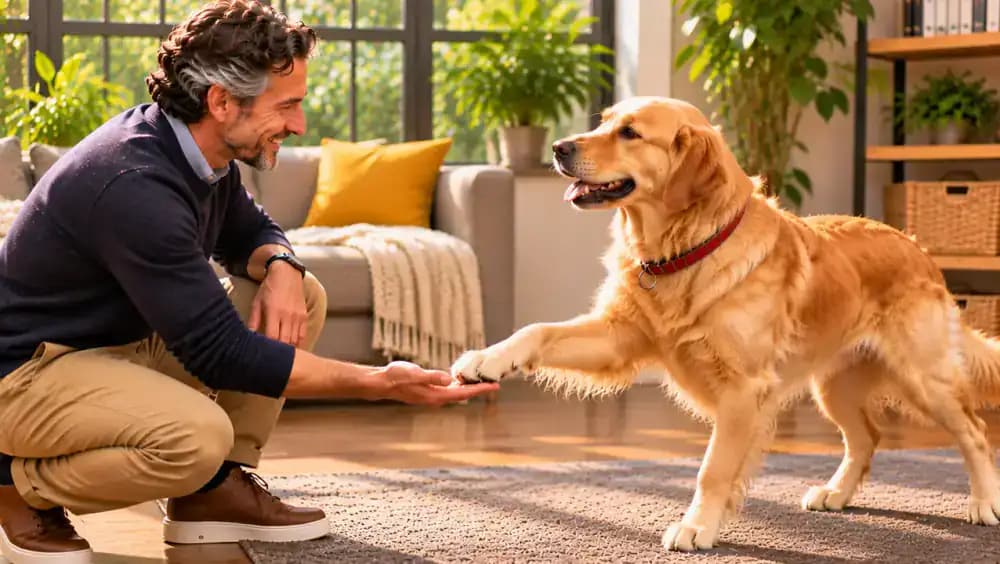
Add backward walking to a short routine of familiar training exercises. Ask for one or two backward steps, reward the response, and then request a separate behavior such as standing still or touching your open palm with their nose. Use distinct verbal cues for each activity. Alternate easy exercises while monitoring your dog's enthusiasm and comfort.
Understand Unexpected Training Setbacks
If your dog suddenly struggles with a previously reliable backward cue, avoid repeating commands or assuming stubbornness. Check for distractions, slippery flooring, fatigue, or signs of discomfort. Reduce the difficulty or end the session if needed. Give your dog time to rest, and contact your veterinarian promptly if you notice persistent or unusual movement difficulties.
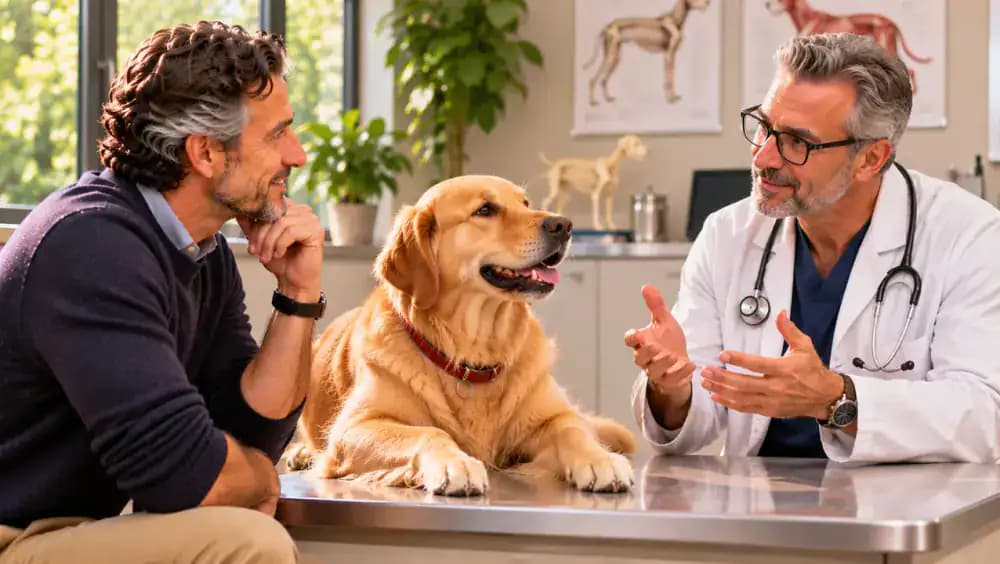
Celebrate the Partnership Behind the Trick
Celebrate your dog's progress by asking for one relaxed backward movement in a familiar, safe space. Give the verbal cue once, mark the successful step, and offer a favorite reward followed by gentle affection if your dog enjoys it. Continue practicing at a comfortable pace, recognizing that patience, clear communication, and voluntary participation matter more than perfect performance.
You say "Back," and your dog takes three neat steps backward before looking up for a treat. It might seem like a simple party trick, but teaching your dog to walk backward offers benefits beyond impressing friends. Backward movement encourages body awareness, balance, and coordination, especially because dogs don't naturally spend much time thinking about where their back paws are going.
The good news? You don't need special equipment, advanced training experience, or a particularly athletic dog. With a few small treats, a quiet room, and a comfortable, non-slip surface, you can introduce this skill through positive reinforcement. An optional clicker can help you communicate exactly which movement earns a reward.
The secret is to start small. Rather than expecting your dog to back up several feet immediately, you'll reward even a single backward step. As your dog begins to understand the movement, you can gradually build toward two or three steps and eventually introduce the verbal cue "Back."
Most importantly, your dog should always have the freedom to move voluntarily. There's no need to push, pull, or physically reposition your pet. Keep each session brief, celebrate small improvements, and adjust your expectations to your dog's comfort and learning pace. With patient, consistent practice, walking backward can become an enjoyable addition to your dog's everyday training routine.
Where people go wrong
Pushing Your Dog Backward Instead of Letting Them Choose. Physically pushing your dog or repeatedly stepping into their personal space can create stress and make the exercise unpleasant. Your dog should choose to move backward, not retreat because they feel trapped. Use a treat near nose level and a small, gentle forward movement as a prompt. If your dog appears uncomfortable, increase the distance and make the exercise easier.
Training on Slippery Floors. Hardwood, tile, and other slick surfaces can make backward movement difficult because your dog cannot easily see where their rear paws are going. Slipping may reduce confidence and increase the risk of injury. Use a non-slip mat or carpet that stays securely in place. Check the area behind your dog before every practice session.
Expecting Several Backward Steps Too Soon. Asking for three or four steps before your dog understands the first one can lead to confusion and frustration. Initially, reward any deliberate backward paw movement, even if it looks tiny. Once your dog reliably offers one step, gradually increase the distance. If progress stalls, return to the last successful movement and rebuild confidence from there.
Rewarding Too Late. If you deliver a treat several seconds after your dog steps backward, they may associate the reward with sitting, looking up, or moving forward instead. Use a clicker or a short verbal marker the instant a backward movement happens. Then deliver the treat promptly. Precise timing makes the training goal easier for your dog to understand.
Accidentally Teaching Your Dog to Sit. Some dogs respond to a treat held too high or to a person approaching them by sitting rather than stepping backward. Keep the treat around nose level and avoid lifting it over your dog's head. Reward a small rearward weight shift or paw movement before a sit develops. If sitting becomes frequent, create more space and simplify your prompt.
Adding the Verbal Cue Before the Movement Is Reliable. Repeating "Back" while your dog is still guessing can weaken the meaning of the cue. First establish a recognizable backward movement using your familiar hand and body prompts. Then say "Back" once, immediately before the prompt, and reward the response. Gradually reduce your physical assistance so the word becomes the primary signal.
Ignoring Signs of Fatigue or Discomfort. Backward walking requires coordination and may feel unfamiliar, particularly for older dogs or those with mobility limitations. Watch for hesitation, stiffness, slipping, reluctance to move, or attempts to leave the activity. Never force additional repetitions. Stop if your dog seems uncomfortable, and consult your veterinarian before continuing when movement difficulties or possible pain are present.
Practicing Too Long or Removing Rewards Too Quickly. Long sessions and sudden changes in reward frequency can make a new trick frustrating. Keep practice short, end after a successful attempt when possible, and reinforce small improvements generously. Once your dog understands the cue, you can gradually vary treat delivery while continuing to offer praise. Avoid expecting consistent performance in distracting environments before the skill is established.
Questions people ask
Some dogs begin offering a backward step during their first training session, while others need several days or weeks of short practice sessions. Learning speed depends on your dog's experience, confidence, coordination, and the clarity of your reward timing. Focus on consistent improvement rather than a deadline. One reliable backward step is meaningful progress toward a complete sequence.
Fixed it?
Get one guide like this every Thursday.