How to Teach Your Dog to Go to Bed on Cue
Teach your dog to happily head to their bed when asked using positive reinforcement, short training sessions, and a clear verbal cue. Learn how to build a reliable response without pushing, repeating commands, or confusing going to bed with staying there.

What you’ll need
Tap to tick things off before you start.
Why Teach the Bed Cue?
When your dog wanders around the living room instead of settling on their bed, repeatedly pointing or calling may only create confusion. Teaching a clear bed cue gives your dog a specific destination and a reason to choose it. The goal is for your dog to willingly walk to their bed after one request.

Prepare the Training Space
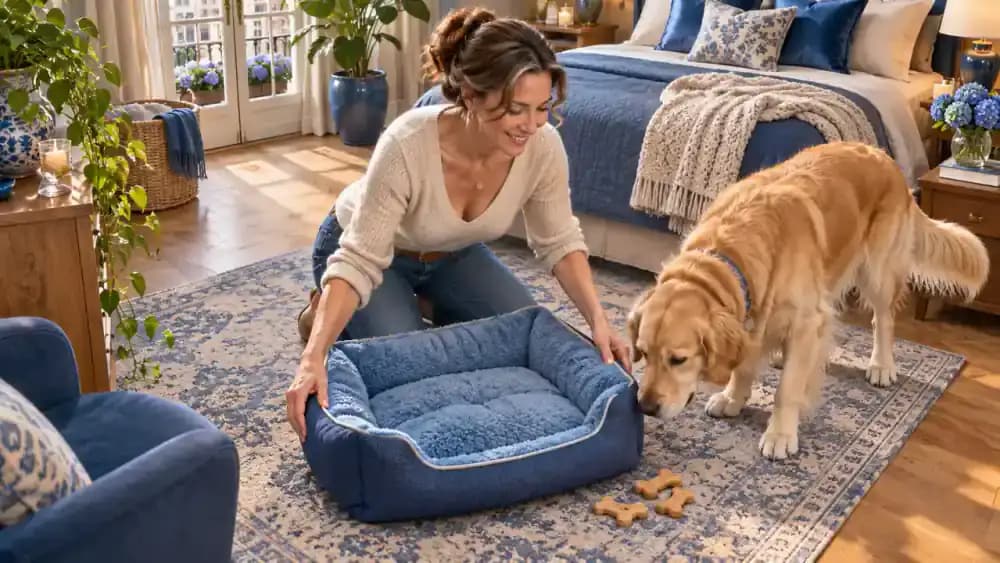
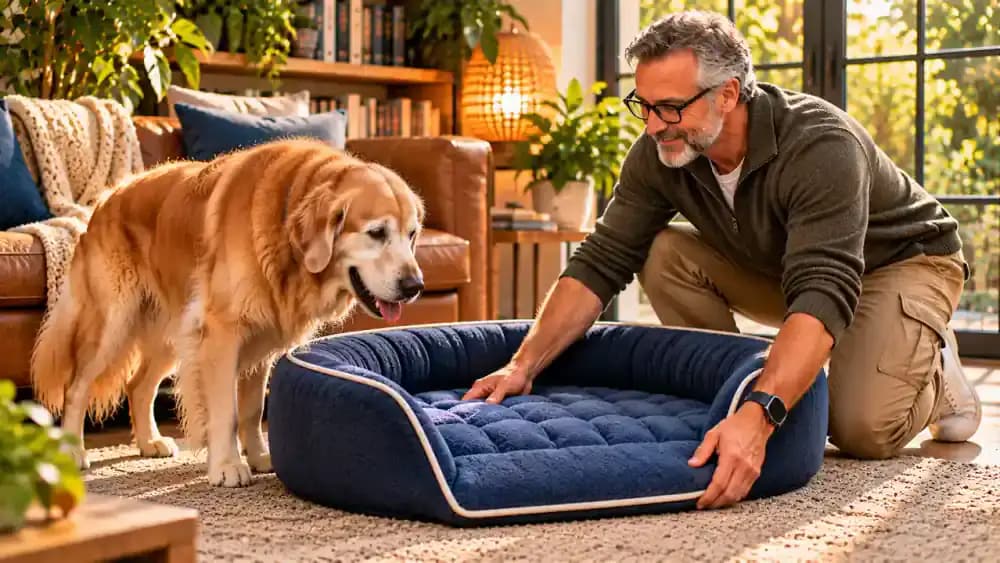
Place a comfortable dog bed on a non-slip surface in a quiet, familiar area. Check that it stays stable when your dog steps onto it. Prepare several small, dog-safe treats and choose a reward marker such as "yes." Let your dog sniff and investigate the bed naturally before asking for any specific behavior.

Reward Small Steps Toward the Bed
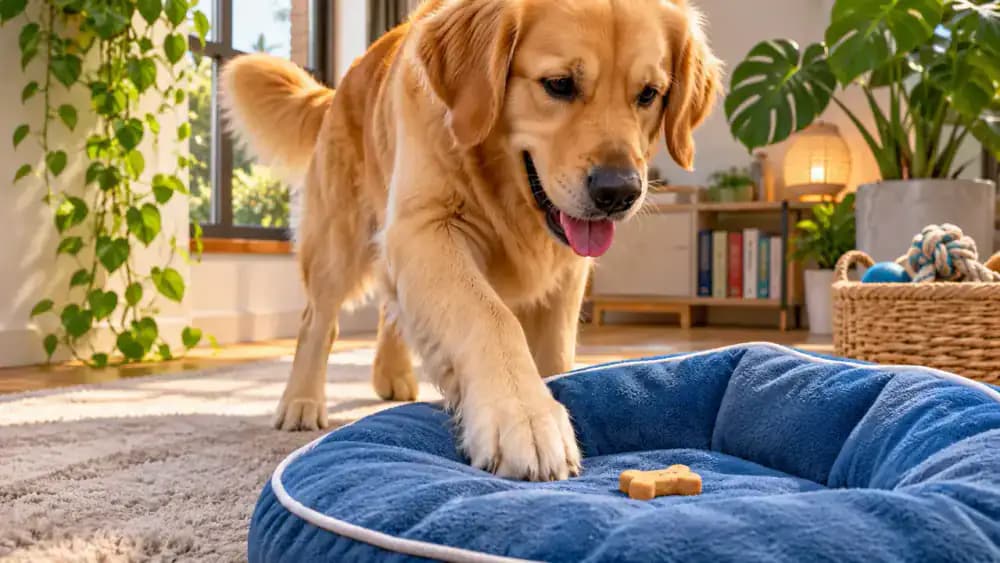
Watch for your dog to look toward or voluntarily approach the bed. Immediately mark the behavior and offer a treat nearby. As your dog gains confidence, gradually reward bigger achievements: one paw on the bed, both front paws, and finally all four paws. Keep each progression easy enough that your dog succeeds without pressure.
Introduce the Verbal Cue
Once your dog consistently steps onto the bed using a familiar gesture, say "bed" once immediately before making that gesture. Mark the moment all four paws reach the bed and reward promptly. Repeat several successful attempts, gradually making your hand movement smaller until your dog responds to the spoken cue without additional guidance.
Practice with Clear Resets
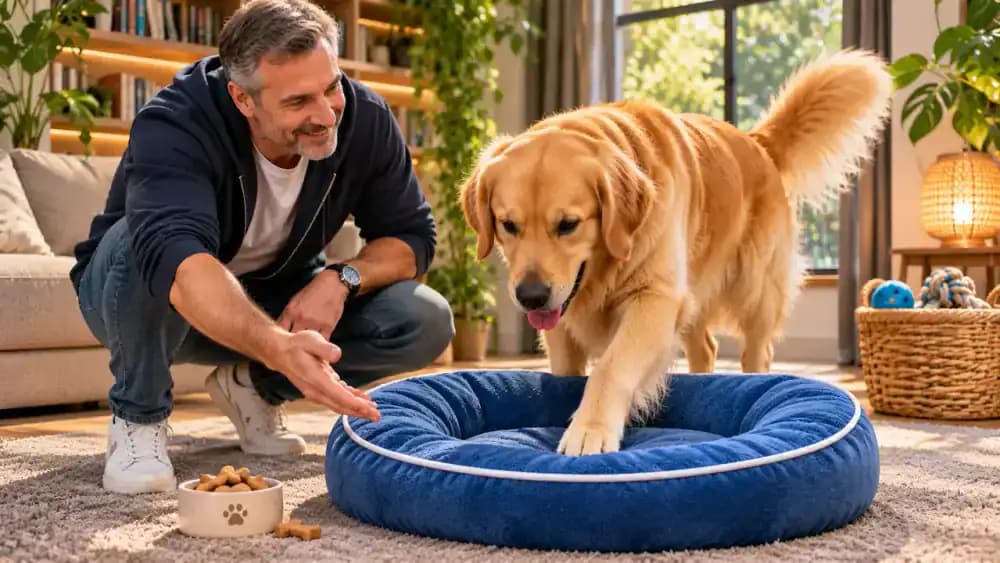
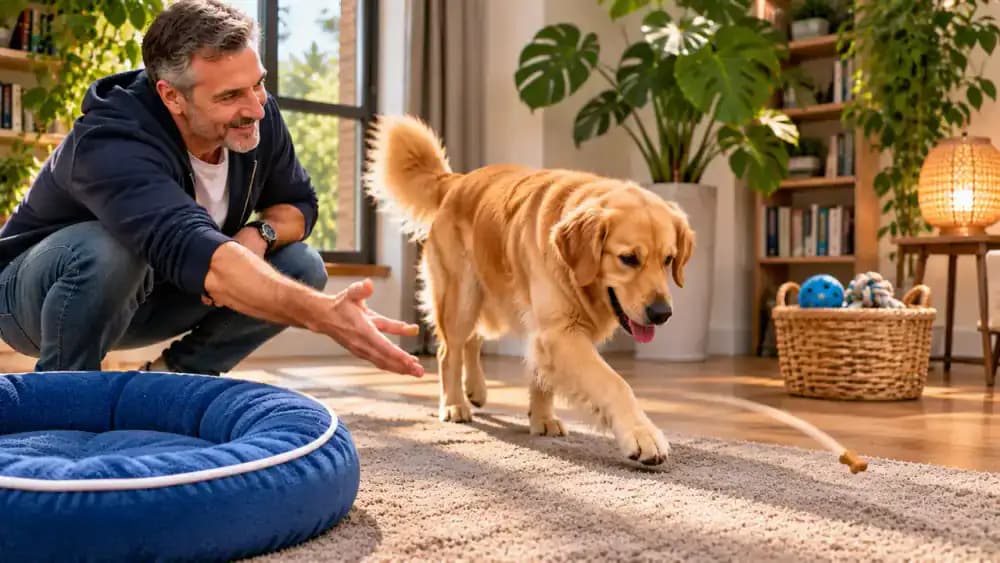
After rewarding your dog on the bed, gently toss a treat onto an open section of floor so they can step off voluntarily. Once they collect it, give the bed cue again and reward their return. Practice a few relaxed repetitions, watching for comfortable movement and enthusiasm. If your dog hesitates, simplify the next attempt.
Build Distance and Reliability
Once your dog responds reliably beside the bed, move one step farther away and give the cue once. Reward your dog when all four paws reach the bed. Gradually practice from different starting positions, including near the sofa. Increase only one challenge at a time. If your dog hesitates, move closer and rebuild confidence.
Understand Going Versus Staying
Remember that going to the bed and staying there are separate skills. For now, reward your dog as soon as all four paws reach the surface, even if they leave immediately afterward. Later, practice brief pauses before delivering rewards, gradually extending the duration. Never physically restrain your dog or punish them for stepping away.
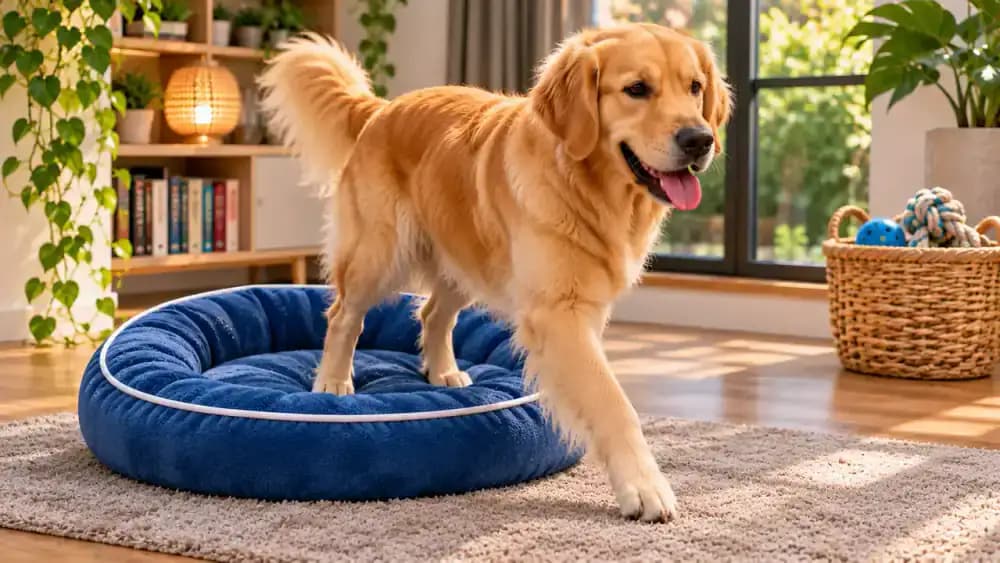
Practice in New Places and Celebrate
Move the familiar bed into another quiet room, such as your home office, and begin practicing from nearby. Give the bed cue once and reward your dog for stepping onto the cushion. Gradually rebuild distance as responses improve. Avoid pushing or repeatedly calling your dog. Finish with an easy success, a treat, and gentle praise.
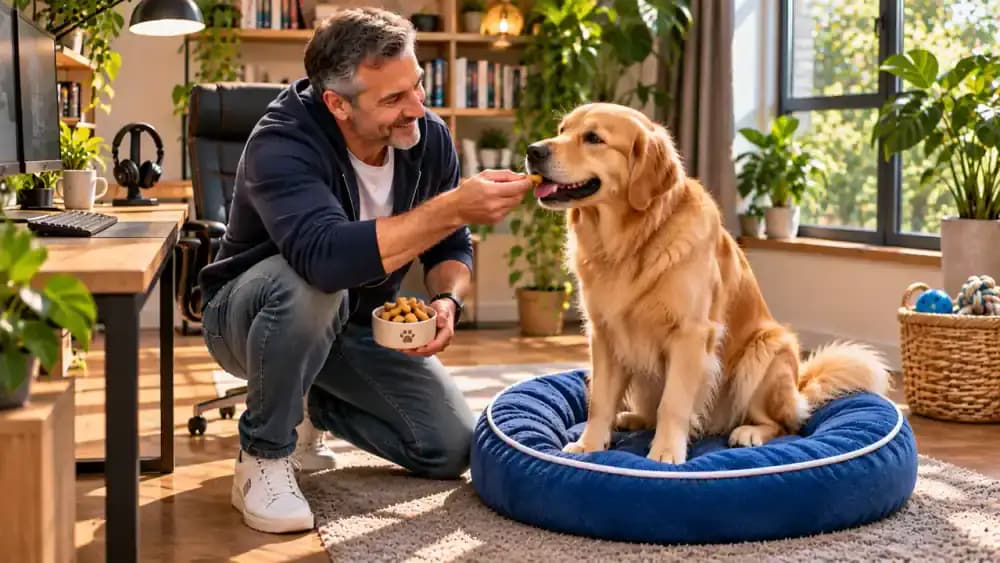
Use the Cue During Everyday Activities
Once your dog understands the cue in familiar locations, incorporate it into calm household routines. While folding laundry or reading, ask your dog to go to their nearby bed and reward their arrival. Continue your activity without requiring them to stay unless you've trained that separately. Regular, low-pressure practice makes the cue more useful in everyday life.
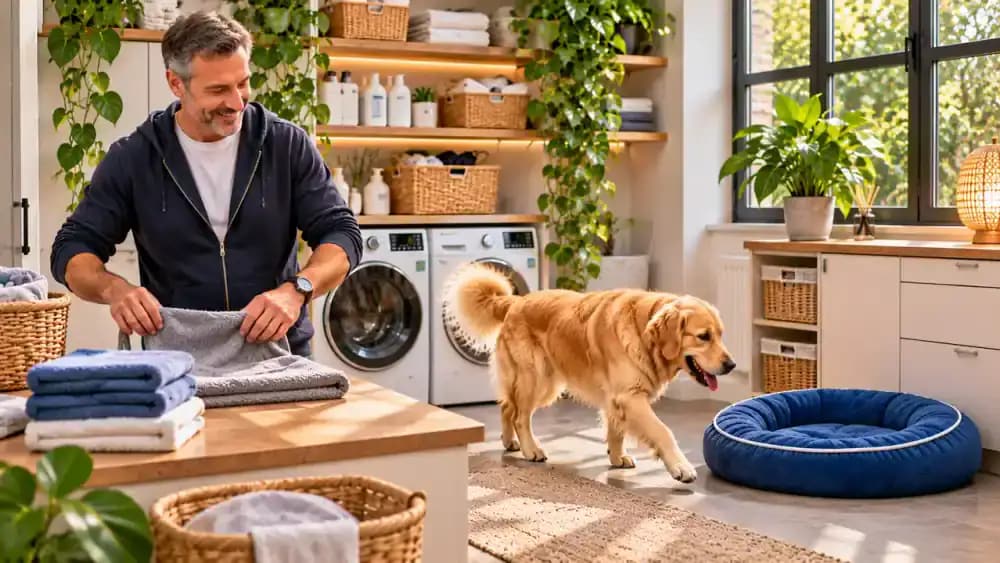
Introduce Mild Distractions
When your dog reliably reaches the bed in quiet settings, introduce one gentle distraction, such as someone walking slowly across the room or placing a book on a table. Give the cue before your dog becomes distracted and reward success promptly. If they struggle, increase their distance from the activity or return to an easier exercise.
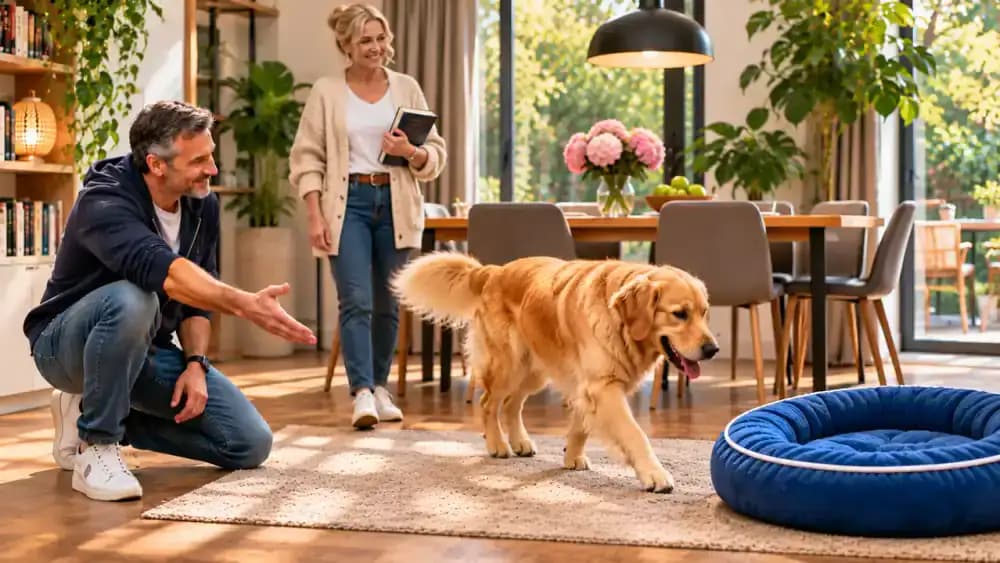
Practice When Visitors Arrive
Visitors can make the bed cue more challenging because your dog may be eager to greet them. Start with a familiar helper who enters quietly. Before opening the door, cue your dog toward a bed positioned away from the entrance and reward their arrival. Once everyone is calm, allow a greeting if your dog seems comfortable.
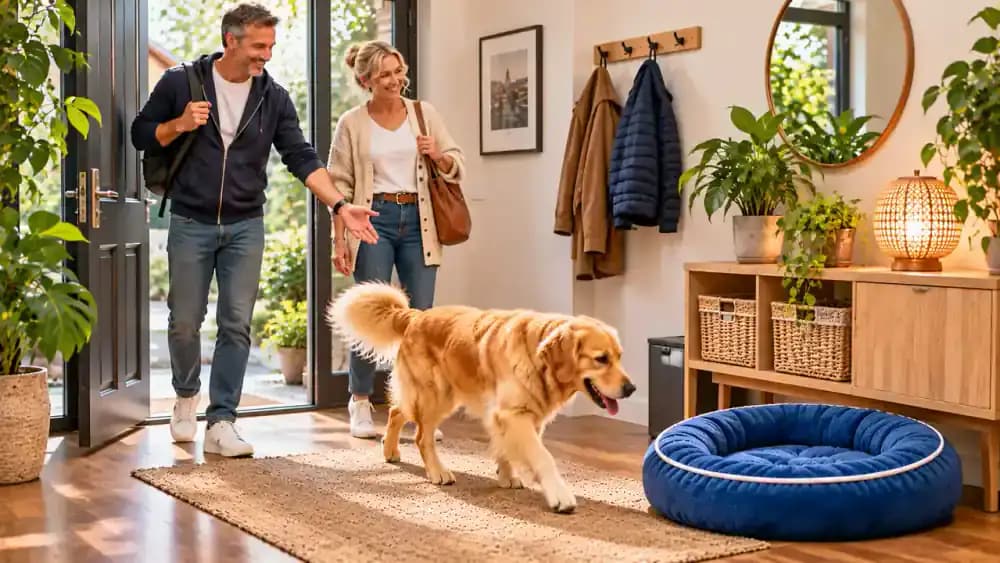
Generalize the Cue to Different Beds
Your dog may associate the bed cue with one particular cushion rather than every dog bed. Introduce a different bed in a quiet room and reward voluntary investigation. Gradually reinforce stepping onto the new surface with all four paws. Once both beds are familiar, practice indicating either one while rewarding correct responses and keeping expectations manageable.
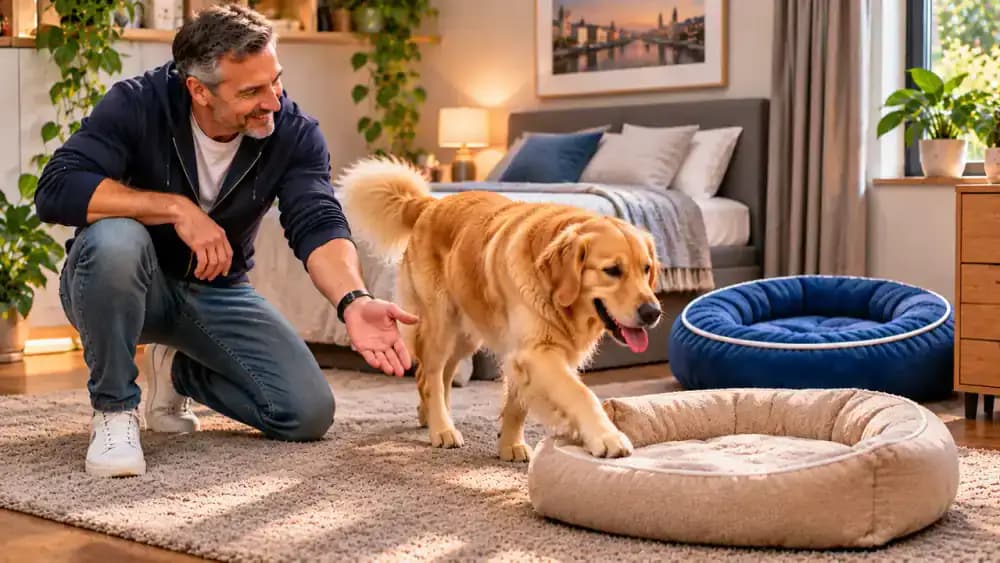
Reduce Visible Food Prompts
Once your dog consistently responds to the verbal cue, stop showing a treat before asking. Keep rewards in a pouch or pocket and deliver one after your dog reaches the bed. Gradually incorporate enthusiastic praise or a favorite toy alongside food rewards. Continue reinforcing successful responses regularly so your dog stays motivated without needing to see food first.
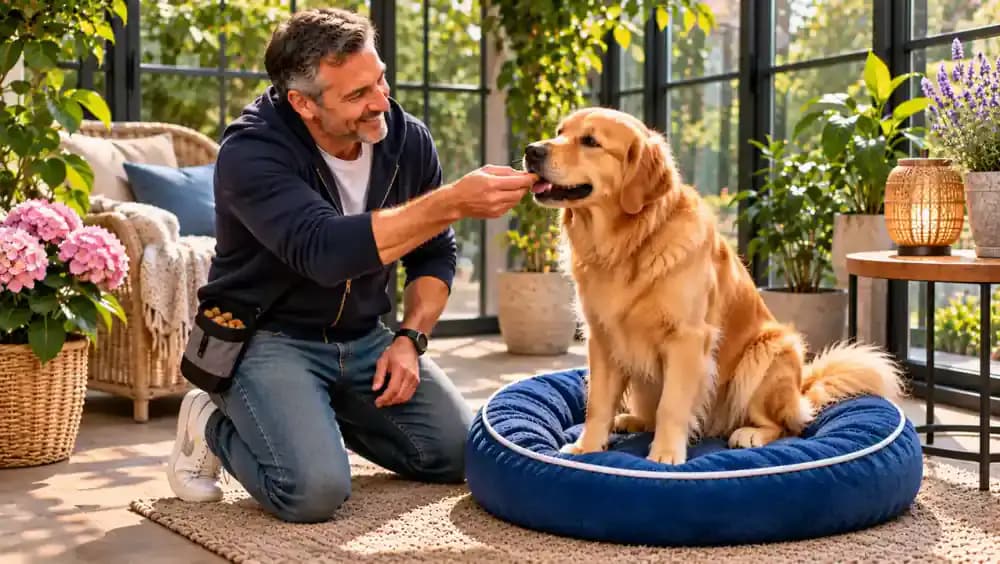
Recognize Comfort and Safety Problems
If your dog suddenly avoids the bed, check whether the surface slides, the location is noisy, or the bedding feels uncomfortable. Move the bed to a quiet, stable area and let your dog investigate voluntarily. Never force participation. If you notice pain, stiffness, unusual movement, or persistent reluctance, stop training and contact your veterinarian.

Keep Training Consistent Across the Family
Agree with everyone in your household on one verbal cue, a consistent reward marker, and the exact behavior you're rewarding. Have each person practice separately from an easy starting position, marking and rewarding when all four paws reach the bed. Use the same calm approach every time so your dog receives clear, predictable instructions from everyone.
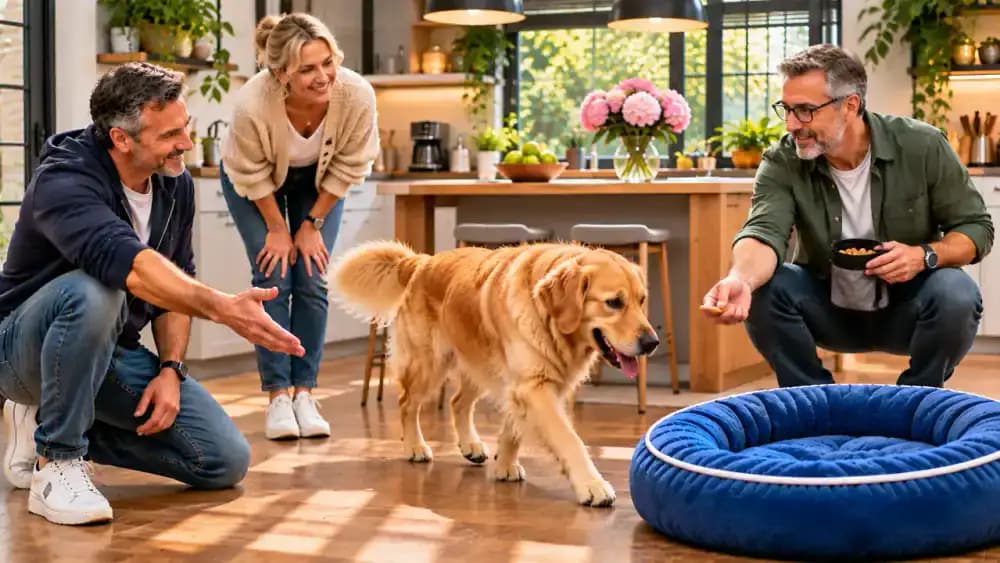
Make the Bed Cue a Lasting Habit
Use the bed cue during ordinary moments to turn training into a dependable habit. When you're settling onto the sofa with snacks, say "bed" once and reward your dog for happily reaching the cushion. Keep the experience relaxed and positive. Consistent practice matters more than perfect responses, and occasional rewards help maintain enthusiasm over time.
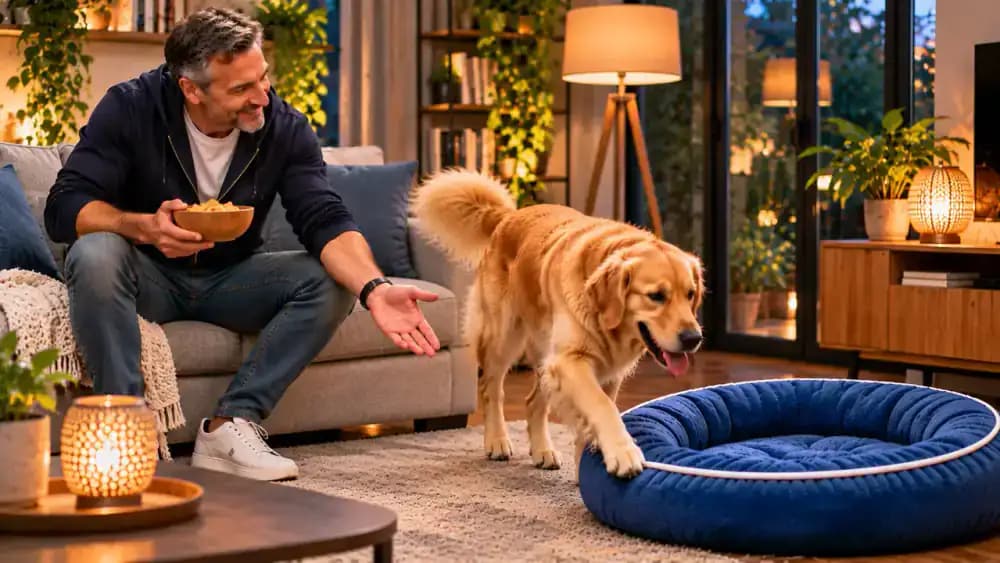
Adapt Training to Your Dog's Mood
Pay attention to your dog's energy and willingness to participate before starting each session. If they seem sleepy, distracted, or uninterested, avoid insisting on repeated attempts. Let them rest and try again later when they're more engaged. Short, successful sessions that respect your dog's comfort are more productive than forcing practice on a difficult day.

Introduce a Clear Release Cue
Once your dog understands how to reach the bed, introduce a separate release word such as "free." After rewarding their arrival, wait for a brief, comfortable pause, then say the release cue and invite them to step away. Gradually practice slightly longer pauses without restraint. This helps distinguish reaching the bed from remaining there until released.
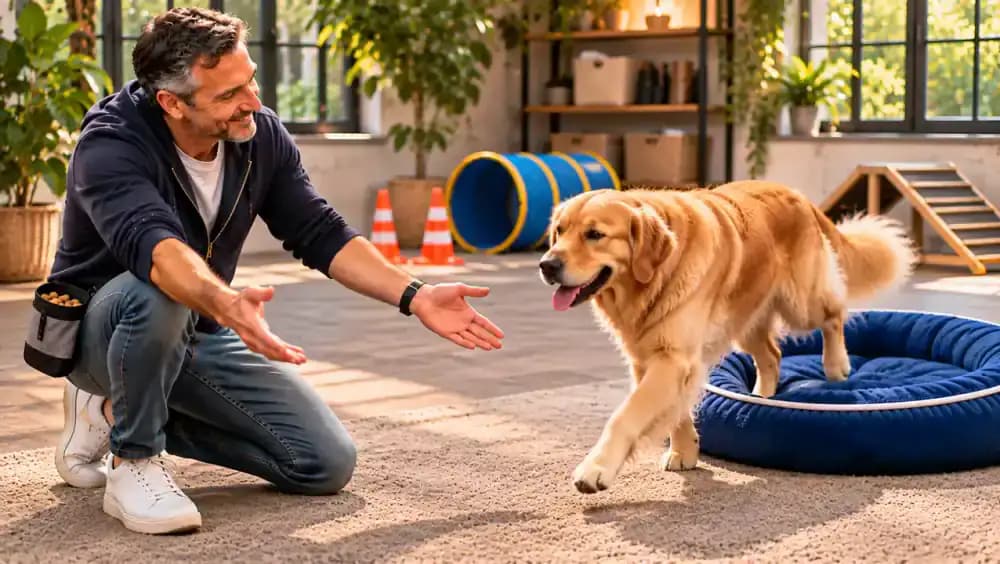
Prevent Confusion Between Resting Spots
When multiple dog beds look similar, your dog may approach a different cushion than the one you intended. Avoid scolding or physically redirecting them. Instead, move closer to the correct bed and use a clear pointing gesture. Reward the intended choice, then gradually reduce your assistance as your dog learns to distinguish between resting spots.
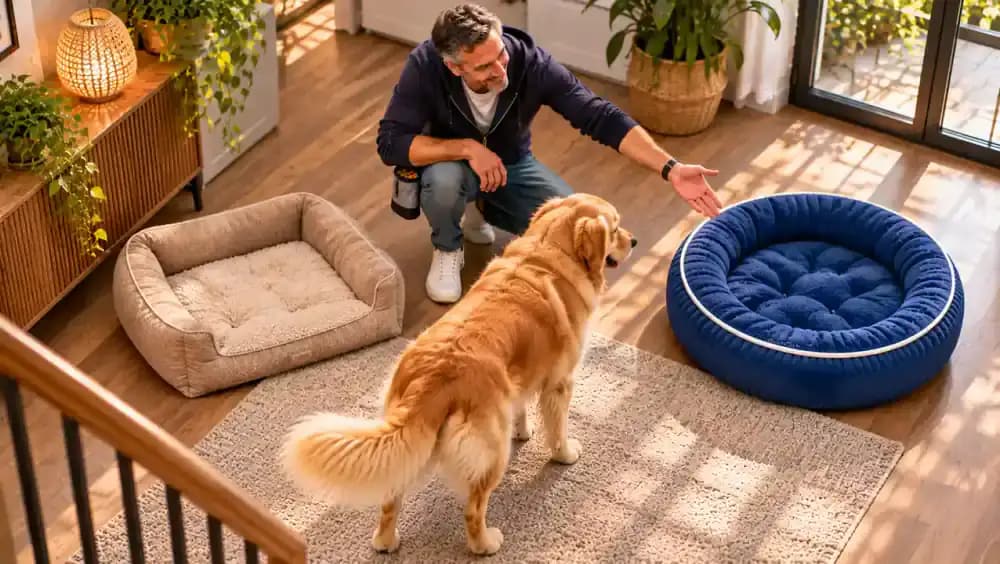
Choose the Right Moment to Practice
Practice the bed cue before household activity becomes exciting or distracting. For example, ask your dog to approach their bed in a quiet kitchen before preparing dinner. Reward the arrival, then begin simple tasks such as arranging vegetables. Gradually introduce more activity while keeping expectations realistic, and teach staying on the bed separately if needed.
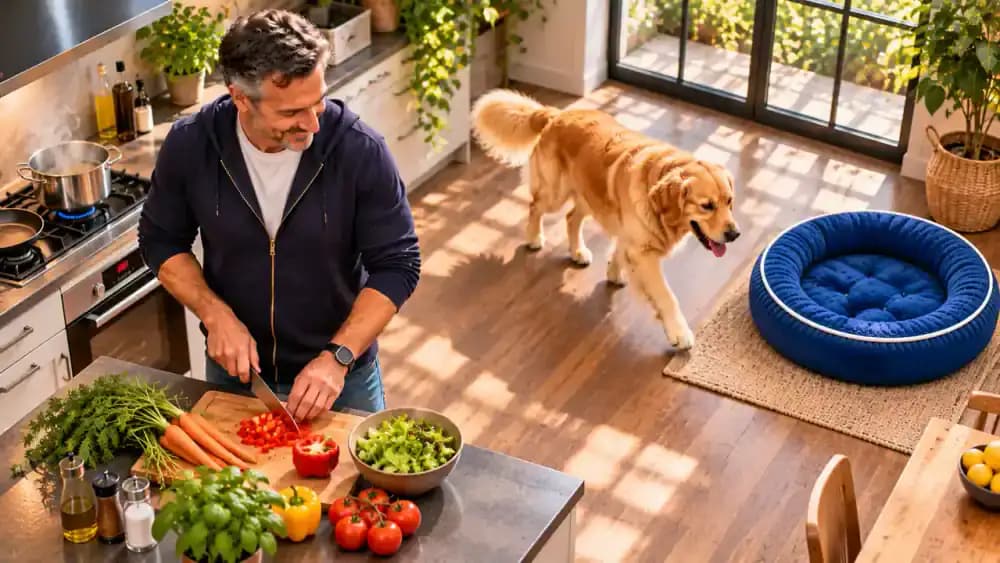
Track Progress Without Expecting Perfection
Keep a simple training notebook to record your dog's progress after each session. Note the starting distance, nearby distractions, and whether your dog responded to a single cue. Focus on relaxed, successful attempts rather than perfect scores. Reviewing several days of notes helps you recognize improvements and identify when additional practice at an easier level would help.

Keep the Bed a Positive Place
Your dog's bed should always feel like a safe, comfortable place to rest. Never use the bed cue as punishment or send your dog there angrily after unwanted behavior. Encourage voluntary visits, reward cooperation, and allow access to other suitable resting areas. Maintaining positive associations helps preserve your dog's willingness to respond to the cue.

Turn Training Into an Everyday Success
Choose one simple moment in your daily routine to practice the bed cue, such as preparing your morning coffee. Make sure the bed is accessible, give the cue once, and reward your dog for reaching it. Keep expectations realistic and celebrate small improvements. Brief, consistent practice helps your dog develop a useful behavior that fits naturally into household life.

Practice on Different Floor Surfaces
Help your dog become comfortable responding to the bed cue on different flooring materials, including carpet, wood, and non-slip tile. Check that the bed remains stable before each attempt. Allow your dog to investigate unfamiliar surfaces without pressure, then reward voluntary approaches and confident movement. If your dog hesitates, return to a familiar, secure setup.
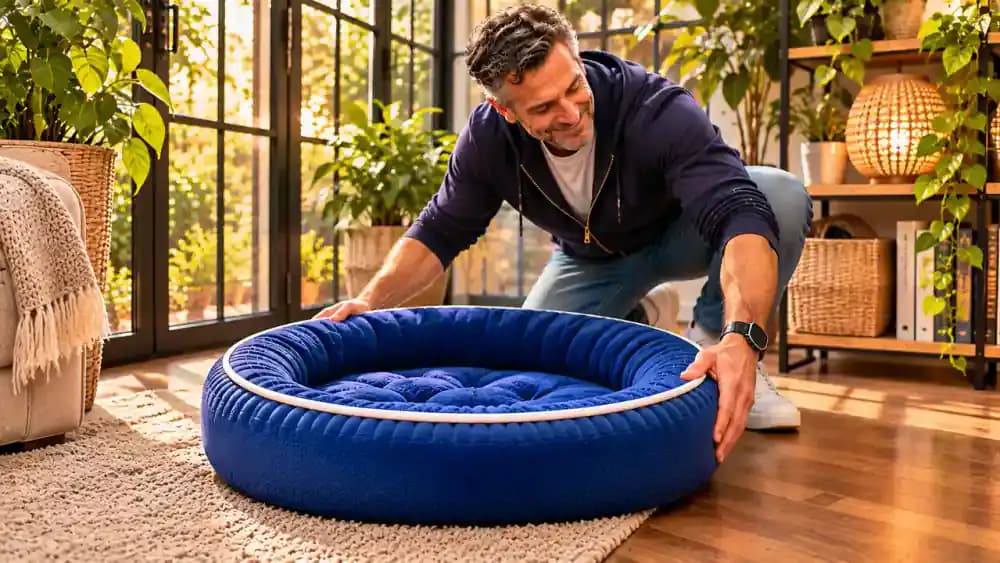
Take the Bed Cue Outdoors
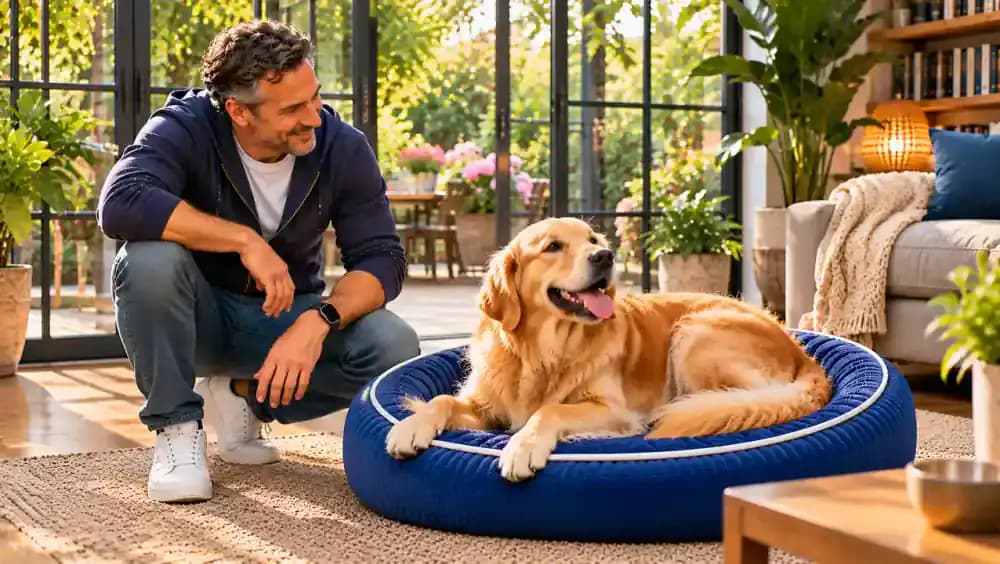
Once your dog responds reliably indoors, try practicing on a quiet, enclosed patio during comfortable weather. Position the familiar bed on a dry, stable surface away from hazards and direct heat. Begin close to the bed, give the cue once, and reward successful approaches. Keep sessions brief, minimize distractions, and let your dog return indoors whenever they prefer.
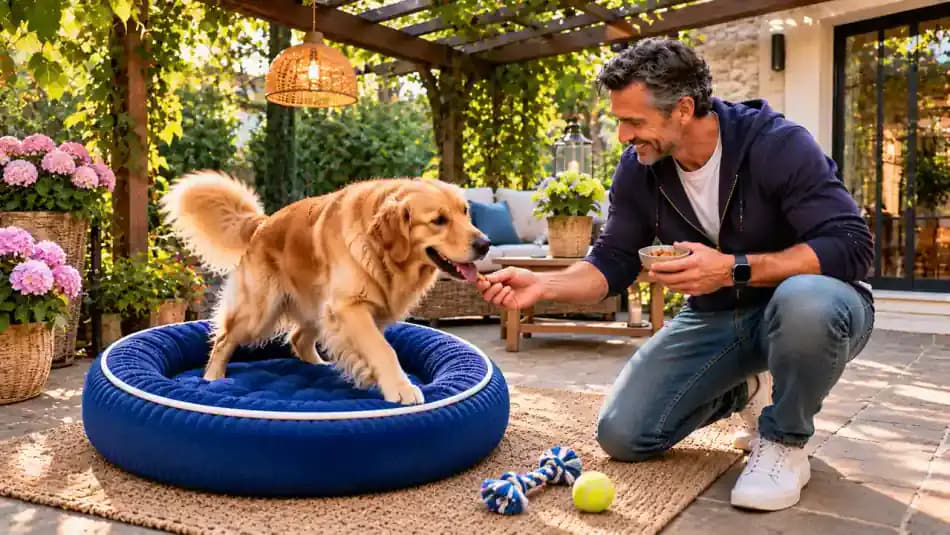
Keep Your Verbal Cue Meaningful
Keep your dog's bed cue clear by reserving it for moments when you genuinely want them to approach their bed. Avoid repeating the word casually as an instruction without expecting a response. When your dog is attentive, say "bed" once and allow time to respond. Mark and reward successful arrivals to reinforce the cue's meaning.
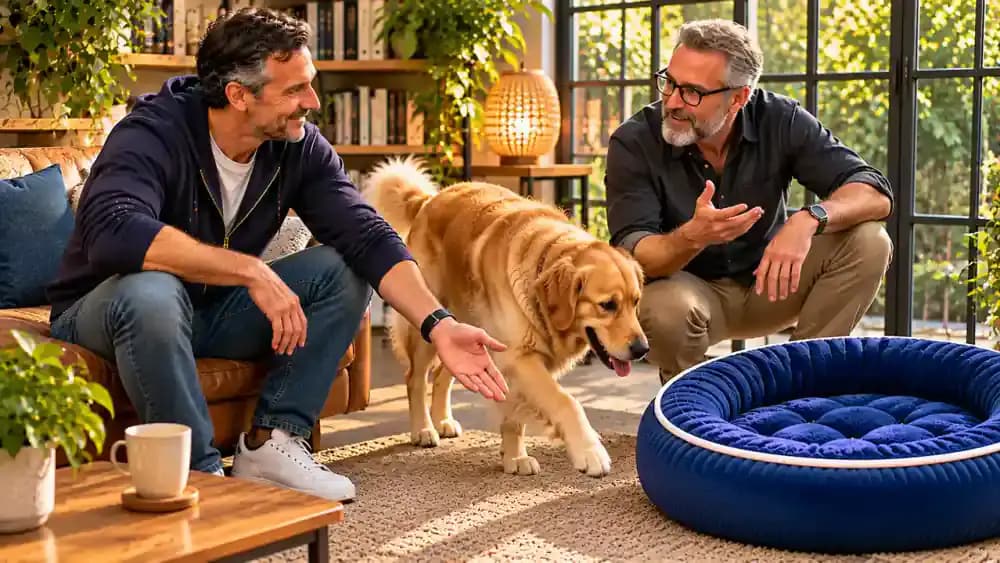
Transition Smoothly From Playtime
After an energetic play session, give your dog time to settle before practicing the bed cue. End the game calmly, put the toy away, and allow a short break for water or exploration. Once your dog appears relaxed and attentive, give the cue and reward their arrival. Avoid expecting an immediate transition from excitement to quiet behavior.

Train Multiple Dogs Individually
If you have multiple dogs, teach the bed cue to each one separately before practicing together. Provide individual beds and begin in different rooms to prevent competition or confusion. Once both dogs respond reliably, practice with them calmly sharing a space. Say the intended dog's name before the familiar cue and reward the correct response individually.
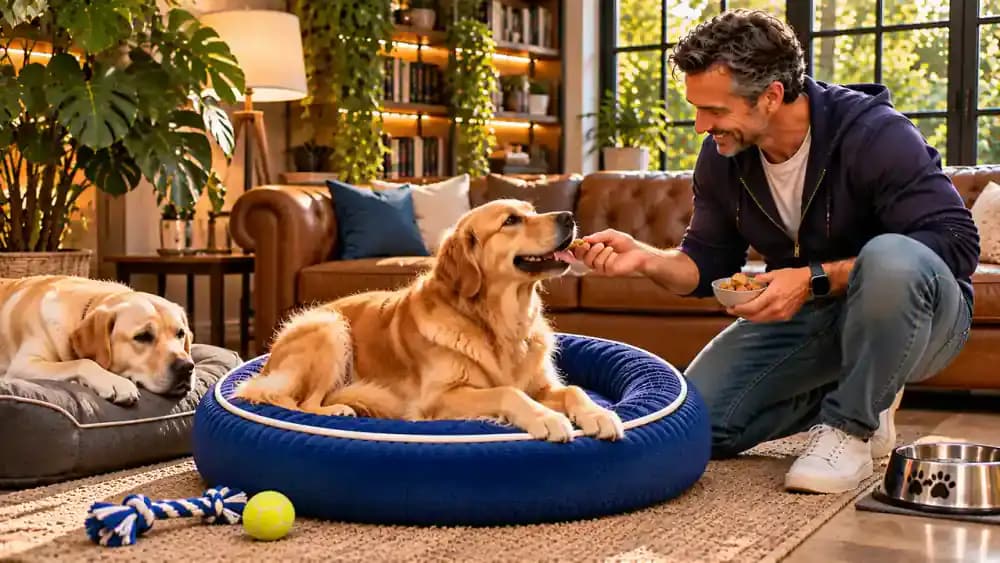
Adapt the Bed as Your Dog Changes
Regularly reassess your dog's bed as their size, mobility, and comfort preferences change. Choose supportive bedding with an accessible entry, stable footing, and enough room to rest comfortably. Position it away from excessive heat or disruptive activity. If your dog develops persistent difficulty stepping onto the bed or shows discomfort, consult your veterinarian before continuing training.
Build a Lifetime of Positive Communication
Keep strengthening the bed cue through brief, enjoyable practice in familiar and changing environments. Give one clear request, reward your dog's willing response, and adjust expectations when distractions or circumstances change. Whether you're in a hallway, garden-facing room, or cozy living space, consistent positive reinforcement helps maintain a dependable skill and strengthens communication with your dog.
You're trying to settle down in the living room, but your dog has other plans. They wander past the couch, sniff around the coffee table, circle your feet, and glance at their perfectly good bed without actually using it. You point toward the bed and say, "Go to bed," but your dog looks at you as though you've started a conversation they don't understand.
Sound familiar? The problem usually isn't stubbornness. Your dog may simply not have learned what those words mean or why walking to their bed is worth doing.
Teaching your dog to go to bed on cue gives you a simple way to direct them toward a comfortable, familiar spot. It's useful when guests arrive, you're preparing dinner, or you want your dog to move away from a busy walkway without turning the moment into a struggle.
The goal is straightforward: when you say "bed," your dog willingly walks to their bed and steps onto it with all four paws. You can teach this behavior through positive reinforcement, rewarding small successes and gradually adding a verbal cue once the movement becomes familiar.
You won't need special equipment or lengthy training sessions. A comfortable bed, a few small treats, and consistent timing are enough to get started. Just remember that going to bed and staying on the bed are two different skills. First, make reaching the bed easy, rewarding, and enjoyable.
Where people go wrong
Repeating the Cue Until Your Dog Responds. Saying "bed, bed, bed" repeatedly can teach your dog that the first request doesn't matter. Give the cue once, allow a moment for a response, and make the exercise easier if your dog seems confused. Return to a familiar hand signal or shorter distance rather than increasing the volume or repeating the word.
Physically Pushing or Pulling Your Dog Onto the Bed. Pushing, dragging, or pulling your dog toward the bed can make the location feel unpleasant or unpredictable. The goal is voluntary movement, not physical compliance. Encourage your dog with a reward, gentle gesture, or familiar target instead. If your dog hesitates, reduce the difficulty and reward a smaller movement toward the bed.
Adding the Verbal Cue Too Early. Introducing "bed" before your dog understands the destination can turn the word into meaningless background noise. First establish a consistent movement toward and onto the bed using rewards or a temporary signal. Once your dog reliably follows that signal, say the verbal cue immediately beforehand. Gradually reduce the extra assistance as understanding improves.
Waiting Too Long to Reward the Correct Behavior. If you reward several seconds after your dog reaches the bed, they may associate the treat with whatever happened afterward, such as sitting, looking away, or stepping off. Mark the desired action as it happens and deliver the reward promptly. Early in training, precise timing matters more than asking for an impressive or lengthy performance.
Expecting Your Dog to Stay Without Teaching Duration. Walking onto a bed and remaining there are separate behaviors. A dog that steps onto the bed and immediately leaves may have completed the task exactly as taught. Avoid treating departure as disobedience. Establish a reliable arrival first, then train remaining on the bed separately using gradual duration increases and a clear release cue.
Increasing Distance and Distractions at the Same Time. A dog that responds perfectly beside the bed may struggle when called from across a busy room. Moving farther away, changing your starting position, and adding distractions all increase difficulty. Adjust only one variable at a time. If responses become inconsistent, return to an easier setup where your dog can succeed and earn rewards.
Making Training Sessions Too Long or Frustrating. Repeating the exercise long after your dog loses interest can weaken enthusiasm for the bed. Keep sessions short, reward successful attempts, and allow your dog to leave between repetitions. Watch for relaxed movement and willingness to participate. Ending after an easy success is often more productive than insisting on one final difficult repetition.

Questions people ask
Some dogs begin understanding the movement within a few short sessions, while others need several days or weeks of consistent practice. Progress depends on your dog's experience, motivation, environment, and comfort with the bed. Focus on reliable responses rather than a deadline. Several enjoyable sessions lasting five to ten minutes are generally preferable to one exhausting training session.
Fixed it?
Get one guide like this every Thursday.