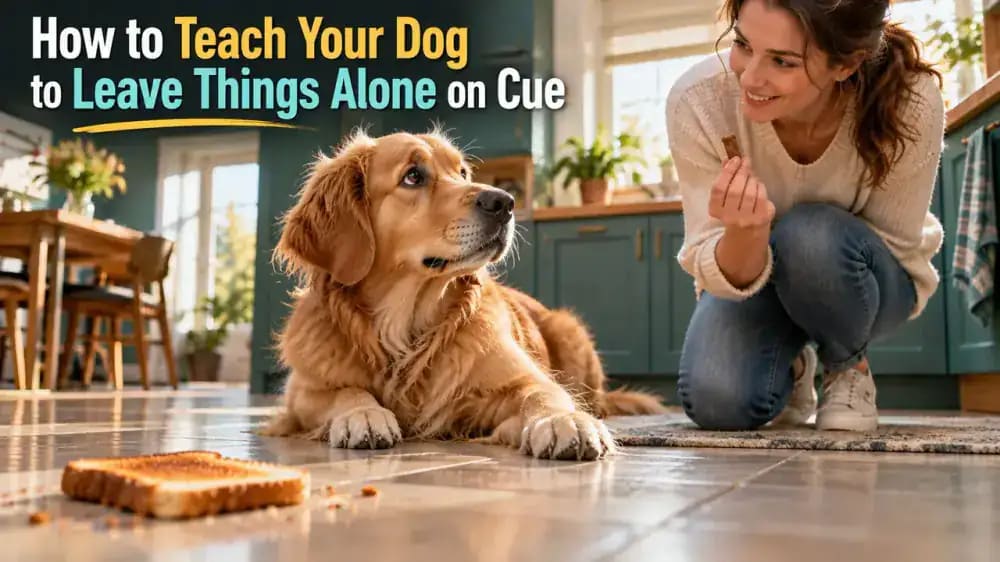
How to Teach Your Dog to Leave Things Alone on Cue
Teach your dog a reliable leave-it cue with simple, reward-based exercises. Progress from treats in your hand to everyday distractions indoors and outside without grabbing, scolding, or creating frustration.
What you’ll need
Tap to tick things off before you start.
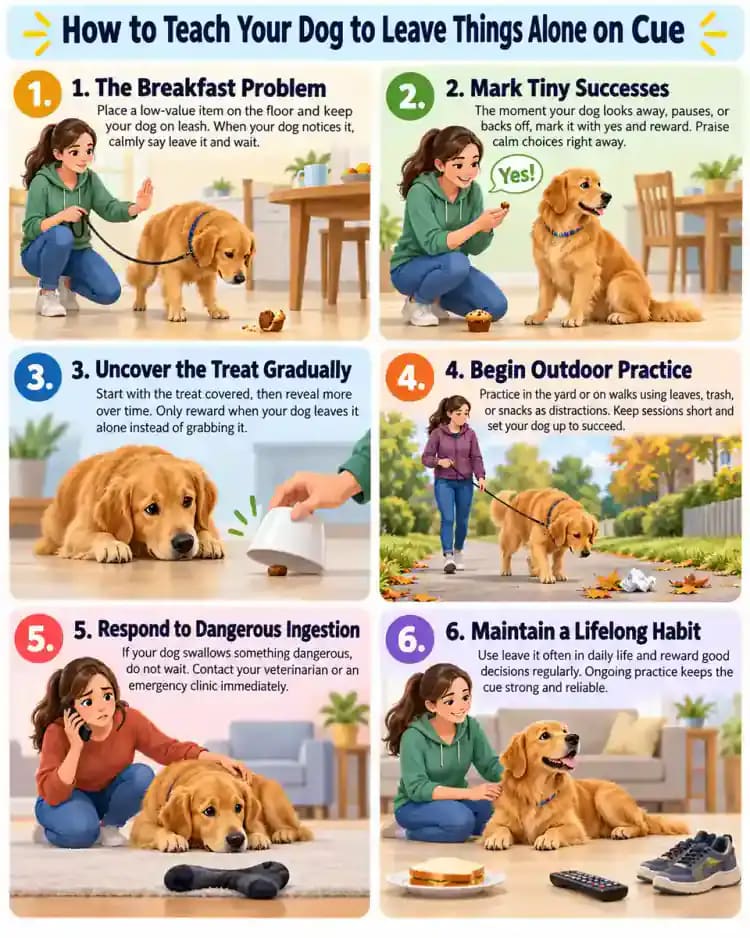
The Breakfast Problem
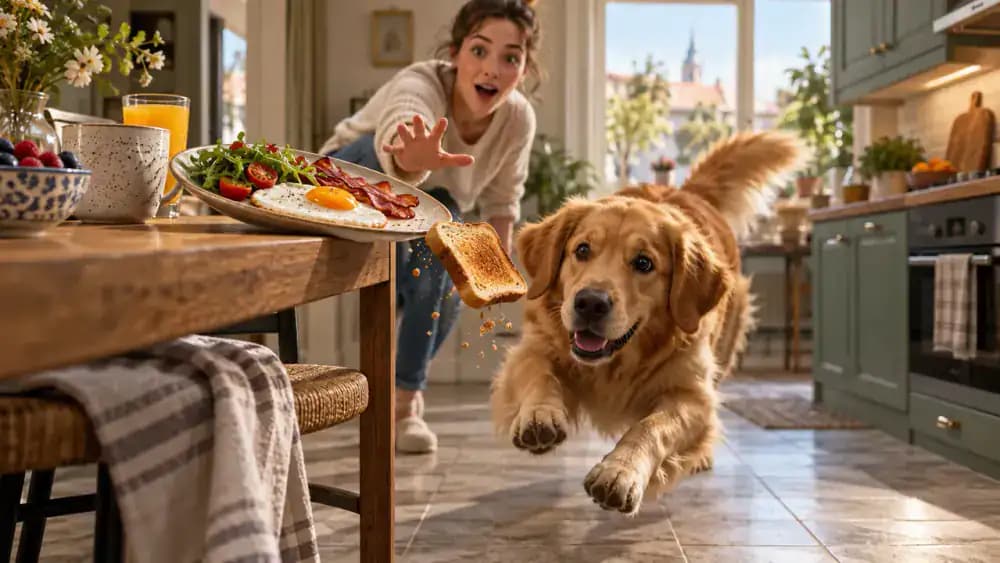
Imagine dropping a piece of toast during breakfast and watching your dog race toward it. While toast might be harmless, other dropped items, including chocolate, medications, and cooked bones, can be dangerous. Teaching your dog to leave things alone on cue creates a reliable alternative to grabbing whatever hits the floor. Start practicing before an emergency happens.
What Leave It Really Means
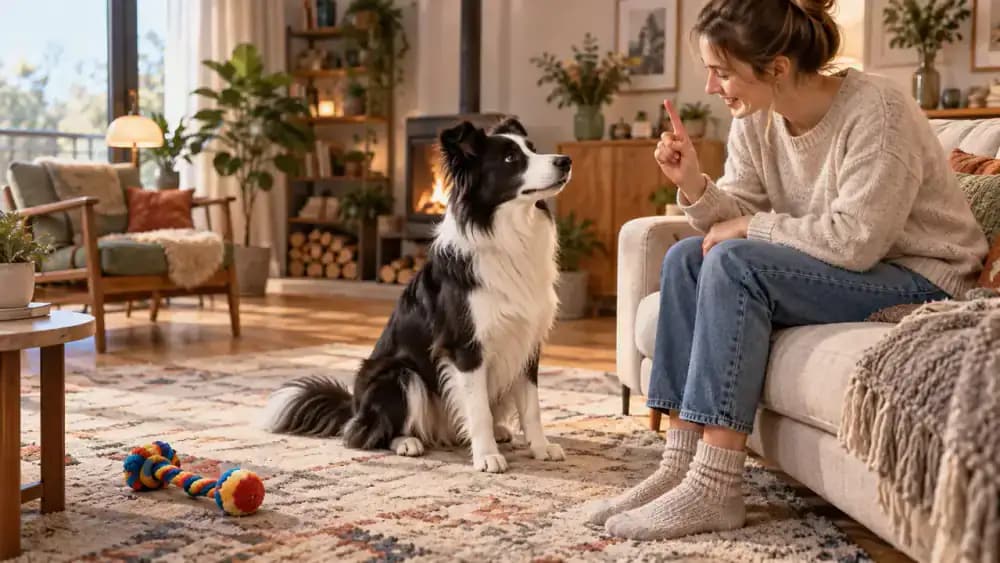
The leave it cue teaches your dog to stop investigating a particular object and redirect their attention toward you. It is not about punishment or making interesting things frightening. Instead, your dog learns that choosing to disengage earns something better. Begin in a quiet environment, reward successful choices consistently, and gradually introduce more tempting distractions.
Prepare Your Training Kit
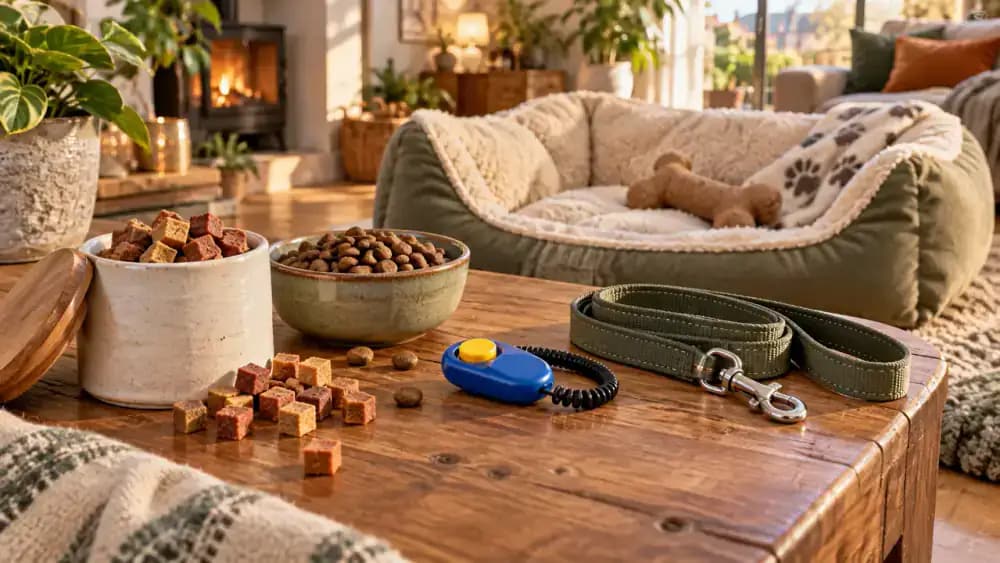
Before training, gather tiny, high-value treats, a few pieces of ordinary kibble, a leash, and an optional clicker. Choose rewards your dog finds more exciting than the items used for practice. Clear a quiet floor area and plan sessions lasting two or three minutes. Use a consistent marker, such as a cheerful yes, to identify successful behavior.
Start With a Closed Fist
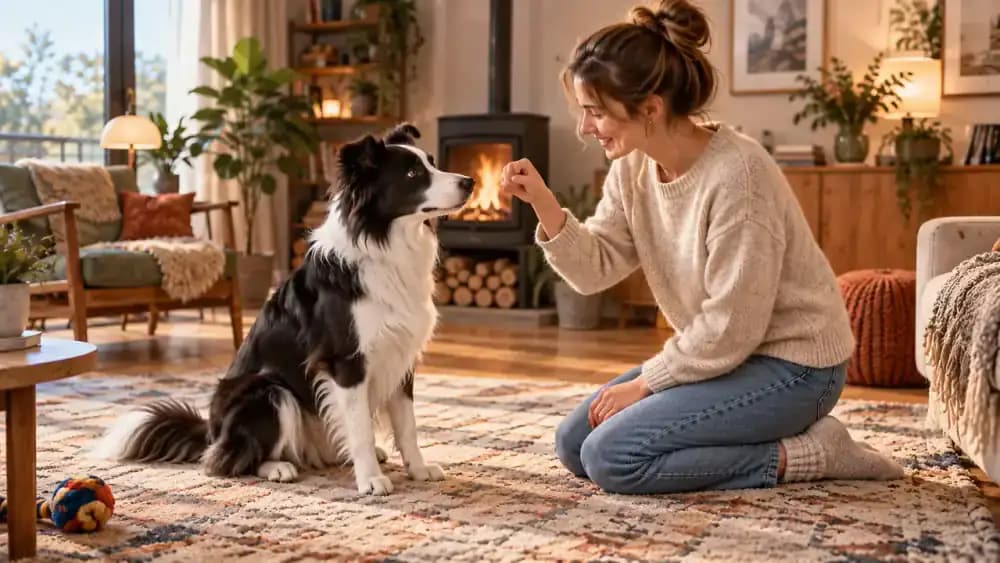
Sit or kneel near your dog in a distraction-free room. Place one treat inside your hand, close your fist, and hold it near your dog's nose. Allow your dog to investigate without giving a verbal cue yet. Keep your fist closed and avoid pushing toward your dog. The objective is to let your dog discover that moving away earns a reward.
Reward the First Disengagement
Your dog might sniff, lick, nudge, or gently paw at your closed fist. Remain still and avoid scolding. As soon as your dog pauses or pulls their nose away, say yes and immediately offer a different treat from your free hand. Never open the original fist to reward them. Repeat until your dog willingly disengages without hesitation.
Mark Tiny Successes
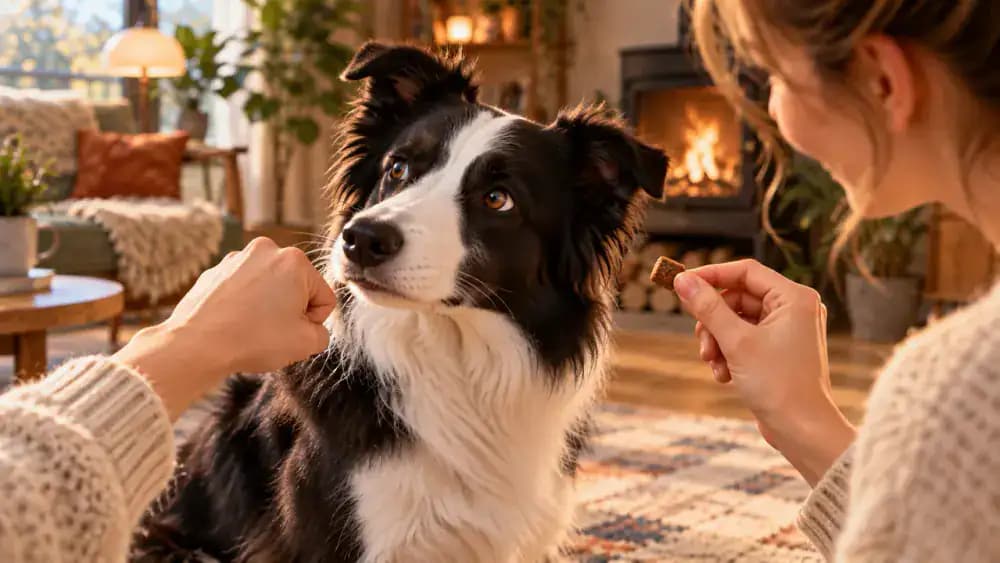
Watch closely for the smallest sign that your puppy is choosing to leave the treat alone. Even a slight backward head movement deserves an immediate 'yes' and a reward from your other hand. Keep your puppy standing comfortably on the mat, repeat several short attempts, and reward small improvements before expecting longer periods of disengagement.
Introduce the Verbal Cue
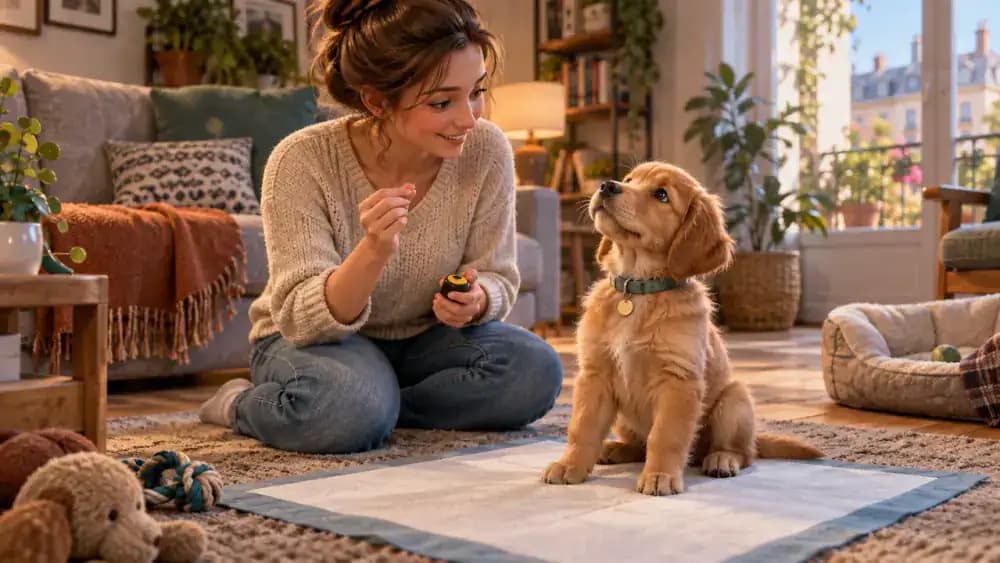
Once your beagle reliably moves away from the closed fist, introduce the words 'leave it.' Say the cue calmly once, just before presenting your closed hand. Wait until your dog backs away, say 'yes,' and offer a reward from your opposite hand. Avoid repeating the cue, and give your dog enough time to make the right choice.

Build a Predictable Pattern
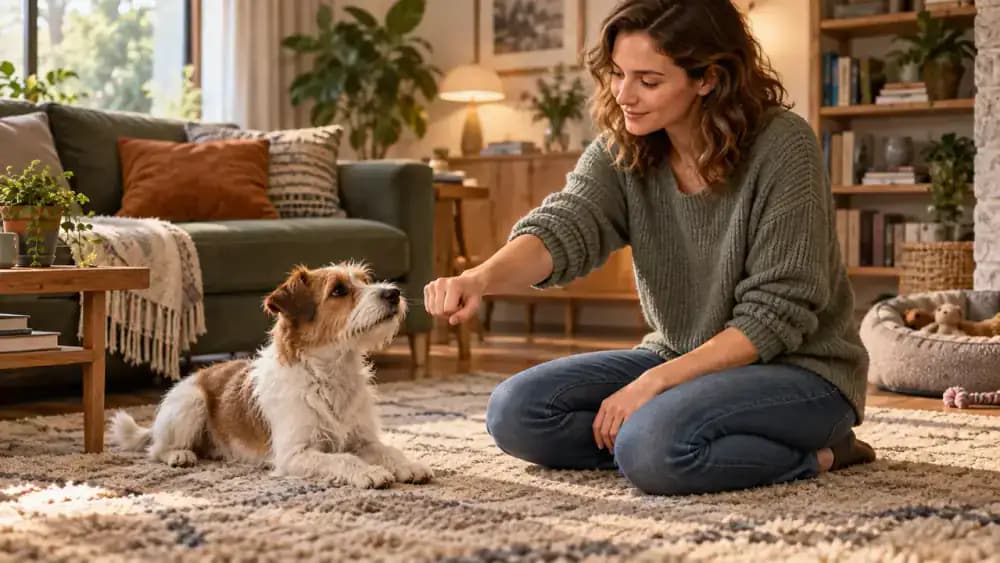
Follow the same sequence every time: say 'leave it,' present your closed fist, wait for your terrier to disengage, mark the choice, and reward from your other hand. If your dog keeps nudging your fist, reward a smaller movement away or choose a less tempting treat. Keep sessions brief and finish while your dog remains interested.
Reveal the Open Palm
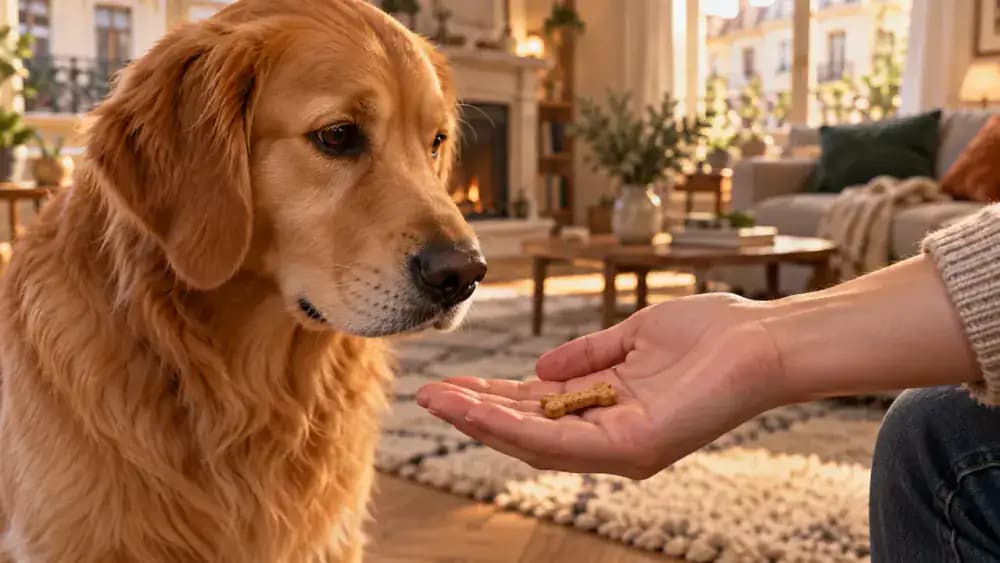
When your dog consistently ignores the closed fist, increase the challenge by showing a biscuit in your open palm. Say 'leave it' before revealing the treat. If your dog reaches for it, gently close your hand. Open your palm again when your dog backs away, then mark and reward using a separate treat from your other hand.
Respond to Mistakes Calmly
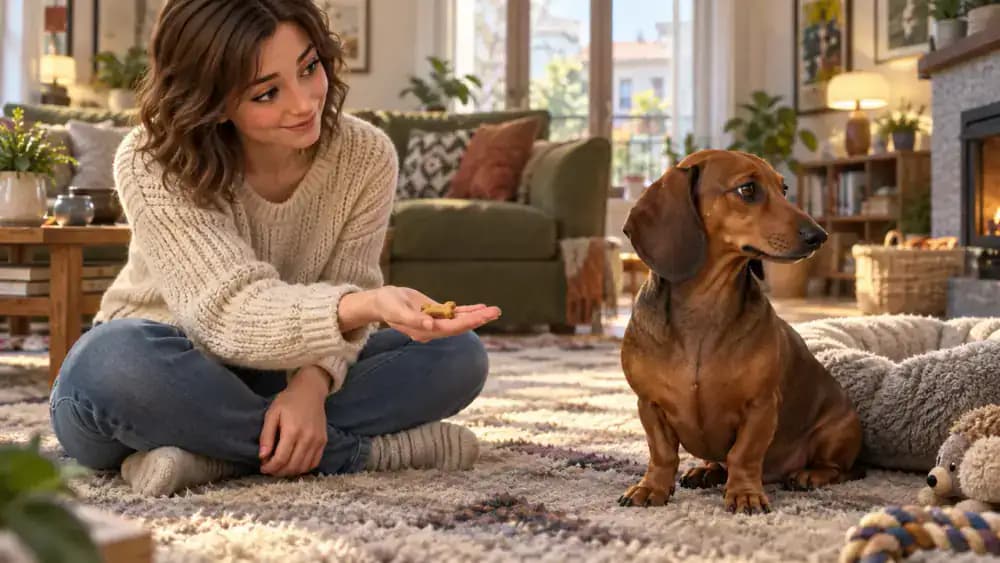
If your dachshund reaches for the visible treat, calmly close your palm without scolding or pulling your hand away sharply. Wait for your dog to settle, then try again. Repeated lunging means the exercise is too difficult, so return to the closed-fist stage. Reward successful choices and gradually rebuild confidence before attempting the open palm again.
Move to a Covered Floor Treat
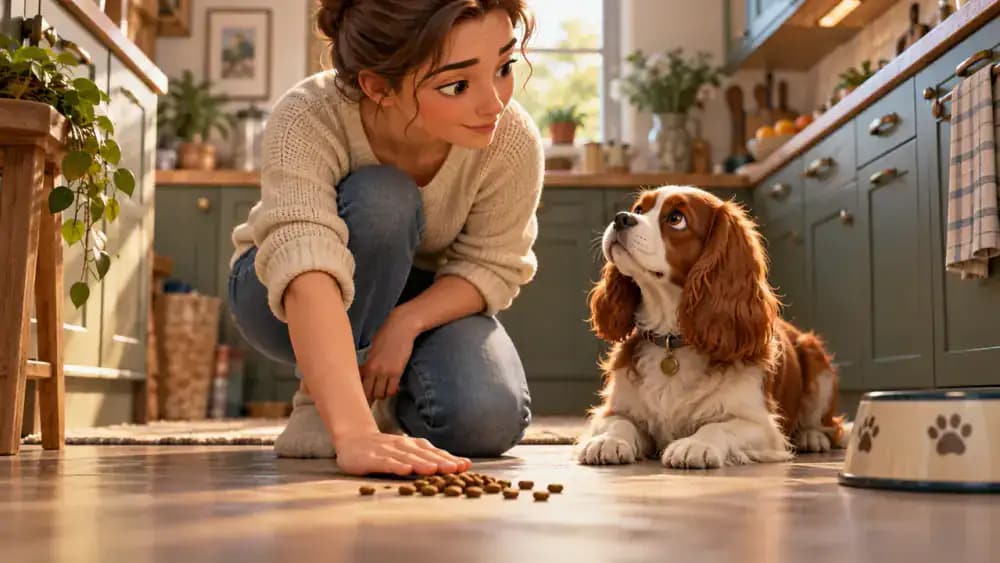
Once your dog reliably ignores treats in your open palm, place a low-value treat on the floor and cover it with your hand. Say "leave it" before your dog moves toward it. When your dog looks away or turns toward you, mark the behavior and reward from your other hand. Keep the floor treat covered and unavailable.
Uncover the Treat Gradually
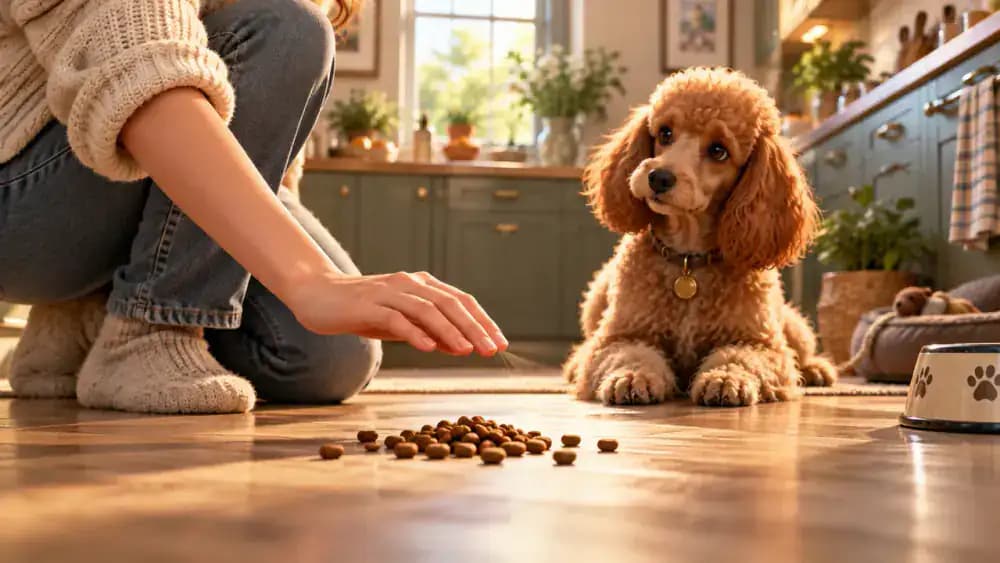
When your dog consistently leaves the covered treat alone, lift your hand just enough to reveal a small portion. Be ready to cover it again if your dog approaches. Immediately reward any successful decision to look away. Increase difficulty gradually by exposing more food, choosing a more tempting treat, or reducing distance. Change only one variable at a time.
Practice at a Safe Distance
Place an uncovered biscuit on the floor far enough from your dog that ignoring it feels manageable. Keep your dog on a loose leash if necessary to prevent grabbing. Say "leave it" once, then reward when your dog turns away or checks in with you. Start with generous distance and move closer only after repeated success. Supervise every attempt.
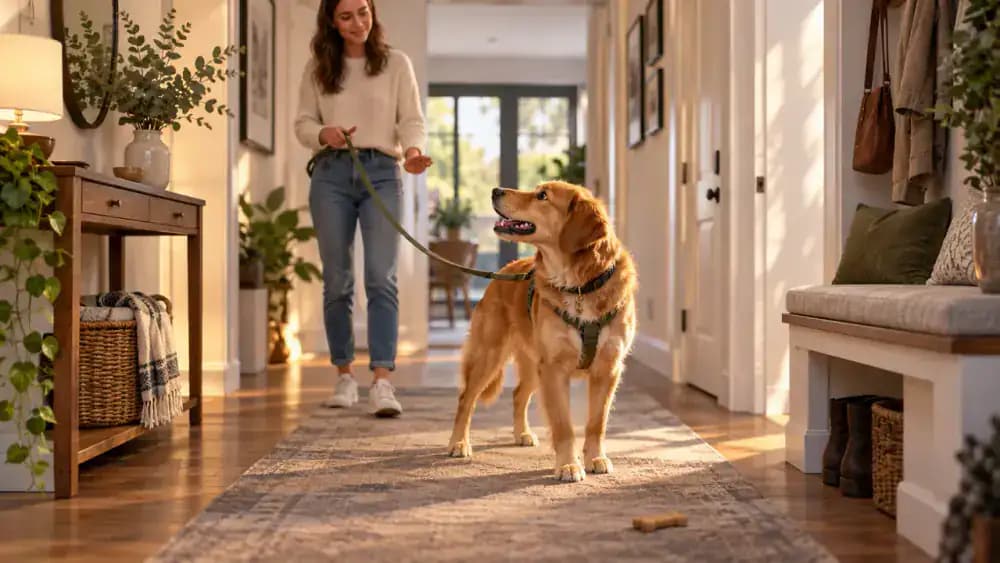
Reward From Somewhere Else
Always reward your dog with a separate treat rather than allowing them to eat the item they were told to leave. This teaches that responding to your cue leads to something good without making the forbidden object the prize. Deliver the reward from your hand, guide your dog away, and collect the untouched practice item. Keep unsafe objects completely inaccessible.
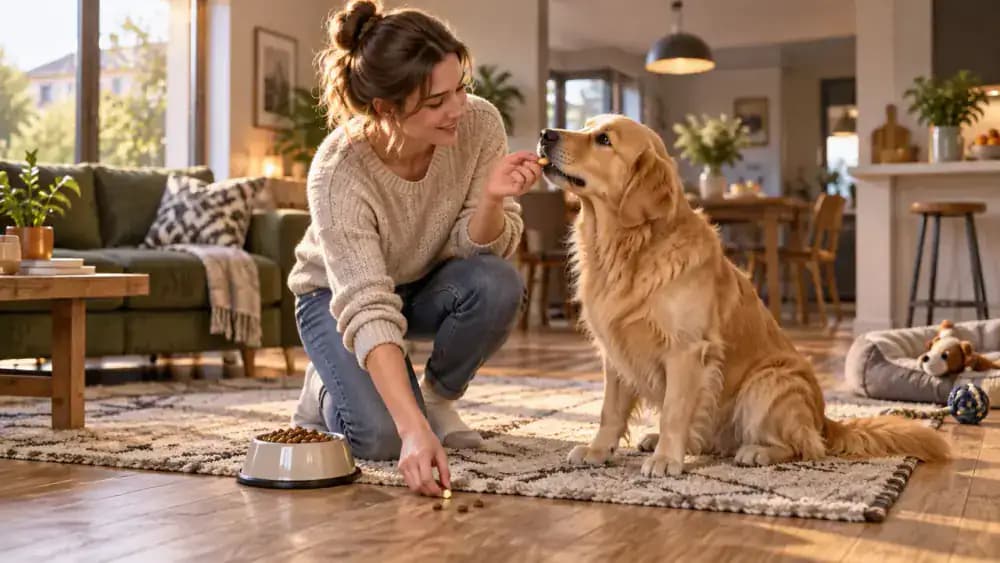
Shape Attention Toward You
As your dog improves, begin rewarding moments when they turn their attention toward you instead of the tempting object. Start by reinforcing a simple head turn, especially if your dog is naturally shy or hesitant. Gradually reward more deliberate check-ins or comfortable eye contact without demanding a fixed stare. This habit makes redirecting your dog around everyday distractions easier.
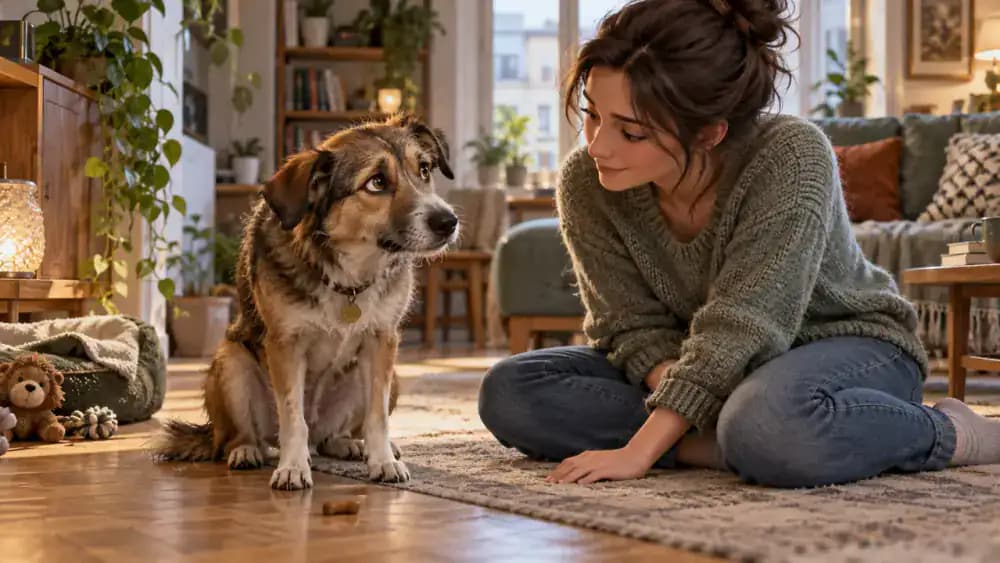
Generalize to New Objects
Help your dog understand that leave it applies to more than one object. Practice with a dry leaf, empty cardboard tube, clean sock, and ordinary toy. Choose items that cannot be swallowed or broken into dangerous pieces. Introduce each object separately, reward your dog for turning away, and keep sessions short, calm, and positive.
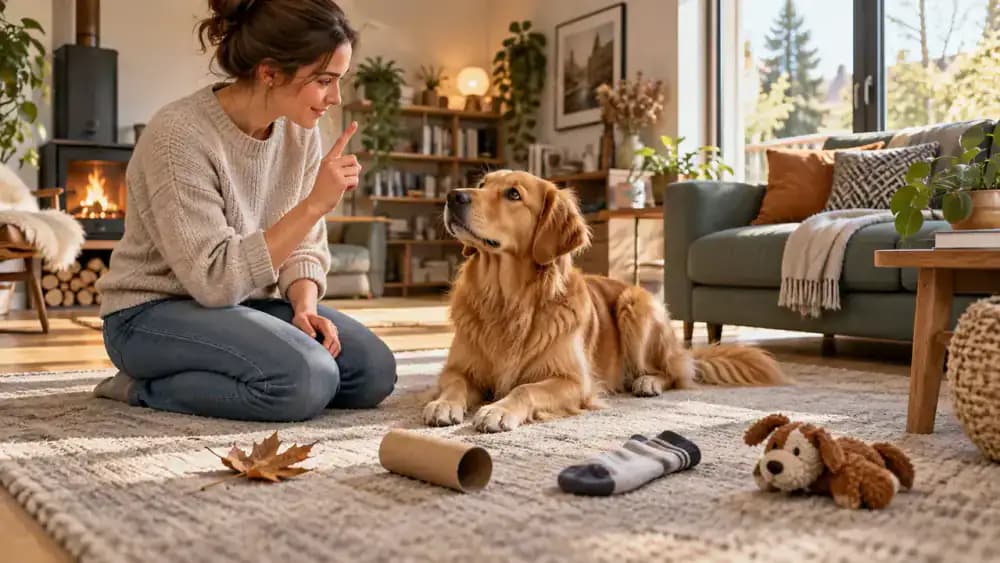
Try a Different Room
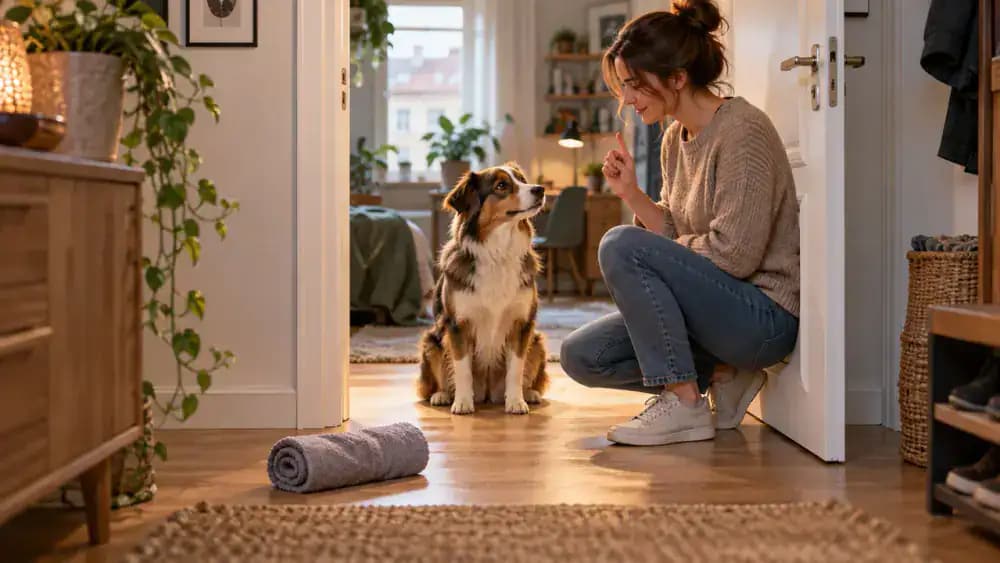
Once your dog responds reliably in one room, move to a hallway, kitchen doorway, or another quiet indoor space. Place a harmless rolled towel nearby and practice with an easy setup. Give the leave it cue, reward your dog's attention, and repeat patiently. A new location adds difficulty, so expect to rebuild confidence through successful repetitions.
Begin Outdoor Practice
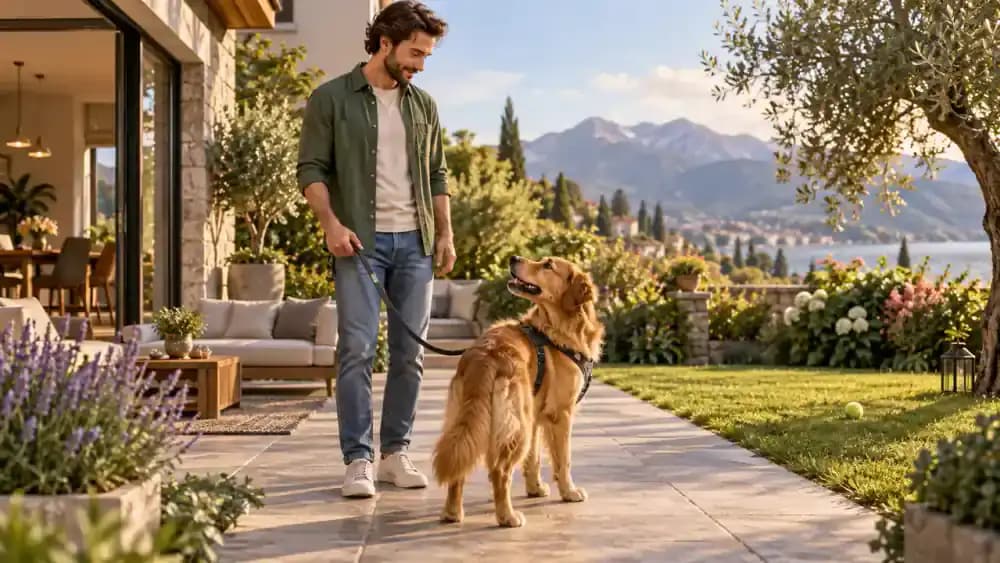
Start outdoor training in a quiet fenced backyard or patio where you control distractions. Put a clean tennis ball several feet away and keep your dog in a comfortable harness with a loose leash. Say leave it before your dog approaches, then reward turning toward you. Maintain enough distance for success and avoid hazardous objects or busy roads.
Walk Past the Distraction
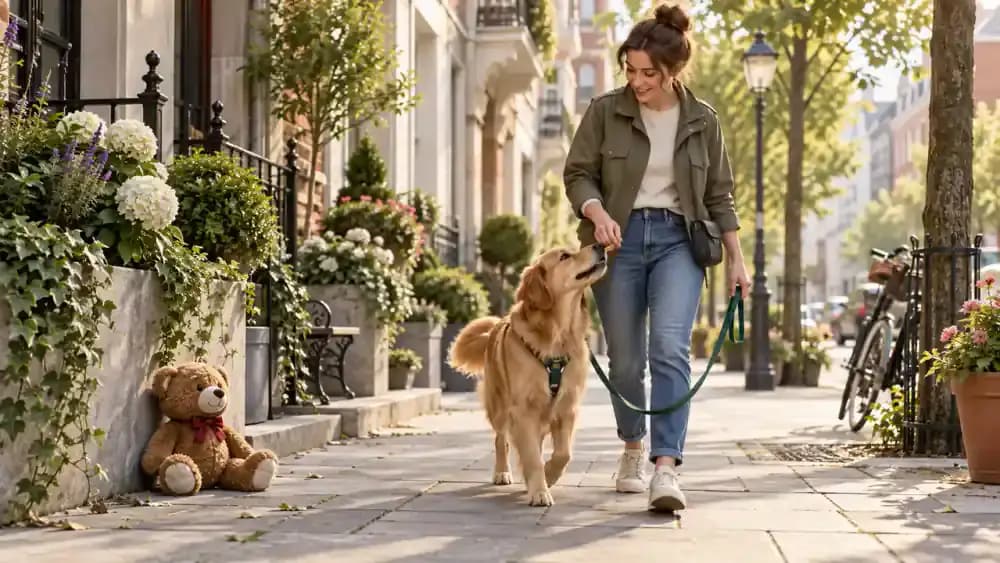
Practice leaving objects alone while walking instead of stopping beside them. Place a plush toy along a quiet sidewalk and approach from a comfortable distance. Say leave it before your dog reaches the toy, then praise continued movement and reward beside your leg. Keep walking together so your dog learns to ignore distractions without breaking stride.
Adjust One Difficulty at a Time
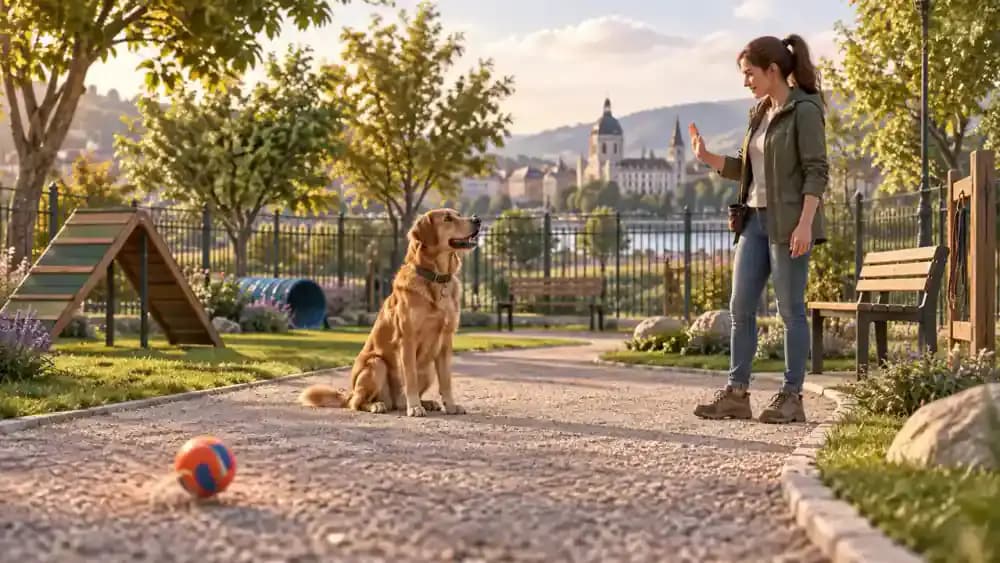
Build stronger leave it skills by increasing only one challenge at a time. Try a slightly more interesting safe object, shorten the distance, or introduce gentle movement, but never combine all three changes immediately. On an enclosed park path, control your dog's distance from a rolling rubber ball. If two attempts fail, make the next exercise easier.
Rehearse Dropped Food
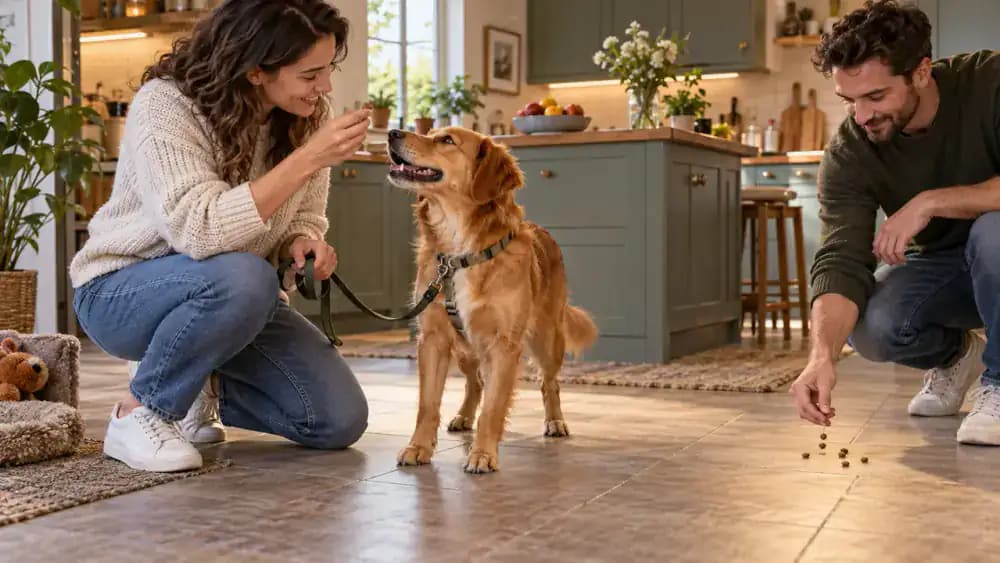
Practice with a helper in a quiet, protected area. Keep your dog leashed while the helper drops a piece of plain kibble well beyond your dog's reach. Say "leave it" as the food falls, then reward your dog for turning toward you. Pick up the kibble before repeating, keeping each attempt calm and predictable.
Manage Everyday Surprises
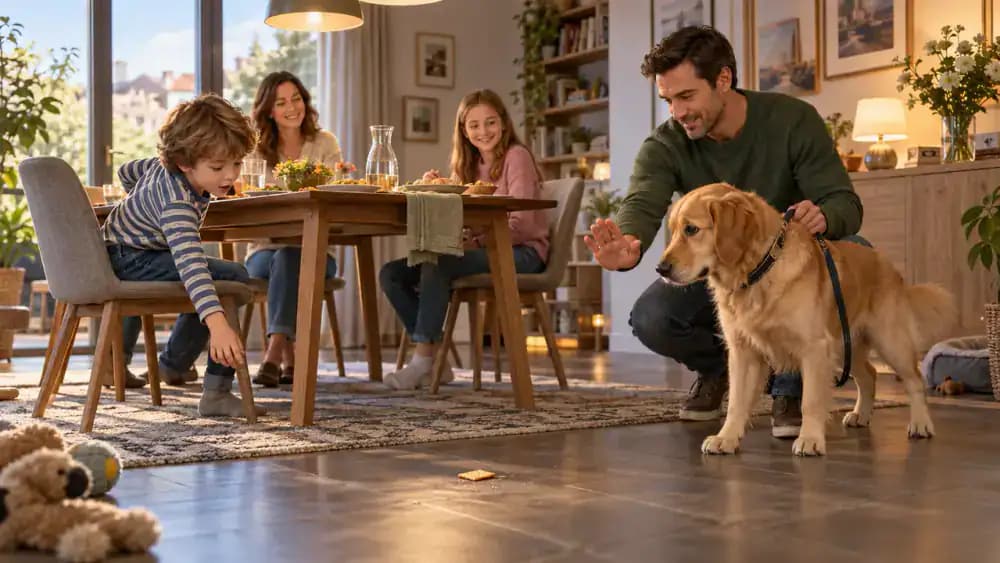
Unexpected temptations happen when children drop snacks or guests leave things within reach. While your dog is learning, use a leash, closed doors, or extra distance to prevent access. If a cracker falls during dinner, calmly guide your dog away before it reaches the food. Preventing mistakes helps build reliable habits without unnecessary confrontation.
Distinguish Leave It From Drop It
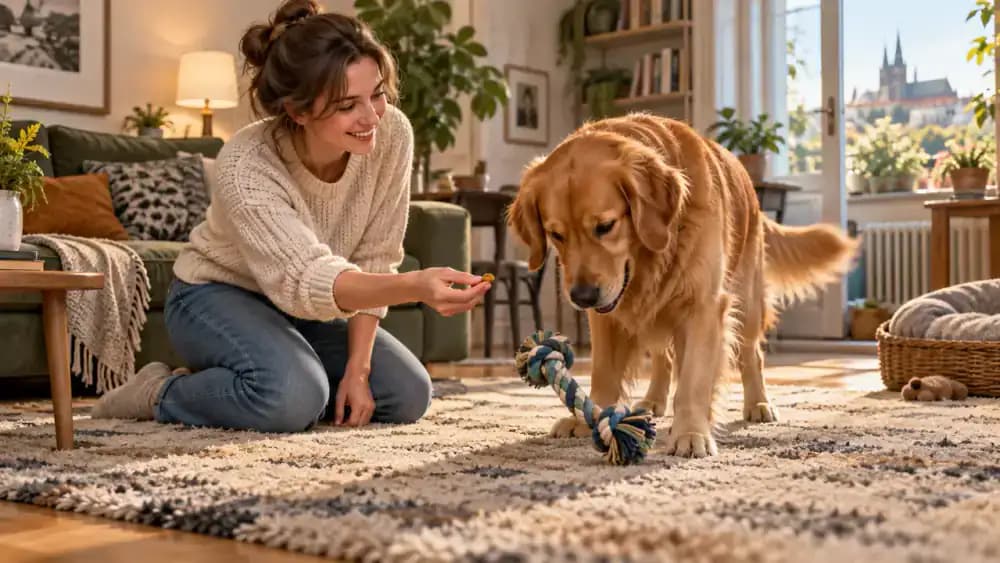
Use "leave it" before your dog picks something up and "drop it" after an item is already in its mouth. Teach the second cue by offering a valuable treat in exchange for a safe toy. Reward the release immediately. Avoid chasing, grabbing, or routinely forcing your dog's mouth open, since these reactions can encourage guarding or swallowing.
Respond to Dangerous Ingestion
If your dog swallows medication, a toxic substance, or another potentially dangerous item, contact a veterinarian or pet poison service immediately. Have the product packaging, estimated amount, and time of exposure ready when possible. Never induce vomiting without professional instructions. If your dog is choking or having trouble breathing, seek emergency veterinary care right away.

Read Your Dog's Stress Signals
Watch your dog's posture and reactions throughout training. Relaxed movement, normal breathing, and willingness to participate suggest the exercise is manageable. Freezing, stiffness, growling, or repeated frantic lunging indicate that you should adjust the setup. Calmly increase the distance from the covered treat and make the task easier. Consult a qualified reward-based trainer when needed.
Handle Resource Guarding Safely
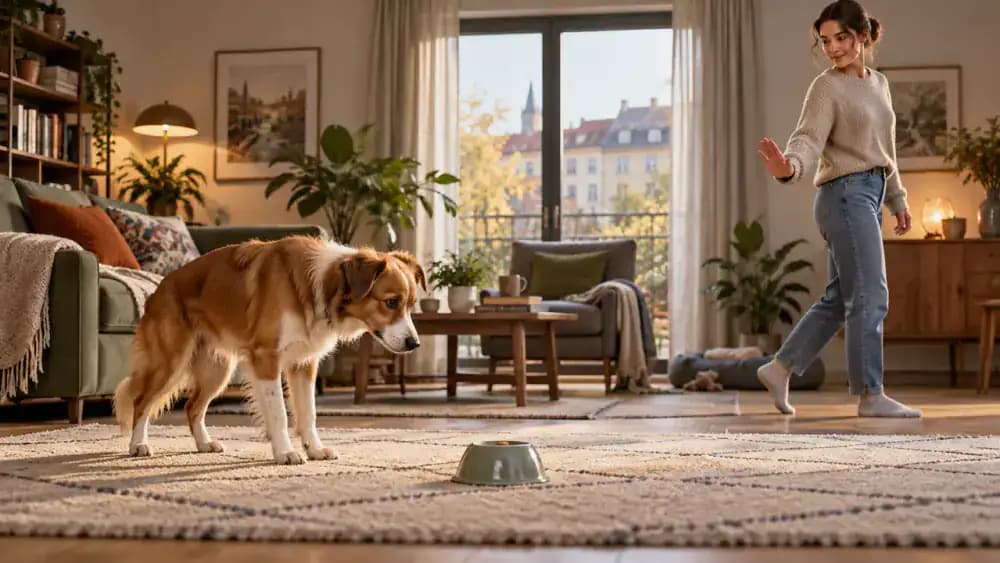
If your dog guards food, chews, or favorite objects, avoid reaching into their space or repeatedly taking possessions to practice leave it. These actions can increase tension and bite risk. Give your dog room, use barriers when necessary, and consult a qualified, reward-based behavior professional, especially if snapping or biting has occurred.
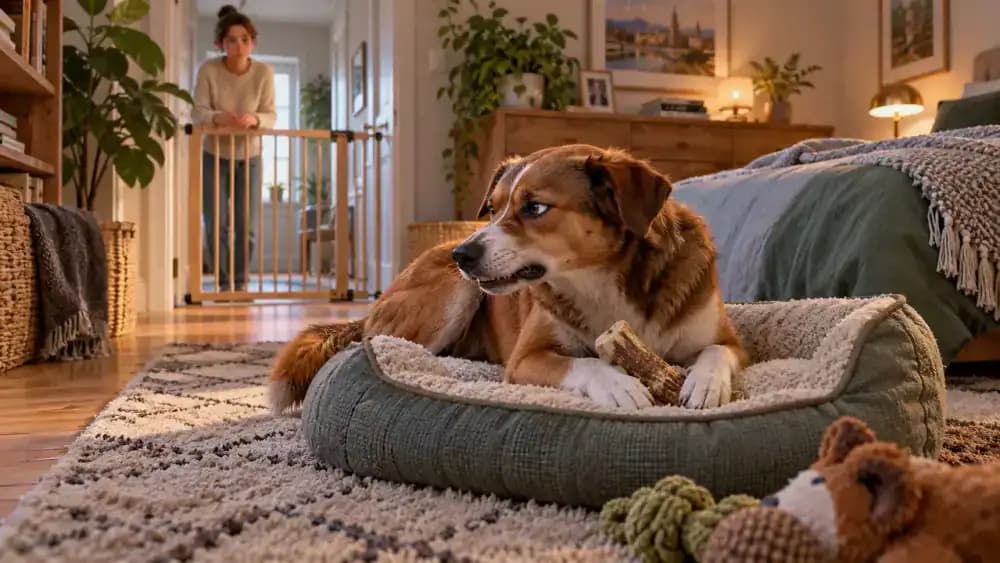
Protect the Cue
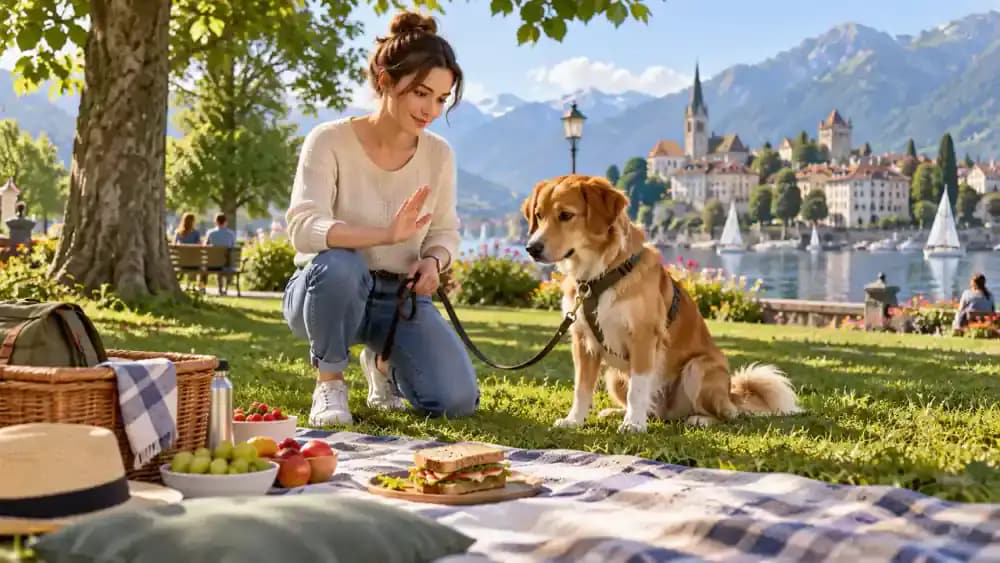
Use leave it when your dog has a realistic chance of responding successfully. If an unattended sandwich catches their attention during a picnic, calmly guide them away with the leash before they reach it. Practice easier situations afterward, rewarding immediate attention. Avoid repeating the cue several times, which can weaken its meaning and reliability.
Make a Daily Routine
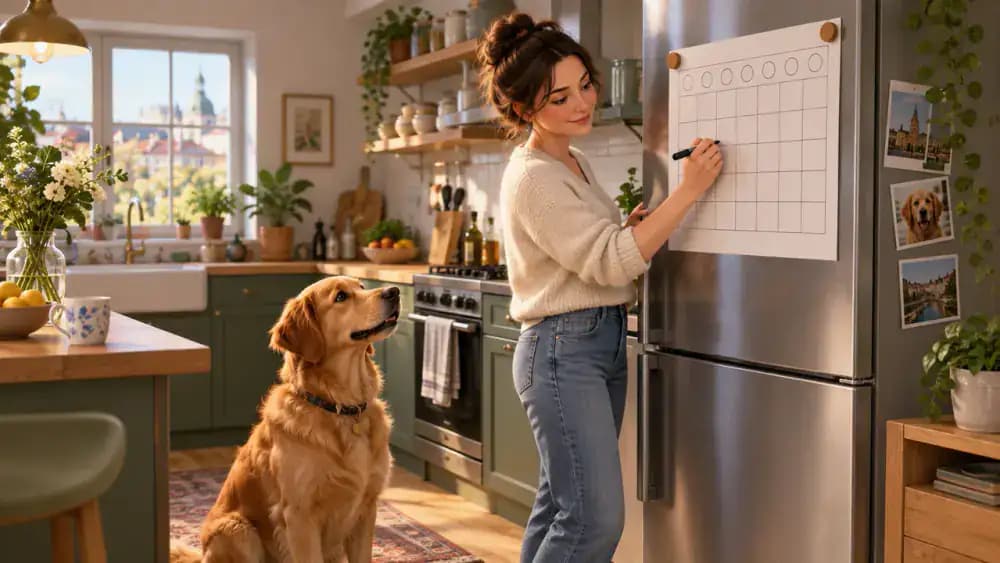
Build consistency with five easy leave it repetitions before breakfast, followed by a short practice session in another room later. Reward successful choices and allow breaks when your dog seems tired. Keep a simple refrigerator chart recording objects, distances, locations, and results. Reviewing these notes helps you recognize progress and adjust difficulty gradually.
Check Real World Progress
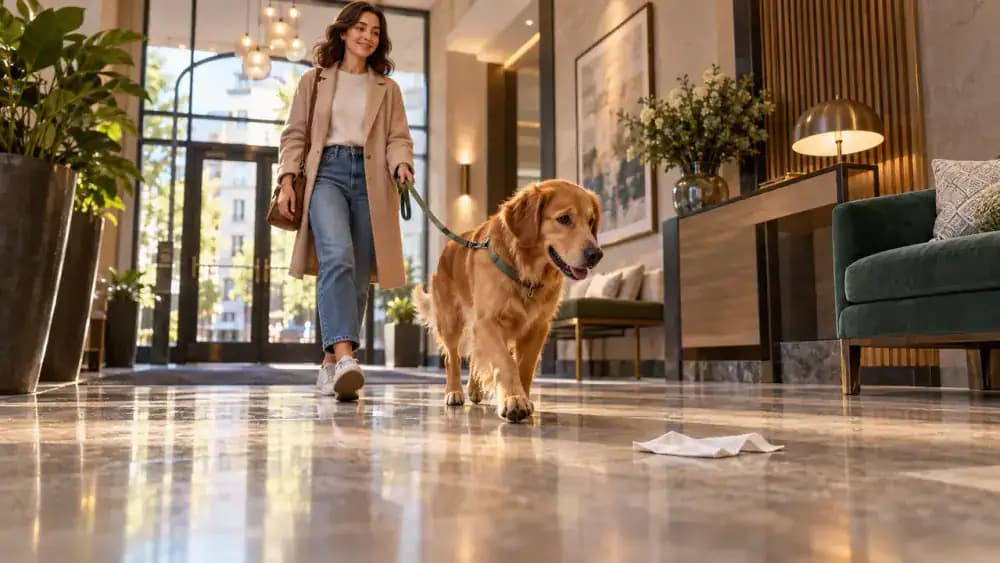
Measure progress during ordinary activities rather than deliberately creating risky temptations. Practice walking past a harmless object, such as a clean napkin in an apartment lobby, while keeping the leash relaxed. Reward your dog for looking away and continuing with you. Repeat in different safe locations, reducing difficulty whenever their attention becomes harder to redirect.
Maintain a Lifelong Habit
Keep leave it useful throughout your dog's life by occasionally rewarding successful responses during everyday walks and activities. When your dog notices a fallen snack, give the familiar cue once, then praise and reward their attention returning to you. Continue practicing in manageable situations. Consistent reinforcement builds a dependable habit that supports safer outings and calmer homes.
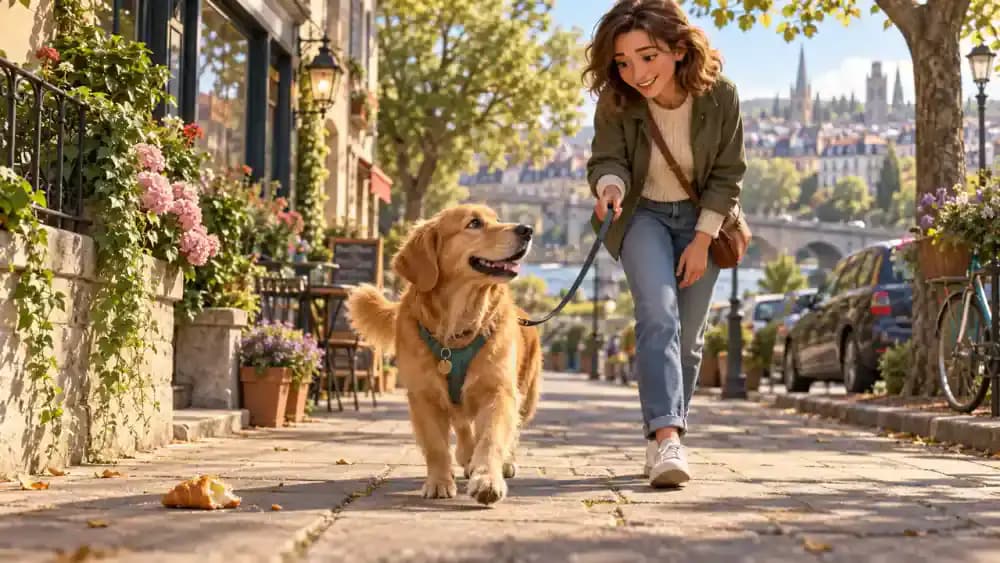
Your dog spots a dropped snack, a dirty tissue, or something interesting on the sidewalk. Before you can react, their nose is already inches away. Teaching your dog to leave it gives you a practical way to interrupt that moment without shouting, grabbing, or turning the situation into a chase.
The goal is simple: when you say "leave it," your dog disengages from something they want and redirects their attention toward you. With consistent practice, that choice becomes easier even when the temptation is exciting.
This beginner-friendly training journey starts in a quiet room with a treat inside your closed fist. You'll gradually introduce an open palm, treats on the floor, unfamiliar objects, different rooms, and carefully controlled outdoor distractions. Each new challenge builds on a behavior your dog has already learned.
You'll use positive reinforcement, rewarding your dog for choosing to leave something alone rather than punishing them for investigating it. Keep sessions short, use small treats, and advance only when your dog responds comfortably and consistently.
One important distinction: "leave it" means don't take or approach an item. "Drop it" means release something already in the mouth. They're separate skills, and both are worth teaching.
You don't need expensive equipment or previous training experience. You need a few treats, a quiet starting space, patience, and a willingness to make each exercise achievable for your dog.
Where people go wrong
Repeating the Cue Until Your Dog Responds. Saying 'leave it' five or six times teaches your dog that the first cue does not matter. Give the cue once during an exercise your dog can handle, then allow a moment for a response. If your dog cannot disengage, make the distraction easier or increase distance before trying again. Reward the correct choice promptly.
Opening Your Hand Before Your Dog Is Ready. An open palm makes treats much easier to grab than a closed fist. Moving ahead too quickly creates opportunities for your dog to snatch the food and rehearse the opposite behavior. Practice until your dog consistently backs away from the closed hand before introducing the open palm. Close your hand calmly if your dog moves toward the treat.
Rewarding With the Forbidden Item. During early exercises, handing over the exact treat your dog was supposed to ignore can blur the distinction between leaving something alone and eventually getting it. Instead, reward from your other hand with a separate, higher-value treat. This makes disengaging worthwhile while preserving the meaning of the cue. Later exercises can introduce carefully planned exceptions without confusing the basic behavior.
Introducing Outdoor Distractions Too Soon. A dog that ignores kibble in the living room may still struggle with food scraps, squirrels, or interesting smells outside. Outdoor environments add movement, noise, and unpredictable temptations. Begin with controlled distractions in quiet areas, then increase difficulty gradually. If your dog cannot respond, move farther away or return to an easier exercise rather than repeating the cue.
Grabbing Objects or Punishing Curiosity. Chasing your dog, forcibly opening their mouth, or scolding them for investigating something can create stress and may encourage avoidance or defensive behavior. Set up exercises so the tempting item remains inaccessible and your dog can succeed. Reinforce voluntary disengagement. If your dog already possesses something hazardous, prioritize safe management and appropriate veterinary guidance rather than treating the situation as a training drill.
Confusing Leave It With Drop It. These cues solve different problems. 'Leave it' asks your dog to disengage before taking something, while 'drop it' asks them to release an object already in their mouth. Using one cue interchangeably for both tasks can weaken understanding. Train them separately with rewards and controlled exercises, and avoid putting your fingers into your dog's mouth during routine training.
Practicing Too Long or Progressing Without Consistency. Lengthy sessions can lead to fatigue, frustration, and slower responses. Five focused minutes often provide more useful practice than a prolonged drill. Watch for relaxed body language and voluntary participation. Before introducing a harder challenge, aim for several successful responses across short sessions. If accuracy drops, reduce the difficulty and finish with an easy success.
Questions people ask
Many dogs begin understanding the basic hand exercise within a few short sessions, but responding reliably around unfamiliar distractions takes longer. Plan on practicing for 5-10 minutes daily over several weeks, adjusting to your dog's progress. Reliability depends on training consistency, reward value, environment, and previous experience. Real-world distractions require continued practice even after your dog performs well indoors.
Fixed it?
Get one guide like this every Thursday.