How to Teach Your Cat to Use a Pet Flap
Help your cat learn to use a pet flap with patience, treats, and positive reinforcement. Build confidence gradually while keeping your cat safe and comfortable.
What you’ll need
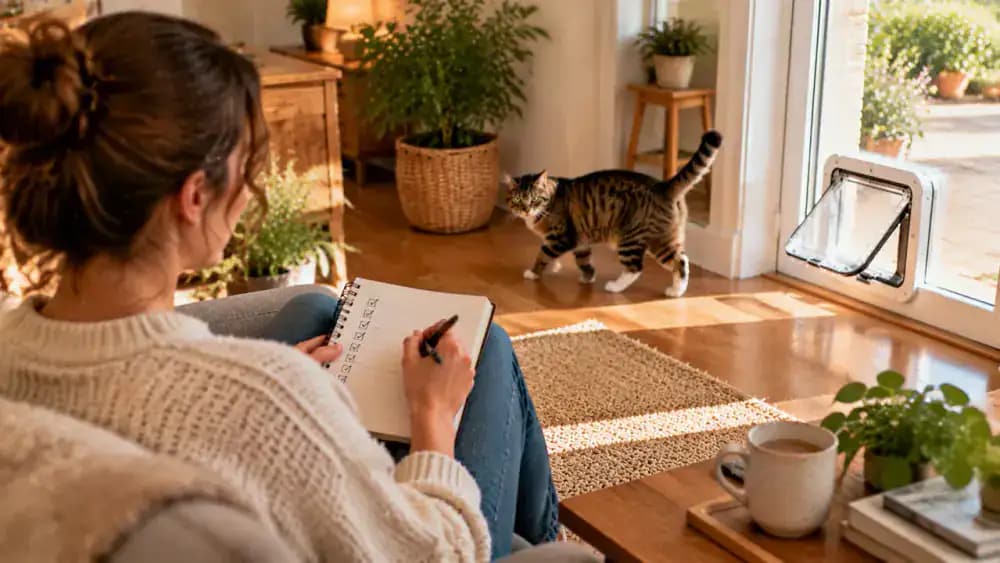
Tap to tick things off before you start.
Make the Flap Less Intimidating
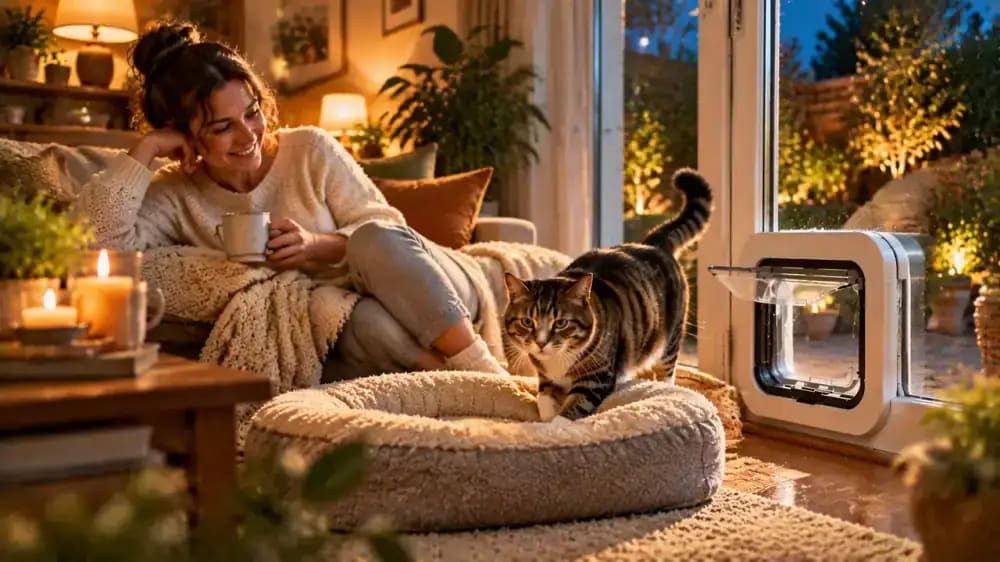
Give your cat time to become familiar with the pet flap before expecting it to pass through. Choose a calm moment and let your cat observe the panel from whatever distance feels comfortable. Stay nearby without crowding the doorway, and reward relaxed curiosity with a small treat or gentle praise. There is no need to rush.
Prepare a Safe Training Space
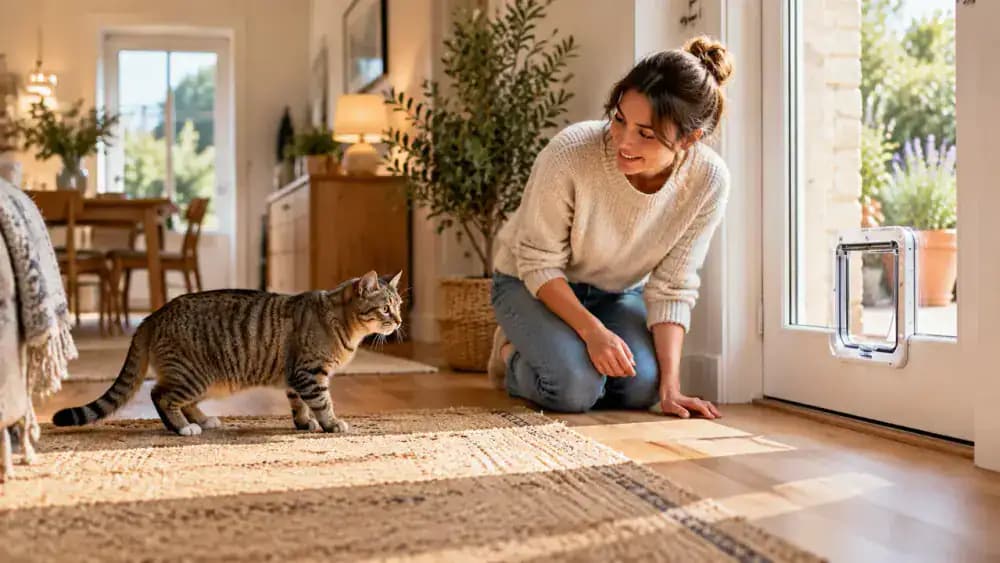
Choose a quiet room where your cat can explore without distractions. Before training, inspect the pet flap's frame, hinges, and panel to ensure everything is secure, moves freely, and has no sharp edges or loose parts. Keep food, water, a resting spot, and a litter tray accessible so your cat can remain comfortable indoors.
Start With the Flap Open
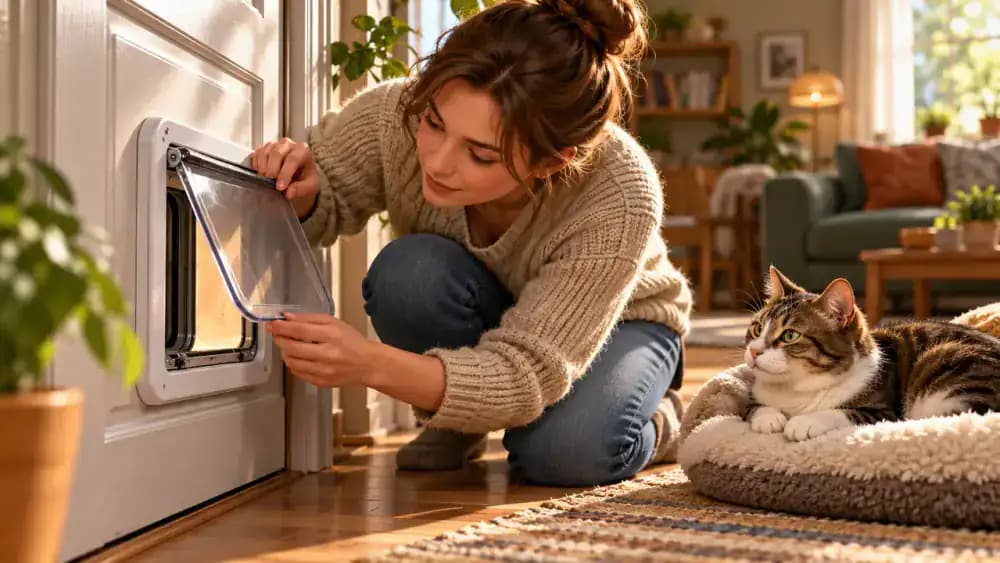
Secure the flap in its designated fully open position so the panel cannot swing unexpectedly or obstruct the passage. Sit quietly to one side rather than standing directly in front of the opening. Give your cat time to watch, sniff, and approach voluntarily. Keep the route clear, and let your cat decide when to investigate.
Reward Curious Approaches
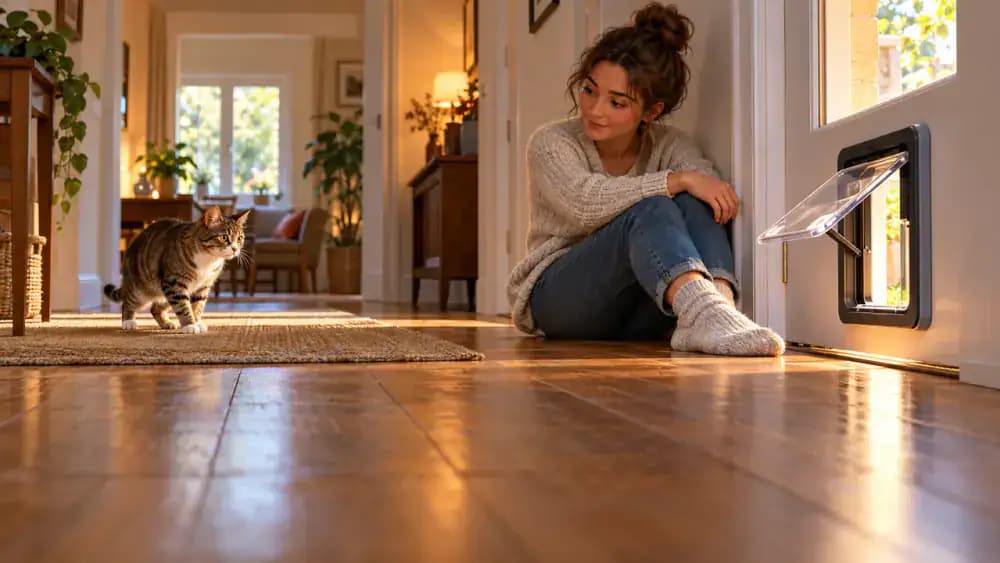
Encourage exploration by placing a small treat near the open flap, then gradually offering another closer to the threshold as your cat becomes comfortable. Reward sniffing, inspecting the frame, or looking through the opening. If your cat backs away, respect that choice and move the next treat farther away. Build confidence without pressure.
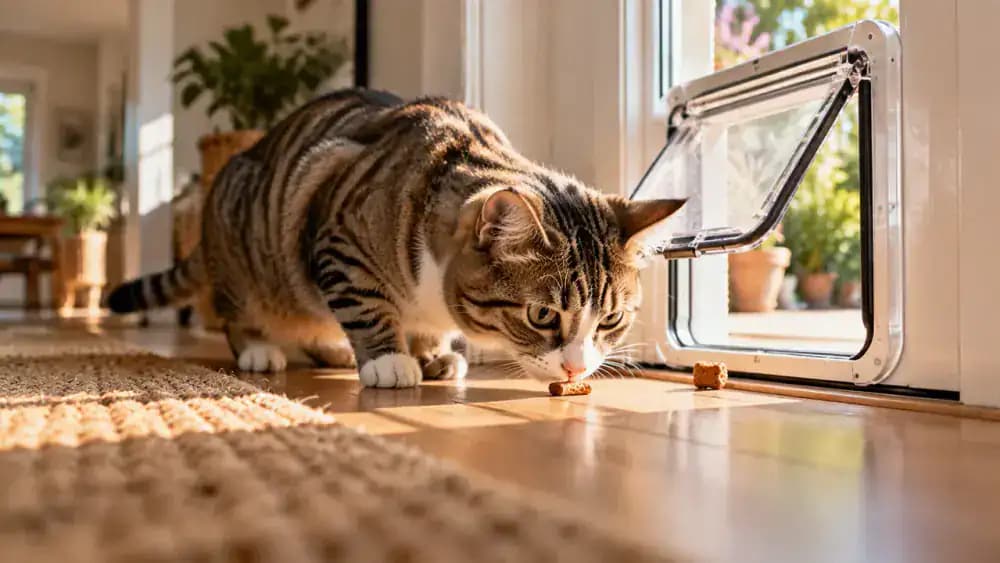
Encourage the First Crossing
Once your cat approaches the opening comfortably, place a treat just beyond the threshold to invite a voluntary crossing. Keep your hands clear of your cat's body and allow it to move without assistance. Reward each successful attempt with a treat or praise. If your cat hesitates, return to easier practice and try again later.
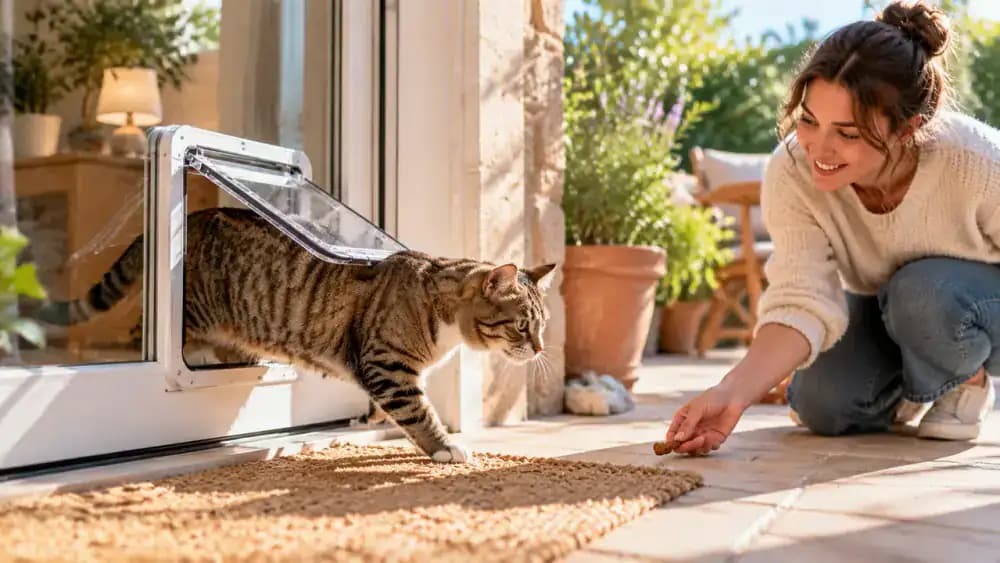
Keep Sessions Short and Positive
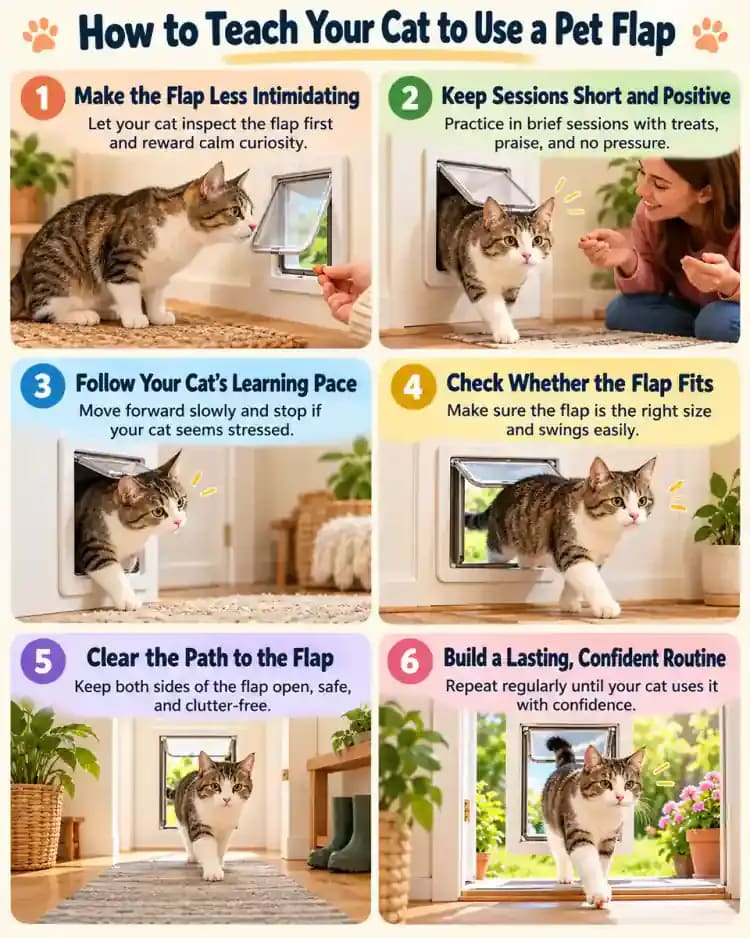
Practice for just a few minutes at a time, rewarding relaxed crossings while your cat remains interested. Watch for signs that your cat needs a break, such as retreating, losing interest in treats, or becoming tense. End the session calmly, let your cat rest, and resume later with an activity it already finds comfortable.
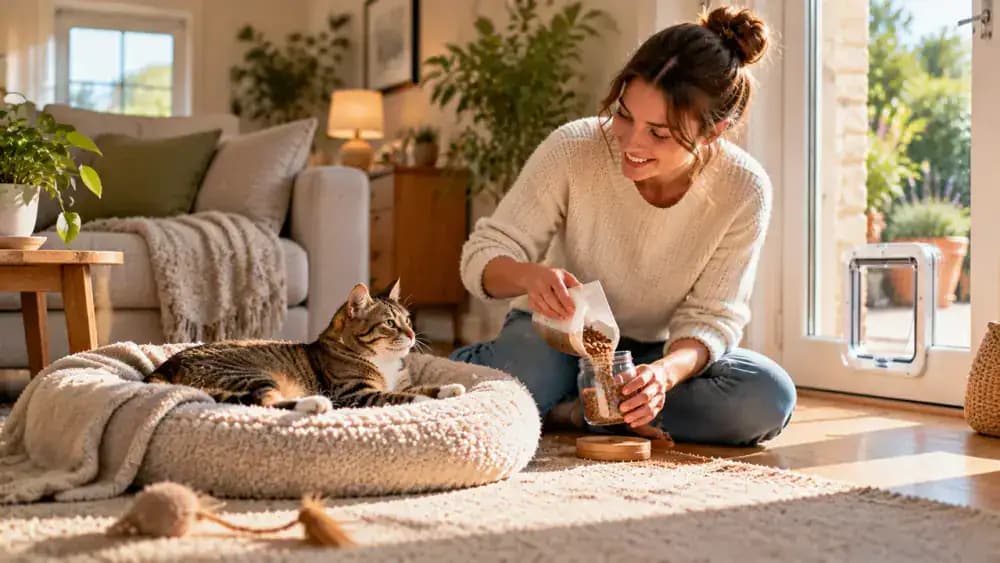
Introduce Gentle Panel Movement
Once your cat confidently passes through the open doorway, begin introducing the panel's movement. Keep your cat at a comfortable distance and gently move the panel while it watches. Reward calm observation, and stop if your cat seems uncertain. Never let the flap strike your cat or trap its paws, tail, or fur during practice.
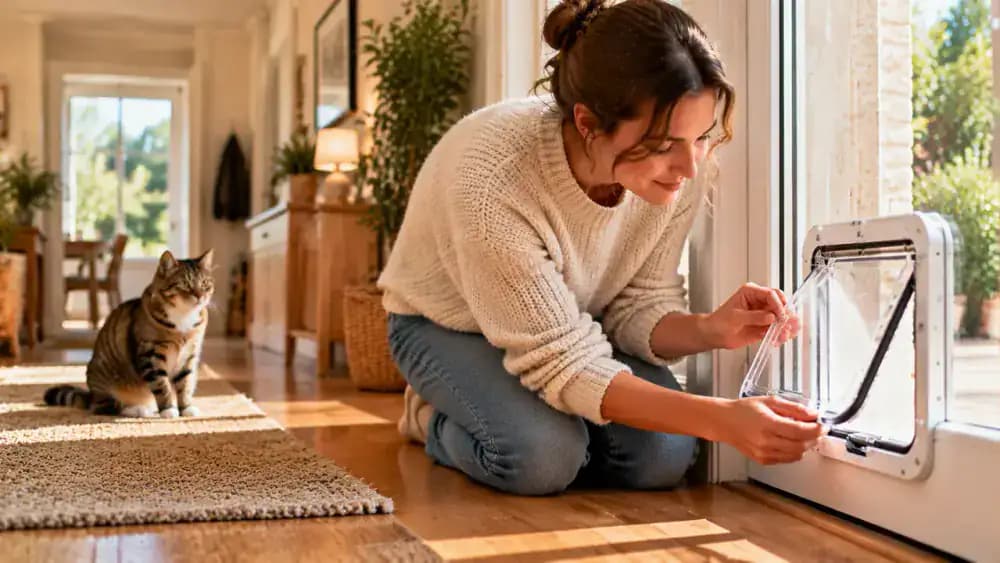
Practice Independent, Safe Use
When your cat stays relaxed around the moving panel, allow it to push through the flap naturally while you supervise. Reward willing attempts and let your cat return through the opening at its own pace. Check that the flap closes and locks properly, and assess outdoor hazards before allowing independent access. Confidence matters more than speed.
Practice From Both Directions
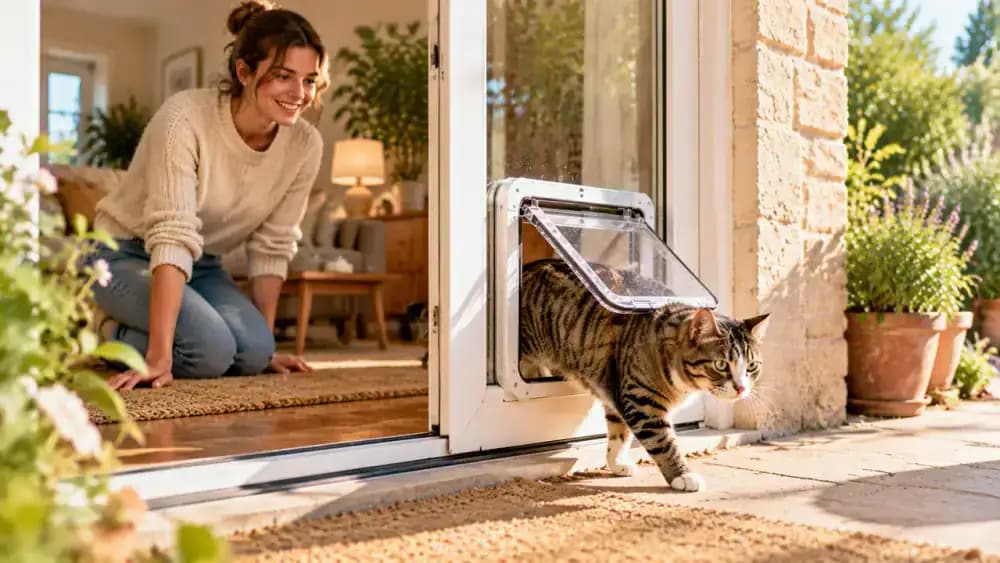
Help your cat become comfortable entering and exiting by practicing crossings from both sides of the doorway. Start with the panel securely open, then reward calm approaches and voluntary movement in each direction. Keep the surrounding floor clear of shoes, bags, and other obstacles. If one direction feels harder, return to easier practice until your cat relaxes.
Fade Out Constant Treat Prompts
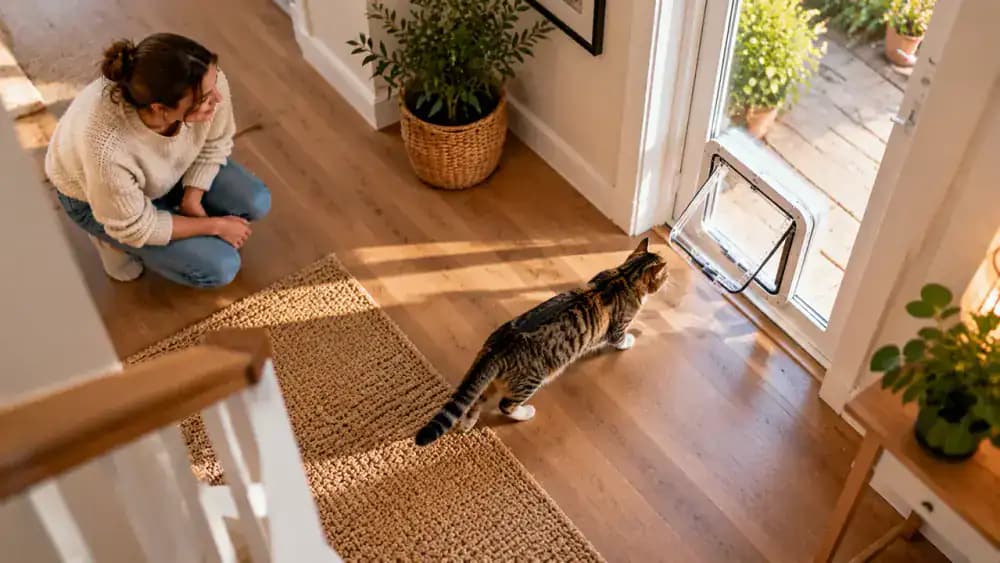
As your cat becomes more confident, gradually stop using visible treats to guide every crossing. Give your cat time to notice the flap and choose to pass through independently. Continue offering praise and occasional rewards to reinforce the behavior. If your cat hesitates, return to familiar encouragement rather than rushing the transition toward independent use.
Help Your Cat Accept the Sound
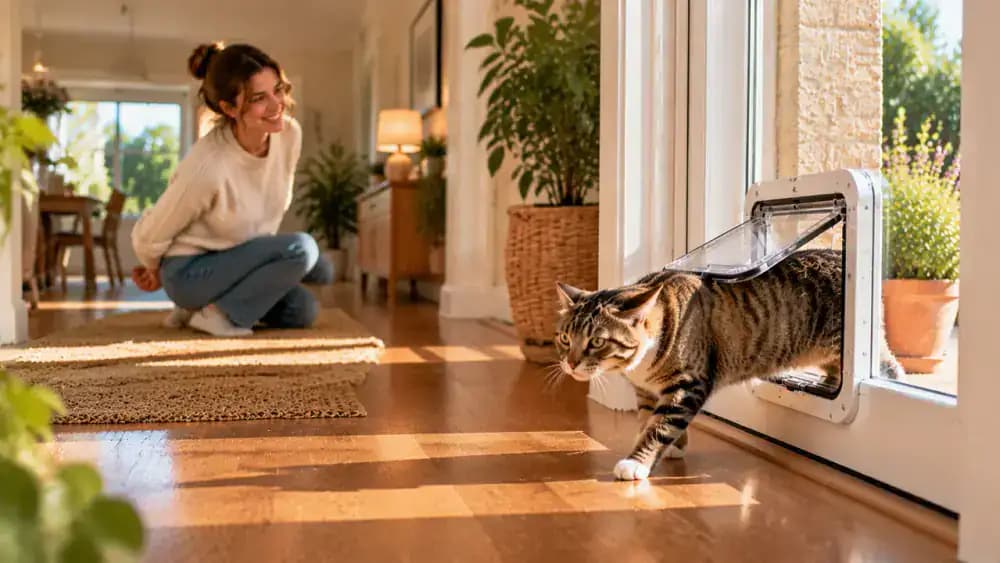
If the flap's sound makes your cat hesitant, practice getting comfortable with the noise separately from crossing the opening. Move the panel gently while your cat watches from a comfortable distance, then offer a small treat or calm praise. If your cat startles or retreats, stop and give it time before trying again more gently.
Follow Your Cat's Learning Pace
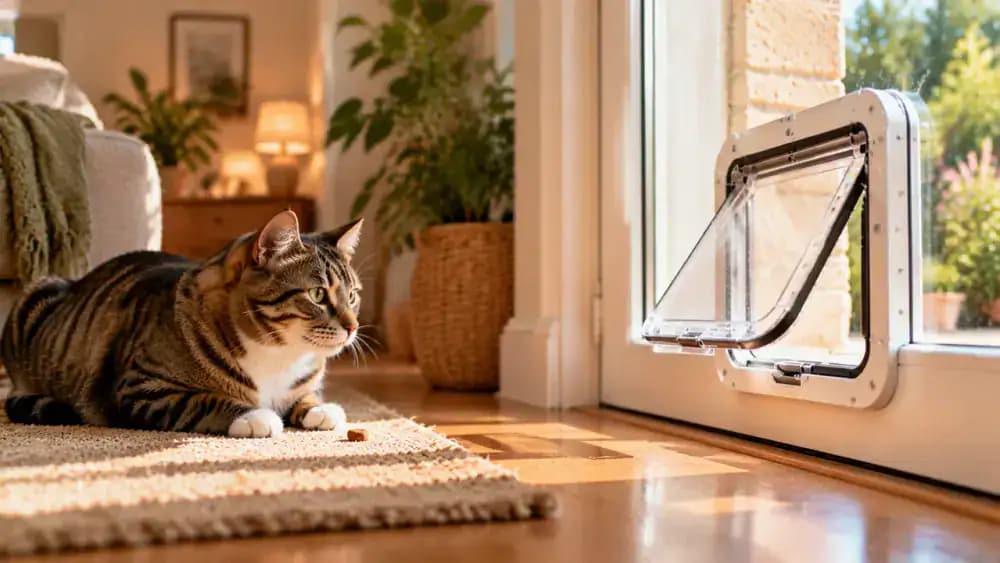
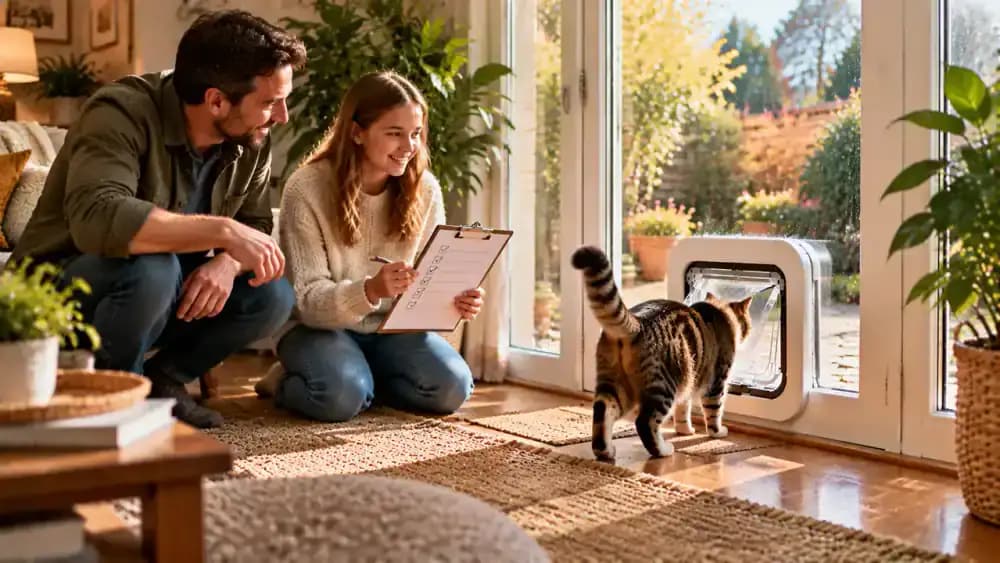
Every cat learns at a different pace, so focus on steady progress rather than a deadline. Keep a simple training journal to record which activities your cat handles comfortably and where it still hesitates. Spread practice across several days, repeat familiar exercises when needed, and adjust the next session to match your cat's comfort and confidence.
Plan Safe Outdoor Access
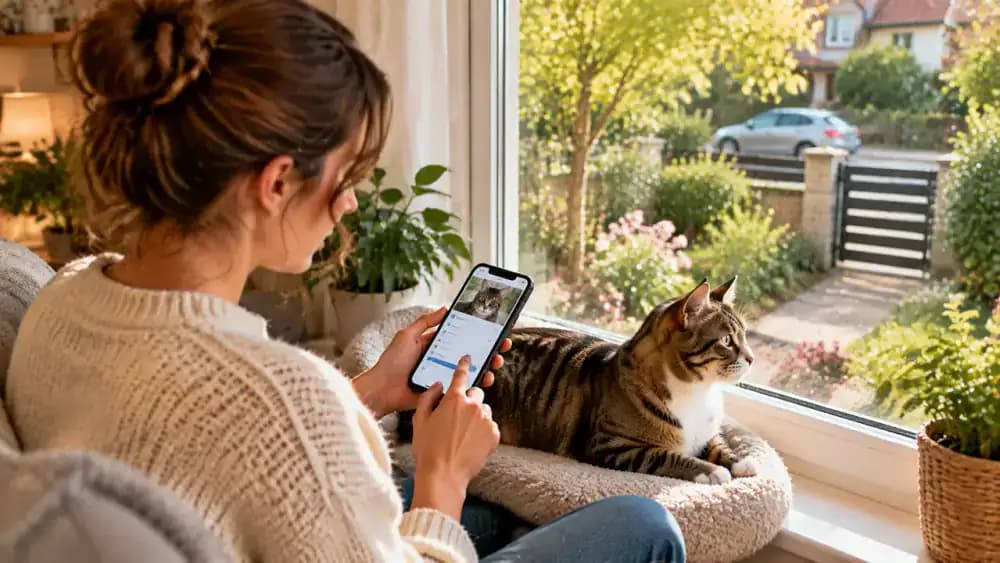
If the pet flap leads outside, assess the environment before allowing your cat to explore independently. Check for traffic, escape routes, wildlife, toxic plants, and weather hazards. Make sure your cat has suitable identification and that its microchip registration details are current. Choose appropriate access arrangements, and remember that learning to use the flap does not eliminate outdoor risks.
Check Locks and Access Settings
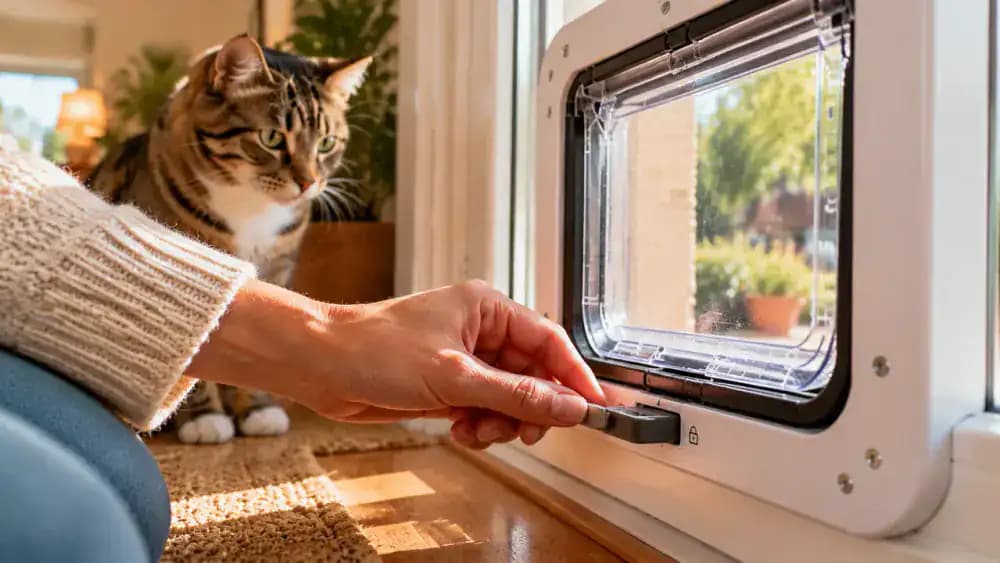
Before allowing independent use, test the flap's locking mechanism and confirm its settings match your household's needs. Follow the manufacturer's instructions, and check that the panel swings freely and closes securely every time. If the flap sticks, jams, or fails to latch, stop using it until repaired. Keep another safe way indoors available for your cat.
Train Cats in a Multi-Cat Home
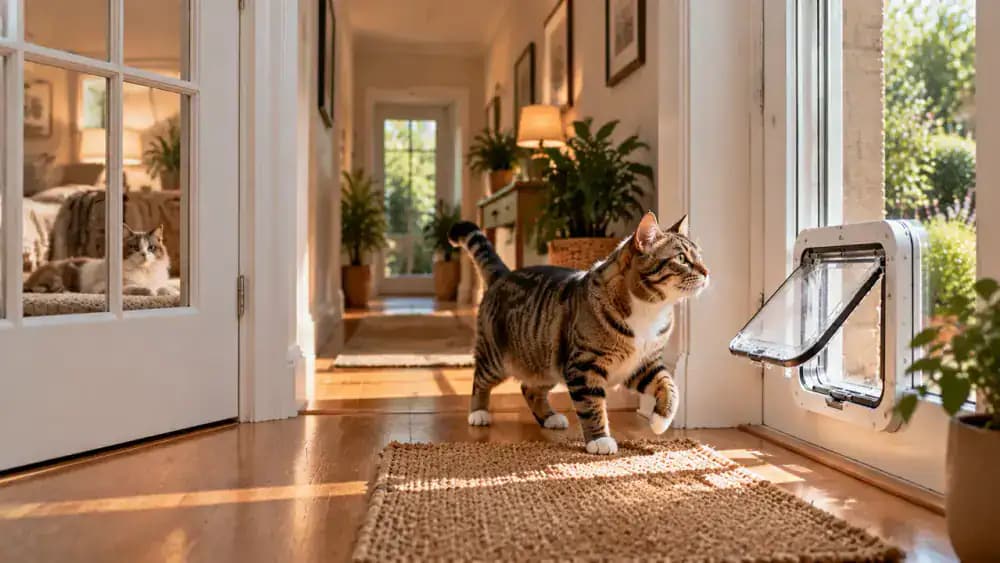
In a multi-cat household, begin by teaching each cat to use the flap separately. This prevents one cat from crowding, chasing, or intimidating another near the narrow opening. Give each cat individual practice time and rewards, then observe how they share the space once both are comfortable. If tension develops, return to separate sessions and keep the route clear.
Make the Pet Flap Part of Daily Life
Once your cat uses the pet flap comfortably, let it become a normal part of the daily routine. Continue rewarding relaxed, voluntary crossings occasionally, and revisit easier exercises if hesitation returns. Clean the panel regularly, check the frame and locking mechanism, and maintain safe access to the home so your cat can use the flap confidently.
Handle Occasional Setbacks
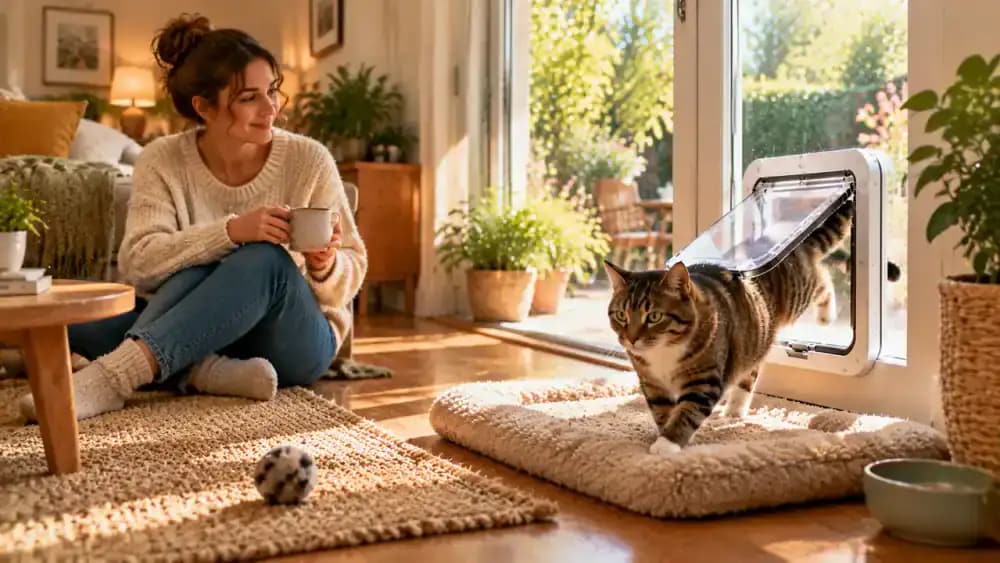
A sudden noise, unfamiliar visitor, or change in routine may temporarily make your cat reluctant to use the flap. Keep the area quiet and restore the familiar setup that previously felt comfortable. Give your cat time to approach voluntarily, and reward relaxed behavior without insisting on a crossing. Rebuild confidence gradually through familiar, successful experiences.
Check Whether the Flap Fits
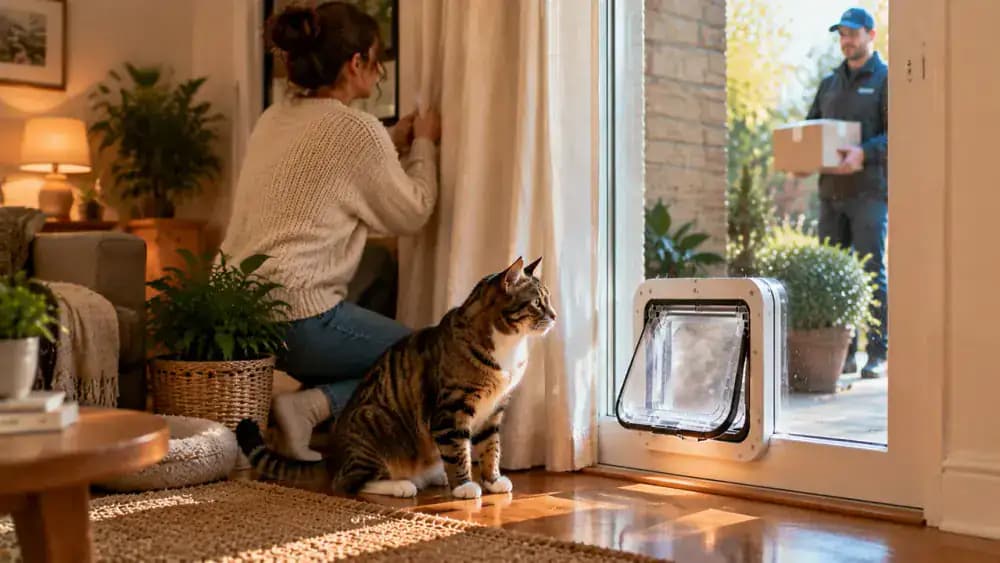
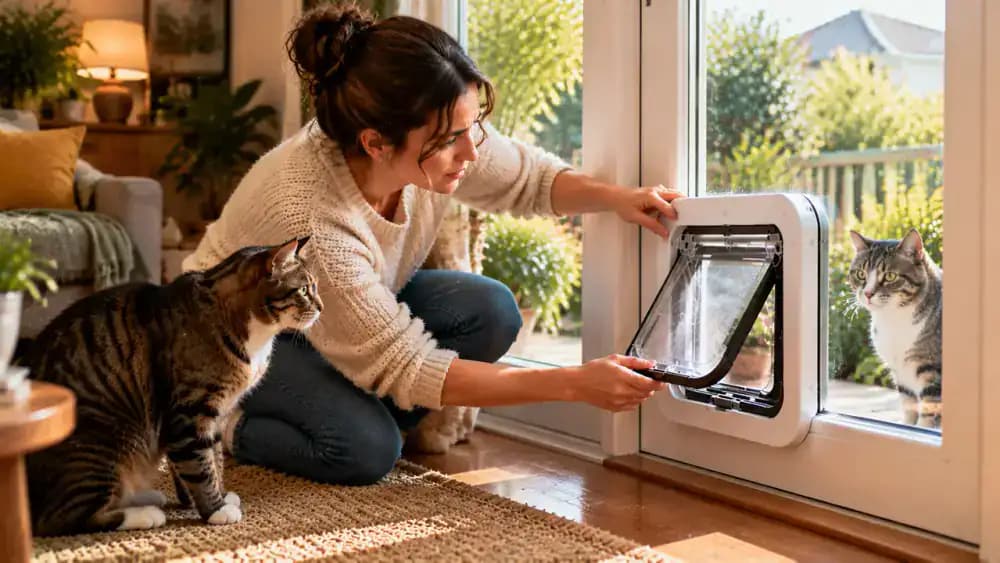
If your cat struggles to pass through, check whether the flap's size, height, weight, or magnetic resistance makes crossing difficult. Test the hinges and panel according to the manufacturer's instructions, ensuring everything moves smoothly. Choose a model suited to your cat's size and abilities. If movement appears uncomfortable or difficult, consult a veterinarian before continuing training.
Make the Other Side Inviting
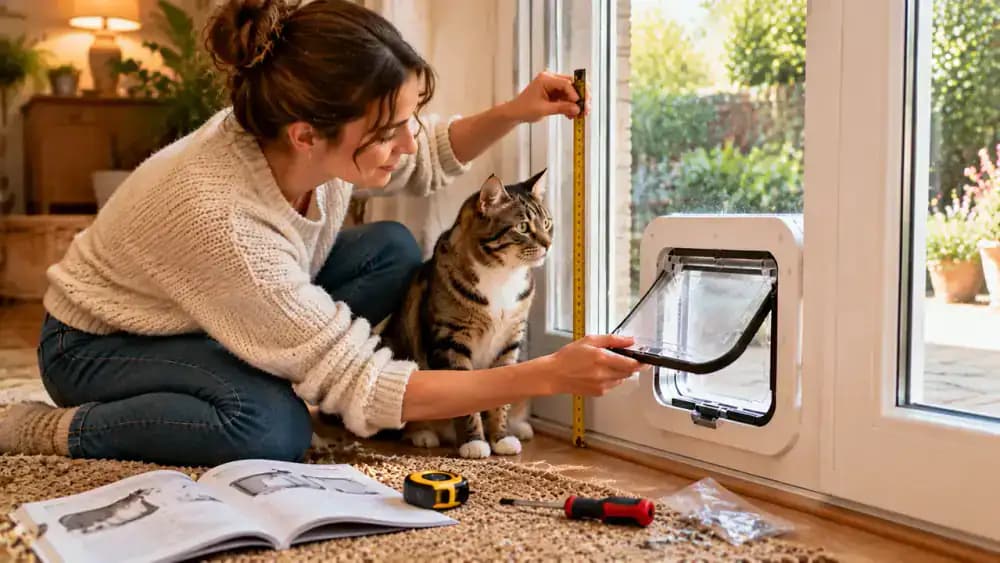
Your cat may hesitate if the space beyond the flap looks dark, unfamiliar, or confusing. Check for reflections, moving shadows, and objects that obstruct the view. Improve the lighting where possible and keep the other side calm and welcoming. Reward your cat for looking through the opening before expecting a complete crossing, allowing confidence to develop naturally.
Use Toys Without Creating Pressure
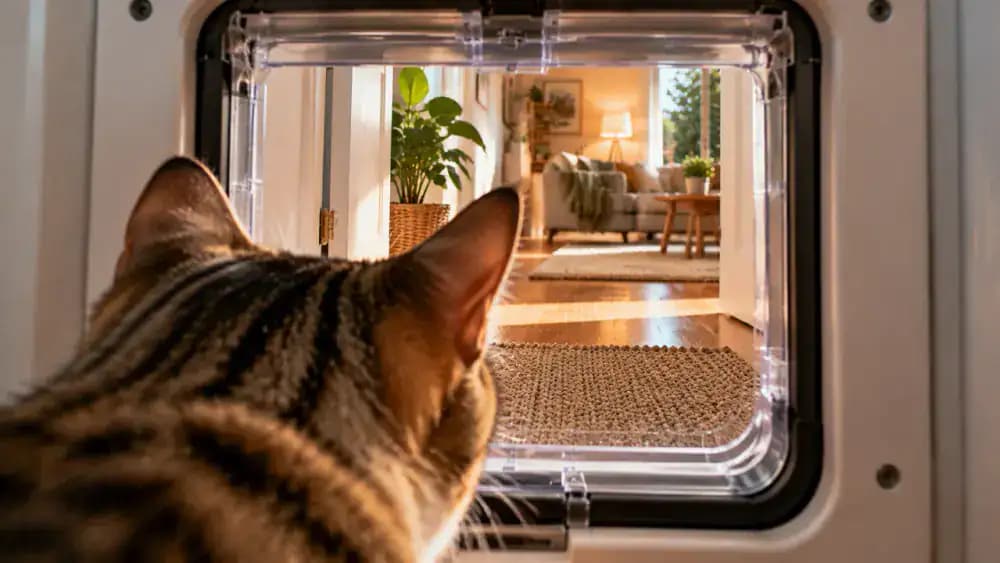
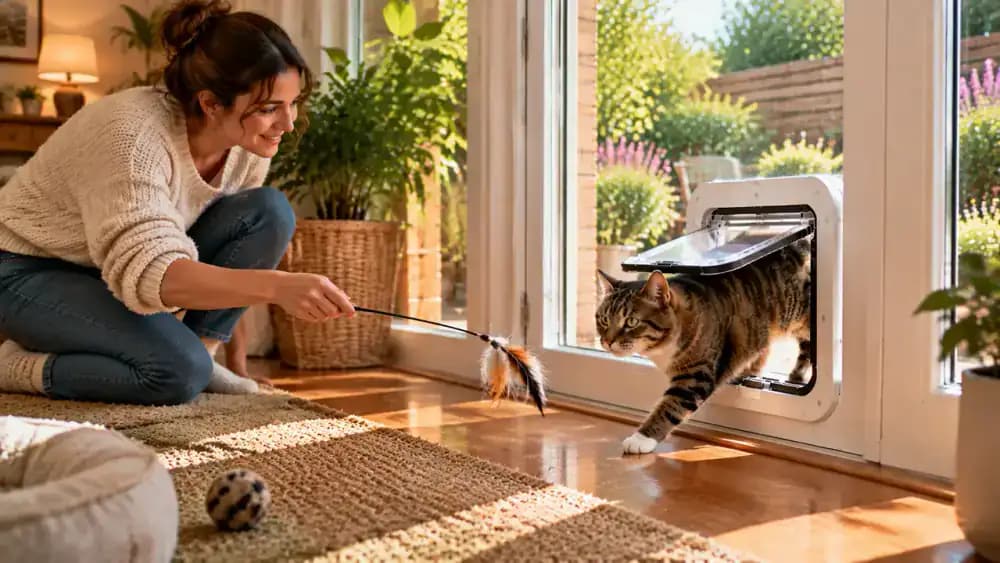
A favorite wand toy can encourage your cat to explore the opening, provided the activity remains relaxed and voluntary. Move the toy slowly beyond the flap and allow your cat to decide whether to follow. Keep strings and dangling parts away from the hinges and panel. After practice, put the toy away safely and let your cat rest or play freely.
Investigate Sudden Refusal
If your cat suddenly stops using a pet flap it previously accepted, check for changes before restarting training. Look for loose fittings, rattling noises, drafts, unfamiliar scents, blocked paths, or other animals nearby. Keep a secure indoor route available while investigating. If the reluctance persists or your cat seems unusually fearful, seek veterinary guidance rather than forcing another attempt.
Maintain Confidence Over Time
Once using the flap becomes routine, occasional treats and gentle praise can reinforce your cat's confidence without making every crossing a training exercise. Observe whether your cat moves comfortably in both directions and can return indoors easily. Include the flap in regular home maintenance, checking the hinges, frame, and closing panel for wear or problems.
Celebrate Your Cat's Progress
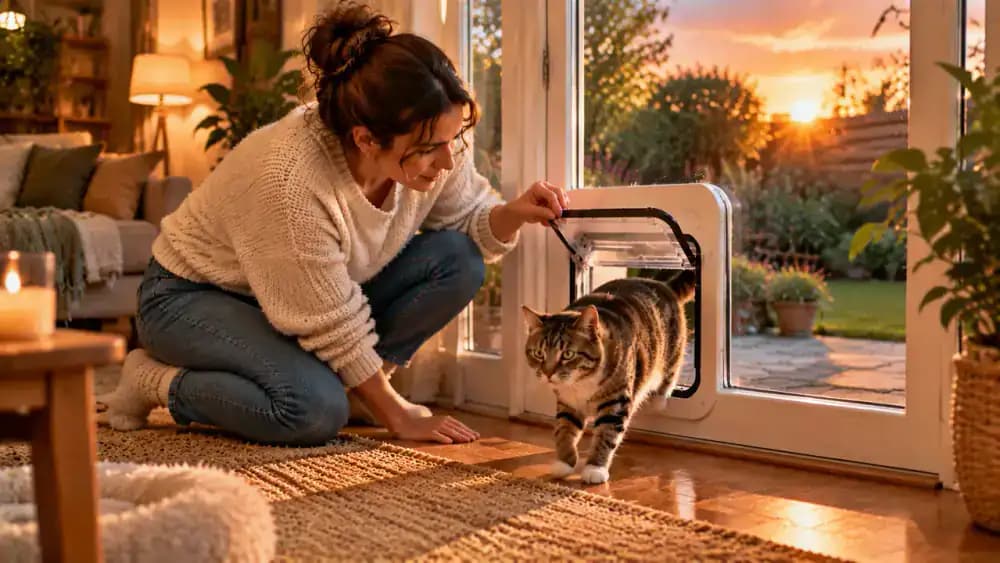
Celebrate your cat's progress by focusing on comfortable, voluntary use rather than expecting it to cross on command. Continue providing a safe indoor retreat and make sure the flap remains secure and easy to operate. If your cat needs a refresher, return to familiar exercises without pressure. A calm, confident routine matters more than how quickly your cat learns.
Clear the Path to the Flap
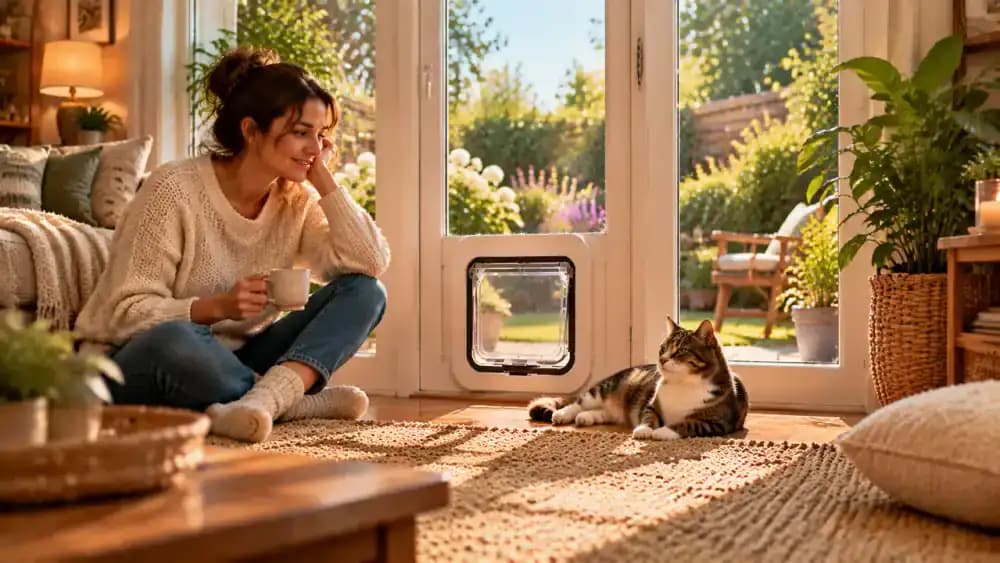
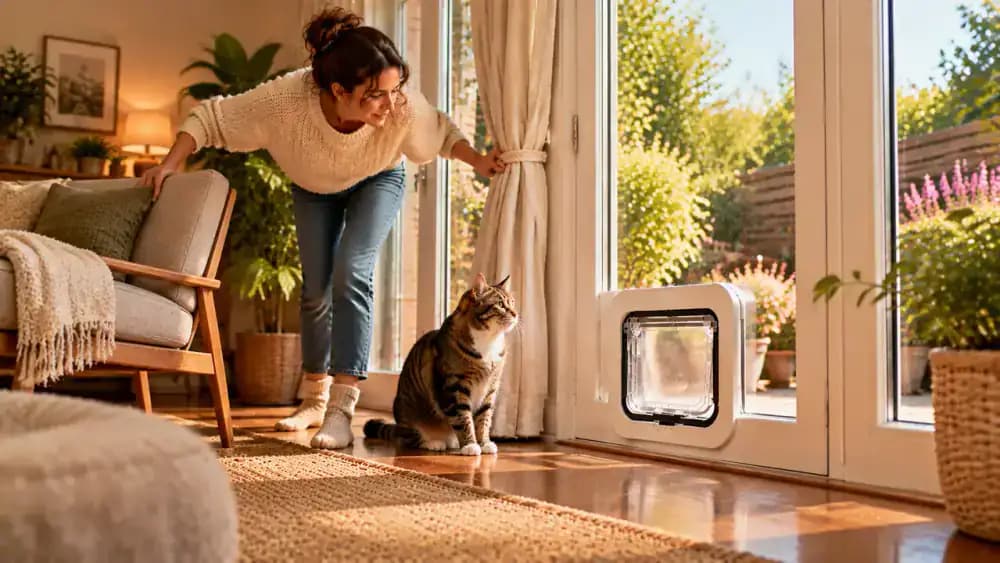
Check the entire approach to the pet flap, not just the panel itself. Furniture placed too close to the opening can make your cat feel cramped, while loose curtains may brush against the flap unexpectedly. Observe the route from your cat's level and remove obstacles or distracting objects. A clear, predictable path makes voluntary crossings more comfortable.
Account for Weather Changes
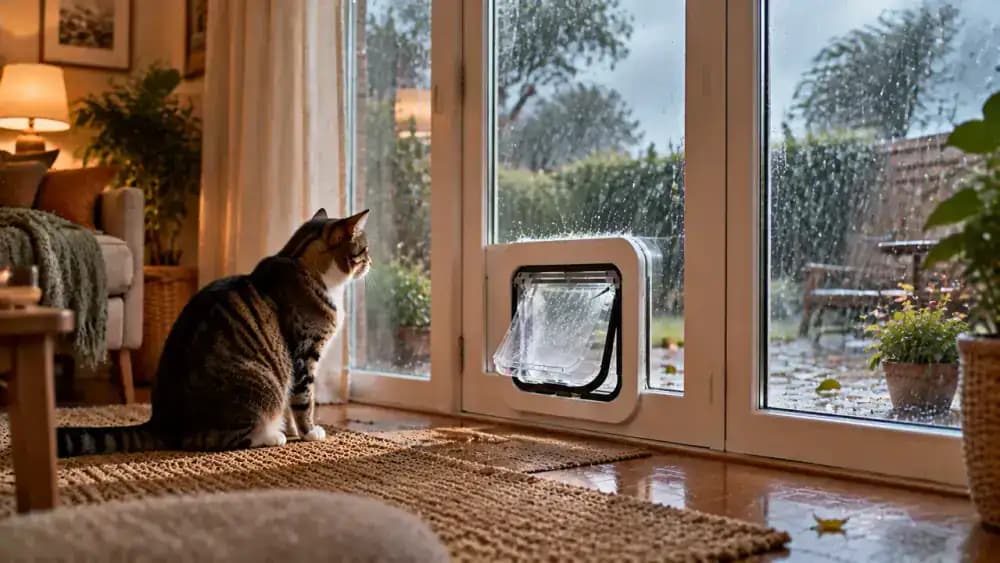
Wind, rain, and cold drafts can make a familiar pet flap less inviting. A lightweight panel may rattle in strong gusts, while unpleasant weather near the opening can discourage your cat from approaching. Keep outdoor access closed when conditions are unsuitable, and provide a comfortable indoor alternative. Resume practice when the panel moves predictably and the environment feels calm.
Keep Busy Households Calm
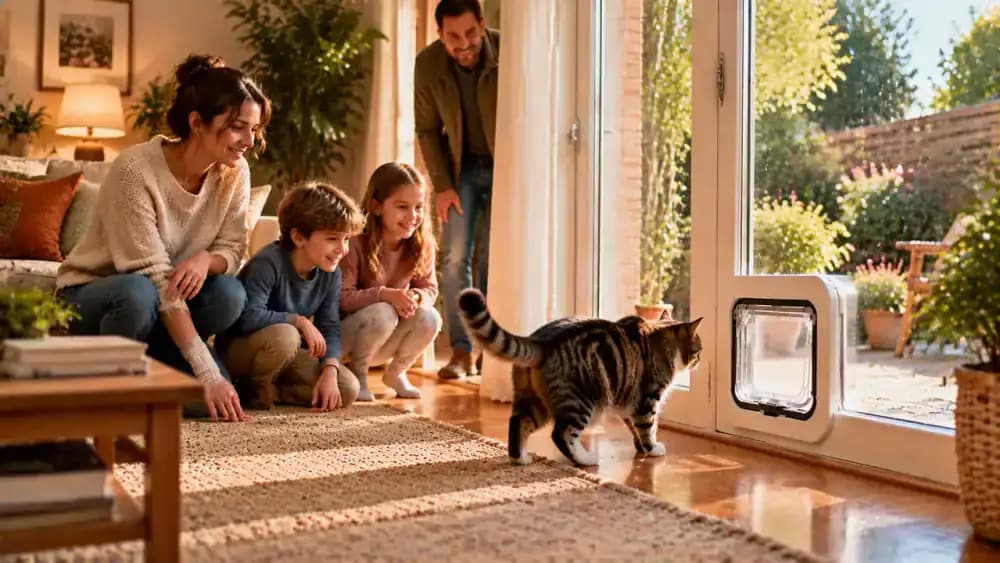
A busy household can make learning to use a pet flap more challenging. During practice, ask children and visitors to give your cat space, keep the doorway clear, and avoid calling, chasing, or reaching toward it. Once the area is quiet, allow your cat to approach voluntarily and reward calm exploration without attracting a crowd.
Find Your Cat's Favorite Reward
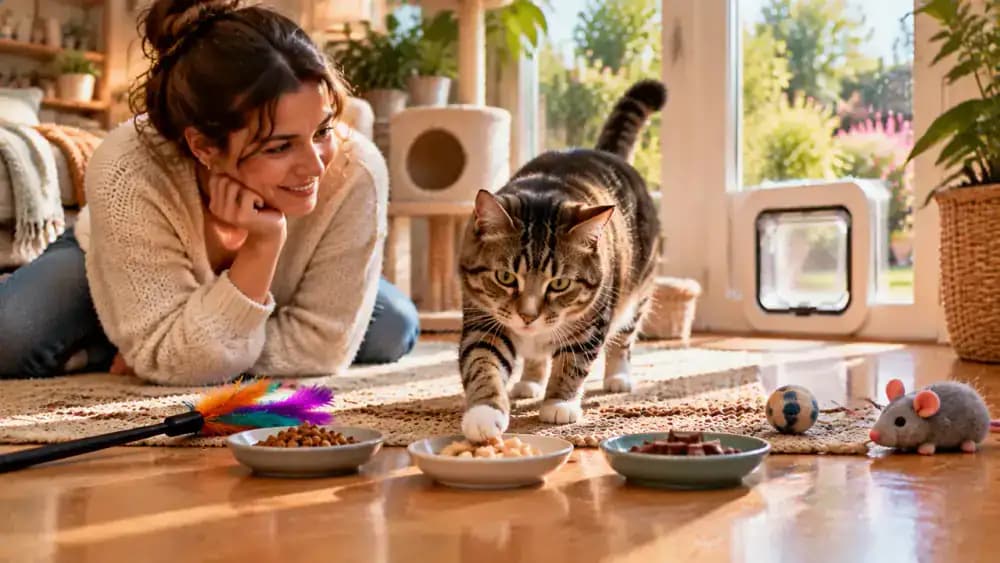
Choose rewards based on what your cat genuinely enjoys. Small treats may motivate some cats, while others respond better to gentle praise or a favorite toy. Offer a suitable reward after voluntary progress toward the flap, and notice which options hold your cat's interest. If one reward fails to engage your cat, try another during a later session.
Keep Essential Resources Away
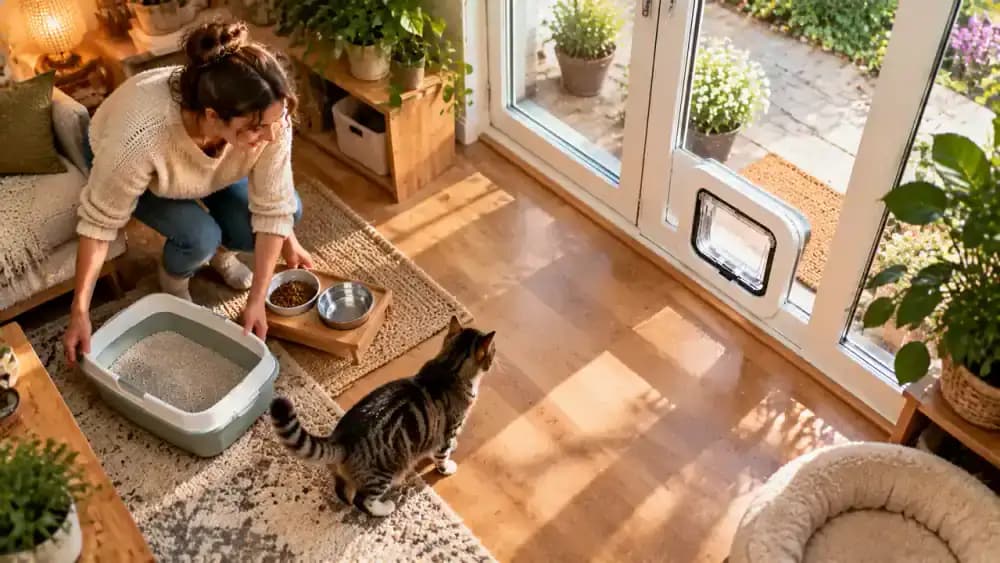
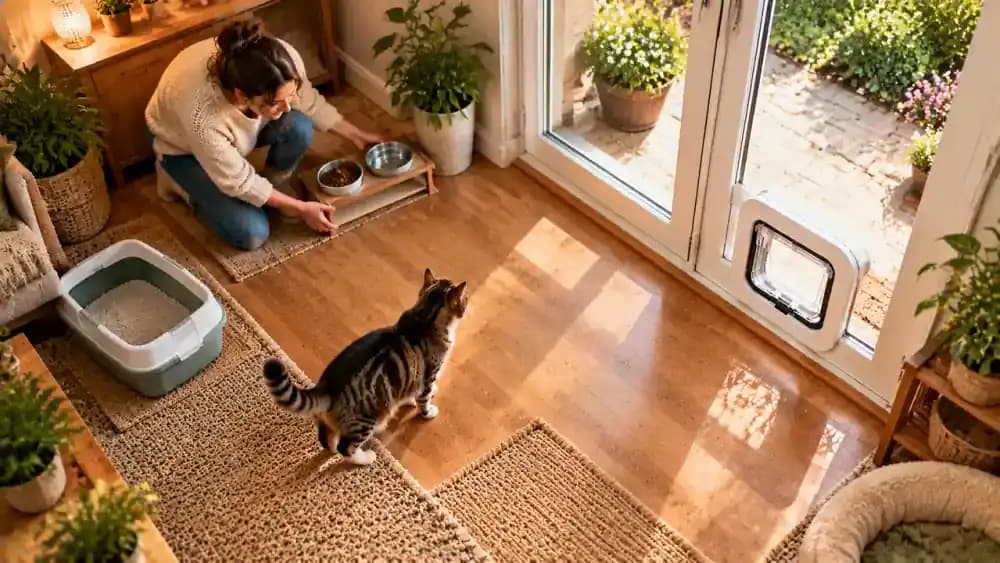
Keep food bowls, water bowls, and litter trays away from the immediate approach to the pet flap. Crowding these resources around the doorway can create distractions and leave too little room for comfortable movement. Choose quiet, accessible locations for everyday essentials, and leave both sides of the flap clear so your cat can approach and turn around easily.
Keep Everyone Consistent
Help your cat learn faster by agreeing on a consistent approach across the household. Explain that everyone should reward voluntary exploration, avoid pushing the panel toward the cat, and allow breaks when needed. Use the same gentle cues and expectations during practice. When possible, have one person supervise each session so your cat receives calm, predictable guidance.
Build a Lasting, Confident Routine
Keep the training routine simple: maintain a safe, clear passage, reward voluntary progress, and introduce panel movement only when your cat is comfortable. There is no deadline for learning, and forcing a crossing can undermine confidence. Continue checking the flap's condition, observe your cat's behavior, and adjust the environment whenever needed. Let comfort and safety guide lasting progress.
A pet flap can give your cat more freedom to move between indoor and outdoor spaces, but learning to use one may take time. The swinging panel, unfamiliar sounds, and resistance against the cat's body can make a new flap seem intimidating. Even a confident cat may hesitate when faced with an opening that moves unexpectedly.
The best way to teach your cat to use a pet flap is to make the experience calm, predictable, and rewarding. Start with the panel held securely open, allowing your cat to investigate at its own pace. Use small treats, praise, or a favorite toy to reward curiosity and voluntary movement. Gradually build from approaching the opening to looking through it and eventually walking through without assistance.
Keep training sessions short and end on a positive note whenever possible. Never push, pull, or force your cat through the opening. If your cat backs away, pauses, or becomes reluctant, return to an easier activity and allow more time to adjust. Progress may take a few sessions or several weeks, depending on your cat's personality and previous experiences.
Before training begins, check that the flap is securely installed, moves safely, and is appropriate for your cat's size. Maintain a comfortable indoor alternative and consider outdoor hazards before allowing independent access. With patience, positive reinforcement, and gradual practice, you can help your cat learn this new skill without unnecessary stress.
Where people go wrong
Forcing your cat through the opening. Pushing or pulling your cat through the flap can create fear and make the opening seem unsafe. It also prevents your cat from choosing to explore and learn at its own pace. Instead, reward small voluntary movements, such as approaching the flap or looking through it. If your cat retreats, give it space and resume with an easier, more comfortable activity.
Letting the panel swing too early. A moving panel can surprise a cat that has only learned to walk through an unobstructed opening. Introducing movement before your cat feels comfortable may create a lasting hesitation. Begin with the panel securely held open, then introduce gentle movement gradually. Watch your cat's response and return to the previous stage if the panel causes concern.
Making training sessions too long. Repeatedly encouraging your cat to practice after it loses interest can turn a positive experience into a frustrating one. Cats learn at different rates, and some need only a few minutes at a time. Keep sessions brief, provide breaks, and finish when your cat remains comfortable. Several relaxed sessions are more useful than prolonged practice that increases hesitation.
Rewarding only successful crossings. Waiting until your cat passes completely through the flap before offering a reward may make the task too difficult at first. Early training should reinforce smaller achievements, including looking at the opening, approaching it, sniffing the panel, and placing a paw near the threshold. Gradually reward more complete movements as confidence grows, allowing your cat to understand what earns a positive response.
Using treats to pressure your cat. Holding a treat just beyond the flap and repeatedly moving it farther away can encourage a hesitant cat to follow before it feels ready. If your cat stretches anxiously, retreats, or stops engaging, make the exercise easier. Reward curiosity without creating pressure, and keep treats close enough that your cat can participate voluntarily and retreat whenever it wants.
Ignoring installation and safety concerns. Even good training cannot compensate for a flap that catches, swings unpredictably, or has sharp edges. Check the frame, hinges, locking mechanism, and surrounding surfaces before each training period. Also consider whether outdoor access is appropriate for your cat and environment. Keep an indoor alternative available, and do not leave the flap unlocked until access can be managed safely.
Expecting every cat to learn at the same pace. A cat that watches another cat use a flap may still need individual practice. Age, previous experiences, confidence, and sensitivity to movement can all influence progress. Avoid comparing your cat with another animal or treating hesitation as stubbornness. Follow your cat's responses, revisit familiar exercises when needed, and seek professional guidance if fear persists or behavior changes unexpectedly.
Questions people ask
Some cats become comfortable with a pet flap within a few days, while others need several weeks of gradual practice. The timeline depends on your cat's confidence, previous experiences, and sensitivity to the moving panel. Keep sessions short and reward voluntary progress rather than aiming for a fixed deadline. If your cat hesitates, repeat an easier activity before introducing the next challenge.
Fixed it?
Get one guide like this every Thursday.