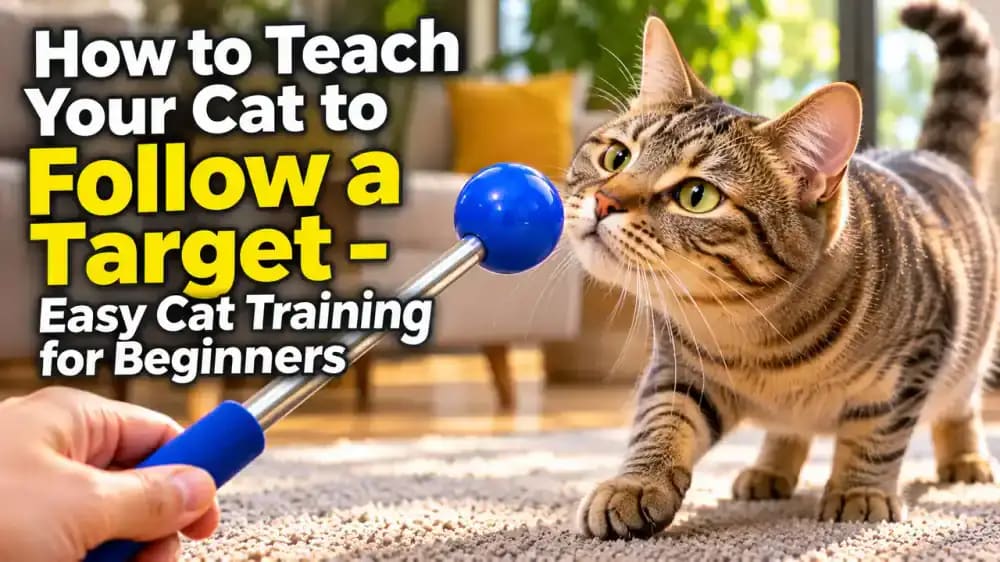
How to Teach Your Cat to Follow a Target - Easy Cat Training for Beginners
Teach your cat to touch and follow a target using treats, positive reinforcement, and short, stress-free sessions. This beginner-friendly training game builds confidence, provides mental enrichment, and creates a foundation for new tricks.
What you’ll need
Tap to tick things off before you start.
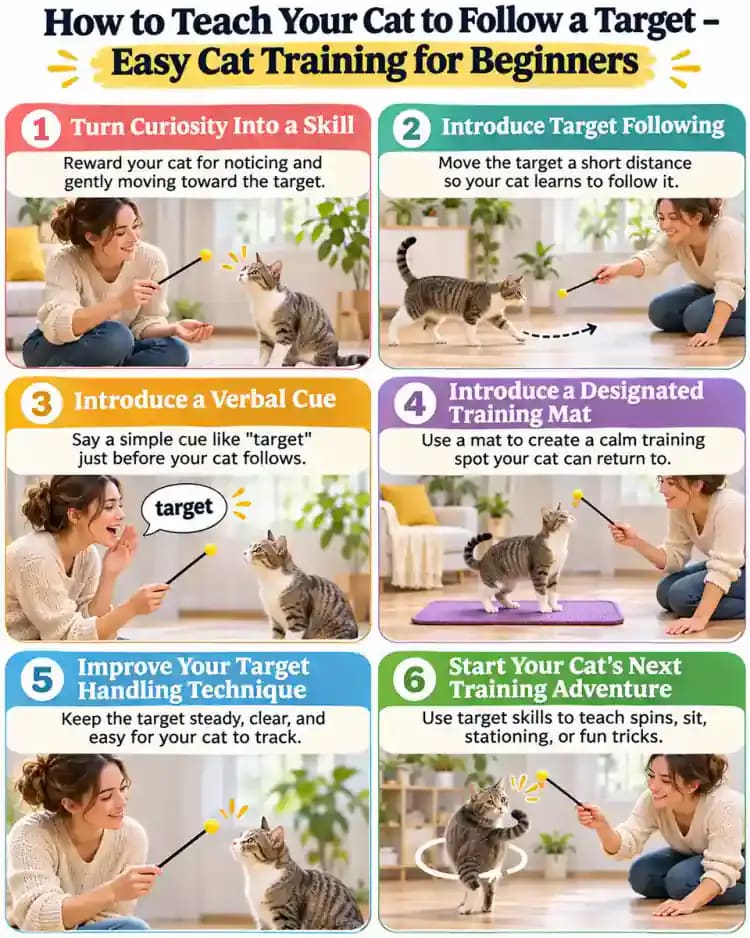
Turn Curiosity Into a Skill
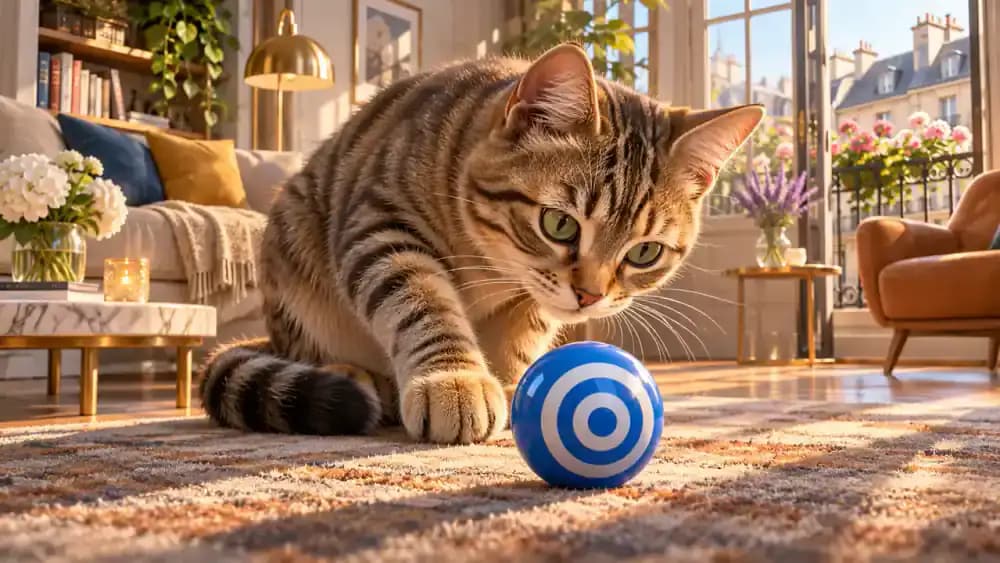
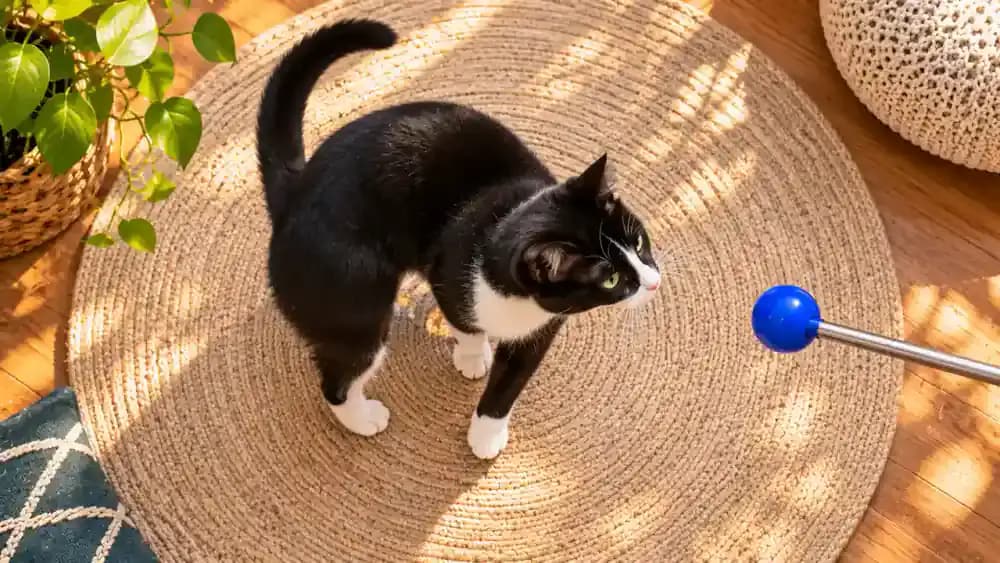
Begin by letting your cat notice a target stick from a comfortable distance in a familiar room. Allow your cat to investigate voluntarily without chasing, guiding, or forcing contact. Target training uses positive reinforcement to turn natural curiosity into a repeatable skill. Keep your movements calm and watch for relaxed, interested body language.
Prepare Your Training Setup
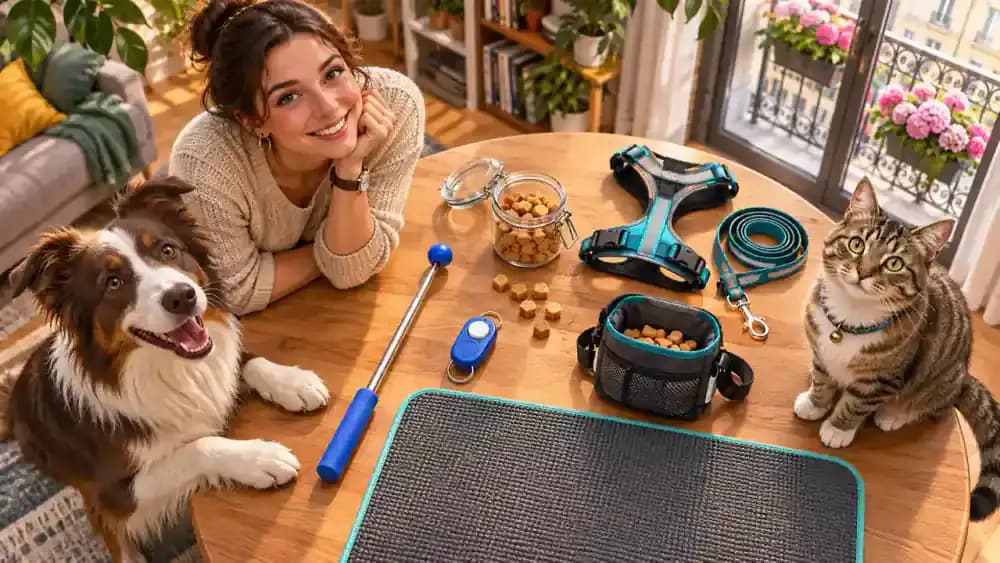
Choose a lightweight target stick with a smooth, securely attached tip and no sharp edges or loose parts. Prepare tiny pieces of your cat's favorite treats and keep an optional clicker nearby. Select a quiet area with a nonslip mat and minimal distractions. Allow your cat to enter the training space independently.
Reward the First Approach
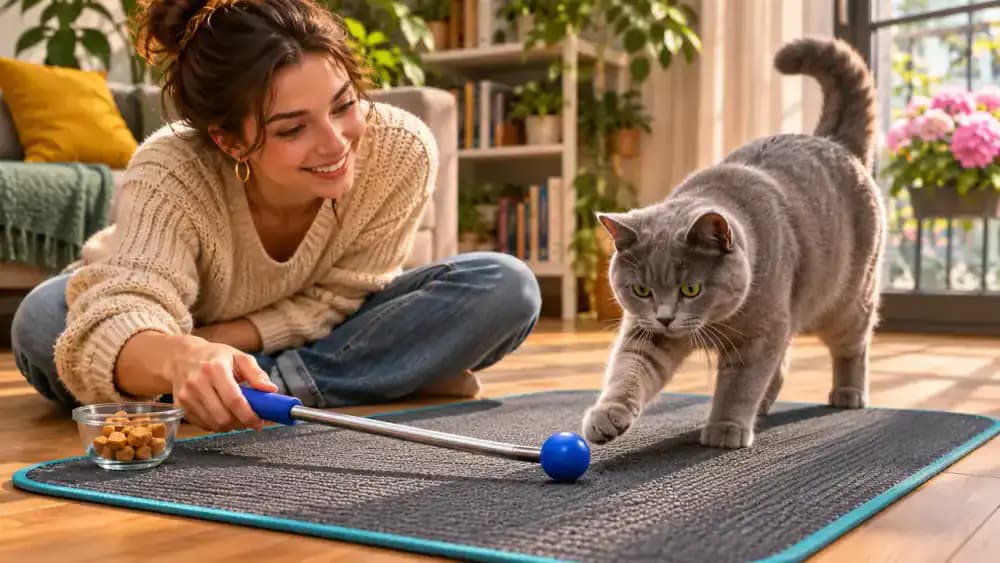
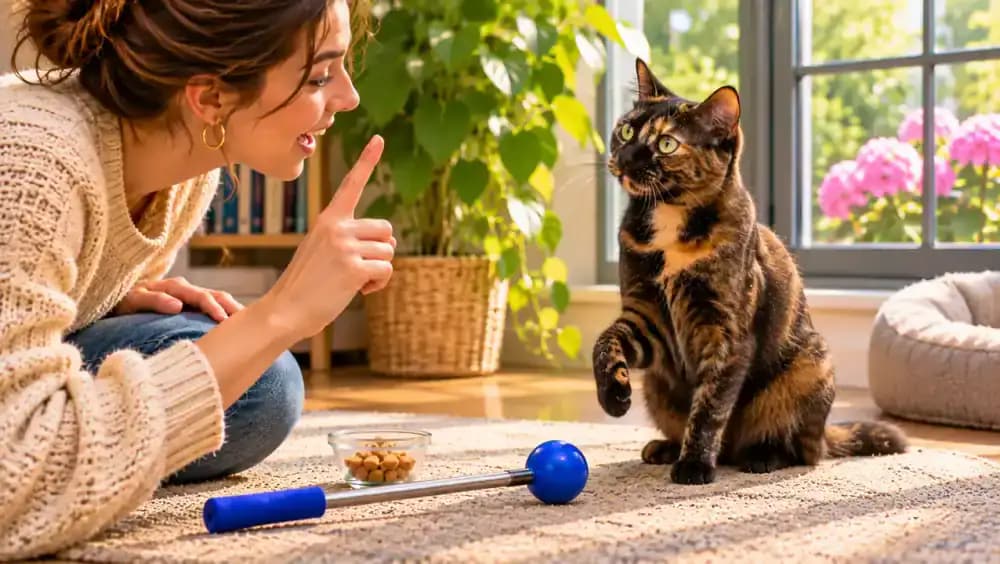
Hold the target still several inches from your cat's nose, leaving enough space for a comfortable approach. Immediately reward any voluntary interest, such as looking at the target, sniffing, or taking a step closer. Offer a tiny treat after each successful response. If your cat turns away, lower the target and pause without following them.
Teach the Gentle Nose Touch
Once your cat approaches the target consistently, begin rewarding gentle nose touches instead of simply looking or stepping closer. Hold the target steady and mark the exact moment of contact with a clicker or a consistent word like yes. Deliver a treat immediately afterward. Never push the target toward your cat's face to create contact.
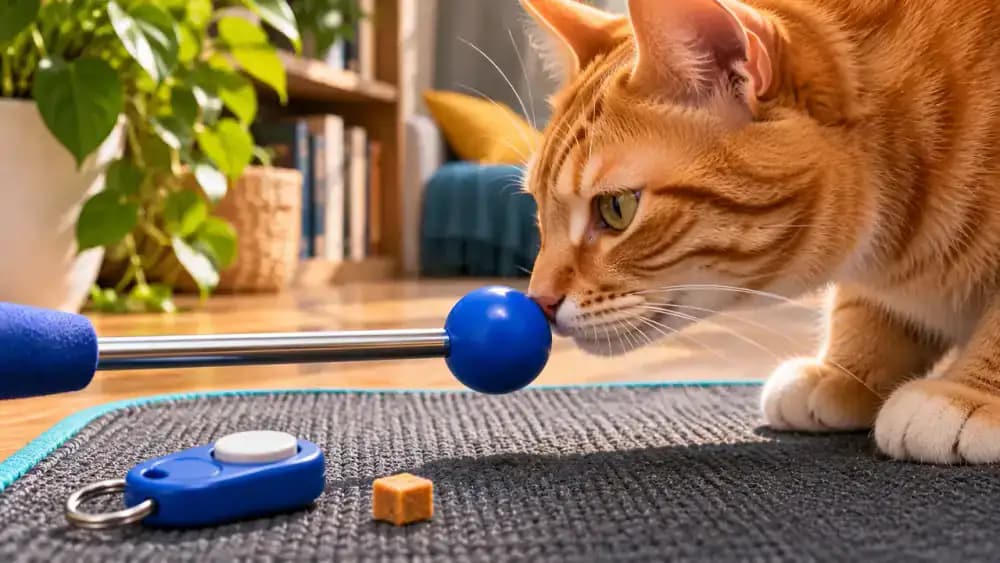
Build a Reliable Response
After several successful nose touches, briefly hide the target behind your back and present it again in the same position. Reward your cat each time they voluntarily touch it without additional prompting. Repeat a few times with short pauses, watching for confident, relaxed participation. End the session with a final reward before your cat loses interest.
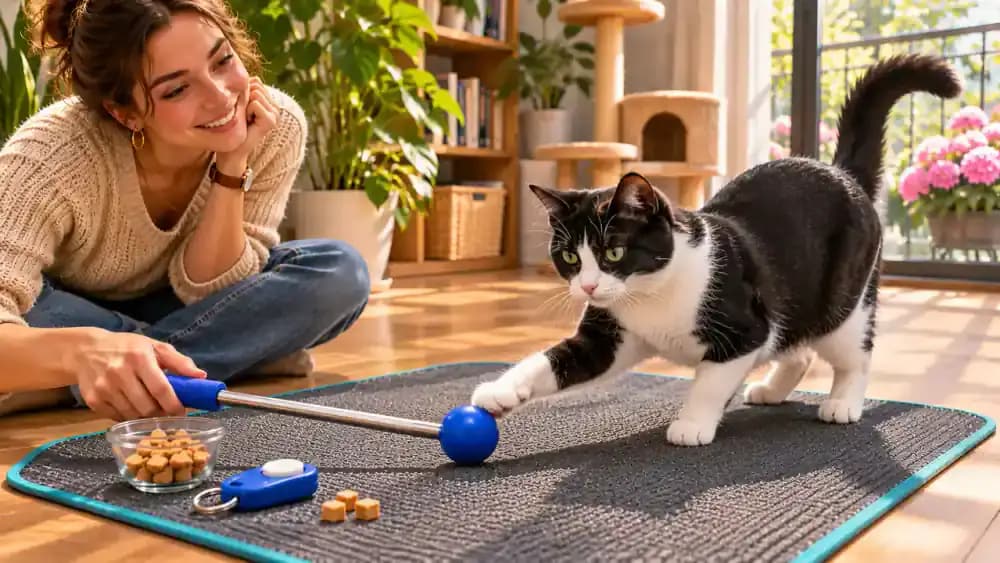
Introduce Target Following
Move the target just a few inches to your cat's left and reward one voluntary step toward it, even without a nose touch. Once that feels comfortable, repeat the exercise on the right. Gradually increase the distance as your cat gains confidence. Keep movements slow, pause between attempts, and let your cat choose whether to follow.
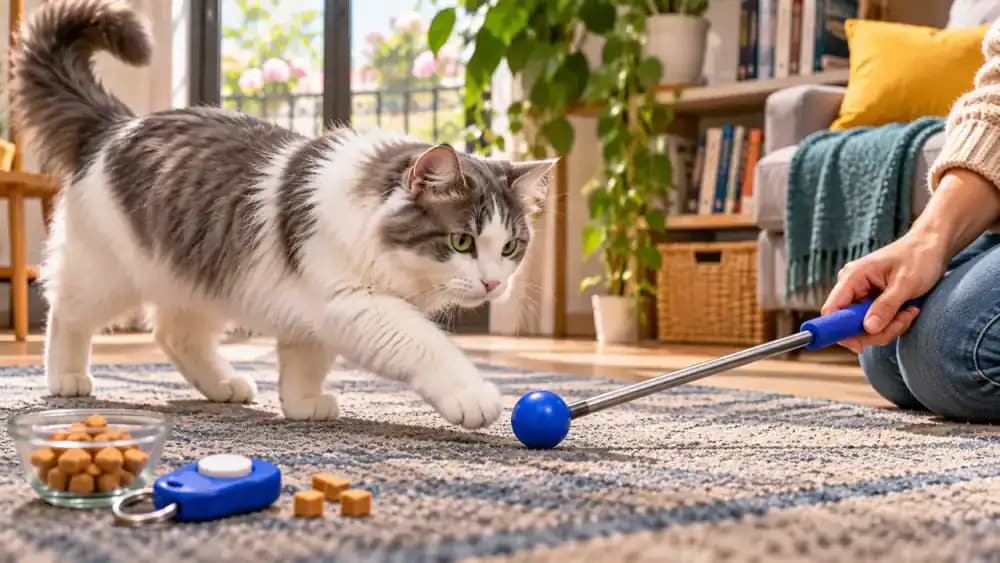
Recognize Stress and Avoid Mistakes
Watch your cat's body language throughout training. Freezing, flattened ears, backing away, or leaving may indicate discomfort or disengagement. If these behaviors appear, withdraw the target and allow your cat to leave. Avoid moving the stick too quickly or placing it too close. During your next session, return to an easier exercise and reward voluntary participation.
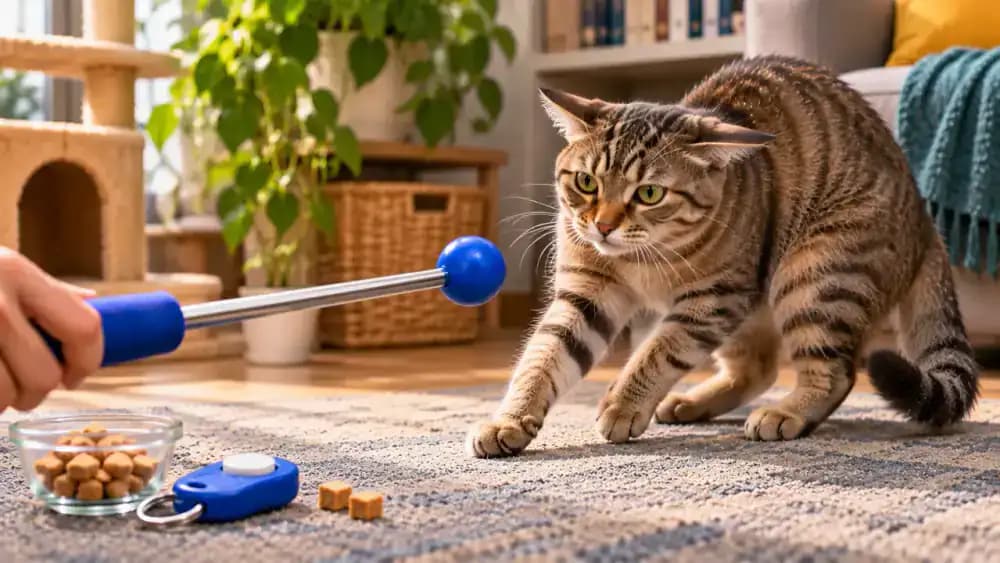
Build on Your Cat's New Skill
Guide your cat along a short, gently curved path by moving the target slowly across the floor. Reward each willing movement and finish with an easy nose touch. Once your cat follows comfortably, you can introduce simple turns or cooperative care activities. Put the target away after a successful attempt and allow your cat to relax.
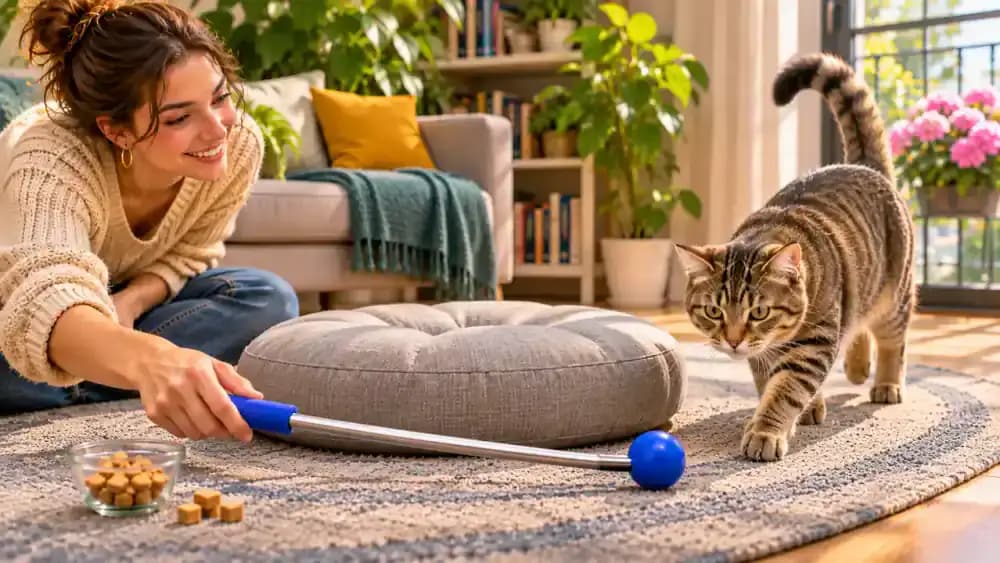
Practice in Different Rooms
Once your cat reliably touches and follows the target, introduce the exercise in another familiar, quiet room. Start with a stationary target and reward an easy nose touch before requesting movement. Different flooring, sounds, and smells may affect your cat's confidence. Keep distances short, provide secure footing, and rebuild the behavior gradually in each new location.
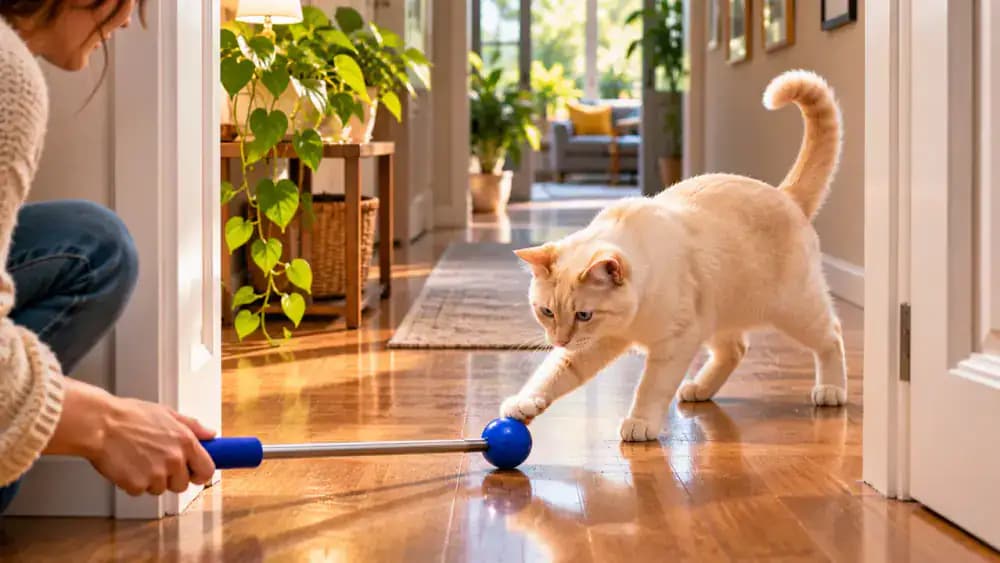
Use Reward Placement Strategically
After your cat touches the target, mark the behavior immediately and deliver a small treat slightly away from the stick. This encourages your cat to move away briefly before choosing to approach again. Keep rewards within comfortable reach and avoid luring with your treat hand. Consistent reward placement helps create natural resets and supports independent, repeatable target touches.
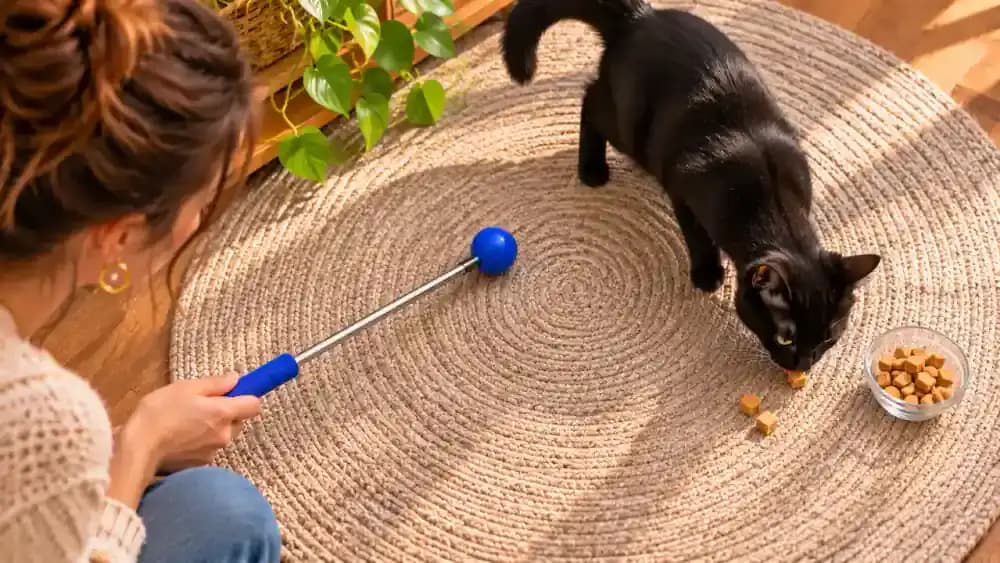
Teach Different Target Positions
Hold the target at your cat's natural nose height and reward a gentle touch. Next, position it slightly below the chin or just above the normal head position. Reward comfortable head movements before asking for steps. Keep every position within easy reach, avoiding excessive stretching, jumping, or standing on hind legs. Let your cat approach voluntarily.
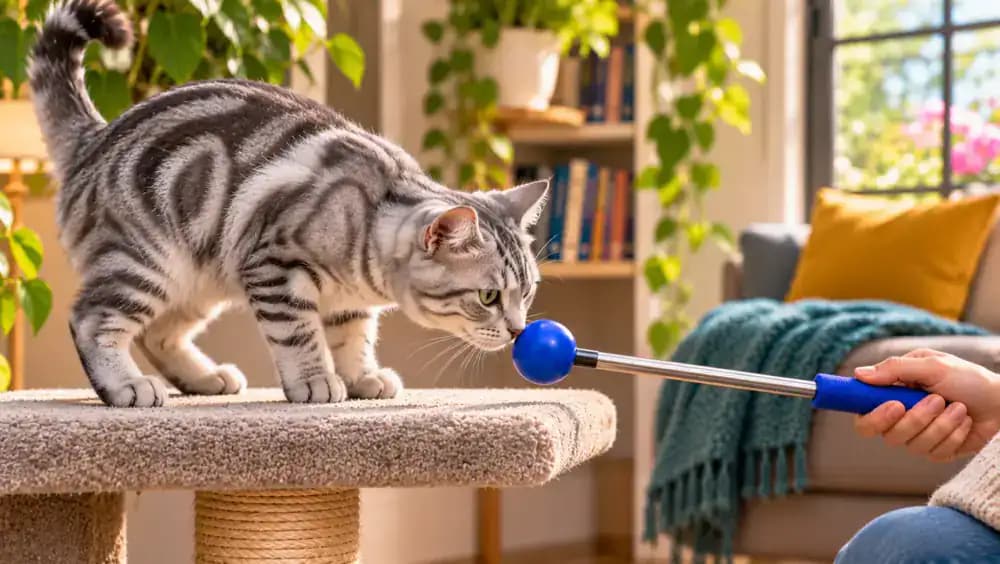
Introduce a Verbal Cue
Once your cat reliably touches the target, introduce a short verbal cue such as touch. Say the word once, immediately before presenting the target at a familiar position. Mark the successful nose touch and provide a treat promptly. If your cat does not respond, avoid repeating the cue. Make the next attempt easier and reward voluntary participation.
Apply Target Training to Carrier Confidence
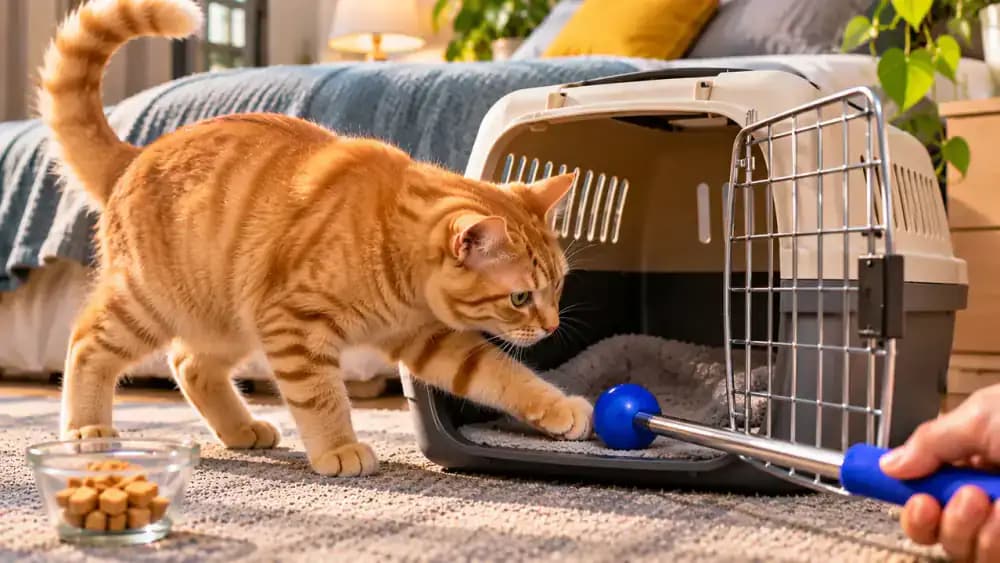
Place an open, stable cat carrier on the floor with its door secured open and a comfortable blanket inside. Present the target near the entrance and reward your cat for approaching voluntarily. Over several sessions, gradually encourage a front paw or step inside. Never block the exit, close the door unexpectedly, or use the target to force entry.
Choose Rewards Your Cat Actually Values
Offer your cat a choice of small, cat-safe rewards, such as crunchy treats or a tiny portion of wet food. Observe which option encourages relaxed, enthusiastic participation. Some cats may prefer brief play or gentle affection instead. Use small portions that fit your cat's daily diet, and never withhold regular meals to increase training motivation.

Track Confidence Instead of Speed
Keep a simple training journal recording the date, location, reward type, target distance, and number of successful touches. Note whether your cat approached willingly and maintained relaxed body language. Compare observations across sessions to identify comfortable progress and potential distractions. Prioritize confidence and consistency over speed, longer distances, or completing a predetermined number of repetitions.

Make Target Training a Lasting Habit
Keep target training enjoyable by mixing familiar nose touches with occasional new challenges. Practice in short, predictable sessions and reward relaxed, voluntary participation. Finish while your cat remains interested, then store the target safely out of reach. Allow your cat to rest or leave whenever they choose. Consistency matters more than speed or perfect performance.

Guide Your Cat Through a Tunnel
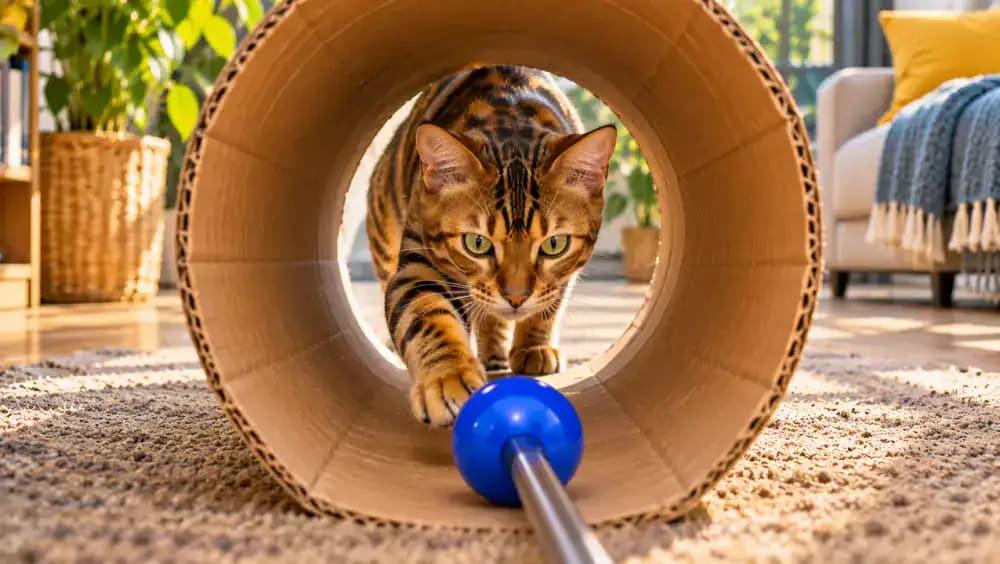
Place a short, stable cardboard tunnel on a nonslip floor with both exits unobstructed. Hold the target just inside the entrance and reward your cat for looking toward or investigating the opening. Gradually encourage voluntary steps inside, rewarding each comfortable attempt. Never push your cat from behind, block an exit, or prevent them from retreating.
Introduce a Designated Training Mat
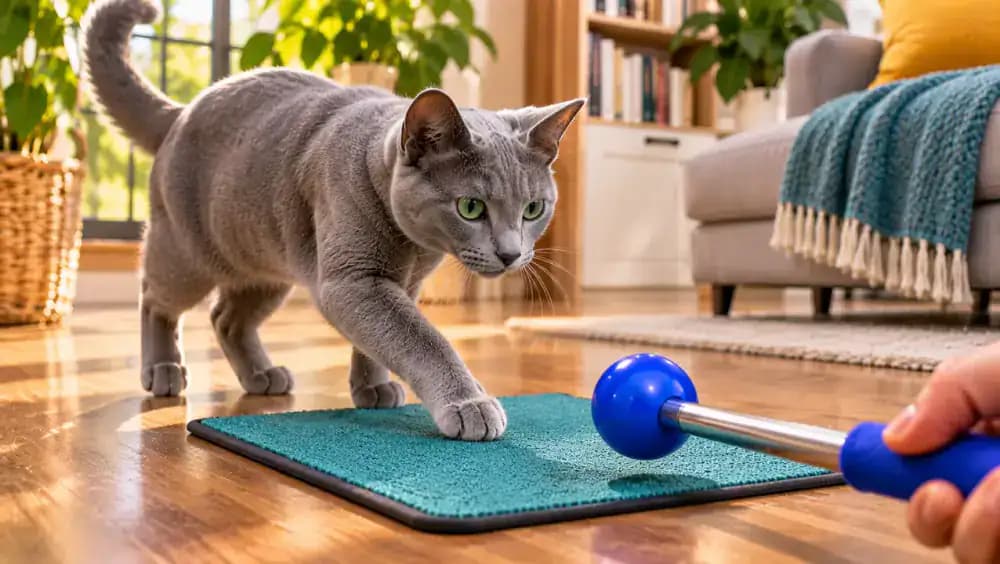
Place a nonslip training mat on a flat, stable floor and hold the target near its edge. Reward your cat for voluntarily placing one paw on the mat before encouraging additional steps. Gradually reinforce standing comfortably with all four paws on the surface. Keep the exercise optional, and allow your cat to step off whenever they choose.
Build a Gentle Turning Trick
Hold the target near your cat's shoulder and slowly move it through a small, comfortable arc. Reward a slight head movement or quarter turn before asking for a larger pivot. Keep the turning path gentle and avoid encouraging awkward twisting or rapid spinning. If your cat hesitates, reduce the movement and reinforce an easier response.
Try a Stationary Target
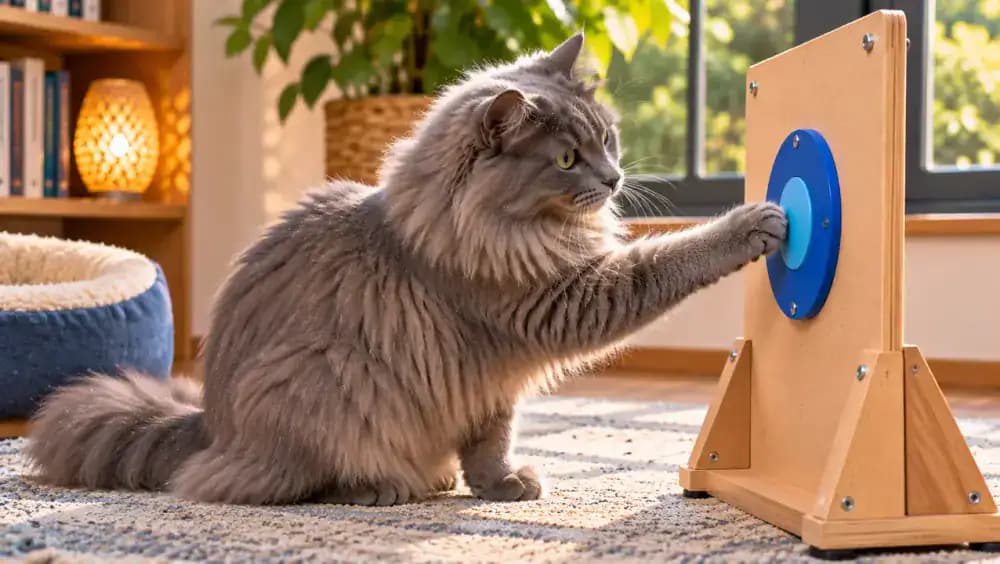
If your cat seems uncomfortable with a handheld stick, attach a large, smooth target disc securely to a stable surface at nose height. Sit several feet away and reward voluntary approaches or gentle touches. Place or gently toss treats nearby without startling your cat. Gradually adjust your position as confidence improves, always keeping escape routes unobstructed.
Manage Training in Multi-Cat Homes
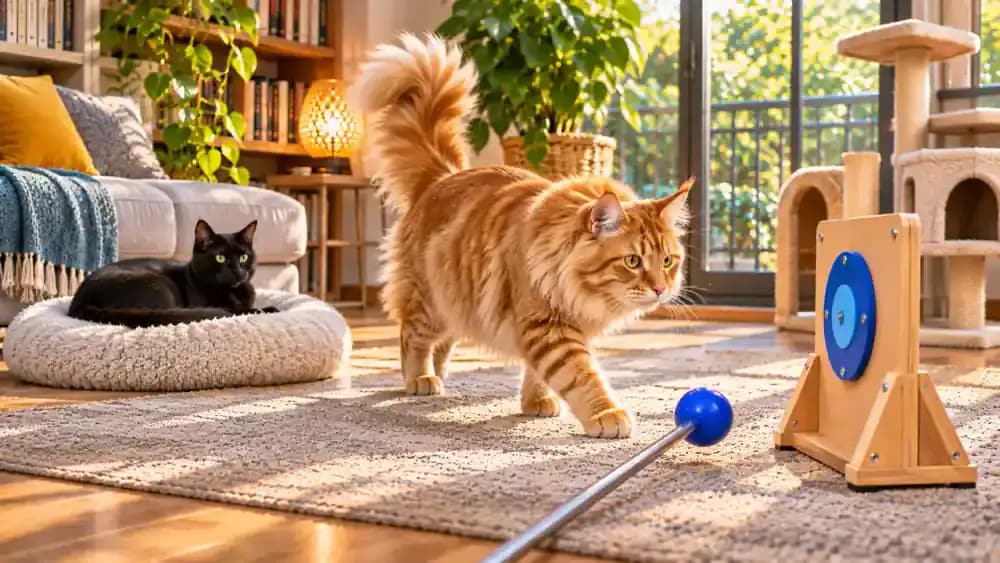
Train each cat separately at first, choosing a quiet room where other pets cannot interrupt or compete for treats. Once both cats understand the exercise, introduce optional turn-taking with separate resting spots. Reward only the participating cat while allowing the other to relax undisturbed. If either cat becomes uncomfortable or competitive, return to individual sessions.
Refine Your Cat's Target Accuracy
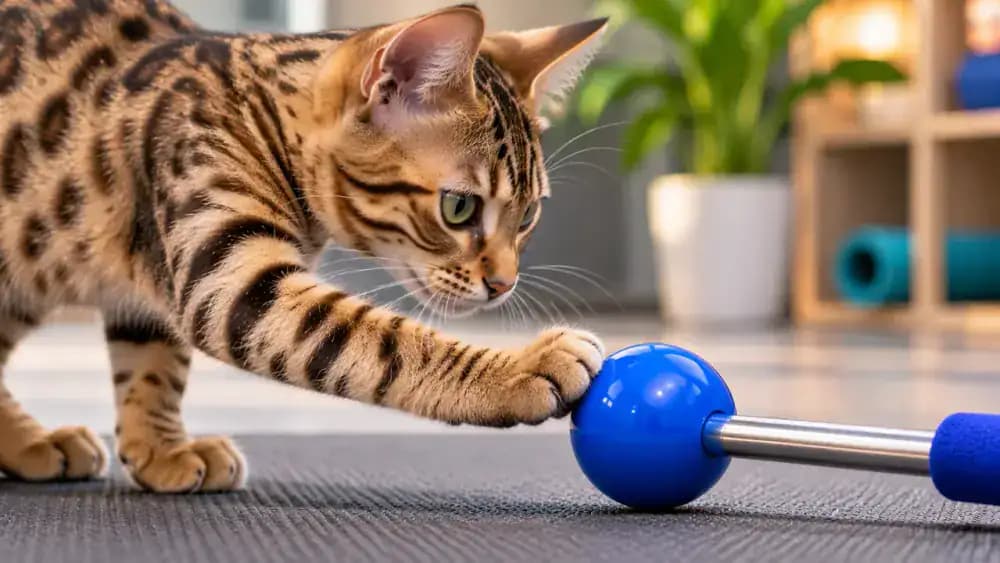
If your cat touches the stick shaft instead of the blue ball, calmly reposition the target so its tip is easier to reach. Reward precise nose touches while keeping presentations slow and consistent. If your cat begins swatting with a paw, pause and simplify the exercise. Avoid punishment or pushing the target forward, and reinforce gentle, voluntary contact.
Turn Small Successes Into Lasting Enrichment
Combine familiar target touches with simple activities your cat already enjoys, such as stepping onto a mat or following the target a short distance. Choose one manageable activity to practice throughout the week. Reward voluntary participation and keep sessions flexible. Finish with an easy success, put the target away, and let your cat decide when to return.
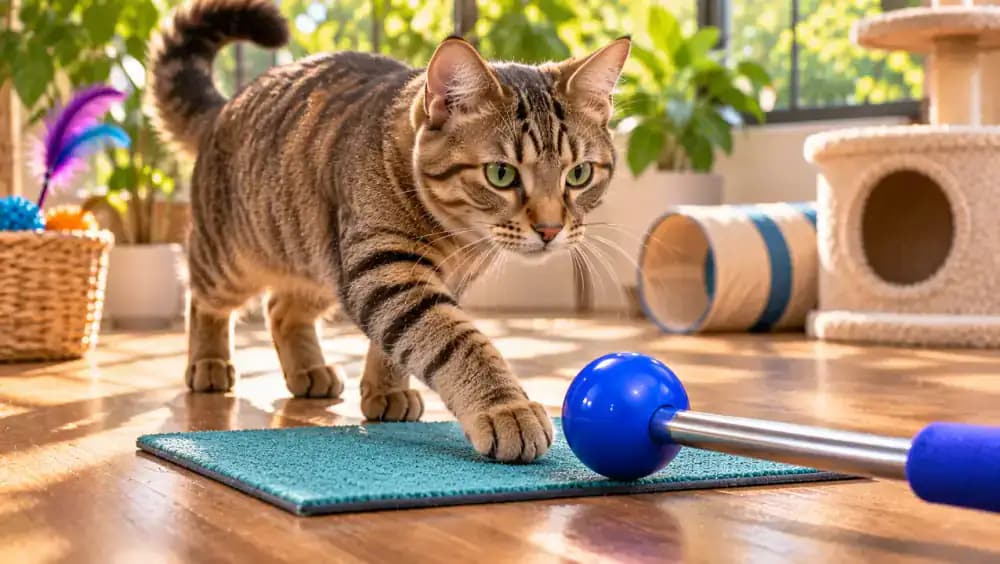
Improve Your Target Handling Technique
Keep your shoulders relaxed and present the target with smooth, deliberate movements rather than sudden arm gestures. Hold the stick steadily so your cat can identify its position without confusion. Record a short attempt from the side, then review your timing, posture, and target placement. Adjust distracting movements and reward your cat for responding comfortably.
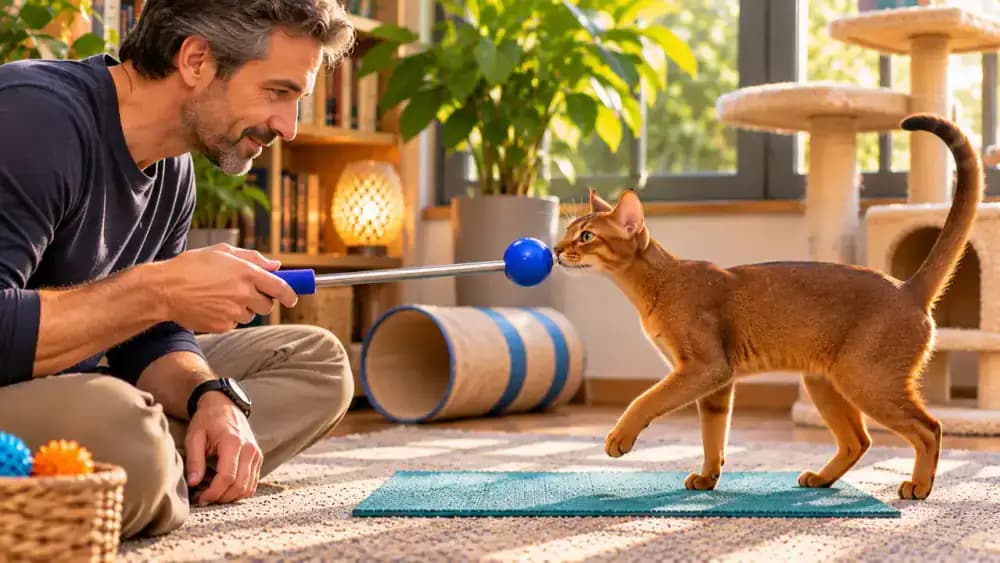
Train With a Longer Target Stick
Introduce a longer, lightweight target stick to create comfortable space between yourself and your cat. Hold the tip at an easy height and guide short movements without leaning over your cat. Watch for relaxed walking, natural tail movement, and voluntary participation. If your cat hesitates, bring the target closer and reward a familiar touch before increasing distance again.
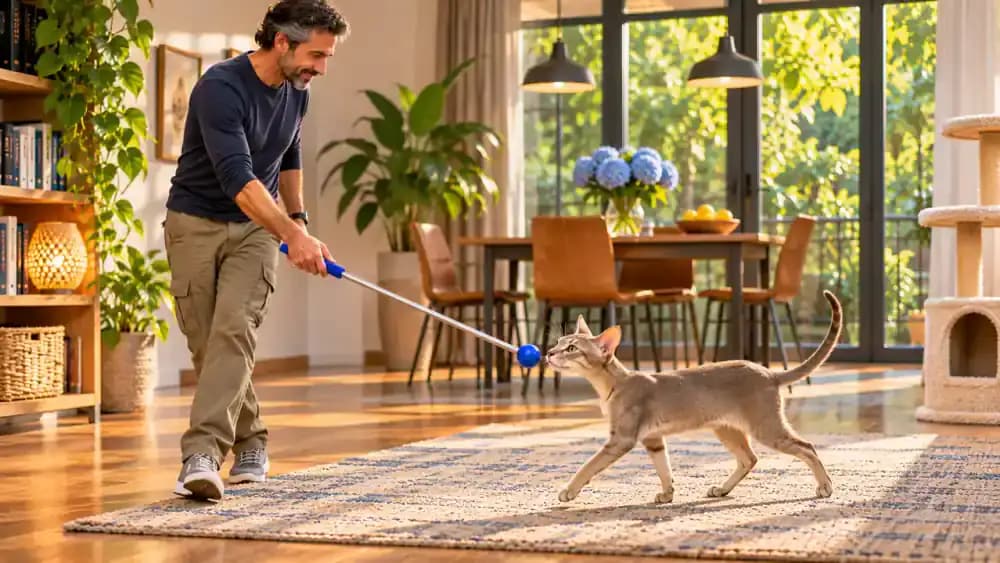
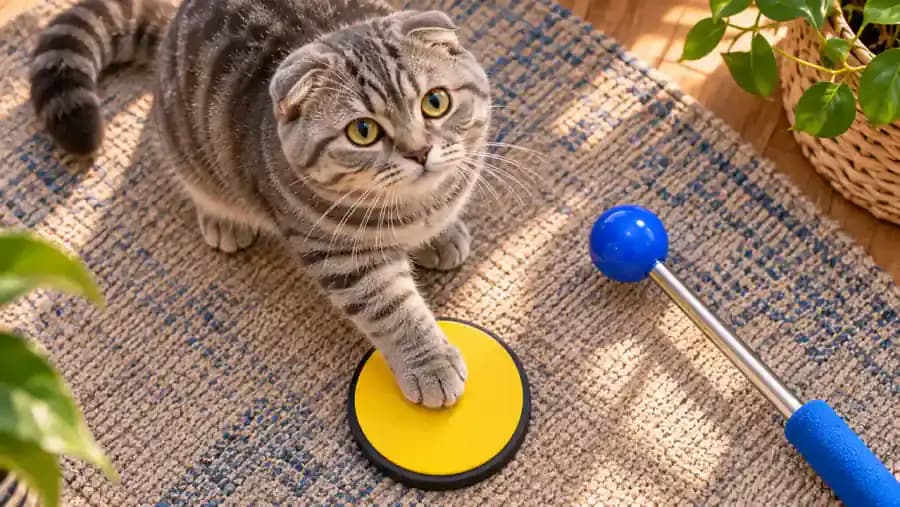
Separate Nose Targets From Paw Targets
Decide whether you want your cat to touch a target with their nose or paw. For nose targeting, consistently reward gentle nose contact with the blue ball. Introduce a separate flat target, such as a yellow pad, for paw touches. Use distinct verbal cues and reward each behavior immediately to prevent confusion between the two exercises.
Handle Unexpected Training Distractions
If a doorbell, loud noise, or unexpected visitor interrupts training, lower the target and allow your cat to assess the situation. Avoid repeatedly presenting the stick or demanding attention while your cat is distracted. Once the environment becomes quiet, offer an easy target touch if your cat willingly returns. Reward relaxed participation and end the session if necessary.
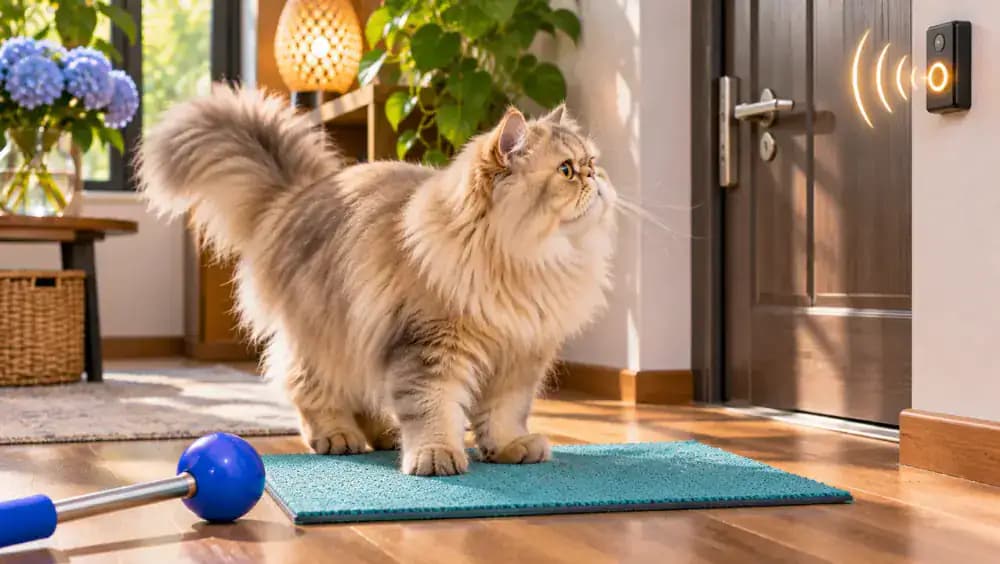
Prepare for Cooperative Grooming
Place a soft grooming brush within view while your cat practices familiar target touches on a stable, nonslip surface. Reward comfortable behavior without moving the brush initially. During a later attempt, introduce one gentle brush stroke while your cat remains relaxed, then provide a reward. Keep the exit accessible and never use the target to hold your cat in place.
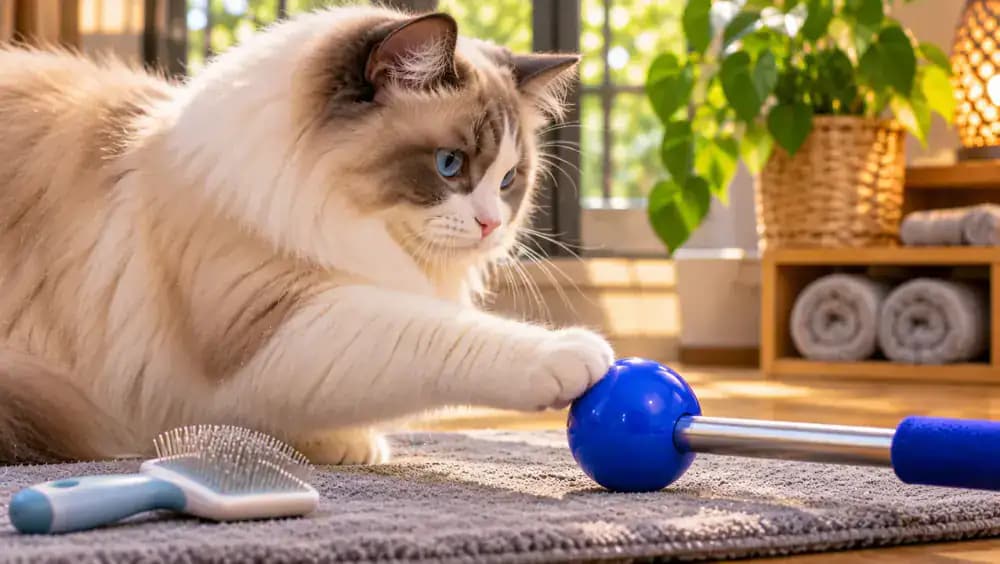
Adapt Training to Your Cat's Abilities
Adjust target height, movement distance, and training duration to match your cat's comfort and physical abilities. Senior cats may benefit from shorter paths, secure flooring, and targets positioned at natural nose height. A larger, high-contrast target may help some cats locate it more easily. Avoid demanding movements, and consult your veterinarian if your cat appears uncomfortable or painful.
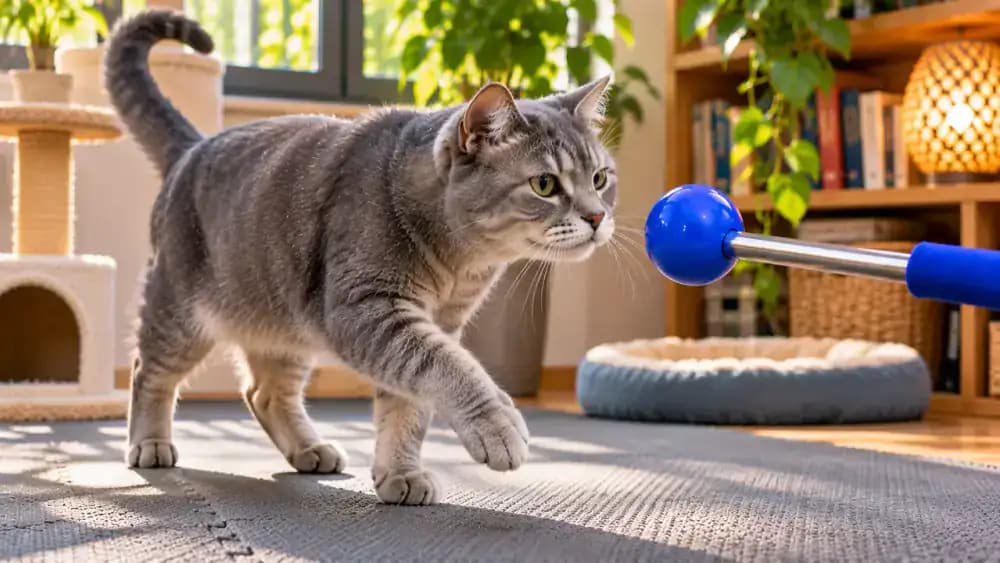
Start Your Cat's Next Training Adventure
For your next session, choose one simple goal, such as a voluntary nose touch, a short follow, or stepping onto a training mat. Present the target within comfortable reach and promptly reward successful behavior. Keep the session brief and finish while your cat remains engaged. Gradually introduce new activities while respecting your cat's individual pace and preferences.
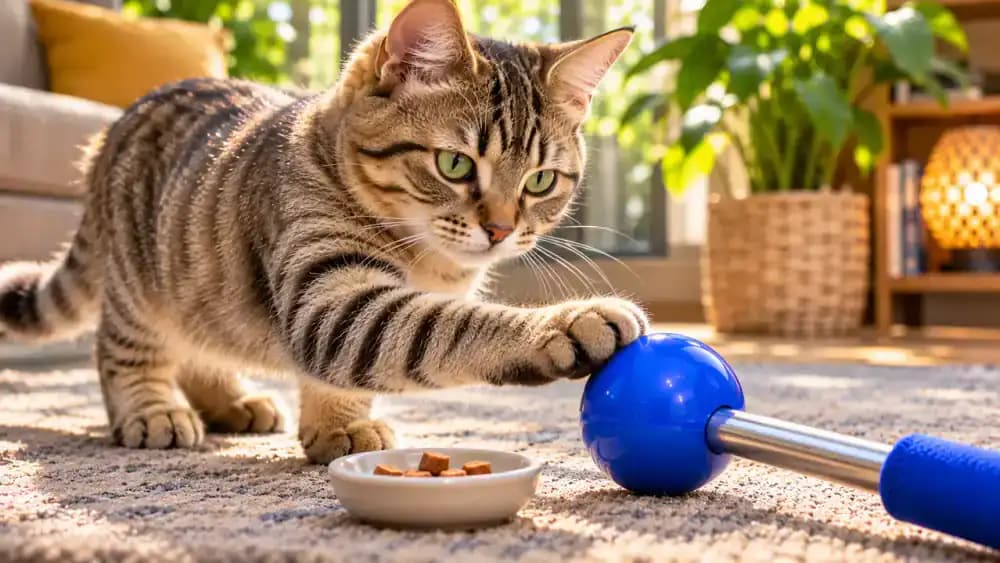
Your cat spots a small target stick across the living room. Their ears turn forward, their whiskers twitch, and curiosity takes over. What happens next could become one of the easiest and most rewarding training games you share with your cat.
Target training teaches your cat to voluntarily touch an object, usually with their nose, and eventually follow it as you move it around. Instead of chasing your cat, pushing them into position, or demanding obedience, you reward small choices they make on their own. That makes target training an approachable activity for beginners and a useful form of mental enrichment for indoor cats.
You don't need expensive equipment or previous training experience. A smooth, lightweight target stick, a few tiny treats your cat loves, and a quiet space are enough to get started. An optional clicker or consistent verbal marker can help your cat understand exactly which behavior earns a reward.
The secret is to start small. Looking toward the target deserves encouragement before you expect a nose touch, and a single voluntary step matters before you ask your cat to follow longer movements. Keep sessions short, reward progress promptly, and allow your cat to walk away whenever they want.
With patience and consistency, this simple game can become the foundation for enrichment activities, cooperative care routines, and more advanced tricks - all while respecting your cat's comfort and independence.
Where people go wrong
Holding the Target Too Close to Your Cat's Face. Pushing a target directly against your cat's nose can feel intrusive and may encourage avoidance rather than curiosity. Start with the target a short, comfortable distance away and let your cat choose whether to investigate. Reward a glance or voluntary approach before expecting physical contact. Never use the stick to poke or steer your cat.
Moving the Target Before Your Cat Understands Nose Touches. Asking your cat to follow a moving target too early combines two challenges: touching the object and traveling toward it. First, reward consistent, voluntary nose touches while the target remains still. Once your cat understands the interaction, introduce tiny movements to either side. Increase the distance only when your cat follows confidently.
Rewarding Too Late or Inconsistently. Cats learn more easily when the reward clearly connects to the behavior they just performed. If several seconds pass between a nose touch and reinforcement, your cat may associate the treat with a different action. Use a clicker or consistent verbal marker at the moment of success, then deliver the treat promptly.
Withholding Treats During Early Learning. Expecting perfect nose touches before offering any reward can make an unfamiliar exercise confusing. During the earliest attempts, reinforce simple signs of interest, including looking toward or approaching the target. Gradually raise expectations as your cat gains confidence. Small, frequent successes help establish the connection between voluntary behavior and positive outcomes.
Moving the Target Too Far or Too Quickly. Sweeping the target across the room can frustrate a beginner or turn a calm training exercise into an unwanted chase. Move the target only a few inches at first and pause long enough for your cat to respond. Reward one voluntary step before increasing the distance. Let your cat determine the pace.
Continuing When Your Cat Wants to Stop. Repeatedly presenting the target after your cat turns away, hides, freezes, or shows other signs of discomfort can create negative associations. Stop the session when engagement declines, even if you planned to practice longer. Offer your cat space and try again another time. Training should remain optional, predictable, and enjoyable.
Making Sessions Too Long or Repetitive. Long practice sessions may reduce your cat's interest, particularly when the same movement is repeated without a break. Aim for brief sessions of approximately 2-5 minutes, with natural pauses between attempts. Finish after an easy success whenever possible. Several short, positive experiences are generally more useful than one extended training session.
Questions people ask
Yes. Many cats can learn to touch and follow a target through positive reinforcement. The basic idea is to reward voluntary interest, gradually reinforce nose touches, and then encourage small movements toward the target. Cats differ in motivation and learning pace, so progress may be quick for some and gradual for others. Keep the activity enjoyable rather than compulsory.
Fixed it?
Get one guide like this every Thursday.