How to Teach Your Cat to Enter a Carrier Voluntarily
Does your cat disappear whenever the carrier comes out? Learn how to make carrier training easier with treats, short practice sessions, and positive reinforcement so your cat can enter willingly without being forced.
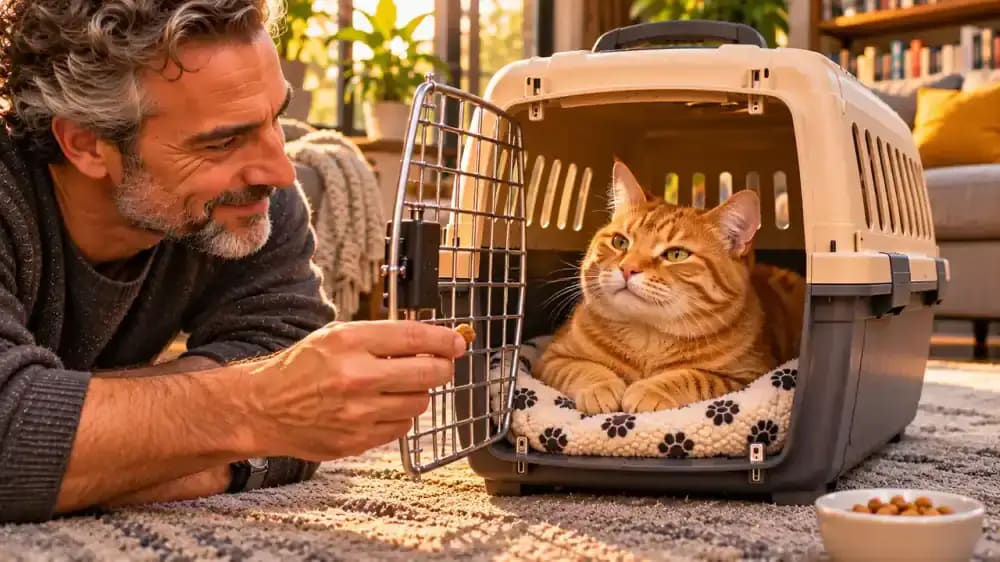
What you’ll need
Tap to tick things off before you start.
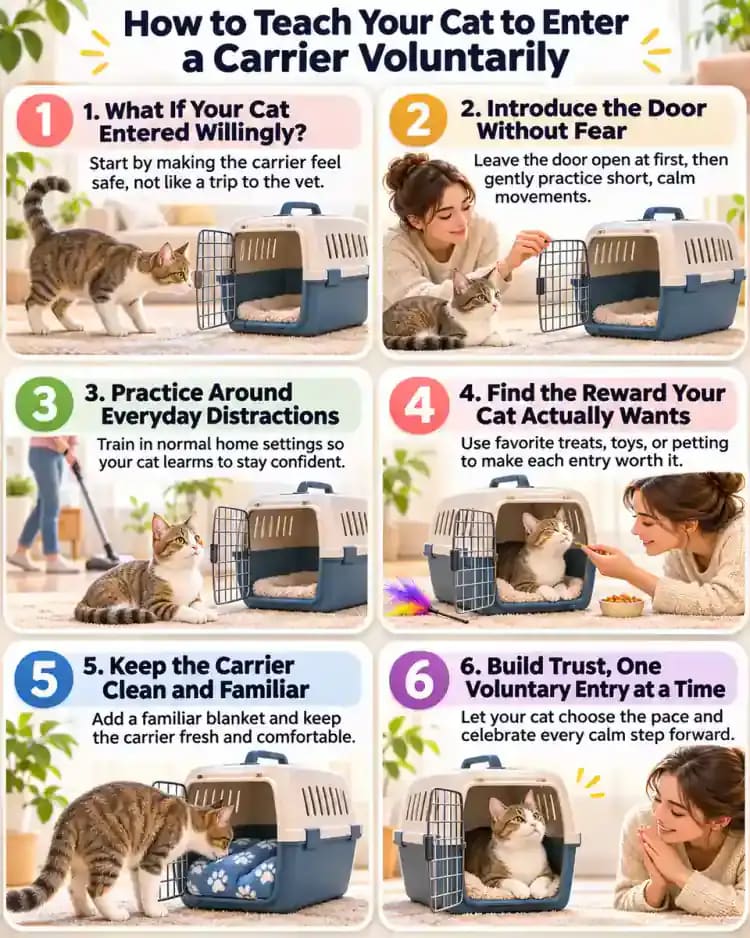
What If Your Cat Entered Willingly?
Does your cat disappear under the sofa whenever the carrier comes out? Many cats associate carriers with stressful trips, making avoidance understandable. Fortunately, reward-based training can change that association. Instead of chasing or forcing your cat inside, you can gradually teach them that approaching and entering the carrier is a safe, rewarding choice.
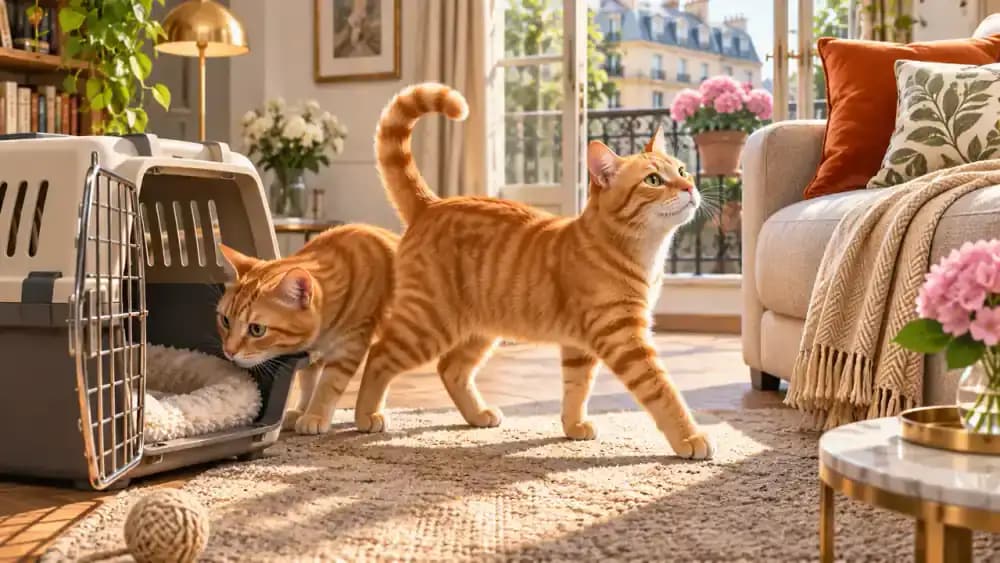
Make the Carrier Feel Familiar
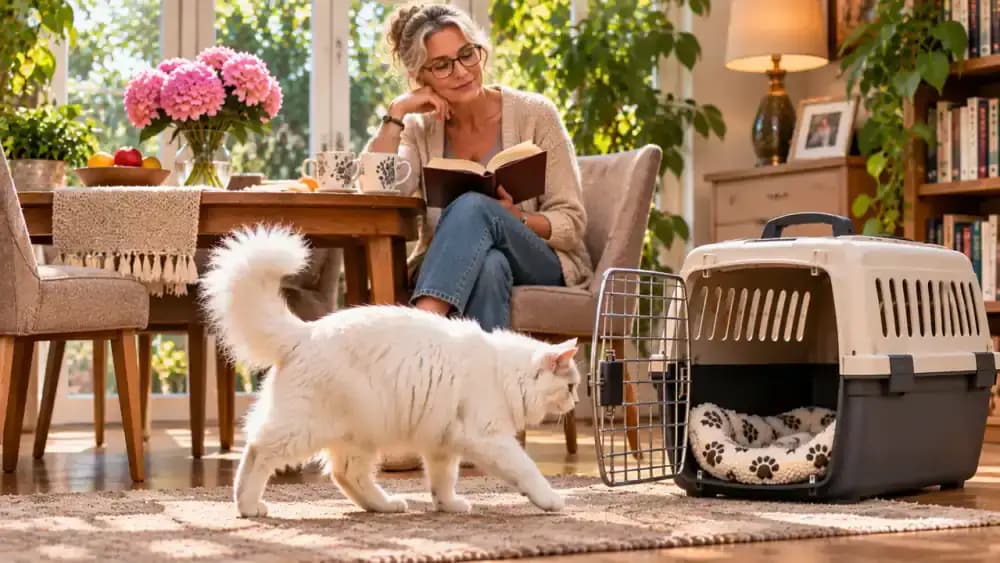
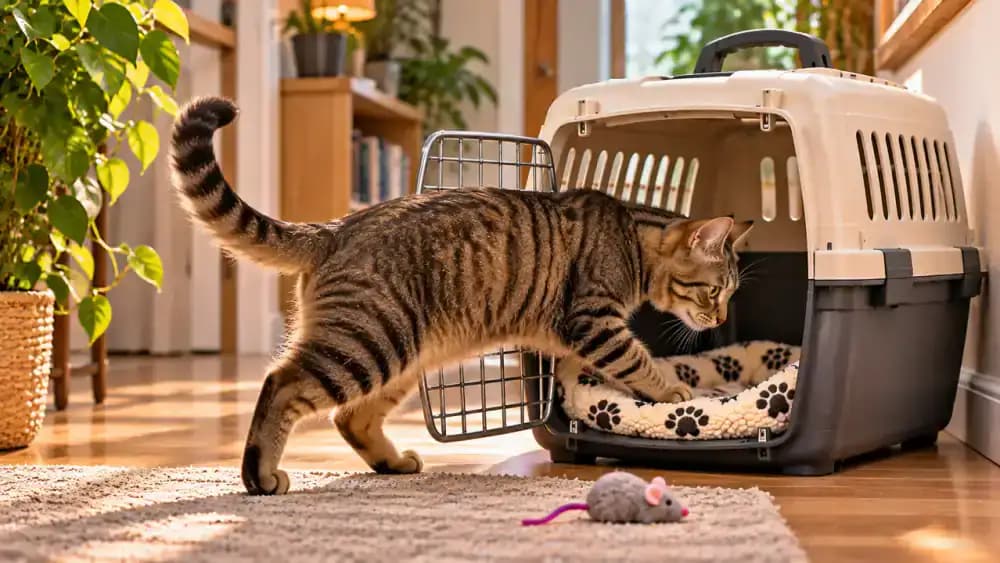
Place the carrier in a quiet room where your cat already feels comfortable. Secure the door fully open so it cannot swing shut, and add a familiar blanket or soft bedding. Leave the carrier accessible for several days without moving it or encouraging entry. Give your cat time to investigate naturally and at their own pace.
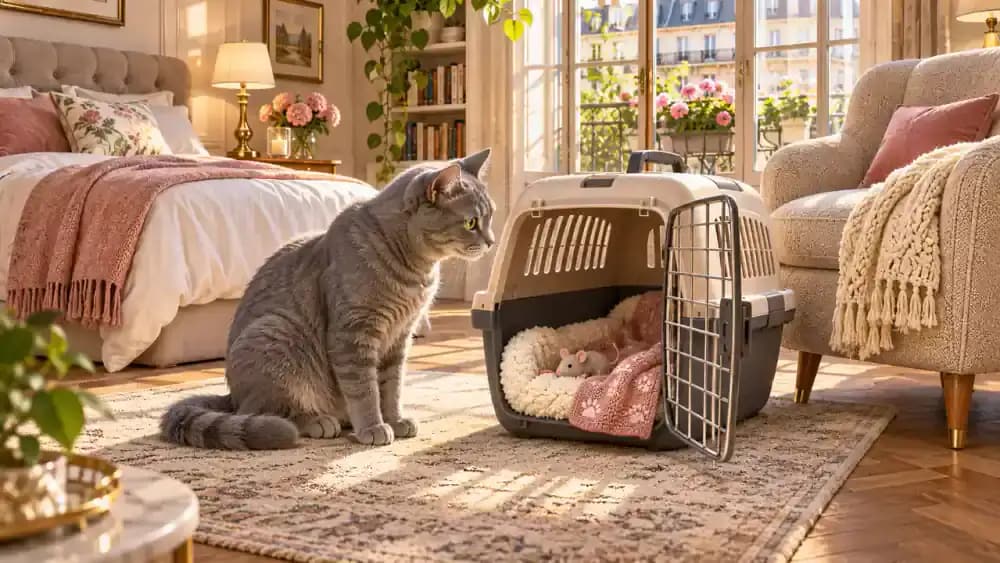
Reward Curiosity, Not Compliance
Sit quietly several feet from the open carrier with a handful of your cat's favorite treats. Reward calm behaviors such as looking toward the carrier, sniffing its exterior, or taking a step closer. Place treats on the floor immediately after these actions. Avoid touching, lifting, or directing your cat. Let curiosity determine how quickly training progresses.
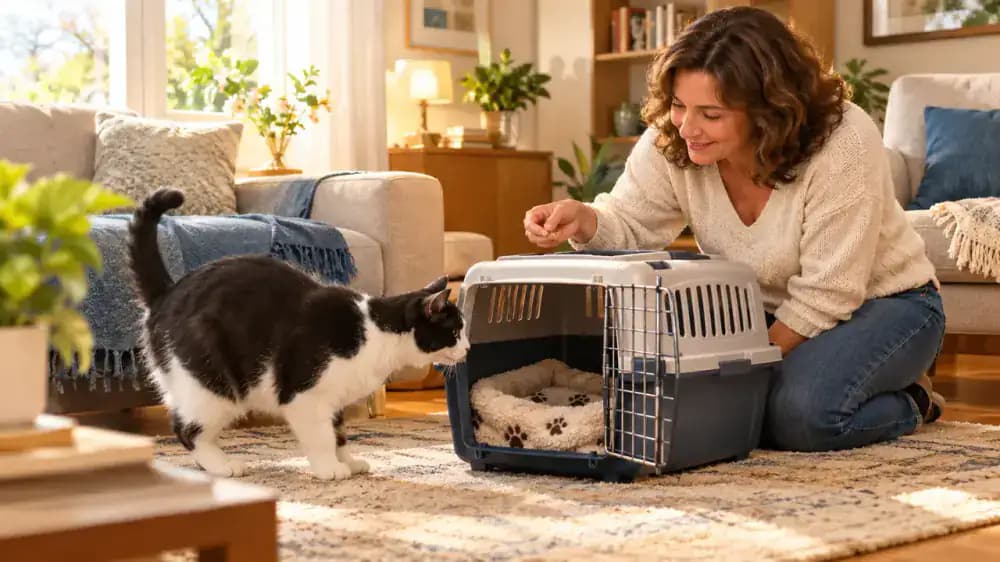
Guide Entry One Step at a Time
Begin placing treats beside the carrier entrance, then directly at the doorway, and eventually a few inches inside on the bedding. Allow your cat to retrieve each treat independently and leave whenever they choose. If hesitation appears, return the next treat to an easier position. Keep the door secured open throughout this stage.
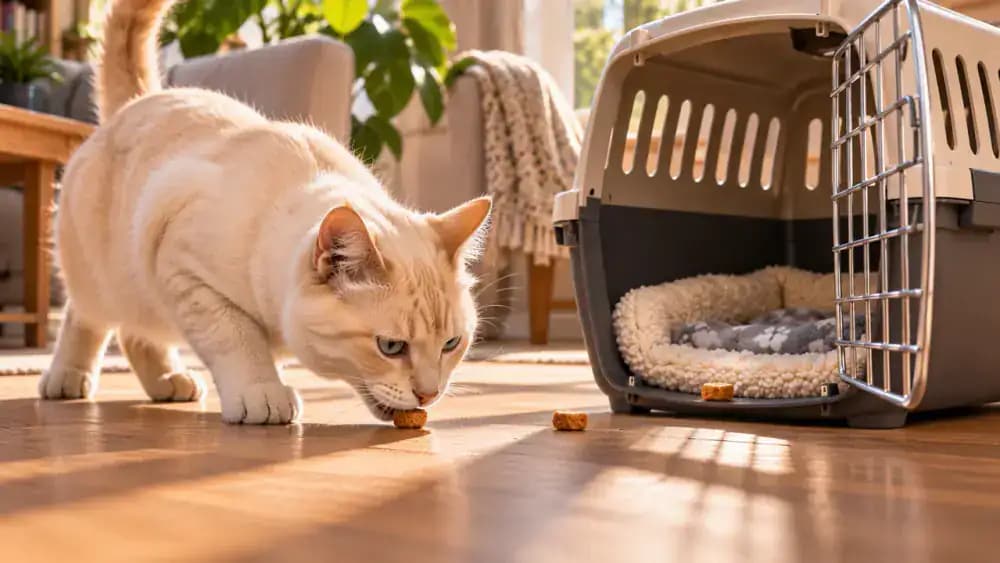
Build Confidence Inside
When your cat voluntarily steps fully into the carrier, immediately reward them once all four paws are inside. Keep the door open and allow an unrestricted exit. Repeat during short sessions, gradually rewarding one or two seconds of relaxed stillness before offering another treat. Build comfort through repetition, never by preventing your cat from leaving.
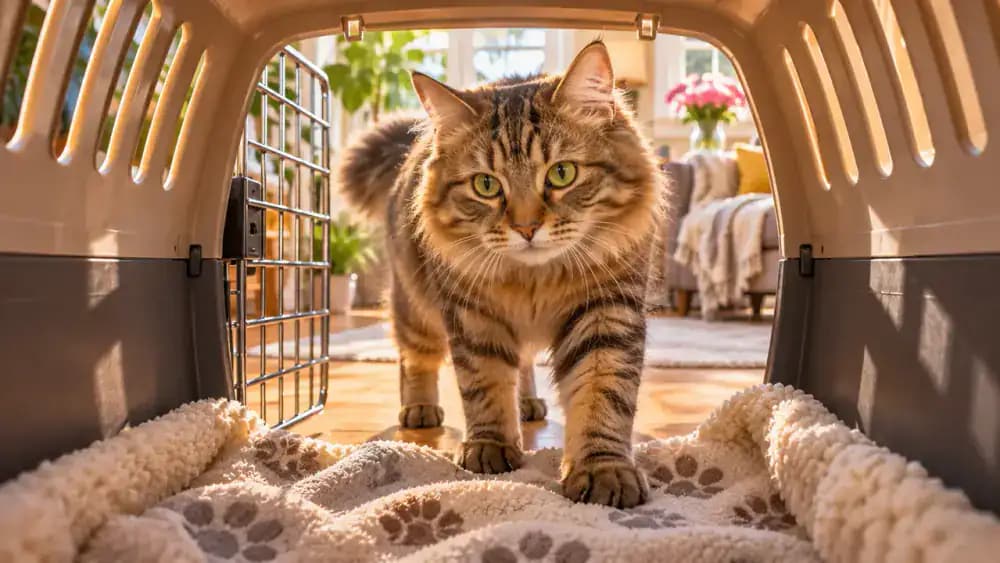
Introduce the Door Without Fear
Once your cat enters comfortably, begin introducing gentle door movement. While your cat enjoys a treat inside, move the door a few inches, then return it to the open position. Over several short sessions, progress to closing it briefly before reopening. Reward calm behavior immediately, and never latch the door unexpectedly or rush this stage.
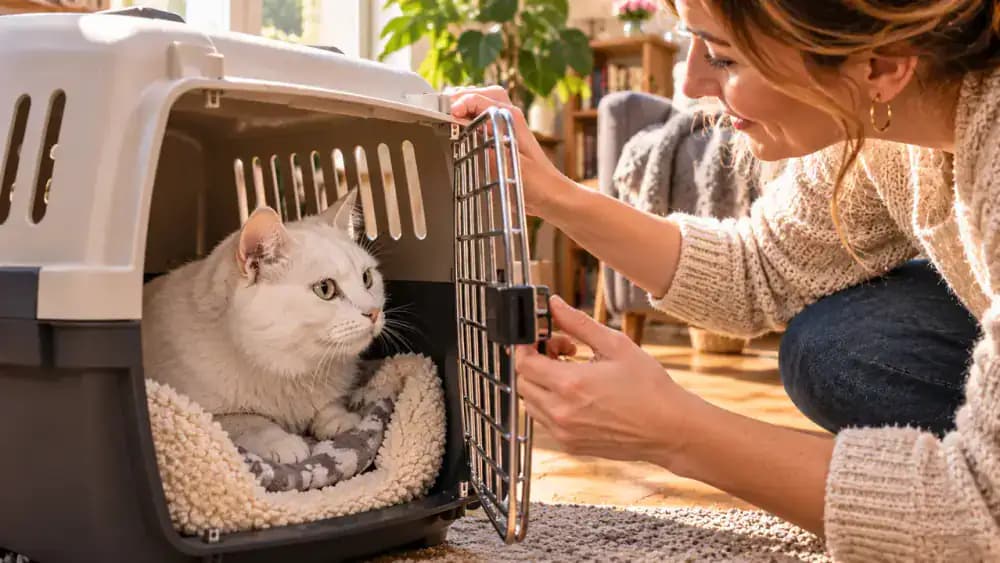
Recognize Stress and Practice Movement
Watch for flattened ears, tense posture, frantic scratching, or refusal of treats. These signals mean you should stop and return to an easier exercise later. Once your cat remains relaxed behind a securely latched door, support the carrier evenly, lift it just a few inches, and set it down gently. Reward calm behavior after each attempt.
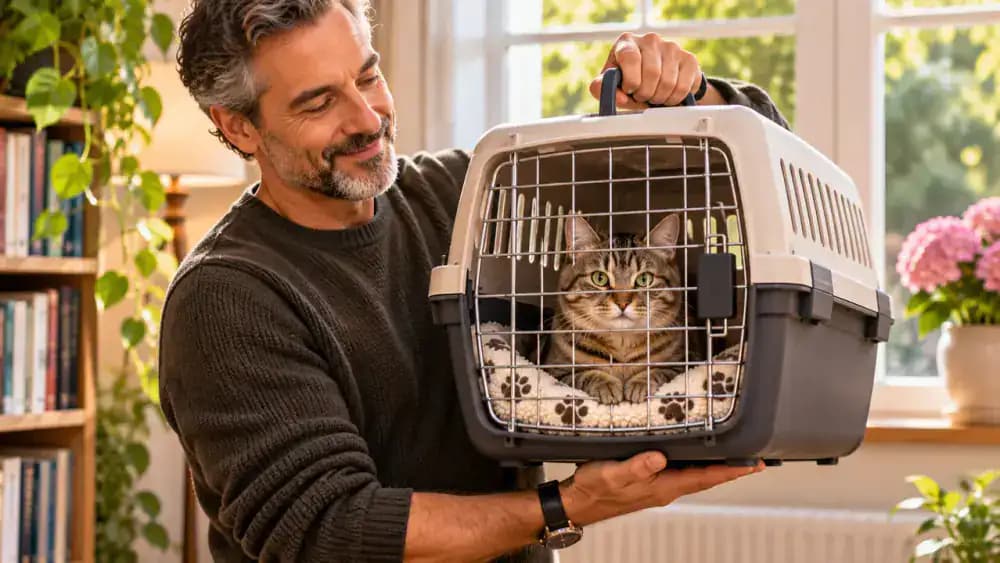
Turn Voluntary Entry Into a Habit
When your cat enters reliably, say a simple cue such as 'carrier' just before they step inside, then reward immediately. Practice brief, smooth trips around the room with the door securely latched. Between outings, leave the carrier open and occasionally offer treats inside without traveling. Consistent rewards and predictable experiences help voluntary entry become a familiar routine.
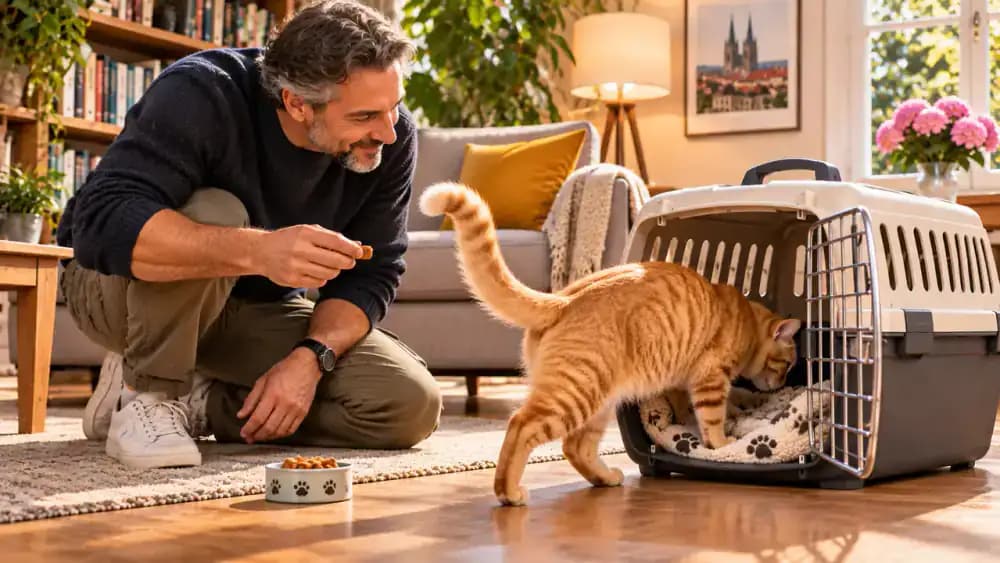
Choose a Carrier That Fits Your Cat
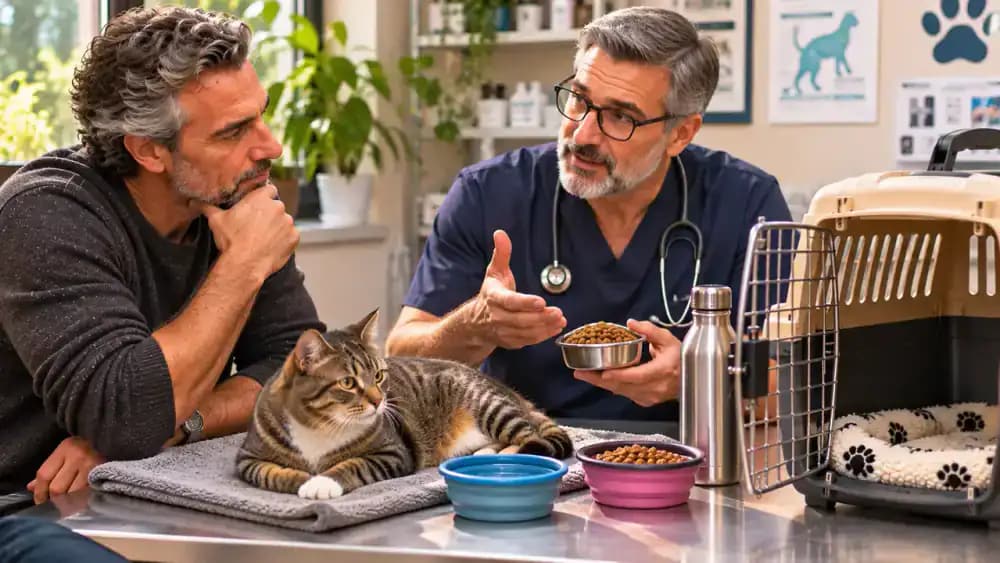
Check that your cat can stand naturally, turn around, and lie down comfortably inside the carrier. Look for adequate ventilation, secure latches, a stable floor, and an entrance wide enough for easy access. Add nonslip bedding to prevent sliding. Avoid cramped or unstable carriers, which can undermine confidence even after successful training sessions.
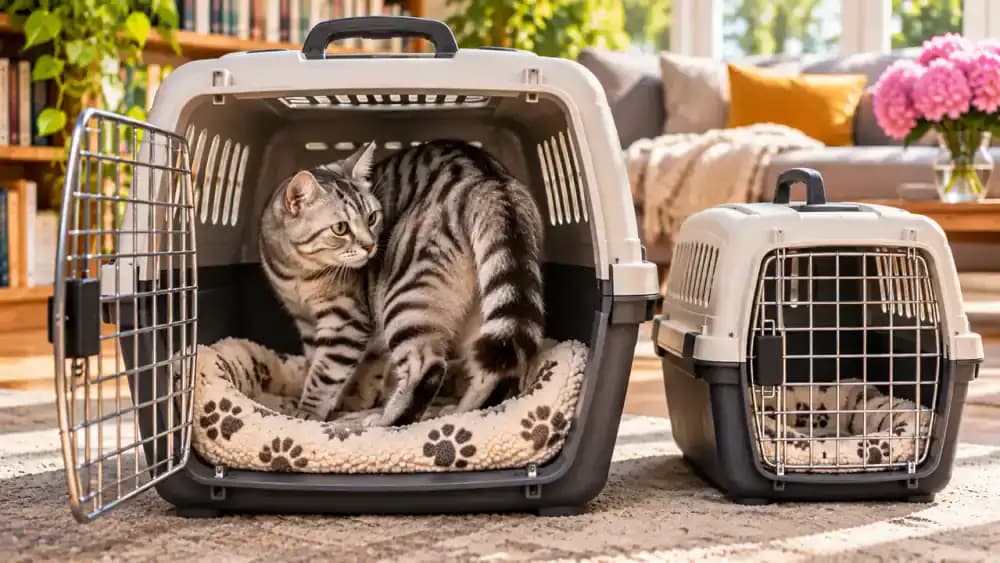
Use a Reward Marker for Clear Communication
Choose a short, consistent reward marker such as 'yes' to identify successful behavior. First, say the word and immediately offer a treat several times so your cat learns the connection. During carrier practice, say it the instant your cat approaches, touches, or enters the carrier, then reward promptly. Precise timing makes your expectations easier to understand.
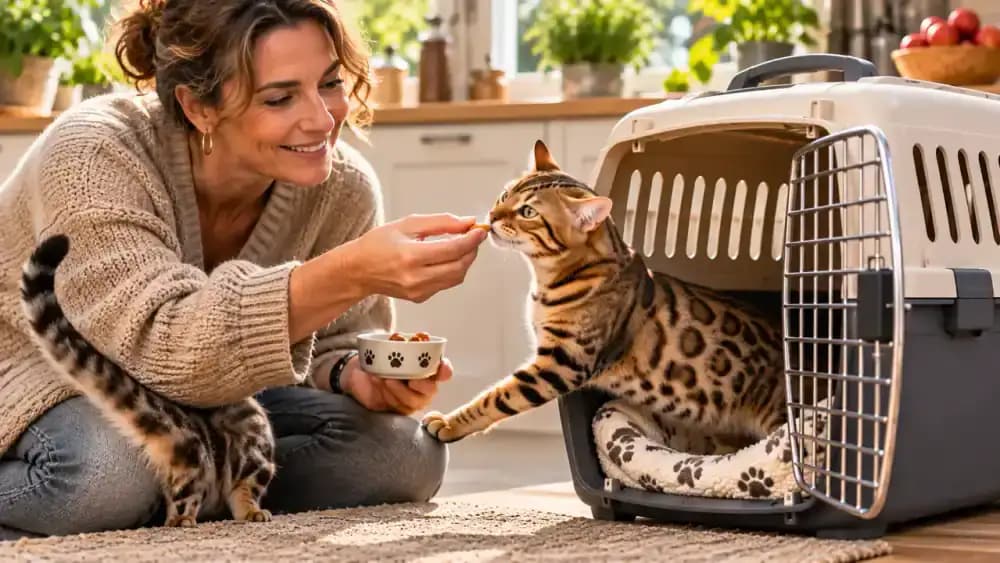
Keep Rewards Valuable as Training Improves
Once your cat enters the carrier reliably, gradually introduce different rewards while continuing to offer treats frequently. Try a short play session with a favorite toy or gentle verbal praise if your cat enjoys it. Avoid suddenly removing food rewards. Keep reinforcing successful entries so your cat remains motivated even when treats are not immediately visible.
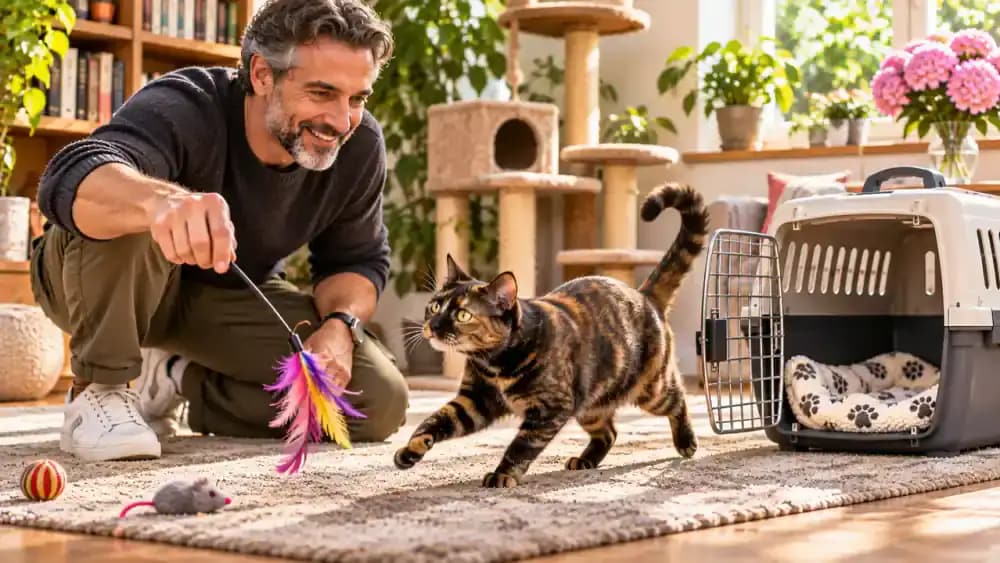
Practice Around Everyday Distractions
Once your cat confidently enters the carrier in a quiet room, introduce mild household distractions one at a time. Start with another person sitting nearby, then practice around familiar background sounds at low volume. Reward relaxed approaches and voluntary entries. If your cat hesitates or walks away, reduce the distraction and return to an easier exercise.
Introduce the Carrier to a Parked Car
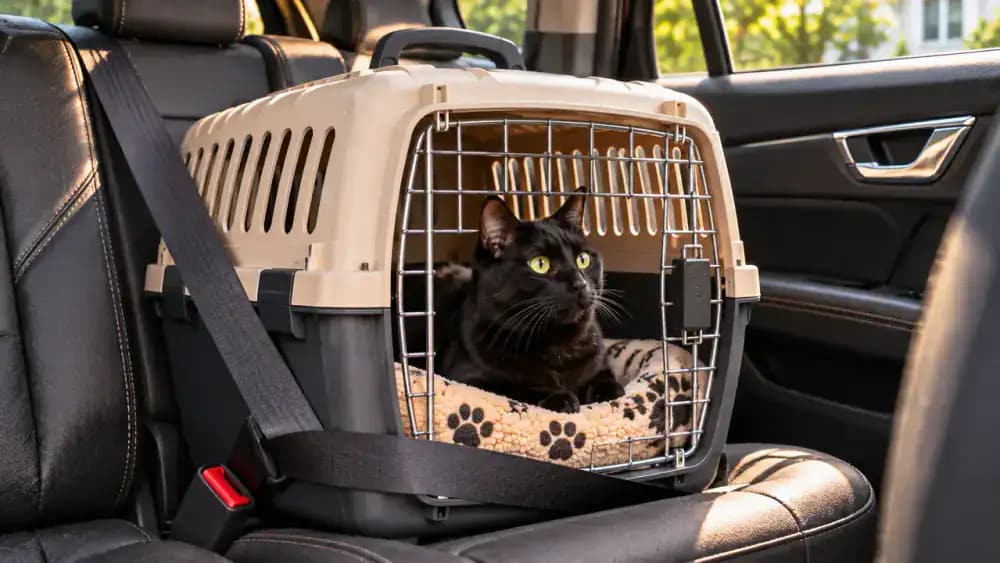
After your cat comfortably tolerates being carried indoors, introduce a parked vehicle. Place your cat inside the carrier, securely latch the door, and carry it carefully to the car. Position and restrain the carrier according to manufacturer instructions. Keep the engine off, offer reassurance and a treat if accepted, and return indoors before your cat becomes uncomfortable.
Build Confidence During Short Car Journeys
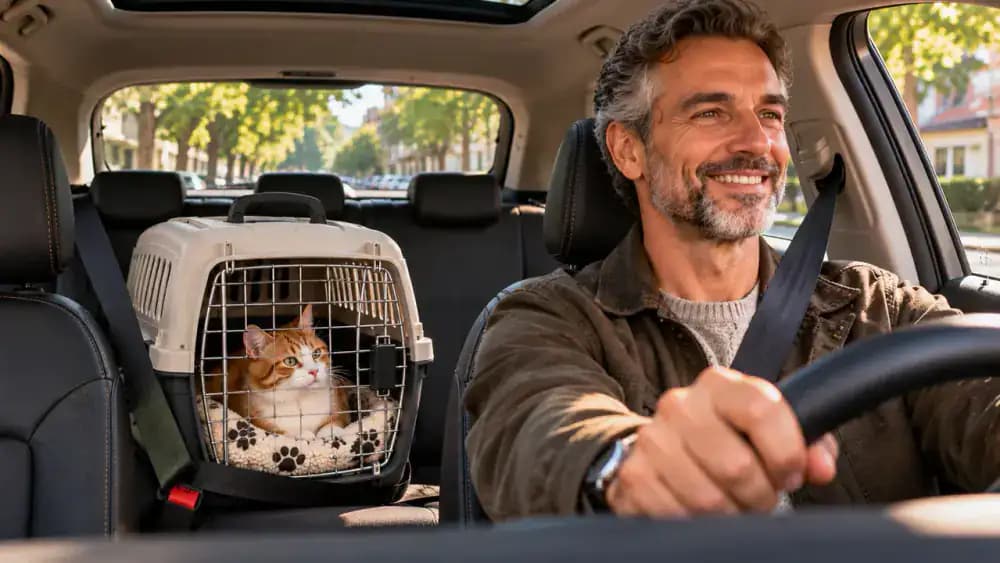
When your cat remains comfortable in the parked car, briefly start the engine without driving. Observe their posture and breathing, and end the session if distress appears. Once engine noise becomes familiar, try a short, smooth drive around the neighborhood. Keep the carrier securely restrained, avoid abrupt movements, and gradually extend trips only when your cat stays relaxed.
Prepare for a Positive Veterinary Experience
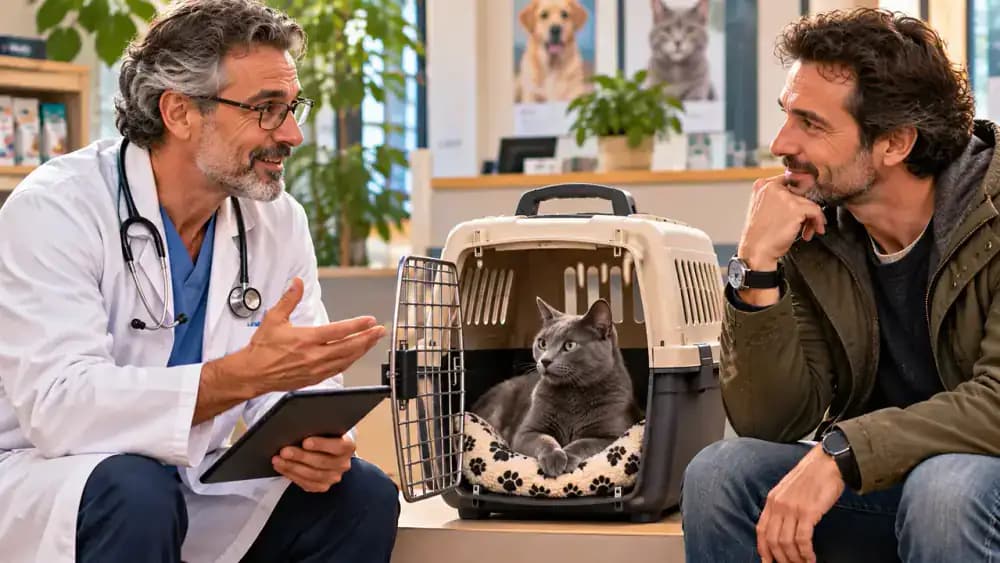
Ask your veterinary clinic whether you can schedule a brief, low-pressure visit without an examination. Bring your cat in their securely closed carrier and choose a quiet waiting area if available. Allow your cat to observe without being removed unnecessarily. Reward calm behavior when appropriate, and leave before stress develops to help build positive associations with future visits.
Maintain Progress and Rebuild After Setbacks
Expect occasional setbacks, especially after stressful veterinary visits or unexpected noises. If your cat becomes hesitant, return to an earlier exercise they can complete comfortably. Reward small successes, keep the carrier accessible, and rebuild confidence through short, positive sessions. Avoid rushing to recover lost progress. Consistent practice helps voluntary entry become a dependable habit over time.
Help Cats With Strong Carrier Fears
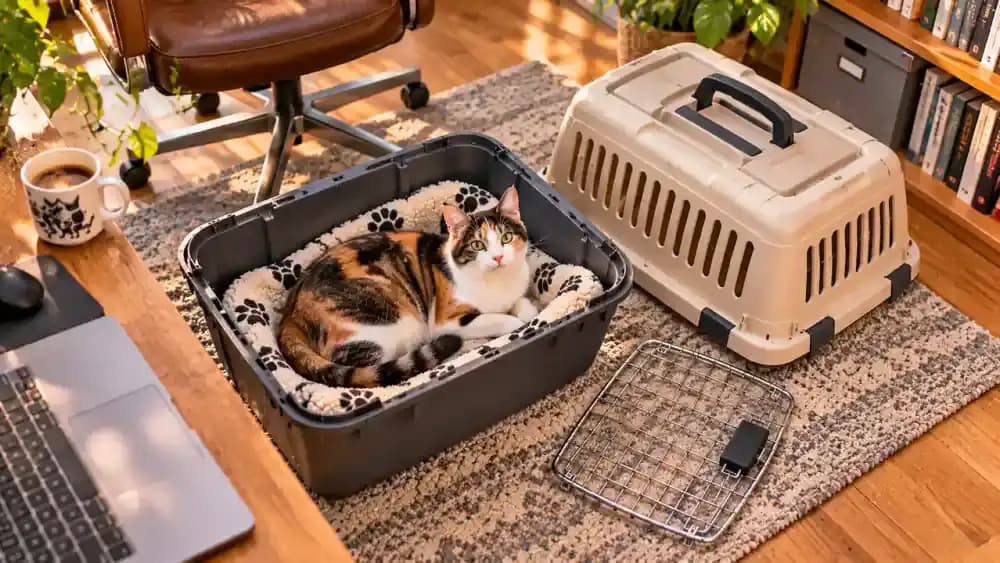
If your cat strongly avoids enclosed carriers, consider a hard-sided model with a removable top. Place its lower half on a stable surface with comfortable bedding inside. Reward voluntary approaches and allow your cat to rest there freely. Once the open base feels familiar, carefully reattach the top while your cat is elsewhere, then resume gradual training.
Find the Reward Your Cat Actually Wants
Experiment with small portions of cat-safe rewards, such as commercial training treats, plain cooked chicken, or wet cat food. Offer each separately to discover your cat's preference, then reserve the favorite for carrier practice. Account for extra calories in daily feeding. If your cat refuses preferred food near the carrier, increase the distance and simplify the exercise.

Let Your Body Language Build Trust
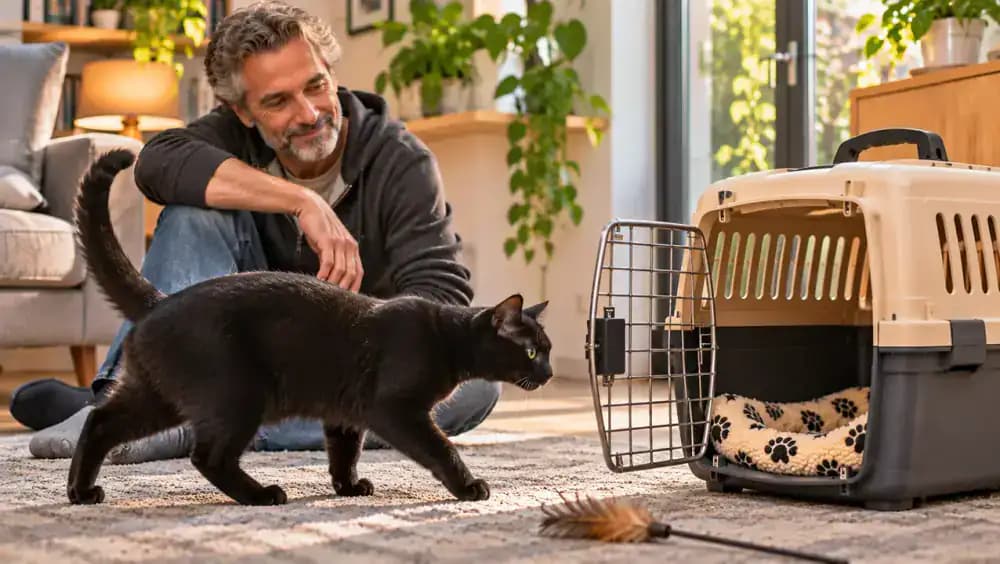
Avoid standing directly over the carrier, blocking its entrance, or reaching toward your cat unexpectedly. Instead, sit sideways at a comfortable distance with relaxed shoulders and quiet hands. Allow your cat an unobstructed path to approach and leave. Keep your movements slow and predictable, rewarding voluntary exploration without staring, hovering, or pressuring your cat to continue.
Train Multiple Cats Without Competition
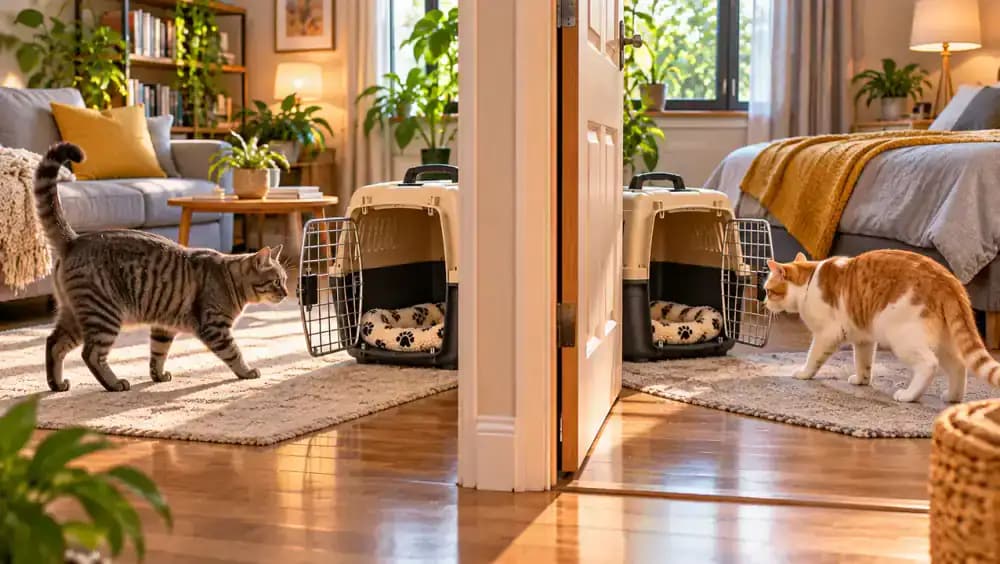
In multi-cat households, begin carrier training with each cat in a separate room. Provide individual carriers and rewards so an eager cat cannot interrupt a more cautious companion. Adjust the pace to each cat's confidence level. Once both respond comfortably, practice nearby only if they remain relaxed and show no competition over treats, space, or access.
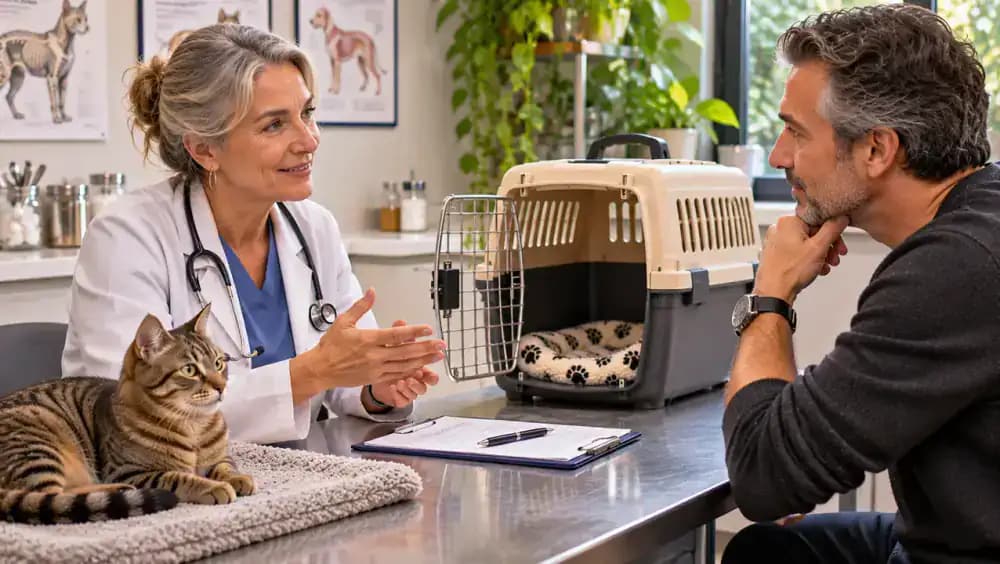
What If You Have an Appointment Tomorrow?
If your cat has an appointment tomorrow but still fears the carrier, avoid rushing training or forcing repeated attempts. Contact your veterinary clinic beforehand to discuss safe transport and handling options. Your veterinarian may recommend specific arrangements for a fearful cat. Prioritize necessary medical care, follow professional guidance, and resume gradual carrier training afterward.
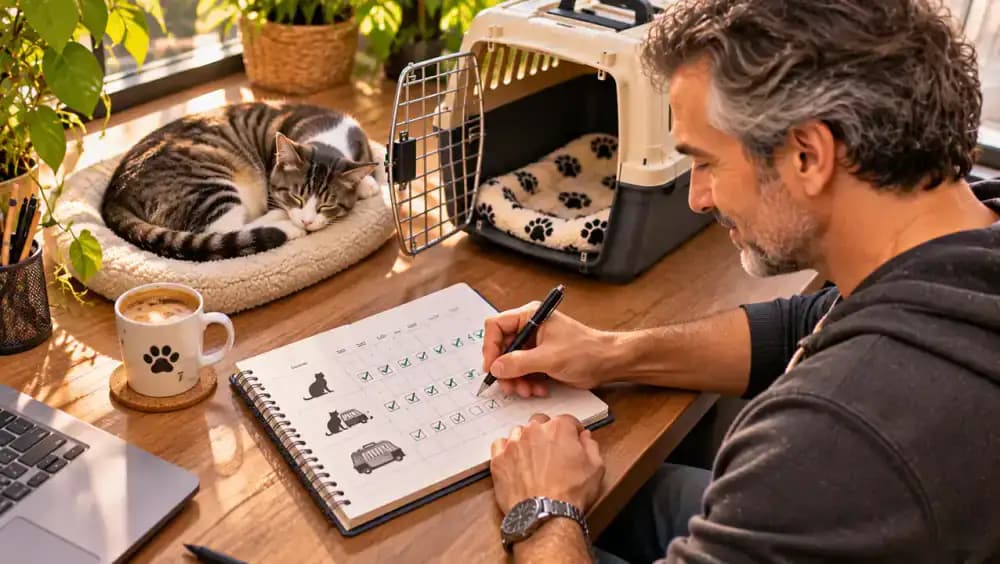
Measure Progress Instead of Guessing
Keep a simple training journal to track your cat's progress across sessions. Record the date, voluntary entries, comfortable time inside, door movements, and observable behavior. Note any hesitation or signs of stress. Look for consistent success over several sessions before increasing difficulty. Written observations help identify improvements and prevent advancing faster than your cat feels comfortable.
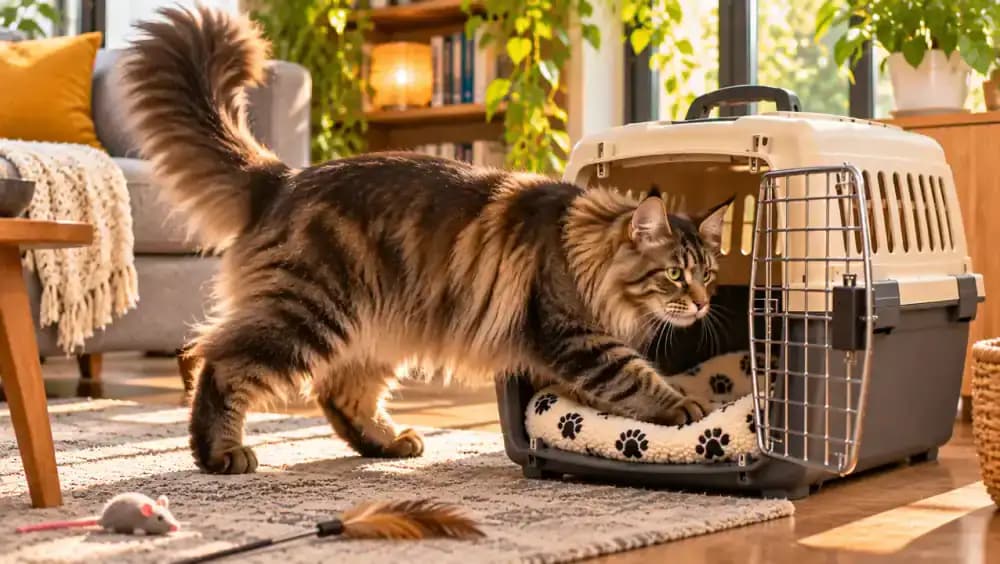
Make Voluntary Carrier Entry a Lasting Skill
Continue occasional carrier practice even after your cat confidently enters on cue. Leave the carrier accessible, offer unexpected rewards inside, and maintain positive associations between veterinary visits. Practice brief, comfortable sessions without always traveling afterward. Respect hesitation and return to easier exercises when needed. Long-term success means your cat repeatedly chooses the carrier without pressure or fear.
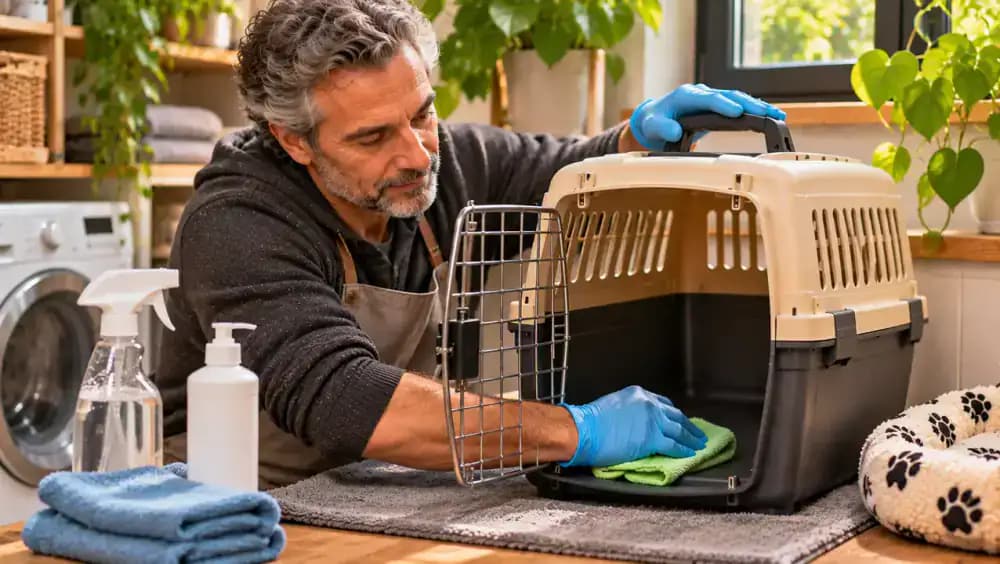
Keep the Carrier Clean and Familiar
After each trip, inspect the carrier for dirt, accidents, or unfamiliar odors. Remove soiled bedding and clean the empty carrier using a pet-safe product according to its instructions. Rinse when directed, dry thoroughly, and allow lingering odors to disappear. Replace the bedding with a familiar clean blanket before making the carrier accessible to your cat again.
Reduce Visual Stress During Travel
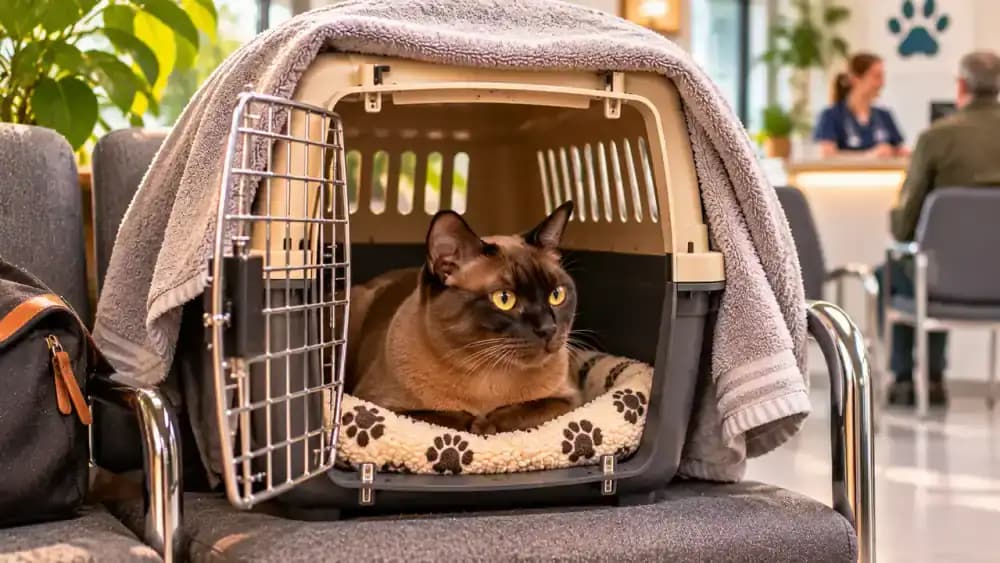
If your cat seems unsettled by movement outside the carrier, try covering part of it with a lightweight, breathable towel. Keep ventilation openings completely unobstructed and prevent the covering from trapping heat. Observe your cat's response through an uncovered section. Adjust or remove the towel if restlessness increases. Some cats prefer reduced visual stimulation, while others feel safer uncovered.
Teach a Clear Release Cue
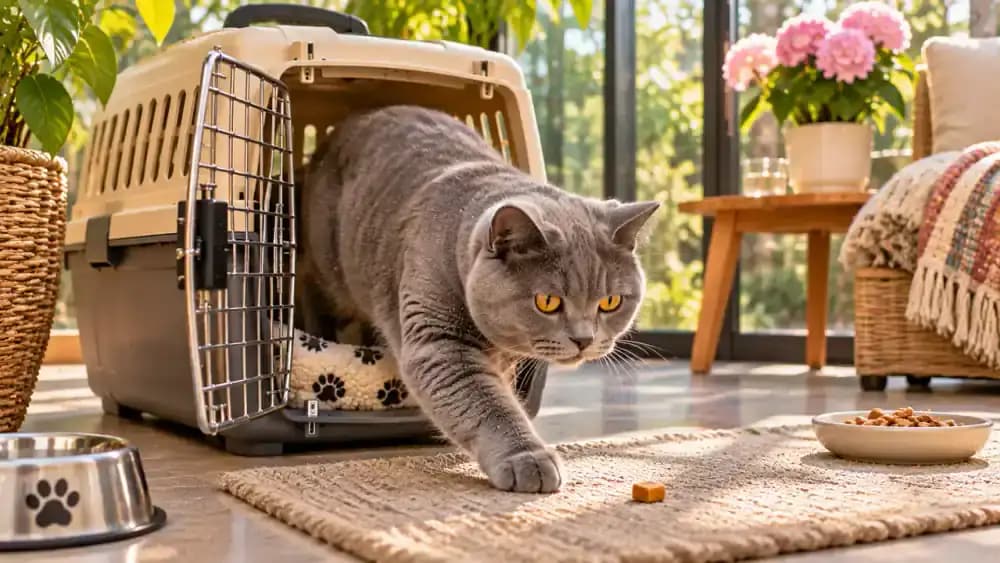
Teach your cat a separate release cue so leaving the carrier becomes predictable. With the carrier stationary and its door fully open, say a consistent word such as 'free,' then toss a treat onto a nearby mat. Allow your cat to exit independently and collect it. Repeat during short sessions without pulling, reaching inside, or blocking the doorway.
Make the Entry Cue Work From Different Positions
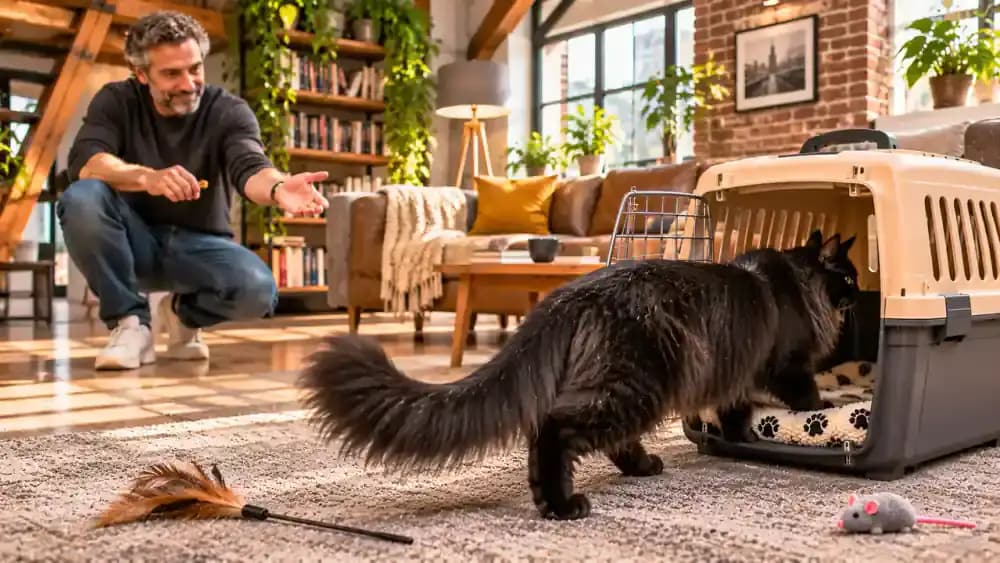
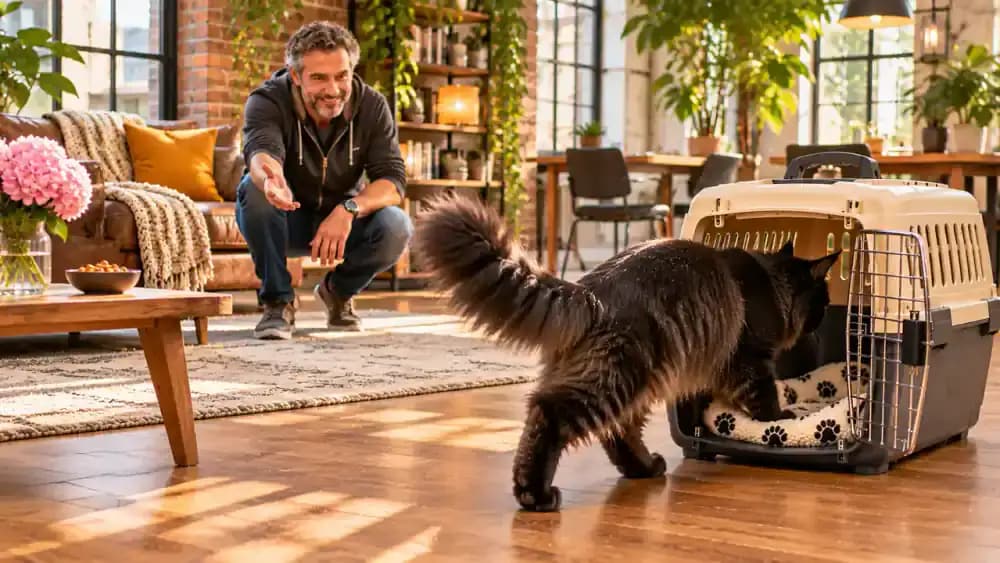
Once your cat reliably responds to the entry cue, practice giving it from different positions. Begin beside the open carrier, then gradually stand a few steps farther away. Say the cue once and reward successful entries immediately. If your cat hesitates, move closer again. Vary your position gradually so the verbal cue becomes more important than your location.
Recognize Motion Sickness During Travel
Watch for excessive drooling, repeated swallowing, vomiting, or unusual distress during car travel. These behaviors may indicate motion sickness or another source of discomfort. Discuss recurring symptoms with your veterinarian before scheduling longer trips. Ask whether adjusting meal timing or other travel preparations could help. Never give motion sickness medication without veterinary guidance.
Prepare Your Carrier for Emergencies
Keep your carrier accessible and ready for unexpected veterinary trips. Store a clean absorbent liner, spare towel, and current identification information nearby. Regularly inspect the carrier's handle, hinges, door, and latches for damage. Replace worn components before they fail. An organized emergency setup helps you transport your cat safely without wasting valuable time searching for essential supplies.
Build Trust, One Voluntary Entry at a Time
Make every carrier interaction an opportunity to build trust rather than demand obedience. Invite your cat to approach, reward voluntary entry, and respect their decision to leave. Continue practicing occasionally, even when no trip is planned. Start with one manageable session today and celebrate small improvements. Patience, consistency, and positive experiences create lasting carrier confidence.
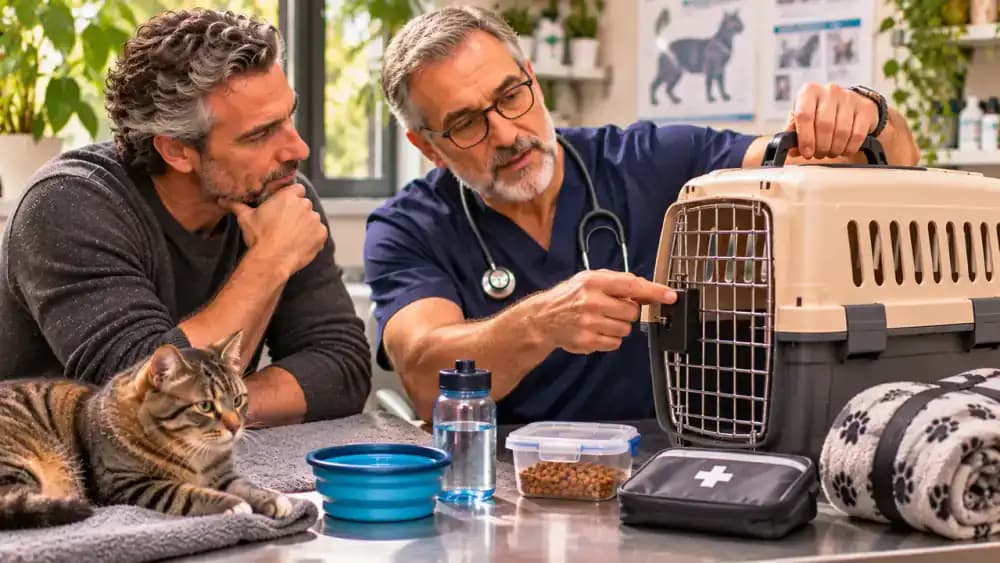
You reach into the closet, pull out the cat carrier, and suddenly your cat is nowhere to be found. A moment ago, your furry companion was relaxing on the couch. Now they're hiding under the bed, watching suspiciously as you prepare for another stressful trip to the veterinarian.
If this sounds familiar, you're not alone. Many cats associate carriers with car rides, unfamiliar environments, and uncomfortable experiences. But getting your cat into a carrier doesn't have to involve chasing, grabbing, or struggling. With patience and reward-based training, you can help your cat learn to enter voluntarily.
The secret is changing what the carrier means to your cat. Instead of appearing only before an unpleasant outing, it becomes a familiar, comfortable space where good things happen. Soft bedding, favorite treats, and the freedom to investigate without pressure can gradually replace hesitation with curiosity.
This guide explains how to build that positive association through short, manageable practice sessions. You'll learn how to reward calm approaches, encourage your cat to step inside independently, introduce the carrier door without creating fear, and eventually practice brief movements with the carrier securely closed.
The goal isn't to get your cat inside as quickly as possible. It's to make entering feel like a safe, predictable choice. Some cats learn within days, while others need several weeks or longer. Let your cat's comfort determine the pace.
Where people go wrong
Bringing Out the Carrier Only Before Vet Visits. If the carrier appears only before veterinary appointments or stressful travel, your cat may learn to avoid it immediately. Leave the carrier accessible in a quiet area between trips, with comfortable bedding inside. Occasionally place treats nearby or inside, and allow your cat to rest there without being disturbed. Everyday exposure helps create more positive associations.
Forcing Your Cat Into the Carrier. Pushing, grabbing, or dropping your cat into the carrier can reinforce fear and make future handling harder. During training, allow your cat to approach, investigate, enter, and leave voluntarily. Reward small improvements rather than demanding immediate success. If your cat refuses to enter, return to rewarding calm behavior near the carrier instead of increasing pressure.
Moving Treats Too Far Inside Too Quickly. Placing a tempting treat at the back of the carrier before your cat feels comfortable may create hesitation or encourage a quick grab-and-retreat response. Begin by rewarding relaxed behavior outside the carrier. Gradually move rewards toward the entrance and farther inside as confidence improves. Let your cat choose whether to continue rather than using food to lure them beyond their comfort level.
Closing the Door Before Your Cat Is Ready. A cat that willingly enters an open carrier may still become frightened when the door moves or closes. Introduce door movement separately and reward calm responses. Start with a slight movement, then brief closures lasting only a moment. Reopen the door before distress develops, and increase duration only when your cat remains comfortable across repeated sessions.
Ignoring Signs of Stress. Flattened ears, a tucked tail, crouching, freezing, growling, frantic scratching, or repeated escape attempts can indicate that training has become overwhelming. Stop advancing when these behaviors appear. Give your cat space and return to an easier activity during a later session. Progress should be measured by relaxed, voluntary participation, not simply by how long the cat stays inside.
Making Training Sessions Too Long. Extended practice can turn an enjoyable activity into something frustrating, especially for cats that are cautious about enclosed spaces. Aim for several short sessions rather than one demanding workout. Ending after a successful, relaxed interaction helps preserve positive associations. A few comfortable approaches may be more productive than repeatedly encouraging your cat to enter when their interest has faded.
Lifting or Moving the Carrier Too Early. Entering a stationary carrier is different from tolerating movement. Lifting it before your cat is comfortable with the closed door can undermine earlier progress. First establish calm, brief door closures. Then introduce tiny, controlled lifts with the carrier securely fastened and properly supported. Keep movements smooth, reward relaxed behavior, and return the carrier to a stable surface promptly.
Questions people ask
Some cats begin entering willingly after a few days of short, positive sessions, while others need several weeks or longer. Previous experiences, temperament, and comfort with enclosed spaces all influence progress. Practice for about 5-10 minutes at a time, or less if your cat loses interest. Consistent, relaxed participation matters more than following a fixed training schedule.
Fixed it?
Get one guide like this every Thursday.