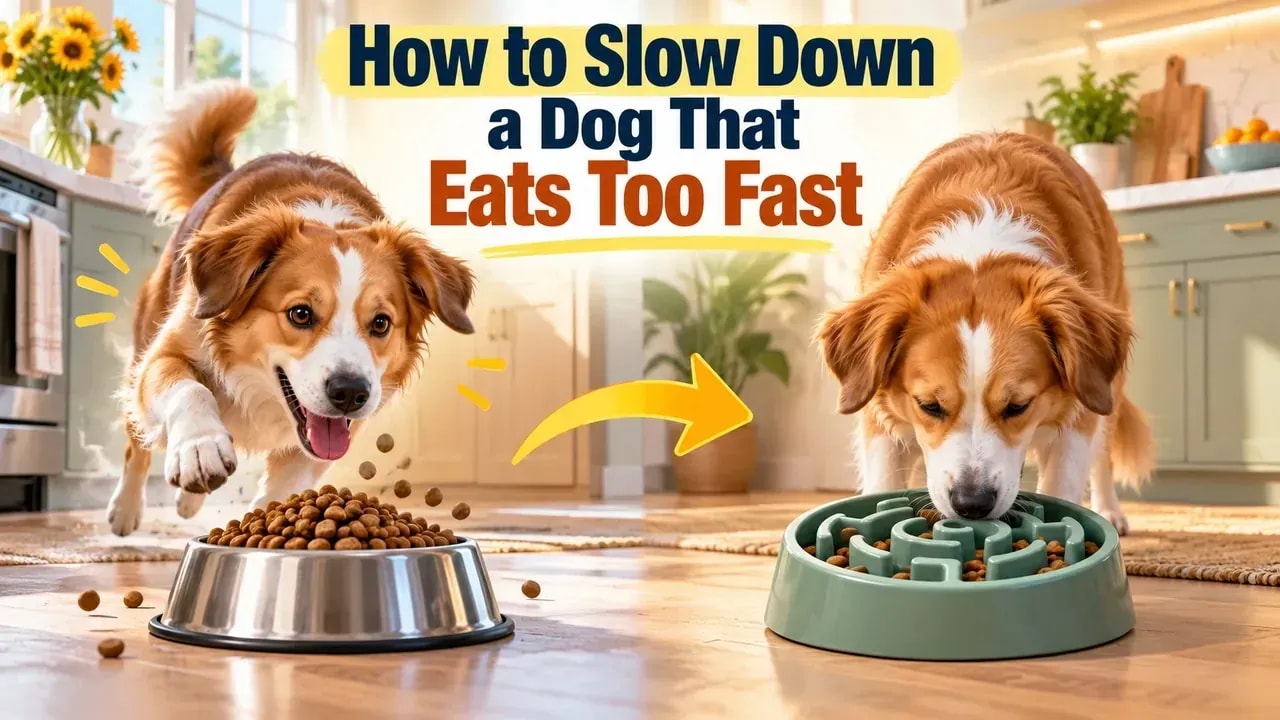
How to Slow Down a Dog That Eats Too Fast
If your dog empties the bowl in seconds, you can slow meals safely without adding extra food. Learn 30 practical ways to use slow feeders, puzzles, portion splitting, training, scatter feeding and a calmer feeding routine.
What you’ll need
Tap to tick things off before you start.
Time the Thirty-Second Dinner
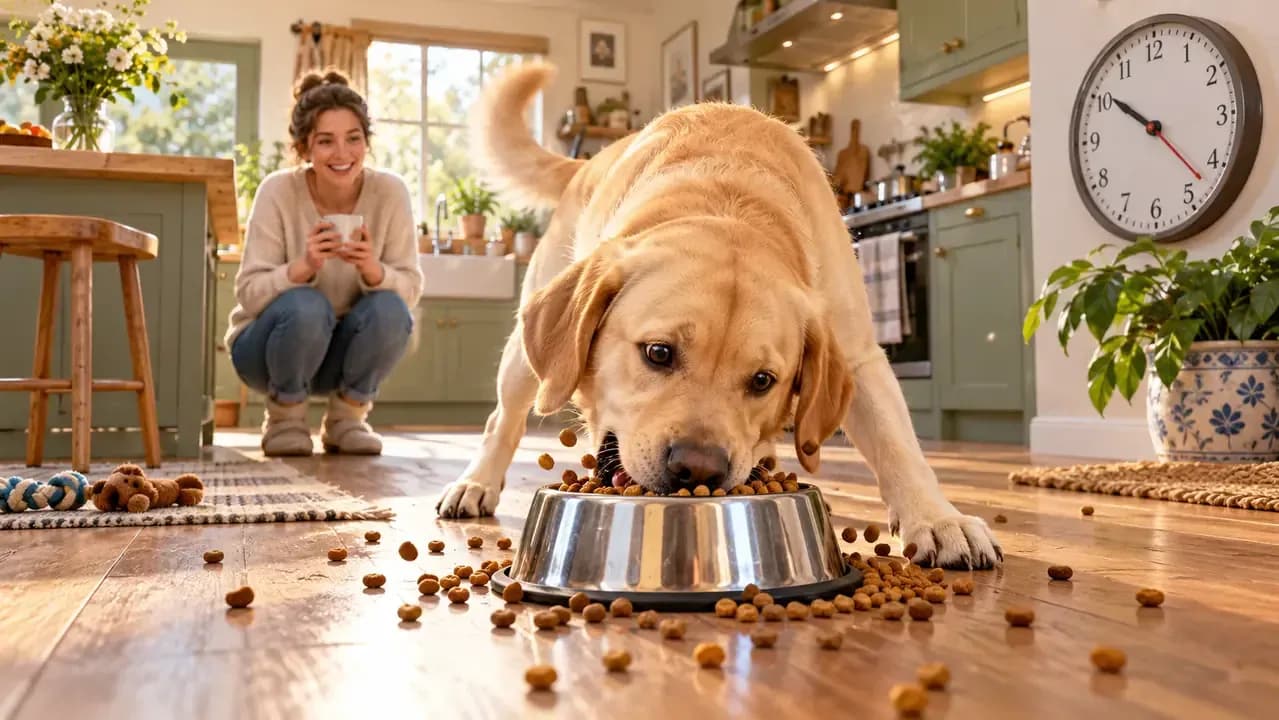
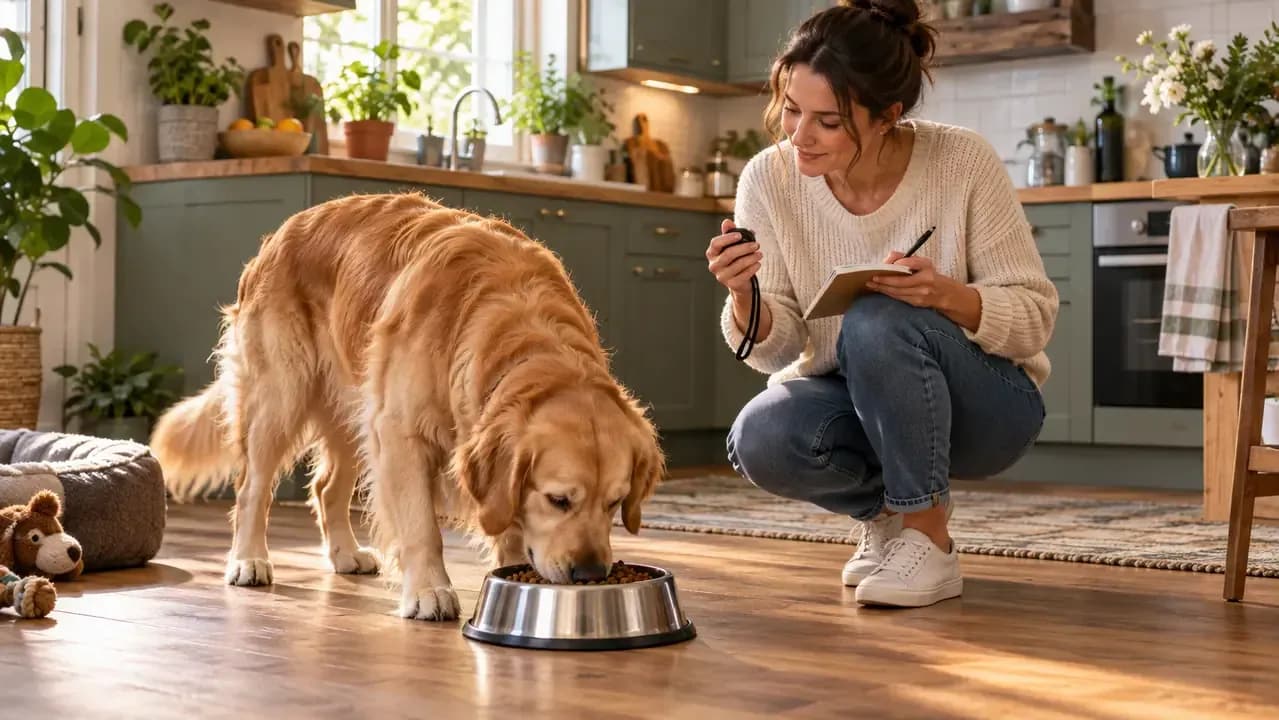
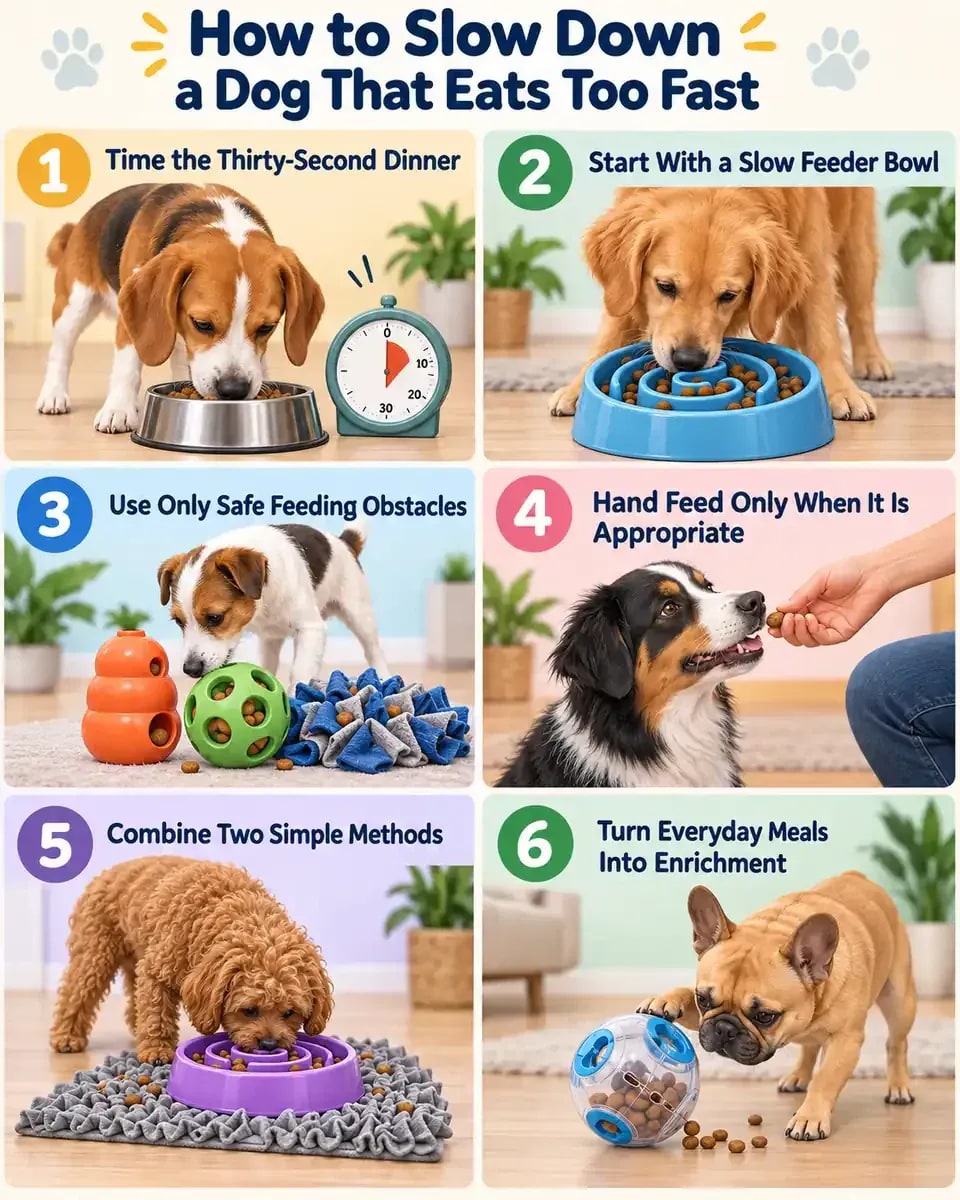
Some dogs can empty a full bowl in about thirty seconds, barely pausing before looking for more. That speed may seem impressive, but it can turn an ordinary meal into a frantic event. Your objective is not to make food unnecessarily difficult to obtain. You want to stretch the same measured meal into a calmer and more engaging activity. Watch the entire meal closely and notice how quickly food disappears, whether kibble is scattered around the bowl and whether your dog immediately begins searching for additional food.
Understand Why Your Dog Eats So Fast
Fast eating can develop for several reasons. Some dogs are simply highly motivated by food. Others may have learned to compete with littermates, lived around other dogs or experienced feeding situations where food did not feel predictable. Gulping should not automatically be treated as stubbornness or bad manners. Thinking about the pattern behind the behavior helps you choose a better response. A dog reacting to competition, for example, may benefit more from eating alone than from being given an increasingly complicated bowl.
Know Why Gulping Is Worth Addressing
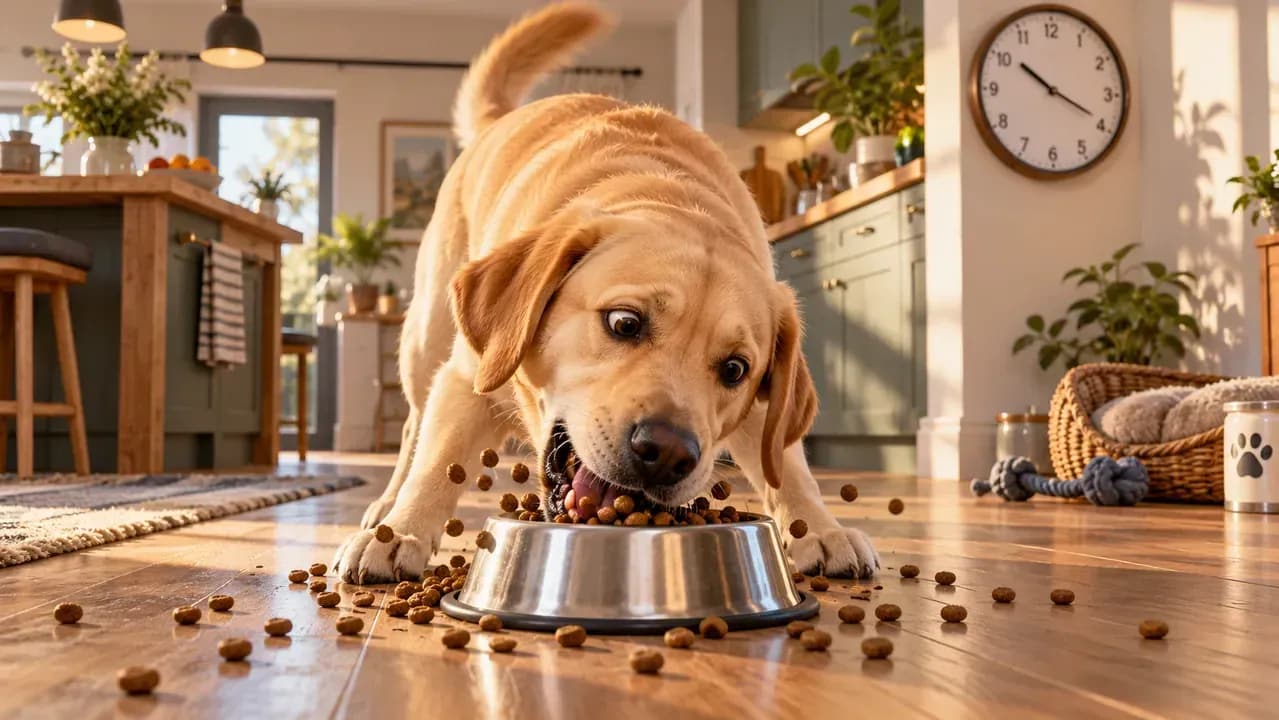
Very rapid eating may be associated with coughing, gagging, regurgitation, swallowed air or digestive discomfort in some dogs. Large meals consumed rapidly are also undesirable in dogs at risk of gastric dilatation-volvulus. Slowing a meal cannot guarantee that a medical problem will be prevented, so do not treat feeding equipment as medical protection. The practical benefit is reducing frantic gulping and making meals easier for you to observe. A calmer pace gives you more opportunity to notice unusual behavior before, during and after eating.
Create a Mealtime Baseline
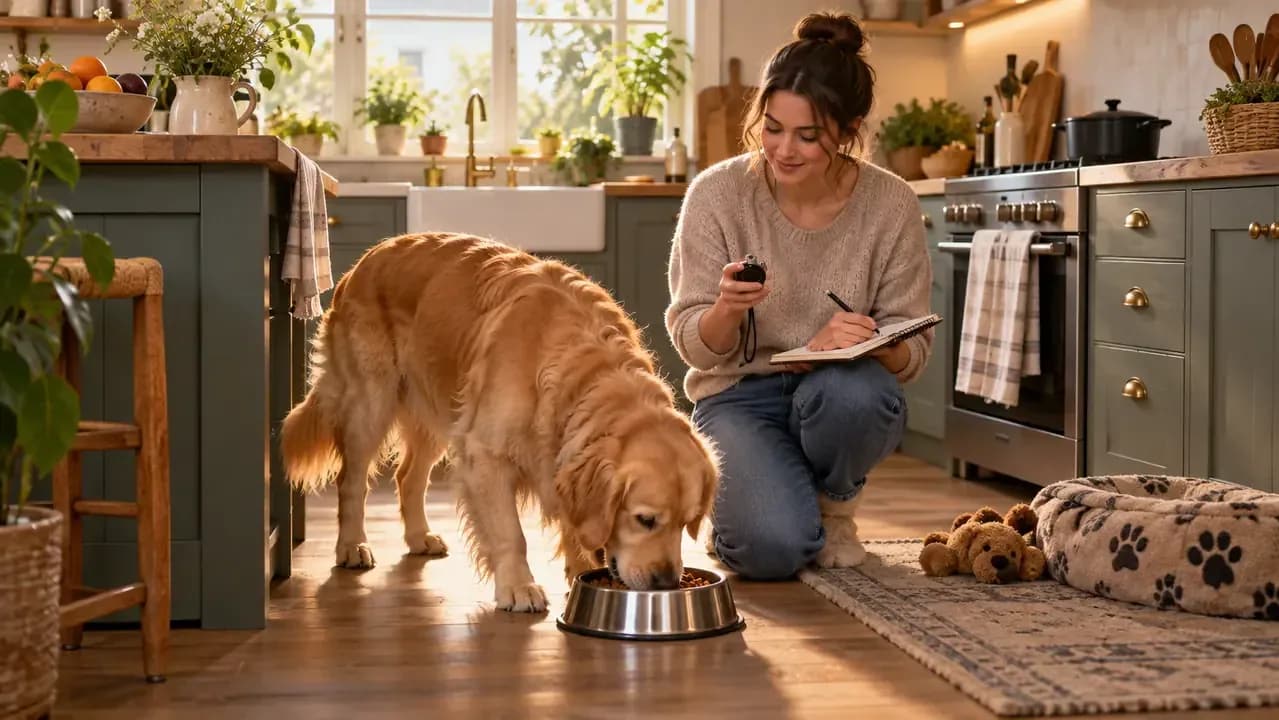
Before buying new equipment, time one ordinary meal. Write down how long your dog takes to finish, whether food appears to be chewed, whether coughing occurs and whether the dog immediately searches for more. This simple baseline lets you compare later meals instead of guessing whether a method helped. Do not become fixated on reaching a specific number of minutes. The useful question is whether your dog is progressing from frantic gulping toward a steadier, more controlled meal that appears comfortable and manageable.
Measure the Correct Portion First
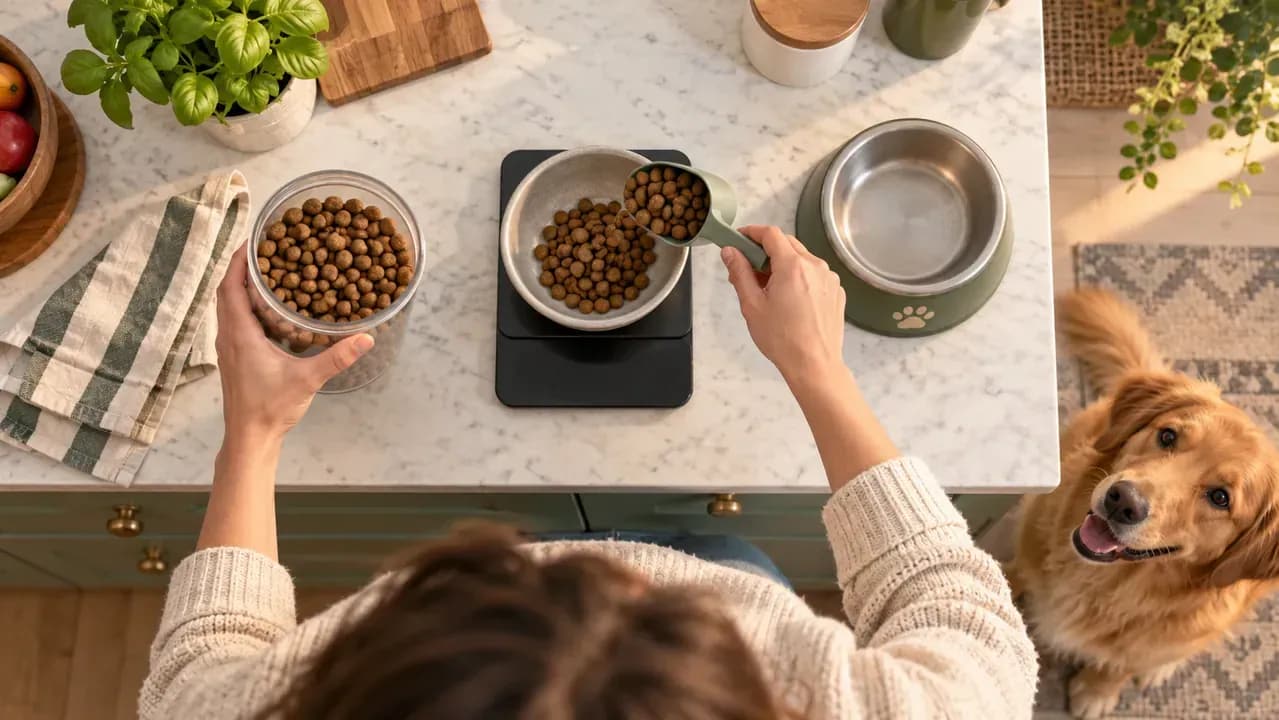
Slowing a meal should not accidentally increase how much your dog eats. Measure the normal daily ration appropriate for your dog, taking body condition, activity and veterinary guidance into account. Food used in a puzzle, training exercise, snuffle mat or scatter-feeding activity should come from that same allowance unless you intentionally include separate treats. This is an important habit because enrichment changes how food is delivered, not how many calories disappear. Divide the measured ration only after you know the total amount being served.
Start With a Slow Feeder Bowl
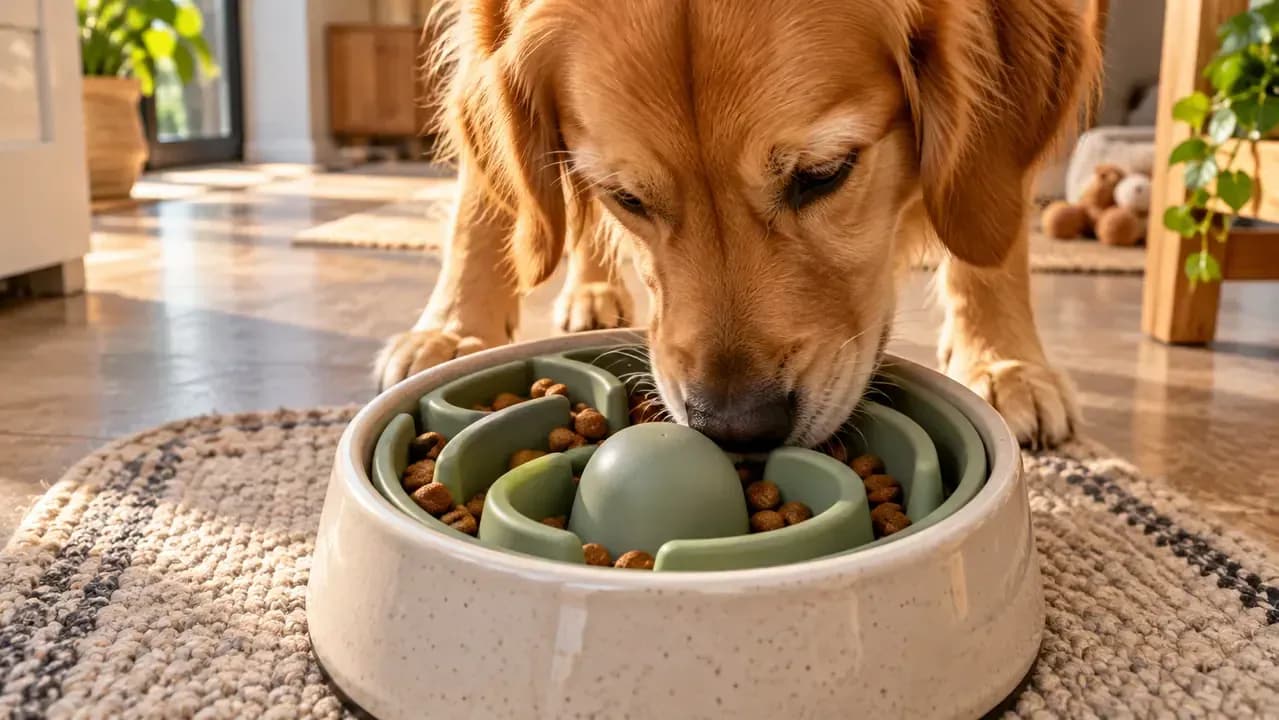
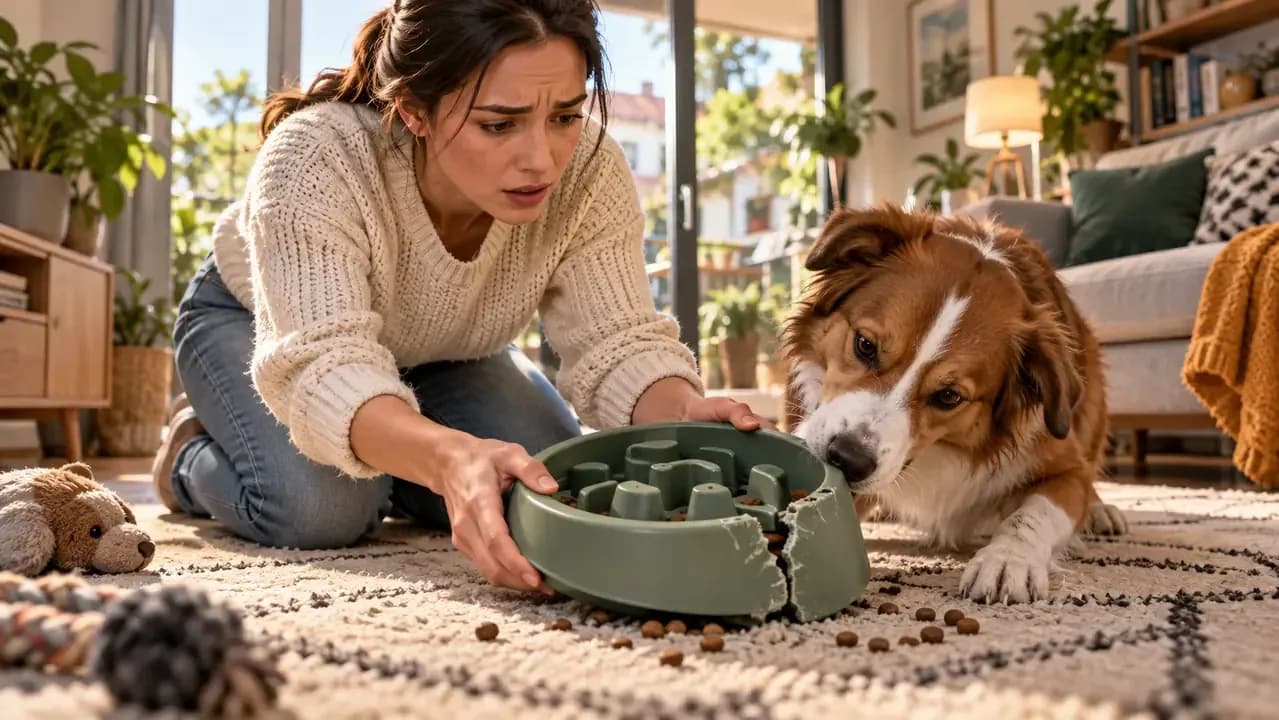
A slow feeder is often the simplest equipment change to try. Ridges and channels divide the food so your dog must take smaller amounts from different parts of the bowl instead of grabbing a large mouthful from one pile. Choose a pattern with enough room for your dog's muzzle to move comfortably. The feeder should slow access without forcing the face against hard surfaces or requiring awkward twisting. If the bowl creates obvious irritation or frustration, the design is not a good match simply because it makes the meal last longer.
Match the Feeder to Your Dog's Muzzle
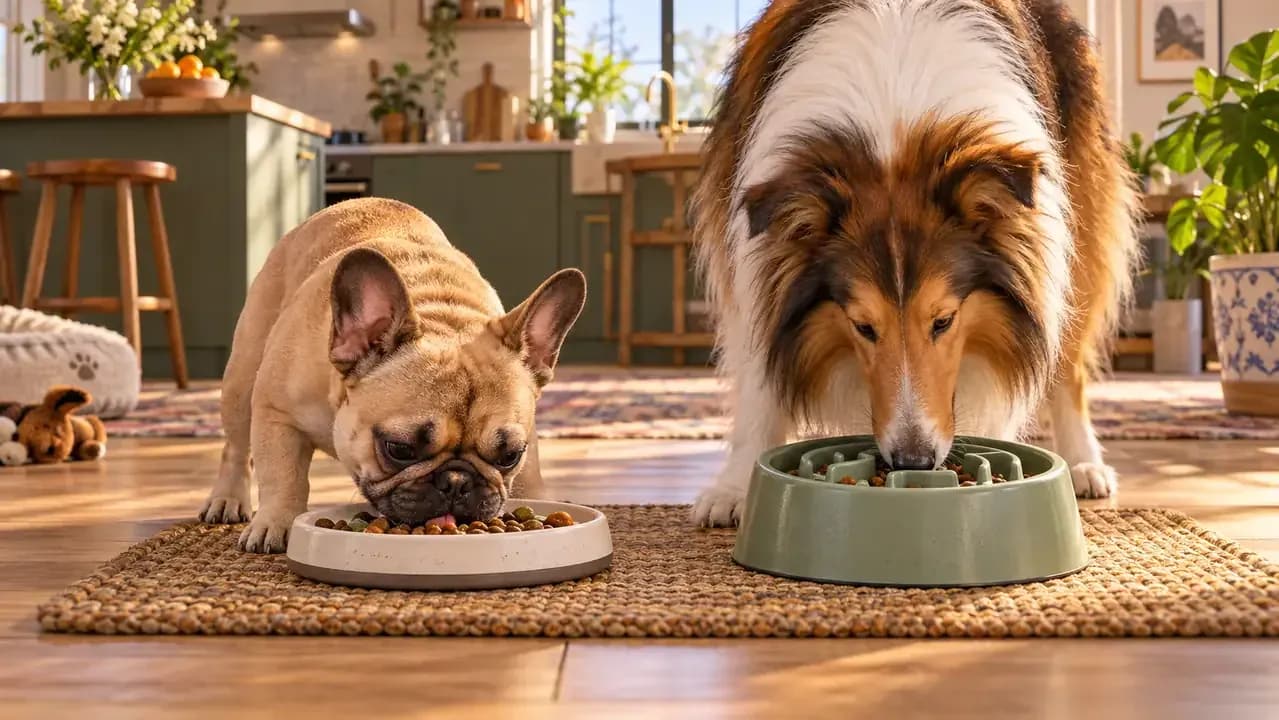
Slow feeders are not one-size-fits-all. A flat-faced dog generally needs broad, shallow spaces that allow easy access, while a dog with a longer muzzle may comfortably work through deeper channels. Watch how your dog reaches the food instead of relying only on the product description. The dog should not need to press the face forcefully into plastic or struggle to reach pieces trapped in narrow gaps. If the shape looks uncomfortable, switch patterns rather than assuming your dog will eventually adapt to an unsuitable design.
Keep the Feeding Equipment Stable
A bowl that slides across the floor can make an enthusiastic eater even more frantic. Instead of concentrating on the food, the dog ends up chasing the feeder around the room. Choose equipment with a broad or non-slip base, or place it on a stable feeding mat. Test the setup before serving a full meal. When the bowl remains in one place, your dog can focus on working through the food at a controlled pace rather than pushing dinner across the kitchen with every bite.
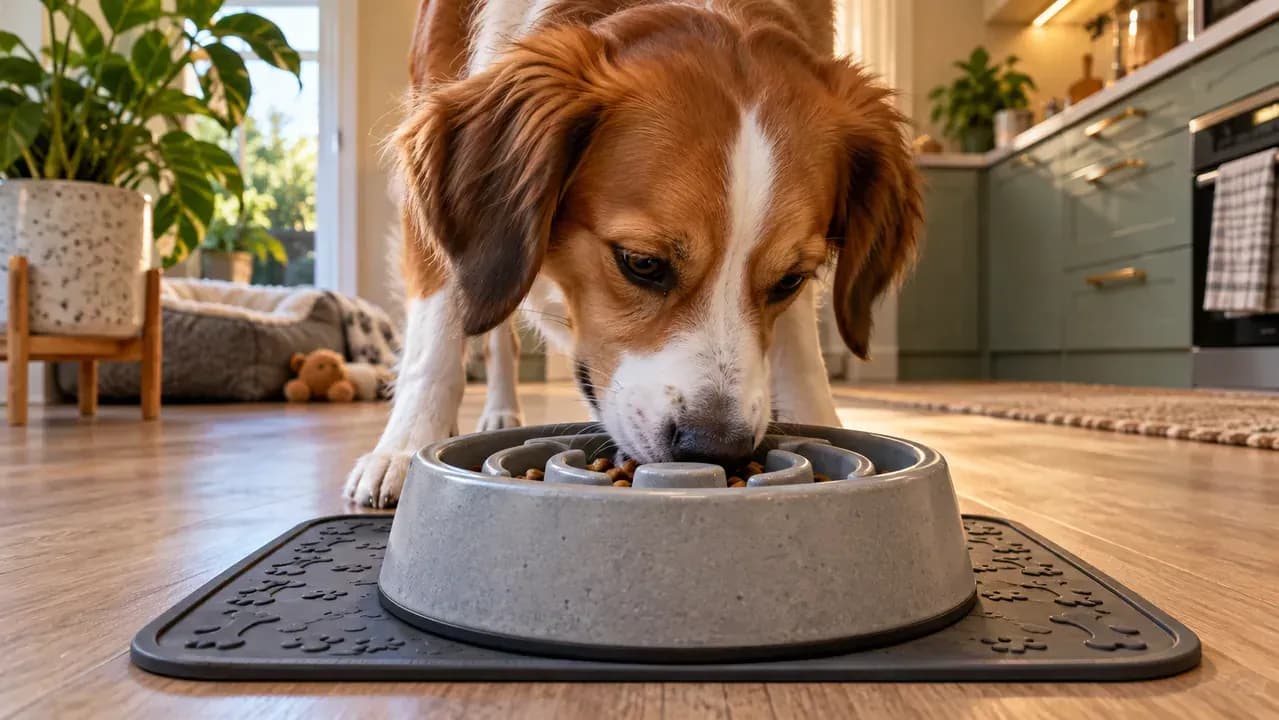
Introduce New Feeding Equipment Gently
Do not make the first slow-feeder meal unnecessarily challenging. Place only part of the normal ration in an easy configuration and give your dog time to investigate. Watch for calm sniffing and steady problem-solving. If your dog begins pawing aggressively, repeatedly tries to flip the bowl or walks away, simplify the setup. Enrichment should create manageable work, not obvious frustration. Once your dog understands how the feeder works, you can decide whether a slightly more challenging design is useful, but difficulty should never be the goal by itself.
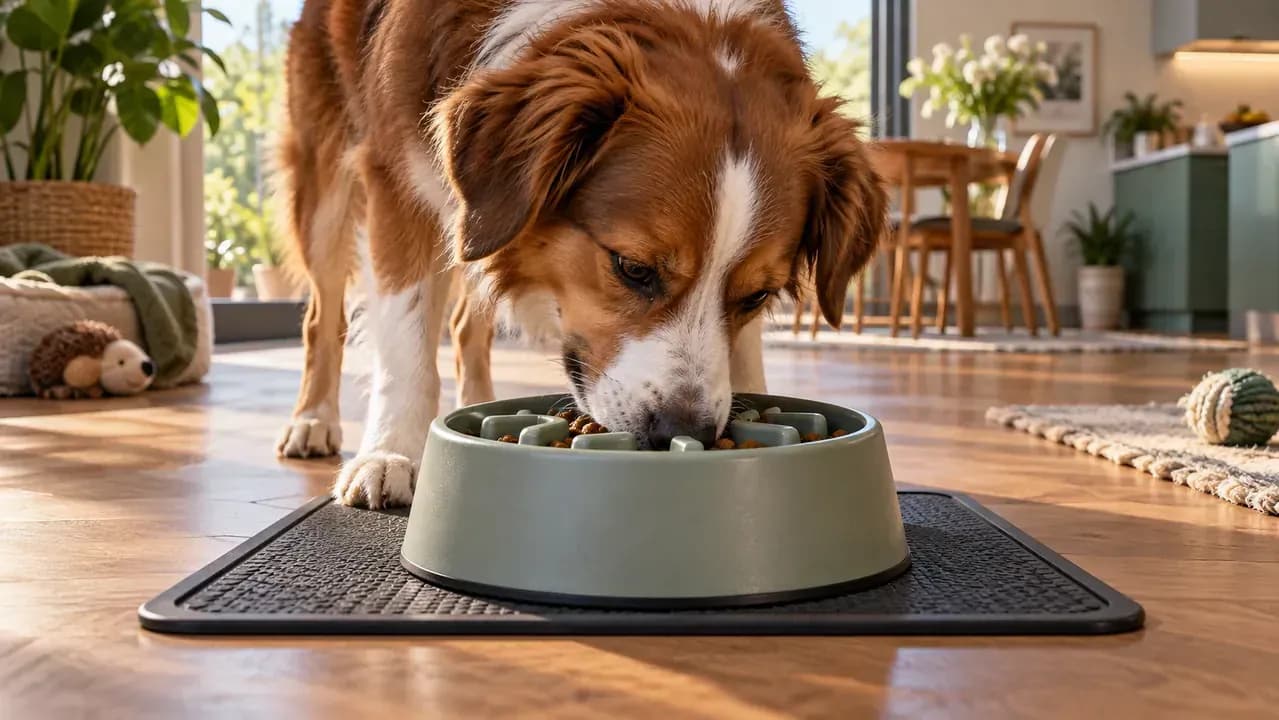
Split One Meal Into Smaller Servings
You can slow eating without buying anything by dividing one measured meal into two or three smaller servings. Offer the first portion, wait through a brief calm interval and then provide the next portion. Your dog receives exactly the same total ration but cannot consume the entire meal in one uninterrupted gulping session. This approach is especially useful when you are experimenting with slower feeding and do not yet own specialized equipment. Keep the portions measured so repeated servings do not accidentally turn into additional food.
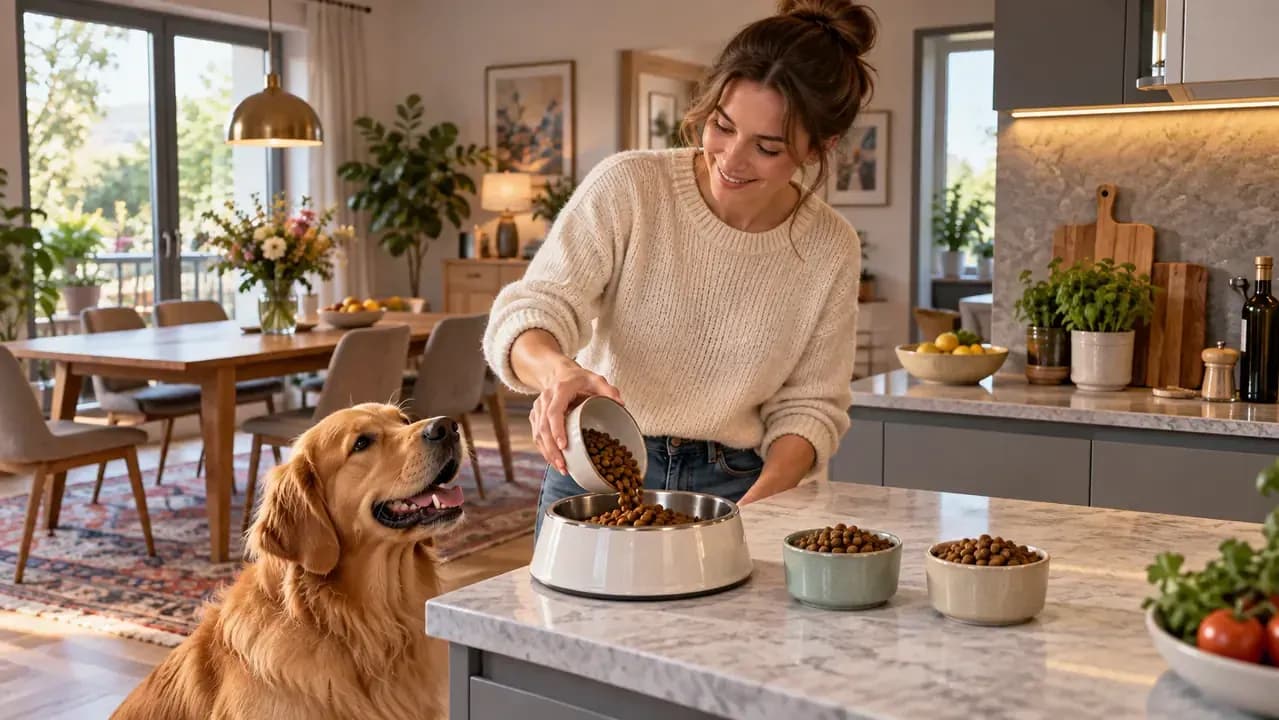
Turn a Muffin Tin Into a Simple Food Puzzle
A clean muffin tin can spread dry kibble across multiple small compartments. Instead of finding one concentrated pile of food, your dog has to move from cup to cup, which naturally limits the amount available in each mouthful. Use a sturdy tray and supervise the entire activity. If your dog attempts to bend, chew or carry the tin, remove it and choose another method. The purpose is controlled food distribution, not giving the dog a new object to destroy. Wash the tray after feeding just as you would a regular bowl.
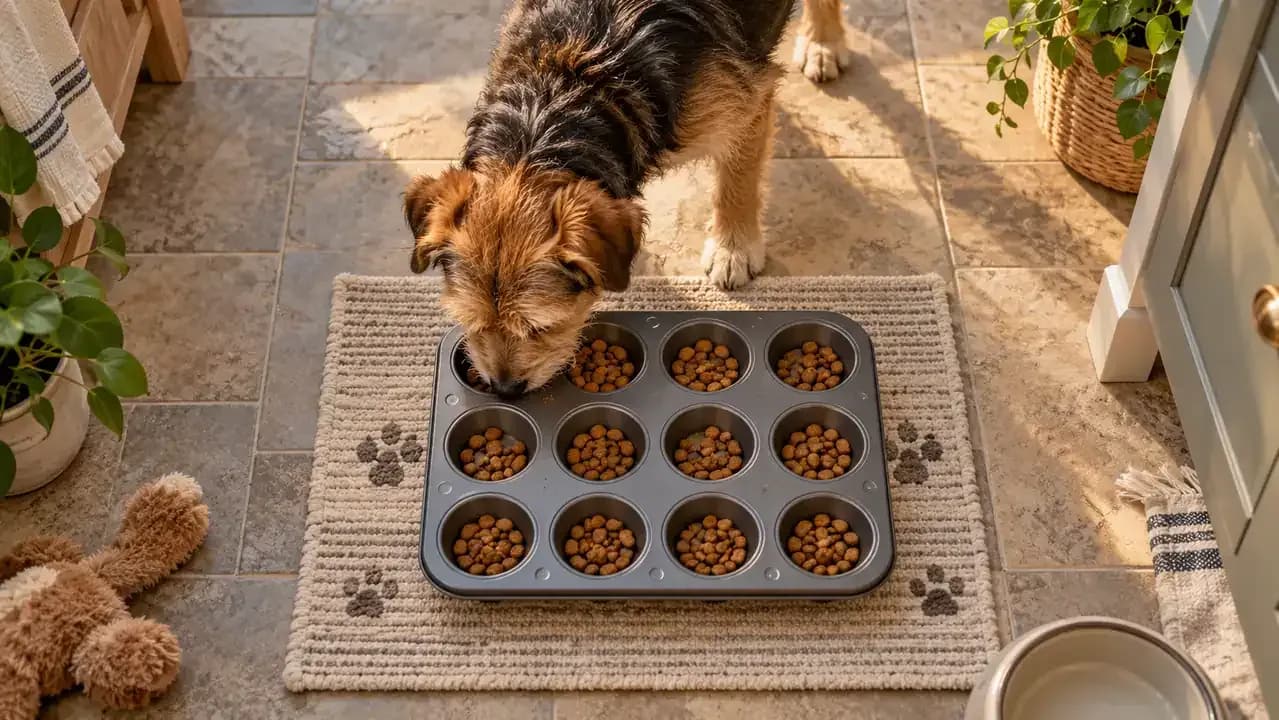
Use Only Safe Feeding Obstacles
A large obstacle inside a regular bowl can sometimes make a dog eat around the object rather than taking huge mouthfuls. Safety is the priority. Anything placed with food must be far too large to swallow, unable to splinter and free of sharp edges. Purpose-built feeding inserts are preferable to random household objects because improvised items may introduce choking or chewing hazards. If you want this type of setup, choose equipment intended for feeding and inspect it frequently for damage rather than improvising with whatever happens to fit inside the bowl.
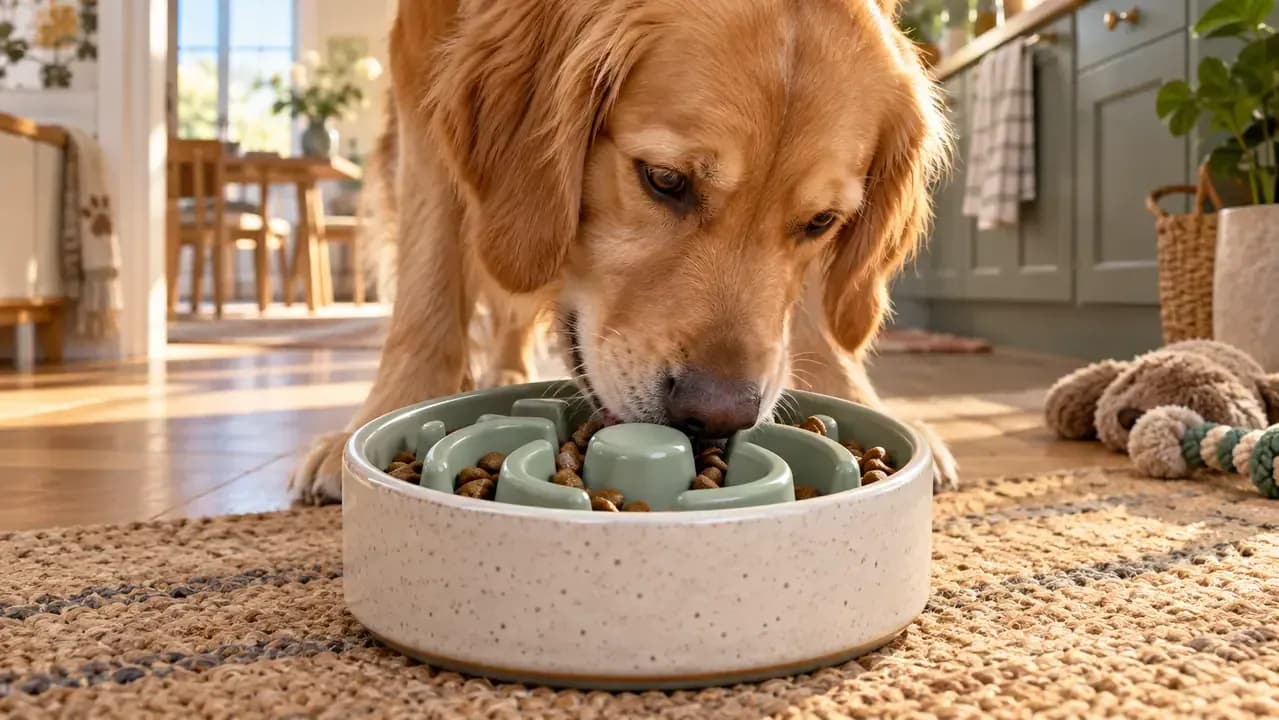
Add an Easy Food Puzzle
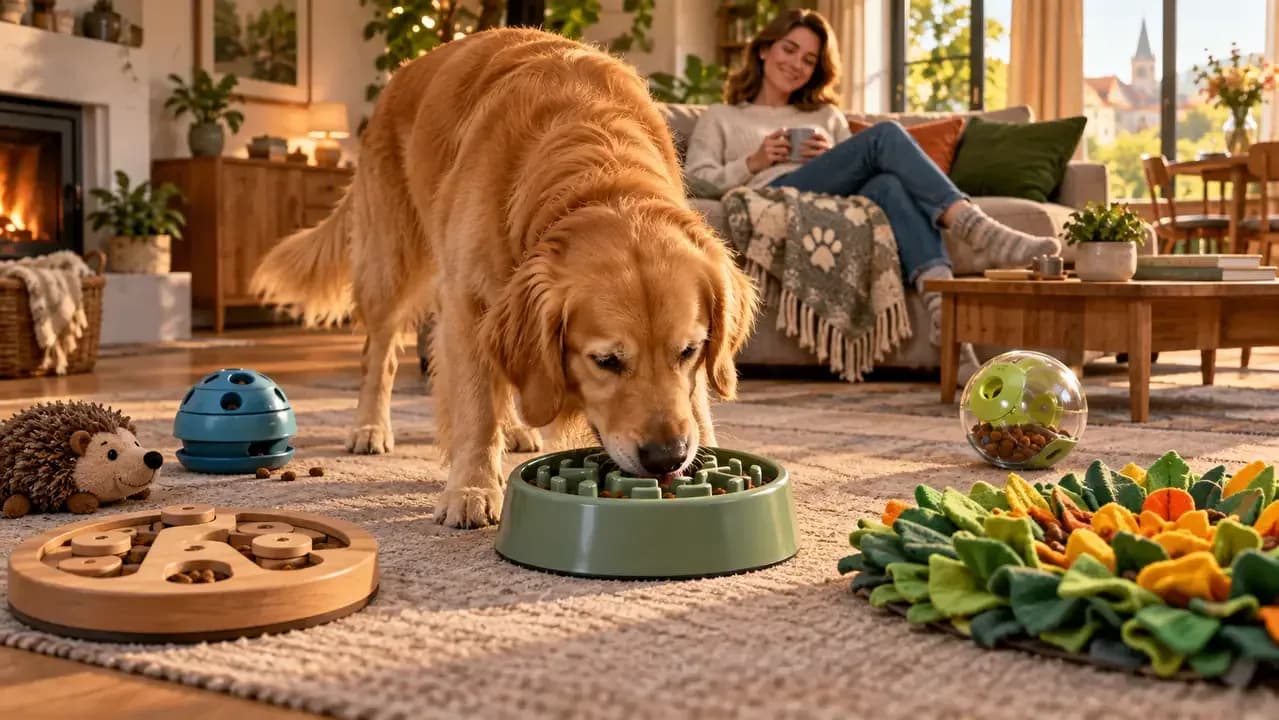
Food puzzles make your dog perform small actions before individual pieces become available. Depending on the design, the dog may roll a toy, nudge it or move simple compartments. This can extend dinner while adding mental engagement. Start with a straightforward puzzle so food is released regularly enough to prevent frustration. Supervise your dog until you understand how the toy is used, and choose a product durable enough for your dog's size and chewing habits. Remove any puzzle that becomes damaged or starts being treated primarily as a chew object.
Let Your Dog Search a Snuffle Mat
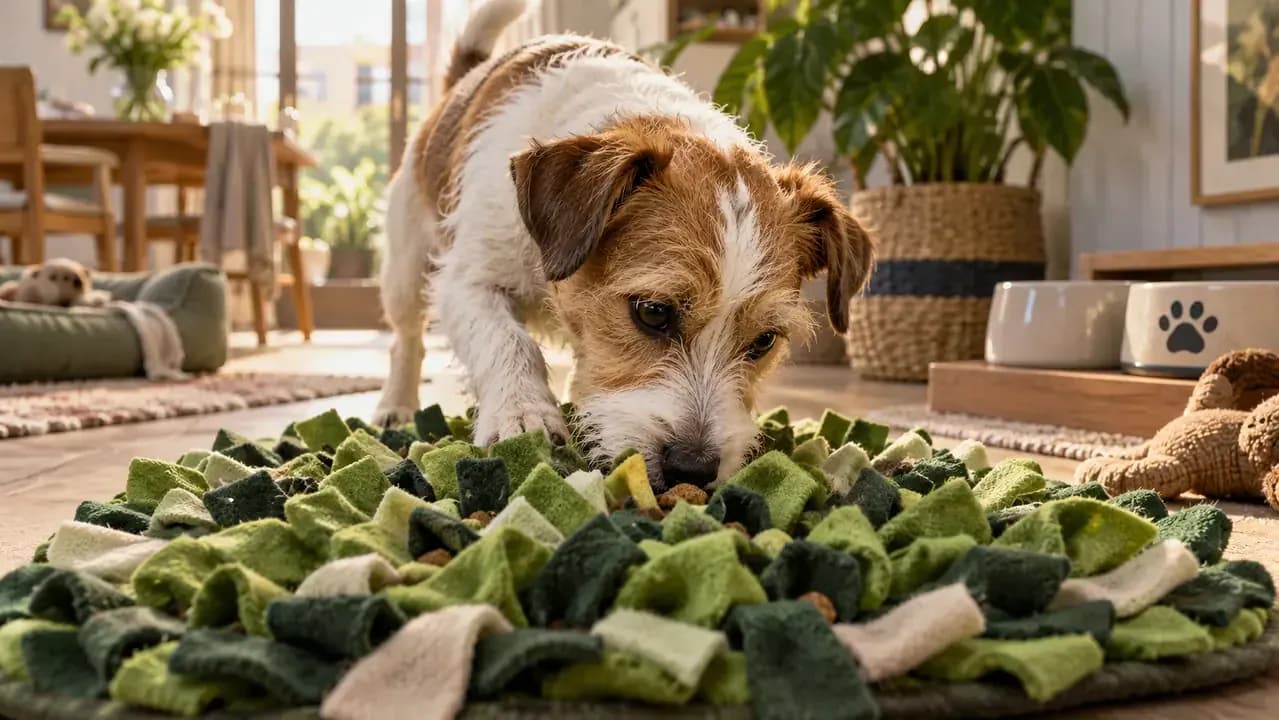
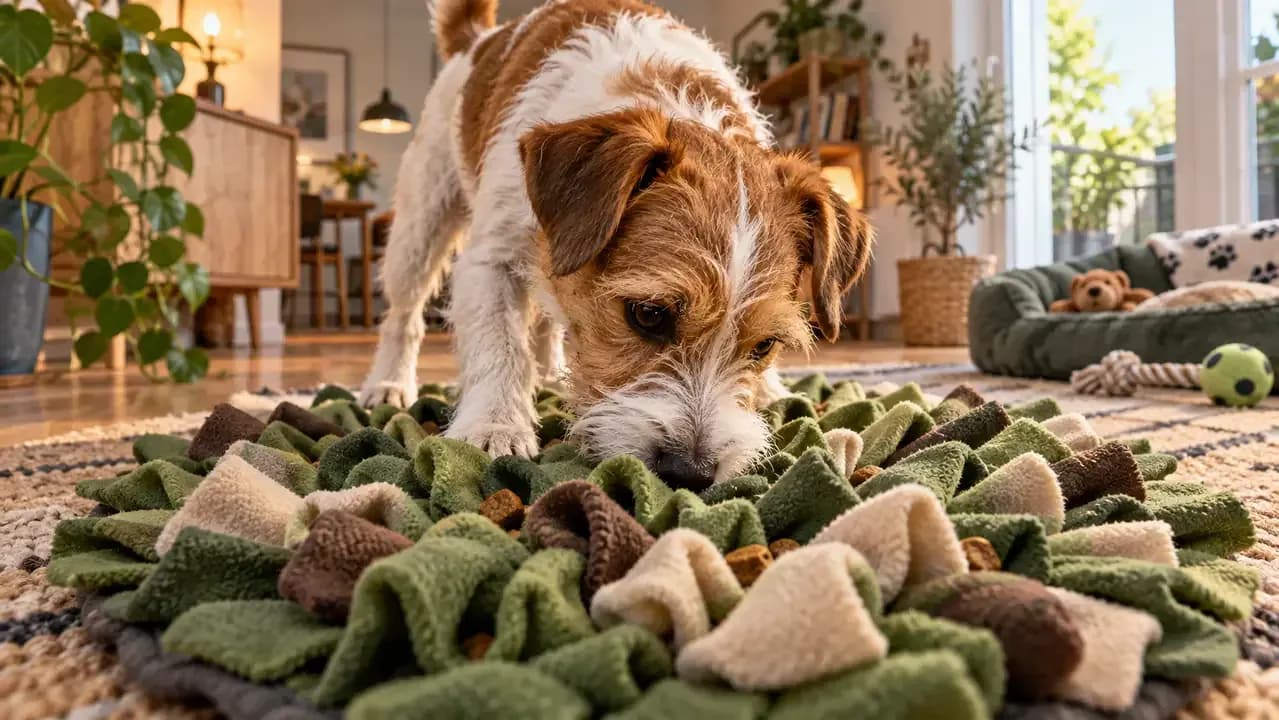
For dry food, a snuffle mat distributes kibble among fabric folds so your dog uses the nose to locate individual pieces instead of diving into a bowl. The searching process naturally takes more time and encourages sniffing. Supervision remains important, particularly if your dog likes to pull or chew fabric. Stop the activity if the mat becomes a target for destructive chewing. Shake out crumbs after use and wash the mat regularly so old food particles do not remain trapped in the material between meals.
Scatter Kibble Across a Clean Indoor Area
A clean, washable floor can become a very simple search area. Scatter part of the measured meal across a defined space so your dog has to locate individual pieces rather than swallowing food from one concentrated pile. For the first attempt, keep the kibble visible and reasonably close together. Once your dog understands the activity, increase the distance between pieces to extend the search. Use only areas you are comfortable feeding from and clean the surface appropriately. This method works best when the dog searches calmly rather than scrambling frantically.
Try Supervised Outdoor Scatter Feeding
A private patch of clean grass can make the search even more engaging. Sprinkle part of the measured ration over a small area and allow your dog to find pieces by scent. Choose the location carefully. Avoid grass treated with chemicals, areas contaminated by other animals and spaces containing sharp or dangerous objects. Stay close enough to supervise what your dog picks up. Outdoor scatter feeding is not simply throwing food anywhere in the yard. It works best as a controlled activity in a clean area where you can see what your dog is doing.

Use Part of Dinner for Training
Set aside part of the normal meal and use individual pieces to reward simple behaviors your dog already knows. Sit, touch, down or calm walking beside you can turn dinner into a relaxed interaction instead of one rapid bowl-emptying event. Keep the session easy and positive. The objective is not to drill commands until your dog becomes impatient. A few familiar behaviors followed by individual pieces can extend feeding time considerably. Because the rewards come from the measured meal, this method also avoids automatically adding extra treats to the day's food intake.

Hand Feed Only When It Is Appropriate
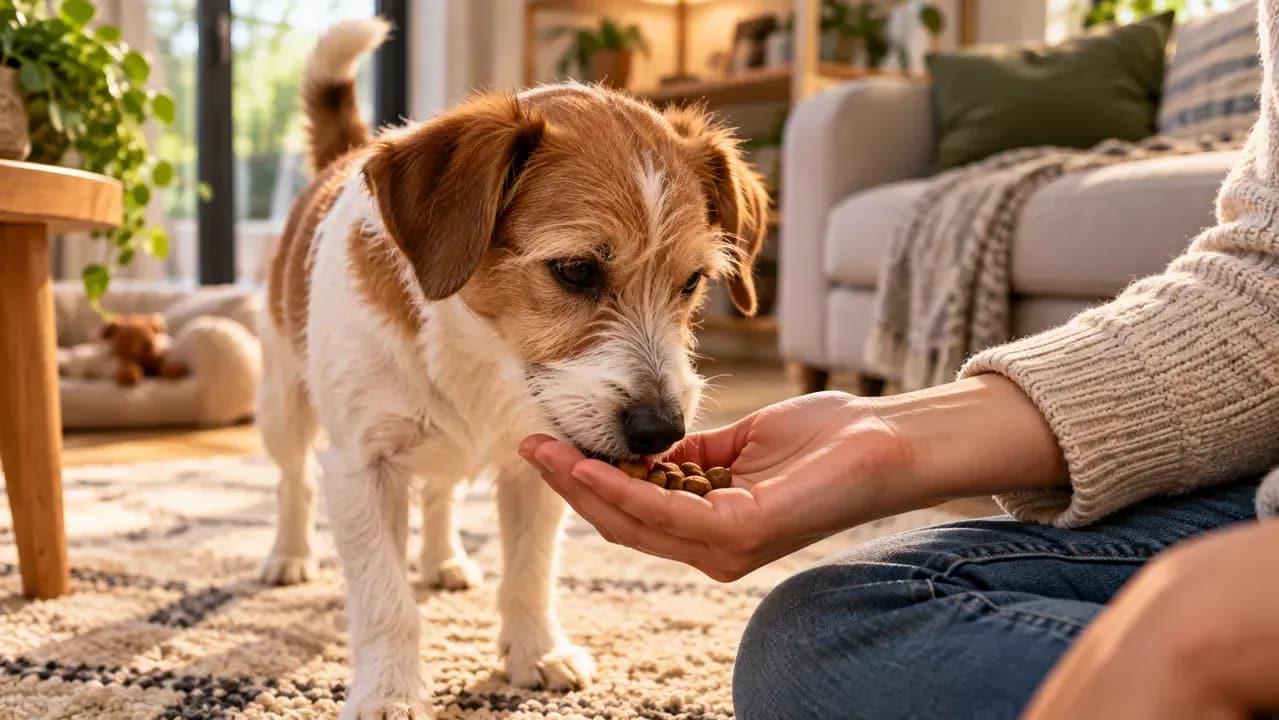
Offering a few pieces of food at a time from your hand can substantially reduce gulping in a relaxed dog, but hand feeding is not suitable for every situation. Do not experiment this way if your dog guards food, snaps around treats or becomes highly aroused around hands. Those behaviors call for greater caution and appropriate professional guidance rather than casual testing. For dogs that remain calm, use an open hand and offer only a few pieces at once. The purpose is controlled delivery and calm attention, not teasing the dog by repeatedly withholding food.

Feed Multiple Dogs Separately
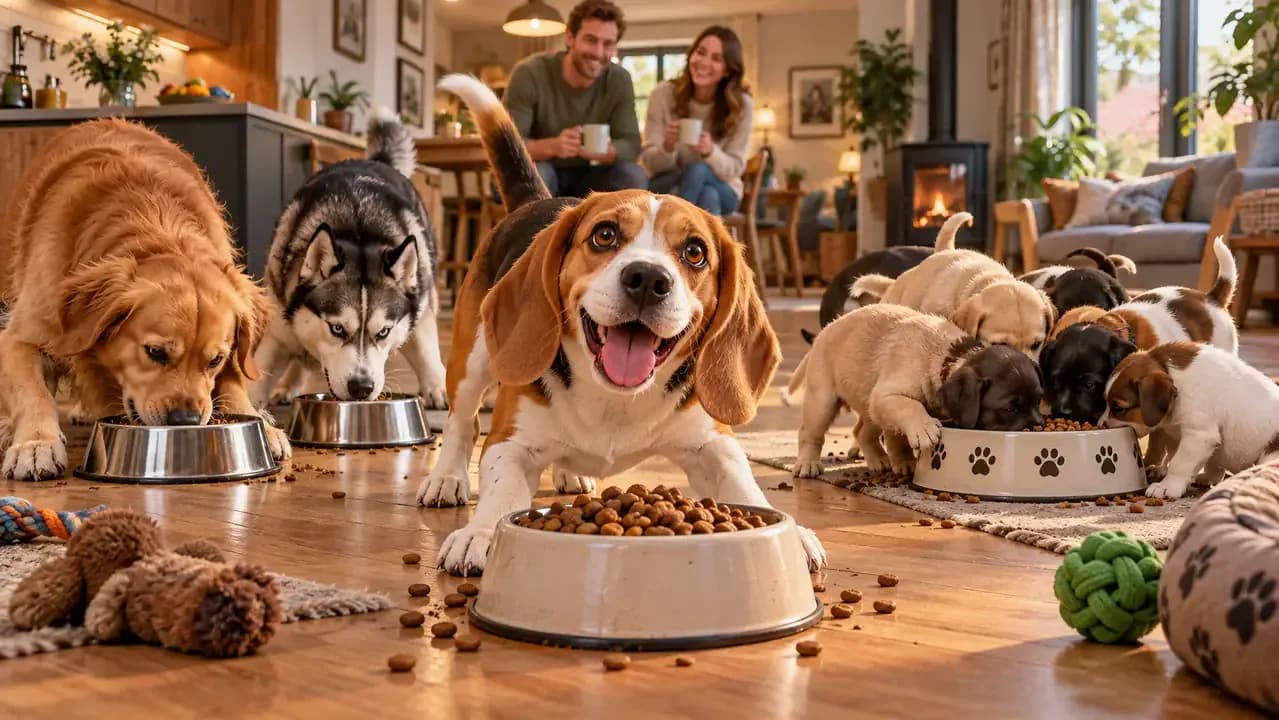
Competition can accelerate eating even when a dog normally eats at a reasonable pace. If dogs can stare at each other's bowls or approach one another during meals, create physical separation. Different rooms, gates or enough visual distance can remove the sense that food might be taken away. Each dog should have an opportunity to finish without another animal hovering or approaching. This environmental change can be more effective than changing the bowl because it addresses the pressure surrounding the meal. Pick up feeding equipment before bringing the dogs back together.
Create a Calm, Predictable Feeding Zone
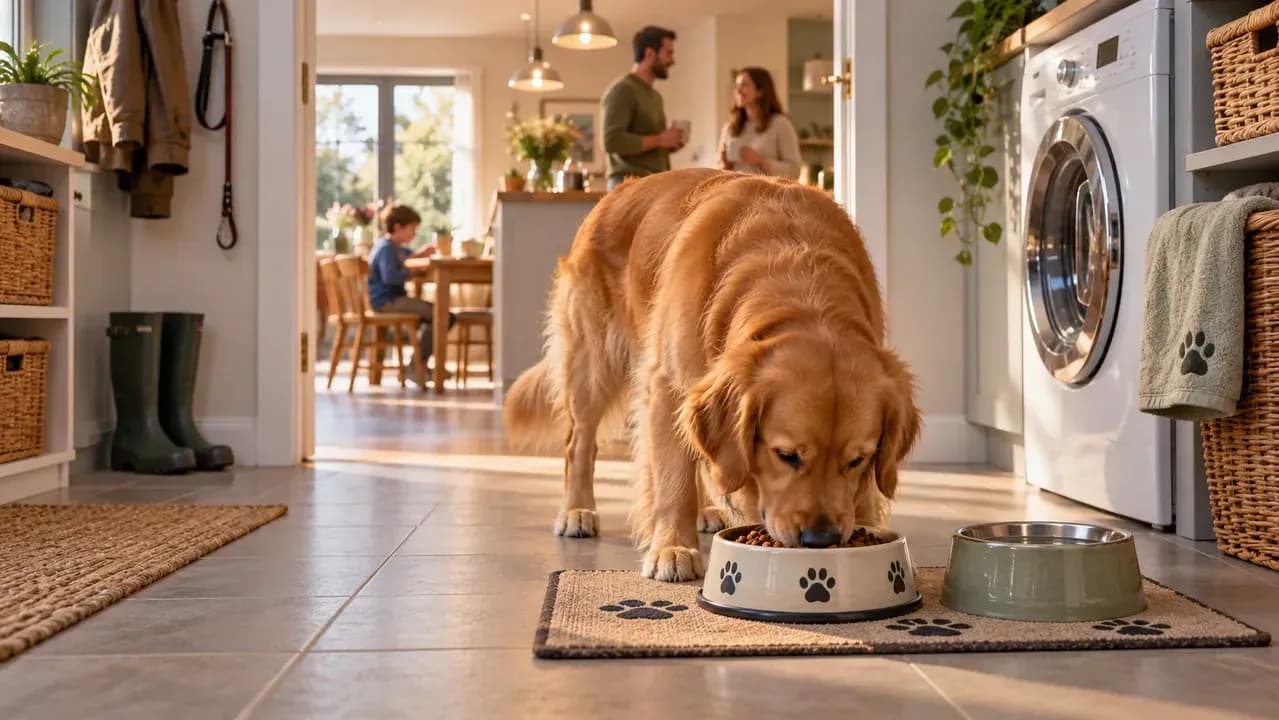
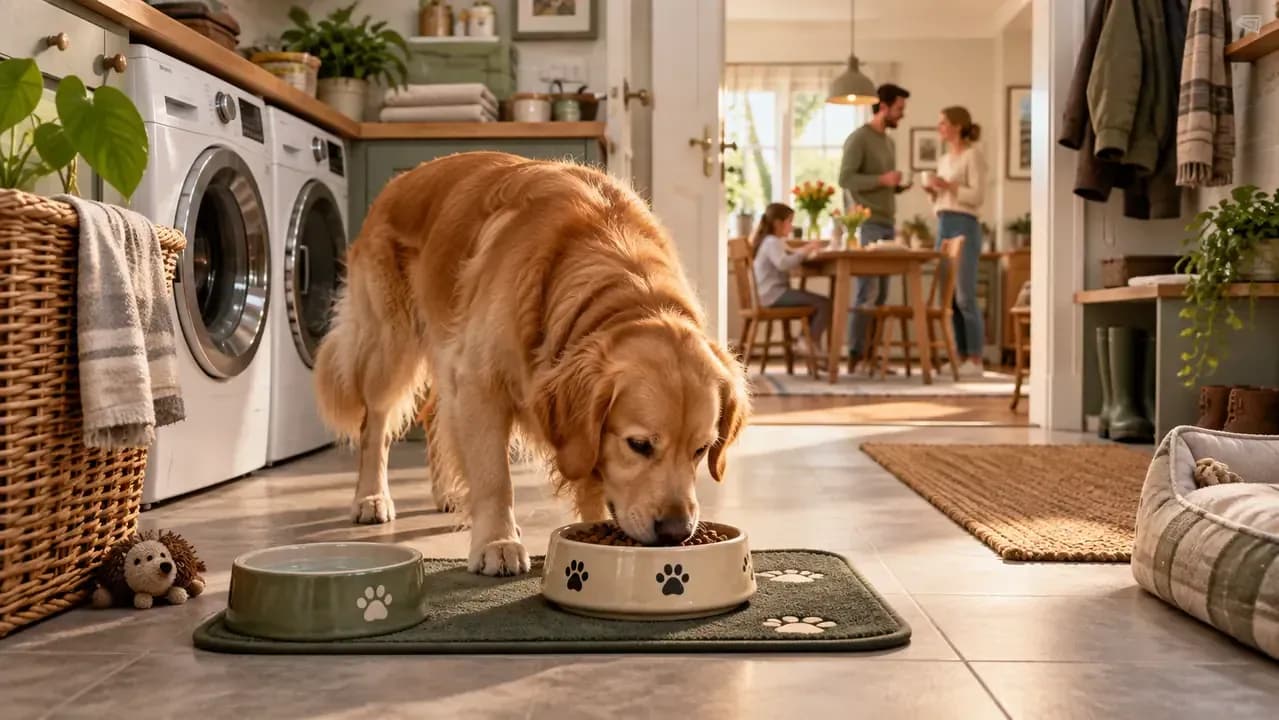
Mealtime can become more frantic when children are running nearby, other pets are hovering, doors are opening or household traffic repeatedly interrupts the feeding area. Choose a predictable location where your dog can focus on eating. Complete silence is unnecessary, but reducing obvious sources of excitement can help. Use the same general area when practical so feeding becomes familiar rather than chaotic. A calm environment can reduce the perceived need to finish everything immediately before another animal, person or household event disrupts the meal.
Do Not Make the Puzzle Too Difficult
The most complicated feeder is not automatically the best one. If food is extremely difficult to reach, a hungry dog may bark, bite the equipment, paw aggressively or abandon the activity. Look for steady progress and regular access to food rather than maximum difficulty. Slower eating should come from controlled distribution, not desperation. If your dog struggles with a puzzle, return to an easier version or use a different method entirely. The best feeding challenge is one your dog can solve repeatedly while remaining relatively calm and physically comfortable.
Monitor How Your Dog Chews the Equipment
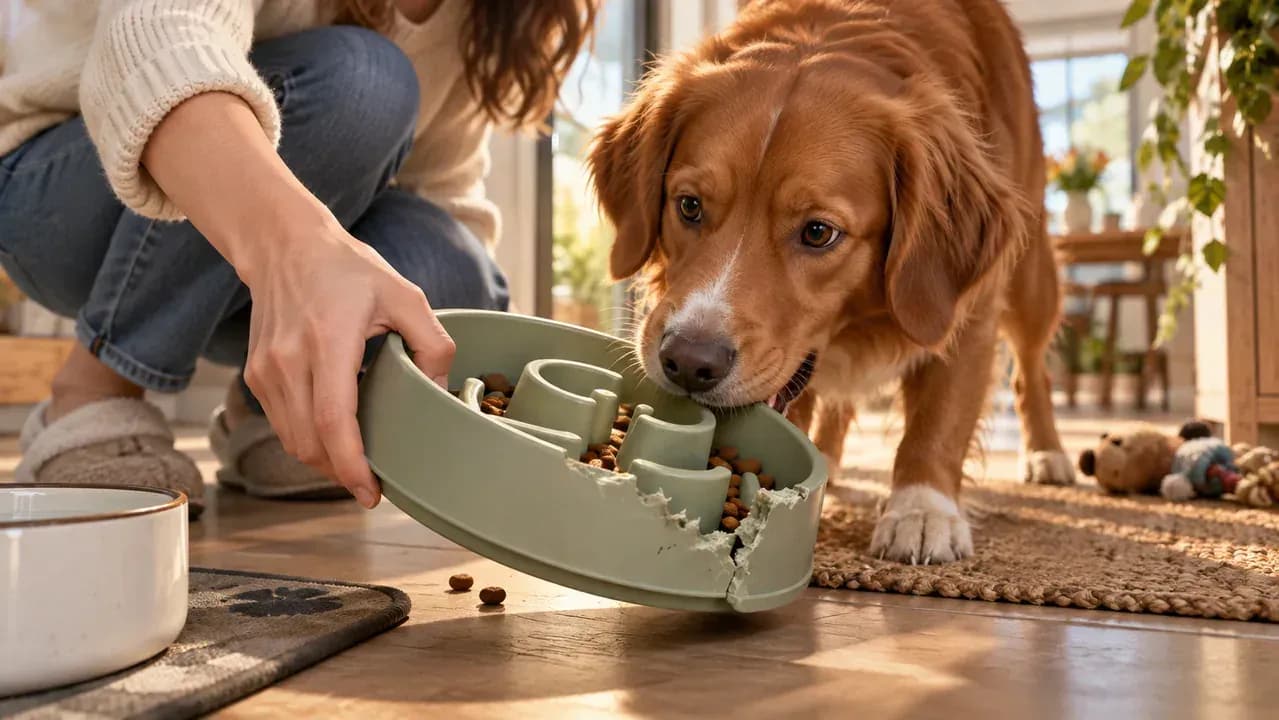
A feeding tool is only useful while it remains safe. Some dogs carefully work through puzzles, while others immediately start crushing plastic, tearing fabric or trying to remove pieces. Watch what your dog actually does rather than assuming a product will be used as intended. Stop the activity if edges become damaged, fabric tears or components loosen. A slow feeder, muffin tin, puzzle or snuffle mat should not quietly turn into an unsupervised chew toy. Inspect equipment between meals and discard or replace anything that no longer appears structurally sound.
Slow Down Wet Food Too
Dogs that eat wet food can use many of the same principles. Instead of serving one concentrated mound in a bowl, spread the measured portion across a food-safe lick mat or a wide textured feeder. A thin layer increases the amount of surface the dog must work across and can extend the meal. Supervise the activity if your dog is inclined to chew the mat. After feeding, refrigerate appropriate leftovers promptly and wash the surface thoroughly so food residue does not remain trapped in textured areas between meals.
Combine Two Simple Methods
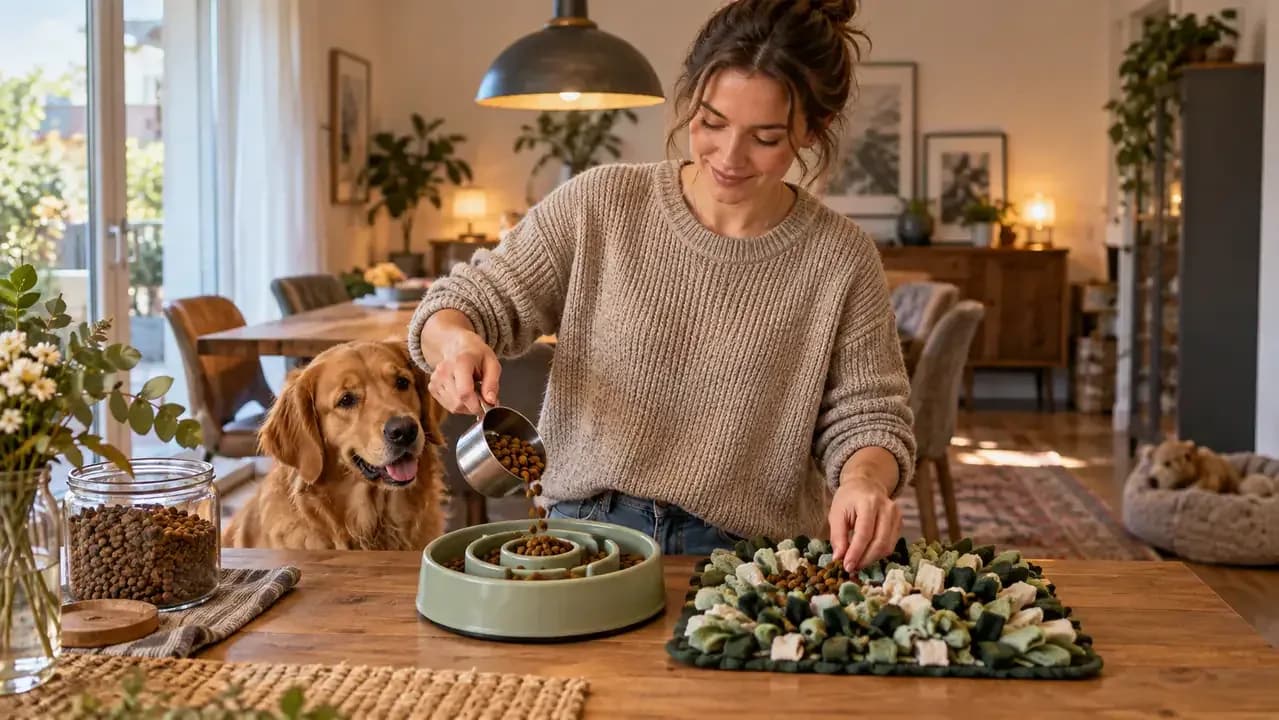
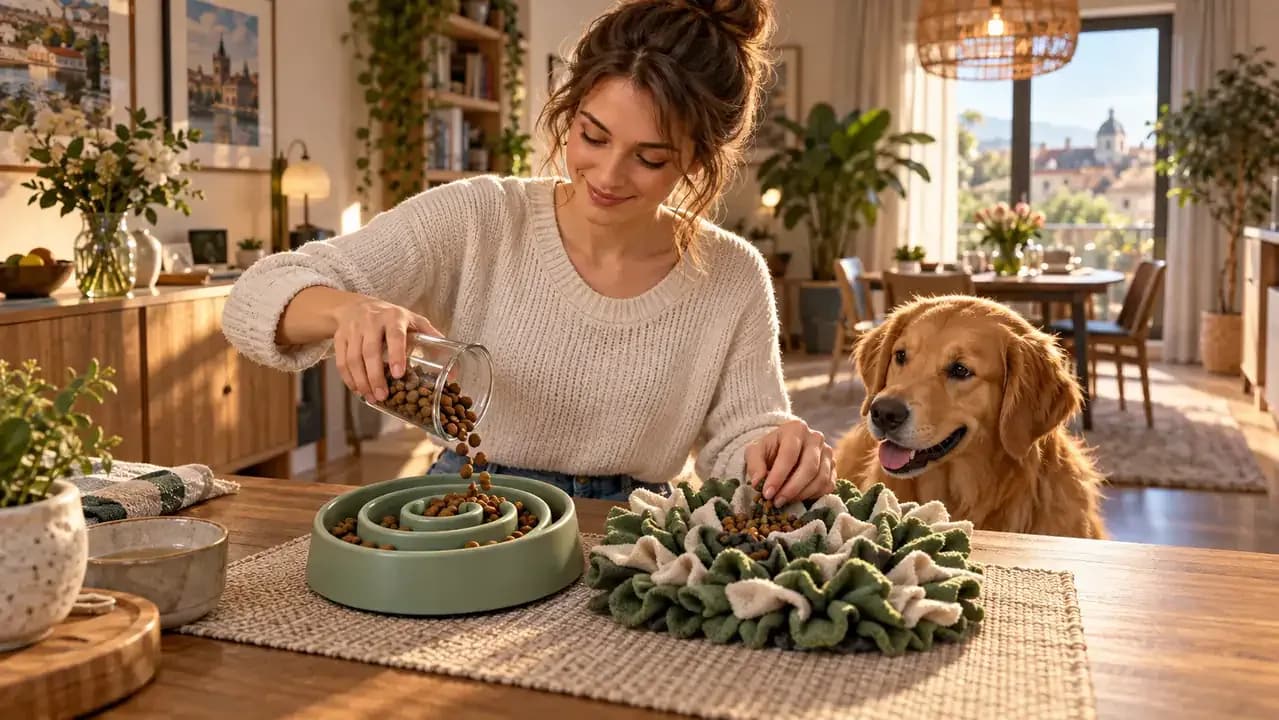
If one method helps but your dog still eats extremely quickly, combine straightforward techniques rather than making a single device increasingly difficult. Put half of the measured meal in a slow feeder and the other half in a snuffle mat, for example. On another day, use part of dinner for training and serve the remainder through an easy food puzzle. Rotating delivery methods can keep meals interesting and shows you which combinations produce the calmest behavior. Always confirm that all portions together still equal the intended total meal.
Measure Your Dog's Progress
After using a slower feeding method for several meals, time the process again and compare it with your original baseline. A meal that once disappeared in thirty seconds but now takes four or five minutes represents a substantial change in pace. Duration is not the only useful measure. Watch whether your dog eats steadily, pauses naturally and finishes without immediately launching into frantic searching. Meal length can vary from day to day, so focus on the overall pattern rather than demanding the exact same time at every feeding.
Focus on Pace Instead of Forcing Chewing
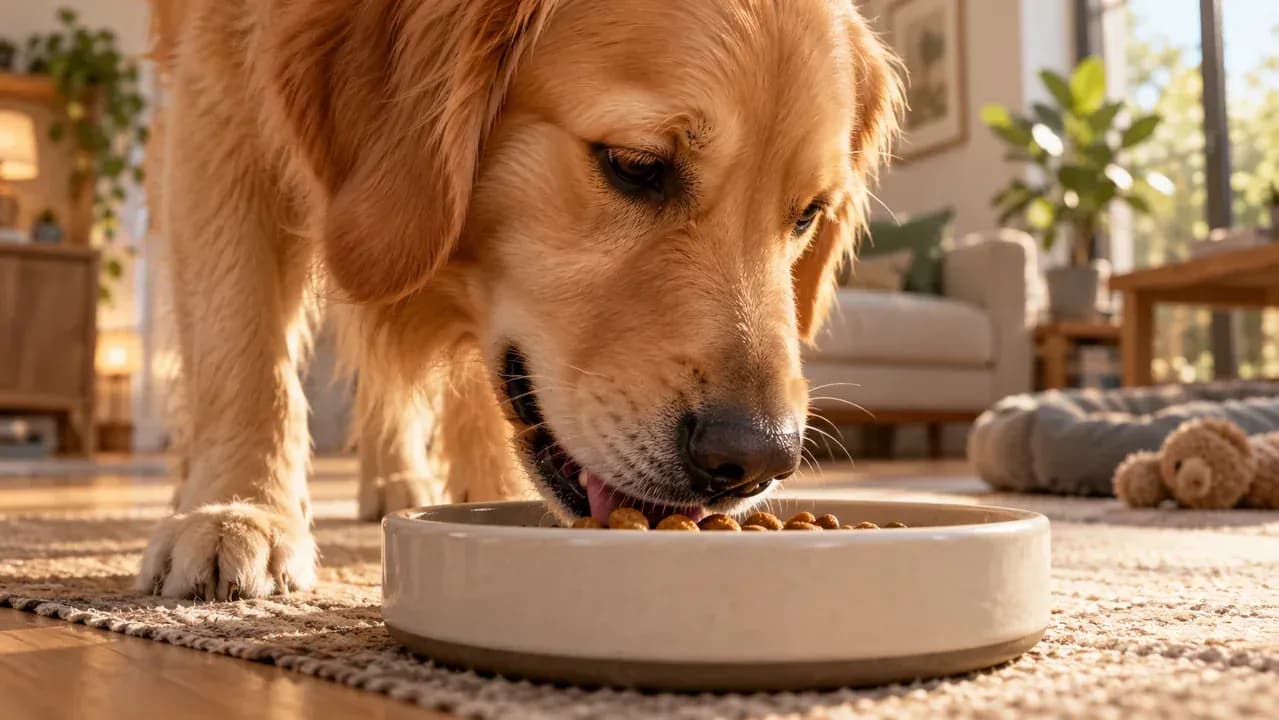
Dogs do not process every mouthful the way people do, and some naturally swallow pieces of kibble with relatively little chewing. Your objective should not be forcing the dog to grind every bite for a certain length of time. Instead, change how much food can be accessed at once and how quickly the next mouthful becomes available. Smaller, more frequent amounts can stretch the entire meal even when individual pieces are swallowed quickly. Judge the method by overall pace, comfortable access and calm behavior rather than by counting chews.
Pay Attention to Sudden Extreme Hunger
A dog that has always loved food is different from a dog whose appetite suddenly changes dramatically. Pay attention if your dog unexpectedly becomes ravenously hungry, particularly when the change appears alongside weight loss, increased thirst, diarrhea, vomiting or other unusual behavior. Medical conditions and some medications can affect appetite, so a new pattern should not simply be written off as enthusiasm for dinner. A slow feeder may reduce the speed of eating, but it cannot explain why a dog has suddenly developed unusually intense hunger.

Recognize Signs That Require Urgent Veterinary Care
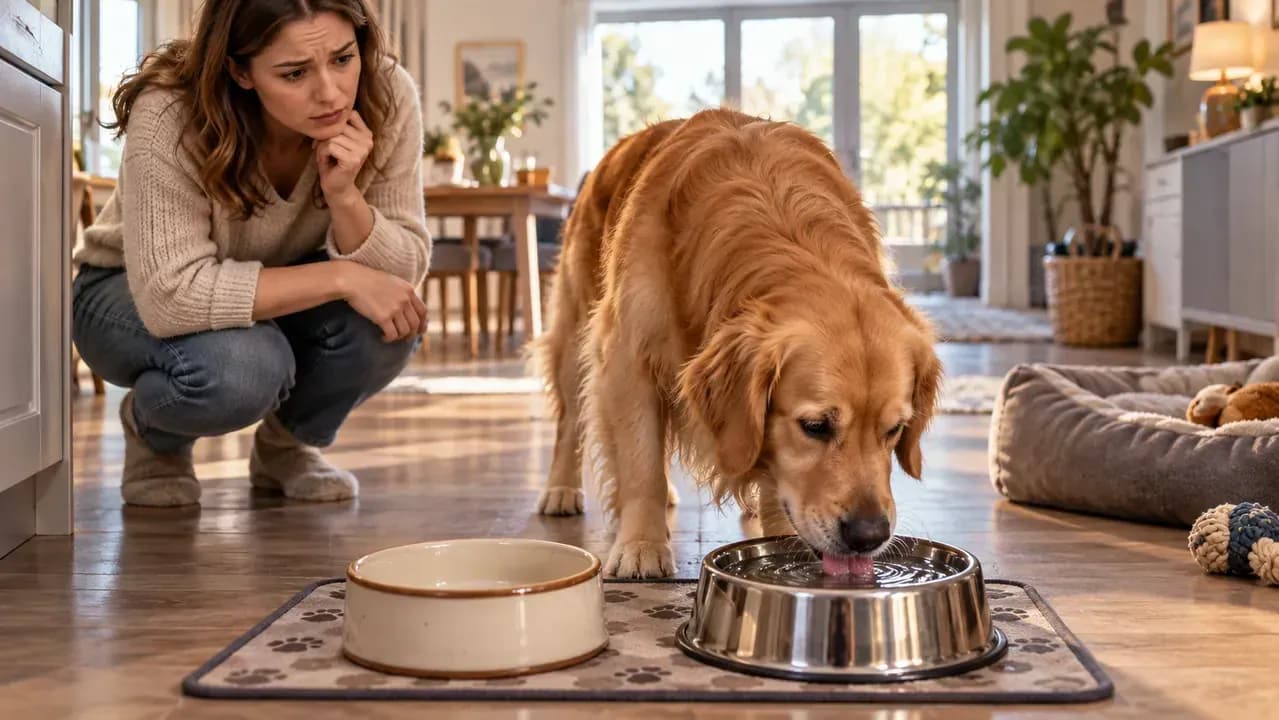
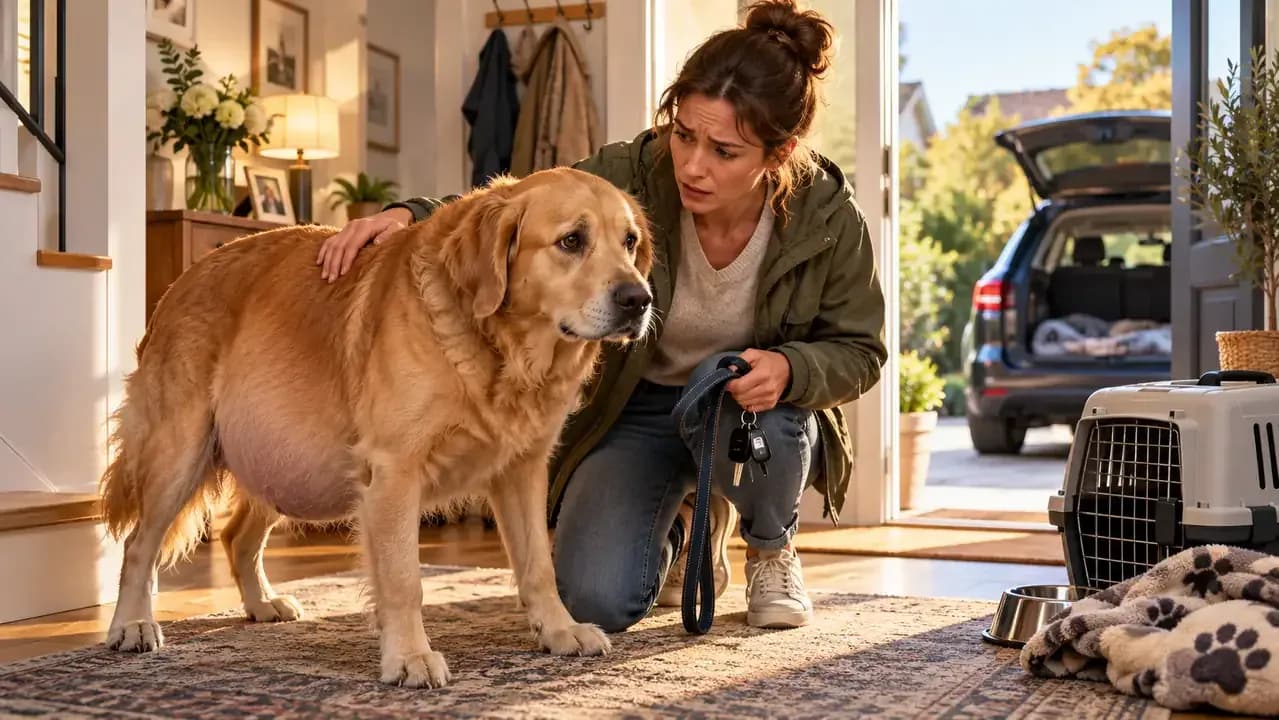
Do not treat serious distress as a slow-feeding problem. Seek urgent veterinary care if your dog develops a swollen or tight abdomen, repeated unproductive retching, severe restlessness, weakness, collapse or obvious distress. These signs can occur with gastric dilatation-volvulus, which is an emergency. Do not wait for symptoms to improve after offering water, switching bowls or trying another home feeding method. Slow feeders are tools for changing meal pace. They are not emergency treatment and should never delay veterinary attention when a dog is acutely unwell.
Build a Routine You Can Repeat Every Day
A slower feeding system is most useful when it is practical enough to repeat consistently. Measure the ration, choose one or two safe delivery methods, prepare a calm feeding area and supervise any equipment that requires supervision. Wash bowls, inserts, puzzles and mats appropriately after use. Predictable routines can help your dog learn that food arrives reliably and there is no benefit to rushing through every meal. You do not need an elaborate setup. A simple system that your household can use correctly every day is more valuable than a complicated routine that is quickly abandoned.
Turn Everyday Meals Into Enrichment
A dog that once inhaled dinner in seconds can often spend several calmer minutes working through the same measured ration when food is distributed differently. Begin with the easiest appropriate method, observe the result and adjust according to your dog's behavior. Slow feeders, puzzles, training, snuffle mats, portion splitting and scatter feeding are different tools serving the same purpose: reducing immediate access to the entire meal while making feeding more engaging. The best result is not the longest possible dinner. It is a repeatable meal that is slower, comfortable, safe and calmer than the thirty-second bowl you started with.
Some dogs treat dinner like a race. The bowl hits the floor, kibble disappears almost immediately, and within seconds the dog is searching for anything that might have been missed. If that sounds familiar, the solution is not necessarily to make eating difficult or to force your dog to chew every bite. The practical goal is to control access to the same measured amount of food so the meal becomes slower, calmer and easier to supervise.
There is no single feeding method that works for every dog. One dog may respond perfectly to a simple slow feeder, while another does better when part of dinner is used for training and the rest is scattered across a clean floor. Muzzle shape, chewing habits, household competition and the feeding environment all affect which approach is most comfortable.
Start by observing one normal meal so you know what you are trying to improve. Then introduce the easiest appropriate change and watch how your dog responds. A useful solution should slow access to food without creating obvious frustration, unsafe chewing or competition. Keep the total daily ration consistent unless your veterinarian has advised otherwise, and remember that food used in puzzles, training or scatter feeding still counts toward that ration.
The following routine moves from simple observation and bowl changes to puzzles, environmental adjustments and signs that should not be treated as a feeding-equipment problem. You do not need to use all 30 methods at every meal. Think of them as a structured way to find a safe, repeatable feeding routine that fits your dog.
Where people go wrong
Adding Extra Food for Enrichment. Food placed in puzzles, training exercises, snuffle mats and scatter-feeding sessions should normally come from the dog's measured ration rather than being added on top of the regular meal.
Choosing a Feeder That Does Not Fit the Dog. Channels that are too narrow or deep can make access uncomfortable. Match the feeder to the dog's muzzle instead of assuming every slow bowl works for every breed.
Making the Challenge Too Difficult. A puzzle that causes barking, aggressive pawing, biting or abandonment is not automatically better because it makes feeding take longer. Simplify the challenge.
Using Unsafe Household Objects. Do not place random objects in a food bowl if they could be swallowed, splintered or chewed into dangerous pieces. Purpose-built feeding inserts are the safer choice.
Ignoring Competition Between Dogs. Two dogs watching or approaching each other's bowls may eat rapidly because of social pressure. Separating feeding spaces can be more effective than changing equipment.
Leaving Feeding Equipment Unsupervised. Puzzles, fabric mats and other feeders can become chew targets. Stop using equipment if your dog damages edges, tears fabric or loosens pieces.
Trying to Force Every Bite to Be Chewed. The goal is to reduce the size and frequency of mouthfuls and slow the overall meal, not to make a dog chew food exactly the way a person would.
Treating a Sudden Appetite Change as a Training Issue. A slow feeder can control access to food, but it does not explain sudden ravenous hunger or unusual signs such as weight loss, increased thirst, vomiting or diarrhea.
Questions people ask
Start by timing a normal meal and measuring the regular ration. Then try a simple slow feeder, smaller divided servings, a muffin tin, an easy food puzzle, a snuffle mat, scatter feeding or using part of the meal for training. Choose methods that produce calm, steady access rather than frustration.
Fixed it?
Get one guide like this every Thursday.