How to Set Up a Safe, Comfortable Space for Your Dog
Create a calm, comfortable resting space your dog can choose whenever they need sleep, quiet time, or a break from household activity. This practical guide covers location, bedding, water, dog-proofing, household rules, puppies, senior dogs, multi-dog homes, cleaning, and ongoing adjustments.
What you’ll need
Tap to tick things off before you start.
Understand What the Safe Space Is For
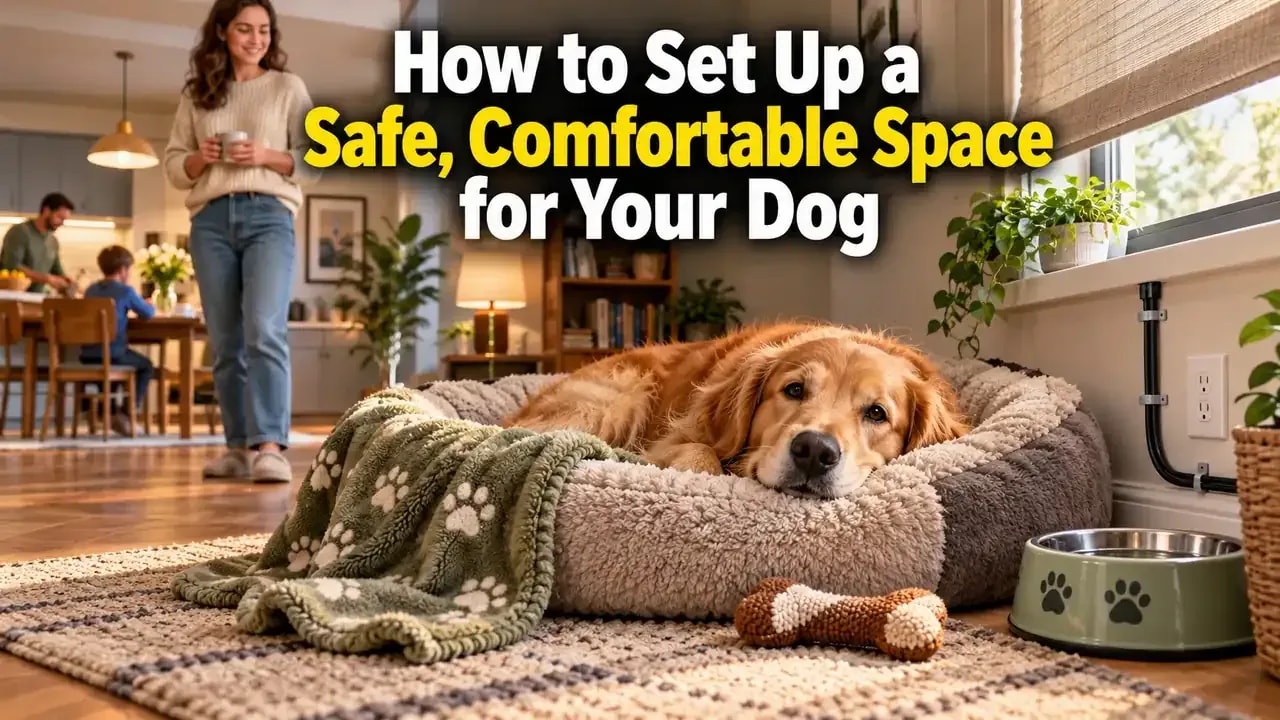
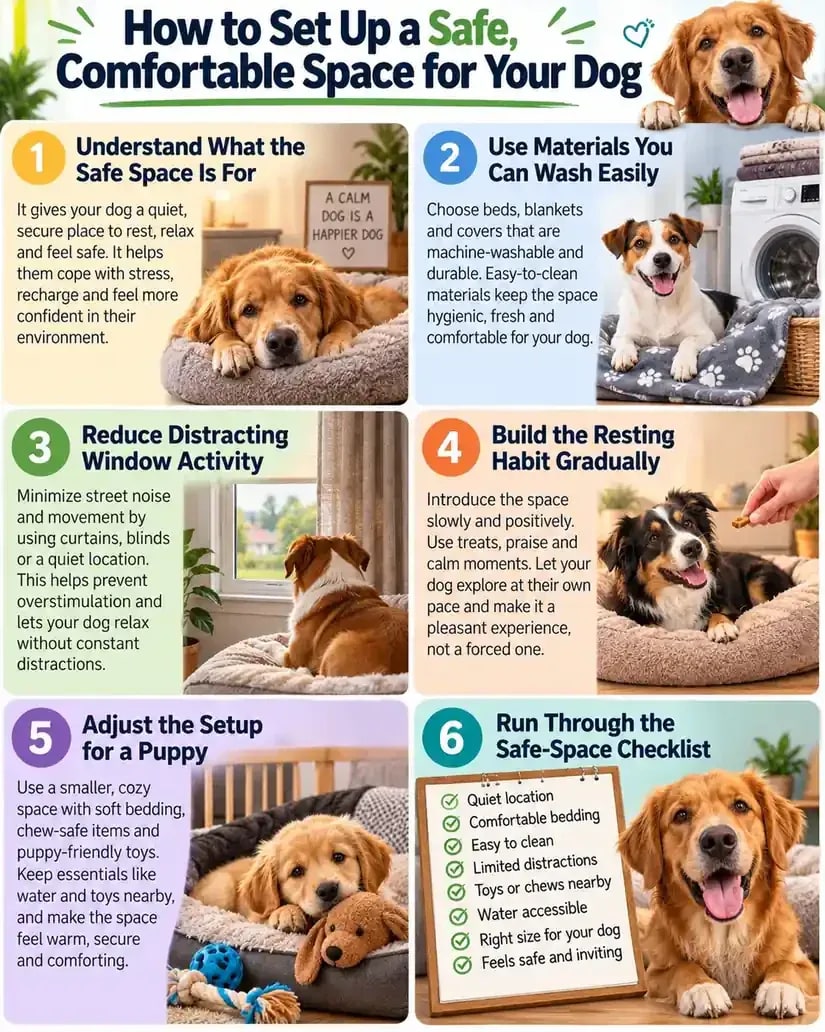
Give your dog a predictable place where resting is allowed to happen without constant interruption. This area should not function as punishment or angry isolation. Think of it as a home base where your dog can sleep, quietly chew, relax after activity, or move away from household noise while still remaining part of the home. The value comes from consistency. When the dog repeatedly experiences the same location as calm, comfortable, and undisturbed, the area becomes easier to use voluntarily. That can make ordinary daily rest more predictable for both the dog and the household.
Choose a Naturally Quiet Location
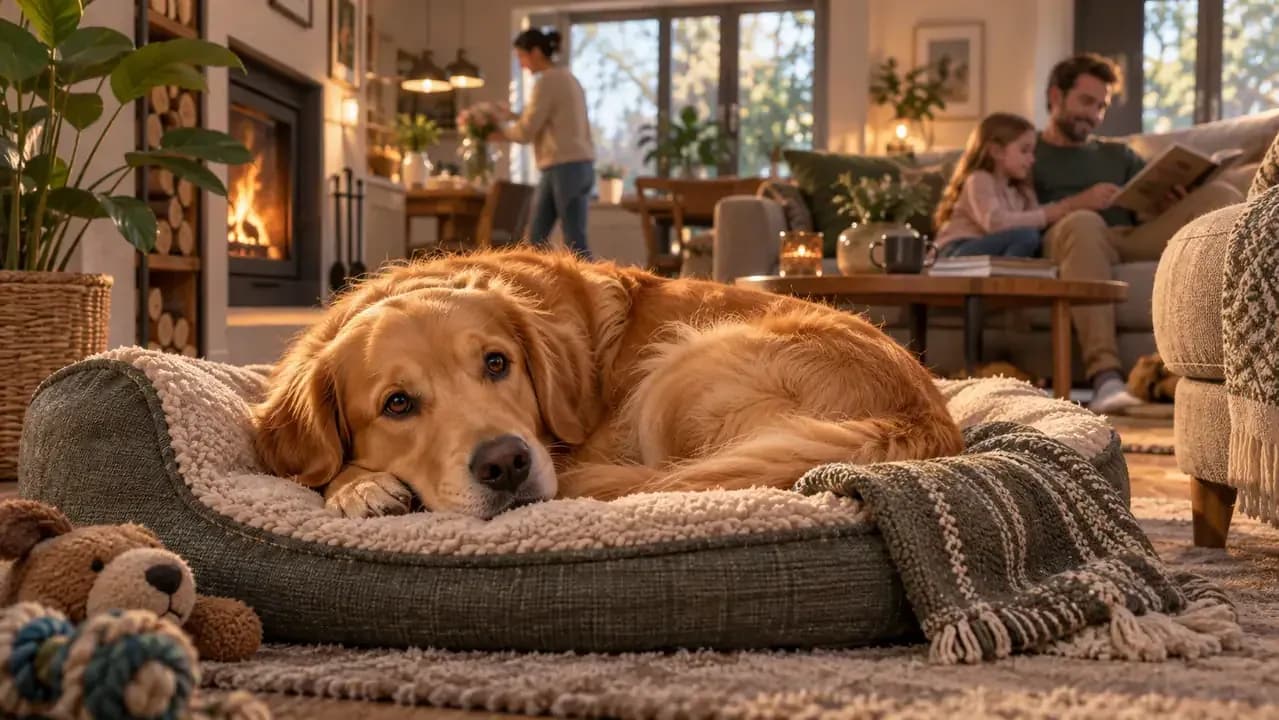
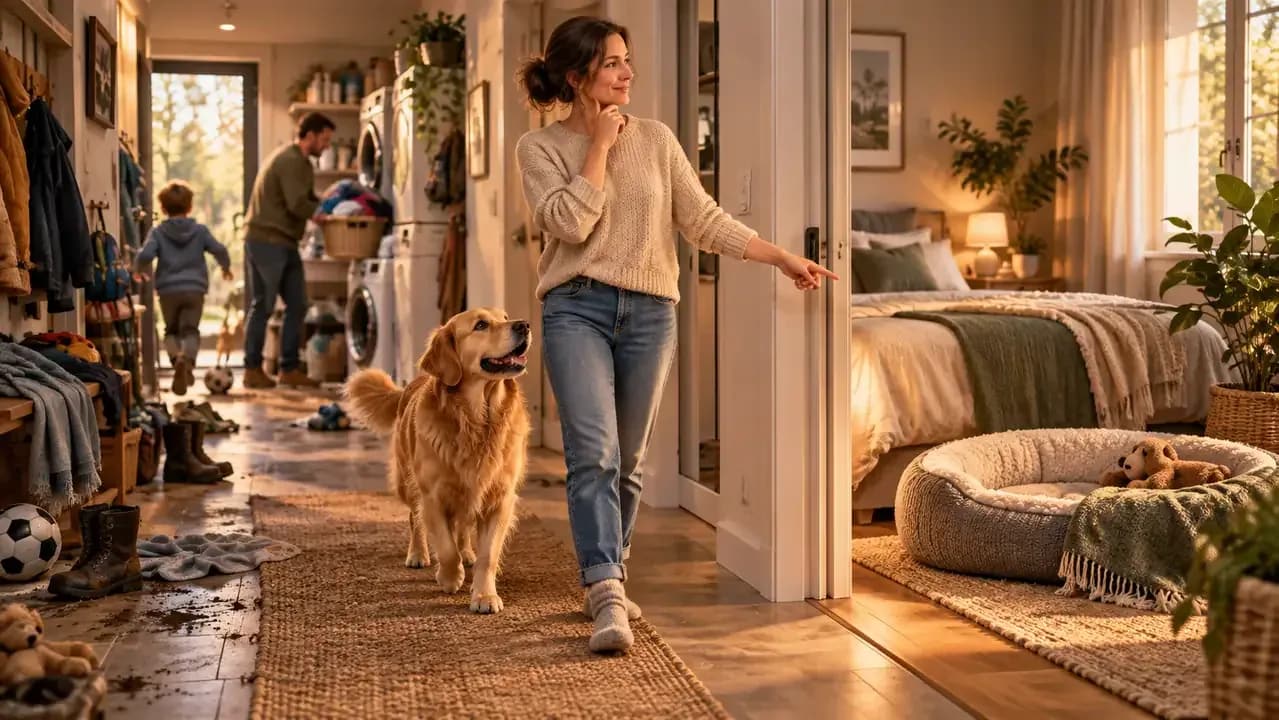
Walk through your home and compare possible locations from your dog's perspective. A spare room, bedroom corner, home office, or protected alcove can work well when people are not constantly passing through it. Avoid spots beside slamming doors, televisions played at high volume, washing machines, or busy hallways where someone must repeatedly step around the dog. You do not need complete isolation. You are looking for a place where activity is lower and more predictable. Even moving a resting area several feet away from a traffic path can make settling easier.
Check Heat, Sunlight, and Drafts
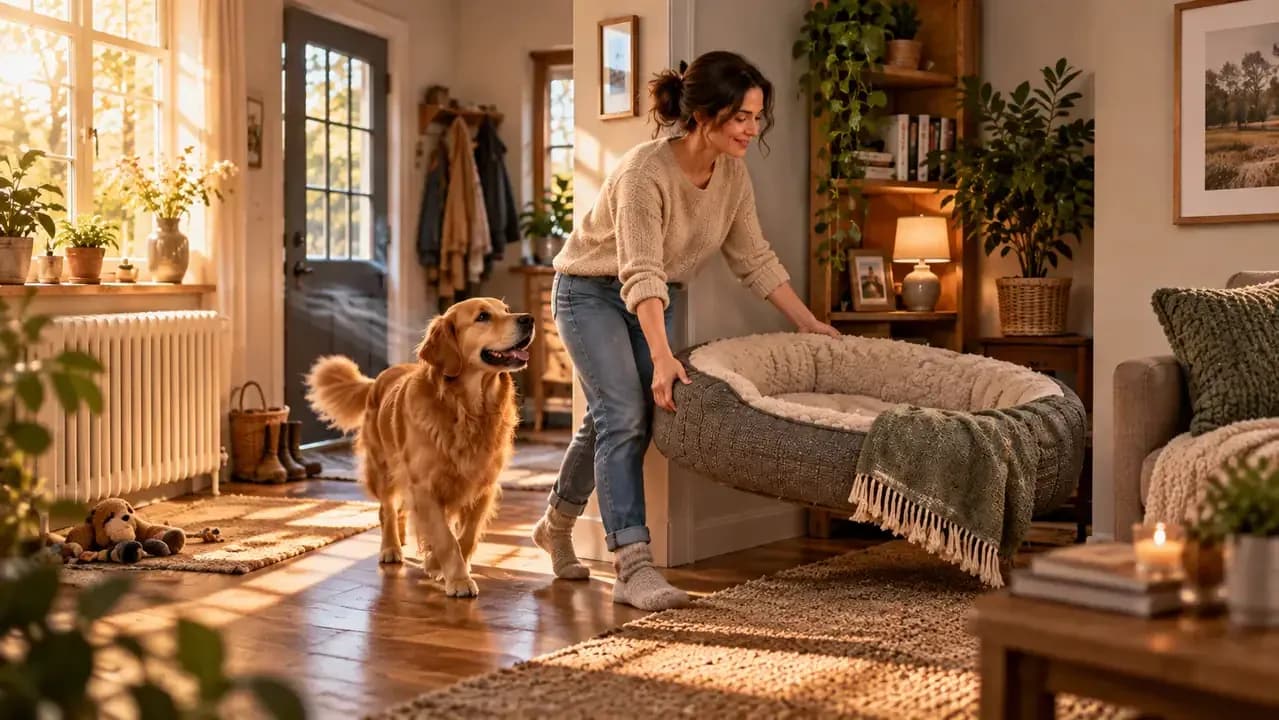
Evaluate the temperature before placing the bed. A quiet-looking corner may still be uncomfortable if it sits beside a heating vent, radiator, drafty exterior door, or window that receives strong direct sun. Try spending a little time in the location yourself and notice whether the temperature changes noticeably during the day. The goal is a stable environment where your dog does not need to keep relocating to escape heat or cold. A comfortable resting spot should remain usable for more than a few minutes at a time, especially during longer naps.
Make Entering and Leaving Easy
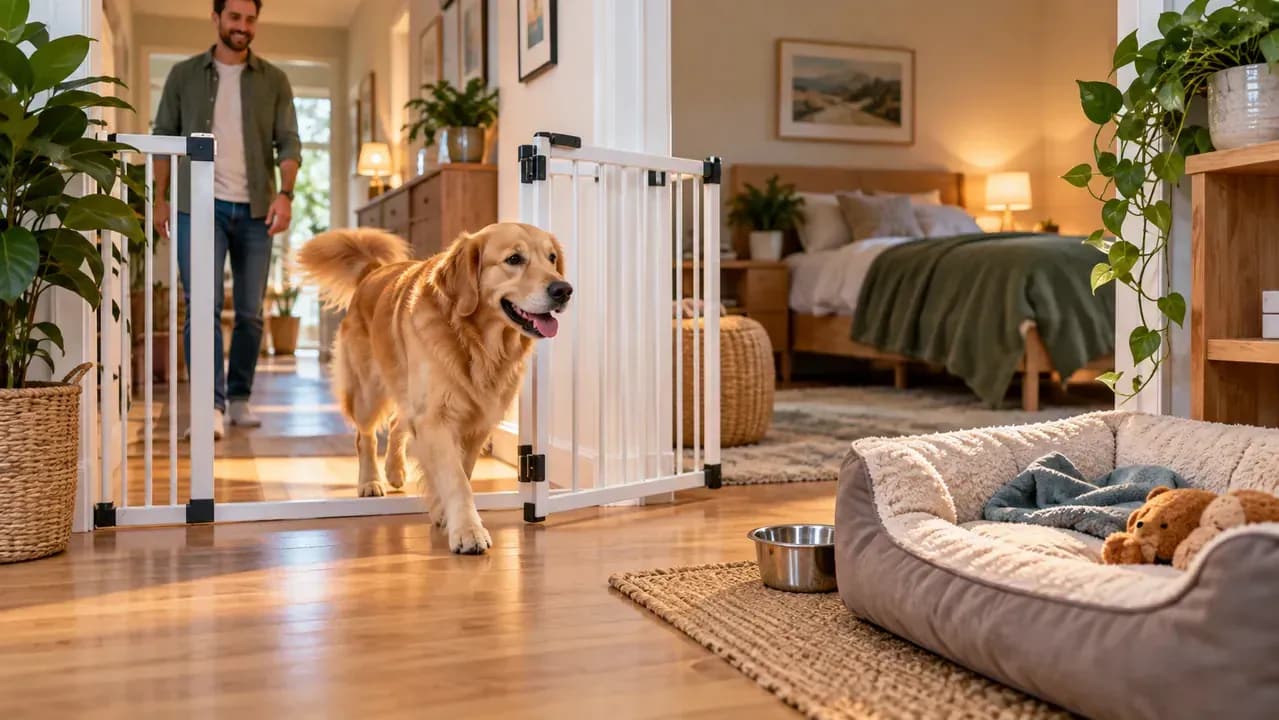
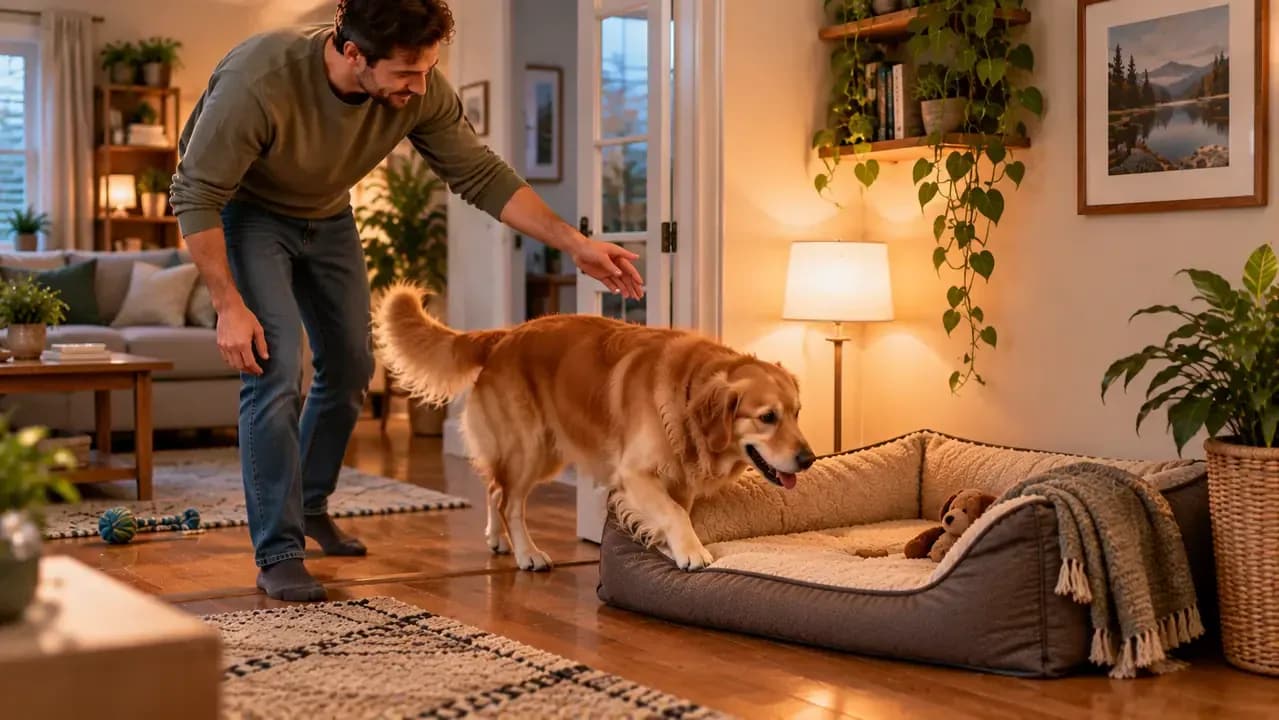
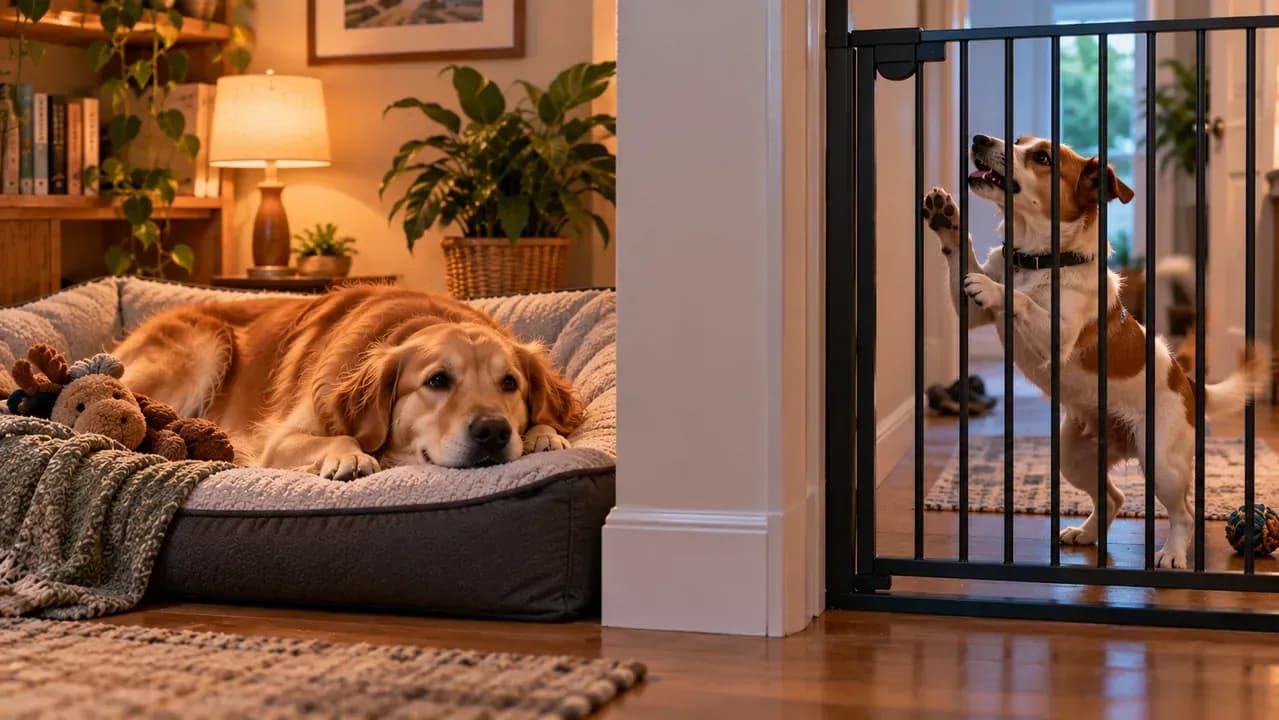
Whenever safety allows, give your dog the option to enter and leave the resting area freely. Voluntary use helps distinguish a safe space from simple confinement. If you plan to use a baby gate or door at certain times, first make sure the dog already recognizes the area as familiar and comfortable. Avoid suddenly putting the dog behind a barrier in an unfamiliar space and expecting immediate relaxation. The basic principle is choice first, confinement only when genuinely necessary. Easy access also helps your dog begin using the area independently instead of waiting to be placed there.
Pick Bedding for Your Dog, Not Your Decor
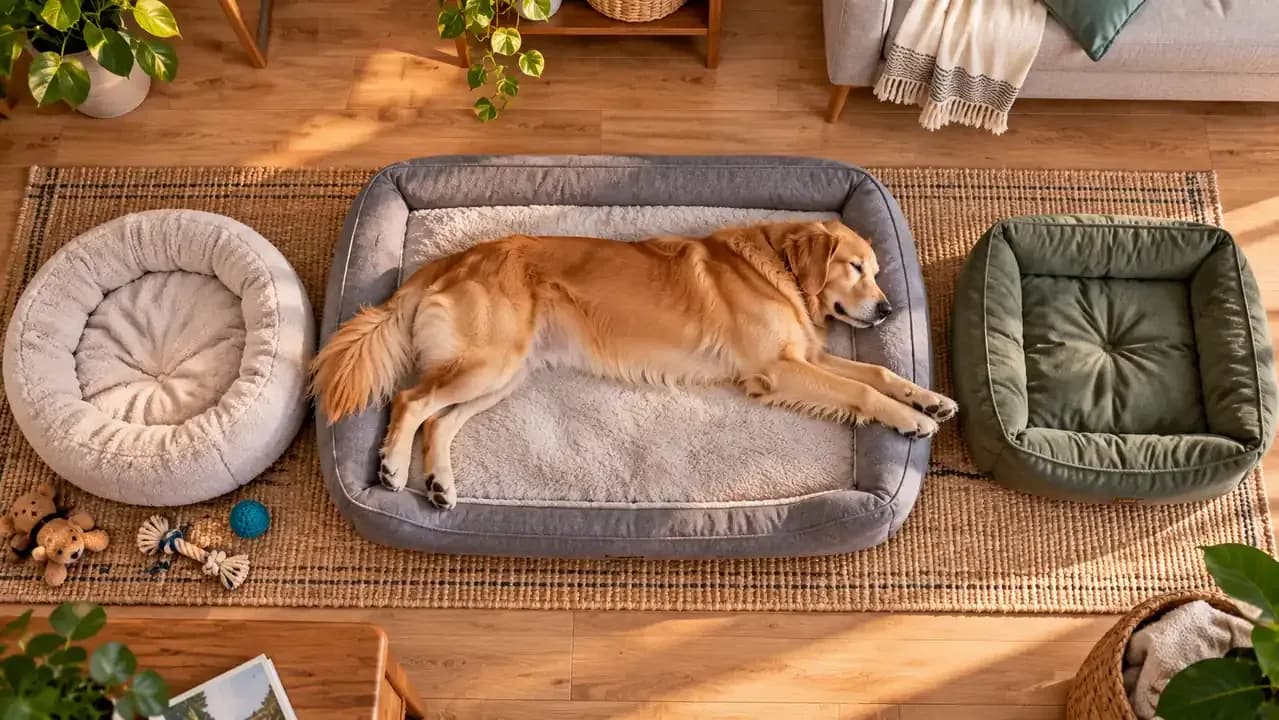
Choose the bed according to how your dog actually sleeps. Some dogs like thick bolsters they can lean against, while others stretch out on flat mats or prefer cooler surfaces. Make sure the bed is large enough for your dog to lie fully stretched without hanging off the edges. Larger dogs and older dogs may appreciate more supportive padding, but there is no single bed design that suits every dog. Watch where your dog already chooses to sleep and which surfaces they prefer. Their normal sleeping habits are more useful than choosing a bed simply because it matches the room.
Use Materials You Can Wash Easily
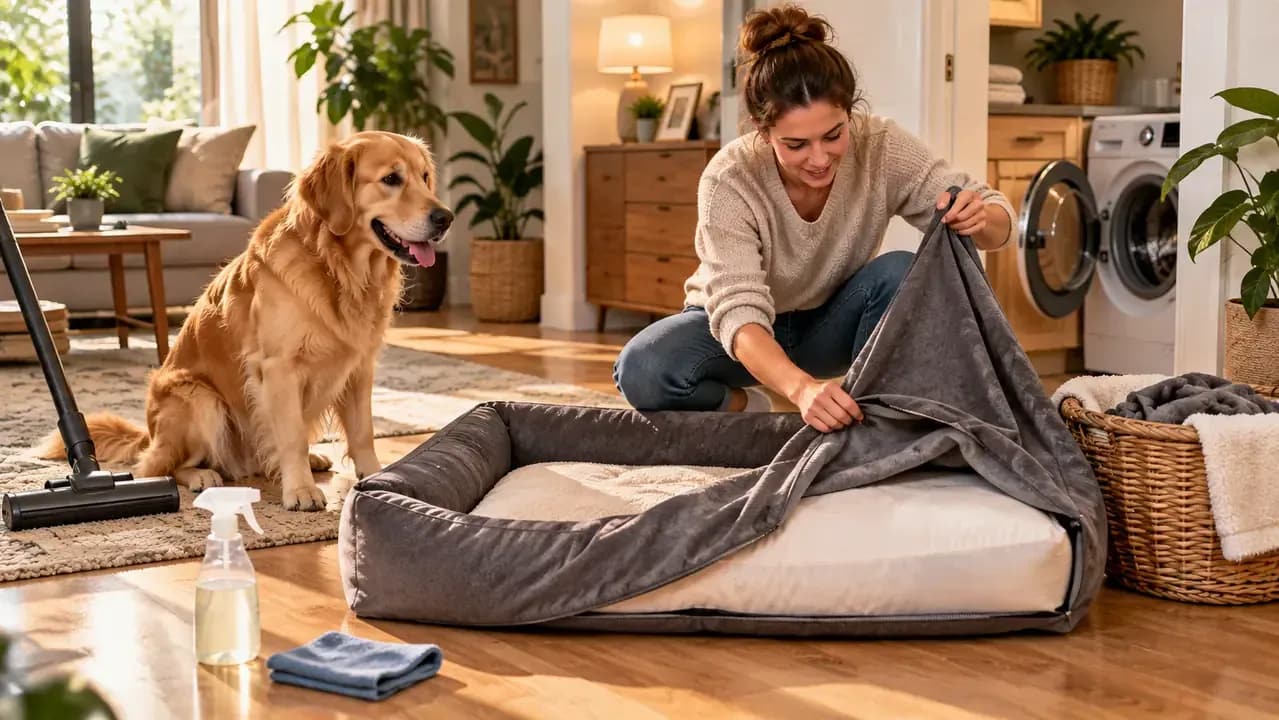
Select bedding that can handle normal household life. Removable bed covers, machine-washable blankets, and wipeable nearby surfaces make muddy paws, shedding, and occasional accidents much easier to manage. Avoid relying on strong fabric sprays or heavy fragrances to make the space smell clean. A freshly washed bed that still feels familiar is generally more useful than one saturated with perfume. Practical materials also make regular maintenance less disruptive because you can clean individual pieces instead of replacing or rearranging the entire setup every time the area needs attention.
Add One Familiar-Smelling Item
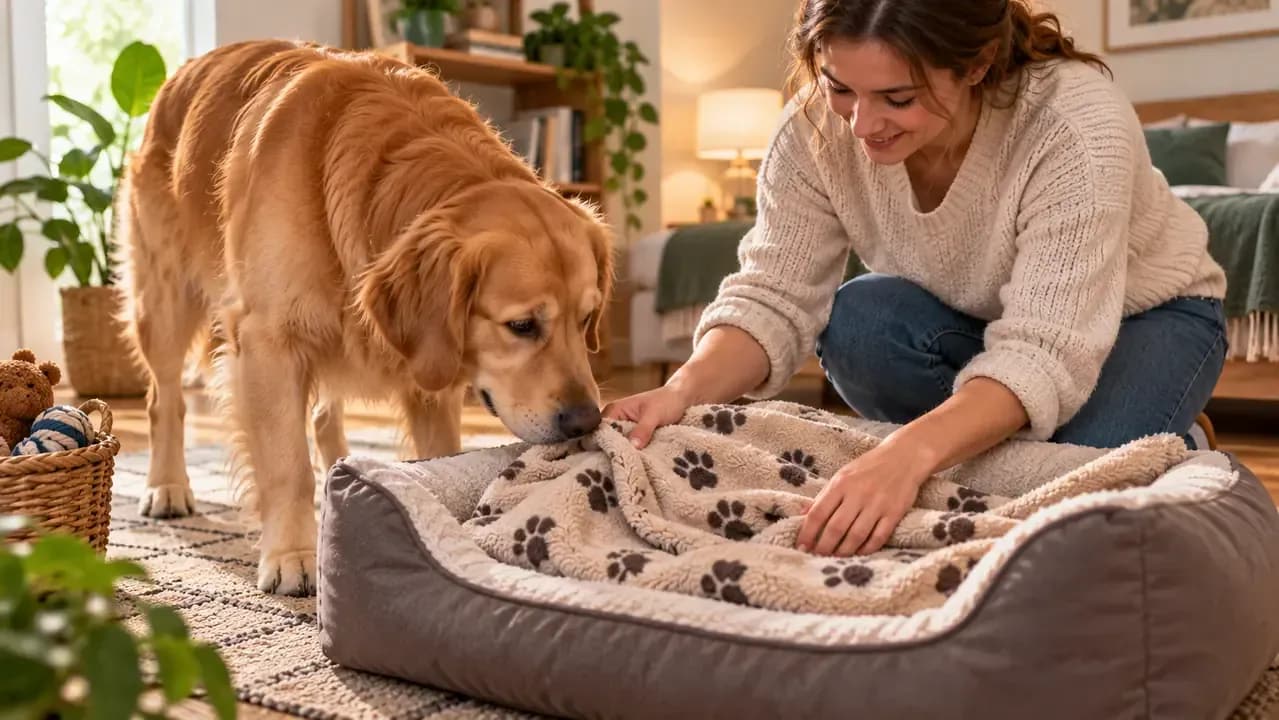
Place a familiar blanket or another suitable item carrying normal household scent in the new space. A familiar smell can make an unfamiliar corner feel less new without requiring you to fill it with possessions. Keep the setup simple. A bed, one blanket, water when appropriate, and a small number of carefully chosen items are usually enough. Crowding the area with toys, pillows, baskets, and decorations can reduce usable resting space. Start with the essentials, then observe what your dog actually uses before adding more.
Provide Fresh Water When Appropriate
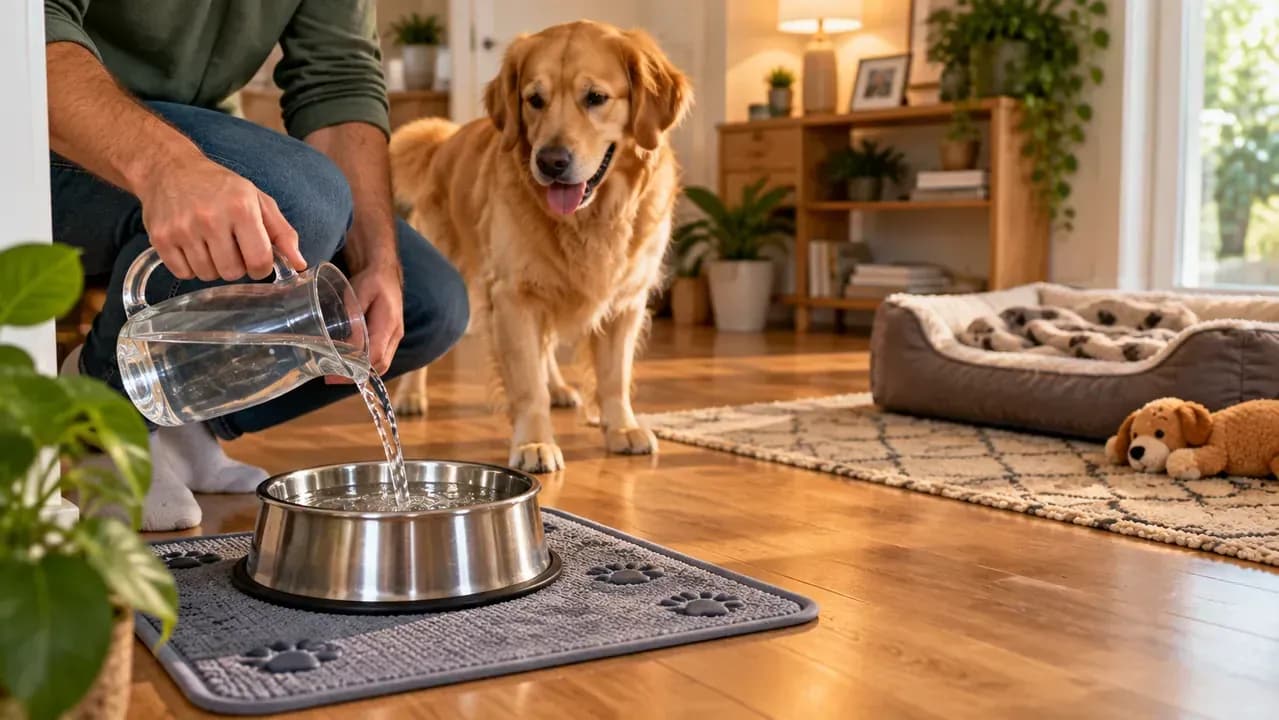
If your dog will spend meaningful periods in the safe space, provide easy access to fresh water. Choose a stable bowl that is difficult to overturn and position it far enough from the bedding that spills do not leave the sleeping surface damp. A washable mat under the bowl can make cleanup easier. Refill the water regularly and wash the bowl as part of your normal routine. The dog should not need to choose between resting comfortably and leaving the area simply to reach basic hydration, particularly during warmer conditions or longer rest periods.
Choose Chews With Safety in Mind
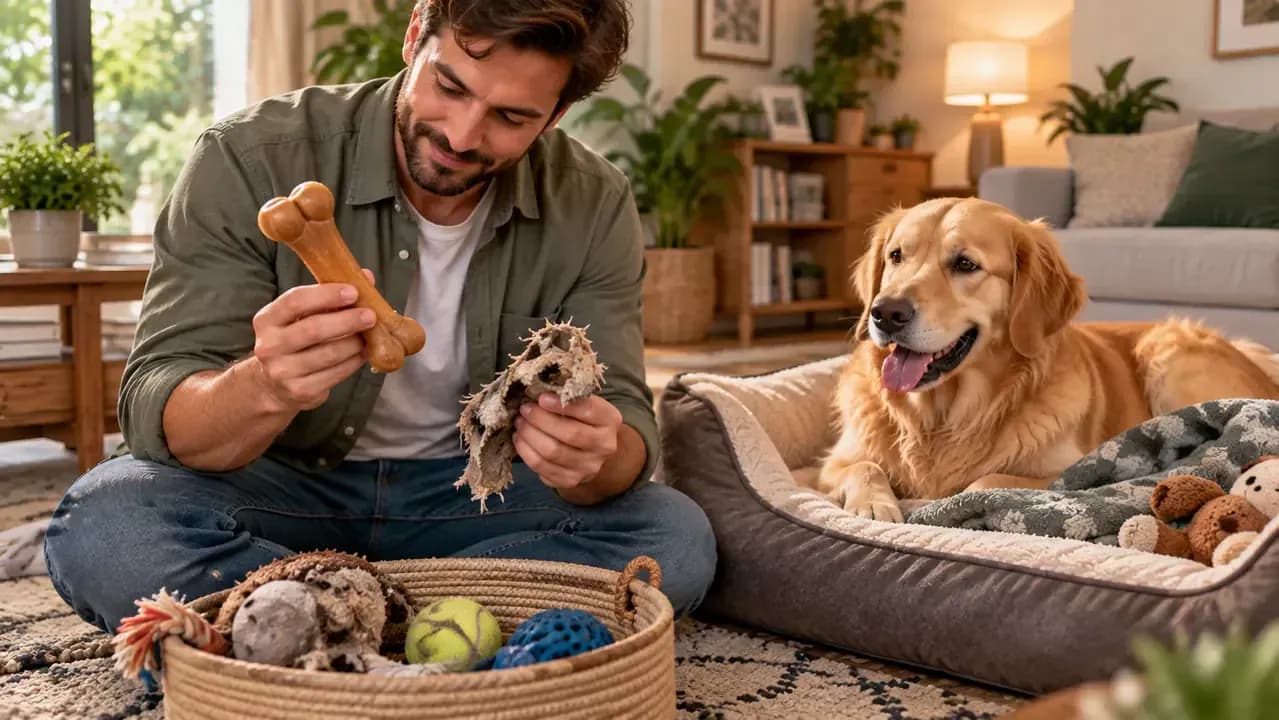
If chewing helps your dog relax, choose any chew according to the dog's size, chewing style, and the amount of supervision available. Inspect items before use and remove anything that becomes damaged, breaks apart easily, splinters, or forms pieces that could be swallowed. A chew that is appropriate while you are sitting nearby may not necessarily be appropriate for unsupervised use. When you are uncertain, reserve it for times when you can monitor the dog. The objective is calm enrichment without introducing an avoidable hazard into an otherwise carefully dog-proofed area.
Keep the Toy Selection Calm
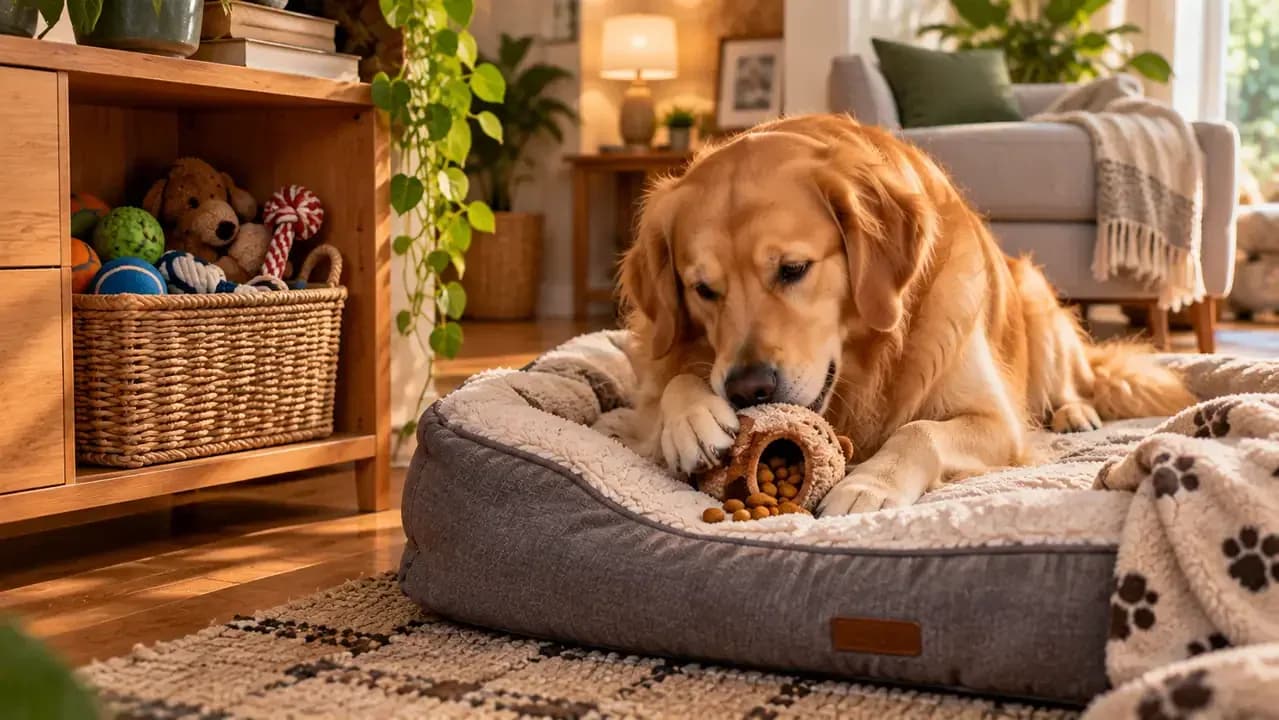
Use toys that support the purpose of the area rather than turning it into a play station. A durable food toy, familiar comfort toy, or appropriate chew can work well if it encourages quiet activity. Balls, tug toys, squeaky chase toys, or anything else that reliably sends your dog into high-energy play may be better stored elsewhere. This does not mean exciting toys are bad. They simply serve a different purpose. Separating active play equipment from the resting area can help make the meaning of the space more predictable.
Dog-Proof the Entire Area
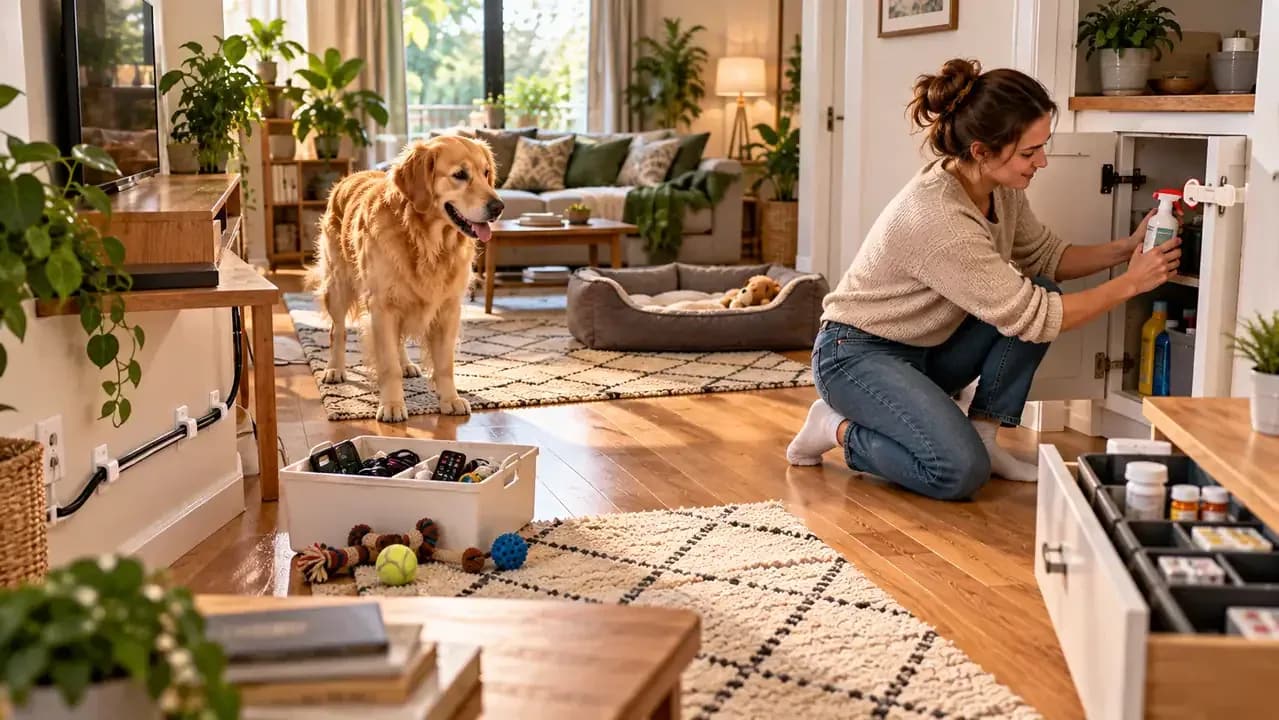
Inspect more than the floor immediately surrounding the bed. Secure electrical cords and chargers, store medications and cleaning products out of reach, remove small swallowable objects, secure trash, and evaluate any reachable houseplants or items on nearby tables and shelves. Consider what your dog might access when nobody is watching. A curious dog can pull objects from surprisingly high or distant locations, particularly if a hanging cord, bag, or fabric edge creates an easy starting point. Preventing access is generally simpler than relying on the dog to ignore an available hazard.
Reduce Distracting Window Activity
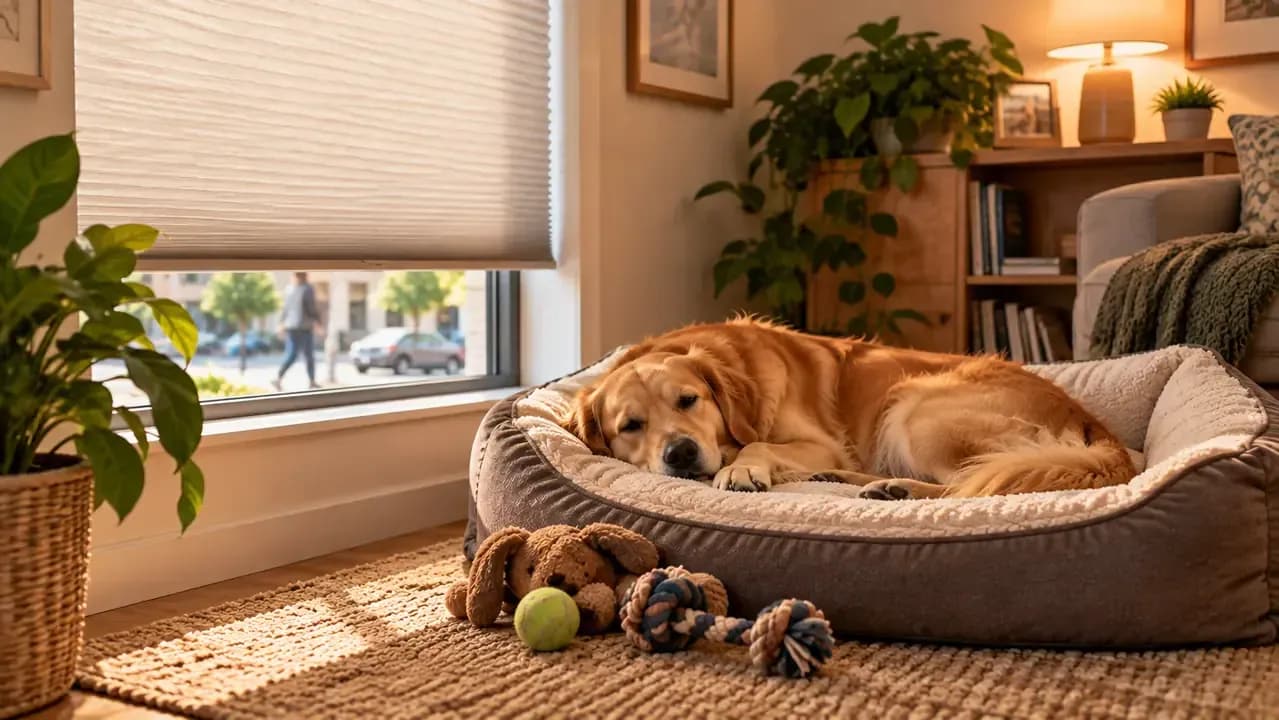
Notice what happens when your dog can see outside from the resting area. Some dogs quietly watch passing activity and then go back to sleep. Others remain alert to pedestrians, delivery vehicles, neighboring dogs, or every movement near the window. If the view repeatedly keeps your dog engaged, lower a blind, use a curtain or privacy film, or rotate the bed so the window is less prominent. You are not trying to eliminate every visual stimulus. You are making it easier for the dog to disengage from outside activity when they want to rest.
Manage Sudden and Unpredictable Noise
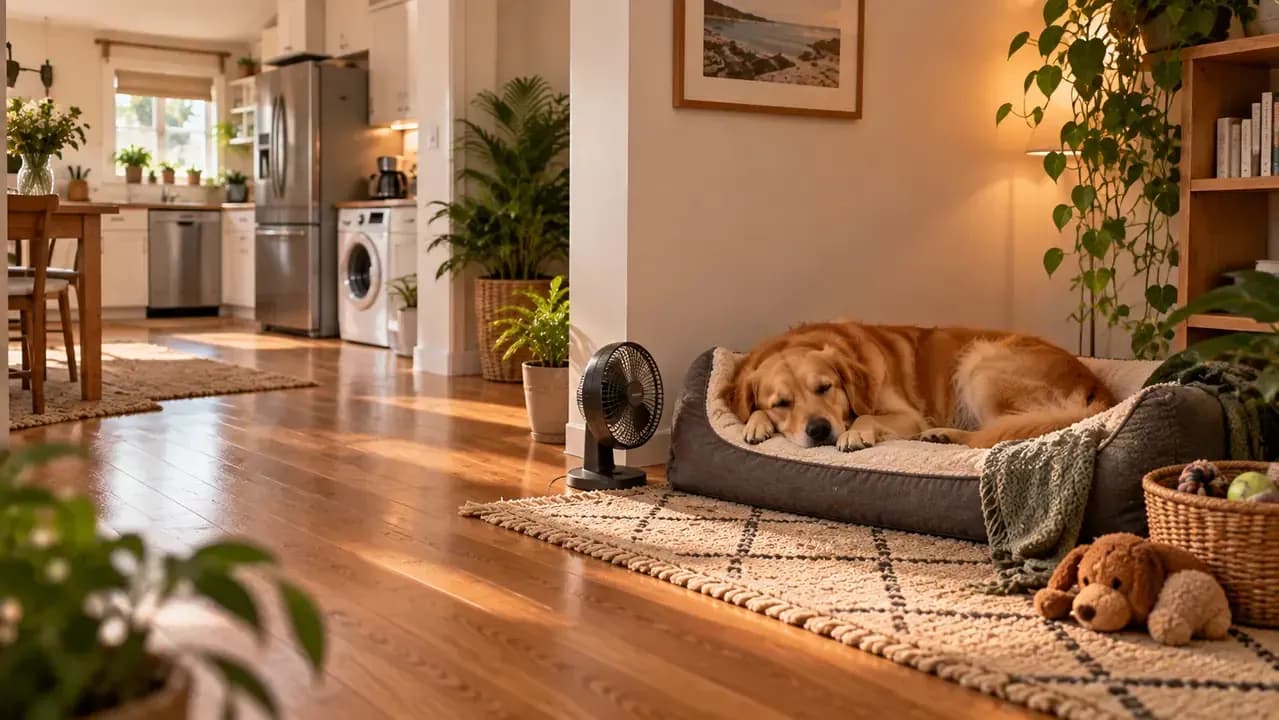
Listen to the area at different times of day. Vacuuming, construction, laundry equipment, children playing nearby, doors closing, or sudden household sounds can prevent a quiet-looking location from functioning as a true resting zone. Perfect silence is not required. In many homes, normal background sound is unavoidable and perfectly workable when it is reasonably predictable. Some dogs may settle comfortably with a fan or low steady background sound. Focus on reducing abrupt, repeated disturbances instead of trying to make the house completely silent whenever the dog rests.
Keep Lighting Soft and Practical
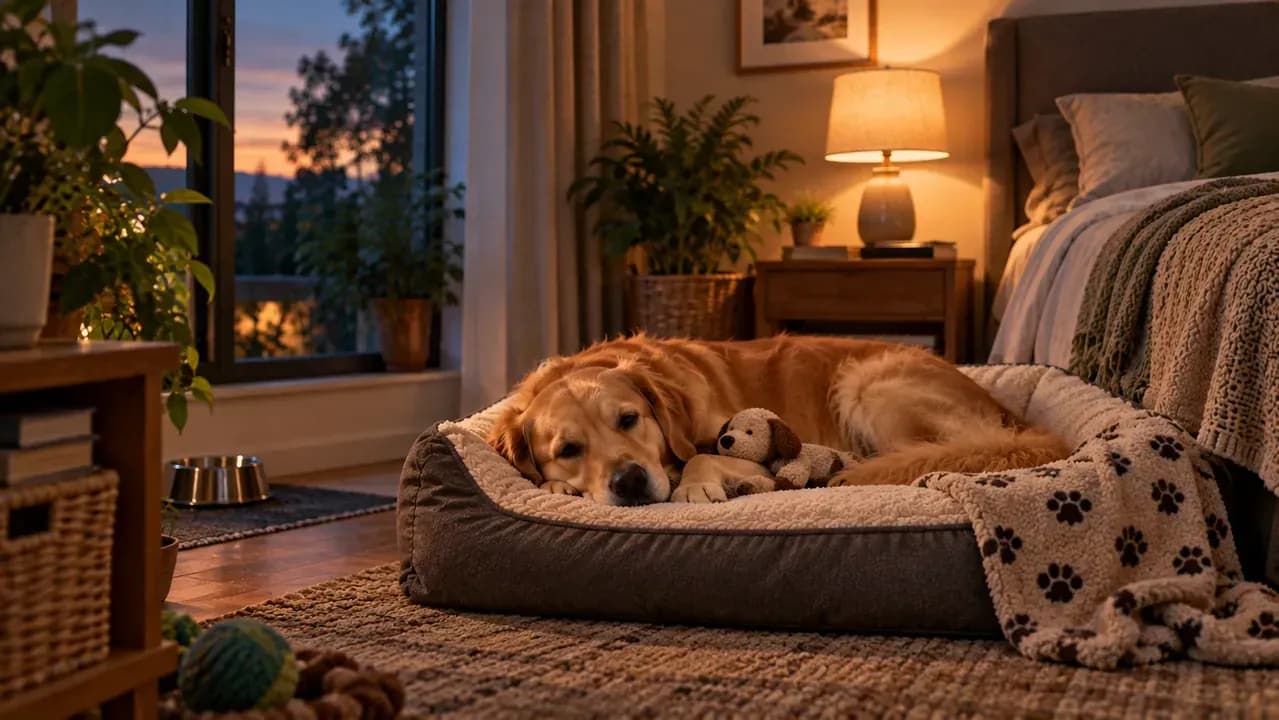
Avoid unnecessarily bright lighting directly over the resting area. Shaded natural daylight, an ordinary room lamp, or normal ambient light is generally enough. At night, the space does not need to remain brightly illuminated simply because the dog is there. Use a small light only when there is a practical reason for it. The overall goal is a setting that supports resting rather than activity. Consider how sunlight changes during the day as well, because a softly lit morning corner can become a hot, intensely bright location several hours later.
Include a Crate Only if Your Dog Already Likes It
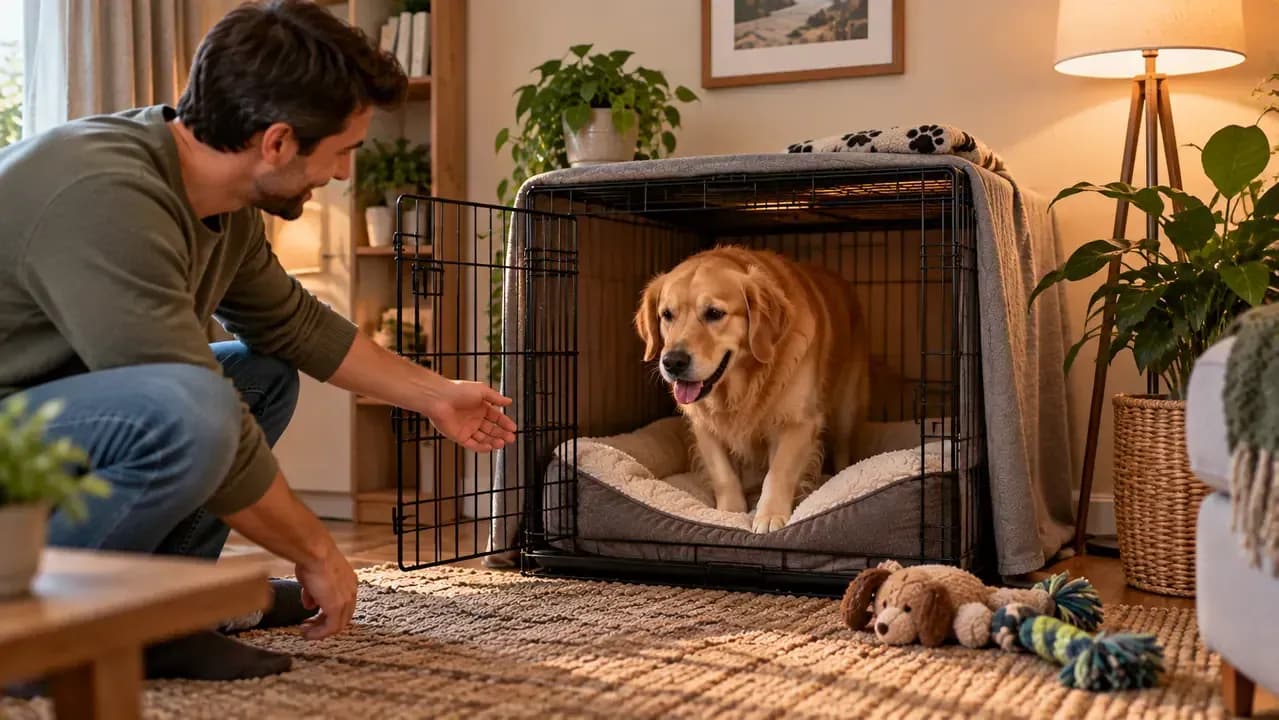
If your dog already chooses a crate comfortably and has a positive history with it, the crate can be incorporated into the larger resting area. Keep the door open when confinement is unnecessary, use appropriate comfortable bedding when safe for that individual dog, and place the crate away from direct heat, drafts, or intense sunlight. Avoid turning a previously comfortable crate into a place where the dog is sent during angry interactions. A crate can function as one resting option inside the safe space, but its usefulness depends on the dog's existing comfort with it.
Skip the Crate if It Does Not Help
Do not make a crate mandatory simply because other dog owners use one. If your dog does not relax comfortably in a crate, a quiet room, open corner, bed behind a gate, or other low-disturbance location can serve the same basic purpose. The essential features are comfort, predictability, manageable stimulation, and an environment where the dog can rest. Pay attention to what your dog chooses rather than treating one particular piece of equipment as a requirement. The best resting area is the one that achieves the intended function for your individual dog.
Introduce the Area During a Calm Moment
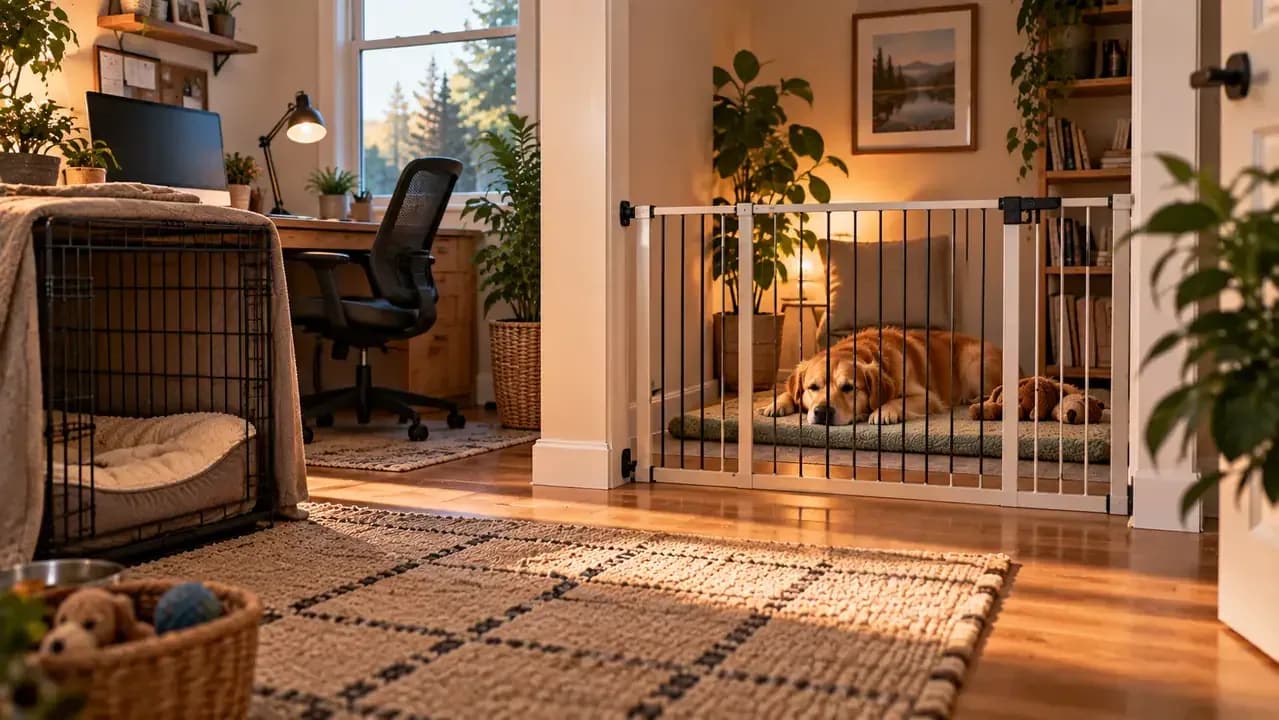
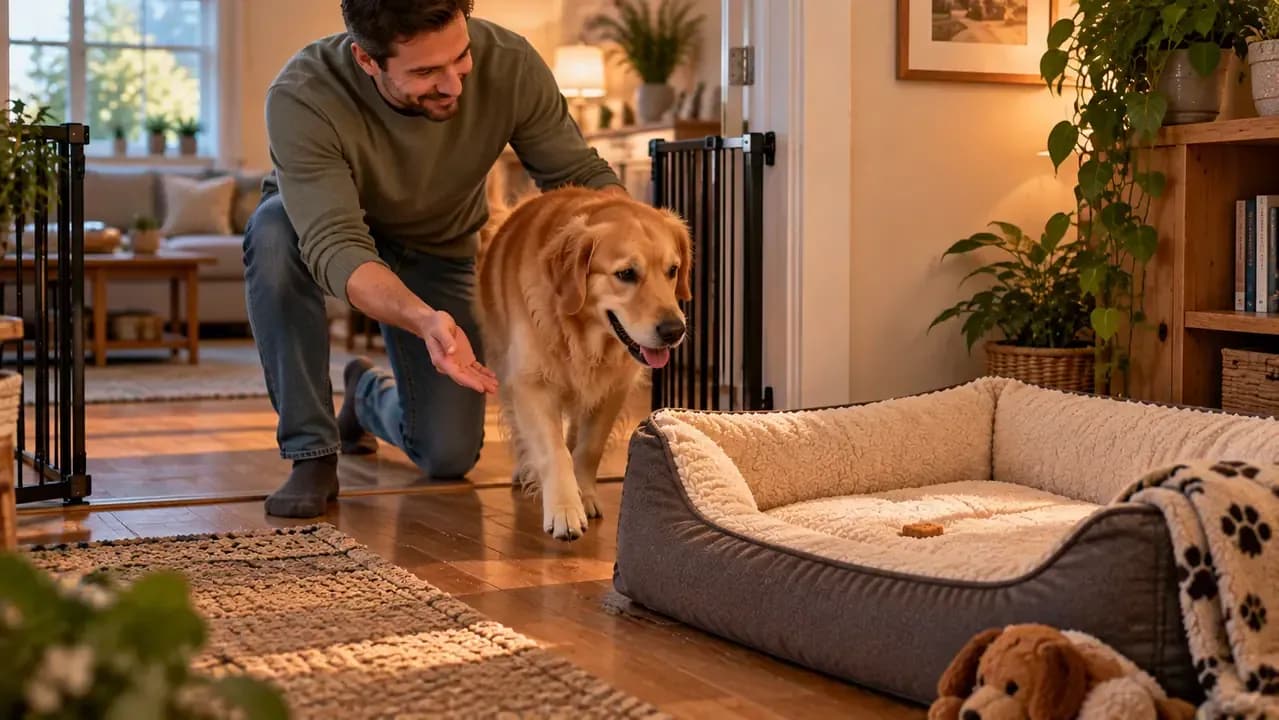
Choose a quiet part of the day for the first introduction. Bring your dog near the area, allow them to investigate at their own pace, and place a treat or familiar chew on or near the bed if appropriate. Avoid immediately closing a gate or insisting that the dog stay there for an extended period. The first experience should simply make entering and investigating feel ordinary and positive. Keep your own behavior relaxed as well. The less pressure you create around the new location, the easier it is for your dog to explore it voluntarily.
Build the Resting Habit Gradually
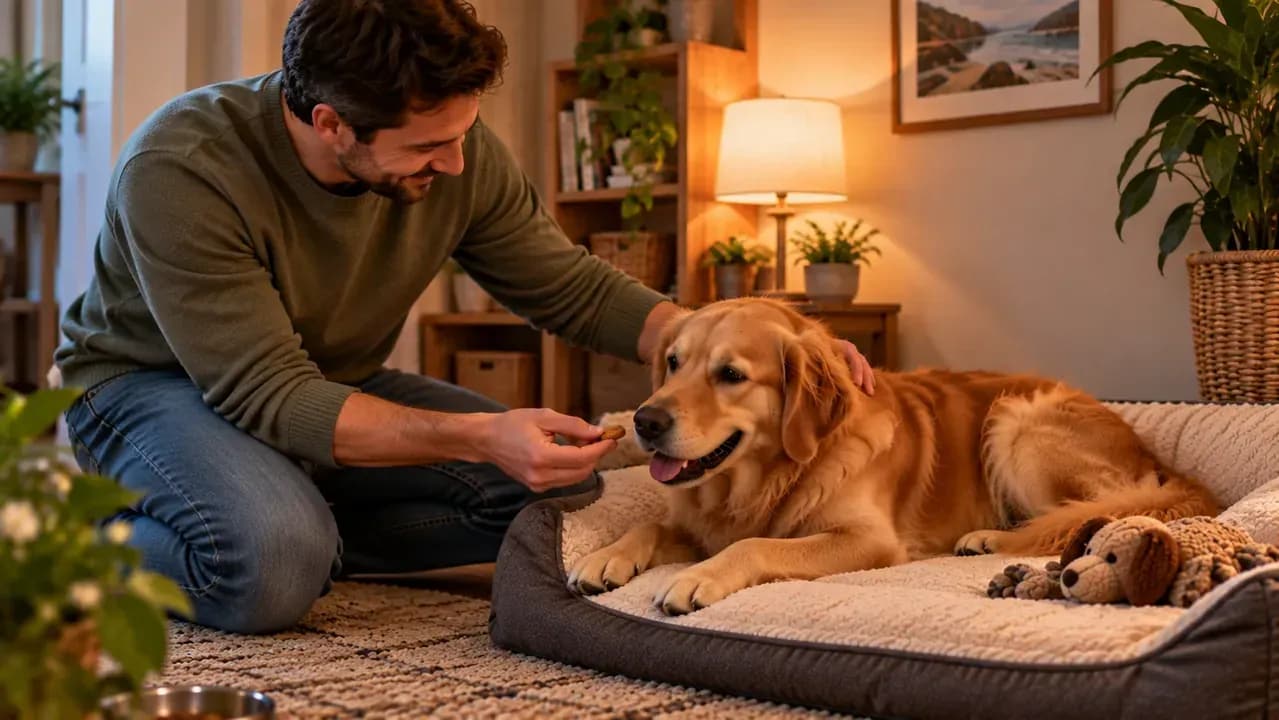
Expect the habit to develop through repetition rather than one long session. Short visits are enough at first. When your dog chooses to lie down, rest a hip, lower the head, or quietly chew, you can calmly reward that behavior and then continue with your normal routine. Avoid hovering over the dog or repeatedly calling attention to every moment of relaxation. The aim is for the space itself to become rewarding because comfortable, uneventful things happen there. With time, many dogs begin choosing the location without being directed.
Create a Household No-Disturb Rule
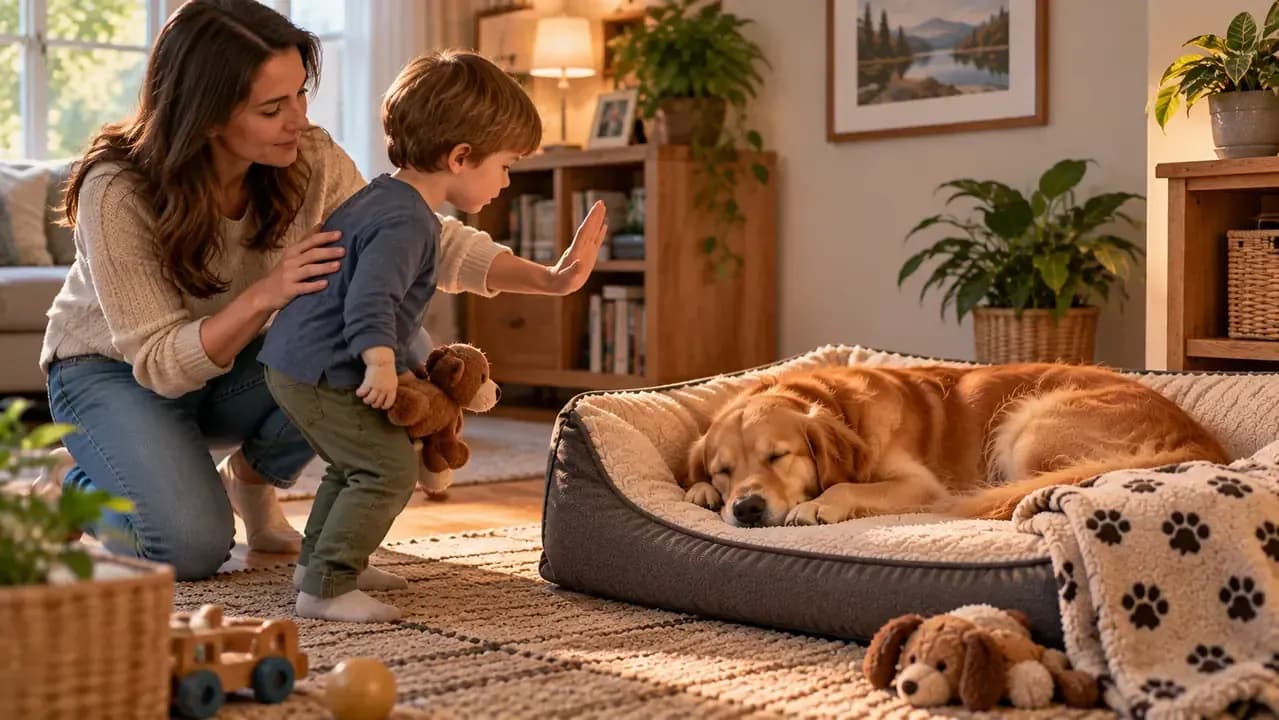
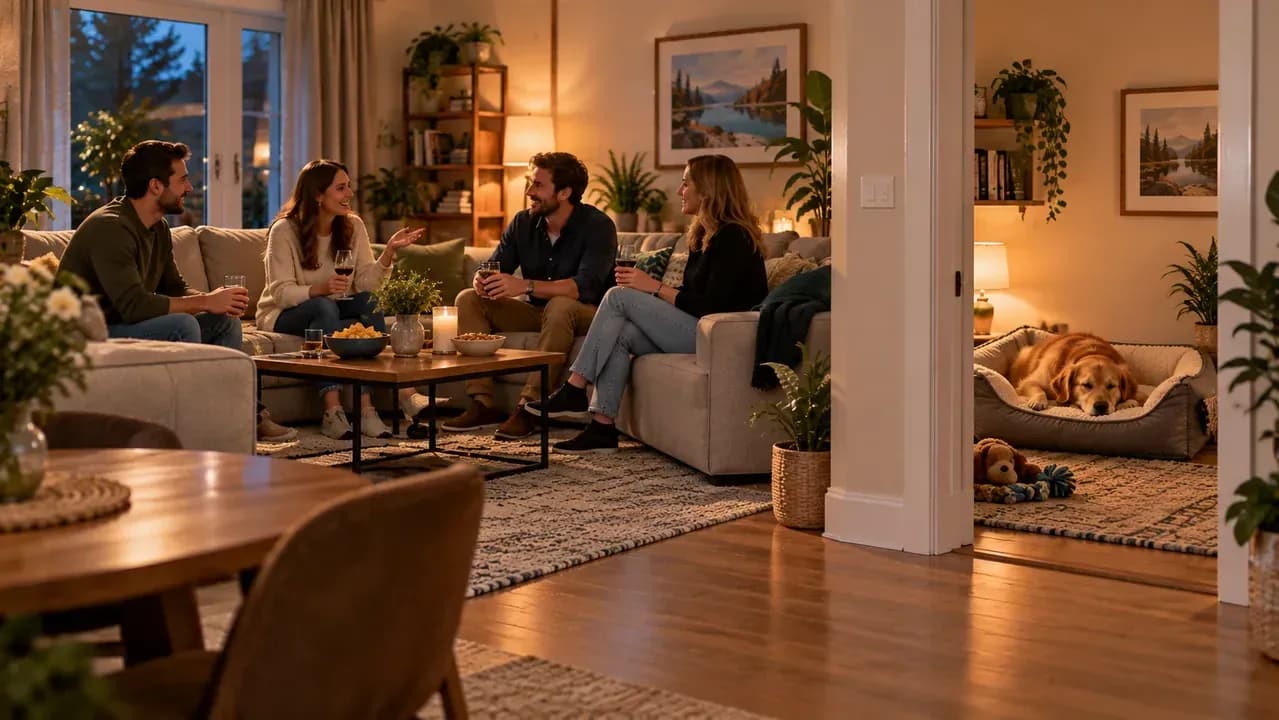
Make one household rule extremely clear: when the dog is resting in this area, people leave the dog alone. Children should not climb into the bed, hug a resting dog, remove toys, or wake the dog simply because they want attention. Adults should follow the rule too. The physical setup cannot create a reliable retreat if people repeatedly enter it and disturb the dog. Consistent respect is what gives the area meaning. If interaction is wanted, allow the dog to leave the resting space before normal play or attention resumes.
Give Visitors the Same Instructions
Tell guests not to follow your dog into the safe space, corner the dog there, reach in to pet them, or repeatedly call them back into the social area. If the dog chooses to retreat when visitors arrive, allow that choice. The dog may later decide to return when the environment feels calmer, or may prefer to remain resting. Either response can be respected. Clear visitor rules are particularly useful because well-meaning guests often assume a dog that walks away needs encouragement to come back. In a designated retreat, walking away should remain an available option.
Keep Punishment Out of the Space
Avoid sending the dog to the resting area immediately after scolding or conflict. Repeatedly pairing the space with anger can change what the location predicts. If you need temporary separation during an overexcited moment, handle the transition neutrally rather than using the area as a disciplinary destination. Ideally, the dog should mostly experience sleeping, calm chewing, quiet rewards, and relief from household activity there. That emotional consistency matters more than whether the area looks perfect. You want the dog to approach it willingly rather than hesitate because it sometimes signals trouble.
Use Food to Strengthen Positive Associations
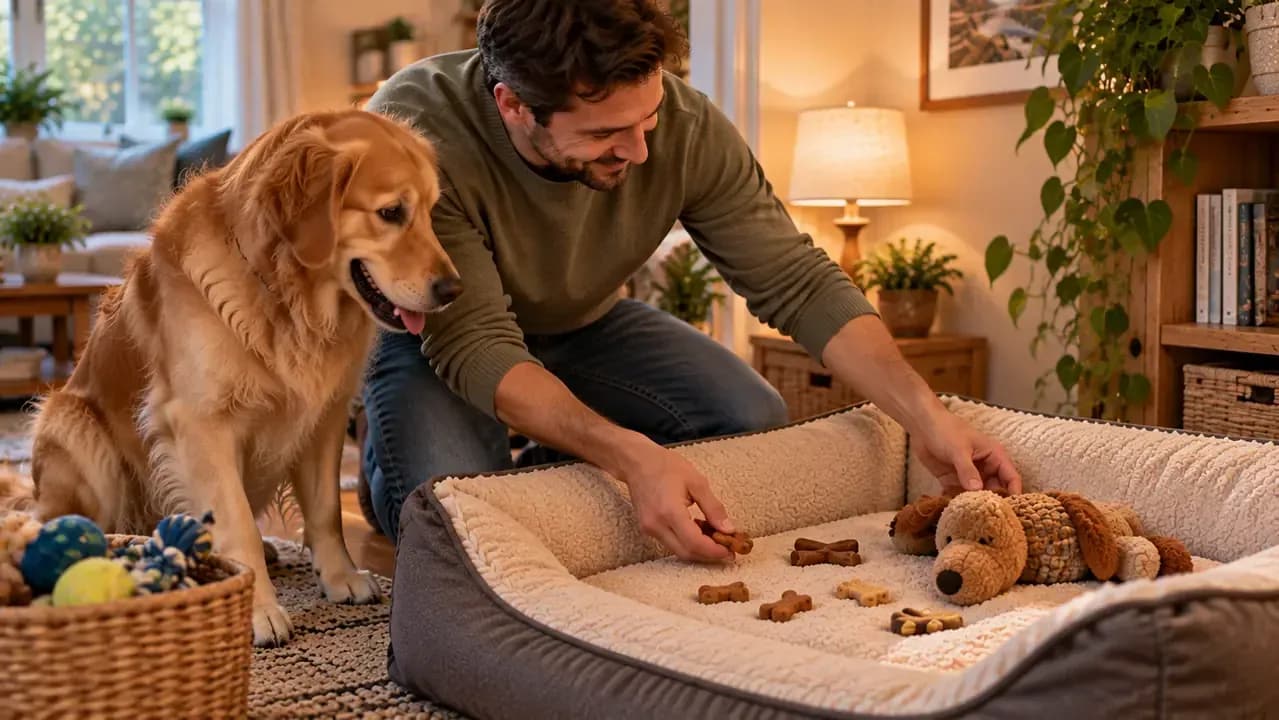
Occasionally use food in the area in a relaxed way. You can place a few treats on the bed, offer a suitable stuffed food toy there, or feed part of a normal meal in the resting zone. Keep the entrance open whenever confinement is unnecessary. Food should make voluntary use of the area pleasant rather than function as bait for unexpectedly closing the dog inside. Watch what your dog does after eating as well. A useful safe space should encourage the dog to remain comfortable there even after the immediate food reward is gone.
Watch Your Dog's Body Language
Evaluate the setup by watching how your dog behaves in it. Loose posture, soft eyes, normal breathing, stretching, side sleeping, and calmly resting the head can indicate that the dog is settling comfortably. Repeated pacing, whining, scratching at a barrier, persistent panting when the dog is not hot, or repeatedly refusing to enter are reasons to reconsider the setup or how the space is being used. Do not assume that purchasing a new bed automatically makes the location comfortable. Your dog's actual behavior provides the most useful feedback about whether your plan is working.
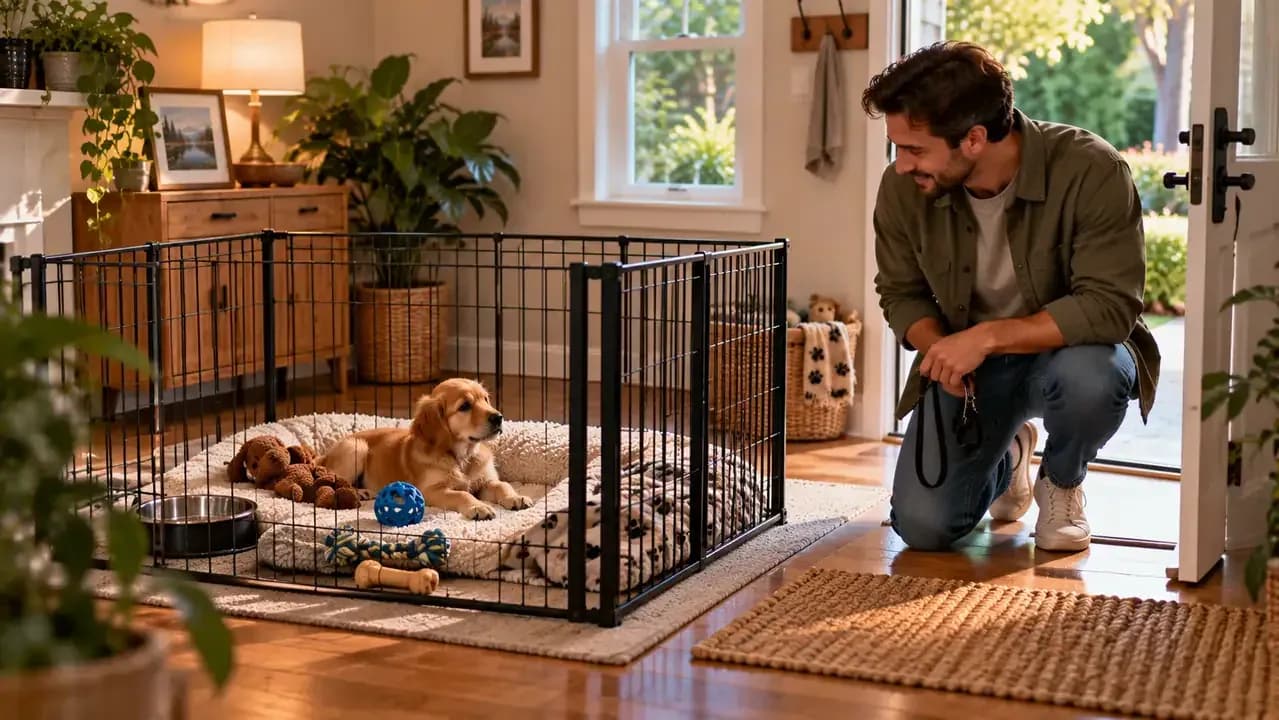
Adjust the Setup for a Puppy
Puppies often benefit from a smaller, easy-to-clean, carefully puppy-proofed resting area. Expect normal exploratory chewing and remove anything unsafe to mouth or swallow. Provide appropriate bedding and water when suitable, and plan frequent opportunities for bathroom breaks. A resting zone can help a puppy learn to settle, but it should not replace supervision, exercise, training, social contact, enrichment, or regular trips outside. Keep expectations appropriate for the puppy's age. Young dogs may alternate between activity, bathroom needs, exploration, and sleep much more frequently than an adult dog.
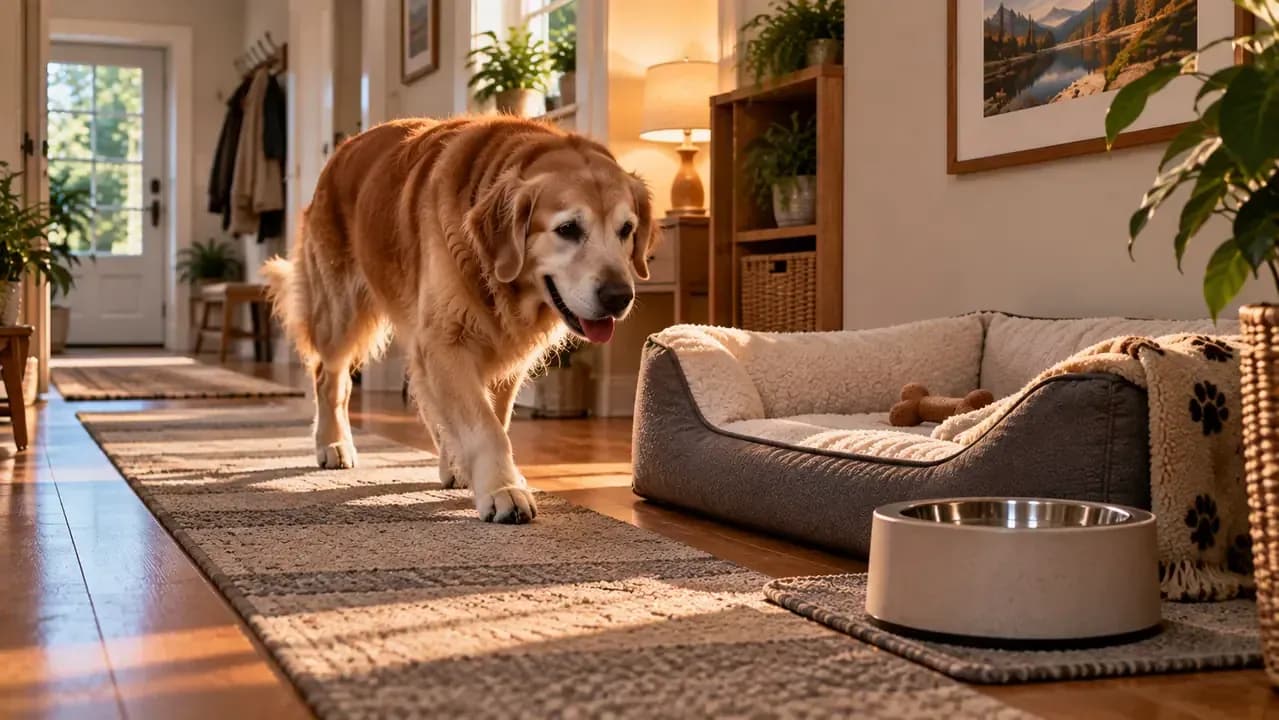
Make the Space Easier for a Senior Dog
For an older dog, prioritize accessibility as much as softness. Add nonslip surfaces around the bed if smooth flooring makes walking difficult, choose padding that supports comfortable resting, and avoid routes that require unnecessary stairs when mobility is limited. Keep water conveniently located and make nighttime access straightforward. A low bed can be easier to enter than one with a tall edge. Individual preferences still matter, so observe whether the dog actually chooses the new arrangement. Small environmental changes may make a previously inconvenient resting location much easier to use.
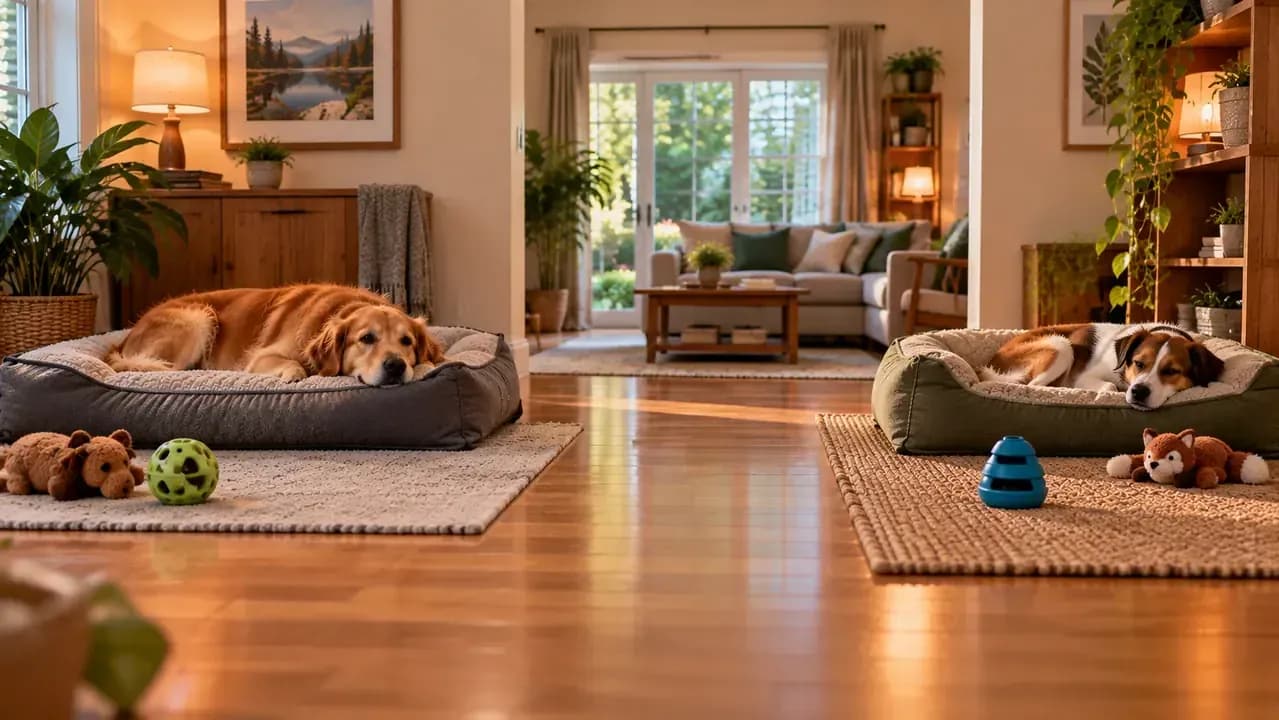
Give Multiple Dogs Enough Personal Space
In a multi-dog household, do not assume every dog wants to rest in physical contact with the others. Some dogs comfortably share a room, while others settle better on separate beds or in separate areas. Provide enough space that one dog cannot easily block another dog's exit or crowd them into a narrow corner. Be especially thoughtful when using chews or food toys, since forcing close sharing around desirable items can undermine the relaxing purpose of the area. Each dog should have a realistic opportunity to rest without being pressured by another dog.
Keep the Space Part of a Balanced Routine
Treat the safe space like a bedroom, not a place to store the dog for long stretches. Normal daily life should still include bathroom breaks, exercise, social interaction, enrichment, and training outside the resting area. A dog may spend substantial time sleeping, but the purpose of this setup is to improve the quality and predictability of rest rather than encourage unnecessary isolation. A balanced routine also makes the resting area more meaningful because the dog can return there after walks, family interaction, training, or other normal activity when they are ready to relax.
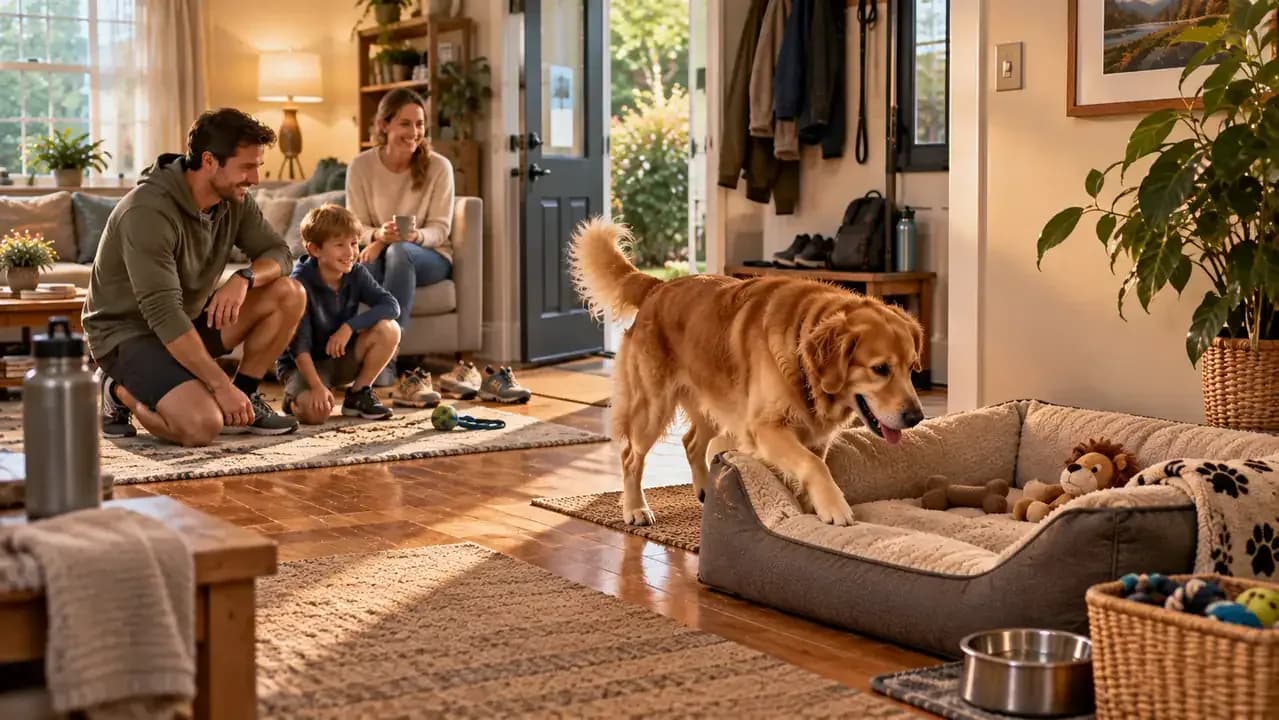
Clean Regularly Without Constant Rearranging
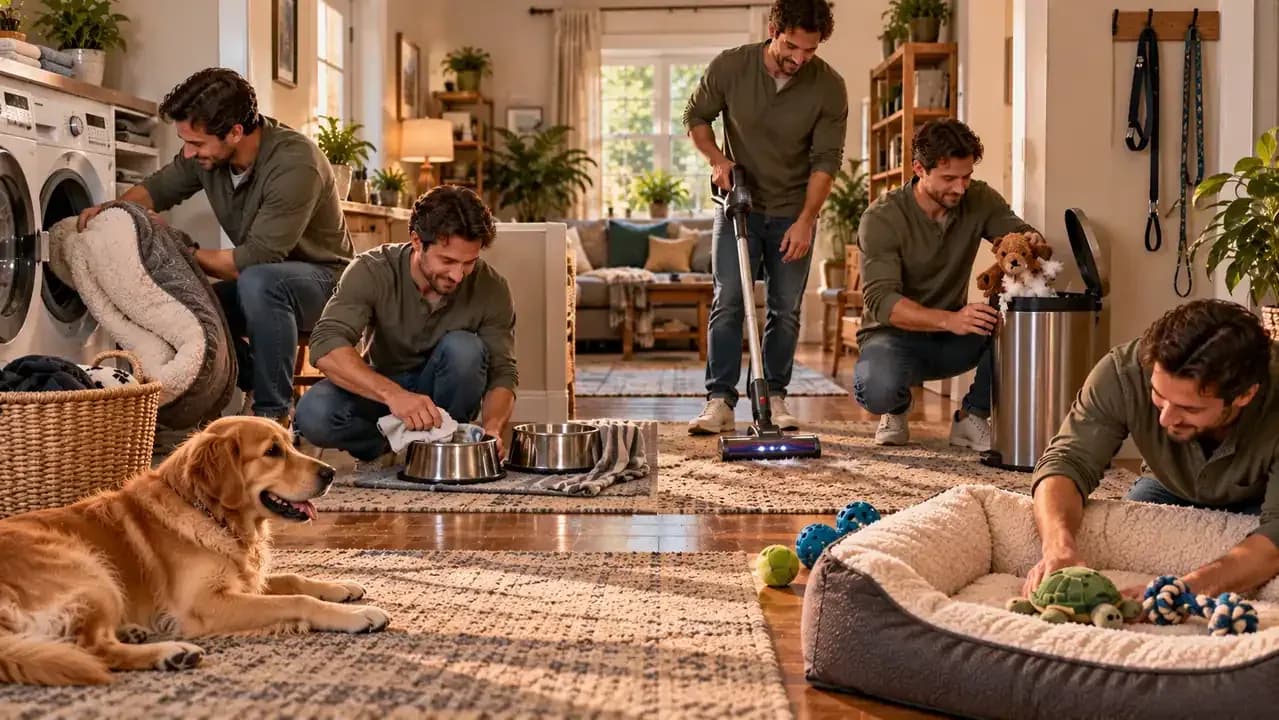
Maintain the area on a predictable schedule. Wash bedding as needed, wipe the water bowl, vacuum fur and debris, and inspect toys or chews for damage. After cleaning, return familiar items to approximately the same locations whenever practical. There is no need to strip the area of every familiar smell every day or redesign the setup during each cleaning session. Hygiene and predictability can coexist. Routine maintenance keeps the area usable while preserving the basic layout that your dog has learned to recognize as their resting place.
Reassess What Your Dog Actually Uses
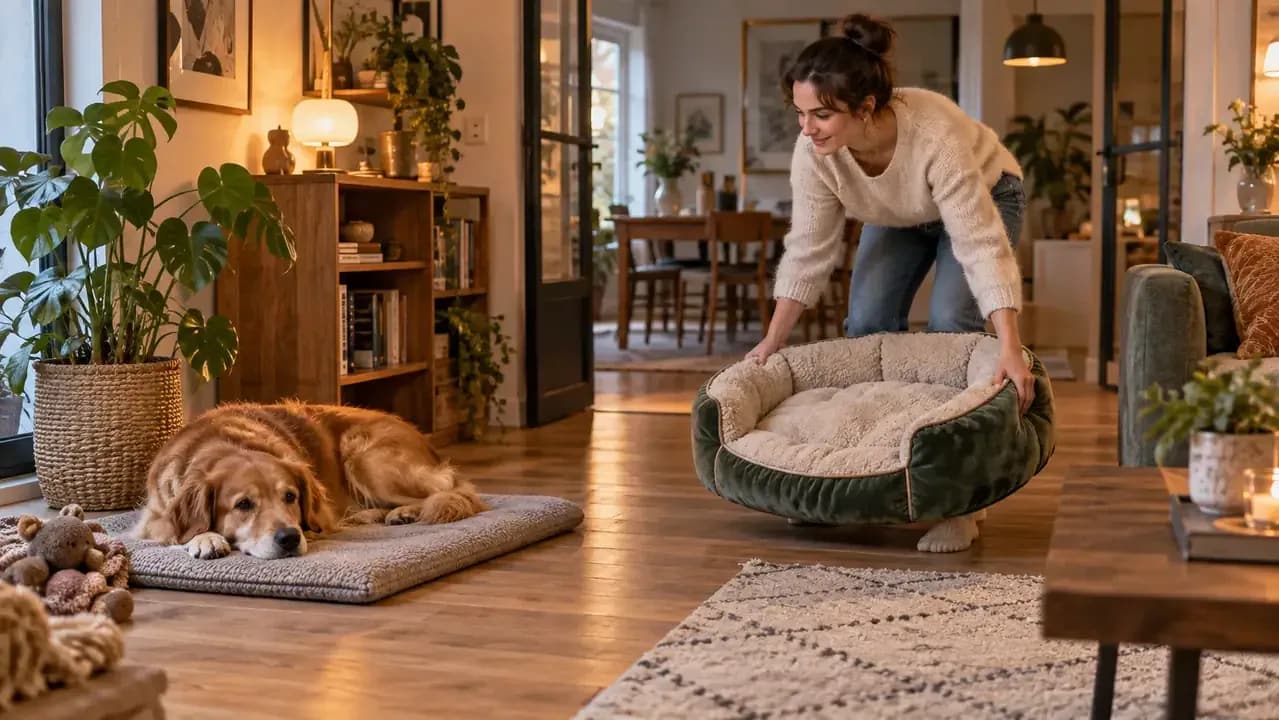
After one or two weeks, compare your original plan with your dog's real preferences. Notice whether the dog consistently chooses one corner, ignores a particular bed, avoids one part of the room, or repeatedly settles on a simpler surface elsewhere. Be willing to move the setup. The decorative bed you expected your dog to love may be less appealing than a plain mat in a quieter location. Success is not measured by how the area looks. It is measured by whether the dog voluntarily uses it for calm, comfortable rest.
Run Through the Safe-Space Checklist
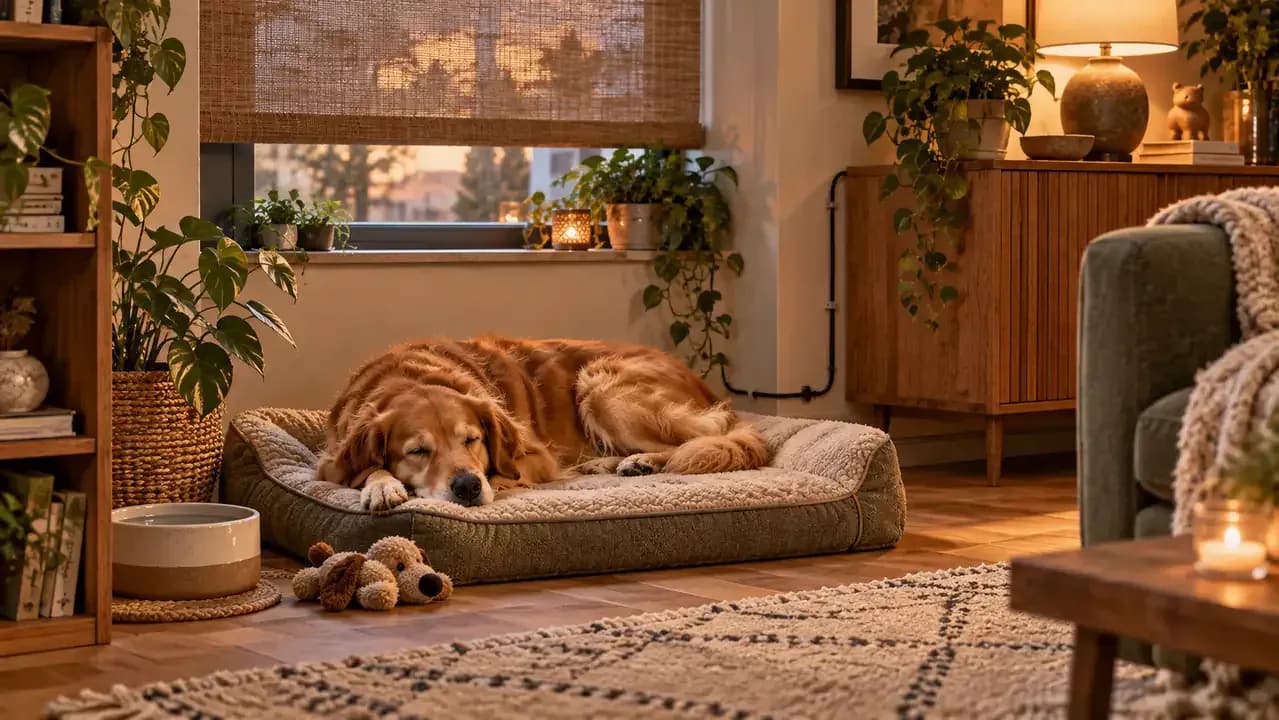
Finish by checking the entire area as one system. The location should be reasonably quiet, the temperature comfortable, bedding appropriately sized, water accessible when needed, and household hazards removed. Manage stimulating windows or unpredictable sound when they interfere with rest, provide only suitable calm enrichment, and make sure family members and visitors respect the no-disturb rule. Then keep watching what your dog chooses. A successful safe space is not complicated. It is comfortable, low-risk, predictable, and consistently available when the dog wants a reliable place to rest and reset.
A safe space for your dog does not need to be an elaborate room, an expensive crate setup, or a perfectly styled corner of your home. Its purpose is much simpler: to give your dog a predictable place where resting is comfortable, interruptions are limited, and leaving or returning feels safe. Depending on your home and your dog's preferences, that could be a bed in a quiet bedroom corner, a mat in an office, an open crate, or a small gated area. The most effective setup is usually the one your dog actually chooses to use. Location, temperature, bedding, access to water, noise, household activity, and even the behavior of family members all influence whether a resting area feels genuinely relaxing. The following process walks through the setup from the dog's perspective, including how to introduce the area without pressure, how to keep it safe, how to adapt it for puppies or senior dogs, and how to tell whether your original plan needs adjustment.
Where people go wrong
Choosing the Busiest Convenient Corner. A spot may be convenient for people but unsuitable for rest if doors slam nearby, people constantly pass through, or appliances repeatedly create noise.
Forcing the Dog to Stay There Immediately. Closing a gate or door before the dog has developed a positive association can make the area feel more like confinement than a voluntary retreat.
Using the Area for Punishment. Sending the dog there during angry interactions can make the location predict conflict instead of rest.
Letting Children or Guests Disturb the Dog. The space loses its value when people routinely follow the dog into it, wake the dog, hug the dog, or remove items while the dog is resting.
Ignoring Reachable Hazards. Cords, medications, cleaning products, trash, small objects, and reachable items on furniture can make an otherwise comfortable area unsafe.
Adding Too Many Exciting Toys. A resting zone filled with chase toys, tug equipment, and other high-energy items may encourage play instead of settling.
Assuming the First Setup Must Be Permanent. Your dog may prefer a different bed, surface, or location. Reassessing after regular use helps you adapt the area to actual behavior.
Questions people ask
No. A safe space can be a quiet corner of a bedroom, office, living area, gated section, or another low-disturbance location. The important features are comfort, predictable access, low risk, and household respect.
Fixed it?
Get one guide like this every Thursday.