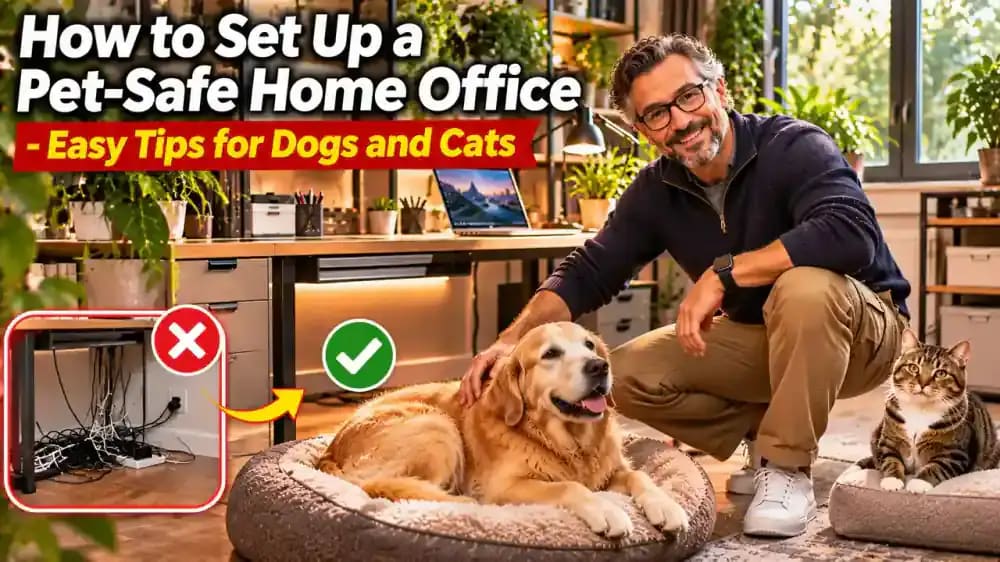
How to Set Up a Pet-Safe Home Office - Easy Tips for Dogs and Cats
Turn your workspace into a safer, more comfortable place for dogs and cats. Learn how to manage electrical cords, secure office supplies, prevent furniture accidents, and create a pet-friendly workday routine.
What you’ll need
Tap to tick things off before you start.
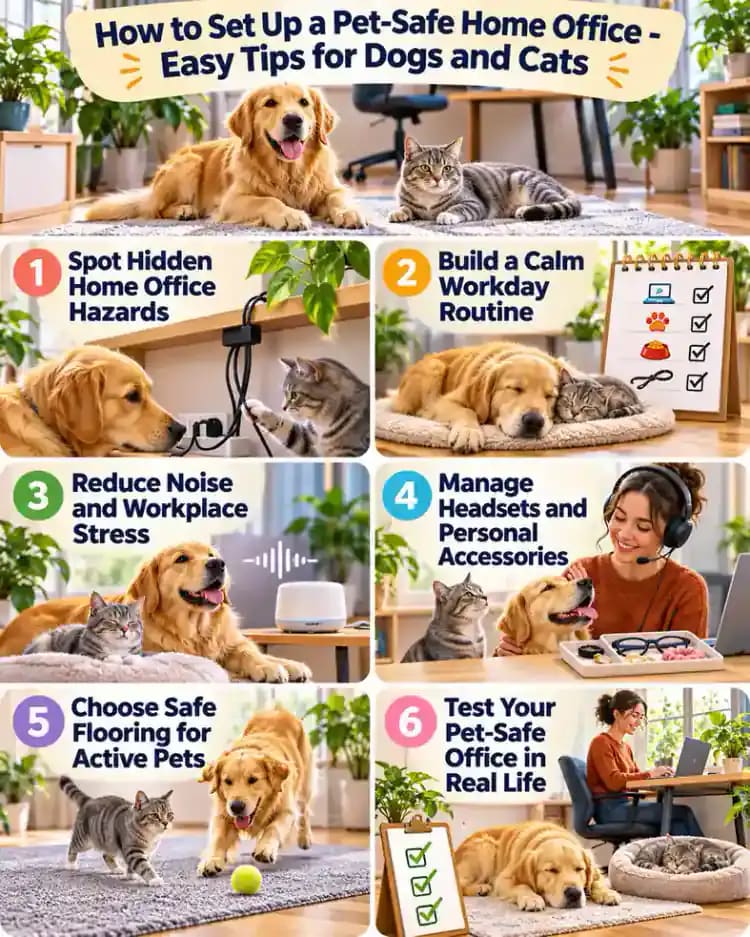
Spot Hidden Home Office Hazards
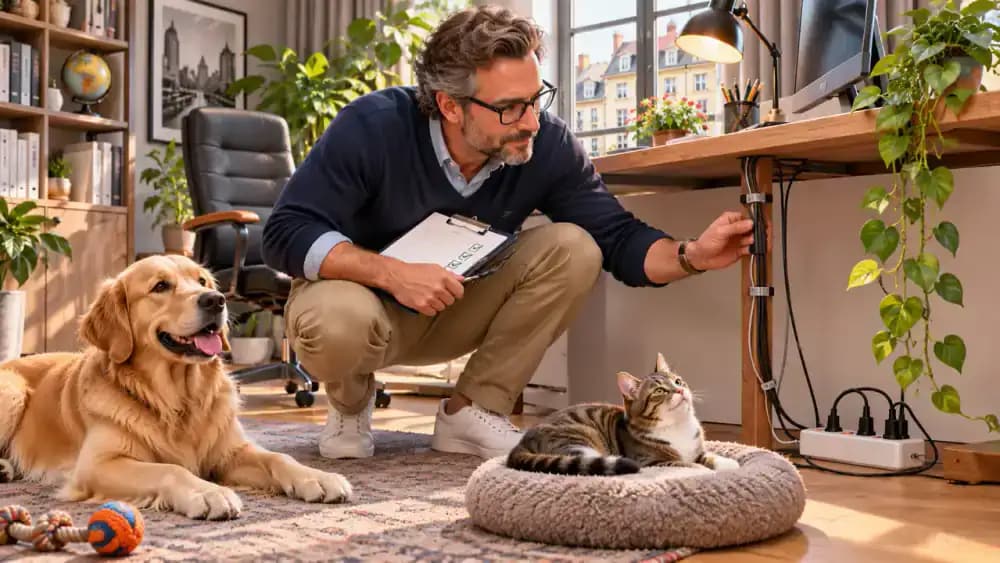
Start by examining your home office from your pet's perspective. Crouch to floor level and look for dangling cables, loose paper clips, accessible trash, and objects that could fall. Watch where your dog likes to sniff and your cat prefers to climb. Identify anything within reach that could be chewed, swallowed, or knocked over.
Secure Electrical Cables and Power Strips
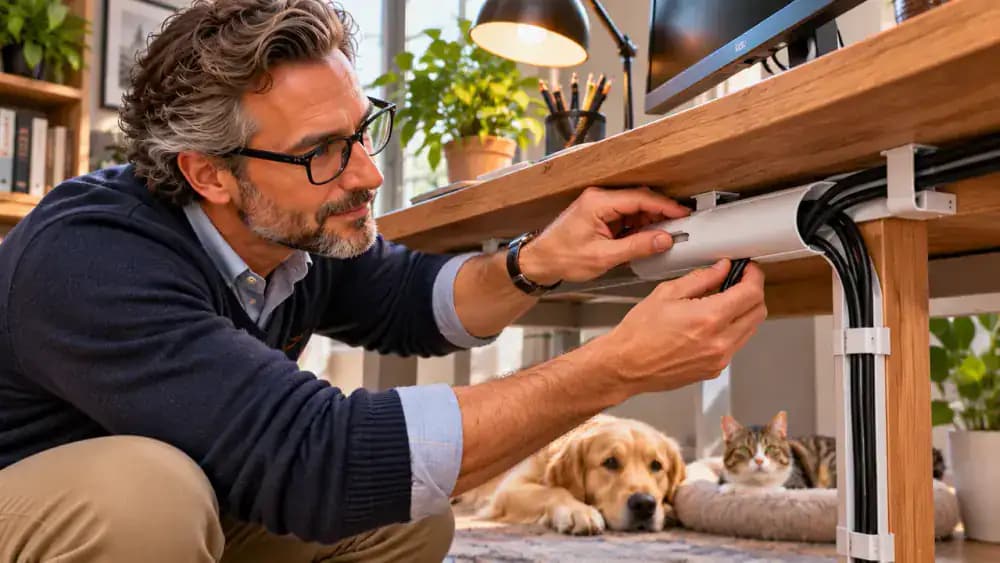
Route computer cables behind furniture or through protective cable channels, then fasten them with clips to eliminate dangling loops. Lift charging cords off the floor and place power strips inside compatible, ventilated safety enclosures. Keep adapters uncovered to prevent overheating. Replace damaged cords immediately, and unplug unnecessary devices whenever practical to reduce electrical hazards.
Organize Supplies and Remove Small Hazards
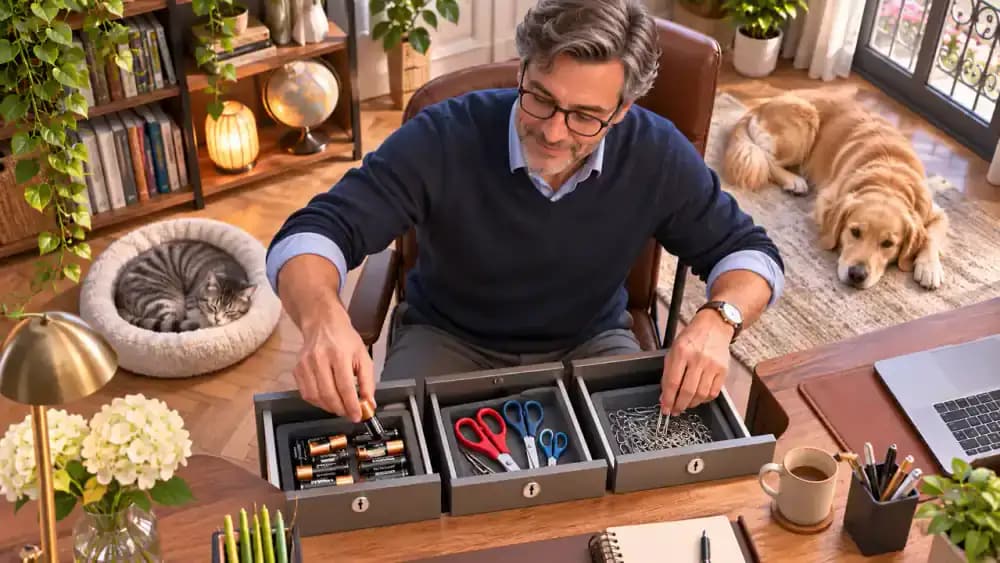
Clear your desktop of paper clips, staples, rubber bands, batteries, and other small objects pets might swallow. Sort everyday supplies into lidded organizers and store hazardous items in secured drawers or cabinets. Keep medications, scissors, and cleaning products inaccessible. Check beneath your desk for dropped supplies, then wipe the work surface to maintain a tidy workspace.
Stabilize Furniture and Protect Paws
Secure tall bookshelves with appropriate anti-tip hardware and position heavy monitors on stable surfaces away from desk edges. Remove obstacles from walking paths to prevent trips when pets move around your workspace. Before moving or adjusting a rolling office chair, look beneath it for paws, tails, or sleeping animals. Keep your pet's resting spot clear of chair wheels.
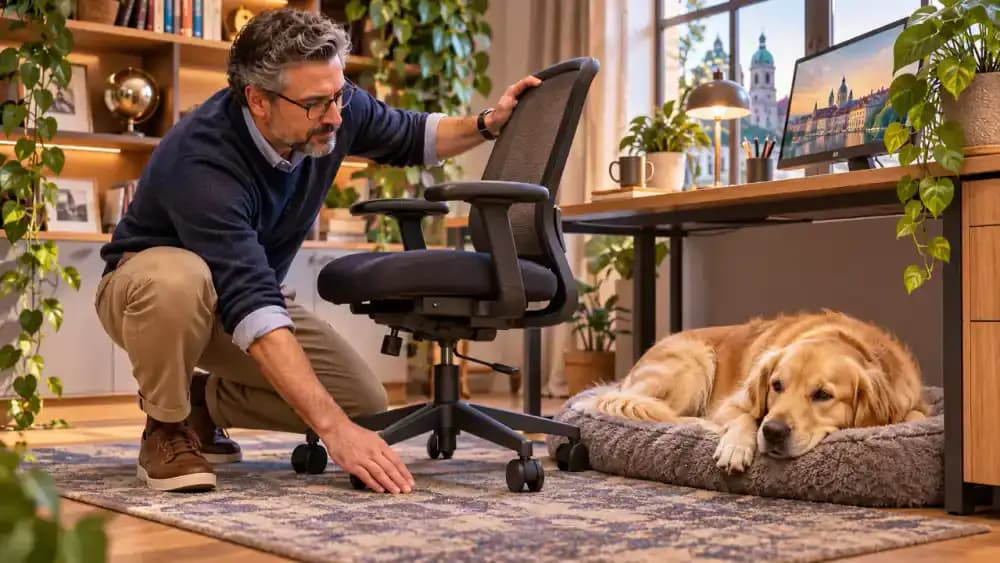
Create a Comfortable Pet Resting Area
Choose a quiet corner beside your desk, away from rolling chair wheels and electrical equipment. Add a washable bed large enough for your pet to stretch comfortably. Place a stable bowl of fresh water away from outlets and electronics. Offer a size-appropriate chew toy or puzzle feeder, following supervision recommendations, and encourage your pet to settle there calmly.
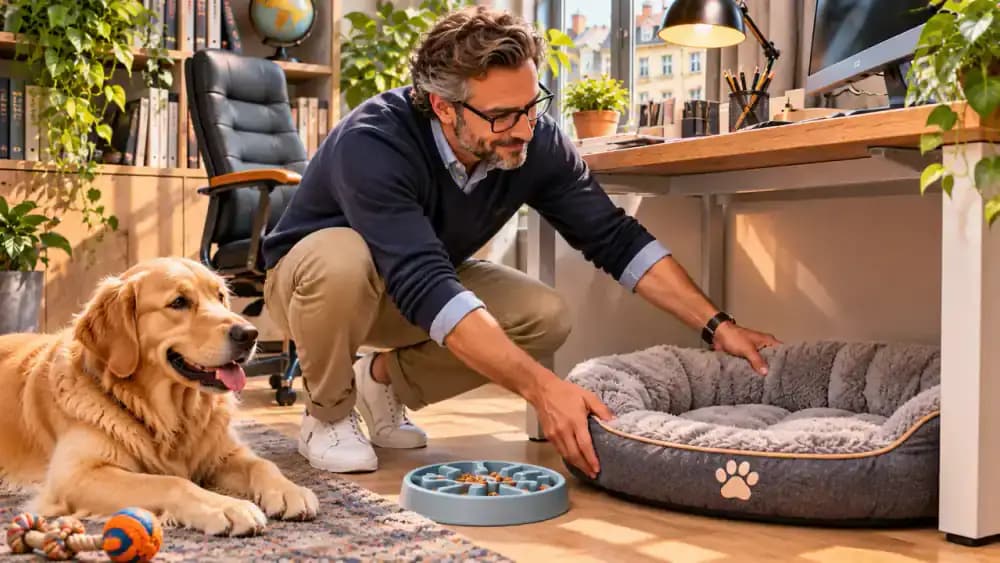
Build a Calm Workday Routine
Start your workday with a dog walk or an interactive play session for your cat. Schedule short breaks for exercise, attention, and bathroom needs. Reward your pet with praise or treats when they settle calmly in their designated spot. Redirect interruptions gently, and maintain a predictable schedule that balances focused work with companionship.
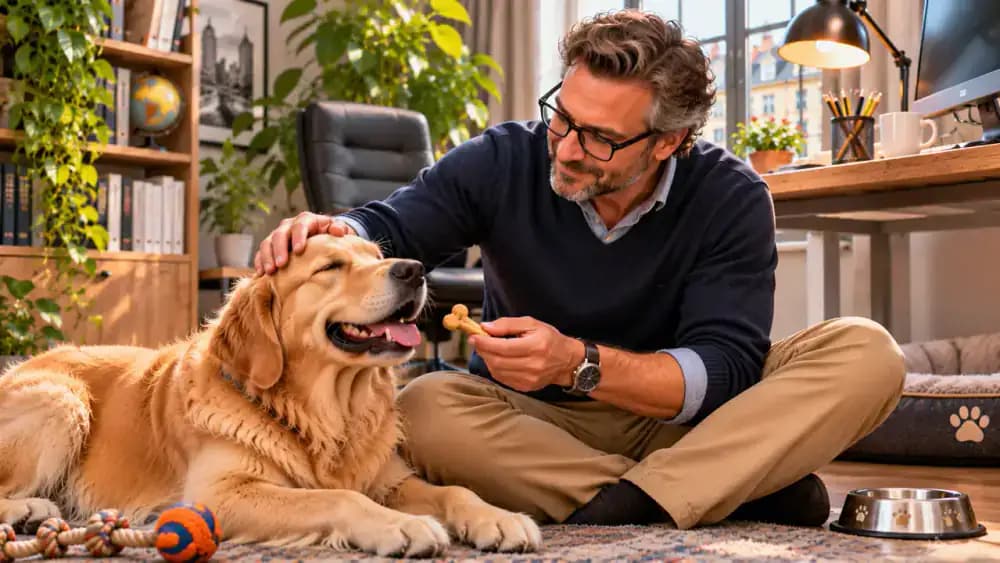
Prevent New Hazards Throughout the Day
Keep your workspace safe as daily activities introduce new hazards. Move coffee mugs, snacks, and beverages away from desk edges and curious pets. Dispose of delivery packaging, tape, and plastic wrapping immediately. Close cabinets and secure visitors' bags containing potentially dangerous items. After deliveries, meetings, or cleaning sessions, inspect the floor for newly dropped objects.
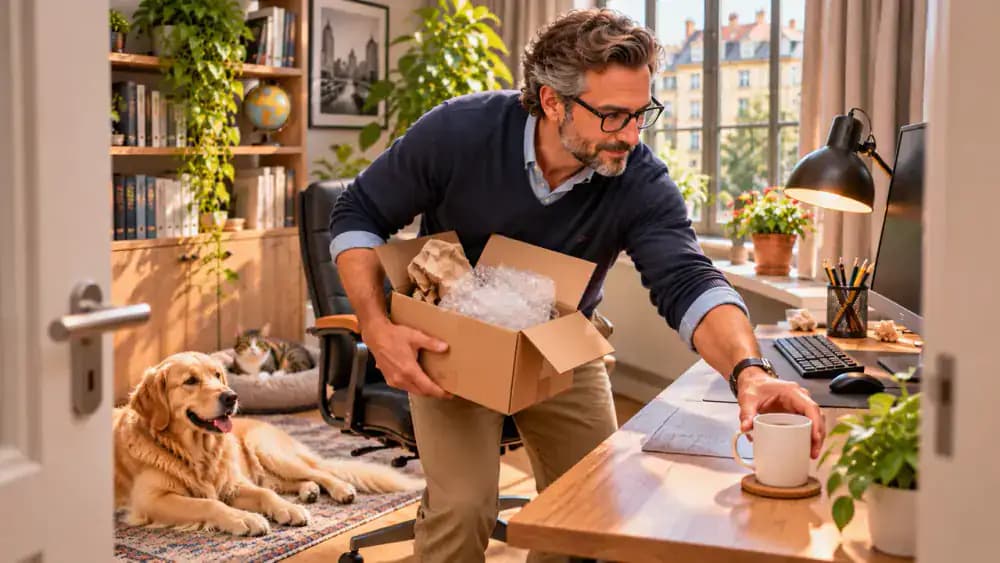
Complete Your Pet-Safe Office Checklist
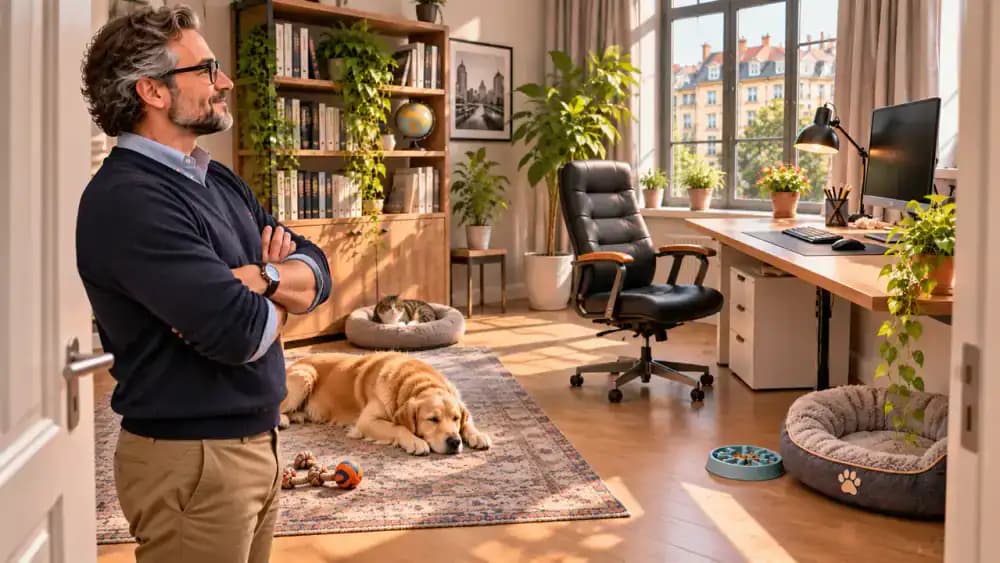
Stand in your office doorway and inspect the entire workspace. Confirm that electrical cords are protected, drawers are closed, furniture is stable, and walking paths are clear. Check your pet's resting area, drinking water, and available enrichment activities. Repeat this inspection before starting work each day, especially after rearranging furniture or introducing new equipment.
Control Temperature and Sun Exposure
Check how sunlight and room temperature affect your pet throughout the day. Adjust window blinds to reduce excessive heat, provide shaded resting areas, and maintain comfortable ventilation. Keep portable heaters securely positioned beyond pets' reach. Watch for unusual panting, shivering, or persistent restlessness, and adjust the environment. Contact a veterinarian if concerning symptoms persist or appear severe.
Make Windows and Blinds Pet-Safe
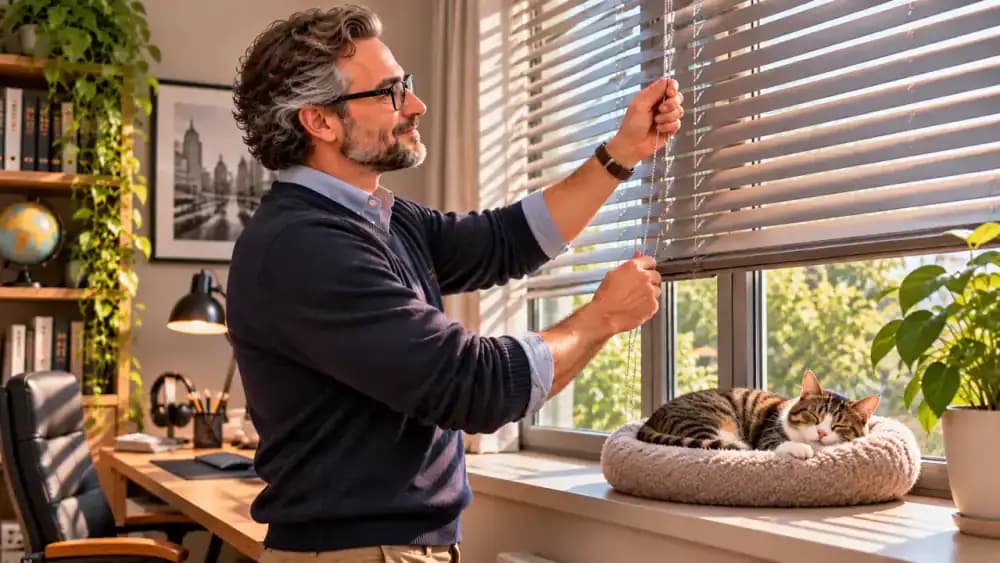
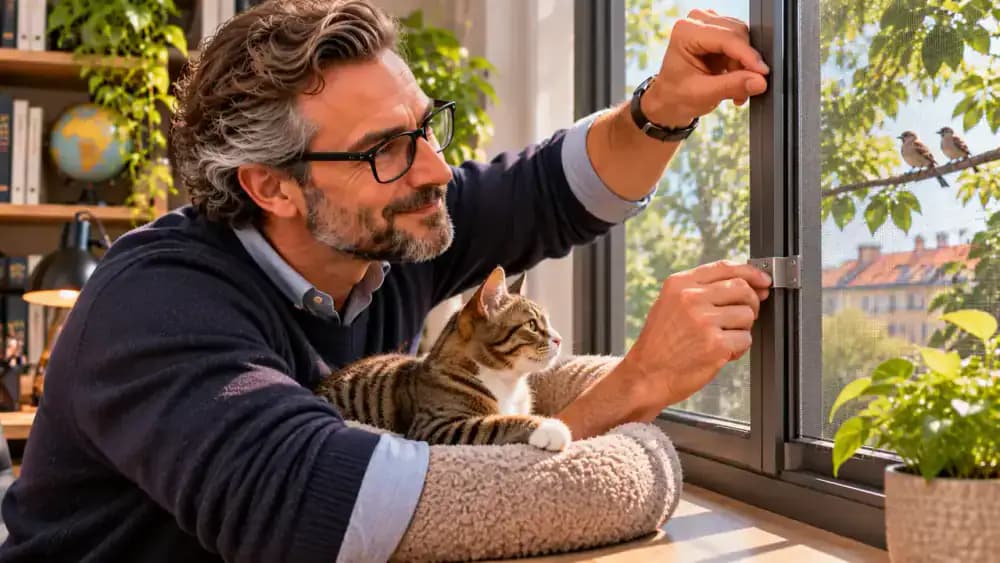
Inspect office windows for escape and fall hazards, especially if your cat enjoys watching birds. Install securely fitted, pet-resistant screens and verify that their attachments cannot be pushed loose. Choose cordless blinds or keep existing blind cords completely inaccessible. Move climbing furniture away from unsafe openings, and never leave pets unattended near unsecured open windows.
Choose Pet-Friendly Office Plants
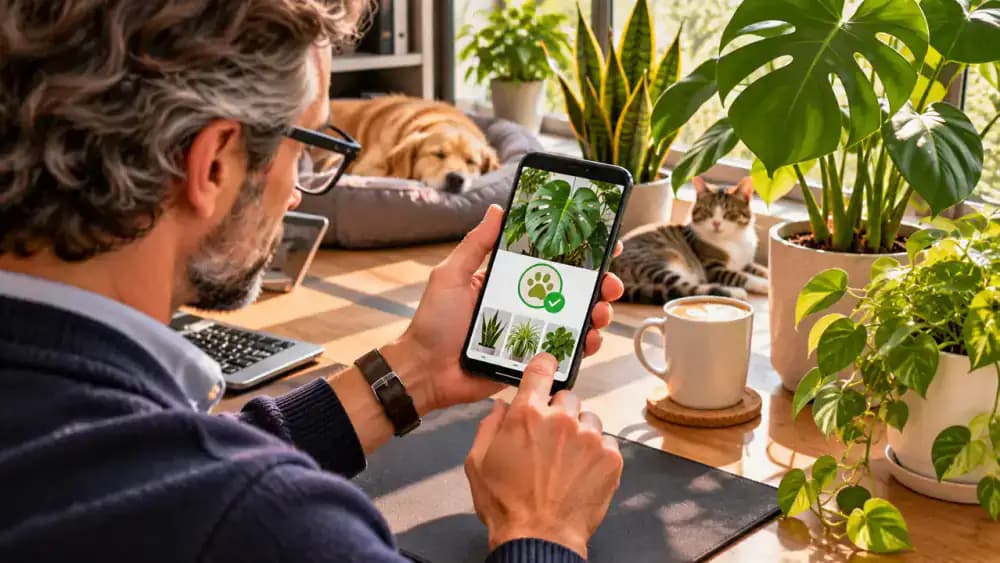
Identify every plant in your home office before allowing pets near it. Check each species against a reliable veterinary toxicity database, since some popular houseplants can harm dogs or cats. Choose verified pet-safe varieties, such as spider plants, and position pots on stable surfaces. Remove fallen leaves promptly, and keep fertilizers and potting chemicals securely stored.
Reduce Noise and Workplace Stress
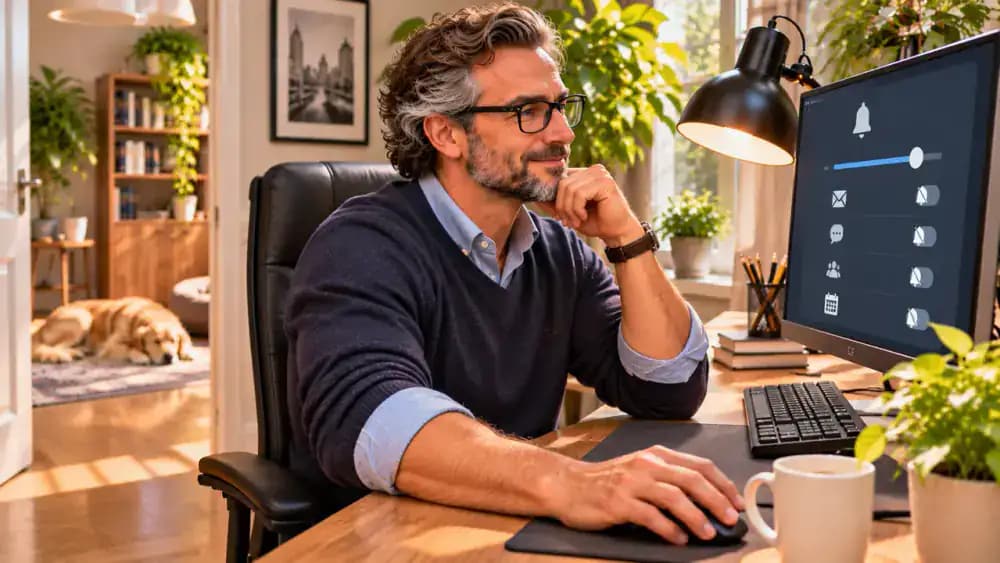
Lower computer notification sounds and avoid sudden bursts of loud audio during meetings. Position noisy printers away from your pet's resting area, and use headphones when practical. Observe how your dog or cat responds to workplace sounds. If your pet appears frightened or retreats, provide access to a quiet room without forcing further exposure.
Use Safe Boundaries When Necessary
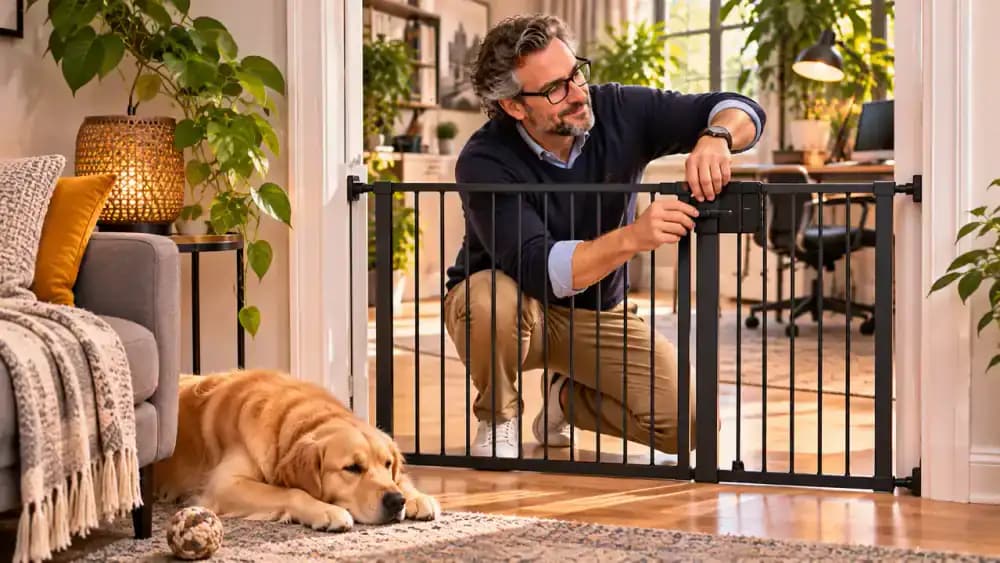
Install a sturdy, appropriately sized pet gate when your workstation contains equipment that requires restricted access. Check that the barrier fits securely and cannot trap paws or encourage unsafe climbing. Introduce it gradually using treats and praise. Provide comfortable bedding, water, and adequate space on the pet's side, while maintaining visual contact when practical.
Maintain a Clean and Hygienic Workspace
Remove pet hair from furniture with a lint roller and vacuum floors regularly while sensitive pets rest elsewhere. Keep litter boxes and pet waste away from eating areas, and wash your hands after handling them. Choose cleaning products suitable for households with animals, follow label instructions carefully, and prevent pets from contacting treated surfaces until safe.

Adapt the Workspace to Your Pet's Needs
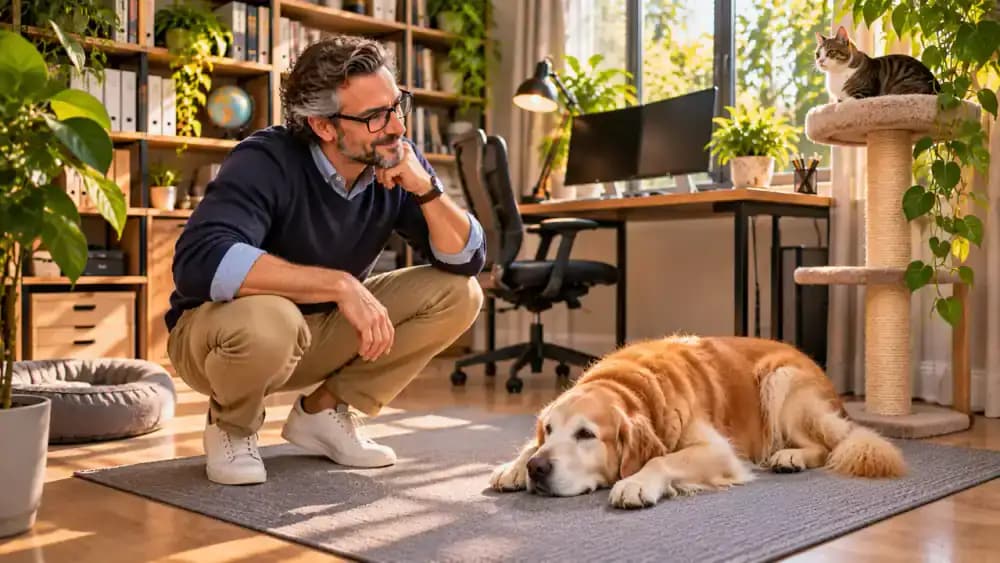
Adjust your office layout to match your pet's age, mobility, and behavior. Create a supervised activity area for puppies, add non-slip mats for older dogs, and provide securely mounted observation perches for cats. Watch where your pet naturally chooses to rest or explore. Reassess the arrangement as their preferences, activity levels, and physical needs change.
Prepare for Emergencies and Keep Improving
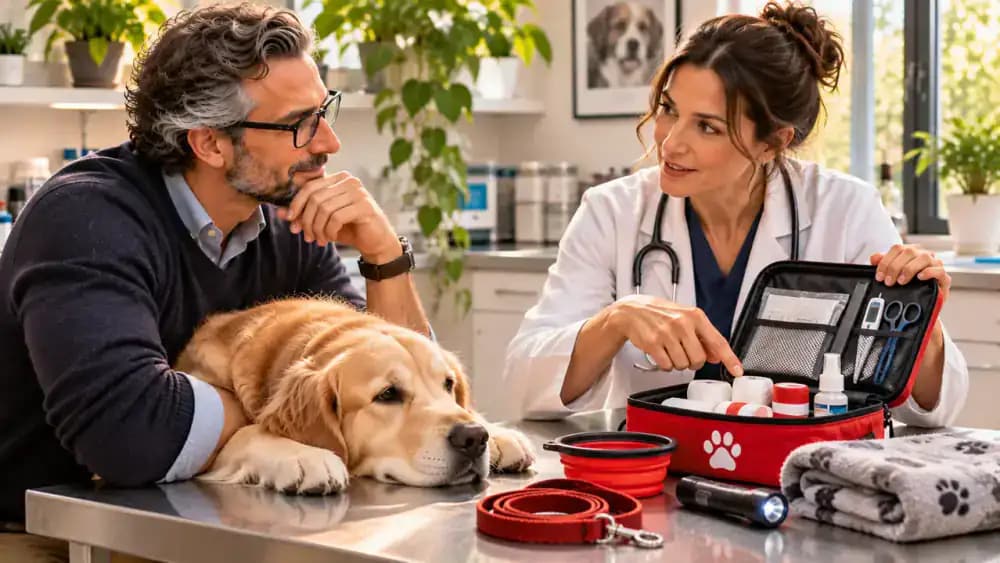
Save your veterinarian's phone number, locate a nearby emergency animal clinic, and keep a stocked pet first aid kit accessible to adults. Post emergency contact information somewhere visible. If your pet chews electrical wiring or swallows a hazardous object, prevent further exposure and contact a veterinarian immediately. Review your office safety arrangements regularly as your pet's needs change.
Secure Your Office Before Leaving
Before leaving your home office, close your laptop, remove snacks, and secure loose supplies that pets could reach while unsupervised. Check that drawers, cabinets, and trash containers are closed. Decide whether your pet can safely remain inside or should use another room. Establish a consistent exit routine, remembering that curious animals may investigate unattended furniture and surfaces.
Manage Headsets and Personal Accessories
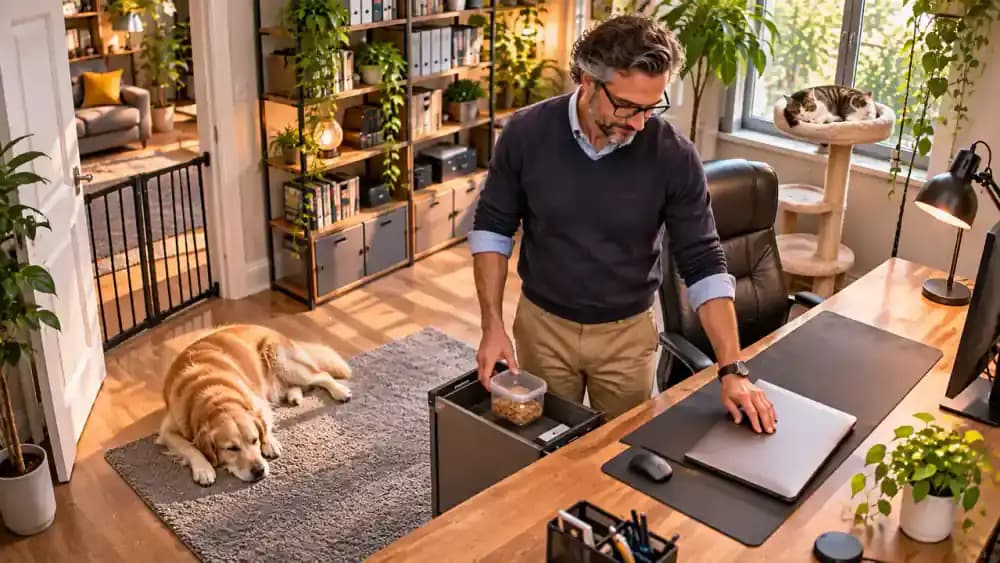
Keep headset cables, lanyards, and dangling accessories away from curious pets. Store headphones on a secure elevated stand after meetings, and consider wireless equipment to reduce loose cords. If your dog grabs an accessory, calmly offer an appropriate toy in exchange instead of chasing. Inspect accessories regularly for damage and remove items that could become chewing or swallowing hazards.

Choose a Secure Office Trash Bin
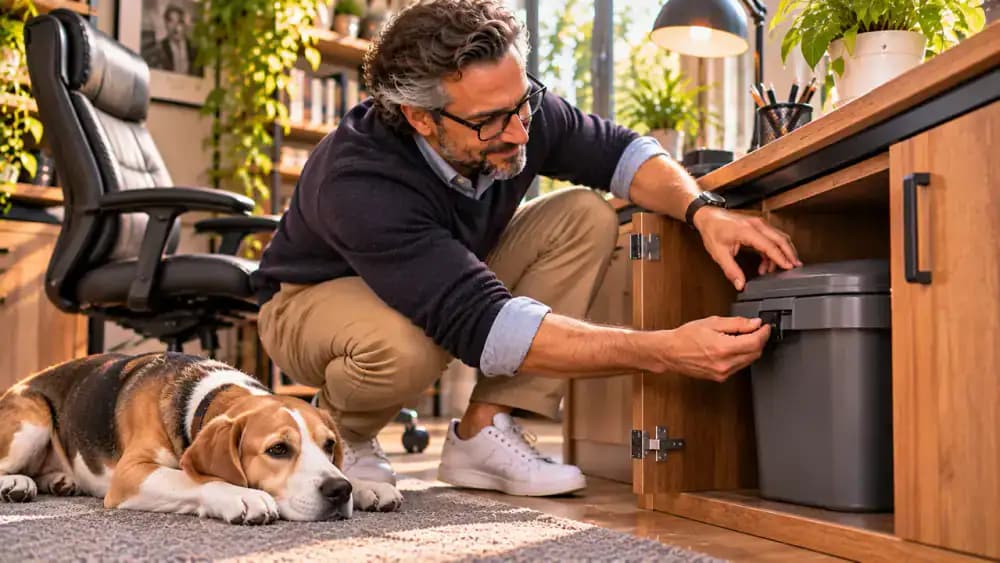
Replace open office wastebaskets with sturdy bins featuring secure, pet-resistant lids. Discard shredded paper, adhesive labels, packaging, and food wrappers before they attract curious animals. Position the bin inside a secured cabinet when practical, ensuring pets cannot open it. Empty waste regularly, especially after deliveries or meals, and keep hazardous materials completely inaccessible between cleanups.
Operate Standing Desks Safely Around Pets
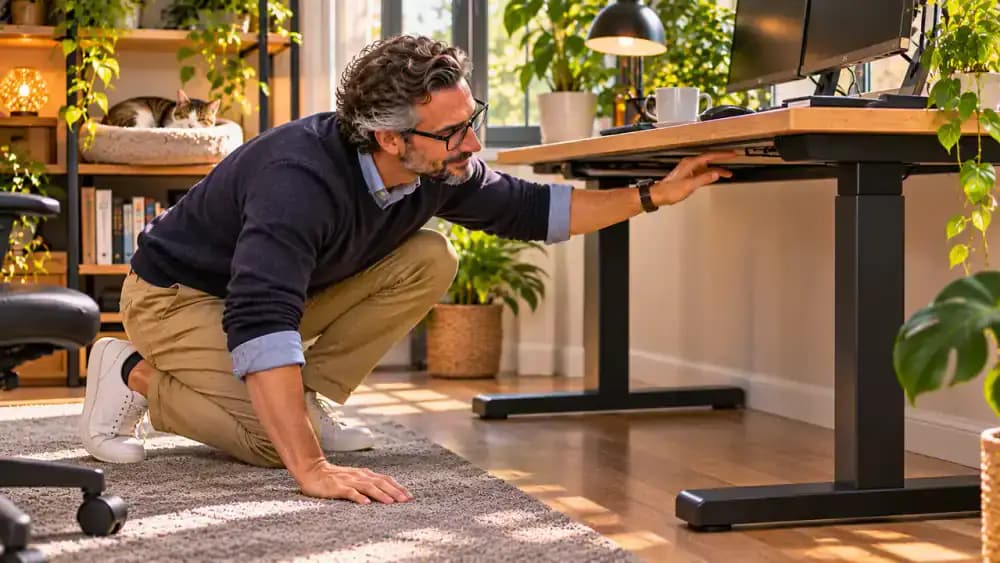
Before adjusting an electric standing desk, inspect underneath and around its legs for resting or exploring pets. Encourage animals to move to a safe location, then verify that the desk's entire movement path is clear. Keep pet beds and toys away from adjustable mechanisms. Watch the desk throughout each adjustment, since automatic collision sensors may not detect small animals.
Prevent Tension Between Multiple Pets
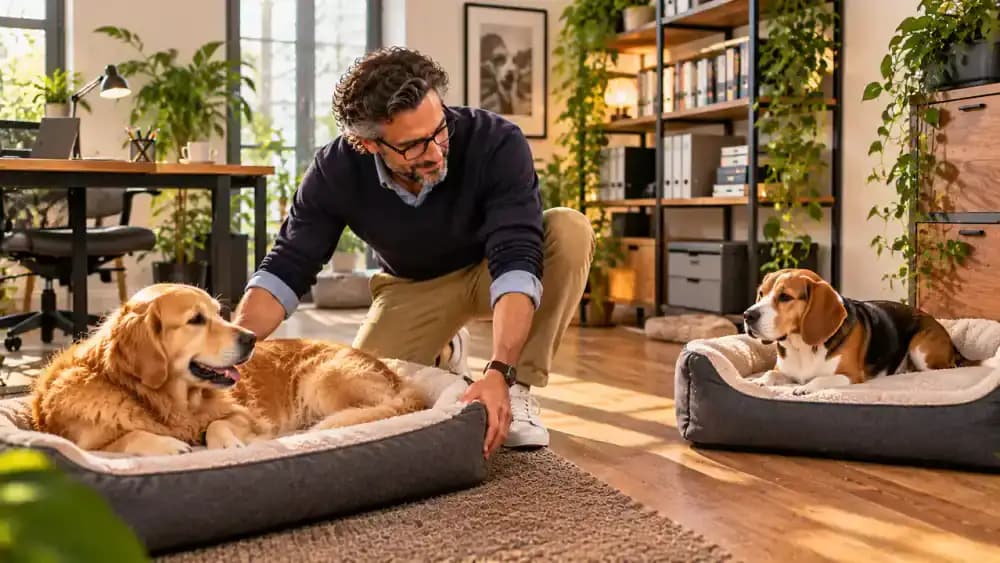
Give each pet a separate resting area with enough space to move freely without approaching another animal. Keep doorways and walking paths clear, especially when one pet blocks access. Watch for stiff posture, guarding, or hesitation, and avoid forcing interactions. Provide multiple comfortable retreat options so every pet can choose where to relax peacefully.
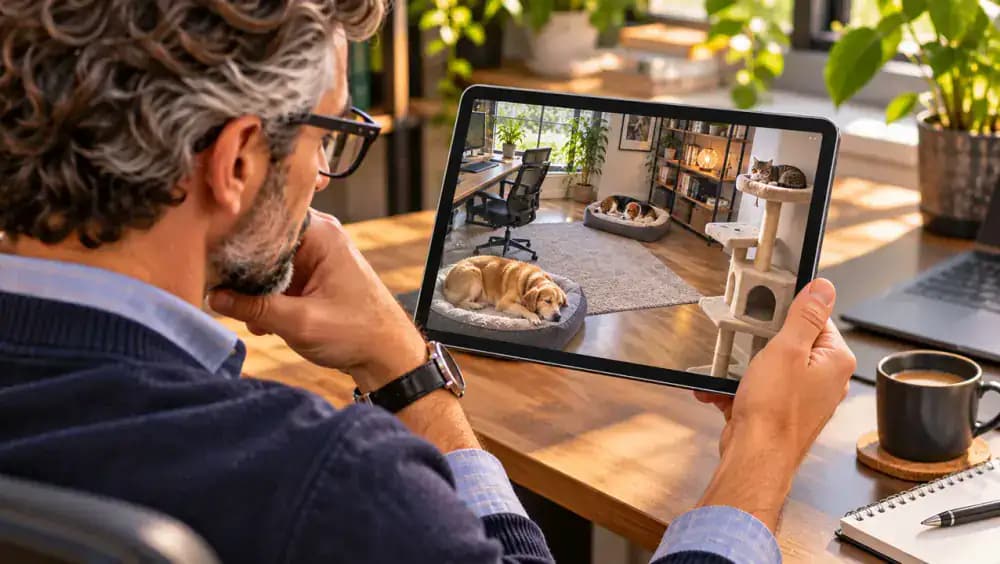
Use Pet Cameras to Identify Problems
Position a pet monitoring camera where it can capture your workspace without leaving accessible cords. Review recordings to identify repeated climbing, pacing, or attempts to reach restricted areas. Adjust furniture placement, provide appropriate alternatives, and check whether behavior changes. Remember that cameras cannot prevent accidents or replace supervision, so remove hazards before leaving pets unattended.
Create a Workspace That Evolves With Your Pet
Treat your pet-safe home office as an ongoing project rather than a one-time setup. Identify one overlooked hazard, make a practical improvement, and observe how your pet responds over several days. Record useful changes and revisit the layout as routines evolve. Prioritize safe access, comfortable resting areas, and clear pathways over achieving a perfectly styled workspace.

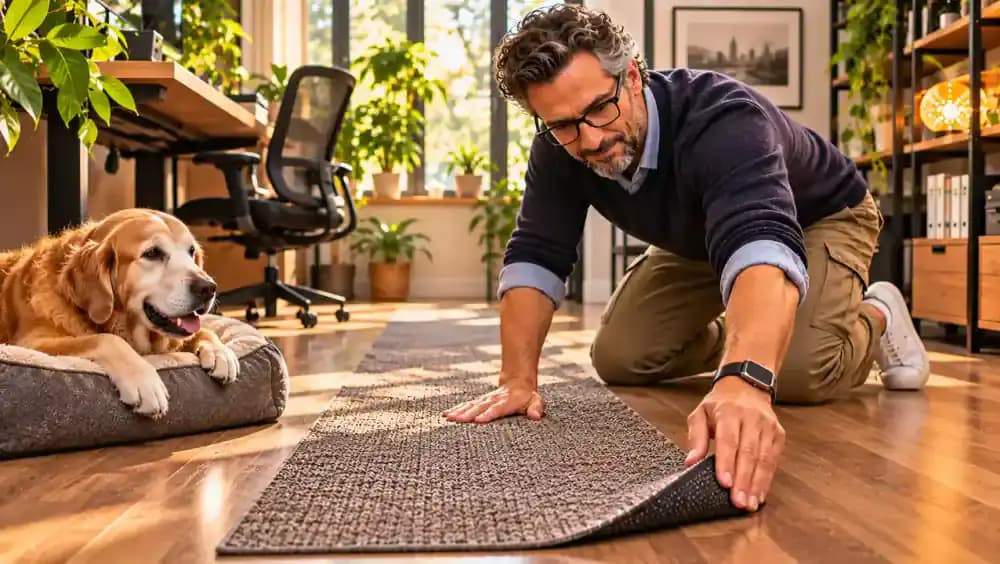
Choose Safe Flooring for Active Pets
Inspect your office flooring for slippery surfaces, particularly around desks and frequently used pathways. Place non-slip runners or mats where pets walk, turn, or jump down from furniture. Choose options with secure backing and edges that remain flat. Walk across each mat to test stability, and replace any covering that slides, bunches, or creates a tripping hazard.
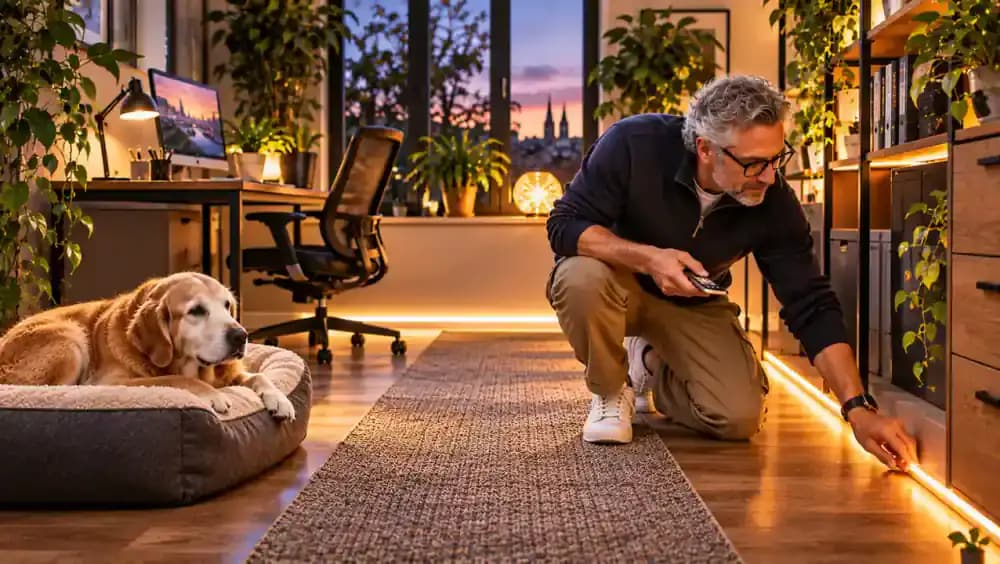
Improve Lighting for Pet Safety
Illuminate office pathways with soft, indirect lighting, especially if your pet moves around after dark. Position LED lights to reveal furniture edges and obstacles without shining directly into resting areas. Secure floor lamps against tipping and keep electrical cords inaccessible. Choose fixtures that remain cool during normal use, and check that nighttime routes stay clear and visible.
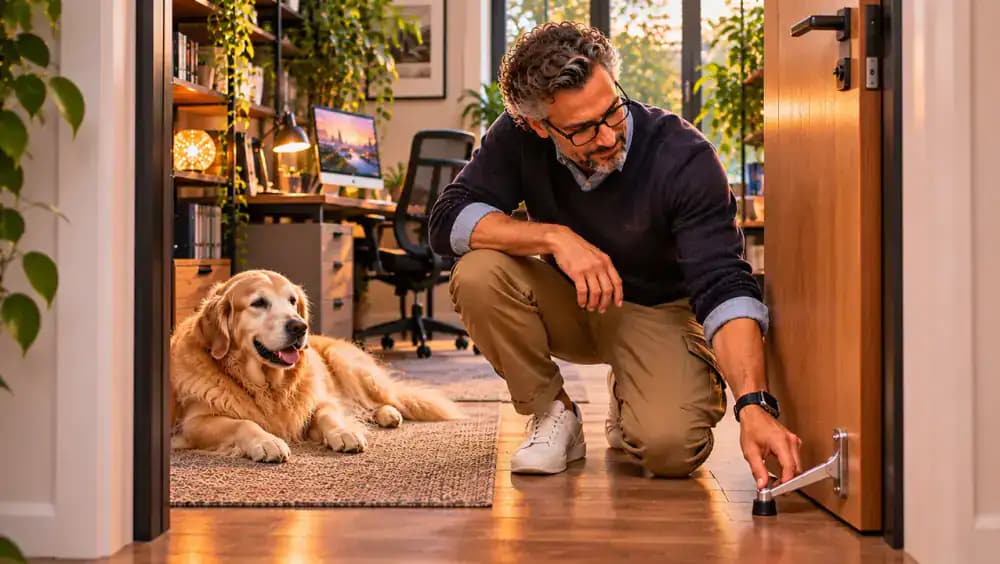
Prevent Accidents Around Office Doors
Check both sides of your office doorway before opening or closing the door, especially when pets follow closely behind you. Move slowly and watch for paws, tails, or animals resting near the threshold. If doors swing shut unexpectedly, install a suitable door holder that prevents sudden movement without obstructing access or compromising household safety.
Handle Printing and Craft Supplies Carefully
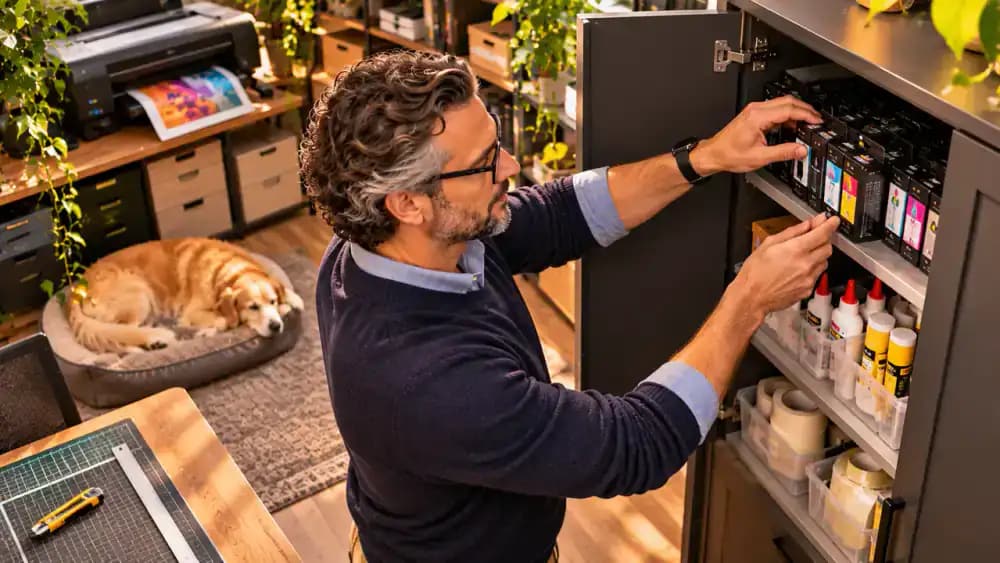
Keep pets away from your workspace when printing, trimming paper, or using adhesives and sprays. Store ink cartridges, toner, scissors, and craft chemicals in secured cabinets according to their product labels. Collect paper scraps, adhesive backing, and packaging immediately after each task. Clean your work surface and allow treated materials to dry before permitting pets nearby.
Keep Cats Away From Your Keyboard
Place a stable, padded cat perch beside your desk at a height that allows your cat to observe your activities. Encourage exploration with a favorite toy and reward your cat for choosing the perch instead of your keyboard. Gently redirect unwanted climbing without punishment. Keep the alternative resting spot comfortable, accessible, and away from unstable equipment.

Secure Temporary Office Equipment
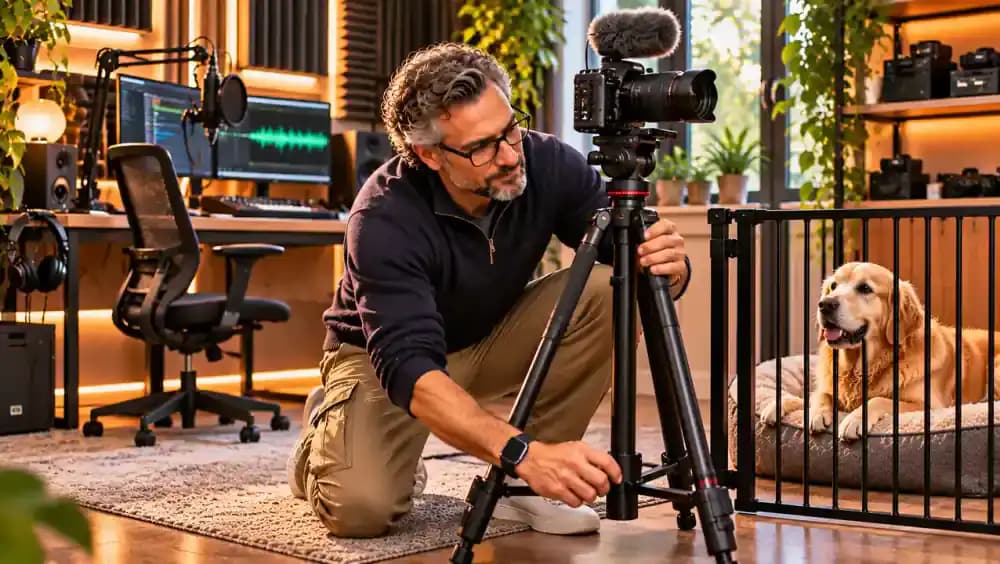
Inspect temporary equipment before setting up cameras, tripods, ring lights, or backdrops in your office. Position stands on stable surfaces, secure loose cables, and keep pets outside the setup area. Use a suitable pet barrier when necessary. After meetings or recording sessions, dismantle temporary equipment promptly and restore clear walking paths and safe access to resting areas.
Test Your Pet-Safe Office in Real Life
Evaluate your office during a normal workday rather than relying on a single inspection. Watch whether your dog and cat can reach water, use their resting areas, and move safely around furniture. Check for new obstacles after meetings, deliveries, or equipment changes. Record any problems you notice and adjust the layout to maintain everyday safety and comfort.

You're finally making progress on an important project when your dog wanders beneath your desk and starts sniffing a tangled bundle of charging cables. Meanwhile, your cat has discovered a container of paper clips and seems determined to knock every last one onto the floor. Sound familiar?
Working from home with pets can be wonderful, but an ordinary office isn't automatically a safe environment for curious dogs and cats. Electrical cords, exposed power strips, loose staples, rolling chairs, unstable shelves, and everyday office supplies can create hazards that are easy to overlook when you're focused on work.
The good news? Creating a pet-safe home office doesn't require an expensive renovation or a completely new furniture setup. A few thoughtful changes can make your workspace safer, more organized, and more comfortable for everyone sharing it.
This guide covers practical ways to secure cables, protect electrical equipment, store potentially dangerous supplies, and prevent furniture-related accidents. You'll also learn how to establish a dedicated resting spot for your pet, choose appropriate activities, and build short movement and play breaks into your workday.
Before your next meeting or deadline, take a look around your workspace from your pet's perspective. Check the floor, inspect accessible shelves, and consider what a curious nose or playful paw could reach. Small adjustments today can help prevent avoidable accidents tomorrow.
Where people go wrong
Leaving Electrical Cords Loose Under the Desk. Dangling cables can attract playful paws and curious mouths, especially when cords move as you adjust your equipment. Chewing an electrical cord can cause serious injury, while tangled cables may create tripping or equipment hazards. Route wires through protective sleeves, secure excess length, and keep connections inaccessible. Unplug and replace damaged cables immediately.
Assuming a Covered Power Strip Is Automatically Safe. A power strip hidden behind furniture or inside a random plastic container isn't necessarily protected from pets or overheating. Some enclosures restrict airflow, and poorly positioned strips can still be reached by determined animals. Choose a compatible, ventilated enclosure, follow manufacturer guidance, avoid overloading outlets, and keep electrical connections away from water.
Leaving Small Office Supplies Within Reach. Paper clips, staples, rubber bands, batteries, and pen caps may seem harmless, but pets can chew or swallow them. Batteries are particularly concerning because ingestion or chewing can cause severe injury. Keep small objects in secured drawers or closed containers, clear your desktop regularly, and check the floor for dropped items before leaving your workspace.
Forgetting to Secure Shelves and Heavy Equipment. A curious cat climbing a bookcase or a dog bumping a storage unit can create a dangerous situation when furniture isn't stable. Heavy monitors, printers, and decorative objects can also fall from poorly arranged surfaces. Anchor tall furniture, position heavier items low, and secure equipment according to manufacturer instructions. Avoid placing tempting toys on high shelves.
Moving a Rolling Chair Without Checking Below. Dogs and cats often settle beneath desks because the area feels sheltered and close to their owners. Unfortunately, tails, paws, and sleeping pets can end up directly beneath rolling chair wheels. Before moving your chair, look underneath and around the base. Encourage your pet to rest on a nearby bed positioned outside the chair's movement zone.
Placing Pet Water Beside Electronics. Keeping water close to your pet is important, but placing a bowl beside a computer, power strip, or charging station introduces unnecessary risk. A spilled bowl can damage equipment and create electrical hazards. Use a stable, spill-resistant container on a flat surface away from cables and outlets. Refresh the water regularly and clean spills promptly and safely.
Expecting Pets to Stay Quiet Throughout the Workday. A comfortable bed alone won't necessarily keep an energetic dog or curious cat occupied for hours. Without appropriate activity and attention, pets may investigate cables, climb furniture, or interrupt meetings. Build short play sessions, exercise breaks, and supervised enrichment into your schedule. Reward calm settling and adjust the routine to your pet's age, abilities, and needs.
Questions people ask
Start by inspecting your workspace from floor level. Secure electrical cables, cover accessible power connections, store small objects and chemicals behind closed doors, and anchor unstable furniture. Place a comfortable pet bed away from chair wheels and provide fresh water in a safe location. Because dogs and cats explore differently, consider both chewing hazards and elevated surfaces.
Fixed it?
Get one guide like this every Thursday.