How to Rotate Pet Toys So They Stay Interesting
A simple pet toy rotation system can make old toys feel new again, reduce clutter, improve enrichment, and help you learn what your dog or cat genuinely enjoys.
What you’ll need
Tap to tick things off before you start.
Start With Fewer Toys in Sight
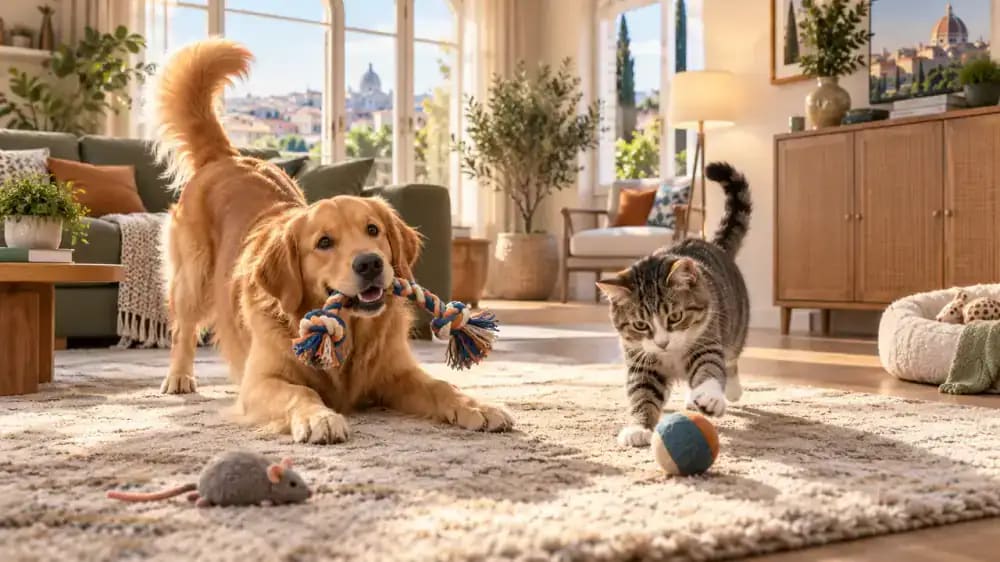
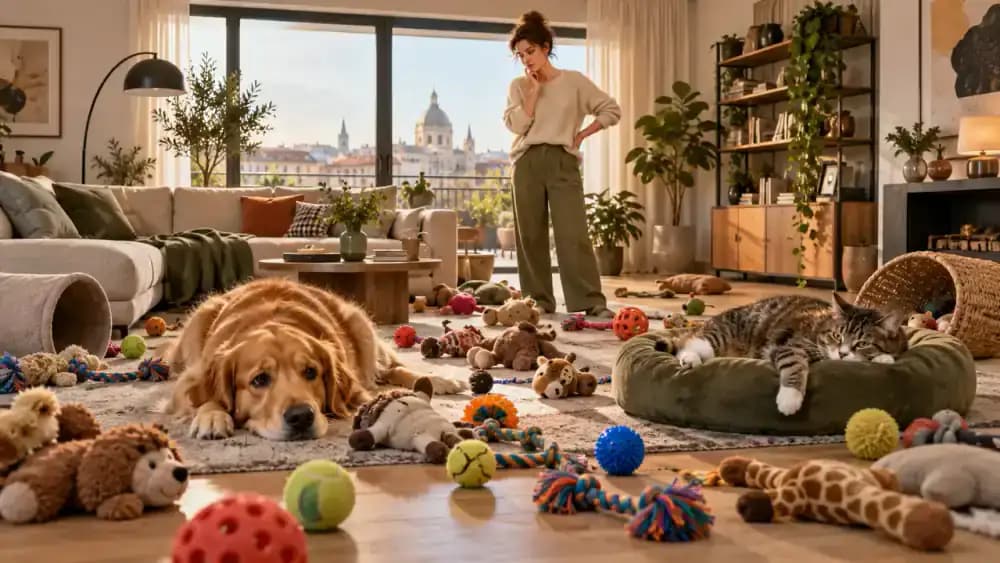
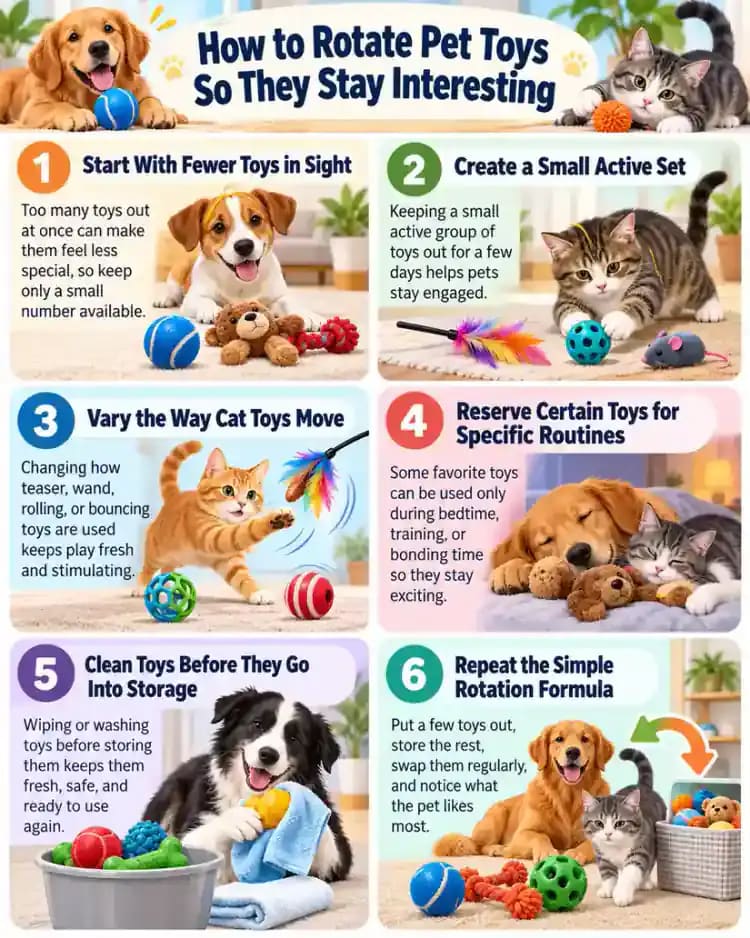
Before buying anything new, look at how many toys stay available all day. When balls, ropes, plush toys, and puzzles permanently cover the floor, your pet may simply stop noticing them. Rotation reduces that constant exposure and can make familiar toys feel more interesting without adding more household clutter.
Use Novelty Without Constant Shopping
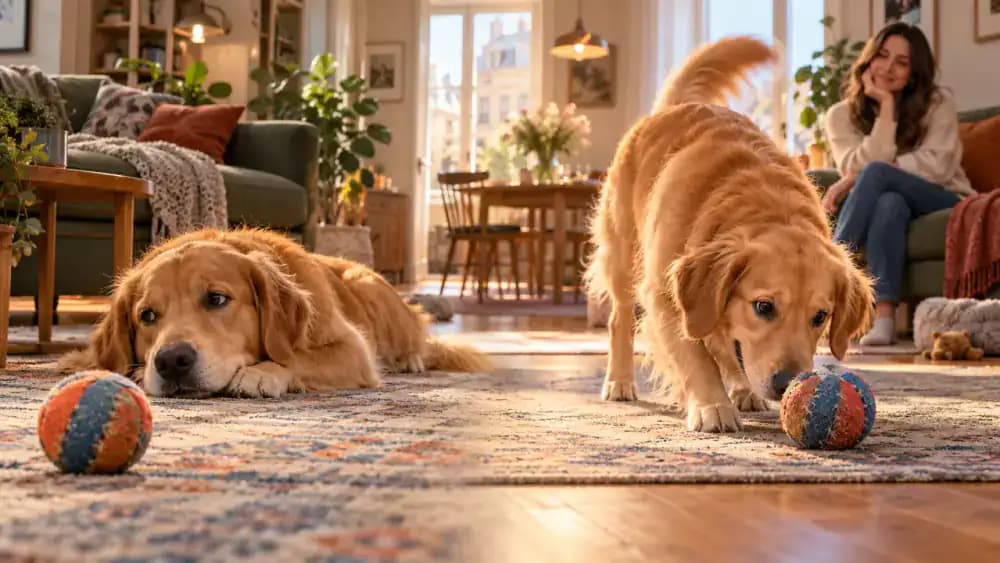
Rotation works by changing availability. A familiar toy that disappears for several days may attract more investigation when it returns. The purpose is not to fool your pet, but to manage access while preserving enough choice for comfort, exploration, independent play, and interaction with you.
Gather Every Toy Into One Place
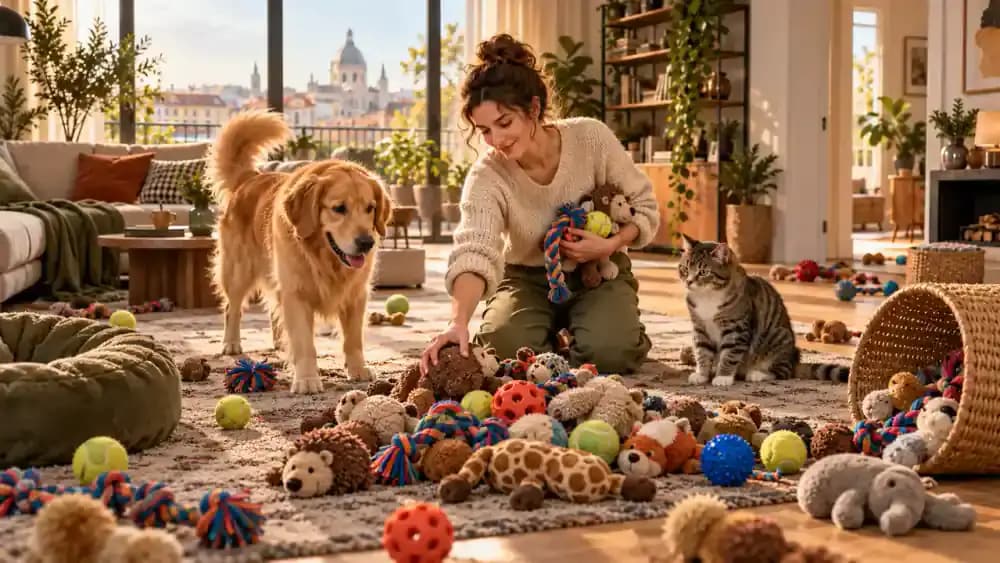
Collect toys from baskets, beds, under couches, behind doors, and any other hiding places. Do not begin rotating yet. First, see the complete collection. This inventory exposes duplicates, forgotten favorites, unused purchases, and damaged items while showing you what kinds of enrichment your pet already has.
Remove Anything That Is No Longer Safe
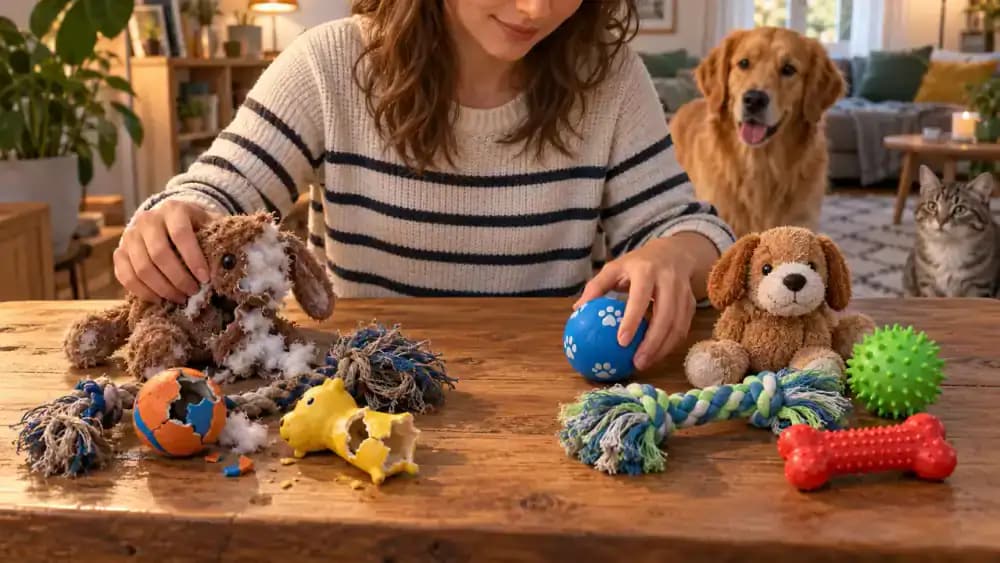
Inspect every toy before it can return to play. Set aside items with cracked plastic, loose rope fibers, sharp edges, exposed stuffing, broken squeakers, or pieces that could be swallowed. Wear changes toys over time, so something that was appropriate when new may no longer be suitable.
Sort the Safe Toys by Purpose
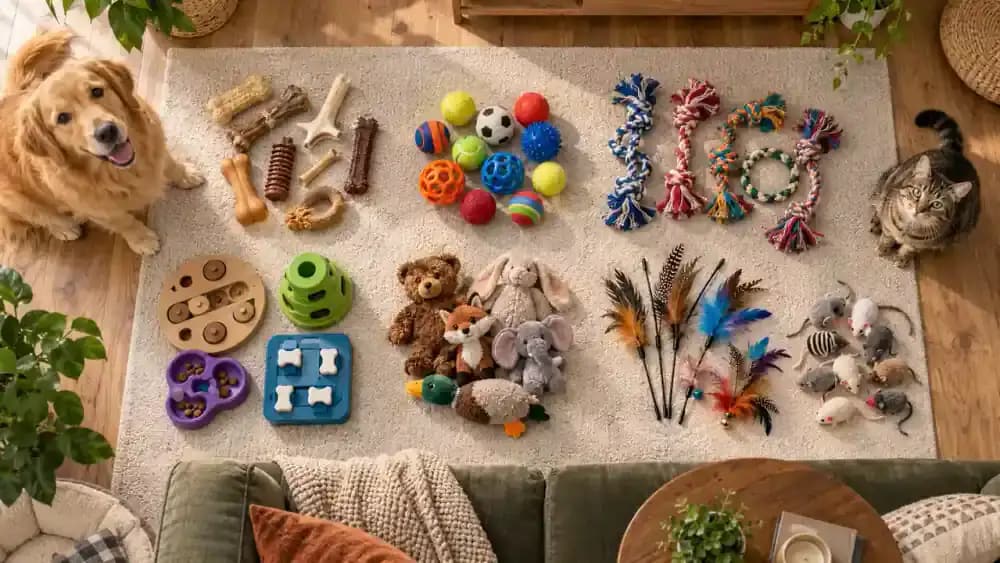
Create simple categories such as chews, fetch toys, tug toys, puzzles, soft toys, and cat hunting toys. Variety matters more than raw quantity. Five balls may provide less meaningful choice than one ball, one chew, one puzzle, one tug toy, and one soft comfort option.
Create a Small Active Set
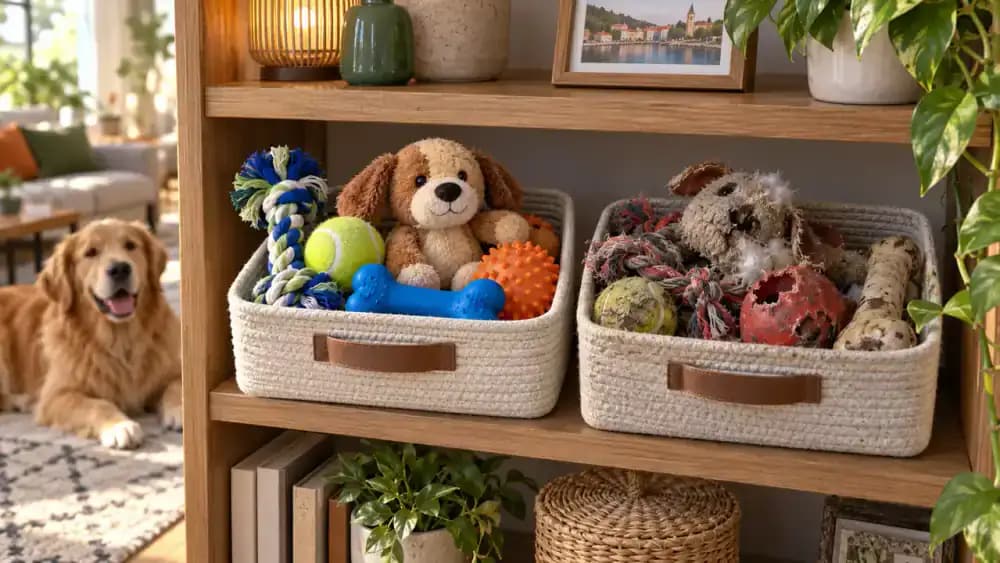
Choose a manageable number of toys for everyday access. Four to eight is a practical starting point for many households, although your pet and space may differ. Aim for contrasting experiences, such as chewing, movement, interaction, problem solving, and comfort, instead of filling one basket with similar items.
Leave Genuine Comfort Toys Available
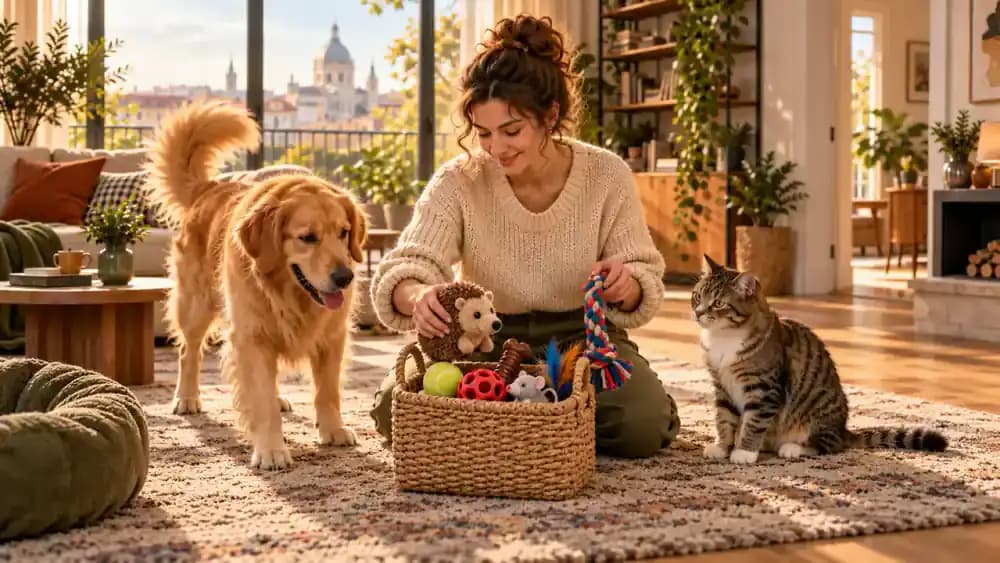
A toy used for sleeping, carrying, or settling may serve a different role from ordinary play. If your pet relies on one specific object and becomes unsettled without it, leave that item available. Rotate recreational toys around established comfort objects rather than automatically removing everything on schedule.

Hide Inactive Toys Completely
Place stored toys in a closed cabinet, lidded bin, or another location your pet cannot continually inspect. An open basket may provide less separation because the toys remain visible and easy to smell. Keeping inactive items genuinely unavailable strengthens the contrast when they return later.

Let Behavior Determine Rotation Timing
Weekly rotation is a convenient starting point, not a strict requirement. One pet may lose interest after a few days while another remains engaged much longer. Watch whether several active toys are being ignored. Change the set when engagement drops rather than obeying an arbitrary calendar.

Reintroduce Returning Toys With Interaction
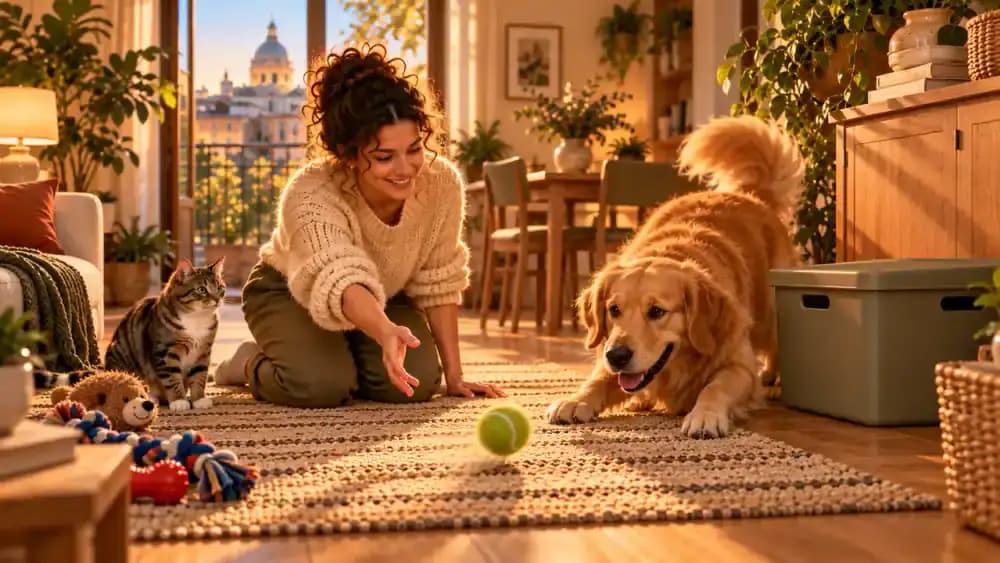
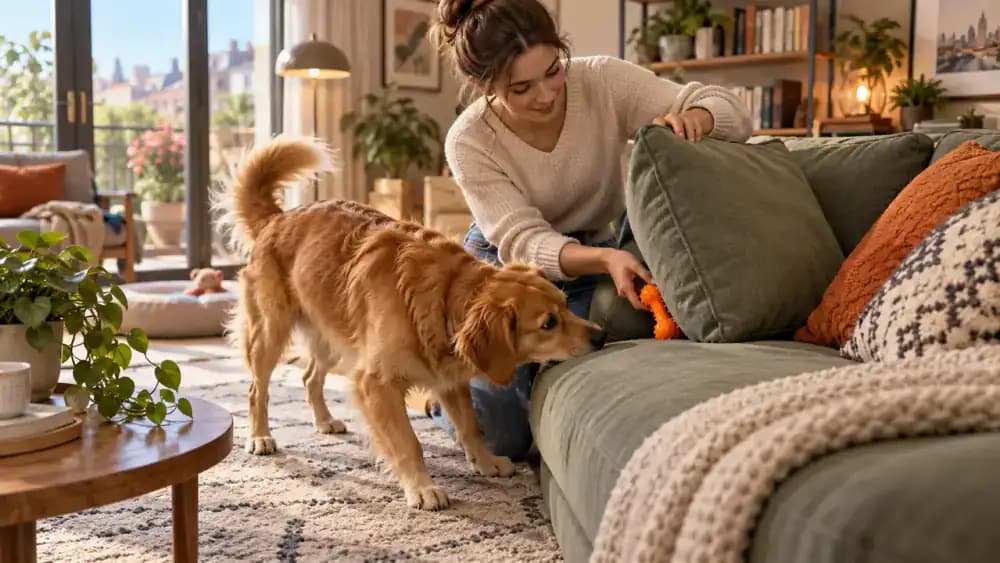
Do more than empty the next box onto the floor. Present toys individually and create immediate interest. Roll a ball, offer a tug, move a cat wand, or place food inside a puzzle. A few seconds of your participation can make a returning item much more relevant.
Give Dogs Different Kinds of Play
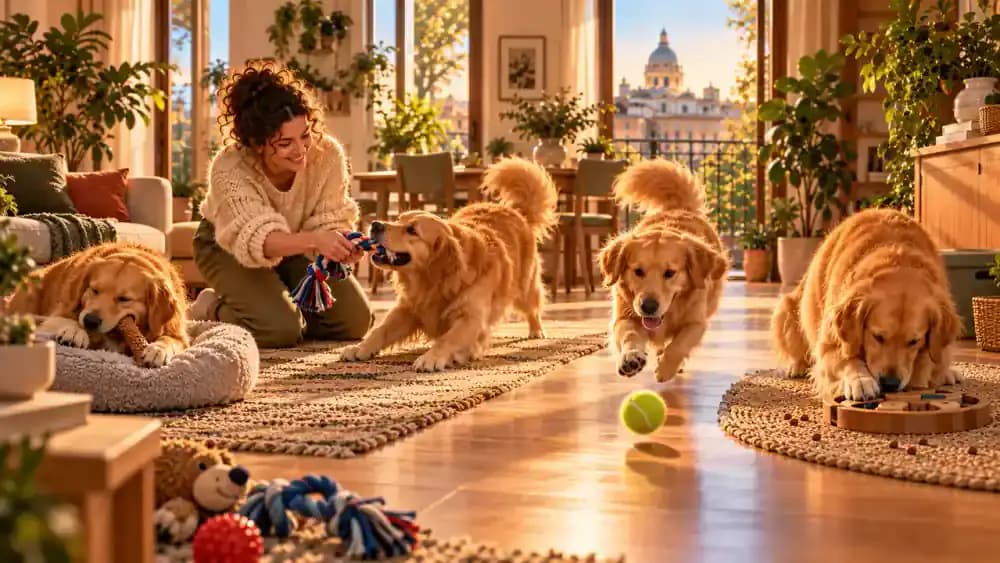
Dog rotations should vary by activity as well as toy type. Chews can support calmer independent time, while fetch and tug create more energetic or social interaction. Food puzzles add problem solving. If every available option produces the same style of play, the rotation loses much of its variety.
Vary the Way Cat Toys Move
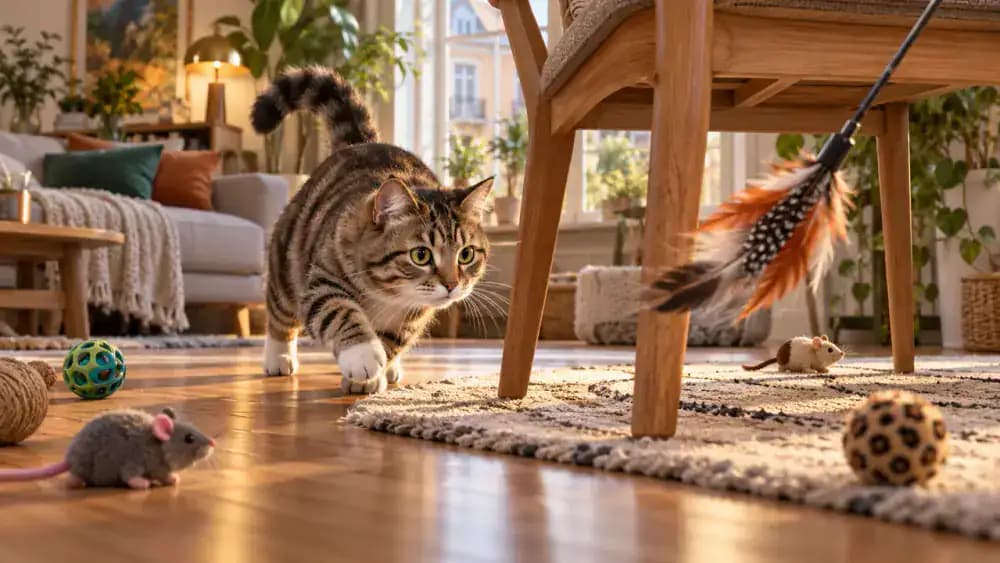
For cats, rotate prey-like movement patterns rather than focusing only on appearance. Alternate fluttering feathers, rolling balls, scurrying mice, and toys that disappear around furniture. Wand toys are generally best used under supervision and stored afterward. Different movement can be more stimulating than simply changing color.
Rotate Puzzle Feeders Separately
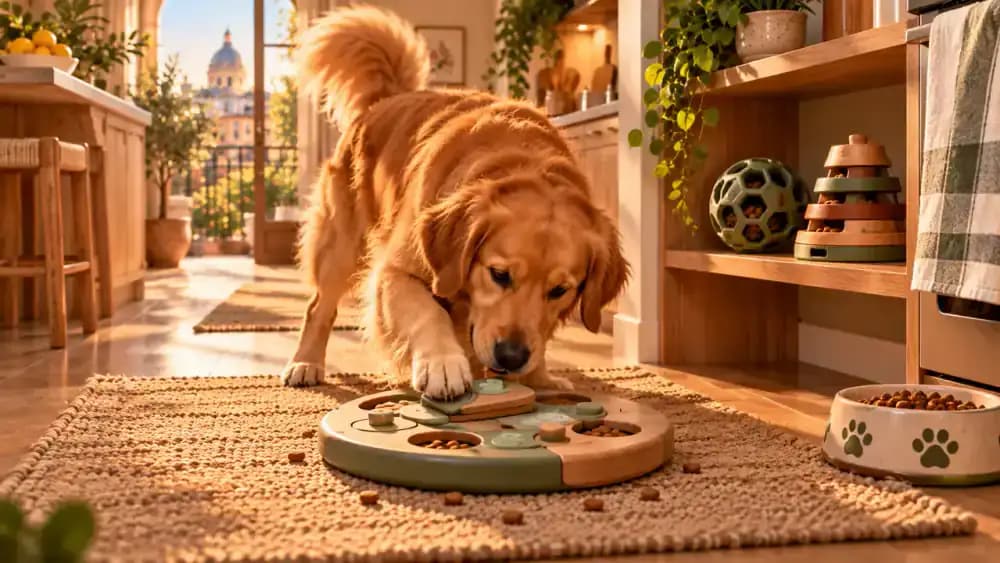
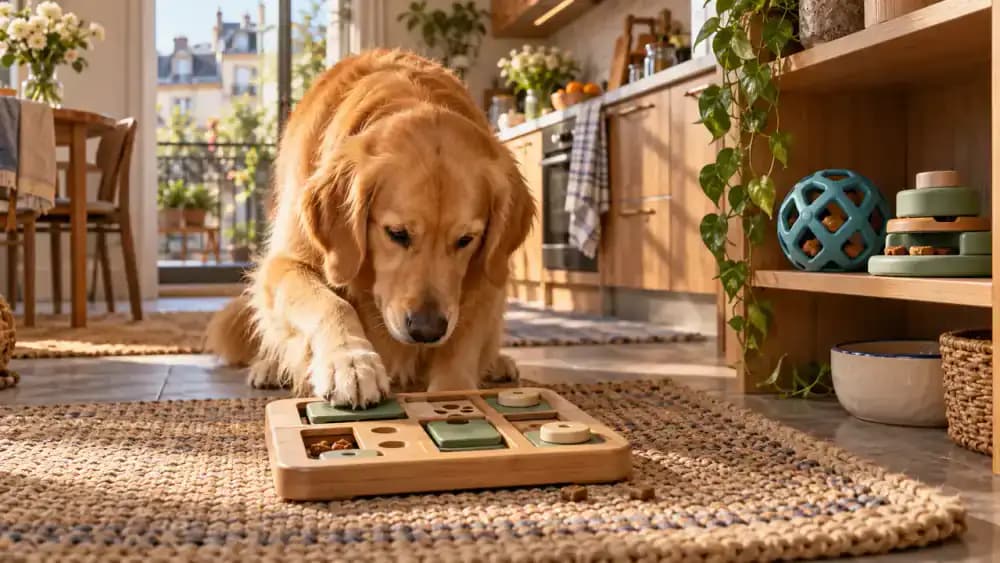
Pets can become extremely efficient at solving one familiar feeder. Keep puzzles as their own category and alternate between several designs when available. You can also change food placement, sequence, or difficulty when the product allows it. The goal is renewed problem solving without creating excessive frustration.
Refresh Scent Without Adding Fragrance
Cleaning washable fabric toys according to their care instructions naturally changes accumulated odors. Separating stored items can also keep every toy from smelling exactly the same. Do not apply perfume or essential oils to create novelty. Strong added scents may be unpleasant, irritating, or unsafe for pets.
Manage High-Value Toys Separately
If a particular toy triggers guarding, frantic behavior, competition, or repeated conflict, ordinary rotation is not the answer. Control access and supervise carefully. In multi-pet households, identical toys or separate play sessions may reduce competition better than expecting several animals to peacefully share one highly prized object.
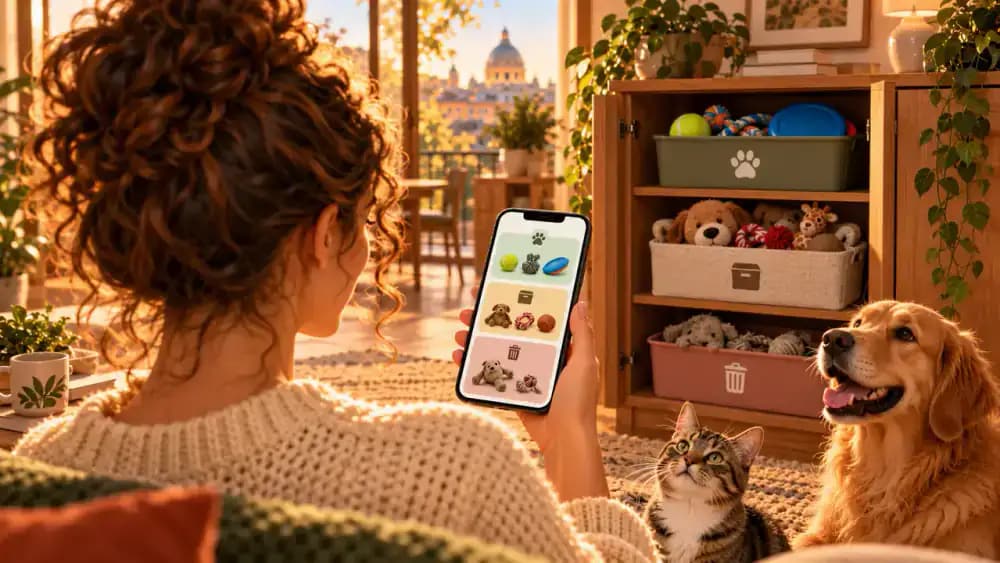
Track Active, Stored, and Retired Toys
A simple phone note is enough for most households. Keep three lists: active, stored, and retired. This prevents toys from disappearing into storage indefinitely and helps you see which categories actually receive use. You do not need a detailed spreadsheet unless you genuinely enjoy maintaining one.

Judge Engagement by What Your Pet Does
Possession is not the same as engagement. Carrying, chewing, chasing, pawing, investigating, or inviting you to interact are meaningful behaviors. A toy that stays untouched for several days tells you something different. Use those patterns to shape future rotations instead of choosing toys based on what looks appealing to you.
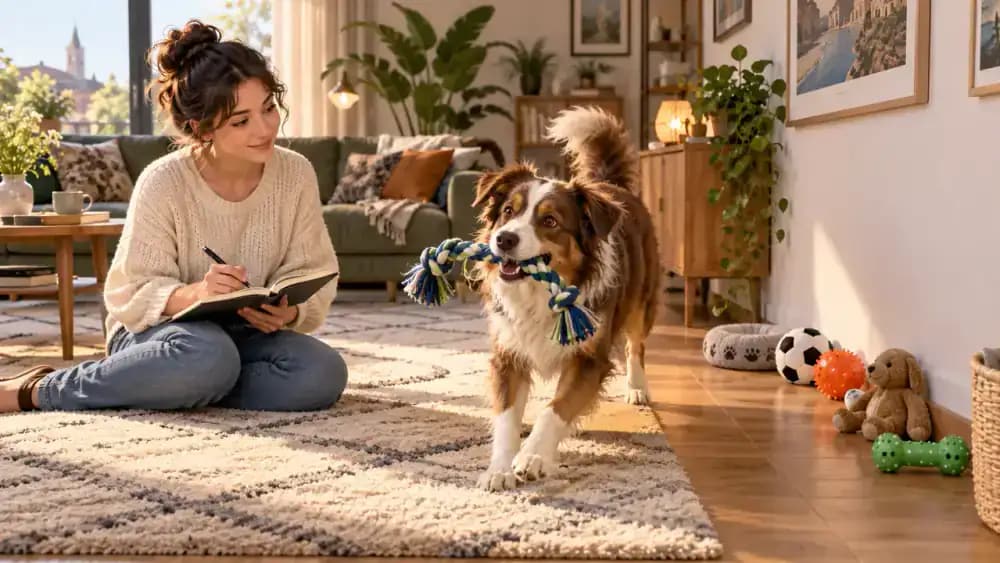
Reserve Certain Toys for Specific Routines
Some toys can become more valuable when tied to predictable activities. Use one tug during training, one puzzle during evening quiet time, or one wand during supervised cat play. Limited access can build anticipation, provided the routine remains enjoyable and ending the session does not repeatedly cause frustration.
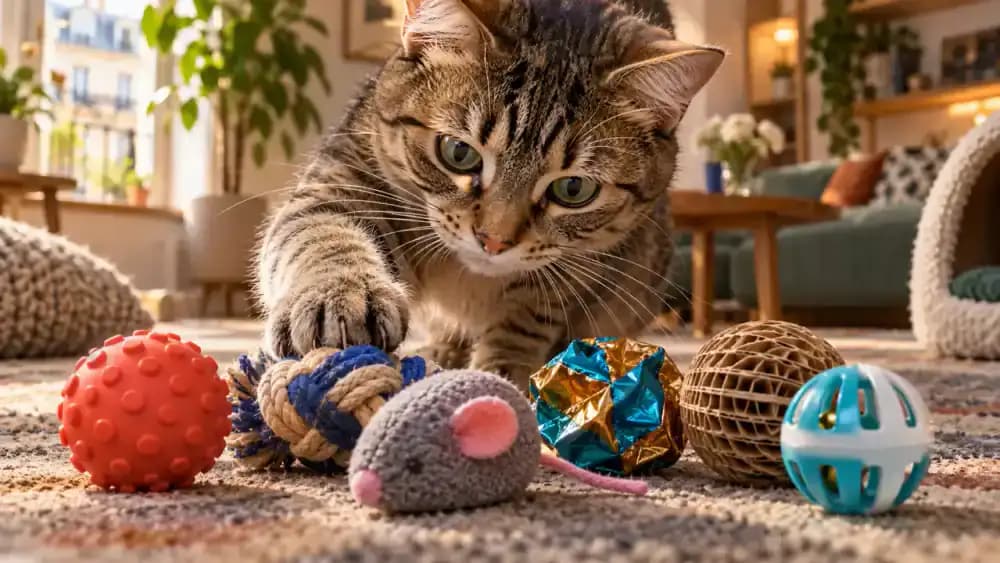
Include Different Textures
Rubber, fleece, rope, cardboard, crinkly fabric, and hard plastic all create different sensory experiences. Pets often develop clear texture preferences once you compare their choices. Use rotation to test those preferences, while promptly removing materials that expose fibers, foam, stuffing, or small fragments through wear.

Reassess Size as Your Pet Changes
Toy size should be reconsidered whenever an item returns. Puppies grow, kittens mature, and adult pets can change chewing strength or play habits. A formerly suitable ball or chew may become easier to swallow or destroy. Pay particular attention to detachable pieces and small objects.
Keep Easy Wins in the Rotation
Do not automatically respond to boredom by making every activity harder. A noisy, unstable, or overly complicated puzzle may simply be frustrating. If your pet repeatedly walks away, simplify the challenge, show how it works, or offer an easier alternative. Enrichment should include achievable successes as well as challenges.
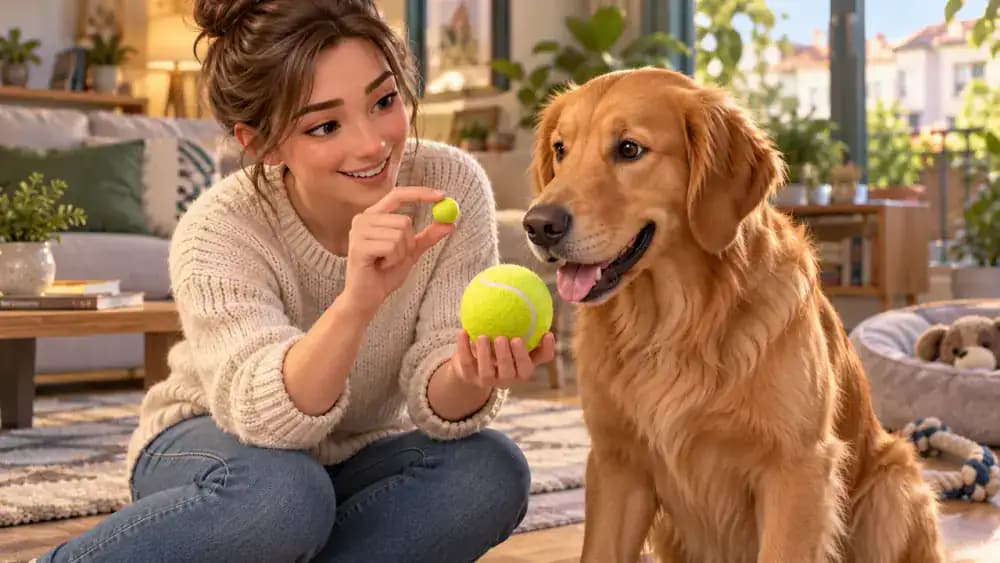
Give Unpopular Toys Another Chance
One failed introduction does not always mean a toy has no value. Present it calmly again, change the movement, or pair it with interactive play. Some pets need multiple exposures before showing interest. If engagement remains low, store the toy and test it again after a longer break.
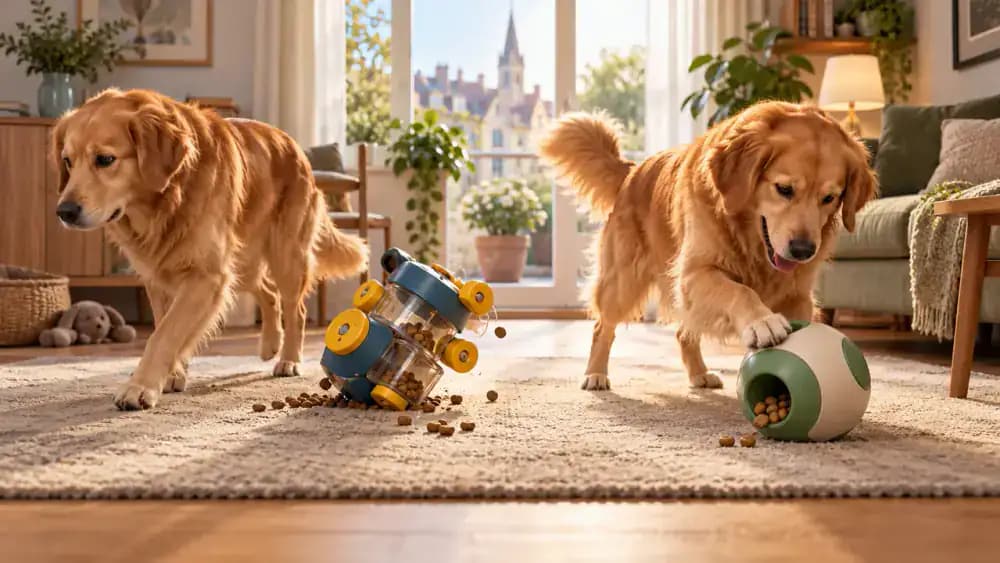
Adjust the Active Set for the Season
Match available toys to what your pet can realistically do right now. Outdoor fetch equipment may get more use in pleasant weather, while indoor puzzles and soft toys become more practical during rain, extreme heat, or short winter days. Seasonal usefulness matters more than rotating categories mechanically.
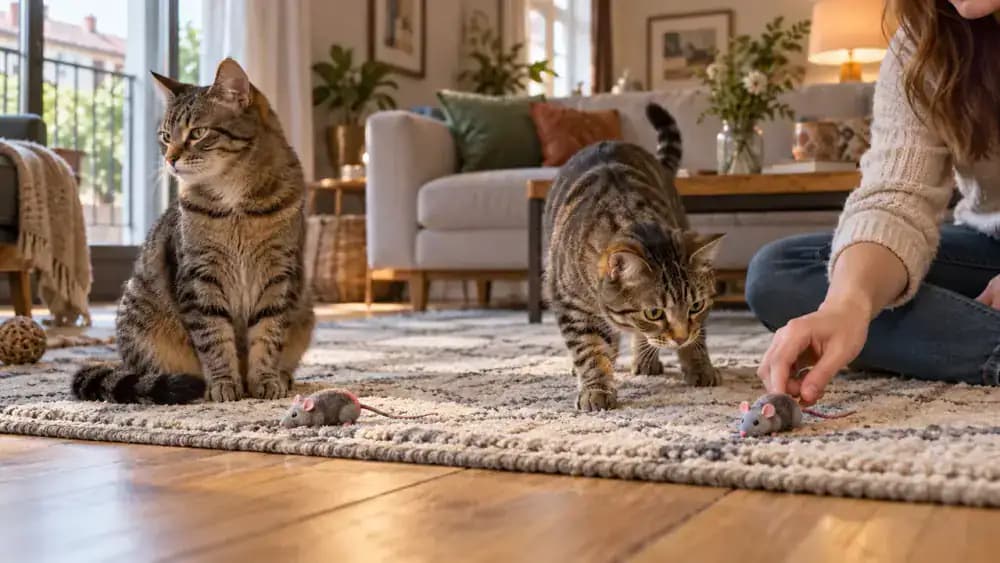
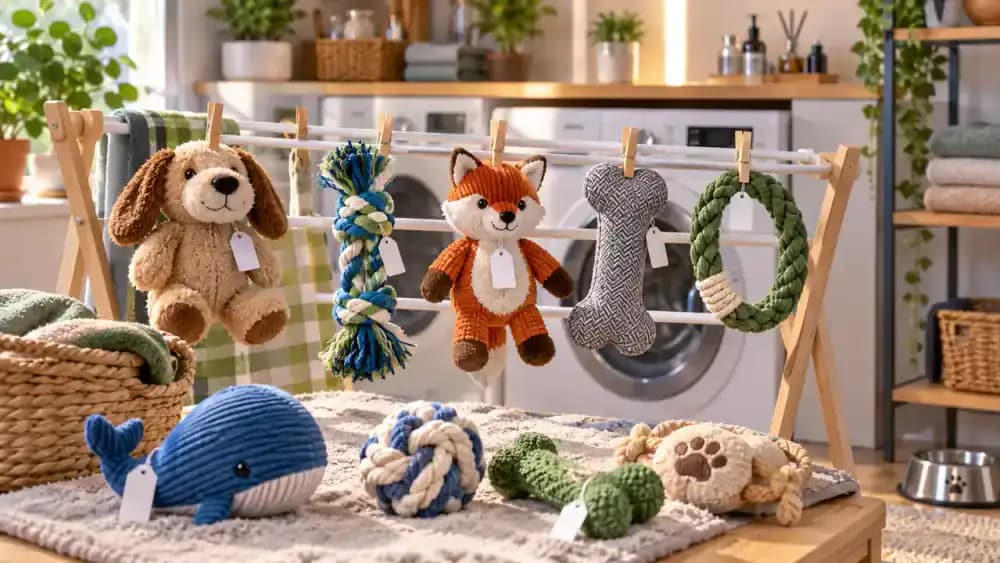
Clean Toys Before They Go Into Storage
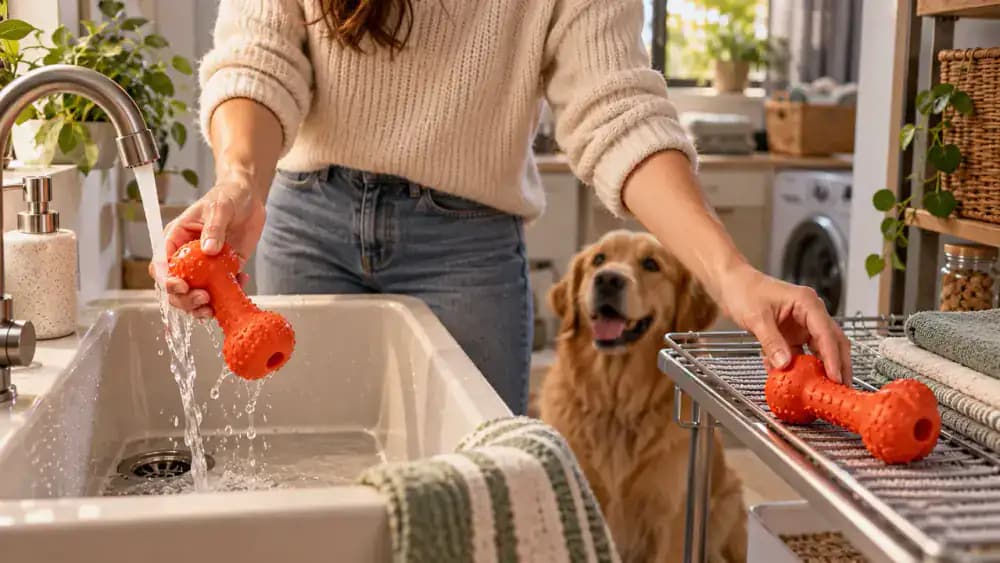
Remove food residue, dirt, saliva, and hair according to the manufacturer's care instructions before storing a toy. Allow washed items to dry completely before sealing them in a container. Cleaning before storage reduces odor and moisture problems while making the next safety inspection easier.
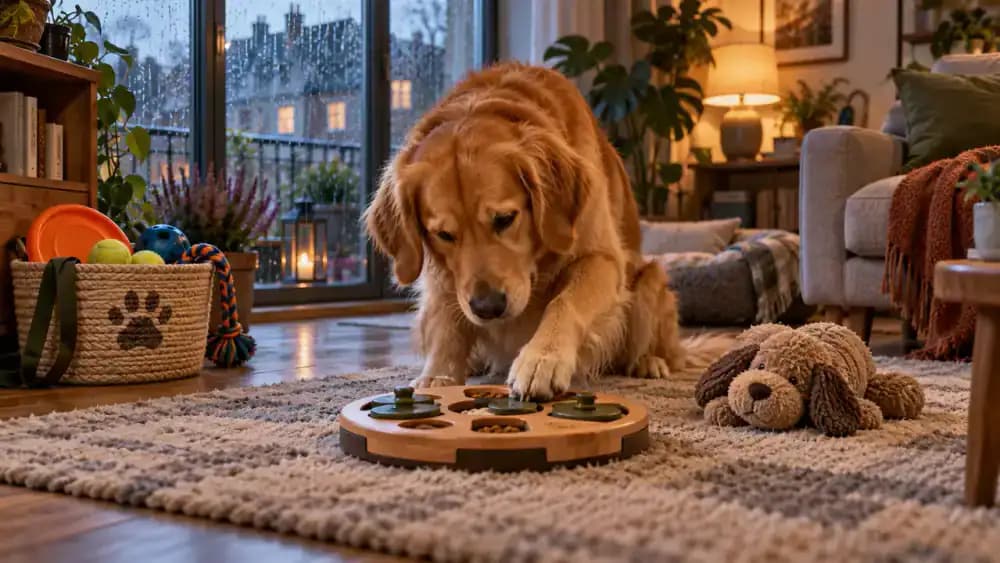
Separate Ready Toys From Problem Toys
Maintain one container for clean, intact toys that can safely return to play and another for items awaiting repair, cleaning, inspection, or disposal. This prevents a damaged toy from accidentally reentering the active set. Clear physical separation makes safety part of the routine instead of relying on memory.
Personalize Rotation for Each Pet
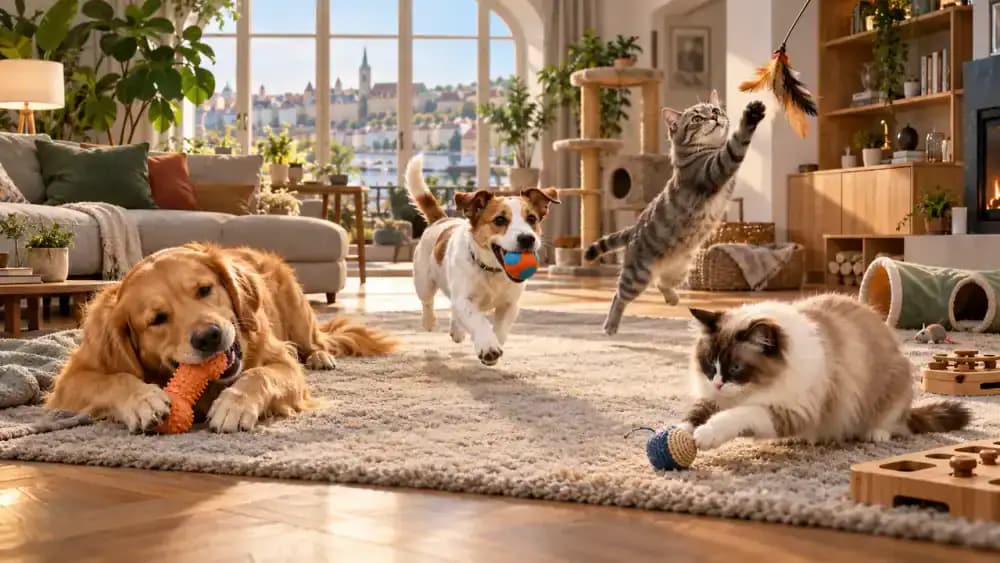
Multi-pet households should not assume every animal wants identical enrichment. One dog may prefer chewing while another retrieves. One cat may chase airborne toys while another prefers ground-level movement. Shared options are useful when safe, but individual preferences should shape at least part of each rotation.
Rotate the Activity, Not Just the Object
The same toy can support very different experiences depending on how you use it. Alternate independent play with short training sessions, interactive games, scent searches, or hide-and-seek activities. Changing your participation can refresh an existing object without changing the toy itself or adding another purchase.
Test the System Before Buying More
When interest drops, resist immediately purchasing another toy. First check whether the current collection is overexposed, poorly organized, or missing variety. After several rotation cycles, genuine gaps become easier to identify, such as lacking an appropriate chew, interactive toy, or puzzle that suits your pet.
Make the Routine Easy to Maintain
A rotation system should reduce chaos rather than create another household chore. Keep categories broad, storage accessible, and the active set small. Inspect, clean, swap, and observe. If your rules become too complicated to follow consistently, simplify them. A basic routine used regularly is more effective than a perfect system abandoned quickly.

Repeat the Simple Rotation Formula
Keep fewer toys available, divide the collection by purpose, choose a varied active set, store the rest out of sight, inspect every returning item, and observe what your pet actually enjoys. Repeating that cycle can create fresh opportunities for play while reducing clutter, unnecessary shopping, and wasted toys.
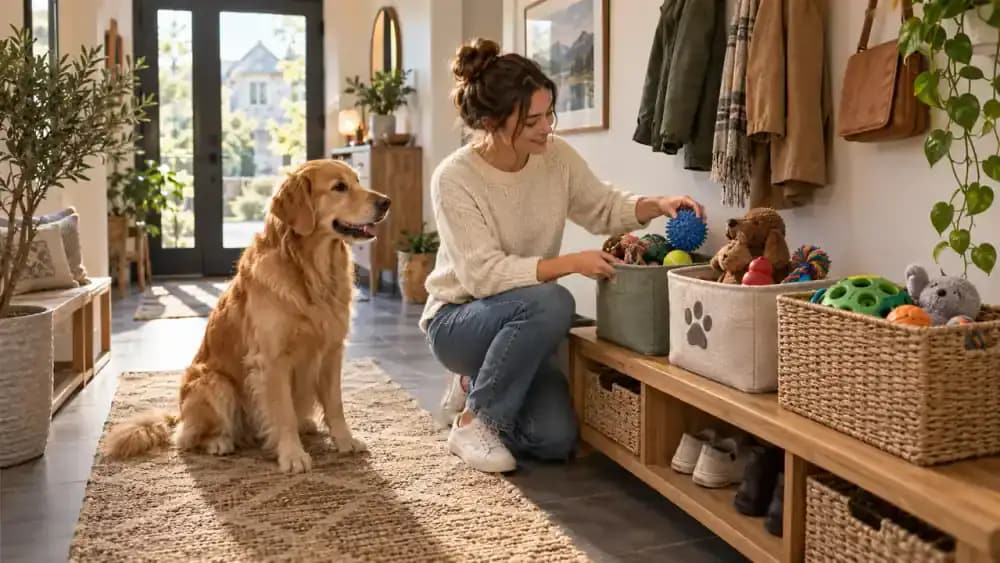
A mountain of toys does not automatically create better enrichment. Dogs and cats can stop noticing objects that remain constantly available, even when those toys were once favorites. A thoughtful rotation system changes what your pet can access, protects comfort items, removes damaged toys, and creates more variety without filling your home with new purchases. The best system is not complicated. It combines a small active selection, safe storage, regular inspection, and observation of what your individual pet actually chooses to do.
Where people go wrong
Leaving Every Toy Available. Constant exposure can make individual toys easier to ignore. Keep a smaller varied set active and store the rest.
Rotating Without Inspecting. A stored toy can deteriorate or become inappropriate as your pet grows. Check condition and size before each return.
Following a Rigid Schedule. Rotate based on declining engagement instead of changing toys only because a calendar says it is time.
Buying Instead of Observing. Low interest does not automatically mean your pet needs more toys. First test organization, variety, difficulty, and presentation.
Ignoring Individual Preferences. Different pets may prefer different movement patterns, textures, activities, and difficulty levels.
Mixing Damaged Toys With Ready Toys. Keep problem items physically separate so broken or dirty toys cannot accidentally return to play.
Questions people ask
There is no universal schedule. Weekly rotation is a reasonable starting point, but your pet's behavior matters more. Rotate when several available toys are consistently being ignored.
Fixed it?
Get one guide like this every Thursday.