How to Reclaim a Foreclosed Home: Timelines, Rights, and Options
Can you reclaim your home after foreclosure? Learn how the federal 120-day protection generally works, why redemption rights vary by state, and what steps you can take to explore repayment options, get free housing counseling, and protect your home.

What you’ll need
Tap to tick things off before you start.
What Is Foreclosure and How Does It Work?
Foreclosure is the legal process through which a lender seeks to recover unpaid mortgage debt by selling the property securing the loan. According to the Consumer Financial Protection Bureau (CFPB), your home serves as collateral when you obtain a mortgage. If you fail to meet your repayment obligations, the lender may enforce its security interest through foreclosure. However, lenders must follow applicable legal requirements. Foreclosure is not an immediate consequence of one missed payment, and ownership does not automatically transfer when payments become overdue.

The Foreclosure Process: From Missed Payments to Sale
Foreclosure typically develops through several stages rather than one sudden event. Missed mortgage payments create delinquency, followed by collection communications and potentially a notice of default. If the delinquency remains unresolved, the lender or servicer may initiate formal foreclosure proceedings. Required notices and legal procedures generally precede a foreclosure auction or sale. Importantly, starting foreclosure does not mean the property has already been sold. The process may involve additional waiting periods, hearings, or other legally required steps before completion.

Understanding the Federal 120-Day Foreclosure Protection
Federal mortgage servicing regulations generally prohibit covered servicers from making the first foreclosure notice or filing until a borrower is more than 120 days delinquent. The CFPB explains that this requirement gives homeowners time to explore possible solutions. Limited exceptions apply, including certain due-on-sale and subordinate lien situations. The rule does not forgive missed payments, prevent collection notices, or guarantee 120 additional days before a sale. It primarily restricts when the formal foreclosure process may begin.

How Foreclosure Timelines Vary by State
Foreclosure procedures depend heavily on state law. In judicial foreclosure states, lenders generally pursue foreclosure through the courts, where filings, hearings, and judicial decisions can affect scheduling. Nonjudicial foreclosure allows qualifying lenders to proceed without filing a foreclosure lawsuit, provided statutory requirements are satisfied. Notice periods, publication requirements, and opportunities to contest proceedings also differ. Court backlogs, borrower responses, and mortgage characteristics can influence the overall duration. Consequently, foreclosure timelines cannot be reliably predicted using one nationwide schedule.

Can You Reclaim Your Home After Foreclosure?
Reclaiming a property after foreclosure may be possible when state law provides statutory redemption rights. These rights allow certain former homeowners to recover ownership after a foreclosure sale by meeting specific legal and financial requirements. Redemption periods vary considerably, and some states provide no general post-sale redemption opportunity. Eligibility may depend on the foreclosure method, property characteristics, and applicable deadlines. A completed sale does not automatically establish redemption eligibility. Determining whether this option exists requires reviewing the law governing the specific property.

How Much Does Foreclosure Redemption Cost?
The cost of redeeming a foreclosed property depends on applicable state law and the circumstances of the sale. Depending on the jurisdiction, the required amount may include the foreclosure sale price, interest, and allowable expenses. Redemption differs from mortgage reinstatement, which generally involves paying overdue installments and permitted charges to restore a delinquent loan before foreclosure is completed. Both remedies have distinct deadlines and requirements. An accurate written calculation from the appropriate authorized party helps establish the financial obligation.

Contact Your Mortgage Servicer Before It Is Too Late
Your mortgage servicer manages payment collection and routine loan administration. Its contact information typically appears on your mortgage statement. Before calling, gather your loan number, payment history, recent notices, and available financial records. Request the current delinquency amount, an explanation of charges, and confirmation of any pending foreclosure deadlines. Keep a dated record of conversations, representative names, and documents submitted. When possible, request important figures and deadlines in writing so you can accurately track subsequent developments.

Explore Loan Modifications and Foreclosure Alternatives
Mortgage servicers may offer several loss mitigation options, depending on loan requirements and financial circumstances. A repayment plan spreads overdue payments across an agreed schedule, while temporary forbearance can reduce or pause payments for a limited period without necessarily eliminating the debt. A loan modification changes existing mortgage terms. Eligibility generally requires financial review and supporting documentation. When retaining the property is not financially sustainable, alternatives such as a short sale or deed in lieu of foreclosure may be considered.

Where to Find Free Foreclosure Help
The U.S. Department of Housing and Urban Development (HUD) supports approved housing counseling agencies that provide free foreclosure prevention counseling. Counselors can help review household finances, explain available options, organize documents, and prepare communications with mortgage servicers. Legitimate agencies can be located through HUD's official housing counseling resources or CFPB guidance. Be cautious of foreclosure rescue companies demanding advance fees, guaranteeing results, or pressuring homeowners to transfer property ownership. Housing counselors provide guidance but do not replace attorneys.

What to Do Next to Protect Your Home
Prioritize actions according to urgency. Identify your current foreclosure stage, record every known deadline, and organize mortgage statements, notices, correspondence, and financial documents in one accessible location. Separate confirmed facts from unresolved questions and maintain a written record of important developments. If a lawsuit, scheduled sale, disputed legal notice, or redemption deadline is involved, prompt consultation with a qualified foreclosure attorney is particularly important. Evaluate potential outcomes realistically, including whether continued homeownership would remain financially manageable.

How to Verify Your Mortgage Balance and Foreclosure Status
Start by comparing your mortgage statements with bank records and payment confirmations. Check the principal balance, missed installments, late fees, escrow charges, and any disputed amounts. Identify both the company servicing your loan and the entity that owns it, since they may differ. Request an updated account statement and foreclosure status confirmation. If legal proceedings are suspected, check available court records or recorded foreclosure notices. Confirm whether a sale has been scheduled, postponed, or completed.

Understanding Your Rights During Loss Mitigation Review
Federal mortgage servicing rules provide certain protections when borrowers submit complete loss mitigation applications. For covered loans, an application received more than 37 days before a scheduled foreclosure sale generally triggers evaluation requirements. Additional protections may restrict foreclosure activity while qualifying applications or appeals remain pending. The Consumer Financial Protection Bureau explains that timing and completeness matter. Submitting documents does not automatically guarantee approval or stop every sale. Servicers must follow applicable rules governing application acknowledgment, review, and written decisions.

What Happens at a Foreclosure Auction?
A foreclosure auction allows eligible bidders to compete for property offered under applicable foreclosure procedures. The lender may submit a credit bid using debt owed rather than paying the entire bid in cash. Other bidders typically must satisfy auction payment requirements. The winning bid establishes the sale price, with proceeds distributed according to applicable priorities and law. However, the auction itself does not always finalize ownership immediately. Confirmation procedures, recorded deeds, or other legal requirements may remain before title transfers.

Can You Stay in Your Home After Foreclosure?
A completed foreclosure sale does not necessarily mean occupants must leave immediately. Possession rights depend on state law, the foreclosure method, and whether additional legal procedures are required. New owners may need to provide notices or obtain a court order before removing occupants. Some jurisdictions recognize limited post-sale occupancy protections. However, a potential redemption right does not automatically guarantee continued residence. Homeowners and tenants may also have different protections, making the property's occupancy status legally significant.

What Happens to Your Remaining Mortgage Debt?
If foreclosure sale proceeds do not cover the outstanding mortgage debt and allowable costs, the difference is generally called a deficiency. Depending on state law and loan circumstances, a lender may seek a deficiency judgment against the borrower. Some states restrict these judgments for certain residential mortgages or foreclosure methods. A completed property sale therefore does not always eliminate personal repayment obligations. The amount potentially owed depends on applicable calculations, statutory protections, and whether the lender can legally pursue collection.

How Foreclosure Affects Your Credit Score
Foreclosure can significantly damage credit because mortgage delinquencies and foreclosure records may appear on consumer credit reports. The effect varies with a borrower's previous credit history and other reported accounts. Foreclosure information generally may remain for up to seven years from the delinquency that led to foreclosure. Rebuilding credit involves making subsequent payments on time, keeping revolving balances manageable, and reviewing reports for inaccuracies. Negative information may become less influential over time as positive payment history develops.

Can Bankruptcy Delay or Stop Foreclosure?
Filing bankruptcy generally creates an automatic stay that temporarily restricts many collection activities, including qualifying foreclosure proceedings. However, exceptions apply, and creditors may request court permission to continue foreclosure. Chapter 13 bankruptcy can sometimes allow eligible homeowners to address mortgage arrears through a court-approved repayment plan while maintaining required ongoing payments. Bankruptcy does not automatically eliminate mortgage liens or guarantee permanent foreclosure prevention. Because filing timing and legal consequences are complex, evaluation by a qualified bankruptcy attorney is essential.

What If Your Mortgage Servicer Made an Error?
Mortgage servicing errors can include misapplied payments, incorrect fees, inaccurate balances, or failures to properly process account information. Under applicable federal rules, borrowers may submit written notices of error to designated servicer addresses. The Consumer Financial Protection Bureau explains that qualifying notices trigger acknowledgment and investigation requirements, subject to exceptions and deadlines. Supporting documents help identify disputed transactions. Complaints may also be submitted through the CFPB. A servicing dispute does not automatically suspend foreclosure proceedings or eliminate existing payment obligations.

How to Evaluate Whether Keeping Your Home Is Affordable
Recovering a property only makes financial sense when future housing expenses are realistically sustainable. A household budget should account for mortgage payments, property taxes, insurance, utilities, maintenance, and other essential obligations. Potential repayment arrangements may increase near-term monthly costs. Compare reliable income against recurring expenses while allowing room for emergencies and unexpected repairs. Available savings also matter because reclaiming ownership can require substantial upfront funds. Evaluating affordability separately from emotional attachment helps clarify the financial risks of retaining the property.

Moving Forward After Foreclosure or Redemption
Whether a homeowner loses a property or successfully reclaims it, financial recovery requires continued attention to housing stability and documentation. Preserve foreclosure notices, payment confirmations, legal records, and any documents establishing ownership or debt resolution. Stable housing arrangements and predictable monthly expenses provide a foundation for rebuilding savings. Future mortgage eligibility may depend on credit history, income, loan programs, and applicable waiting periods. Maintaining accurate records and developing sustainable financial habits can support longer-term recovery and future homeownership opportunities.

How Mortgage Type Affects Foreclosure Protections
Foreclosure assistance and borrower protections can depend on the type of mortgage. Conventional loans generally follow investor and servicer requirements, while FHA-insured, VA-guaranteed, and USDA-backed mortgages may offer additional program-specific assistance. These programs have different eligibility rules, servicing obligations, and available hardship solutions. Borrowers can identify their loan type through mortgage documents or their servicer. Official resources from HUD, the Department of Veterans Affairs, and USDA provide information about applicable programs. Federal and state foreclosure requirements may also apply.

What Happens When Your Mortgage Is Sold or Transferred?
Mortgage ownership and loan servicing are separate functions. The owner holds the financial interest in the loan, while the servicer manages payments and account administration. Either relationship may change during the mortgage term. Federal rules generally require applicable notices when servicing transfers, including information about the new servicer and payment arrangements. Certain timely payments sent to the former servicer receive limited protections during the transfer period. Preserving statements, transfer notices, and payment confirmations helps document account continuity.

Can You Challenge an Improper Foreclosure?
A foreclosure may be challenged when the party pursuing it fails to satisfy applicable legal requirements. Potential issues include defective notices, improper service of court documents, procedural violations, or disputes over the authority to enforce the mortgage. However, an alleged mistake does not automatically invalidate foreclosure proceedings. Available defenses, evidence requirements, and filing deadlines depend on state law. Reviewing recorded documents and court filings with a qualified foreclosure attorney can help determine whether a legally recognized challenge exists.

How to Request a Foreclosure Sale Postponement
A foreclosure sale postponement may be available through lender agreement, applicable servicing protections, or court procedures. The process depends on the foreclosure method and governing law. A borrower may request additional time to complete an assistance review, finalize financing, or address another documented issue. However, submitting a request or continuing negotiations does not guarantee that the sale will be delayed. Any granted postponement should be confirmed through the appropriate authorized party, including the revised sale date and applicable conditions.

Selling Your Home Before Foreclosure
Selling a property before foreclosure may allow homeowners to resolve mortgage obligations through a voluntary transaction. A traditional sale generally works when proceeds can cover secured debts, transaction costs, and required payments. If the property is worth less than the mortgage balance, a short sale may require lender approval to accept reduced proceeds. Remaining equity, closing expenses, possible unpaid balances, and tax consequences influence the outcome. Completing a sale also requires sufficient time before applicable foreclosure deadlines.

Deed in Lieu of Foreclosure: When It Makes Sense
A deed in lieu of foreclosure involves voluntarily transferring property ownership to the lender or its designated recipient rather than completing foreclosure. Lender acceptance is not guaranteed and may depend on hardship qualifications, property condition, title status, and other requirements. Junior liens or competing ownership claims can complicate approval. Importantly, transferring the deed does not automatically establish complete forgiveness of every obligation. Written agreements should clearly address debt satisfaction, remaining liabilities, relocation arrangements, and the terms governing the transfer.

What Happens to Your Home Equity During Foreclosure?
Home equity represents the difference between a property's market value and debts secured against it. During foreclosure, sale proceeds generally pay authorized expenses and secured claims according to applicable priority rules. If money remains after required distributions, a surplus may be available to eligible former owners or other claimants. However, surplus funds are not guaranteed, even when estimated property equity appears substantial. State procedures determine how excess proceeds are held, who receives notice, and how eligible parties claim them.

Property Taxes, Insurance, and Other Liens
Mortgage debt is not necessarily the only financial claim affecting a property. Unpaid property taxes, homeowners association assessments, judgment liens, and other secured obligations may complicate foreclosure or redemption. Some claims receive special priority under state law, while others may survive particular foreclosure proceedings. Insurance obligations can also create costs, including lender-placed coverage when required policies lapse. Understanding the property's recorded liens and outstanding charges is important because paying the primary mortgage alone may not resolve every ownership-related obligation.

Potential Tax Consequences of Foreclosure
Foreclosure can create tax consequences beyond losing ownership. Depending on the loan and transaction, canceled mortgage debt may be treated as taxable income unless an exclusion or exception applies. Foreclosure may also constitute a reportable property disposition, potentially involving gain or loss calculations. Relevant factors include adjusted property basis, debt classification, and applicable tax rules. Lenders may issue information returns documenting certain transactions. Because federal and state treatment can differ, a qualified tax professional can evaluate the reporting requirements.

How to Confirm Ownership After Redeeming Your Home
Successfully completing foreclosure redemption involves more than making the required payment. Depending on state procedures, ownership recovery may require official confirmation, issuance of a redemption certificate, or recording appropriate legal documents. Payment receipts should identify the amount, recipient, date, and property involved. Public land records can help establish whether ownership changes have been properly documented. A title examination may also identify remaining liens or unresolved claims. Preserving certified records provides important evidence if future ownership questions arise.

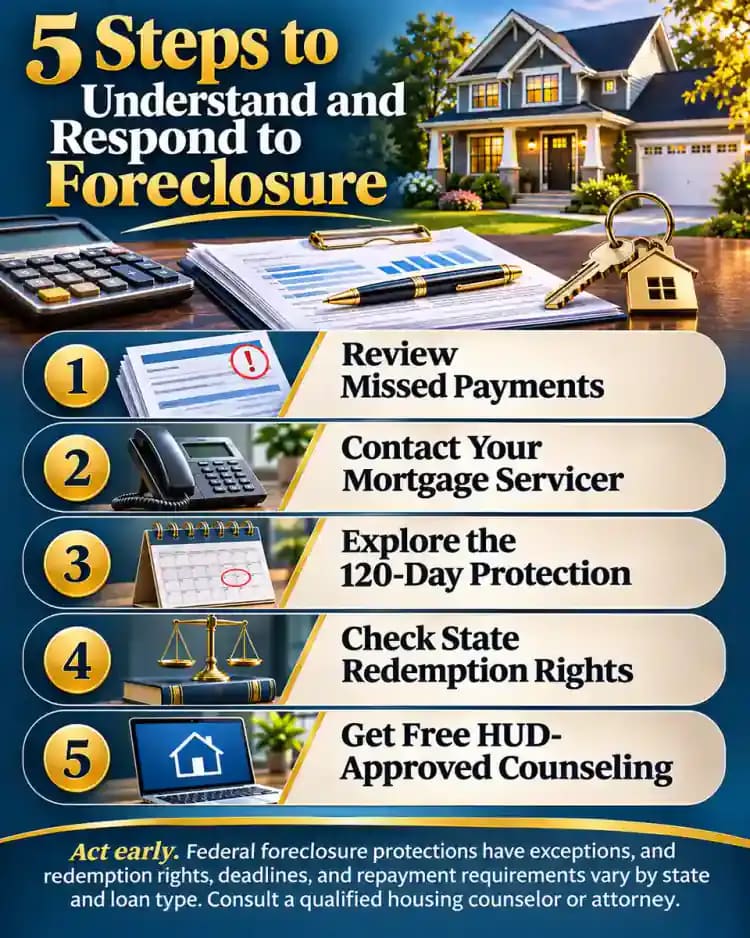
Falling behind on your mortgage does not automatically mean you will lose your home. Foreclosure is a legal process that allows a lender to recover unpaid mortgage debt through the property securing the loan. Although the situation can become serious, homeowners may have opportunities to resolve missed payments, challenge procedural errors, or exercise redemption rights where state law permits.
If you are wondering how to reclaim a foreclosed home, the first step is determining where you stand in the foreclosure process. Your options before a foreclosure sale may differ substantially from those available afterward. Some states allow qualifying former homeowners to redeem their property after a sale, while others provide no comparable post-sale right.
Federal mortgage servicing rules also provide important protections. In most covered situations, a mortgage servicer generally cannot make the first foreclosure notice or filing until you are more than 120 days delinquent, although exceptions apply. This protection does not eliminate missed payments or guarantee another 120 days before a sale.
Contact your mortgage servicer immediately to request available foreclosure prevention options, including repayment plans, loan modifications, and temporary forbearance. Ask for written explanations of your deadlines, outstanding balance, and eligibility requirements.
You can also obtain free foreclosure prevention assistance from a HUD-approved housing counseling agency. A qualified counselor can help organize your finances and communicate with your servicer.
This guide explains the major timelines, redemption rules, and practical actions worth considering. Because foreclosure procedures and legal rights depend on your state and mortgage, seek individualized advice from a qualified housing counselor or attorney before making consequential decisions.
Where people go wrong
Waiting Until the Foreclosure Sale Is Scheduled. Delaying action can eliminate valuable opportunities to negotiate with your mortgage servicer. Contact the servicer as soon as payment difficulties appear, even before missing a payment. Earlier communication gives you more time to investigate repayment options and gather required documentation.
Assuming the 120-Day Rule Guarantees Your Home Is Safe. Federal servicing rules generally restrict when covered servicers can initiate foreclosure, but exceptions exist and the protection does not erase your debt. Do not assume foreclosure cannot begin until exactly day 120 or that every borrower receives an identical timeline.
Confusing Mortgage Reinstatement With Property Redemption. Reinstatement generally involves bringing a delinquent mortgage current before foreclosure, while redemption may require paying a legally specified amount to reclaim property. The available rights, deadlines, and payment calculations differ. Confirm which remedy applies before making financial commitments.
Assuming Every State Allows Redemption After Foreclosure. Some states provide qualifying homeowners with post-sale redemption rights, while others do not. Even where redemption exists, deadlines and payment requirements can be strict. Verify your state's specific law and foreclosure procedure rather than relying on generalized online timelines.
Ignoring Notices From Your Mortgage Servicer. Foreclosure notices may contain crucial deadlines, payment demands, and information about available assistance. Missing these communications can leave you unaware of important developments. Open every notice promptly, retain copies, and ask your servicer or attorney to explain anything unclear.
Submitting an Incomplete Assistance Application. Missing income records, unsigned forms, or inconsistent financial information can delay evaluation of foreclosure prevention options. Ask your servicer for its complete documentation checklist, submit materials through approved channels, keep confirmation records, and respond promptly to requests for additional information.
Trusting Companies That Guarantee Foreclosure Rescue. Scammers may promise to stop foreclosure, demand expensive upfront payments, or pressure homeowners to transfer property ownership. Avoid guaranteed outcomes and questionable contracts. Start with a HUD-approved housing counseling agency and have a qualified attorney review unfamiliar legal documents.
Questions people ask
Possibly, but your options depend on state law and the circumstances of the sale. Some states provide a statutory redemption period that allows qualifying former homeowners to reclaim property by paying a required amount. Other states provide no post-sale redemption right. Consult a local foreclosure attorney immediately to determine whether you qualify.
Fixed it?
Get one guide like this every Thursday.