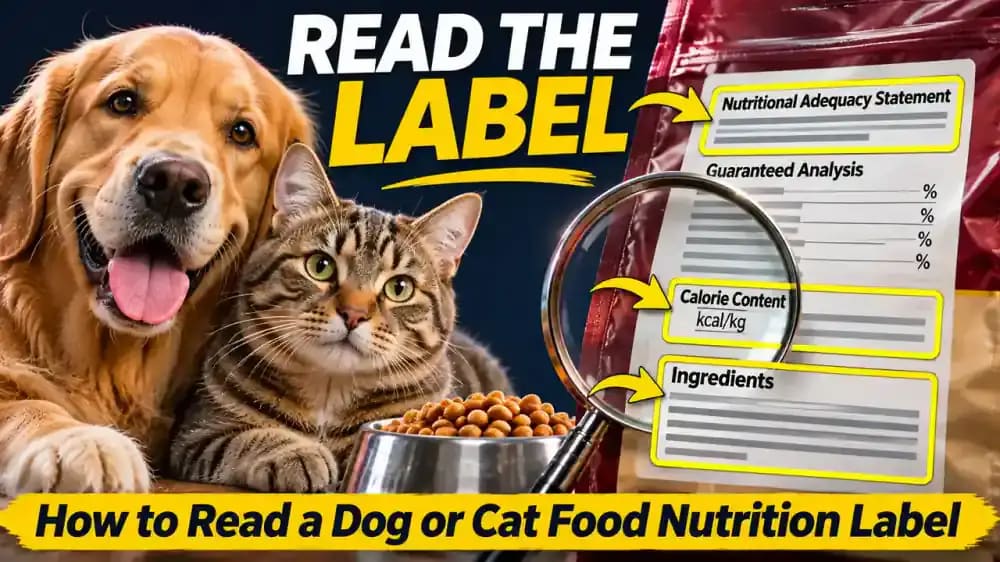
How to Read a Dog or Cat Food Nutrition Label
Confused by pet food labels? Learn how to check nutritional adequacy, life stages, protein, fat, ingredients, calories, and feeding guidelines so you can choose food that fits your dog or cat.
What you’ll need
Tap to tick things off before you start.
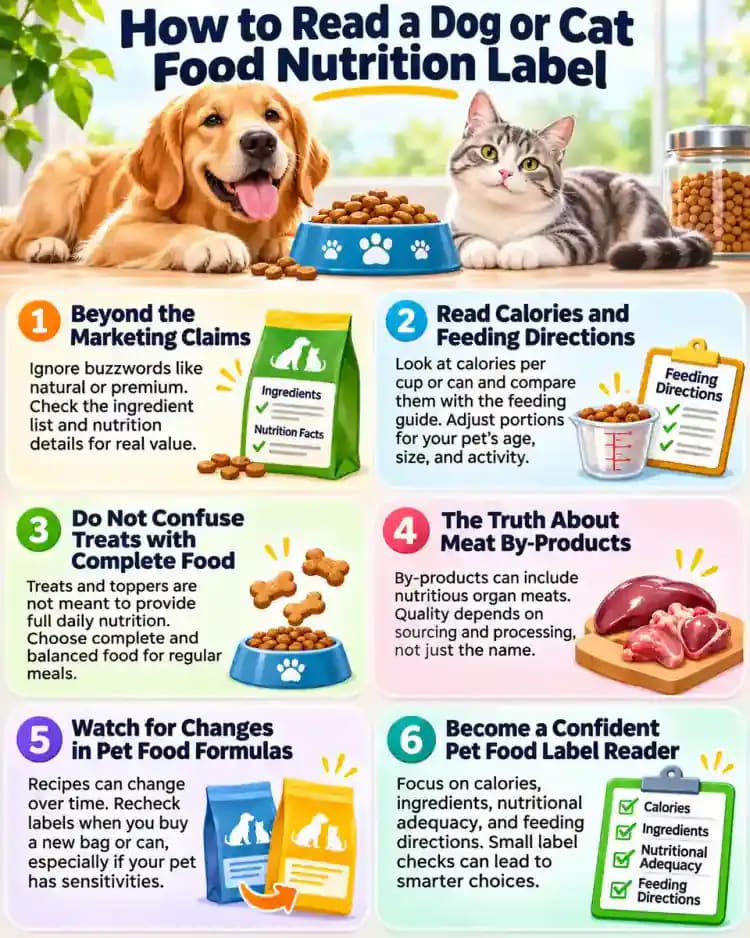
Beyond the Marketing Claims
When comparing pet foods, ignore front-of-package claims like premium ingredients or natural nutrition at first. These phrases do not establish nutritional quality or suitability. Turn both packages around and locate the nutritional adequacy statement, guaranteed analysis, ingredient list, and calorie information. These details provide a more reliable foundation for choosing food that meets your pet's needs.

Find the Nutritional Adequacy Statement
Locate the nutritional adequacy statement, usually printed near the ingredients or feeding directions. On US labels, look for complete and balanced wording supported by AAFCO nutrient profiles or feeding trials. Check which life stage the statement covers. Foods marked for intermittent or supplemental feeding generally should not serve as your pet's only daily food without veterinary guidance.

Choose the Correct Life Stage
Match the nutritional adequacy statement to your pet's life stage. Puppies and kittens generally need growth nutrition, while healthy adults typically require adult maintenance formulas. For large-breed puppies, check whether the food supports growth of large-size dogs. Although many products advertise senior formulas, senior is not a separate standardized AAFCO nutritional life stage.

Understand the Guaranteed Analysis
Find the guaranteed analysis panel and identify minimum crude protein and fat percentages alongside maximum crude fiber and moisture. These values are guarantees, not exact nutrient measurements. To compare wet and dry foods, estimate dry-matter protein by dividing the listed protein percentage by 100 minus the moisture percentage, then multiplying by 100. Interpret results as approximate.

Decode the Ingredient List
Read the ingredient declaration from top to bottom. Ingredients appear in descending order by weight before processing, including their water content. Fresh chicken may rank first partly because it contains substantial moisture. Related ingredients listed separately can also affect their positions. Check the complete list for known dietary restrictions, but never treat ingredient order alone as proof of nutritional quality.

Read Calories and Feeding Directions
Find the calorie statement, usually expressed in kilocalories per kilogram and per cup or can. Compare serving calories before choosing portions. Use the package feeding chart as a starting estimate, not a strict rule. Measure food consistently, include calories from treats, and adjust portions according to your pet's weight, activity level, and body condition.

Compare Two Realistic Food Labels
Compare two fictional cat foods using the same criteria. Package A advertises premium salmon but states it is intended for supplemental feeding. Package B has simpler packaging yet provides complete and balanced adult maintenance nutrition with clear calorie information. For a healthy adult cat's regular meals, Package B is the more appropriate starting choice.

Your Final Pet Food Label Checklist
Before purchasing, confirm five essentials: complete and balanced nutritional adequacy, an appropriate life stage, clear calorie information, a useful guaranteed analysis, and ingredients compatible with your pet's dietary needs. After switching foods, monitor weight, appetite, and stool consistency. Adjust portions thoughtfully, and consult your veterinarian about medical conditions or specialized nutritional requirements.

Check Who Makes the Food
Locate the manufacturer or distributor information, often printed near the barcode or package bottom. Check whether the company provides accessible customer support and can explain its nutritional expertise, ingredient sourcing, quality controls, and product testing. Ask who formulates the diets and where production occurs. Transparent, verifiable answers matter more than impressive branding or marketing promises.

Understand Formulation Versus Feeding Trials
Read how the nutritional adequacy claim is supported. A formulation statement indicates the food meets specified AAFCO nutrient profiles, while a feeding trial statement indicates testing under AAFCO feeding procedures. Both are recognized approaches, but neither guarantees ideal results for every animal. Consider these statements alongside life-stage suitability, manufacturer expertise, and your veterinarian's recommendations.

Recognize International Labeling Differences
Pet food labeling requirements differ between countries. In the United States, nutritional adequacy statements commonly reference AAFCO standards, while European manufacturers may use terminology associated with FEDIAF nutritional guidelines. Do not assume unfamiliar wording indicates inferior nutrition. Instead, check whether the food is labeled complete, identifies the intended species and life stage, and meets applicable local requirements.

Do Not Confuse Treats with Complete Food
Check treats, biscuits, broths, and food toppers for statements indicating supplemental feeding. These products may provide enjoyment or training rewards without supplying complete daily nutrition. As a general guideline, limit treats and other extras to 10% or less of daily calories, unless your veterinarian advises otherwise. Count their calories when calculating regular meal portions.

Inspect Dates and Storage Instructions
Before buying pet food, check the best-before date, lot code, and packaging for visible damage. Avoid torn bags, leaking cans, or swollen containers. At home, follow the manufacturer's storage instructions. Keep dry kibble in its original bag, preferably inside an airtight container, and refrigerate opened wet food as directed. Retain lot information for potential recalls.

Introduce New Food Gradually
When changing foods, gradually mix increasing amounts of the new diet with the previous food over approximately seven days, adjusting the pace to your pet's tolerance. Begin with mostly familiar food and increase the new portion every few days. Monitor appetite, vomiting, and stool consistency. Contact your veterinarian if concerning symptoms develop or a prescribed diet is involved.

Evaluate Results Beyond the Packaging
After selecting a food, track your pet's weight regularly and discuss body condition scoring with your veterinarian. Observe appetite, activity, coat appearance, and digestion over time, recording meaningful changes without assuming the diet caused them. Use consistent measurements to identify trends and guide feeding adjustments. Your pet's individual nutritional suitability matters more than attractive packaging or ingredient claims.

Make Confident Nutrition Decisions
Use pet food labels to make informed decisions instead of comparing marketing claims. Before buying, verify nutritional adequacy, life-stage suitability, calorie content, guaranteed analysis, and ingredients. Contact the manufacturer when important information is missing. Keep this checklist handy during future shopping trips, and consult your veterinarian whenever your pet requires individualized nutritional guidance.

Is Grain-Free Food Really Better?
Do not assume grain-free pet food is automatically healthier. Grains such as rice, oats, and corn can provide valuable nutrients. The FDA has investigated reports of canine dilated cardiomyopathy associated with certain diets, including some containing substantial amounts of peas, lentils, or potatoes. The relationship remains under investigation. Discuss significant dietary changes with your veterinarian.

The Truth About Meat By-Products
Do not reject a pet food simply because its ingredient list includes meat by-products. Depending on the specific ingredient definition, these can contain nutritious organs such as liver and kidneys. Their presence does not automatically indicate poor quality. Consider ingredient sourcing, manufacturing standards, nutritional adequacy, and the complete formulation rather than judging food by one ingredient category.

Why More Protein Is Not Always Better
Avoid choosing pet food solely because it has the highest crude protein percentage. Protein requirements vary by species, life stage, and individual health needs. The guaranteed analysis does not establish protein digestibility or essential amino acid balance. Cats also require adequate dietary taurine. Evaluate protein within the complete nutritional formulation rather than treating higher percentages as inherently superior.

Understand Organic and Human-Grade Claims
Read terms such as organic, human-grade, and holistic carefully because they carry different meanings. Organic claims are subject to defined certification requirements where applicable, while holistic generally lacks a standardized regulatory definition. Human-grade claims involve specific ingredient and manufacturing requirements in the United States. None independently proves that a food is complete, balanced, or appropriate for your pet.

Question Functional Ingredient Claims
When pet food advertises probiotics, joint support, or skin health benefits, look beyond the front-panel claims. Identify the active ingredients, their quantities, and any evidence supporting the promised effects. Ask manufacturers for relevant research or testing information. Marketing icons alone cannot establish effectiveness, and pets with specific health concerns need individualized veterinary nutritional guidance.

Calculate Portions When Mixing Foods
When combining wet and dry pet food, calculate the calories contributed by each portion. Check both labels for calories per cup, can, or measured weight, then add them together. If both foods are complete and balanced, adjust serving sizes to match your pet's daily energy needs. Measure toppers separately and include their calories to prevent accidental overfeeding.

Keep a Simple Pet Nutrition Record
Maintain a basic feeding record that includes the product name, exact formula, lot code, daily serving amount, and your pet's weight and feeding observations. Photograph the original package to preserve important label details. These records simplify future comparisons, support portion adjustments, and help identify affected products during recalls. Review changes periodically and discuss concerns with your veterinarian.

Watch for Changes in Pet Food Formulas
Do not assume familiar packaging means a pet food formula has remained unchanged. Manufacturers may revise ingredients, nutrient concentrations, or calorie density without dramatically changing the package design. Compare the latest ingredient declaration, guaranteed analysis, and calorie statement with your previous purchase. Pay particular attention to changes affecting dietary restrictions, feeding portions, or your pet's established nutritional needs.

Decode Pet Food Product Names
Pay attention to wording in US pet food product names. Under AAFCO model naming rules, Beef Dinner generally requires at least 25% beef, excluding processing water, while With Beef requires at least 3%. Beef Flavor requires a detectable amount of beef flavor, not a fixed meat percentage. These naming rules differ, so always examine the complete label.

Understand Calcium and Phosphorus Balance
Growing puppies and kittens need appropriate calcium and phosphorus levels to support healthy skeletal development. The balance between these minerals matters, especially for large-breed puppies. Standard guaranteed analysis panels may not provide enough information to evaluate mineral content. Request detailed nutrient specifications from the manufacturer, and avoid adding calcium or phosphorus supplements without veterinary guidance.

Why Digestibility Matters
Two pet foods can display similar protein and fat percentages while providing different amounts of usable nutrients. Digestibility depends on ingredient characteristics, processing methods, and the overall formulation. Standard nutrition labels rarely reveal these differences. Ask manufacturers whether they conduct digestibility studies and how results are evaluated. Consider this information alongside nutritional adequacy and your pet's individual needs.

Read Labels Carefully for Food Allergies
If your veterinarian suspects a food allergy, examine the entire ingredient declaration rather than relying on the product name. A lamb recipe might also contain chicken fat or other animal-derived ingredients. Manufacturing cross-contact can complicate strict elimination diets. Because itching and digestive symptoms have multiple possible causes, identify suspected triggers through a veterinarian-supervised dietary evaluation.

Distinguish Therapeutic Diets from Marketing Claims
Retail foods advertised for urinary care, kidney support, or weight management are not automatically equivalent to veterinary therapeutic diets. Products with similar claims may differ substantially in mineral levels, nutrient composition, and intended nutritional purposes. If your pet has a diagnosed medical condition, consult your veterinarian before replacing prescribed food. Confirm that any alternative meets the specific dietary requirements.

Become a Confident Pet Food Label Reader
Before choosing pet food, verify five essentials: nutritional adequacy, appropriate life stage, guaranteed analysis, calorie content, and ingredients. Compare nutrient percentages fairly, consider manufacturer transparency, and question claims that lack supporting information. Record important label details and monitor your pet's response over time. Choose food based on demonstrated nutritional suitability, not packaging promises or ingredient trends.

You're standing in the pet food aisle with two bags of dog food in your hands. One promises premium ingredients, real meat, and natural nutrition. The other advertises a scientifically formulated recipe with essential vitamins and minerals. Both look impressive, but which one actually provides better nutrition for your dog?
The answer isn't necessarily on the front of either package. It's in the nutritional information printed on the back or side.
Learning how to read pet food labels helps you look beyond marketing claims and make informed decisions about what goes into your dog or cat's bowl. A few important details can reveal whether a food is nutritionally complete, appropriate for your pet's life stage, and suitable for their daily calorie requirements.
Pet food labeling regulations vary by country. In the United States, labels commonly use terminology associated with the Association of American Feed Control Officials (AAFCO), alongside applicable federal and state labeling requirements. Understanding these conventions gives you a practical starting point for evaluating everyday pet food.
You don't need a veterinary degree or an advanced understanding of nutrition. The most useful information usually comes from five areas: the nutritional adequacy statement, intended life stage, guaranteed analysis, ingredient list, and calorie content.
Once you know what these sections mean, comparing products becomes much easier - and flashy packaging becomes far less persuasive.
Where people go wrong
Trusting Marketing Claims Instead of Nutritional Adequacy. Words like premium, holistic, natural, and gourmet can make a product sound nutritious without establishing that it provides a complete diet. These terms do not replace a nutritional adequacy statement. For everyday feeding, check whether the food is labeled complete and balanced for your pet's intended life stage before considering attractive packaging or advertising.
Assuming Every Pet Food Is Complete and Balanced. Some products are intended for intermittent or supplemental feeding rather than as a sole daily diet. Treats, toppers, and certain specialty foods may not provide all essential nutrients in appropriate amounts. Look for the nutritional adequacy statement and read any feeding-purpose limitations. Feeding a supplemental product as the main diet can create nutritional imbalances over time.
Ignoring Life-Stage Requirements. A food formulated for adult maintenance may not meet the nutritional needs of growing puppies or kittens. Conversely, growth formulations may provide different nutrient and calorie profiles than an adult requires. Large-breed puppies need particular attention to appropriate growth nutrition. Check the precise life-stage statement rather than assuming a food labeled for all dogs or cats suits every situation.
Comparing Wet and Dry Food Protein Percentages Directly. A canned food showing 10% crude protein may appear inferior to kibble showing 28%, but moisture can dramatically change the comparison. Wet foods typically contain much more water. Compare nutrients on a dry-matter basis for a more meaningful evaluation, and remember that guaranteed analysis values are minimums or maximums rather than exact laboratory measurements of every batch.
Judging Quality by the First Ingredient Alone. Ingredients are generally listed by weight before processing, including their moisture content. Fresh meat can appear first partly because it contains considerable water. That placement does not establish superior digestibility, nutrient balance, or overall food quality. Evaluate the complete formulation, nutritional adequacy, and manufacturer's nutritional expertise rather than treating one prominent ingredient as proof of superiority.
Assuming Grain-Free or By-Product-Free Means Healthier. An appealing ingredient exclusion does not automatically improve a food's nutritional value. Grains can provide useful nutrients, and appropriately processed animal by-products can contain valuable protein and minerals. Grain-free diets also warrant informed discussion because the FDA has investigated reports of diet-associated canine heart disease. Choose formulations based on nutritional suitability, not ingredient fears.
Following Feeding Directions Without Adjustments. Package feeding charts provide estimates for broad groups of pets, not individualized calorie prescriptions. Activity, age, reproductive status, body condition, and individual metabolism can substantially affect requirements. Measure portions consistently, account for treats, and monitor weight trends. Ask your veterinarian for guidance if weight changes unexpectedly or you're unsure how much your pet should eat.
Overlooking Calories When Switching Foods. Two foods can have similar ingredient lists and protein percentages but very different calorie densities. Feeding the same number of cups after switching products could unintentionally increase or reduce daily energy intake. Compare kilocalories per cup, can, or kilogram, adjust portions thoughtfully, and transition foods gradually when appropriate to minimize digestive upset.
Questions people ask
Start with the nutritional adequacy statement. On US pet food labels, this commonly references AAFCO nutrient profiles or feeding trials and identifies the life stage for which the diet is intended. It helps distinguish complete and balanced food from products meant only for supplemental feeding. Next, review calorie content, feeding directions, and ingredient information.
Fixed it?
Get one guide like this every Thursday.