How to Prevent Your Indoor Cat from Dashing Through Doors
Stop your indoor cat from bolting out the door with practical training, positive reinforcement, home barriers, and simple routines that make every entrance and exit safer.
What you’ll need
Tap to tick things off before you start.
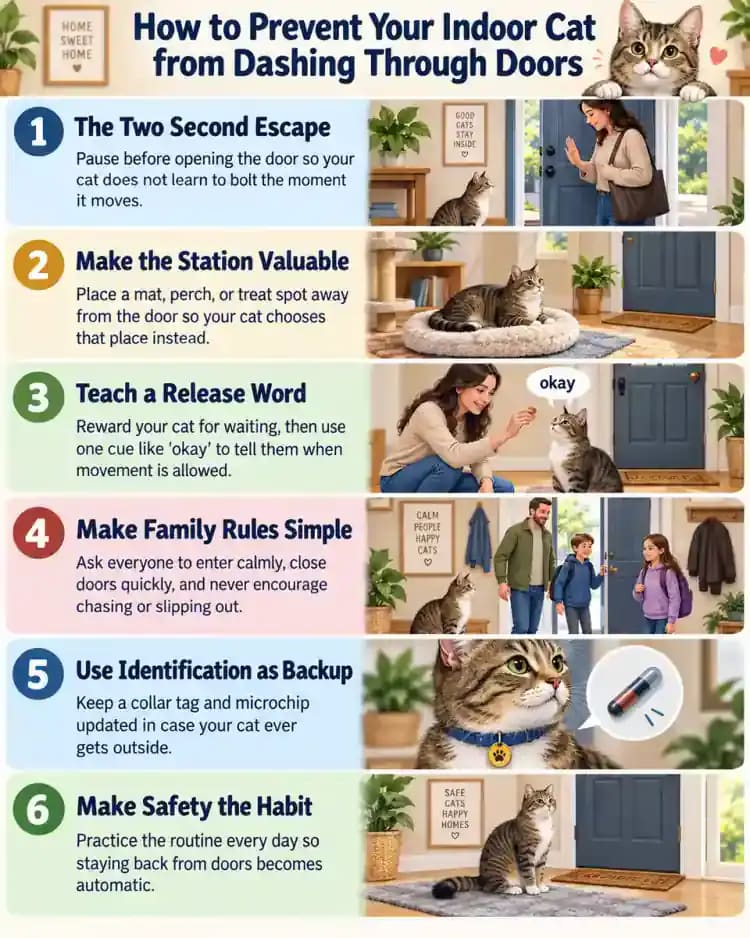
The Two Second Escape
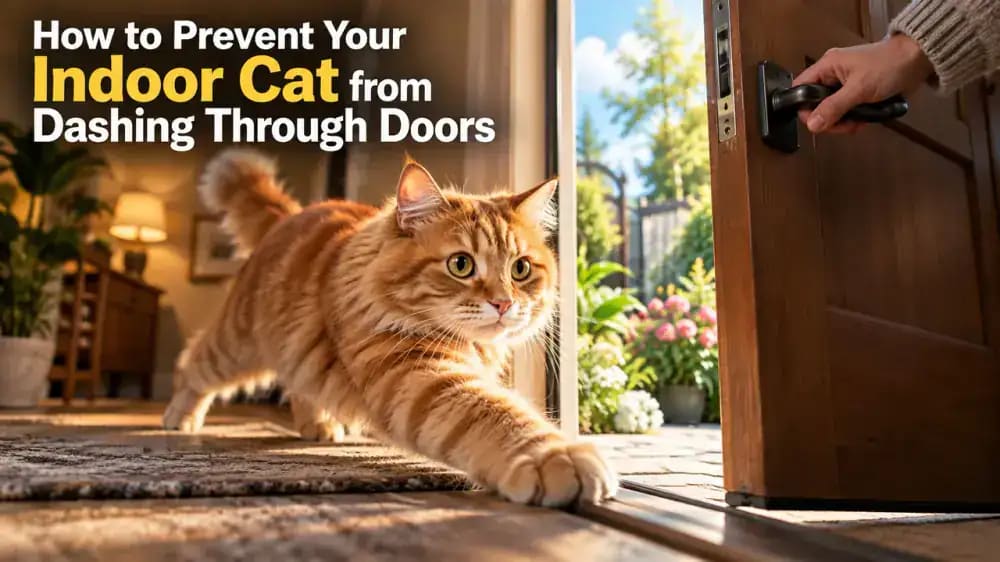
A delivery arrives, the front door opens, and your indoor cat suddenly races toward daylight. Curiosity, outdoor smells, and unexpected movement can make an open doorway irresistible. This behavior does not necessarily mean your cat is unhappy indoors. Prevent escapes by establishing a consistent routine that rewards staying safely away from the entrance.
See the Door From Cat Height
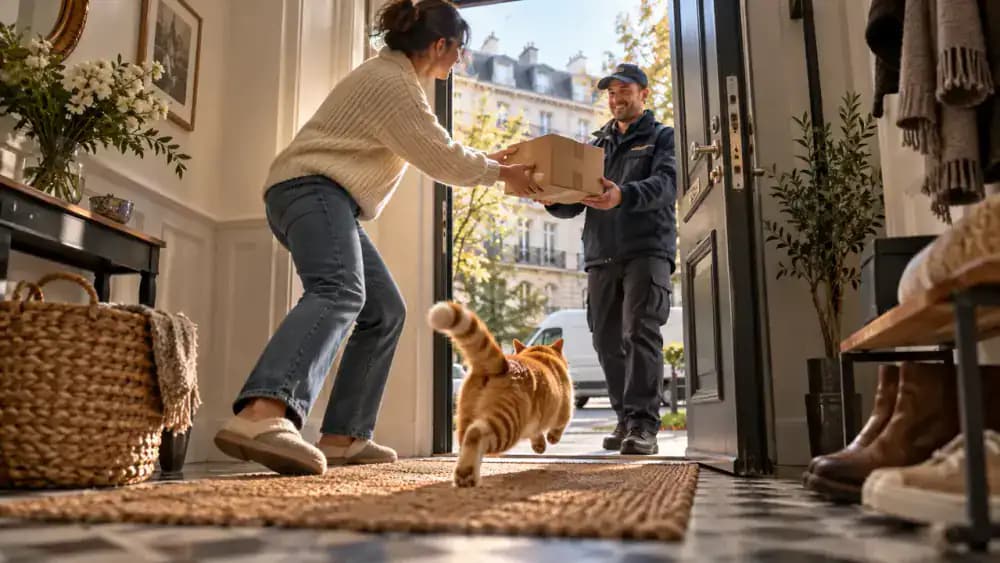
Watch your cat's behavior before anyone opens an exterior door. Notice whether jingling keys, footsteps, visitors, or someone reaching for a jacket attracts attention. Record where your cat waits and which entrances seem most interesting. Identifying these patterns helps you anticipate risky moments and adjust your routine before an escape attempt begins.
Why Outside Seems Exciting
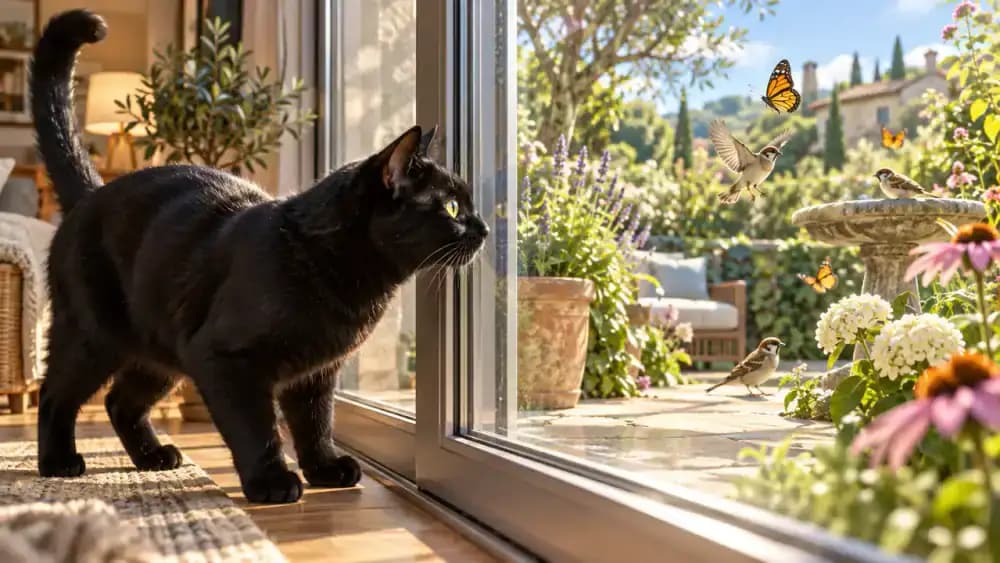
Outdoor activity offers powerful attractions for an indoor cat, including birds, insects, unfamiliar scents, and passing neighbors. Even a comfortable, well-cared-for cat may investigate these distractions. Some cats also discover that rushing toward doors produces attention. Rather than punishing curiosity, reduce access to tempting openings and reward calm behavior inside your home.
Reduce the First Opportunity
Keep exterior doors securely closed while gathering belongings, handling deliveries, or speaking with visitors. Never leave a door propped open when your cat can reach it. Before touching the handle, locate your cat and make sure the entrance is clear. Ask everyone in your household to follow the same precautions consistently.
Create a Safe Waiting Spot
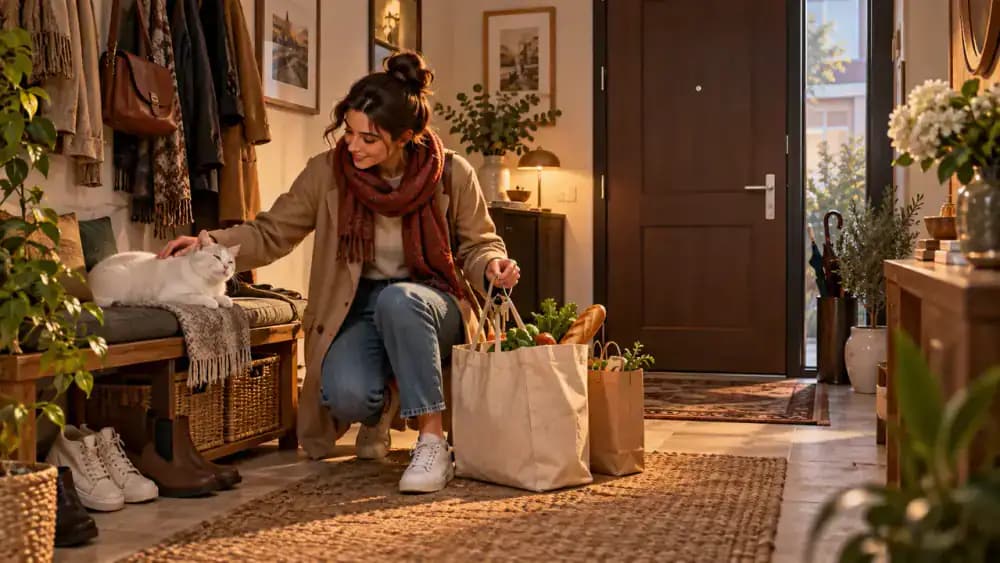
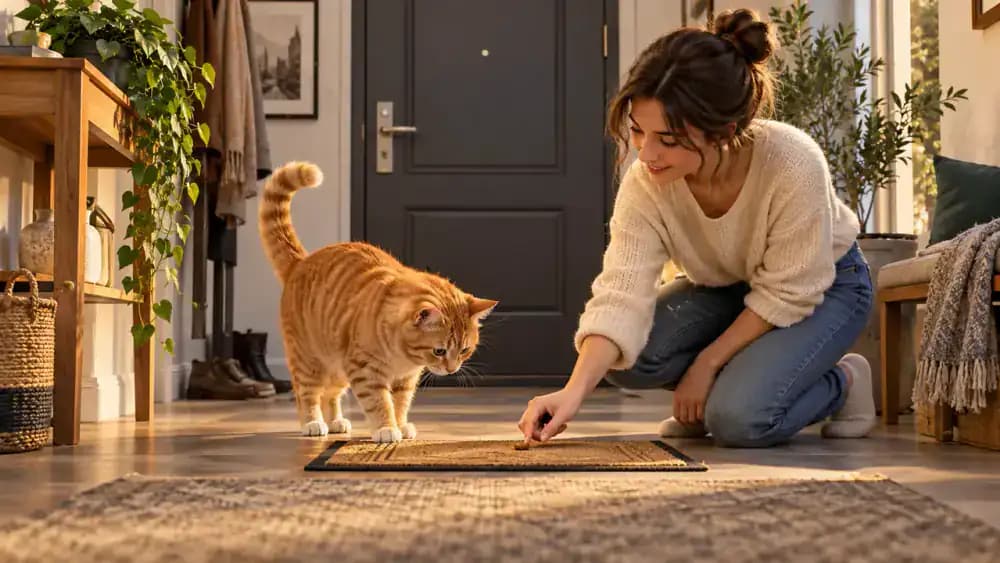
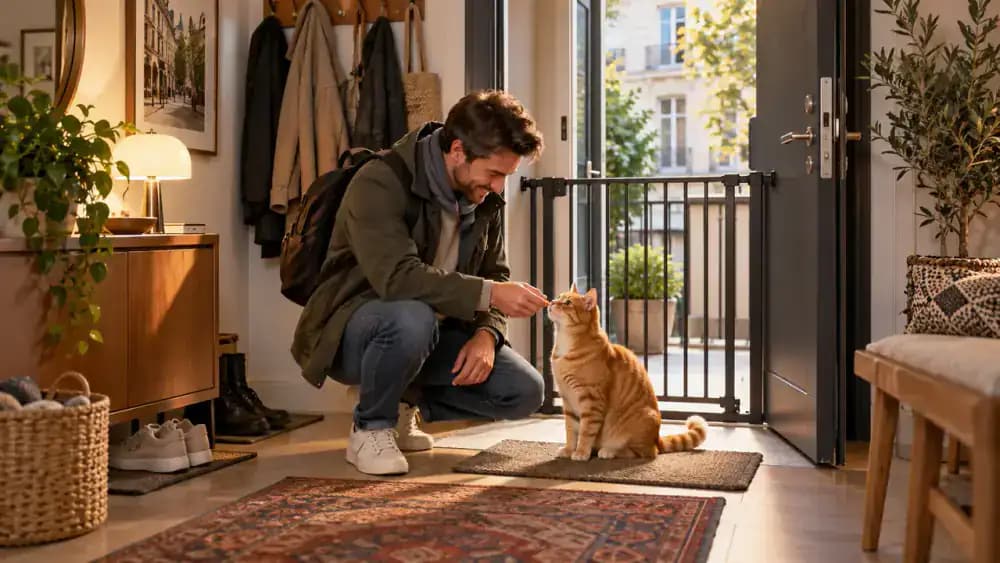
Place a comfortable mat, cat bed, or sturdy perch several feet away from your main entrance. Choose somewhere your cat can reach without approaching the threshold. Introduce the spot while the door remains closed, using small treats or gentle praise to encourage interest. Keep the station available so your cat can return voluntarily.
Make the Station Valuable
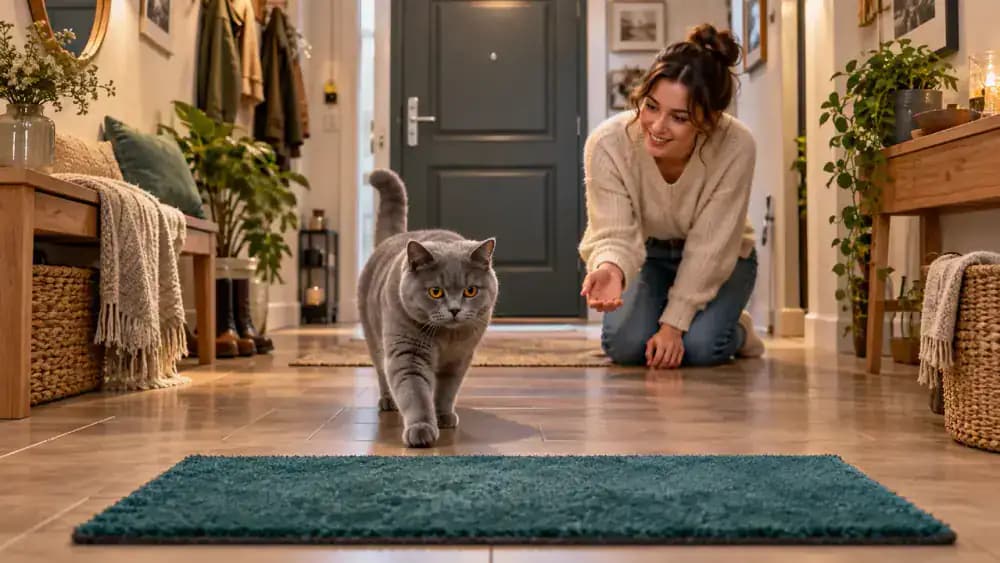
Place a small treat directly on your cat's waiting mat whenever they approach it. Allow your cat to eat, walk away, and return voluntarily. Reward each return to reinforce the positive association. If treats are not appealing, try a favorite toy instead. Keep practice sessions short, enjoyable, and completely pressure-free.
Add a Clear Cue
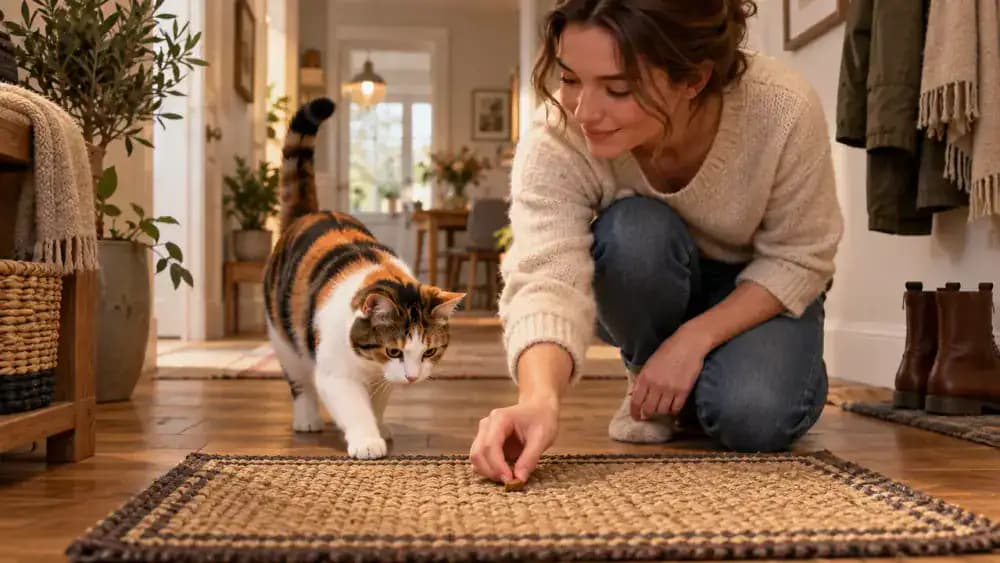
Once your cat consistently approaches the waiting mat, introduce a simple verbal cue such as 'mat.' Say it once while directing attention toward the station, then reward your cat after all four paws reach the mat. Always use the same word and location. Avoid repeating the cue if your cat needs extra time to respond.
Reward Staying, Not Just Arriving
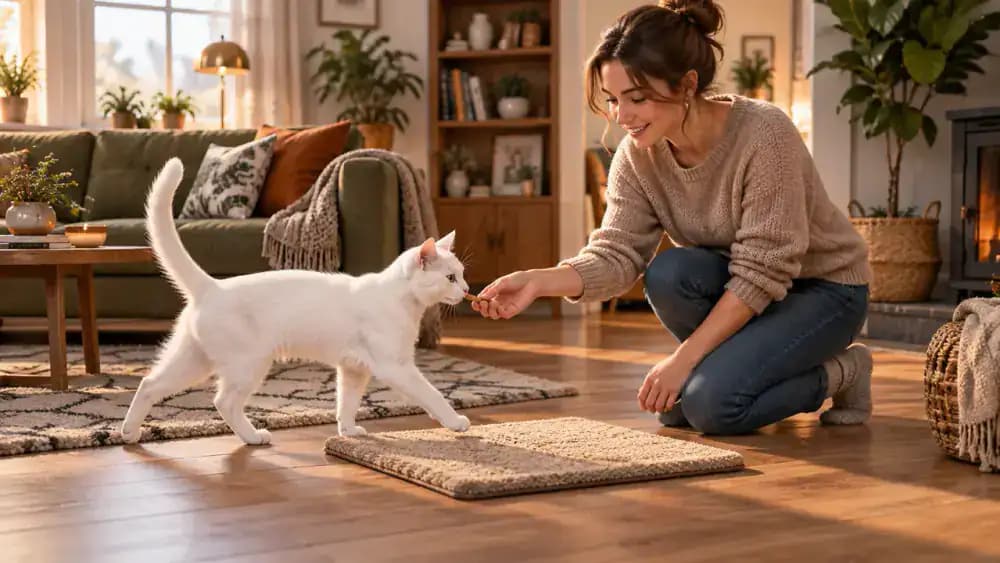
Teach your cat that remaining on the mat is just as rewarding as reaching it. Offer one small treat, pause for a second, and provide another while all four paws remain on the mat. Slowly increase the waiting time as your cat becomes comfortable. If they step away, shorten the interval and rebuild gradually without pressure.
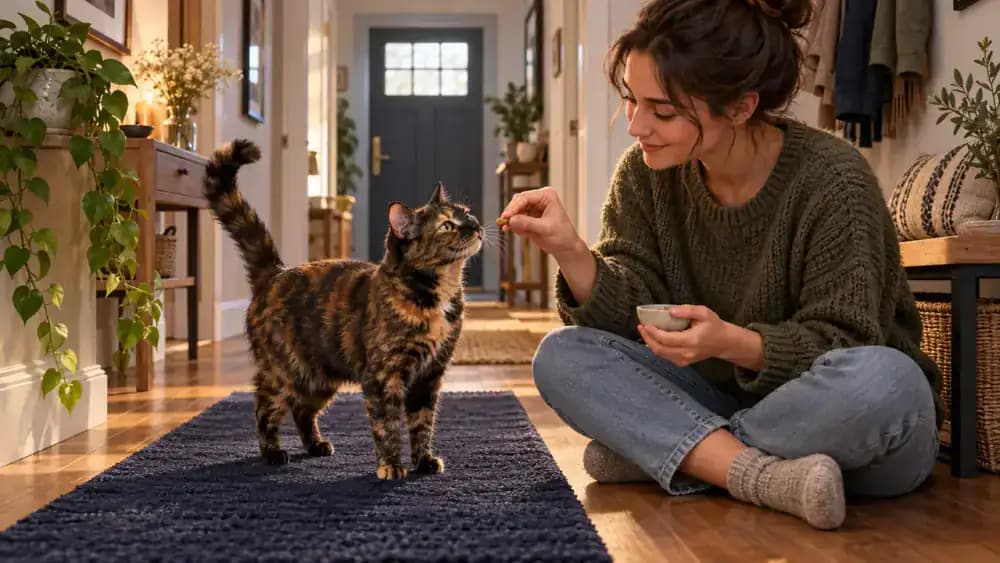
Practice the Door Handle
With the exit securely closed and your cat waiting on the mat, briefly touch the doorknob and reward them for staying. Once that becomes routine, gently turn the knob without opening the door. Keep each movement small and predictable. If your cat leaves the station, return to touching the handle before progressing again.
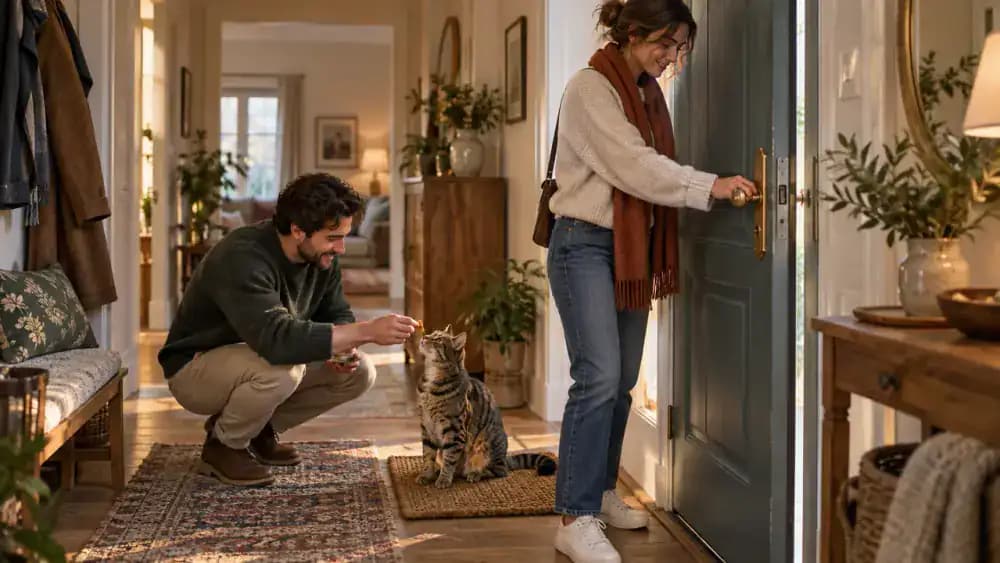
Open Only a Tiny Crack
Begin with a safe interior door, especially if your exterior entrance opens directly outdoors. Have one adult open the door about an inch while another rewards your cat for remaining several feet away on the waiting mat. Close the door immediately afterward. Increase difficulty gradually, and never risk an escape simply to test your cat's progress.
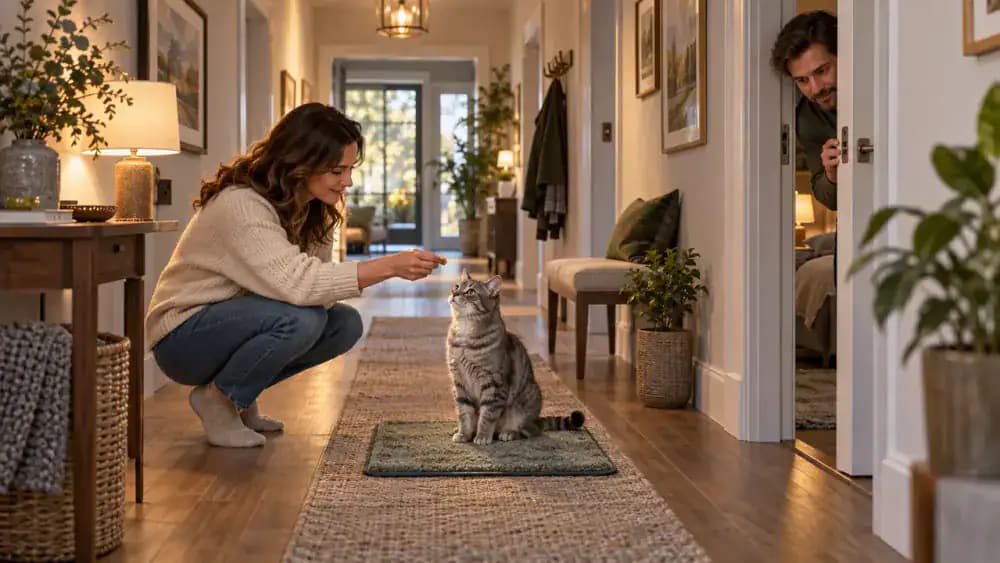
Build Difficulty Gradually
Increase the difficulty of door training gradually over several short sessions. Start by opening an interior door just a couple of inches while your cat stays on its mat. Reward calm waiting, then slowly increase the opening and duration. Eventually, practice stepping through the doorway. If your cat moves forward, return to an easier exercise.
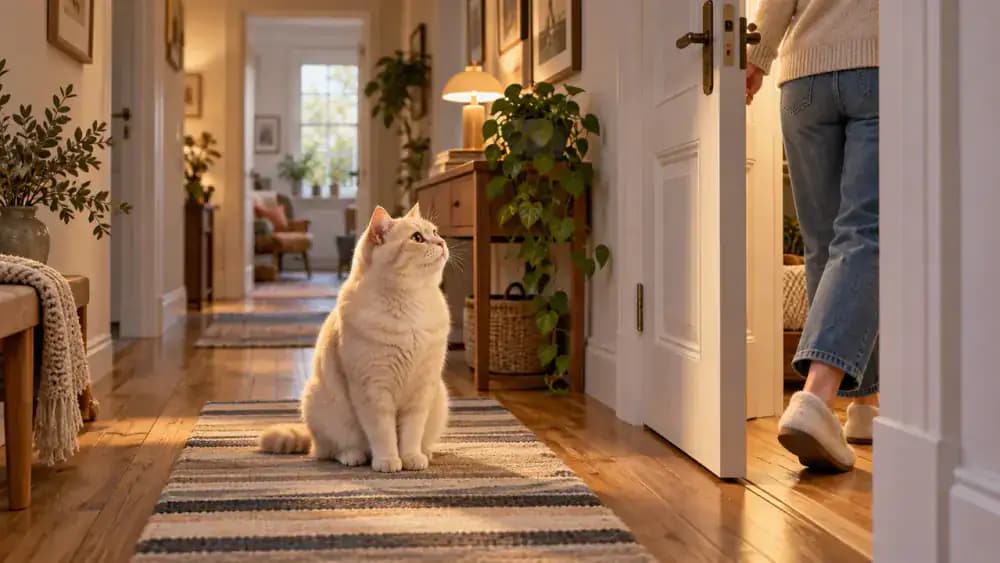
Teach a Release Word
Choose a consistent release word, such as "okay," to signal when your cat can leave its designated waiting spot. Say the word, then toss a treat farther into the room, away from the doorway. Practice until your cat understands the routine. Never use this cue to permit crossing an exterior threshold, even during successful training sessions.
Use a Second Barrier
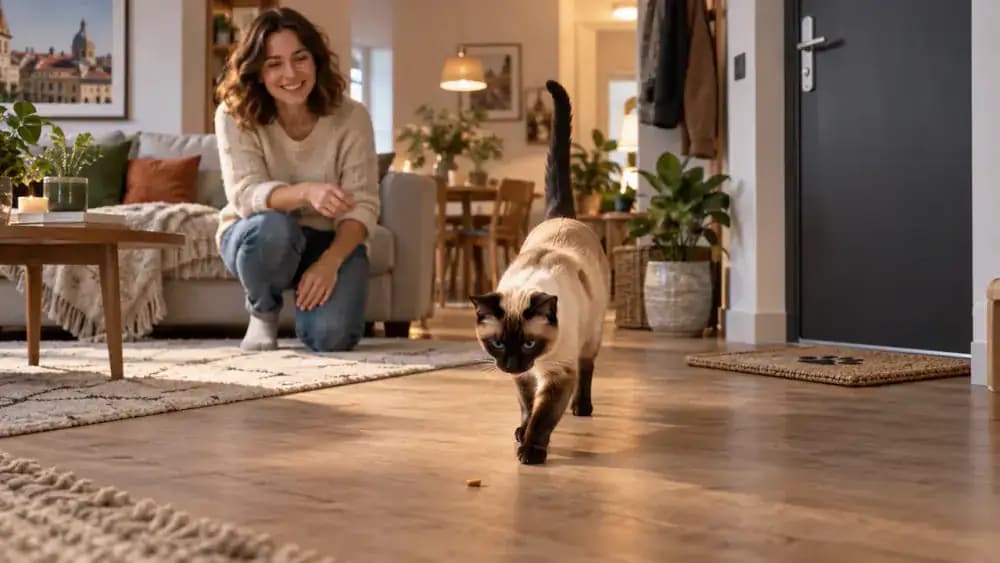
Add a secure physical barrier between your cat and the front door whenever possible. A closed hallway door, enclosed vestibule, or properly fitted screen provides valuable protection if training fails. Make sure the barrier cannot be jumped over, pushed open, or squeezed through. Inspect hinges, latches, and gaps regularly, especially if your cat is determined to explore.
Know Gate Limitations
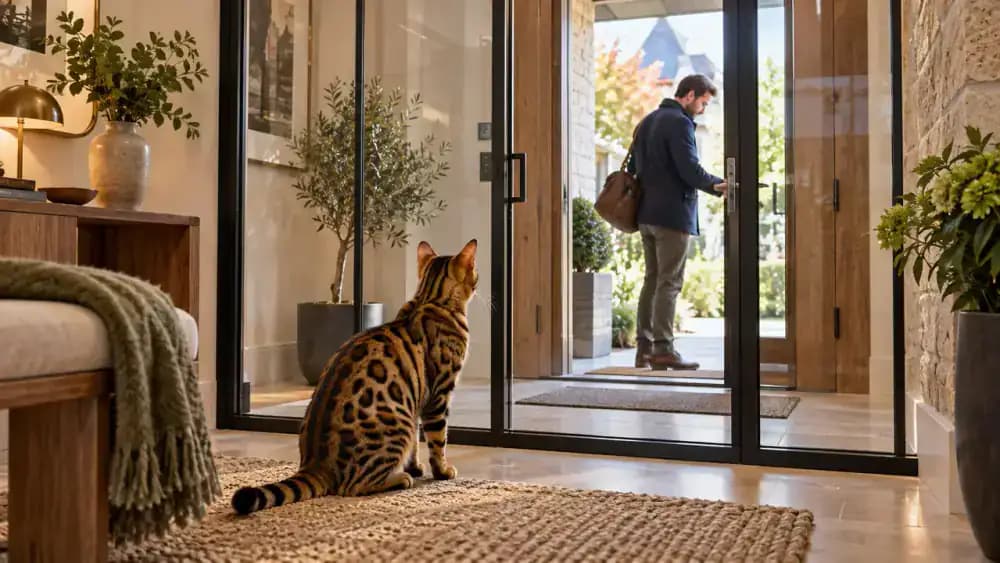
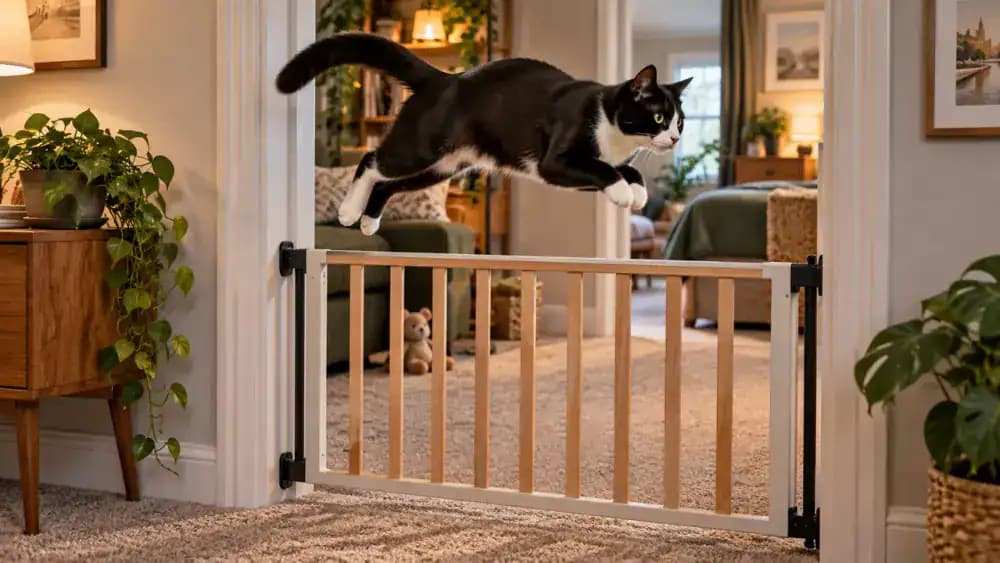
Do not assume a standard baby gate will prevent your cat from escaping. Athletic adult cats can often jump over waist-high barriers without difficulty. If you install a taller pet gate, evaluate its height, mounting hardware, stability, and openings. Test its effectiveness in a fully enclosed area, and never rely on an unverified gate as your only protection.
Prepare for Deliveries
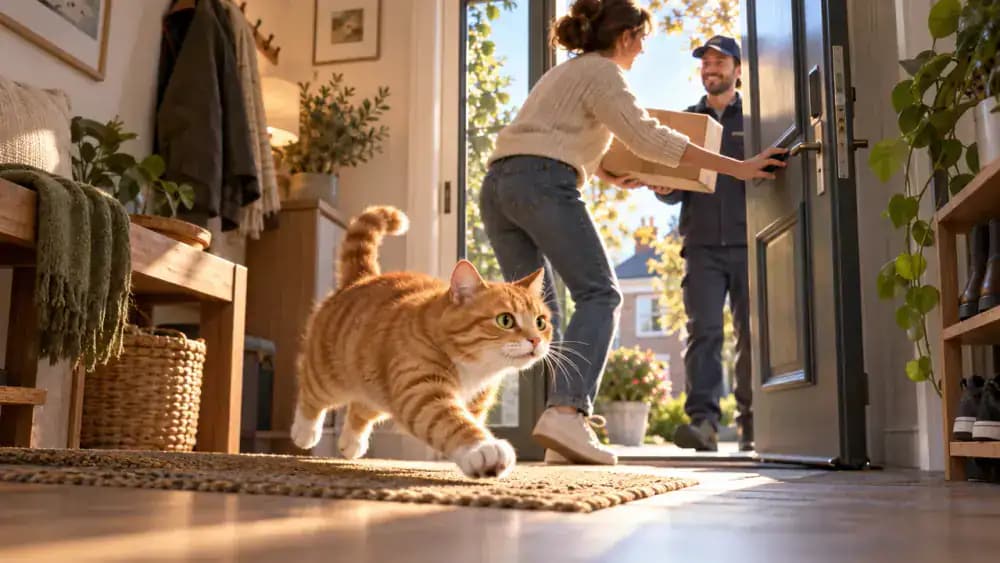
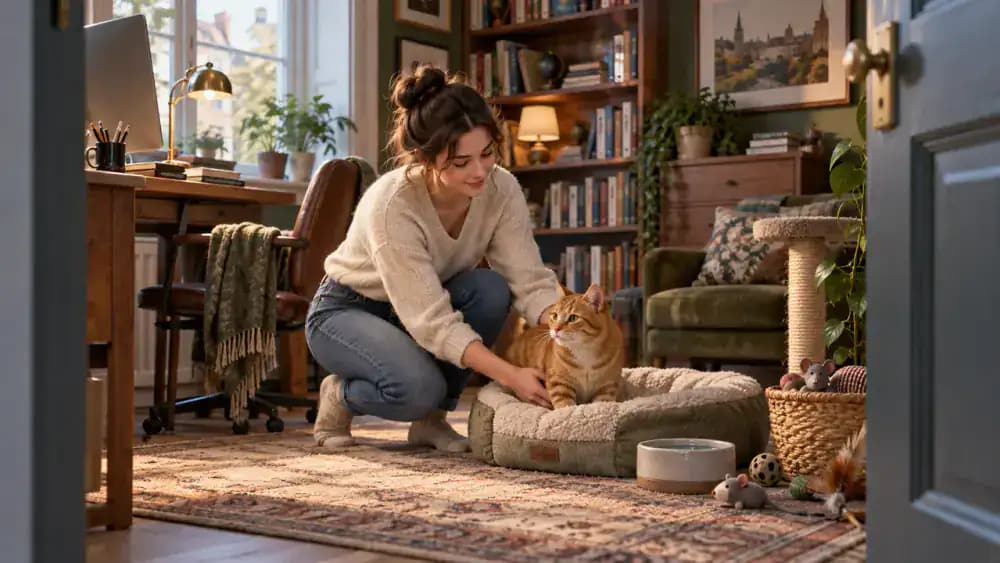
Create a simple routine for package deliveries before someone rings the doorbell. Guide your cat into a comfortable room with fresh water, a cozy resting spot, and a familiar toy. Close the room securely before opening the front door. Let delivery drivers wait briefly when necessary. Consistent preparation prevents hurried mistakes and keeps your cat away from unexpected openings.
Plan Guest Arrivals
Before visitors arrive, explain that your cat must stay indoors and ask everyone to enter promptly without holding the door open. Place a friendly reminder near the entrance where guests will notice it. For parties or busy gatherings, settle your cat in a comfortable, secure room with water, a litter box, and familiar bedding.

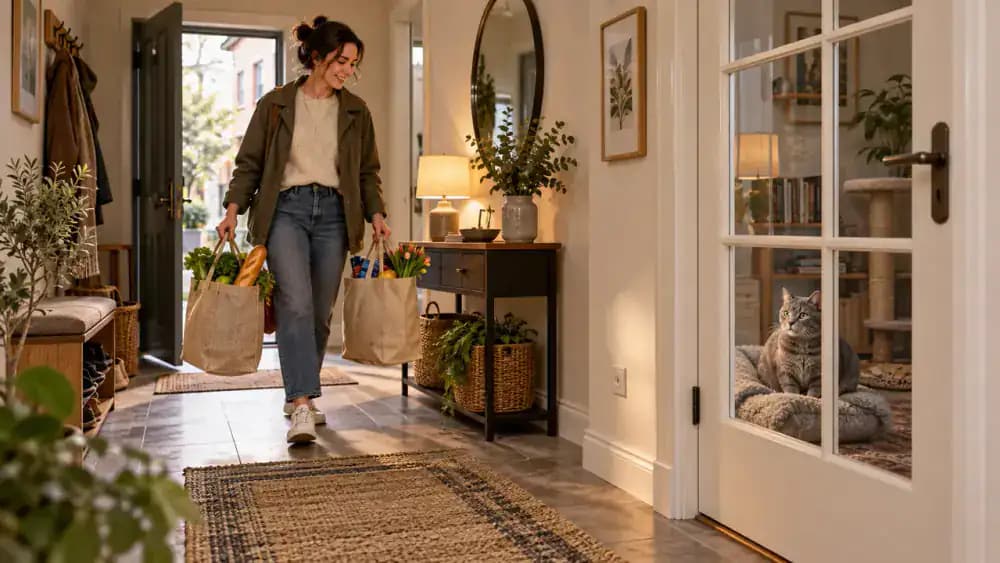
Manage Grocery Trips
Grocery trips create escape opportunities when your hands are full. Before unloading, secure your cat behind a closed interior door. Carry shopping bags inside in manageable loads, closing the exterior door completely between trips. Never attempt to block a curious cat with your feet while balancing packages. A slower, predictable unloading routine keeps everyone safer.
Make Family Rules Simple
Create one doorway routine that every household member follows: find the cat, secure the interior barrier, open the exterior door, and close it completely. Post an illustrated checklist where everyone can see it. Practice together during quiet periods, and have adults handle challenging exits. Consistent family habits prevent confusion and reduce opportunities for accidental escapes.

Avoid Scaring Your Cat
Never yell, spray water, or slam doors to discourage escape attempts. Frightening your cat can trigger unpredictable movement and make the entrance more stressful. Instead, remain calm, redirect your cat toward a familiar waiting mat, and reward the choice with a treat. Practice this positive routine away from active door traffic until it becomes reliable.
Offer Better Indoor Adventures
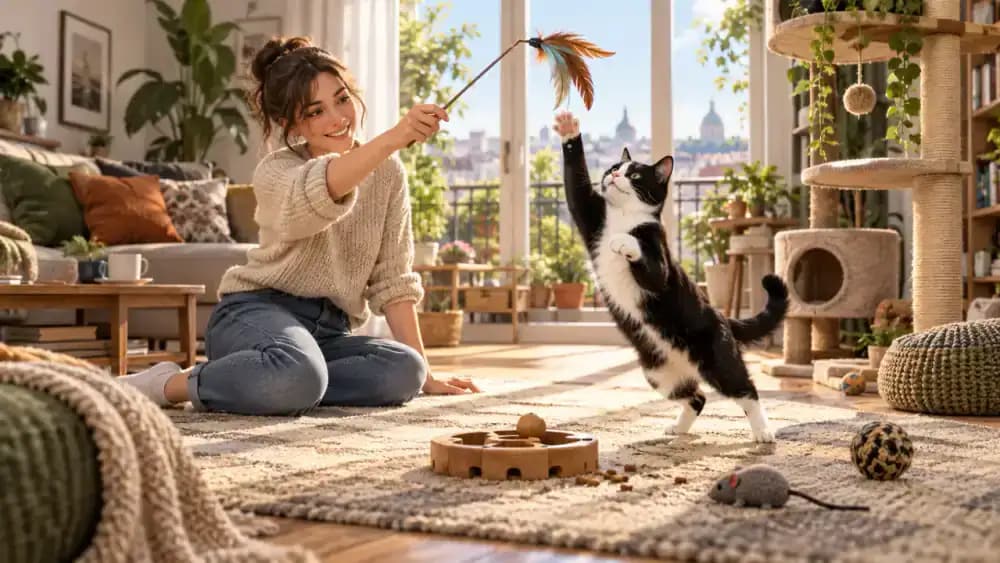
Make indoor life more engaging so the front door is not your cat's most exciting destination. Schedule daily feather-wand play, introduce puzzle feeders, and provide sturdy climbing trees or elevated resting shelves. Rotate activities based on your cat's preferences instead of buying everything at once. Keep using physical doorway barriers, even as enrichment improves.
Give Windows a Purpose
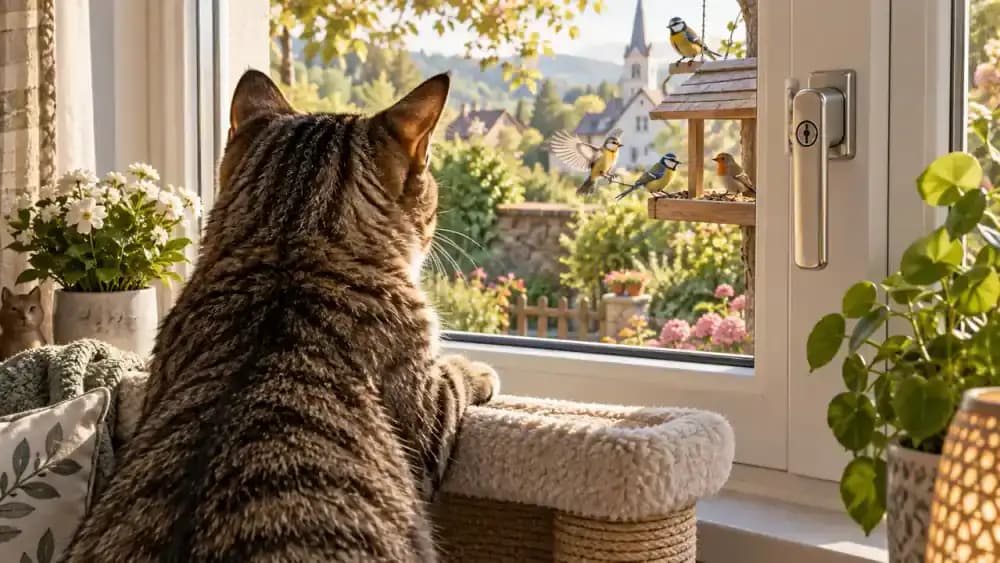
Give your indoor cat a safe way to enjoy outdoor activity by placing a sturdy perch beside a fully closed, latched window. Watching birds, people, and changing scenery provides valuable stimulation. Regularly inspect window locks and screens, since ordinary insect screens are not escape-proof. Position the perch away from doors and other potential exits.
Consider Controlled Outdoor Time
Some indoor cats benefit from supervised outdoor experiences that satisfy their curiosity without encouraging door dashing. A fully enclosed catio provides fresh air, climbing opportunities, and interesting smells in a protected space. Harness walks are another option for willing cats, but introduce equipment gradually indoors. Never force outdoor activities on an uncomfortable cat.
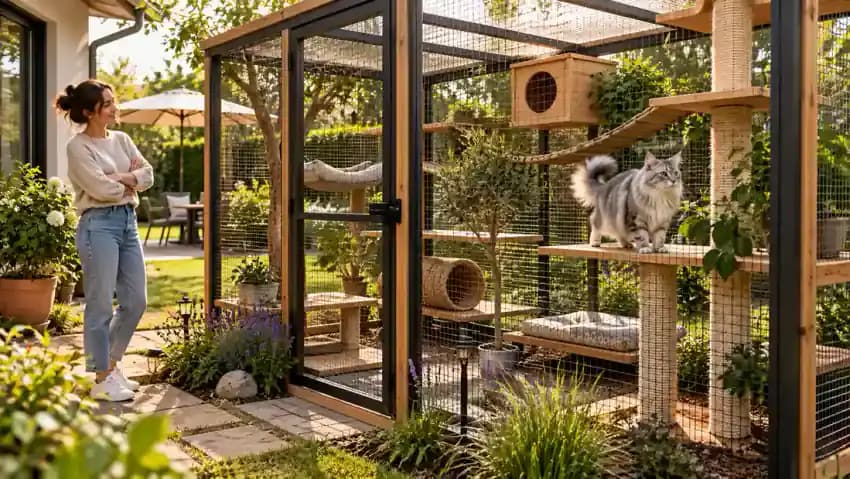
Separate Harness Time From Exits
Establish a consistent preparation routine before taking your cat outside on a harness. Fit the harness in a quiet room away from exterior doors, reward relaxed behavior, and attach the leash securely. If comfortable for your cat, carry it through the doorway rather than allowing it to rush outside. This reinforces calm departures instead of impulsive escapes.
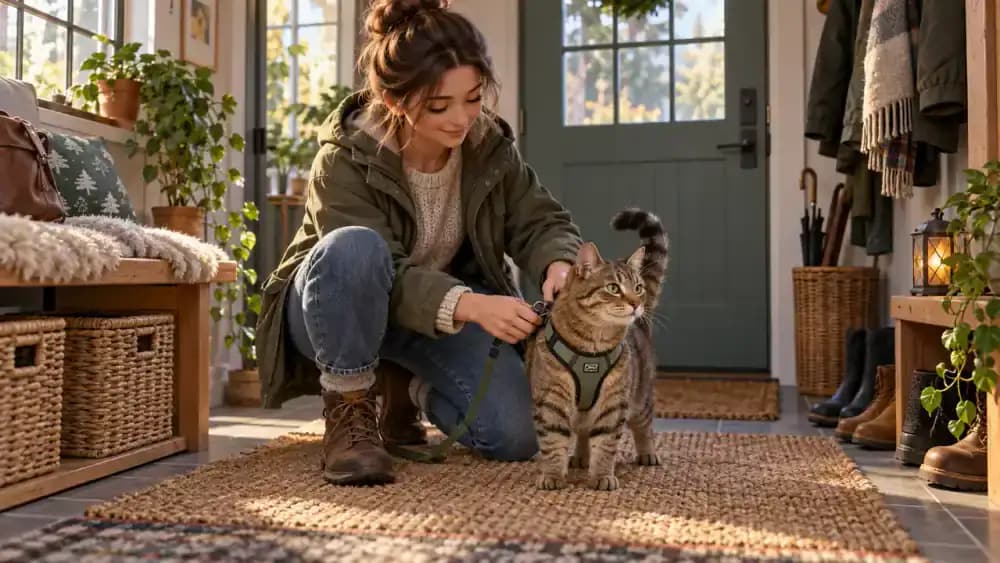
Use Identification as Backup
Even with careful prevention, an indoor cat can occasionally escape. Ask your veterinarian about microchipping and make sure the registration includes your current phone number and address. Consider a properly fitted breakaway collar with an identification tag if your cat tolerates one. Check local identification requirements and update contact details whenever you move or change phone numbers.

If Your Cat Gets Outside
If your cat escapes, stay calm and avoid chasing, shouting, or making sudden movements. Watch where it goes and search nearby hiding places, including bushes, porches, and underneath parked cars. Crouch quietly, speak gently, and offer familiar treats if your cat appears. If you cannot locate it, notify neighbors, local shelters, and nearby veterinary clinics promptly.

Never Risk a Dangerous Grab
If your cat slips outside, never chase it into traffic or crawl into an unsafe hiding spot. Stay on safe ground and give your frightened cat space. A properly sized carrier or humane trap may help with guidance from an animal rescue professional. Ask neighbors to report sightings without approaching or pursuing your cat.

Track Progress Simply
Keep a small training notebook with the date, your cue, how far the door moved, and your cat's response. Note whether your cat stayed on the mat, stepped away, or approached the doorway. Look for several successful repetitions before increasing difficulty. Five calm minutes of consistent practice can be more productive than one frustrating session.
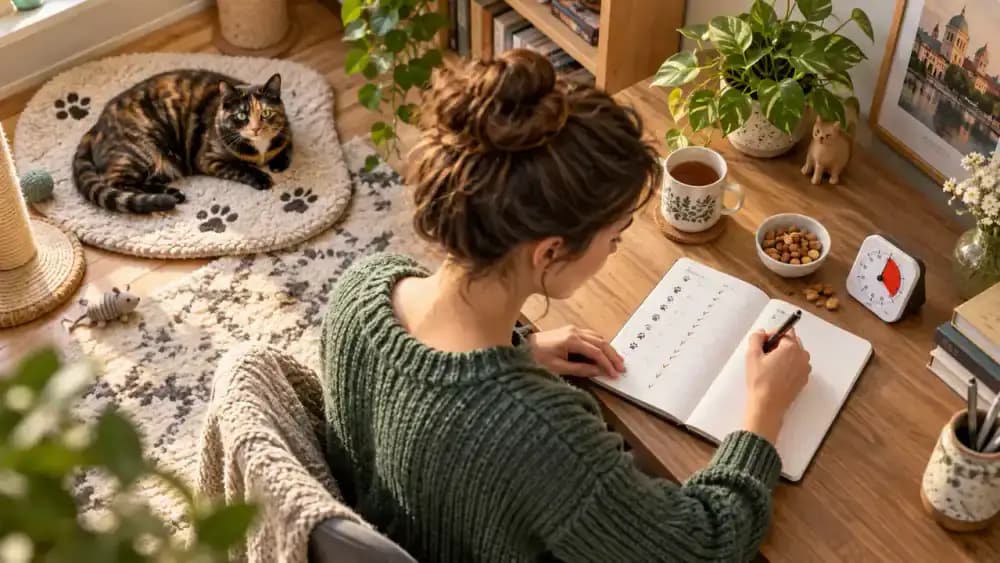
Adjust for Different Cats
Tailor doorway training to your cat's personality, age, and comfort level. An energetic young cat may need taller barriers and more frequent practice, while an older, cautious cat may benefit from slower steps. In homes with multiple cats, provide separate stations and individual sessions when needed. Consult your veterinarian or a qualified behavior professional about sudden behavioral changes or significant distress.
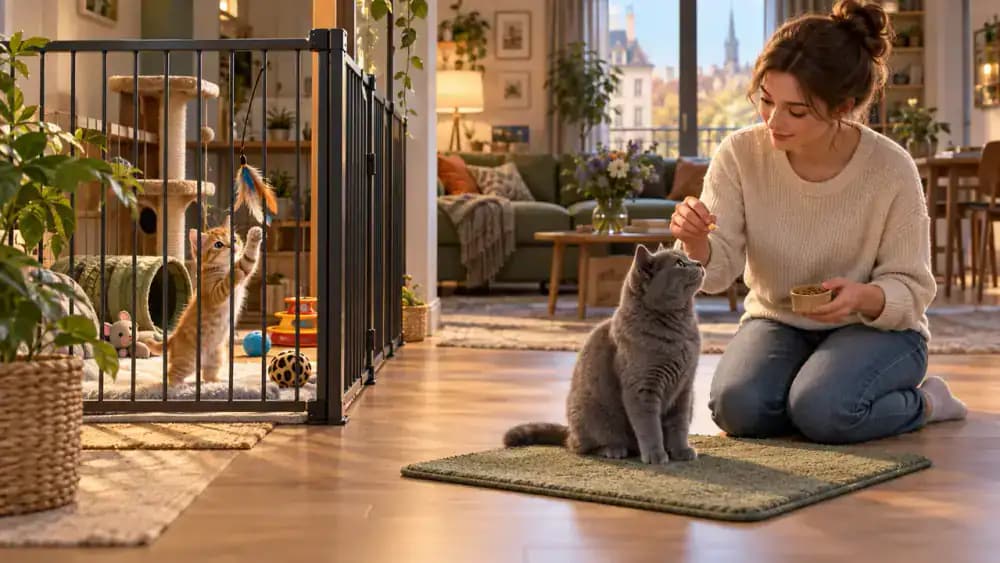
Rehearse Real Departures
Once your cat reliably waits during practice, introduce the steps of a normal departure. Pick up your keys, cue your cat to its mat, offer a reward, and leave through the secured entrance. Keep an interior barrier in place as backup protection. When you return, greet your cat calmly. Repeat until leaving and coming home become predictable routines.
Make Safety the Habit
Build lasting door safety around three habits: secure every exit, reward your cat for waiting in its designated spot, and make sure everyone at home follows the same routine. Practice small door movements and prepare for unexpected visitors. Keep identification and microchip contact details current. Begin with one comfortable mat and a calm session today, then practice consistently.
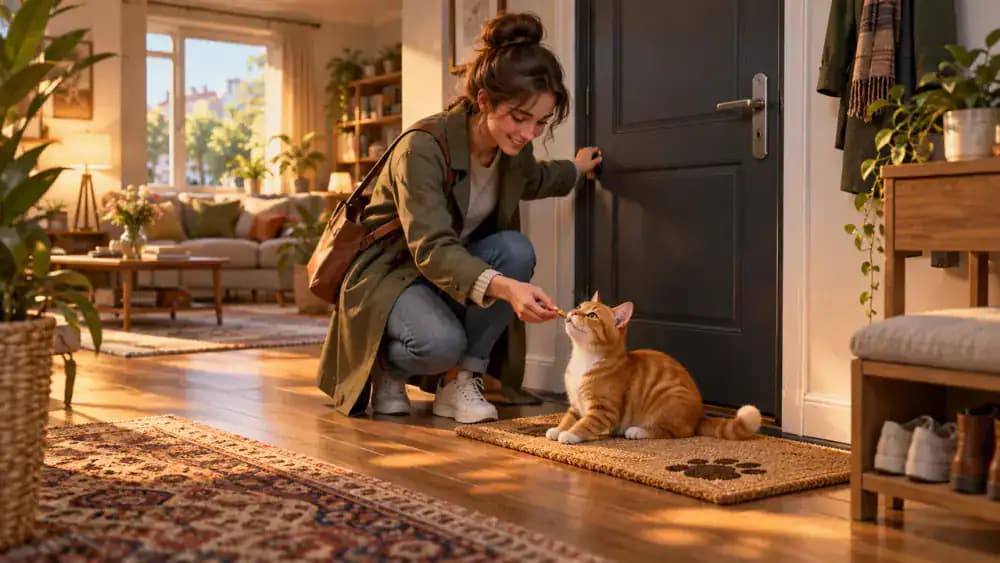
You're carrying groceries through the front door when a flash of fur suddenly darts between your feet. Before you can react, your indoor cat is already in the hallway, on the porch, or heading toward the street. It's a frightening situation that many cat owners know all too well.
Door dashing is more than an annoying habit. For an indoor cat, an unexpected escape can mean exposure to traffic, unfamiliar animals, dangerous weather, and environments they aren't prepared to navigate.
Fortunately, learning how to stop your cat from running out the door doesn't require punishment, chasing, or complicated equipment. The most effective approach combines a safer home setup with reward-based training and consistent daily habits.
Cats approach doors for different reasons. Some are curious about unfamiliar sounds and smells. Others are attracted to outdoor movement, anticipate attention when someone arrives, or have learned that an opening door creates an opportunity to explore. Understanding these motivations helps you choose prevention methods that fit your cat and living space.
This guide covers practical doorway management, rewarding calm behavior, teaching your cat to wait at a designated spot, creating useful physical barriers, and coordinating household routines. You'll also learn how enrichment, updated identification, and an emergency plan can reduce the consequences of an unexpected escape.
The goal isn't to make your cat afraid of the front door. It's to help your cat feel comfortable staying safely away from it.
Where people go wrong
Chasing Your Cat When It Approaches the Door. Running toward your cat, shouting, or waving your arms can turn doorway encounters into exciting games or frightening experiences. Some cats may become more determined to escape, while others may panic and hide. Instead, practice calm redirection, reward movement away from the entrance, and establish a reliable waiting station before opening exterior doors.
Opening the Door Before Checking Your Cat's Location. Even a well-trained indoor cat can react unexpectedly to a bird, unfamiliar sound, or arriving visitor. Opening the door without checking where your cat is removes an important layer of protection. Make locating your cat part of every departure and arrival. When necessary, secure the cat in another room before opening the exterior door.
Relying on Training Without Physical Barriers. Reward-based training can improve doorway behavior, but it cannot guarantee that a cat will never rush outside. Excitement, fear, or sudden distractions can override familiar routines. Where possible, combine training with a secure interior door, enclosed entryway, or suitable barrier. Remember that many cats can climb or jump over standard pet gates.
Punishing Curiosity About the Outdoors. Spraying water, yelling, or frightening a cat near the entrance may create fear without teaching a safer alternative. A cat might also associate unpleasant experiences with the owner rather than the doorway behavior. Reward choosing an indoor resting spot, practice with the exterior door securely closed, and make indoor activities more appealing than investigating the threshold.
Practicing Only When the House Is Quiet. A cat that waits calmly during a quiet training session may behave differently when visitors arrive or several people enter together. Skills practiced in one setting do not always transfer automatically. Gradually introduce realistic distractions while keeping the exterior door secured. Include household members in supervised practice so the same expectations apply during everyday activity.
Ignoring Boredom and Indoor Enrichment. Doorway training addresses what happens near an entrance, but it may not address why the doorway is attractive. Cats benefit from opportunities to play, climb, scratch, explore, and observe their surroundings. Provide regular interactive play, rotate appropriate toys, and offer comfortable resting spots. A stimulating indoor environment can make outdoor activity less tempting.
Assuming Microchipping Makes Escape Prevention Unnecessary. A microchip can help reunite a lost cat with its owner after someone finds and scans the animal, but it does not track the cat's location or prevent an escape. Keep registration details current and consider a suitable identification tag. Continue using doorway precautions, and maintain recent photographs and a practical plan for responding to an escape.
Letting Different Household Members Follow Different Rules. Doorway safety becomes less reliable when one person uses a waiting routine while another opens the door freely. Children, visitors, roommates, and family members may unintentionally encourage rushing behavior. Agree on a simple household procedure, explain it to guests, and ensure everyone understands when the cat must be secured before an exterior door is opened.
Questions people ask
Indoor cats may be attracted to sounds, smells, movement, or activity beyond the entrance. A cat may also have learned that an opening door leads to an interesting experience or attention from household members. Behavior can change with routines and surroundings. Observe when rushing happens, improve indoor enrichment, and reward remaining away from the doorway rather than assuming one specific cause.
Fixed it?
Get one guide like this every Thursday.