How to Prepare Your Cat for Moving Day
Moving to a new home can be stressful for cats. Learn how to prepare your cat before moving day, prevent escapes, pack essential supplies, and create a calm, secure space in your new home.

What you’ll need
Tap to tick things off before you start.
Why Moving Day Is Stressful for Cats
Cats depend on familiar scents, sounds, and daily routines to feel secure. Moving boxes, unfamiliar visitors, and rearranged furniture can make their territory feel unpredictable. Watch for signs of uneasiness, such as increased hiding or cautious behavior. Begin preparing several days ahead, and maintain regular feeding, play, and resting routines whenever possible.

Make the Carrier Feel Safe
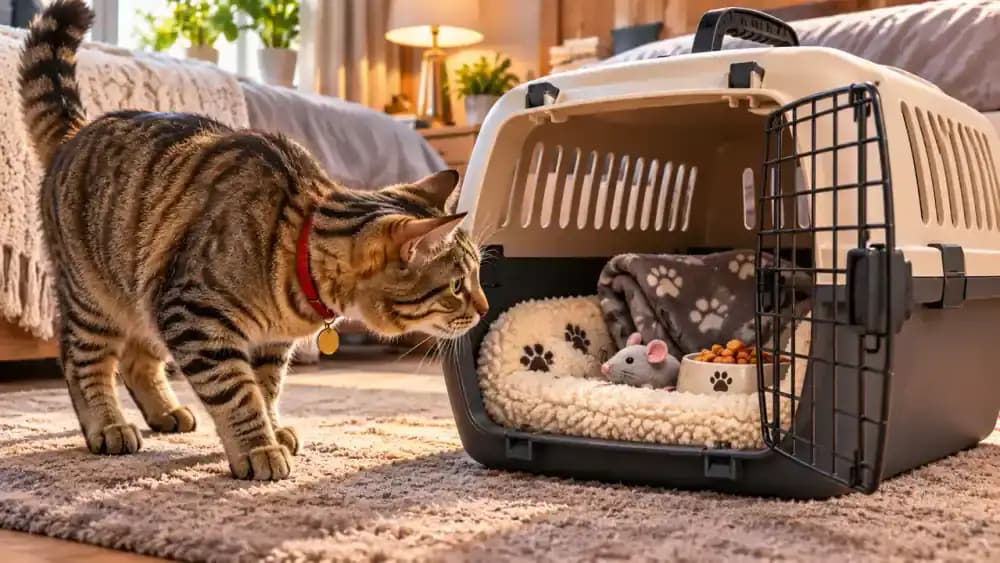
Several days before moving, place your cat's carrier in a quiet, familiar area with its door secured open. Add a blanket that smells like home and offer treats near the entrance. Gradually place rewards inside as your cat gains confidence. Allow voluntary exploration without forcing entry, and praise calm behavior to build positive associations.
Prepare Identification and Essential Supplies
Check your cat's identification tag and update contact information with its microchip registry before moving. Keep regular feeding times consistent, and pack a clearly labeled essentials bag containing familiar food, water, bowls, prescribed medication, litter supplies, cleaning materials, and a favorite toy. Keep this bag accessible throughout transportation and your first days at the new home.

Create a Secure Room During Packing
Before movers arrive, designate a quiet room away from entrances and busy hallways. Provide a clean litter box, fresh water, familiar bedding, and a covered hiding place. Close the door securely and post a visible 'DO NOT OPEN - CAT INSIDE' sign. Inform everyone helping with the move, and check on your cat without repeatedly opening the door.

Transport Your Cat Safely
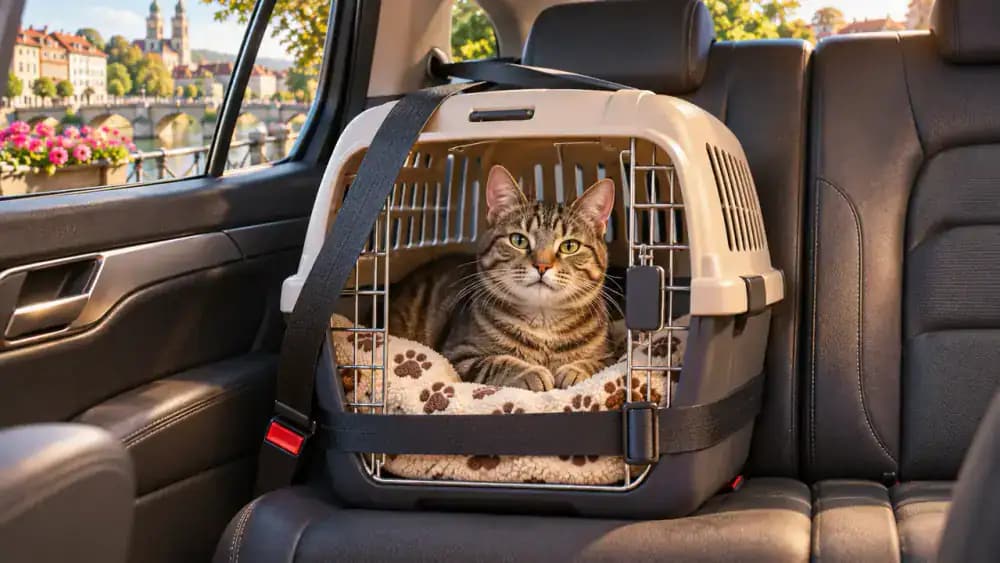
Before opening the safe room, gently secure your cat inside its carrier and check that every latch is fastened. Carry it directly to your vehicle and restrain the carrier against sliding or tipping. Maintain comfortable ventilation and temperature. Never allow your cat to ride loose, open the carrier during roadside stops, or leave it unattended in a parked vehicle.
Introduce the New Home Gradually
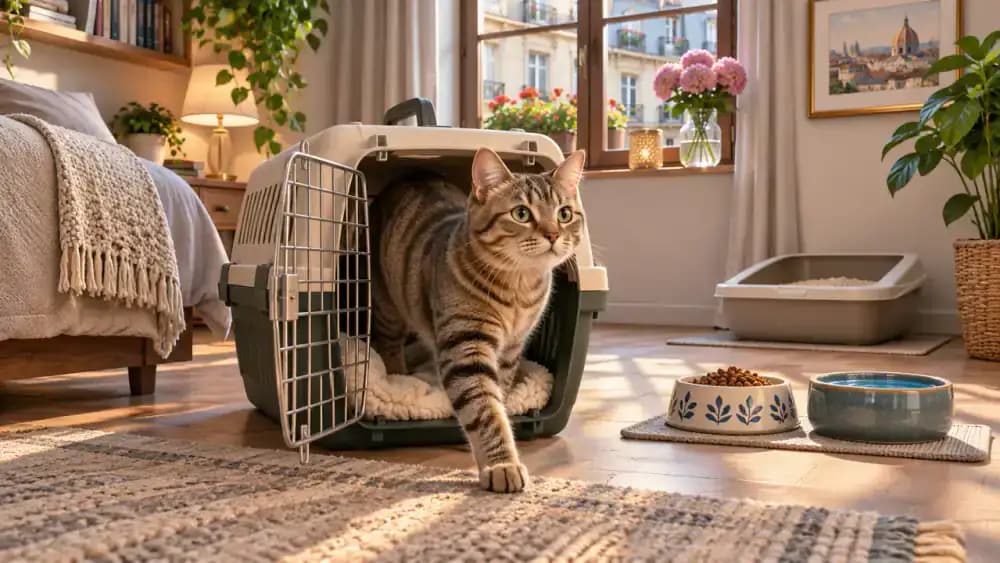
Before bringing your cat inside, prepare a quiet starter room with familiar bedding, food, fresh water, and a litter box positioned away from feeding areas. Secure windows and close the door. Place the carrier on the floor, open it, and step back. Let your cat emerge voluntarily and explore without being picked up or rushed.
Expand Territory at Your Cat's Pace
Once your cat is eating, using the litter box, and exploring comfortably, introduce additional rooms one at a time. Supervise these visits and check window latches, balcony doors, cupboards, and gaps behind appliances before allowing access. Keep exterior doors secured and the starter room available. Follow your cat's confidence rather than a strict schedule.

Recognize Warning Signs and Finish Safely
Some hiding and hesitation are expected after moving, but monitor your cat's appetite, behavior, and litter box activity. Contact a veterinarian promptly for prolonged food refusal or severe distress. Straining or inability to urinate requires immediate veterinary attention. Continue prioritizing secure transportation, escape prevention, familiar routines, and gradual exploration as your cat adjusts.

Keep Unpacking Calm and Predictable
Continue protecting your cat's routine as you unpack, especially during noisy furniture assembly or household rearrangements. Work gradually, keep walking paths clear, and provide an accessible retreat away from busy areas. Avoid placing boxes in front of food, water, or litter boxes. Let your cat observe household activity from a comfortable distance without forcing interaction.

Use Familiar Scents to Build Comfort
Keep several unwashed blankets, cushions, or other familiar belongings available during your cat's first days in the new home. Place them near favorite resting areas to provide recognizable scents. If your cat enjoys gentle handling, let it rub its cheeks against a clean cloth, then leave the cloth nearby. Avoid strong air fresheners and heavily scented cleaners.

Monitor Eating and Drinking Habits
Offer your cat its usual food portions at consistent mealtimes in a quiet area away from household traffic. Sit nearby if your cat enjoys company, or provide privacy if preferred. Measure food and monitor water intake daily, especially in multi-pet households. Record changes in appetite and contact your veterinarian promptly if your cat stops eating.

Reintroduce Other Household Pets Carefully
Keep household pets in separate, comfortable areas initially, even if they previously lived together peacefully. Exchange familiar bedding to help them adjust to changing scents before arranging brief, supervised introductions through a secure barrier. Provide separate food, water, litter boxes, and resting areas. Watch for chasing, blocking, or guarding, and separate pets calmly if tension develops.

Help Children and Visitors Respect Boundaries
Explain to children and visitors that your cat needs control over when interactions happen. Ask everyone to speak softly, avoid sudden movements, and never pull the cat from a hiding place. Encourage people to sit quietly and allow the cat to approach voluntarily. Reward calm interactions with treats when appropriate, and keep busy gatherings away from resting areas.

Establish a Strict Door Safety Routine
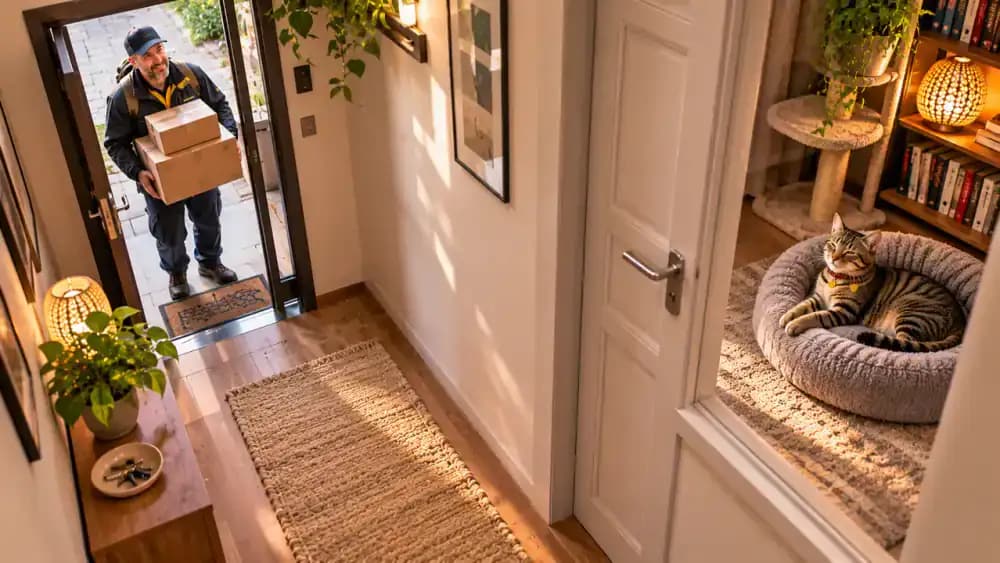
Before opening exterior doors for deliveries or visitors, confirm your cat is safely contained away from the entrance. Close an interior door to create a second barrier whenever possible, and remind everyone in the household to follow the same routine. Check window screens and door latches regularly. Never assume your cat will avoid unfamiliar exits or return automatically if it escapes.
Plan Outdoor Access With Extra Caution
If your cat previously enjoyed outdoor access, keep it indoors during the initial adjustment period while it becomes familiar with the new home. Discuss an appropriate transition plan with your veterinarian before allowing outdoor activities. Inspect the yard for escape routes, traffic exposure, and other hazards. Consider supervised outdoor sessions or a secure cat enclosure instead of unrestricted roaming.

Recognize Progress and Build a Lasting Home
Over the following days, watch for signs your cat is becoming comfortable, including regular grooming, playful curiosity, relaxed sleep, and confident exploration. Some cats adjust within days, while others need several weeks or longer. Avoid comparing progress against a fixed deadline. Maintain familiar routines, provide secure resting places, and let your cat establish confidence naturally.

Choose the Right Litter Box Locations
Place litter boxes in quiet, easily accessible areas away from loud appliances and busy walkways. Avoid exposed locations where your cat may feel vulnerable, and continue using familiar litter during the transition. Scoop daily and maintain clean boxes. In multi-story homes, provide a litter box on each level so your cat can reach one comfortably.

Create Safe Elevated Observation Spaces
Provide sturdy cat trees, securely mounted shelves, or accessible window perches where your cat can observe unfamiliar surroundings from above. Position these resting spots away from excessive noise while allowing a clear view of household activity. Check that climbing structures cannot tip, shelves support your cat's weight, and every elevated area has a safe route down.

Rebuild Confidence Through Daily Play
Introduce short, predictable play sessions using toys your cat already enjoys. Move a feather wand or other interactive toy across an uncluttered floor, allowing your cat to stalk, chase, and catch it successfully. Watch for relaxed, interested behavior and end sessions before your cat becomes overwhelmed. Never force participation when your cat prefers resting or observing.

Prepare for Long Distance Relocations
For long-distance moves, plan your driving route and confirm pet-friendly accommodations before departure. Consult your veterinarian about travel-related nausea, anxiety, and any necessary prescriptions well in advance. Never administer human sedatives or try unfamiliar treatments without veterinary guidance. Carry medication in labeled containers, keep emergency veterinary contacts accessible, and prepare documentation required for your destination.

Prepare a Moving Day Backup Plan
Plan for unexpected delays, temperature changes, or rooms becoming unsafe during the move. Identify a secure, climate-controlled backup space where your cat can remain comfortable and separated from activity. Assign one responsible adult to monitor your cat, manage essential supplies, and communicate with movers. Keep the carrier accessible in case relocation plans change unexpectedly.

Understand Calming Products and Veterinary Support
Synthetic feline pheromone diffusers or sprays may help some cats feel more comfortable during relocation, although results vary. Follow product instructions carefully and never spray products directly onto your cat. If your cat has experienced severe travel distress, consult your veterinarian before moving. Discuss appropriate options in advance rather than experimenting with unfamiliar calming products on moving day.

Complete the Final Home Safety Check
Walk through your new home at your cat's level and remove plastic wrapping, packing straps, and other hazardous materials. Secure fragile decorations, cleaning products, electrical cords, and accessible escape routes. Remind household members to maintain door safety routines. Once everything is secure, allow your cat to enjoy ordinary family activities without repeatedly interrupting its adjustment.

Consider Your Cat's Age and Medical Needs
Kittens, senior cats, and cats with existing medical conditions may need additional moving preparations. Keep prescribed medications on schedule and veterinary records accessible. For cats with limited mobility or sensory changes, provide low-sided litter boxes, supportive bedding, nonslip surfaces, and easily reached food and water. Ask your veterinarian about specific accommodations before relocating.

Find Veterinary Care Near Your New Home
Research veterinary clinics near your new address before moving, including their operating hours and emergency care arrangements. Register with a suitable practice and arrange medical record transfers when appropriate. Keep vaccination history, current prescriptions, and relevant medical information accessible. Save both your new veterinarian's number and a nearby emergency clinic's contact details on your phone.

Learn to Recognize Subtle Stress Signals
Observe your cat's body language for signs of discomfort, including flattened ears, a tightly tucked posture, persistent hiding, or rapid tail movements. Consider the situation and your cat's usual behavior rather than interpreting individual gestures alone. If your cat appears uneasy, step back, reduce noise, and allow it to retreat. Monitor behavioral changes over several days.

Maintain a Calm Relationship With Your Cat
Set aside a few quiet moments each day to reconnect with your cat while settling into the new home. Sit nearby, speak gently, and maintain familiar interactions without demanding attention. Let your cat decide whether to approach, observe, or rest independently. Consistent behavior and predictable companionship can help restore a reassuring sense of normalcy after relocation.

Adjust Your Home for Everyday Comfort
Observe how sunlight, drafts, temperature, and household noise affect your cat's favorite resting places throughout the day. A sunny spot may become too warm, while a bed near a window could feel drafty. Move bedding to comfortable, sheltered locations when needed, and provide alternative resting areas so your cat can choose where it feels most relaxed.

Expect Occasional Setbacks During Adjustment
Expect your cat's confidence to fluctuate as it adjusts to unfamiliar surroundings. A cat that explores comfortably one day may hide after an unexpected noise the next. Avoid forcing further exploration when this happens. Reduce disturbances, maintain access to familiar hiding places, and allow your cat to resume investigating voluntarily. Judge progress over time rather than individual moments.
Turn Your New House Into a True Home
Continue providing predictable meals, comfortable resting areas, safe exploration opportunities, and gentle companionship as your cat settles into its new home. Notice everyday signs of confidence, such as relaxed stretching, curious play, and voluntary affection. Maintain escape prevention habits and adjust the environment when needed. With patience and consistency, familiar routines can help your cat feel secure.

Your cat is sitting in the hallway, watching moving boxes pile up where its favorite sleeping spot used to be. The furniture is shifting, unfamiliar people are coming and going, and the household suddenly feels different. You know you're moving to a new home, but your cat has no way of understanding why its familiar territory is disappearing.
For cats, moving can be particularly unsettling because they rely heavily on familiar scents, predictable routines, and secure hiding places. Even a normally confident cat may become cautious, hide more frequently, or seem reluctant to explore when its surroundings change.
The good news is that a little preparation can make moving day safer and less overwhelming for your cat. You don't need expensive equipment or an elaborate relocation plan. You need a secure carrier, familiar belongings, consistent feeding times, and a quiet space where your cat can avoid the busiest parts of the move.
Ideally, start preparing several days before moving. Give your cat time to become comfortable around its carrier, verify that identification information is current, and organize essential supplies separately from the moving boxes.
This guide explains how to protect your cat during packing and transportation, establish a comfortable starter room in your new home, and gradually introduce unfamiliar spaces. You'll also learn which changes in behavior deserve veterinary attention and why patience matters more than rushing the adjustment process.
Where people go wrong
Introducing the Carrier Only When It's Time to Leave. Bringing out the carrier just minutes before departure can make an already unfamiliar situation more stressful. Instead, leave it accessible several days before moving, with the door secured open and familiar bedding inside. Offer treats near or inside the carrier and reward voluntary exploration. Never force your cat into repeated practice sessions if it becomes frightened.
Allowing Your Cat to Roam While Movers Work. Open exterior doors, unfamiliar visitors, and moving furniture create serious escape and injury risks. A frightened cat may slip outside unnoticed or hide inside furniture being transported. Keep your cat in a quiet, closed room while packing and loading take place. Tell everyone helping with the move that the door must remain shut until your cat is safely secured.
Letting Your Cat Ride Loose in the Vehicle. A loose cat can interfere with the driver, become injured during sudden braking, or escape when a vehicle door opens. Always transport your cat in a securely closed, properly ventilated carrier positioned to prevent sliding or tipping. Maintain a comfortable vehicle temperature, avoid direct sunlight, and never leave your cat unattended in a parked vehicle.
Packing Essential Cat Supplies With Everything Else. Finding your cat's food, medication, or litter box becomes difficult when those items disappear into dozens of sealed moving boxes. Keep a dedicated, clearly labeled pet bag with everything needed during transportation and the first few days. This prevents unnecessary delays when your cat needs water, a familiar meal, a clean litter box, or prescribed medication.
Changing Feeding Times and Food During the Move. Moving already changes much of your cat's environment, so introducing a new diet or unpredictable feeding schedule can add unnecessary disruption. Maintain regular mealtimes whenever practical and bring the food your cat normally eats. Offer meals in a quiet location, monitor food and water intake, and seek veterinary guidance if your cat stops eating.
Giving Your Cat Immediate Access to the Entire New Home. Opening the carrier in the middle of an unfamiliar house can expose your cat to too many new sounds, smells, and hiding places at once. Begin with a prepared, secure room containing familiar belongings and essential supplies. Allow your cat to emerge voluntarily, then gradually introduce other rooms when its behavior suggests increasing comfort and curiosity.
Overlooking Escape Routes and Unsafe Hiding Spaces. An unfamiliar home may contain loose window screens, open vents, gaps behind appliances, accessible utility spaces, or doors that do not latch properly. Inspect the starter room before releasing your cat and check additional rooms before expanding access. Keep exterior doors and windows secure, and ensure your cat cannot become trapped inside cabinets or furniture.
Assuming Every Behavioral Change Is Normal Moving Stress. Some hiding and hesitation can occur after relocation, but important health concerns should never be dismissed as adjustment problems. Monitor eating, drinking, litter box use, and overall behavior. Difficulty passing urine, repeated unsuccessful attempts to urinate, or inability to urinate requires emergency veterinary attention. Contact a veterinarian promptly about prolonged food refusal or severe distress.

Questions people ask
Start at least three to seven days before moving, although additional time can help cats that are especially cautious around unfamiliar objects. Leave the carrier accessible with familiar bedding and offer rewards for voluntary exploration. Maintain normal feeding and play routines, verify identification information, and organize a pet essentials bag before the busiest packing days arrive.
Fixed it?
Get one guide like this every Thursday.