How to Prepare a Pet-Friendly Hotel Room for Your Dog or Cat
Make your next hotel stay safer and more comfortable for your dog or cat. Learn how to pet-proof a hotel room, prevent escapes, create a familiar resting space, and help your pet settle into new surroundings.
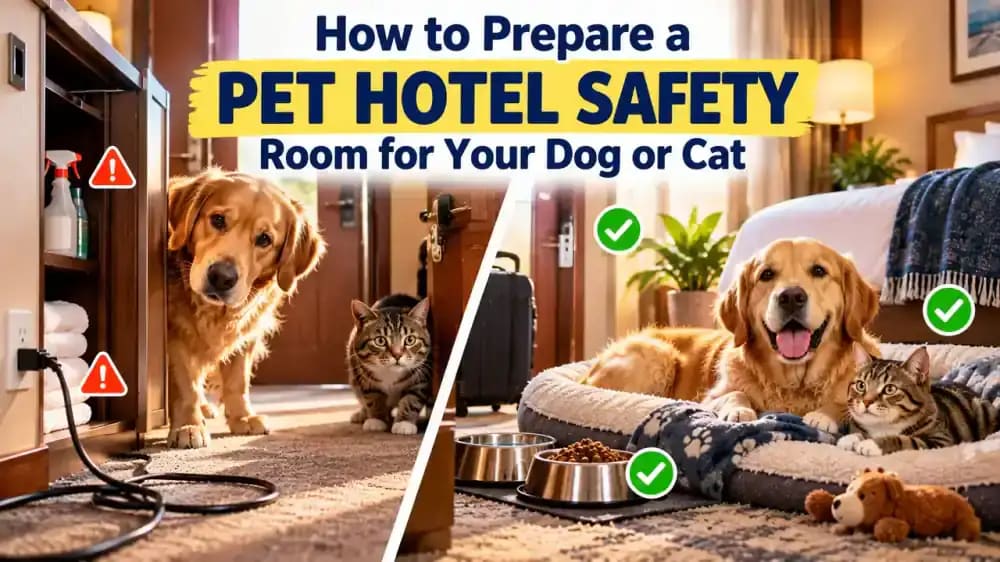
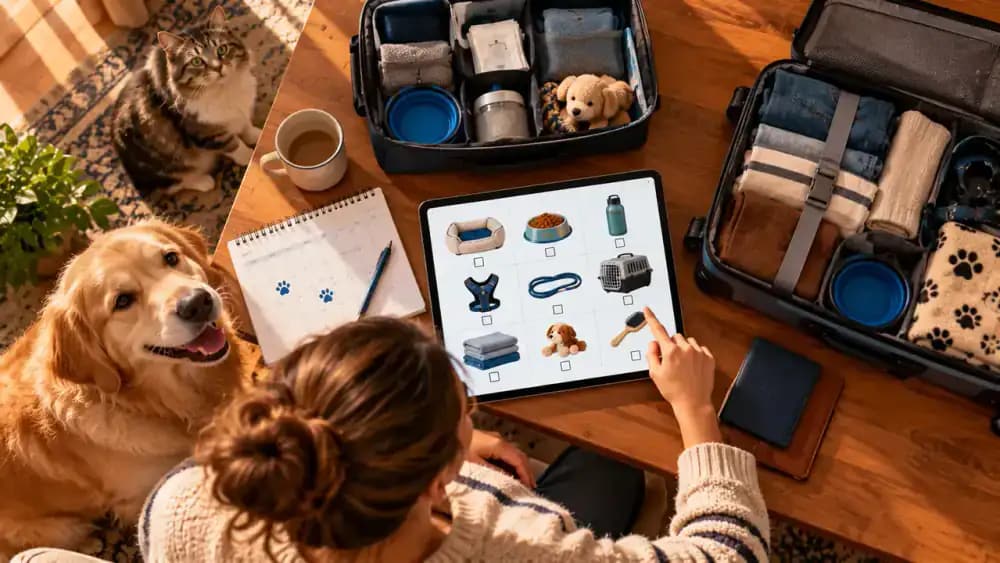
What you’ll need
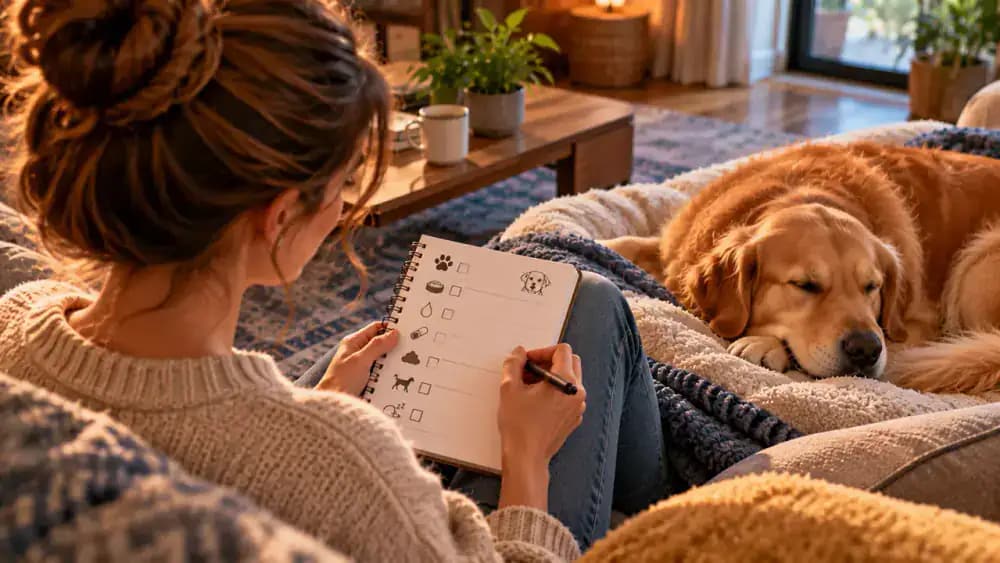
Tap to tick things off before you start.
A Pet-Friendly Room Is Not Automatically Safe
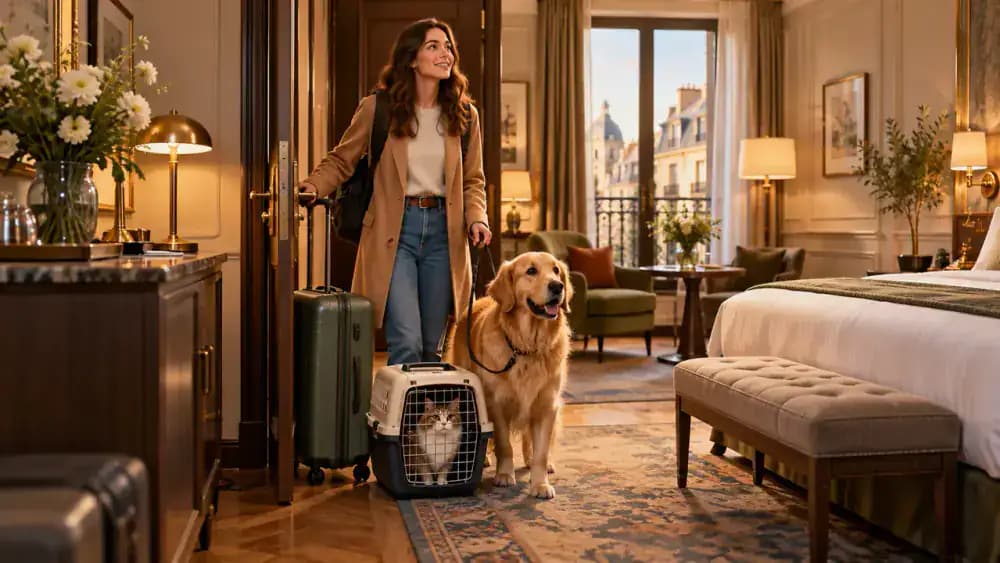
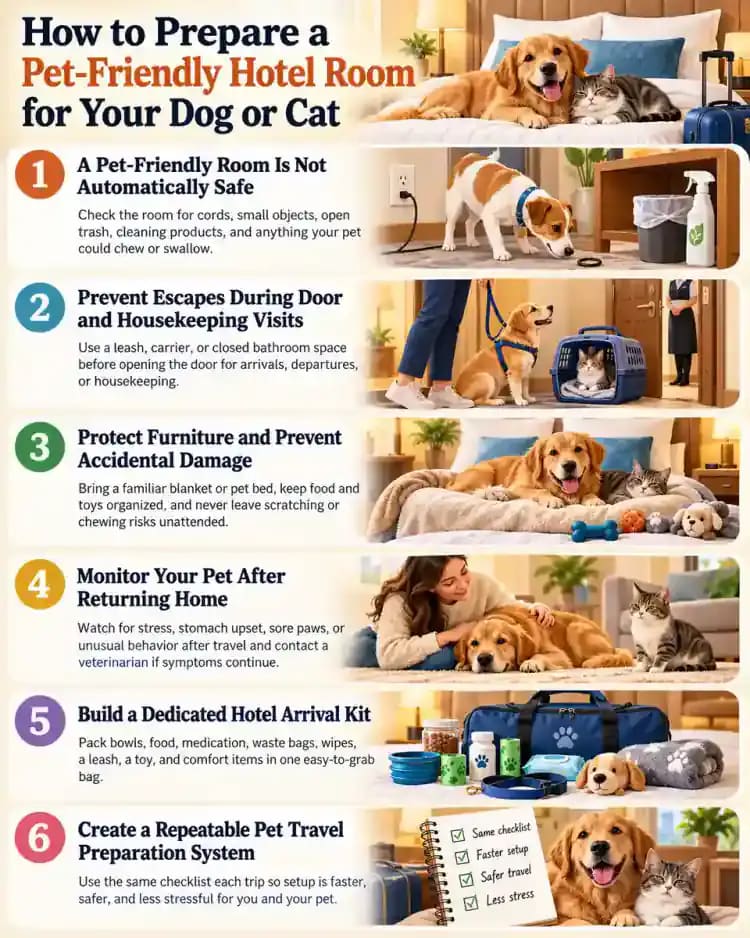
Before letting your dog or cat explore, pause at the entrance and inspect the hotel room. Keep your dog on a short leash and your cat safely inside its carrier. Look for unfamiliar objects, potential hazards, and possible escape routes. A controlled arrival gives you time to make the space safer before your pet investigates.
Inspect Hidden Hazards at Floor Level
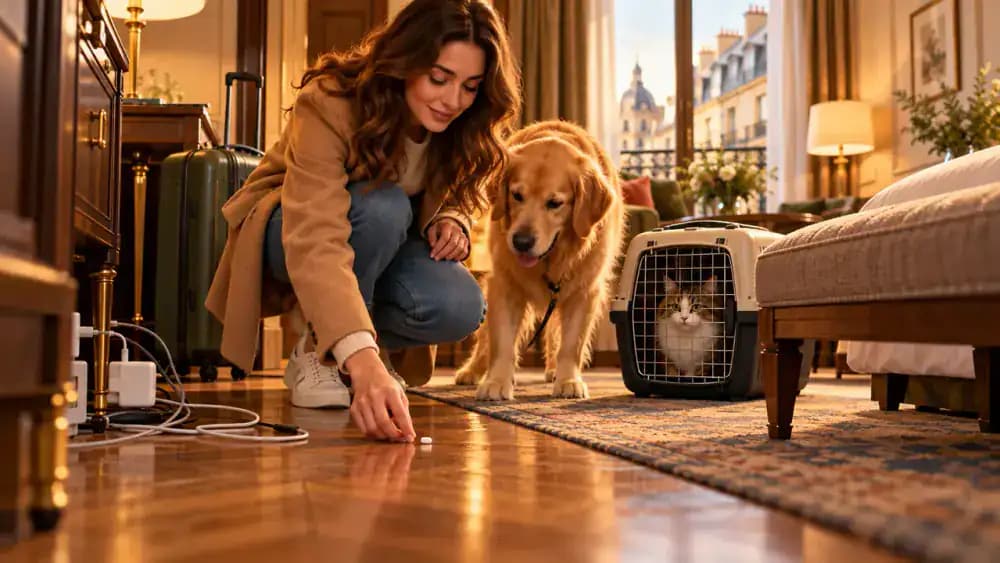
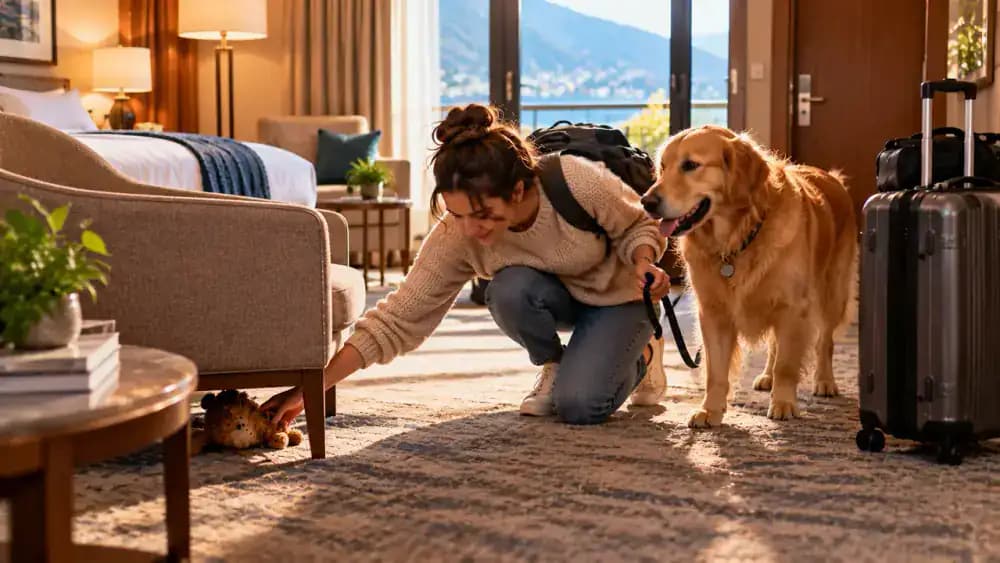
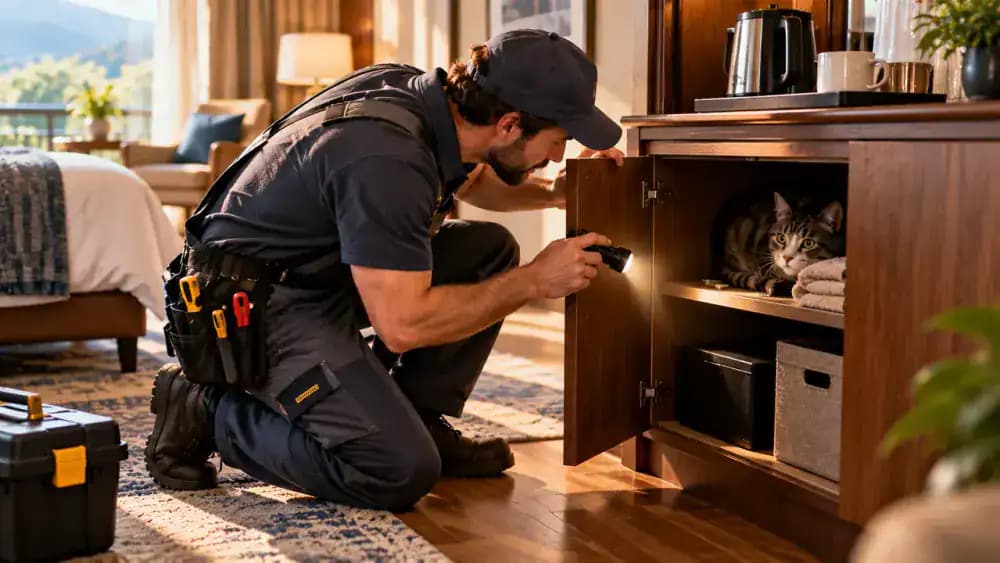
Get down to your pet's eye level and inspect the floor, furniture, and hidden corners. Bundle loose electrical cords, remove small objects and dropped medications, and check beneath beds for dangerous gaps. Move cleaning supplies, toiletries, and trash into secure storage. Pay special attention to anything your pet could chew, swallow, or become trapped behind.
Secure Windows, Balconies, and Escape Routes
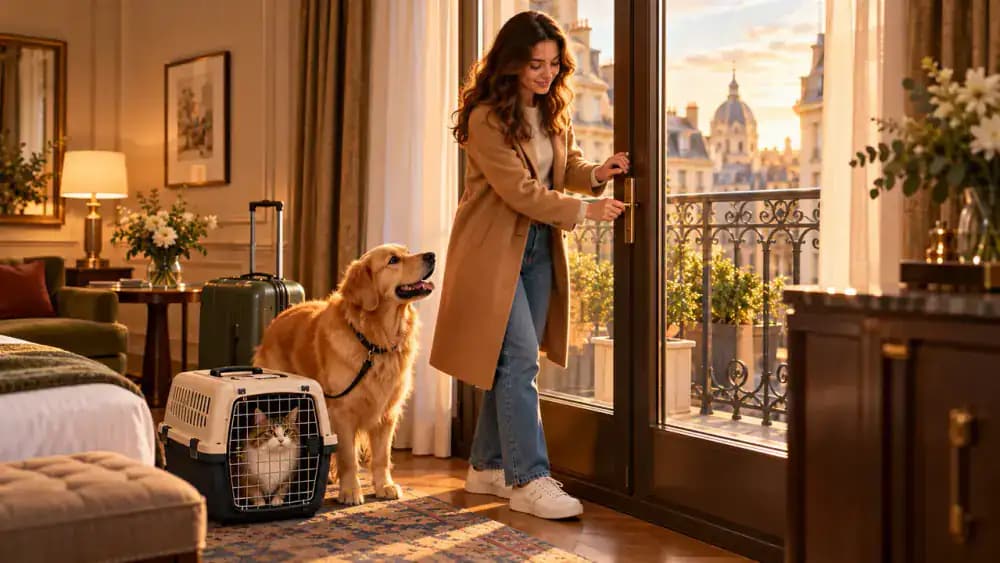
Check every window latch and keep balcony doors securely locked. Never rely on window screens to prevent a pet from falling or escaping. Inspect narrow spaces behind furniture where a cat might hide or become stuck. Test the main entrance latch and choose a secure place to contain your pet whenever housekeeping, deliveries, or visitors arrive.
Create a Familiar and Comfortable Resting Area
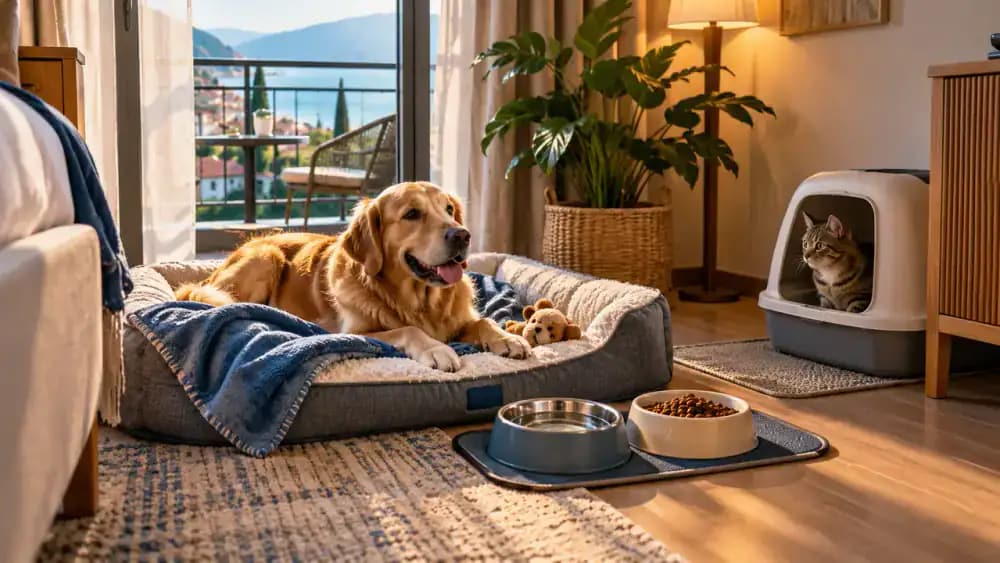
Choose a quiet corner away from busy walkways, direct sunlight, and heating vents. Arrange your pet's familiar bed or blanket to provide a recognizable resting spot. Offer fresh drinking water and place food bowls in a clean, separate area. For cats, set up a litter box in a private, accessible location away from feeding and sleeping spaces.
Help Your Pet Adjust Without Rushing
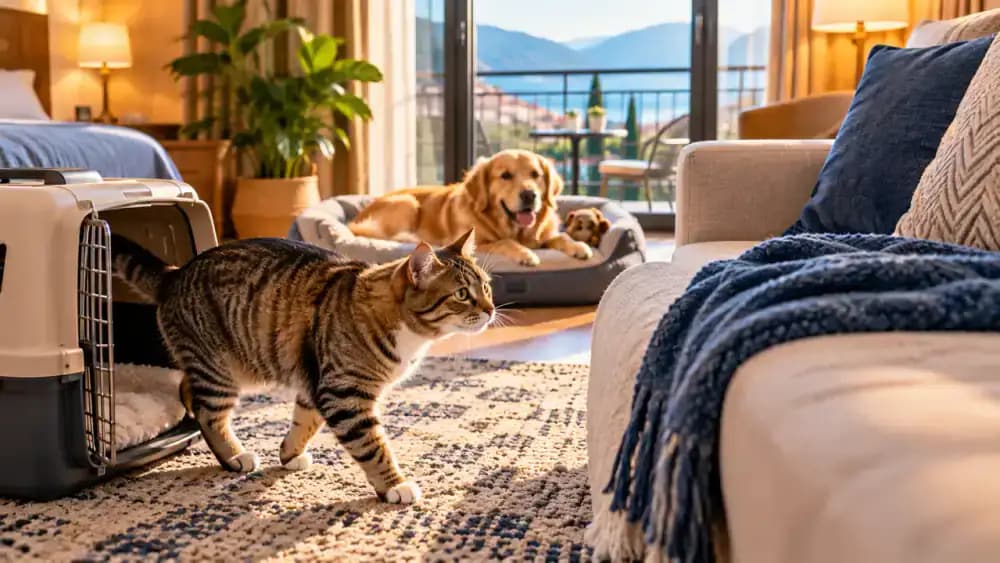
Allow your dog to investigate the room slowly while supervised, and let your cat leave its carrier voluntarily when ready. Avoid forcing exploration or interaction. Maintain familiar feeding times, walks, and bedtime routines whenever possible. Watch for hiding, pacing, or reluctance to accept treats, and offer a quiet retreat if your pet seems uncomfortable.
Prevent Escapes During Door and Housekeeping Visits
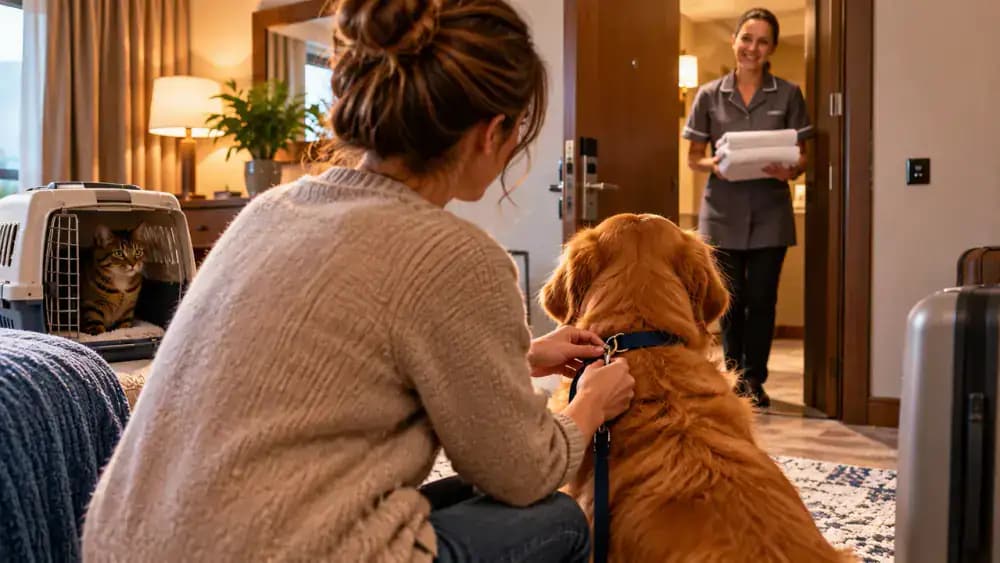
Before opening your hotel room door, secure your dog on a leash or place your cat inside its carrier. Keep pets away from the entrance during luggage deliveries and housekeeping visits. Inform hotel staff that an animal is inside, use the privacy sign when appropriate, and schedule cleaning when you can supervise your pet safely.
Manage Noise, Stress, and Time Alone
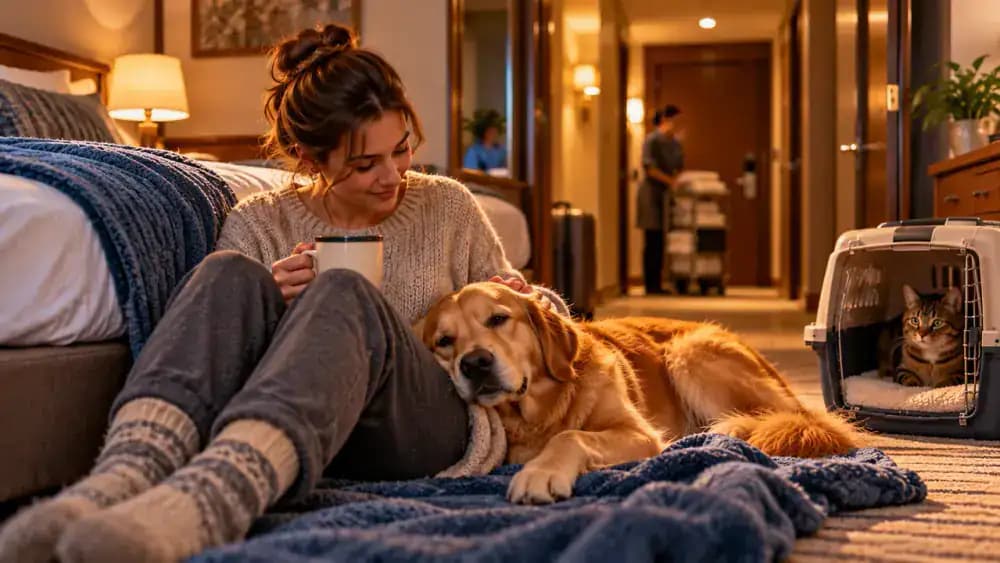
Reduce unfamiliar hallway noise by offering familiar bedding, a quiet resting spot, and soft background sound if your pet finds it comforting. Watch how your dog or cat responds to footsteps, elevators, and closing doors. Check hotel policies before considering unattended time, and never leave your pet alone unless permitted and they can cope safely.
Complete Your Final Safety Check and Settle In
Before bedtime, inspect the room again for loose objects, accessible hazards, and unsecured doors or windows. Keep your pet's leash, waste bags, cleaning wipes, and other essentials within easy reach. Confirm any necessary arrangements with hotel staff. Once everything is secure, encourage your dog or cat to relax in its familiar sleeping area.
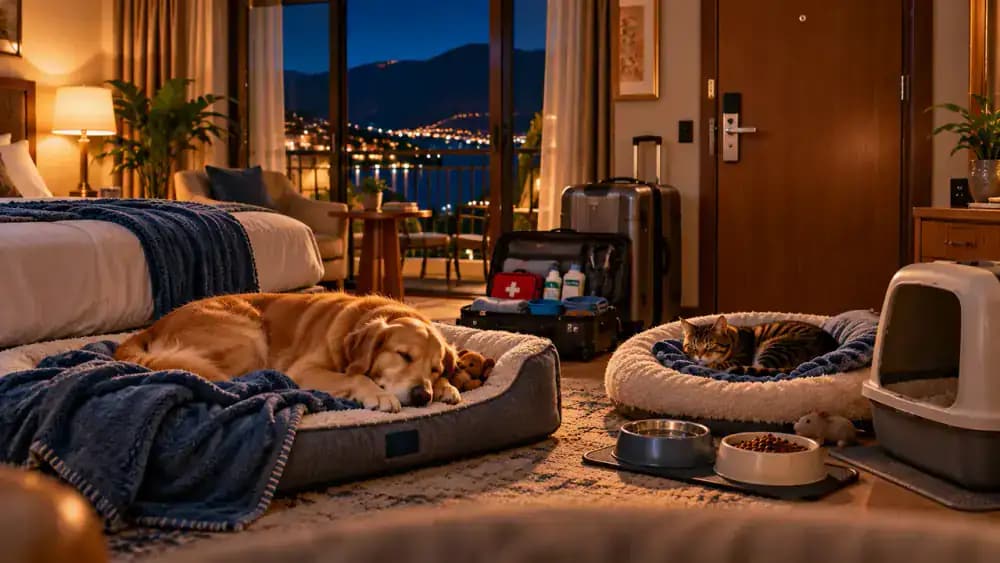
Navigate Hotel Corridors and Bathroom Breaks
Before taking your dog outside, check that its collar identification is current and its leash or harness is securely attached. Move calmly through hotel corridors, allow elevator passengers to exit before entering, and avoid crowded areas when possible. Use designated pet relief areas, carry waste bags, and dispose of collected waste in the appropriate outdoor bins.
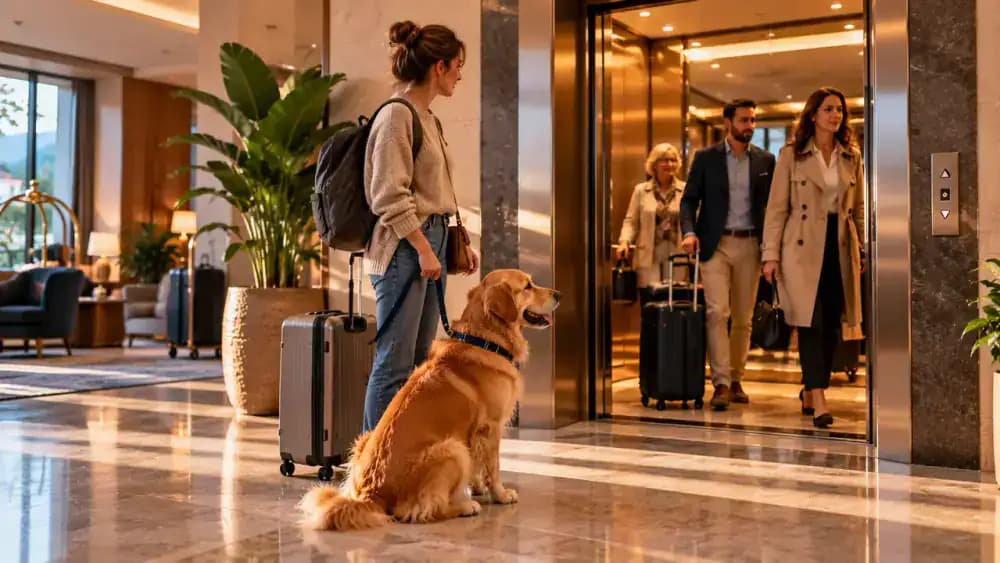
Maintain Your Cat's Litter Box Routine
Keep your cat's litter box clean by scooping regularly and sealing waste in bags before disposing of it according to hotel instructions. Place the box on a protective mat in a quiet, accessible location. If your cat avoids using it, check for loud fans, excessive foot traffic, or blocked access, and adjust the setup without forcing interaction.
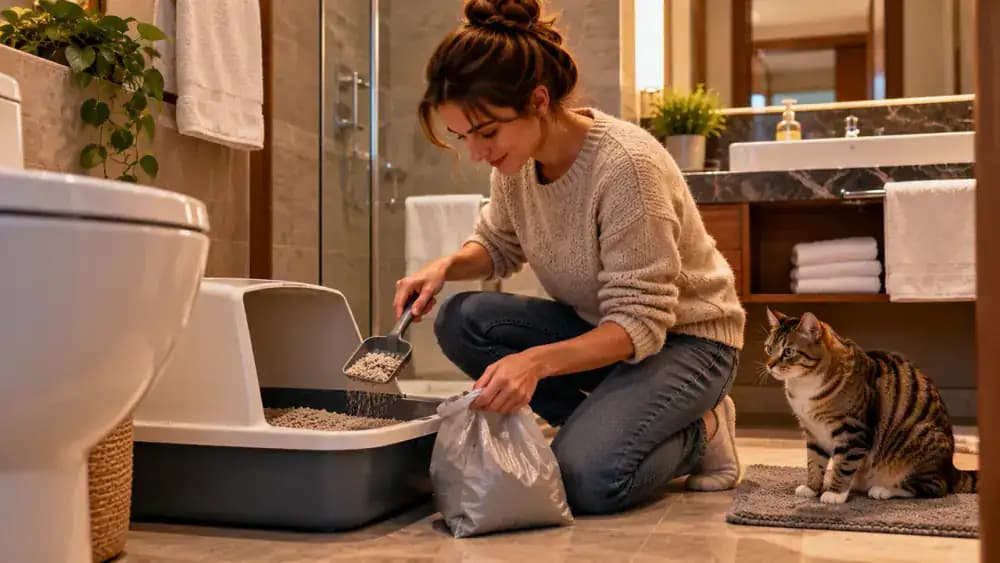
Keep Meals Safe and Familiar
Feed your pet measured portions of their regular food to maintain familiar eating habits. Avoid sharing rich room service meals or introducing unfamiliar treats. Store dry food in airtight containers, refrigerate perishable items as directed, and remove leftovers promptly. Contact a veterinarian if your pet repeatedly vomits, appears weak, or unexpectedly refuses food.
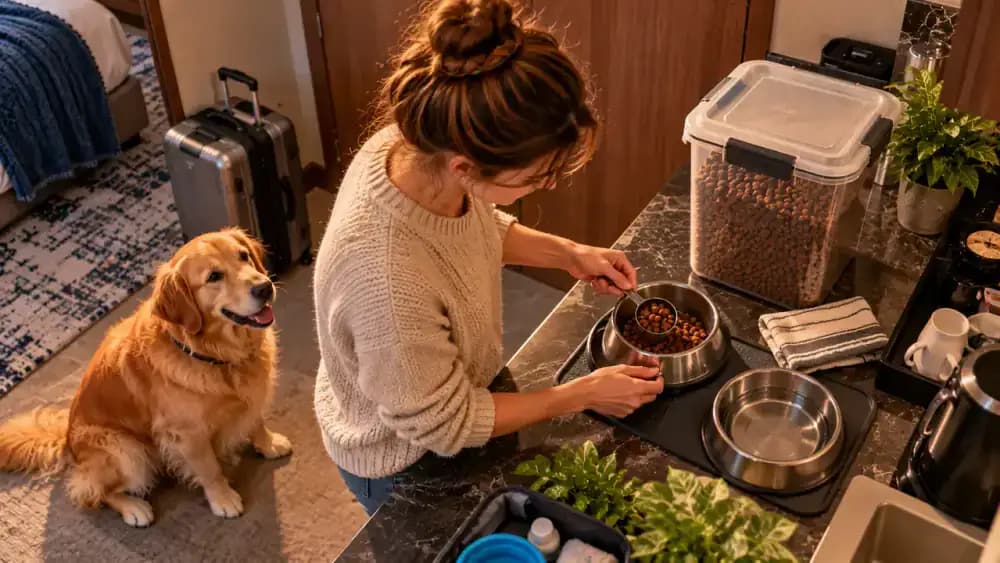
Protect Furniture and Prevent Accidental Damage
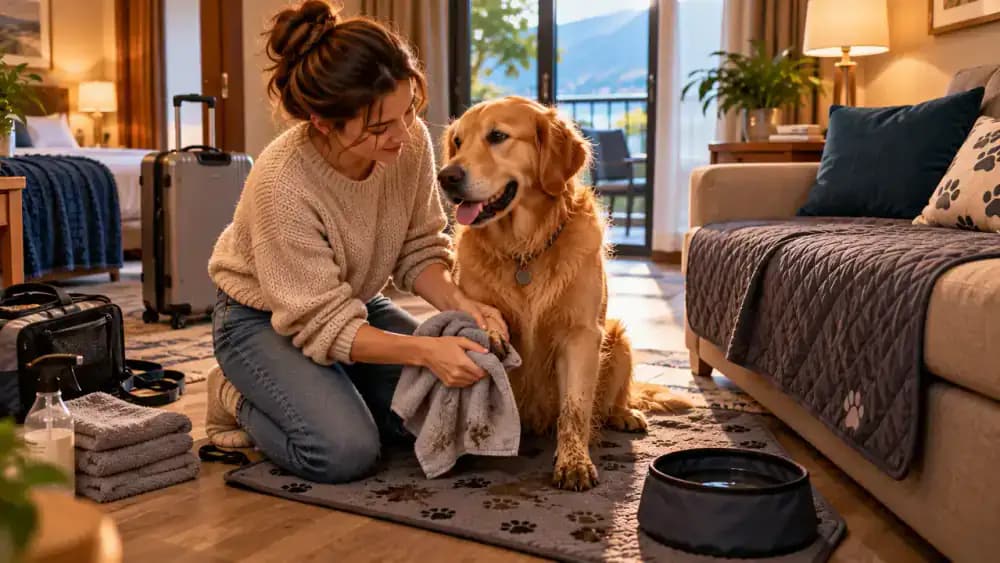
Protect hotel furniture by placing washable covers over seating areas where pets are permitted. Wipe muddy paws before your dog approaches bedding or upholstered furniture. Provide appropriate chew toys and scratching pads to redirect unwanted behavior. If accidental damage occurs, photograph the affected area and notify hotel staff promptly rather than attempting unauthorized repairs.
Respect Pet Rules in Shared Hotel Spaces
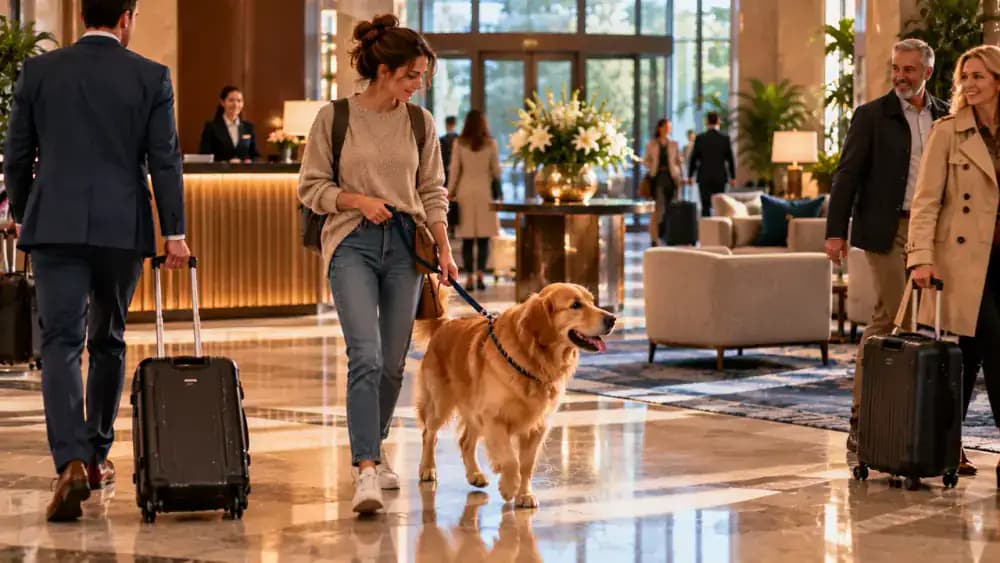
Review posted hotel pet policies before entering shared spaces, including lobbies, dining areas, lounges, and outdoor patios. Keep your dog on a short, controlled leash and transport your cat in a secure carrier. Give other guests plenty of room, avoid unwanted animal interactions, and follow designated pet routes to maintain a comfortable environment for everyone.
Prepare for Unexpected Pet Emergencies
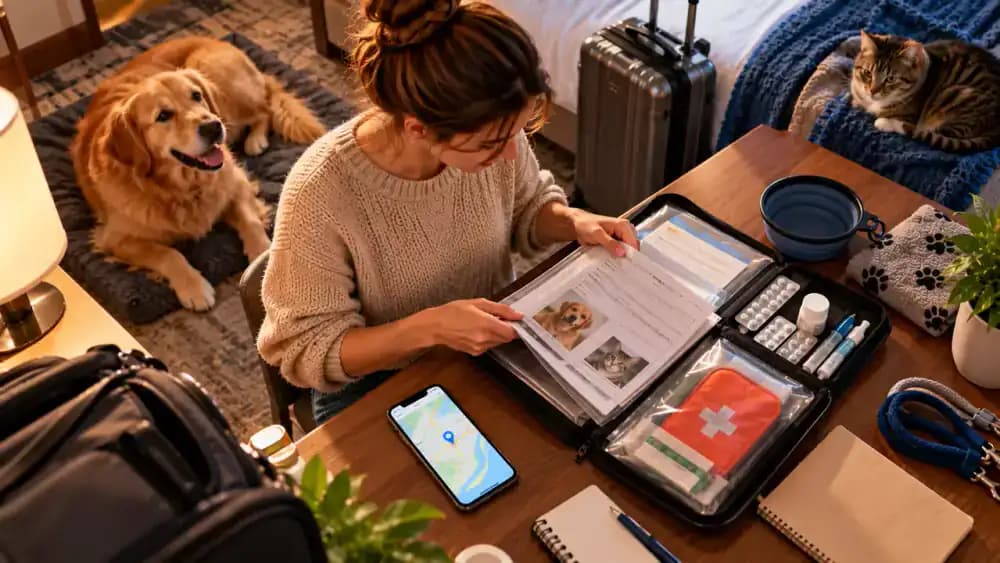
Save contact information for a nearby veterinary clinic and keep your pet's vaccination records, medication instructions, and identification details accessible. Confirm how to reach hotel staff after hours and review the posted evacuation route. Keep a leash or carrier near your essentials so you can secure your pet quickly and follow staff instructions during emergencies.
Plan Outings Around Your Pet's Supervision Needs
Before scheduling sightseeing or activities without your pet, confirm whether the hotel permits animals to remain unattended. Consider your pet's comfort with separation and arrange a trusted caregiver when necessary. Verify any pet sitter's experience, availability, and hotel access requirements. Choose pet-friendly outings or adjust your schedule rather than leaving a distressed animal alone for extended periods.
Check Out Responsibly and Travel Confidently
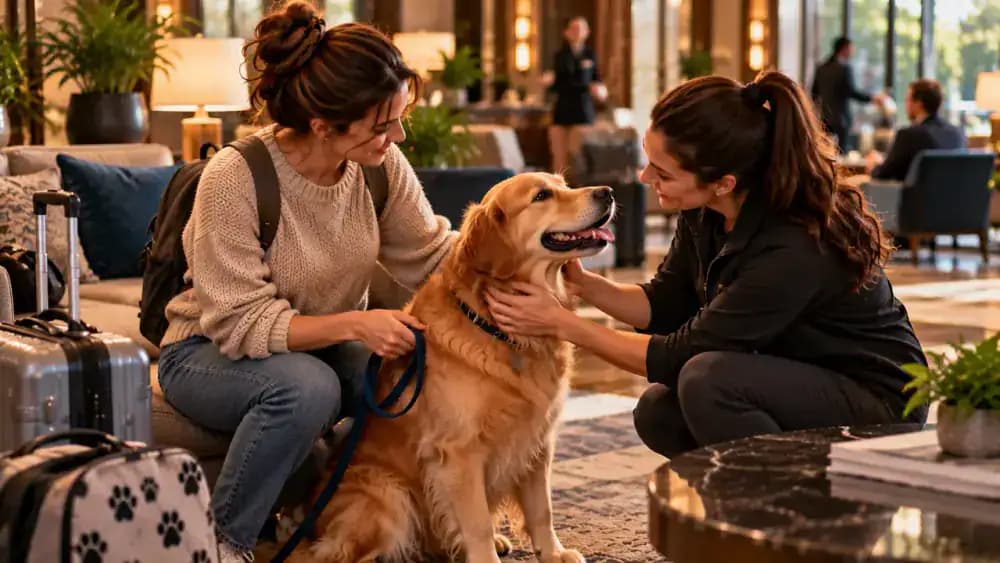
Before checkout, pack your pet's bowls, bedding, toys, and travel supplies while keeping your animal safely secured. Look beneath furniture for forgotten items, clean up any waste or spills, and inspect the room for damage. Coordinate luggage collection carefully, thank hotel staff for their assistance, and secure your pet before leaving the property.
Secure Your Pet for the Journey After Checkout
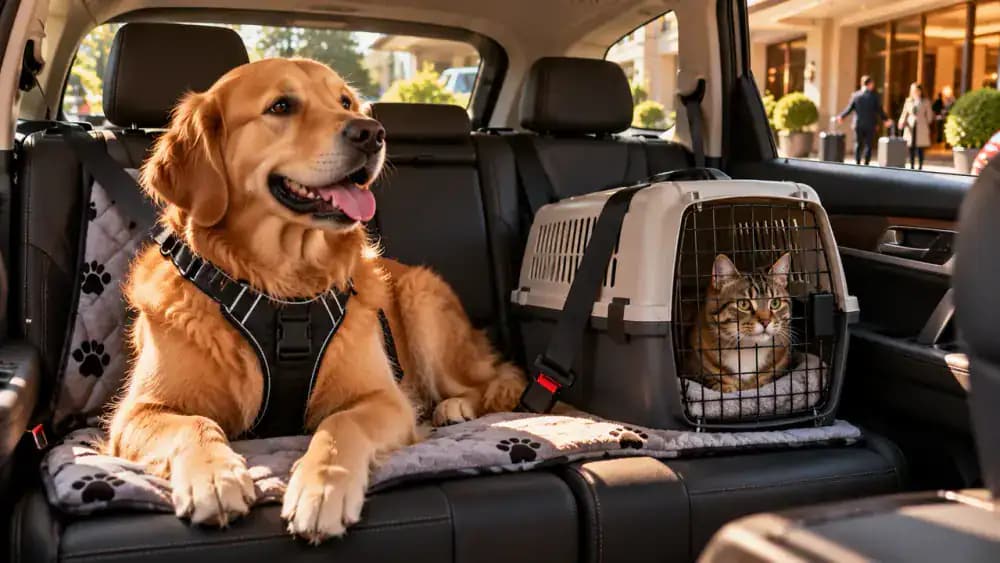
Before driving away, secure your dog using a properly fitted, crash-tested vehicle restraint installed according to its instructions. Transport your cat in a stable, ventilated carrier secured against movement. Maintain a comfortable cabin temperature and schedule appropriate rest stops. Never allow pets to roam freely inside the vehicle or leave them unattended in a parked car.
Monitor Your Pet After Returning Home
After returning home, observe your pet's appetite, energy, sleeping habits, and usual behavior. Give your dog or cat time to settle back into familiar routines. Record any challenging travel experiences for future planning. Contact a veterinarian promptly if your pet develops concerning symptoms, including persistent digestive problems, unusual weakness, or ongoing refusal to eat.
Research Pet Policies Before Your Next Reservation
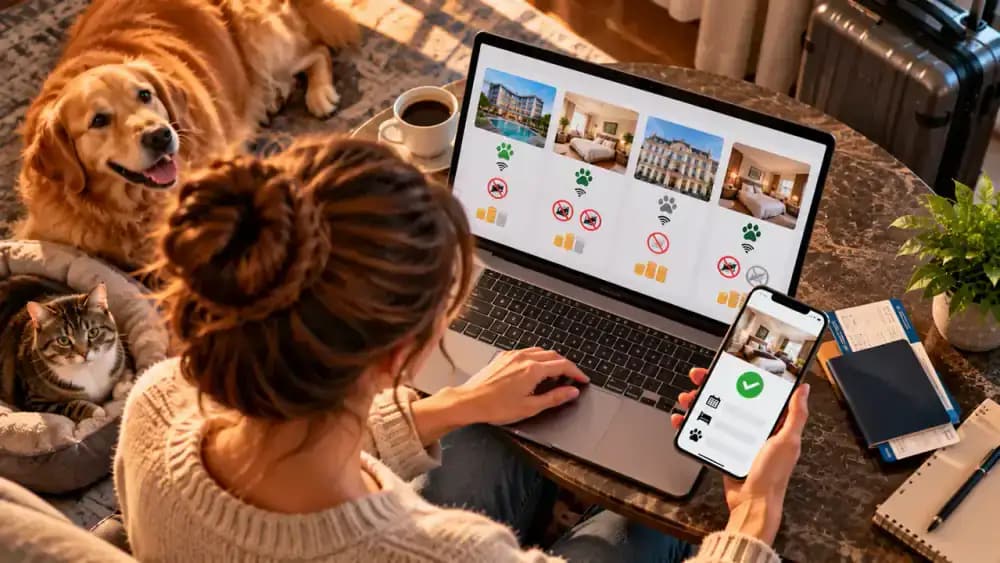
Before booking another hotel, review its complete pet policy rather than relying on a pet-friendly label. Compare species restrictions, weight limits, pet fees, and the number of animals allowed. Ask about permitted outdoor areas, designated pet floors, and unattended pet rules. Request written confirmation of important details before paying to avoid unexpected restrictions or charges.
Choose a Room Location That Reduces Stress
When reserving a room, request a quieter location away from elevators, ice machines, and busy event spaces whenever possible. For dogs needing frequent bathroom breaks, consider convenient access to designated outdoor relief areas. Cats may benefit from rooms with less hallway activity. Ask about available options, but remember that no hotel location guarantees complete quiet.

Adapt Hotel Preparation to Your Pet's Individual Needs
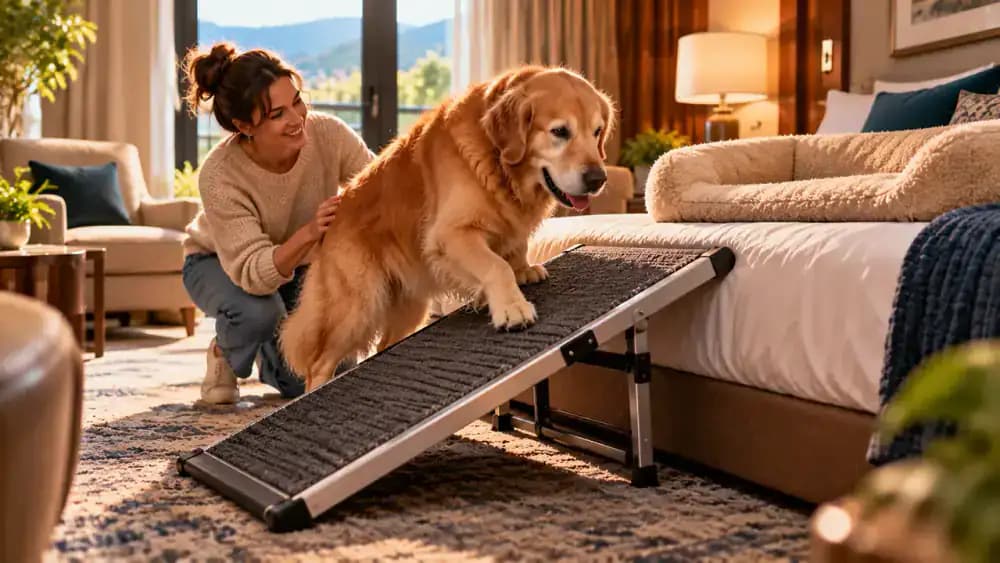
Adjust your hotel room setup to match your pet's age, size, temperament, and mobility. Use nonslip mats or familiar ramps for older dogs that struggle with slippery floors or elevated surfaces. For kittens and smaller pets, block narrow openings where they could become trapped. Bring veterinarian-recommended mobility aids and familiar supplies your pet already uses comfortably.
Respond Calmly When Something Unexpected Happens
If your pet becomes trapped behind furniture, avoid pulling heavy fixtures or attempting a risky rescue. Keep the area quiet and contact hotel staff for assistance. Document any property damage and report it promptly rather than making unauthorized repairs. If your pet appears injured or experiences concerning symptoms, contact a veterinarian for appropriate guidance.
Make Every Pet-Friendly Hotel Stay More Comfortable
A successful hotel stay starts with thoughtful planning, a careful room inspection, and attention to your pet's changing needs. Maintain familiar routines, respect hotel policies, and supervise your dog or cat around unfamiliar surroundings. Keep track of arrangements that worked well so future trips become easier. Save your preparation checklist and review it before every stay.

Build a Dedicated Hotel Arrival Kit
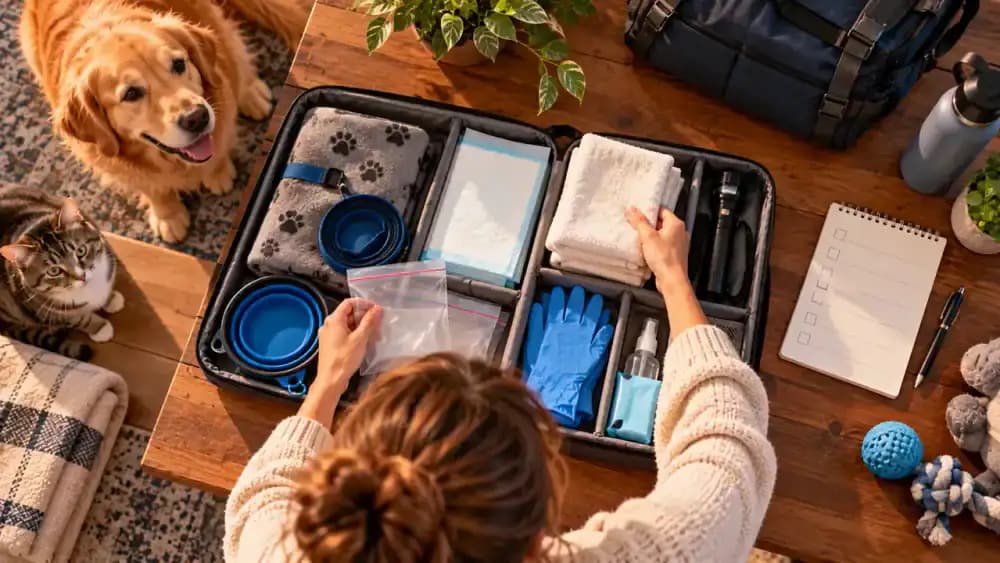
Assemble a compact hotel arrival kit with disposable gloves, absorbent towels, a flashlight, sealable waste bags, and a printed room inspection checklist. Store everything in a labeled zippered organizer that remains accessible during travel. Use the flashlight to inspect dark furniture gaps and the other supplies for minor messes. Restock the kit after each hotel stay.
Manage Visual Distractions Inside the Room
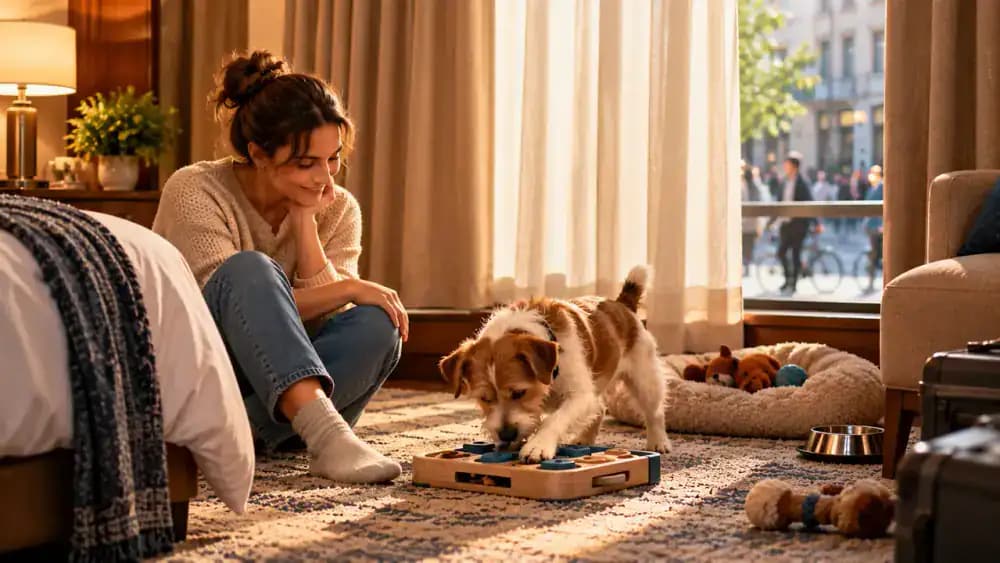
Check whether activity outside the hotel window makes your pet restless or overly excited. Passing pedestrians, bicycles, and birds can trigger repeated barking or intense watching. Partially close curtains to reduce visual distractions while maintaining comfortable lighting. Offer a familiar puzzle feeder or appropriate toy, then observe whether your pet becomes calmer and more comfortable.
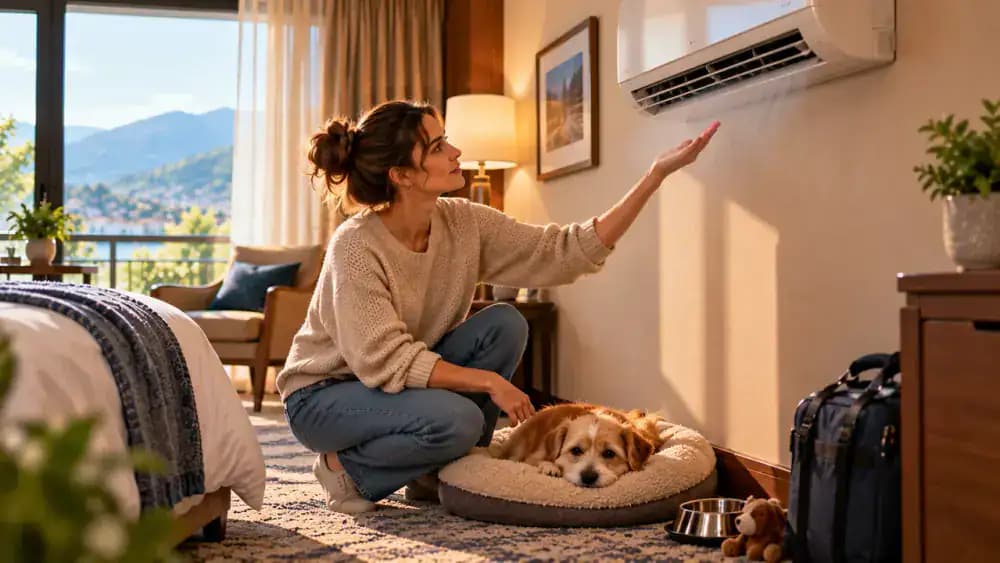
Check Heating, Cooling, and Room Comfort
Check the hotel room's temperature before allowing your pet to settle. Adjust the thermostat, feel for direct heating or cooling airflow, and inspect the floor temperature near resting areas. Move bedding away from uncomfortable drafts or hot surfaces. If the climate control system malfunctions or cannot maintain a comfortable temperature, contact reception for assistance.
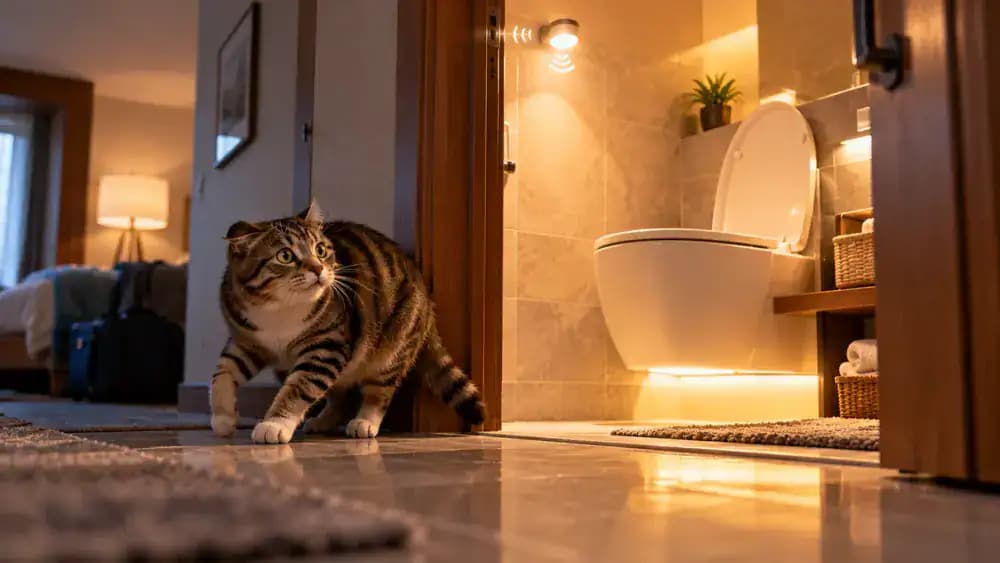
Identify Unexpected Hotel Technology Triggers
Inspect the room for automated devices that could startle your pet, including motion-activated lights, automatic toilets, robotic vacuums, and televisions with loud startup sounds. Review available settings and ask hotel staff which features can safely be disabled. Never disconnect smoke detectors, alarms, or other safety equipment. Keep your pet away from unpredictable devices until the environment feels comfortable.
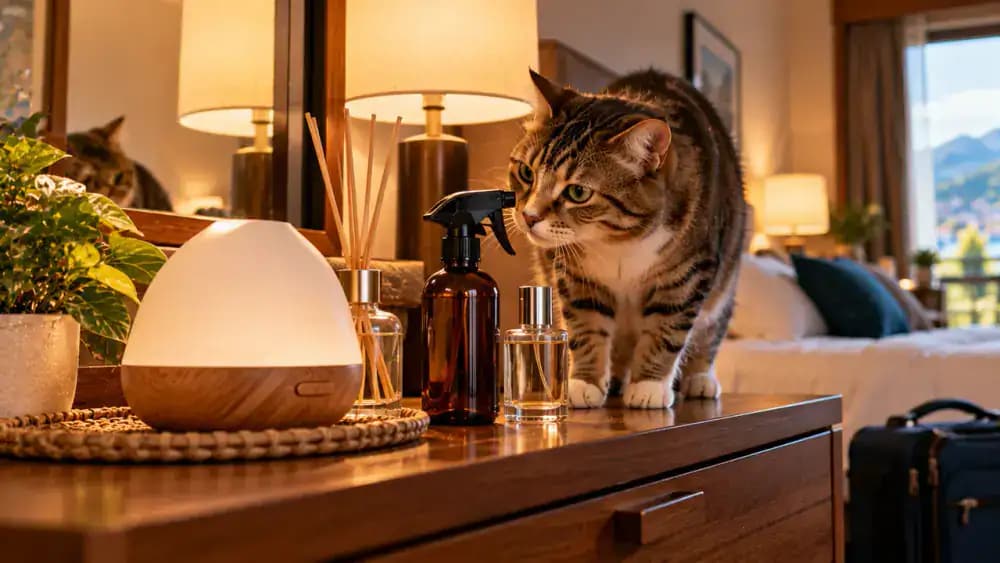
Avoid Strong Fragrances and Potential Irritants
Check the hotel room for strong air fresheners, scented sprays, and essential oil diffusers before releasing your pet. Some fragrance ingredients can irritate animals or pose safety risks, particularly when inhaled or ingested. Avoid introducing additional scented products. If the room has an overwhelming fragrance, contact reception and request a suitable alternative without added scents.
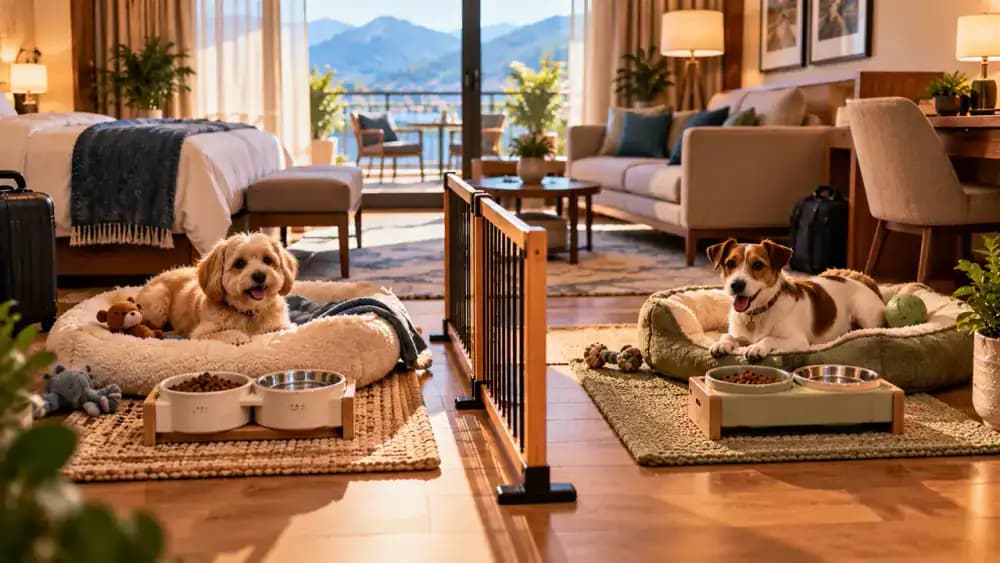
Prevent Conflict When Traveling With Multiple Pets
When traveling with multiple pets, provide separate feeding stations, water bowls, and comfortable resting spaces. Position resources far enough apart to reduce competition, especially after a tiring journey. Watch for guarding, blocking, chasing, or other signs of tension. If conflict develops, calmly separate the animals using secure barriers or designated areas rather than forcing them to interact.
Create a Repeatable Pet Travel Preparation System
After each hotel stay, update a reusable checklist with the supplies, room features, and routines that worked best for your pet. Note any challenges involving noise, feeding, sleeping, or supervision. Keep your arrival kit organized and replenish used items before traveling again. Review your checklist before booking and packing so future hotel stays feel more predictable.
Your dog pauses at the entrance to an unfamiliar hotel room, sniffing the carpet and listening to sounds from the hallway. Meanwhile, your cat cautiously inspects a corner, unsure what to make of the unfamiliar smells and furniture. The hotel may advertise itself as pet-friendly, but that doesn't automatically mean every part of the room is safe for your companion.
Knowing how to prepare a pet-friendly hotel room can make the difference between a stressful arrival and a comfortable stay. Before allowing your dog or cat to explore, take a few minutes to identify potential hazards, secure possible escape routes, and create a familiar place where your pet can relax.
Every hotel room presents different challenges. Loose electrical cords, accessible cleaning products, small objects beneath furniture, and unsecured balcony doors can all pose risks. Hallway noise, housekeeping visits, and unfamiliar routines may also leave pets feeling unsettled.
Fortunately, preparing the space doesn't require expensive equipment or complicated changes. A familiar blanket, clean water, designated feeding area, and thoughtful supervision can help your pet adjust while keeping the room organized and secure.
This guide covers what to inspect before releasing your pet, which supplies to keep nearby, how to establish a comfortable resting area, and how to manage doors, noise, and daily routines throughout your stay.
Where people go wrong
Letting Your Pet Explore Before Checking the Room. Allowing a dog or cat to roam immediately after arrival can expose them to hazards you haven't noticed. Hotel rooms may contain loose electrical cords, forgotten medications, cleaning products, or small objects under furniture. Keep your pet secured in a carrier or on a leash while checking accessible spaces, then allow supervised exploration once the room is safer.
Overlooking Furniture Gaps and Hidden Spaces. Cats and small dogs may squeeze behind beds, beneath reclining furniture, or into narrow spaces near appliances. These hiding places can make retrieval difficult and may contain sharp objects or exposed wiring. Examine accessible gaps before releasing your pet. Block hazardous openings only with stable, pet-safe materials that won't damage hotel property or interfere with ventilation.
Assuming Windows and Balconies Are Secure. A pet-friendly room doesn't guarantee that every window, screen, or balcony barrier is suitable for animals. Curious pets may push against loose screens, slip through railings, or approach dangerous edges. Keep balcony access closed unless direct, controlled supervision is possible, and never depend on window screens to prevent falls or escapes. Check all accessible openings before settling in.
Placing Food, Water, and the Litter Box Together. Cats generally benefit from having their litter box separated from feeding and drinking areas. Placing everything in one cramped corner may discourage comfortable use and create unnecessary mess. Choose a quiet, accessible location for the litter box, keep bowls away from bathroom areas, and maintain the arrangement consistently. Make sure doors cannot accidentally block access to these essentials.
Leaving the Entrance Unsecured During Deliveries. An unfamiliar hallway can tempt an excited dog or frightened cat to dart through an open door. Luggage deliveries, room service, and housekeeping visits create especially risky moments. Secure your pet in a carrier, behind a closed interior door, or with a controlled leash before opening the entrance. Inform hotel staff that an animal is inside and coordinate visits carefully.
Leaving Your Pet Alone Without Checking Hotel Rules. Some hotels prohibit unattended pets, while others impose conditions or require advance arrangements. Even when allowed, an animal that struggles with unfamiliar environments may become distressed, vocalize, or damage property. Review the hotel's specific policy and consider your pet's individual behavior before any separation. If safe, permitted arrangements aren't possible, plan activities that include your pet or arrange suitable supervision.
Changing Your Pet's Routine Too Abruptly. Travel already introduces unfamiliar sounds, smells, and surroundings. Suddenly changing meal times, walking schedules, sleeping arrangements, or food can add unnecessary stress. Maintain your pet's usual routines as closely as practical, introduce the new room gradually, and provide familiar belongings. Watch your pet's behavior and adjust the environment without forcing interaction, exploration, or prolonged confinement.
Questions people ask
Start by keeping your pet secured while inspecting the room. Look for exposed cords, accessible cleaning supplies, loose objects, unsafe furniture gaps, and possible escape routes. Check windows, balcony doors, and the main entrance. Remove or secure hazards without damaging hotel property. Once the space is ready, introduce your pet gradually and continue supervising their behavior.
Fixed it?
Get one guide like this every Thursday.