How to Prepare Your Home Before Adopting a Dog
Prepare your home for an adopted dog with this practical 30-step checklist covering safety, supplies, boundaries, introductions, arrival, and first-week routines.
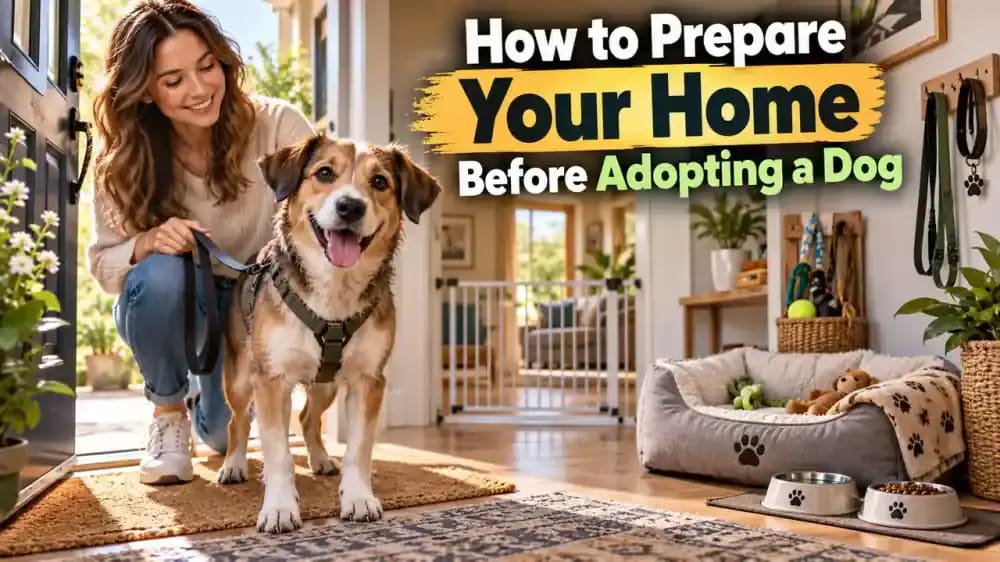
What you’ll need
Tap to tick things off before you start.
Map the Dog's Daily Zone
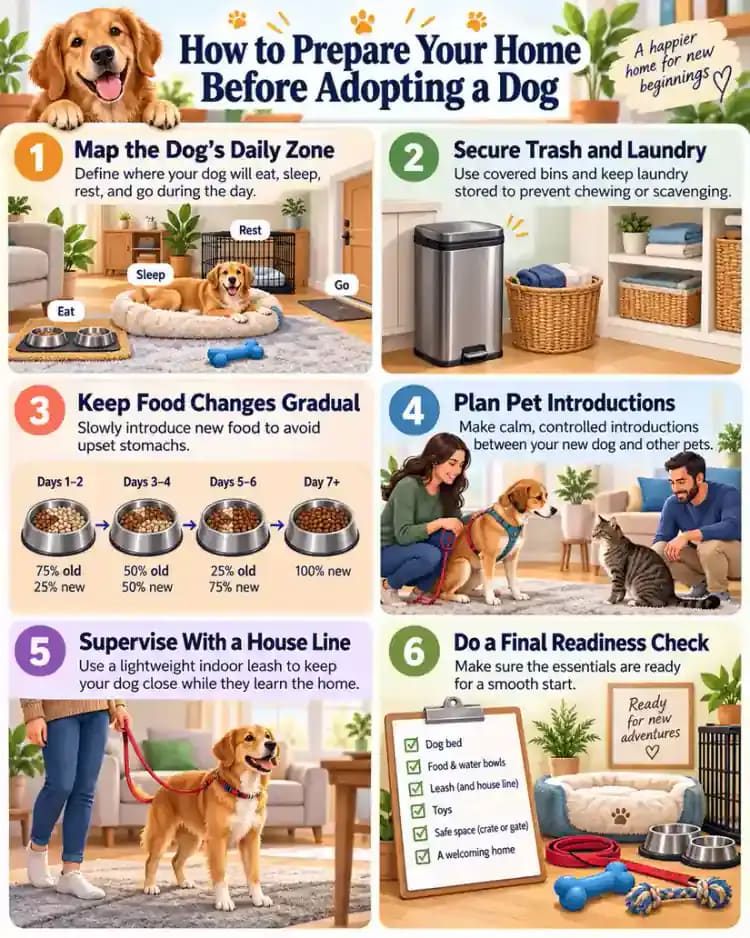
Choose the main areas your dog will use before adoption day. Set one calm resting spot, one predictable feeding area, and a simple route to the yard or exit. Limiting early choices makes the home easier to understand and helps everyone follow the same routine from the beginning.
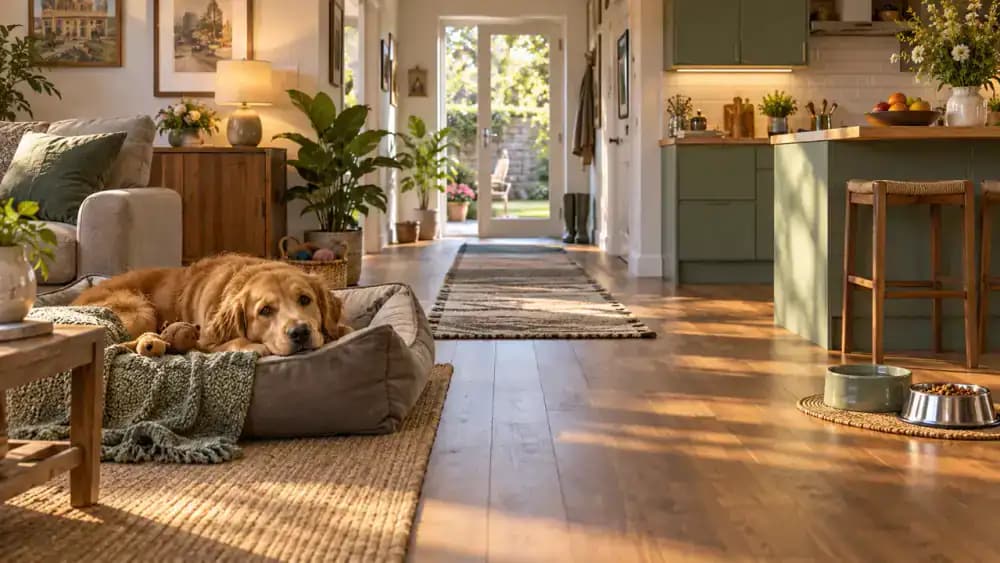
Dog-Proof at Floor Level
Get down near dog height and inspect every reachable area. Remove loose wires, sharp objects, unstable items, medications, cleaning products, small objects, and tempting items stored on low shelves. A new dog may explore with both nose and mouth, so eliminate hazards before curiosity becomes an emergency.
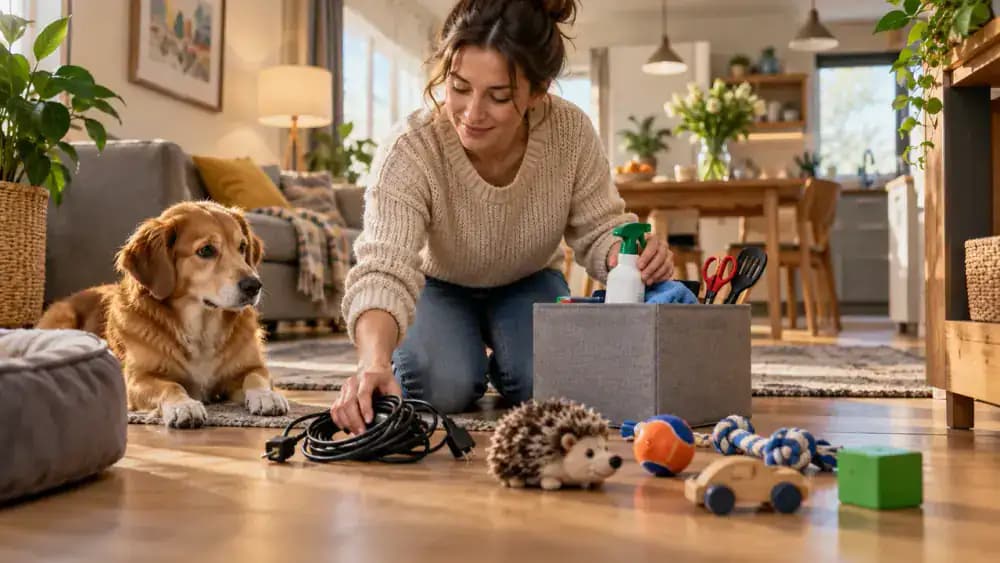
Build a Quiet Sleep Space
Create a sleeping area that feels protected without isolating the dog from the household. A quiet corner is usually more suitable than a busy hallway. Add washable bedding, remove clutter, and avoid loud appliances so the dog has a dependable retreat it can discover and use without pressure.
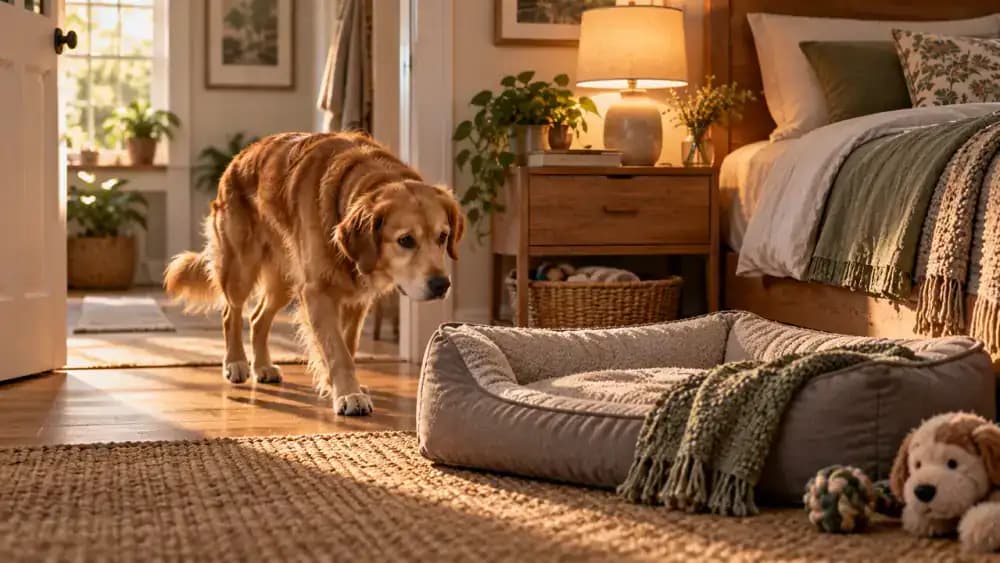
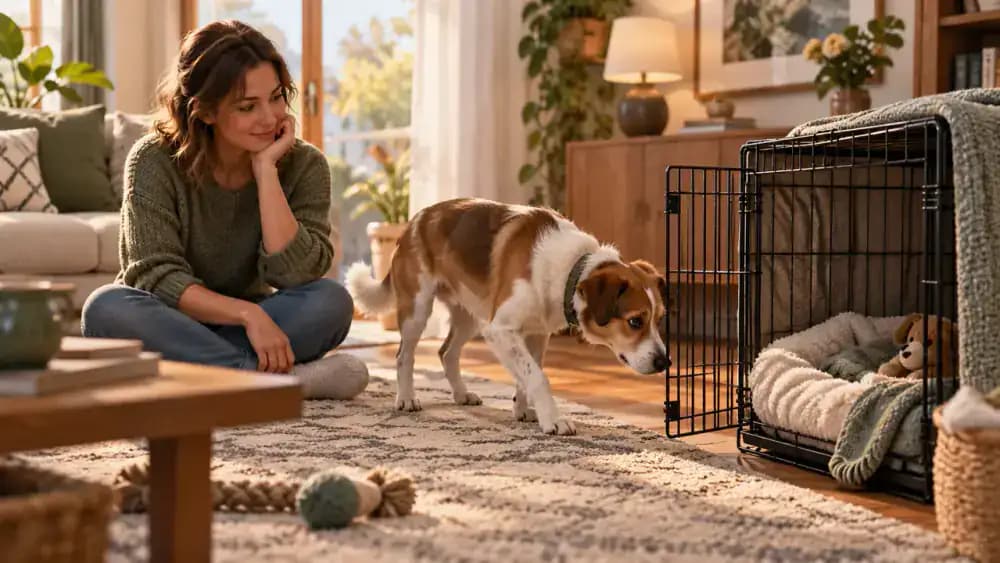
Set Up the Crate Properly
If you intend to use a crate, prepare it before the dog arrives. Place it in a calm location and leave the door open initially. Add bedding only if the dog will not chew it. Treat the crate as an optional safe space, never as punishment or forced confinement.
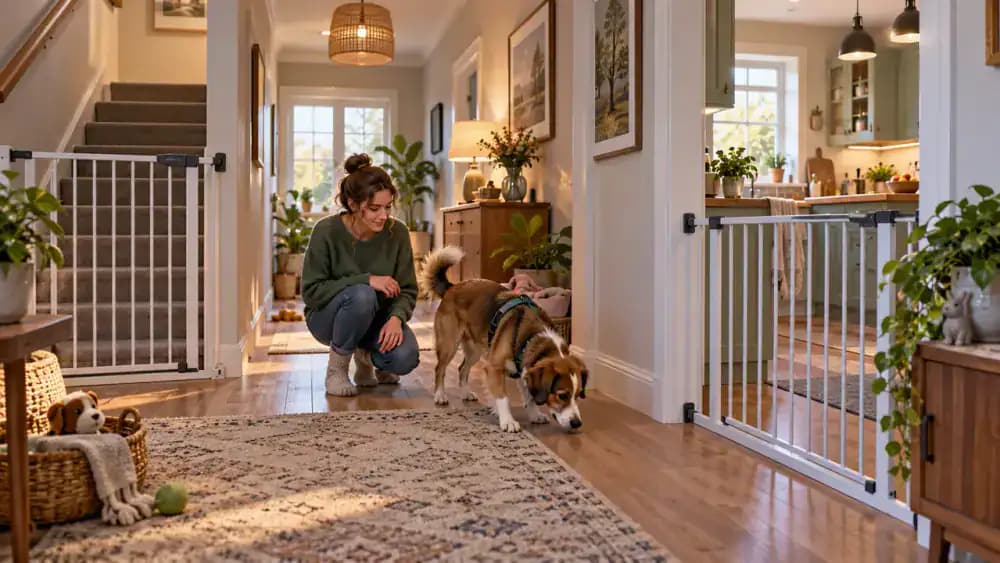
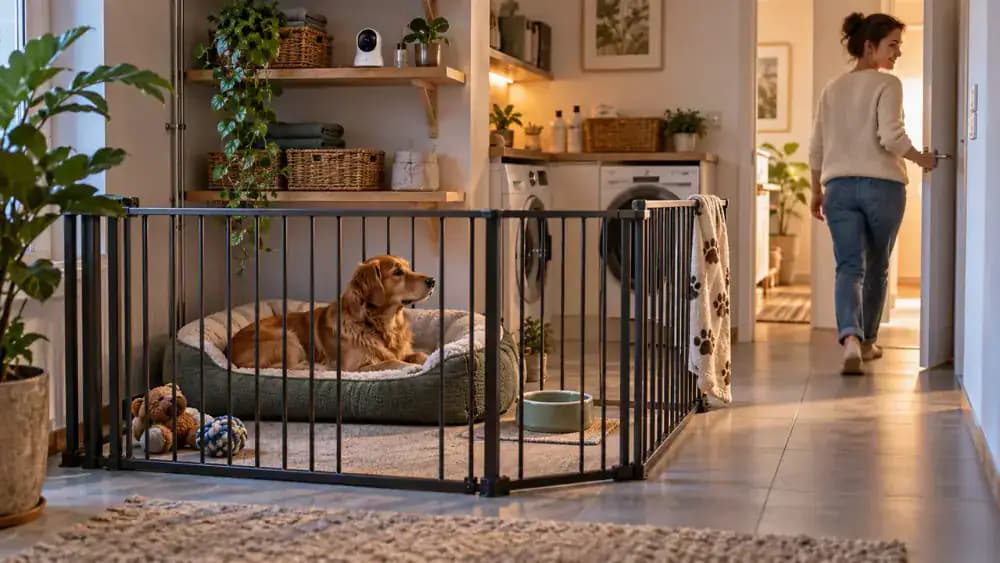
Create Clear Physical Boundaries
Use baby gates, closed doors, or other simple barriers to control access before problems develop. Block stairs, kitchens, children's rooms, or spaces that are difficult to supervise. Everyone should follow the same boundaries. A smaller starting area lets the dog learn the home gradually instead of exploring everything immediately.
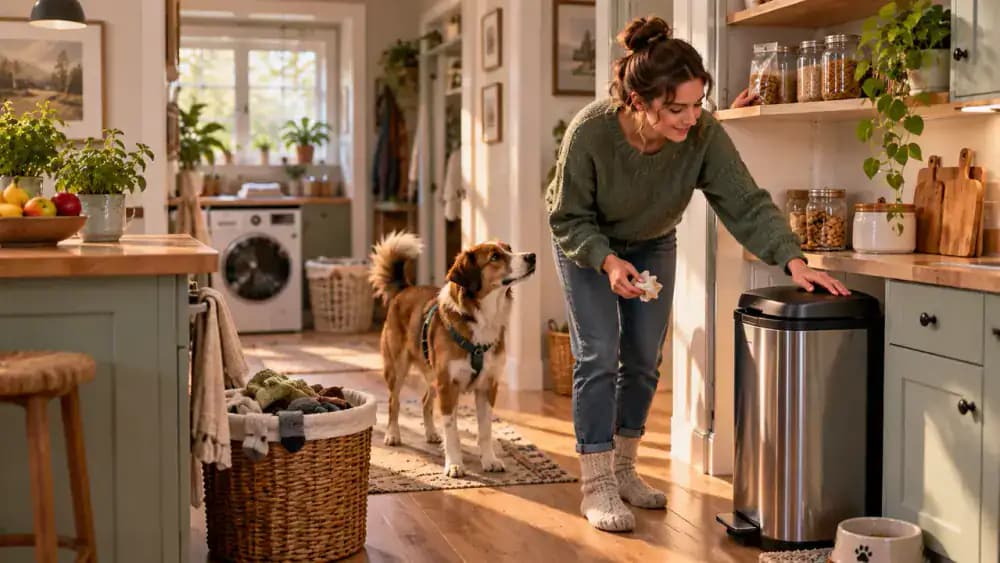
Secure Trash and Laundry
Put trash, laundry, food storage, and strongly scented items behind secure lids or closed cabinets. Dogs may investigate scraps, socks, or other objects that people would never consider edible. Preventing access is much easier than correcting the behavior while dealing with damaged belongings or a possible health emergency.
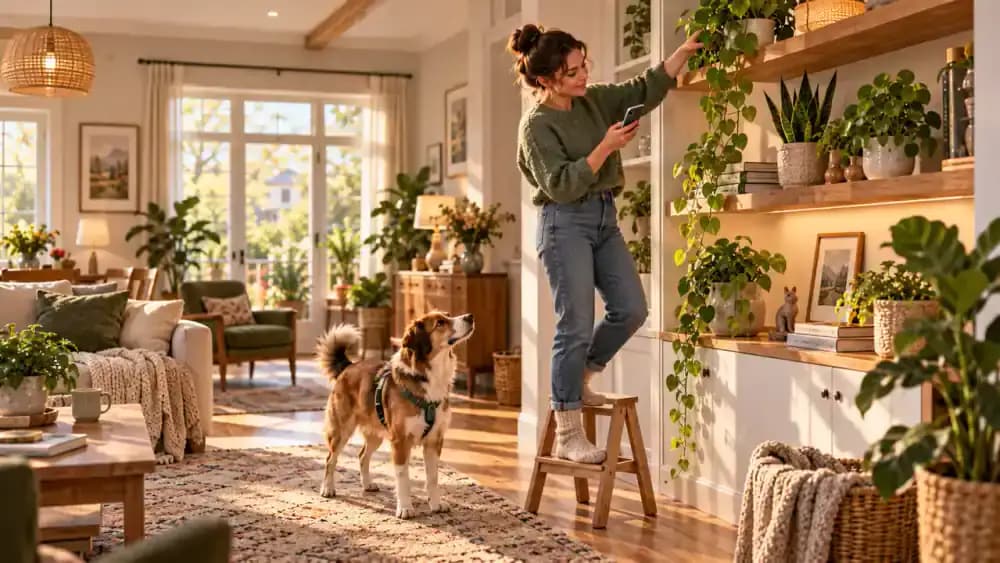
Check Every Houseplant
Identify every plant the dog could reach and move questionable plants completely out of access. Some houseplants can cause irritation, vomiting, or more serious poisoning. Verify each species with a reliable veterinary poison resource rather than assuming it is safe because another pet previously ignored the plant.
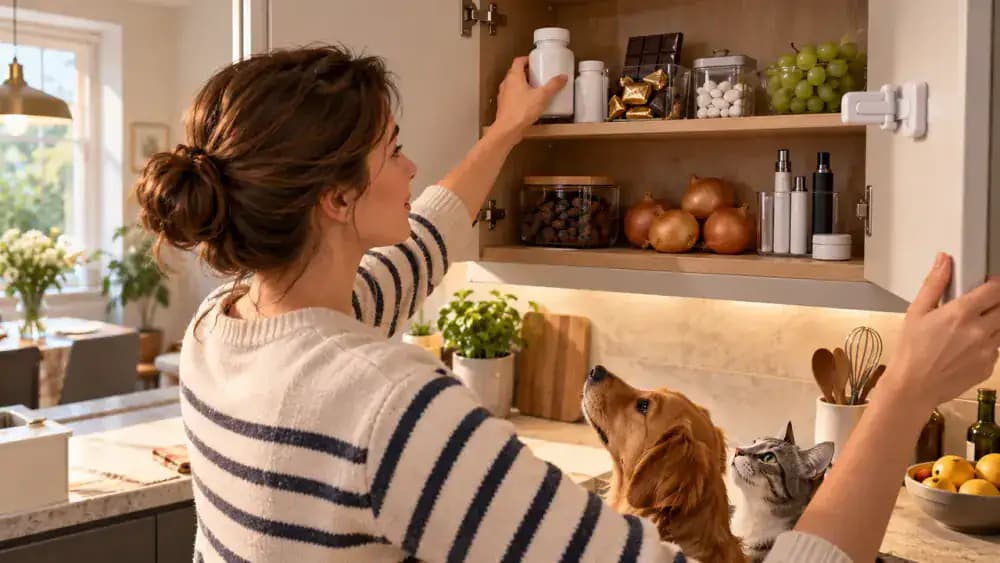
Lock Away Toxic Foods and Medications
Secure medications, supplements, nicotine products, chocolate, xylitol-sweetened foods, grapes, raisins, onions, and other risky items inside closed cupboards or firm containers. Do not assume a countertop is unreachable. If swallowing something could be dangerous, make sure the dog cannot access it anywhere in the home.
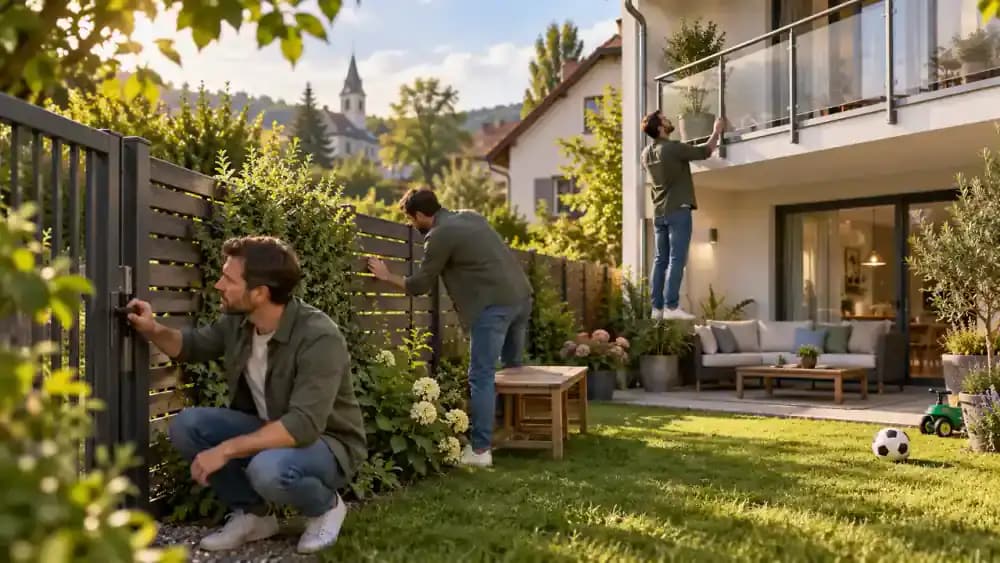
Inspect Fences, Gates and Balconies
Inspect every outdoor boundary before the dog arrives. Test gate latches and look for loose boards, gaps, spaces beneath fences, climbable furniture, and insecure balcony or deck barriers. A nervous or excited dog may escape through an opening that never caused a problem for a previous pet.
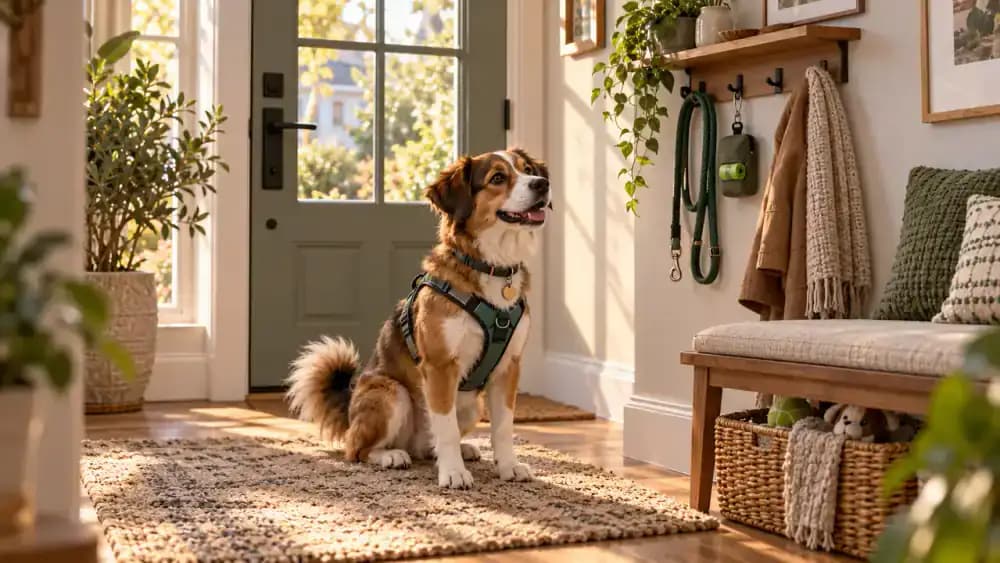
Prepare Walking Gear
Set up a properly fitted collar or harness, standard leash, identification tag, and waste bags before adoption day. Keep everything beside the main exit so the routine is consistent. During the first days, a standard leash offers simpler close control than relying on a retractable leash in unfamiliar surroundings.
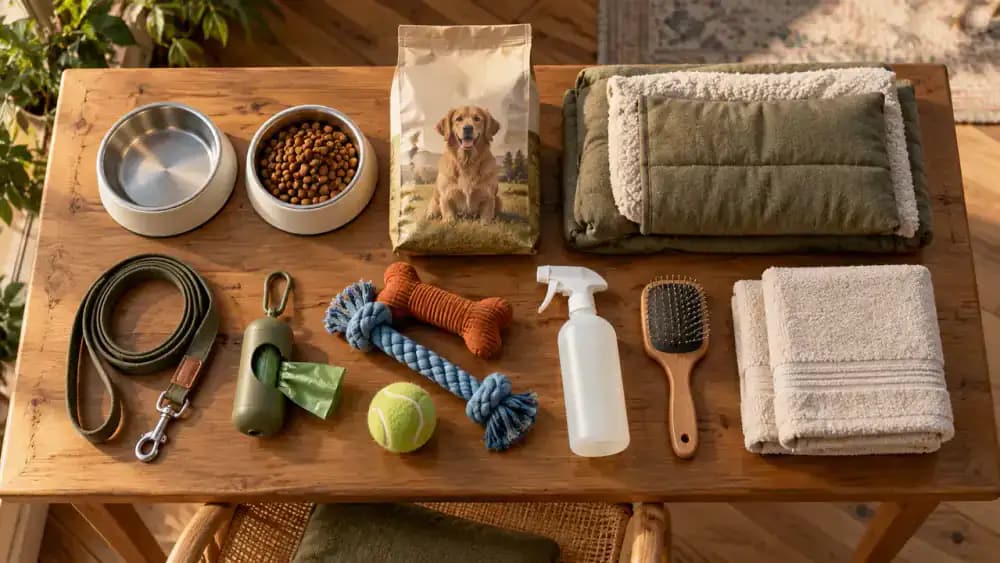
Buy Only First-Week Essentials
Start with practical supplies instead of filling the house with new products. You need bowls, familiar food, bedding, leash equipment, waste bags, a few safe toys, cleaning supplies, and basic grooming items. Add extras later after you understand the dog's preferences, habits, chewing style, and actual needs.
Keep Food Changes Gradual
Ask what the dog has been eating and begin with that familiar diet when possible. Sudden food changes may cause digestive upset. If you later want to change foods, transition gradually unless a veterinarian advises otherwise. Measure portions so changes in appetite are easier to notice during the adjustment period.
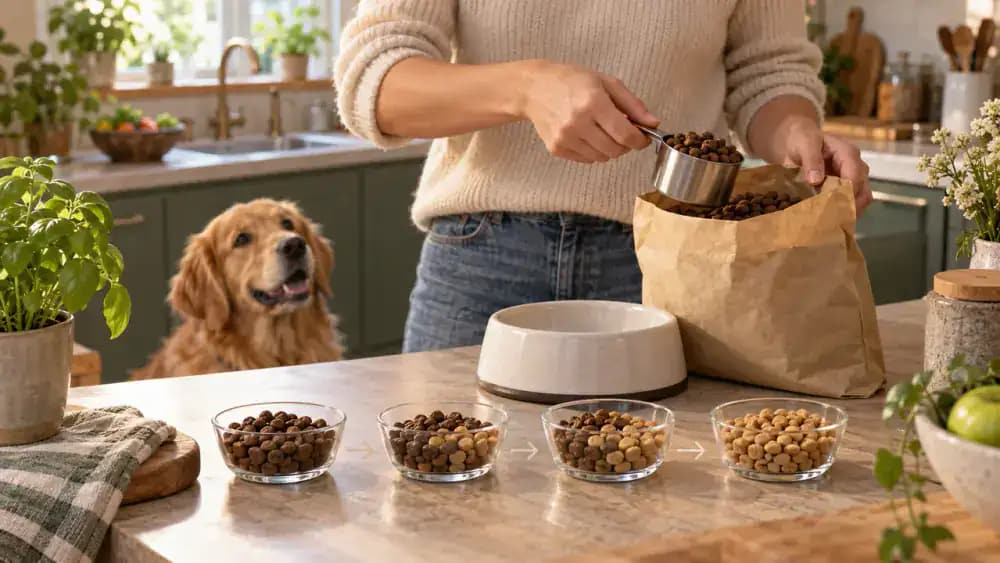
Create a Calm Feeding Station
Choose a quiet feeding area away from heavy foot traffic. If other pets live in the household, feed them separately at first rather than creating competition around food. Predictable meal times also make bathroom needs easier to anticipate and help the new dog learn the household's daily rhythm.
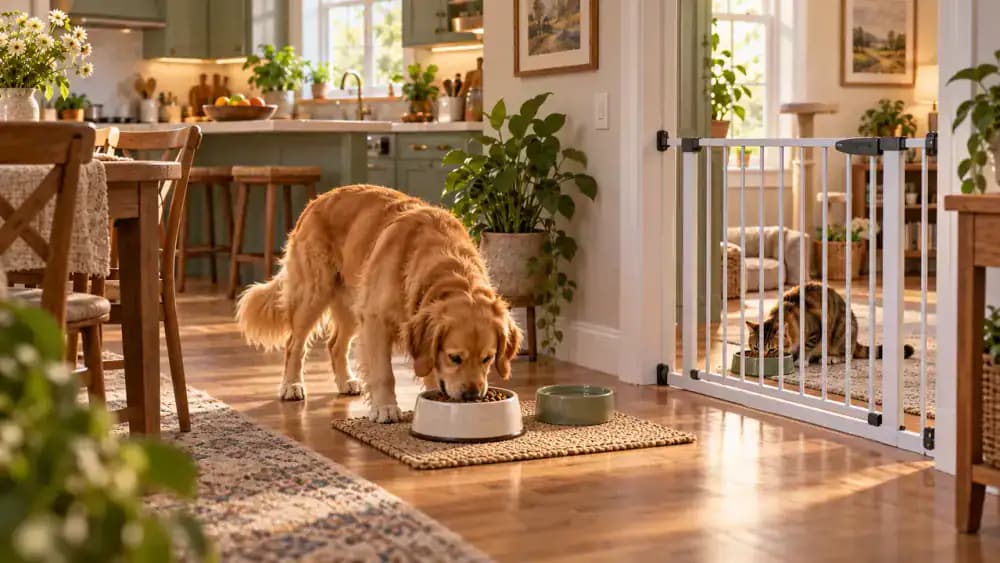
Start With Simple Enrichment
Offer a small number of enrichment options instead of a large pile of toys. A durable chew, food puzzle, and one or two soft toys are enough initially. Supervise until you understand how the dog plays and chews, and remove anything that breaks apart or becomes small enough to swallow.
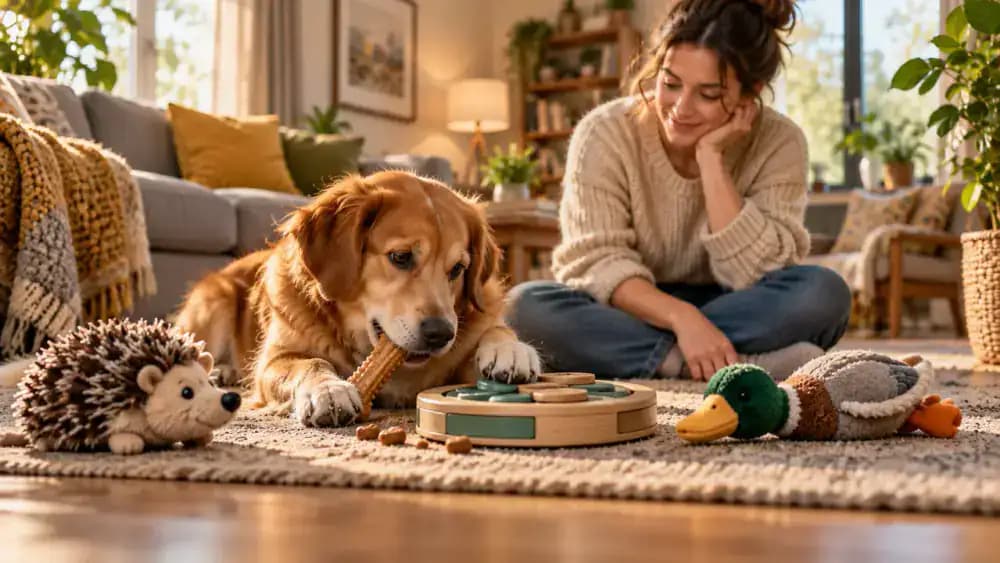
Plan for Bathroom Accidents
Assume accidents are possible even if the dog was previously house trained. Stress, new doors, different surfaces, and an unfamiliar schedule can temporarily change habits. Keep enzymatic cleaner available, consistently use the same exit for toilet trips, and prioritize frequent calm outings instead of punishment after an indoor accident.
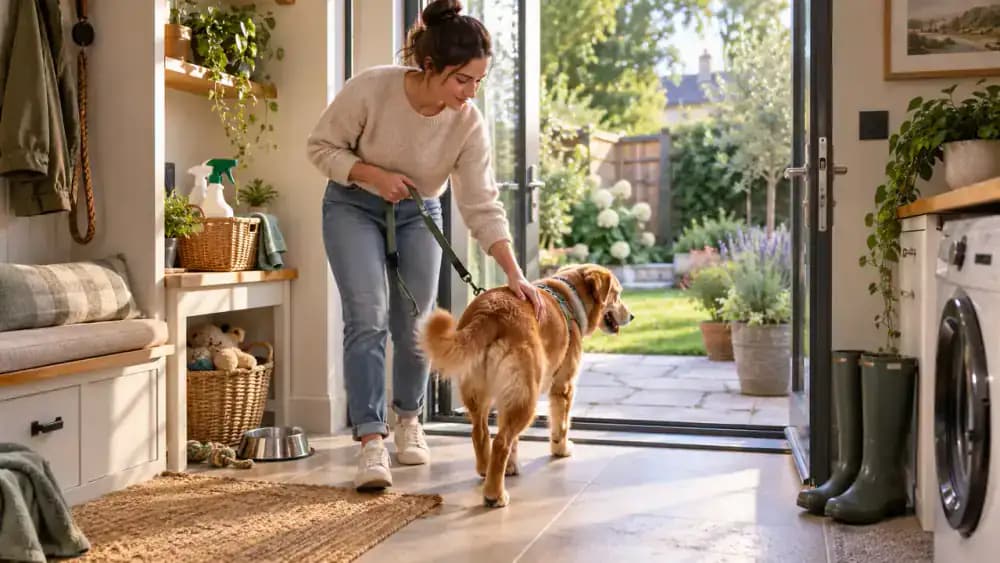
Agree on Household Rules
Decide the rules before the dog arrives. Agree on furniture access, off-limits rooms, feeding locations, and the words everyone will use for cues. Conflicting expectations make learning harder. If different household members reward and discourage the same behavior, the dog receives inconsistent information rather than a clear standard.
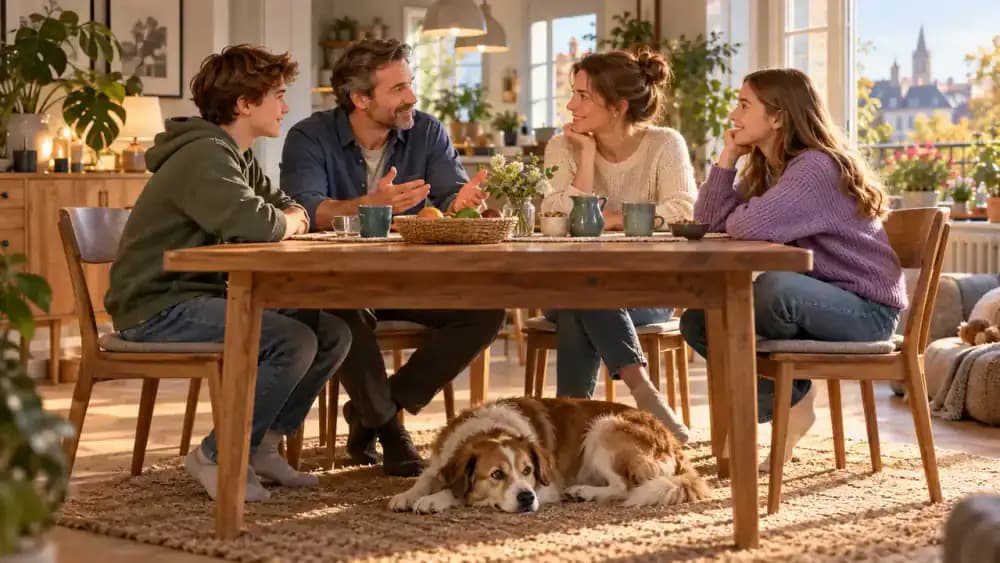
Prepare Children Before Arrival
Teach children how to interact safely before the dog comes home. Explain that the dog should not be chased, hugged, climbed on, or disturbed while eating or sleeping. Children should allow the dog to approach rather than demanding contact, and an adult should supervise interactions even when everyone appears comfortable.
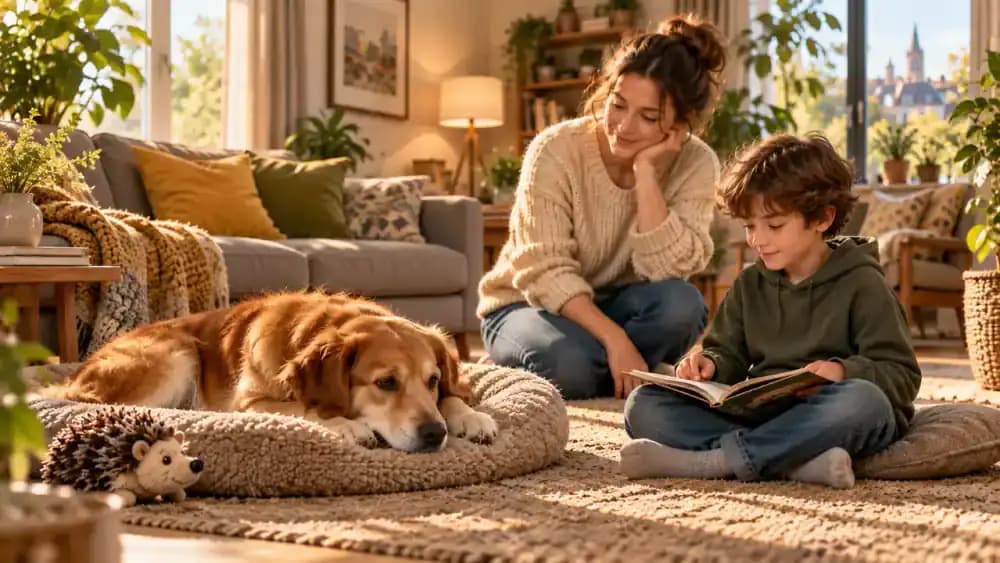
Plan Pet Introductions
Do not improvise the first meeting with resident pets. For dogs, consider a neutral outdoor walk with space between them. For cats, begin with separation, scent exchange, and controlled visual access. Avoid forced close contact. The immediate goal is calm coexistence, not instant friendship or a perfect first interaction.

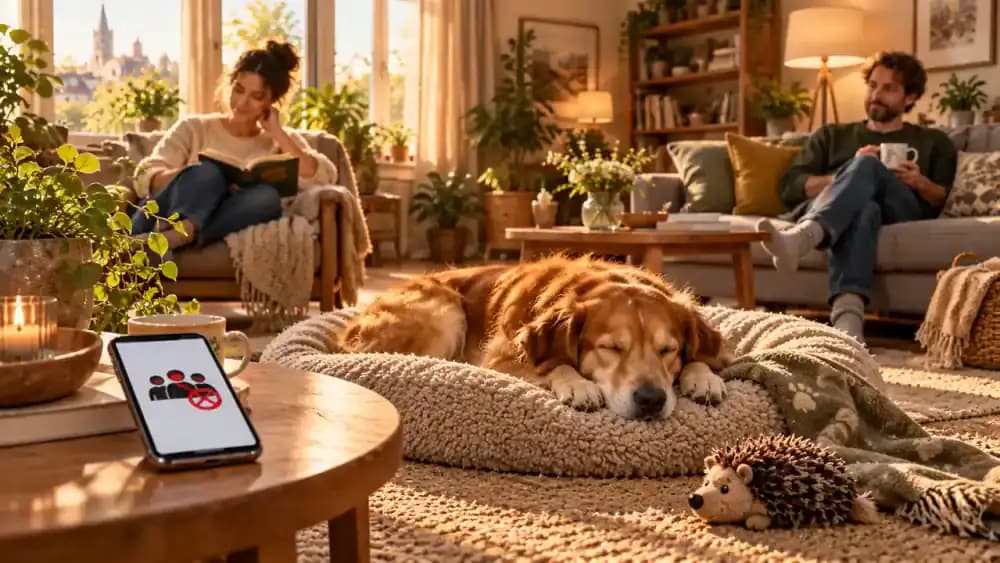
Limit Visitors at First
Keep the first days quiet instead of turning adoption into a welcome party. Multiple visitors, unfamiliar voices, reaching hands, and attention can overwhelm a dog already processing major change. Postpone unnecessary visits and let the dog choose when to approach people. Calm, neutral behavior can build trust more effectively.
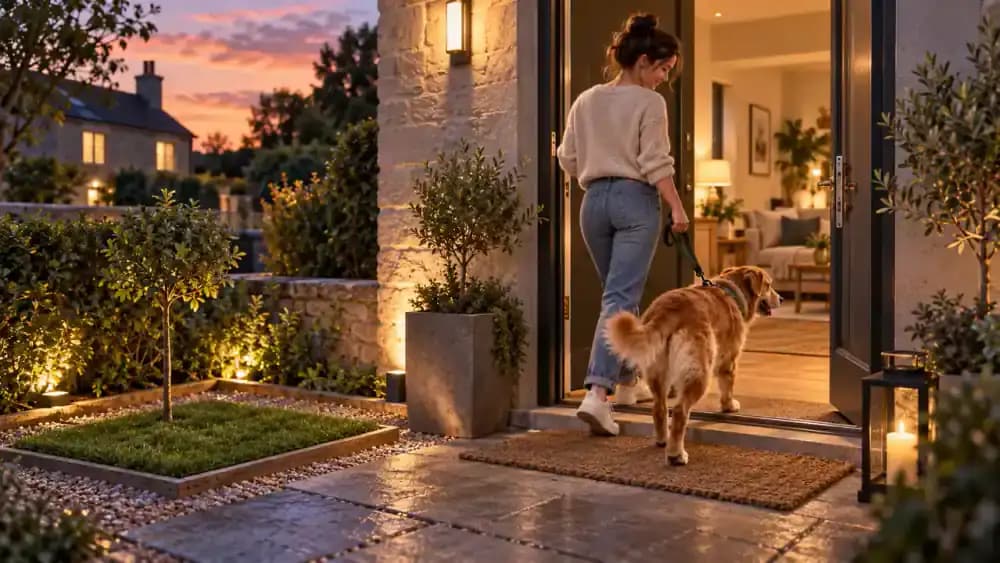
Make Arrival Slow and Simple
Bring the dog home during a calm period whenever possible. Go first to the designated toilet area, then enter the home quietly on leash. Show only the essential spaces rather than conducting a complete tour. A slower arrival gives the dog time to observe and gives you better information about comfort levels.
Expect Temporary First-Day Behavior
Do not judge the dog's personality from the first few hours. A new dog may sniff constantly, pace, freeze, hide, drink, refuse food, or sleep for long periods. Those reactions can reflect an unfamiliar environment. Observe quietly, prevent unsafe behavior, and avoid testing obedience just to see what the dog knows.
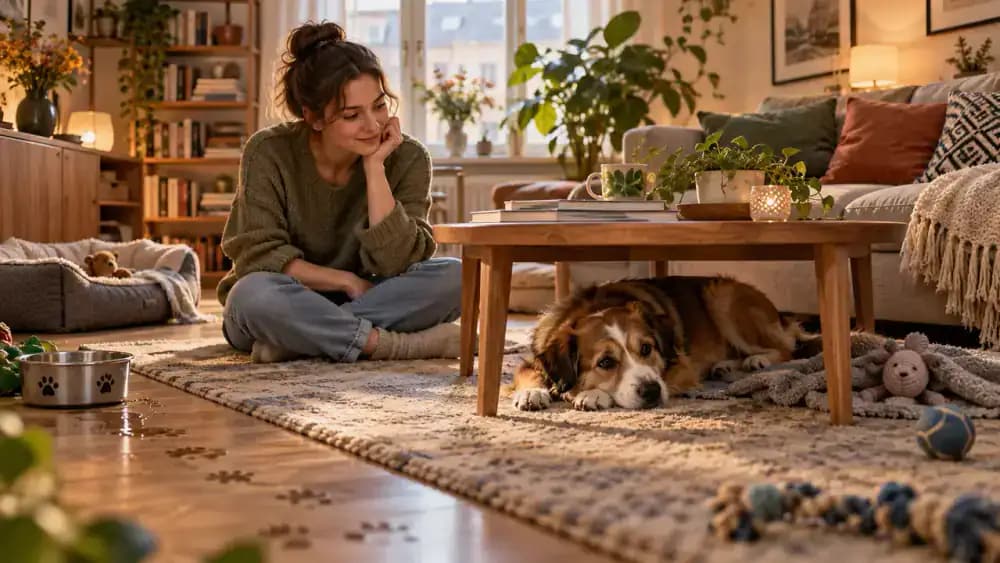
Keep the First Evening Quiet
Make the first evening intentionally uneventful. Provide water, offer a normal meal if the dog wants it, take a short toilet walk, and allow plenty of rest. Skip bathing, busy outings, pet store trips, and neighborhood introductions. Quiet decompression gives the dog time to settle after a demanding day.
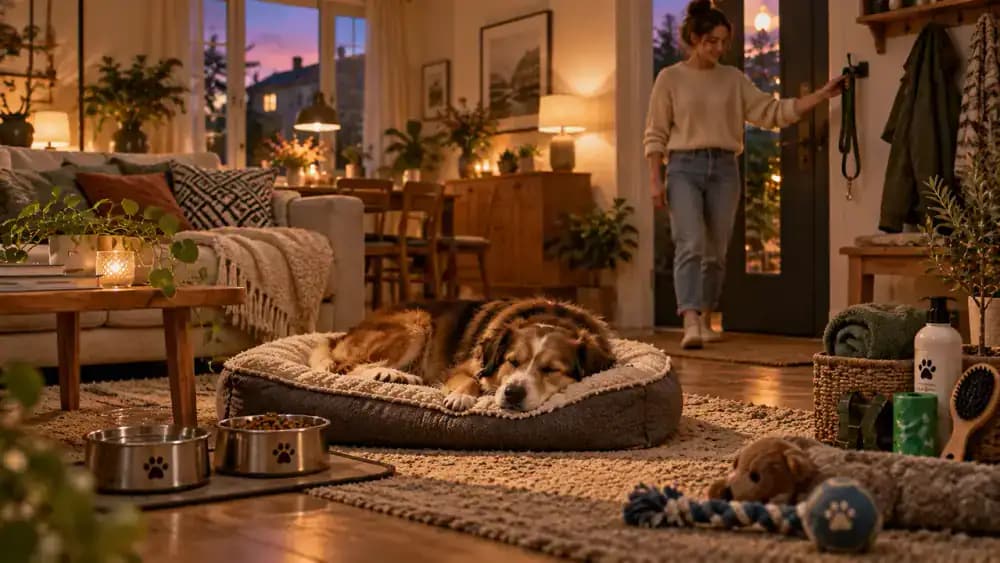
Use a Predictable Daily Rhythm
Begin a simple routine with regular meals, toilet breaks, short walks, rest periods, and bedtime. Predictability helps the dog understand what happens next, but the schedule should remain flexible. Adjust activity and sleep according to the individual dog's age, health, energy, and confidence instead of following a rigid timetable.
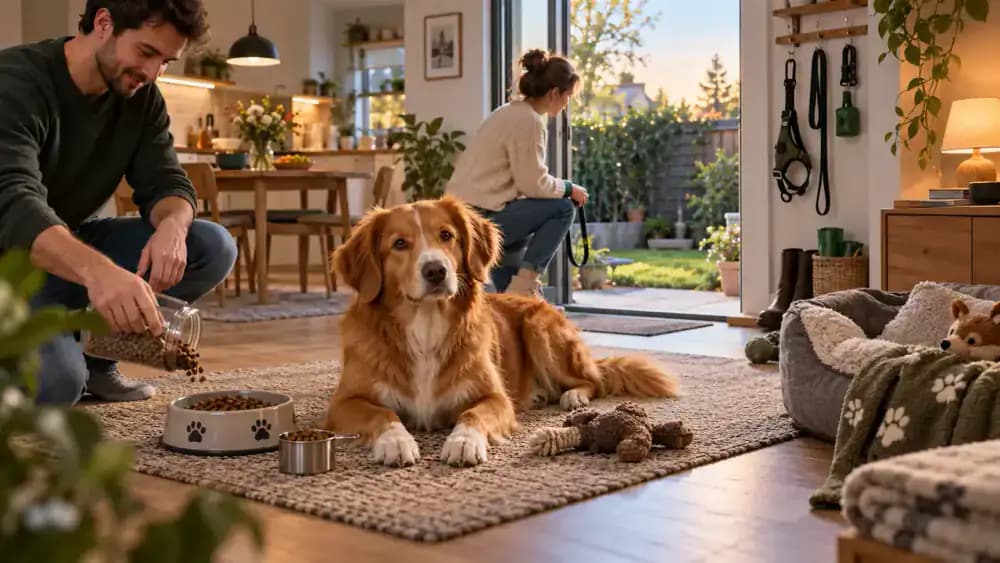
Supervise With a House Line
A lightweight indoor leash can help with supervision during the first few days. It lets you calmly guide the dog near doors or through unfamiliar spaces without grabbing the collar. Never leave a house line attached when the dog is unattended. Its purpose is supervised management while household rules are still being learned.
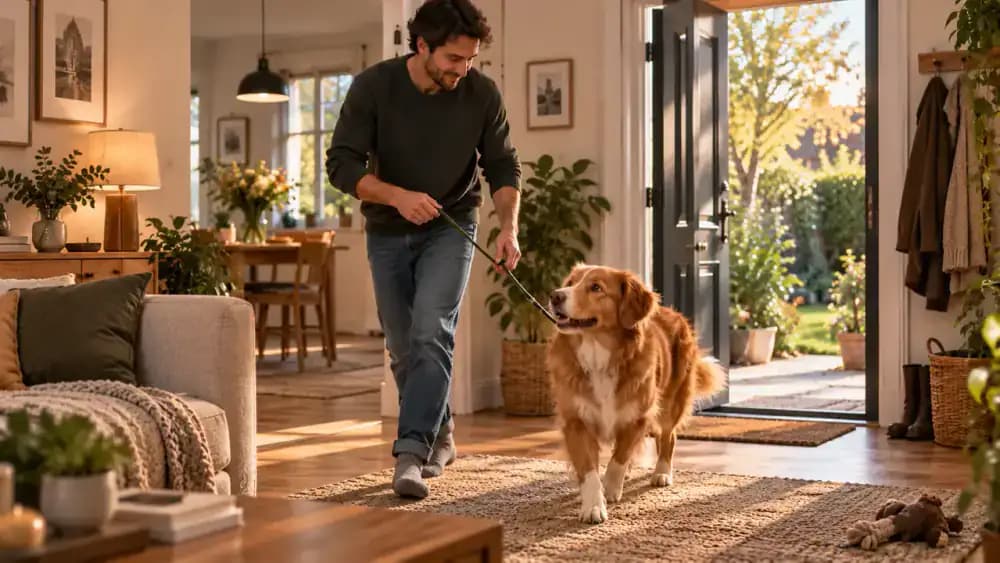
Choose a Safe Unsupervised Area
Prepare a safe place for times when direct supervision is impossible. Depending on the dog, this might be a gated room, secure area, or properly introduced crate. Remove chewing hazards and provide water when appropriate. Build time alone gradually instead of immediately testing a long absence on the first day.
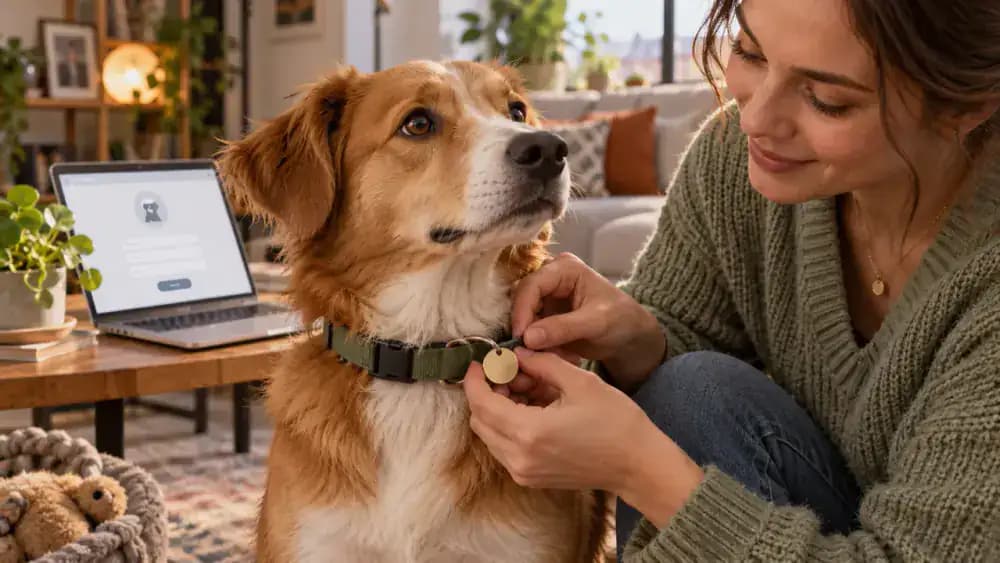
Update Identification Details
Make identification a priority before or immediately after arrival. Attach a tag with a current phone number and confirm that microchip registration information has been transferred and updated. A dog unfamiliar with the property may slip through a door or escape, and accurate identification improves the chance of a successful reunion.
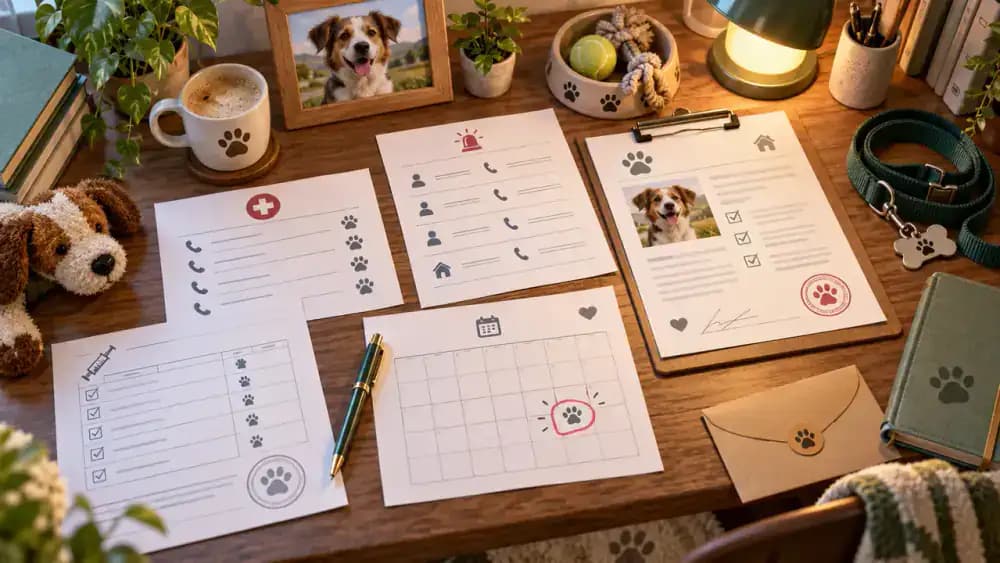
Choose a Veterinarian Early
Choose a veterinarian before an urgent situation forces you to search for one. Keep the regular clinic number, emergency hospital information, poison resources, vaccination records, and adoption paperwork together. Arrange an initial health check according to the shelter's guidance and the individual dog's needs so routine care is already organized.
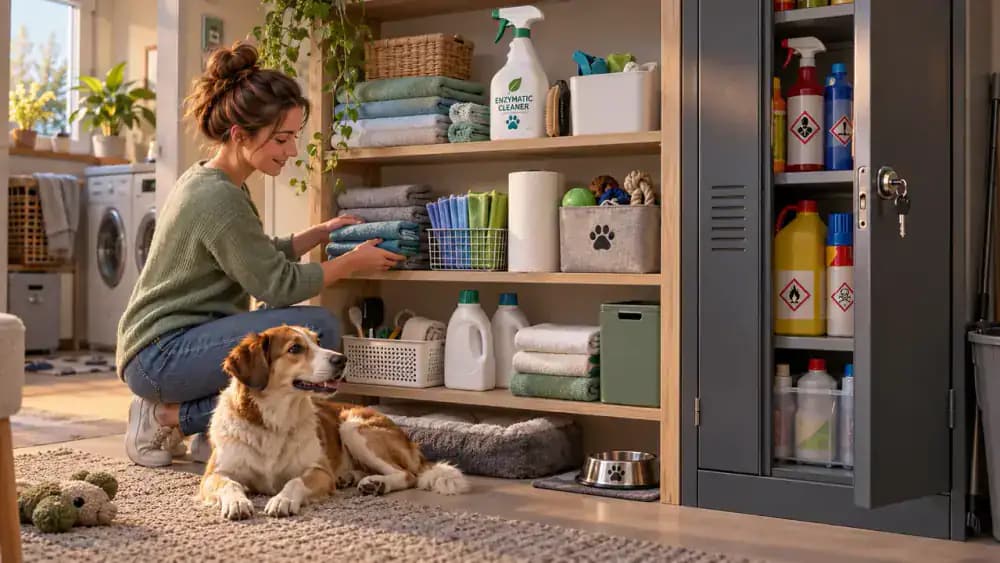
Prepare a Cleanup Station
Keep practical cleanup supplies together and easy to reach. Enzymatic cleaner, paper towels, washable cloths, and a designated laundry basket can simplify accidents and muddy paws. After using cleaning products, return anything potentially dangerous to locked storage. Preparation helps you respond to messes calmly instead of turning them into conflict.
Make Your Behavior Predictable
Your behavior shapes the dog's environment too. Move predictably, speak normally, and allow space for observation. Avoid constant calling, touching, photographing, correcting, or testing. Reward calm choices such as resting, checking in, or moving quietly through a doorway. Trust develops through repeated experiences that feel safe rather than through forced affection.
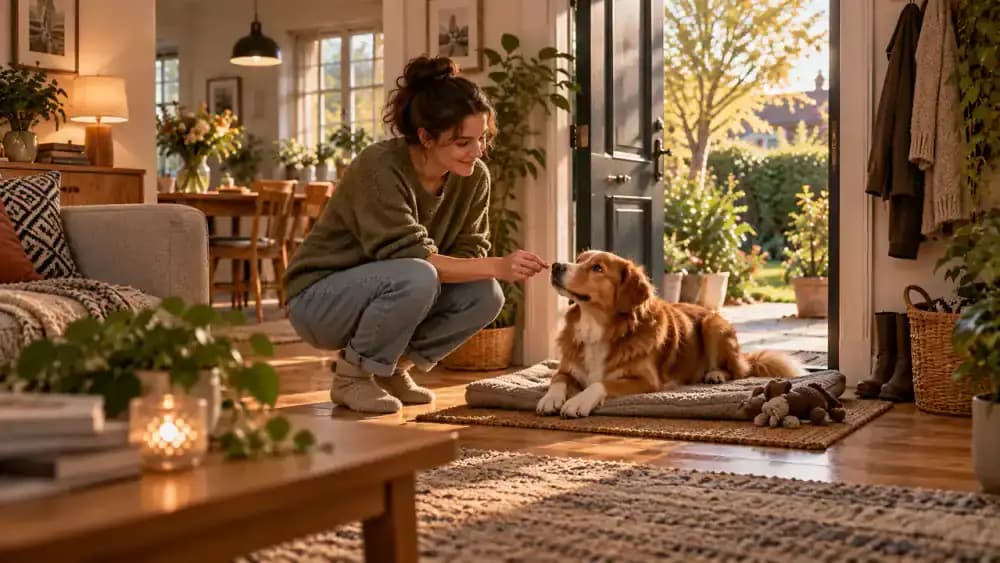
Do a Final Readiness Check
Walk through the home one last time and check for safety, rest, routine, and manageable boundaries. You do not need expensive equipment or a flawless setup. Secure hazards, organize essential supplies, plan patient introductions, and keep expectations realistic. Preparing the environment first lets the dog focus on learning that home is safe.
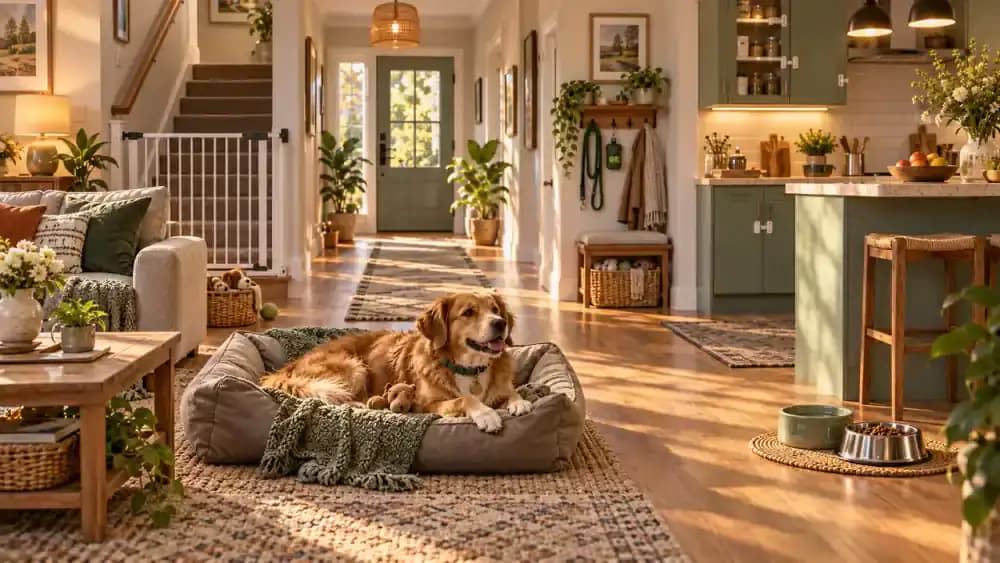
Bringing home an adopted dog is easier when the environment is prepared before the dog arrives. The goal is not to create a perfect house or buy every product in the pet aisle. It is to reduce hazards, make daily routines predictable, and give a newly adopted dog enough structure to settle without being overwhelmed. A dog entering an unfamiliar home may need time to understand where to sleep, where to eat, which doors lead outside, who lives there, and what is expected. Preparing those details in advance lets you focus on observation, patience, and safety instead of scrambling for supplies or changing rules after arrival. Work through the home one area at a time, involve everyone who lives there, and keep the first few days intentionally simple.
Where people go wrong
Giving the Dog Too Much Freedom Too Soon. Opening every room immediately can create more opportunities for accidents, chewing, escape attempts, and overstimulation. Start with a manageable area and expand access gradually as you learn the dog's behavior.
Changing Food Immediately. Adoption already brings major changes. Switching food abruptly adds another variable and may contribute to digestive upset. Begin with the familiar diet when possible and transition gradually unless a veterinarian recommends something different.
Turning Arrival Into an Event. Visitors, outings, baths, shopping trips, and constant attention can overwhelm a dog that has just entered an unfamiliar environment. Keep the first day quiet and allow time for observation and rest.
Using Inconsistent Household Rules. A dog cannot easily learn expectations when different people allow and discourage the same behavior. Agree on furniture access, restricted areas, feeding routines, and cue words before adoption day.
Assuming Previous Pet Experience Makes the Home Safe. A fence, plant, countertop, toy, or household object that caused no problem for another pet may be unsafe for a different dog. Evaluate the environment for the dog you are adopting.
Forcing Interaction. Do not pressure the new dog to accept affection, children, resident pets, visitors, or crate confinement immediately. Allow controlled exposure, supervision, and gradual choice whenever the situation permits.
Questions people ask
Start with a smaller, well-managed area containing the dog's main resting, feeding, and exit routes. Expand access gradually as the dog becomes familiar with the home and you understand its behavior.
Fixed it?
Get one guide like this every Thursday.