How to Prepare Your Dog or Cat for a Boarding Stay
Make your pet's next boarding stay easier with practical tips for choosing a safe facility, preparing health records, packing essentials, and planning a calm drop-off and homecoming.

What you’ll need
Tap to tick things off before you start.
Why Boarding Preparation Matters
Boarding introduces unfamiliar smells, sounds, people, and routines that can unsettle even confident pets. Start preparing at least a few weeks before departure by reviewing your dog's or cat's individual needs. Create a checklist covering health records, feeding instructions, medications, and comfort items. Early planning helps caregivers provide consistent care and makes the transition less confusing.

Choose a Safe Boarding Facility
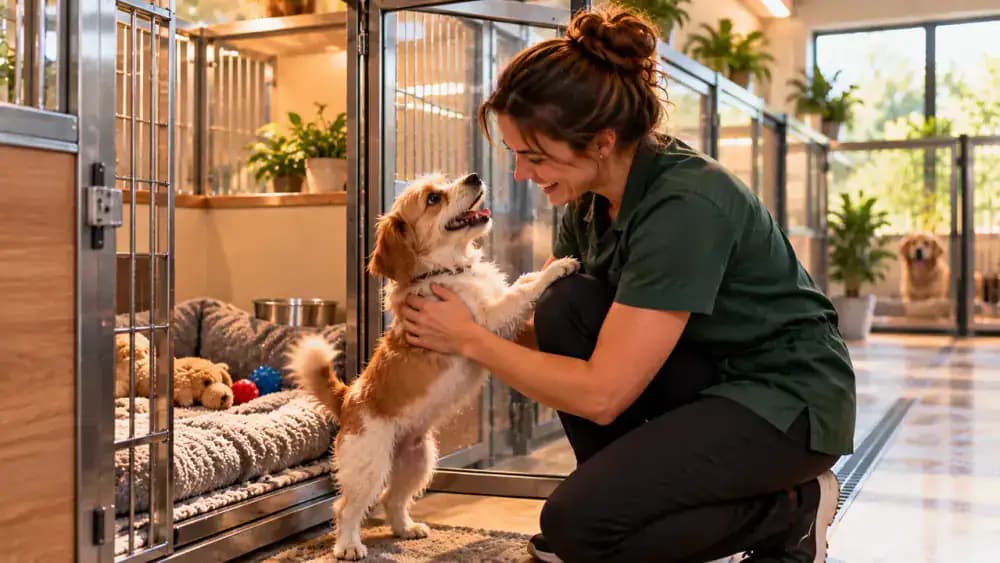
Visit potential boarding facilities and inspect sleeping areas, ventilation, secure entrances, and overall cleanliness. Look for supervised dog exercise spaces and quiet cat accommodations separated from barking dogs. Ask about staff experience, overnight monitoring, cleaning schedules, and emergency procedures. Observe how caregivers handle animals, and confirm that accommodations suit your pet's temperament and individual needs.

Confirm Health and Vaccination Requirements
Contact your boarding facility to confirm required vaccinations, parasite prevention policies, and accepted health documentation. Review these requirements with your veterinarian well before departure, since some vaccinations require advance scheduling. If your pet takes medication, ask whether trained staff can administer it, how medications are stored, and whether additional fees or restrictions apply.

Help Your Pet Adjust Before Boarding
Maintain predictable feeding, walking, and sleeping schedules while introducing boarding-related experiences gradually. Encourage your cat to explore an open carrier containing familiar bedding and treats without forcing entry. Help your dog experience suitable unfamiliar environments through calm, positive outings. If available, consider a supervised introductory visit or short trial stay to assess your pet's comfort.

Pack the Right Boarding Essentials
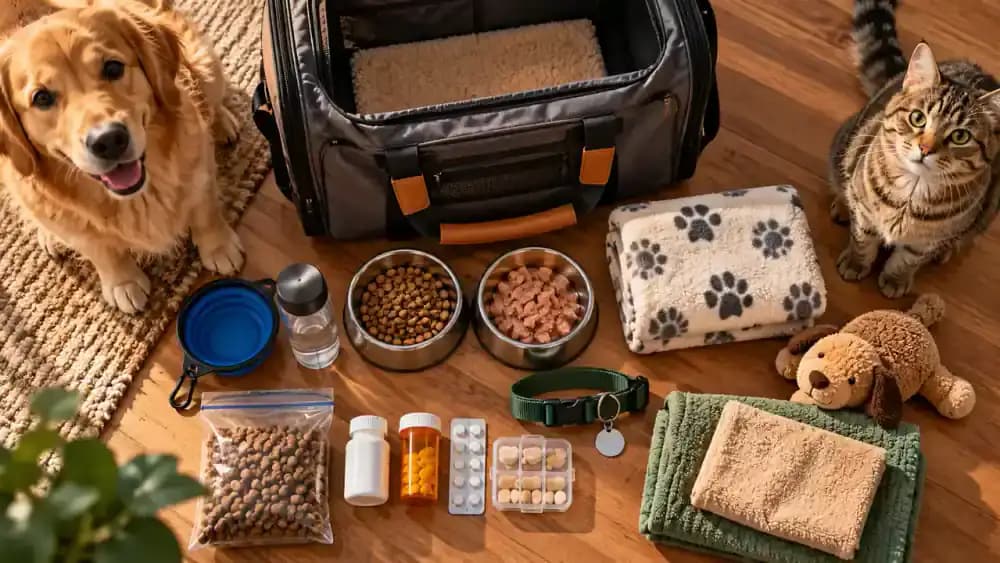
Measure your pet's regular food into clearly labeled daily portions, including extra meals if the facility recommends them. Pack medications in original labeled containers with written administration instructions. Verify identification and emergency contact details, and bring suitable transportation equipment. Include a familiar blanket or favorite toy only if the facility permits it, and confirm everything against its packing guidelines.
Write Clear Care and Emergency Instructions
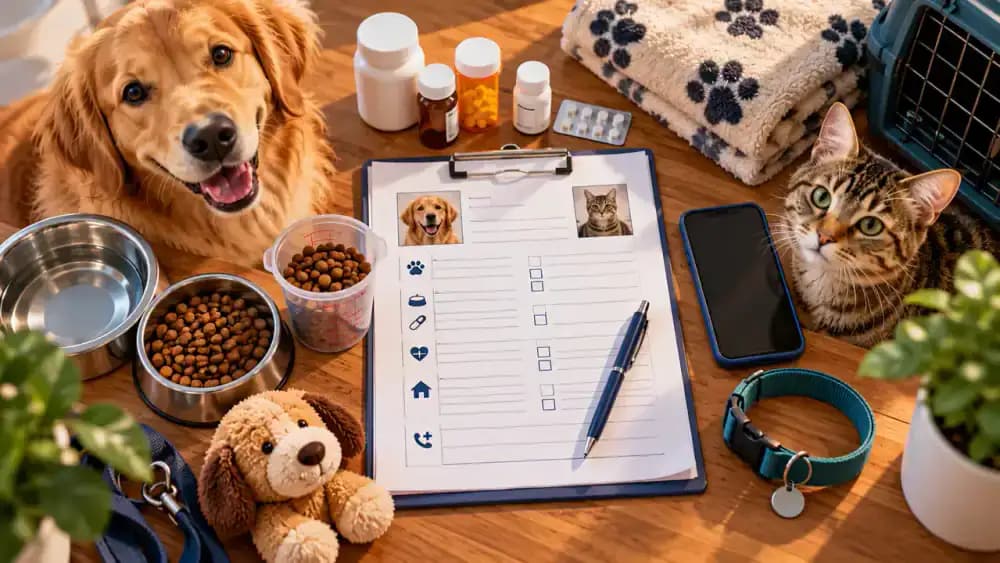
Create a written care sheet listing feeding times, portion sizes, medication doses, allergies, and handling preferences. Include behaviors that indicate stress and familiar strategies that help your pet settle. Add your veterinarian's contact information, your phone number, and a trusted backup contact. Confirm who can authorize emergency veterinary treatment if you are unavailable.
Make Boarding Drop-Off Calm and Simple
Arrive at the boarding facility with enough time for an organized handoff. Give staff your pet's supplies, review written instructions, and mention any recent changes in health or behavior. Confirm how updates and emergency notifications will be handled. Offer a calm, brief goodbye, then allow the caregiver to guide your pet into its accommodations without repeated departures.

Welcome Your Pet Home and Review the Checklist
After boarding, provide fresh water, familiar meals, and a quiet resting area. Gradually resume normal routines while monitoring appetite, energy, bathroom habits, and behavior. Contact your veterinarian about persistent or concerning changes. Before your next trip, review four essentials: facility safety, health requirements, properly packed supplies, and complete caregiver instructions. Keep the checklist for future stays.

Understand Your Pet's Social Preferences
Ask whether the facility offers individual activities as well as supervised group play. Some dogs enjoy compatible playmates, while others are more comfortable exercising alone. Cats often prefer private accommodations without direct interaction with unfamiliar cats. Explain your pet's social preferences, and ask how staff introduce animals, supervise interactions, and provide space when needed.

Consider Noise, Rest, and Daily Comfort
Ask how the boarding facility manages nighttime noise, lighting, and rest periods. Find out whether staff minimize barking disturbances and provide quiet sleeping spaces. For cats, look for private hiding areas and secure elevated resting spots. For dogs, confirm that exercise and enrichment are balanced with uninterrupted downtime. Comfortable surroundings can make extended boarding stays less overwhelming.

Manage Special Diets and Feeding Challenges
If your pet follows a special diet, confirm the facility can store, prepare, and serve meals correctly. Ask about refrigeration, safe wet food handling, separate feeding spaces, and treat restrictions. Provide labeled portions with clear instructions. Discuss how staff document missed meals and when they contact you or your veterinarian. Avoid introducing unfamiliar foods before boarding.

Plan for Senior Pets and Special Needs
Discuss age-related needs, mobility limitations, and specialized care requirements before reserving accommodations. Ask whether senior pets can access non-slip flooring, supportive bedding, and assistance moving comfortably. Puppies may need more frequent bathroom breaks and closer supervision. Explain your pet's routine and confirm staff have the experience, equipment, and availability to provide appropriate individualized care.

Arrange Reliable Communication During Your Trip
Agree on communication arrangements before leaving your pet. Ask whether the facility provides photos, daily reports, phone calls, or app updates, and clarify how urgent concerns are handled outside business hours. Verify your contact information and provide a trusted backup. If traveling internationally, confirm your phone can receive calls and arrange an alternative communication method.

Prepare for Travel Delays and Extended Stays
Unexpected delays can extend your pet's boarding stay, so ask about additional nights, availability, and associated fees before traveling. Pack extra approved food and medication if the facility recommends it. Designate someone who can collect your pet if necessary. Provide written pickup authorization and confirm identification requirements so staff can safely release your pet.

Learn From Your Pet's Boarding Experience
At pickup, ask caregivers how your pet ate, slept, behaved, and participated in activities throughout the stay. Review any recorded concerns, changes in routine, or difficulties with handling. Save these observations in a pet care journal while details are fresh. Use the feedback to improve future boarding arrangements and discuss concerning changes with your veterinarian.

Choose the Right Care Arrangement for Your Pet
Consider whether traditional boarding suits your pet's temperament, health needs, and comfort with unfamiliar environments. Some animals may benefit from professional care in their own homes instead. Compare boarding facilities, in-home pet sitters, and specialized care options. Discuss significant anxiety or complex medical requirements with your veterinarian before selecting a dependable caregiver.

Understand Boarding Costs and Booking Policies
Review the boarding agreement before paying a deposit or confirming your reservation. Check nightly rates, payment deadlines, cancellation policies, holiday surcharges, and optional service fees. Ask about charges for extended stays, property damage, or unexpected veterinary treatment. Request written estimates and clarification of financial responsibilities. Save your booking confirmation and agreement for reference during your trip.

Check Staffing and Supervision During Busy Periods
Ask how the facility maintains adequate supervision during holidays, weekends, and overnight hours. Find out how many animals each caregiver typically manages, whether trained staff remain on site overnight, and who covers breaks or emergencies. Request information about individual welfare checks and shift handovers. Reliable staffing helps ensure pets receive consistent attention even when boarding accommodations are full.

Inspect Carriers, Collars, and Travel Equipment
Inspect your pet's transportation equipment several days before boarding. Check collars, harnesses, leash clips, carrier handles, and door latches for damage or loose connections. Make sure identification tags are readable and contact details are current. Cats need secure, ventilated carriers, while dogs require properly fitted restraints. Replace worn equipment before traveling to reduce escape risks.

Understand Boarding Hygiene and Disease Prevention
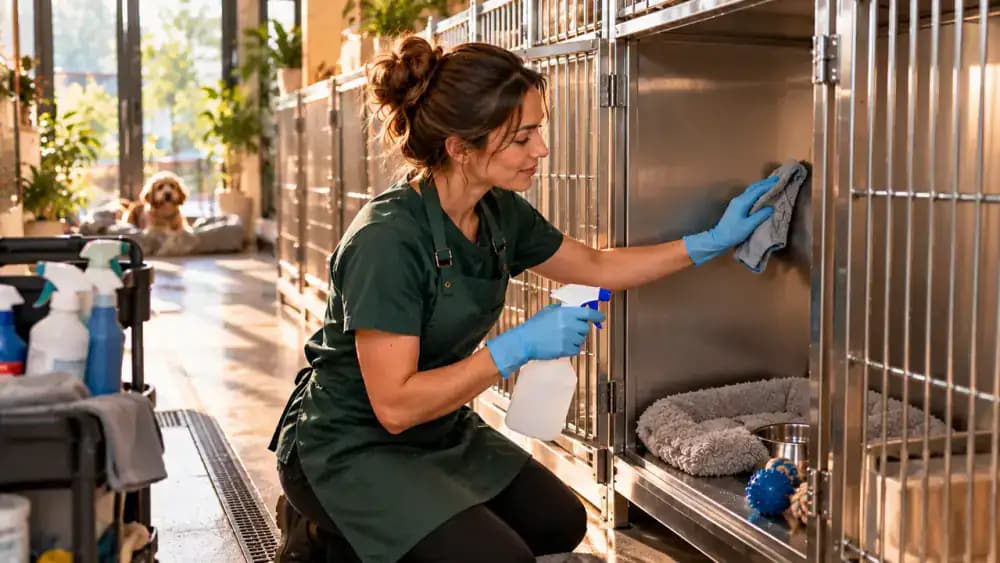
Ask how the boarding facility cleans and disinfects sleeping areas, food bowls, litter boxes, and shared exercise spaces. Confirm that staff follow consistent sanitation schedules and maintain cleaning records. Find out how potentially contagious animals are separated and when owners receive health notifications. Look for appropriate disinfectant use, clean equipment, and procedures that reduce unnecessary contact between animals.
Ask About Gentle Handling and Stress Responses
Ask boarding staff how they respond when pets appear frightened, hide, resist walking, or avoid interaction. Look for caregivers who use gentle guidance, rewards, and patient observation instead of punishment or force. Explain your pet's known triggers and preferred handling methods. Confirm that staff allow appropriate personal space and adjust interactions when animals become uncomfortable.

Verify Licensing, Insurance, and Accountability
Before booking, ask whether the boarding facility meets applicable local licensing requirements and maintains appropriate business insurance. Request copies or verification of relevant documents and review written policies covering accidents, property damage, emergencies, and liability. Requirements vary by location, so check with the appropriate local authority when necessary. Choose a facility that explains its responsibilities clearly.

Build Your Final Departure Timeline
Create a departure schedule covering vaccination records, medication preparation, packing, transportation, and boarding check-in. Set reminders several days ahead to confirm requirements and resolve missing information. Save digital copies of important documents and keep printed instructions with your pet's supplies. Recheck your reservation and emergency contacts before leaving to avoid unnecessary last-minute complications.

Prepare for Changing Weather Conditions
Check the expected weather during your pet's boarding stay and ask how staff respond to extreme temperatures, storms, or heavy precipitation. Confirm that indoor accommodations have appropriate climate control and that outdoor activities are adjusted when conditions become unsafe. Ask about protected exercise areas, access to water, and emergency weather procedures, especially during seasonal temperature extremes.

Know What Happens During a Medical Emergency
Ask how boarding staff recognize and document concerning health changes, contact veterinarians, and arrange emergency transportation. Confirm which veterinary clinic they use and whether trained personnel can respond outside regular business hours. Provide written treatment authorization, current contact details, and a reachable backup person. Understand how staff communicate urgent decisions and document care provided during an emergency.

Prevent Identification and Care Mix-Ups
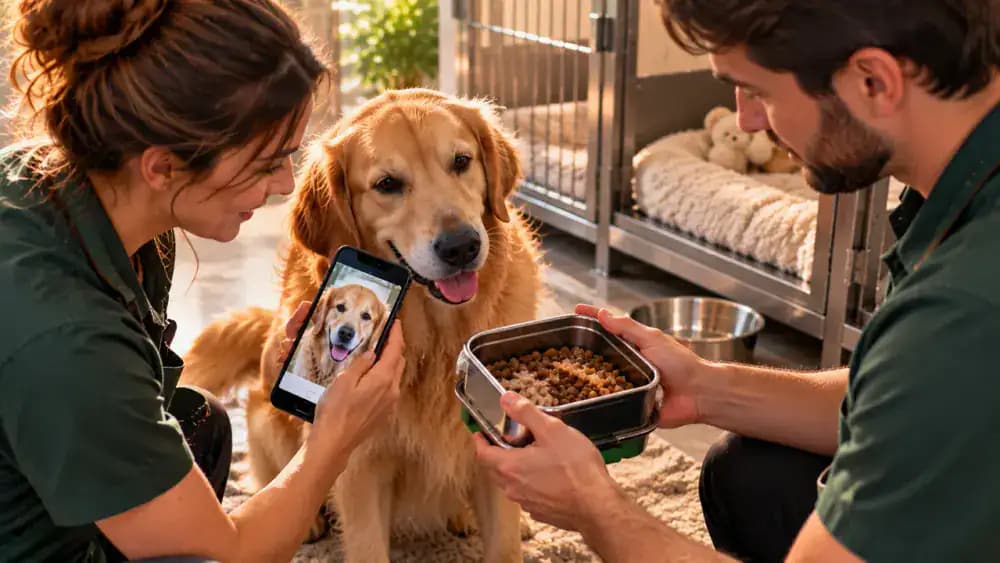
Ask how the boarding facility matches each pet with its enclosure, belongings, meals, and medical records. Look for identification systems using photographs, assigned spaces, and clearly labeled containers. Confirm that caregivers verify each animal's identity before feeding or handling medications. These safeguards are especially valuable in busy facilities where pets may have similar names or appearances.
Provide Appropriate Mental Enrichment
Ask what mental enrichment activities the facility offers for dogs and cats. Suitable options may include supervised puzzle feeders, scent games, gentle training, interactive toys, or independent exploration. Choose activities based on your pet's interests, physical abilities, and comfort level. Confirm that participation is optional, caregivers supervise appropriately, and pets receive adequate rest between activities.

Adjust Preparation to the Length of the Stay
Match your boarding preparations to the expected length of your pet's stay. Overnight visits require essential supplies and instructions, while longer reservations need additional food, medication planning, and communication arrangements. Ask whether familiar caregivers or accommodations can be assigned during repeat visits. Keep records of successful routines so future stays remain consistent and predictable.
Ask How Unexpected Facility Changes Are Managed
Ask how the boarding facility handles renovations, maintenance, temporary room closures, or other disruptions during your pet's reservation. Confirm whether staff notify owners about significant accommodation changes and provide suitable alternatives. For noise-sensitive pets, request a quiet replacement space away from construction. Understand how caregivers maintain familiar routines and safely relocate animals when necessary.

Make Every Future Boarding Stay Easier
Use each boarding experience to improve your pet's future care arrangements. Review caregiver feedback, update feeding and handling instructions, and note which routines helped your dog or cat remain comfortable. Communicate changes in health, behavior, or preferences before returning. Thoughtful preparation, realistic expectations, and dependable caregivers can make future separations easier for everyone involved.

A dog walking into a busy boarding kennel may encounter unfamiliar barking, new smells, and people they have never met. A cat arriving at a boarding facility faces different challenges, including an unfamiliar enclosure, unusual sounds, and changes to a carefully established routine. Even friendly, confident pets can feel unsettled in a new environment.
Preparing your dog or cat for boarding before departure can make the experience more predictable and help prevent avoidable stress and confusion. The goal is not to guarantee that your pet will feel completely comfortable immediately. It is to choose suitable accommodations, communicate important care needs, and maintain as much consistency as possible.
Start by evaluating boarding facilities for cleanliness, secure housing, appropriate supervision, experienced staff, and clear emergency procedures. Confirm vaccination requirements, parasite prevention policies, medication rules, and necessary health documents directly with the facility and your veterinarian. Requirements can vary significantly between boarding businesses.
Once you have selected a facility, help your pet become familiar with travel carriers, predictable routines, and, when appropriate, introductory visits or short trial stays. Pack approved food, medications, identification, and permitted comfort items. Provide written instructions so caregivers understand your pet's daily schedule and individual needs.
This guide covers the practical preparations that matter most, from booking and packing to a calm drop-off and a comfortable return home.
Where people go wrong
Choosing a Boarding Facility Based Only on Price. A low nightly rate does not necessarily mean a facility is appropriate for your pet. Before booking, ask about cleaning procedures, staff supervision, animal handling experience, secure accommodations, and emergency response plans. For cats, consider whether housing is separated from noisy dogs. For dogs, ask how exercise, social contact, and rest periods are managed.
Waiting Until the Last Minute to Check Health Requirements. Boarding facilities may require specific vaccinations, parasite prevention measures, and health documentation before admitting a pet. Requirements differ, and some vaccinations need advance scheduling. Contact the facility early, then review its requirements with your veterinarian. Do not assume a previous boarding facility's rules apply everywhere or that missing records can be resolved at drop-off.
Changing Food or Daily Routines Right Before Boarding. Sudden changes in meals, feeding times, or daily activities can make an unfamiliar stay more challenging. Keep your pet's normal diet and routine consistent whenever possible. Pack clearly measured portions of familiar food and explain established habits to staff. Avoid introducing new treats, supplements, or feeding arrangements immediately before departure unless your veterinarian recommends a change.
Packing Medication Without Clear Instructions. Unlabeled pills, vague dosing notes, and incomplete medical information create unnecessary risks. Confirm that boarding staff can accommodate your pet's medication schedule before making a reservation. Provide medications in original labeled packaging alongside written instructions matching your veterinarian's directions. Include the prescribing clinic's contact information and explain any handling considerations staff should know.
Skipping Carrier Practice or Familiarization. A pet that only encounters a carrier during stressful trips may find boarding transportation especially difficult. Leave the carrier accessible at home, encourage voluntary exploration, and reward calm behavior without forcing entry. For pets unfamiliar with boarding, ask whether the facility offers introductory visits or short trial stays. Adapt familiarization activities to your animal's comfort level.
Leaving Staff to Guess About Behavior and Handling Preferences. Boarding caregivers need more than a pet's name and feeding instructions. Explain whether your dog dislikes certain handling, becomes overwhelmed around other dogs, or requires individual exercise. For cats, describe hiding habits, litter preferences, and handling sensitivities. Clear, factual notes help caregivers plan appropriate interactions and recognize changes that deserve attention.
Making Drop-Off More Emotional or Complicated Than Necessary. A prolonged goodbye can add unnecessary stimulation during an already unfamiliar transition. Complete paperwork in advance, communicate essential updates, and follow the facility's recommended handoff process. Remain calm and avoid rushing staff or forcing your pet into interactions. A brief, organized departure allows caregivers to begin settling your dog or cat into its accommodations.
Ignoring Changes After Your Pet Returns Home. Some pets need a quiet period to settle back into familiar routines after boarding. Offer fresh water, regular meals, rest, and a comfortable space without overwhelming them with activity. Monitor appetite, drinking, energy, behavior, and bathroom habits. Contact your veterinarian promptly for concerning symptoms, particularly persistent vomiting, diarrhea, coughing, marked lethargy, or refusal to eat.

Questions people ask
Begin researching facilities several weeks before your trip when possible, especially during holidays or busy travel periods. Confirm vaccination and documentation requirements early enough to arrange veterinary appointments if needed. Spend the final one to three weeks practicing carrier use, maintaining predictable routines, organizing medications, and preparing written care instructions. Pets with specialized needs may require additional planning.
Fixed it?
Get one guide like this every Thursday.