How to Play a Simple Hide-and-Seek Game with Your Dog
Turn an ordinary afternoon into a fun indoor adventure with your dog. Learn how to play hide-and-seek using simple cues, safe hiding spots, and rewarding discoveries that encourage your dog's natural sniffing instincts.
What you’ll need
Tap to tick things off before you start.
Turn Your Home Into a Search Adventure
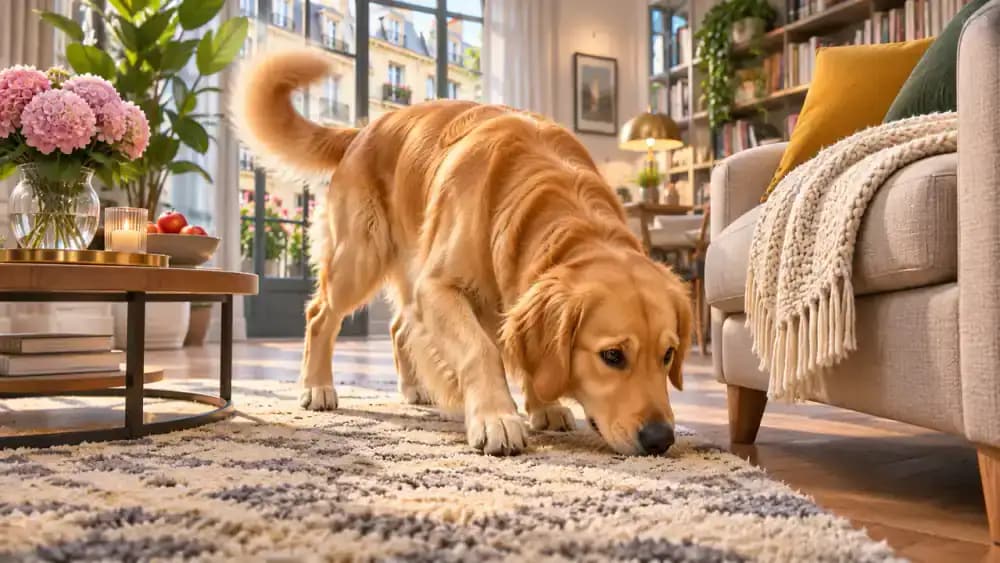
Start in a familiar living room where your dog already feels comfortable exploring. Let them sniff around the rug and furniture while you introduce the idea of finding you through scent. Hide-and-seek turns ordinary indoor space into an engaging activity that encourages natural curiosity, problem-solving, and positive interaction without requiring special equipment.
Prepare a Safe Search Area
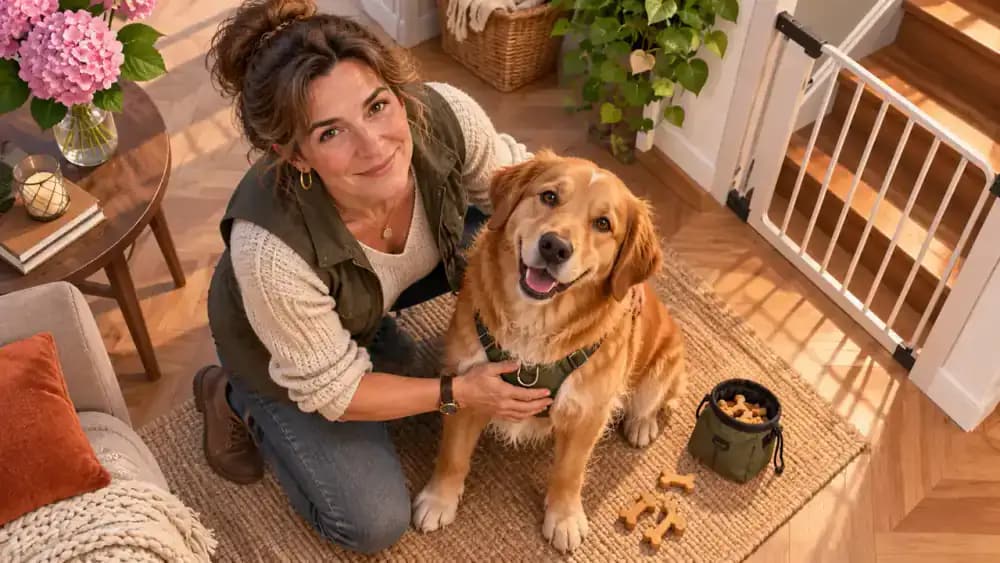
Gather a handful of small, dog-safe training treats and keep them within easy reach. Remove fragile decorations, secure loose cords, block access to stairs, and check that your dog has a clear walking path. Choose a comfortable indoor area and ask a helper to gently hold your dog's harness while you prepare your first hiding spot.
Introduce the First Find Me Cue
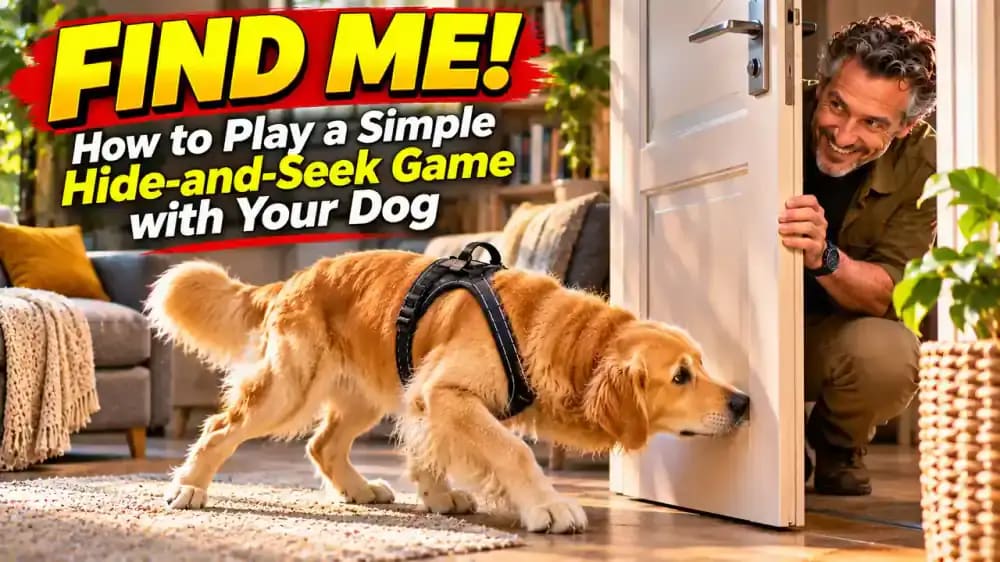
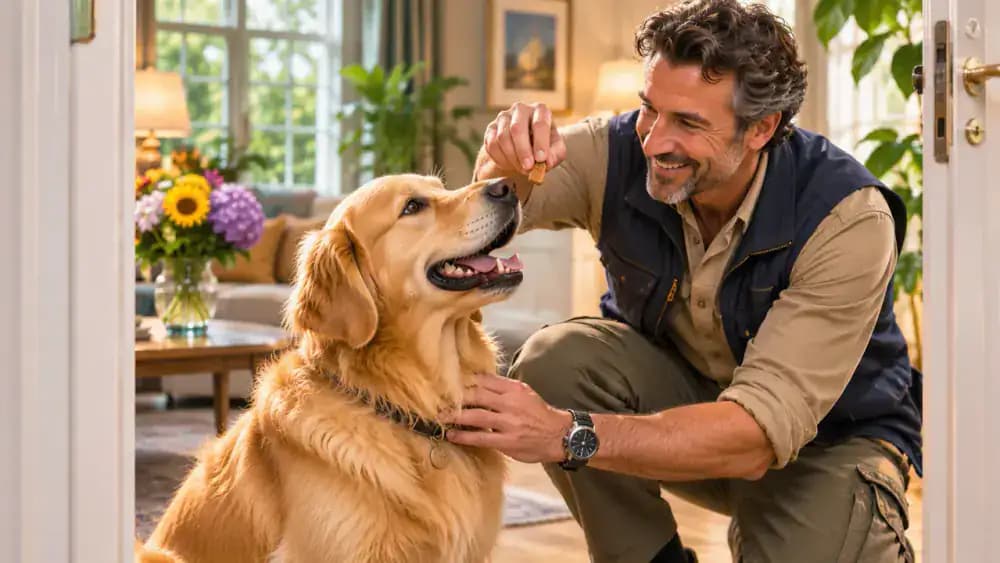
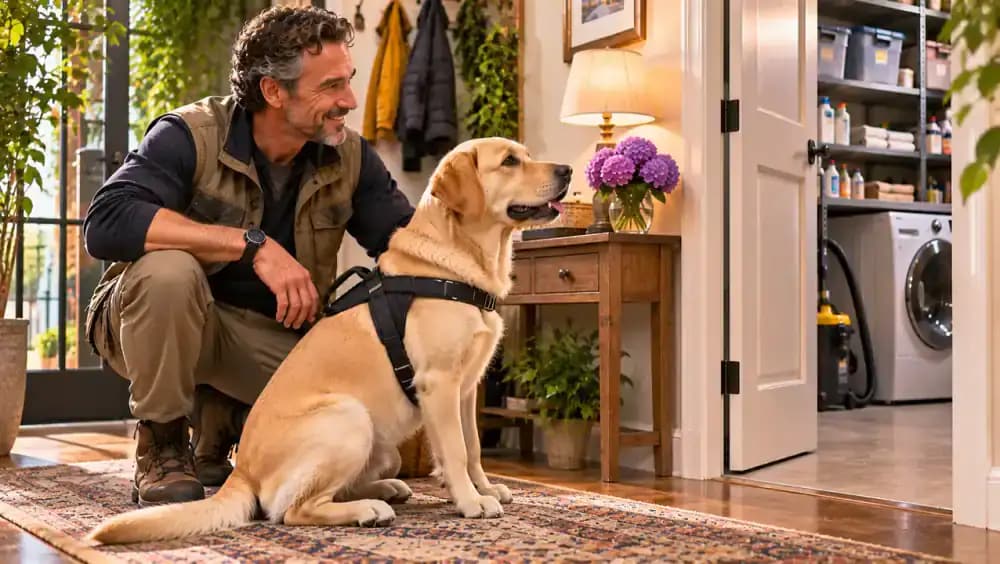
Let your dog watch as you walk a few steps toward an open doorway and move partly behind the doorframe. Keep one shoulder visible to make the first search easy. Have your helper point toward your location, release the harness, and enthusiastically say, "Find me!" once. Allow your dog to approach and investigate without additional commands.
Reward the First Successful Discovery
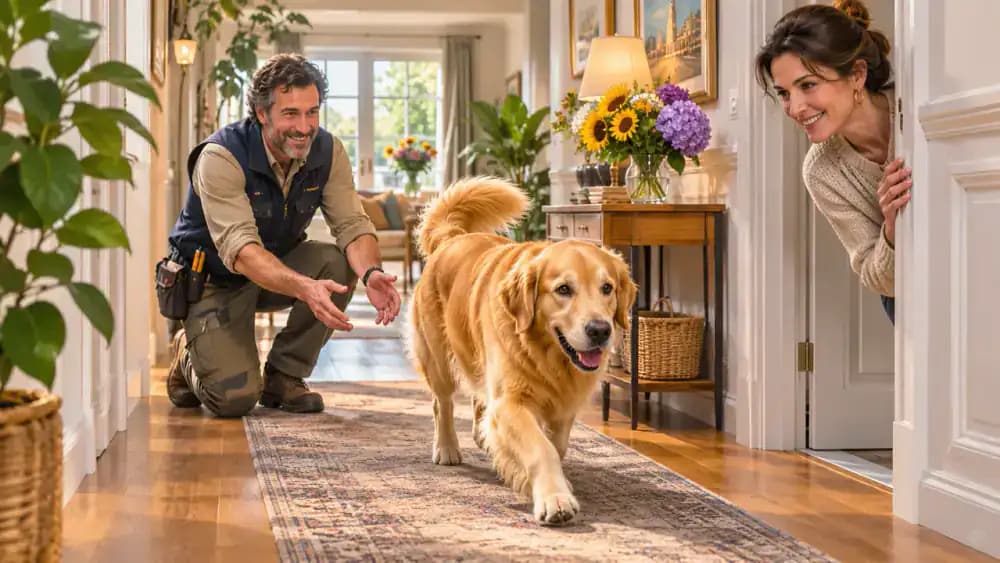
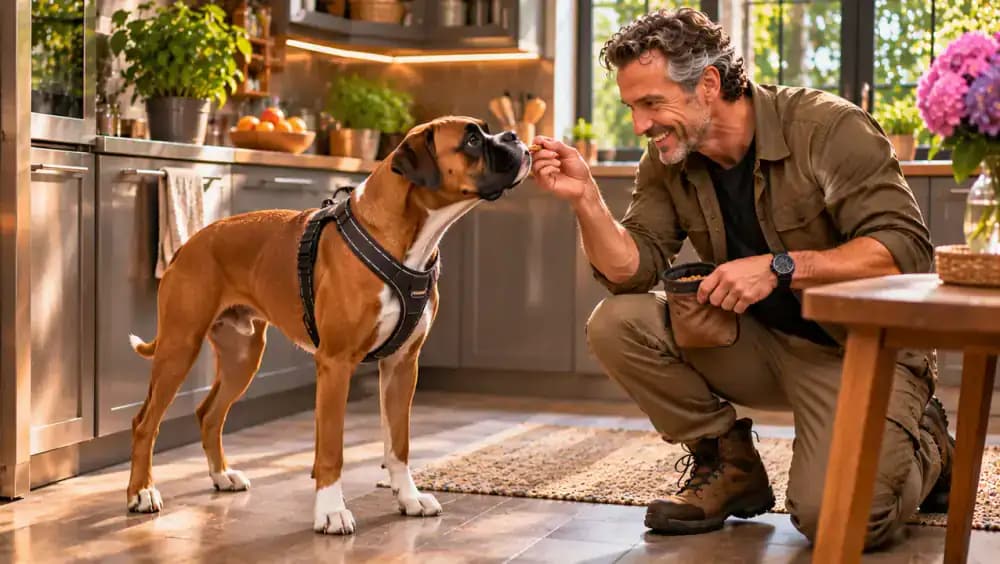
As soon as your dog reaches your hiding spot, offer enthusiastic praise and a small treat directly from your hand. Reward immediately so your dog associates finding you with a positive experience. Don't ask for another behavior before rewarding them. Reset the game and repeat the easy search several times, celebrating each confident discovery.
Make the Hiding Place More Challenging
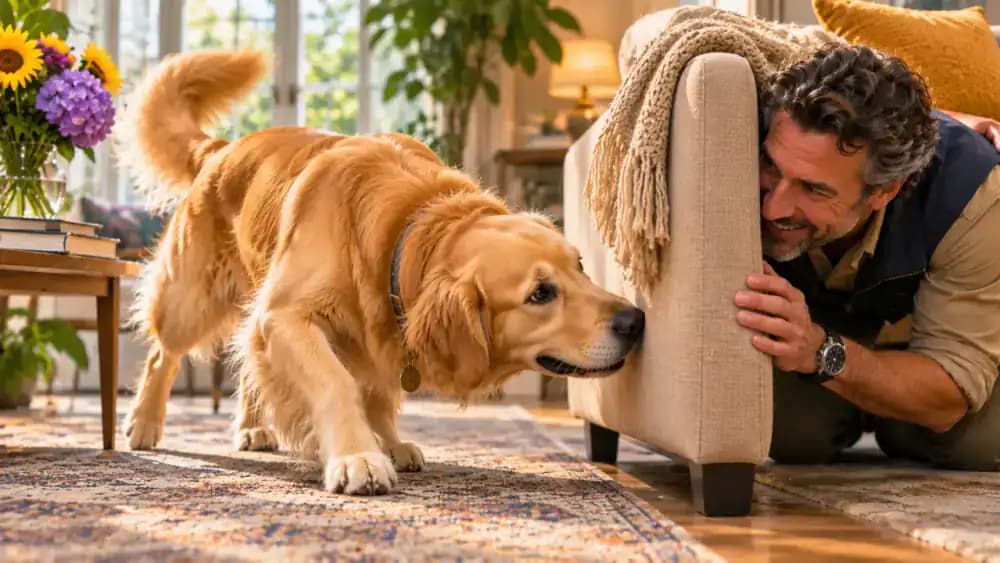
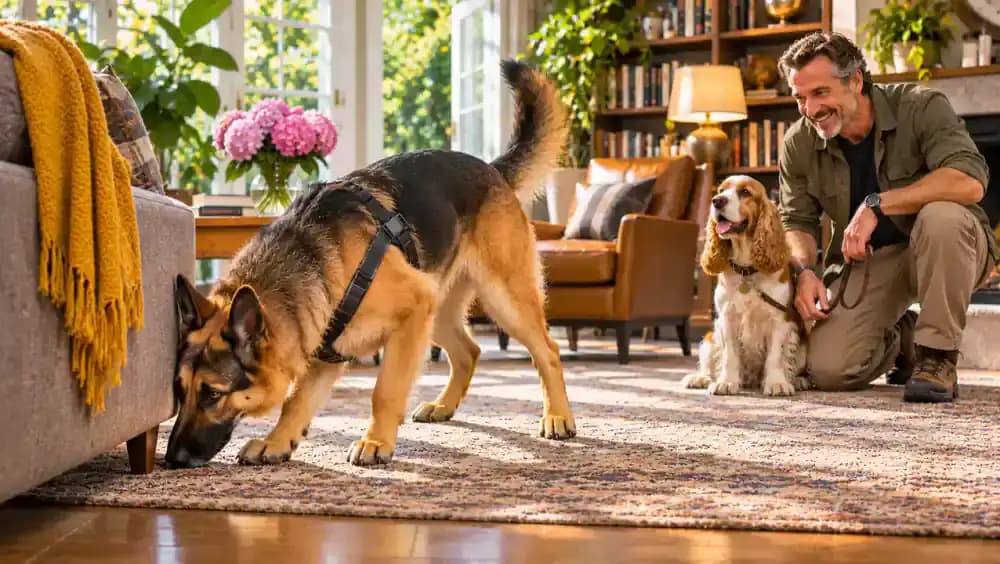
Once your dog consistently finds you, try crouching completely out of sight behind a sofa while your helper keeps them nearby. Use the same "Find me!" cue and allow your dog to search independently. Watch for sniffing, head movements, and changes in direction as they investigate. Keep the hiding spot accessible and reward another successful discovery.
Build Difficulty One Step at a Time
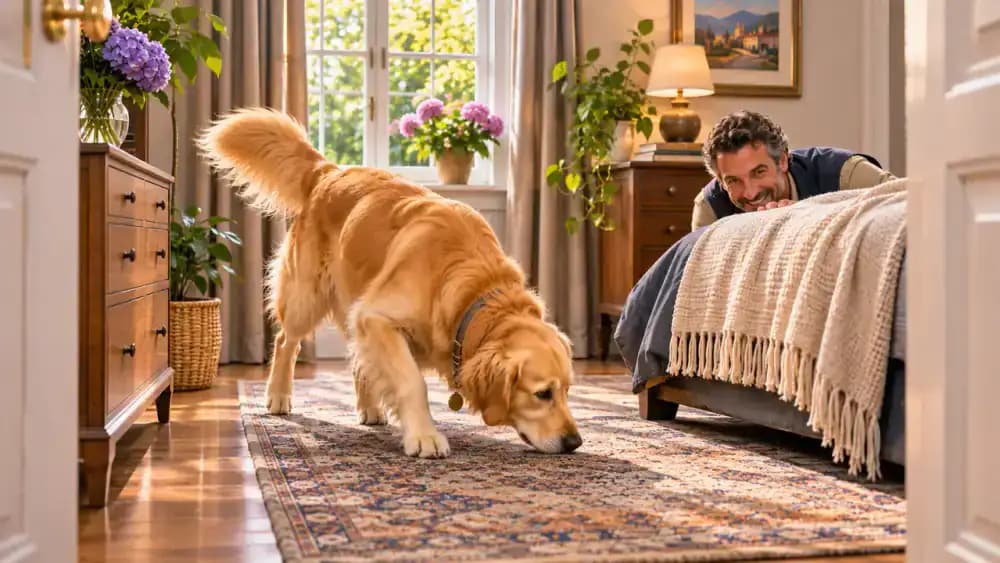
Once your dog confidently completes easy searches, increase the challenge by changing just one detail at a time. Try hiding farther across the living room, moving behind a bedroom doorway, or removing the visual preview. Practice each variation separately before advancing. Keep distances manageable and use familiar spaces to encourage independent scent searching.
Recognize Frustration and Help Your Dog Succeed
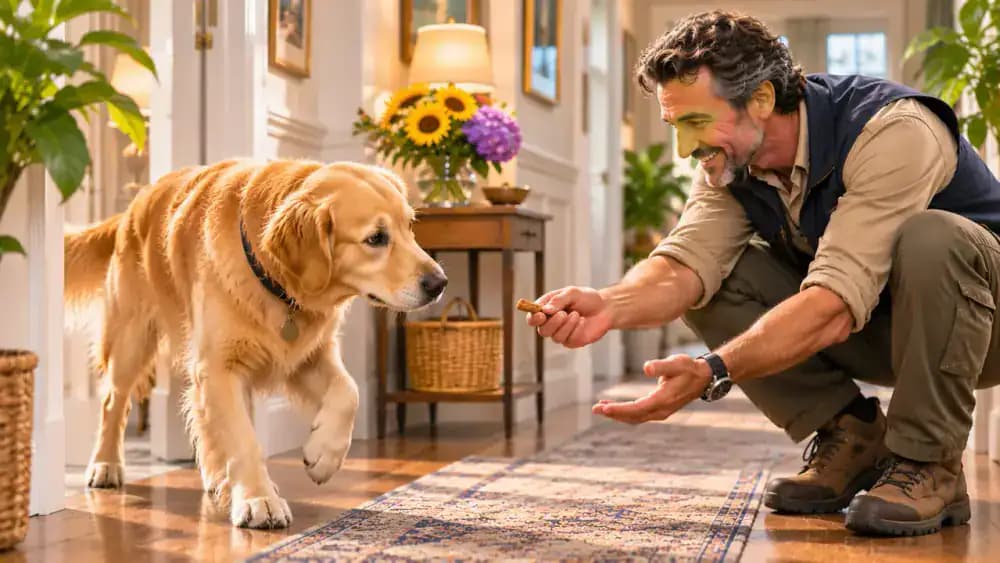
Watch your dog's behavior throughout each search. Freezing, whining, wandering away, or hesitating at a hallway intersection may indicate the challenge is too difficult. Avoid repeatedly calling or pressuring your dog to continue. Instead, choose a more visible hiding spot, offer a gentle hint if necessary, and reward the successful discovery to rebuild confidence.
Finish With Success and Keep It Fun
End your session after a few successful searches, ideally while your dog is still enthusiastic. Choose one final, easy hiding spot beside an accessible armchair and celebrate the discovery with praise and a small treat. Always supervise searches and avoid enclosed or hazardous spaces. Keep the experience enjoyable, and share your dog's favorite hide-and-seek moment!
Let Different Family Members Hide
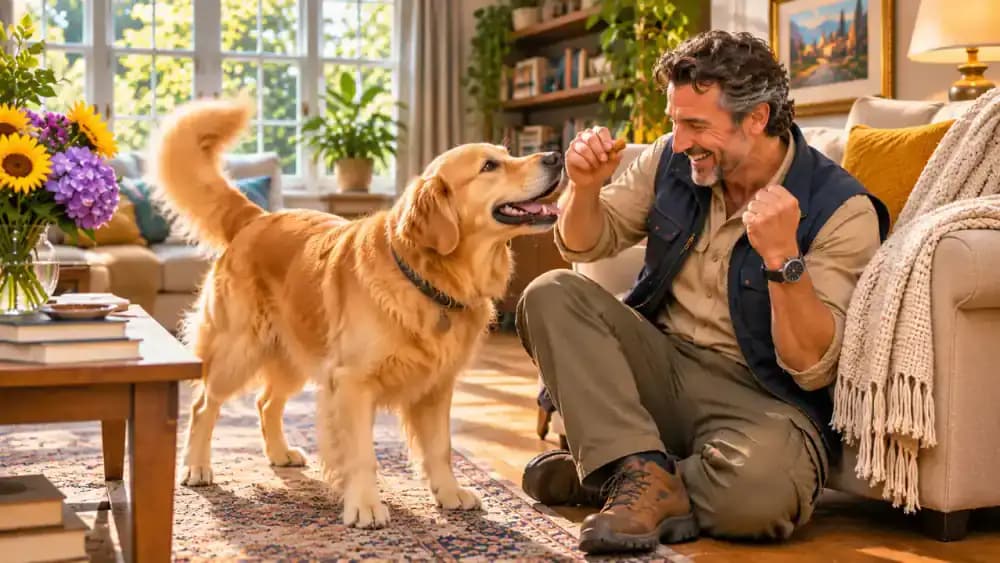
After your dog understands the game, invite another familiar family member to become the hidden person. Have your dog wait comfortably beside you while the family member hides behind an accessible dining room partition. Give the usual 'Find me!' cue and allow your dog to investigate. The hidden person should immediately reward the successful discovery.
Encourage Independent Scent Searching
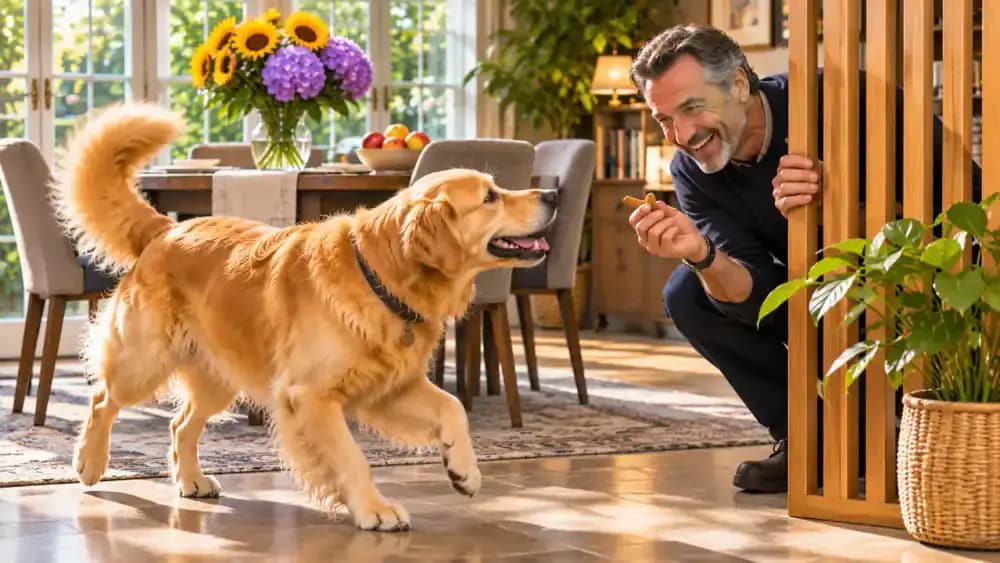
For a new challenge, have your helper keep your dog in another room while you settle quietly into an accessible corner beside a bookshelf. Once released, let your dog investigate the office naturally, sniffing furniture legs, cabinets, and the floor. Avoid directing every movement or repeatedly calling. Praise and reward your dog when they independently locate you.
Understand Your Dog's Unique Search Style
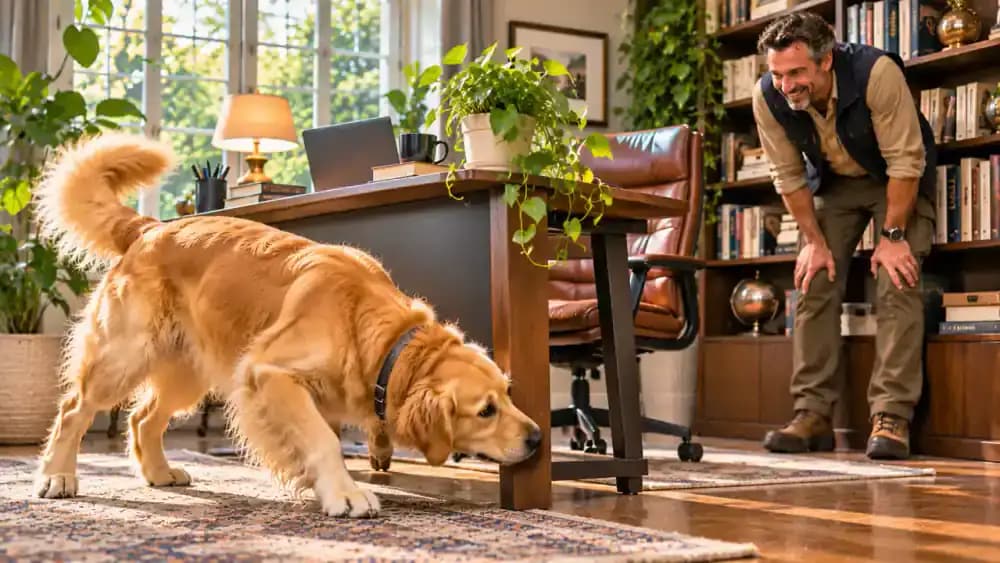
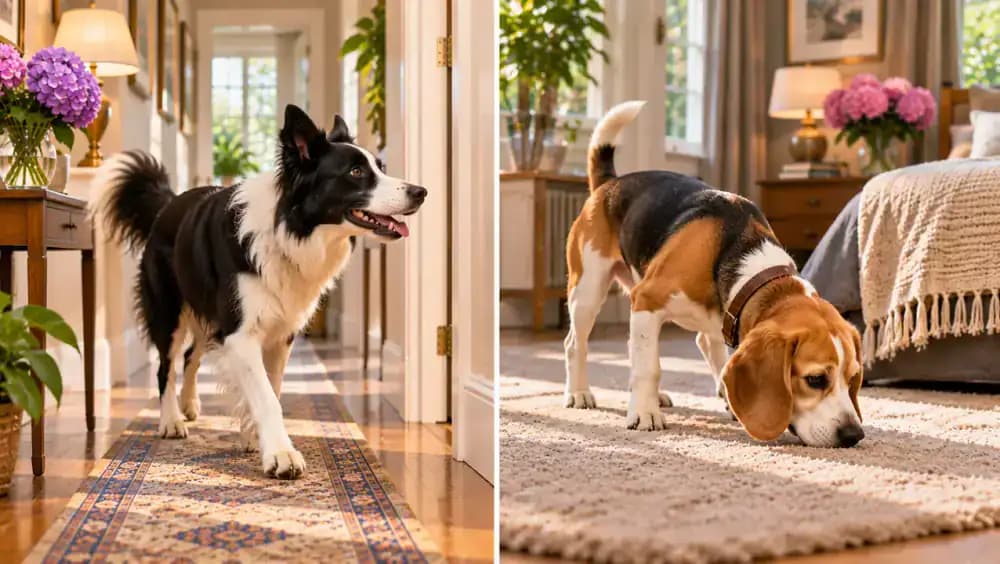
Observe how your dog searches without trying to control their pace. Some dogs move quickly between doorways, while others carefully sniff floors and furniture before following a scent. Both approaches are perfectly acceptable. Focus on relaxed body language, voluntary participation, and continued interest rather than speed. Let your dog develop a comfortable, natural searching rhythm.
Personalize the Reward
Experiment with different rewards to discover what motivates your dog most. After a successful search, offer a small treat, a brief game with a favorite tug toy, or enthusiastic praise and gentle petting. Match the reward to your dog's preferences and comfort level. Keep celebrations immediate and enjoyable so finding you remains a rewarding experience.
Handle Accidental Clues Without Frustration
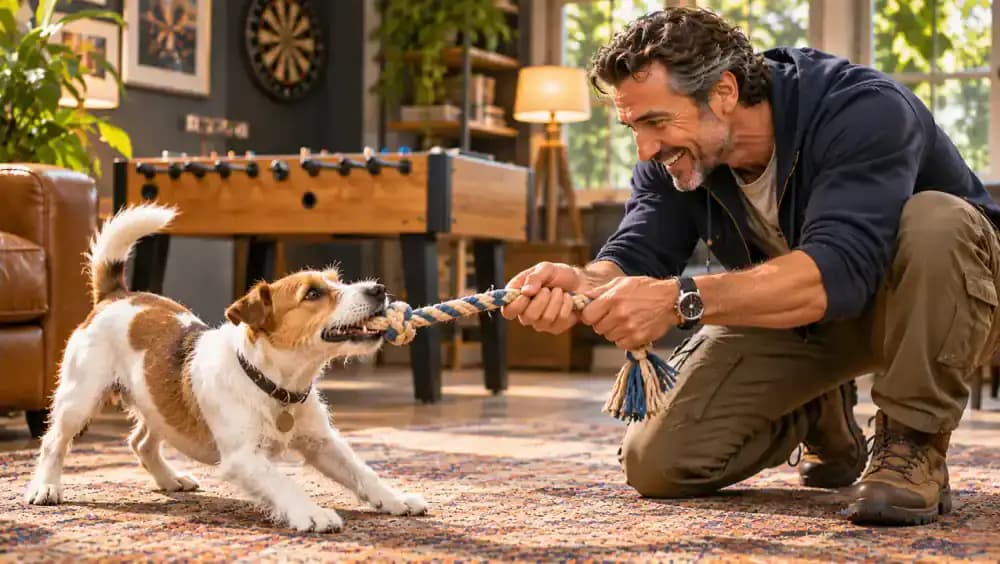
If your dog spots you moving behind a counter or hears your footsteps before the search begins, don't worry about the accidental clue. Let them complete the easier search and reward the discovery normally. During the next round, settle quietly into your hiding spot before releasing your dog. Prioritize positive experiences over perfectly controlled searches.
Train Multiple Dogs Separately
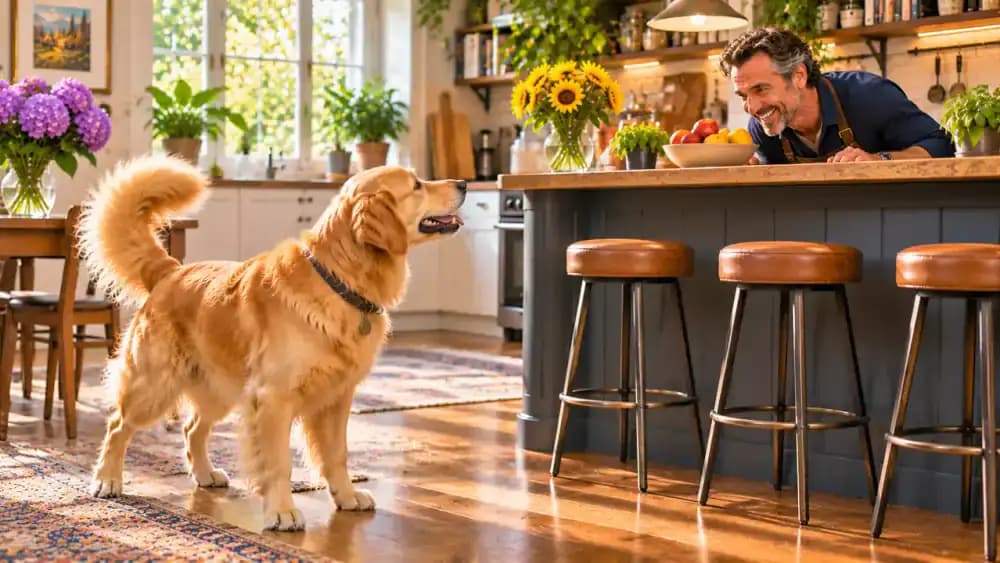
If you have multiple dogs, introduce hide-and-seek through individual training sessions. Let one dog search while another relaxes safely with a household member in a separate area. Give each dog enough time to investigate and receive their own reward. Separate turns prevent competition, reduce distractions, and help quieter dogs develop confidence without being rushed.
Try a Safe Outdoor Search
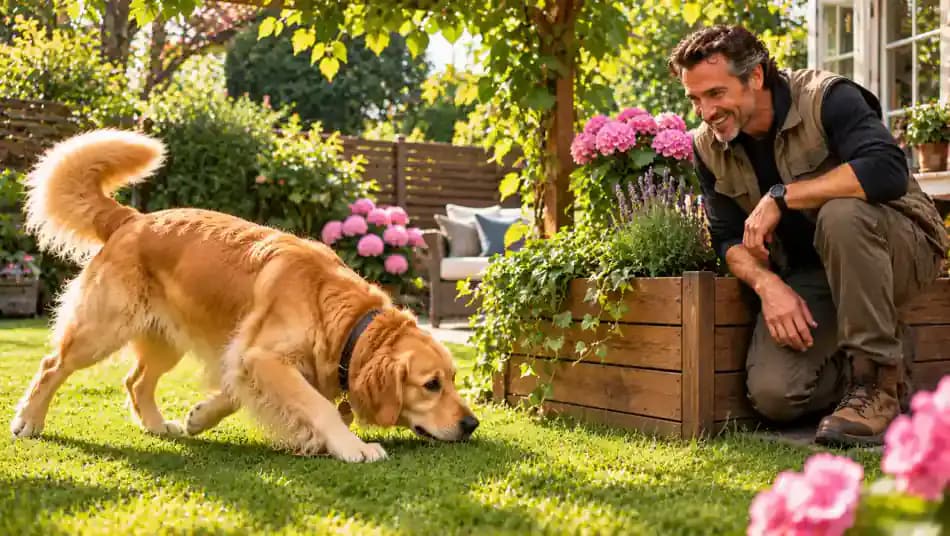
When your dog confidently completes indoor searches, try a simple outdoor round in a securely fenced backyard. Check gates, remove gardening tools, and choose comfortable weather. Have a helper supervise your dog while you hide nearby beside an accessible planter. Give the familiar search cue and allow exploration. Stay inside the fence and reward every successful discovery.
Make Hide-and-Seek Part of Your Routine
Work short hide-and-seek sessions into your dog's daily routine when they seem interested and comfortable. Try two easy searches after breakfast or a gentle round before bedtime. Choose familiar hiding spots and adjust the activity to your dog's energy level. Keep sessions enjoyable rather than demanding, and finish with praise, affection, and time to relax together.
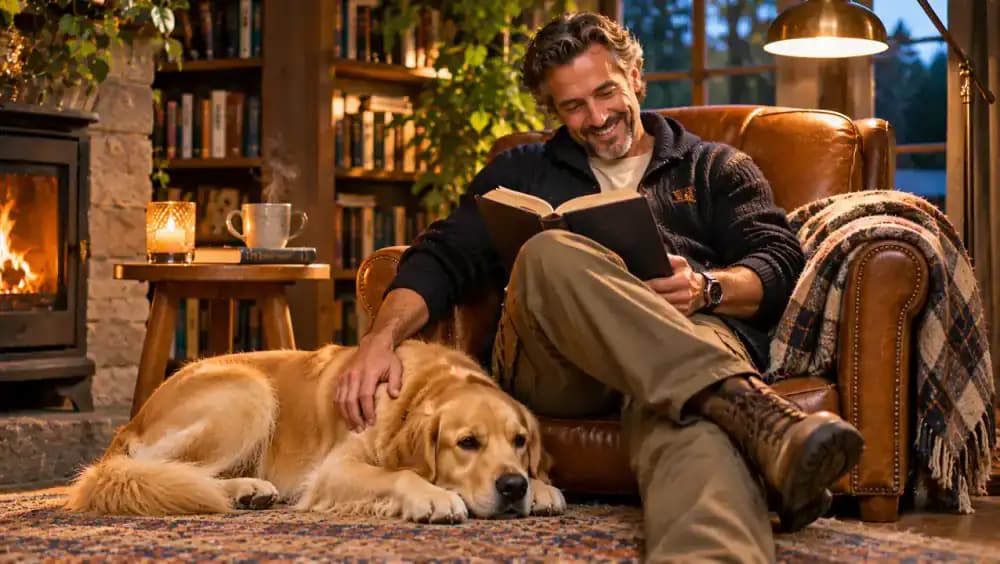
Change Where the Search Begins
Keep familiar hiding spots interesting by changing your dog's starting position. Have a helper stay beside your dog on a comfortable training mat in an adjoining room while you hide near a familiar bookcase. Give the usual search cue and allow your dog to approach through a different doorway. Reward their discovery and observe how confidently they navigate the new route.
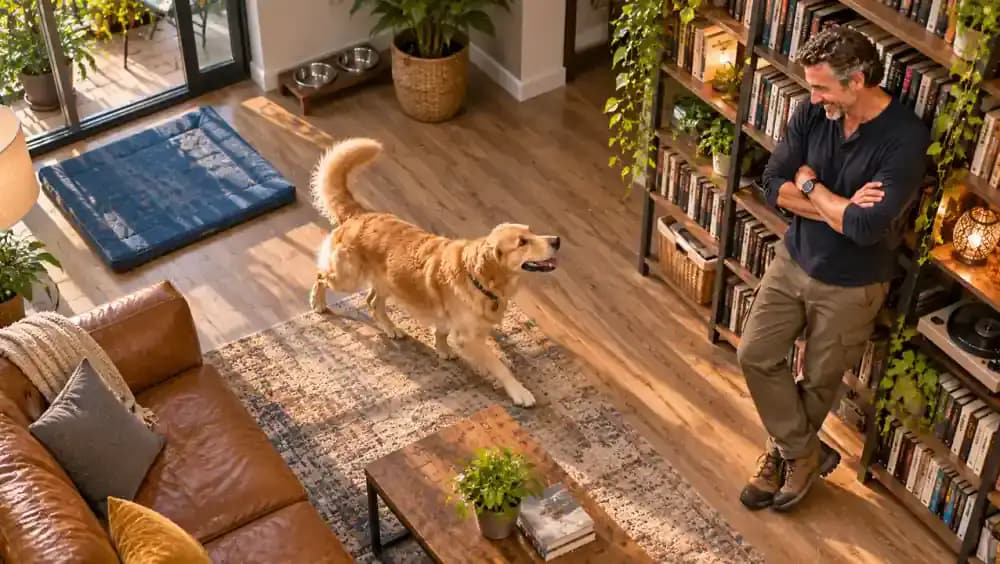
Practice a Calm Start
Encourage a relaxed beginning by asking your dog to wait briefly beside a helper while you move into a nearby room. Use a comfortable pause, then release your dog with the familiar 'Find me!' cue. If your dog starts barking, pulling, or becoming overly excited, shorten the wait. Reward calm participation without demanding perfect stillness.
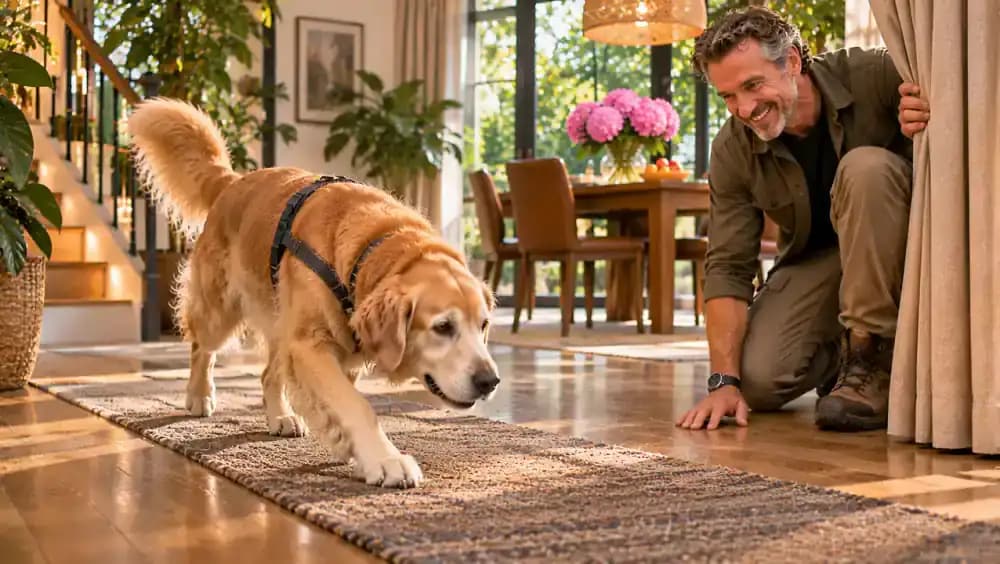
Adapt the Game to Your Dog's Mobility
Choose hiding locations that match your dog's physical comfort and mobility. For older dogs or those with movement limitations, use spacious ground-floor rooms with nonslip rugs and clear walking paths. Avoid slippery tiles, narrow furniture gaps, stairs, and locations requiring jumping or climbing. Hide somewhere easily accessible, such as beside a wide curtain, and reward a comfortable approach.
Track Progress Without Creating Pressure
Keep a simple journal to remember which hide-and-seek challenges your dog enjoys. After each session, record the hiding location, whether your dog watched you leave, and how confidently they searched. Look for relaxed, independent discoveries across several sessions before increasing difficulty. Avoid timing searches competitively or comparing your dog's performance with other pets.

What Happens When Your Dog Finds the Wrong Person?
If your dog approaches another family member instead of the person hiding, stay relaxed and let the search continue. Ask the other person to remain neutral without offering a reward or redirecting your dog. When your dog discovers the intended person, celebrate with praise and a treat. Consistent rewards help clarify the goal over repeated searches.
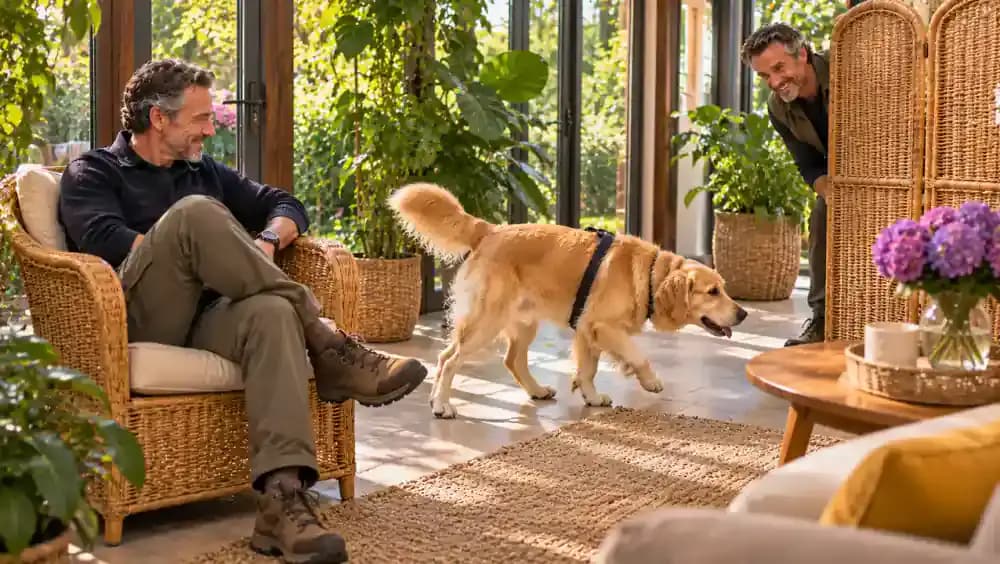
Understand What This Game Can and Cannot Teach
Remember that recreational hide-and-seek is an enrichment activity, not professional search and rescue training. Finding someone behind household furniture does not prepare your dog to locate missing people outdoors. Emergency searches require specialized instruction, experienced handlers, and controlled training conditions. Enjoy indoor searching as a fun way to encourage curiosity, communication, and positive interaction.
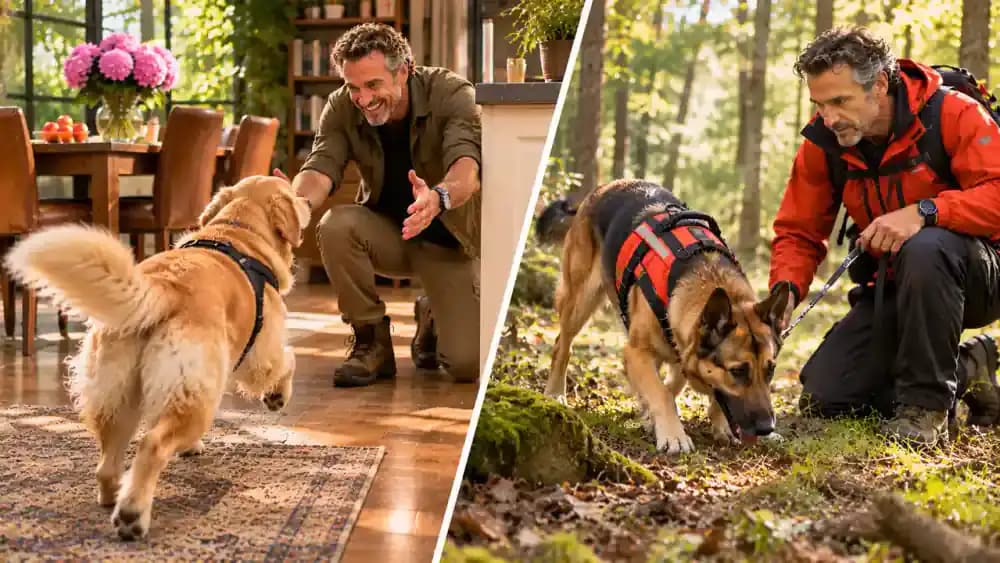
Choose Your Next Search Adventure
For your next session, choose one variation your dog seems ready to enjoy. Try changing the starting position, inviting another familiar family member to hide, or exploring a securely fenced backyard. Introduce only one new challenge at a time and observe your dog's response. Celebrate successful discoveries and finish while your dog remains enthusiastic.
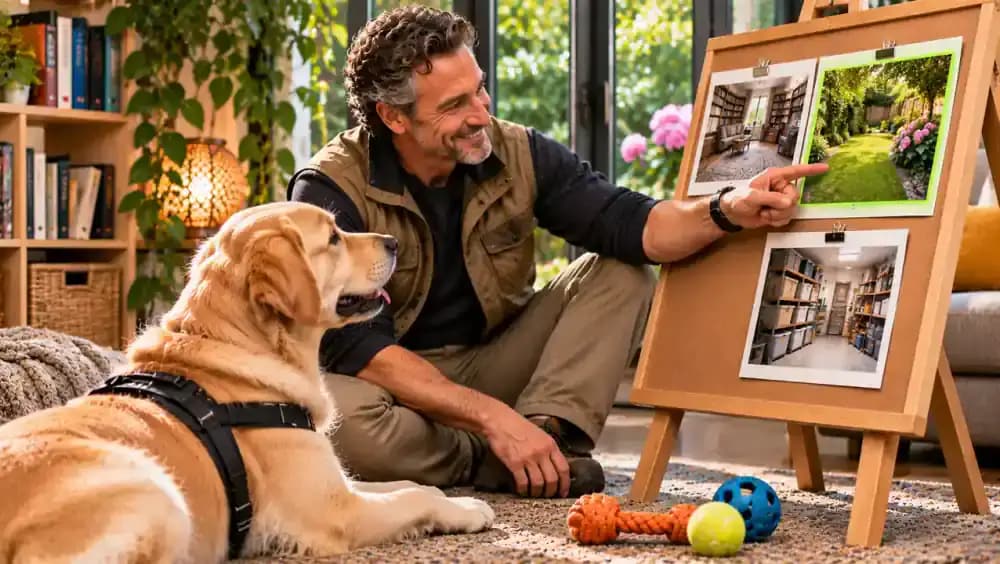
Manage Distractions During Search Games
Create a calm environment before beginning each search. Turn down the television, put away the vacuum cleaner, and limit loud conversations that might distract your dog. Start in a relatively quiet room and introduce gentle background sounds only when your dog remains comfortable. Avoid sudden noises or interruptions that could make searching stressful rather than enjoyable.
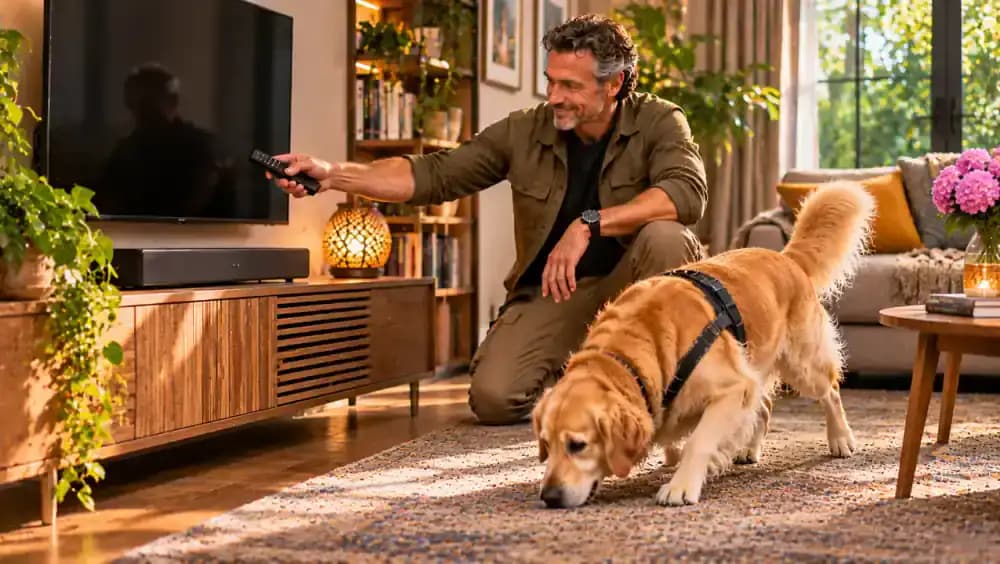
Let Your Dog Choose the Scent Trail
Allow your dog to investigate naturally instead of directing them along a particular route. They might sniff the floor where you walked, explore furniture edges, or lift their nose to investigate scents moving through the air. Avoid pulling or repeatedly redirecting them. Give your dog time to choose their path, then reward the successful discovery.
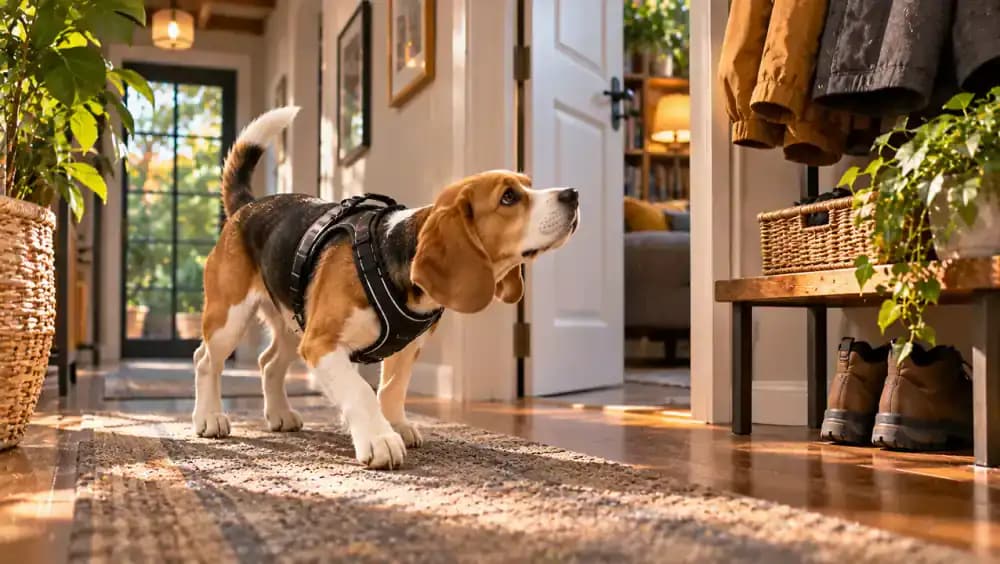
Prevent Jumping During Excited Discoveries
If your dog gets excited and jumps when finding you, stay calm and avoid rewarding the jumping. Choose a safe greeting spot with enough room to move comfortably. Wait until all four paws are on the floor, then immediately offer praise and a small treat. Repeat consistently so your dog learns that calm greetings bring rewards.
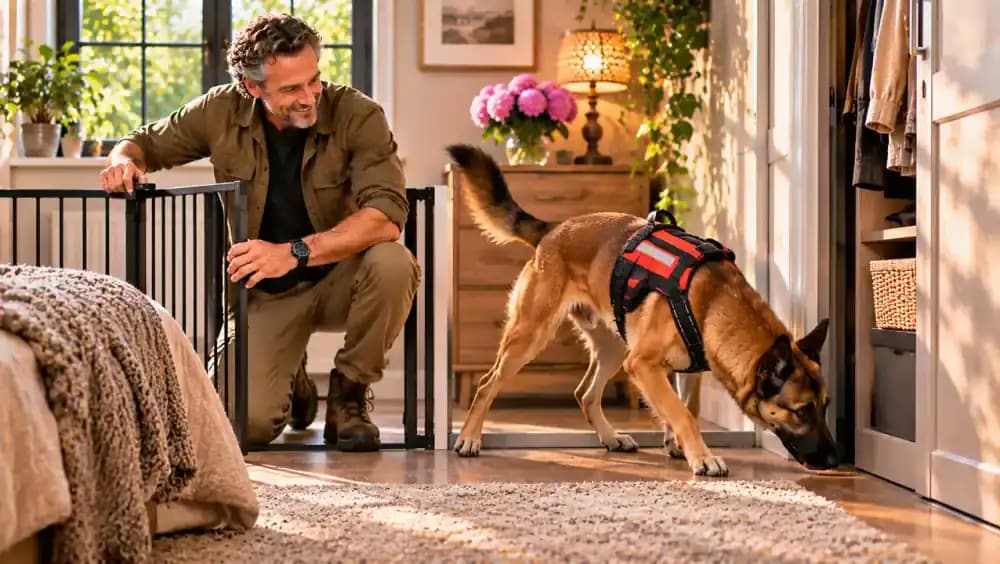
Try Hide-and-Seek Without a Helper
If you're playing alone, use a secure indoor gate only if your dog already feels comfortable waiting behind it. Step briefly behind a nearby wardrobe corner, then return to open the gate safely. Move toward your hiding spot and give the familiar 'Find me!' cue. Never leave your dog confined and unattended or continue if they become distressed.
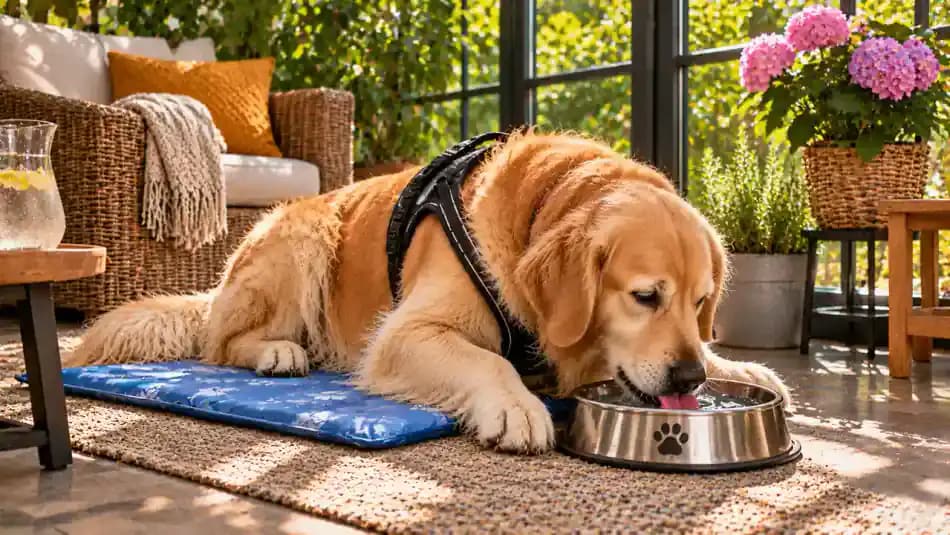
Recognize When Your Dog Needs a Break
Pay attention to changes in your dog's energy during play. Heavier panting, slower movement, or declining interest may signal that it's time to stop, particularly in warm rooms. End the activity calmly and provide fresh drinking water and a comfortable resting area. Keep sessions short enough that your dog remains interested in playing another day.
Put Your Dog's New Skills Together
Combine familiar elements into one manageable search. Start your dog beside a comfortable floor cushion while a familiar person hides behind an accessible room divider. Use the established search cue and allow independent exploration around furniture and open shelves. Avoid unnecessary hints, and immediately celebrate the discovery with praise and a reward to reinforce confident searching.
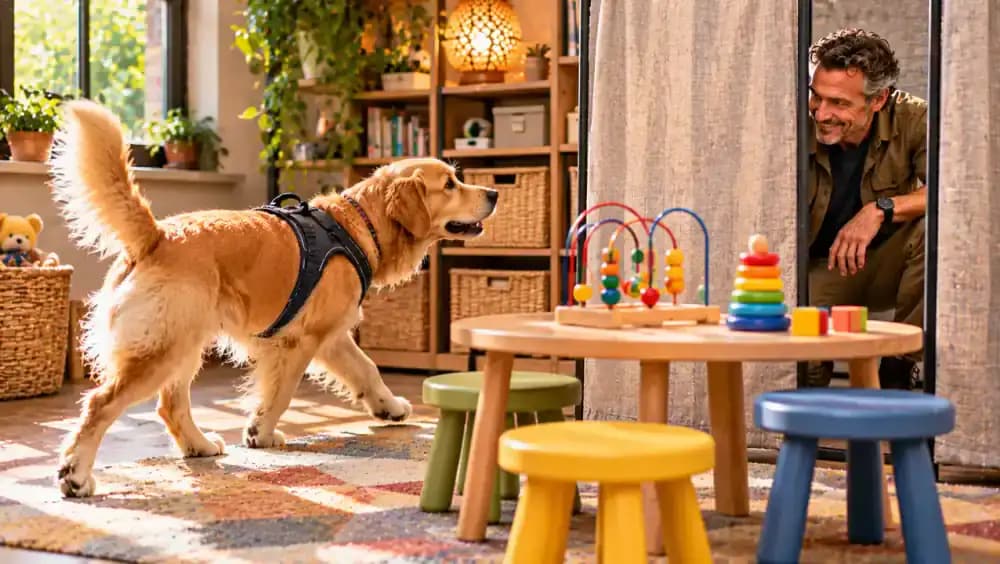
Keep the Adventure Going
On your next rainy afternoon, turn a familiar room into another enjoyable search adventure. Choose an easy hiding place, such as beside an accessible folding screen, and invite your dog to find you. Celebrate the discovery with affection or a favorite reward. Keep future challenges comfortable and fun, and share which hiding spots your dog enjoys most.
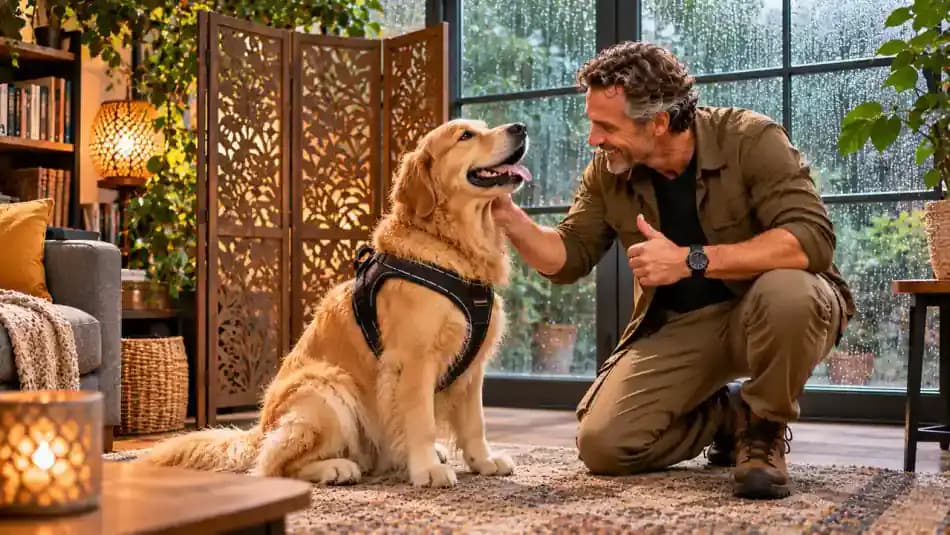
Your dog is wandering around the living room, nose to the floor, investigating every corner like there's a mystery waiting to be solved. What if you could turn that natural curiosity into a game you can play together?
Hide-and-seek with your dog is one of the easiest indoor enrichment activities you can try. It encourages your dog to use their sense of smell, pay attention to your voice, and enjoy the excitement of finding someone familiar. Best of all, you don't need special equipment, a large house, or advanced training experience.
The idea is simple: you hide somewhere safe, invite your dog to find you, and celebrate when they succeed. Start with an obvious hiding spot, such as just behind an open doorway, where your dog can watch you disappear. A helper can gently hold your dog's harness while you get into position. When you're ready, the helper releases your dog, and you call out, "Find me!"
Once your dog discovers you, offer enthusiastic praise and a small treat. That immediate reward helps make the search worthwhile and encourages another round.
As your dog becomes more confident, you can gradually introduce new hiding spots and slightly longer searches. Keep sessions short, positive, and supervised. The goal isn't to trick your dog or create a difficult puzzle. It's to make finding you an enjoyable little adventure.
Where people go wrong
Choosing a Hiding Spot That's Too Difficult. Starting behind several closed doors or hiding far from your dog can make the game confusing rather than exciting. For the first few rounds, choose a nearby location your dog can partially see. Once they understand that finding you brings praise and a reward, gradually increase the distance and make hiding spots less obvious.
Repeating the Find Me Cue Too Often. Calling 'Find me!' every few seconds can turn a simple search into a noisy, distracting experience. Give your dog time to investigate and follow their nose. If they appear unsure, offer one gentle hint or make yourself easier to locate. The goal is to encourage independent searching, not constant dependence on your voice.
Waiting Too Long to Reward a Successful Search. When your dog finds you, celebrate immediately. Delaying the reward until you've walked back into the living room can make the connection between finding you and receiving something positive less clear. Keep a few small treats with you and reward your dog at the hiding spot, along with cheerful praise and friendly attention.
Increasing the Difficulty Before Your Dog Is Ready. A successful first search doesn't mean your dog is ready to find you anywhere in the house. Moving too quickly from an obvious doorway to an unfamiliar room can cause hesitation. Build confidence with several easy successes before adding distance, changing locations, or removing the visual preview. Progress should follow your dog's comfort level.
Using Unsafe or Inaccessible Hiding Places. Squeezing into a closet, hiding behind unstable furniture, or encouraging your dog near stairs and electrical cords creates unnecessary risks. Choose open, accessible spots with clear walking paths. Avoid spaces where your dog might become trapped, slip, or knock something over. The challenge should involve finding your scent, not navigating household hazards.
Mistaking Frustration for a Lack of Interest. A dog that stops searching, wanders away, freezes, or repeatedly looks toward their owner may need an easier challenge or a break. Don't respond by calling more loudly or making the next hiding spot harder. Return to a familiar location, help your dog succeed, and finish positively. Participation should always remain voluntary.
Making Play Sessions Too Long. Even enjoyable enrichment activities can become tiring when repeated excessively. A few successful searches are often more valuable than a long session that ends with your dog losing interest. Watch for reduced enthusiasm, increased distraction, or signs of fatigue. Stop while your dog is still enjoying the activity, and save another round for later.
Questions people ask
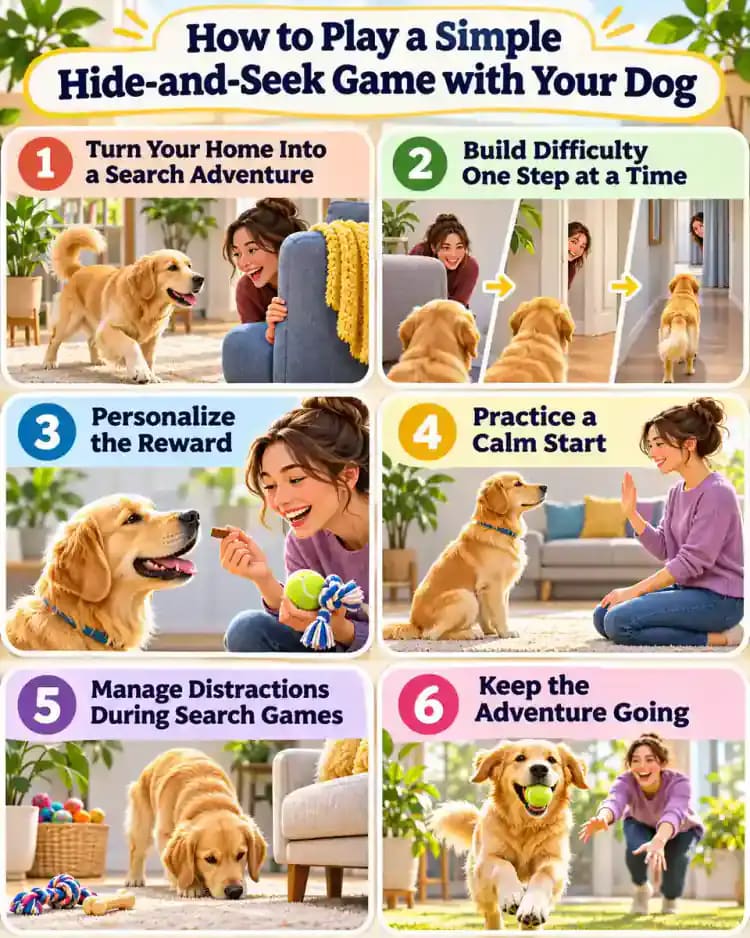
Start by letting your dog watch you move behind a nearby doorway while a helper gently holds their harness. Have the helper release your dog as you enthusiastically say, 'Find me!' Reward your dog immediately when they reach you. Repeat several easy searches before hiding completely out of sight. Keep the experience positive and progress at your dog's pace.
Fixed it?
Get one guide like this every Thursday.