How to Plan a Dog-Friendly Walking Holiday - Routes, Safety and Packing Tips
Plan a walking holiday your dog will love. Learn how to choose suitable trails, set realistic daily distances, pack essential gear, find dog-friendly accommodations, and prepare for changing weather and unexpected challenges.
What you’ll need
Tap to tick things off before you start.
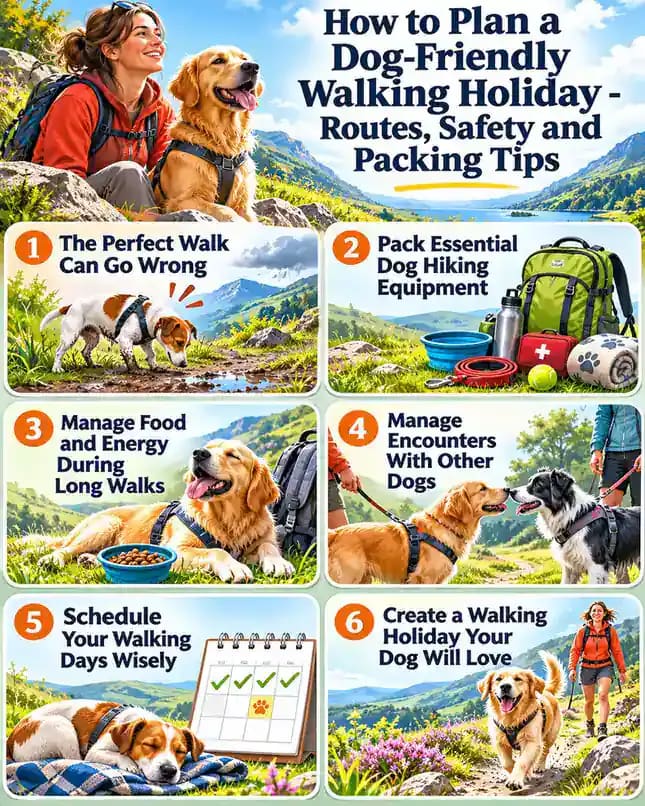
The Perfect Walk Can Go Wrong
A dog-friendly walking holiday starts with choosing routes your dog can comfortably manage. Beautiful countryside trails may hide steep climbs, sharp rocks, and exhausting distances. Before booking, investigate the terrain and consider your dog's physical abilities. A shorter, manageable walk with plenty of breaks is always better than an ambitious route that leaves your companion struggling.

Assess Your Dog's Fitness
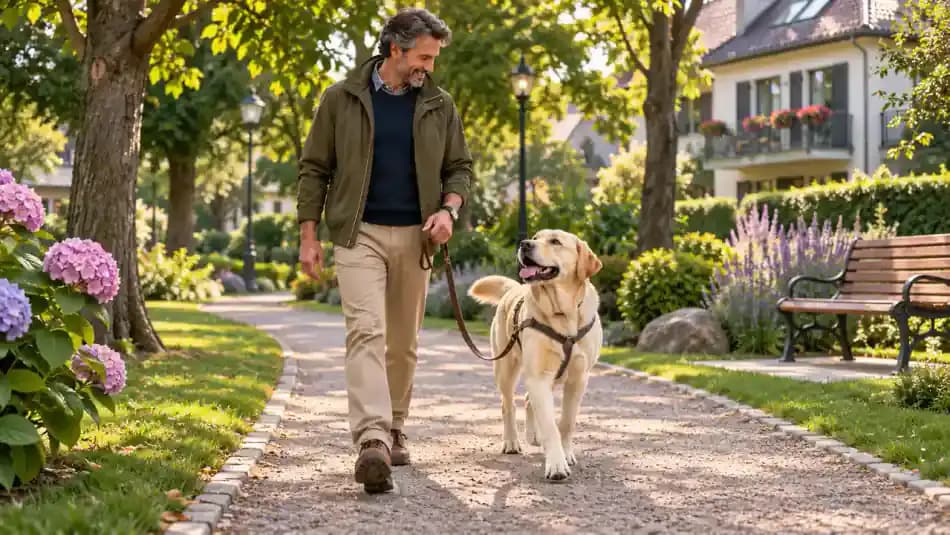
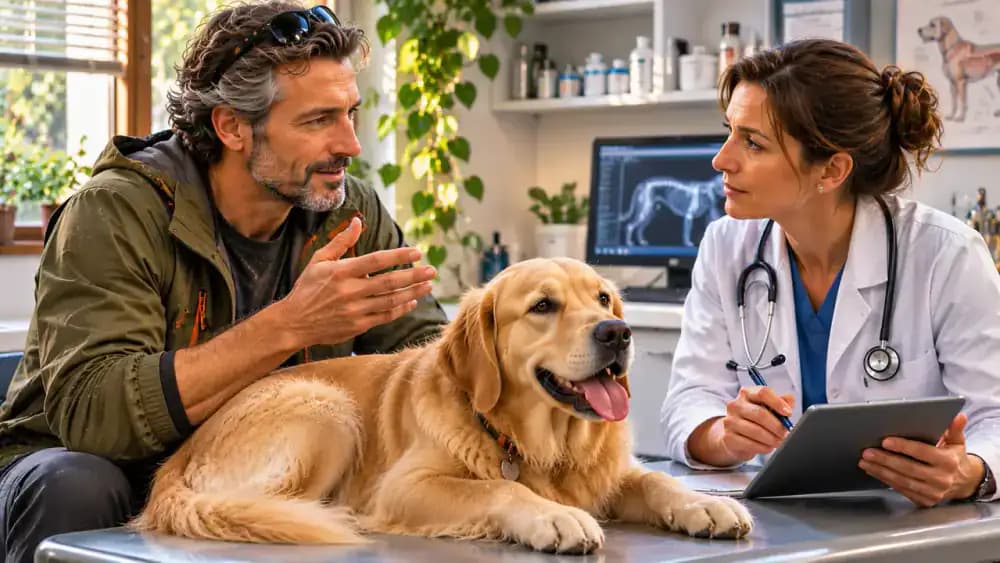
Evaluate your dog's age, fitness, health, weight, and usual activity level before choosing daily walking distances. Start with familiar neighborhood walks, then gradually introduce longer outings on varied terrain. Observe how comfortably your dog moves and recovers afterward, including the following morning. Consult your veterinarian before planning strenuous hikes if your dog has existing health concerns.
Research Trails and Access Rules
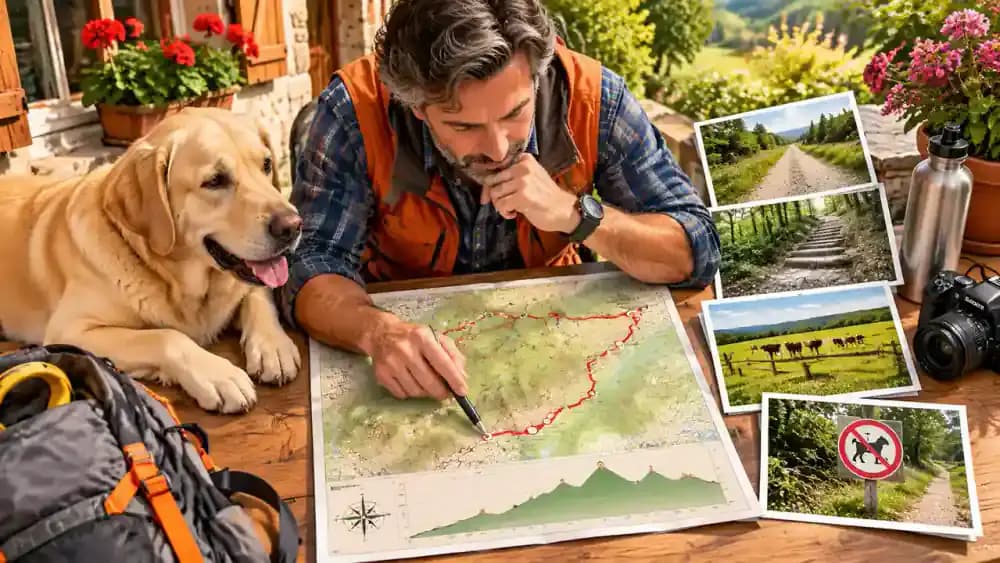
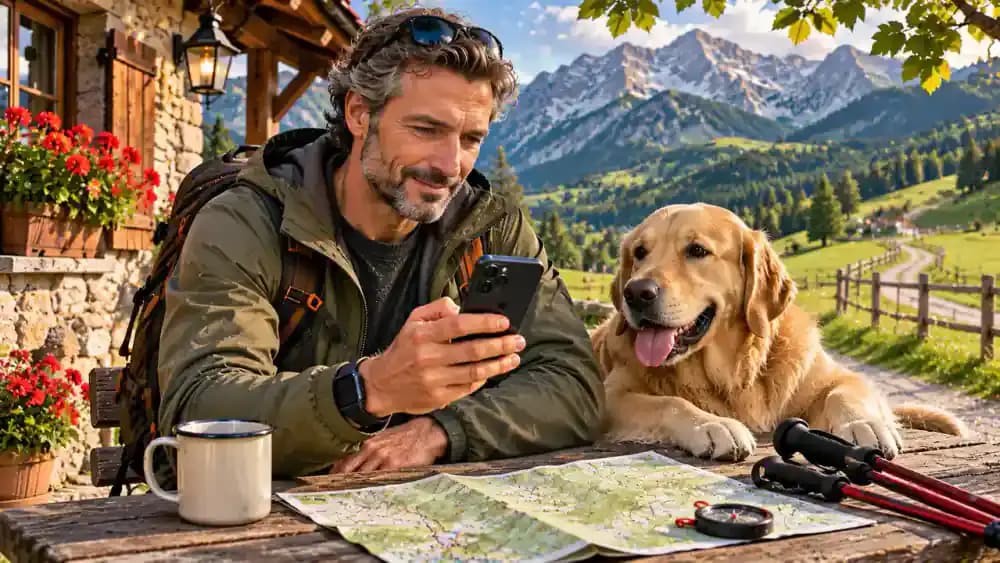
Study detailed trail maps and elevation profiles before selecting your routes. Look for steep gradients, loose gravel, slippery stone steps, narrow passages, and exposed sections. Check official park websites for dog access restrictions, seasonal closures, livestock areas, and leash requirements. Download offline maps and identify alternative paths in case conditions or access rules change unexpectedly.
Build a Realistic Daily Itinerary
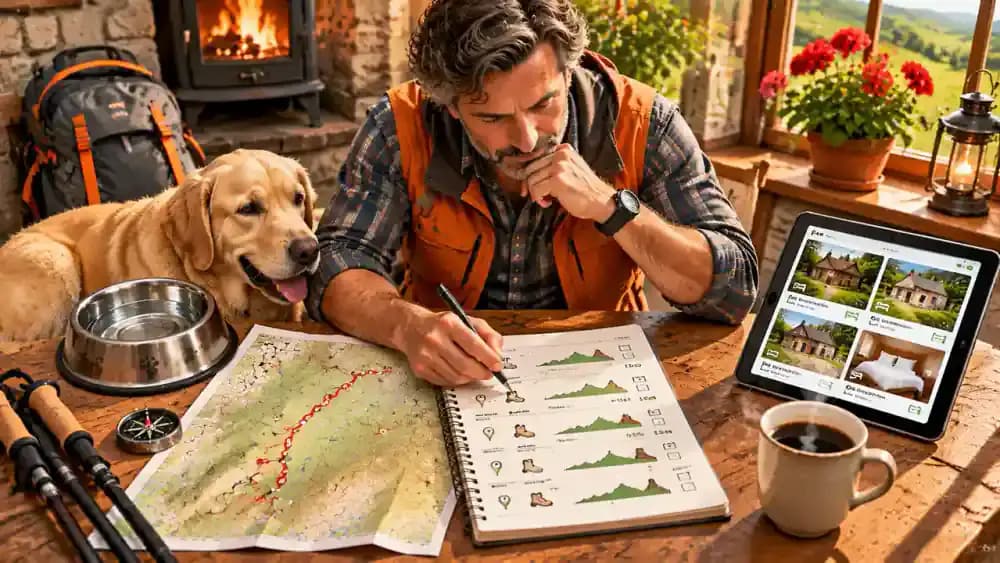
Plan daily distances around your dog's comfortable pace rather than a fixed mileage goal. Include time for sniffing, drinking, shaded rest stops, and unexpected delays. Mark reliable water refill locations and shorter alternative routes on your map. Confirm pet policies directly with accommodations, including fees and restrictions. Schedule easier days between demanding walks to allow adequate recovery.
Prepare for Changing Weather
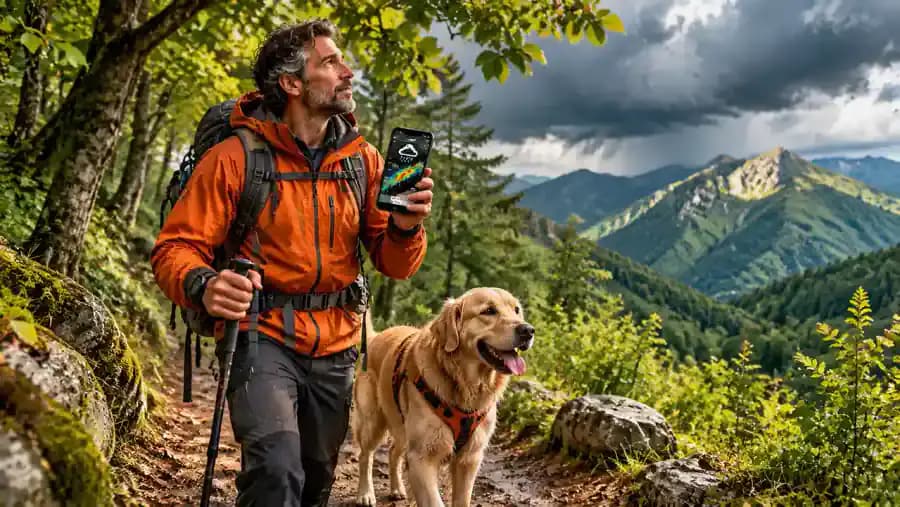
Check local weather forecasts and trail conditions before every walk. During warm weather, depart early, prioritize shaded routes, and avoid hot rocks or pavement that could injure paws. Carry sufficient drinking water and shorten outings when temperatures rise. Prepare for rain, strong winds, and sudden cold with appropriate equipment. Choose sheltered alternatives when exposed trails become unsafe.
Pack Essential Dog Hiking Equipment
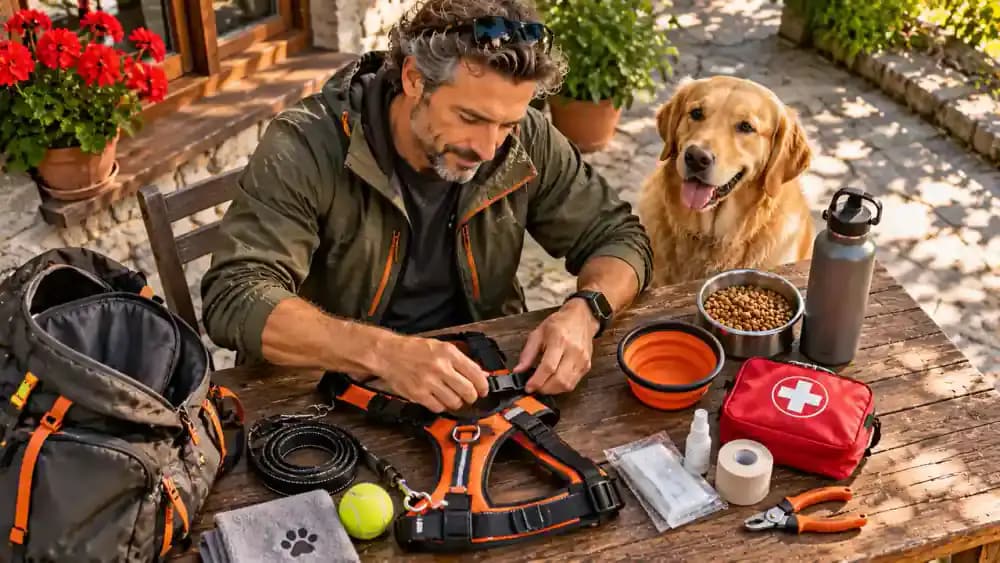
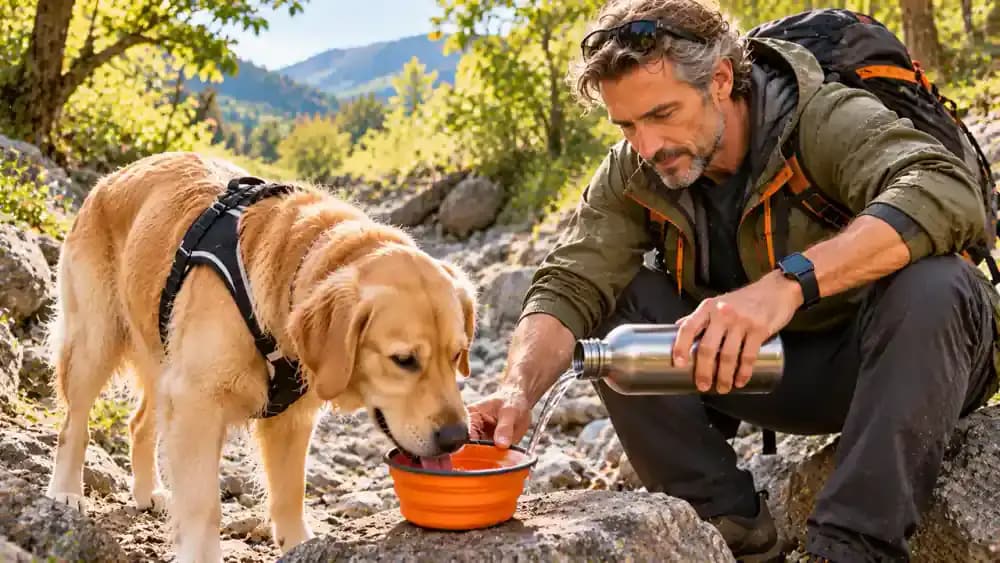
Pack a properly fitted harness, secure leash, clean drinking water, collapsible bowl, regular food, and enough waste bags for every walk. Include a canine first aid kit and protective booties if the terrain requires them. Organize supplies in your backpack for easy access, and test the harness and other equipment on familiar walks before departure.
Recognize When Your Dog Needs Help
Monitor your dog's behavior throughout each walk, especially on unfamiliar or demanding terrain. Unusual slowing, repeated stops, excessive panting, reluctance to continue, or persistent paw licking may indicate discomfort. Move to a safe, shaded area, offer fresh water, and inspect the paws. Shorten the route when necessary, and seek veterinary assistance if concerning signs persist or worsen.
Prepare for Emergencies and Enjoy the Journey
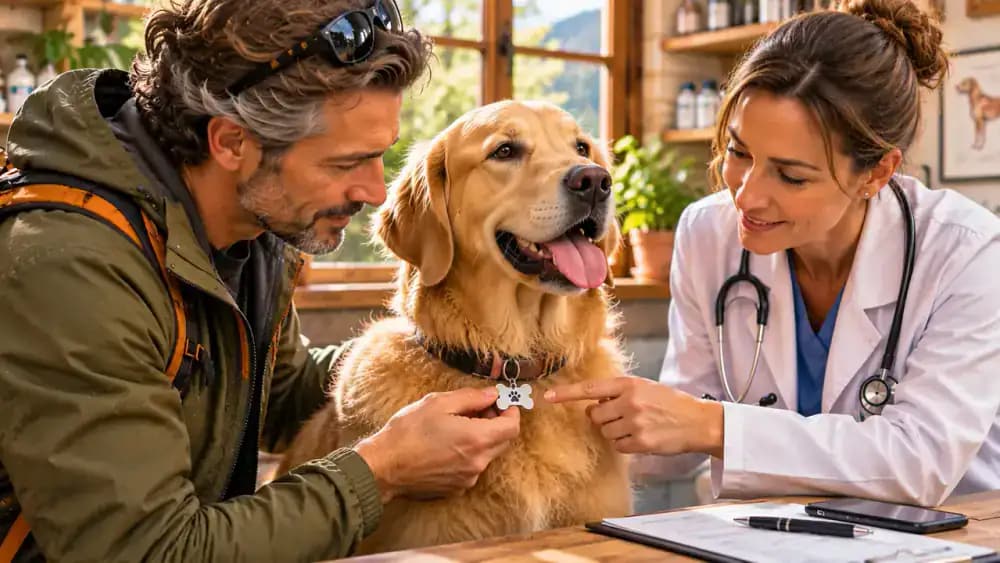
Before leaving your accommodation, confirm your dog's identification tag and microchip details are current. Save nearby veterinary contacts, identify dog-friendly emergency transportation, and review alternative exits from the trail. Check the weather, drinking water, supplies, and your dog's condition. Keep your itinerary flexible so you can return safely and enjoy another comfortable walk together.
Plan Dog-Friendly Transportation
Check pet policies for every train, bus, or ferry before booking, including ticket fees, reservations, carrier requirements, and muzzle rules. When traveling by car, secure your dog in an appropriate restraint or ventilated crate. Schedule regular stops for water, bathroom breaks, and stretching. Allow extra travel time so your dog arrives comfortable before starting the first walk.
Navigate Livestock and Wildlife Safely
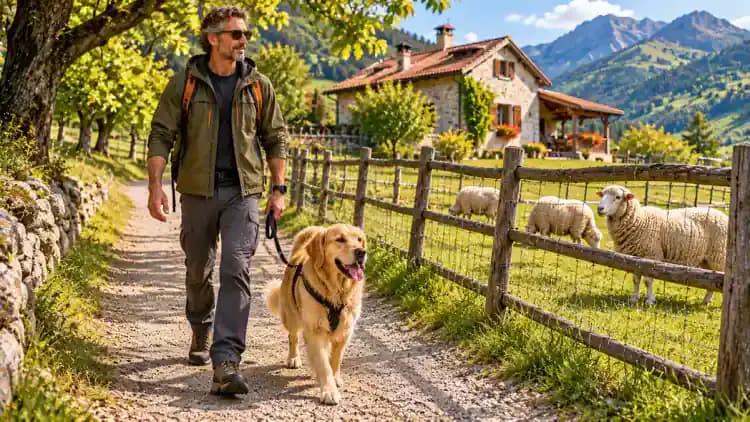
Keep your dog on a short, secure leash when approaching livestock, horses, or sensitive wildlife habitats. Stay on designated paths, maintain a generous distance from grazing animals, and never allow chasing or harassment. Follow posted restrictions around nesting areas and farmland. If animals block the route or appear agitated, turn back and choose a safer marked alternative.

Never Assume Natural Water Is Safe
Never rely solely on streams, ponds, or mapped water sources to keep your dog hydrated. Natural water may be contaminated, inaccessible, or completely dry. Avoid stagnant pools and water with visible algae, which may contain harmful toxins. Carry sufficient clean drinking water, use a portable bowl, and verify reliable refill locations before starting each route.
Manage Food and Energy During Long Walks
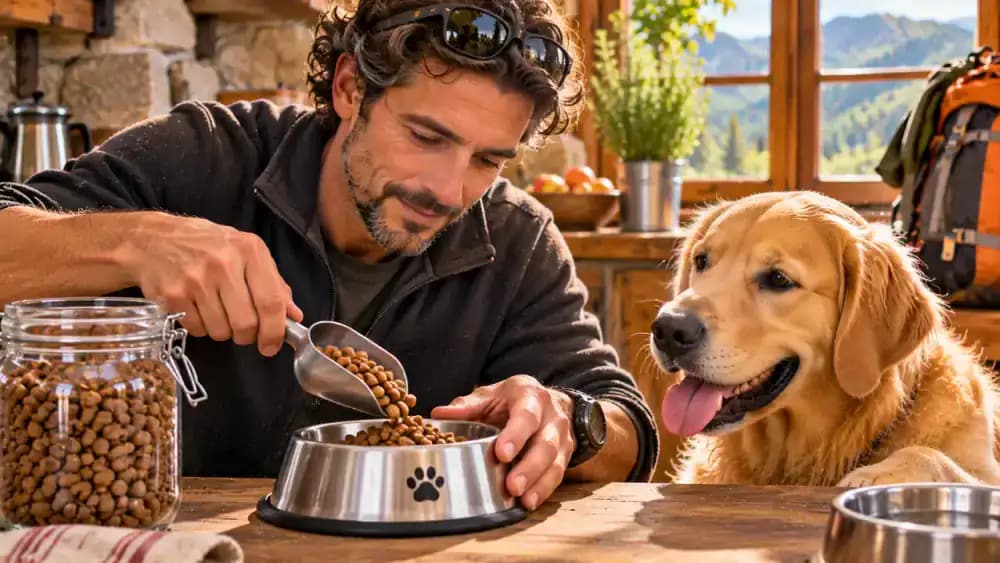
Pack your dog's regular food in sealed, measured portions for each day, with extra supplies for unexpected delays. Increased activity may affect energy needs, so discuss substantial feeding adjustments with your veterinarian. Avoid sudden dietary changes and strenuous exercise immediately around large meals. Offer small training treats when appropriate, monitor appetite, and provide quiet recovery time after walking.
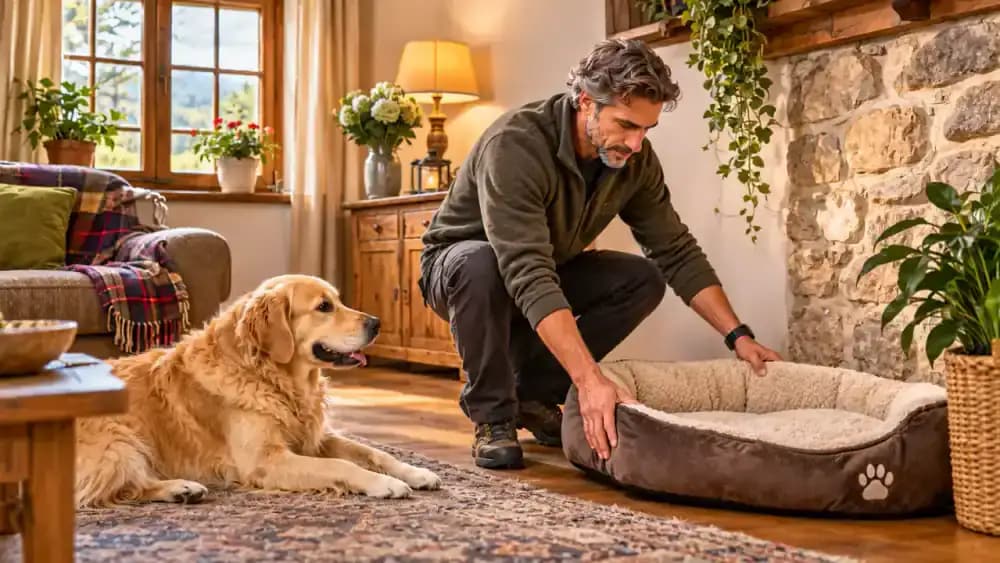
Make Overnight Stays Comfortable
Inspect dog-friendly accommodations for slippery floors, steep stairs, noisy hallways, and other unfamiliar challenges. Bring your dog's usual bed or blanket to create a comfortable sleeping area away from busy spaces. Maintain familiar feeding and bedtime routines whenever possible. Never leave your dog unattended unless permitted and appropriate. Prioritize uninterrupted rest between demanding walking days.
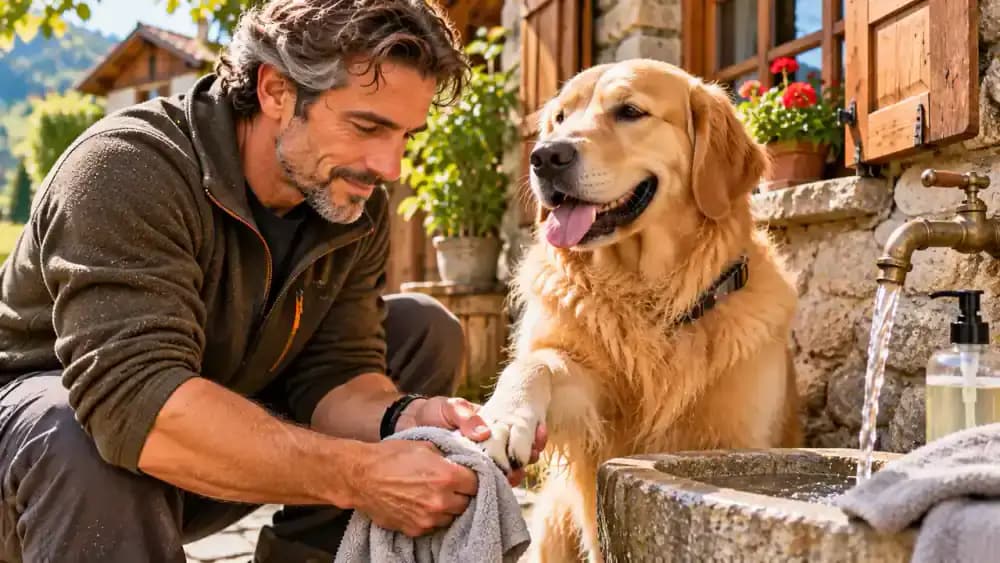
Perform Daily Paw and Coat Checks
After every walk, gently clean muddy paws and inspect between the pads for cuts, trapped stones, or irritation. Check your dog's coat and ears for ticks, burrs, and other debris, especially after crossing grassy or wooded areas. Use veterinarian-recommended parasite prevention and appropriate tick removal tools. Dry your dog thoroughly and address persistent discomfort with veterinary guidance.
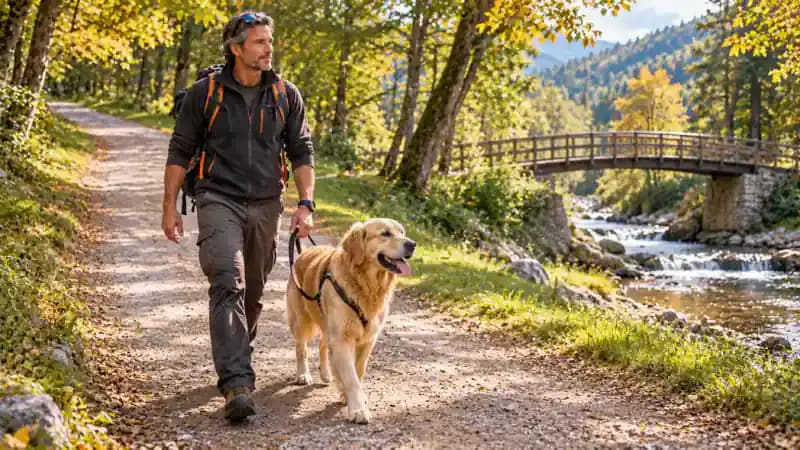
Handle Unexpected Trail Obstacles
Approach unfamiliar bridges, stiles, ladders, and river crossings cautiously, even when the route appears straightforward on a map. Check surfaces for slippery boards, unstable stones, and dangerous drops. Never force your dog across an obstacle or attempt an unsafe lift. Avoid fast-flowing water and uncertain crossings. When conditions exceed your dog's abilities, choose a safer alternative or turn back.
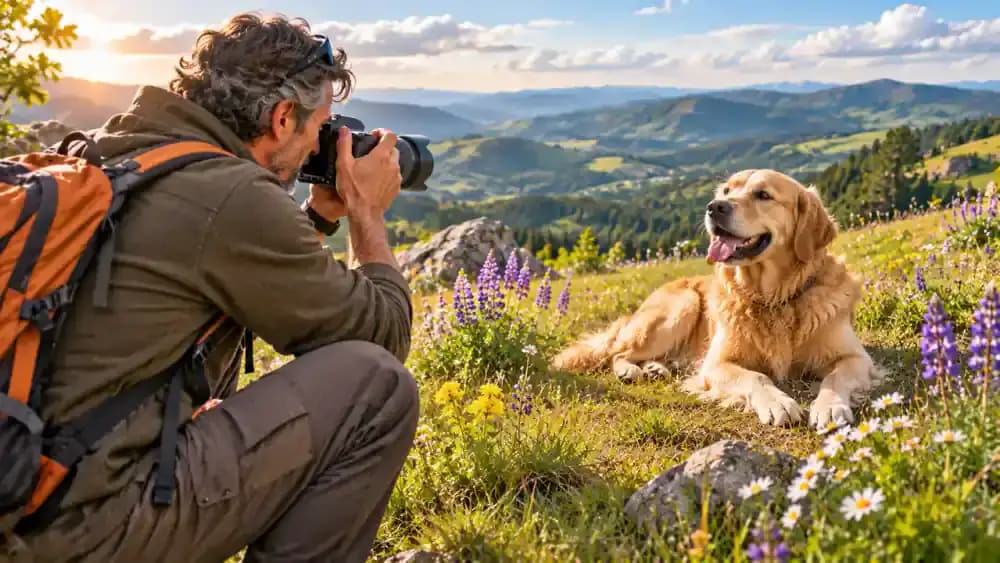
Measure Success in Shared Experiences
Measure your walking holiday by your dog's comfort and enjoyment rather than miles completed. Look for relaxed body language, comfortable movement, and curiosity about the surroundings. Pause at scenic viewpoints, take photographs, and allow time for exploring. Adjust plans whenever necessary, remembering that a peaceful, manageable walk creates better memories than an exhausting achievement.
Practice Essential Trail Commands
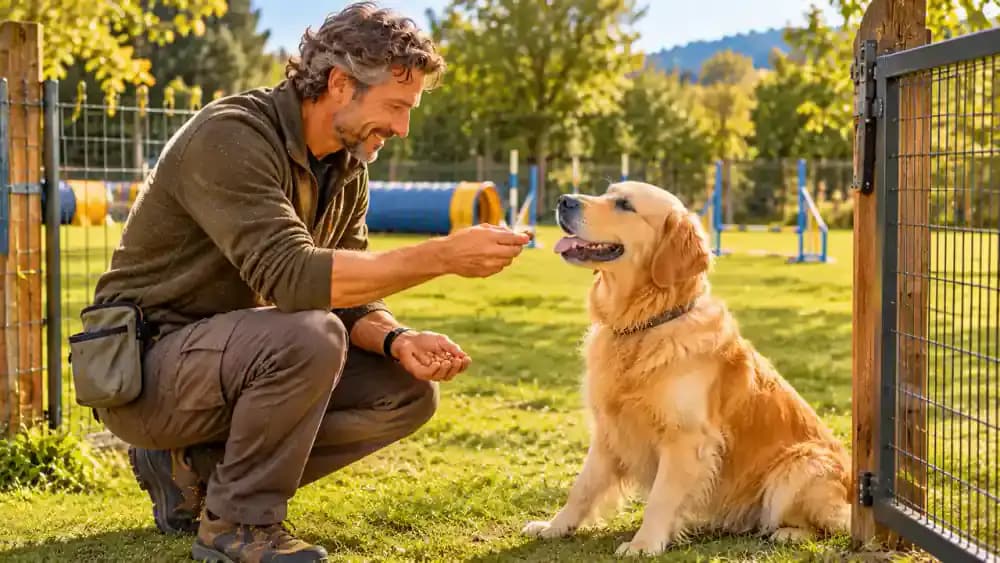
Practice reliable recall, waiting at gates, and leaving unfamiliar objects alone before your holiday. Begin in a secure training area, rewarding successful responses with treats or praise. Gradually introduce mild distractions while maintaining control. Use a leash wherever required, especially near livestock and wildlife. Even well-trained dogs need physical restraint when unfamiliar trail hazards appear.
Manage Encounters With Other Dogs
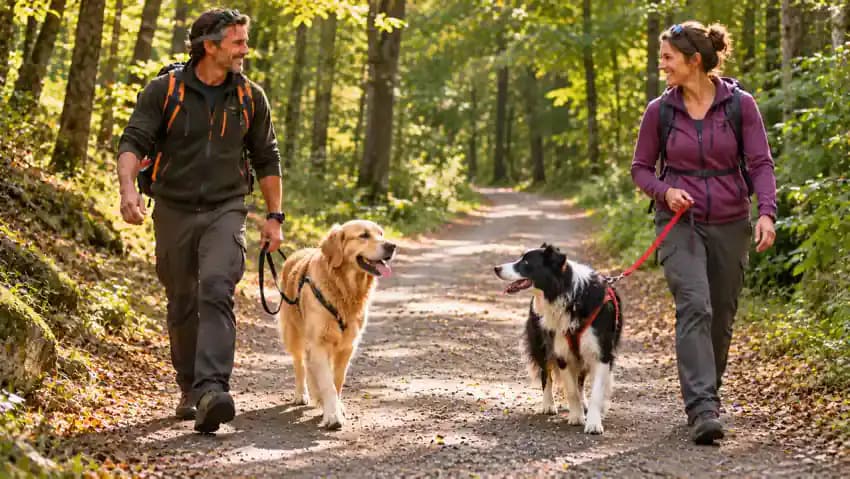
Watch your dog's body language when approaching other walkers and dogs, particularly on narrow trails. Create distance early by moving into a safe, wider area when possible. Keep your leash controlled and avoid allowing greetings without permission. Reward calm attention as others pass. If your dog appears uncomfortable, increase separation rather than forcing an interaction.
Identify Hidden Environmental Hazards
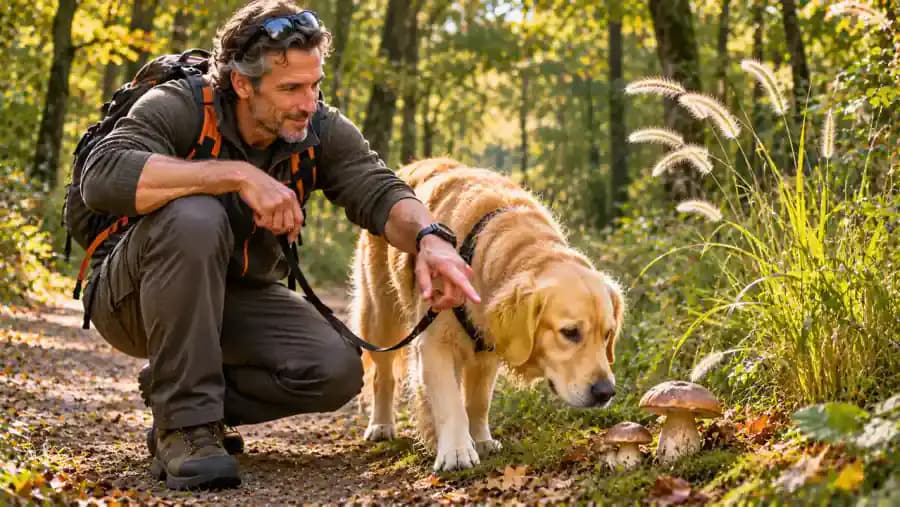
Research seasonal hazards specific to your destination before exploring unfamiliar trails. Watch for foxtail grass seeds that can become embedded in fur, potentially toxic mushrooms or plants, and sharp shoreline debris. Prevent your dog from eating unknown vegetation or drinking saltwater. Check local park guidance, stay on established paths, and inspect your dog after potentially hazardous areas.
Adapt Adventures to Your Dog's Needs
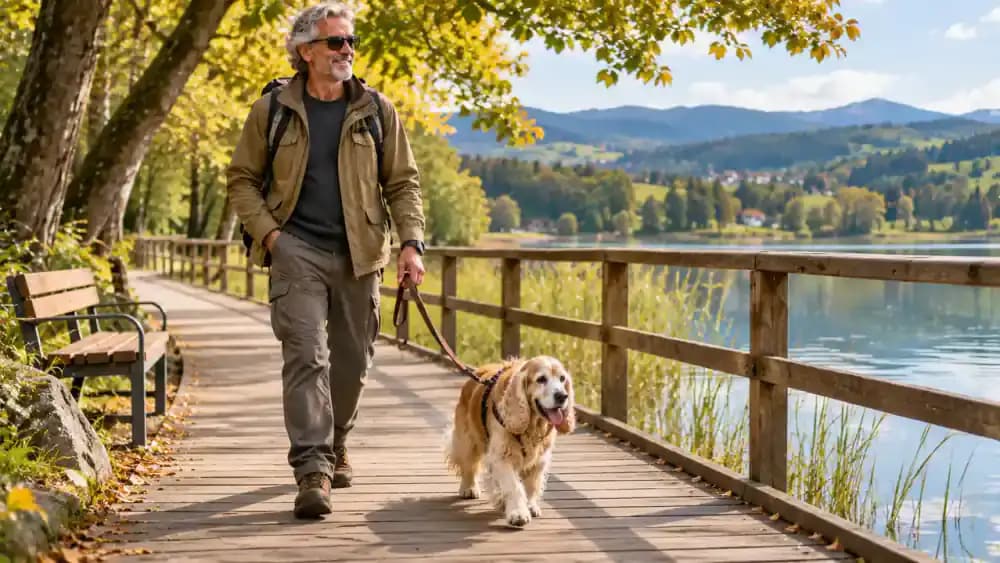
Choose routes that accommodate your individual dog's age, size, mobility, and tolerance for weather. Older dogs may prefer level paths with frequent rest opportunities, while smaller dogs can struggle with high steps and rough obstacles. Thick-coated and short-muzzled dogs may be especially vulnerable in warm conditions. Prioritize comfortable terrain, moderate temperatures, and flexible walking distances.
Prepare for Areas Without Phone Coverage
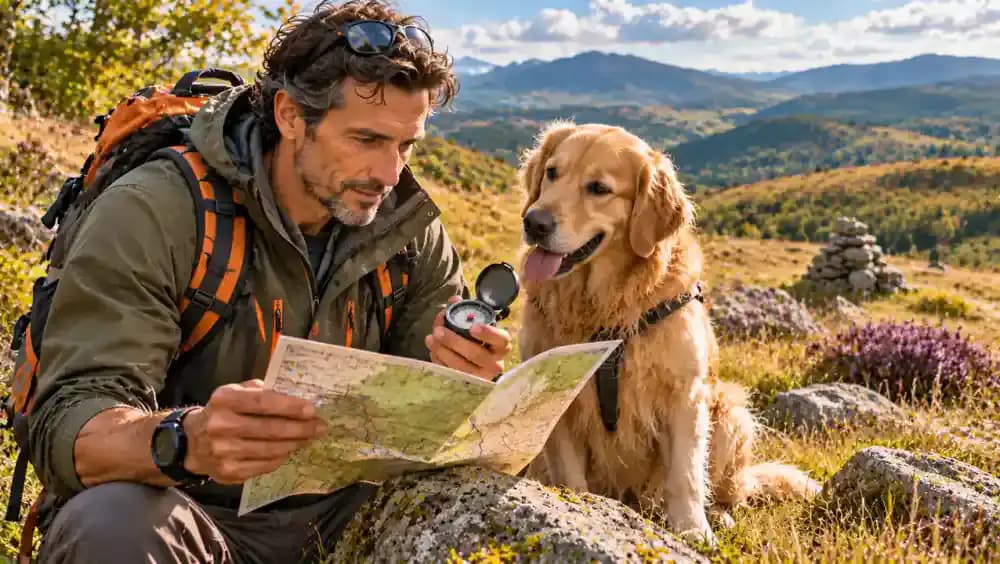
Download offline trail maps before entering remote areas where cellular coverage may disappear. Carry a fully charged phone, portable power bank, and compass, and understand how to use them. Share your planned route and expected return time with someone reliable. Learn local emergency procedures and carry a paper map as backup when electronic navigation becomes unavailable.
Budget for Unexpected Holiday Expenses
Calculate the full cost of your walking holiday, including accommodation pet fees, transportation tickets, parking, and trail permits. Set aside an emergency reserve for unexpected veterinary expenses, alternative transportation, or additional overnight stays. Review your pet insurance policy for coverage limits and geographic exclusions. Confirm charges directly with providers before booking to avoid costly surprises.
Test Your Plans With a Short Holiday
Before committing to a demanding multi-day adventure, arrange a short overnight trip with your dog. Choose an easy walking route and comfortable dog-friendly accommodation. Observe how your companion handles transportation, unfamiliar sleeping arrangements, and activity on consecutive mornings. Note any difficulties with equipment, feeding, or recovery, then adjust your longer holiday itinerary based on what you learn.
Schedule Your Walking Days Wisely
Organize each walking day around available daylight, terrain difficulty, and your dog's comfortable pace. Schedule challenging sections early rather than approaching steep climbs near sunset. Calculate walking times conservatively, allowing for sniffing, water breaks, and unexpected delays. Include a generous daylight buffer and identify shorter exits so you can finish safely without rushing your dog.
Practice Good Dog Etiquette in Public
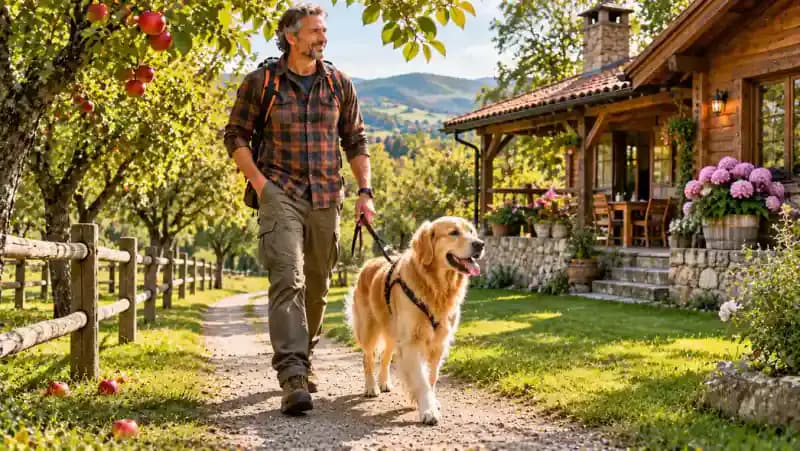
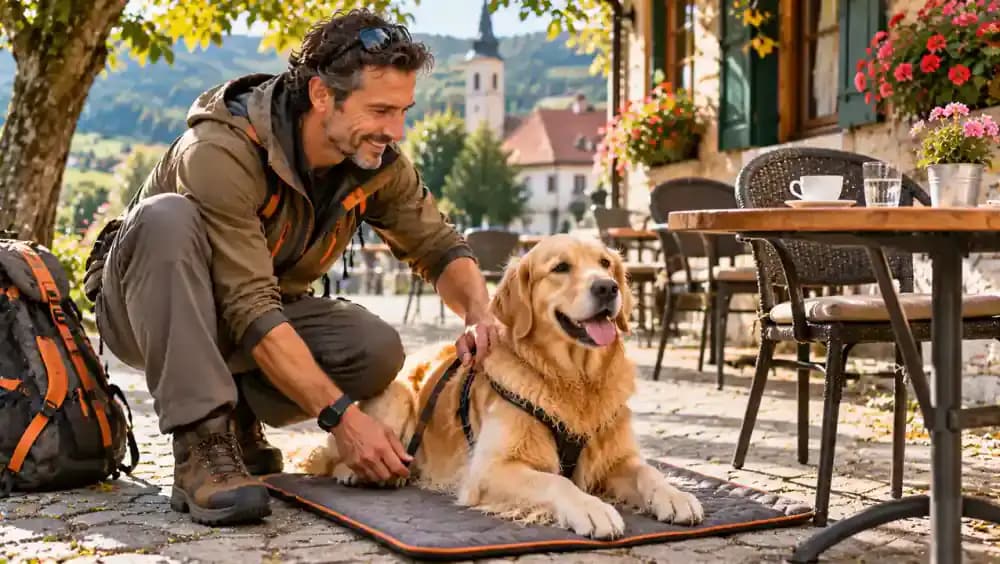
Keep your dog on a controlled leash when passing cyclists, children, busy entrances, and outdoor dining areas. Check cafe pet policies before entering, and never assume dogs are welcome indoors. Carry a compact mat to provide a familiar resting place during breaks. Clean up promptly, respect other visitors' personal space, and reward calm behavior in crowded locations.
Understand How Terrain Affects Your Dog
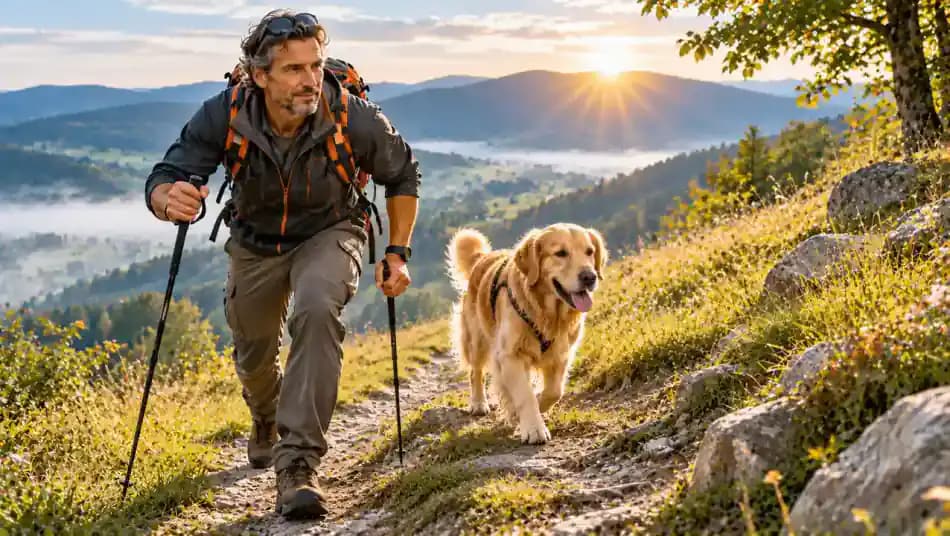
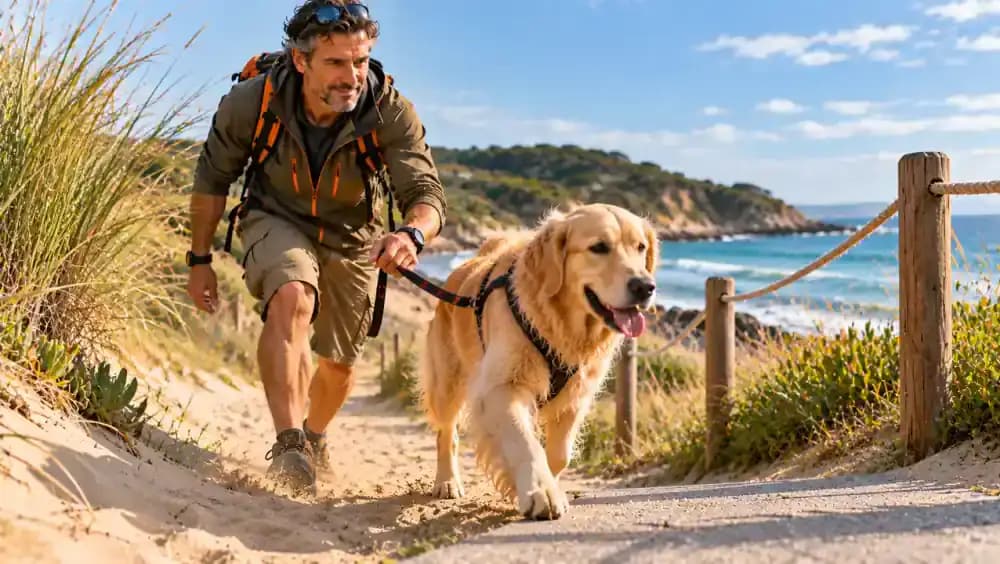
Consider how different surfaces affect your dog's effort and comfort, not just the total walking distance. Long downhill slopes can place additional strain on joints, while deep sand requires more energy than firm tracks. Alternate demanding terrain with easier sections, allow frequent breaks, and observe your dog's movement after resting. Shorten future walks if discomfort develops.
Check International Pet Travel Requirements
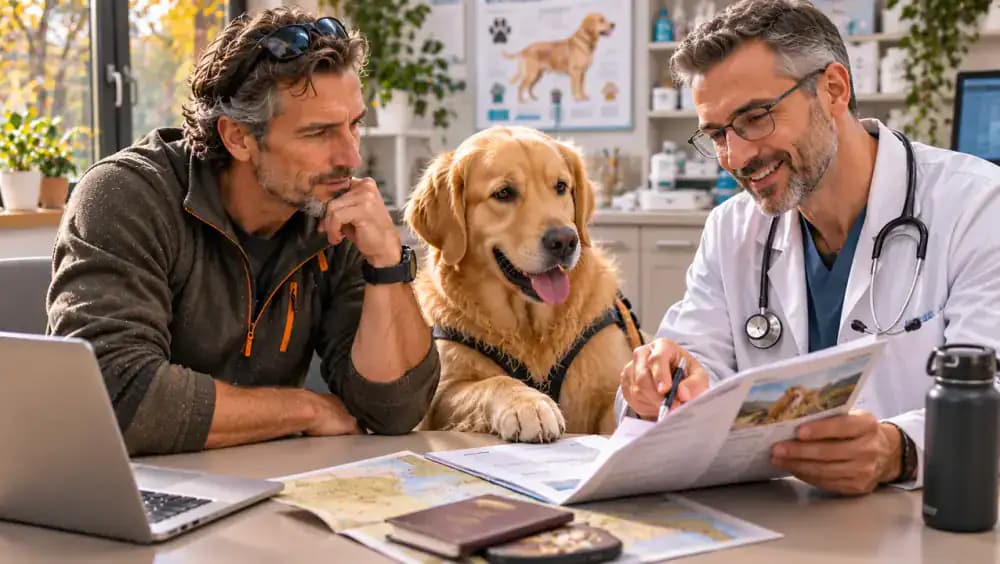
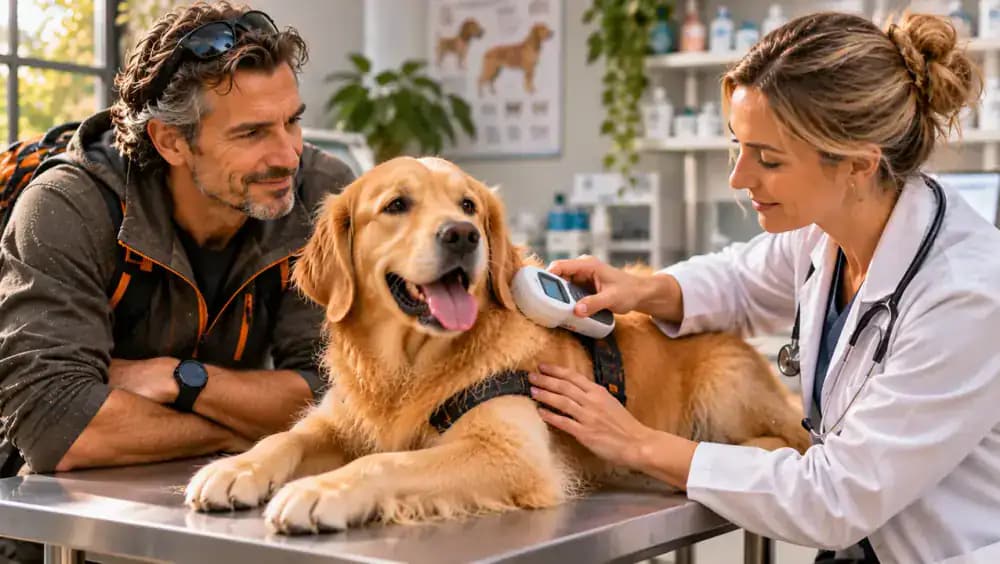
Research official pet entry requirements well before crossing international borders with your dog. Depending on your destination, you may need microchip identification, rabies vaccination records, health certificates, or additional parasite treatments. Check requirements for every country visited and for returning home. Consult government veterinary authorities, arrange necessary appointments early, and allow time for mandatory waiting periods.
Leave No Trace With Your Dog
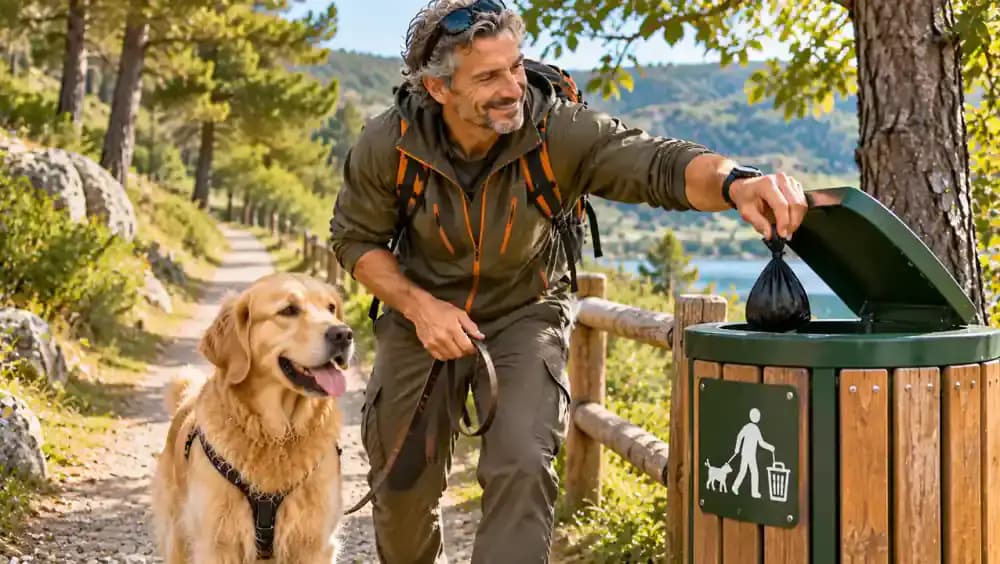
Carry enough waste bags for every walk, including remote trails without disposal facilities. Collect your dog's waste promptly and store sealed bags in a dedicated odor-resistant container until you reach an appropriate bin. Never abandon bags beside paths, even when labeled biodegradable. Follow local disposal rules, respect protected habitats, and leave natural areas clean for wildlife and other visitors.
Know When to Take a Rest Day
Build rest days into your itinerary and remain willing to cancel a planned hike when your dog needs recovery. Watch for persistent soreness, reluctance to move, unusual tiredness, digestive upset, or disrupted sleep. Provide a comfortable resting environment and contact your veterinarian about concerning or persistent symptoms. Flexible accommodation bookings make it easier to prioritize your dog's well-being.
Create a Walking Holiday Your Dog Will Love
Bring your planning together by choosing manageable routes, packing reliable equipment, and checking conditions before every departure. Pay attention to your dog's comfort, allow time for exploration, and adjust distances whenever necessary. Enjoy scenic viewpoints without rushing toward mileage targets. A successful walking holiday ends with your dog comfortable, content, and ready to share another adventure.

Picture a quiet countryside morning, with golden sunlight spilling across rolling hills, birds calling from the hedgerows, and your dog happily exploring the trail beside you. A walking holiday together sounds like the perfect escape: fresh air, beautiful scenery, and uninterrupted time with your four-legged companion.
But even the most picturesque trail can become a problem when it is not suited to your dog. Steep climbs, rocky surfaces, unexpectedly long distances, livestock encounters, and trails that prohibit dogs can quickly turn a relaxing adventure into a stressful experience. Add changing weather, limited drinking water, or accommodations that are less dog-friendly than advertised, and a little preparation becomes essential.
The secret to a successful dog-friendly walking holiday is planning around your dog's abilities rather than choosing the most impressive route. Age, fitness, health, previous hiking experience, and recovery time all influence how much walking is reasonable, especially over several consecutive days.
This guide will help you evaluate potential routes, understand trail restrictions, choose realistic daily distances, prepare for seasonal conditions, and pack the equipment your dog actually needs. You'll also learn how to recognize warning signs during a walk, identify reliable rest stops, and prepare backup plans when circumstances change.
With the right approach, your holiday can be comfortable, safe, and memorable for both of you - without needing to cover extraordinary distances.
Where people go wrong
Choosing Routes Based on Human Fitness Instead of Your Dog's Abilities. A trail that feels manageable to an experienced walker may be exhausting for a dog, particularly one that is young, older, inexperienced, or accustomed to short neighborhood walks. Evaluate your dog's usual activity level, terrain experience, and recovery after exercise. Build your itinerary around comfortable, repeatable effort rather than the maximum distance you personally can cover.
Planning Long Walks on Consecutive Days Without Recovery Time. Completing one demanding hike does not guarantee that your dog can repeat it the following morning. Consecutive walking days can increase fatigue and paw wear, especially on unfamiliar surfaces. Start with modest distances, alternate longer outings with easier days, and keep flexible rest periods. Watch how your dog moves and behaves after each walk before deciding on the next day's route.
Assuming Every Scenic Trail Allows Dogs. Popular walking routes may cross protected habitats, farmland, grazing areas, or private property where dogs are restricted or prohibited. Rules can also change seasonally during nesting or livestock periods. Check official trail information before departure, confirm leash requirements, and identify legal alternatives. Never assume that a route is dog-friendly simply because another traveler posted photographs with a dog.
Underestimating Heat, Exposure, and Water Requirements. A pleasant temperature at the trailhead does not guarantee comfortable conditions on exposed hillsides or sun-heated surfaces. Dogs may struggle to cool themselves during sustained activity, particularly when shade and drinking water are limited. Check the forecast, choose cooler departure times, carry sufficient water, and avoid strenuous routes during dangerous heat. Stop immediately if concerning signs develop.
Relying on Streams and Lakes as Drinking Water Sources. Natural water sources can be dry, inaccessible, or contaminated by microorganisms, agricultural runoff, or harmful algal blooms. Even clear water is not automatically safe. Carry clean drinking water and research reliable refill points in advance. If you use a natural source, appropriate treatment may be necessary, and some hazards cannot be removed by ordinary filtration.
Using New Equipment for the First Time on Holiday. A brand-new harness, unfamiliar boots, or a different leash may seem perfect until several miles of walking reveal rubbing, slipping, or discomfort. Test equipment during shorter local outings before traveling. Check harness fit during movement, introduce paw protection gradually, and make sure your dog tolerates every essential item before depending on it in remote terrain.
Ignoring Early Signs That Your Dog Needs to Stop. Slowing down, repeatedly lying down, unusual reluctance to continue, excessive panting, or changes in gait should never be dismissed as stubbornness. Stop in a safe location, offer appropriate rest and water, and reassess the situation. Shorten or abandon the walk when needed. Collapse, severe weakness, or suspected heatstroke requires immediate veterinary assistance.
Leaving Emergency Transport and Accommodation Details Unchecked. An unexpected trail closure, sudden storm, or exhausted dog can leave you stranded if your only plan is to finish walking. Research road crossings, nearby veterinary facilities, transportation options, and accommodation policies before traveling. Confirm that taxis or other transport providers accept dogs. Keep offline contact details and enough flexibility to change your itinerary without unnecessary pressure.
Questions people ask
There is no universal daily distance suitable for every dog. Age, fitness, breed characteristics, health, terrain, temperature, and previous walking experience all matter. Use distances your dog already completes comfortably as your starting point, accounting for recovery between days. Plan shorter alternatives and regular breaks rather than committing to an ambitious mileage target that cannot easily be adjusted.
Fixed it?
Get one guide like this every Thursday.