How to Pack a Practical Travel Kit for Your Dog or Cat
Pack a practical dog or cat travel kit with food, water, identification, restraint gear, medication, cleanup supplies, first aid basics, and other essentials.
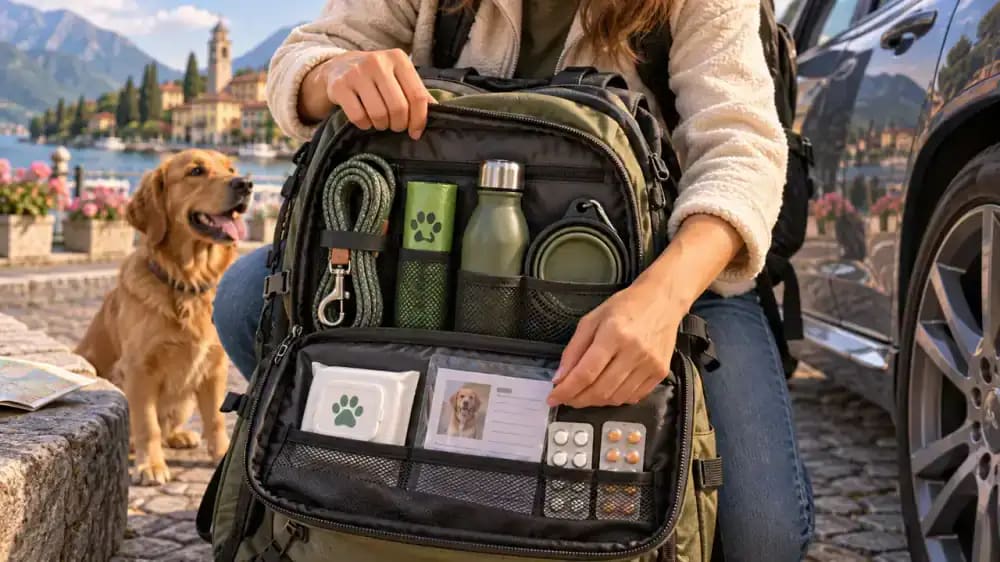
What you’ll need
Tap to tick things off before you start.
Start With the Trip Plan
Think through the journey from your pet's perspective before filling the bag. Consider driving or travel time, expected weather, overnight stops, feeding times, bathroom needs, and sleeping arrangements. Build the kit around ordinary situations you expect to handle rather than filling it with bulky products that are unlikely to be used.

Choose One Dedicated Bag
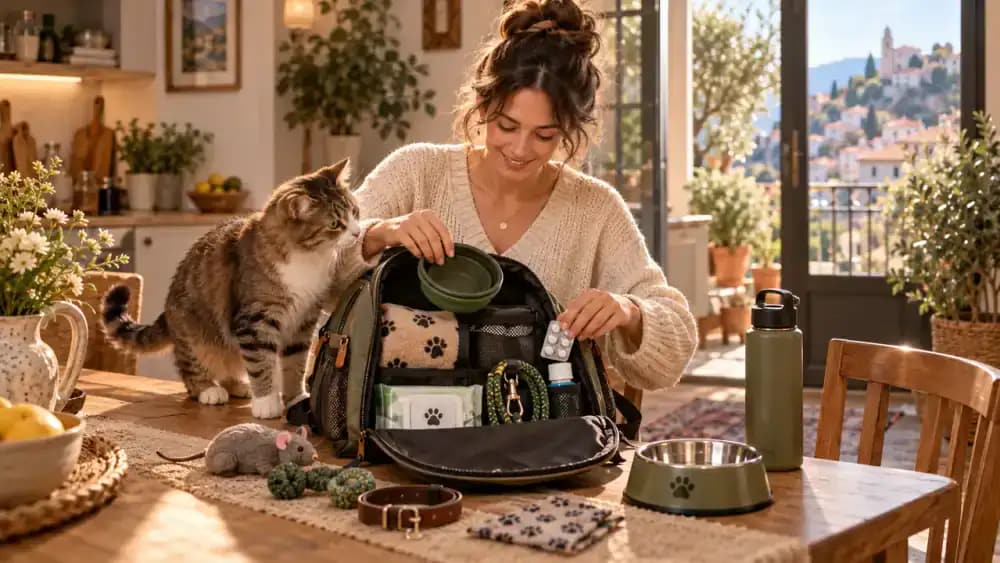
Keep pet travel supplies together in one sturdy zippered tote, backpack, or small duffel. Choose something comfortable to carry and easy to wipe clean. A dedicated bag simplifies departure because bowls, leashes, wipes, medication, records, and other essentials are not scattered throughout different rooms, suitcases, or vehicle compartments.
Pack Current Identification
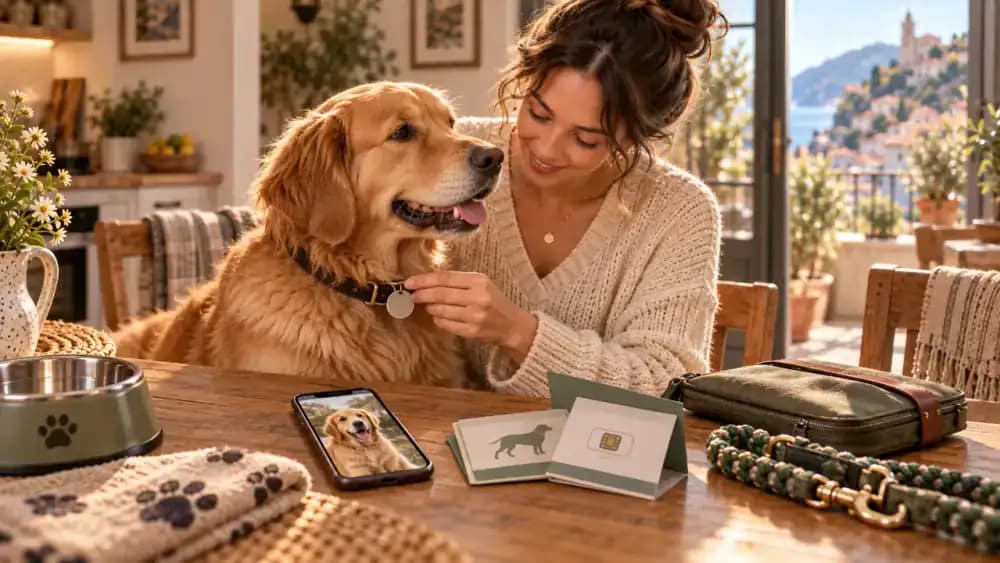
Check your pet's identification before leaving. Make sure the collar tag includes a current phone number, keep a recent pet photo on your phone, and have microchip registration information available. These details can make it much easier for a shelter, veterinary clinic, or helpful stranger to contact you after an unexpected separation.
Add a Spare Collar or Harness
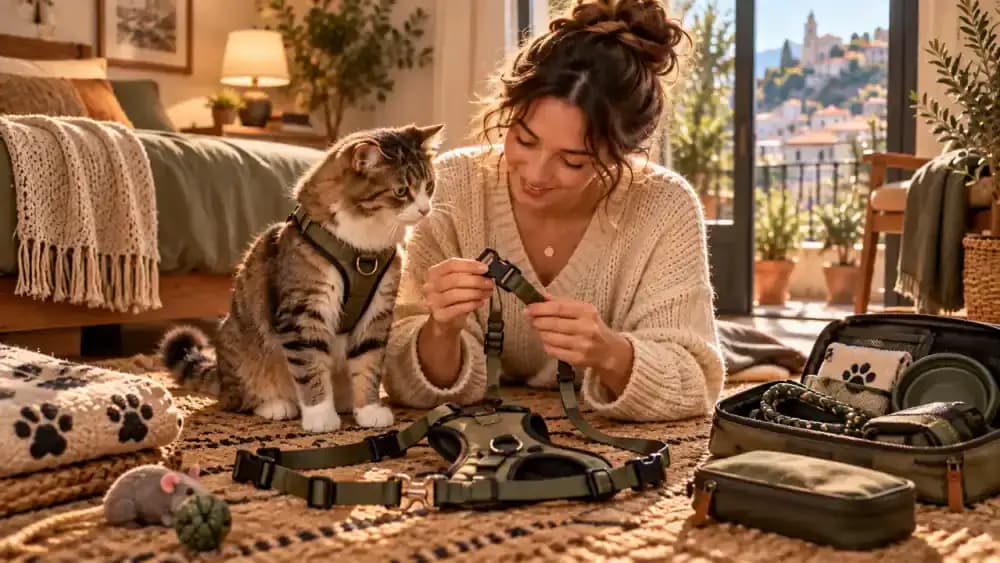
Bring a backup collar or harness that already fits comfortably and securely. Travel gear can become wet, misplaced, or damaged, and a broken buckle can create an immediate problem. Inspect the spare before departure for worn stitching or unreliable hardware, and avoid depending on brand-new equipment your pet has never previously worn.
Bring the Regular Lead
Pack the leash your dog normally uses because familiar equipment is easier to handle in unfamiliar surroundings. A standard fixed-length leash offers useful control around traffic, hotel entrances, parking areas, other animals, and crowded stops. Avoid making a retractable leash your only option when quick, predictable control may become especially important.

Carry a Backup Lead
A spare leash occupies little room but can be extremely useful if the main leash breaks or disappears. It can also provide temporary control while luggage is being moved. Choose a strong leash with a dependable clip and familiar length rather than relying on improvised rope or cord that may fail or cause injury.

Measure Enough Food
Bring enough of your pet's regular food for the entire journey and add a modest extra amount in case plans change. Keeping the normal diet helps avoid unnecessary dietary changes during an already unfamiliar experience. Pre-measuring meals into labeled bags or containers also makes portions easier to manage when your usual feeding routine is disrupted.

Protect Food From Moisture
Seal dry food inside a durable reusable bag or container to protect it from moisture, insects, and odors. For wet food, pack unopened portions and plan how opened food will remain safely chilled when necessary. Do not leave perishable pet food sitting in a warm parked vehicle or unrefrigerated for extended periods.
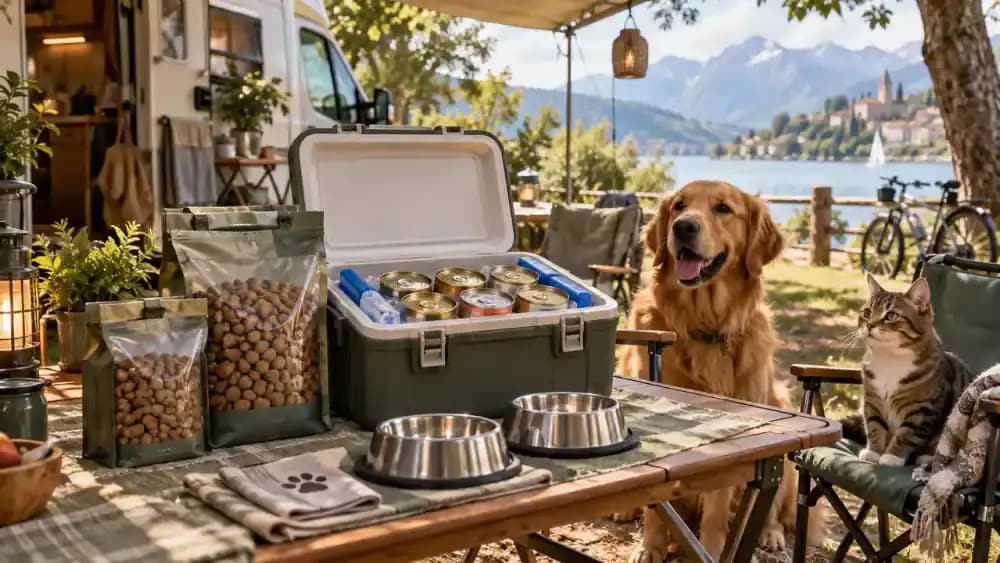
Pack Familiar Treats
Bring a limited supply of treats your pet already eats comfortably. Familiar rewards can help with carrier entry, calm behavior, hotel routines, or brief training sessions in new surroundings. Travel is not the ideal time to introduce rich or unfamiliar snacks, so favor simple treats that are easy to store and do not create excessive crumbs.
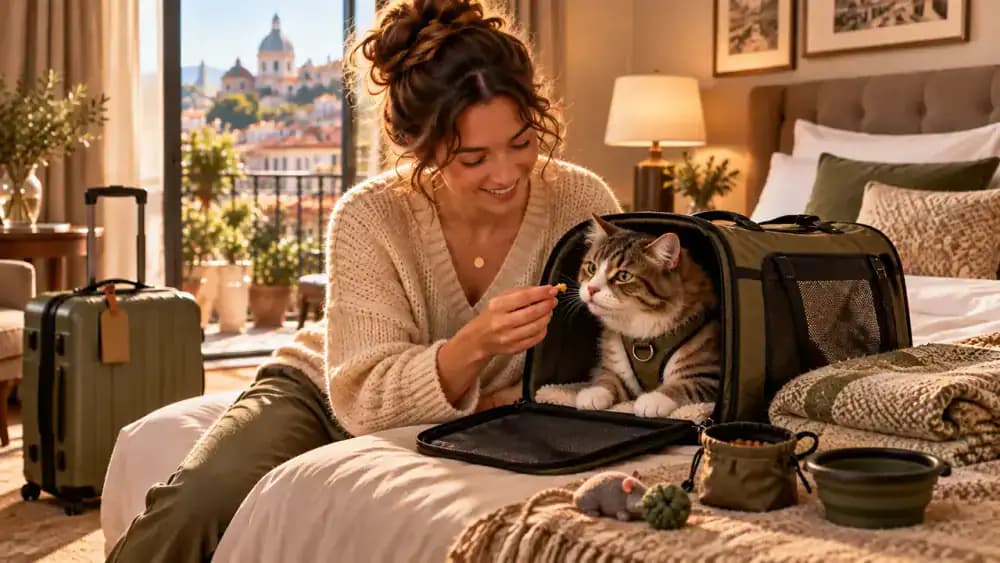
Use Travel Bowls
Pack separate washable bowls for food and water. Collapsible bowls are compact, while rigid bowls may be more familiar to some animals. Let your pet try the bowls before the trip so you know they will use them. During travel, rinse them regularly to remove food residue, saliva, dirt, and other buildup.

Bring More Water Than Expected
Carry drinking water instead of assuming a suitable source will always be nearby. Extra water is especially important during long drives, hot weather, hikes, or remote travel. Offer reasonable opportunities to drink throughout the journey rather than waiting for obvious thirst, but do not force large amounts when a pet is anxious, nauseated, or heavily panting.
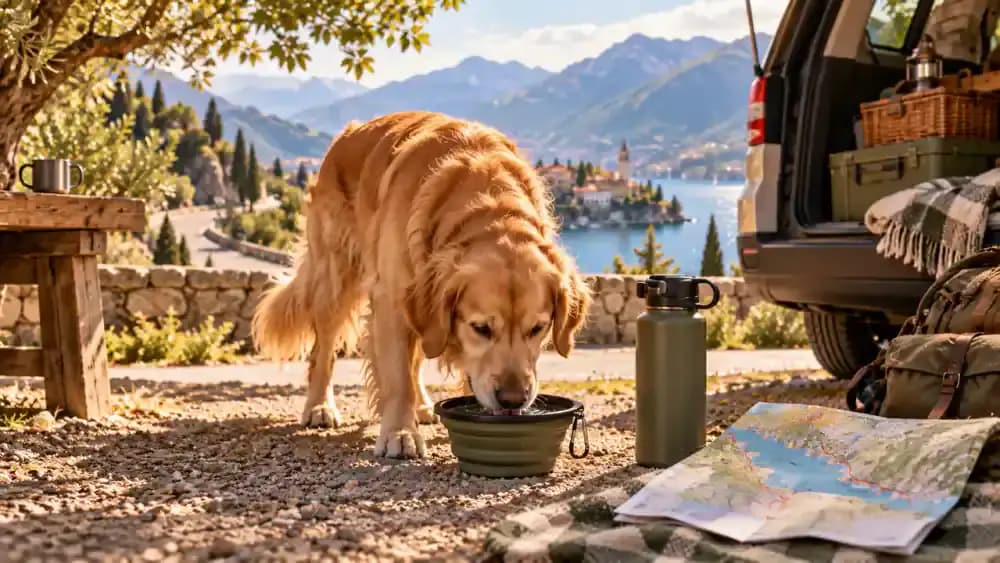
Add Waste Cleanup Supplies
Pack more dog waste bags than you expect to use. For cats staying overnight, bring appropriate litter supplies, a scoop, and disposal bags. Paper towels are useful for spills and accidents. These ordinary items are easy to forget at home but become essential when you suddenly need to clean a carrier, room, or vehicle.

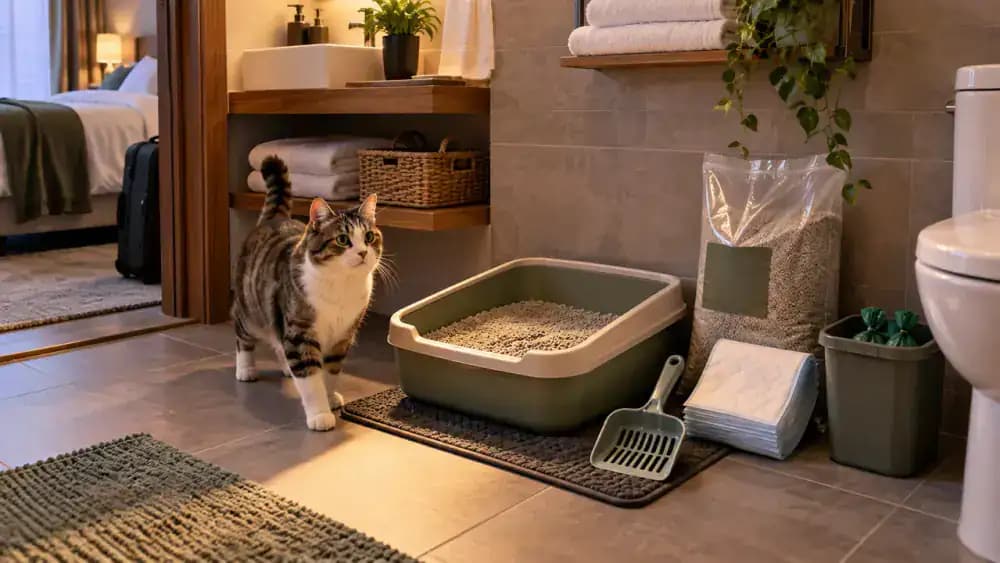
Create a Cat Litter Plan
For cat travel, decide in advance where and how litter access will work. A compact tray, familiar litter, scoop, and absorbent liner can simplify overnight stays. Position the tray somewhere stable and private, away from food and water, and never open the carrier outdoors merely to offer a litter break in an unsecured location.
Pack Cleaning Wipes Carefully
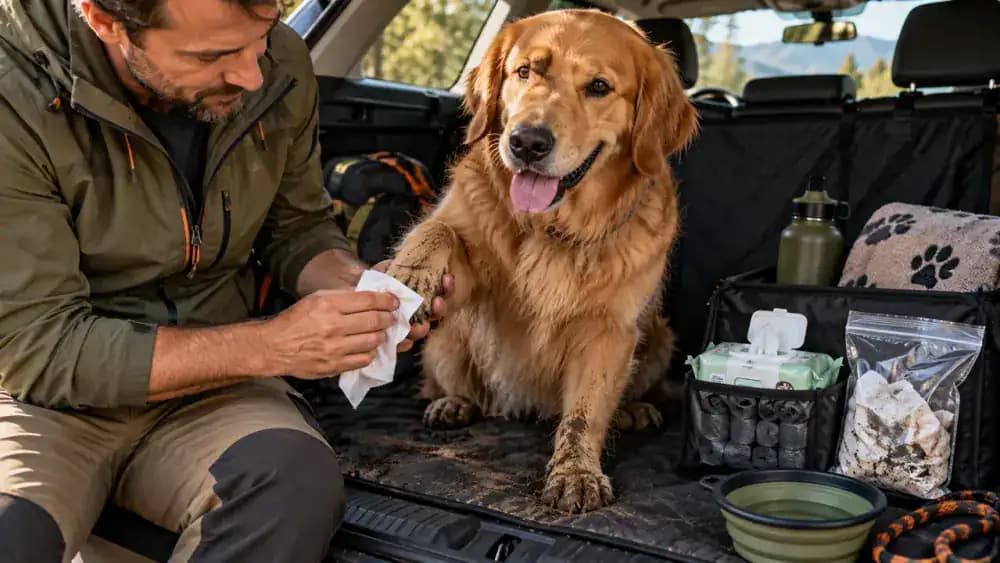
Pet-safe wipes can handle muddy paws, drool, small messes, and dirty carrier surfaces. Unscented products made for animals are a practical choice when available. Do not use household disinfecting wipes directly on your pet's skin or paws. Carry sealable bags as well, so dirty wipes, bedding, or waste can remain contained until disposal.
Bring a Small Towel
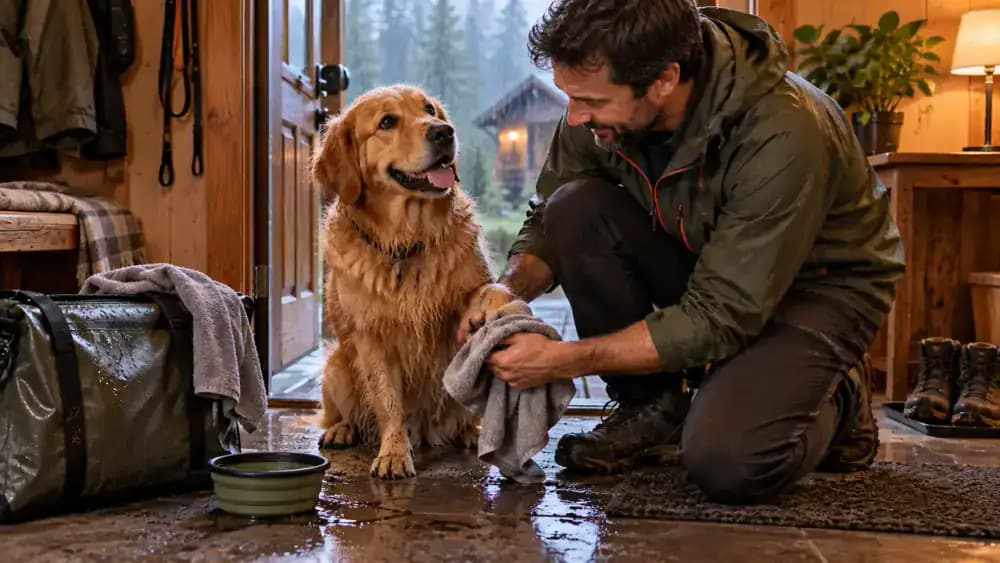
Pack a lightweight older towel you do not mind staining. It can dry paws after rain, protect flooring, cushion part of a carrier, or absorb spilled water. Keep it somewhere accessible rather than buried at the bottom of the bag. Once wet or dirty, store it separately from food, medication, and clean supplies.
Pack Familiar Bedding
Bring a compact blanket, mat, or bed cover that carries a familiar scent from home. It can make a carrier, hotel, or guest room feel more recognizable. Avoid oversized bedding that consumes most of the bag. Choose something washable, foldable, and in good condition without loose threads, exposed stuffing, or damaged fabric.
Include a Favorite Toy
One or two familiar toys can provide predictable activity during downtime. Select durable, quiet items that are easy to pack and difficult to lose under furniture. Cats may enjoy a familiar small plush or wand, while dogs might prefer a trusted chew or ball. There is rarely a practical reason to bring an entire toy collection.

Carry Routine Medication
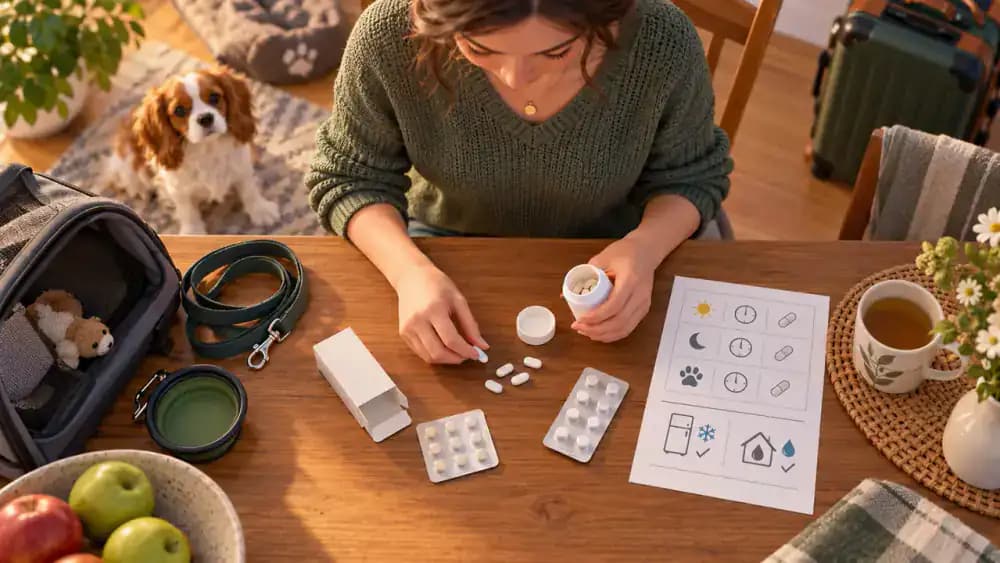
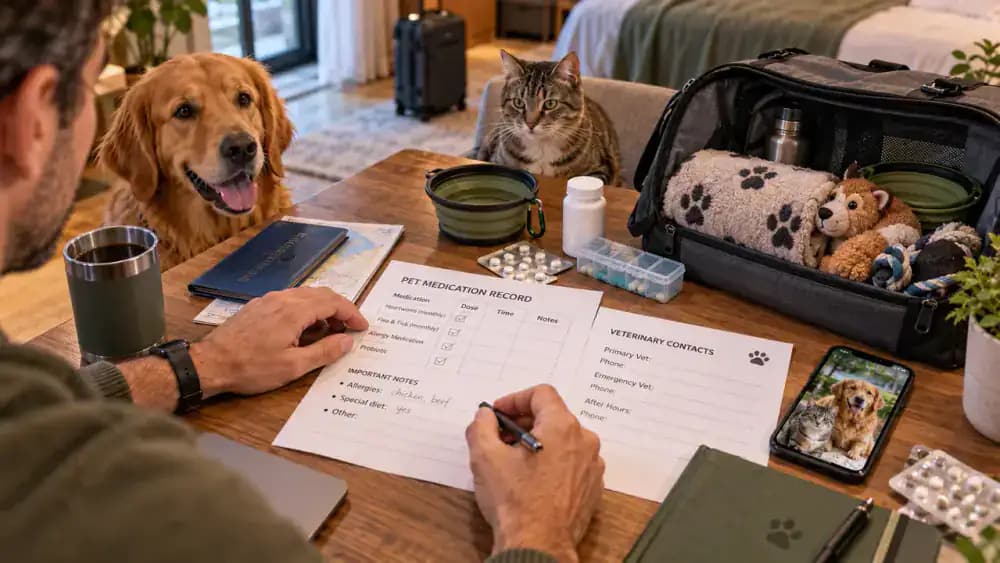
Bring enough prescribed medication for the full journey, with a reasonable buffer when practical. Keep medicines in their original labeled packaging and follow the required storage instructions. Maintain an accessible dosing schedule so disrupted travel routines do not cause forgotten doses. Avoid moving tablets into unidentified containers that could create confusion during an emergency.
Prepare a Medication Record
Create a simple written record listing medication names, strengths, doses, and usual timing. Include your regular veterinarian's contact information along with known medical conditions or allergies. A paper version provides useful backup if your phone loses power, lacks service, or is unavailable when a clinic needs accurate information quickly.
Build a Basic First Aid Pouch
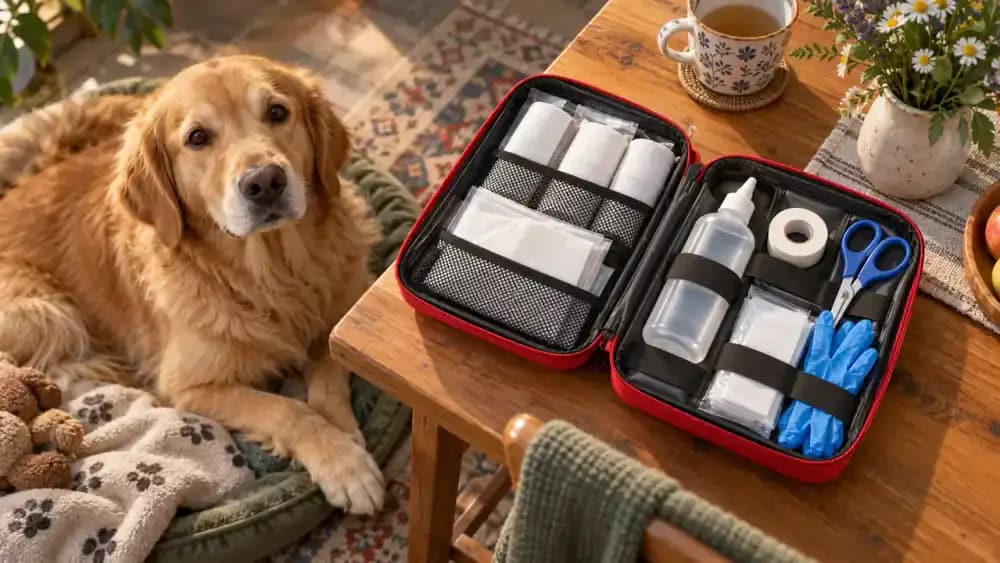
Keep a small organized pouch for basic first aid needs until professional care is available. Practical items include gauze, nonstick pads, adhesive tape, saline for rinsing, blunt-tip scissors, and disposable gloves. Resist overloading the pouch, and never give human medications to your pet unless a veterinarian has specifically instructed you to do so.
Know the Nearest Veterinary Options
Save contact information for veterinary clinics near your destination and useful points along the route. You do not need a huge directory. Focus on practical options and confirm their opening hours and emergency coverage. Knowing where you could go reduces unnecessary searching if your pet suddenly needs professional attention far from your regular clinic.

Organize Vaccination Documents
Bring vaccination records or accessible digital copies when your destination, accommodation, transportation provider, event, or local rules require them. Store these records alongside identification and veterinary information rather than underneath food or bedding. Confirm requirements before departure so the documents you need are ready instead of buried in email during check-in.

Check Travel Rules Early
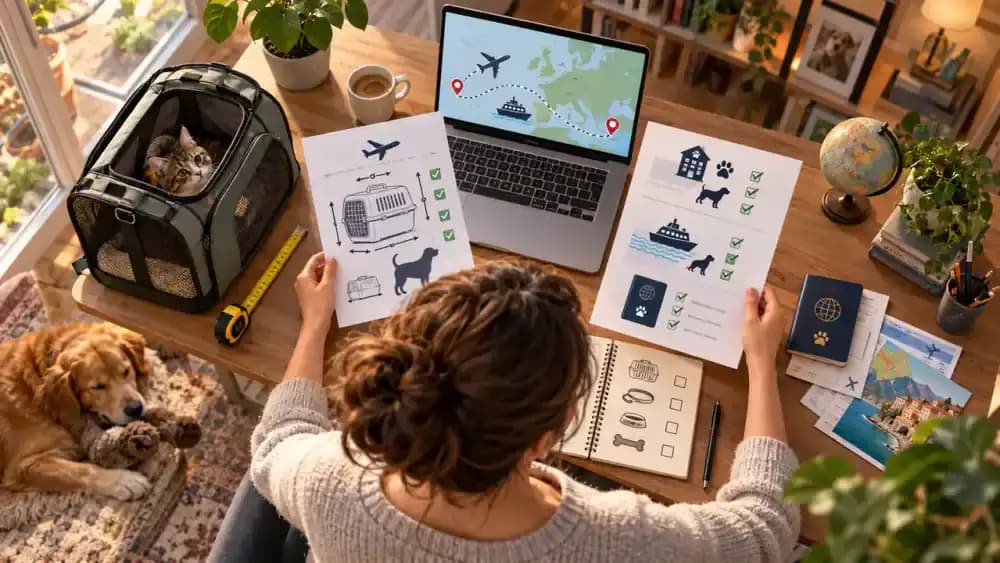
Review the rules for every relevant airline, train, ferry, hotel, campground, or destination well before travel day. Verify carrier dimensions, required documents, vaccination policies, reservation rules, and any restrictions that may apply. Missing paperwork cannot be fixed by packing extra supplies, so settle administrative requirements before finalizing the physical travel kit.
Use a Secure Carrier
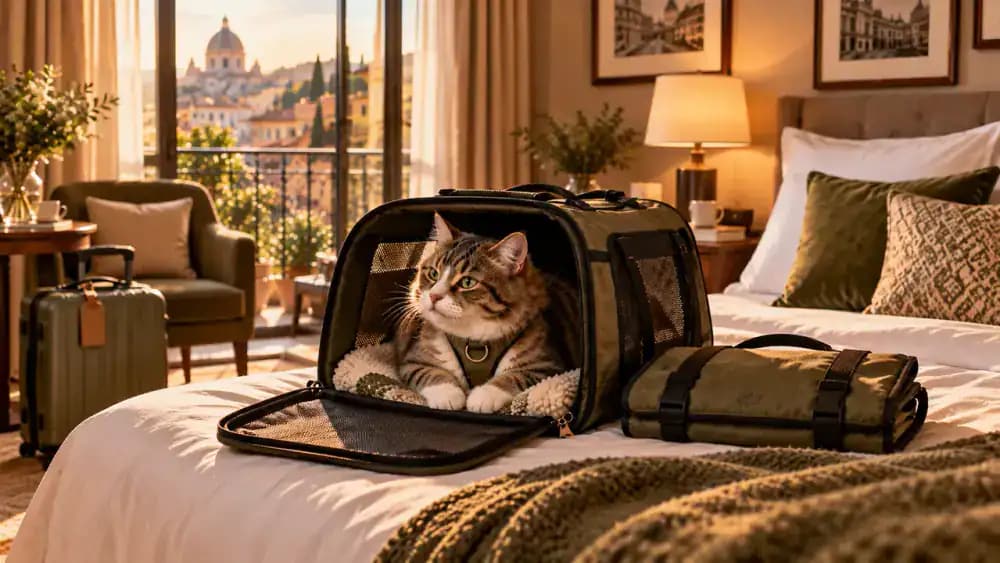
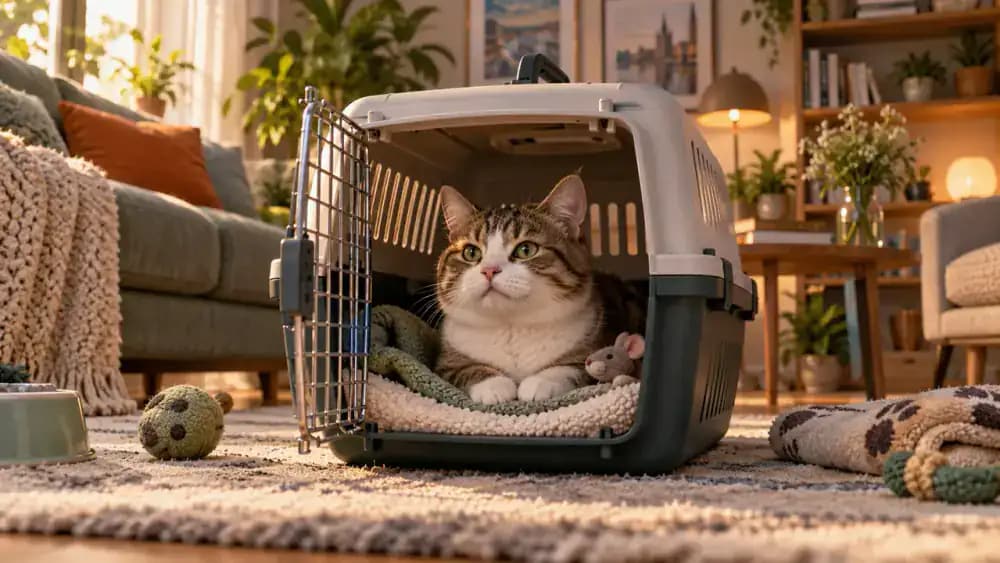
For cats and smaller dogs, choose a secure, ventilated carrier that fits properly and closes reliably. Add an absorbent liner and familiar bedding when appropriate. Give your pet opportunities to enter and rest inside the carrier before departure. Practice reduces the chance that the carrier appears for the first time immediately before a stressful trip.
Add Car Restraint Equipment
When traveling by car, use an appropriate restraint system rather than allowing your pet to roam freely inside the cabin. Depending on the animal, this may be a secured carrier or suitable travel harness. Keep walking gear separate from vehicle restraint equipment so similar clips are not accidentally exchanged during busy stops.
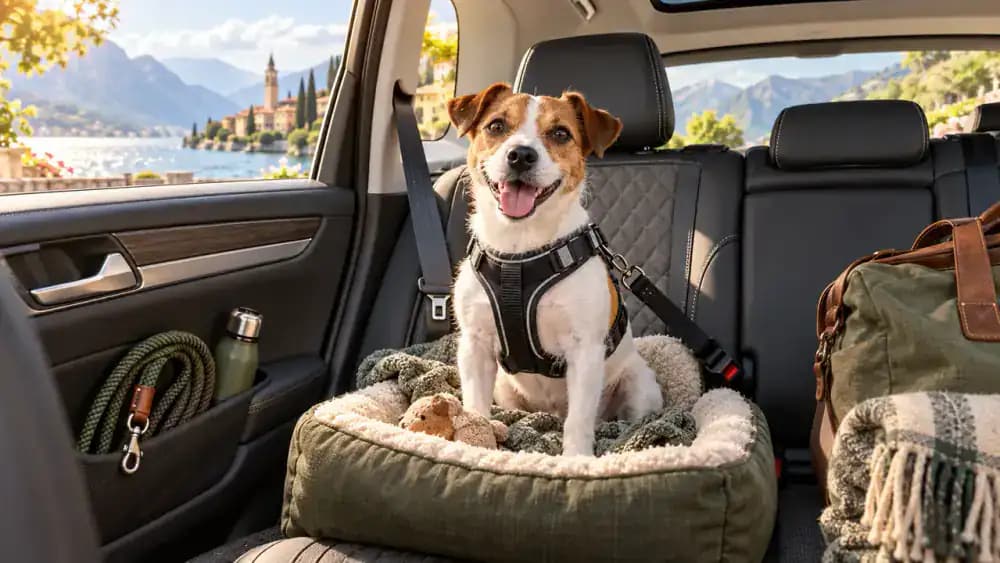
Plan for Temperature Changes
Prepare for realistic weather changes rather than relying only on the most favorable forecast. Some pets may benefit from an appropriate coat in cold conditions. During heat, focus on shade, drinking water, ventilation, and safe rest opportunities. Clothing does not replace proper temperature management, and pets should never be left unattended in parked vehicles.
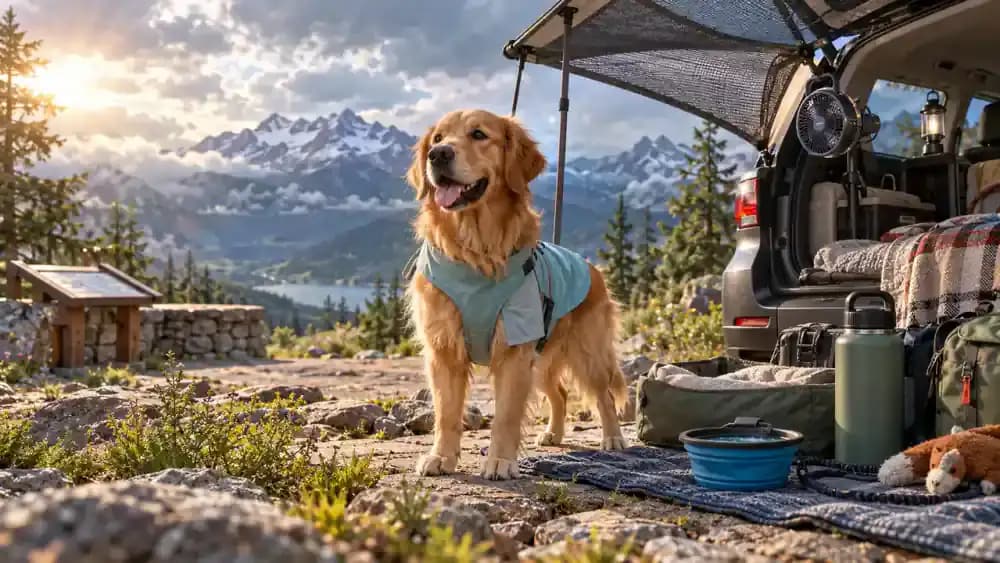
Include Paw Protection When Relevant
Consider paw protection if your plans include hot pavement, snow, ice, sharp surfaces, or extended walking. Any boots should fit properly and be practiced with before the trip rather than introduced at the destination. Paw products are not automatically appropriate for every animal, so follow veterinary guidance when existing paw problems are involved.
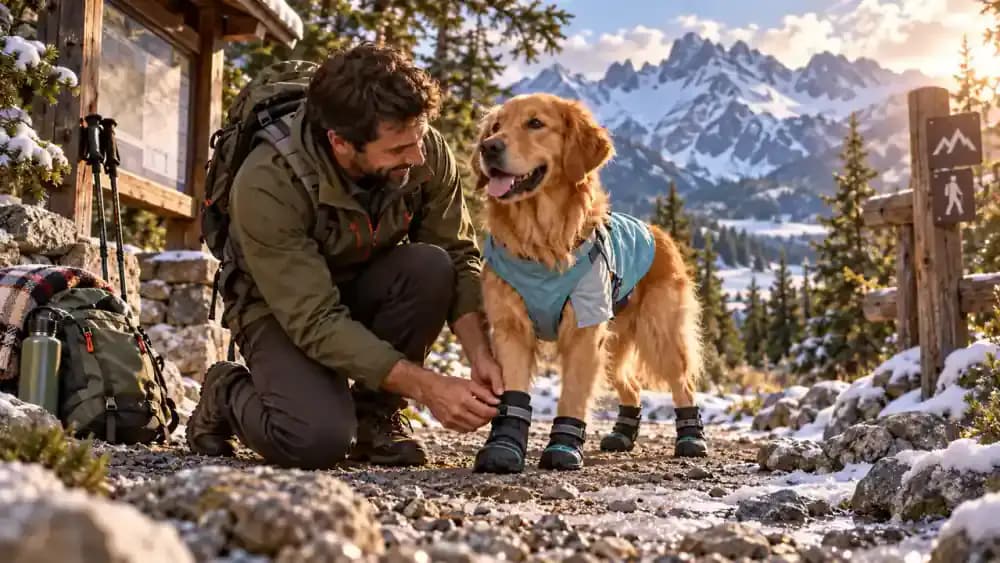
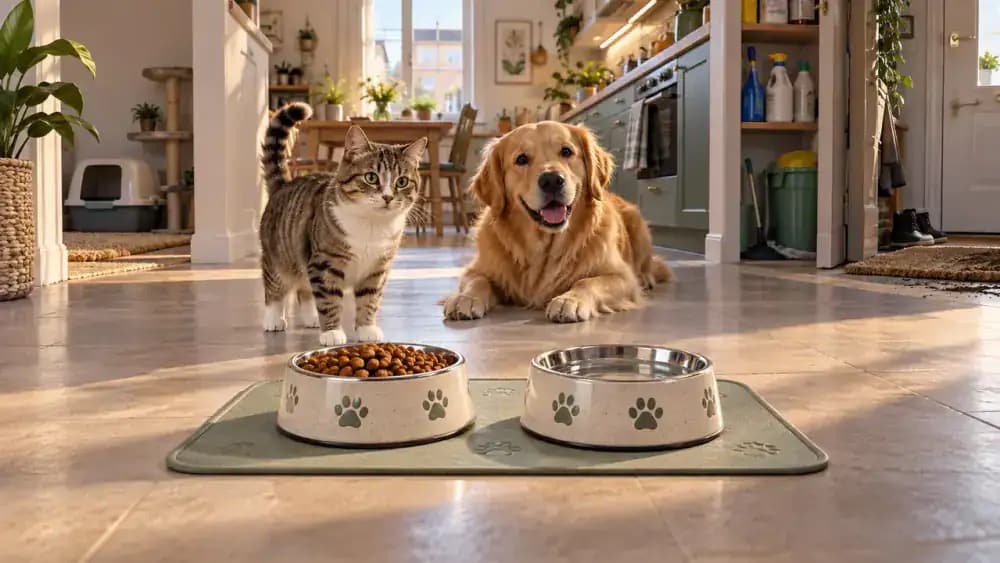
Pack a Simple Feeding Mat
A thin wipeable feeding mat helps stabilize bowls and simplify cleanup in hotels, rental homes, campsites, or guest spaces. It can also provide a recognizable place for meals. Choose one that folds or rolls easily, clean it after messy feeding, and position it away from litter areas, dirty entrances, and household cleaning products.
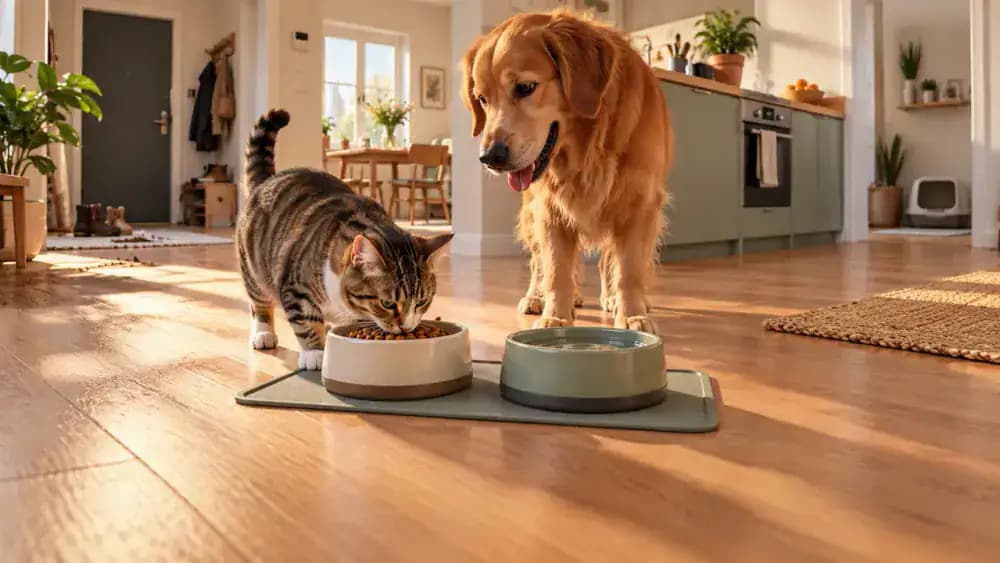
Create a Quick-Access Pocket
Reserve an outer pocket for supplies you may need without unpacking the main bag. Useful items include the leash, waste bags, drinking water, bowl, wipes, an identification copy, and time-sensitive medication. This organization is particularly helpful during fuel stops, roadside breaks, hotel arrivals, or other moments when opening everything would be inconvenient.
Do a Final Checklist
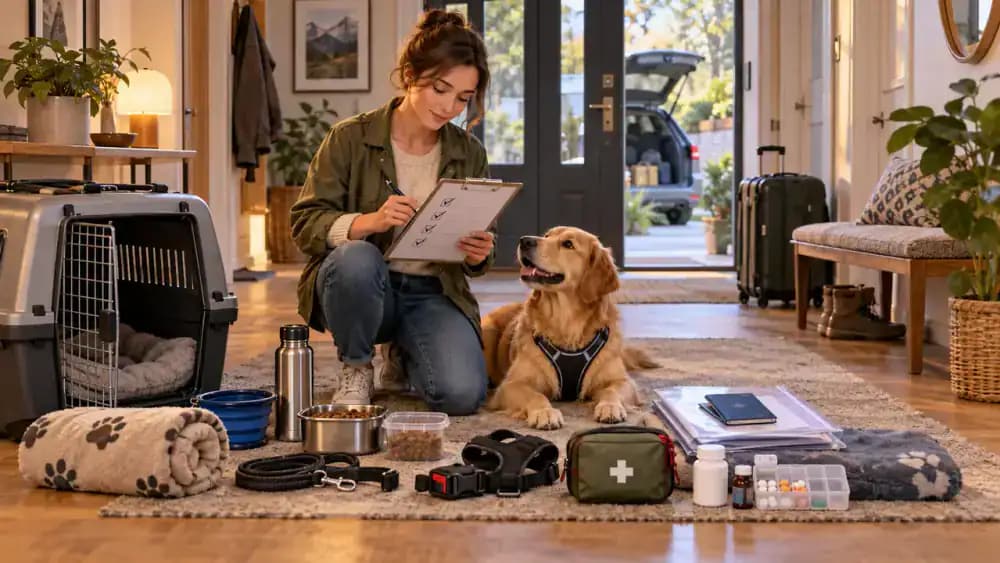
Before departure, verify the kit against a written checklist instead of relying on memory. Confirm food, water, bowls, identification, records, medication, restraint equipment, cleanup supplies, bedding, and first aid items. Check the collar, carrier, and microchip information one last time. Good preparation means routine travel needs can be handled without unnecessary improvisation.
A well-packed pet travel kit makes trips with a dog or cat easier because the essentials stay organized, accessible, and familiar. The goal is not to carry every pet product you own. Instead, prepare one practical bag that covers identification, feeding, water, cleanup, restraint, comfort, medication, documents, and basic first aid. Start with the actual journey you are taking, then organize supplies around the situations you are likely to encounter in the car, at rest stops, in hotels, or at your destination.
Where people go wrong
Packing Too Much. A useful travel kit focuses on routine needs. Excess gadgets, bulky bedding, and duplicate products can make important supplies harder to find.
Introducing New Food or Gear. Travel is a poor time to test unfamiliar treats, collars, harnesses, bowls, carriers, or protective boots. Familiar equipment is easier to manage.
Burying Important Supplies. Leashes, water, waste bags, identification, and time-sensitive medication should remain accessible instead of sitting underneath bedding and food.
Ignoring Documentation. Transportation providers, accommodations, events, borders, or destinations may require specific records, so check the applicable rules before leaving.
Depending on Improvised Restraints. Pack reliable, familiar restraint equipment instead of assuming rope, cord, or whatever happens to be available can safely replace proper gear.
Leaving Perishable Food in Heat. Opened wet food and other perishable items need appropriate storage and should not remain warming in a parked vehicle.
Questions people ask
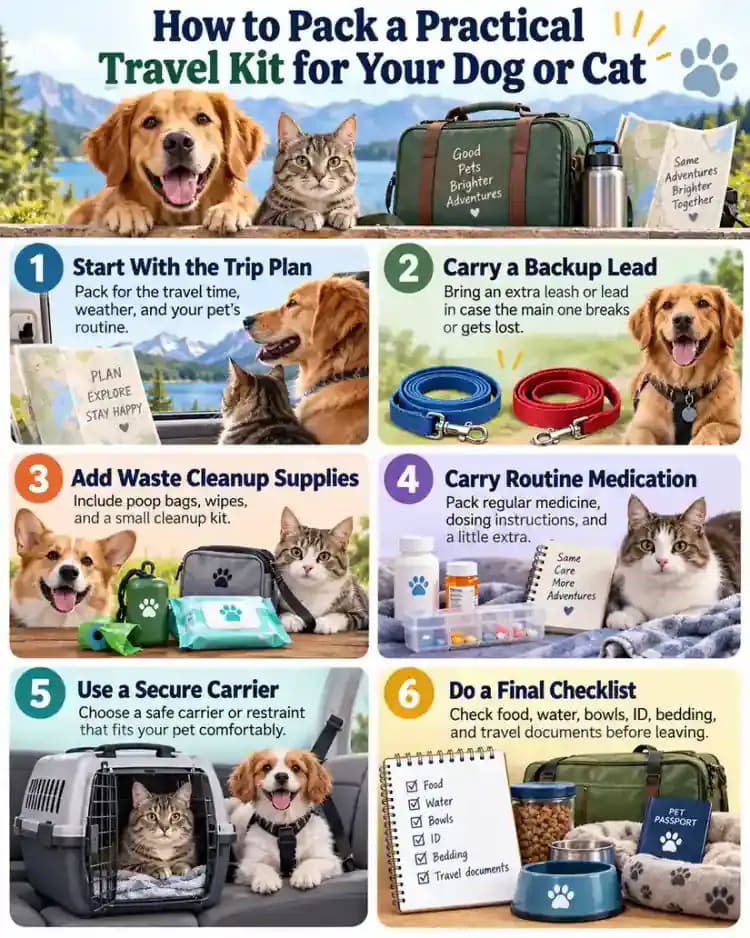
Start with identification, food, water, bowls, leash or carrier equipment, cleanup supplies, familiar bedding, medication, important records, and a small first aid pouch. Add weather, litter, or paw supplies when they match your actual trip.
Fixed it?
Get one guide like this every Thursday.