How to Make a Safe Cardboard Enrichment Box for Your Dog
Turn an ordinary delivery box into a fun, budget-friendly sniffing game for your dog. Learn which materials to use, how to hide treats safely, and when to stop the activity.
What you’ll need
Tap to tick things off before you start.
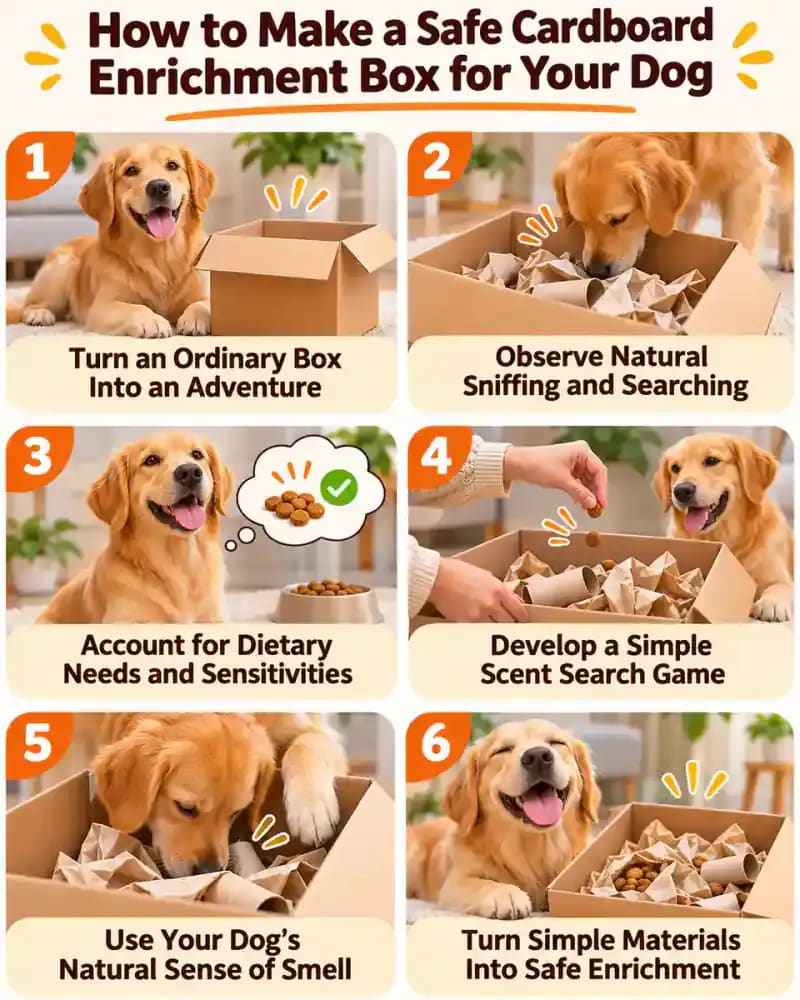
Turn an Ordinary Box Into an Adventure
Before recycling your next delivery box, consider turning it into a supervised treasure hunt for your dog. A cardboard enrichment box encourages natural sniffing and searching by placing small food rewards in easy-to-find locations. This inexpensive indoor activity lets your dog explore at their own pace while you supervise closely and keep the experience safe.
Choose and Inspect Safe Cardboard
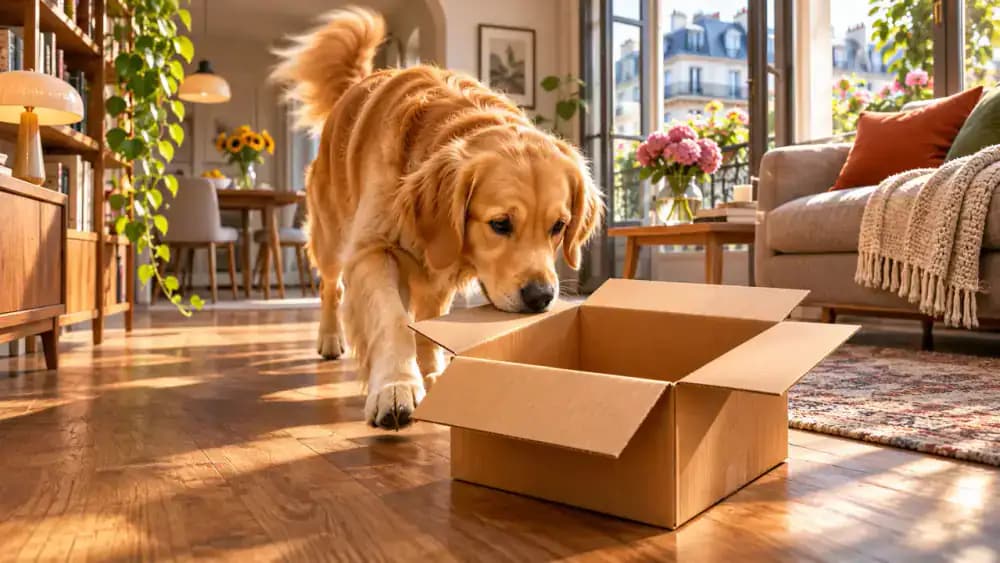
Choose a sturdy, clean cardboard box that stays open and allows your dog to reach inside comfortably. Avoid glossy coatings, chemical residue, strong odors, or damaged cardboard. Carefully remove all shipping labels, tape, staples, and plastic packaging. Check every edge and corner for sharp points, loose pieces, or anything your dog could accidentally swallow.

Build Simple Search Compartments
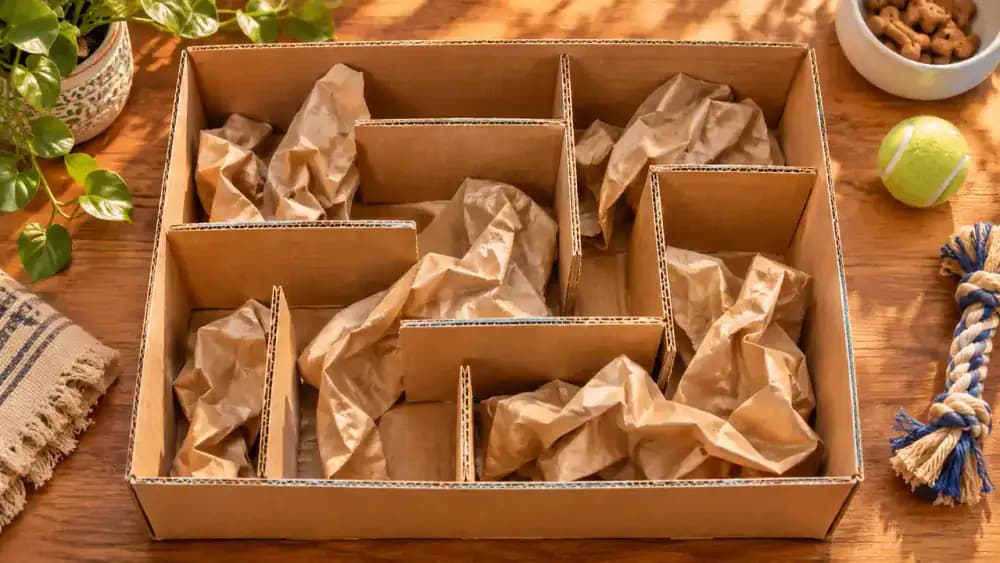
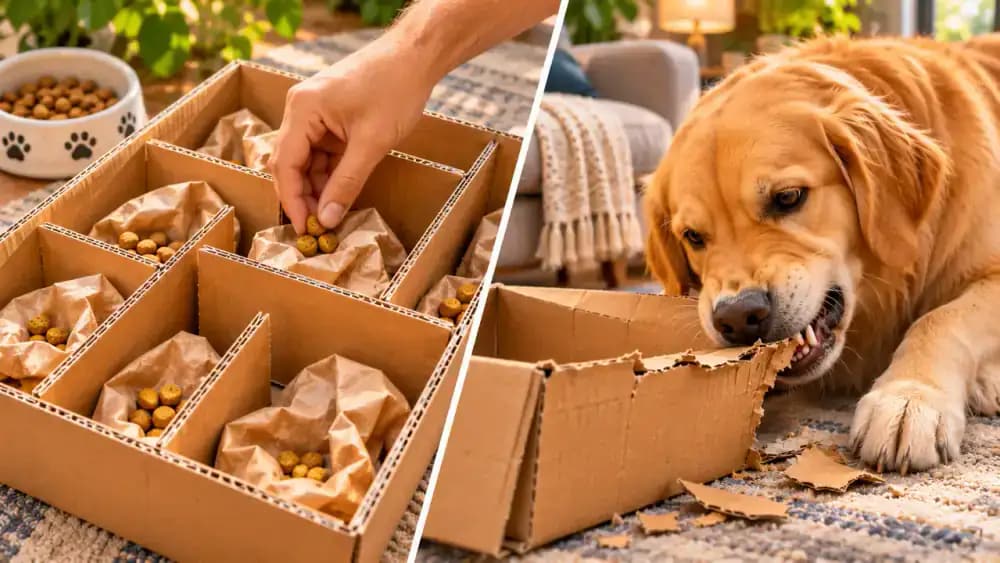
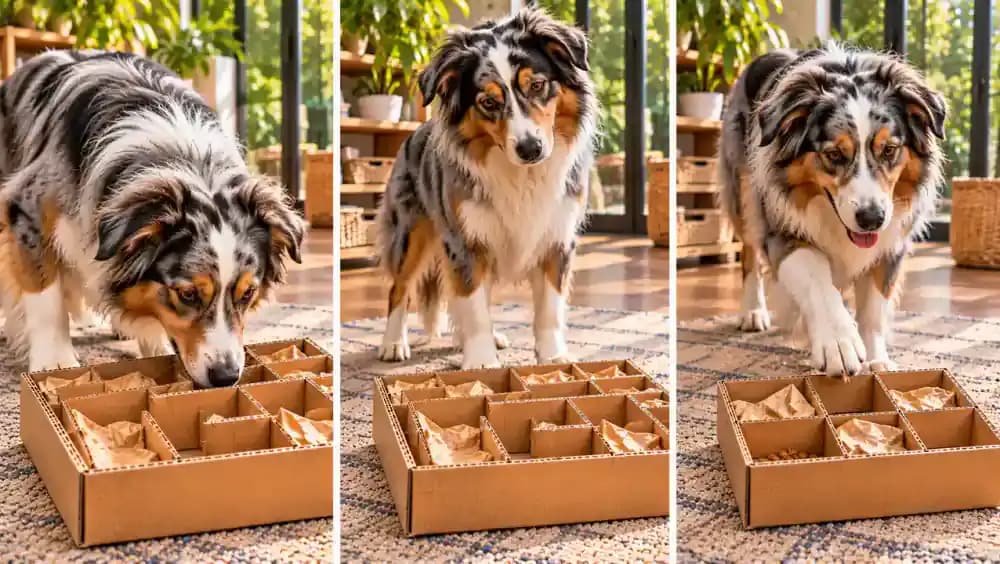
Arrange a few large, folded cardboard dividers inside the box to create separate searching areas. Add loosely crumpled sheets of clean, uncoated paper if your dog does not chew or swallow paper. Keep compartments open, stable, and easy to inspect. Avoid tape, string, tiny cardboard scraps, or tightly packed sections that could create hazards.

Hide Suitable Rewards
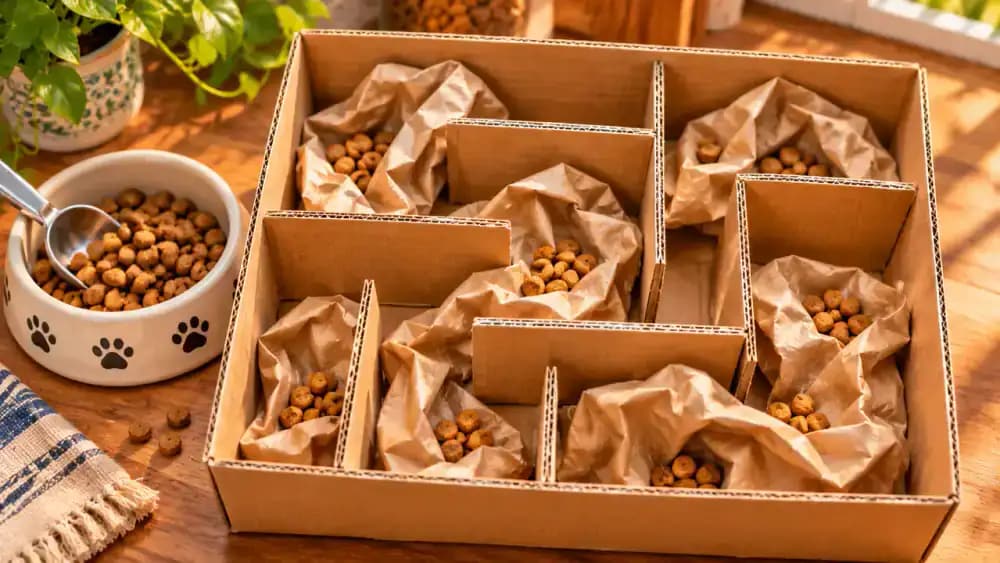
Place small portions of your dog's regular kibble or familiar, dog-safe treats in several accessible compartments. Start with some rewards clearly visible and others slightly tucked behind broad dividers. Avoid hiding food beneath tightly packed materials or using unsafe human foods. Measure portions beforehand and include these rewards in your dog's daily food allowance.
Introduce the Box Without Pressure
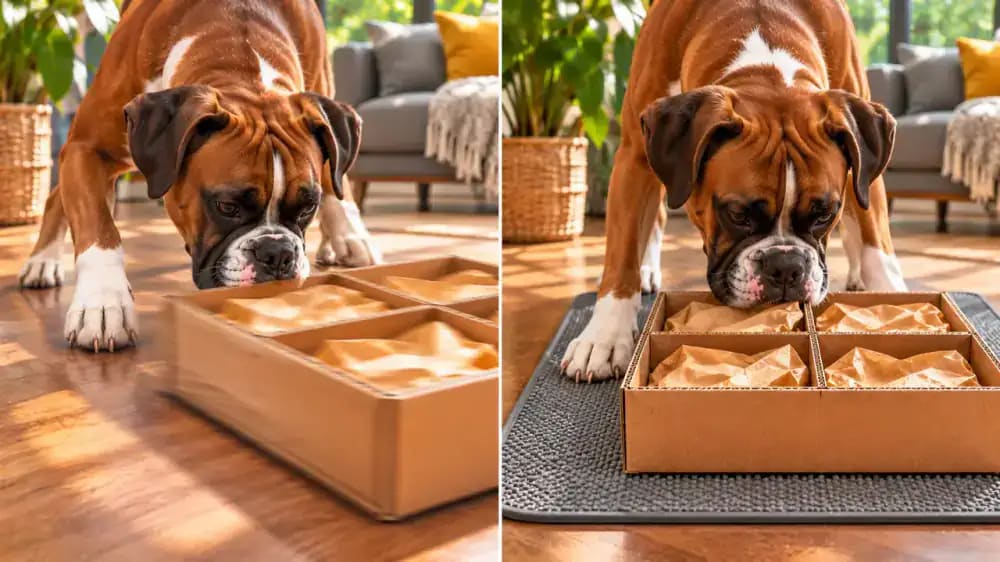
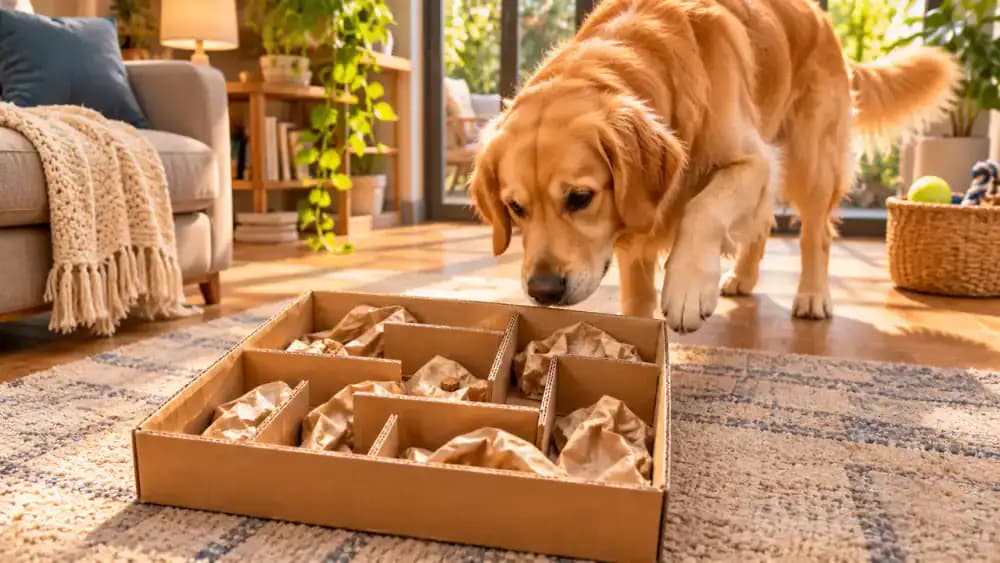
Set the prepared enrichment box on a nonslip mat in a quiet, familiar room. Allow your dog to approach and sniff it voluntarily while you remain nearby. For hesitant beginners, place one treat visibly near the front edge. Never push your dog's face toward the box or force participation. Keep the first experience relaxed and positive.
Observe Natural Sniffing and Searching
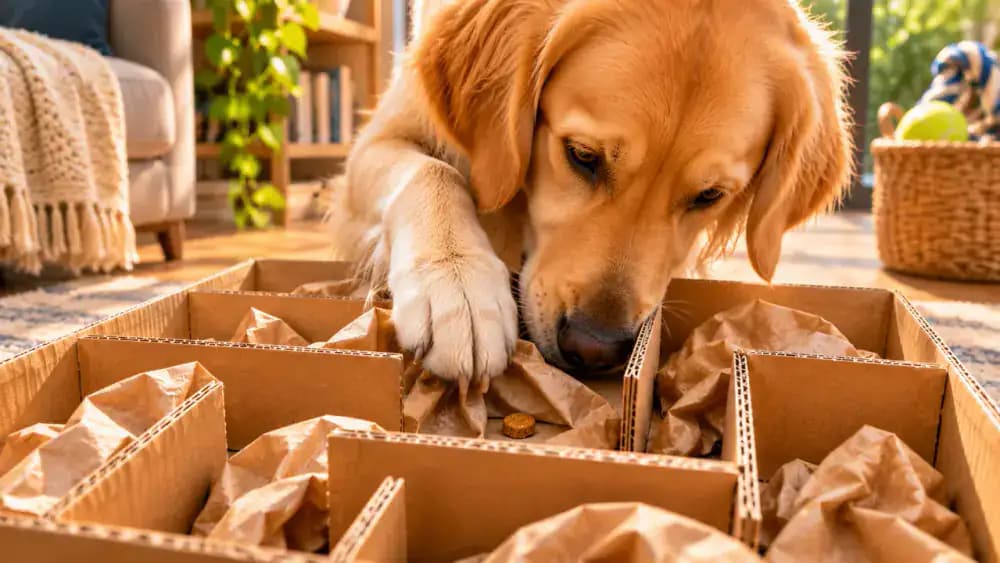
Watch your dog explore the box through natural sniffing, gentle movement, and independent searching. They may circle the box, pause between compartments, or follow a scent toward hidden kibble. Stay close enough to intervene immediately if needed, but avoid constantly directing their movements. Offer occasional gentle encouragement while allowing your dog to discover rewards independently.
Add Variety and Recognize Stop Signals
Once your dog confidently finds the rewards, introduce small changes by moving kibble between open compartments or adjusting loosely folded paper. Keep every hiding spot accessible without tearing or digging through cardboard. Watch carefully for frustration or destructive behavior. If your dog starts ripping, chewing, or attempting to swallow cardboard or paper, remove the box immediately.
Finish Successfully and Clean Up
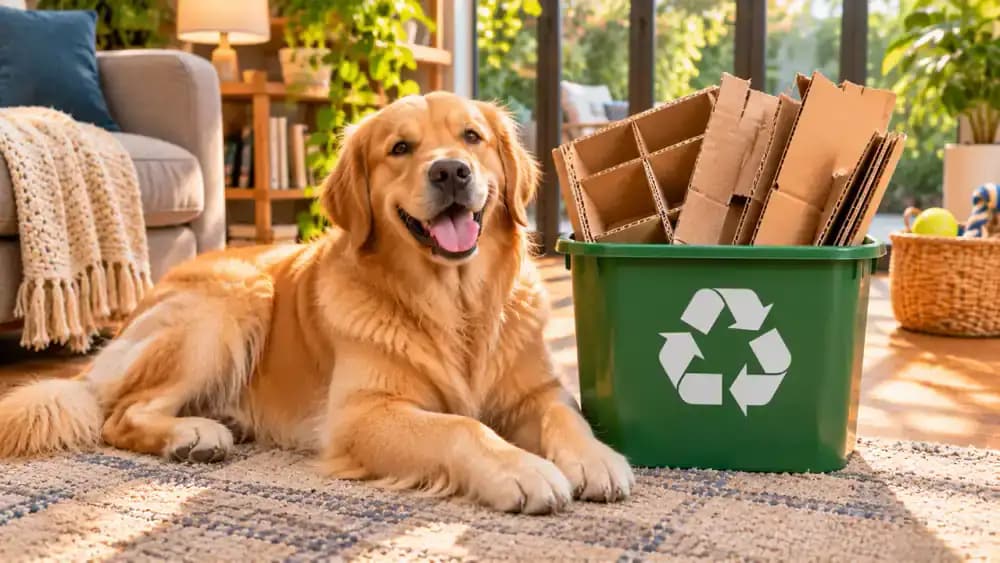
End the activity after your dog has enjoyed a few successful searches, ideally before excitement turns into frustration. Remove the box, inspect the floor for leftover kibble and loose cardboard, and recycle suitable materials. Never leave the used box available as an unsupervised chew toy. A short, positive experience makes future enrichment sessions more enjoyable.
Adapt the Box to Your Dog's Size
Choose box dimensions that allow your dog to investigate comfortably without stretching awkwardly or squeezing into narrow spaces. Smaller dogs may benefit from shallow boxes with low sides, while larger breeds need wider compartments and sturdy construction. Observe your dog's posture during searching and adjust the setup if reaching rewards appears uncomfortable or requires excessive effort.
Understand Your Dog's Individual Preferences
Pay attention to how your dog responds to different hiding spots and puzzle arrangements. Some dogs eagerly begin searching, while others need time to observe before approaching. Neither response requires forcing participation. Notice which activities encourage relaxed curiosity and which create hesitation. Use these observations to customize future enrichment games around your dog's comfort, interests, and abilities.
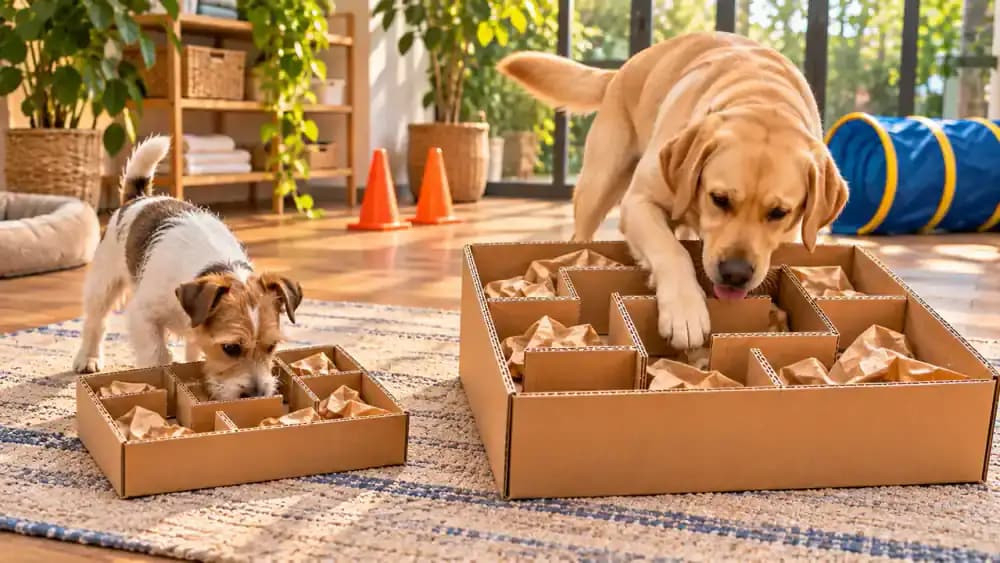
Choose a Calm and Distraction-Free Location
Set up the enrichment box in a quiet area away from busy doorways, clutter, and slippery surfaces. Keep children and other pets from interrupting your dog's search. If you have multiple dogs, provide separate supervised sessions in different spaces. A calm environment helps prevent competition over treats and allows each dog to investigate comfortably.
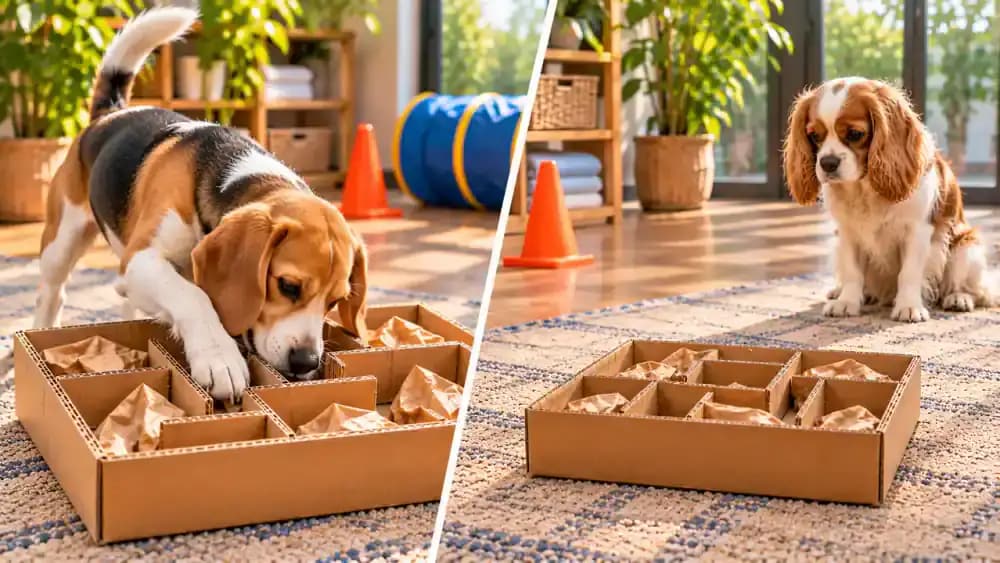
Account for Dietary Needs and Sensitivities
Select food rewards that match your dog's established diet, especially if they have food allergies, digestive sensitivities, or prescribed nutritional restrictions. Ask your veterinarian before introducing unfamiliar treats when dietary concerns exist. Consider using a measured portion of regular kibble from your dog's daily allowance. This provides enrichment without unnecessarily increasing calorie intake.
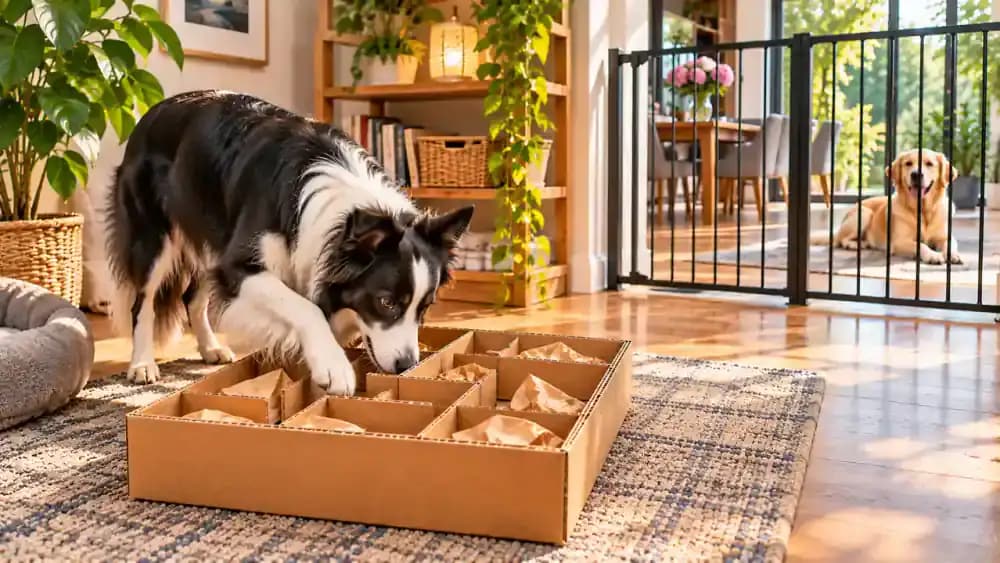
Inspect Materials Between Sessions
Examine the cardboard box and dividers after every enrichment session. Look for moisture damage, softened edges, torn surfaces, loose fragments, or collapsed compartments that could create hazards. Discard weakened or contaminated materials instead of reinforcing them with tape or other fasteners. Use fresh, sturdy cardboard when necessary, and inspect the replacement thoroughly before another supervised activity.
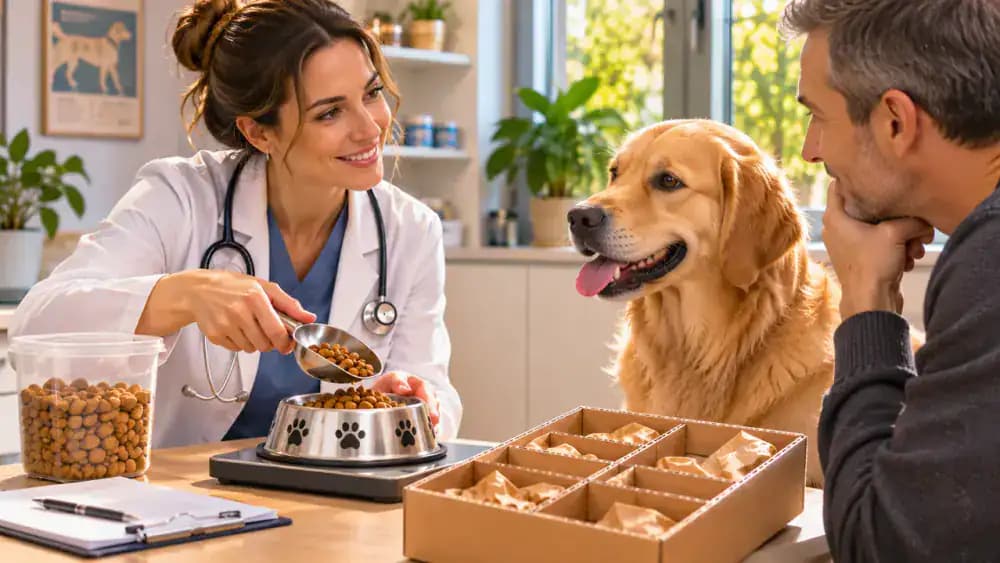
Read Your Dog's Body Language
Observe your dog's posture and behavior throughout the activity. Relaxed movement, curious sniffing, and voluntary returns to the box can indicate comfortable engagement. Freezing, backing away, persistent pawing, or attempts to escape may suggest the challenge is overwhelming. Stop when necessary, simplify future searches, and never force your dog to continue an activity they appear uncomfortable exploring.
Consider Alternatives for Cardboard Chewers
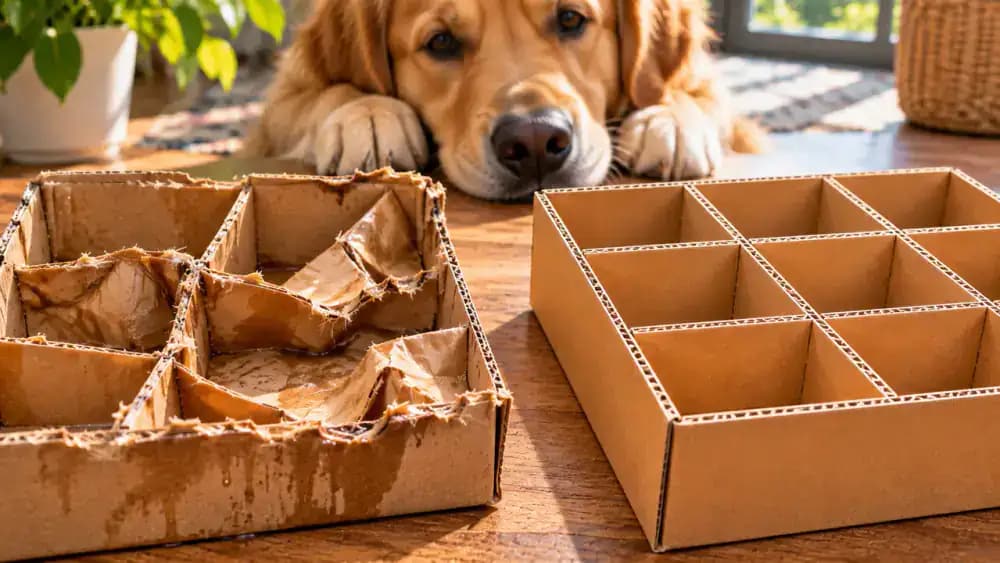
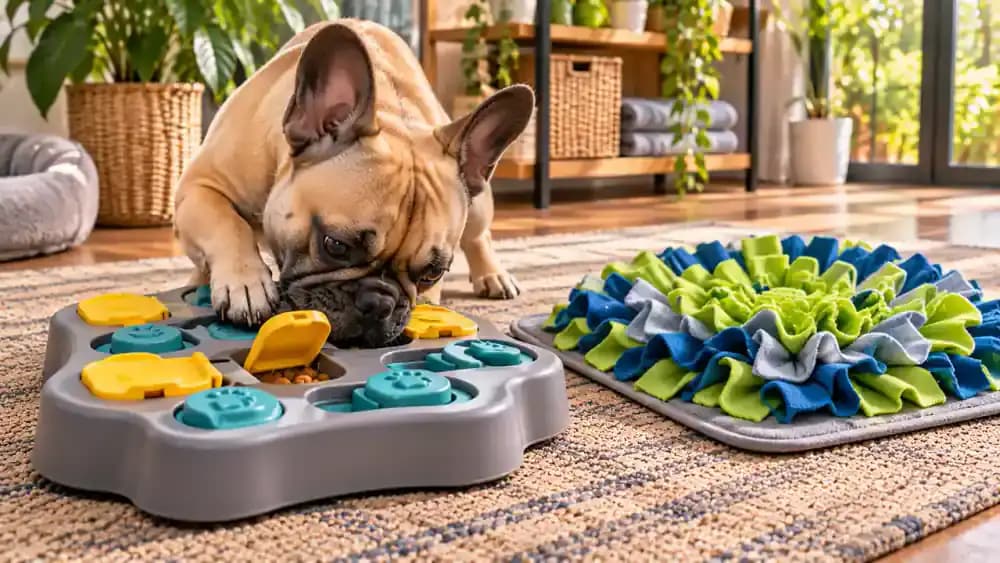
If your dog repeatedly chews, tears, or attempts to swallow cardboard, discontinue cardboard enrichment games. Instead, choose a sturdy, appropriately sized commercial puzzle feeder or washable snuffle mat suited to your dog's chewing habits. Inspect alternative toys for loose or damaged components, follow manufacturer safety instructions, and supervise every session to ensure your dog uses them appropriately.
Build a Sustainable Enrichment Routine
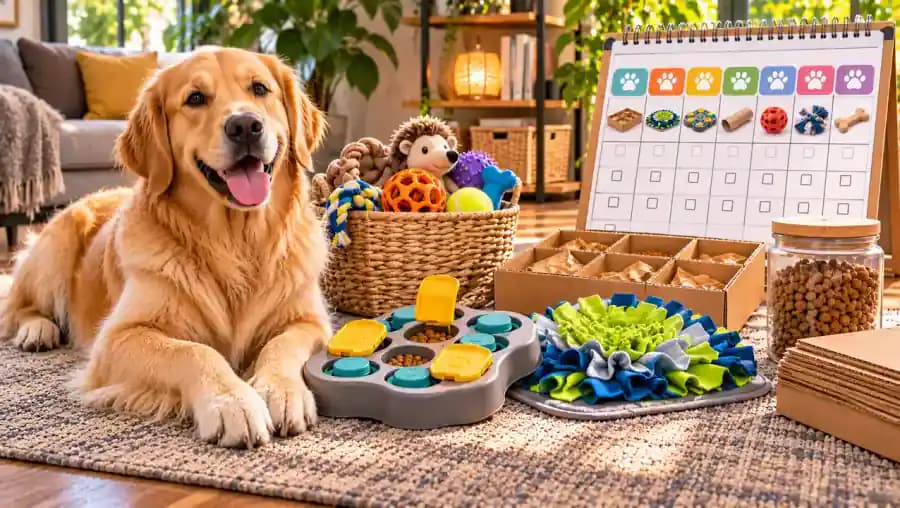
Create a simple rotation of supervised enrichment activities to keep your dog's routine interesting without relying on cardboard every day. Alternate safe sniffing games, suitable puzzle feeders, and other activities your dog enjoys. Keep sessions brief, inspect supplies regularly, and replace worn materials. Balance familiar activities with occasional variations while prioritizing safety and comfort.
Notice Patterns in Your Dog's Engagement
Observe how your dog's interest in enrichment activities changes throughout the day. Some dogs may investigate enthusiastically after a walk but show less curiosity at other times. Record brief notes about activity timing, energy, and engagement without assigning performance scores. Use these observations to schedule future games flexibly, respecting your dog's changing preferences and daily routine.
Develop a Simple Scent Search Game
Create a focused scent-searching challenge by placing one familiar treat inside a single open compartment. Leave the remaining compartments empty and allow your dog to investigate naturally. During future supervised sessions, change the reward's location without adding complicated barriers. This simple variation encourages purposeful sniffing while keeping food accessible and reducing frustration or unnecessary chewing.
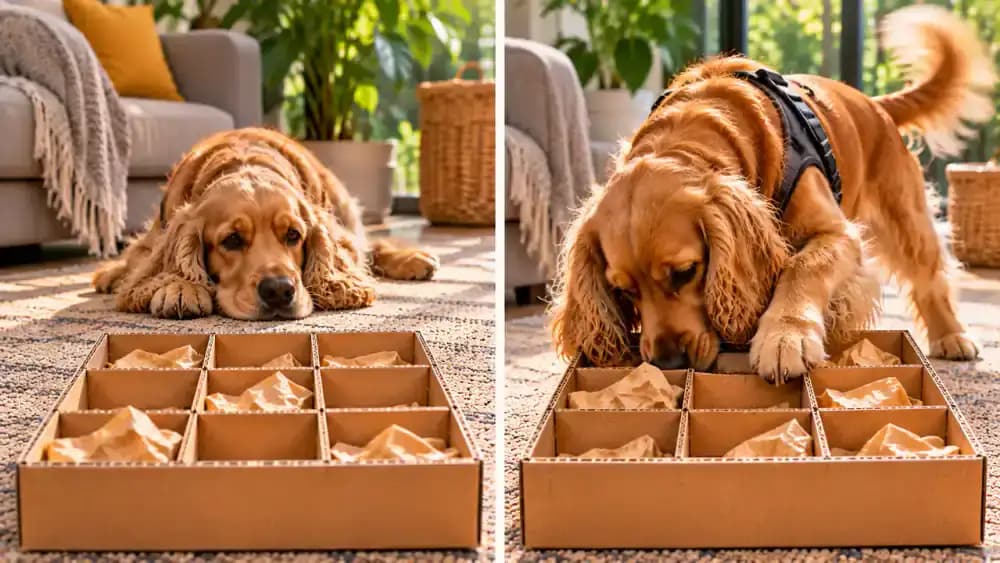
Adjust Enrichment for Physical Comfort
Consider your dog's mobility, energy, and physical comfort before introducing another enrichment activity. Older dogs or those recovering from illness may benefit from shallow compartments positioned at an easily accessible height. Use a stable, nonslip setup that avoids excessive bending or stretching. If your dog experiences discomfort or has activity restrictions, consult your veterinarian about suitable enrichment options.
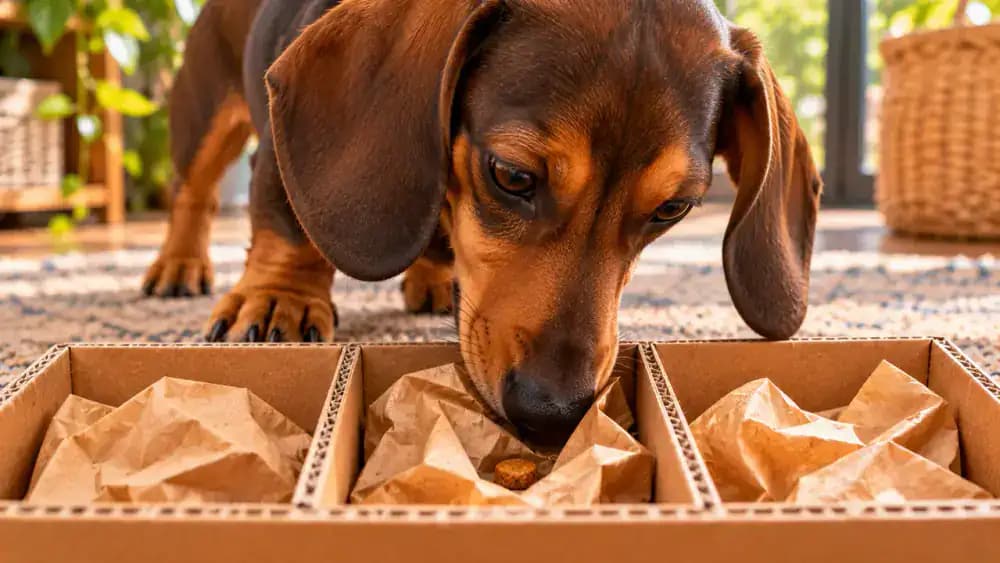
Understand the Risks of Swallowing Cardboard
Watch closely for chewing, tearing, or attempts to swallow cardboard during every session. Swallowed pieces can create choking hazards or potentially cause gastrointestinal blockages. Stop immediately and remove the box if your dog begins eating the material. Contact your veterinarian promptly if ingestion is suspected, especially when vomiting, abdominal discomfort, reduced appetite, or unusual behavior develops.
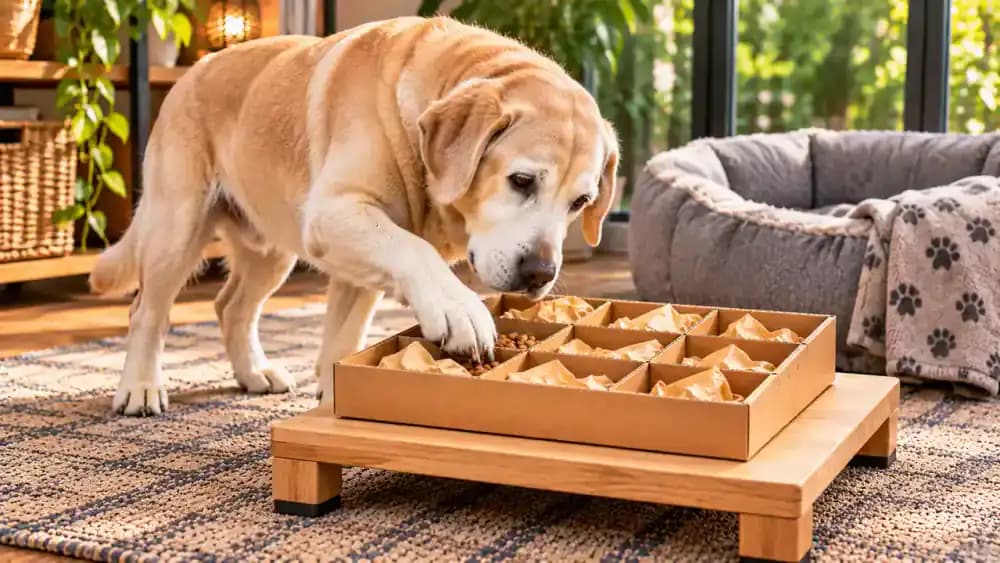
Keep Enrichment Sessions Short and Enjoyable
Keep enrichment sessions brief and adjust their length to your dog's interest rather than following a strict schedule. Watch for signs of natural disengagement, such as walking away after finding the final reward. Avoid extending the game simply to provide more stimulation. Remove the box when your dog finishes and allow them to rest comfortably.
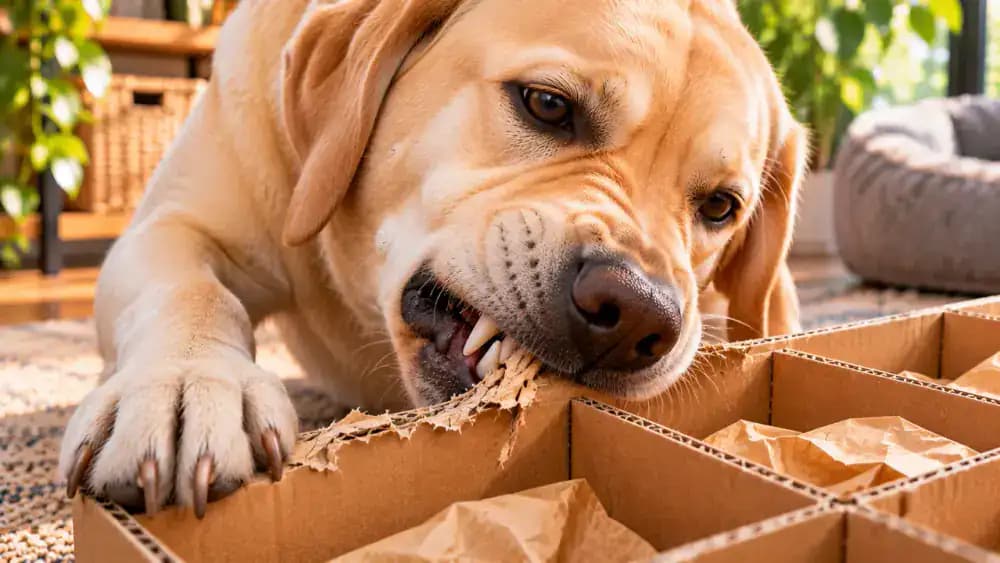
Recognize Meaningful Progress
Notice small improvements in how your dog approaches each supervised search. They may begin following scents more deliberately, investigate unfamiliar compartments, or return voluntarily after discovering a reward. These behaviors can indicate growing confidence and engagement. Record simple observations and use them to guide future activities rather than measuring success by speed or comparing dogs.
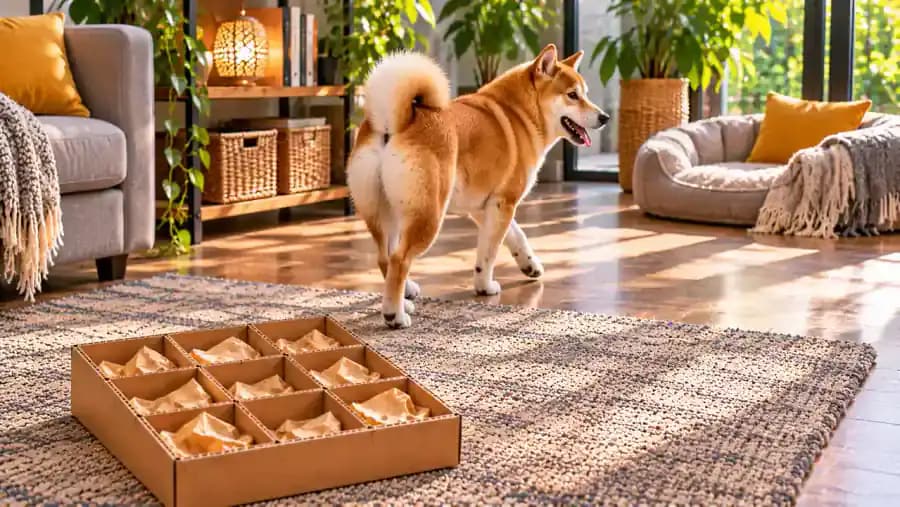
Make Every Enrichment Experience Safe and Rewarding
Before each session, confirm that your cardboard box is clean, sturdy, and free of hazardous attachments or loose pieces. Keep rewards accessible, choose a comfortable location, and supervise continuously. Let your dog determine whether to continue exploring, and stop immediately if chewing begins. Remove the box afterward so every experience prioritizes safe, enjoyable discovery.
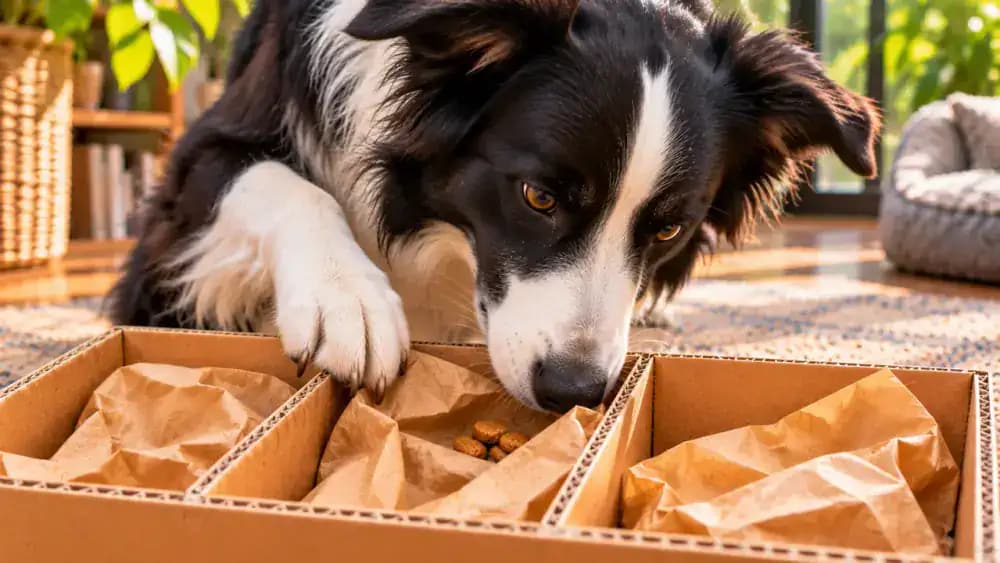
Use Your Dog's Natural Sense of Smell
Encourage your dog's natural scent-searching abilities by keeping the enrichment box simple and accessible. Watch how their nose moves along cardboard edges and between open compartments as they investigate familiar food scents. You do not need elaborate obstacles to create an engaging challenge. Use their preferred searching patterns to plan future supervised activities with easily reachable rewards.
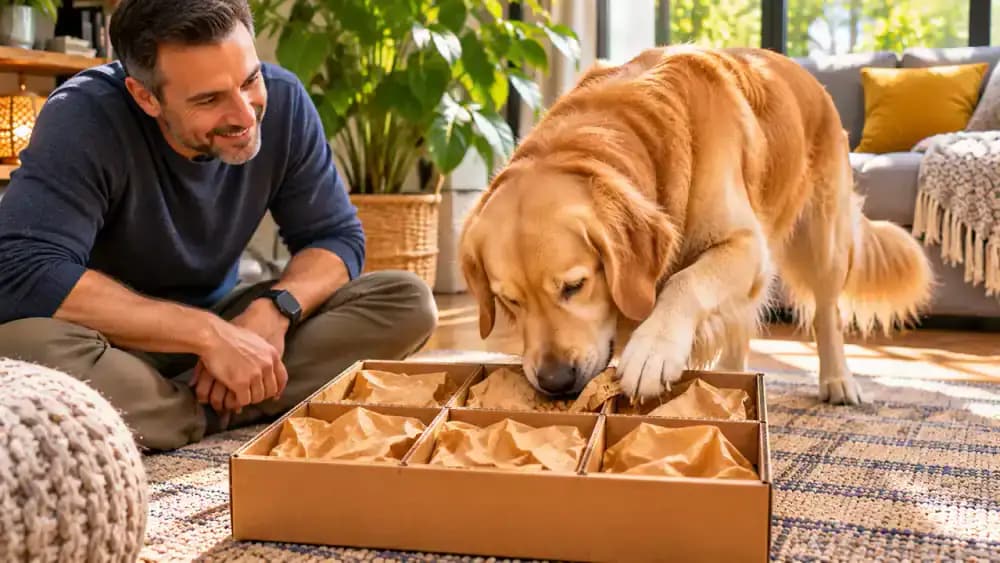
Experiment With Reward Placement
Vary the search by leaving several compartments empty and placing one small piece of kibble in another easily accessible location. Allow your dog to sniff each section naturally without directing them toward the reward. Keep the search manageable by avoiding tightly concealed treats or confusing barriers. Occasional discoveries maintain interest without requiring increasingly difficult puzzles.
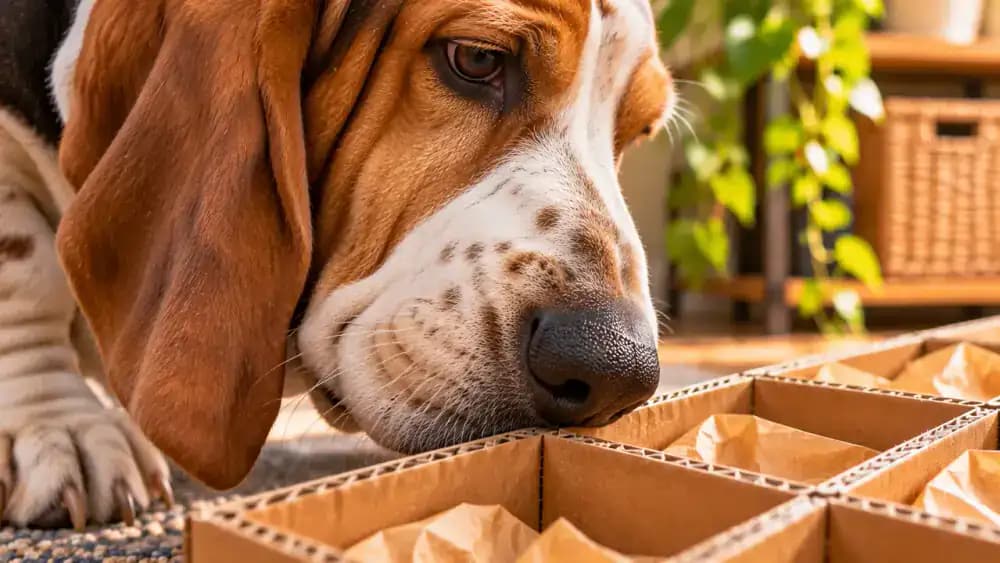
Prevent the Box From Sliding
Place the enrichment box on a broad nonslip mat to prevent movement during exploration. Dogs may push lightweight cardboard surprisingly hard while sniffing, causing it to slide across smooth floors. Check that the box remains stable without restricting your dog's movement. If it repeatedly shifts, slides, or tips over, stop the activity and reposition it securely.
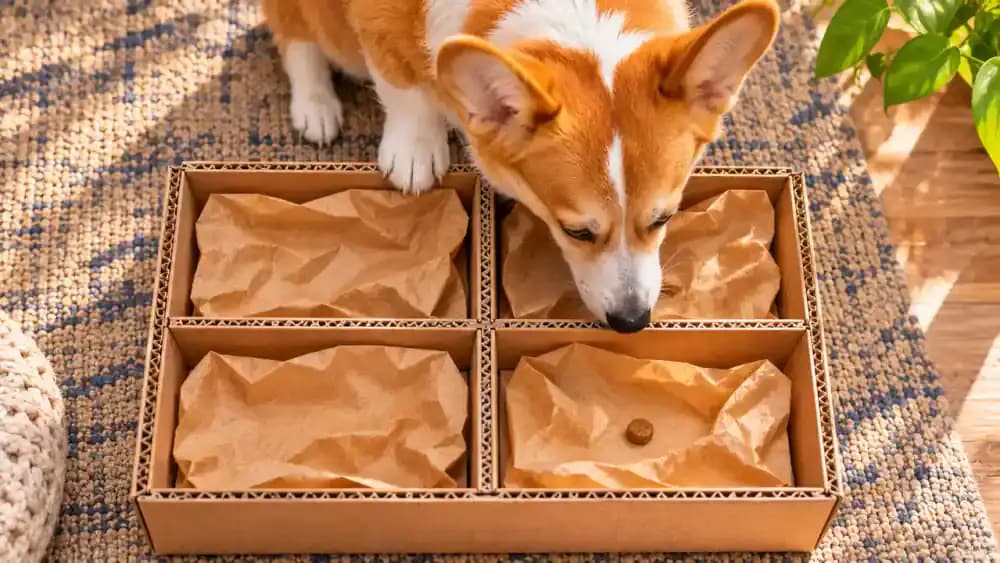
Build Confidence Through Gentle Learning
Introduce unfamiliar dogs to cardboard enrichment gradually, allowing them to observe the box before approaching. Encourage voluntary sniffing with calm verbal praise and easily accessible rewards. Never grab your dog's paws, push their head toward the box, or force participation. Some dogs need several short introductions before feeling comfortable, so prioritize confidence and positive experiences over completing the puzzle.
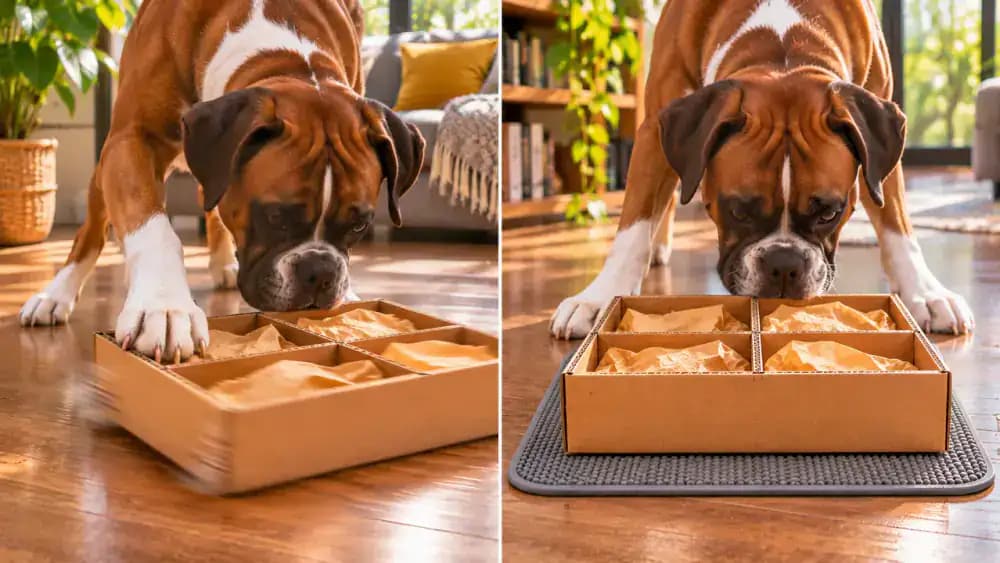
Practice Truly Attentive Supervision
Stay actively engaged throughout every cardboard enrichment session, watching your dog's behavior from the first sniff until cleanup. Silence your phone and avoid distractions such as cooking, household chores, or answering the door. Remaining in the same room is not enough if your attention is elsewhere. Intervene immediately if your dog begins chewing, tearing, or swallowing materials.
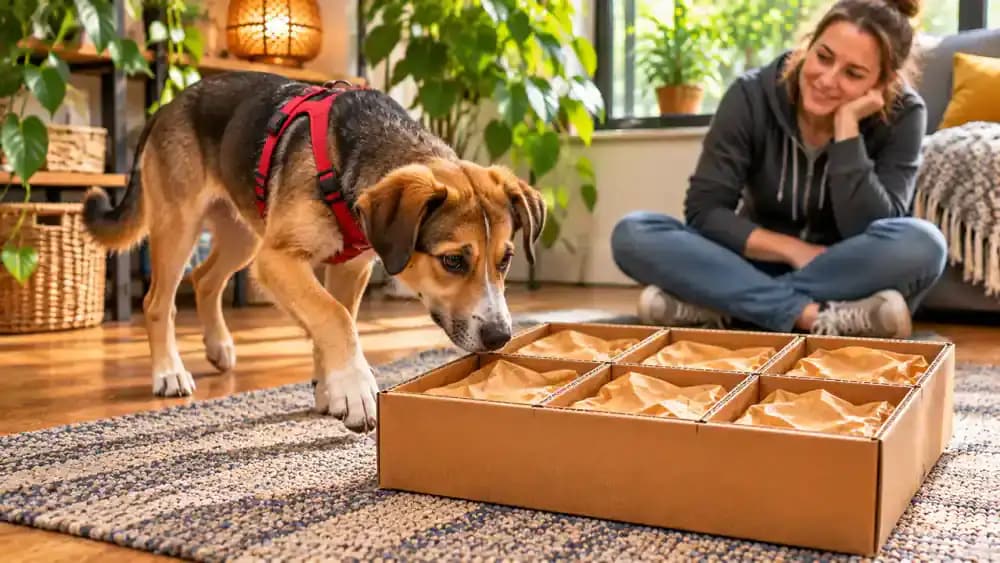
Personalize the Game Without Extra Equipment
Observe where your dog naturally prefers to search, whether along cardboard edges, inside open corners, or between compartments. Use these preferences to arrange familiar kibble in slightly different accessible locations. A short trail of spaced rewards can encourage purposeful sniffing without complicated construction. Keep the design simple, avoid unnecessary accessories, and supervise every new arrangement carefully.
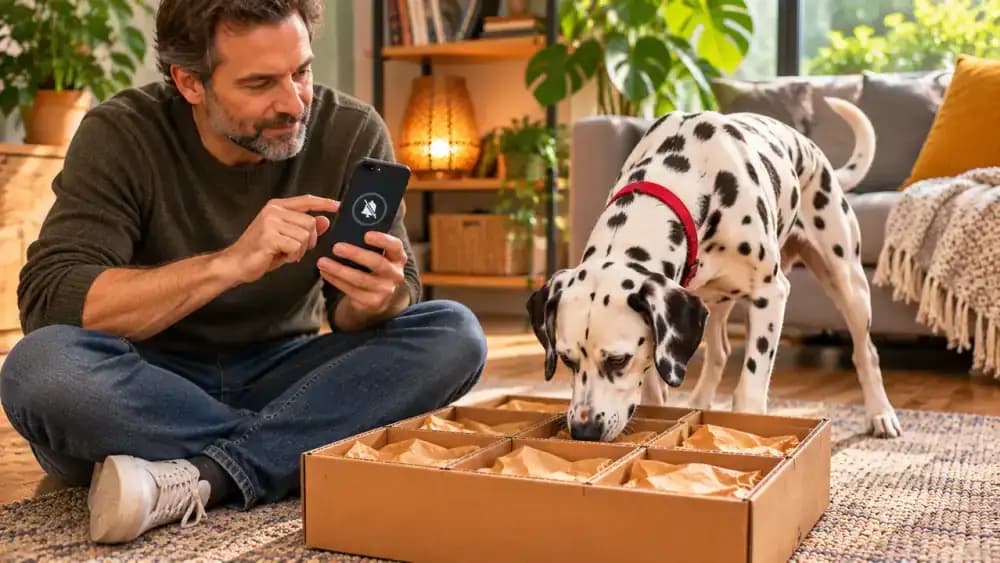
Turn Simple Materials Into Safe Enrichment
Transforming a clean cardboard box into an enrichment activity requires thoughtful preparation, accessible rewards, and continuous supervision. Let your dog enjoy a few successful searches without forcing participation or encouraging destructive chewing. Stop immediately if cardboard becomes a chewing target, then remove and recycle the used materials. Keep future activities simple, comfortable, and tailored to your dog's preferences.
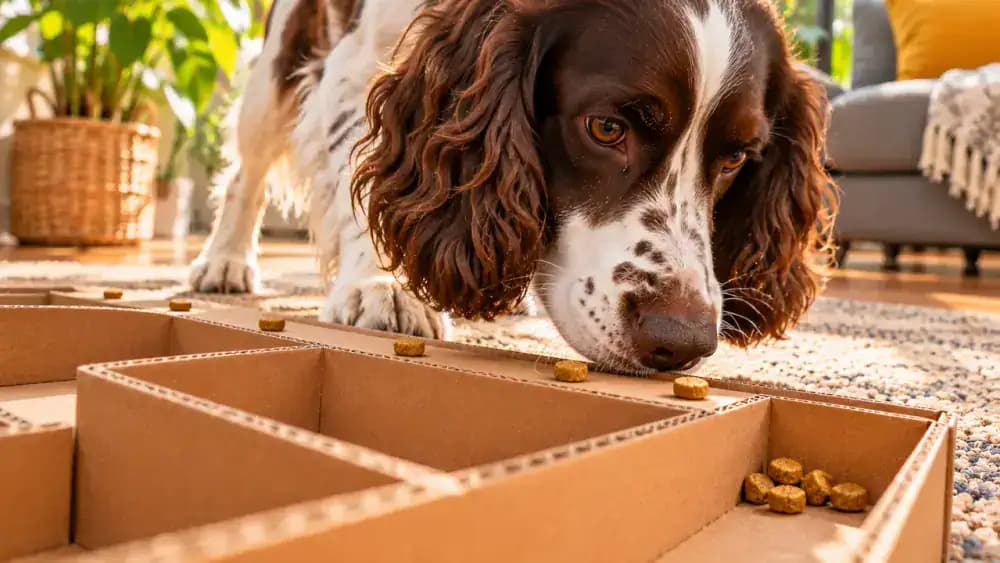
Your dog spots an empty delivery box on the floor, walks over, and gives it a curious sniff. To you, it's just packaging waiting for recycling. To your dog, it could become a new scent-filled adventure.
A cardboard enrichment box for dogs is an inexpensive way to encourage natural sniffing, searching, and problem-solving behaviors using materials you may already have at home. By hiding a few pieces of kibble or dog-safe treats inside a carefully prepared box, you can create an interactive activity that makes your dog work a little for each reward without requiring expensive puzzle toys.
The appeal is simple: dogs use their noses to explore the world, and finding hidden food gives them an opportunity to practice that instinct in a controlled environment. The activity can also add variety to indoor playtime, particularly when outdoor activities are limited by weather.
However, cardboard is not an edible or indestructible toy. Close adult supervision is essential from beginning to end. Some dogs enjoy gently investigating boxes, while others immediately shred or chew them. Dogs that try to eat cardboard need a different type of enrichment activity.
This guide focuses on choosing safe materials, keeping hidden rewards accessible, avoiding common hazards, and recognizing when to end the game. The goal is a short, enjoyable sniffing challenge - not a complicated puzzle your dog must struggle to solve.
Where people go wrong
Leaving Tape, Staples, or Shipping Labels Attached. Delivery boxes often contain packing tape, metal staples, adhesive labels, plastic strips, and other materials that do not belong in a dog's enrichment game. These items can create choking, ingestion, or injury hazards. Inspect every surface, flap, and corner before use. Remove all packaging materials completely, including adhesive residue that could attract chewing.
Using a Box That Previously Held Hazardous Products. Not every empty cardboard box is appropriate for pets. Packaging previously used for cleaning chemicals, pesticides, medications, or other potentially harmful products may contain residue or spilled material. Strong fragrances and unknown stains are additional reasons to reject a box. Choose clean, dry packaging with a known history rather than trying to make questionable cardboard safe.
Making the Puzzle Too Difficult for Beginners. A complicated arrangement of tightly packed paper, narrow openings, and difficult hiding spots can frustrate dogs that are unfamiliar with scent games. Begin with visible or easily accessible rewards and only a few simple compartments. Increase the challenge gradually as your dog becomes comfortable. Every reward should remain reachable without requiring your dog to tear apart the cardboard.
Allowing Your Dog to Chew or Swallow Cardboard. Cardboard enrichment should encourage sniffing and searching, not eating packaging. Swallowed cardboard or paper can pose choking or gastrointestinal obstruction risks, particularly when consumed in larger pieces or quantities. Stop immediately if your dog begins tearing off, chewing, or attempting to swallow materials. Switch to a more durable, appropriately sized enrichment toy instead.
Adding Small or Unstable Decorative Pieces. Tiny cardboard cutouts, loose accessories, string, ribbons, and unstable inserts can introduce unnecessary hazards. Dogs may pick up small objects while searching for food, and unstable compartments can collapse or trap rewards. Keep the design plain, spacious, and predictable. Use only large, stable dividers that cannot easily detach during normal investigation, and avoid decorative additions entirely.
Using Too Many Treats or Unsafe Human Foods. A scent game does not require a large quantity of food. Excess treats can add unnecessary calories, while certain human foods, including chocolate, grapes, raisins, and products containing xylitol, are dangerous for dogs. Use familiar, dog-safe rewards in small portions, account for them in your dog's daily food intake, and respect any veterinarian-recommended dietary restrictions.
Leaving the Box Available After Playtime. Even a dog that initially searches calmly may begin chewing cardboard after finding the last reward. Leaving the box unattended also gives your dog access to paper and other materials without supervision. End the activity once the search is complete, remove the box immediately, and recycle suitable components. Never leave a cardboard enrichment box out as an unsupervised toy.
Questions people ask
Cardboard enrichment boxes can be suitable for some dogs when they are carefully prepared and used under continuous adult supervision. Remove staples, tape, plastic, labels, and other hazards before play. The activity is inappropriate for dogs that chew off or swallow cardboard. Stop immediately if destructive chewing begins, and choose a more durable enrichment alternative.
Fixed it?
Get one guide like this every Thursday.