How to Make Mealtimes More Comfortable for a Sensitive Cat
Help your sensitive cat feel more comfortable at mealtime with a quiet feeding spot, a shallow bowl, a consistent routine, and simple changes that reduce household distractions.

What you’ll need
Tap to tick things off before you start.
Why Your Cat Hesitates at Mealtime
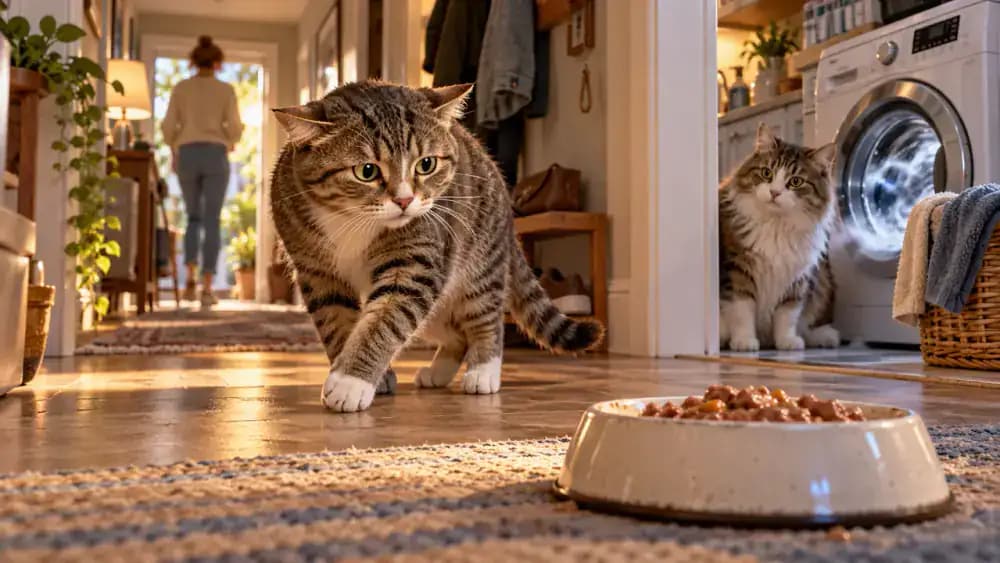
Watch how your cat behaves when approaching its food bowl. Footsteps, noisy appliances, and nearby pets may cause a sensitive cat to pause or walk away. Notice where your cat looks, whether its ears become alert, and what happens before it stops eating. These observations can help you identify distractions worth reducing.
Find a Quiet Feeding Location
Walk through your home and identify a quiet, low-traffic spot for your cat's meals. Avoid busy doorways, laundry areas, and appliances that make sudden noises. Choose a corner with easy access and a clear view of the surroundings. Your cat should have enough privacy to eat peacefully without feeling trapped or isolated.

Choose a Comfortable Feeding Dish
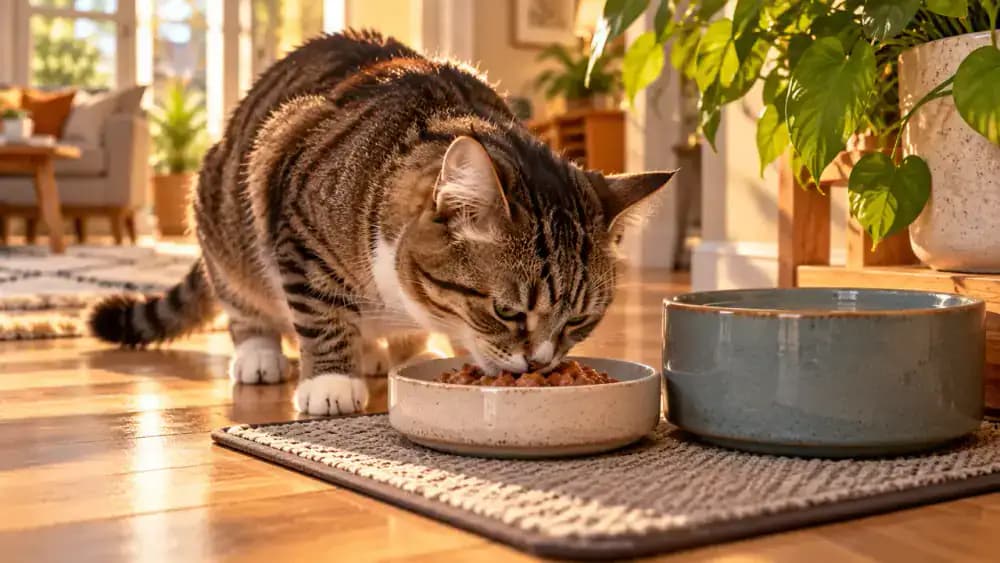
Replace an unstable or deep food bowl with a clean, wide, shallow dish if your cat seems uncomfortable using its current bowl. The shape may reduce unwanted whisker contact and make food easier to reach. Place the dish on a non-slip mat, wash it regularly, and rinse thoroughly to remove lingering soap scents.
Separate Food From Uncomfortable Areas
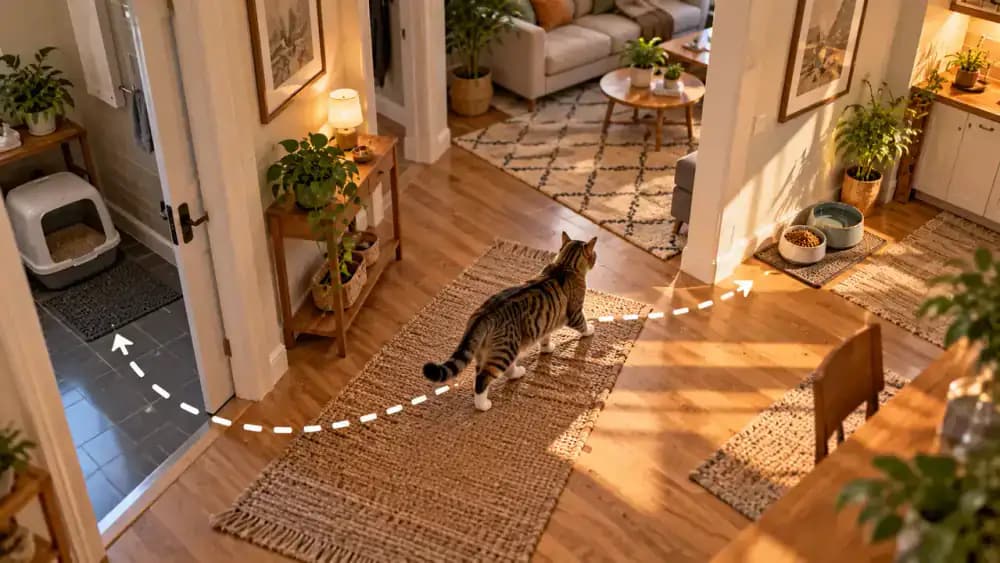
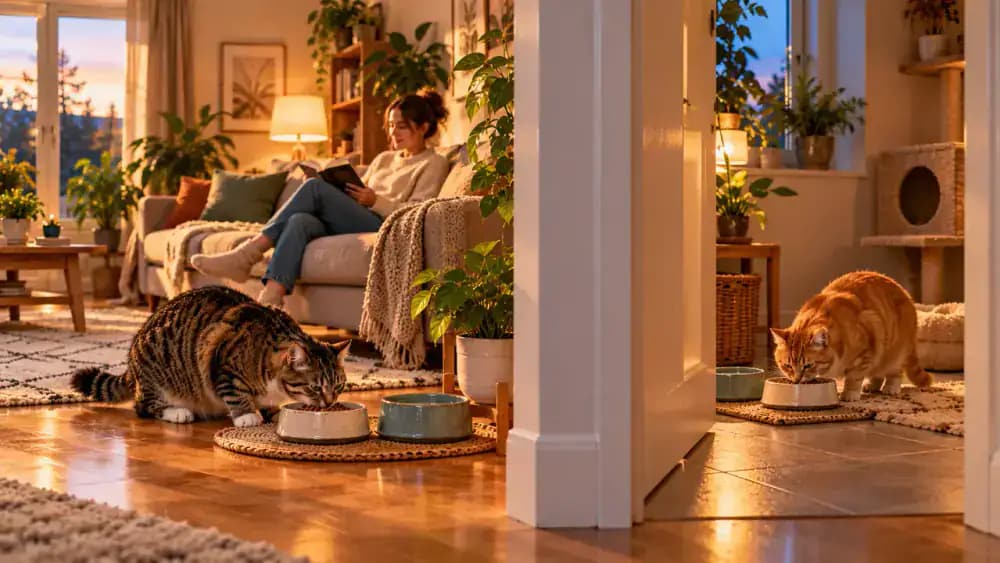
Keep your cat's feeding station separate from the litter box to create a cleaner, more inviting eating space. Clear obstacles from the path to the bowl and make sure your cat can leave freely. In homes with multiple pets, position feeding areas so another animal cannot easily block access or interrupt meals.
Keep Familiar Food and Consistent Timing
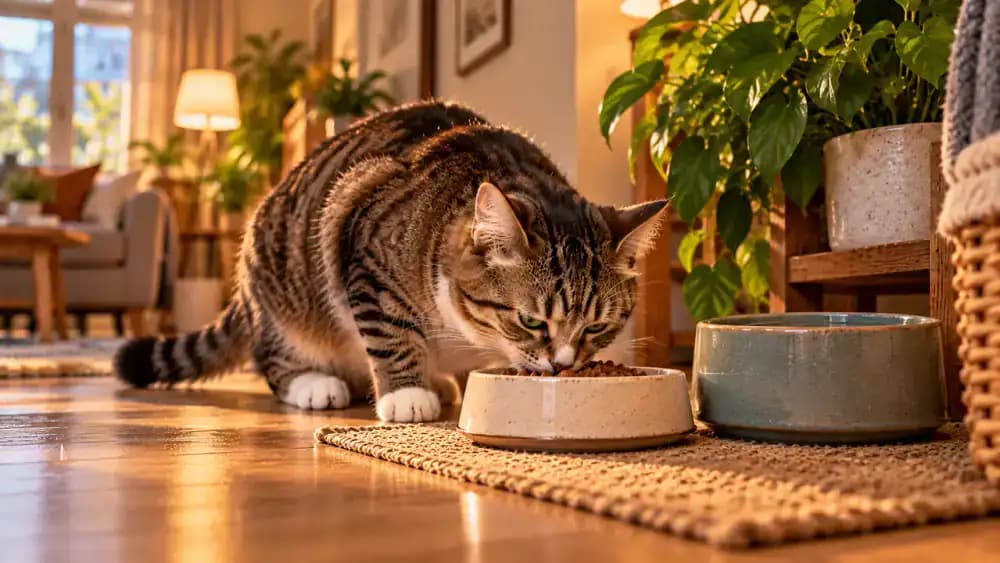
Continue serving your cat's familiar food at approximately the same time each day while adjusting the feeding environment. Measure the usual portion and place it in the newly positioned dish without introducing unnecessary dietary changes. Give your cat space to approach independently, and observe whether the quieter surroundings encourage more relaxed, uninterrupted eating.

Recognize Signs of Comfortable Eating
Observe your cat discreetly during the next several meals without hovering nearby. Comfortable eating often includes approaching willingly, maintaining a relaxed posture, and eating steadily without repeatedly looking around. Notice whether your cat consumes its usual amount and leaves calmly afterward. Track meaningful changes while giving your cat enough privacy to feel secure.
Make Gradual Adjustments and Know When to Seek Help
If your cat still hesitates, adjust one environmental factor at a time, such as moving the bowl farther from a doorway or separating pets during meals. Monitor food intake and record unusual changes. Contact your veterinarian promptly if your cat refuses food, develops a persistent appetite change, or shows signs of pain or illness.

Build a Peaceful Daily Feeding Routine
Maintain the improved feeding arrangement over several days so your cat can become familiar with the location. Serve meals at consistent times, keep the dish clean, and minimize unnecessary interruptions. Watch for calmer approaches and fewer pauses while eating. Once your cat appears comfortable, avoid repeatedly relocating the bowl or changing the routine.

Keep Strong Smells Away From Mealtimes
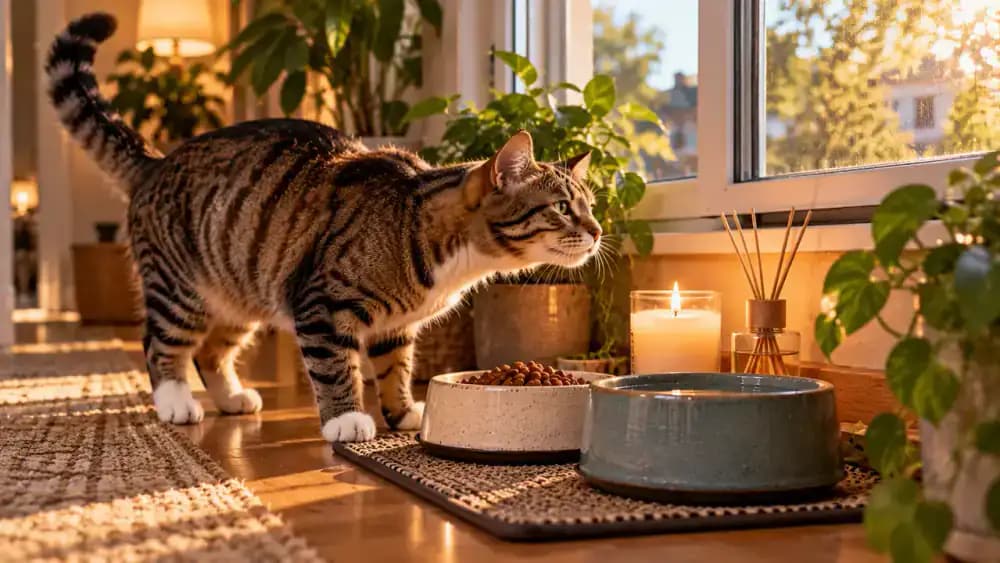
Check the feeding area for strong fragrances from scented candles, air fresheners, or recently applied cleaning products. Move these items away from your cat's food and avoid spraying fragrances nearby. Use mild, unscented cleaning products and rinse surfaces thoroughly. If possible, provide gentle ventilation through a securely screened window without creating uncomfortable drafts.
Make the Feeding Surface Stable
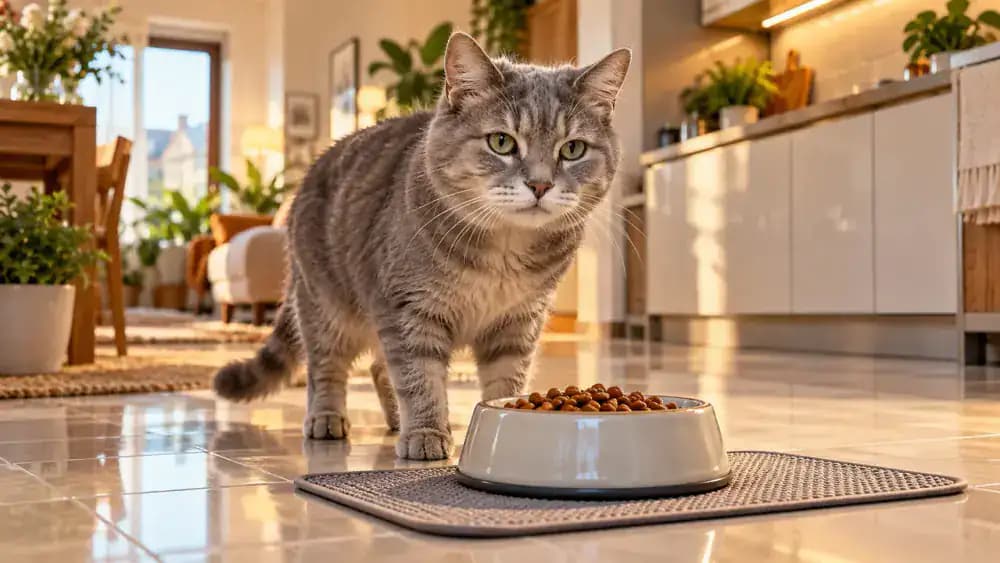
Check whether your cat's food bowl slides or wobbles when touched, especially on polished tile or other slippery flooring. Place a thin, washable non-slip mat beneath the dish to improve stability without creating a tripping obstacle. Make sure your cat can stand comfortably with secure paw placement, and observe whether eating becomes easier.
Use Gentle and Predictable Lighting
Check the lighting around your cat's feeding station, especially during evening meals. Bright overhead lights, shiny floors, and moving shadows may distract a cautious cat. Adjust window shades or use soft, indirect lighting to reduce glare. Keep illumination consistent throughout meals, and avoid suddenly switching on bright lights while your cat eats.

Provide Easy Access to Fresh Water
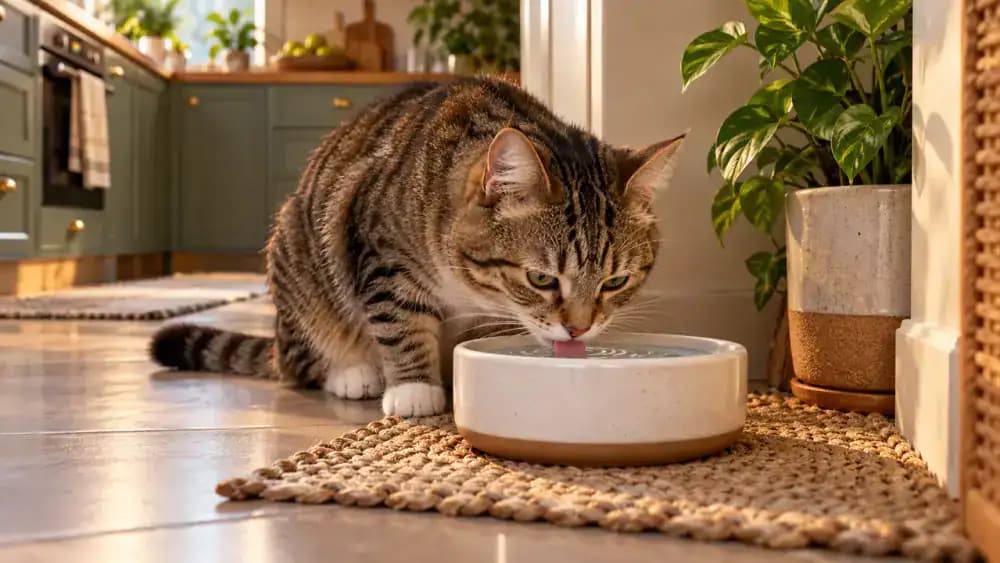
Offer fresh drinking water in a clean, accessible bowl, preferably in a quiet location away from busy walkways. Some cats prefer drinking separately from their feeding station, so observe your cat's habits when choosing a spot. Refresh the water daily, wash the container regularly, and position it where accidental bumps or spills are unlikely.
Prevent Competition Between Household Pets
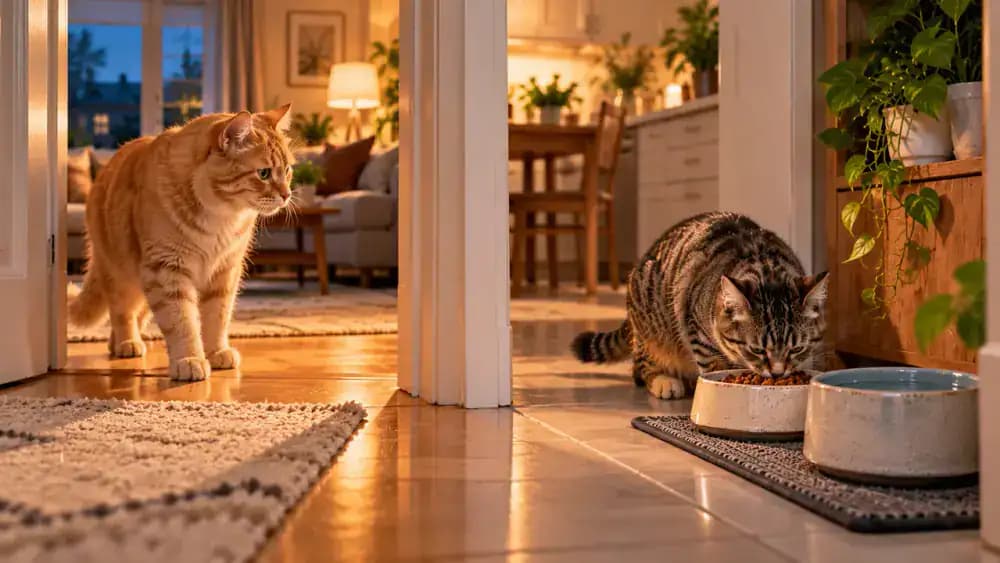
Watch how your pets behave when eating near one another. A faster eater may approach another bowl, causing a slower cat to pause or retreat. Look for staring, blocking, and food stealing, even without hissing. Provide separate feeding areas, ideally in different rooms when necessary, and monitor meals to ensure every pet eats undisturbed.
Teach Family Members to Respect Feeding Space
Ask everyone in your household to avoid approaching, touching, or crowding your cat during meals. Explain to children that even gentle petting can interrupt a sensitive cat's eating routine. Encourage family members and visitors to use another walkway and observe from a distance. Consistent household boundaries help keep the feeding area peaceful and predictable.

Track Your Cat's Mealtime Progress
Keep a simple feeding journal for several days to see whether environmental changes improve your cat's comfort. Record meal times, approximate amounts eaten, relaxed or hesitant behavior, and unusual household disturbances. Compare entries to identify recurring patterns without making assumptions about their causes. Share your observations with a veterinarian if appetite changes or feeding concerns persist.

Let Your Cat Define a Comfortable Mealtime
Pay attention to your cat's individual preferences rather than expecting every cat to enjoy the same feeding arrangement. Some cats eat comfortably with a familiar person nearby, while others prefer complete privacy. Observe which conditions encourage relaxed eating, make small adjustments when necessary, and maintain the arrangement that consistently supports your cat's comfort.
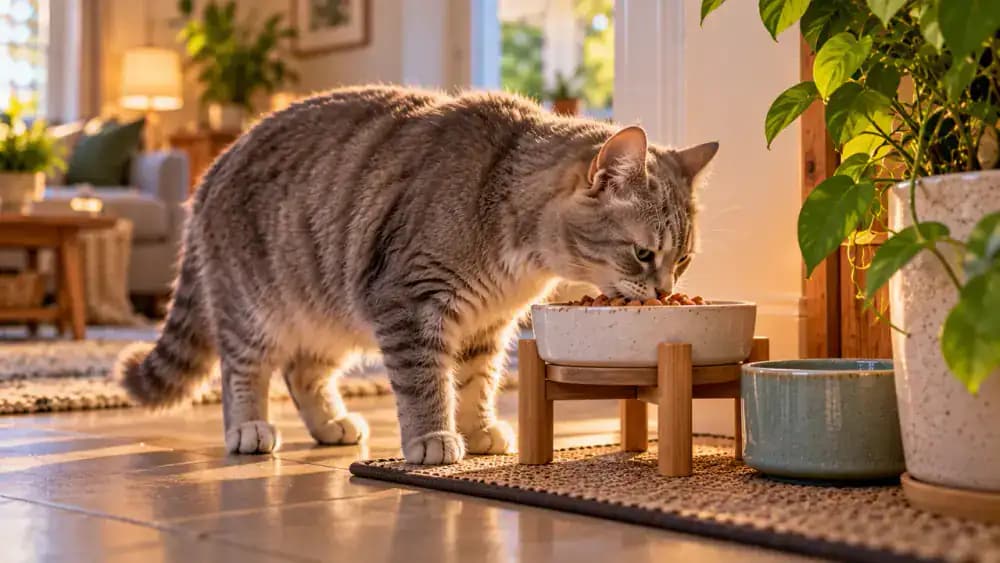
Adjust Feeding Height for Older Cats
Observe whether your older cat bends comfortably toward its food bowl or frequently shifts position while eating. If reaching a floor-level dish appears difficult, ask your veterinarian whether a modestly elevated bowl could help. Choose a stable, appropriately sized setup that supports natural posture, and monitor your cat's comfort without forcing an unfamiliar feeding position.
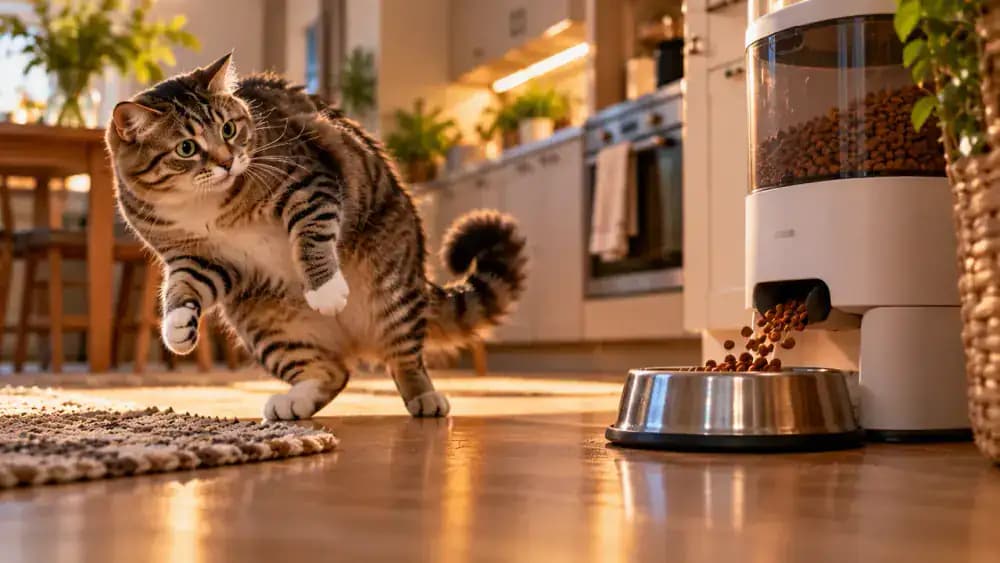
Reduce Noise During Food Preparation
Notice whether rattling food dispensers, clattering scoops, or noisy dishes make your cat retreat before meals. Prepare food quietly using a suitable scoop and stable dish whenever possible. If you use an automatic feeder, introduce its sounds gradually from a comfortable distance. Always allow your cat to move away freely without pressure.
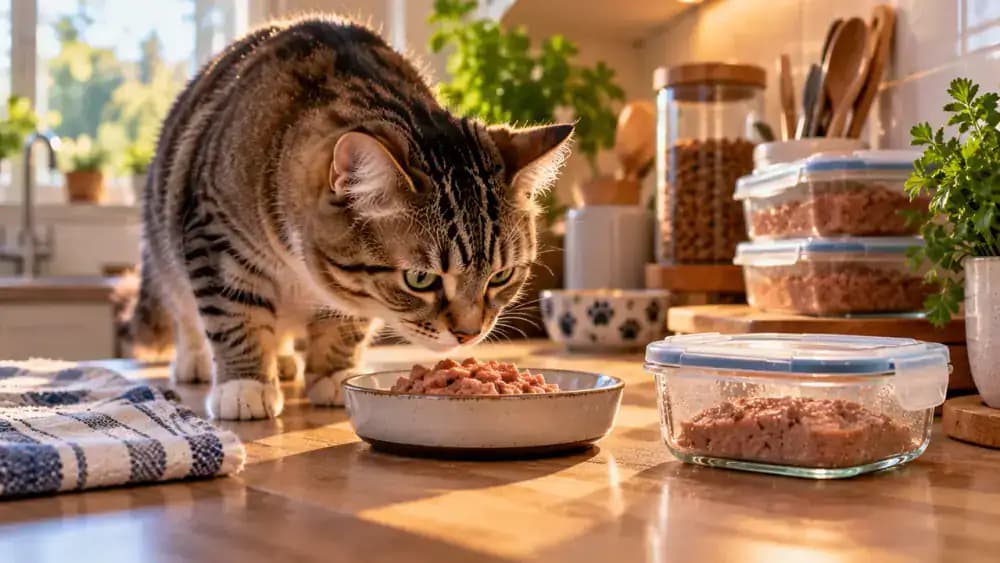
Consider the Temperature of Wet Food
If your cat hesitates over refrigerated wet food, consider whether its temperature affects the meal's appeal. Follow the manufacturer's storage instructions and allow a covered, measured portion to lose its chill briefly before serving. Avoid overheating food or leaving it unrefrigerated for extended periods. Refrigerate unused portions promptly and discard leftovers according to food safety guidance.
Protect Your Cat's Comfort After Eating
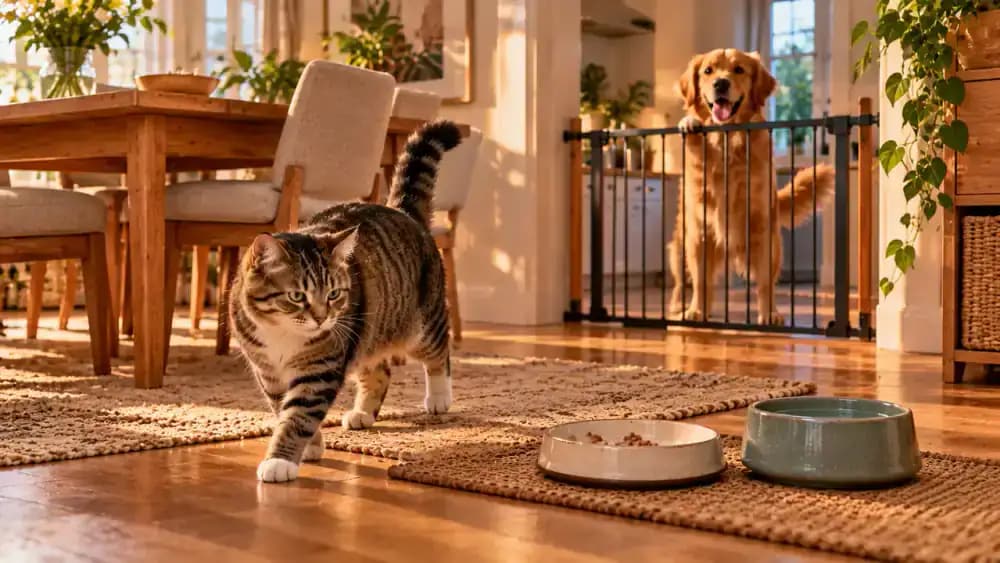
Keep your cat's feeding area peaceful even after the meal ends. Prevent dogs or other pets from rushing toward leftovers by using a pet gate or separate space when necessary. Allow your cat to leave through an unobstructed walkway without being followed. Remove remaining food according to your established feeding routine and any veterinary instructions.
Maintain Comfort During Household Changes
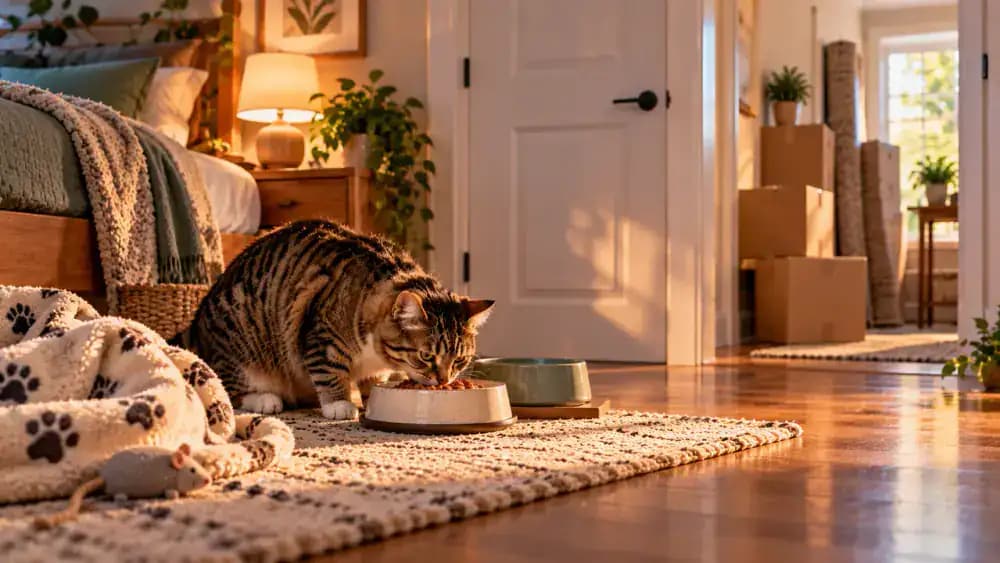
During moves, renovations, or visits from unfamiliar guests, protect your cat's feeding routine from unnecessary disruptions. Set up a quiet room with its familiar dish, feeding mat, and resting blanket. Keep meals consistent and limit interruptions. Monitor appetite as the household settles, and contact your veterinarian promptly if your cat stops eating or develops concerning changes.
Recognize Physical Signs of Feeding Discomfort
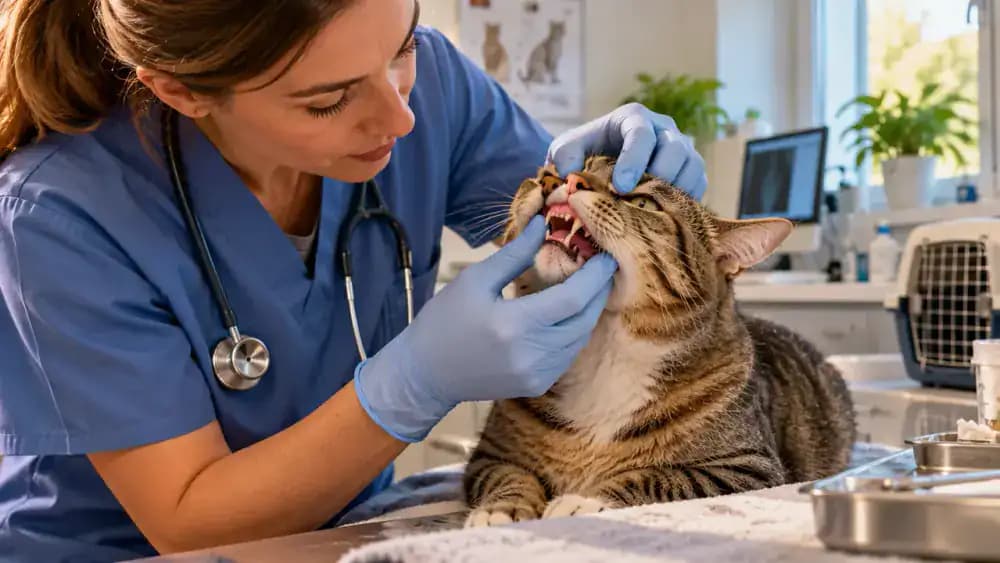
Watch for unusual eating behaviors, including dropping food, chewing on one side, pawing at the mouth, or approaching the bowl but repeatedly withdrawing. These changes may indicate discomfort that requires professional attention. Arrange a veterinary appointment promptly rather than assuming the environment is responsible. A quieter feeding station cannot replace appropriate veterinary evaluation and care.
Create a Lasting Comfortable Feeding Experience
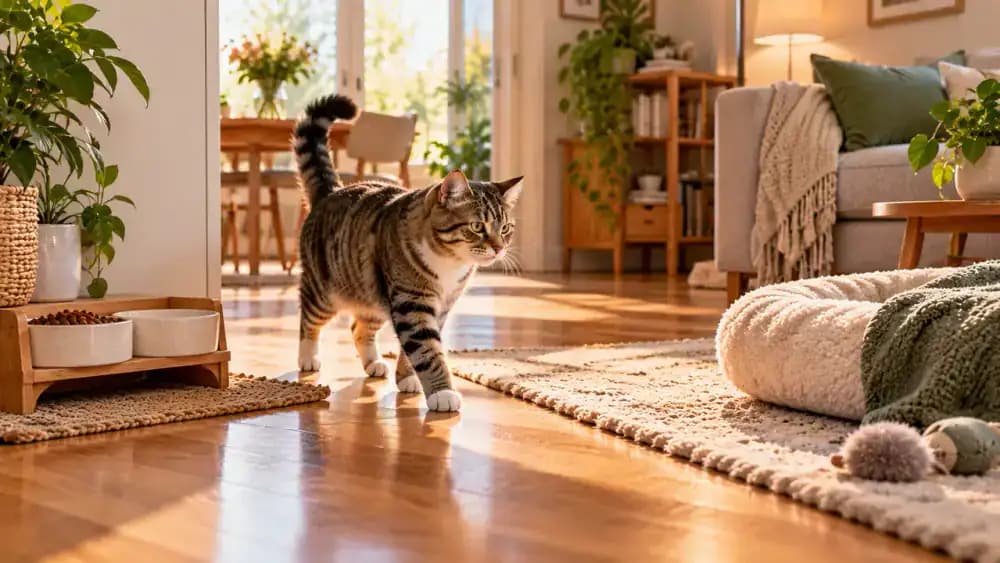
Review your cat's feeding environment regularly, focusing on a quiet location, a stable clean dish, and relaxed eating behavior. Keep successful arrangements consistent while making small changes when necessary. Allow your cat to approach and leave freely without interruptions. Notice which adjustments seem most helpful, and share practical observations with other cat owners seeking calmer mealtimes.
Avoid Pressuring Your Cat to Eat
When your cat hesitates, avoid repeatedly offering the bowl by hand, calling its name, or following it with food. Place the meal in its familiar location and allow your cat to approach independently. Continue normal, quiet activities nearby without hovering. Monitor how much food is eaten, and seek veterinary advice promptly if appetite changes persist.
Keep the Area Around the Bowl Clean
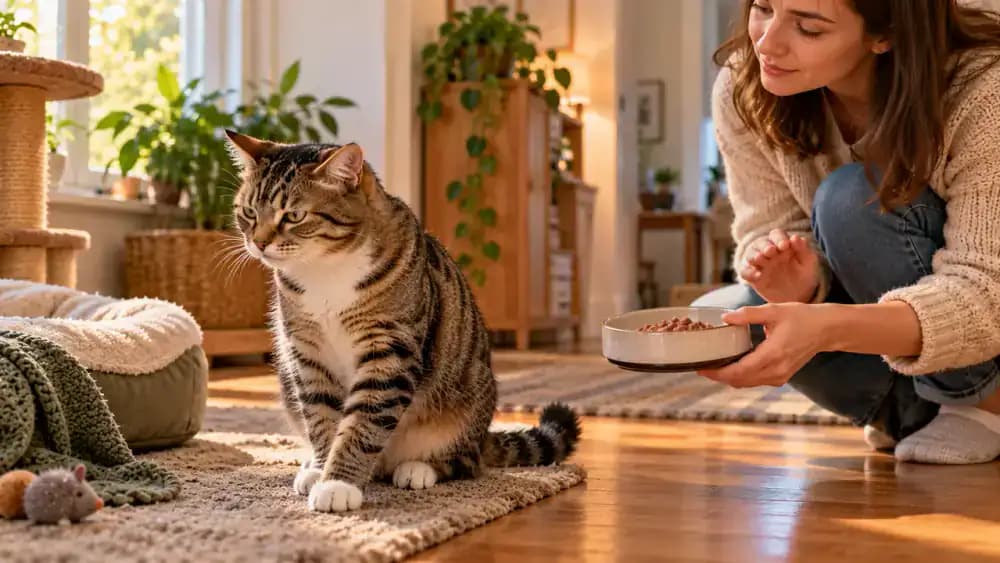
After each meal, check the feeding area for scattered crumbs, dried food, and spills that could attract insects or create sticky surfaces. Remove debris and wipe the floor or feeding mat using a pet-safe cleaning method. Avoid strongly scented products, rinse when necessary, and allow everything to dry completely before returning the clean dish.

Measure Portions to Understand Eating Habits
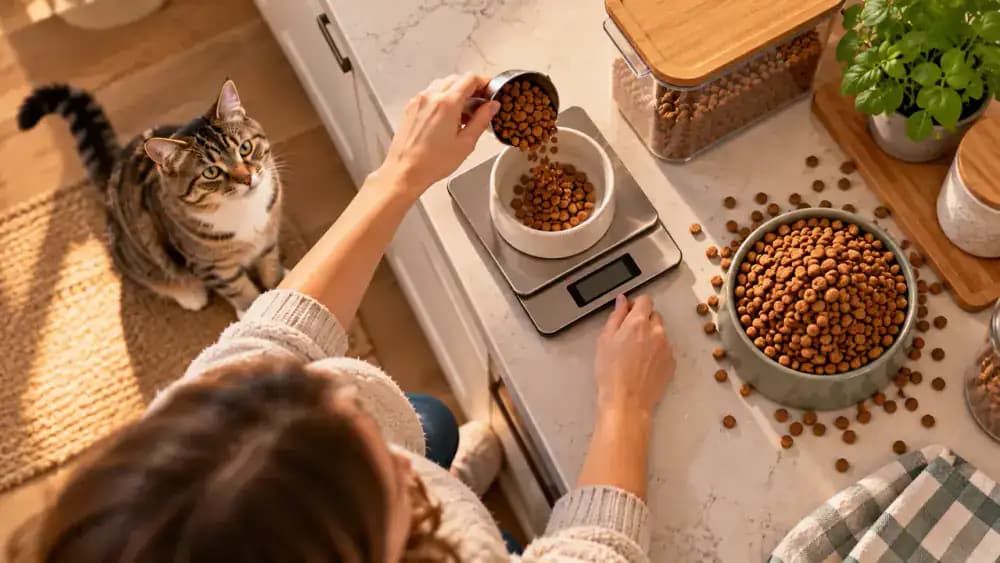
Measure your cat's food according to its established feeding plan rather than filling the bowl without checking quantities. Use a measuring container or digital kitchen scale to track portions accurately. After meals, measure leftovers when practical and record approximate intake. This helps you notice meaningful appetite changes without pressuring your cat to finish every serving.
Handle Medication Without Creating Food Anxiety
If your cat requires medication with food, follow your veterinarian's administration instructions carefully. Ask whether the medicine can be mixed with food or needs a different delivery method. Never crush tablets or alter prescribed treatments without approval. Keep ordinary meals predictable whenever possible, and contact your veterinarian if medication administration disrupts eating.

Keep Feeding Areas Accessible Throughout the Day
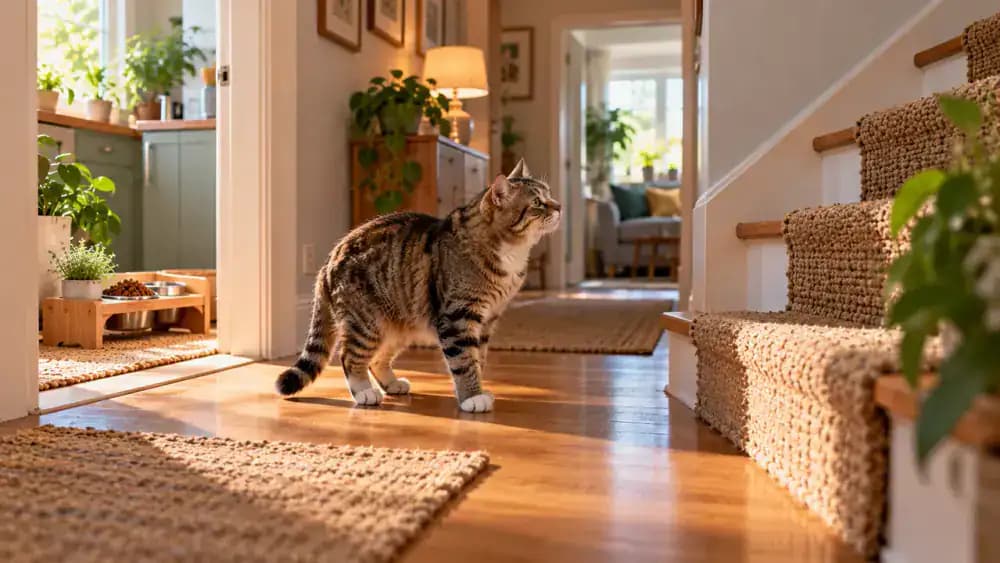
Check that your cat can reach its feeding station throughout the day without navigating difficult stairs, closed doors, or cluttered passages. Pay particular attention to older cats or those with limited mobility. If access becomes challenging, provide a suitable feeding location on an easily reached floor. Keep pathways clear and monitor whether your cat approaches comfortably.
Evaluate Improvement Over Several Meals
Compare your cat's behavior across several meals before deciding whether a feeding adjustment has helped. Record comfortable approaches, hesitation, interruptions, and approximate food consumption over several days. Look for consistent patterns rather than relying on one successful meal. If appetite changes or feeding concerns continue, share your observations with your veterinarian instead of repeatedly changing accessories.

Make Comfortable Mealtimes a Lasting Habit
Keep your cat's feeding routine simple, peaceful, and suited to its individual preferences. Maintain a quiet location, clean stable dish, easy access, and familiar feeding schedule. Observe eating habits without hovering, and respond promptly to unexpected appetite changes. With consistent care and thoughtful adjustments, mealtimes can become a more comfortable and predictable daily experience.

Your cat approaches the food bowl, takes a cautious sniff, and seems ready to eat. Then footsteps echo through the hallway, the dishwasher starts humming, or another pet wanders past. Suddenly, your cat backs away, leaving a perfectly good meal untouched.
For a sensitive cat, mealtime can be about more than what's in the bowl. The sounds, movement, and activity surrounding a feeding station may influence how comfortable a cat feels while eating. Some cats are perfectly happy dining in a busy kitchen, while others prefer a quieter, more predictable environment where they can eat without frequent interruptions.
Fortunately, creating comfortable mealtimes for sensitive cats doesn't necessarily require expensive equipment, a different diet, or major changes to your home. A peaceful corner, a clean shallow dish, and a familiar feeding schedule can make the dining experience more inviting.
The goal is to help your cat feel secure enough to approach the bowl, maintain a relaxed posture, and eat without constantly checking the surroundings. Small adjustments also make it easier to notice changes in your cat's normal eating habits.
This guide covers practical feeding station improvements, common mistakes to avoid, and signs that indicate when veterinary guidance is needed. Remember that environmental changes support comfort but should never replace veterinary attention for persistent appetite problems.
Where people go wrong
Putting the Food Bowl in a Busy Location. A kitchen walkway, laundry room, or busy doorway may expose a sensitive cat to sudden noises and repeated interruptions. Even familiar household activity can make some cats hesitant to settle down and eat. Choose a quieter location with minimal foot traffic, and observe whether your cat appears more comfortable eating there.
Using a Deep, Narrow, or Unstable Bowl. Deep bowls can cause a cat's whiskers to repeatedly contact the sides, which some cats may dislike. Lightweight dishes may also slide across the floor or rattle against nearby objects. Try a clean, wide, shallow dish on a stable surface. Avoid assuming one bowl style works equally well for every cat.
Placing Food Too Close to the Litter Box. Cats generally prefer their eating and toileting areas to be separate. Positioning a food dish beside the litter box can make the feeding environment less appealing and introduce unwanted odors or contamination. Provide distinct areas for meals, drinking water, and litter boxes whenever possible, while keeping each resource easy for your cat to access.
Changing Food and Feeding Locations at the Same Time. Introducing a new diet, unfamiliar bowl, and different feeding location simultaneously can make it difficult to understand what your cat likes or dislikes. Keep the familiar food and feeding schedule while adjusting the surrounding environment gradually. If a dietary change is necessary, follow veterinary guidance and monitor your cat's response.
Allowing Other Pets to Interrupt Meals. Another cat hovering nearby or a dog approaching the bowl can make mealtime uncomfortable, even without obvious aggression. Some cats prefer eating independently rather than sharing a feeding station. Offer separate dining locations with enough distance or visual separation to reduce competition, guarding, and interruptions. Make sure each pet can access its food safely.
Hovering Over or Pressuring the Cat to Eat. Repeatedly moving the dish, standing over your cat, or encouraging every bite may unintentionally add more activity to an already distracting environment. Offer the meal calmly and allow the cat some space while discreetly monitoring food intake. Never force-feed without veterinary direction, and do not ignore continued reluctance to eat.
Assuming Persistent Appetite Changes Are Just Sensitivity. Environmental distractions may affect eating behavior, but they are not the only possible explanation for reduced appetite. Dental discomfort, nausea, illness, and other concerns require professional assessment rather than guesswork. Contact your veterinarian promptly when your cat refuses food, eats substantially less than usual, or shows other concerning changes. Avoid delaying care while experimenting with feeding arrangements.

Questions people ask
Some cats are sensitive to footsteps, appliance sounds, unfamiliar activity, or other pets approaching while they eat. The feeding location and surrounding environment may contribute to hesitation. Look for patterns, such as your cat leaving whenever someone walks past. However, new or persistent changes in appetite or eating behavior should be discussed with a veterinarian rather than attributed to nervousness alone.
Fixed it?
Get one guide like this every Thursday.