How to Make a Cardboard Exploration Maze for Your Cat
Turn ordinary cardboard boxes into a fun, budget-friendly exploration maze for your cat. Learn what supplies you need, how to create safe tunnels and hiding spots, and how to encourage curious cats to explore at their own pace.
What you’ll need
Tap to tick things off before you start.
Turn Ordinary Boxes Into an Adventure
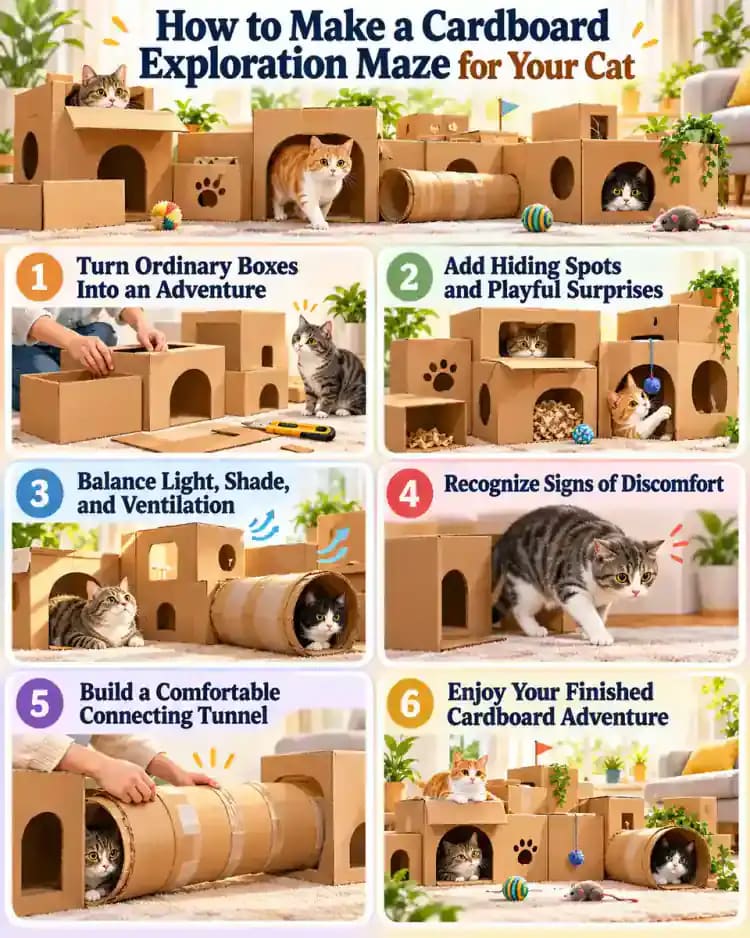
Start by watching how your cat interacts with a few ordinary cardboard boxes. Notice whether it prefers hiding inside, peeking through openings, or exploring around them. Use these natural behaviors as inspiration for a simple indoor maze. Choose a quiet, familiar area with enough floor space for connected boxes and comfortable exploration.

Gather Safe and Simple Materials
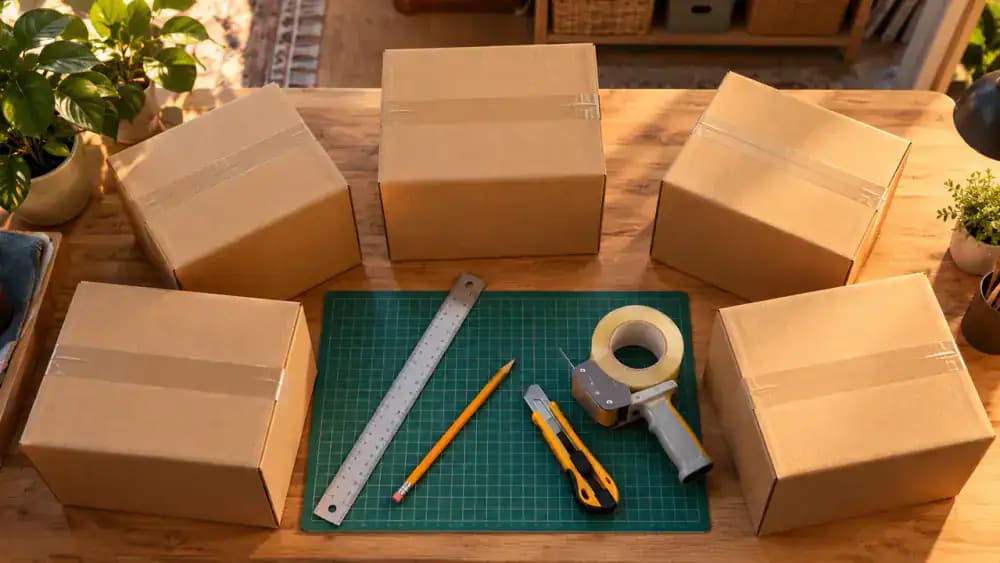
Gather three to five clean, sturdy cardboard boxes large enough for your cat to move through comfortably. You'll also need a pencil, ruler, cutting mat, utility knife, and suitable fastening tape. Carefully remove staples, plastic straps, and loose labels. Keep your cat away from the workspace while handling sharp tools and preparing the boxes.
Plan the Maze Layout
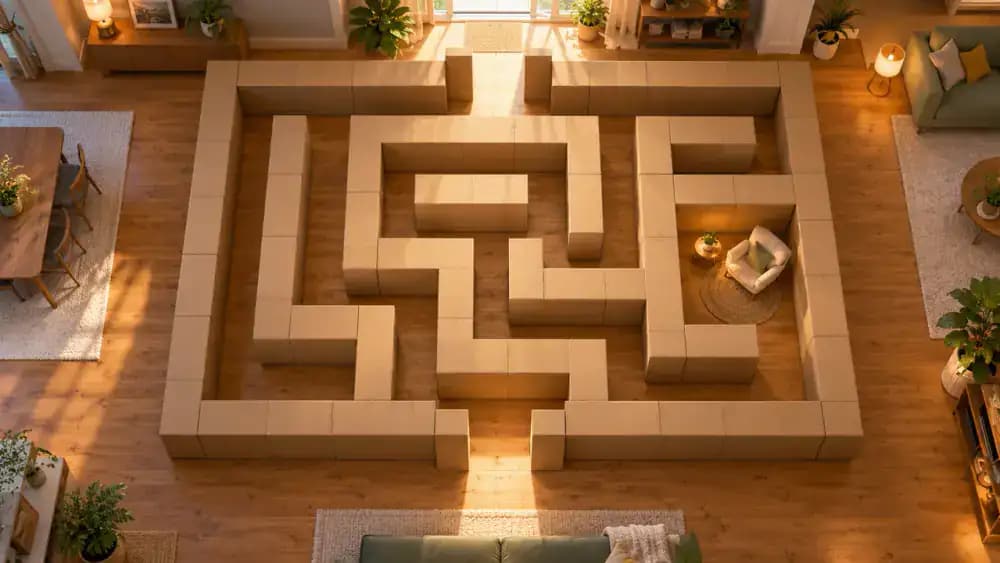
Arrange the uncut boxes on a clean floor to create a simple route with a main passage, a side chamber, and at least two accessible exits. Check that every section provides enough space for your cat to turn around comfortably. Keep the entire layout at floor level and avoid narrow passages or enclosed dead ends.
Cut Comfortable Doorways
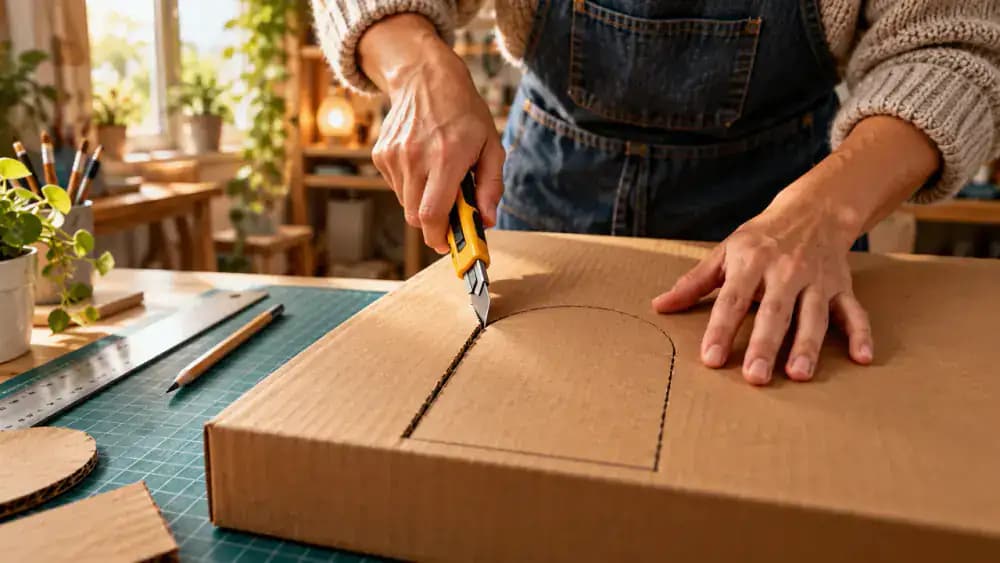
Use a ruler and pencil to mark matching doorways where neighboring boxes will connect. Make each opening comfortably wider than your cat's body, with rounded corners and no tight gaps. Move the boxes onto a protected cutting surface, keeping your cat elsewhere. Carefully cut the openings, smooth rough edges, and remove every cardboard scrap.
Connect and Stabilize the Structure
Align the prepared boxes so connecting doorways remain fully open. Secure adjoining sections with suitable tape applied only to exterior joints, keeping sticky surfaces inaccessible to your cat. Reinforce weak corners and gently press each section to check stability. If anything slides, buckles, or tips, adjust the connection and test again before allowing supervised exploration.
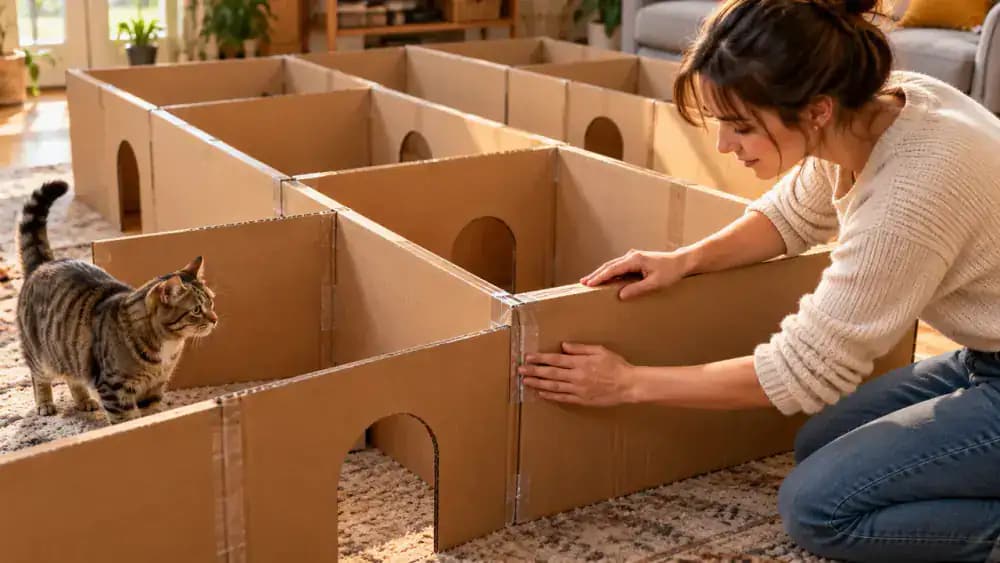
Add Hiding Spots and Playful Surprises
Make the stable maze more inviting by adding a small observation window, a soft resting pad, or a familiar cat-safe toy near an exit. Keep your cat away while cutting additional openings. Place a few treats along the route to encourage curiosity. Avoid dangling strings, loose decorations, and anything that blocks passages or creates swallowing hazards.
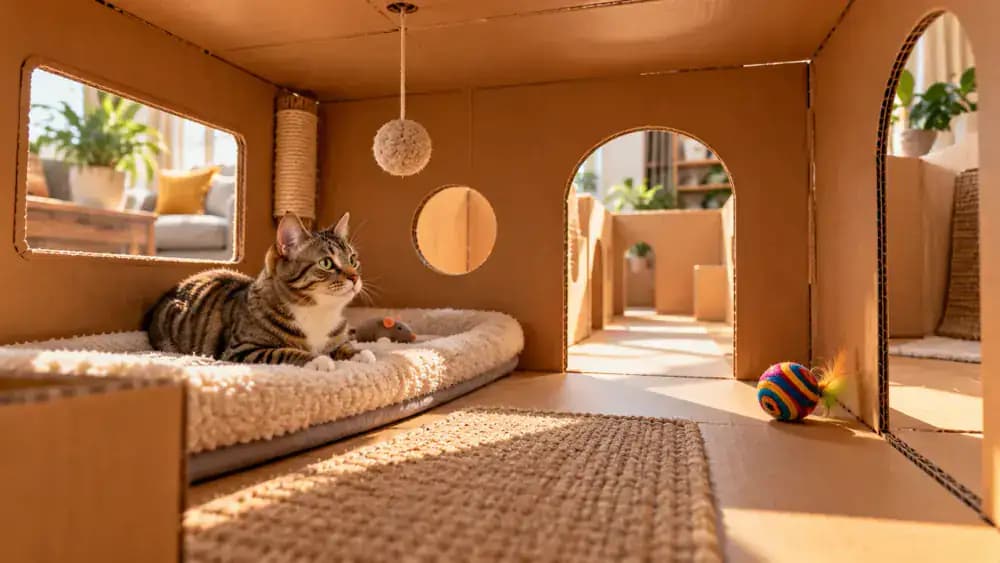
Let Your Cat Explore Naturally
Place the completed maze in a quiet, familiar room and allow your cat to approach independently. Sit nearby and supervise without pushing, carrying, or directing your cat into an opening. Let it sniff, pause, explore, or leave whenever it chooses. Offer gentle encouragement with a familiar toy or treat, and keep all exits accessible.
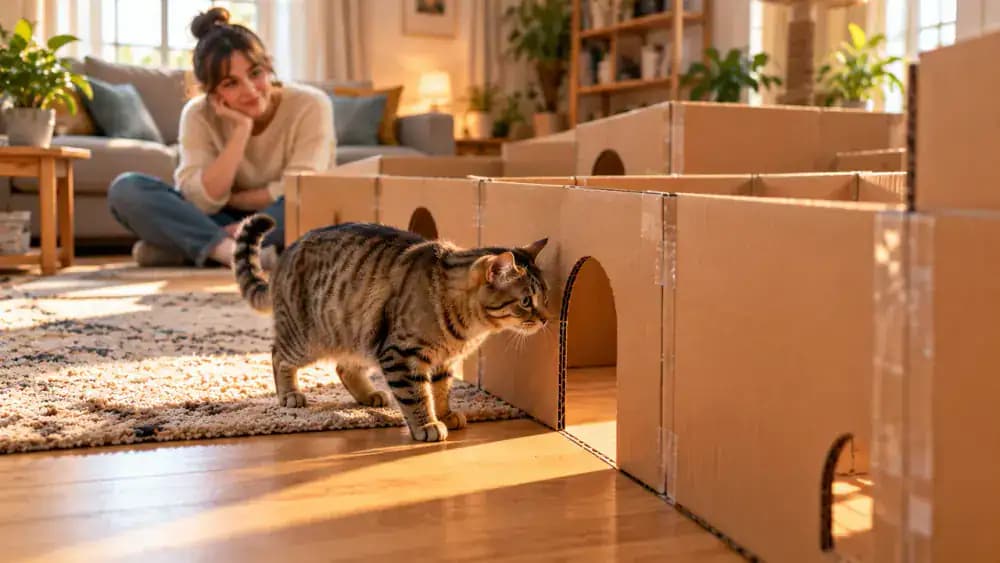
Refresh the Adventure and Keep It Safe
Keep the maze interesting by occasionally moving a toy, rotating a box, or adding a spacious chamber. Make one adjustment at a time while preserving stable connections and clear exits. Before every supervised session, inspect joints, openings, and cardboard surfaces. Replace sections that become damp, heavily chewed, or unstable, and remove damaged materials immediately.
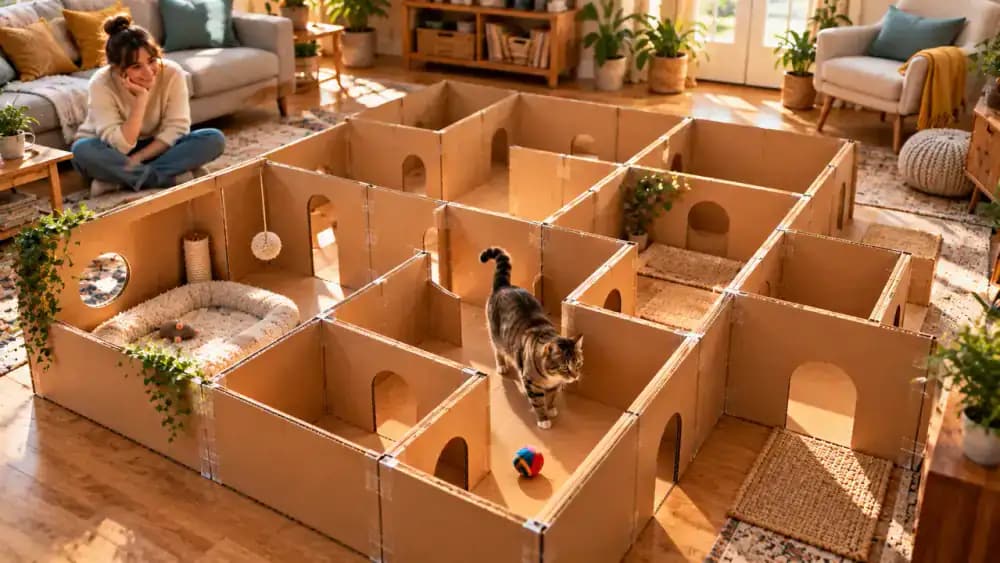
Discover Your Cat's Favorite Features
Observe your cat during several supervised maze sessions to discover which features attract the most interest. Notice whether it repeatedly visits a sheltered chamber, watches through an observation window, or follows a particular corridor. Record these preferences in a notebook. Use your observations to guide future adjustments instead of adding unnecessary tunnels, toys, or hiding spaces.
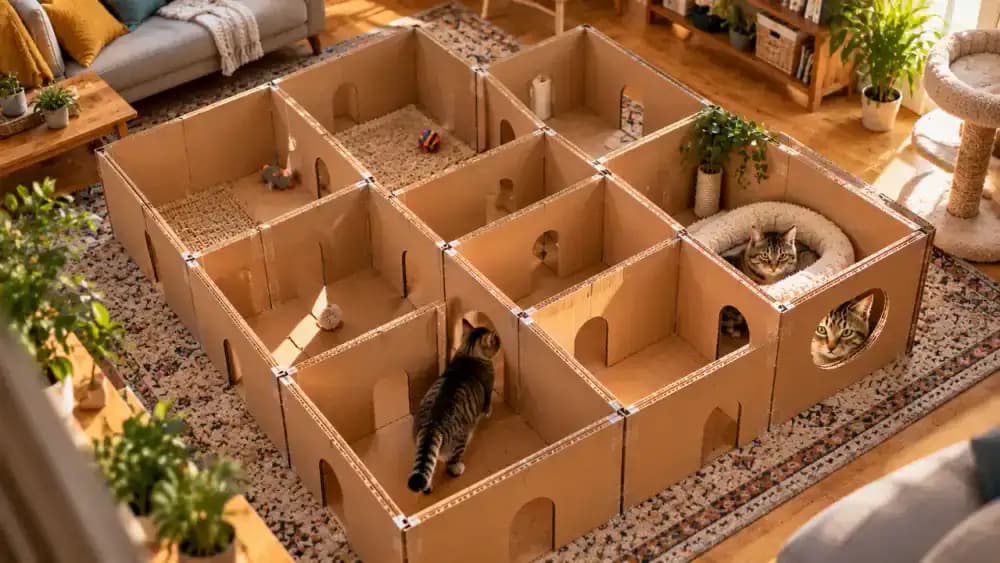
Create Interesting Pathway Choices
Add a simple junction that gives your cat two comfortable routes to explore. Arrange one passage toward a sheltered resting chamber and another toward an open, well-lit exit. Keep both routes spacious, stable, and easy to navigate. Avoid tight corners or confusing dead ends. Allow your cat to choose either direction without interference or pressure.
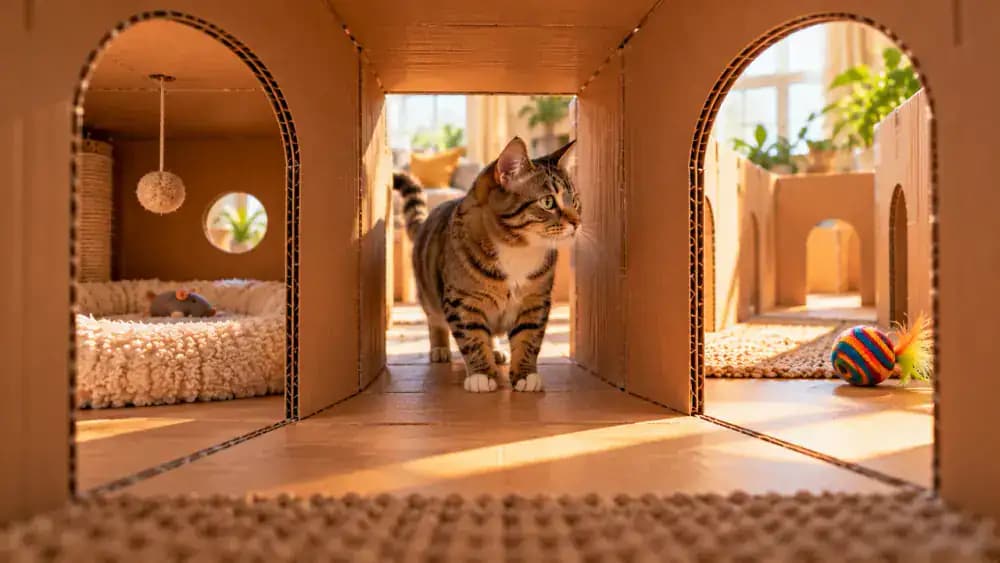
Introduce Gentle Texture Variety
Add a washable, nonslip fabric square to the floor of a spacious cardboard chamber for gentle texture variety. Choose tightly woven material without loose threads, and lay it flat so the edges cannot bunch up or block entrances. Let your cat investigate the new surface naturally. Remove the fabric immediately if chewing or unraveling occurs.
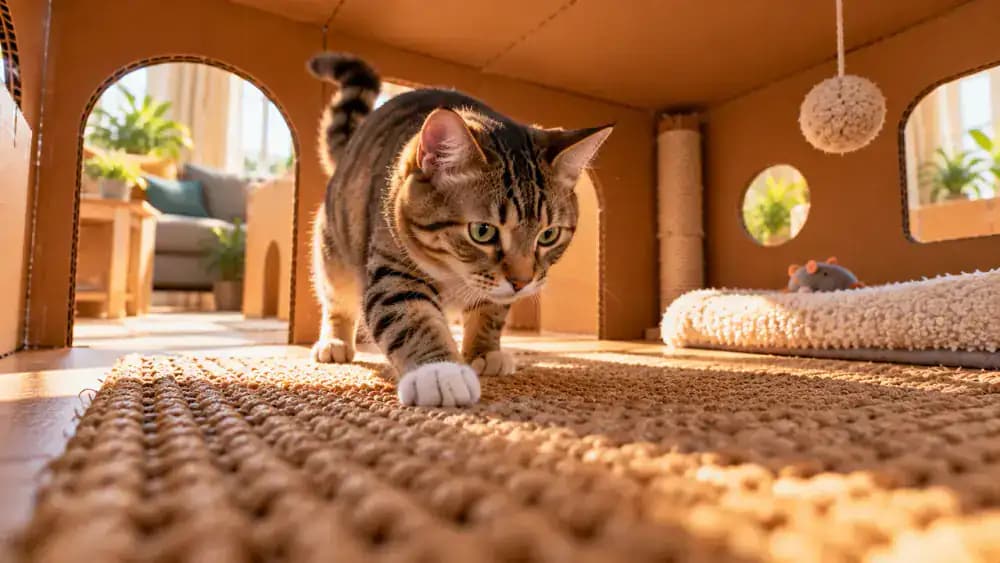
Balance Light, Shade, and Ventilation
Position the cardboard maze in a comfortable, well-ventilated area away from direct sunlight, heaters, and other heat sources. Arrange the boxes to create a natural mixture of brighter passages and shaded resting spaces. Keep ventilation openings unobstructed, and never completely seal a chamber. Check that your cat can easily see and reach multiple exits.
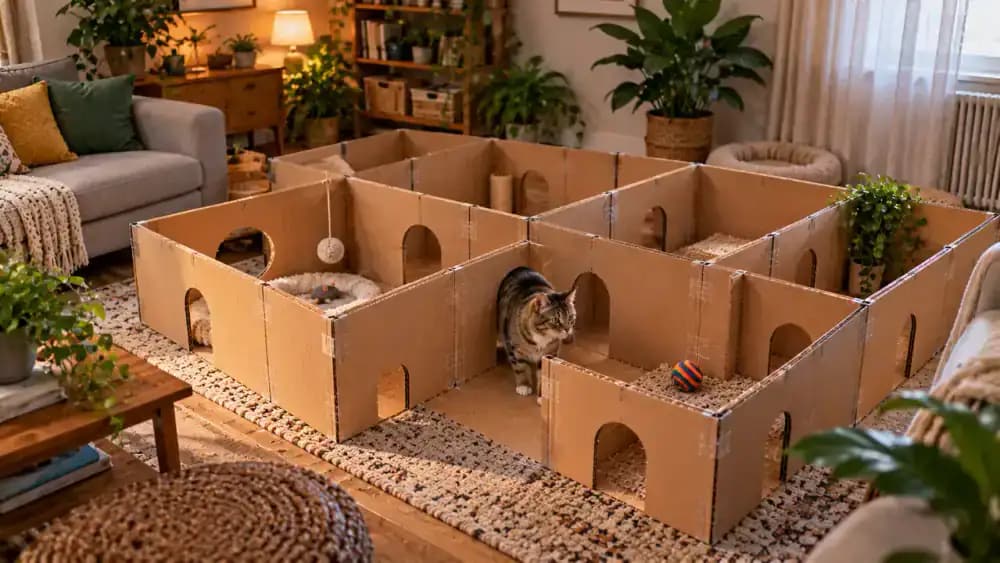
Encourage Natural Hunting Behaviors
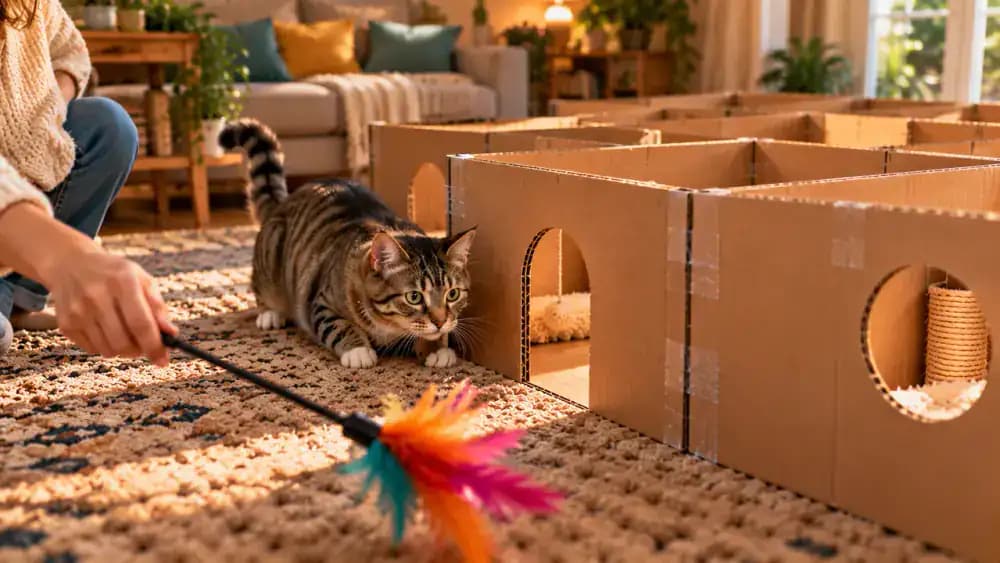
Use a cat-safe wand toy to encourage playful stalking around the maze. Hold the wand securely and slowly move its attachment past an exterior doorway or observation window. Let your cat decide whether to watch, chase, or pounce without blocking any exits. Keep strings under your control throughout play, and store the toy safely afterward.
Create a Simple Food Search Challenge
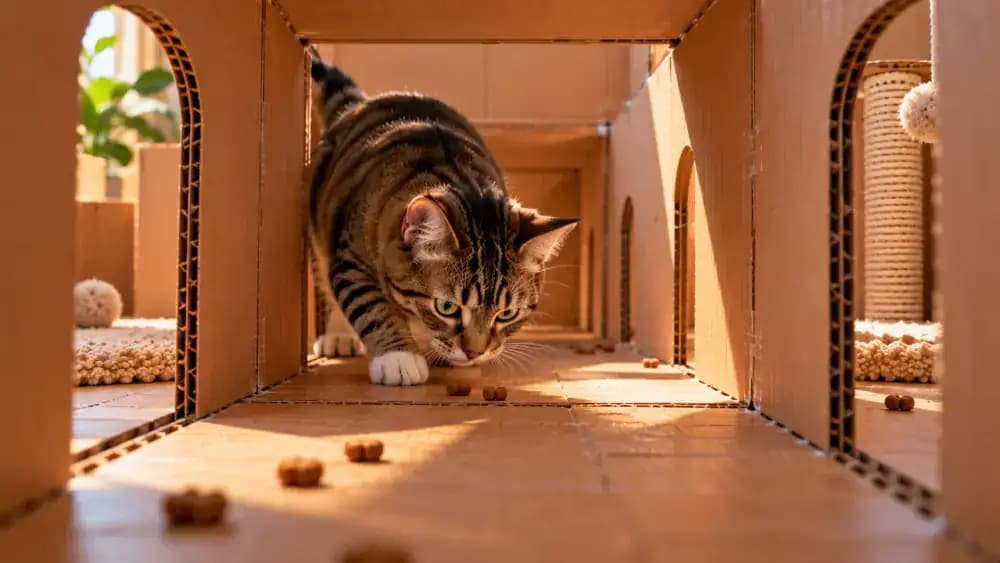
Measure a small portion of your cat's usual dry food from its daily allowance and place individual pieces in clean, accessible spots along the maze. Start with visible locations near entrances before trying slightly less obvious hiding places. Allow your cat to search voluntarily without pressure. Afterward, collect leftover food and wipe away any crumbs.
Adapt the Maze for Multiple Cats
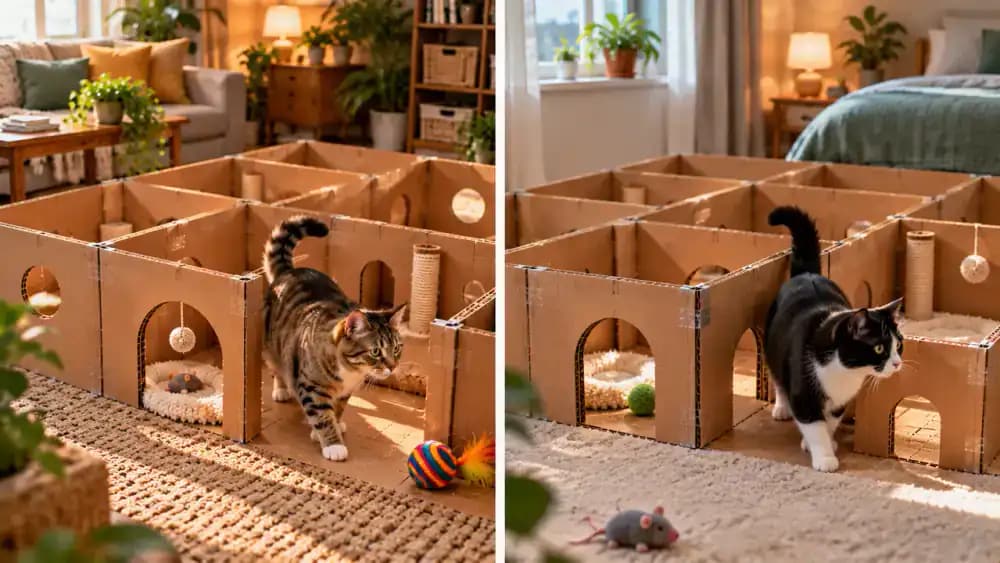
If you have multiple cats, introduce the maze during separate supervised sessions before considering shared access. Watch for doorway blocking, guarding, chasing, or signs that either cat wants to retreat. Provide multiple clear exits and avoid narrow routes where cats could trap one another. Never force introductions or make cats compete for toys, food, or hiding spaces.
Celebrate Curiosity and Keep Exploring
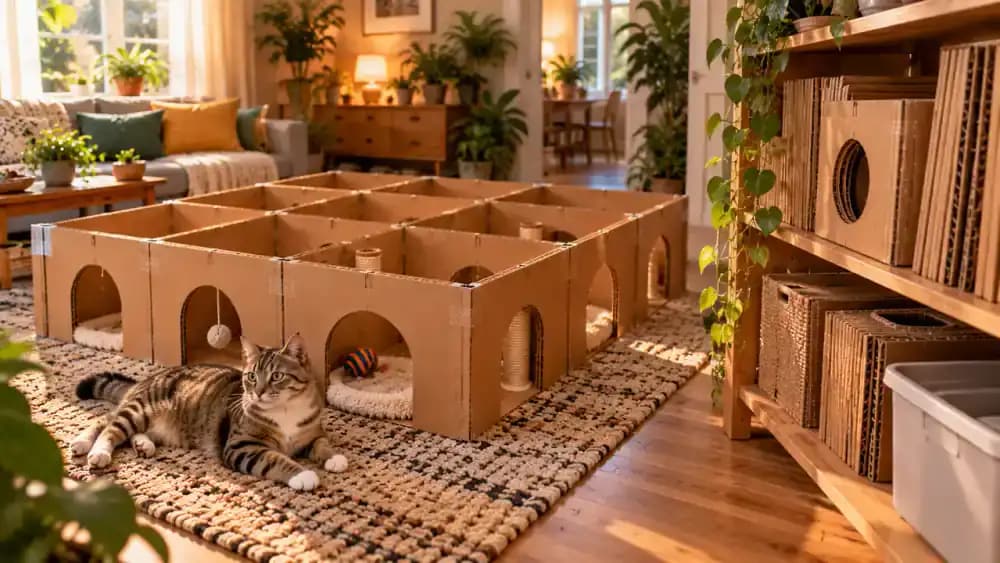
Measure your cat's enjoyment by comfort and voluntary participation rather than speed or completed routes. Resting beside the maze can be just as rewarding as exploring every chamber. Keep play sessions optional and supervise each visit. When playtime ends, remove loose accessories, inspect the cardboard, and store removable sections in a clean, dry location.
Find the Best Time for Exploration
Offer the cardboard maze during a calm part of your cat's daily routine, such as after waking naturally from a nap. Avoid introducing new challenges during noisy or busy household activities. Watch for relaxed ears, comfortable movement, and voluntary returns to the maze. Let your cat determine the session length without setting strict time limits.
Recognize Signs of Discomfort
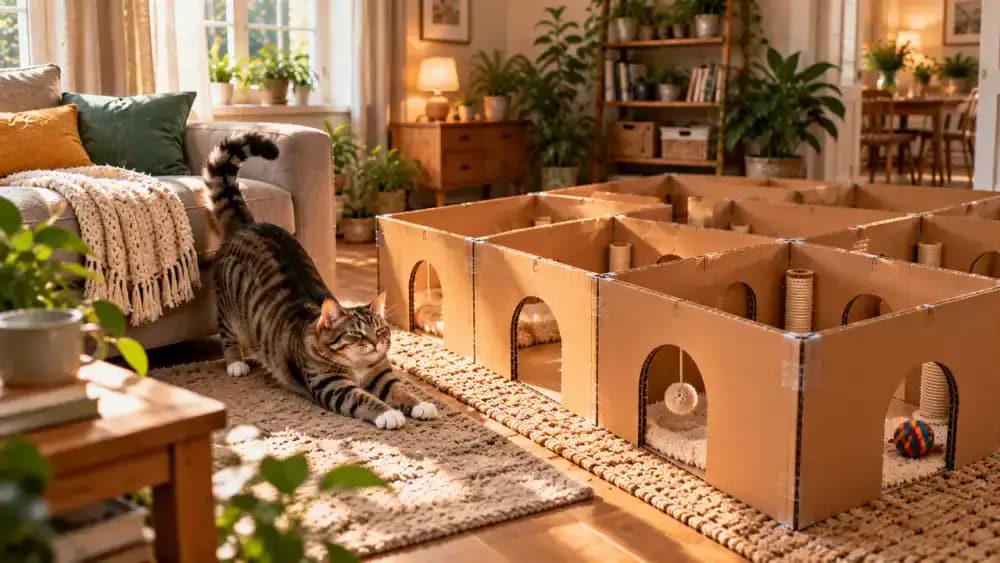
Pay attention if your cat suddenly freezes, flattens its ears, lowers its tail, or repeatedly tries to escape. These behaviors may indicate discomfort with the activity. Stop encouraging exploration, clear the nearest exit, and give your cat space. Check for narrow passages or overwhelming features, then simplify the layout before offering another optional session.
Make the Maze Kitten Friendly
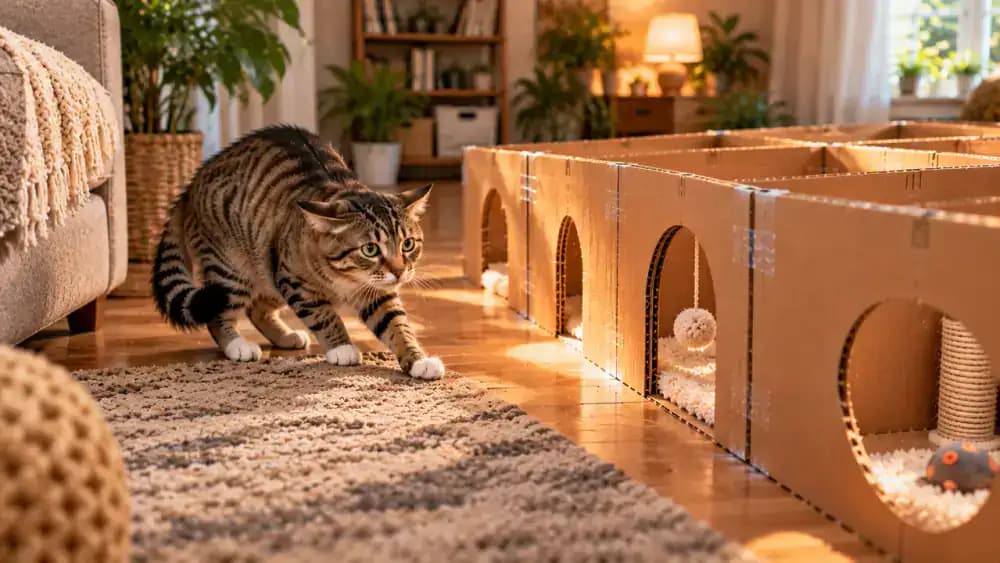
Build a kitten-friendly maze using stable, floor-level boxes with generous openings and no elevated platforms. Check passage sizes regularly as your kitten grows, and remove loose cardboard fragments before play. Supervise closely because energetic kittens may chew or tear exposed edges. If persistent chewing develops, put the maze away and offer a suitable kitten-safe toy instead.
Adapt the Maze for Senior Cats
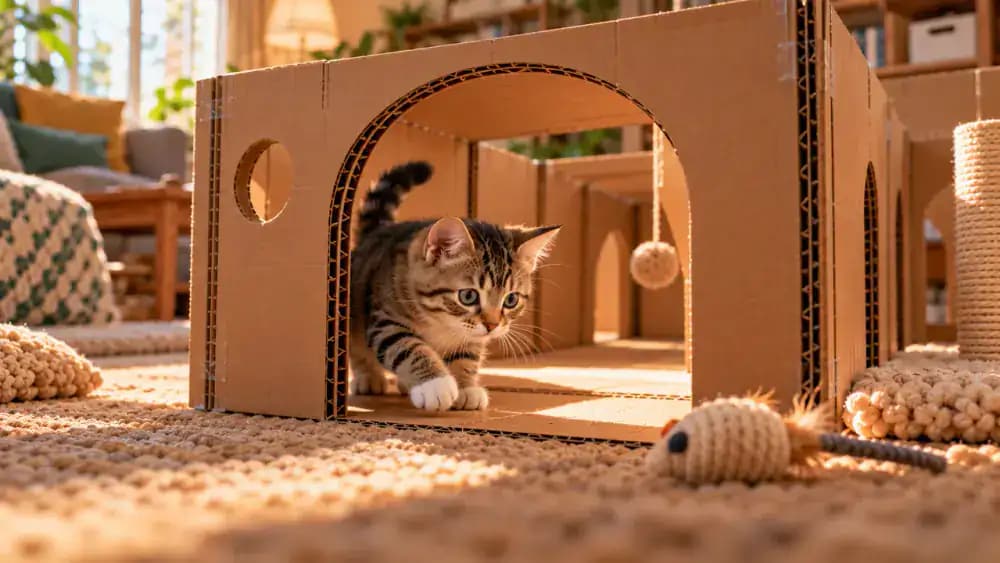
Make the maze accessible for an older cat by using wide entrances, low thresholds, and spacious chambers that require minimal crouching or turning. Keep every section at floor level and place a familiar resting cushion near an easy exit. Observe your cat's natural movements and adjust the layout to avoid jumping, climbing, or uncomfortable obstacles.
Build Replaceable Maze Modules
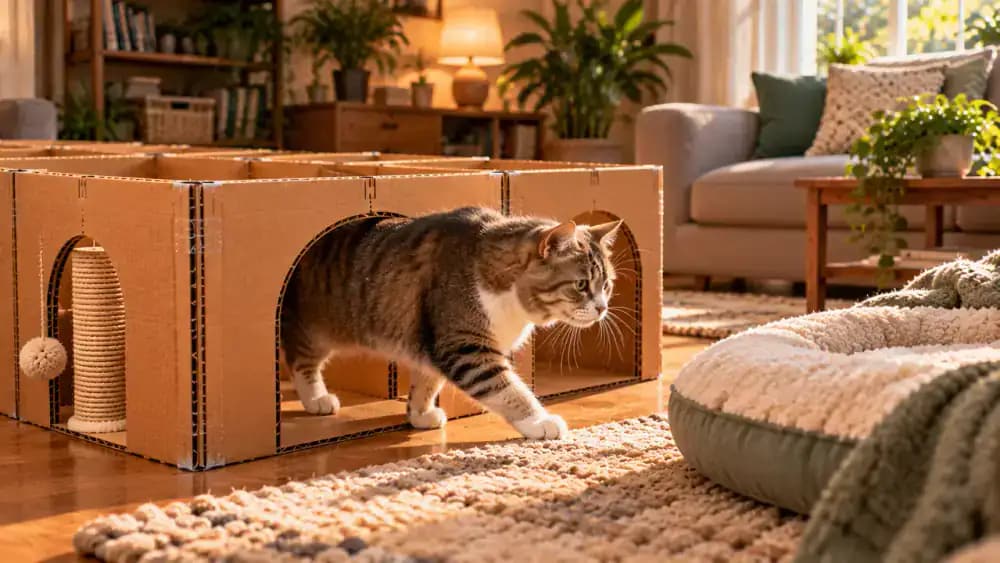
Design individual cardboard chambers as removable modules so damaged sections can be replaced without rebuilding the entire maze. Label each box on its exterior to remember its position. Between play sessions, detach worn modules and install sturdy replacements with secure connections. Keep your cat away during modifications, and check the stability of every new arrangement.
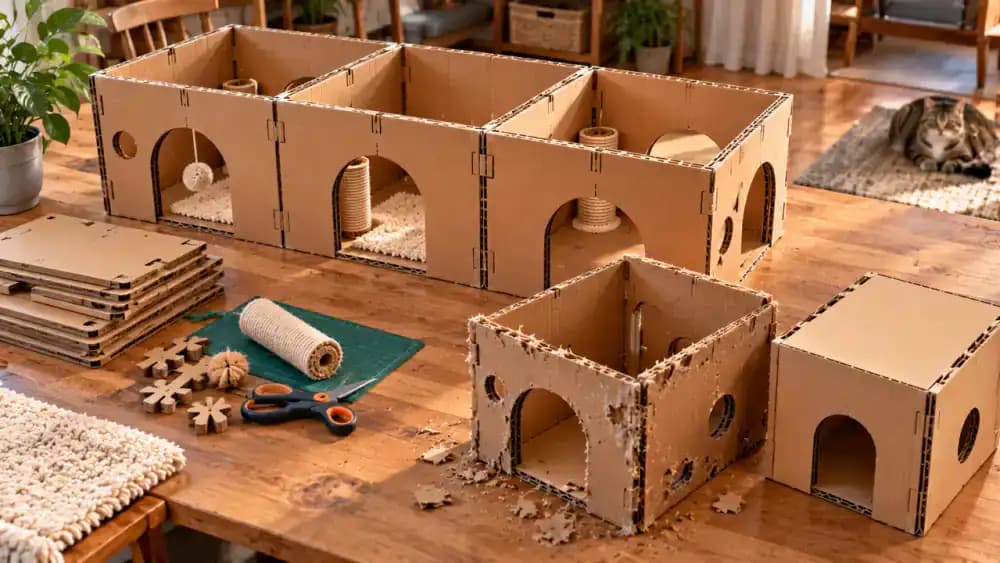
Perform a Quick Safety Inspection
Inspect the cardboard maze before every play session, paying special attention to softened floors, torn corners, peeling tape, and loose debris. Remove damaged sections and replace them with sturdy cardboard before allowing access. Check that all connections remain secure and entrances stay unobstructed. Keep the maze away from household walkways to prevent accidental bumps or trips.
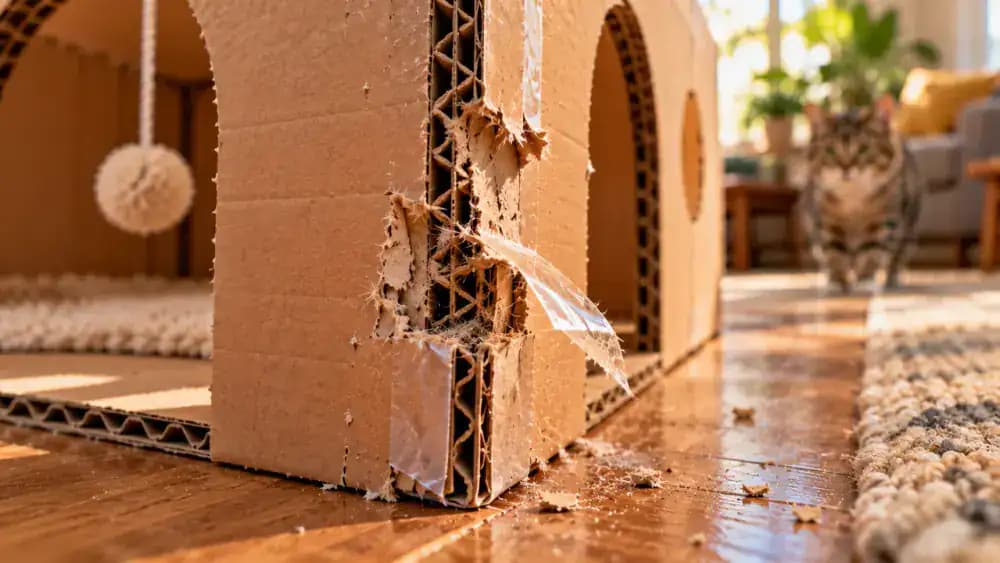
Create Your Cat's Next Cardboard Adventure
Explore new maze designs by rearranging sturdy boxes into simple tunnels, connected chambers, or larger floor-level routes. Keep every layout stable, spacious, and equipped with accessible exits. Let your cat investigate each variation voluntarily while you supervise nearby. Notice which arrangements encourage comfortable exploration, and share your favorite practical designs with other cat owners.
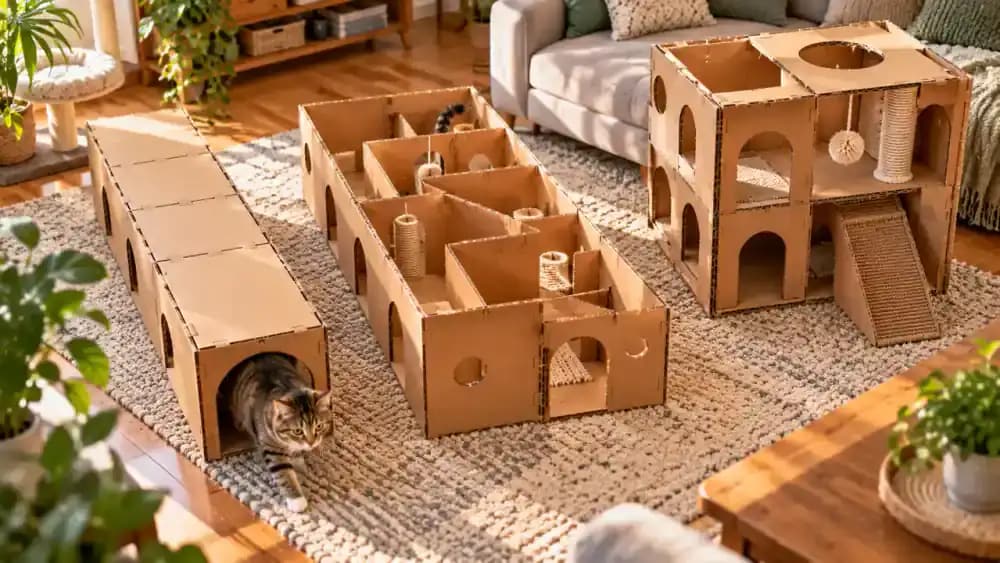
Build a Comfortable Connecting Tunnel
Connect two spacious cardboard chambers using a short, wide tunnel that rests completely on the floor. Keep the passage straight, support its walls, and secure both ends from the outside without exposing adhesive. Check that your cat can move through comfortably. Gently test each connection for shifting or separation before allowing supervised exploration.
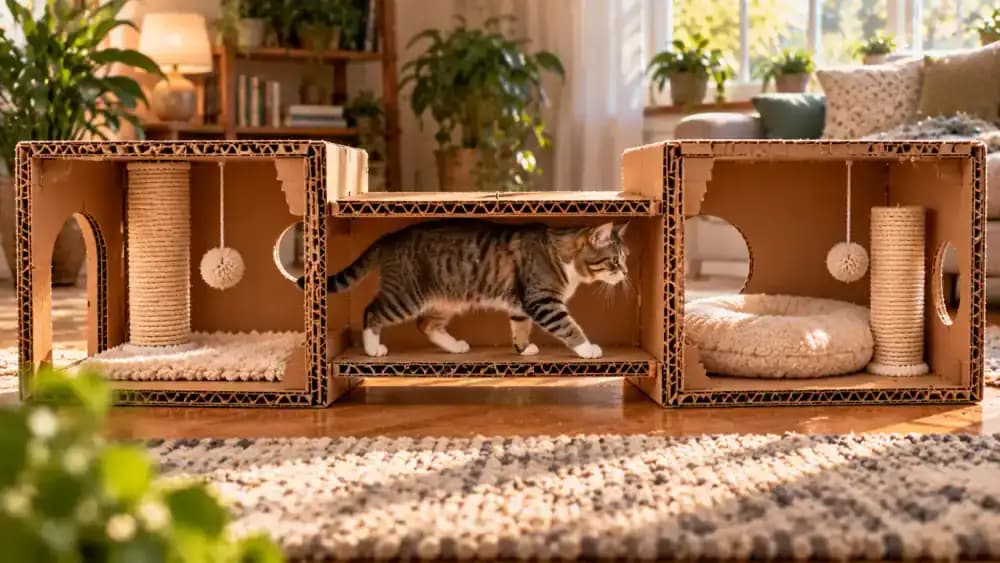
Create Reassuring Views Outside
Add a generous side window to a spacious cardboard chamber so your cat can observe familiar surroundings while resting inside. Position the opening toward a comfortable area of the room and leave wide, sturdy cardboard borders. Reinforce weak edges without exposed adhesive or loose materials. Check structural stability before letting your cat explore the updated chamber.
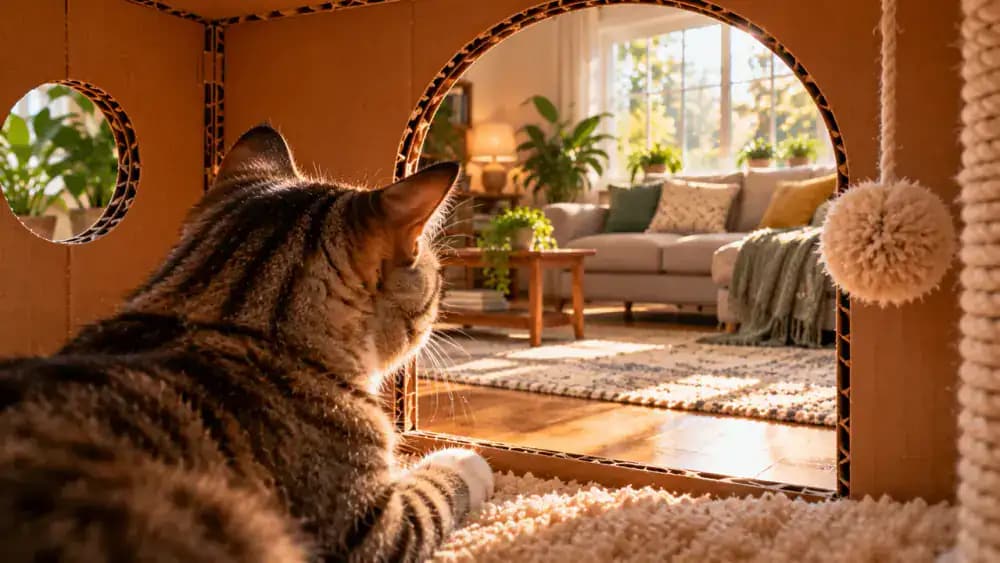
Reduce Unexpected Maze Noises
Place the cardboard maze on a flat, stable surface and listen for scraping, crackling, or shifting sounds as your cat explores. If a box rubs against the floor or moves unexpectedly, adjust its position and secure uneven contact points. Test the structure again before play. Reducing sudden noises can make exploration more comfortable for cautious cats.
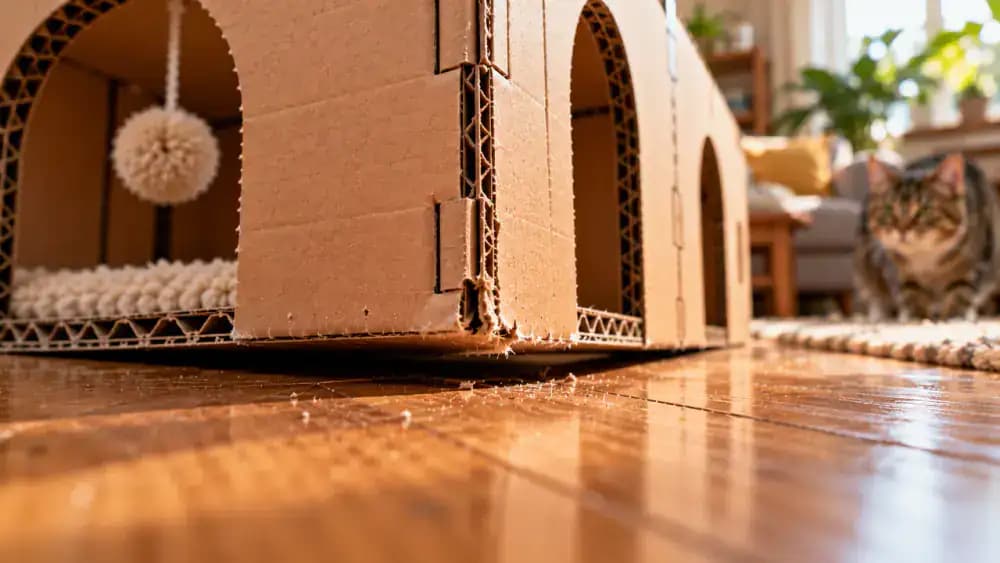
Keep Essential Household Routes Clear
Position the cardboard maze away from your cat's regular routes to food, water, litter boxes, and favorite resting places. Leave generous clearance around doors, furniture, and household walkways. Your cat should reach essential resources without entering or navigating through the maze. Check the placement from your cat's perspective and adjust boxes that obstruct familiar paths.
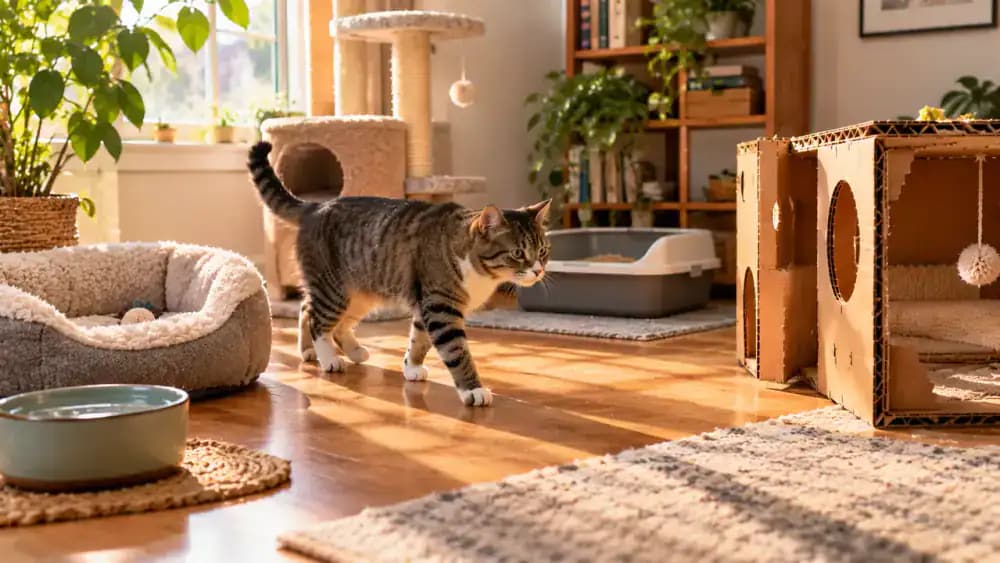
Encourage Play Without Entering
If your cat prefers watching the maze from outside, offer a gentle activity near an open doorway. Slowly roll a soft, cat-safe ball across the visible floor and let it stop naturally. Give your cat time to observe, reach toward, or investigate the toy. Avoid pushing the ball inside or forcing participation, and supervise the interaction.
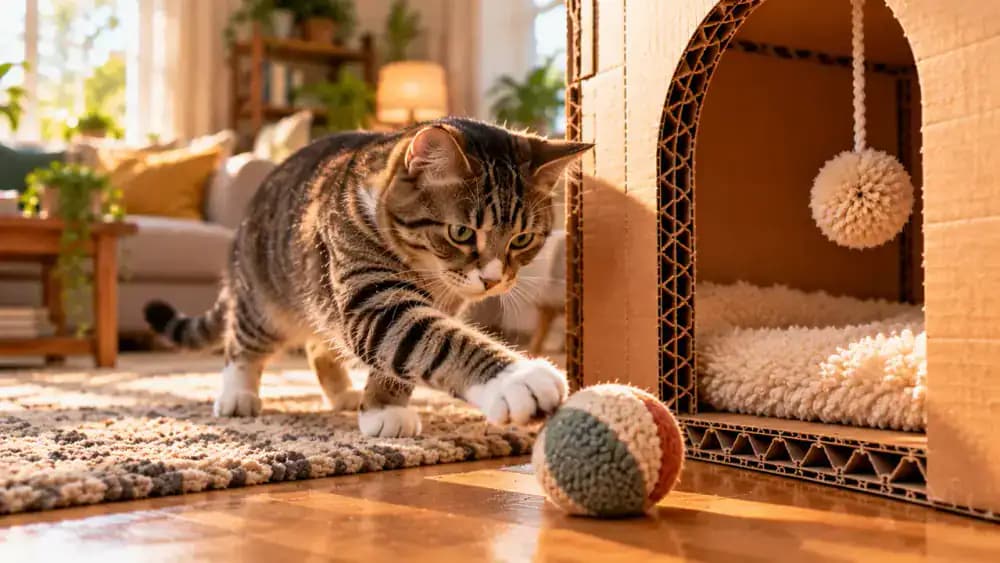
Discover Why Simpler Can Be Better
Evaluate whether your cat uses every section of the maze or consistently avoids certain chambers. Remove unnecessary boxes and shorten overly complicated routes while your cat is elsewhere. Preserve generous openings, stable connections, and multiple exits. Introduce the simplified design during supervised play and observe your cat's response. Smaller layouts are often easier to inspect, maintain, and rearrange.
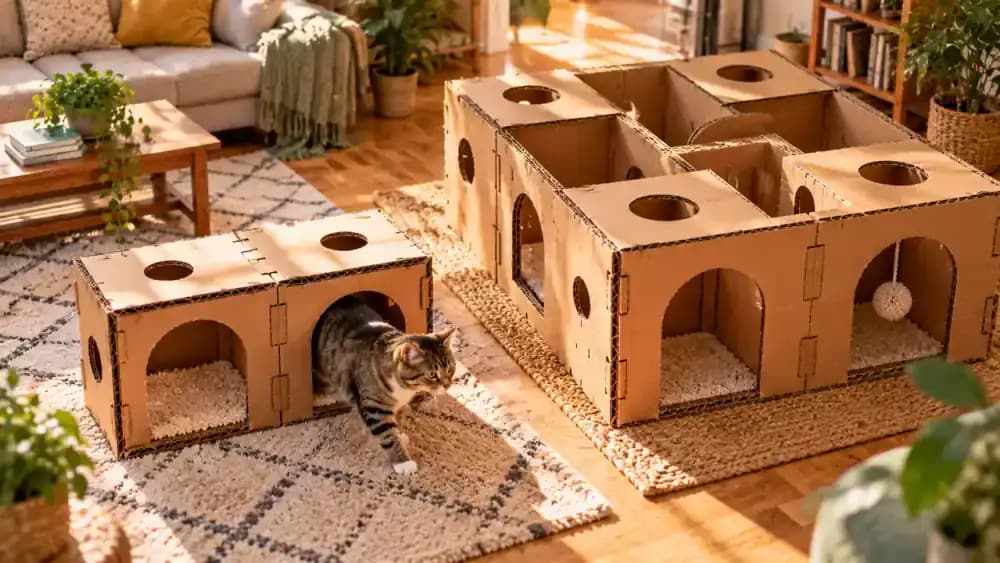
Enjoy Your Finished Cardboard Adventure
Invite your cat to enjoy the completed maze with its roomy entrances, stable connecting tunnels, and observation windows. Supervise as it explores, peeks outside, or settles into a comfortable chamber. Continue checking the cardboard for damage and allow exploration entirely by choice. Share your favorite layout to inspire other cat owners to create safe indoor adventures.
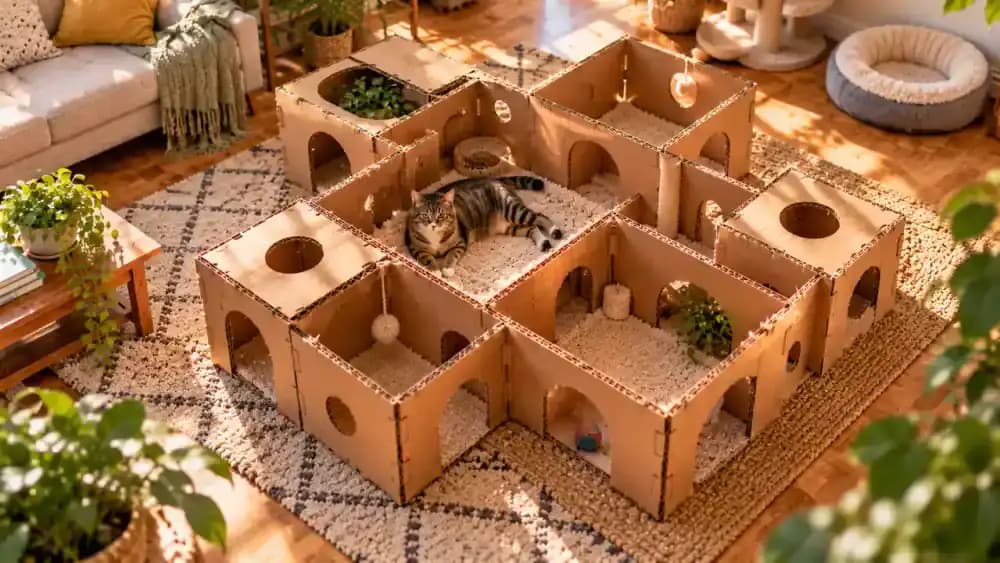
Ever notice how your cat ignores an expensive new toy but immediately climbs into the cardboard box it came in? One ordinary box can spark an afternoon of curiosity. Imagine what a few connected boxes could do. With a little creativity, you can turn everyday packaging into a cardboard exploration maze for your cat, complete with tunnels, hiding spots, and surprise openings.
This easy DIY project is an affordable way to add variety to your cat's indoor environment. It encourages natural behaviors such as investigating, hiding, stalking, and exploring without requiring specialized equipment or a large budget. Most of the materials may already be sitting in your recycling pile.
The secret to a successful cardboard cat maze isn't making it complicated. It's creating a stable, comfortable, floor-level space with roomy passages, multiple exits, and interesting places to peek through. Your cat should always be able to move freely, turn around, and leave whenever it wants.
You'll also want to think about safety before the first curious paw ventures inside. Sharp edges, exposed staples, loose tape, and unstable boxes can quickly spoil the fun. Cutting should always happen away from your cat, and exploration should be supervised.
Whether you're entertaining an energetic kitten or giving a more cautious adult cat something new to investigate, this customizable cardboard adventure offers a simple opportunity for play, discovery, and quality time together.
Where people go wrong
Making Entrances and Tunnels Too Small. A narrow passage might look playful, but it can make your cat uncomfortable or create a risk of getting stuck. Size each opening for your particular cat, including its shoulders and body width. Make connecting tunnels spacious enough for comfortable movement, and provide areas where your cat can turn around without squeezing or backing through a tight space.
Creating Dead Ends Without Easy Exits. A maze filled with closed-off chambers can make some cats hesitant to explore, especially when they cannot see a way out. Include multiple accessible exits and avoid spaces where a cat could become trapped. Position openings so every section has a clear escape route, and never block an exit to encourage your cat to continue exploring.
Leaving Staples, Sharp Edges, or Loose Tape. Shipping boxes often contain hidden staples, packaging tape, plastic labels, and rough cutouts. These materials can create scratching, chewing, or swallowing hazards. Carefully inspect every box before assembly, remove exposed hardware and loose adhesive materials, and smooth the openings. Keep fastening materials inaccessible to your cat, and check all connections again before the first play session.
Building an Unstable or Overly Tall Structure. Stacking boxes into towers may look impressive, but lightweight cardboard can shift, tip, or collapse when a cat jumps or pushes against it. Keep the beginner maze at floor level and secure connected boxes so they stay aligned during normal movement. Test the structure with gentle pressure before use, and avoid unsupported roofs or elevated sections.
Using Strong-Smelling or Unsafe Materials. Fresh adhesives, heavily scented decorations, and certain coatings may make the maze unpleasant or unsuitable for a curious cat. Stick with clean cardboard and minimal, carefully selected fastening materials. If using adhesive, verify its suitability, keep it out of reach, and allow it to cure fully. Avoid glitter, loose decorations, paint flakes, and strongly scented products.
Forcing a Reluctant Cat to Explore. Picking up your cat and placing it inside an unfamiliar tunnel can turn a fun enrichment activity into a stressful experience. Instead, leave the maze accessible during a supervised session and let your cat approach voluntarily. Try placing a familiar toy or a small treat near an entrance. Give your cat plenty of time and freedom to leave.
Forgetting Regular Inspections and Cleanup. Cardboard can weaken from moisture, repeated scratching, and enthusiastic chewing. An opening that was smooth yesterday might develop a jagged flap or loose piece today. Inspect the maze before each play session, remove damaged sections, and replace softened or unstable boxes. Discontinue use if your cat begins swallowing cardboard or repeatedly chewing off pieces.
Questions people ask
A well-designed cardboard maze can be a suitable supervised enrichment activity for many cats. Choose sturdy, clean boxes, provide several exits, and keep openings large enough for comfortable movement. Remove staples, loose tape, strings, and sharp edges. Make sure the structure remains stable, and supervise exploration. Replace damaged cardboard promptly, especially if your cat chews or swallows pieces.
Fixed it?
Get one guide like this every Thursday.