How to Make a Simple Sniffing Game for Your Dog
Turn everyday meals and safe household items into an easy indoor sniffing game that encourages your dog to search, explore, and solve simple scent puzzles.
What you’ll need
Tap to tick things off before you start.
Turn the Room Into a Nose Puzzle
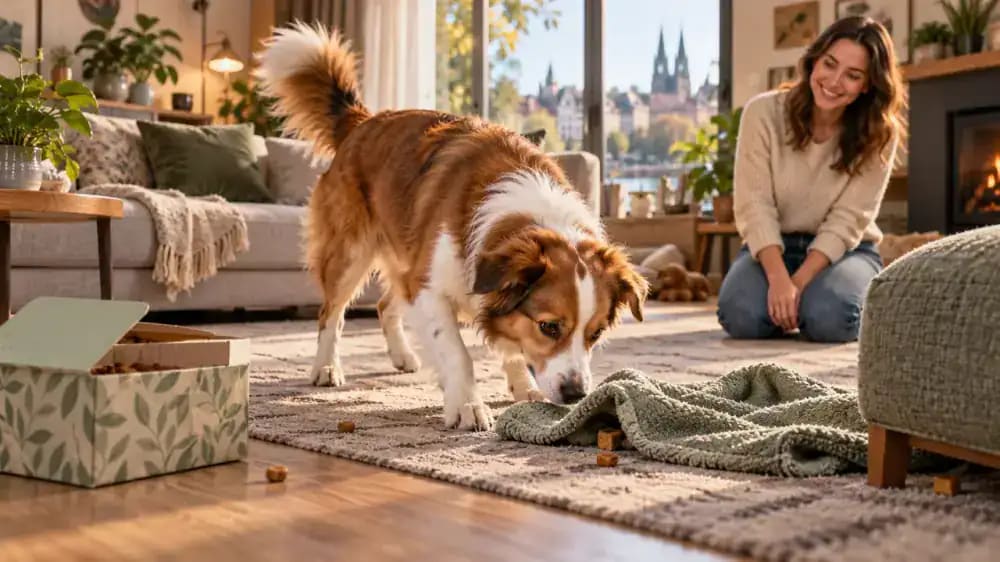
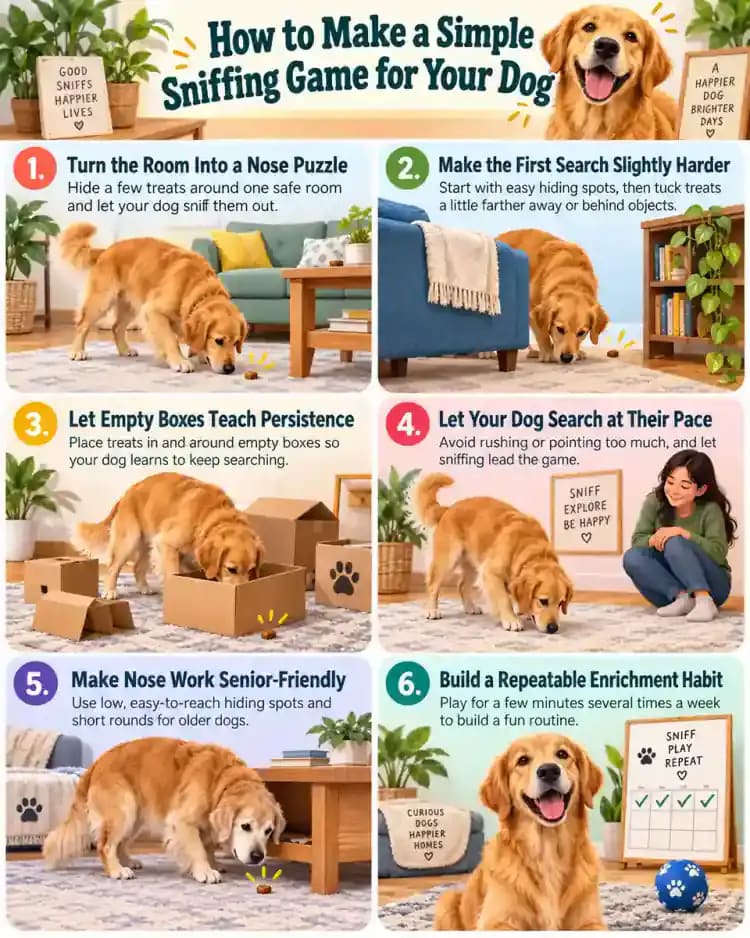
Turn an ordinary room into a simple scent puzzle by placing a few pieces of food where your dog can discover them. You need only familiar rewards, safe household objects, and a quiet area. Begin with easy searches, reward curiosity naturally, and let your dog investigate at a comfortable pace.
Choose Small Familiar Rewards
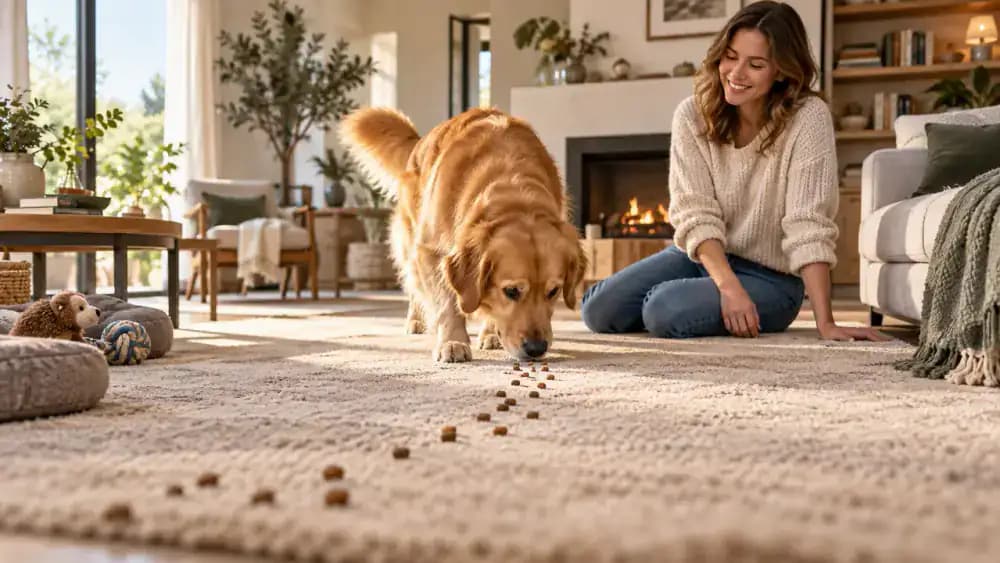
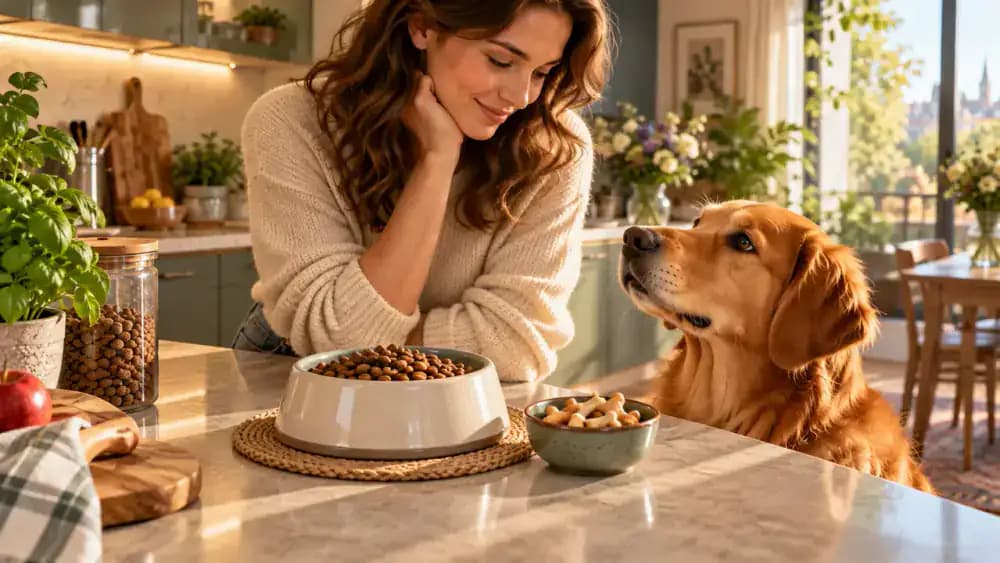
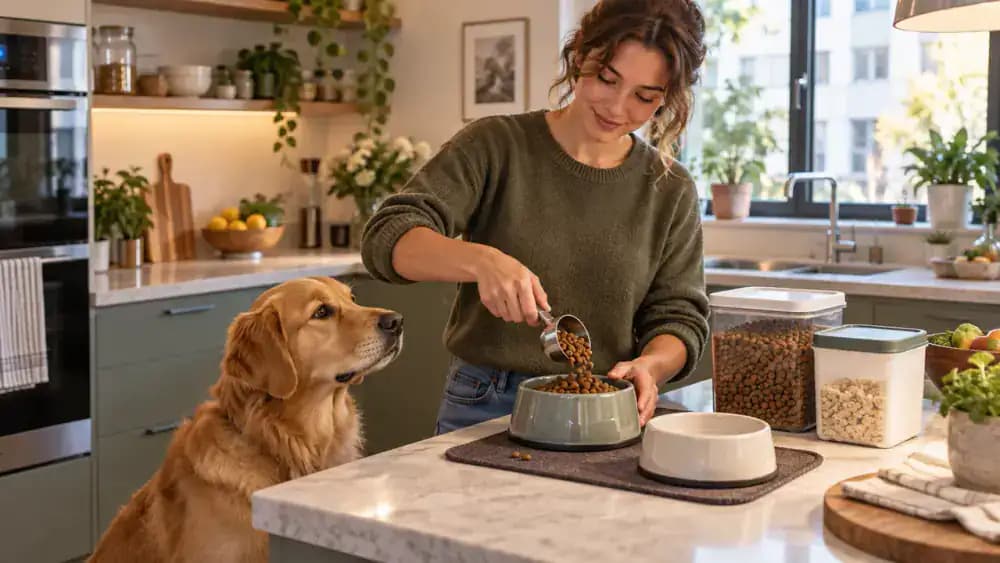
Use food your dog already eats comfortably, such as regular kibble or tiny familiar treats. Small pieces are ideal because the activity involves many discoveries rather than one large reward. Part of a normal meal can work well too, especially when you want enrichment without adding unnecessary extra calories.
Prepare a Safe Search Space
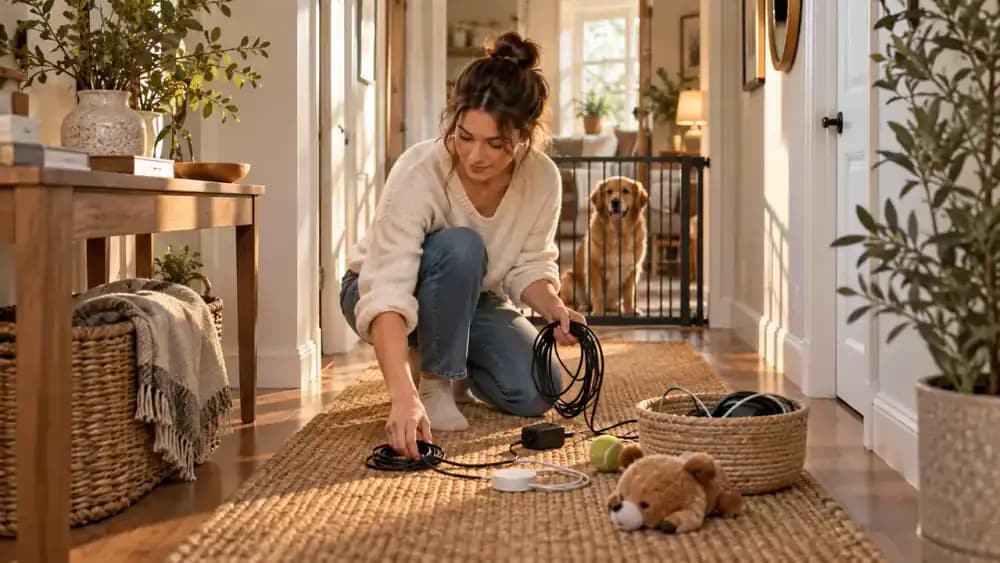
Choose a room where your dog can move comfortably without slipping, crashing into furniture, or reaching unsafe objects. Remove electrical cords, sharp items, unstable decorations, and tempting chew hazards. A clear living room, hallway, or kitchen works well when you can inspect the entire search area beforehand.
Start With Visible Floor Finds
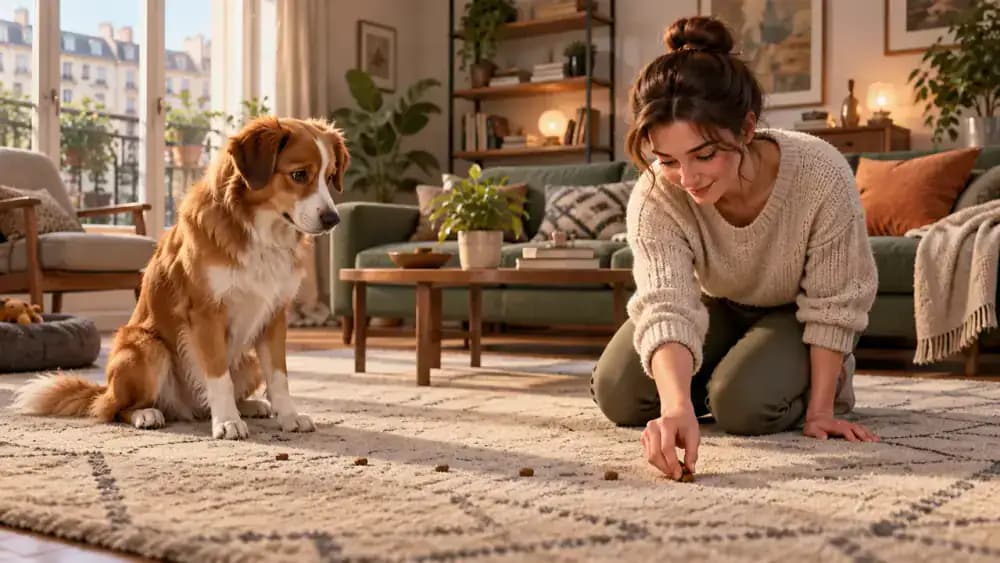
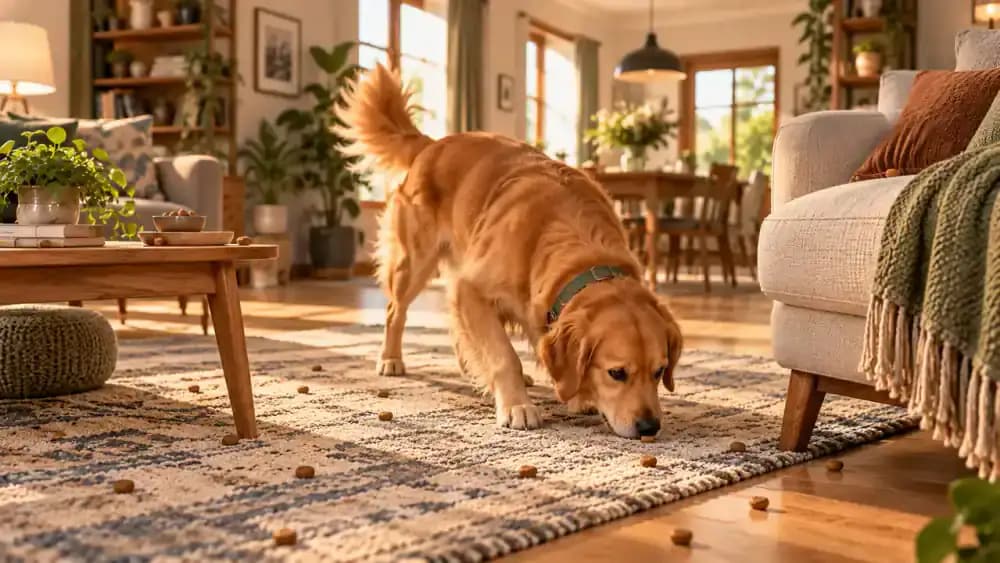
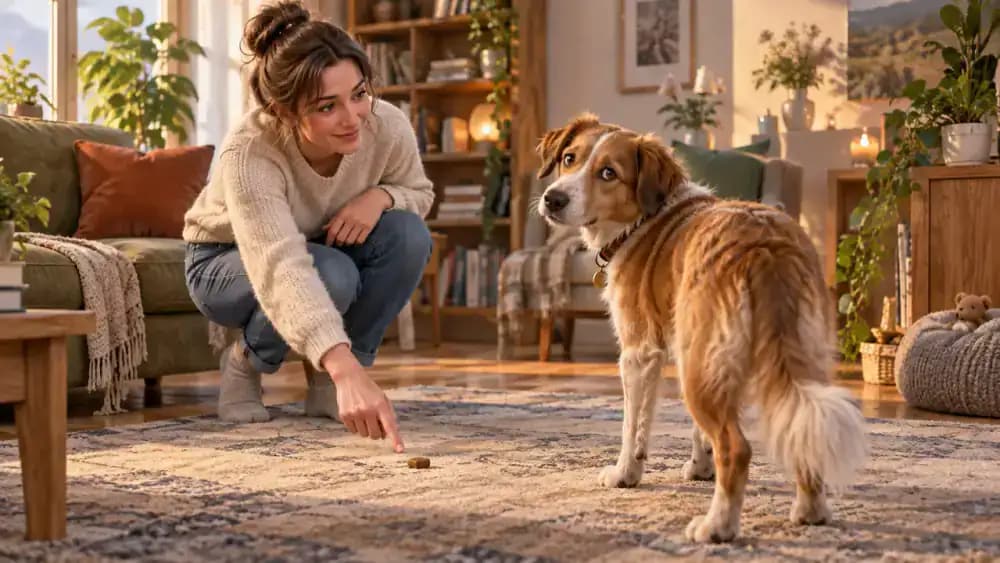
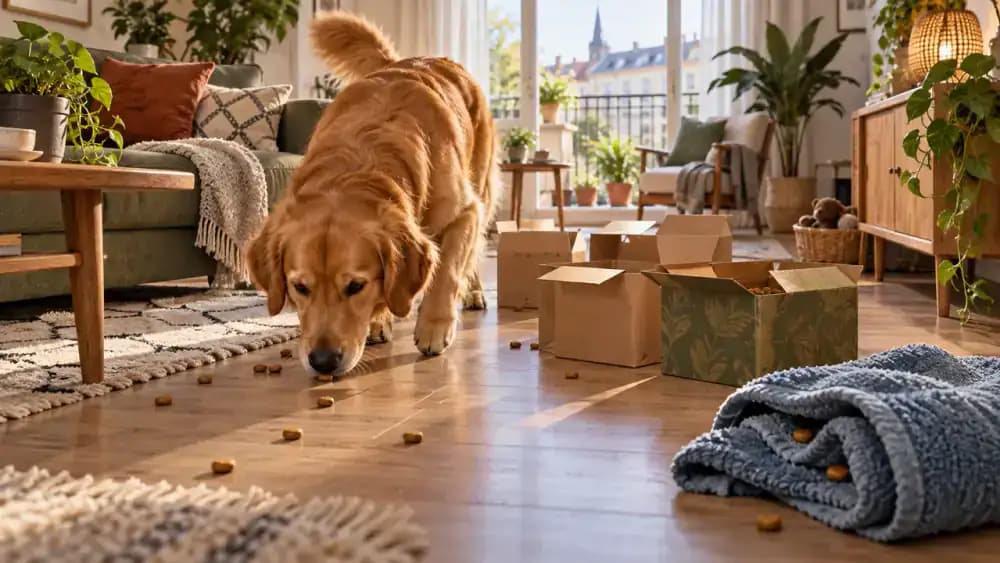
Let your dog watch while you place five or six food pieces openly on the floor several feet apart. Give a consistent cue such as find it, then allow free movement. Stay relatively quiet and avoid leading your dog from piece to piece so sniffing becomes the main way to solve the search.
Help Without Giving Away Answers
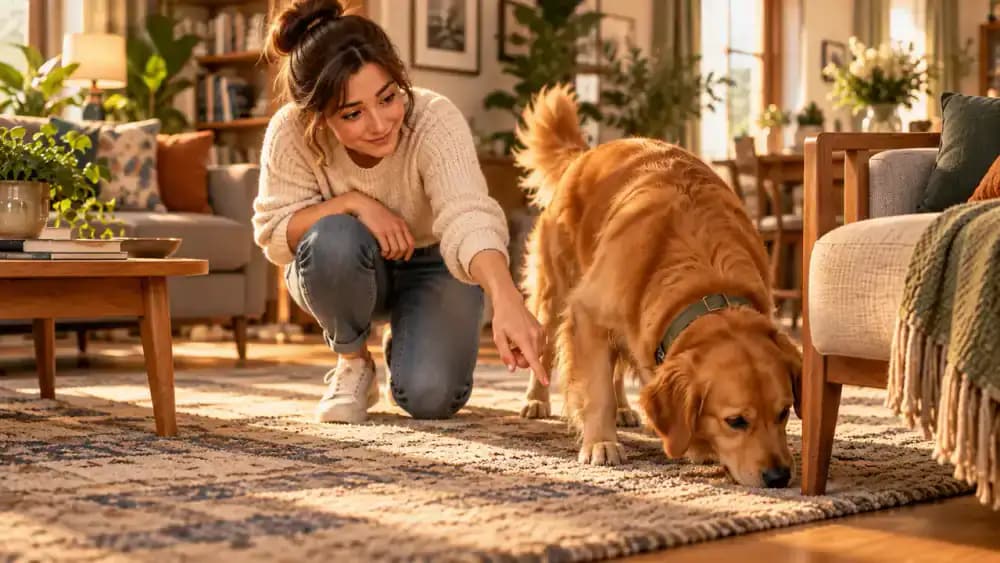
If your dog seems unsure, indicate the general search area without pointing directly to the food. Give enough support to prevent frustration while preserving independent problem solving. When food is found, remain calm and allow the discovery itself to provide reinforcement instead of interrupting focused sniffing with excessive excitement.
Make the First Search Slightly Harder
Repeat the visible version until your dog understands that searching the room leads to food. Then move only one or two pieces beside furniture legs or along the edge of a rug. This small increase introduces hidden scent while keeping enough obvious finds available to maintain confidence and momentum.
Introduce a Simple Towel Search
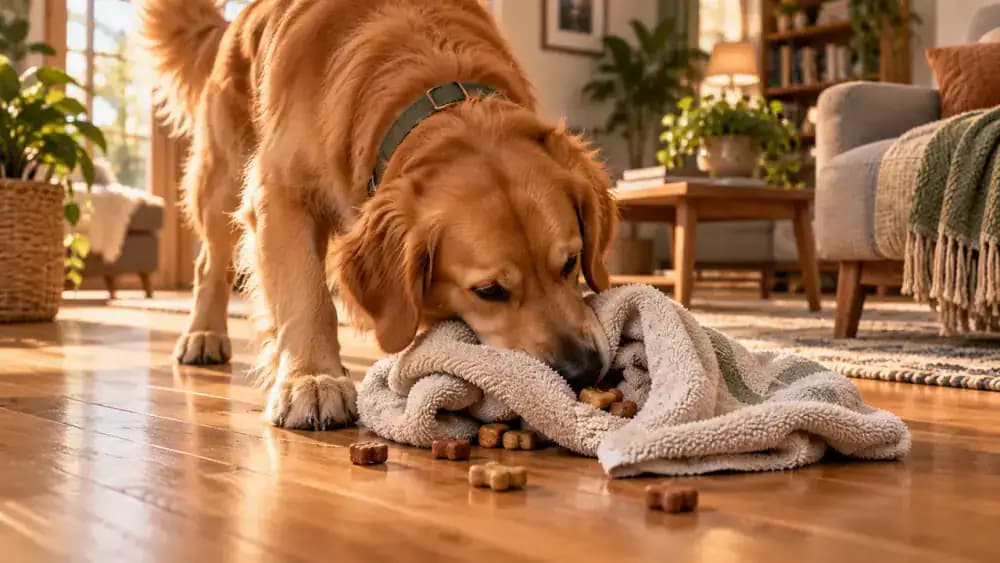
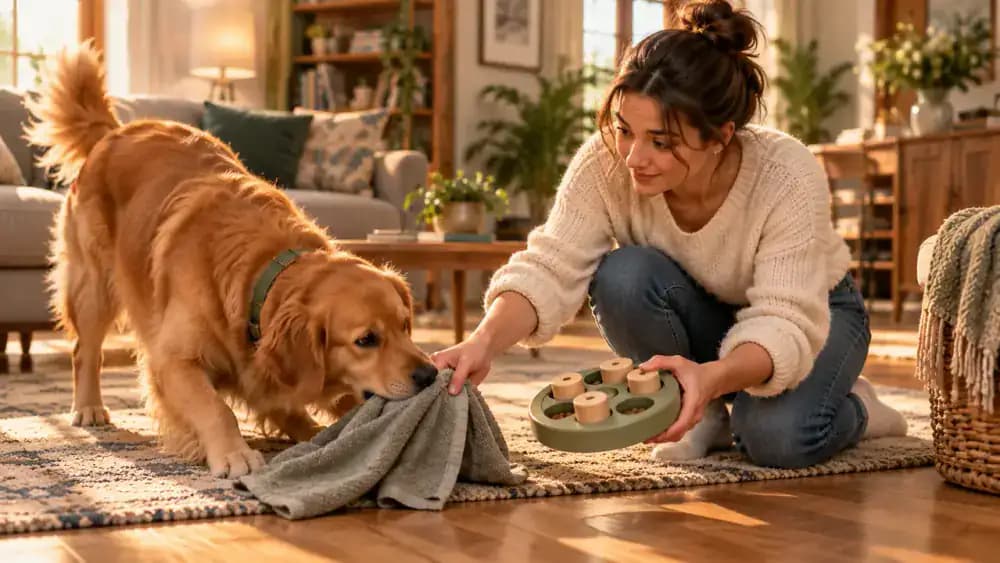
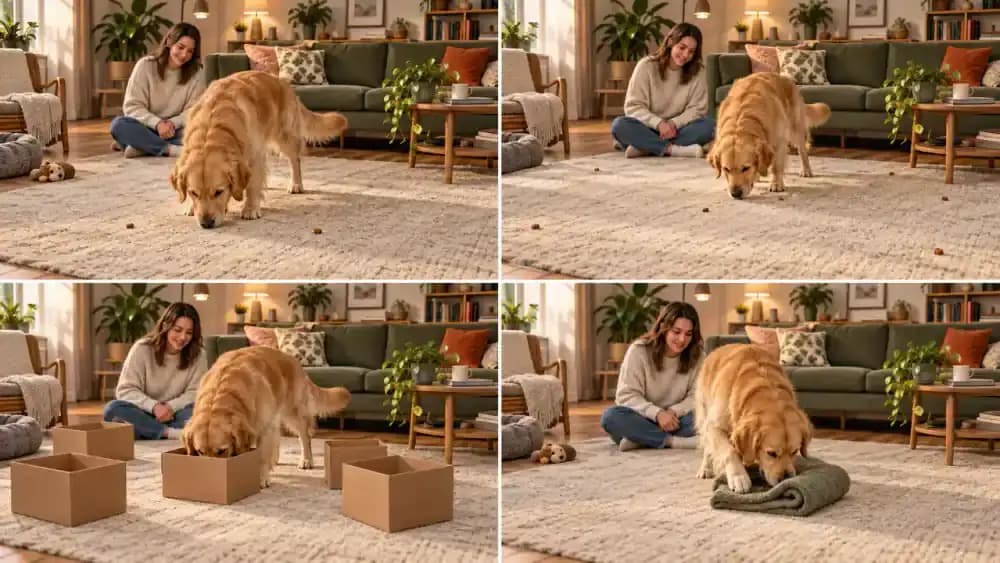
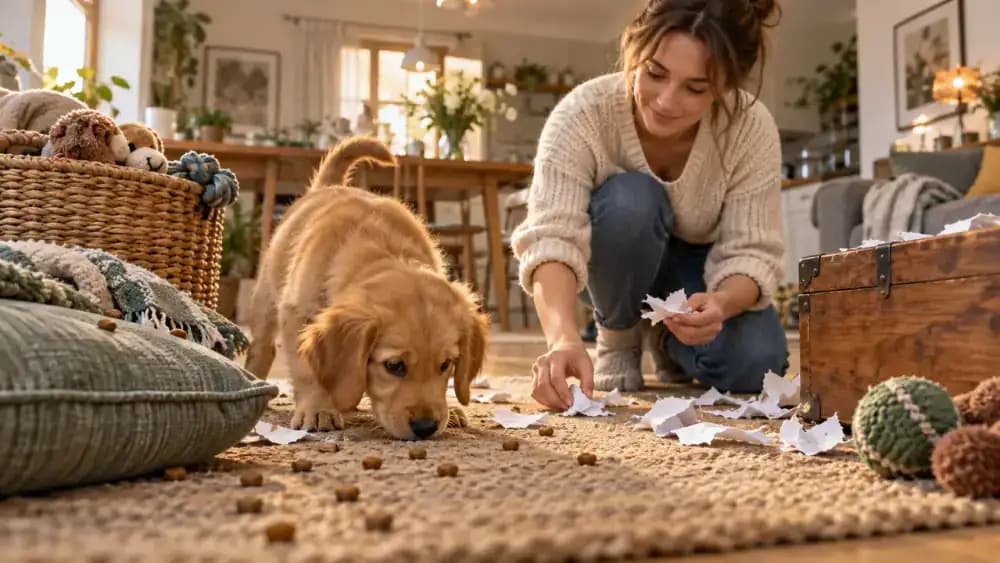
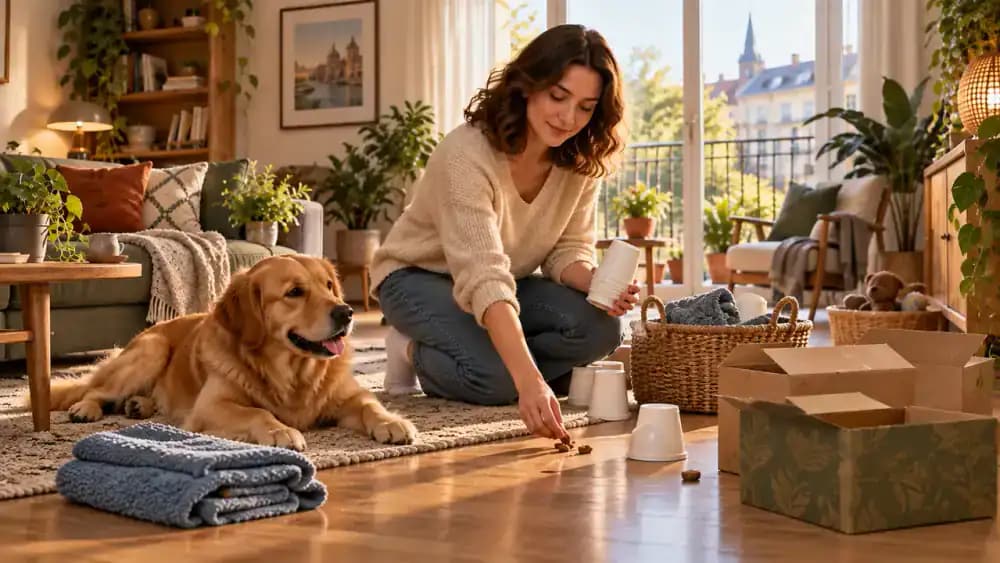
Spread a clean towel flat and scatter several food pieces across it. Fold one side loosely over a few pieces while leaving others visible. Allow your dog to sniff, nudge, and unfold the fabric naturally. Keep the setup loose enough that accessing the food remains simple and frustration stays low.
Watch How Your Dog Uses Fabric
Observe whether your dog sniffs the towel gently or begins pawing, grabbing, shaking, or tearing it. If fabric becomes a chew target or your dog tries swallowing pieces, stop using that setup. Replace it with a sturdier search option rather than allowing enrichment materials to become an ingestion hazard.
Try an Open Cardboard Box
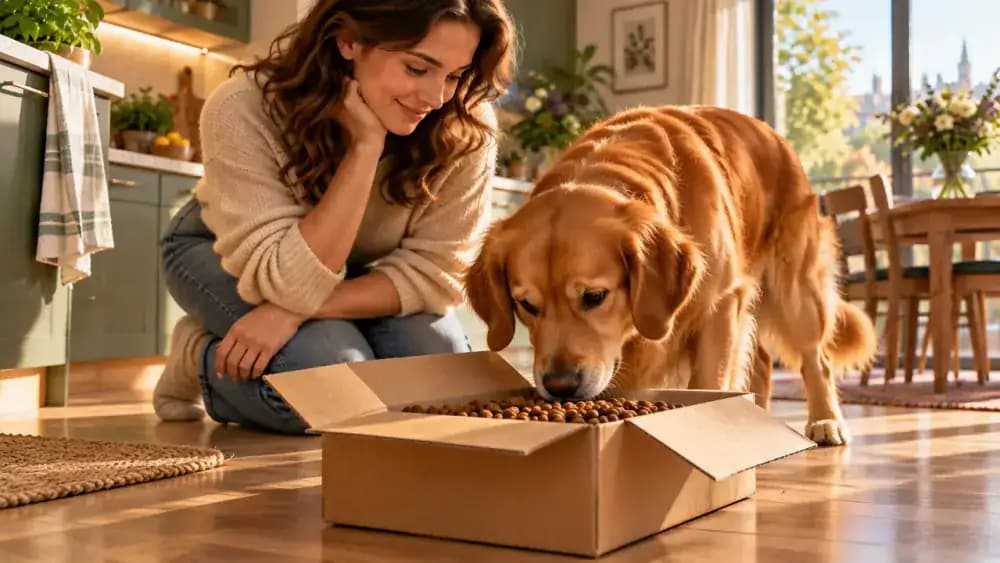
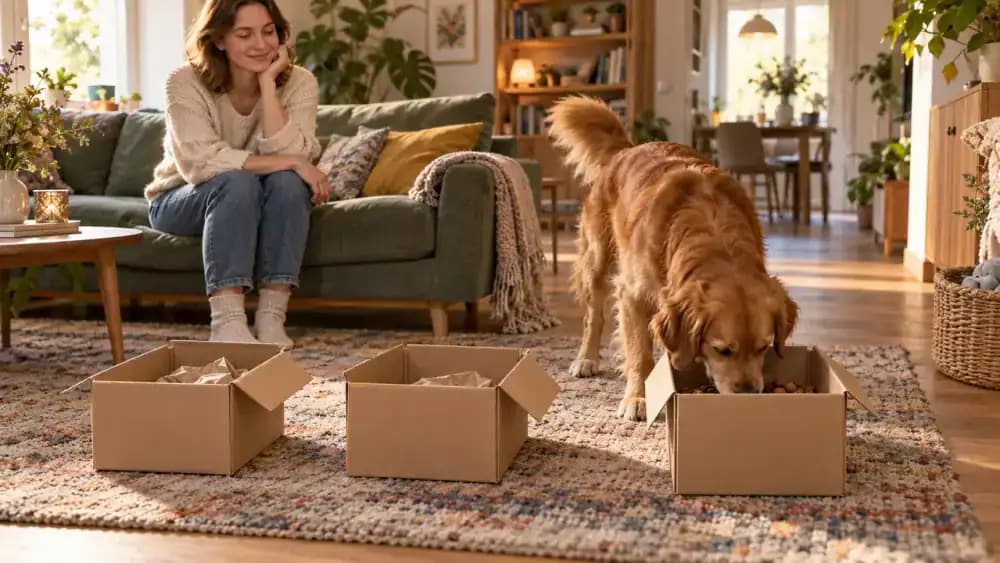
Place several pieces of food inside a low, completely open cardboard box and let your dog investigate. Choose plain cardboard without staples, tape loops, packing foam, or loose packaging. The first box exercise should require little effort beyond approaching the container, sniffing around the edges, and reaching inside.
Add Loose Paper Scent Pockets
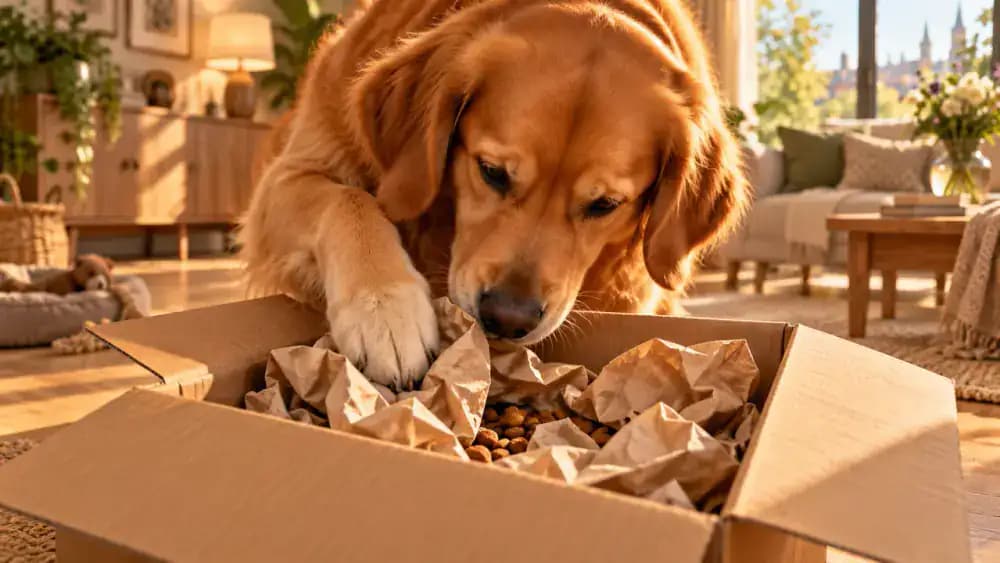
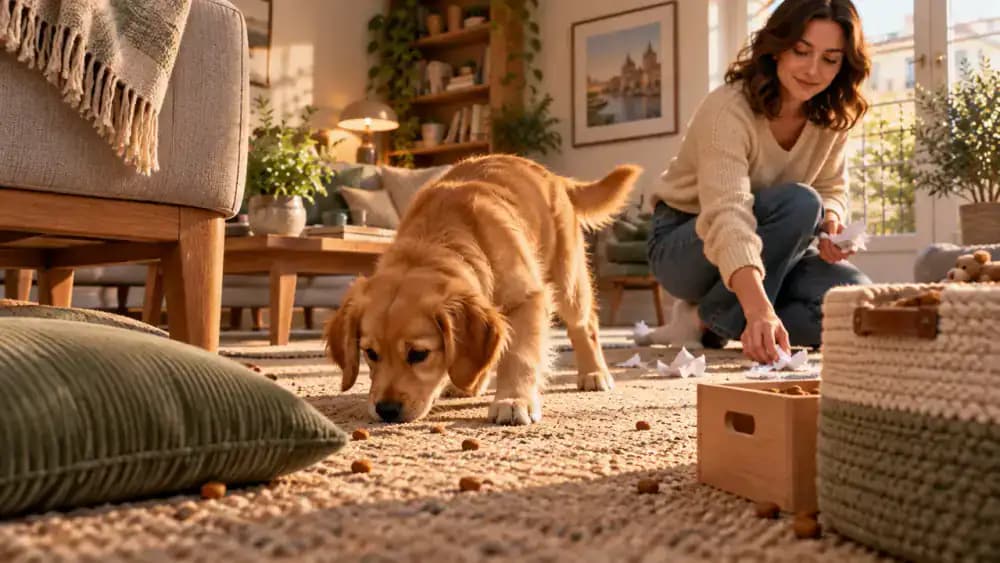
When the open box becomes easy, add several loosely crumpled sheets of plain paper around the food. Leave plenty of space so your dog can move the paper with its nose. Avoid tightly packing the container because the goal is to create simple scent pockets, not a difficult physical obstacle.
Build a Multi-Box Scent Course
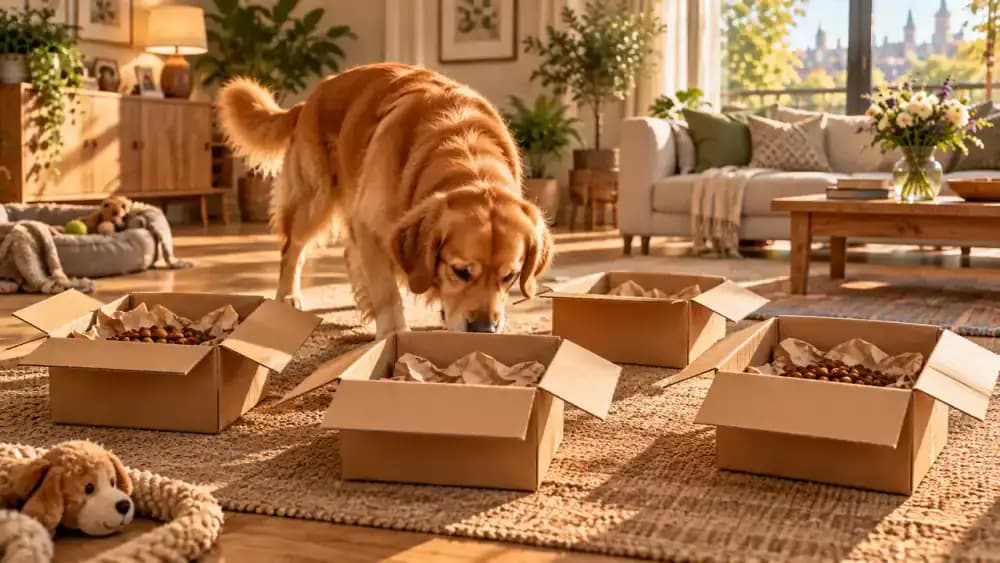
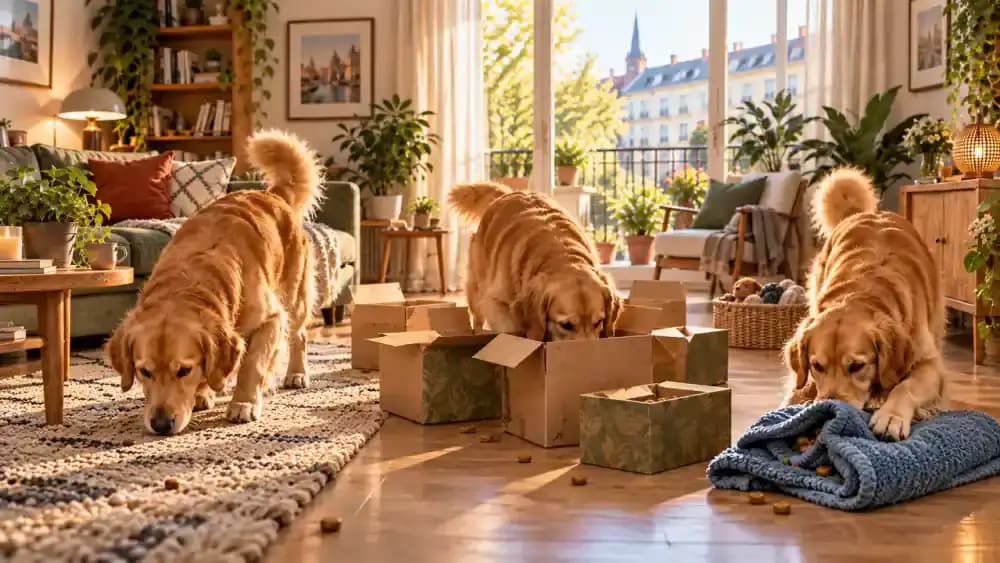
Place several open cardboard boxes around the room, but put food in only one or two of them. Give your dog time to investigate each container and compare what it smells like. This turns a basic box search into a simple discrimination exercise without requiring complicated equipment or special training.
Let Empty Boxes Teach Persistence
Keep all boxes open during early multi-box searches. Your dog may return to empty containers several times, which is part of learning that every object does not contain a reward. Allow those unsuccessful checks without immediately helping, as long as your dog remains engaged rather than becoming noticeably frustrated.
Use Sturdy Cups for a New Puzzle
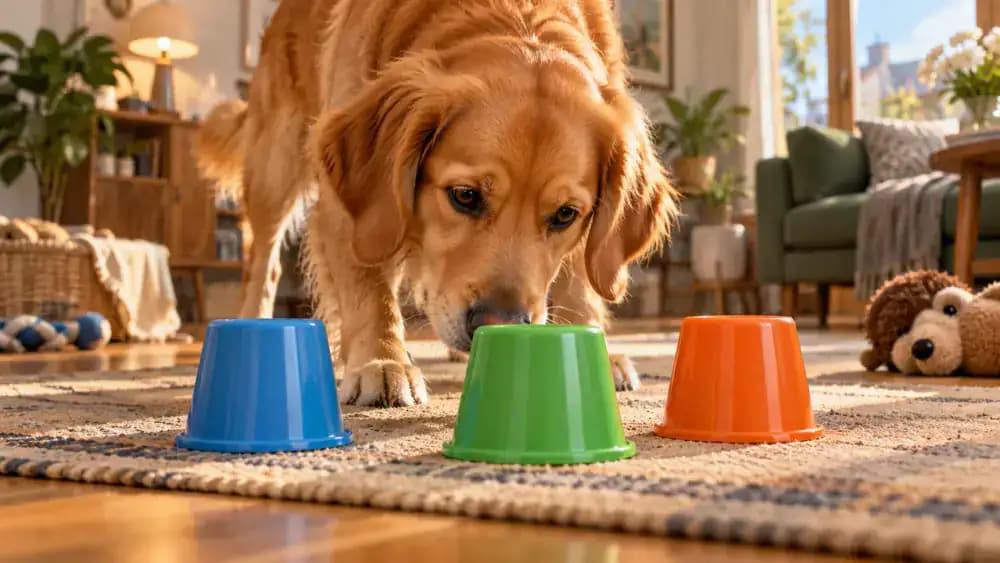
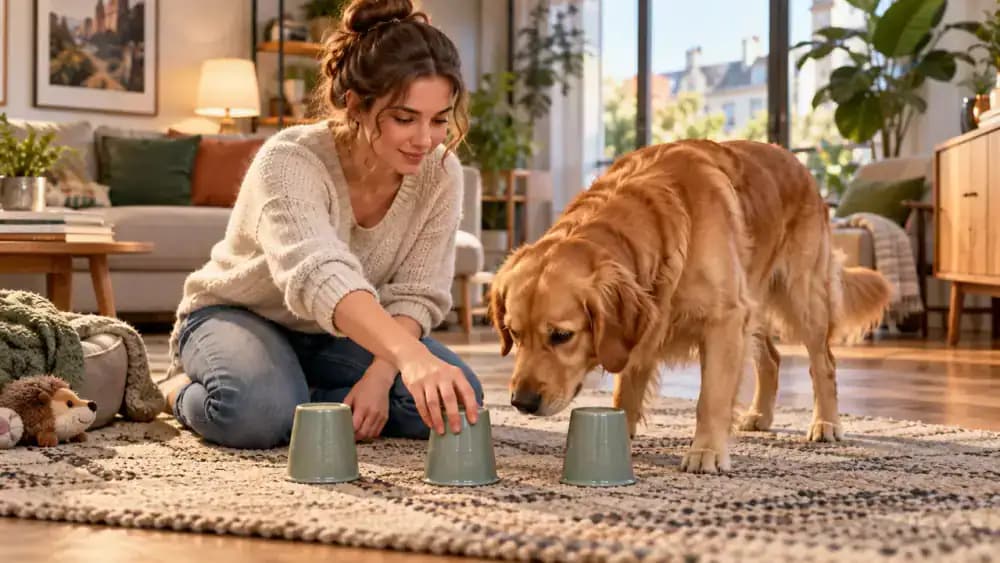
Set three sturdy plastic cups upside down and place food beneath only one. Initially, let your dog watch where the food goes, then encourage sniffing around the cup edges. Use cups large enough that they cannot be swallowed, and remove them immediately if your dog starts chewing instead of searching.
Mix Cup Positions Slowly
Once your dog understands the cup exercise, slowly change the cup positions while your dog waits nearby. Release your dog and allow careful inspection of each option. Avoid fast shell-game movements because the objective is scent discrimination, not visual tracking. Give your dog enough time to investigate before helping.
Hide Food Around the Room
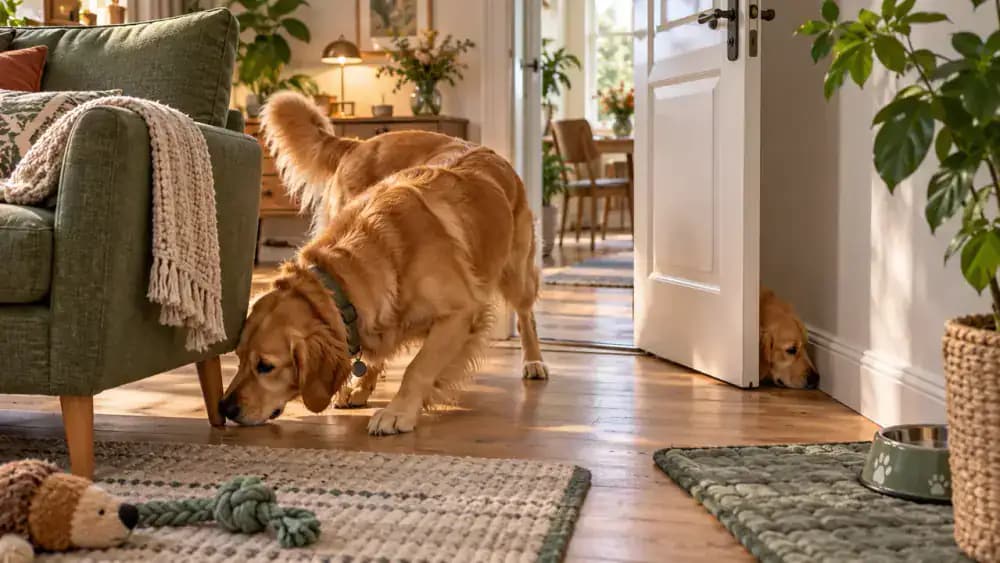
Begin using the room itself by placing food beside a chair leg, near a baseboard, behind an open door, or partly beneath a dog-safe mat. Every location should remain easy to reach. Avoid narrow spaces, unstable furniture, or any hiding place that could trap your dog or encourage damage.
Add Safe Low-Level Height
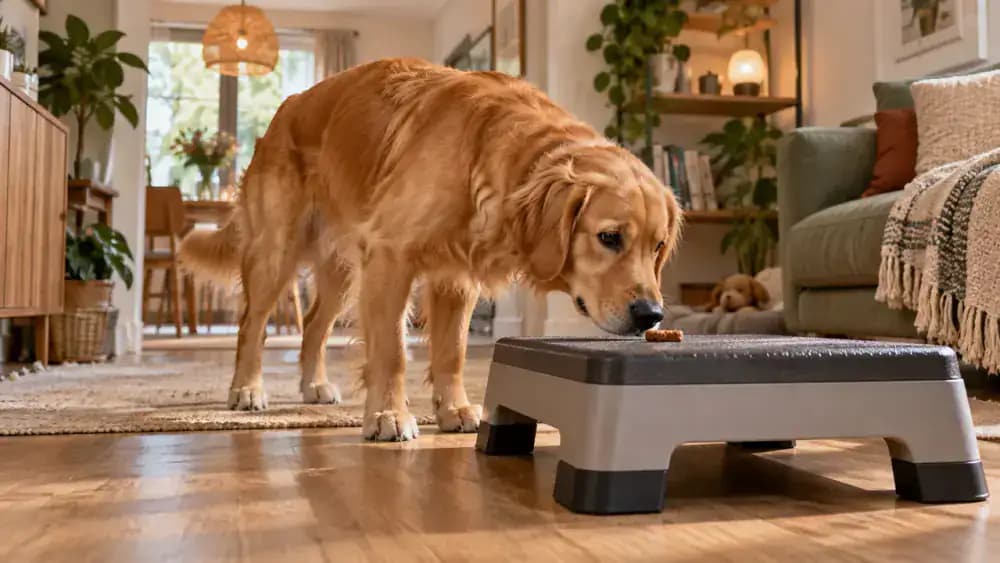
Change the scent direction by placing one reward on a low, stable surface your dog can investigate without jumping. A wide step or sturdy platform can work. Avoid counters, shelves, narrow ledges, and unstable furniture. Your dog should be able to search while keeping all four paws safely controlled.
Use Gentle Airflow as Variety
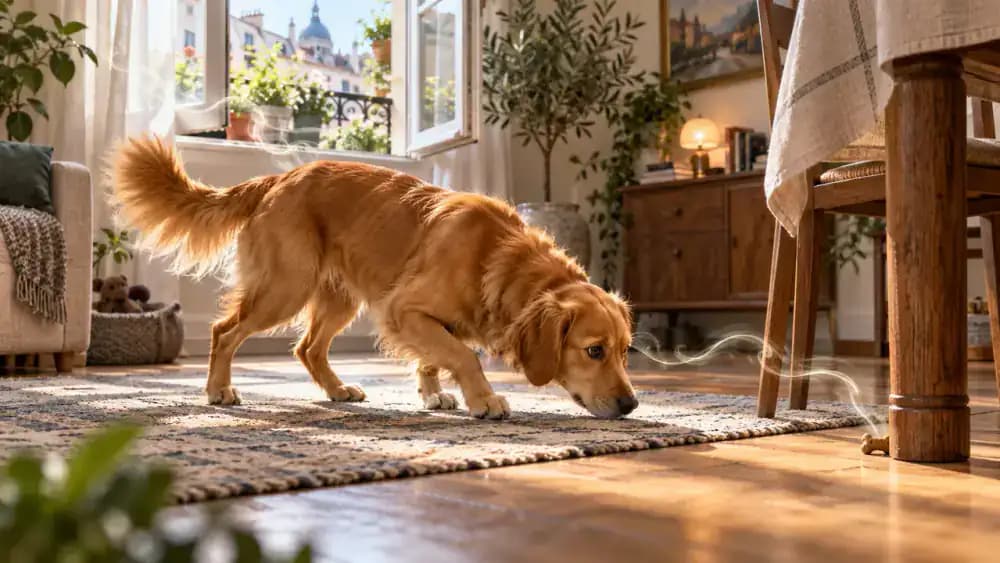
Mild airflow from an open window, doorway, or gentle fan can change how scent travels through a familiar room. Keep the effect subtle for beginners because strong drafts may move scent far from the actual hiding place. Allow your dog to follow the changing scent naturally instead of directing the search.
Let Your Dog Search at Their Pace
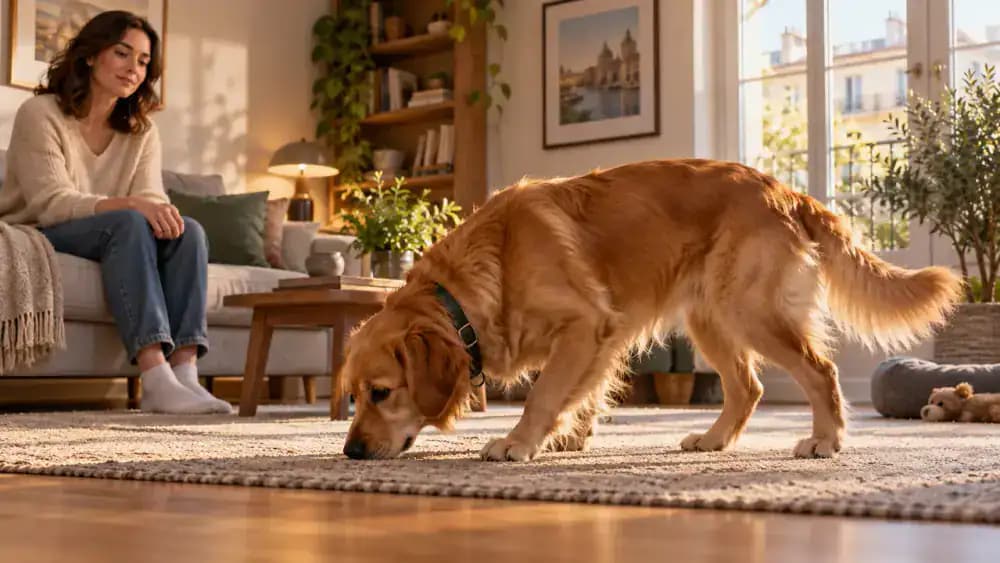
Do not measure success by speed. Some dogs move quickly through a room, while others pause to study small scent traces. Avoid rushing, repeatedly giving the search cue, or steering toward the answer. Quiet observation gives your dog space to make choices and solve each problem independently.
Lower Difficulty When Needed
If your dog stops searching, appears worried, or repeatedly looks to you for help, make the next attempt easier. Move food into open areas, use a more noticeable familiar reward, or let your dog watch you place it. Reliable success is more useful than repeatedly presenting a puzzle that feels impossible.
Change Only One Challenge at a Time
Increase difficulty by changing one variable rather than several simultaneously. You might reduce the number of food pieces, increase spacing, add an empty container, or place food slightly deeper inside a safe object. Adjusting one factor makes it easier to see what your dog handles comfortably and what needs practice.
Turn a Normal Meal Into Enrichment
Measure your dog's normal meal first, then use that portion for searching rather than adding extra food. Scatter some across the floor, place some in boxes, and finish with an easy towel search. Several small challenges can turn mealtime into enrichment while keeping the total food amount consistent.
Adapt the Game for Special Diets
A dog with dietary restrictions can still participate using approved food from its regular diet. Keep the emphasis on searching rather than introducing special treats. When a medical condition requires strict feeding rules, follow your veterinarian's guidance so enrichment stays compatible with the dog's established dietary requirements.
Keep Puppy Searches Simple
For puppies, use short searches, obvious food locations, large safe objects, and close supervision. Puppies commonly explore with their mouths, so towels, paper, and cardboard can quickly become chew targets. Remove damaged materials immediately and return to open-floor searches if household objects create more chewing than sniffing.
Make Nose Work Senior-Friendly
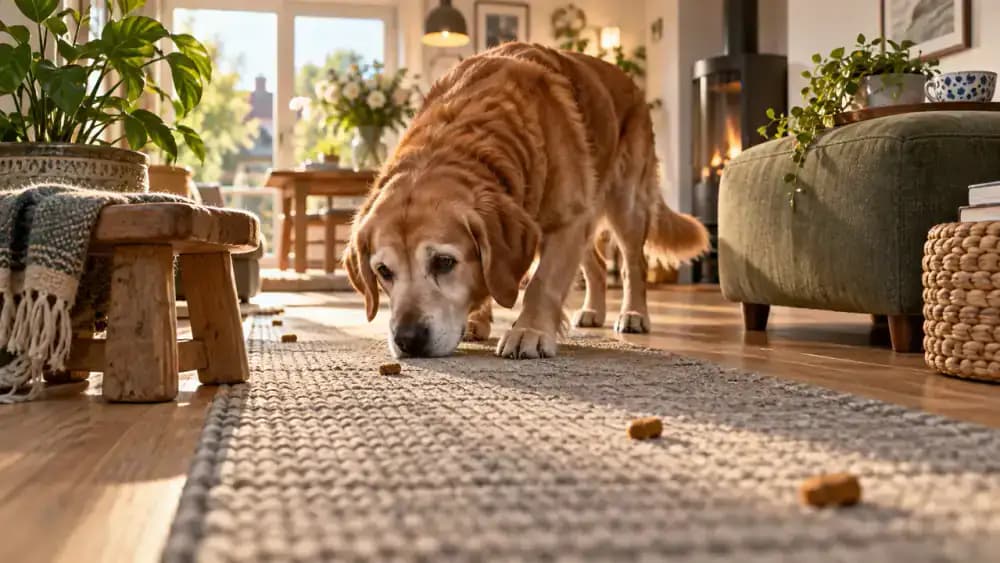
Senior dogs can participate without needing speed or strenuous movement. Use non-slip flooring, nearby hides, stable objects, and easy access. For dogs experiencing mobility, vision, or cognitive changes, keep the layout predictable and allow additional search time. The game should accommodate the dog rather than pressure faster performance.
Manage Multi-Dog Searches Carefully
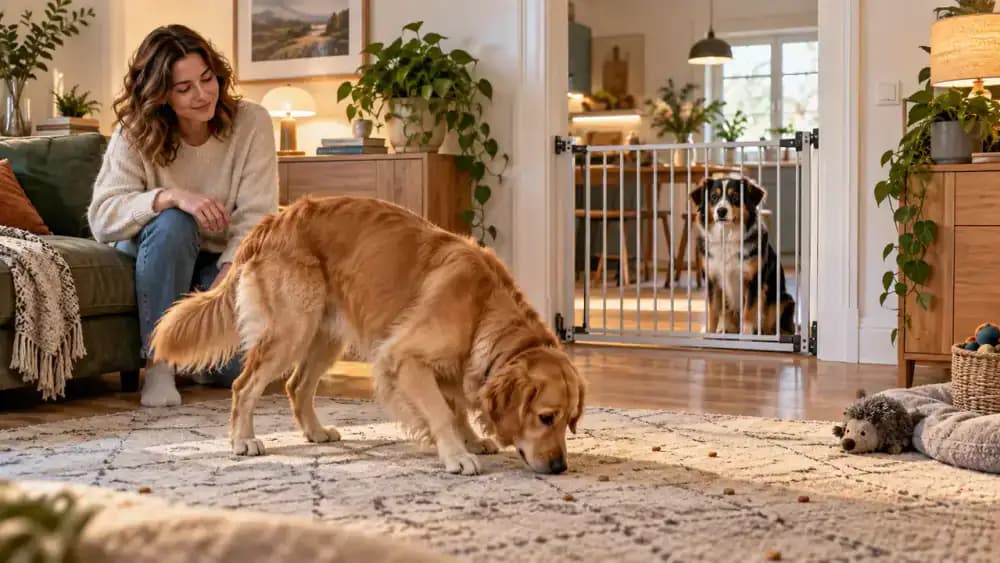
Hidden food can create competition in multi-dog homes, including between dogs that normally coexist peacefully. Run searches separately unless you already know the dogs remain calm around this type of activity. Different rooms, gates, or taking turns can reduce rushing, food guarding, and accidental conflict during the game.
Create a Consistent Start Routine
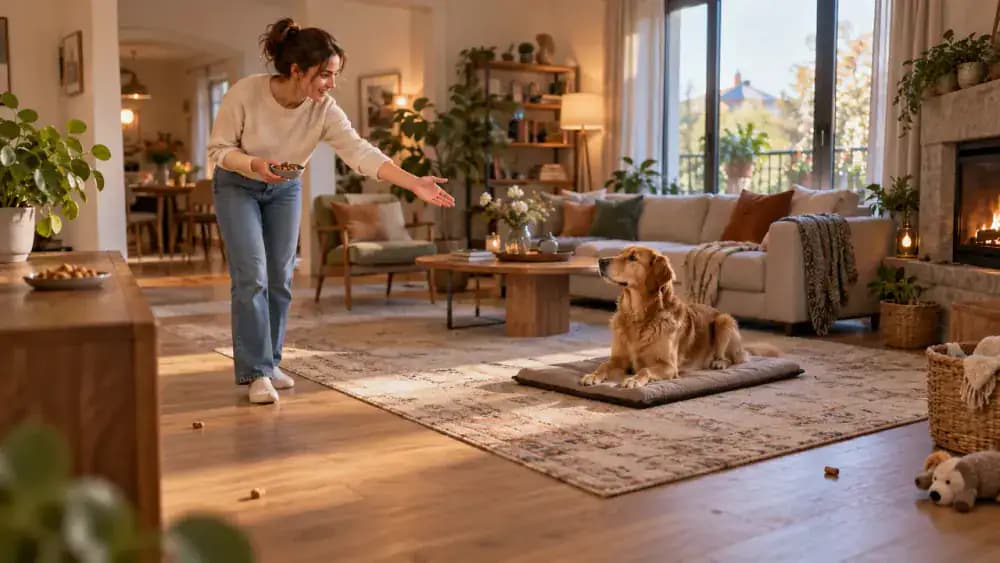
Build a predictable beginning by asking your dog to wait briefly while you place the food. Return, then use the same release cue each time. A consistent routine helps distinguish structured nose-work sessions from random household scavenging while still keeping the activity relaxed, simple, and easy to repeat.
Teach a Clear Finish Routine
After the final food piece is found, use a consistent phrase such as all done. Calmly collect boxes, towels, cups, and leftover crumbs, then store reusable materials somewhere your dog cannot access alone. A predictable ending prevents endless searching and clearly signals that the activity has finished.
Keep Sessions Short and Enjoyable
Ten minutes can be plenty for a session containing several small searches. End sooner if your dog becomes tired, distracted, or uninterested. Stopping while the activity is still enjoyable can preserve enthusiasm for future sessions. There is no need to keep extending the game simply because food remains available.
Rotate Setups Instead of Always Escalating
Progress does not require making every session more difficult. Rotate easy floor searches, open boxes, towel games, cups, and low room hides across different days. Returning to familiar setups provides easy wins and keeps the activity varied. Your dog's enrichment routine does not need to test maximum ability every time.
Build a Repeatable Enrichment Habit
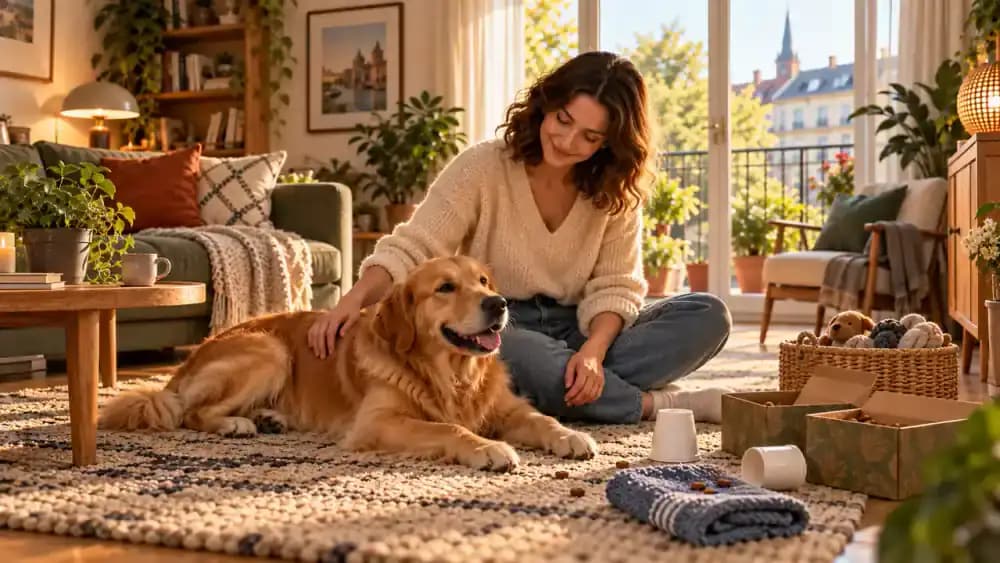
Aim for a game your dog can solve safely, confidently, and with genuine interest. Begin with visible food, progress gradually toward hidden scent, and supervise household materials throughout. By adjusting space, difficulty, objects, and meal portions, simple sniffing searches can become a repeatable part of everyday enrichment.
A simple sniffing game can turn an ordinary room, part of your dog's meal, and a few household objects into useful enrichment. The key is starting with obvious food finds and increasing difficulty gradually. Supervise every setup, use materials your dog cannot safely swallow, and allow plenty of time for independent searching. You do not need specialized scent-work equipment or advanced training skills. By rotating floor searches, towels, boxes, cups, and easy room hides, you can build an activity that works for many puppies, adult dogs, and seniors while keeping food portions, mobility, and individual behavior in mind.
Where people go wrong
Making the First Search Too Difficult. Start with visible food and increase difficulty gradually. A dog that cannot understand the first setup may stop searching or depend on constant help.
Using Unsafe Household Materials. Avoid staples, tape loops, packing foam, sharp objects, unstable furniture, or anything your dog may chew apart and swallow.
Giving Too Much Help. Point toward a general area when necessary, but avoid repeatedly showing the exact location. Independent searching is a central part of the activity.
Increasing Several Challenges Together. Change one variable at a time so you can tell whether distance, hiding depth, empty containers, or another factor is causing difficulty.
Ignoring Food Portions. If you use the game for a meal, measure the normal portion first instead of adding search rewards on top of regular feeding.
Letting Dogs Compete for Hidden Food. In multi-dog homes, separate searches are usually the simpler way to prevent rushing, guarding, and conflict around food.
Questions people ask
Around ten minutes can be enough, especially when the session contains several small searches. End sooner if your dog becomes tired or loses interest.
Fixed it?
Get one guide like this every Thursday.