How to Keep Your Dog Engaged on Rainy Days: Easy Indoor Enrichment Ideas
Rainy weather doesn't have to mean a bored dog. Discover simple indoor enrichment ideas using short training sessions, scent games, food-stuffed toys, and relaxing downtime to keep your dog comfortably occupied.
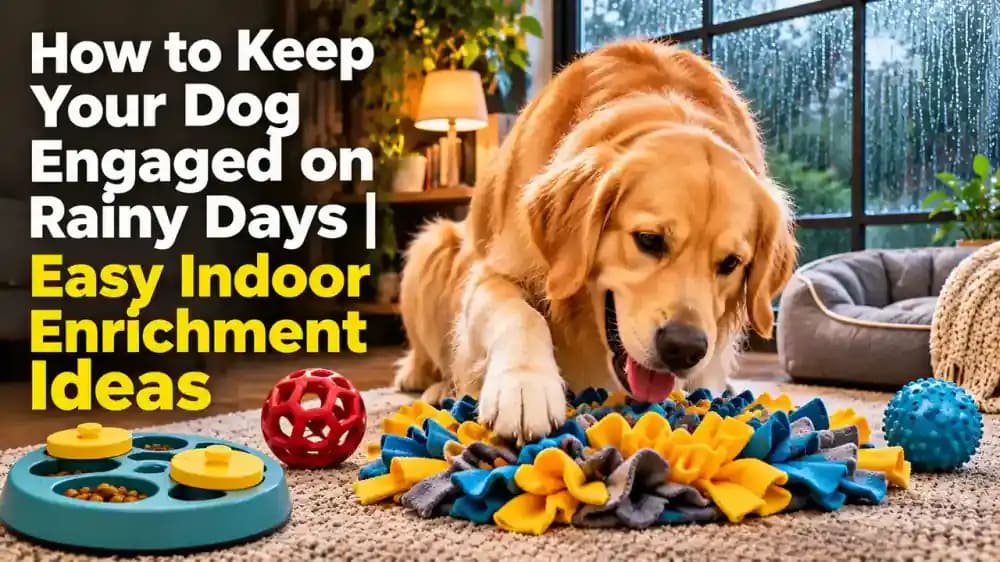
What you’ll need
Tap to tick things off before you start.
When Rain Changes the Plan
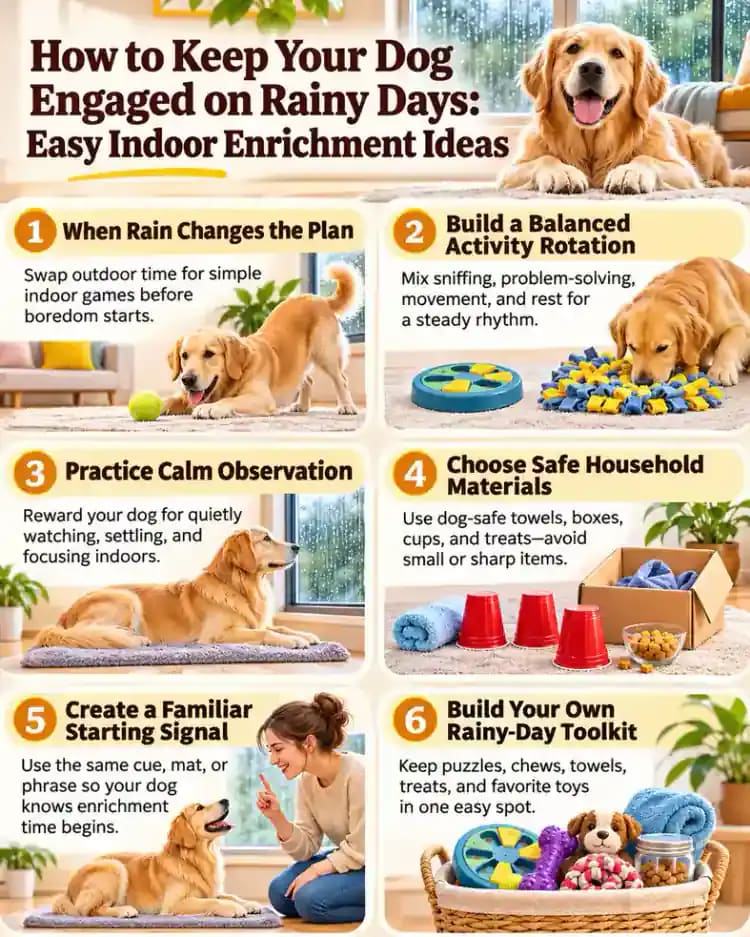
When rain cuts your dog's usual walk short, indoor enrichment can help make up for missed exploration. Watch how your dog responds to the change in routine, then plan a few simple activities that encourage sniffing, learning, and relaxed play. Aim for short, enjoyable sessions with plenty of downtime rather than constant entertainment.
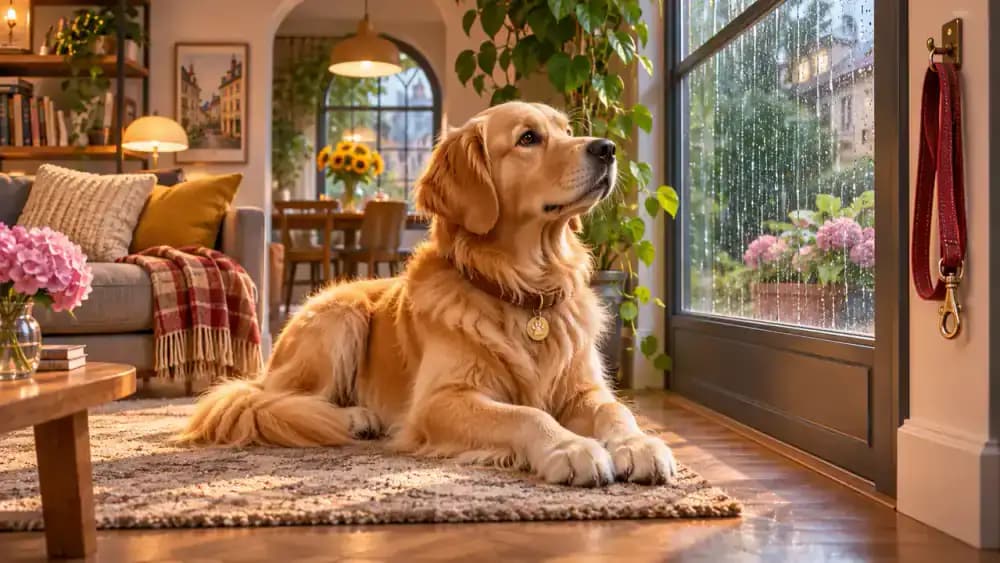
Create a Safe Indoor Space
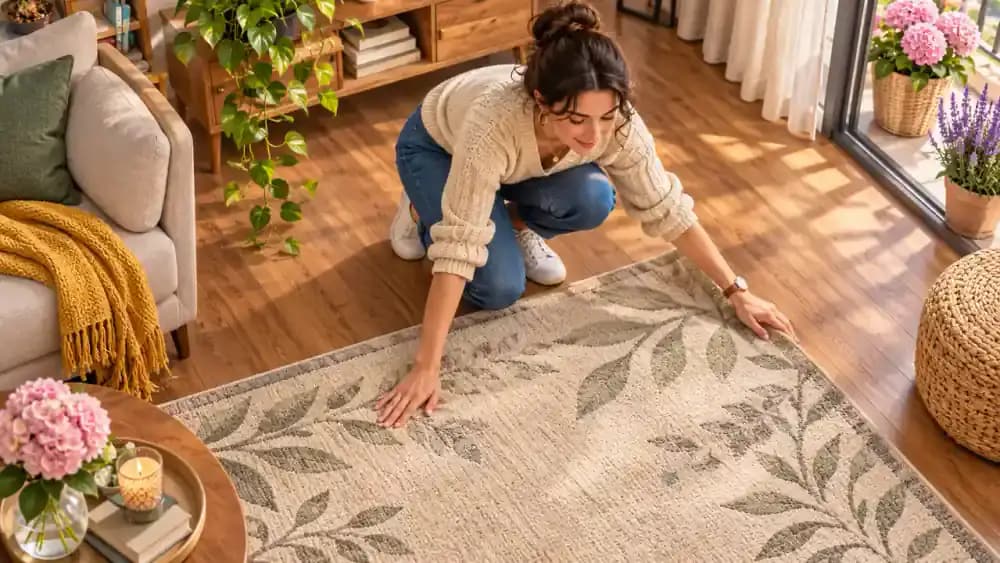
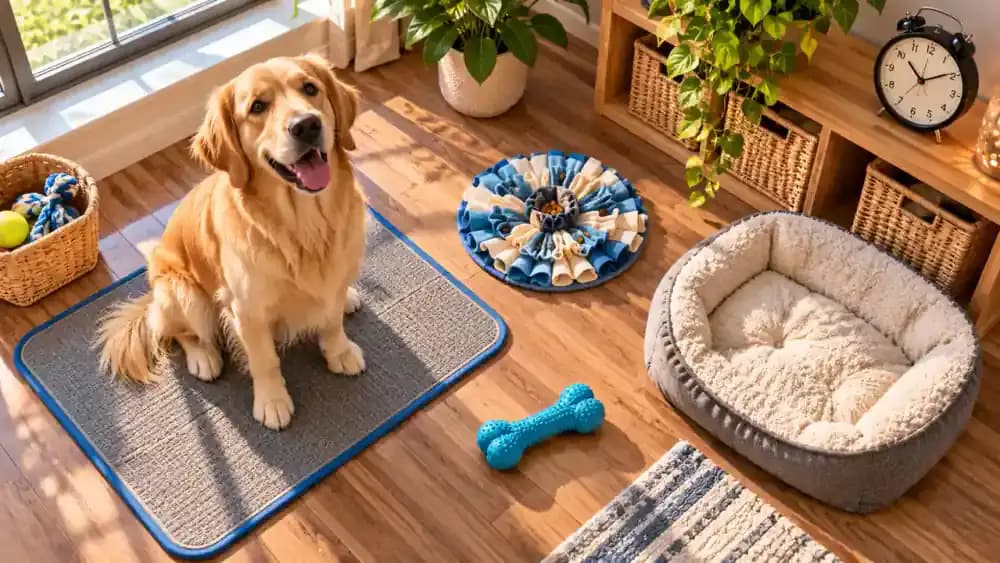
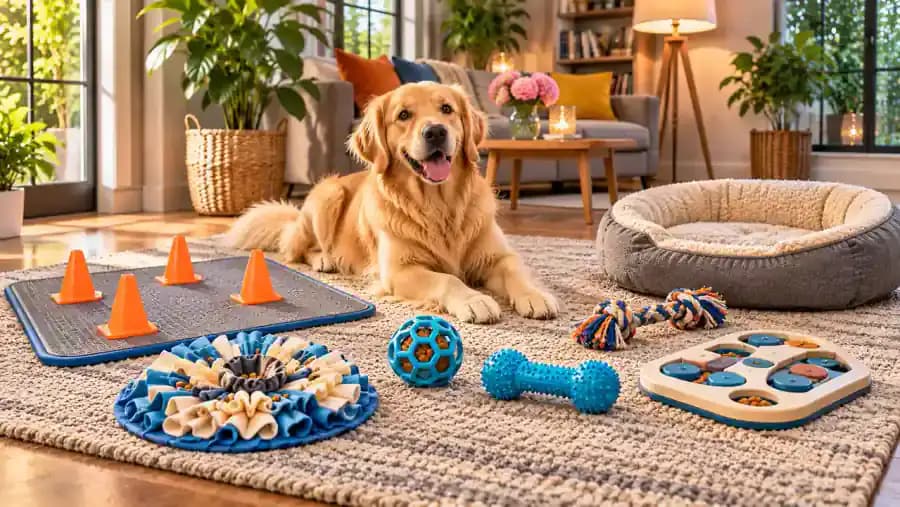
Choose a quiet area with enough space for your dog to move comfortably. Place a secure non-slip rug on the floor, remove small objects and fragile decorations, and keep walkways clear. Make sure toys and supplies are appropriate for your dog's size and mobility. Avoid slippery surfaces, sharp furniture edges, and activities requiring sudden jumps.
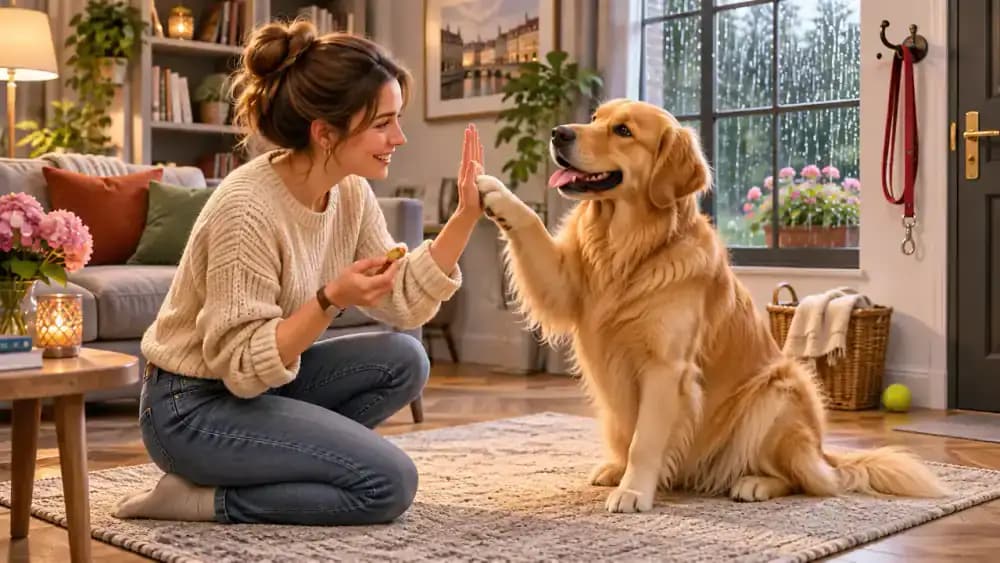
Start With Reward-Based Training
Spend three minutes practicing familiar cues such as sit, touch, and stay. Ask for one behavior at a time, then immediately reward successful attempts with praise and a tiny treat or piece of regular kibble. Keep your voice encouraging and the challenges manageable. Finish while your dog remains interested, and allow a break before introducing another activity.
Turn Sniffing Into a Game
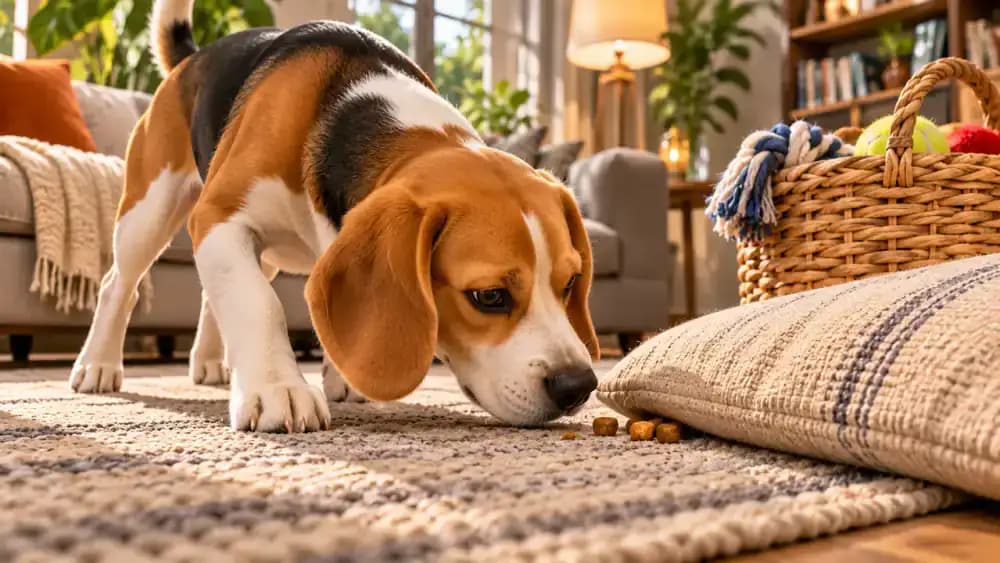
Place a few small treats in easy-to-find spots along a non-slip rug while your dog watches. Give a familiar search cue and let your dog sniff independently. Once the treats are found consistently, try placing them beside stable cushions or other safe objects. Supervise the search, increase difficulty gradually, and avoid hiding food in hazardous locations.
Offer a Safe Chewing Activity
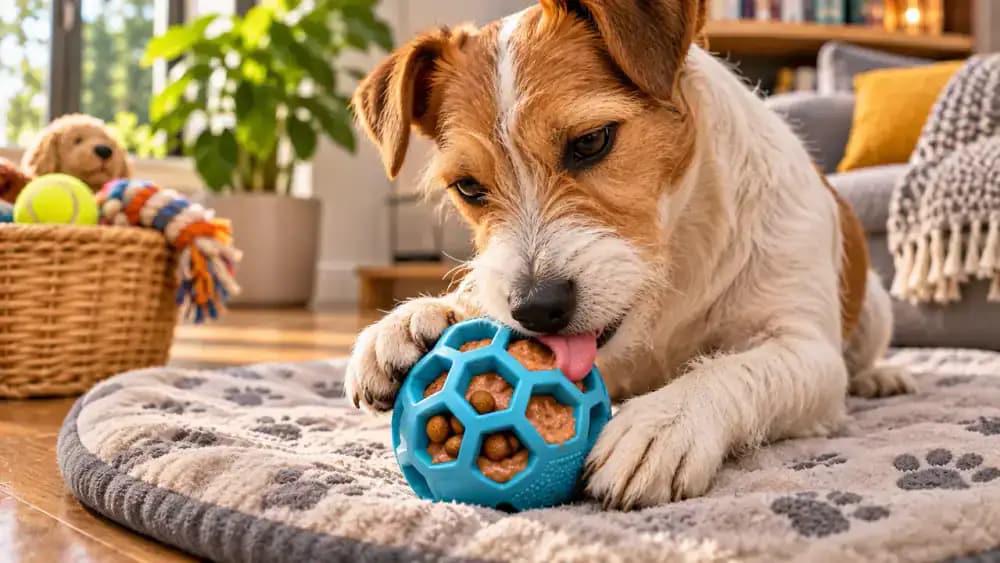
Give your dog an appropriately sized, durable food-stuffed toy or a veterinarian-approved chew suited to their chewing habits. Use dog-safe food and supervise the entire activity. Inspect toys regularly for cracks, loose pieces, or damage, and remove unsafe items immediately. Let your dog enjoy the activity while resting comfortably, without encouraging prolonged or excessive chewing.
Build a Balanced Activity Rotation
Organize indoor enrichment into a flexible rotation instead of offering every activity at once. Begin with familiar training, take a short break, introduce a scent-search game, and finish with supervised chewing. Keep pathways clear and observe your dog's energy and movement. Shorten or skip activities whenever enthusiasm fades, and avoid forcing a fixed schedule.
Make Rest Part of Enrichment
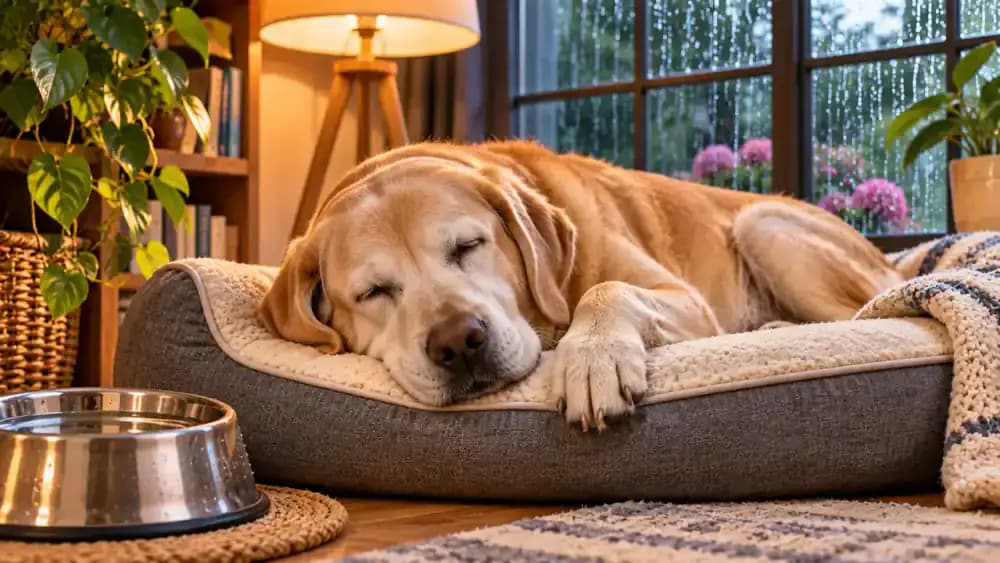
After an enrichment activity, guide your dog toward a familiar, comfortable resting area and provide fresh drinking water nearby. Allow uninterrupted time to nap, settle, or quietly observe the room. Avoid repeatedly introducing toys or calling your dog back into play. A balanced rainy-day routine includes genuine downtime, especially after mentally engaging activities.
Your Simple Rainy-Day Routine
Try a flexible schedule starting with three minutes of positive reinforcement training, followed by a short break and five minutes of supervised treat searching. Offer a suitable food-stuffed toy or chew afterward, then allow plenty of uninterrupted rest. Adjust each activity to your dog's comfort, energy, and interest, and maintain regular bathroom breaks throughout the day.
Use Daily Meals for Enrichment
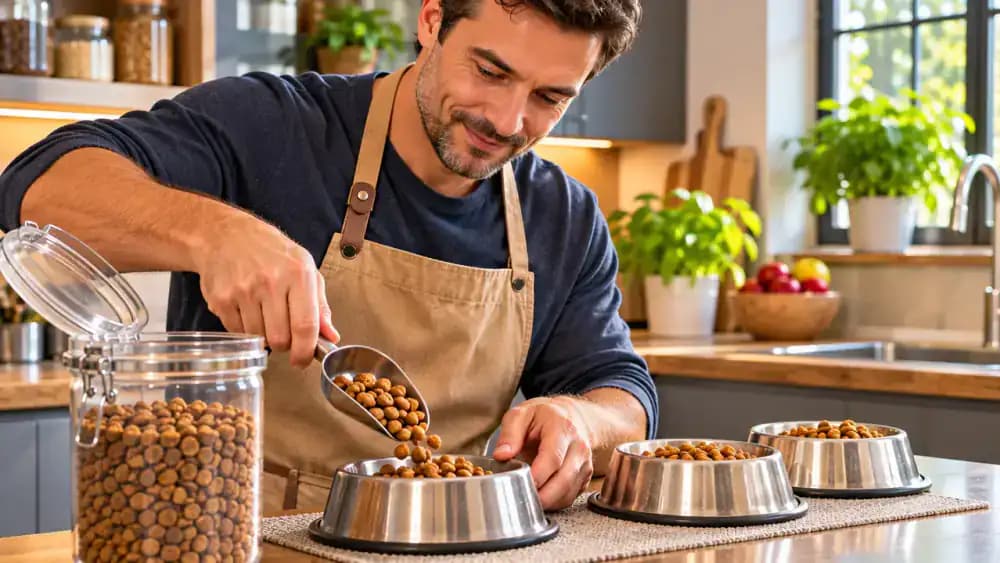
Before starting enrichment activities, measure your dog's usual food portion and set aside a small amount for training rewards, scent games, or a food-stuffed toy. Subtract these pieces from the regular meal to avoid unnecessary extra calories. Follow your dog's feeding recommendations, and use appropriately sized food pieces that are easy to eat safely.
Adapt Activities to Your Dog
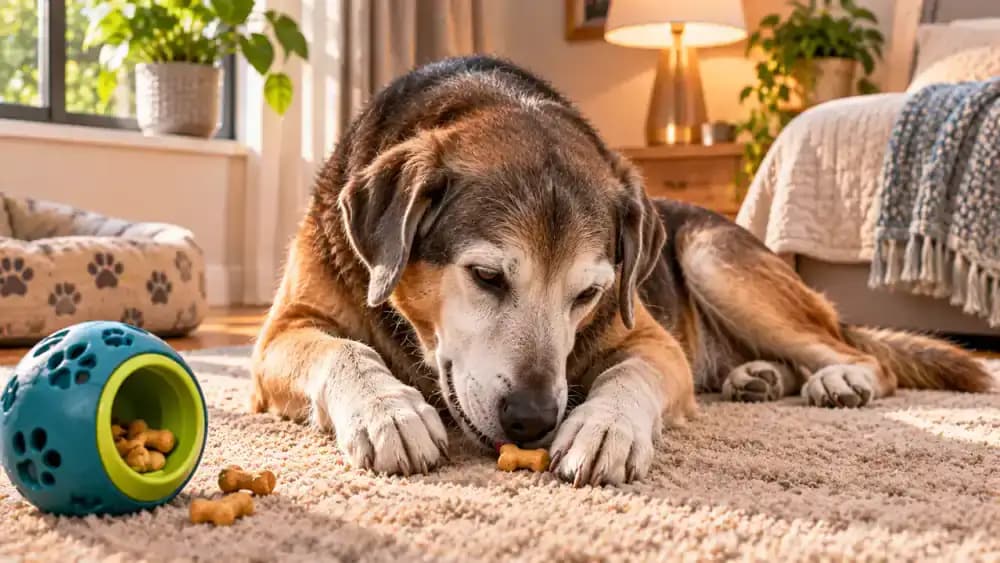
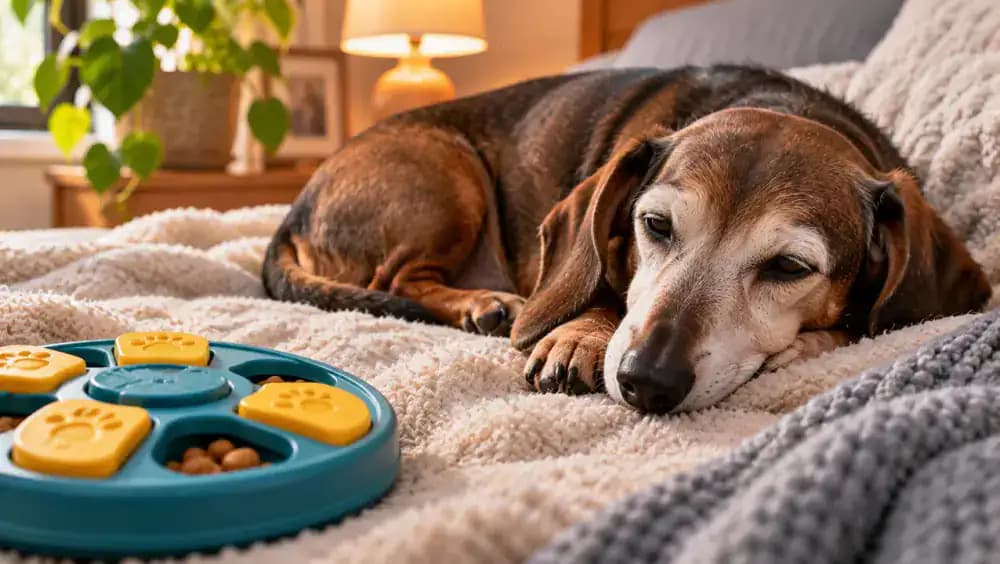
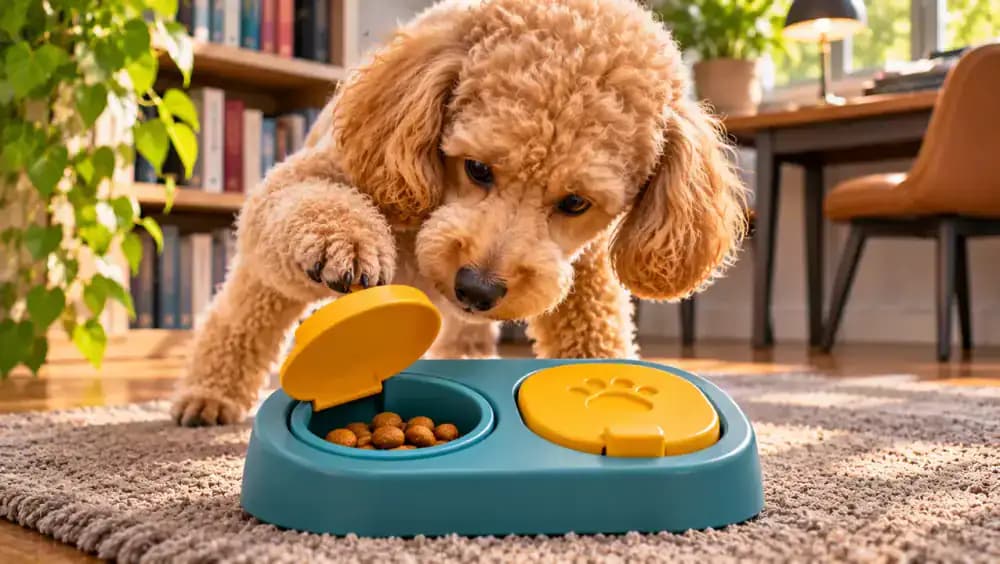
Adjust enrichment challenges to your dog's age, mobility, confidence, and preferences. An energetic young dog might enjoy investigating a simple puzzle feeder, while a senior may prefer finding treats within easy reach. Look for relaxed movement, curiosity, and willing participation. If your dog hesitates or loses interest, simplify the challenge or offer a comfortable break.
Try a Simple Choice Game
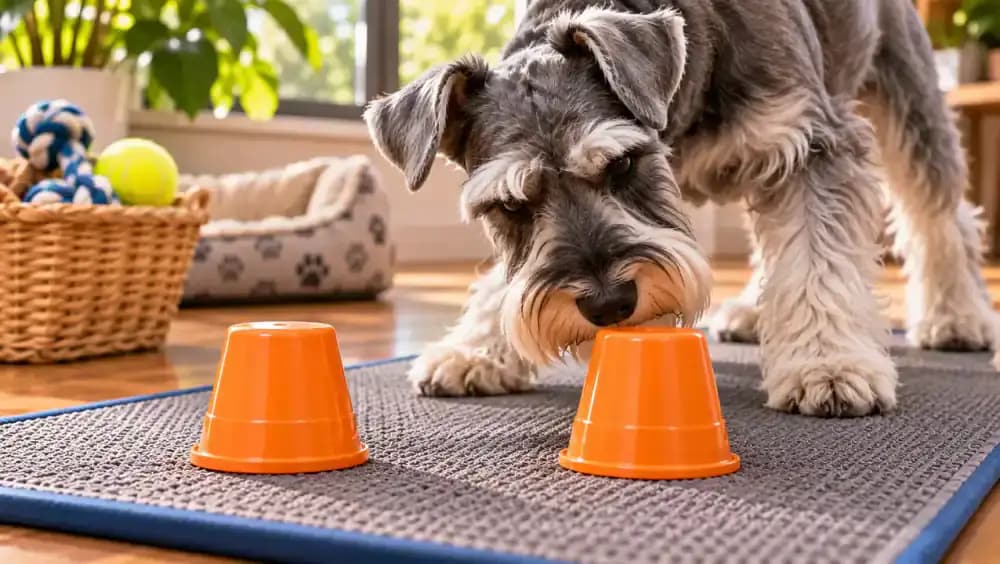
Place two identical lightweight cups several inches apart on a non-slip mat. While your dog watches, hide a small treat beneath one cup. Invite your dog to investigate and sniff either cup, then lift the selected cup yourself. Reward curiosity and gentle exploration, even after an incorrect guess. Keep the game brief, supervised, and enjoyable.
Practice Calm Observation
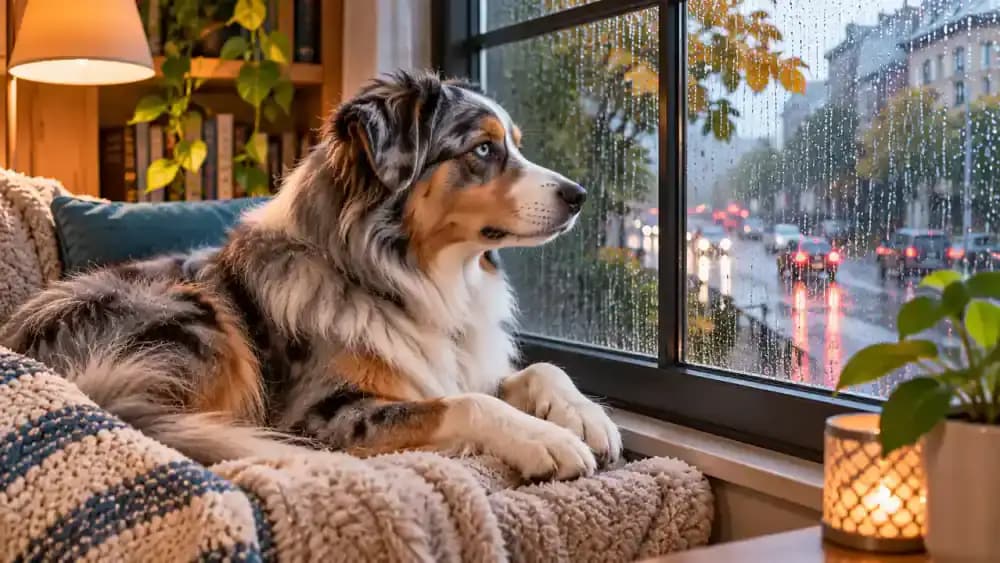
Sit comfortably with your dog near a sheltered window, away from cold drafts. When ordinary sounds such as rainfall or distant traffic occur, offer quiet praise or a small treat if your dog remains relaxed. Watch their body language and allow them to move away whenever they choose. Never force exposure to sounds that cause fear or discomfort.
Recognize Signs of Restlessness
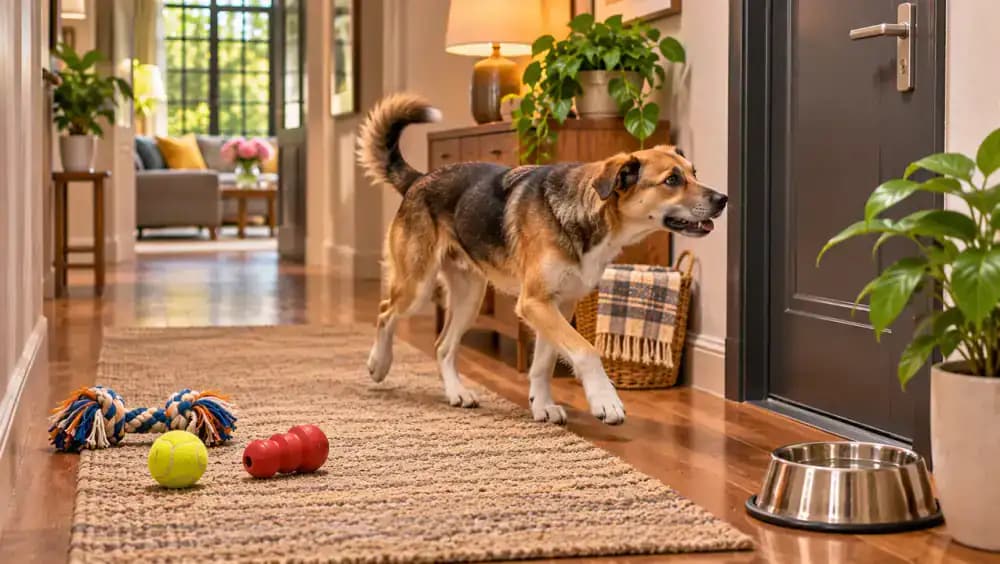
If your dog begins pacing, barking repeatedly, or grabbing household objects, check their immediate needs before introducing another game. Offer fresh water, consider whether a bathroom break is needed, and reduce unnecessary noise or distractions. Observe whether your dog settles in a quieter space. Resume gentle enrichment only when they appear comfortable and interested.
Remember Safe Outdoor Breaks
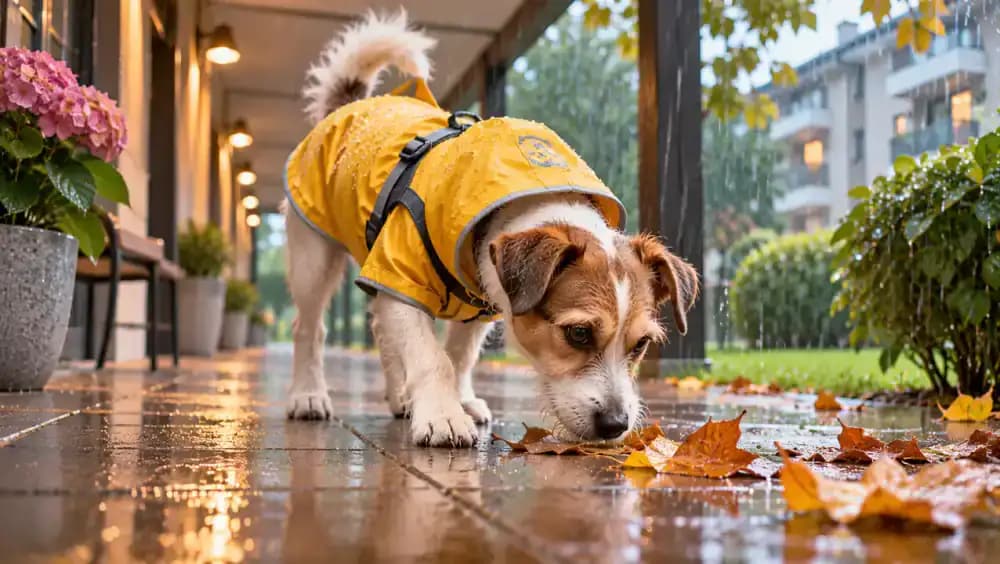
When rainfall is gentle and conditions are safe, take your dog outside for a brief bathroom break or relaxed sniffing walk. Choose stable, non-slippery pathways and use a comfortable raincoat if your dog tolerates one. Avoid thunderstorms, flooding, and hazardous surfaces. After returning indoors, gently dry your dog's paws and check for trapped moisture or debris.
Respect Your Dog's Boundaries
Offer enrichment activities as invitations, not obligations. If your dog ignores a familiar toy, moves away, or prefers sleeping, respect that choice and provide uninterrupted rest. Consider whether fatigue, discomfort, or environmental stress might be affecting participation without making assumptions. Contact your veterinarian about sudden or persistent changes in energy, appetite, mobility, or behavior.
Make Every Rainy Day Easier
After your rainy-day activities, identify which games your dog enjoyed most and store the supplies together in an accessible basket out of your dog's reach. Keep a favorite puzzle, durable food toy, and training pouch ready for next time. Choose just a few activities each day, adjusting their duration and difficulty to your dog's comfort and interest.
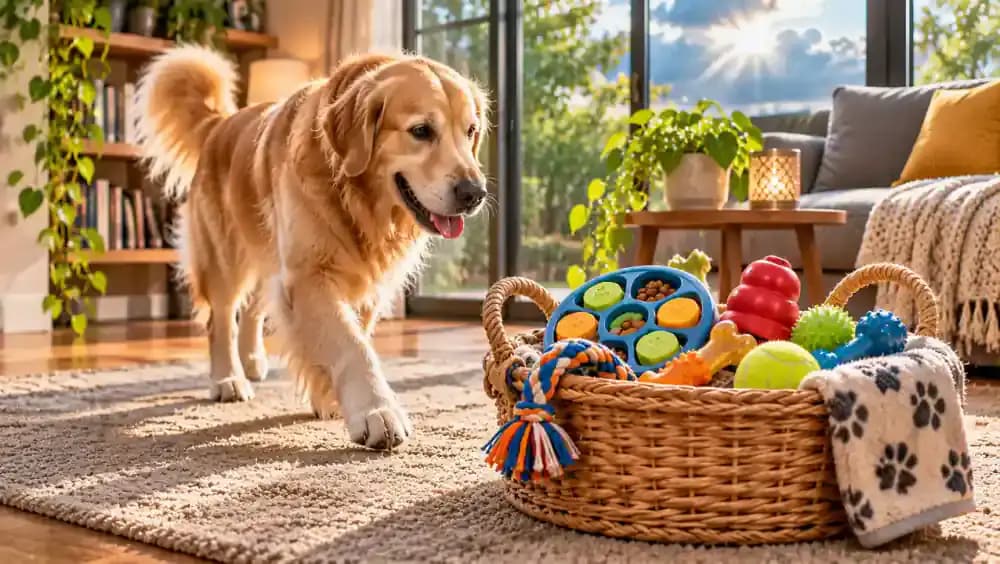
Discover What Works Best
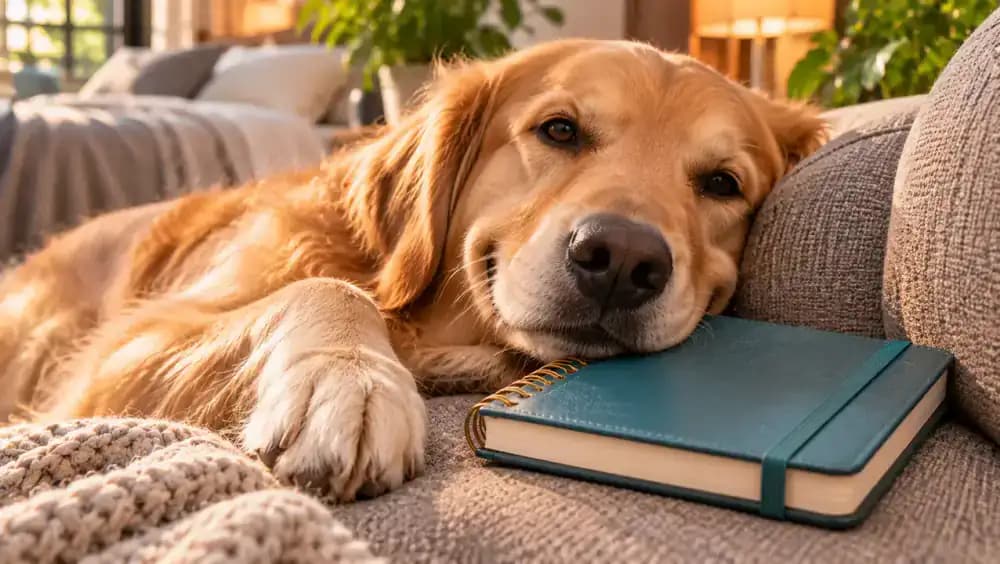
Keep a simple enrichment journal to track which activities capture your dog's interest. After each session, note the activity, approximate duration, and whether your dog appeared relaxed, curious, or frustrated. Look for patterns over several rainy days, including preferred times and activity types. Use these observations to build a comfortable routine around your dog's individual preferences.
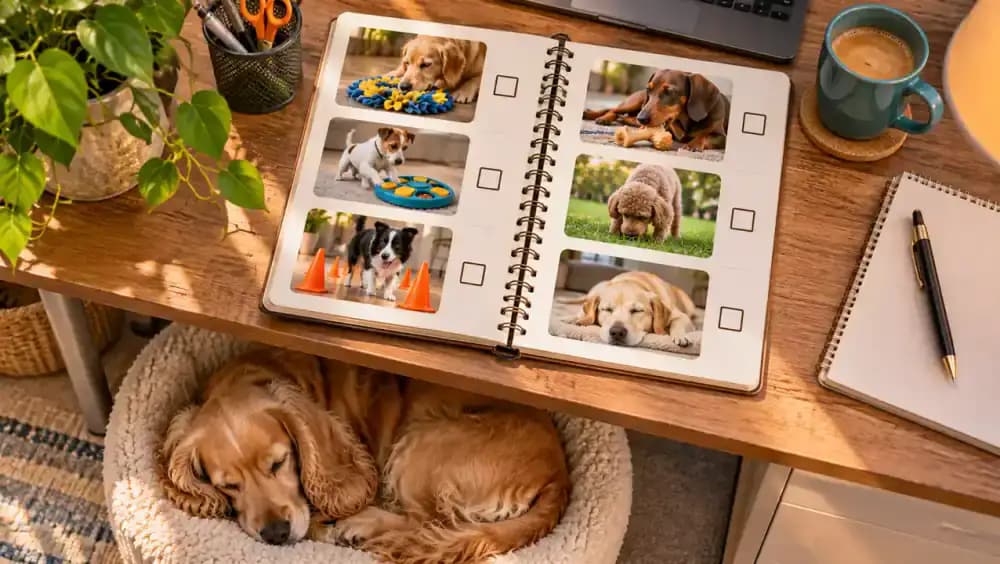
Choose Safe Household Materials
Inspect household materials carefully before using them for homemade enrichment games. Remove string, staples, sharp edges, cracked plastic, and containers that could trap your dog's nose or jaw. Avoid cardboard or loose fabric if your dog tends to swallow pieces. Choose sturdy, appropriately sized materials, supervise every activity, and discard anything showing damage or unsafe wear.
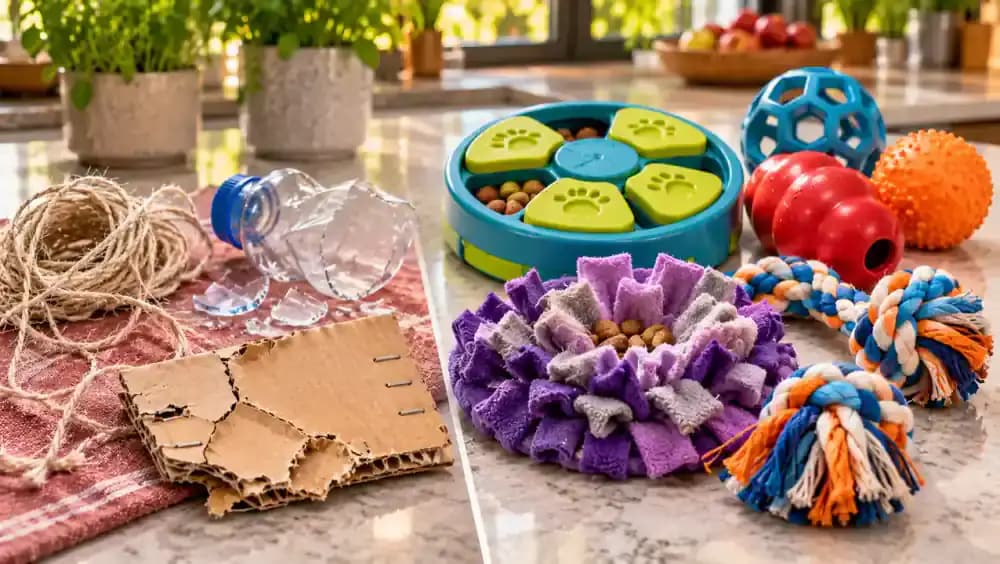
Try a Supervised Towel Roll
For dogs that do not chew or swallow fabric, spread a clean towel across a non-slip mat and scatter a few pieces of kibble over it. Roll the towel loosely, leaving the food accessible, and encourage your dog to investigate. Supervise closely as they unroll it with their nose. Remove the towel if chewing or frustration begins.
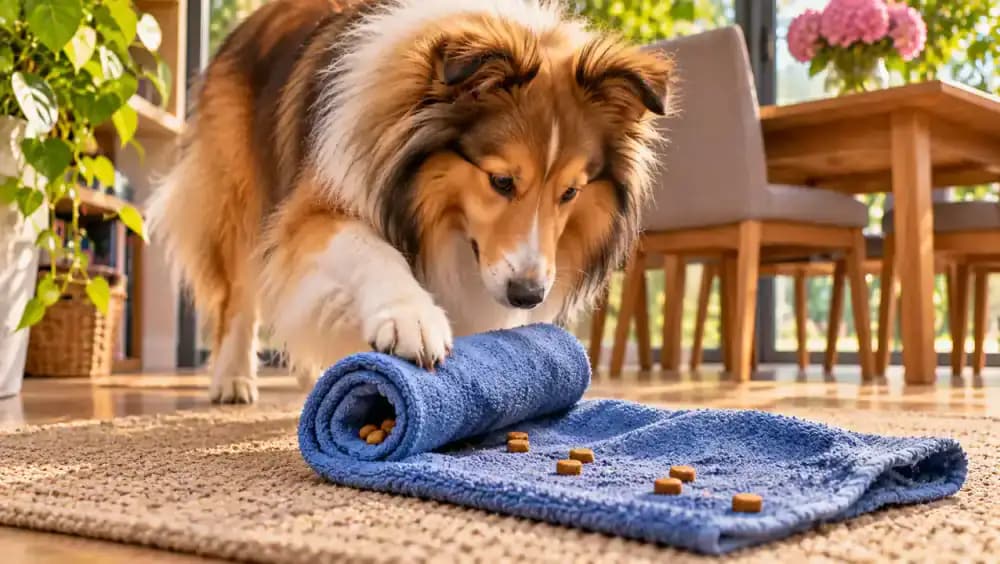
Teach Your Dog Toy Names
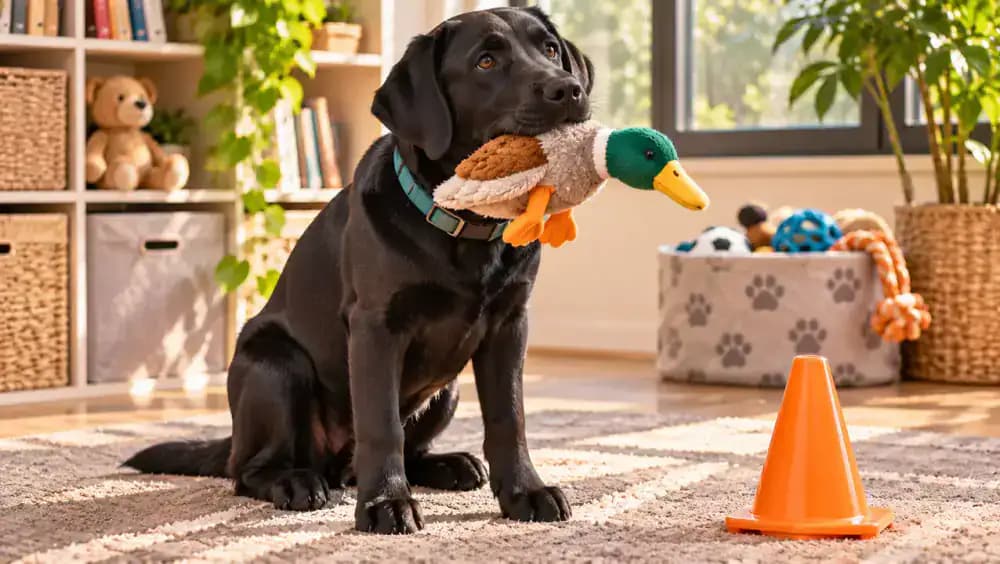
Choose one familiar toy, place it on the floor, and say its name clearly once. Reward your dog for looking toward or investigating the toy, then gradually encourage a gentle nose touch. When that becomes reliable, reward picking it up. Practice in short sessions with the toy stationary, avoiding unnecessary running, jumping, or complicated movements around furniture.
Increase Difficulty Gradually
Once your dog confidently completes a puzzle or scent game, increase the challenge one small step at a time. Move a treat slightly farther away or introduce one additional choice, but avoid changing both together. Reward successful attempts and watch for hesitation. If your dog becomes frustrated or disengages, return to the easier version and rebuild confidence.
Make Small Spaces Work
Adapt indoor enrichment to your available floor space instead of choosing activities that require running or jumping. In small apartments, practice stationary targeting, familiar cues, and scent searches on a secure mat. Larger rooms can accommodate gentle movement, but keep pathways clear and avoid slippery turns. Prioritize controlled activities that suit your dog's mobility and comfort.
Make Rainy Days Worth Enjoying
Notice how your dog responds throughout the day rather than measuring success by the number of activities completed. Comfortable curiosity, relaxed breaks, and a willingness to settle are encouraging signs. Keep favorite games available for future rainy days, but never force participation. A few enjoyable moments together can make staying indoors feel comfortable and rewarding.
Create a Familiar Starting Signal
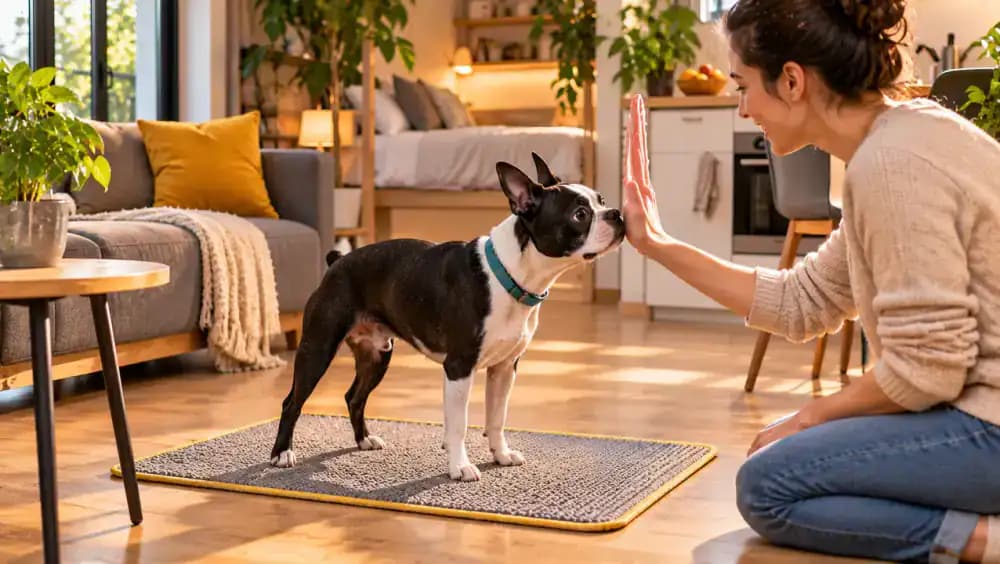
Choose a distinctive non-slip mat to signal the beginning of indoor enrichment activities. Place it in a quiet area, invite your dog to approach voluntarily, and reward relaxed steps onto the surface. Repeat this simple routine before short training sessions. When finished, put the mat away to distinguish structured activities from ordinary resting and household downtime.
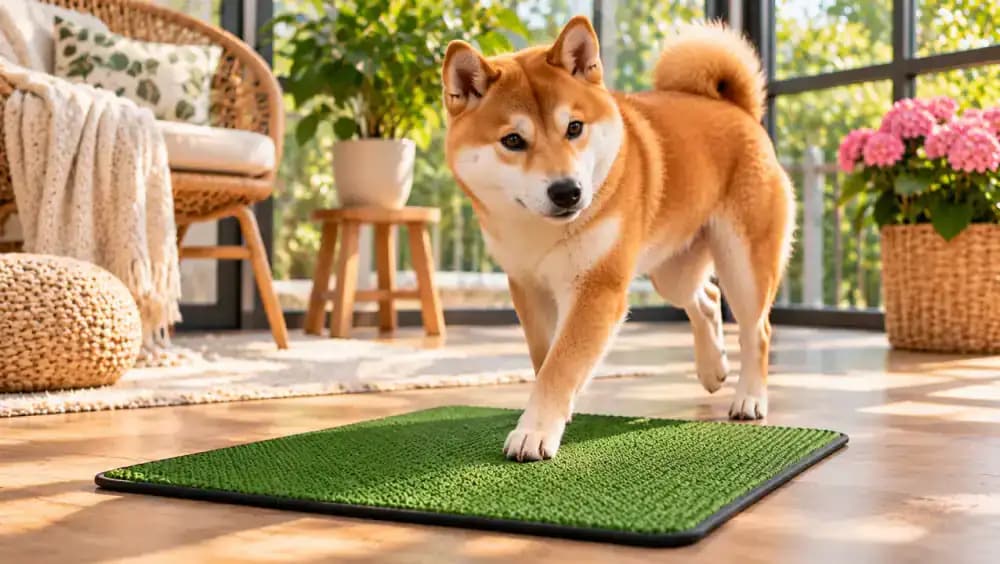
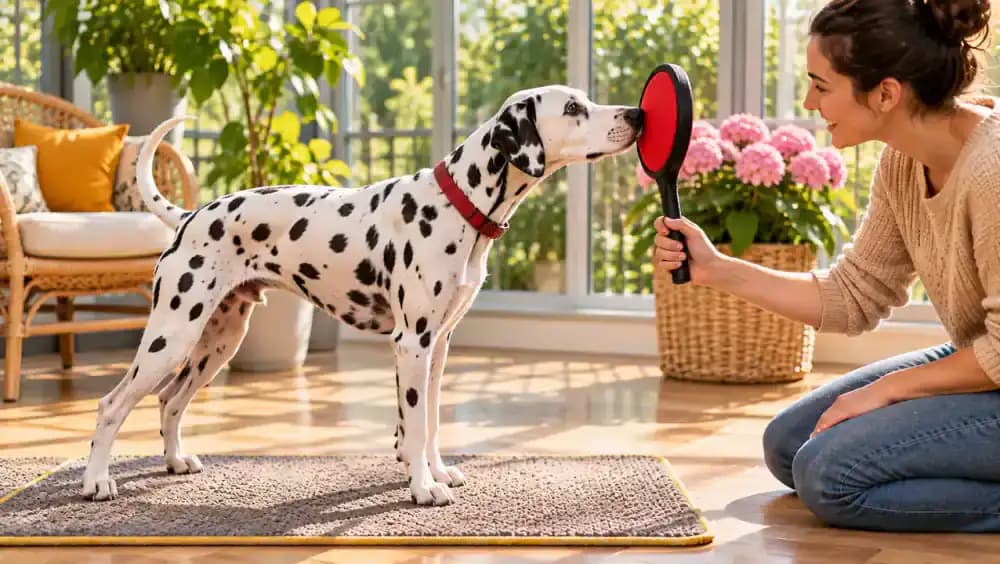
Explore Gentle Object Targeting
Hold a smooth, sturdy, dog-safe target at your dog's nose height while they stand comfortably on a non-slip surface. Reward a gentle nose touch, then move the target just a few inches for the next attempt. Keep repetitions brief and movements controlled. Avoid sharp edges, sudden turns, or encouraging your dog to stretch beyond a comfortable position.
Let Your Dog Choose
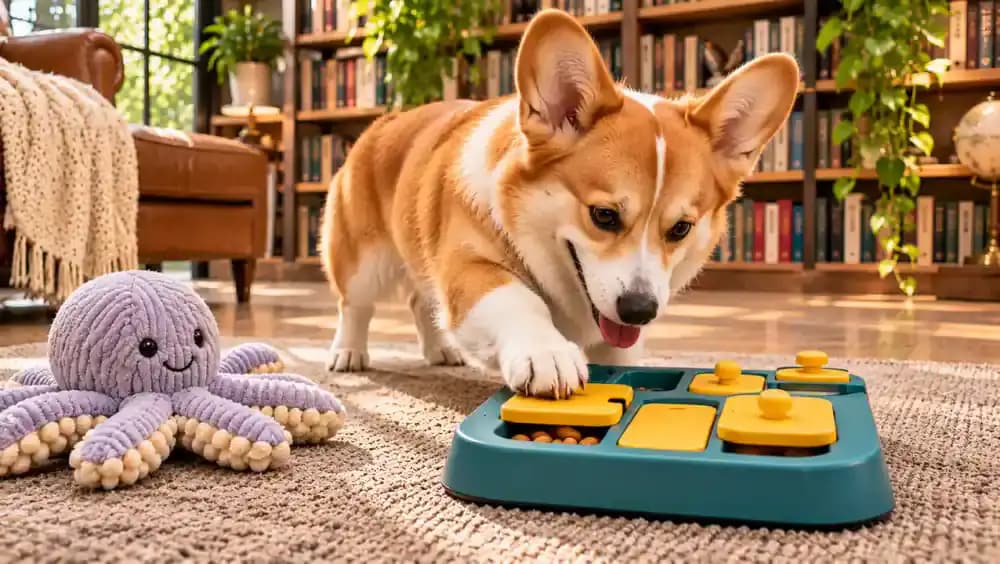
Place two safe enrichment options several feet apart, such as a sturdy food puzzle and a familiar soft toy. Allow your dog to approach either activity voluntarily, without directing their choice. Observe which option attracts their interest, then put the other aside. Respecting your dog's preferences helps keep indoor activities enjoyable, manageable, and free from unnecessary pressure.
Manage Multi-Dog Activities Safely
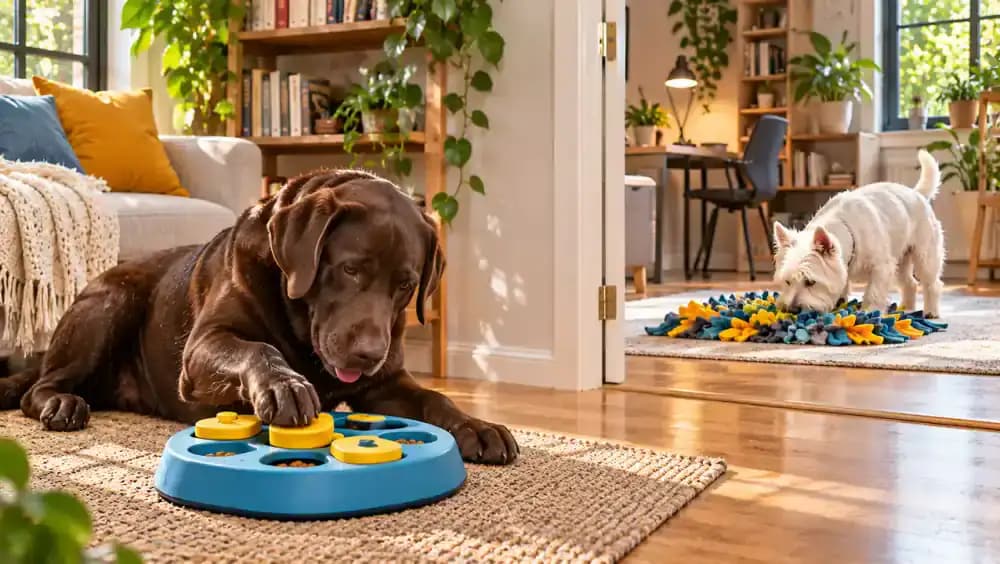
When multiple dogs share your home, offer food puzzles, scent searches, and valued chews in separate spaces to prevent competition. Use secure doors or barriers, and supervise each dog individually. Never assume friendly dogs will comfortably share food rewards. Remove leftover treats and toys before bringing everyone together, and watch for signs of tension during transitions.
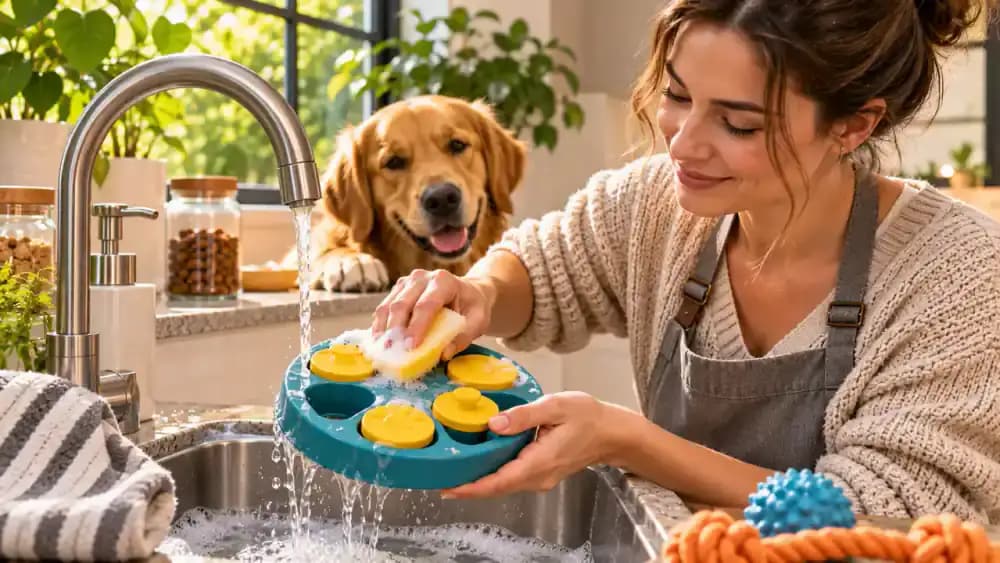
Clean and Inspect Enrichment Equipment
After each food-based activity, clean enrichment toys according to the manufacturer's instructions. Use warm water, appropriate dish soap, and a small brush to remove residue from openings and textured surfaces. Rinse thoroughly, inspect for cracks or loose pieces, and let everything dry completely before storage. Discard damaged equipment to reduce choking and injury risks.
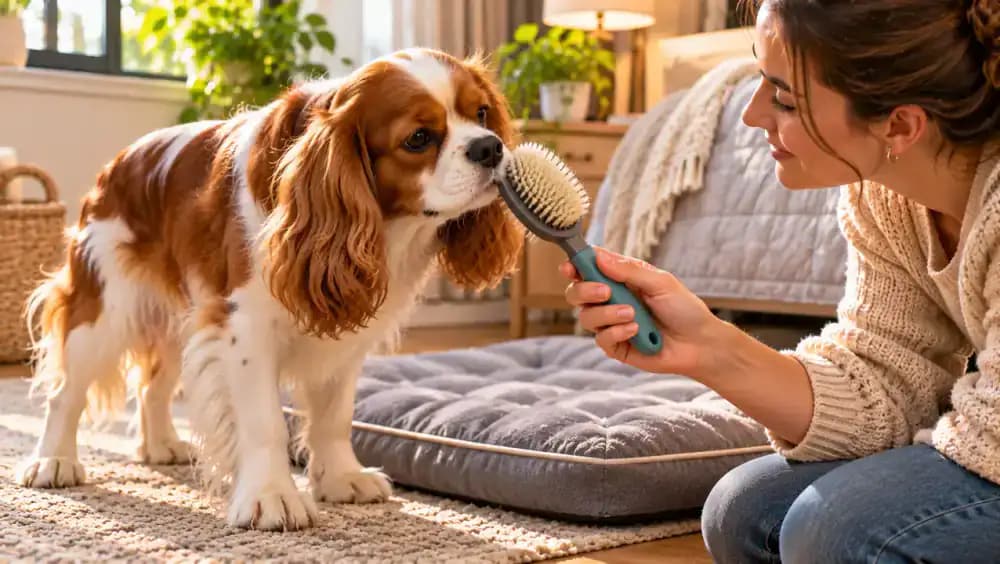
Make Everyday Care a Gentle Game
Introduce a soft grooming brush during a quiet moment and let your dog investigate it voluntarily. Reward relaxed interest with praise or a small treat. If your dog remains comfortable, gently brush their shoulder for a few seconds, then pause. Keep handling brief and positive, stop when your dog disengages, and never force grooming as an enrichment activity.
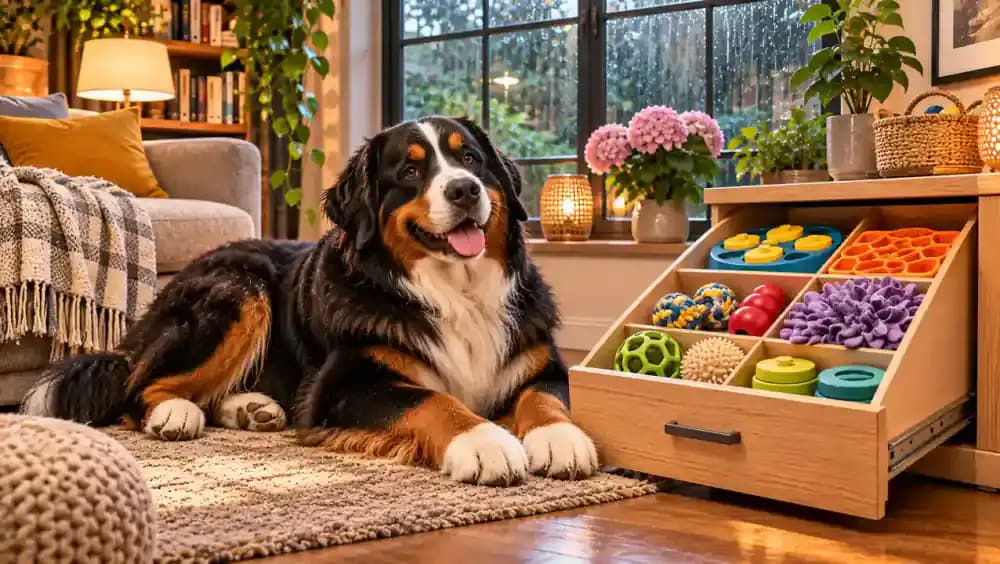
Build Your Own Rainy-Day Toolkit
Gather your dog's favorite safe enrichment supplies into one organized storage area, including a clean food toy, non-slip training mat, and measured treats. On future rainy days, select one or two activities based on your dog's interest and energy. Keep sessions flexible, supervise appropriately, and allow generous rest breaks. Comfortable participation matters more than completing every activity.
Your dog is standing by the living room window, watching raindrops slide down the glass. Normally, this would be the time for a long walk, plenty of sniffing, and a chance to explore the neighborhood. But with heavy rain outside, today's walk has been cut short. Now your dog is looking at you, seemingly wondering what comes next.
Fortunately, keeping your dog engaged on rainy days doesn't require expensive equipment, a huge living room, or hours of nonstop entertainment. A few thoughtful indoor activities can provide mental stimulation, encourage natural behaviors, and make a quieter day more enjoyable.
The secret is variety without overstimulation. Short positive reinforcement training sessions, simple scent-search games, and appropriately selected food-stuffed toys give your dog different ways to use their brain. Just as importantly, comfortable resting spaces and uninterrupted downtime help balance activity with relaxation.
Whether you're caring for an energetic young dog, a laid-back adult, or a senior who prefers gentler activities, rainy day dog activities can be adjusted to suit their abilities and interests.
This guide focuses on practical indoor enrichment ideas you can try with everyday supplies. You'll learn how to combine familiar training cues, supervised sniffing challenges, safe chewing opportunities, and regular breaks into a flexible routine that respects your dog's comfort and energy level.
Where people go wrong
Trying to Entertain Your Dog All Day. A rainy day doesn't require constant games, training, or attention. Too much activity can leave some dogs overstimulated and unable to settle. Instead, alternate brief enrichment sessions with ordinary household downtime. Watch for signs that your dog is losing interest, becoming frustrated, or getting tired, and allow them to rest without interruption.
Making Scent Games Too Difficult Too Quickly. Hiding treats in complicated locations before your dog understands the game can turn a fun activity into a frustrating experience. Begin with a few treats placed in obvious, accessible spots on a non-slip surface. Increase the challenge gradually, and avoid locations that encourage climbing, jumping, or accessing unsafe household items.
Leaving Food-Stuffed Toys or Chews Unsupervised. Even products marketed as durable or safe can become hazardous when damaged, broken, or used by an inappropriate chewer. Choose items suited to your dog's size and habits, inspect them regularly, and supervise chewing. Remove toys that develop loose pieces or significant damage, and avoid chews that could be swallowed whole.
Using Too Many Treats During Enrichment. Training rewards, scent-search treats, and stuffed toys can add up quickly, especially when several activities happen on the same day. Excess calories may interfere with your dog's normal feeding routine. Consider using measured portions of regular kibble for enrichment and keeping additional treats within your veterinarian's recommended daily allowance.
Playing Active Games on Slippery Floors. Smooth tile, hardwood, and laminate can make indoor movement less secure, particularly for excited dogs or those with limited mobility. Avoid encouraging fast turns, sudden stops, or jumping on slippery surfaces. Choose a non-slip activity area, clear away clutter and cords, and favor controlled movements over energetic indoor chasing games.
Ignoring Your Dog's Individual Comfort Level. Not every dog enjoys the same games, toys, or training challenges. Some prefer sniffing, while others are more interested in chewing or practicing familiar cues. Forcing participation can undermine the purpose of enrichment. Offer manageable choices, recognize disengagement, and adjust each activity to your dog's age, physical abilities, and preferences.
Skipping Rest After Mental Activities. Sniffing, learning, and problem-solving provide valuable stimulation, but dogs also need opportunities to settle. Scheduling one activity immediately after another may prevent a relaxed transition into downtime. Keep a comfortable bed available, provide fresh water, and let your dog nap or relax after enrichment without repeatedly inviting them back into play.
Questions people ask
Combine several short, low-pressure activities rather than planning one long play session. Practice familiar cues such as sit, touch, and stay for about three minutes, then offer an easy supervised scent-search game or a suitable food-stuffed toy. Rotate activities based on your dog's interest, and include plenty of quiet time between sessions.
Fixed it?
Get one guide like this every Thursday.