How to Keep Dogs and Cats Out of Household Trash
Curious pets can turn an ordinary trash can into a serious safety hazard. Learn how to secure household garbage, manage food scraps, reduce tempting odors, and build simple habits that keep dogs and cats away from dangerous waste.
What you’ll need
Tap to tick things off before you start.
The Hidden Danger in Household Trash
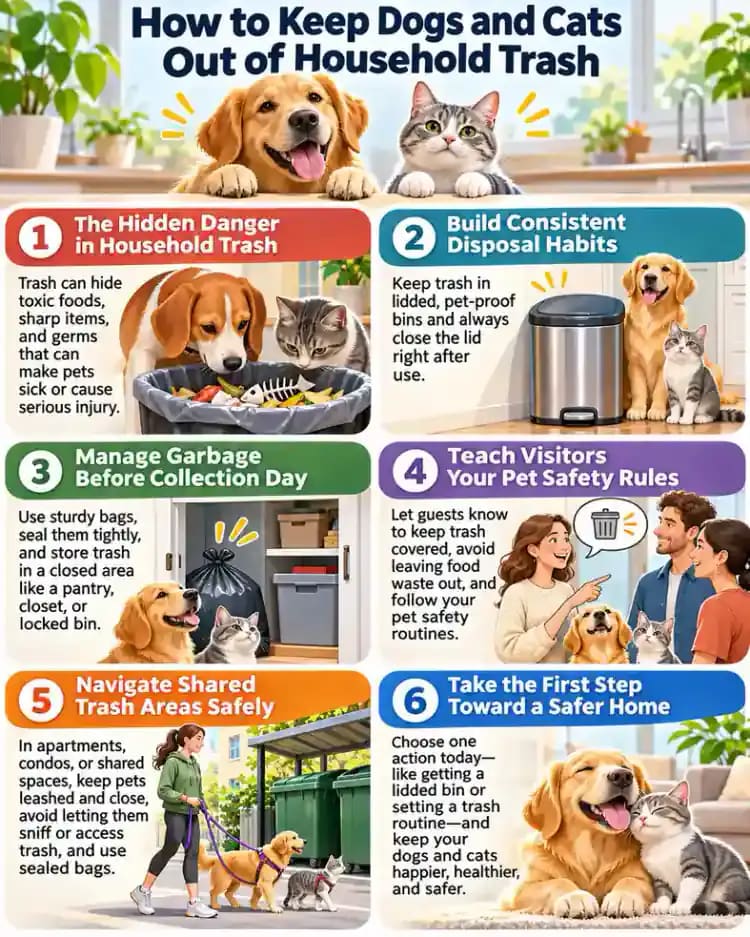
Household trash can expose curious dogs and cats to dangerous food scraps, sharp packaging, and discarded household products. An overflowing bin or loose lid makes these hazards especially accessible. Start by checking every waste container your pets can reach, including smaller bathroom bins. Prevention means securing garbage before curiosity turns into a potentially serious emergency.
Why Pets Are Attracted to Garbage
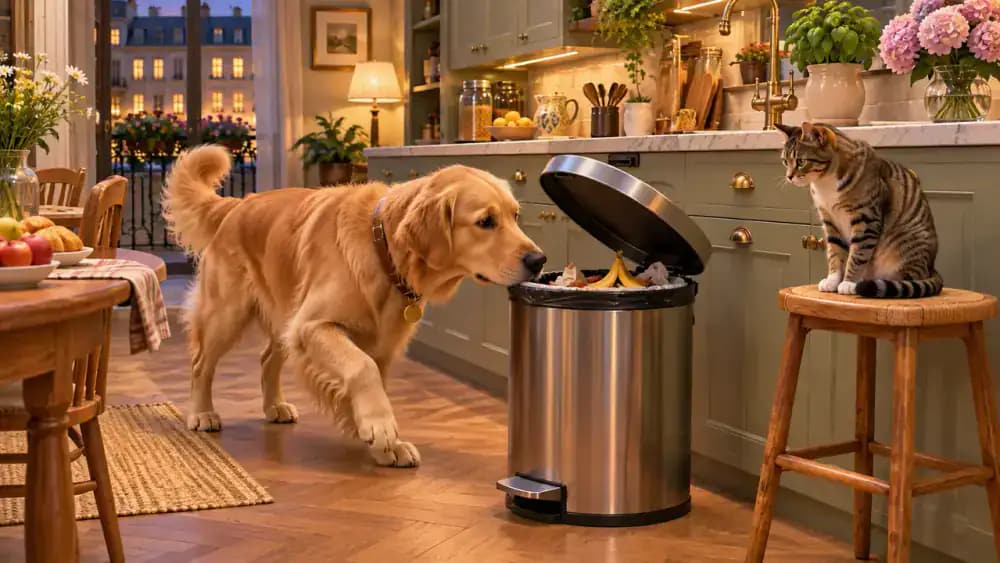
Dogs often investigate garbage because of strong food odors, while cats may be attracted to rustling wrappers and unfamiliar textures. Trash can contain cooked bones, chocolate, grapes, onions, spoiled leftovers, sharp metal edges, and medications. Keep these hazards inaccessible, even to well-fed pets. If dangerous ingestion is suspected, contact a veterinarian promptly rather than attempting home remedies.

Choose a Secure Trash Container
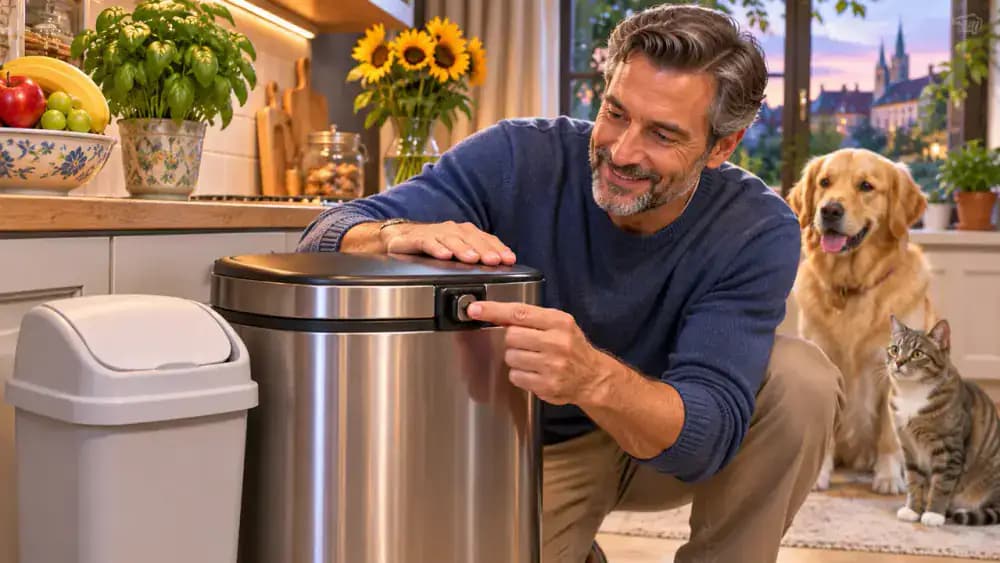
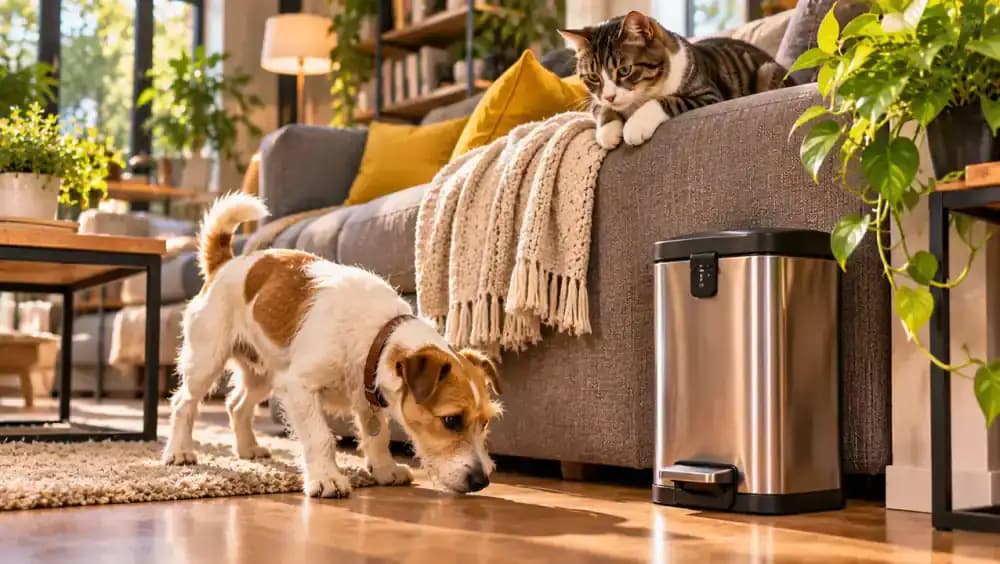
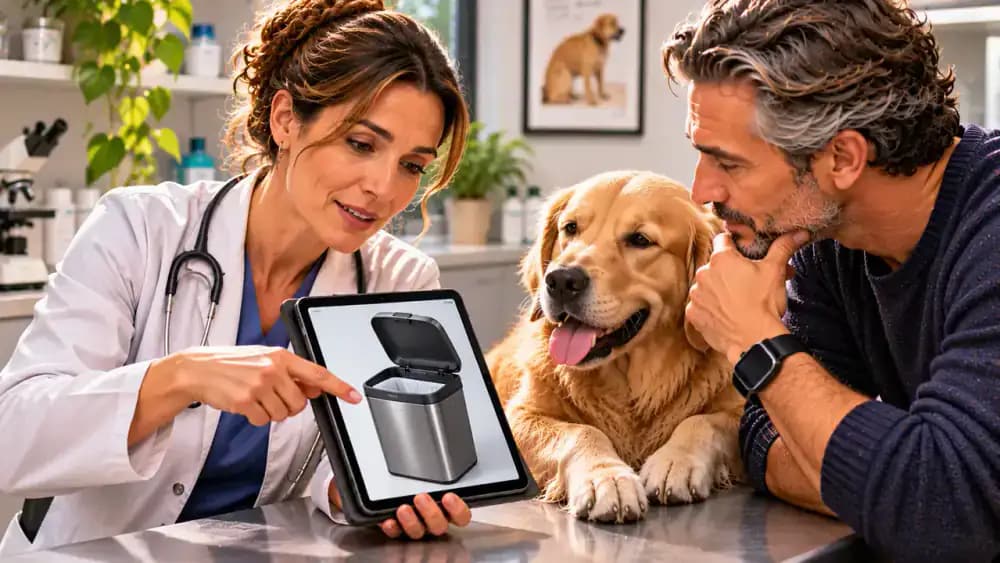
Replace lightweight, easily tipped bins with sturdy containers that have secure locking lids. A heavy stainless steel model with a stable base can offer better protection than an open plastic wastebasket or swinging lid. Engage the lock, inspect the edges for gaps, and gently test stability. Make sure your pet cannot open or overturn the container.
Create Barriers Around Household Waste
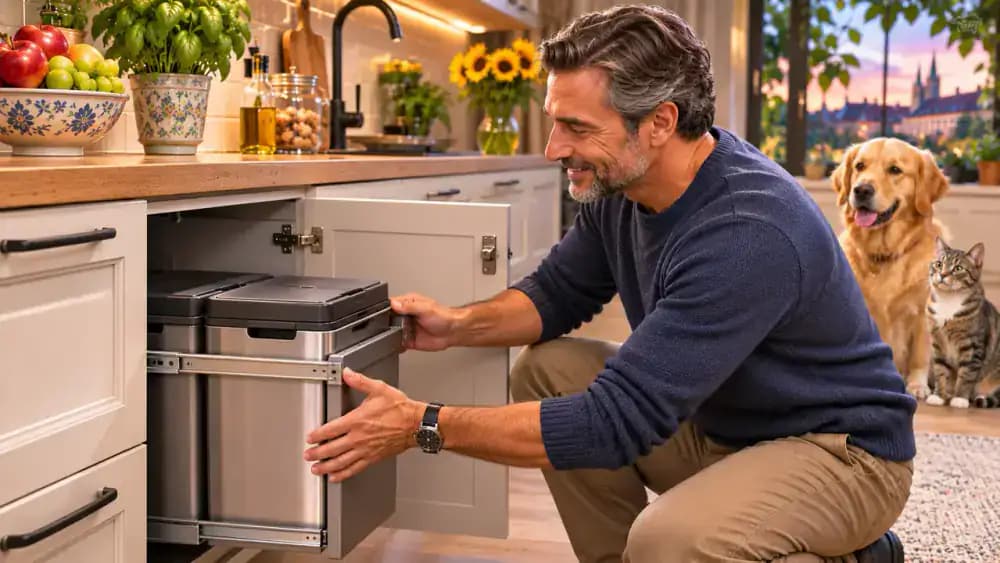
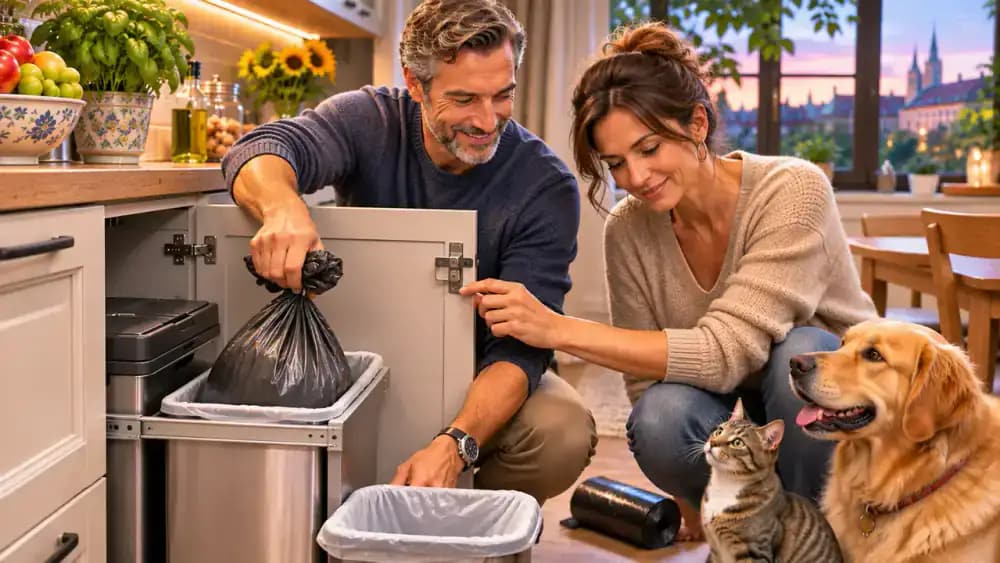
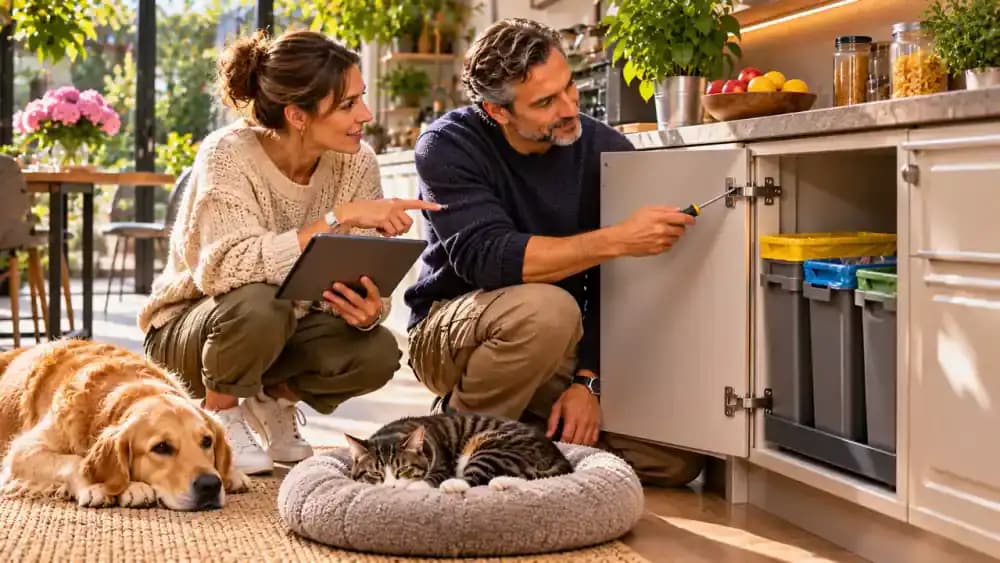
Add another layer of protection by storing kitchen trash inside a latched cabinet or enclosed pullout compartment. Secure bathroom wastebaskets containing floss, razors, or medication packaging, and keep storage doors closed. Outdoors, position garbage containers upright in fenced or enclosed areas with lids firmly fastened. Check every barrier regularly for loose hardware or accessible openings.
Handle Food Scraps and Odors Correctly
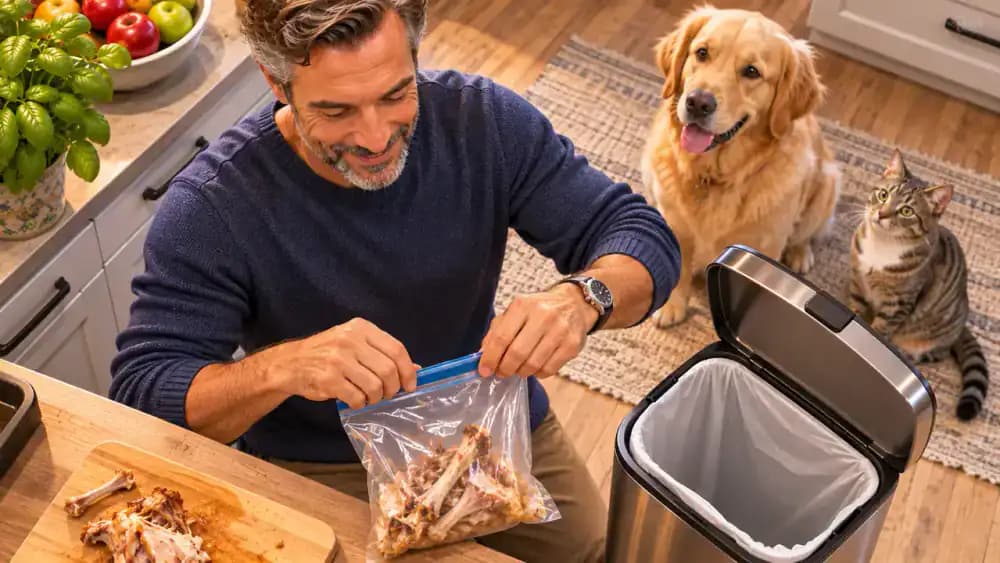
Place meat scraps and strongly scented leftovers in sealed bags or containers before disposal. Remove hazardous food waste promptly, and never leave tempting scraps unattended on countertops. Regularly clean the trash can lid, rim, and surrounding surfaces with suitable cleaning products, following label directions. Allow cleaned surfaces to dry before pets regain access, and wash your hands afterward.
Build Consistent Disposal Habits
Make trash safety part of your daily household routine. Close lids immediately, replace nearly full bags before they overflow, and confirm cabinet latches click securely into place. Before leaving home, check bathrooms, bedrooms, and living areas for accessible wastebaskets. Explain these habits to children, guests, and other household members so everyone follows the same precautions.
Train Pets Without Punishment
Teach your dog to move away from garbage using a consistent leave-it cue and small rewards for responding. Practice during supervised sessions without exposing your pet to dangerous waste. Provide puzzle feeders, suitable chew toys, and regular play to redirect curiosity. For cats, offer interactive toys and enrichment. Always maintain physical barriers when pets are unsupervised.

Respond Safely and Prevent Future Accidents
If you find scattered garbage, calmly move your pet away and check what may have been swallowed. Contact a veterinarian promptly if toxic foods, medications, bones, or sharp objects could be involved. Never induce vomiting or attempt home remedies without veterinary guidance. Prevent repeat incidents by securing containers, disposing of hazards carefully, cleaning surfaces, and maintaining consistent routines.

Identify Overlooked Trash Hazards
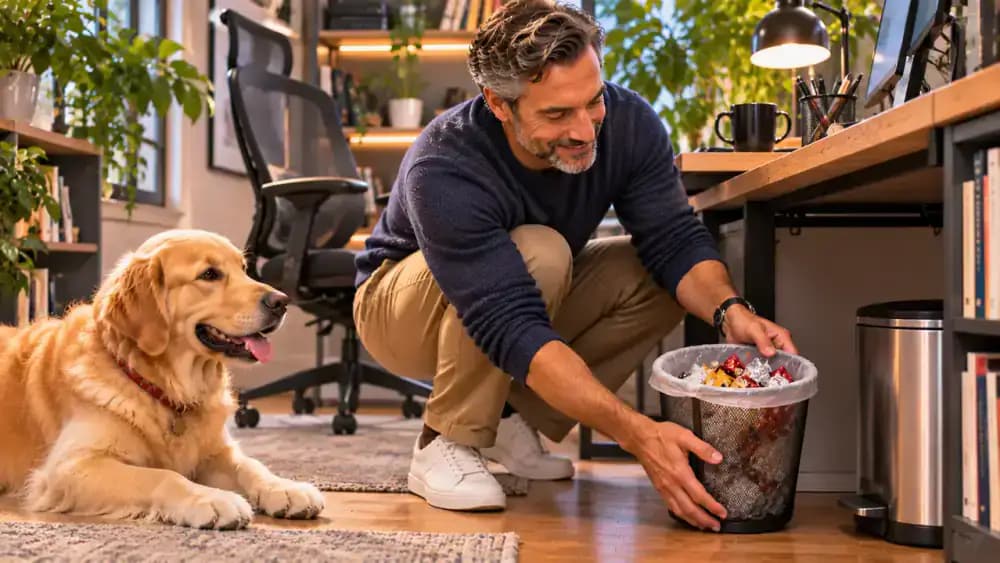
Inspect your home from your pet's height to identify overlooked waste containers. Check beneath office desks, beside beds, and around hallway furniture for snack wrappers, tissues, packaging, or discarded household items. Move accessible bins into secured cabinets or behind closed doors, or replace them with covered containers. Repeat this inspection whenever furniture or household arrangements change.
Make Recycling Areas Pet-Safe
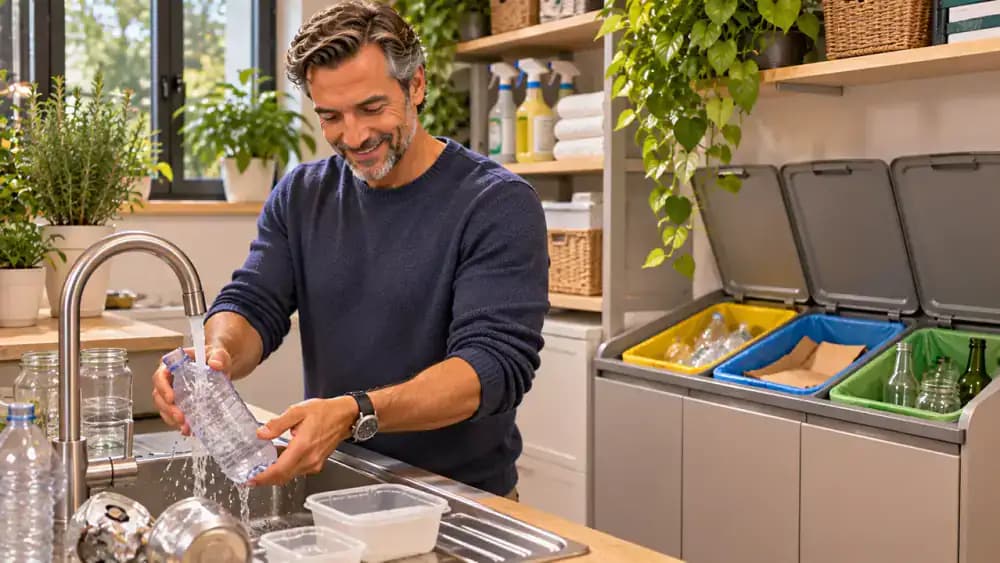
Treat recycling containers as potential pet hazards, especially when they hold sharp metal cans, narrow plastic openings, or food-stained packaging. Empty and rinse containers before sorting them, flatten suitable cardboard, and follow local recycling requirements. Avoid leaving sharp-edged items exposed. Keep collected recyclables inside secured cabinets or enclosed bins that curious dogs and cats cannot access.
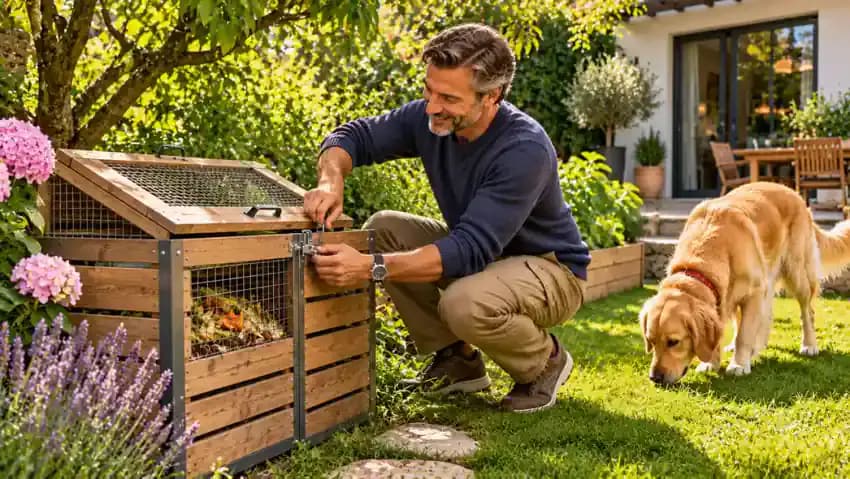
Protect Pets From Compost Waste
Keep compost inaccessible to pets, especially when it contains fruit scraps, coffee grounds, or decomposing food. Moldy material and certain compost ingredients can be harmful if swallowed. Store kitchen scraps in a sealed countertop compost caddy and transfer them to a protected outdoor enclosure. Never assume organic or biodegradable waste is automatically safe for animals.
Manage Garbage Before Collection Day
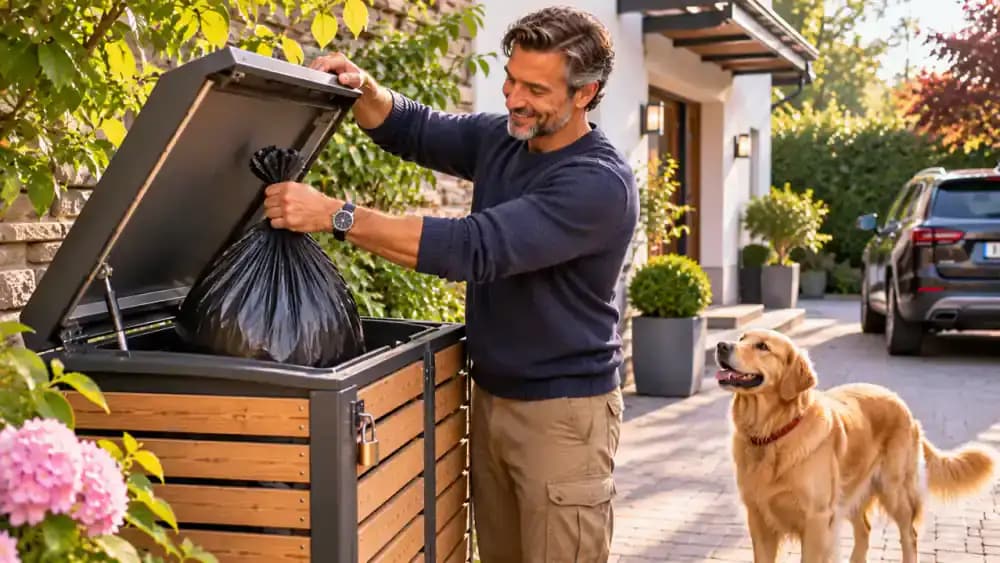
Carry filled garbage bags directly from your home to a secure outdoor container instead of leaving them beside doors or in hallways. Even tightly tied bags can attract curious pets. On collection day, follow local pickup schedules and position bins securely at the designated location. Minimize the time garbage remains exposed, and check that lids stay closed.
Adapt Protection to Your Pet's Abilities
Choose trash barriers based on your pet's actual abilities and behavior. Small dogs may squeeze through narrow gaps, athletic cats can reach elevated countertops, and larger dogs may activate pedal-operated lids. Observe which areas your pet can access, then select secure cabinets, locking containers, or physical barriers accordingly. Reevaluate protection as your pet grows or develops new habits.
Test Your Pet-Proofing System
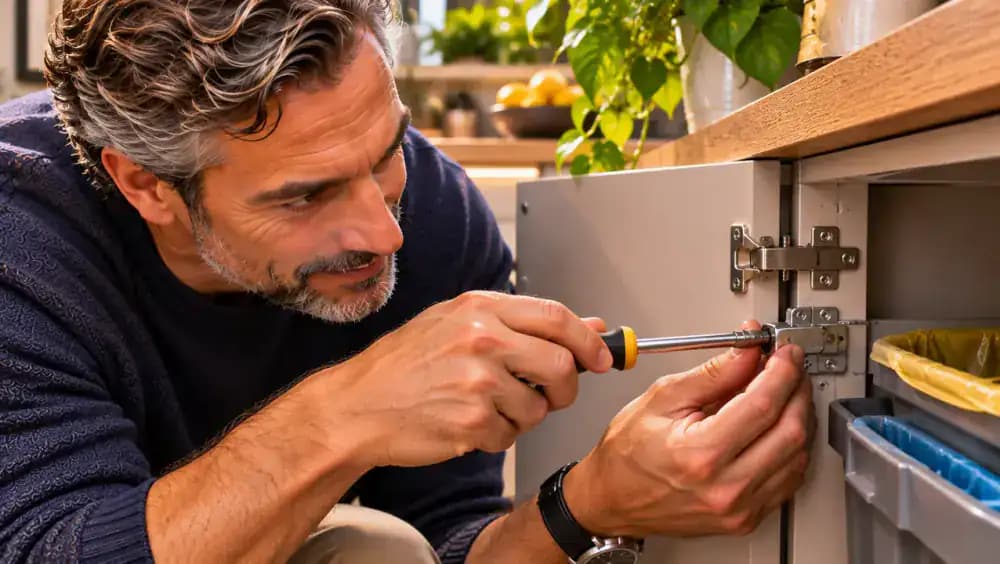
Test newly installed trash containers and cabinet barriers before relying on them. Check whether lids remain closed when gently bumped, latches engage from every accessible angle, and pullout compartments shut completely. Inspect for gaps or loose hardware that pets could exploit. Tighten or replace faulty components immediately, and repeat these checks regularly as part of household maintenance.
Recognize Persistent Scavenging Behavior
If your pet repeatedly searches through garbage despite secure storage and enrichment, record when incidents occur and which items attract attention. Changes in appetite, stress, boredom, or learned habits may play a role, but avoid drawing conclusions yourself. Discuss persistent or sudden behavioral changes with your veterinarian, who can evaluate concerns and recommend appropriate support.

Maintain a Safer Home Long-Term
Include trash safety in your weekly household maintenance routine. Inspect cabinet hinges, locking lids, and outdoor container latches for wear or damage. Make sure everyone follows the same disposal rules, and adjust barriers as your pets grow or develop new habits. Reliable protection depends on consistent prevention, not perfect obedience or constant supervision.
Prepare for Changes in Household Routines
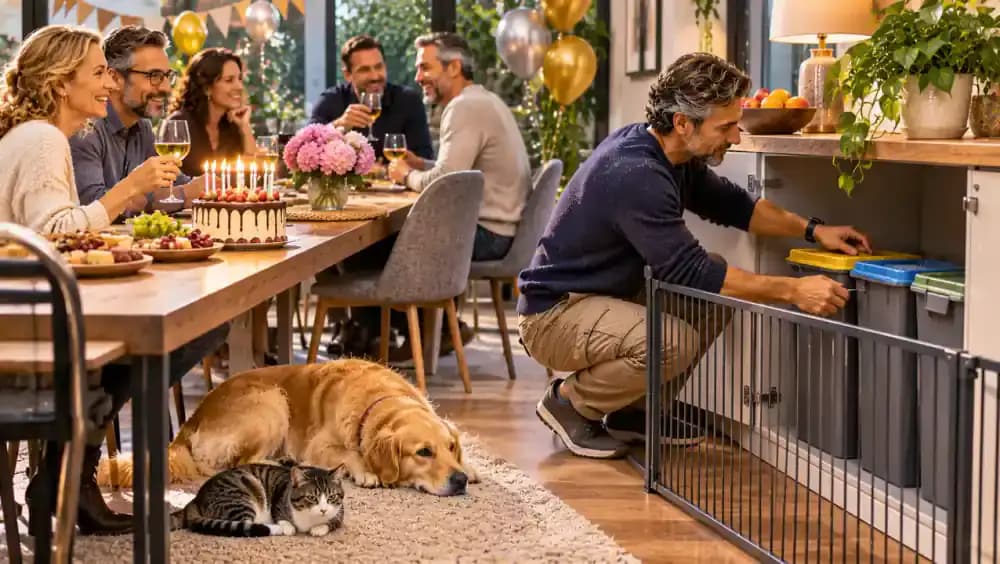
Plan extra trash protection during parties, holidays, renovations, and other disruptions to normal routines. Establish a designated, secured disposal station before activities begin, and remove food packaging and used plates promptly. Keep serving areas supervised and restrict pet access when necessary. Temporary pet gates can prevent curious animals from reaching unfamiliar waste during busy gatherings.
Teach Visitors Your Pet Safety Rules
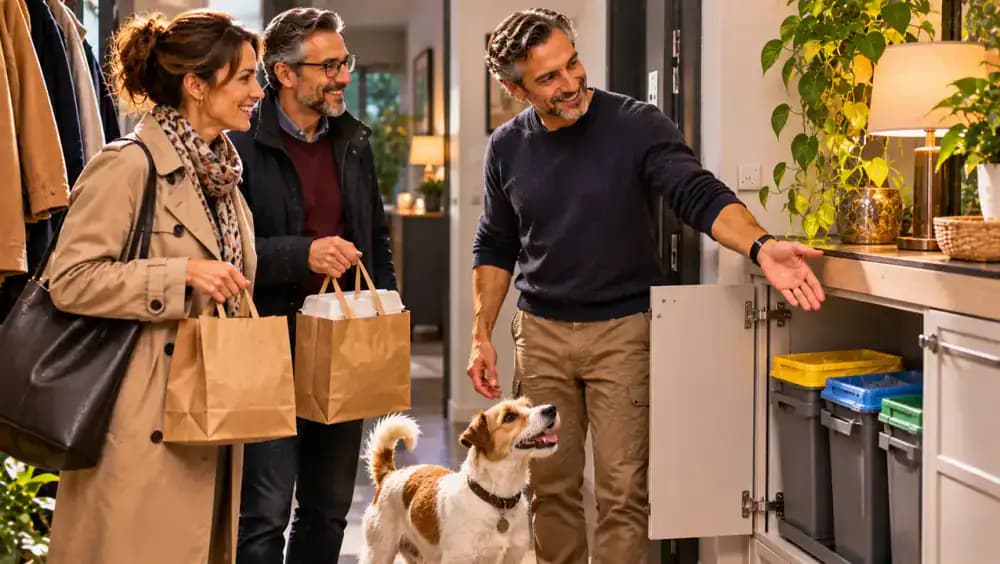
Explain your household trash rules whenever visitors arrive with food, snacks, or shopping bags. Show guests where to dispose of wrappers and leftovers, and ask them to keep bags off the floor. Remind everyone not to offer pets table scraps. A small reminder sign near the disposal area can reinforce these precautions without interrupting the visit.
Dispose of Hazardous Household Materials Safely
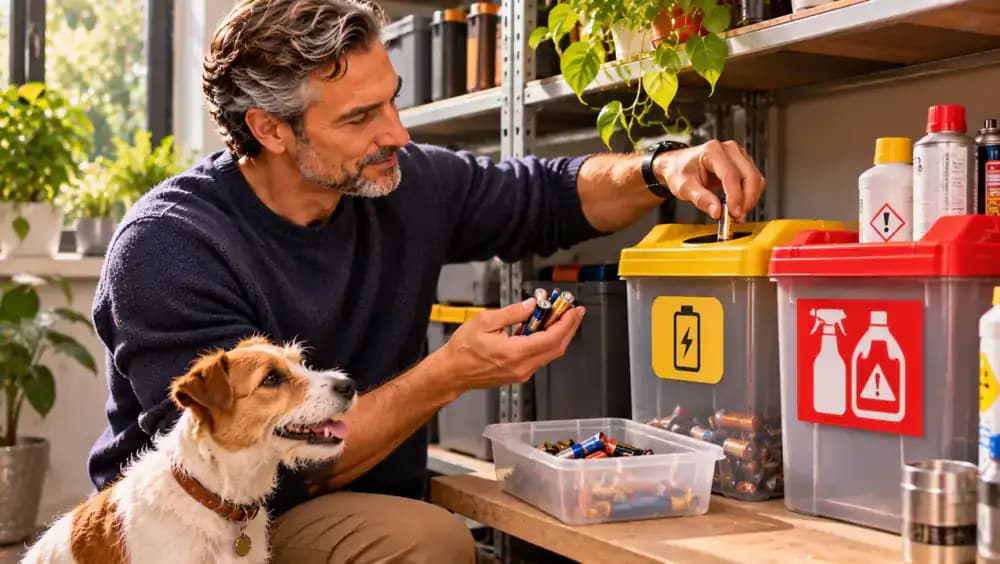
Keep batteries, cleaning chemicals, broken glass, and unused medications away from pets while preparing them for disposal. Store materials securely in appropriate, clearly identified containers, keeping chemicals in their original packaging whenever possible. Follow local hazardous waste and medication disposal requirements rather than placing everything in regular trash. Never leave sorting piles unattended or accessible to animals.
Prevent Accidents With Trash Bag Liners
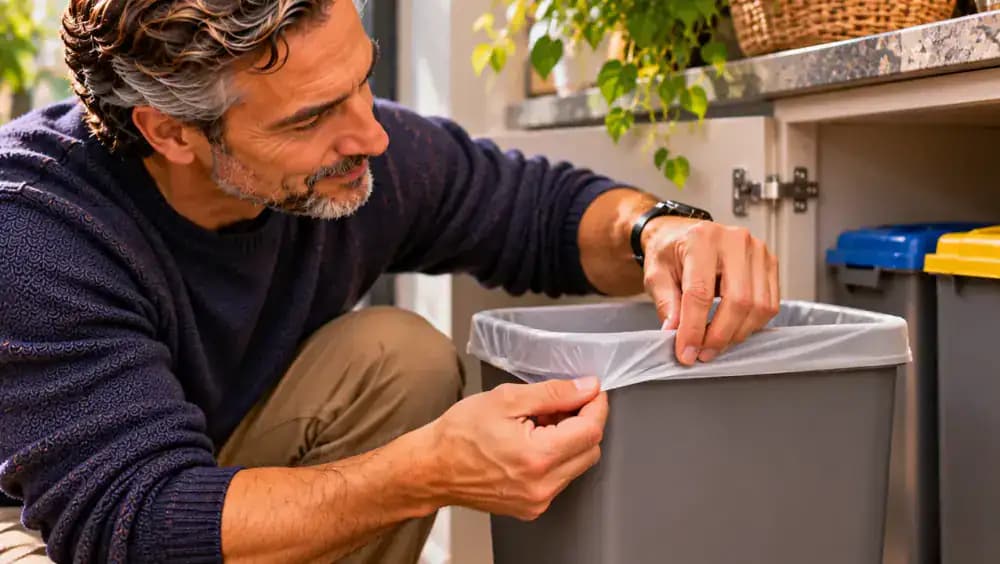
Check trash bag liners for exposed plastic edges, loose material, and dangling drawstrings that pets might chew or swallow. Fit each liner snugly inside the container, tuck excess material below the rim, and secure the lid. Store replacement bags in a closed cupboard. Choose containers that conceal liners to reduce opportunities for dangerous chewing or play.
Secure Trash in Multi-Pet Households
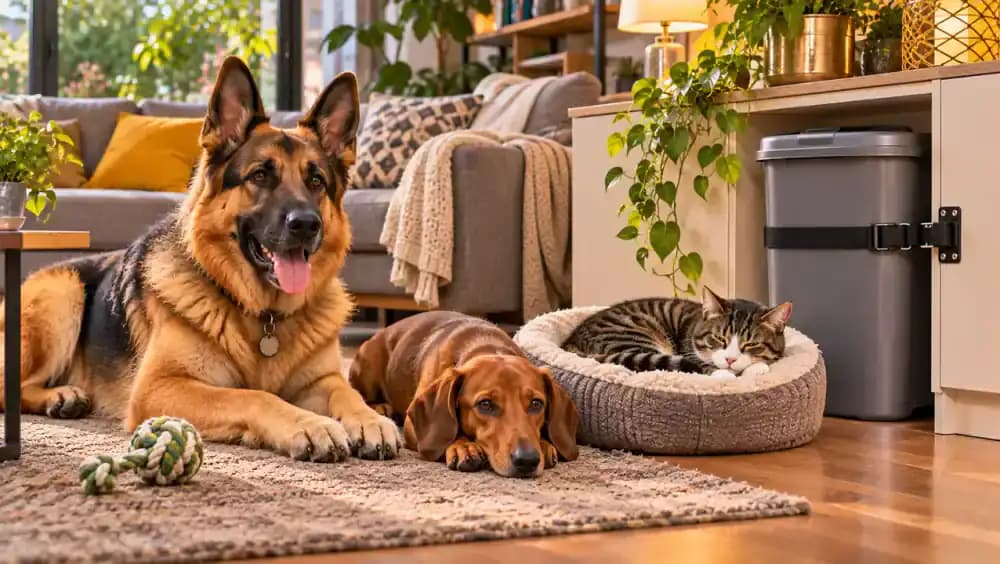
In homes with multiple pets, one animal may accidentally expose garbage to the others. A large dog could overturn a lightweight bin, leaving hazardous scraps accessible to smaller pets. Observe how your animals interact around waste containers, and separate them during major cleanup tasks when necessary. Choose stable, securely anchored containers that resist your most resourceful pet.
Adapt Your Home for Growing Pets
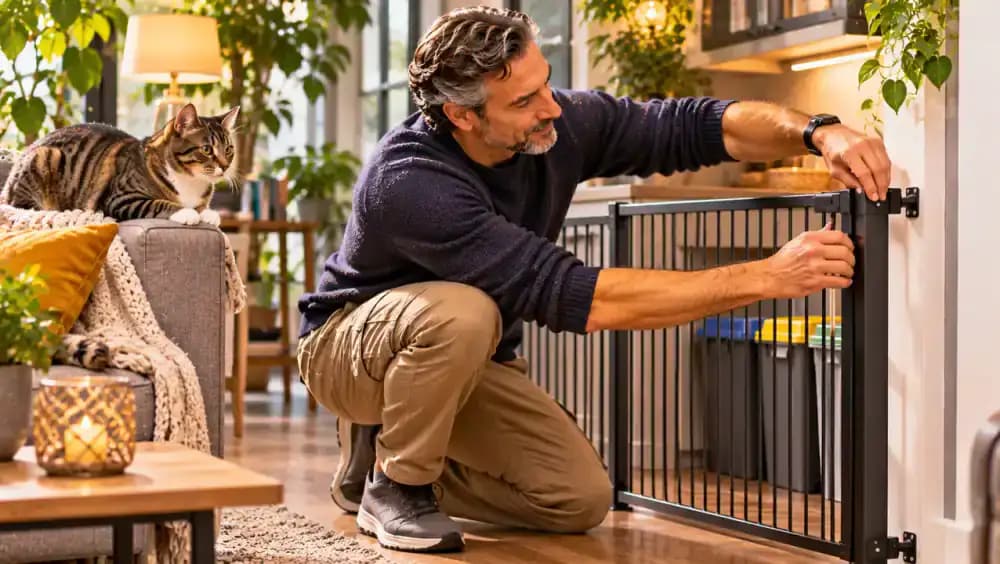
Puppies, kittens, and newly adopted pets may become more adventurous as they settle into their surroundings. Establish secure disposal areas immediately, then reassess barriers as climbing, jumping, and problem-solving abilities develop. Use temporary gates when needed and relocate accessible bins before pets discover them. Regularly review your setup instead of assuming previously effective precautions will always work.
Make Pet Safety Effortless and Sustainable
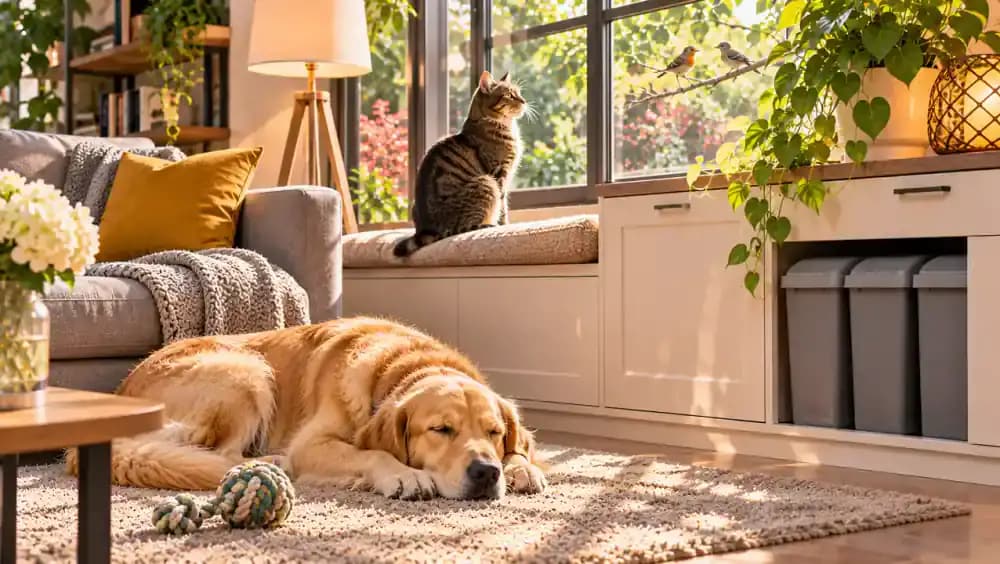
Create a household disposal system that makes safe habits convenient for everyone. Position secure trash containers where waste is generated, use enclosed storage whenever practical, and keep frequently used disposal areas organized. Review potential hazards whenever routines or room layouts change. Consistent physical protection allows dogs and cats to explore their surroundings without gaining access to dangerous household garbage.
Navigate Shared Trash Areas Safely
In apartment buildings, communal garbage rooms and disposal chutes can expose pets to spilled food, loose bags, and unfamiliar waste. Keep your dog on a short, controlled leash when passing these areas and prevent sniffing or scavenging. Report overflowing containers to building management. Always confirm that shared disposal room doors close securely after use.
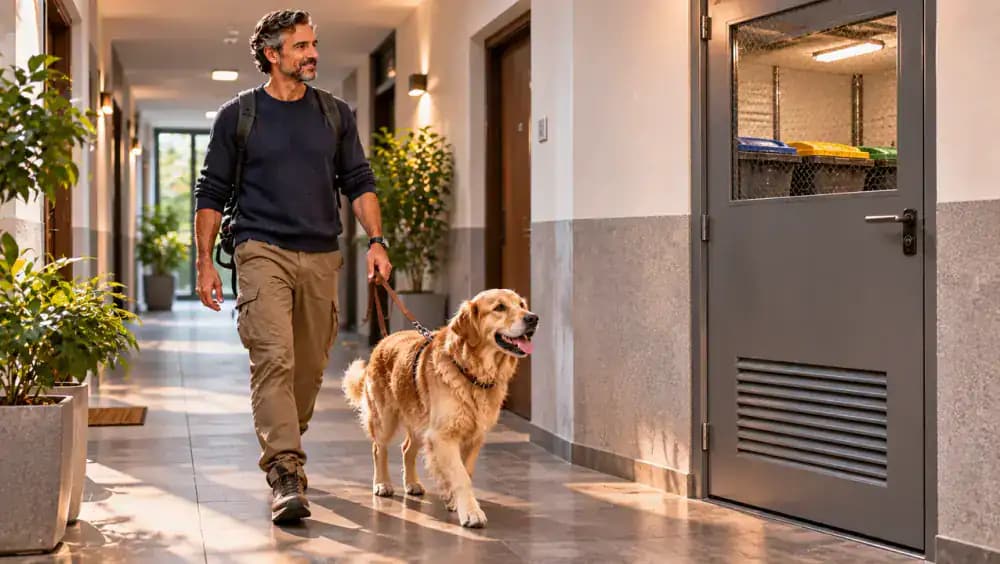
Watch Out for Automatic Trash Cans
Motion-activated trash cans may open when a curious dog or cat approaches the sensor, exposing waste without anyone touching the lid. Test your container's detection range and observe whether nearby pet movements trigger it. If accidental openings occur, disable the automatic function when possible or relocate the bin behind a secure barrier, especially when pets are unsupervised.
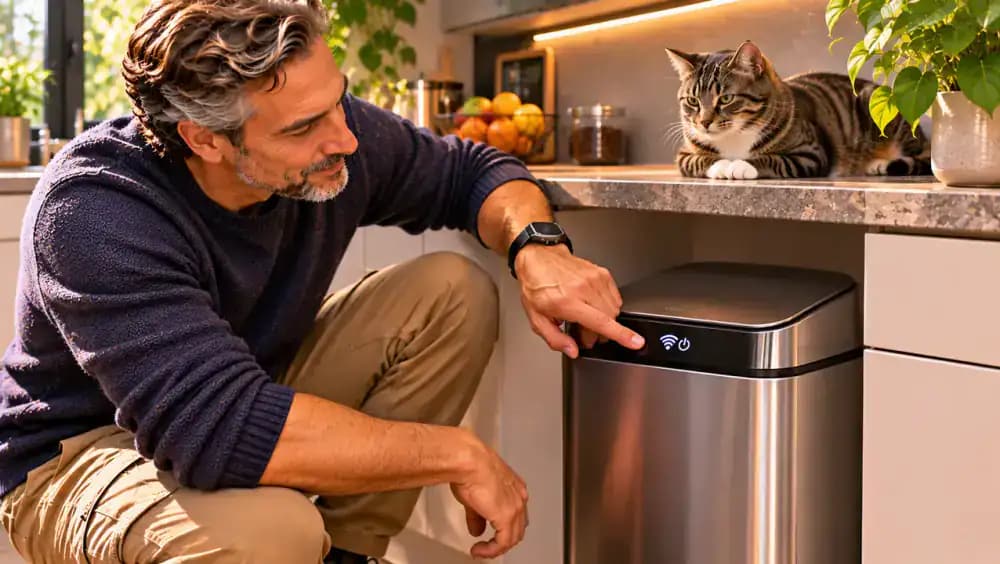
Handle Pet Care Waste Responsibly
Dispose of used grooming wipes, absorbent pads, loose fur, and litter promptly in a covered, secured container. Keep litter scoops, grooming tools, and small accessories stored beyond your pets' reach. Use appropriate bags or liners to contain waste and reduce odors. Follow local disposal guidelines, and never flush cat litter unless your plumbing system and local regulations explicitly permit it.
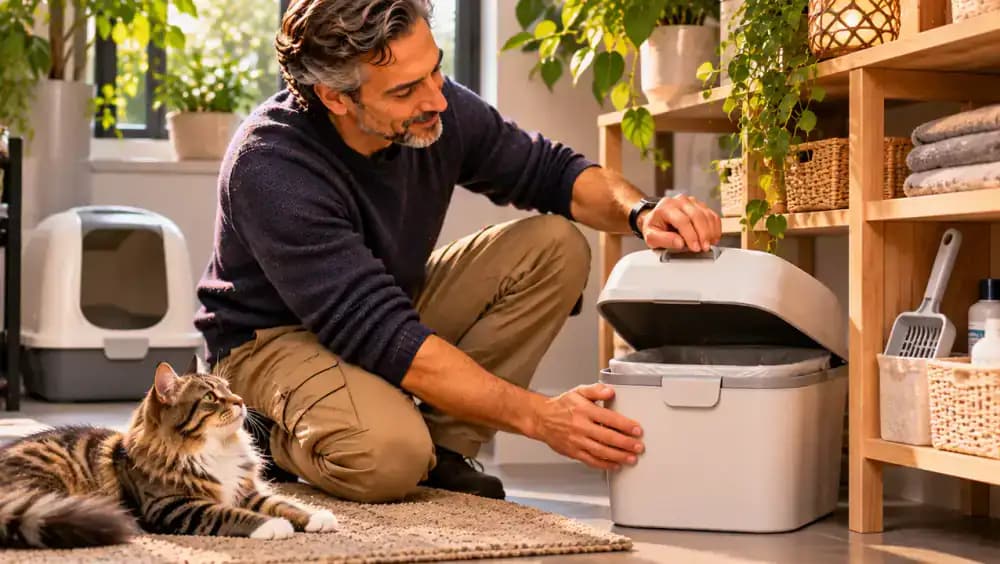
Keep Workshop Waste Away From Pets
Keep dogs and cats outside garages and workshops during repairs or maintenance projects. Collect loose screws, sharp packaging, oily rags, and adhesive containers as you work. Store hazardous materials in suitable secured containers, following product disposal and fire safety instructions. Sweep and inspect floors thoroughly before reopening the area to pets, especially around workbenches and storage shelves.
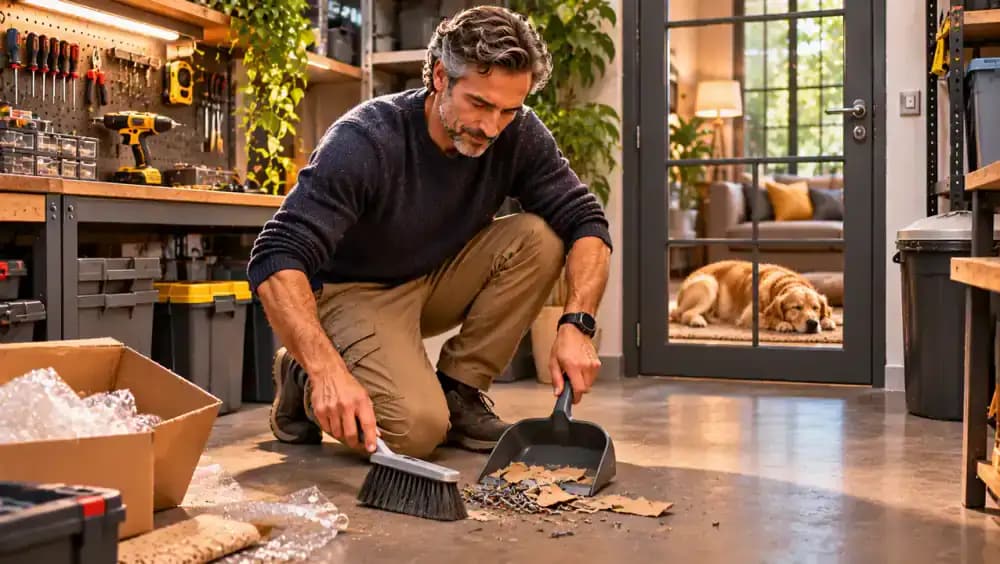
Prepare Pet Sitters for Safe Waste Handling
Before leaving your pets with a sitter, demonstrate how to operate and lock every secured waste container. Explain which food scraps require immediate disposal and which rooms must remain inaccessible. Provide written instructions covering disposal routines, restricted areas, and emergency veterinary contacts. Ask the sitter to practice closing the storage compartment correctly before taking responsibility for your pets.

Prepare Essential Information for Emergencies
If your pet may have swallowed hazardous waste, contact a veterinarian or emergency veterinary service immediately. When possible, identify the product, estimate the amount involved, and note the approximate exposure time. Photograph or retain relevant packaging without delaying care. Watch for unusual behavior, but never wait for symptoms or attempt vomiting or home treatments without veterinary instructions.
Take the First Step Toward a Safer Home
Choose one practical improvement today, such as replacing an open wastebasket, installing a cabinet latch, or keeping food scraps securely contained. Inspect your home from your pet's perspective and correct remaining access points. Encourage everyone to follow the same disposal habits. With secure containers, clean surroundings, and consistent routines, household trash becomes a much smaller risk.
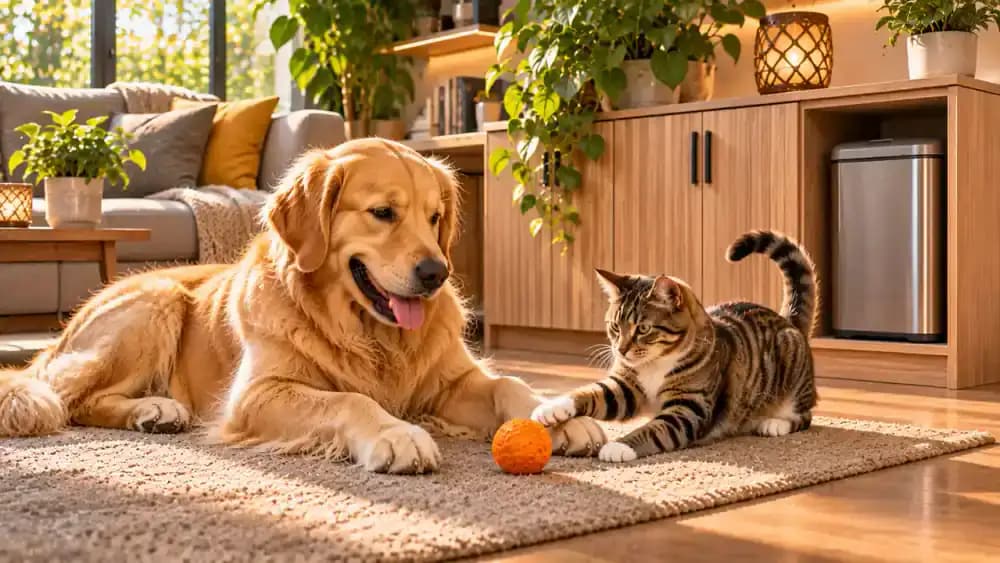
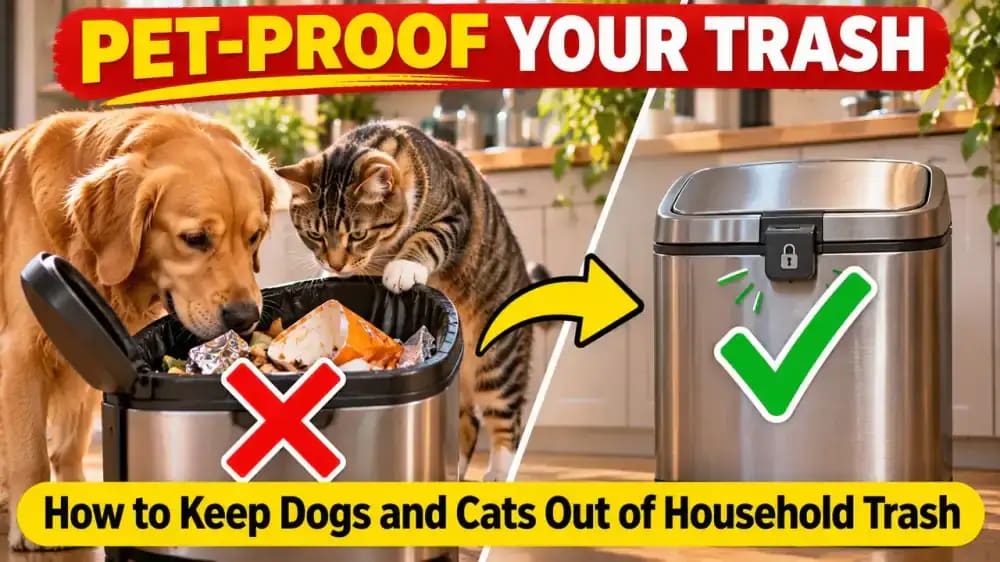
Your dog notices the overflowing kitchen trash can before you do. A familiar dinner smell drifts from beneath the lid, and within seconds, a curious nose is investigating the contents. Meanwhile, your cat watches from the counter, waiting for an opportunity to explore. What looks like an ordinary household mess can quickly become a serious pet safety hazard.
Dogs and cats investigate their surroundings through smell, curiosity, and natural scavenging behaviors. Food scraps, greasy packaging, and discarded leftovers can make a garbage container surprisingly attractive, even to well-fed pets. Unfortunately, household trash may contain dangerous items, including cooked bones that can splinter, spoiled food, chocolate, grapes, onions, medications, and sharp metal or plastic packaging.
The good news is that preventing trash-related accidents usually requires straightforward changes rather than expensive equipment or complicated training. A sturdy trash can with a secure locking lid, a latched cabinet, or an enclosed waste compartment can make a substantial difference. Properly sealing food scraps and removing hazardous waste promptly also helps eliminate tempting opportunities.
This guide focuses on practical ways to make kitchen, bathroom, and outdoor garbage less accessible to pets. You'll also learn how consistent household routines, appropriate enrichment, and reward-based training can discourage persistent trash exploration. The goal isn't to punish curiosity. It's to create an environment where your pets can safely follow their instincts without encountering dangerous waste.
Where people go wrong
Assuming a Regular Trash Can Is Pet-Proof. Lightweight plastic bins, swing-top lids, and ordinary step-operated containers may be convenient for people but easy for determined pets to access. Dogs can knock over unstable containers, while cats may lift loose lids or reach exposed waste. Choose sturdy, tip-resistant bins with secure locking mechanisms, and test whether your pet can reach the contents.
Leaving Food Scraps Exposed. Greasy wrappers, meat scraps, fish packaging, and unfinished meals release odors that can attract pets from across the room. Simply tossing these items into an open bin does little to discourage investigation. Seal tempting leftovers before disposal, remove hazardous scraps promptly, and keep waste containers closed between uses to reduce opportunities for scavenging.
Letting Garbage Overflow. An overflowing trash can defeats even a reasonably secure lid by leaving food and packaging accessible. Pets may pull exposed objects from the top without opening the container at all. Empty bins before they reach capacity, replace liners promptly, and establish a regular disposal schedule. Pay particular attention after cooking, parties, and large family meals.
Ignoring Bathroom and Bedroom Trash. Kitchen garbage gets the most attention, but smaller household bins may contain medications, dental floss, razors, cosmetics, and discarded packaging. Curious cats and dogs can access these containers when doors are left open. Use covered, secured bins in secondary rooms, store medications separately in secure locations, and restrict access whenever direct supervision is unavailable.
Using Punishment to Stop Scavenging. Yelling, frightening, or physically punishing a pet after discovering scattered garbage does not reliably teach the animal to avoid trash. It may instead create stress or encourage scavenging when nobody is watching. Focus on preventing access, rewarding desirable behavior, teaching reliable cues, and providing appropriate outlets for food-seeking and exploratory instincts.
Forgetting That Outdoor Garbage Is Accessible. Outdoor bins can attract household pets and neighborhood animals, especially when they contain food waste. Loose lids, unstable containers, and garbage bags left beside bins create avoidable hazards. Store outdoor trash in sturdy, secured containers, clean spills promptly, and check that pets cannot enter the storage area. Follow local waste collection rules when adding locks or straps.
Waiting for Symptoms After a Dangerous Exposure. A pet that appears normal immediately after accessing garbage may still have swallowed something hazardous. Chocolate, certain medications, cooked bones, and sharp packaging can create serious risks without immediate obvious symptoms. If you suspect a dangerous ingestion, contact a veterinarian or animal poison control service promptly. Do not induce vomiting or attempt home remedies unless directed by a veterinary professional.
Questions people ask
Dogs may investigate garbage because of strong food odors, natural scavenging instincts, curiosity, learned rewards, or insufficient opportunities for enrichment. Being well-fed does not necessarily eliminate these behaviors. Prevent access with secure containers and barriers, provide suitable activities, and reward your dog for moving away from trash. If food-seeking behavior changes suddenly or becomes unusually intense, discuss it with your veterinarian.
Fixed it?
Get one guide like this every Thursday.