How to Introduce Your Dog to a Grooming Dryer
Does your dog get nervous around grooming dryers? Learn how to introduce the sound and airflow gradually, reward calm behavior, recognize stress signals, and make drying a more comfortable experience.
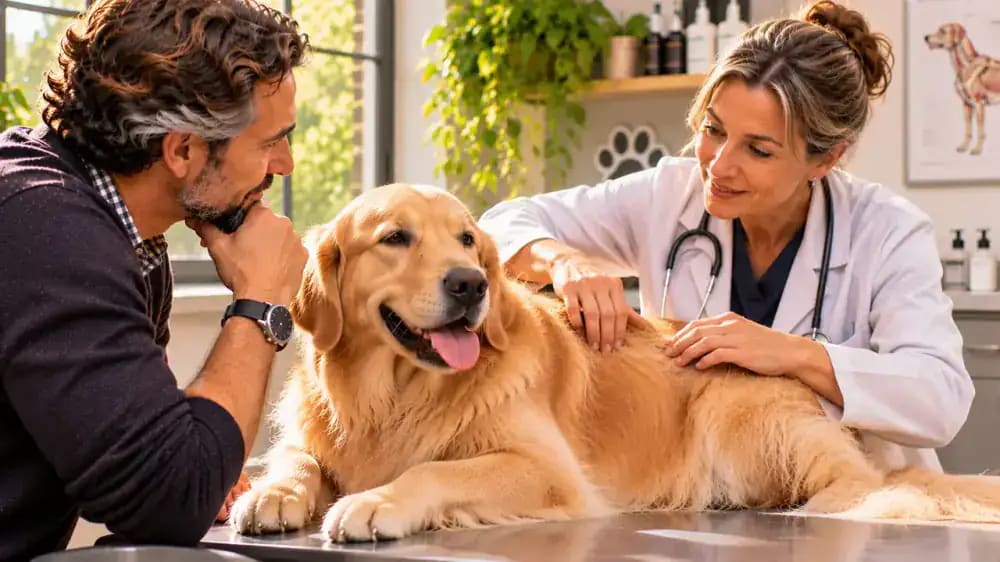
What you’ll need
Tap to tick things off before you start.
Why Grooming Dryers Frighten Dogs
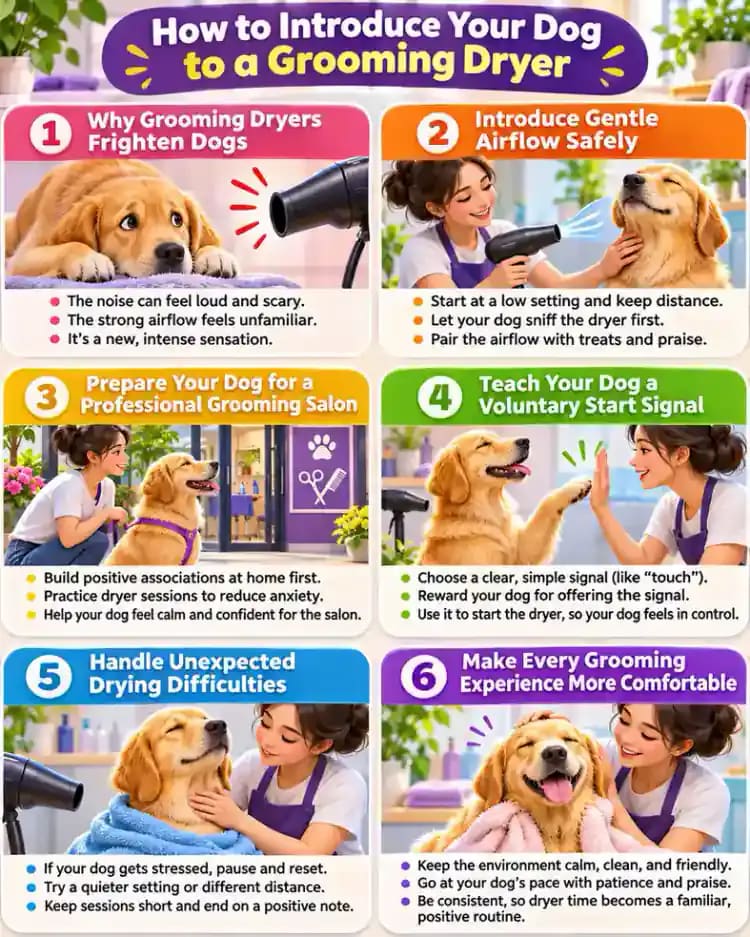
Your dog may enjoy brushing but become startled when a grooming dryer starts. The unfamiliar motor noise, vibrations, and sudden airflow can feel overwhelming. Watch for flattened ears, a stiff body, or attempts to retreat. If your dog becomes frightened, switch off the dryer immediately. Building confidence matters more than finishing the grooming session.
Choose the Right Dryer Settings
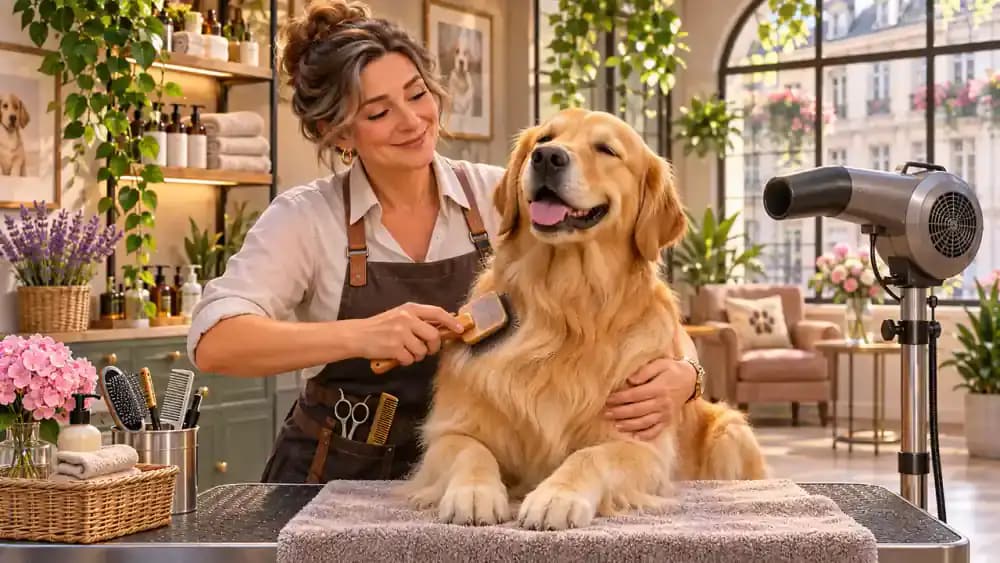
Choose a low-noise pet grooming dryer with adjustable airflow and a cool-air or low-heat setting. Start with the lowest airflow and test the temperature against the back of your hand. Never allow concentrated heat to overheat your dog's skin. Prepare a stable grooming surface with a non-slip mat and enough room for comfortable movement.

Introduce the Dryer Without Turning It On
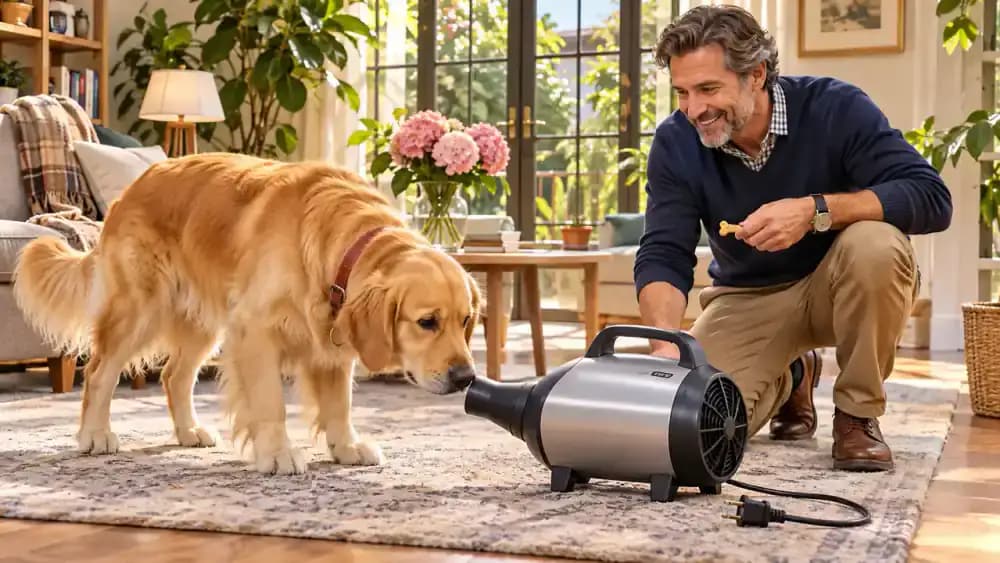
Place the unplugged dryer several feet from your dog in a quiet, familiar space. Allow your dog to approach, sniff, or observe it voluntarily without being restrained. Reward curious glances and relaxed approaches with small treats and calm praise. Never push the dryer toward your dog, and always allow them to walk away freely.
Introduce the Sound From a Distance
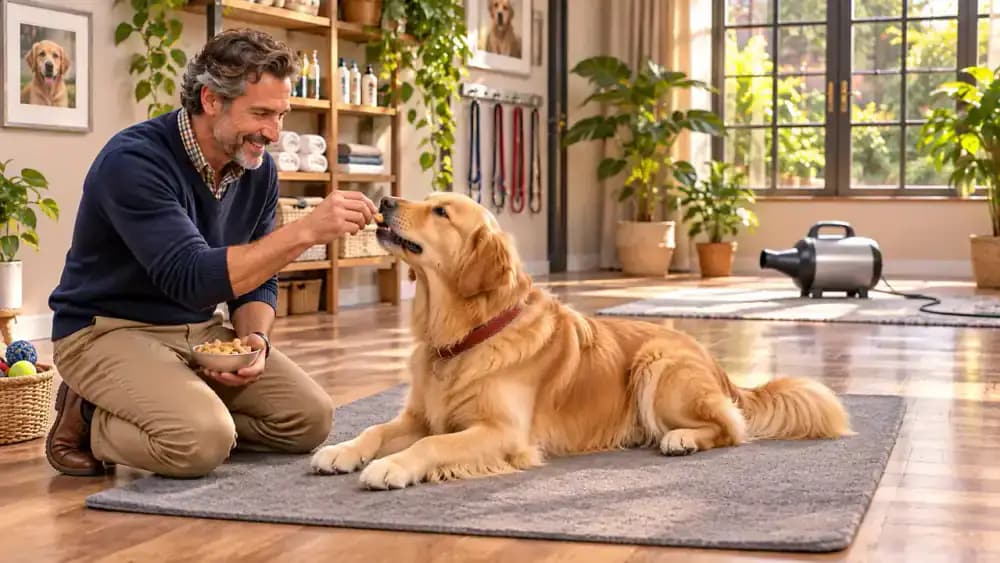
Position the dryer several yards away from your dog, with its outlet safely directed away. Have another person briefly switch it on at the quietest setting while you reward relaxed behavior with treats. Turn it off after a few seconds. Repeat only while your dog remains comfortable, and increase the distance if they become uneasy.
Gradually Reduce the Distance
Over several short sessions, move the dryer slightly closer while keeping airflow directed away from your dog. Reward relaxed behavior and make sure your dog can leave whenever they choose. Watch for freezing, trembling, lip licking, retreating, or refusing treats. If these appear, stop or increase the distance. Let your dog's comfort determine progress.

Introduce Gentle Airflow Safely
Once your dog comfortably accepts the dryer's sound nearby, introduce gentle airflow along the shoulder or side. Use the lowest setting and keep the nozzle moving continuously. Avoid directing air toward the eyes, ears, nose, or sensitive areas. Check the temperature against your hand frequently to prevent overheating. Begin with just a few comfortable seconds.
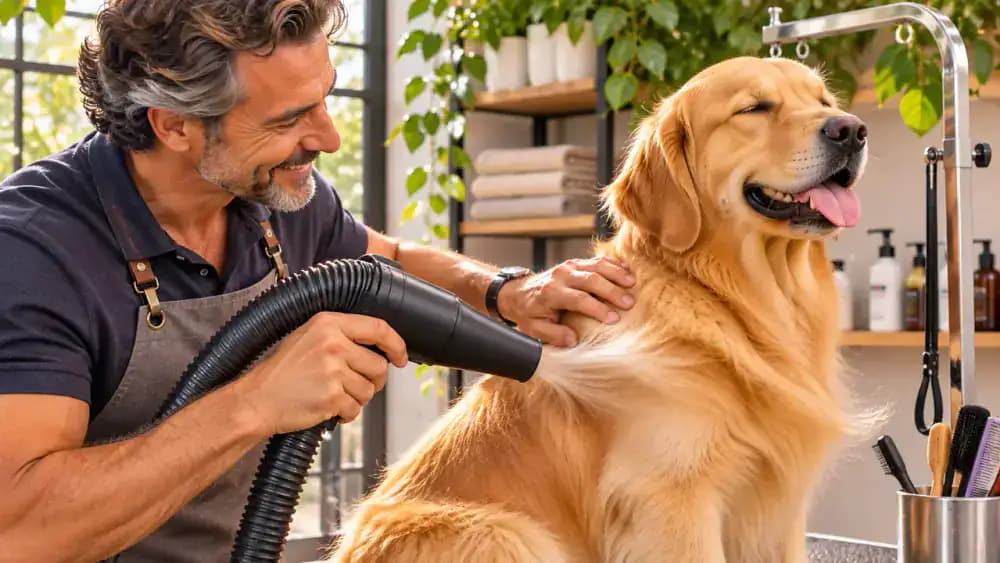
Recognize Stress Signals and Know When to Stop
Watch closely for signs your dog is becoming uncomfortable, including freezing, trembling, lip licking, turning away, retreating, or refusing favorite treats. These behaviors can indicate that the dryer is overwhelming. Switch it off immediately and allow your dog to move somewhere quiet. Return to an easier stage during future sessions, and never force a frightened dog to continue.

Build a Comfortable Long-Term Drying Routine
As your dog becomes more confident, practice brief drying sessions with gentle airflow and frequent rewards. Keep the experience predictable, maintain an easy exit, and stop before your dog becomes restless. Use an absorbent towel to remove remaining moisture when appropriate. Remember three essentials: introduce changes gradually, reward voluntary calm behavior, and always prioritize comfort over speed.
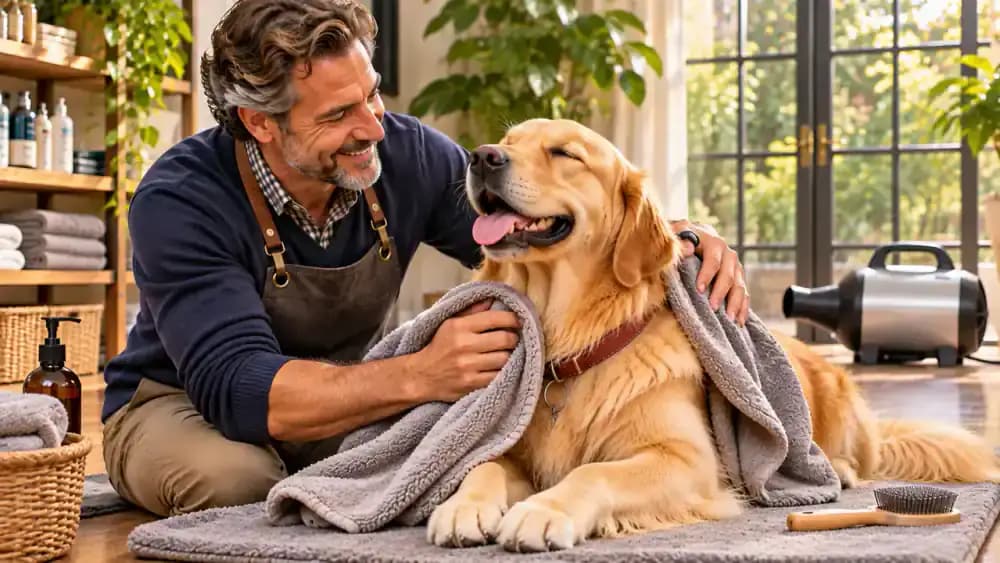
Prepare the Coat Before Using the Dryer
Before starting the dryer, gently remove excess water from your dog's coat using an absorbent microfiber towel. Press the towel against the chest, back, and legs rather than rubbing vigorously, which can create tangles and discomfort. Pay attention to areas that retain moisture. Removing water beforehand reduces drying time and limits unnecessary exposure to noise and airflow.
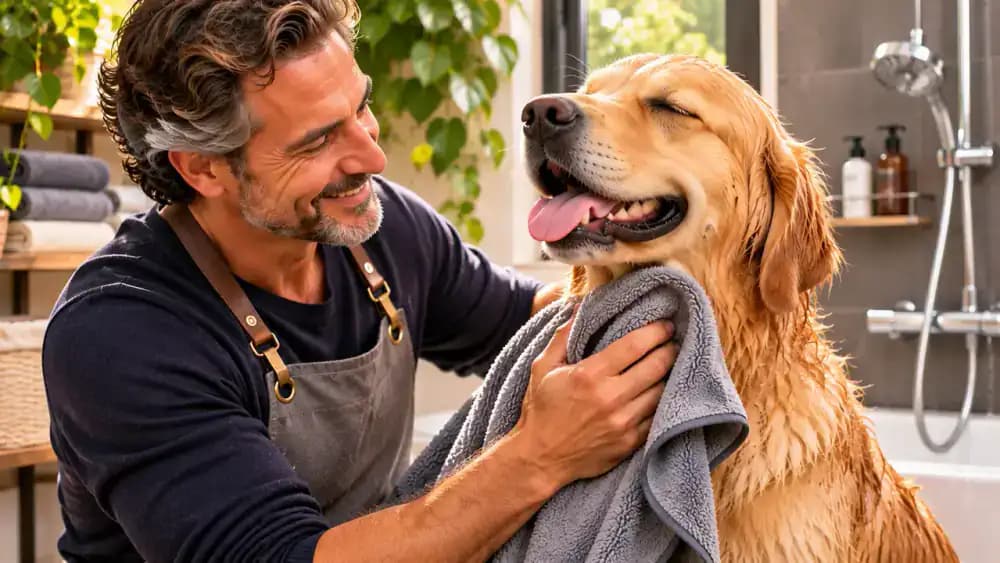
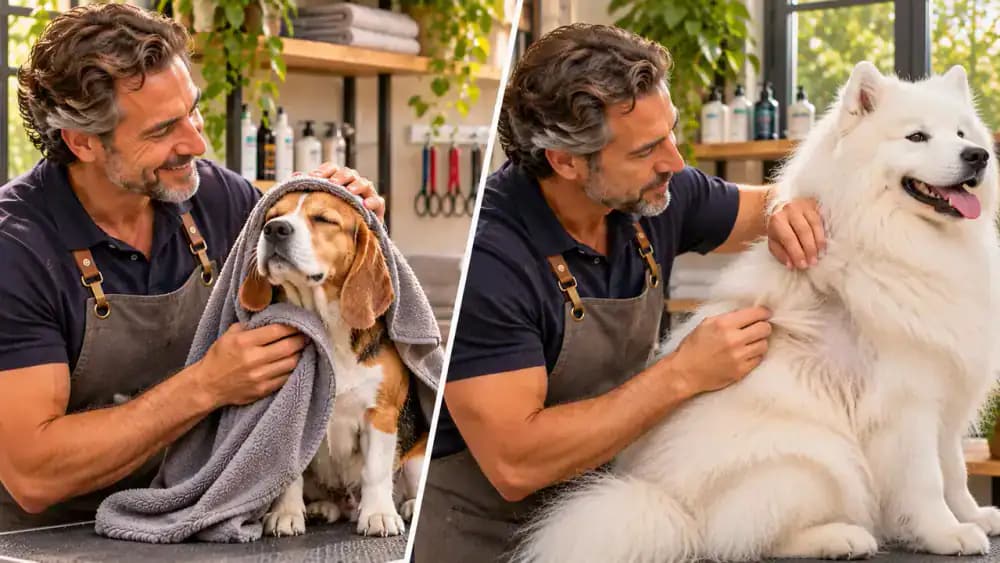
Adjust Drying Techniques for Different Coat Types
Adjust your drying routine to your dog's coat type. Short-haired dogs may dry adequately with thorough towel drying, while dense double coats can retain moisture close to the skin. Gently separate sections of thick fur to check for dampness without pulling. Avoid prolonged dryer exposure simply to achieve complete dryness. Consult a professional groomer for coat-specific guidance.
Reward Specific Calm Behaviors
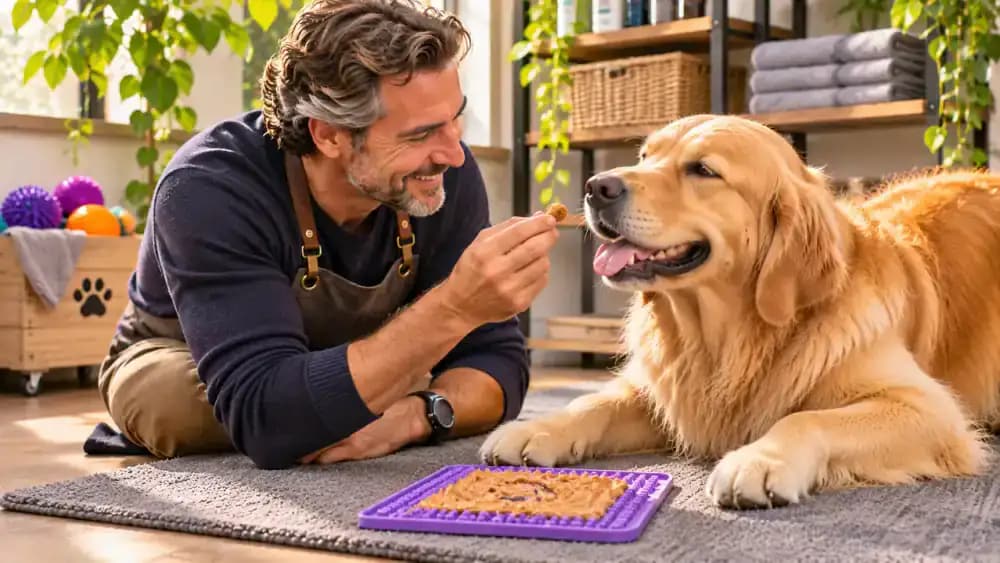
Reward specific behaviors that show your dog feels comfortable, such as standing calmly, making relaxed eye contact, or voluntarily returning after a break. Offer small treats immediately after these choices. A supervised lick mat placed safely away from dryer cables may also help. Continue monitoring body language, since accepting food does not always mean your dog feels relaxed.
Prepare Your Dog for a Professional Grooming Salon
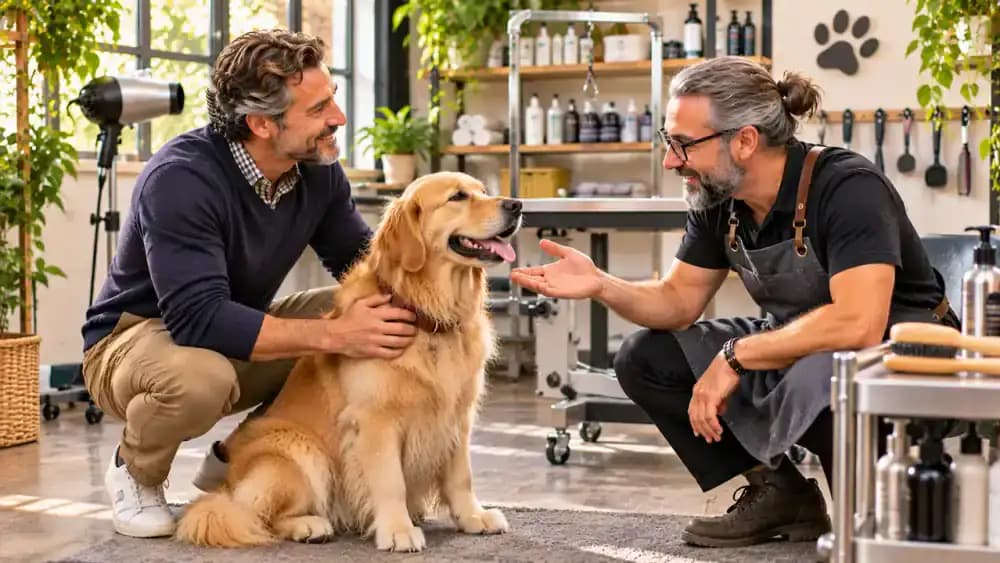
Before scheduling a full grooming appointment, ask whether your salon offers short introductory visits. Allow your dog to explore unfamiliar sounds, smells, people, and equipment without pressure. Tell the groomer which dryer settings, treats, and handling techniques have worked at home. Request a gradual introduction and explain any stress signals you have previously observed.
Adapt Training for Puppies and Senior Dogs
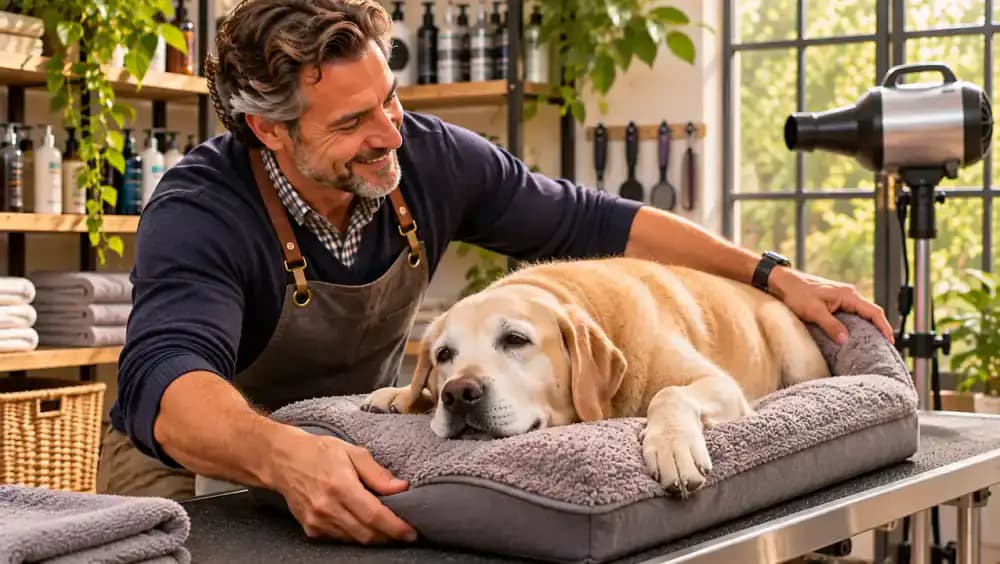
Adjust dryer introductions to your dog's age, mobility, and comfort. Puppies benefit from especially brief, gentle experiences with plenty of breaks. Senior dogs may need padded surfaces, secure footing, and alternatives to prolonged standing. Never force uncomfortable positions or rush progress. If your dog shows persistent discomfort unrelated to dryer exposure, consult your veterinarian before continuing.
Maintain Your Grooming Dryer for Safety
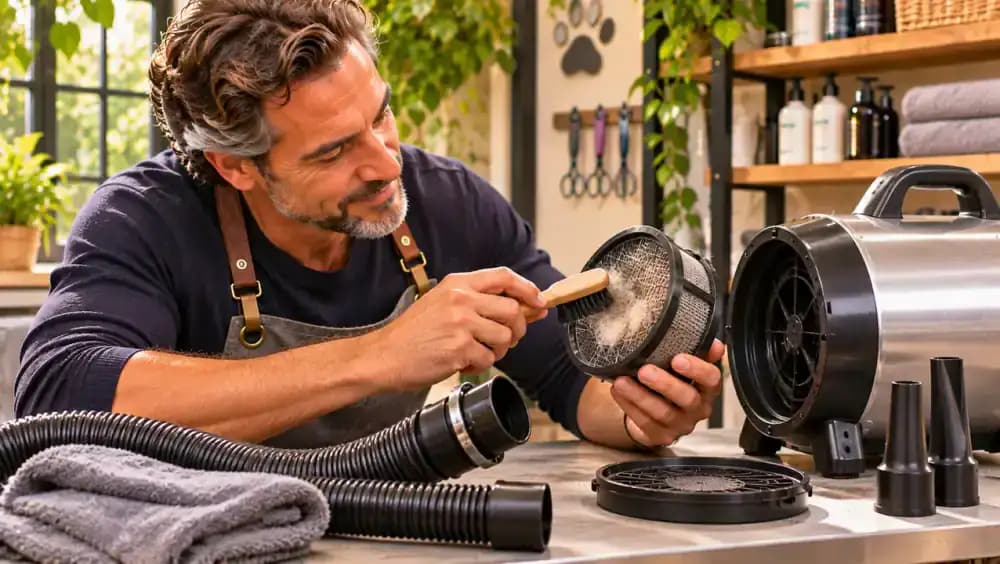
Unplug your grooming dryer before inspecting or cleaning it. Remove accumulated fur and dust from accessible filters according to the manufacturer's instructions. Check electrical cords for damage and confirm that hoses and nozzles attach securely. Restricted airflow can contribute to overheating and unusual noise. Never operate damaged equipment or leave a running dryer unattended around pets.
Handle Setbacks Without Losing Progress
If your dog becomes frightened after several successful sessions, stop and allow time to recover. Unexpected noises or uncomfortable airflow can temporarily undermine confidence. During your next practice, return to an easier activity, such as rewarding calm behavior near the switched-off dryer. Avoid forcing progress. If fear persists or intensifies, consult a qualified reward-based dog trainer.

Create a Sustainable Grooming Routine
Build a predictable grooming routine around your dog's comfort rather than a fixed drying schedule. Record successful session lengths, preferred airflow settings, and comfortable training locations in a simple journal. Share these observations with family members and professional groomers. Consistent handling and respect for your dog's boundaries can make future drying sessions calmer and more cooperative.

Identify Your Dog's Best Training Conditions
Observe when your dog seems most comfortable practicing around grooming equipment. Compare short sessions at different times of day, noting energy levels, body posture, willingness to participate, and recovery afterward. A rested dog may respond differently than one returning from an energetic walk. Use these observations to choose favorable conditions without imposing a rigid training schedule.

Teach Your Dog a Voluntary Start Signal
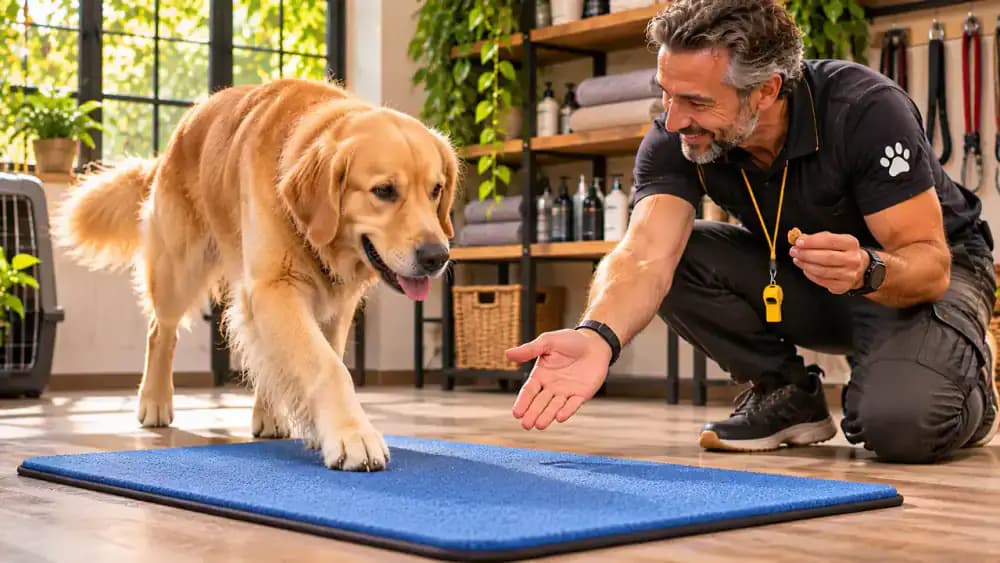
Place a designated grooming mat or folded towel in your training area and invite your dog to approach. Reward them for voluntarily stepping onto the mat without physical guidance. Treat this action as permission to begin a brief exercise, not a commitment to finish. If your dog steps away, stop immediately and allow another opportunity later.
Create a Quieter Drying Environment
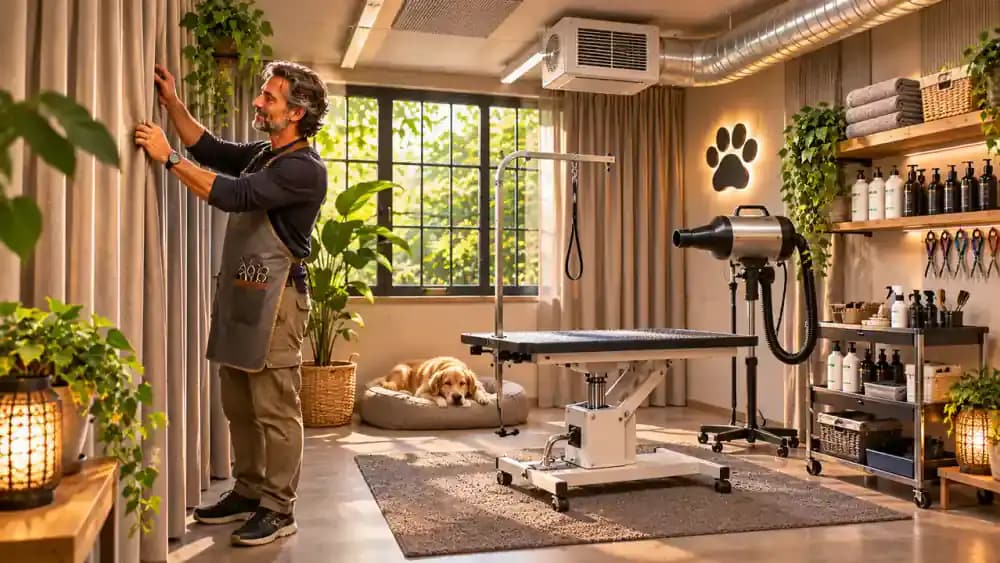
Choose a quiet, well-ventilated room with comfortable lighting and enough space for your dog to move freely. Tiled bathrooms can amplify dryer noise through sound reflections, while furnished rooms may reduce harsh echoes. Secure electrical cables, remove slipping hazards, and avoid confined spaces. Keep the dryer at a comfortable distance and maintain an unobstructed exit.
Understand When Air Drying Is Appropriate
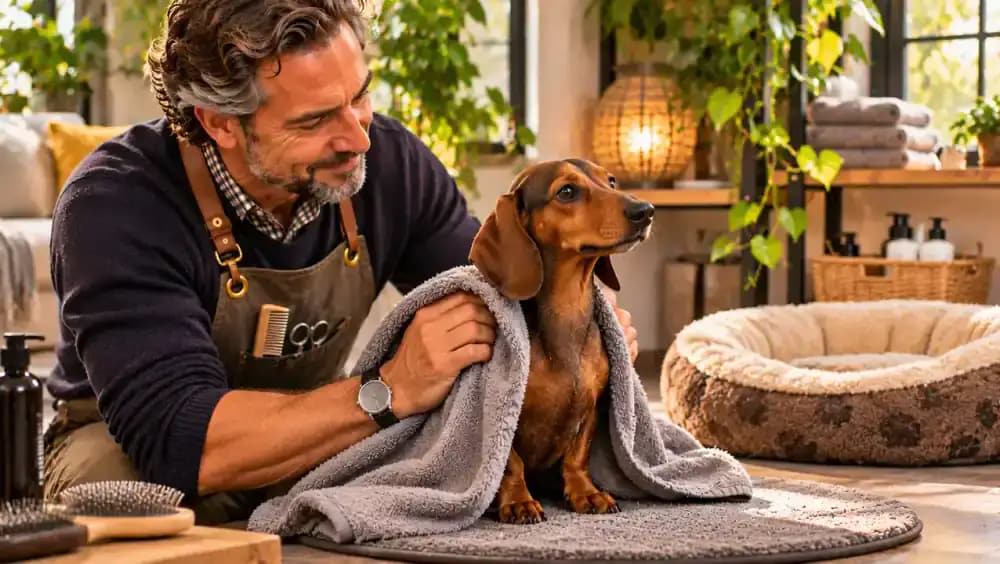
Some short-haired dogs can dry comfortably after thorough toweling in a warm, draft-free room. Gently blot remaining moisture and provide a clean, dry resting surface. Dense or double-coated dogs may retain moisture near their skin, making air drying less suitable. Avoid prolonged dampness, and consult your veterinarian or professional groomer about appropriate drying methods for your dog's coat.
Maintain Familiarity Between Grooming Sessions
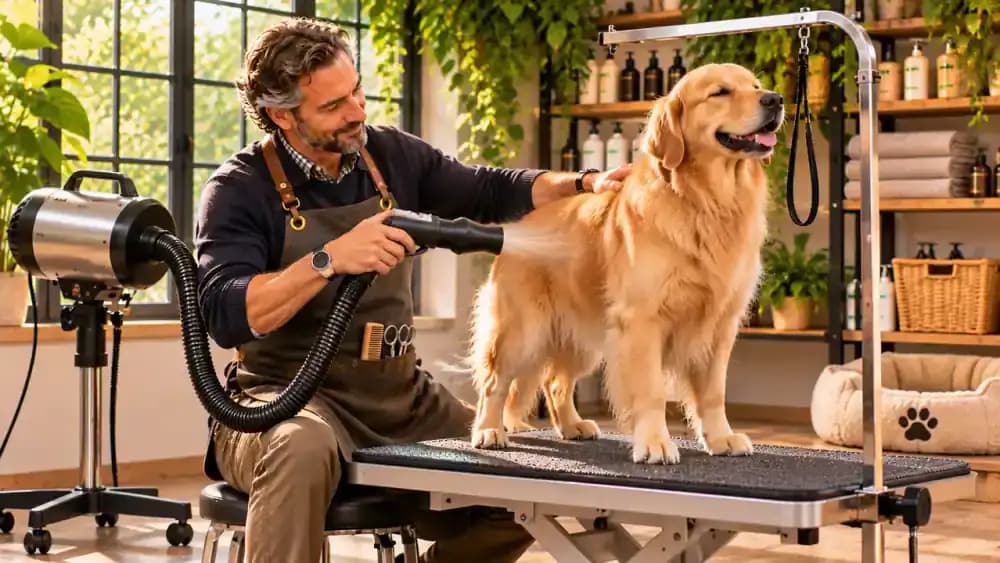
Keep your dog familiar with the grooming dryer through occasional, brief practice sessions between baths. With your dog's coat completely dry, activate the dryer at its lowest setting from a comfortable distance, directing airflow away. Reward relaxed, voluntary participation and stop before discomfort appears. These optional refreshers help maintain positive associations without unnecessary noise exposure.
Recognize When Professional Help Is Needed
Seek professional guidance if your dog panics at distant dryer sounds, attempts to escape dangerously, or struggles to recover after exposure. Stop dryer training rather than increasing intensity. A veterinarian can evaluate possible physical discomfort, while a qualified reward-based behavior professional can develop an individualized training plan. Persistent fear requires careful support, not forced exposure.

Measure Success Through Confidence and Cooperation
Measure progress by your dog's willingness to approach the grooming area, remain relaxed during gentle airflow, and recover comfortably afterward. Allow your dog to leave whenever they choose, and reward calm participation. A short, positive experience is more valuable than completing the entire drying process. Prioritize safety, voluntary cooperation, and confidence over speed or perfect results.
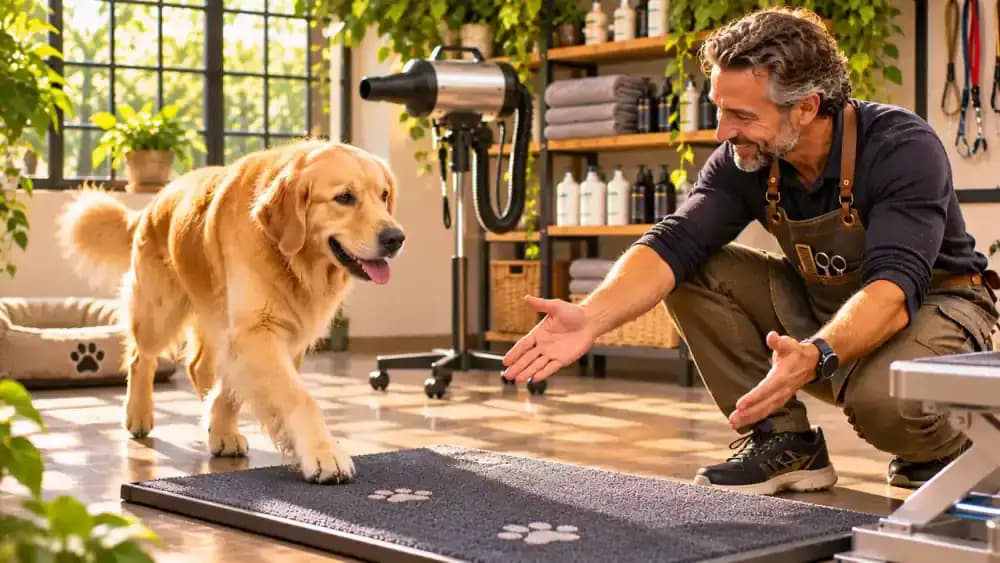
Handle Unexpected Drying Difficulties
If your dog becomes uncomfortable while still wet, switch off the dryer immediately and move it safely aside. Gently blot excess moisture with absorbent towels instead of forcing another drying attempt. Keep your dog in a comfortably warm, draft-free environment and check for remaining dampness. Consult a veterinarian or professional groomer if the coat cannot dry safely.

Prevent Surprises From Dryer Hoses
Before starting the dryer, position its hose so it cannot brush against your dog's legs, drag across the body, or create a tripping hazard. Use a suitable hose support and check that connections remain secure. Keep cables away from walking areas. If necessary, ask another person to manage treats while you control the equipment safely.
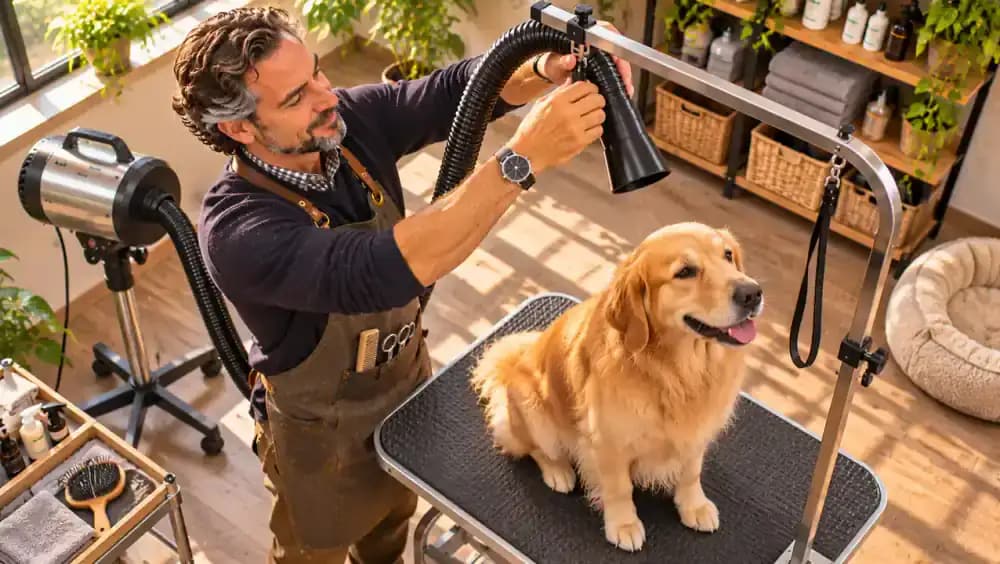
Use Predictable Body Movements
Prepare your grooming supplies before inviting your dog into the training area. Approach from an angle your dog can see, avoiding sudden reaches over the head or unexpected changes in position. Move the dryer and its attachments slowly and deliberately. Watch your dog's reactions throughout, allowing breaks whenever needed. Predictable handling helps maintain trust and comfort.
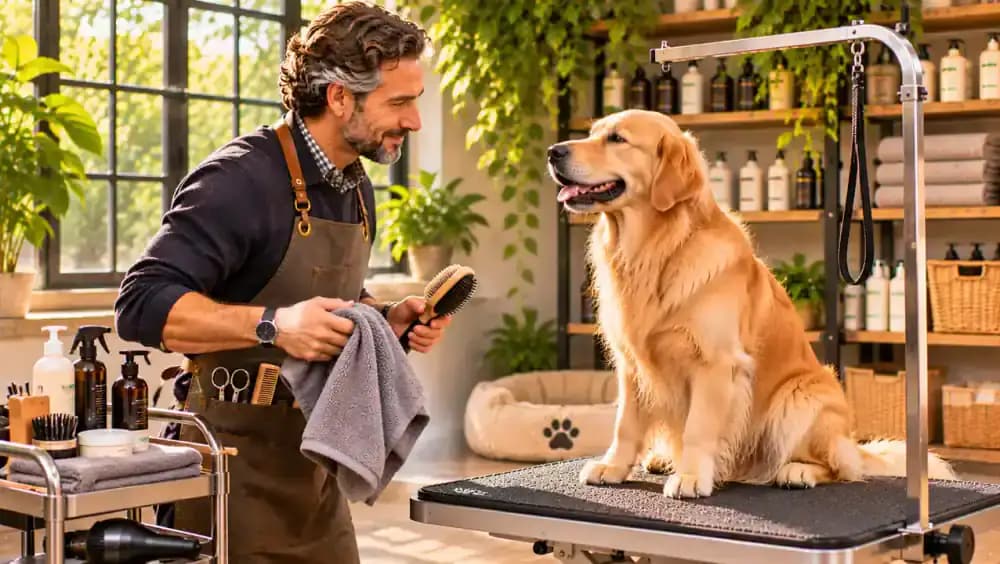
Introduce Higher Airflow Only When Necessary
Increase dryer airflow only when necessary and when your dog consistently remains comfortable at the current setting. Remember that stronger airflow can change both motor noise and physical sensation. Introduce each adjustment gradually, beginning at a comfortable distance. Watch for tension, hesitation, or retreating. Return to the quieter setting immediately if discomfort appears. Higher power is never required.
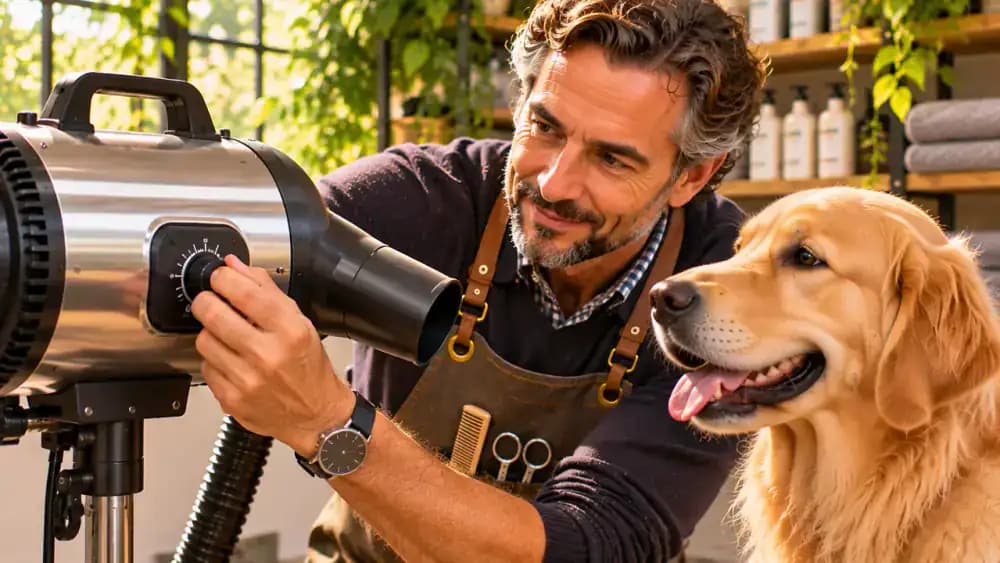
Protect Sensitive Skin During Drying
Before drying, gently inspect your dog's skin for visible redness, irritation, wounds, or sensitive patches. Avoid directing airflow toward areas that appear uncomfortable. If your dog suddenly flinches when air reaches a particular spot, stop and check the area without forcing contact. Never apply concentrated heat to the skin. Consult your veterinarian about unusual or persistent irritation.
Help Family Members Follow the Same Routine
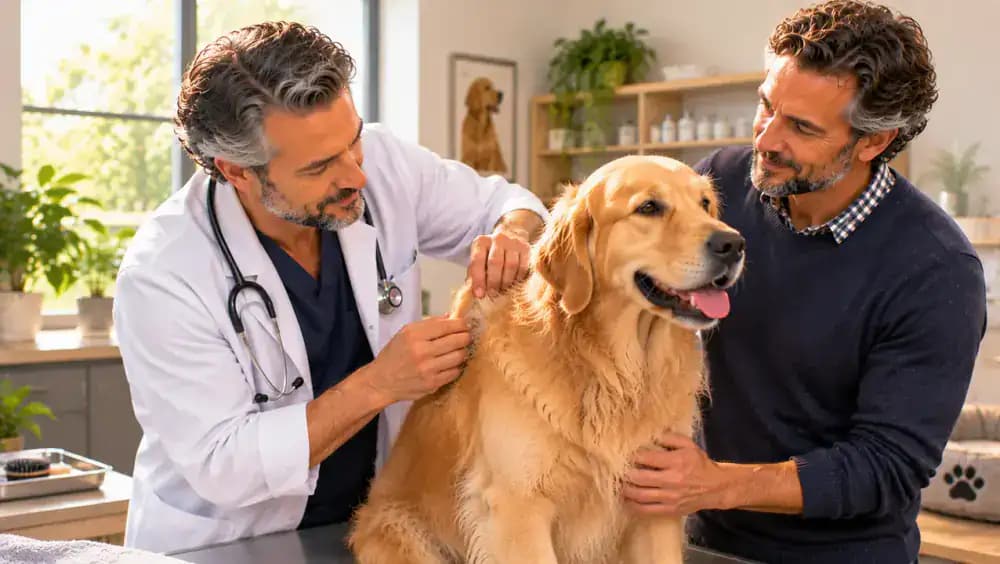
Teach everyone who helps groom your dog to follow the same comfortable routine. Demonstrate your dog's voluntary start signal, preferred dryer settings, safe airflow areas, and signs that indicate a break is needed. Let another adult practice positioning the switched-off equipment before operating it. Keep instructions simple and consistent, and never require your dog to participate.
Make Every Grooming Experience More Comfortable
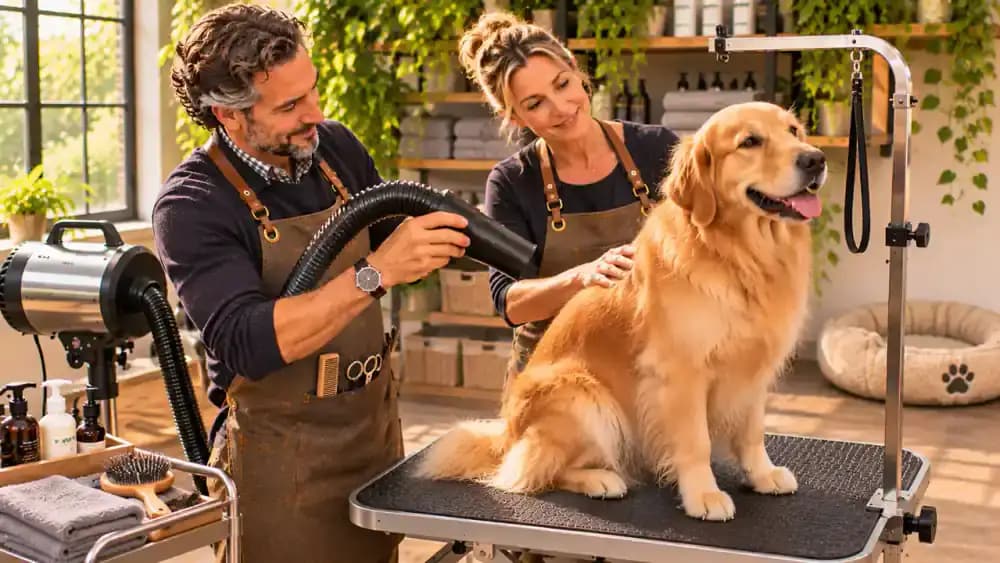
Keep future grooming sessions centered on your dog's comfort, safety, and willingness to participate. Celebrate small improvements, maintain gentle dryer settings, and adjust your approach whenever your dog's behavior changes. Never sacrifice physical comfort to finish drying faster. With patience, appropriate equipment, and consistent positive reinforcement, routine coat care can become a calmer experience for both of you.
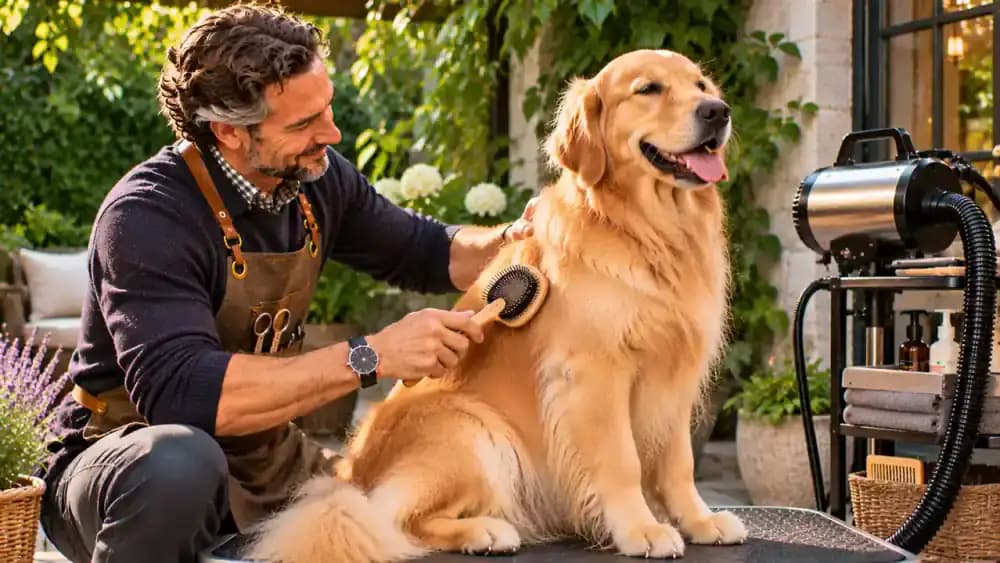
You switch on the grooming dryer, and your dog immediately backs away. Maybe their ears flatten, their body stiffens, or they head straight for another room. What should be a simple part of bath time suddenly becomes a stressful experience for both of you.
Dogs can find grooming dryers intimidating because of their unfamiliar sounds, vibrations, and concentrated airflow. Even a dryer marketed as quiet may seem overwhelming to a dog that has never experienced one. The good news is that your dog does not need to accept the dryer immediately. With patience and positive reinforcement, many dogs can learn to feel more comfortable around drying equipment.
The safest approach begins before the dryer is even switched on. Let your dog investigate the equipment voluntarily, reward curiosity with small treats, and introduce the sound from a comfortable distance. As your dog becomes more relaxed, you can gradually introduce gentle airflow without rushing or forcing contact.
Choose a low-noise pet dryer with adjustable airflow and a low-heat or no-heat setting. Always monitor the temperature and keep the nozzle moving to prevent concentrated heat from irritating or burning your dog's skin.
This guide explains what equipment to prepare, which mistakes to avoid, and how to recognize when your dog needs a break. Remember three principles throughout the process: start slowly, reward voluntary calm behavior, and prioritize your dog's comfort over finishing the drying session.
Where people go wrong
Turning the Dryer On Too Close to Your Dog. Suddenly switching on a noisy dryer beside your dog can make an unfamiliar experience frightening. Start with the dryer switched off and allow voluntary investigation. When introducing the sound, place the dryer at a comfortable distance and direct airflow away from your dog. Only decrease the distance when your dog remains relaxed and willingly participates.
Using Excessive Heat or Strong Airflow. High temperatures and concentrated airflow can make drying uncomfortable and may injure sensitive skin. Choose a pet dryer with adjustable airflow and use a no-heat or appropriately low-heat setting. Check the temperature regularly, maintain a safe distance, and keep the nozzle moving. Never allow hot air to concentrate on one area of your dog's body.
Forcing Your Dog to Stay Near the Dryer. Holding your dog in place while the dryer runs may increase fear and make future grooming sessions harder. Allow your dog to move away whenever they feel uncomfortable. Reward voluntary approaches and relaxed behavior instead of demanding compliance. A successful session is one your dog willingly participates in, even if very little drying gets accomplished.
Ignoring Early Signs of Stress. Freezing, trembling, repeated lip licking, retreating, and refusing favorite treats can indicate that your dog is uncomfortable. Continuing despite these signals may make the dryer feel increasingly threatening. Stop the exposure or return to an easier stage when these behaviors appear. Watch your dog's overall body language rather than relying on a single signal.
Pointing Airflow at Sensitive Areas. Direct airflow toward your dog's face, eyes, ears, or other sensitive regions can cause discomfort and alarm. When your dog is ready for airflow, begin with gentle air directed toward less sensitive body areas, such as the back or sides. Keep the nozzle moving and avoid directing air into the ear canals, eyes, nose, or genital area.
Making Training Sessions Too Long. A dog that tolerates the dryer briefly may become overwhelmed during a prolonged session. Keep initial introductions short, even if they last only a few seconds. End on a comfortable note and allow plenty of recovery time between attempts. Several brief, positive experiences are generally more useful than one exhausting session that ends in distress.
Expecting Your Dog to Adjust in One Day. Some dogs become comfortable with grooming equipment quickly, while others need repeated introductions over days or weeks. Rushing the process because you want to finish a bath can undermine progress. Let your dog's behavior determine the pace. If discomfort appears, increase the distance, reduce the intensity, or return to practicing with the dryer switched off.
Questions people ask
Grooming dryers produce unfamiliar sounds, vibrations, and moving air that some dogs find intimidating. The noise may be especially challenging when the dryer is positioned close to the body. A previous unpleasant grooming experience can also affect a dog's response. Rather than forcing exposure, introduce the equipment gradually and use rewards to build positive associations.
Fixed it?
Get one guide like this every Thursday.