How to Introduce a Puzzle Feeder Without Frustrating Your Pet
Learn how to introduce a puzzle feeder gradually so your pet stays curious, confident, and engaged without turning enrichment into a frustrating challenge.
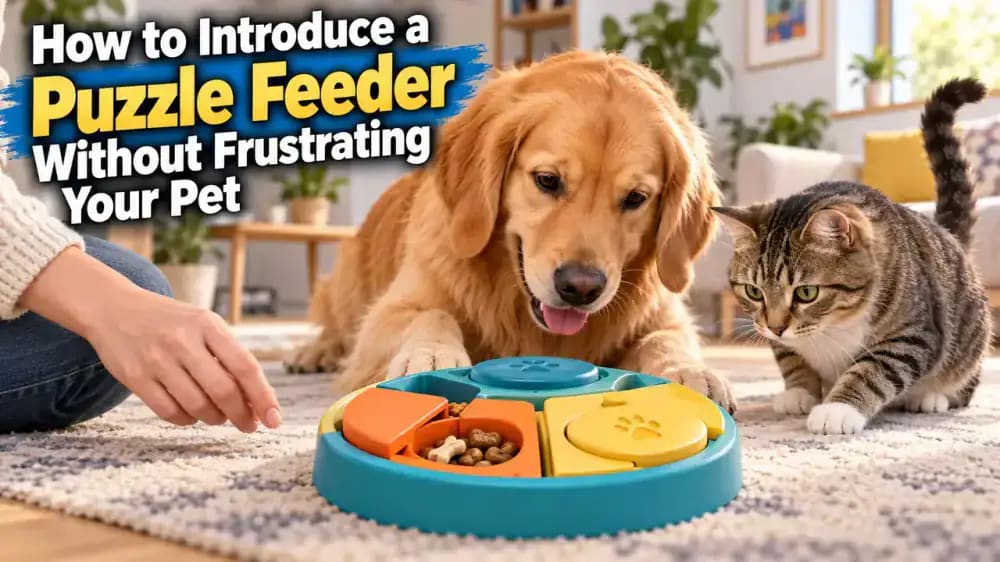
What you’ll need
Tap to tick things off before you start.
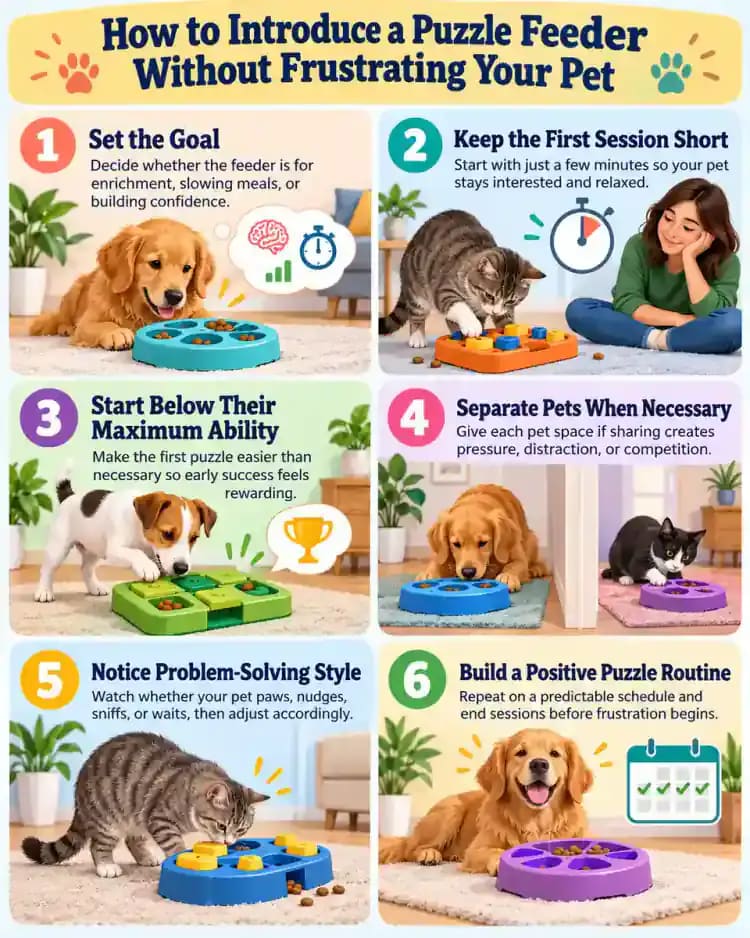
Set the Goal
A puzzle feeder should encourage thinking without making your pet want to quit. Start with a small, solvable challenge that releases food quickly. Early sessions are about confidence, curiosity, and understanding cause and effect. If the first experience feels impossible, future puzzle sessions may become harder to introduce.
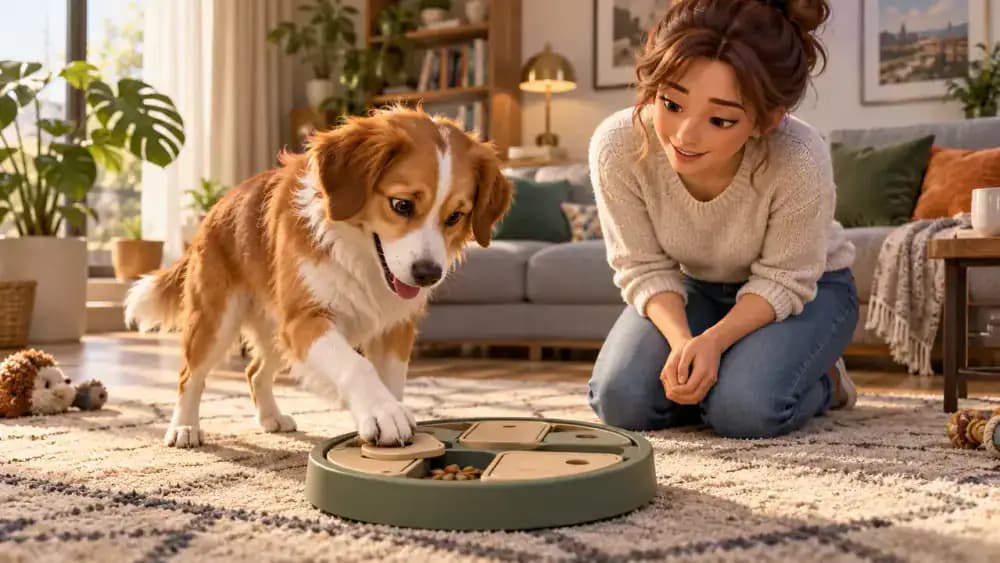
Start With Familiar Food
Fill the feeder with food your pet already recognizes and enjoys. Normal kibble is often enough, although a few favorite treats can increase interest. Avoid combining a completely unfamiliar puzzle with unfamiliar food, because that adds two separate decisions when your pet should be concentrating on learning one new activity.
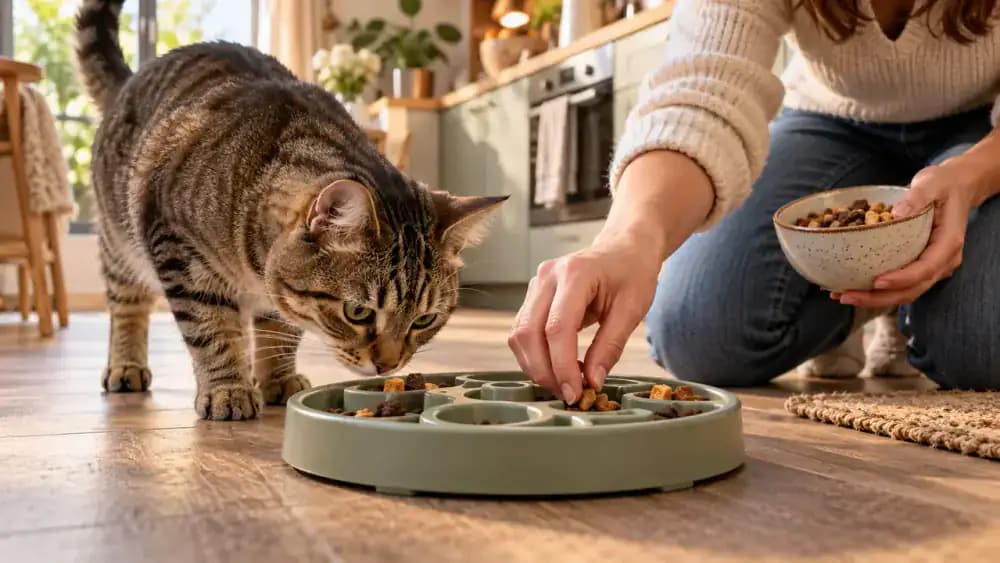
Choose the Easiest Version
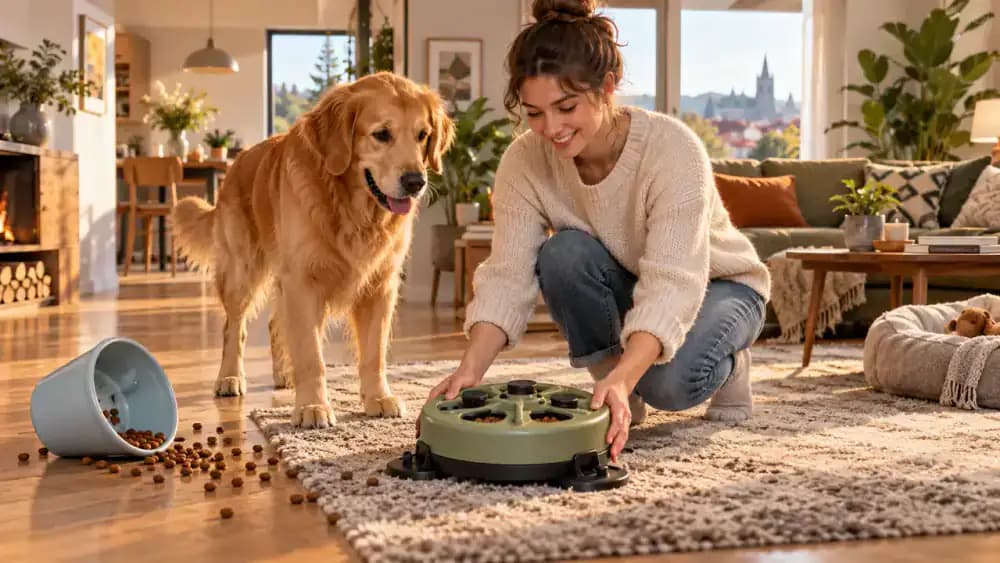
Configure the feeder at its easiest possible level. Lift covers, leave sliders partly open, expose compartments, or otherwise make the food obvious. Your pet should not need precise technique during the first attempt. The basic lesson is simple: interacting with this object causes accessible food to appear.
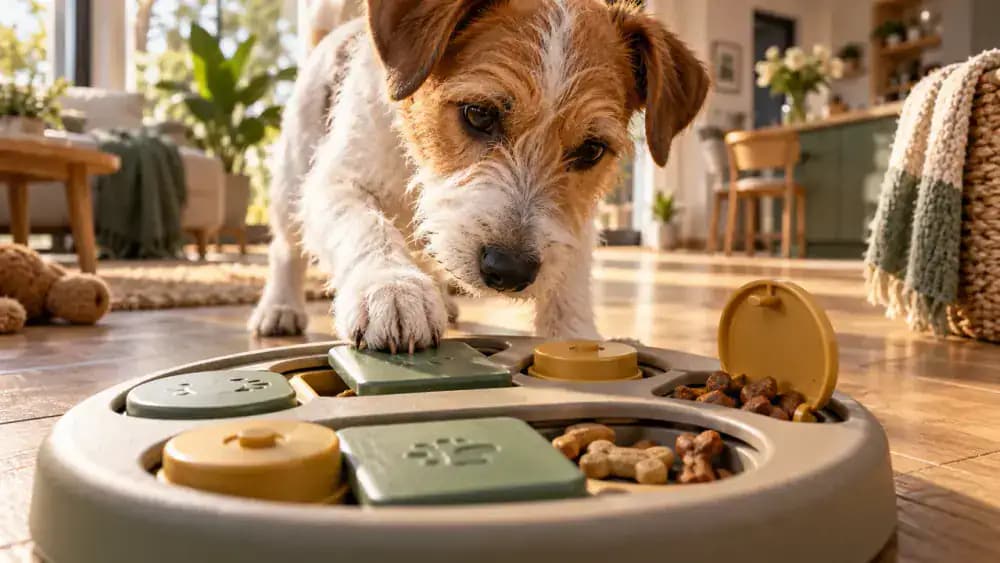
Let Them Investigate
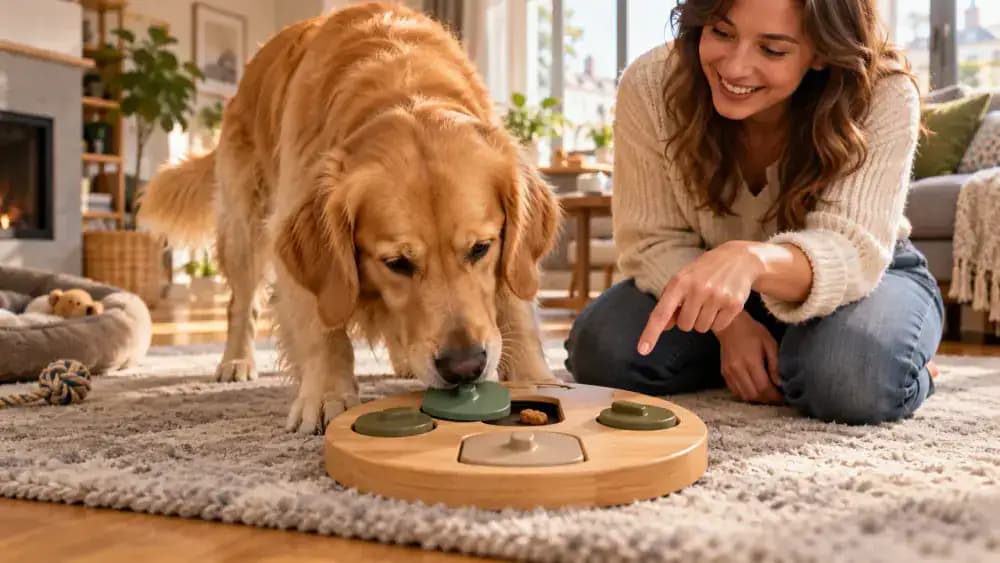
Put the feeder down and allow a short period of independent investigation before intervening. Sniffing, circling, staring, nudging, and pawing are all useful exploratory behaviors. Resist demonstrating every mechanism immediately. Many pets learn more effectively when they first have space to experiment without constant prompting or pressure.

Reward Any Useful Interaction
At first, treat useful interaction as success. A nose touching the feeder, a paw moving a slider, or a lid shifting can all lead to food. These small wins establish the cause-and-effect relationship. Once that connection becomes clear, you can gradually wait for more deliberate problem-solving behavior.
Keep the First Session Short
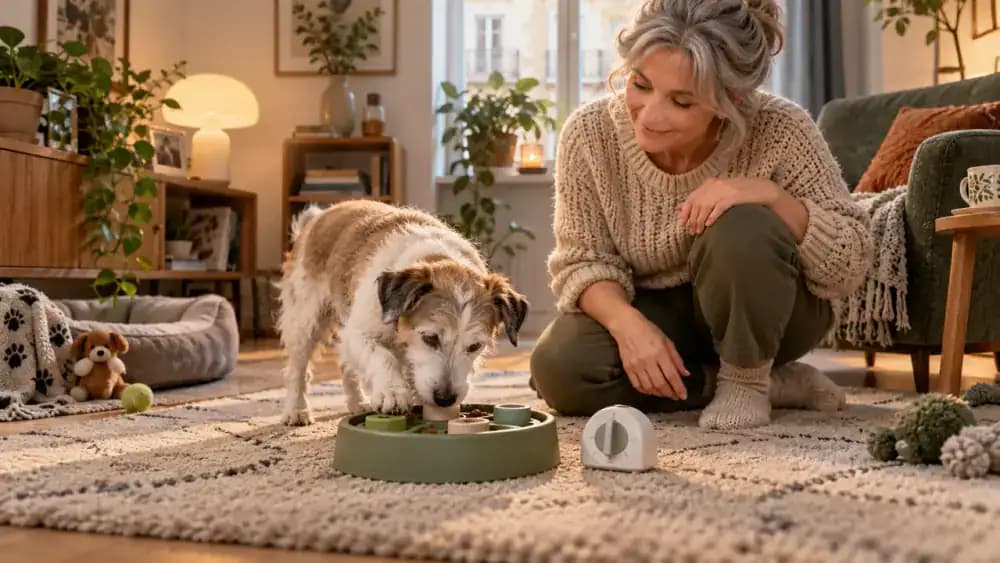
You do not need to empty the feeder during the first session. Two or three successful minutes may be enough, particularly for cautious pets or animals new to enrichment. Ending while interest is still present can preserve enthusiasm better than continuing until your pet becomes tired, bored, or disengaged.
Watch Body Language
Observe how your pet responds while working. Relaxed posture, focused sniffing, repeated attempts, and returning quickly after a mistake usually suggest productive engagement. Freezing, retreating, frantic scratching, barking, whining, or abandoning the feeder may mean the current challenge has become too difficult or emotionally overwhelming.
Lower Difficulty Immediately
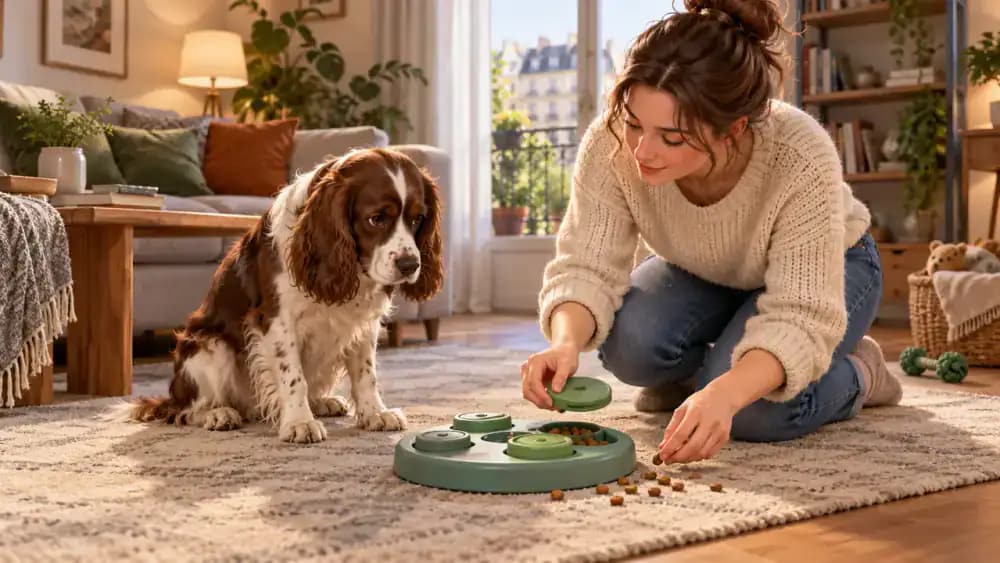
If frustration appears, simplify the puzzle right away. Open a section, remove a cover, expose some food, or scatter several pieces around the feeder. Making the task easier is not cheating. You are clarifying the rules and restoring a reliable connection between effort, successful interaction, and reward.
Avoid Forcing Physical Contact
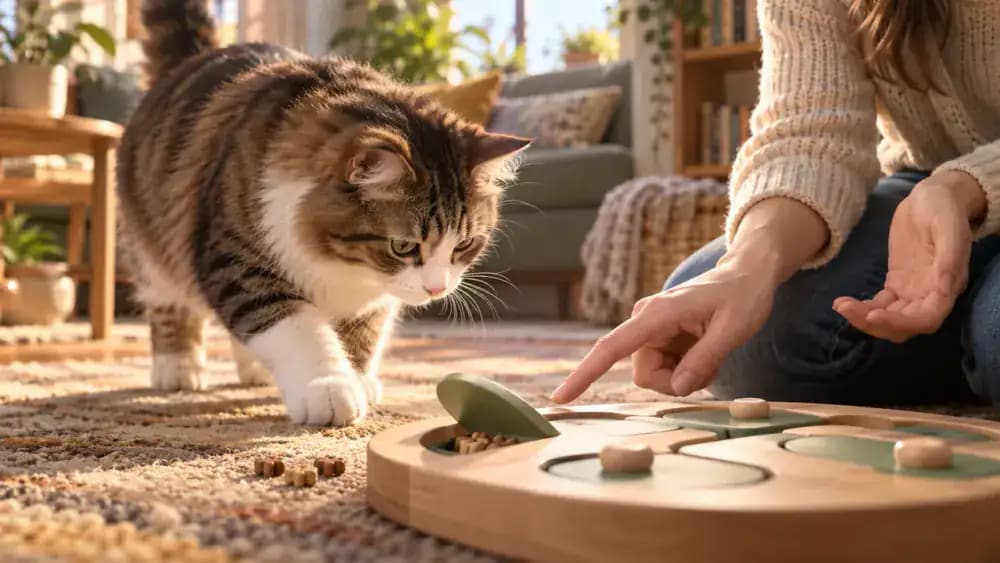
Never press your pet's paw onto a control or push their nose toward an opening. Forced handling can make the feeder feel uncomfortable or unpredictable. Instead, guide with food placement, scent, easy access, or occasional pointing. Solving the puzzle should result from voluntary exploration rather than physical manipulation.
Use Stable Surfaces
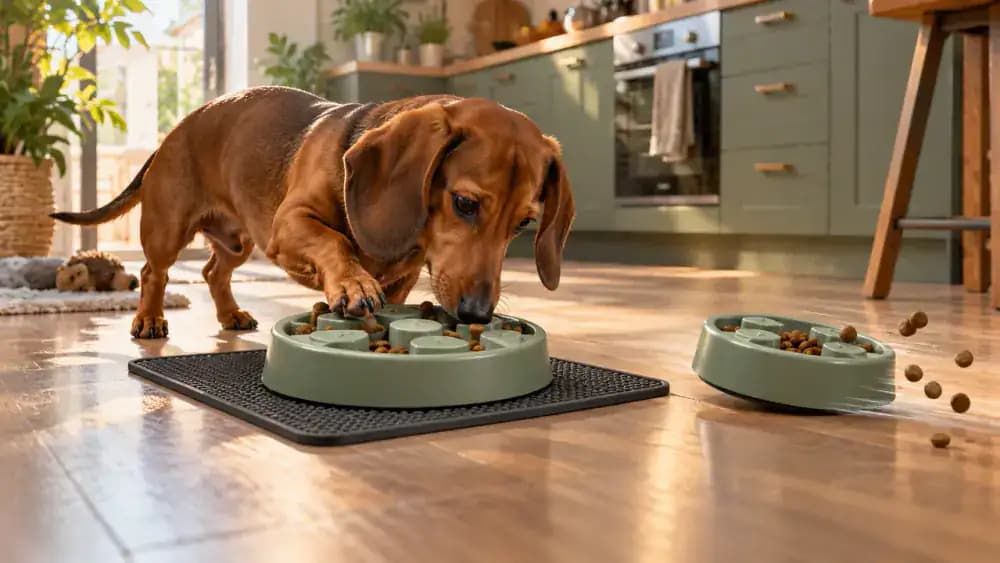
Prevent the feeder from sliding around while your pet works. A non-slip mat, carpet, or another stable surface lets the animal focus on the mechanism instead of chasing the equipment. Stability can be especially helpful for senior pets, smaller animals, and pets that dislike sudden noise or movement.
Match the Puzzle to the Species
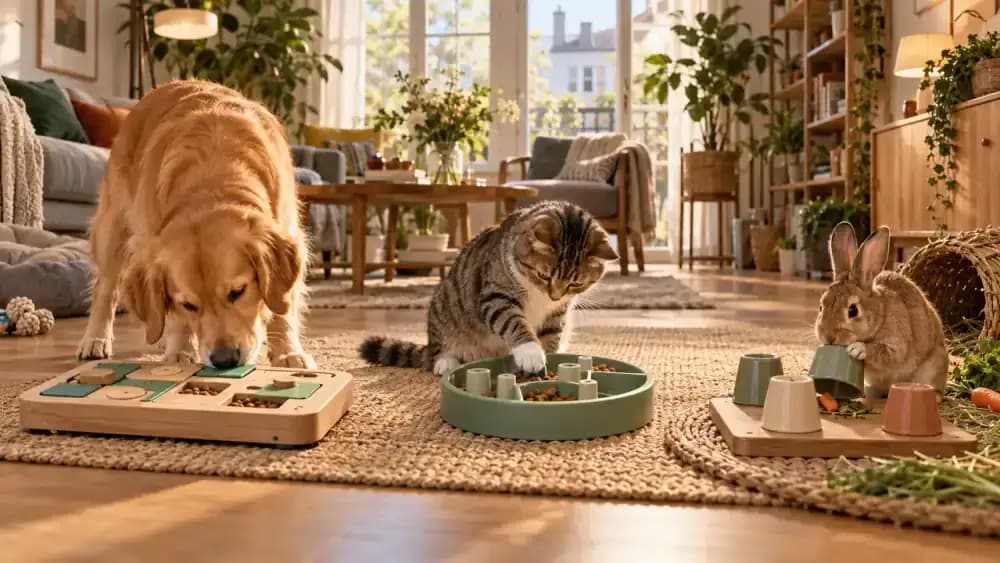
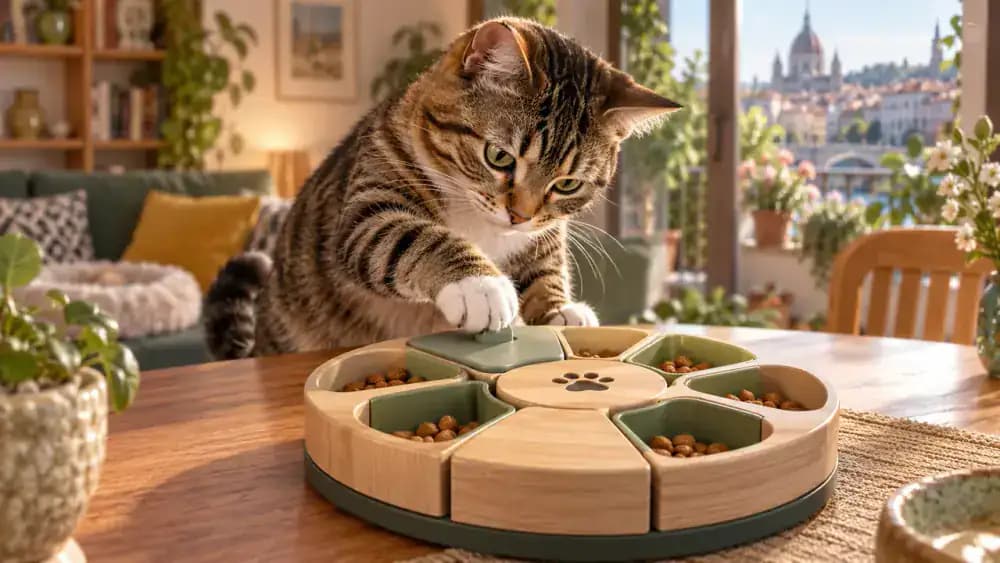
Select puzzles that reflect how your species naturally interacts with food. Dogs may rely on noses, paws, and persistence. Cats may enjoy batting, fishing, or stalking motions. Rabbits and other small mammals may prefer lifting, pulling, digging, or foraging rather than solving the same mechanisms designed for dogs.
Start Below Their Maximum Ability
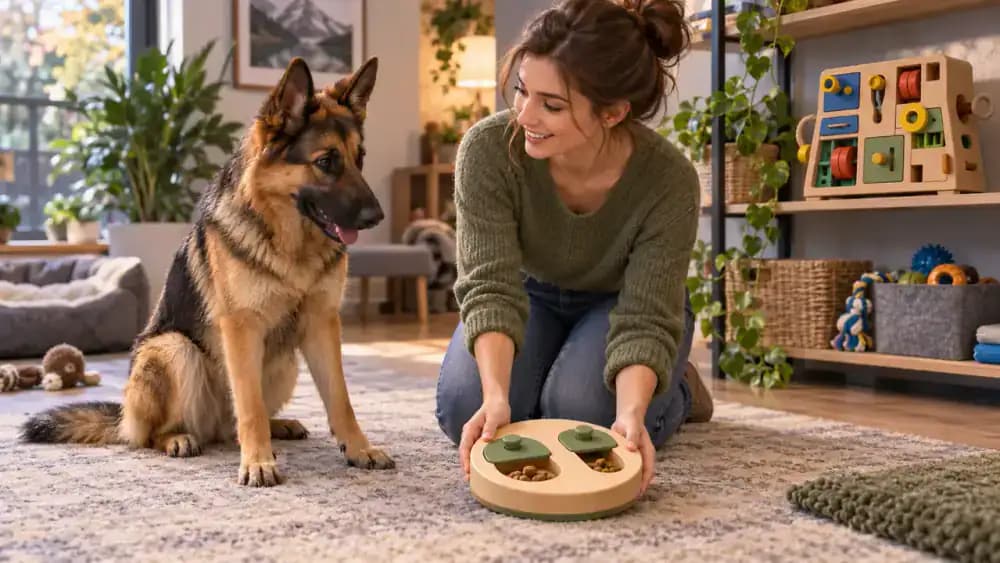
Do not begin with the most difficult puzzle your pet might eventually solve. Starting below their maximum ability produces quick wins and shows you how they naturally approach problems. A puzzle that is immediately too difficult mainly reveals a reaction to failure rather than your pet's actual learning potential.
Increase One Variable at a Time
When your pet easily handles the current setup, change only one element. Close another lid, tighten one slider, deepen the food slightly, or add one extra movement. Changing several things simultaneously makes it difficult to identify what caused trouble and can create an unnecessarily large jump in difficulty.
Repeat Before Advancing
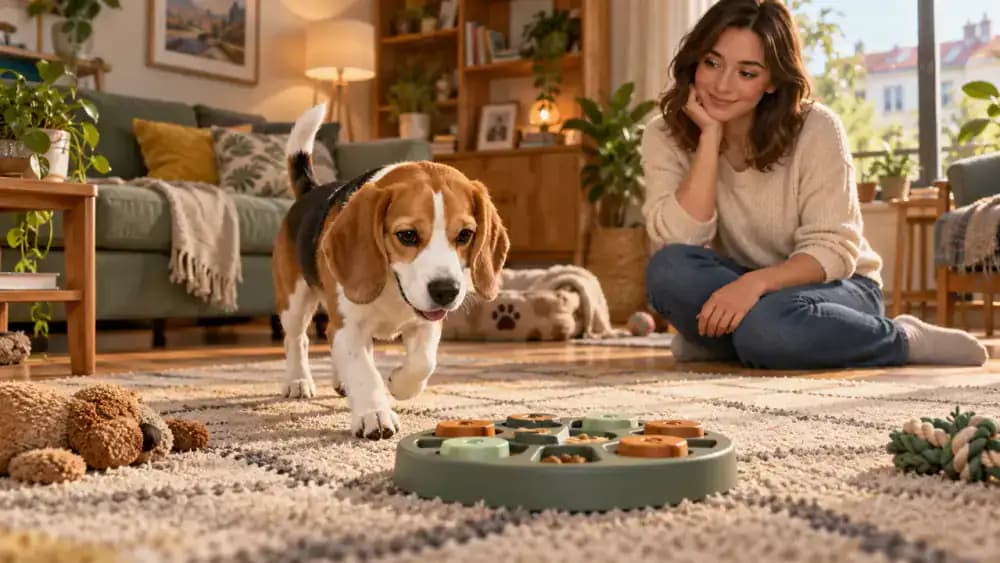
One successful attempt does not always mean your pet has fully learned the task. Repeat the same setup across several short sessions. When your pet approaches readily and solves the puzzle without hesitation, you have better evidence that the skill is reliable and that a modest progression is appropriate.
Use Part of a Meal
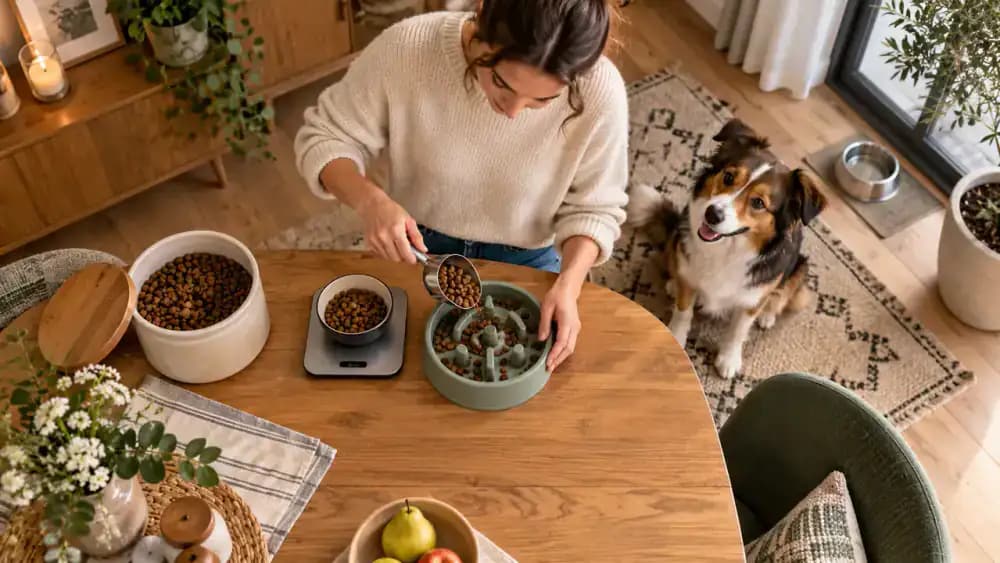
Use puzzle food as part of the normal meal instead of automatically adding extra calories. Measure the daily portion first, then transfer some into the feeder. If your pet follows a prescription diet or tightly controlled calorie plan, use approved food and keep the total daily quantity unchanged.
Offer an Easy Exit
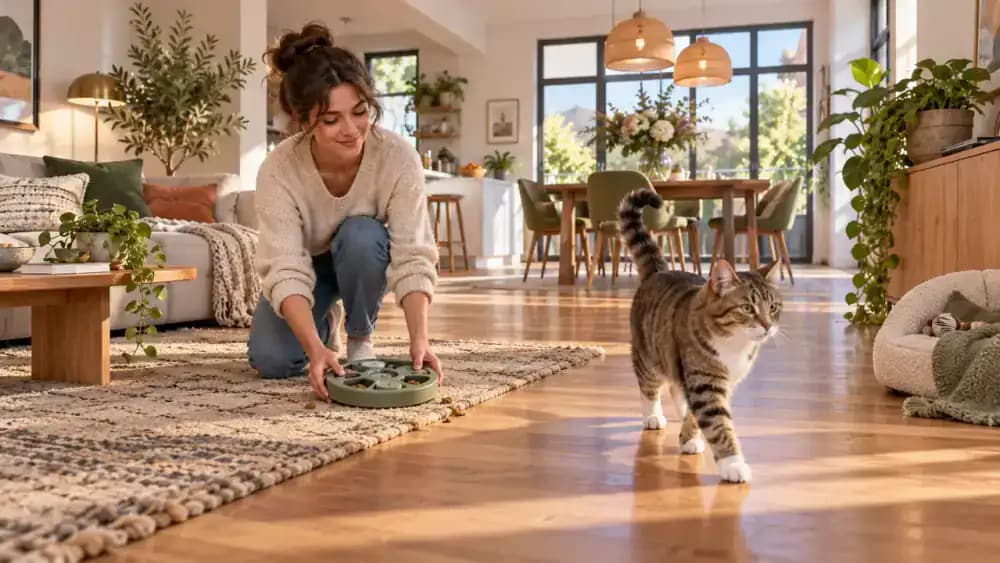
Always let your pet walk away. Do not trap the animal in a corner or repeatedly reposition the puzzle when they disengage. Voluntary participation is part of successful enrichment. If your pet leaves, finish the session or offer a simpler version later rather than turning the activity into an obligation.
Supervise New Feeders
Watch closely when introducing any unfamiliar feeder, particularly one containing removable pieces, fabric, cords, cups, or small components. Some pets respond by chewing or dismantling the equipment. Remove the puzzle if components become damaged, loose, or small enough that swallowing them could become a concern.
Separate Pets When Necessary
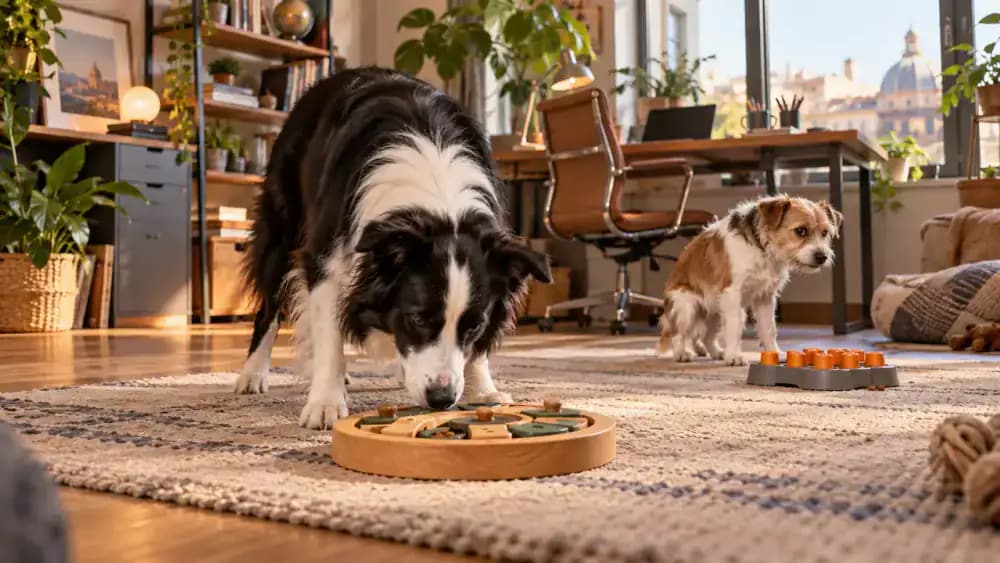
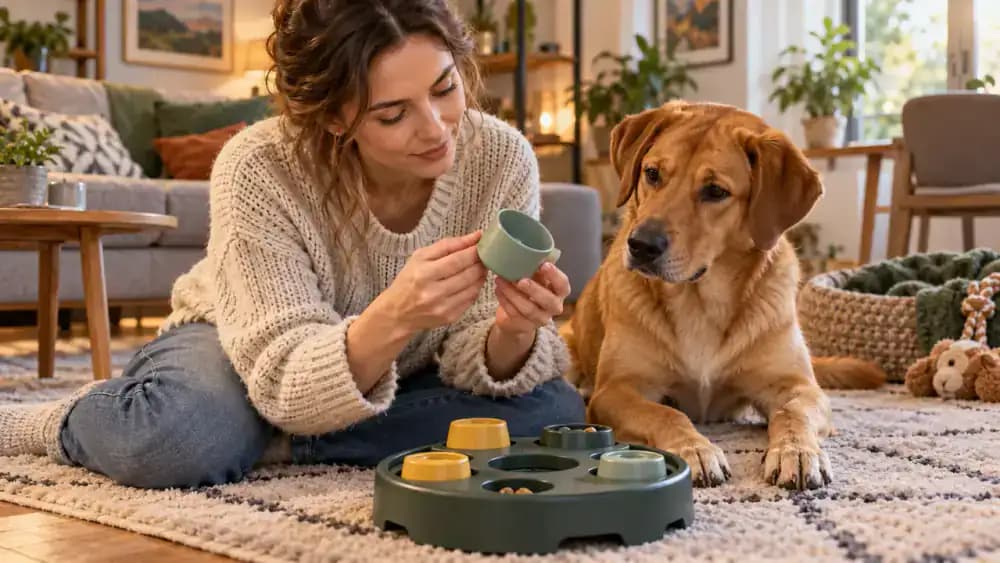
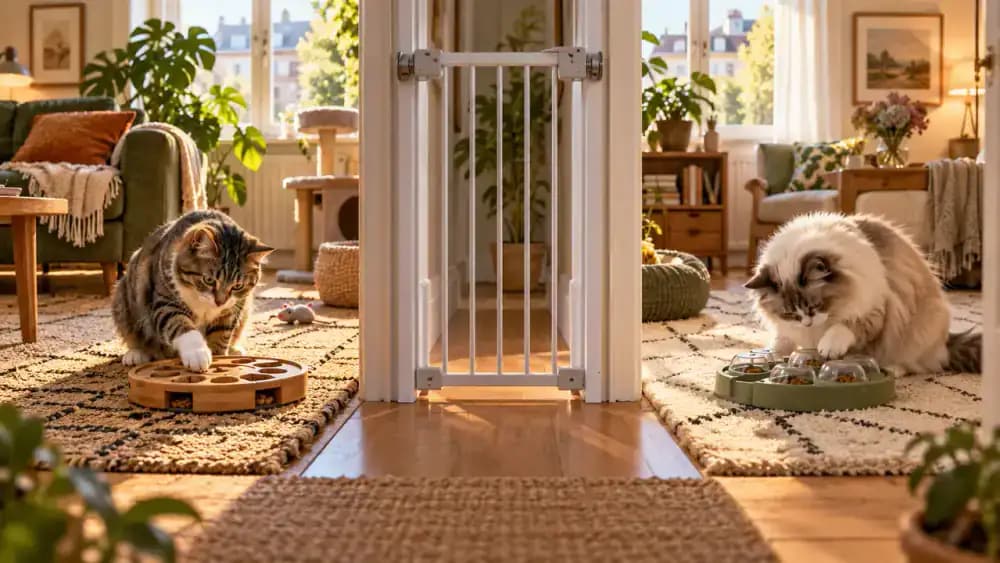
Puzzle feeding can create competition in multi-pet homes. A faster animal may steal rewards while another rushes, becomes anxious, or gives up. Use separate rooms, gates, or feeding areas when necessary so each pet can work at an appropriate pace without pressure, guarding, or unwanted assistance.
Adjust for Senior Pets
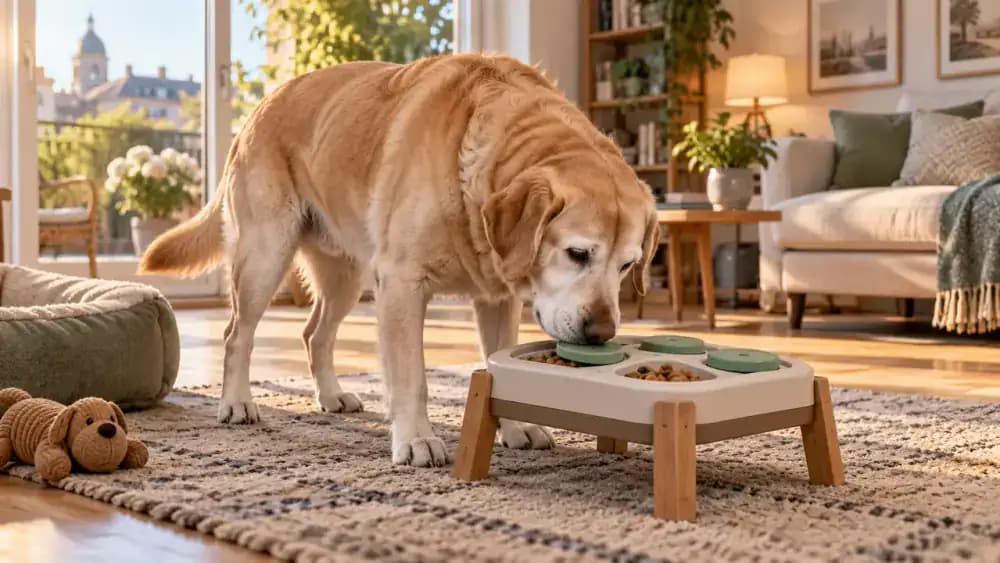
Older pets can still benefit from food puzzles, but physical comfort should shape your choice. Consider raised feeders, larger handles, shallow compartments, and loose sliders instead of mechanisms requiring deep crouching or forceful pawing. Mental enrichment can remain valuable even when mobility, vision, or strength changes.
Adjust for Flat-Faced Pets
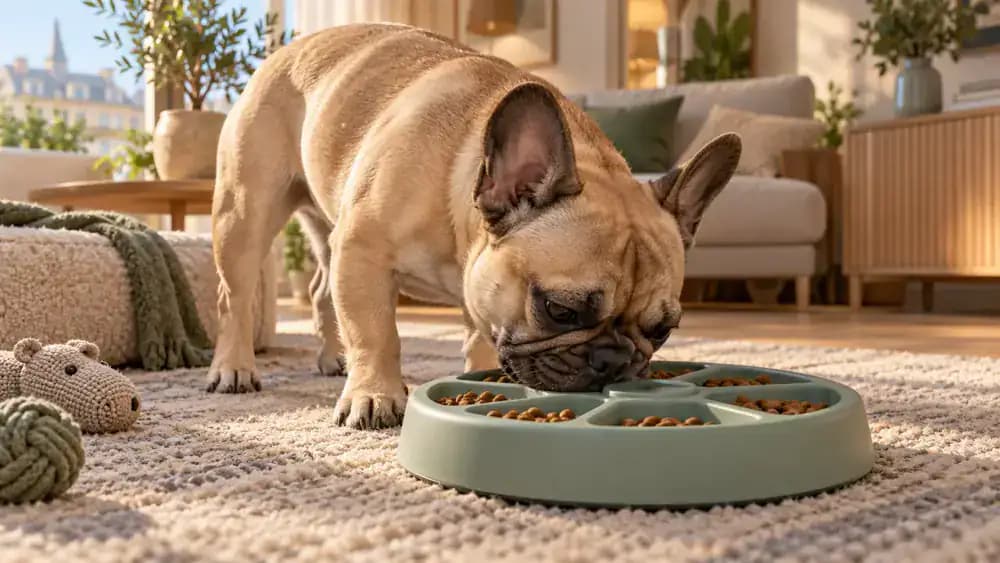
Flat-faced dogs and cats may find deep wells or narrow openings difficult to access. Favor broad openings and shallow compartments so anatomy does not become the main obstacle. The challenge should involve understanding the feeder. Watch breathing carefully and stop the activity if your pet shows distress.
Use Scent to Make the Puzzle Obvious
If your pet seems unsure where to begin, strengthen the scent cue. Leave one treat visible, allow food aroma to escape from a compartment, or place a small crumb beside an opening. These clues direct attention toward the relevant area without requiring you to physically solve the mechanism.
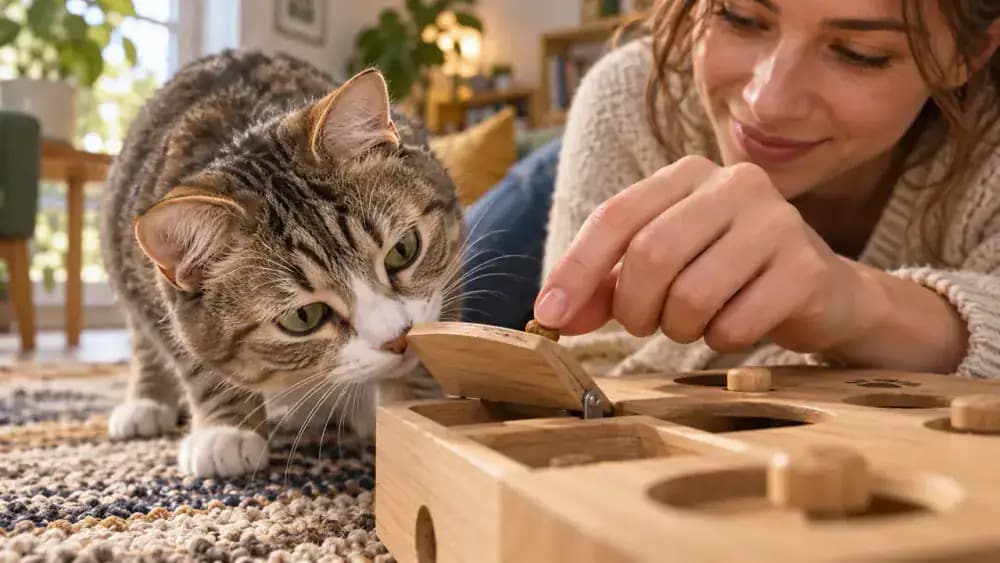
Teach Moving Parts Separately
Complex feeders may combine sliding, lifting, spinning, and pulling. Teach those movements individually before expecting your pet to perform several in sequence. For example, practice a simple sliding panel first and introduce a lifting flap later. Smaller learning tasks can make complicated equipment easier to understand.
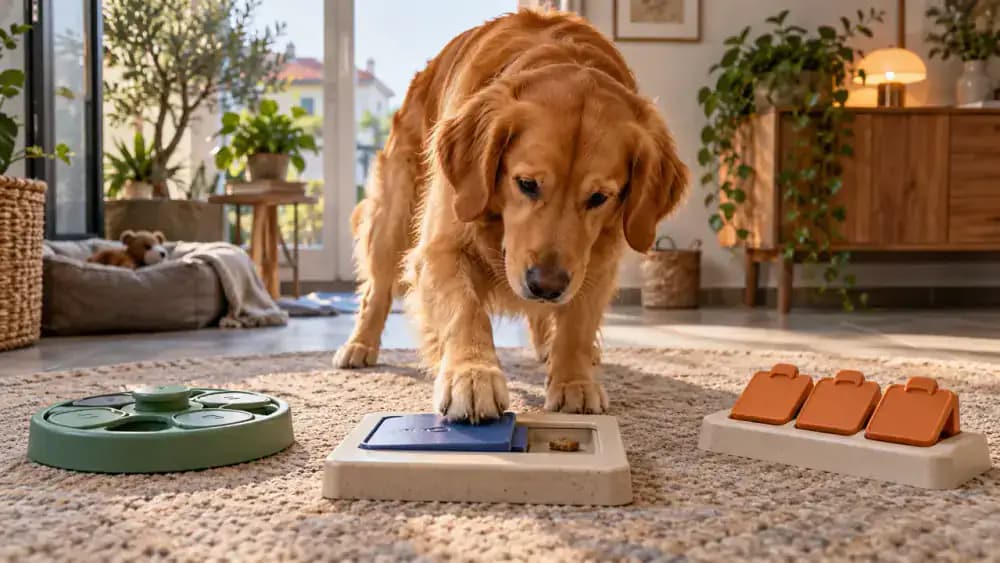
Rotate Rather Than Constantly Escalate
Puzzle time does not need to become progressively harder forever. Rotate familiar easy feeders, moderate challenges, and occasional new designs. Known puzzles provide satisfying quick wins while new ones offer novelty. This balance keeps enrichment enjoyable instead of turning every meal into an increasingly demanding test of ability.
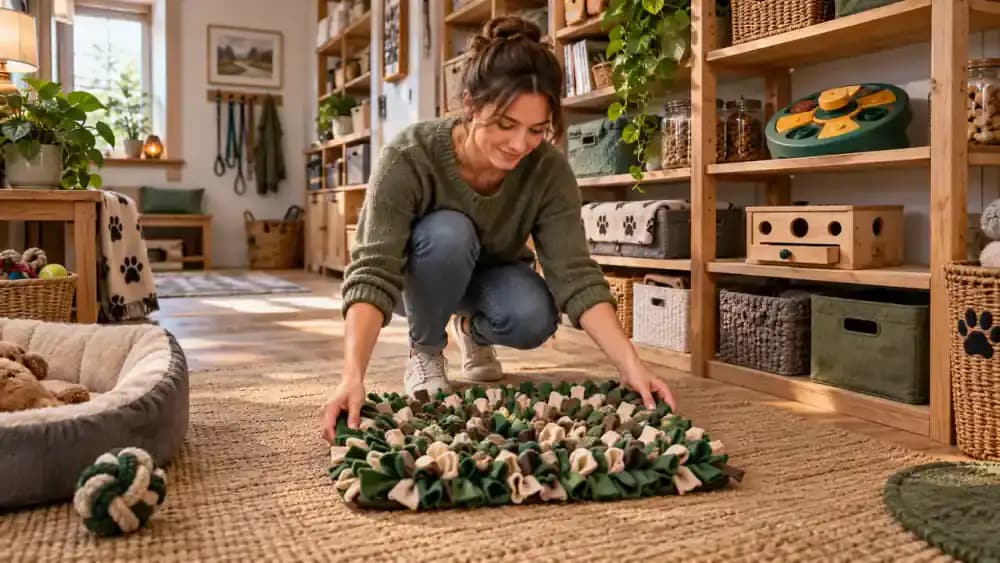
Notice Problem-Solving Style
Pay attention to how your pet naturally solves problems. One dog may rely almost entirely on its nose while another uses a paw. A cat may hook food with a claw or tip a component. These preferences can help you choose future feeders that complement natural exploration rather than demanding one method.
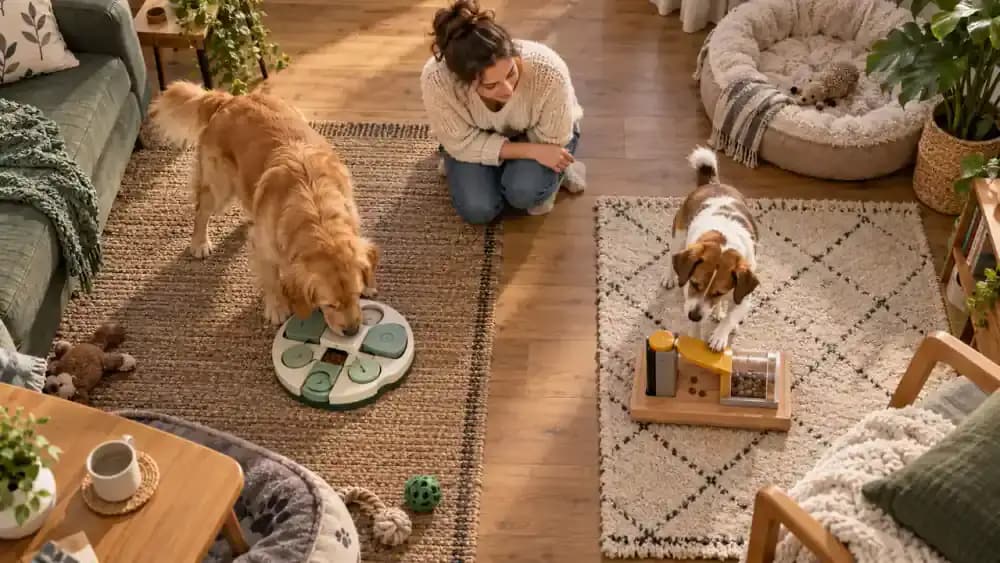
Prevent Destructive Shortcuts
If your pet repeatedly flips the feeder, chews through parts, or smashes components to reach food, reassess the setup. The puzzle may be too difficult, too light, or poorly suited to that animal. Avoid punishment. Instead, switch to an easier, heavier, or sturdier design that supports calmer interaction.
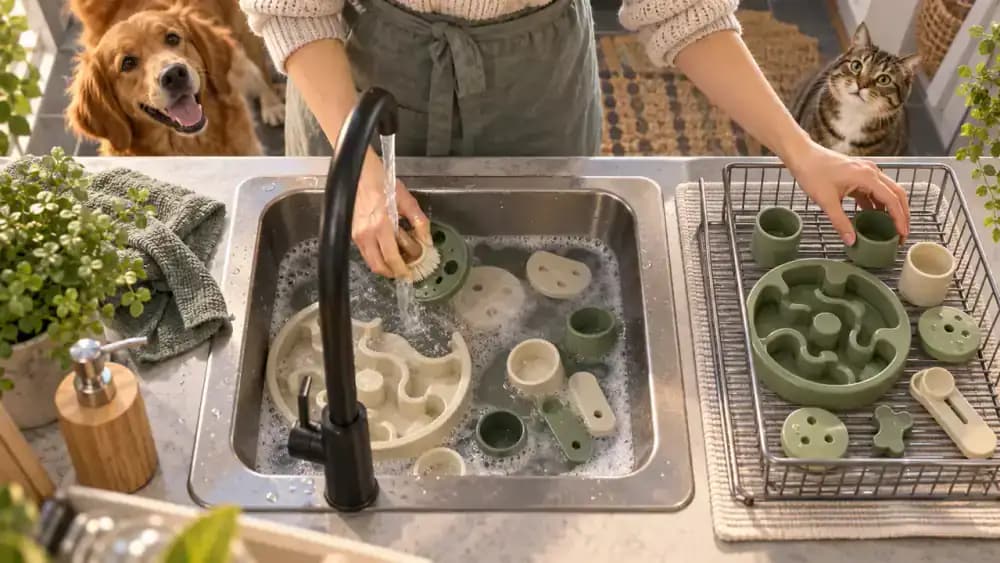
Clean the Feeder Regularly
Puzzle feeders can trap crumbs, saliva, oils, and moisture inside small spaces. Follow the manufacturer's cleaning guidance, wash the feeder regularly, and allow every section to dry fully before storage. Persistent food residue or damp fabric can create avoidable hygiene problems, including conditions where bacteria or mold may grow.
Track Confidence, Not Speed
Do not judge success only by how quickly the feeder is emptied. A pet can work slowly while remaining relaxed, persistent, and engaged. Look for comfortable movement, repeated attempts, and willingness to return. The purpose is worthwhile mental activity, not creating the fastest puzzle solver in the household.
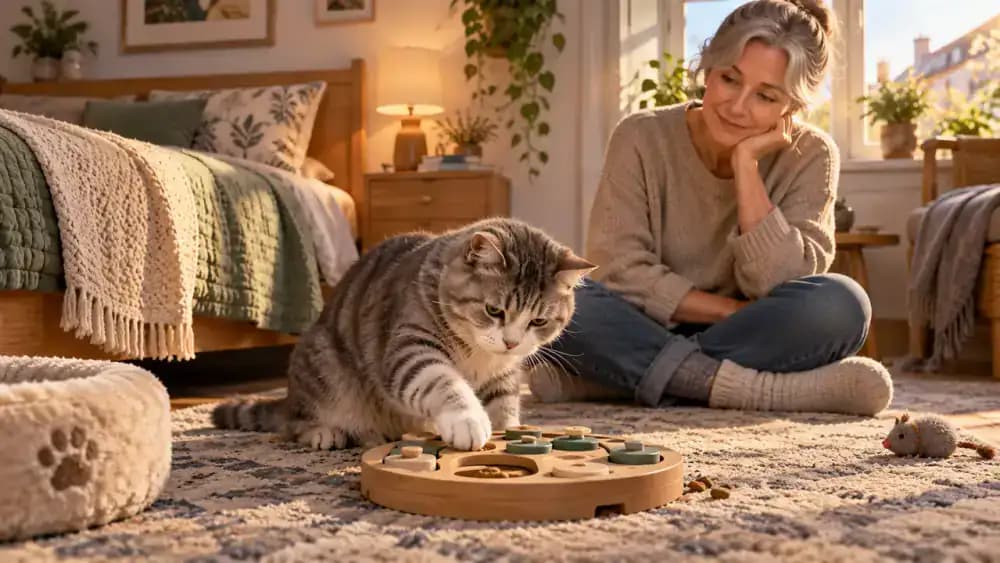
Use Easier Puzzles on Hard Days
Your pet's abilities and motivation may vary from day to day. After a stressful event, veterinary visit, poor sleep, or intense exercise, choose an easy familiar puzzle rather than introducing a demanding challenge. Adjusting difficulty to the animal's current state can protect confidence while preserving enjoyable enrichment.
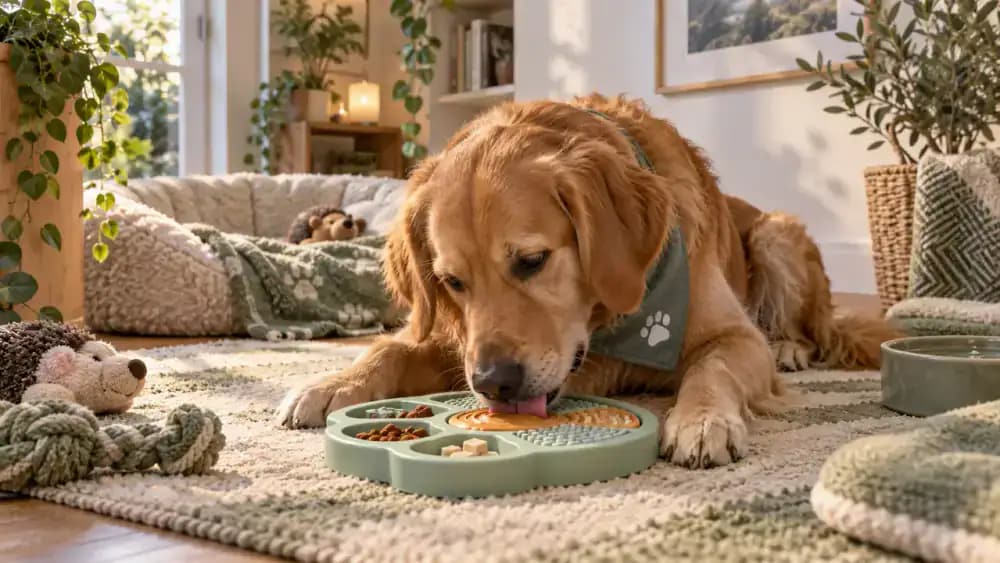
Know When the Puzzle Is Too Easy
If your pet empties the feeder almost instantly without needing to investigate, it may provide little mental work. Increase difficulty slightly, rearrange the existing puzzle, or rotate to another mechanism. Keep the change modest so renewed thinking does not suddenly become repeated failure or loss of interest.
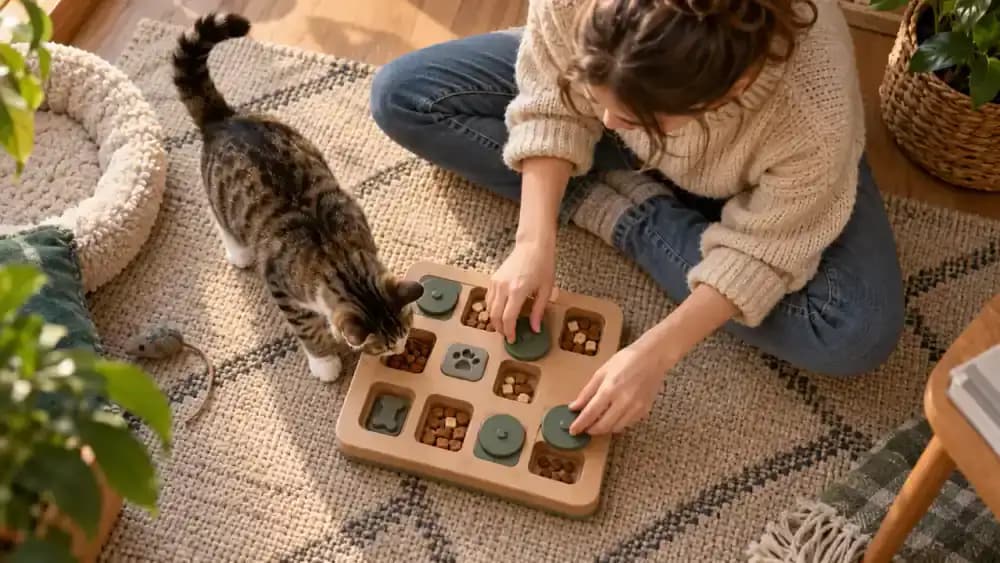
Build a Positive Puzzle Routine
A sustainable routine remains straightforward: begin easy, observe carefully, reward useful attempts, increase difficulty gradually, and simplify whenever frustration appears. With repetition, a feeder can become a predictable enrichment activity that supports natural behavior, confidence, and satisfying problem solving without making difficulty itself the objective.
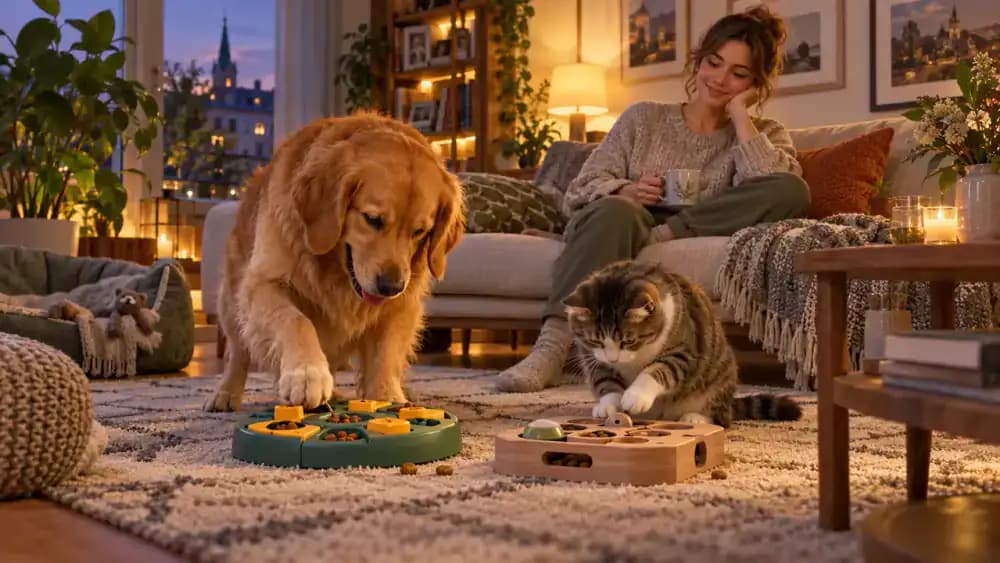
Puzzle feeders can turn part of an ordinary meal into useful mental enrichment, but more difficult does not automatically mean better. The most effective introduction starts with easy access to familiar food, short sessions, and careful observation. Your job is not to prove how clever your pet is. It is to create a manageable activity your pet voluntarily wants to repeat. The process below works by building successful interactions first, then adding difficulty slowly while accounting for safety, comfort, species, age, feeding needs, and individual problem-solving style.
Where people go wrong
Starting Too Hard. Choosing an advanced feeder immediately can create frustration before your pet understands the basic relationship between interacting with the puzzle and finding food.
Adding Extra Calories. Using treats on top of full daily meals can unintentionally increase calorie intake. Measure puzzle food as part of the normal ration whenever appropriate.
Helping Too Much. Constantly moving parts for your pet can prevent independent learning. Offer clues when necessary, but leave room for voluntary experimentation.
Ignoring Stress Signals. Repeated barking, retreating, frantic scratching, or abandoning the feeder are reasons to simplify the activity instead of increasing pressure.
Progressing Too Quickly. One successful attempt does not necessarily justify a large difficulty increase. Repeat comfortable versions and change only one variable at a time.
Skipping Cleaning. Puzzle feeders have hidden surfaces where food residue and moisture can accumulate, so regular washing and thorough drying are part of safe routine use.
Questions people ask
A few successful minutes may be enough. Ending while your pet is still interested can preserve enthusiasm better than continuing until frustration or boredom appears.
Fixed it?
Get one guide like this every Thursday.