How to Introduce a New Cat to Your Resident Cat Gradually
Bringing home a second cat? Follow this practical 30-step guide to introduce cats safely, reduce territorial stress, and build peaceful coexistence at their own pace.

What you’ll need
Tap to tick things off before you start.
Understand Why Gradual Introductions Matter
When Luna arrives in her carrier, Milo watches from his familiar sofa. To him, an unfamiliar cat represents a change to his territory. Keep them separated rather than arranging an immediate greeting. Your first goal is helping each cat associate the other's presence with safety and ordinary daily experiences.

Consider Compatibility and Veterinary Health
Before bringing Luna home, review her behavior history and veterinary records with the shelter. Consider whether her age and activity level suit Milo's temperament. Ask a veterinarian about vaccinations, parasites, and potential illness risks before close contact. Even healthy cats may need different introduction speeds.

Create a Comfortable Safe Room
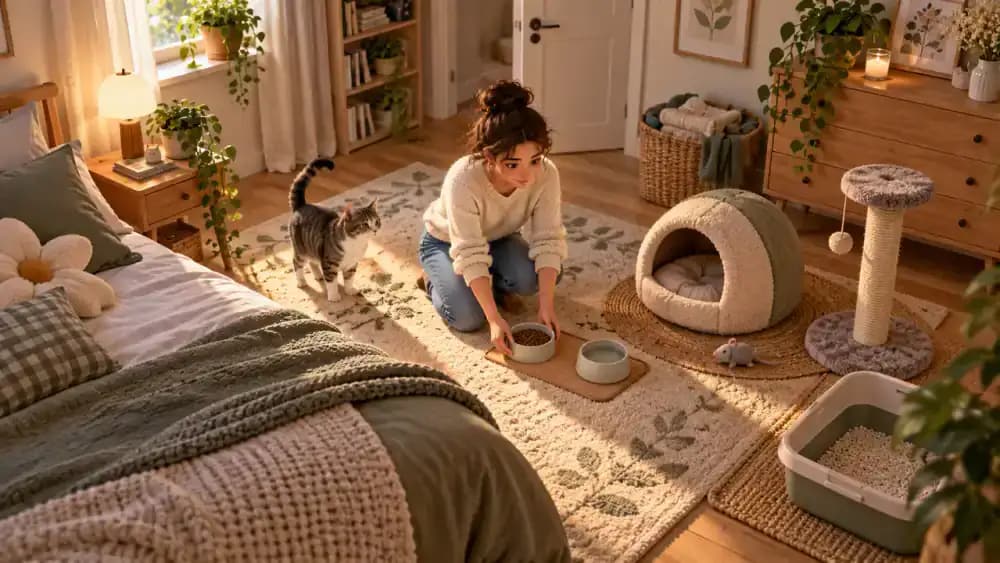
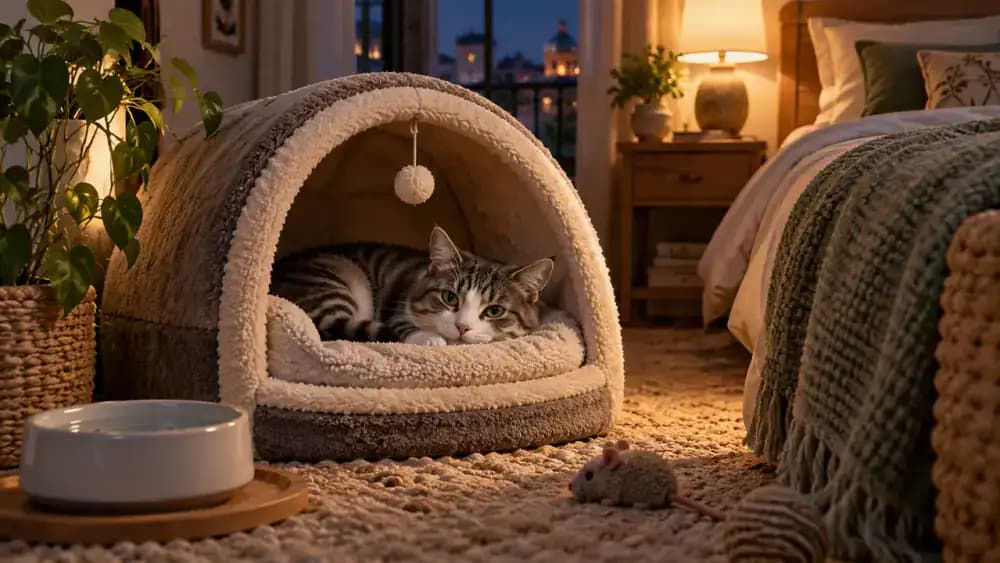
Prepare a quiet bedroom exclusively for Luna. Include a litter box, separate food and water bowls, comfortable bedding, a covered hiding place, a scratching post, and an elevated perch. Arrange supplies so she can move freely between them. This room should feel like a secure home base.
Keep Your Resident Cat's Routine Stable
Milo should retain his favorite sofa, window cushion, feeding schedule, and regular playtime. Add resources elsewhere without unnecessarily rearranging his familiar territory. For two cats, three litter boxes distributed around the home are a useful starting point. Separate essentials reduce opportunities for territorial competition.

Bring the New Cat Directly Into Her Room
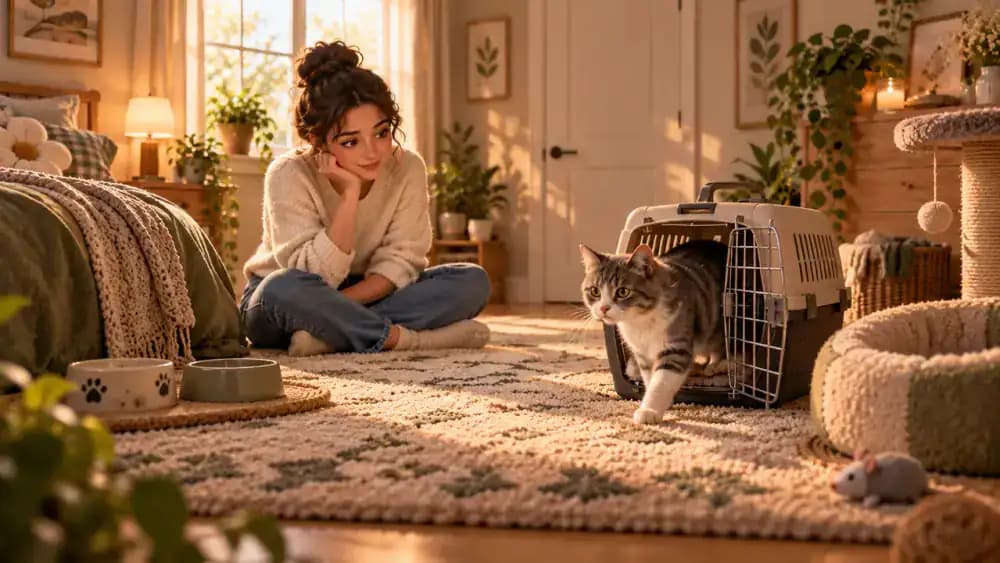
Carry Luna's secured carrier directly into her prepared bedroom and close the door before opening it. Sit quietly several feet away while she decides whether to emerge. Leave the carrier available as a hiding place. Never pull her out or force exploration simply because she seems hesitant.
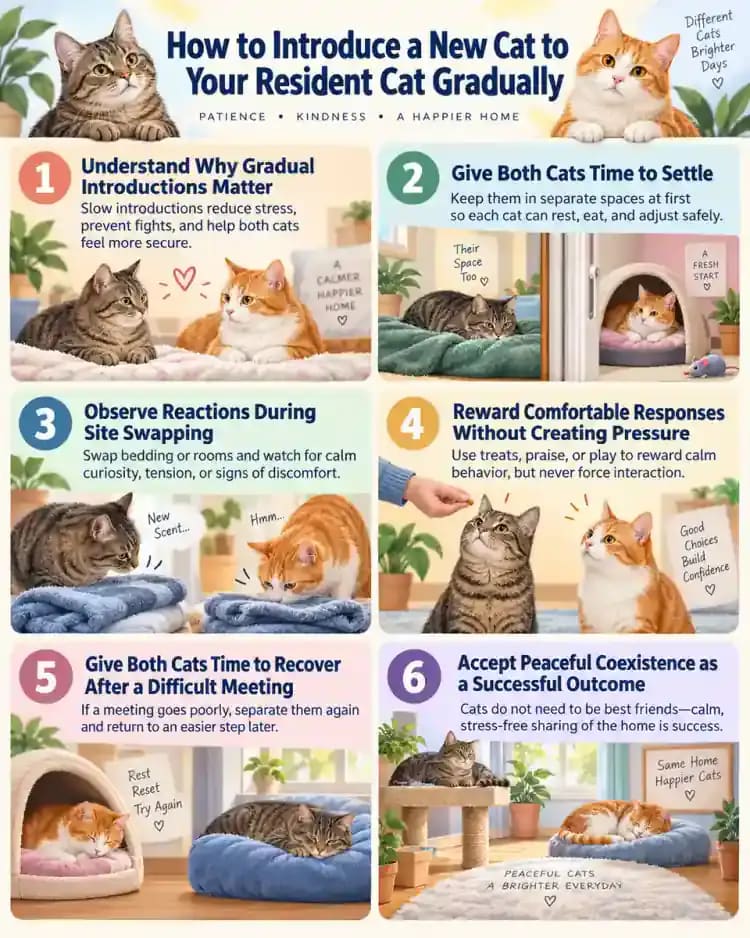
Give Both Cats Time to Settle
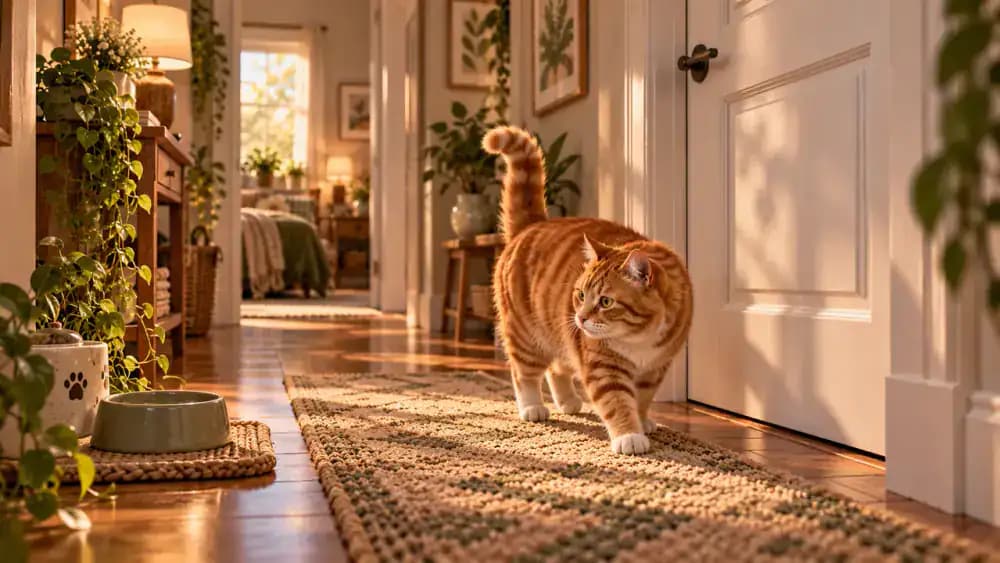
Milo may investigate Luna's closed door, sniff beneath it, hiss briefly, or walk away. Avoid interpreting one reaction as permanent rejection. Keep the door closed while observing whether both cats eat, drink, rest, and use their litter boxes normally. Do not advance while either remains unsettled.
Start Gentle Scent Sharing
If Luna welcomes touch, gently rub a clean soft cloth along her cheek. Place the cloth near Milo's resting area where he can investigate voluntarily. Repeat with Milo's scent for Luna. A relaxed sniff followed by walking away is encouraging. Never press unfamiliar scents against either cat.

Exchange Familiar Blankets and Bedding
Once both cats seem comfortable, exchange small blankets or bedding items. Place Luna's blanket several feet from Milo's cat tree, leaving him free to approach or ignore it. Offer a small treat after a comfortable investigation. Allowing an easy exit prevents scent exposure from becoming overwhelming.

Offer Meals on Opposite Sides of the Door
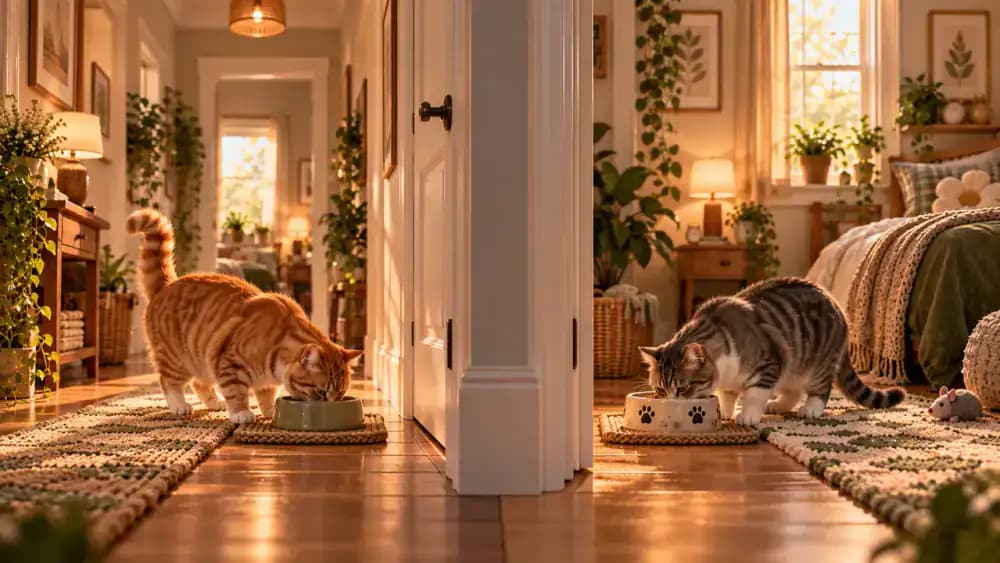
Begin feeding Milo and Luna several feet from opposite sides of the closed door. Both should eat comfortably without staring or becoming tense. Across successful sessions, gradually decrease the distance if appropriate. Move bowls farther apart immediately if either cat hesitates, freezes, or refuses food.
Create Short and Predictable Daily Sessions
Establish roughly consistent times for feeding, individual play, and scent activities. Give Milo his usual attention before visiting Luna for separate play. Short sessions that finish peacefully are preferable to lengthy encounters that create frustration. Record how each cat responds and adjust tomorrow's routine accordingly.

Let Each Cat Explore the Other's Territory
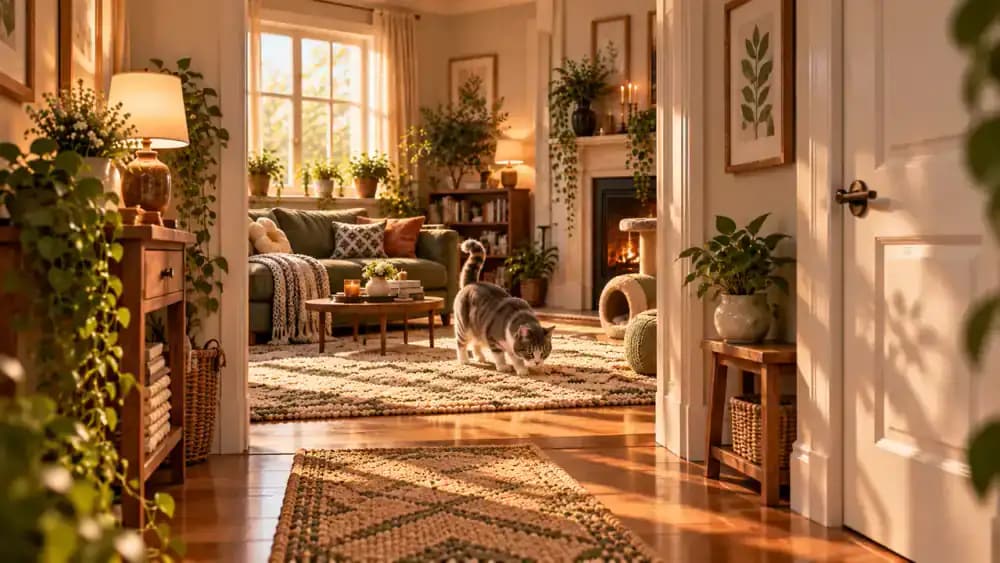
When Luna confidently explores her bedroom, secure Milo in another comfortable room. Allow Luna to investigate the empty living room without meeting him. Return her to her safe room before allowing Milo to inspect her temporarily empty space. Check every connecting door to prevent accidental encounters.
Observe Reactions During Site Swapping
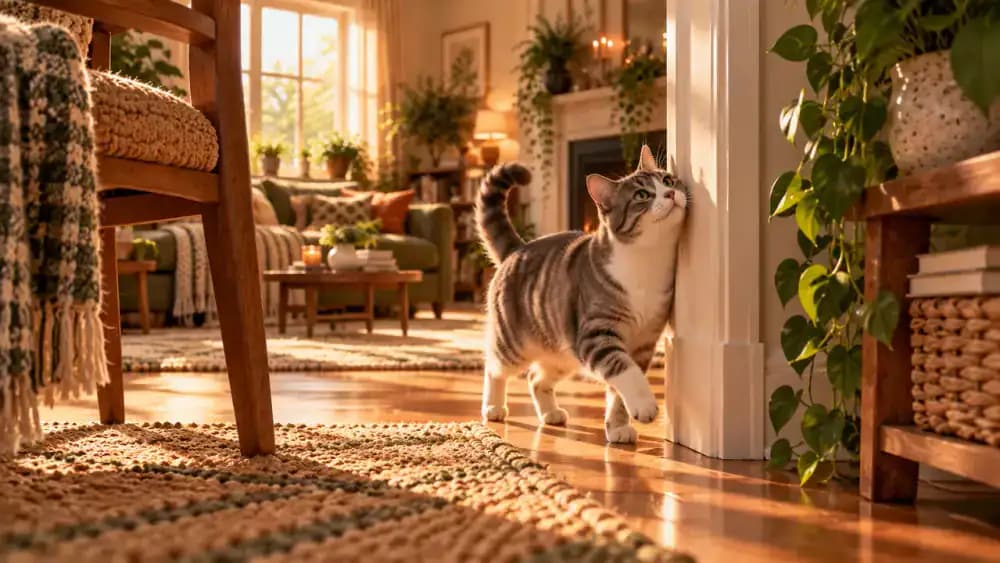
Watch Luna investigate furniture, rub a doorway, and pause at unfamiliar household sounds. Curious sniffing and voluntary retreats are useful signs. If she crouches, freezes, or stops accepting treats, shorten the exploration and offer a smaller area next time. Never pursue a cat that chooses to withdraw.
Install a Secure Barrier for Visual Contact
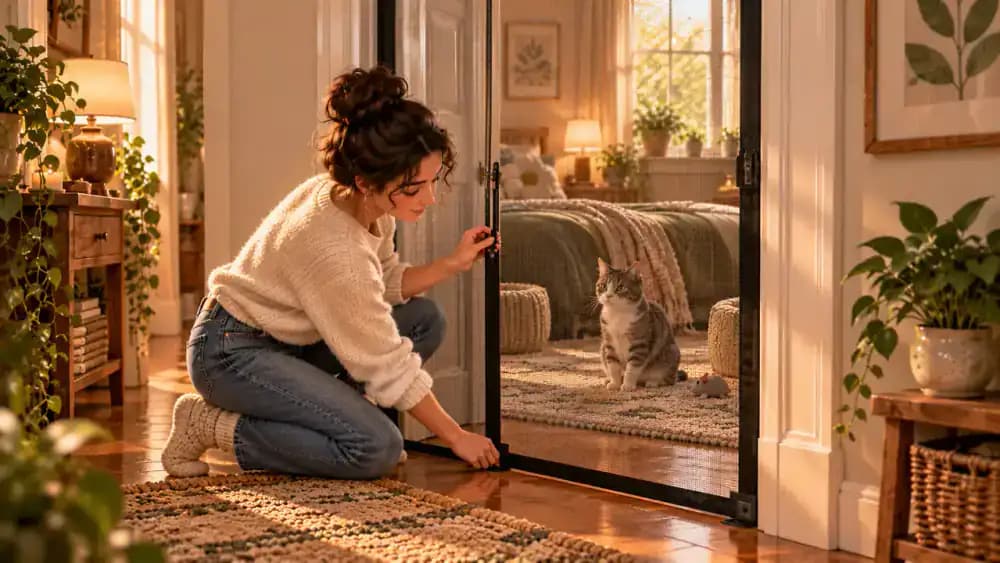
Before permitting visual contact, install a sturdy full-height mesh barrier across Luna's doorway. Check the lock, lower corners, and possible escape gaps. A lightweight baby gate may not contain a determined cat. Keep a blanket nearby so you can quickly interrupt visual contact when necessary.
Arrange the First Brief Visual Meeting
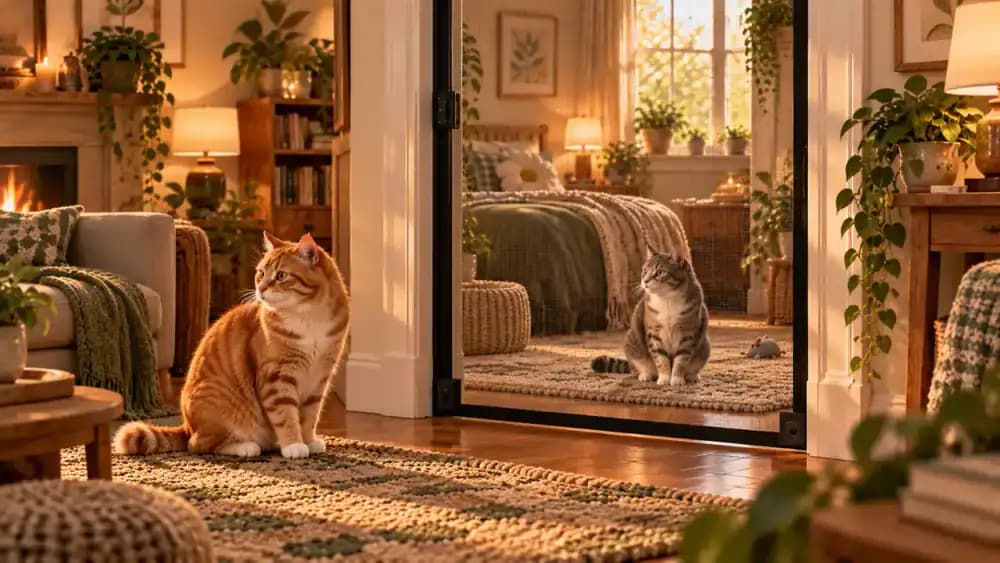
Let Milo and Luna notice each other through the secured mesh from several feet away. Offer treats independently without coaxing them forward. A brief glance followed by looking away is promising. End the session while both remain comfortable, or cover the barrier immediately if either becomes distressed.
Learn to Recognize Relaxed and Stressed Body Language
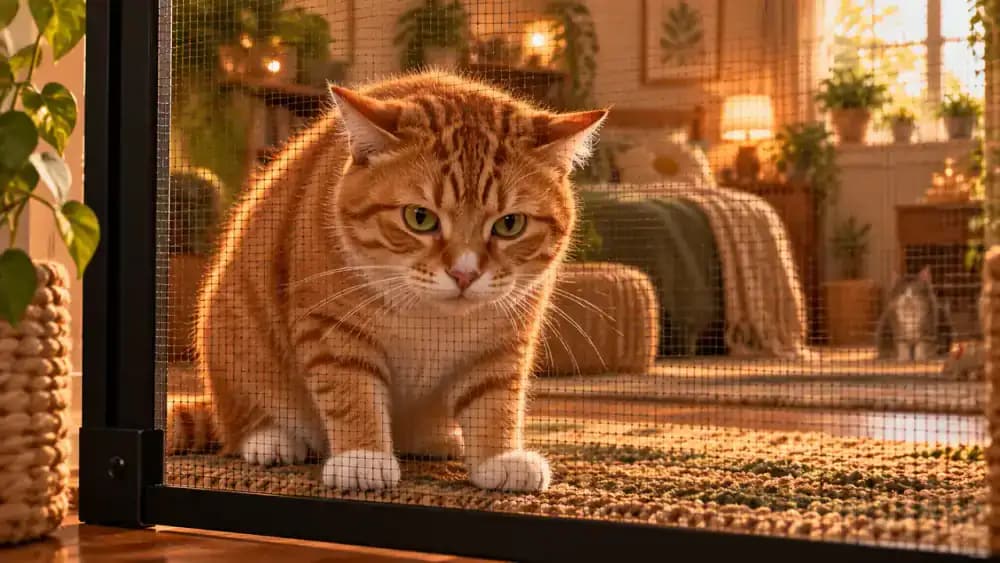
Observe Milo's entire posture during each session. Loose muscles, soft eyes, neutral ears, and normal movement suggest relative comfort. Rigid staring, flattened ears, growling, or lunging indicate that more distance may be needed. A hiss communicates discomfort rather than disobedience, so never punish it.
Change Only One Introduction Variable at a Time
If both cats appear comfortable across the room, try a slightly longer session before reducing their distance. Adjust duration, proximity, or activity individually rather than changing everything together. Even thirty seconds of relaxed observation is worthwhile. Let consistent behavior determine progress instead of following a fixed deadline.
Introduce Independent Play Near the Barrier
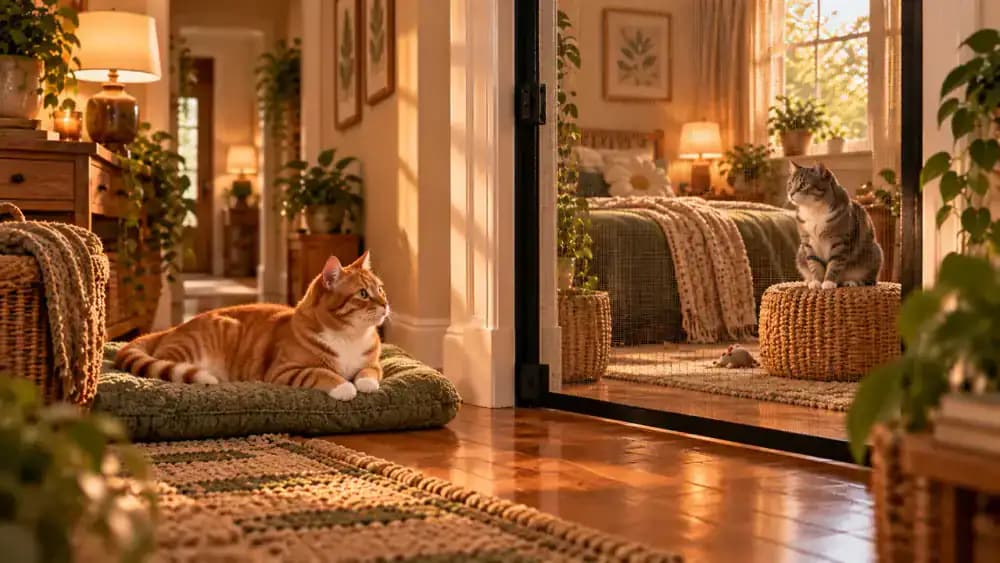
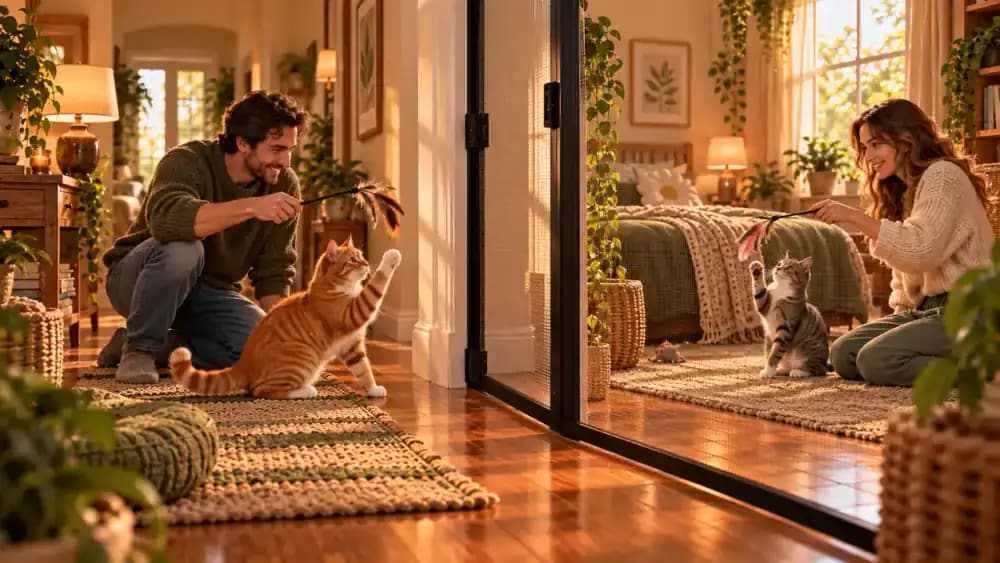
Have one adult engage Milo with a wand toy while another plays separately with Luna behind the secured screen. Keep each activity away from the barrier and allow natural breaks. If either cat ignores the toy and fixates on the other, increase their distance rather than intensifying play.
Reward Comfortable Responses Without Creating Pressure
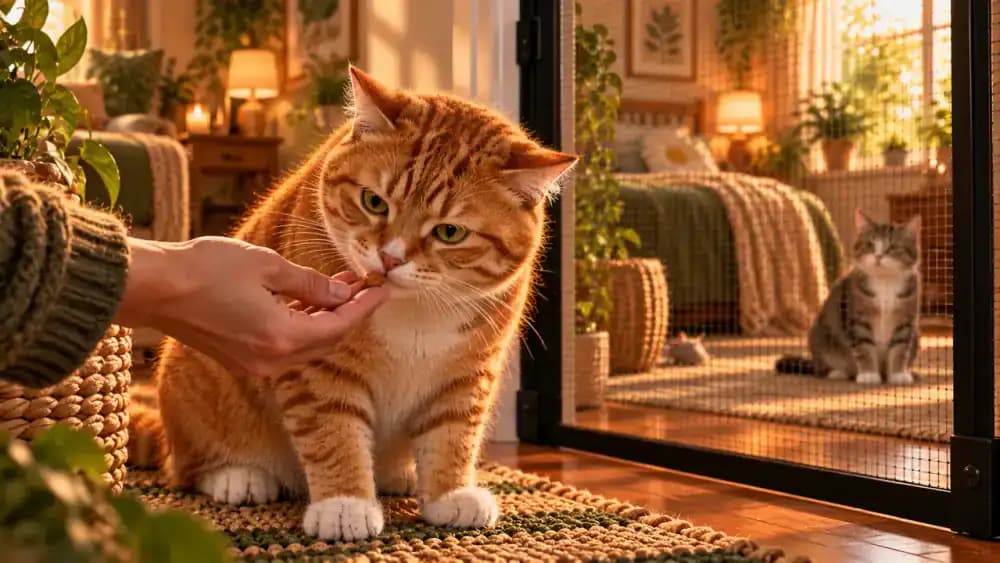
Offer Milo a favorite treat after he calmly notices Luna and looks away. Reward Luna separately when she remains relaxed. Food should reinforce comfortable behavior, never pressure a frightened cat closer. Do not withhold meals to encourage participation. If treats cause guarding or tension, increase distance instead.
Respond Calmly When Progress Reverses
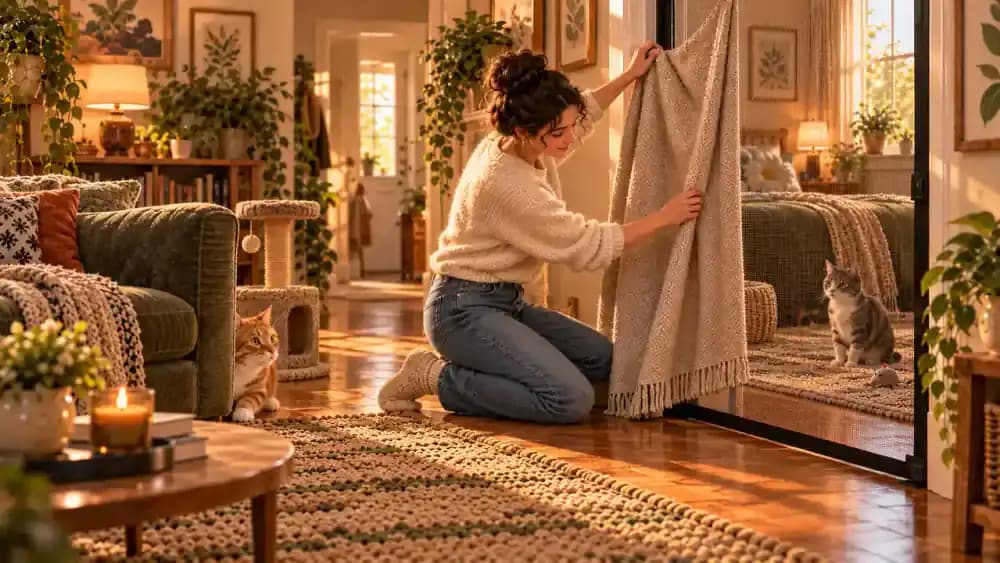
An unexpected doorbell startles Milo during a visual session, and he retreats behind an armchair. Cover the barrier, end the activity, and give both cats space. Resume familiar closed-door scent activities when they are comfortable again. Setbacks are information, not evidence that the entire introduction has failed.
Prepare a Spacious Room for Direct Contact
After repeated relaxed barrier sessions, choose a large room for the first direct meeting. Provide multiple retreat routes and elevated resting places. Remove clutter that could trap a cat in a corner. Ideally, have two adults present and a rigid cardboard panel available to interrupt sightlines safely.

Allow the First Face-to-Face Encounter to Happen Voluntarily
Open the secured barrier only while both cats appear comfortable. Luna may step into the living room while Milo remains several feet away. Let them choose whether to approach, sniff briefly, or separate again. Never hold either cat in position or carry one toward the other.
Supervise Shared Space Without Forcing Interaction
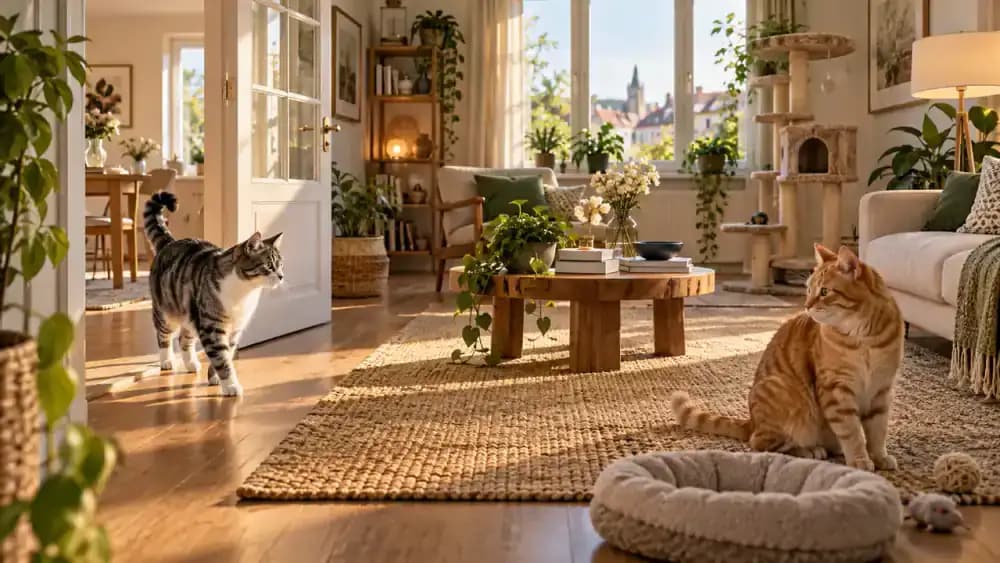
Stay nearby as Milo relaxes on his cat tree and Luna explores the floor. Both should have unobstructed routes away from each other. Quiet supervision allows natural pauses and independent choices. Interrupt stalking, cornering, doorway blocking, or repeated unwanted chasing before tension escalates into a confrontation.
Separate Cats Safely if a Fight Occurs
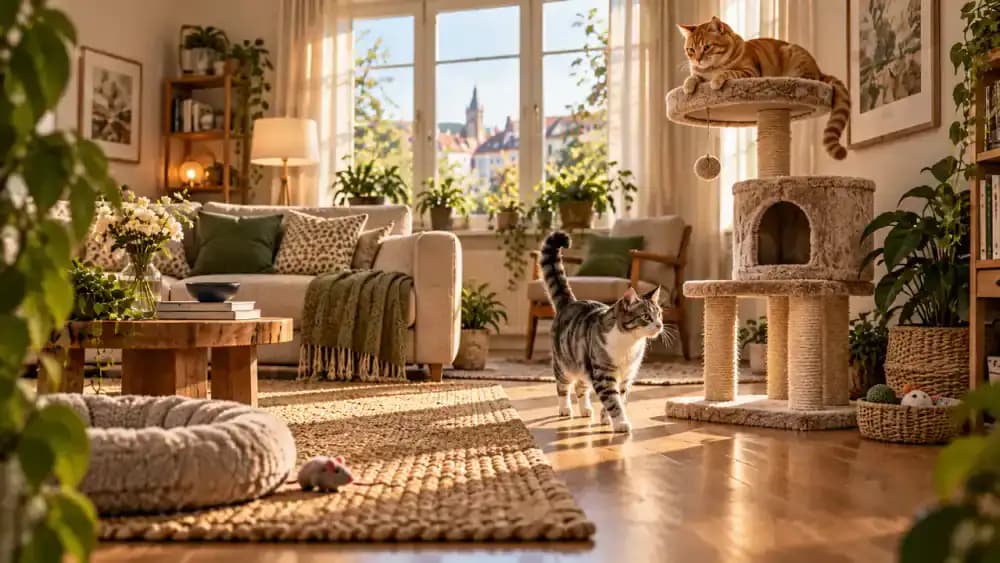
If Milo and Luna begin fighting, keep your hands away from their mouths and claws. When safe, position a large rigid cardboard panel between them to interrupt contact and guide them into separate rooms. Check for injuries afterward. Contact a veterinarian about bites, punctures, or continuing distress.
Give Both Cats Time to Recover After a Difficult Meeting
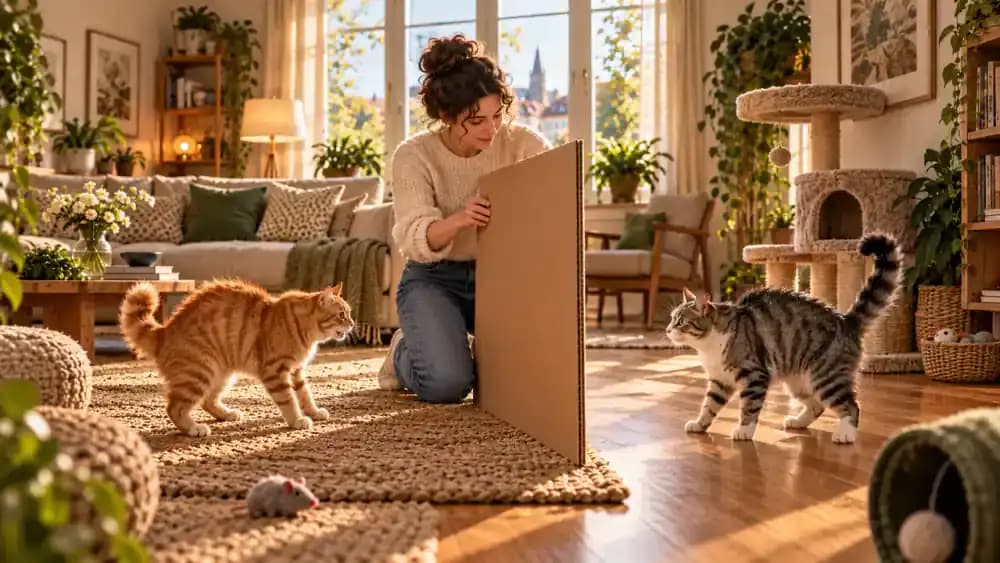
Following a tense encounter, let Luna rest in her equipped bedroom while Milo returns to his familiar living room. Avoid arranging an immediate second meeting. Restart at a comfortable scent or barrier stage. Repeated attacks, appetite changes, or litter box avoidance warrant veterinary or qualified feline behavior guidance.
Gradually Extend Calm Shared Activities
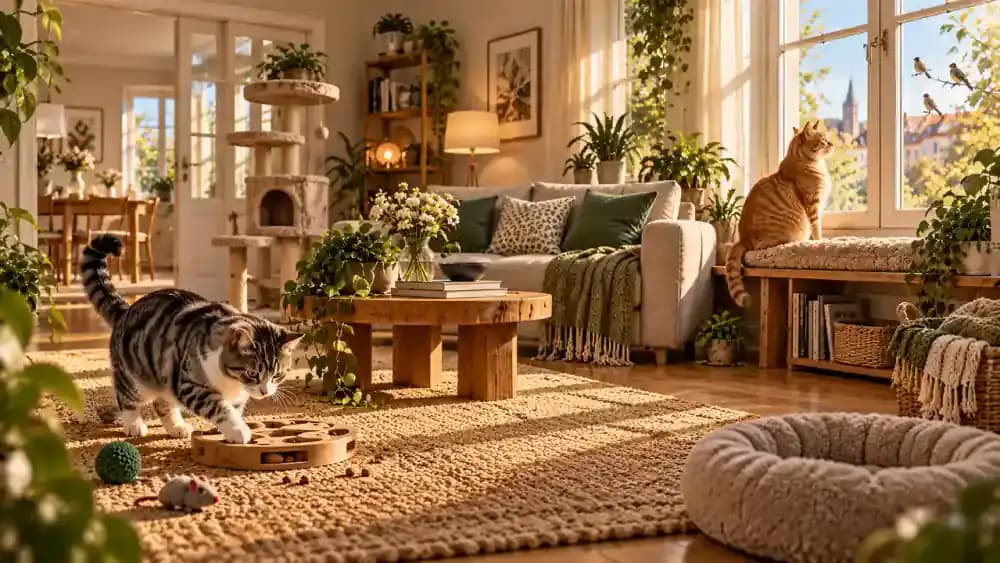
When supervised meetings remain comfortable, slowly increase their duration. Milo might watch birds from a closed window while Luna uses a puzzle feeder across the room. Independent activities are perfectly acceptable. Focus on relaxed movement, reliable escape routes, and ordinary behavior rather than expecting cuddling or mutual grooming.
Distribute Resources to Prevent Competition
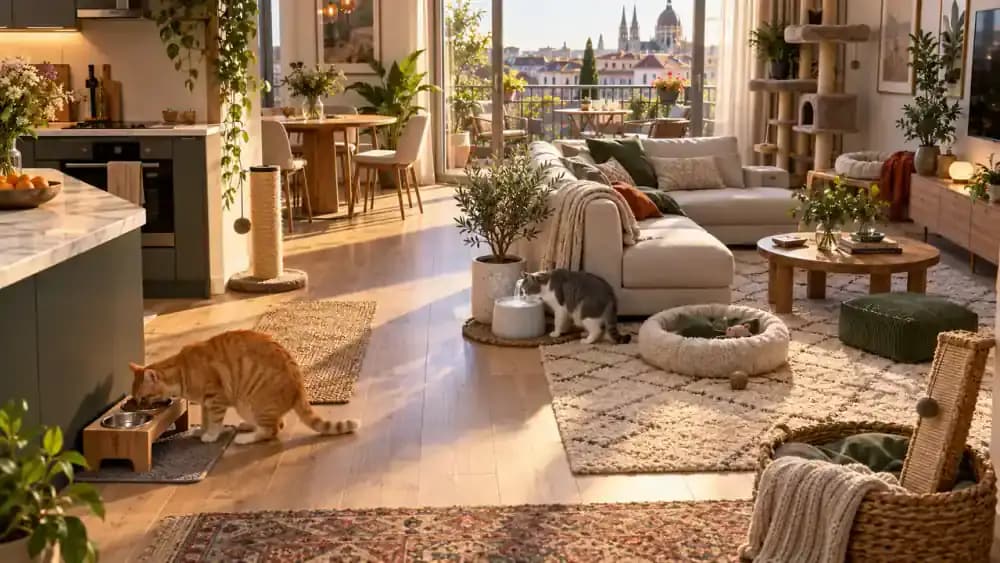
Keep separate feeding stations, water sources, beds, scratching surfaces, and litter boxes available throughout the home. Avoid placing every essential resource in a narrow hallway. Milo should not be able to control Luna's access simply by resting near a doorway. Watch for subtle blocking as well as obvious aggression.
Track Everyday Behavior Over Several Weeks
Keep notes about eating, grooming, sleeping, exploration, litter box use, and interactions. Milo should continue enjoying his usual resting areas while Luna gradually becomes comfortable throughout the home. Record increased hiding, appetite changes, spraying, or recurring confrontations. Everyday patterns reveal more than an occasional peaceful photograph.

Decide When Unsupervised Time Is Appropriate
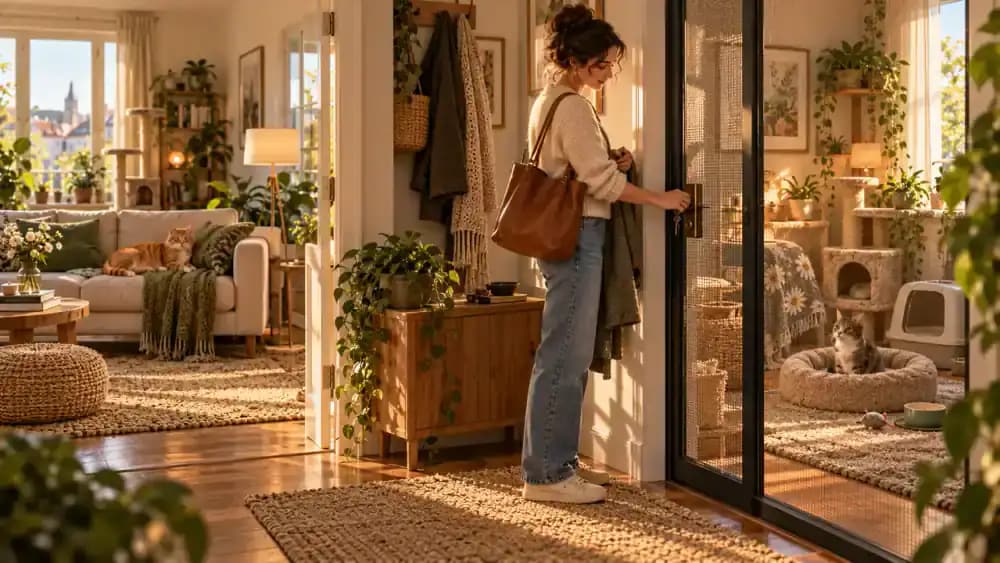
Wait for repeated consistently calm interactions before considering unsupervised access. Both cats should move freely, disengage comfortably, and reach essential resources without intimidation. If uncertainty remains, separate Luna and Milo whenever you leave home. Individual temperament determines the timeline, whether that means days, weeks, or longer.
Recognize the Difference Between Disagreement and Persistent Conflict
Luna unexpectedly turns a corner, and Milo gives a brief hiss before they both walk away. An isolated disagreement does not necessarily mean failure. What matters is whether they can disengage and resume normal activities. Persistent intimidation, injury, or major behavior changes require professional assessment, not punishment.
Accept Peaceful Coexistence as a Successful Outcome
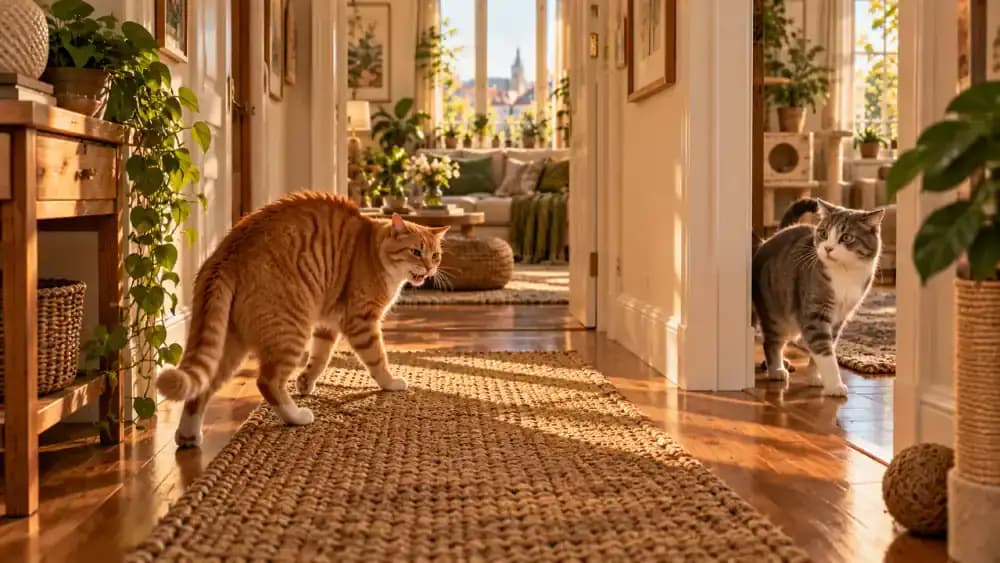
Several weeks later, Milo stretches on his favorite sofa while Luna rests comfortably on a nearby chair. Neither needs to cuddle or share a bed. They can enjoy familiar routines, move freely, and relax in the same home. That peaceful independence is a meaningful success worth protecting.

Bringing a new cat home is exciting, but your resident cat might not share your enthusiasm. Cats rely on familiar territory, predictable routines, and access to resources. A newcomer can disrupt all three.
The safest approach is to introduce cats gradually, beginning with complete separation and progressing through scent exchanges, controlled visual contact, and supervised meetings.
Meet Milo, a resident orange tabby, and Luna, a newly adopted gray and white domestic shorthair. Their introduction illustrates how ordinary adult cats can become comfortable sharing a home without being forced into friendship.
There is no universal timetable. Some cats adjust relatively quickly, while others need weeks or longer. Your job is to watch their behavior, protect their choices, and advance only when both are ready.
Where people go wrong
Introducing Cats Face-to-Face Immediately. An unexpected meeting can trigger fear and territorial defensiveness. Begin with separate rooms and gradual scent exposure instead.
Forcing Nose-to-Nose Greetings. Holding cats together removes their ability to retreat. Allow voluntary approaches only after both tolerate controlled visual contact.
Moving Too Quickly After One Good Session. One calm encounter does not establish lasting comfort. Look for repeated relaxed behavior before increasing exposure.
Using an Insecure Baby Gate. An agile cat may climb or bypass a lightweight gate. Check that any visual barrier prevents escape and unwanted contact.
Punishing Hissing or Growling. These behaviors communicate discomfort. Scolding can increase fear and create additional negative associations.
Placing All Resources Together. Shared feeding stations or tightly clustered litter boxes can increase competition. Distribute essentials across accessible locations.
Ignoring Quiet Intimidation. Doorway blocking, stalking, and resource guarding may create stress without an obvious fight. Observe daily movement patterns.
Leaving Cats Alone Together Too Soon. Supervised calmness does not automatically establish unsupervised safety. Continue separation during absences until interactions are consistently peaceful.
Questions people ask
Some introductions progress over several days, while others require weeks or longer. Advance according to both cats' behavior rather than a fixed timetable.
Fixed it?
Get one guide like this every Thursday.