How to Help Your Dog Practice Being Alone Gradually
Help your dog feel more comfortable spending time alone with gentle, gradual training. Learn how to recognize stress signals, practice short separations, use enrichment, and build confidence without rushing the process.
What you’ll need
Tap to tick things off before you start.
Why Alone Time Takes Practice
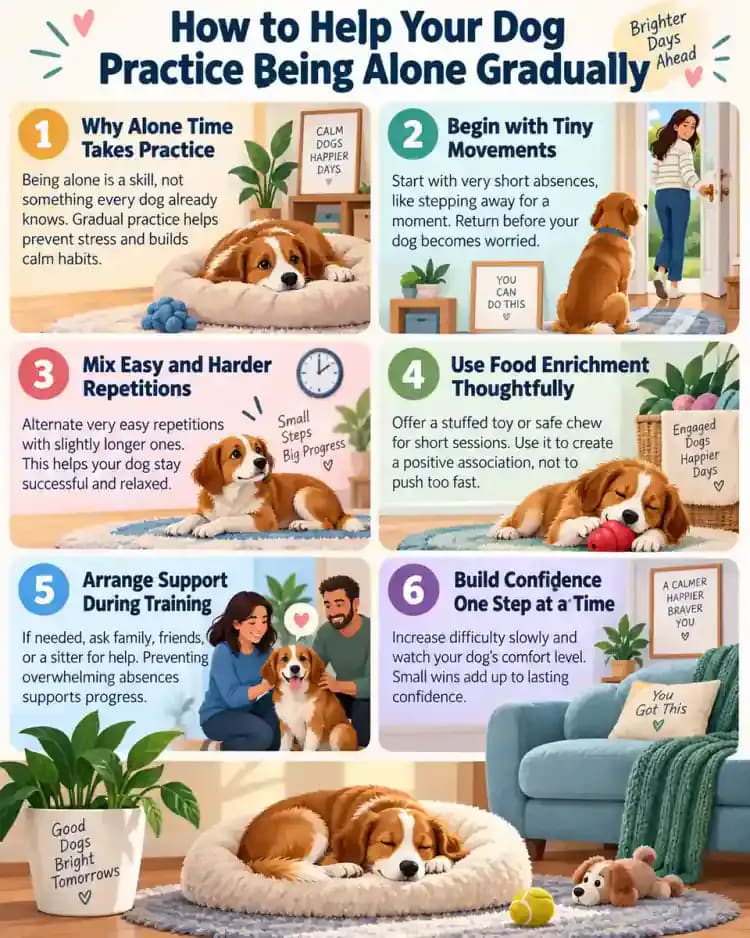
Learning to feel comfortable alone takes time, especially for dogs who become uneasy when someone leaves. Instead of expecting your dog to tolerate long absences immediately, begin with brief, manageable separations. Watch their body language closely and increase the duration only when they remain comfortable. Small successes help build confidence and establish a predictable routine.
Identify Your Dog's Starting Point
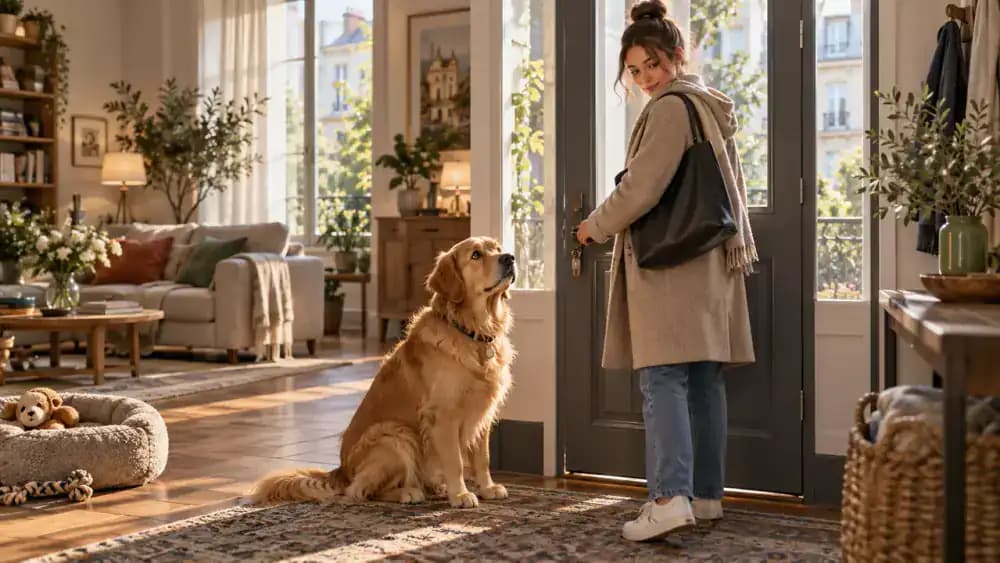
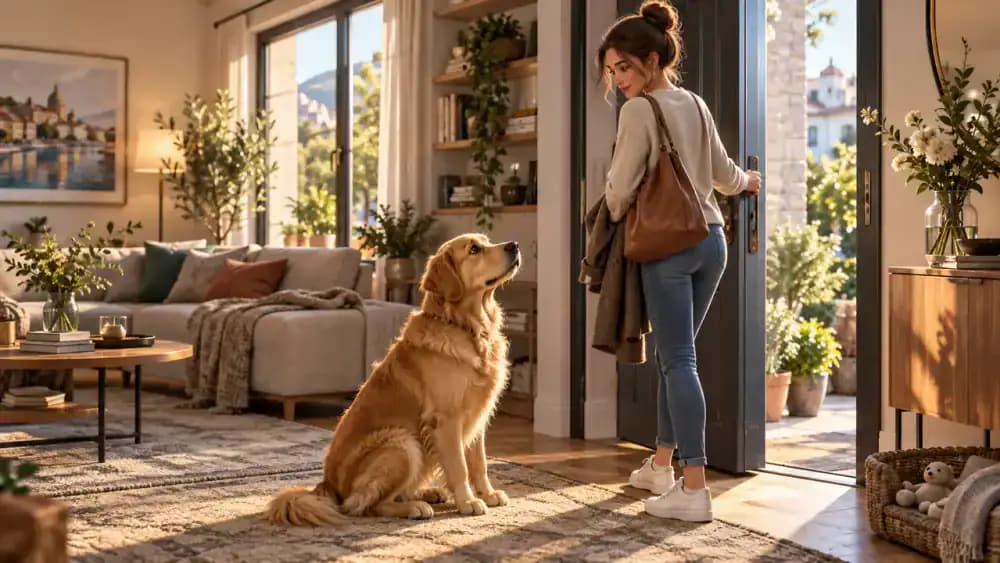
Before practicing separations, observe how your dog responds to everyday departure cues. Notice whether they follow you closely, abandon toys, watch your movements, or become restless when you reach for your coat. Some dogs remain relaxed until a door closes. These observations help you choose a starting point without deliberately pushing your dog into distress.
Use a Camera to See What Happens
Position a pet camera or spare phone where it captures your dog's resting area and the exit. During brief, safe separations, review the recording to understand what happens when you are out of sight. Watch for pacing, persistent barking, drooling, door scratching, or escape attempts. If significant distress appears, stop the exercise and seek professional guidance.

Recognize Early Stress Signals
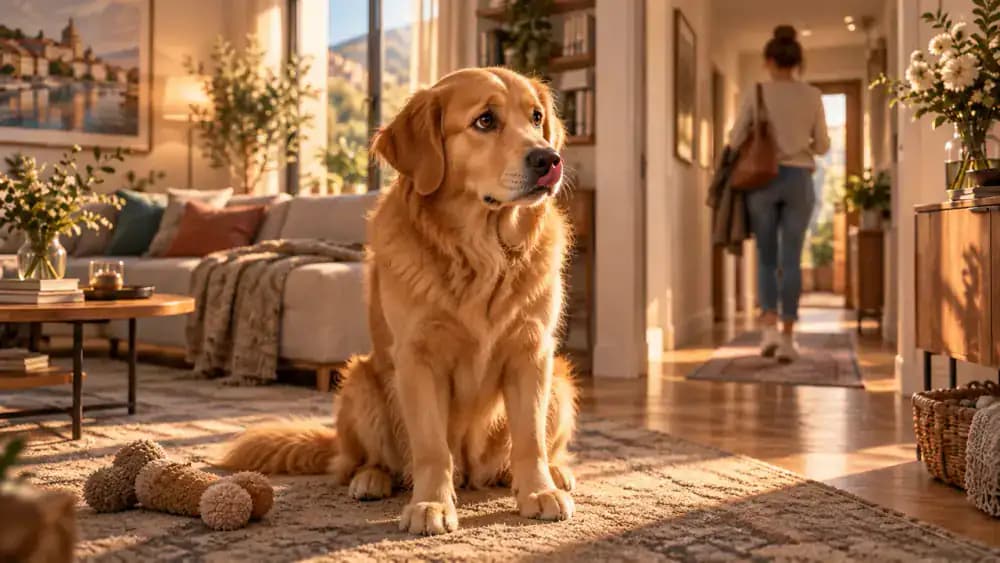
Stress is not always obvious. Your dog might suddenly become still, stare toward the hallway, lick their lips, yawn repeatedly, or stop enjoying a favorite chew. Consider these behaviors together rather than interpreting one gesture alone. If they consistently appear when you move away, shorten the separation or return to an easier exercise.
Create a Comfortable Resting Place
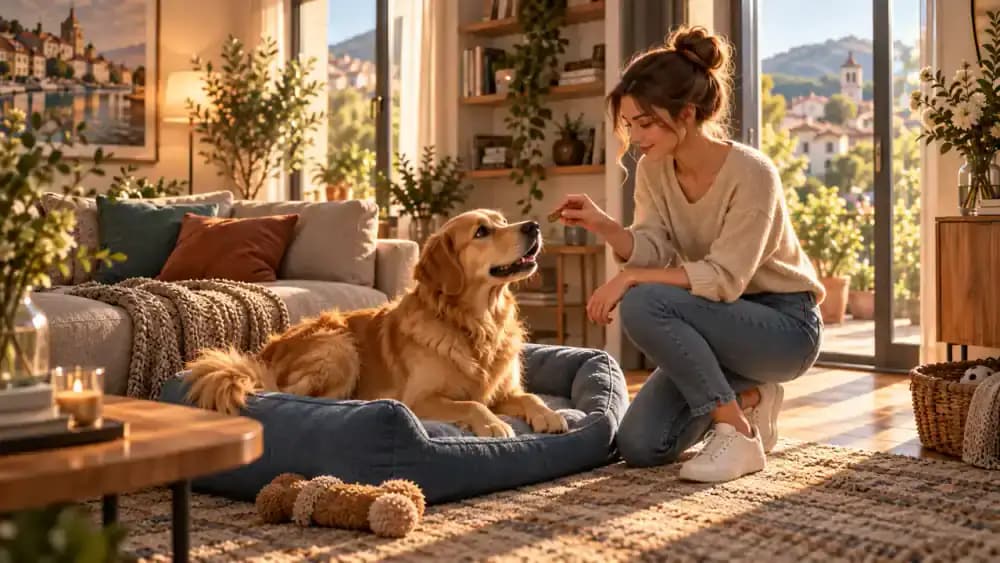
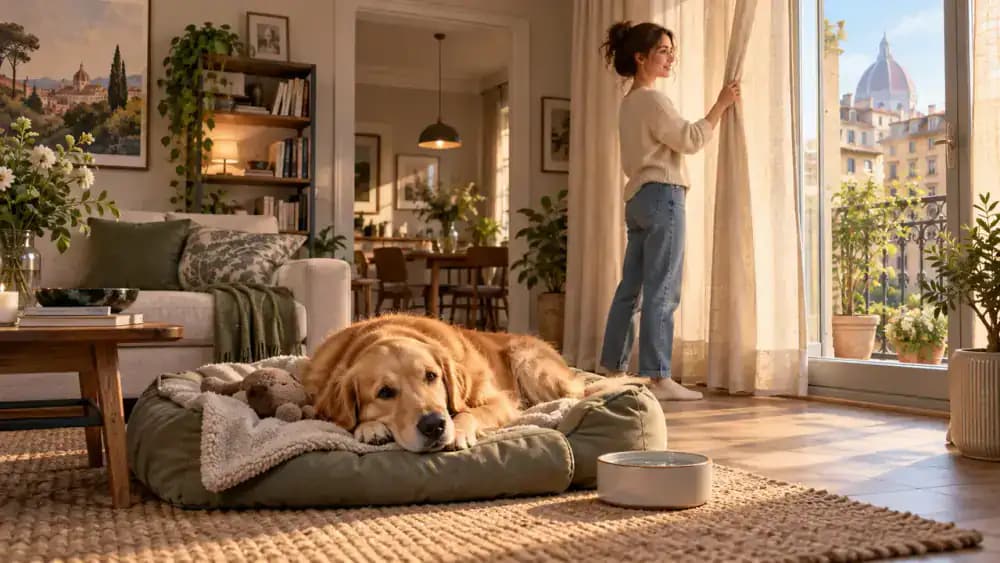
Choose a familiar resting spot your dog already enjoys, such as a soft bed near the sofa. Add a favorite blanket or toy and allow them to settle voluntarily. Reward relaxed behavior with gentle praise or a small treat without requiring them to stay. Keep this space associated with everyday comfort rather than confinement or departures.
Begin with Tiny Movements
Start practicing independence while you are still at home. Sit near your dog as they relax on their bed, then slowly stand and sit again. If they remain comfortable, take one small step away before returning. Repeat these ordinary movements calmly, helping your dog learn that every change in your position does not mean you are leaving.
Make the Exercise Easier When Needed
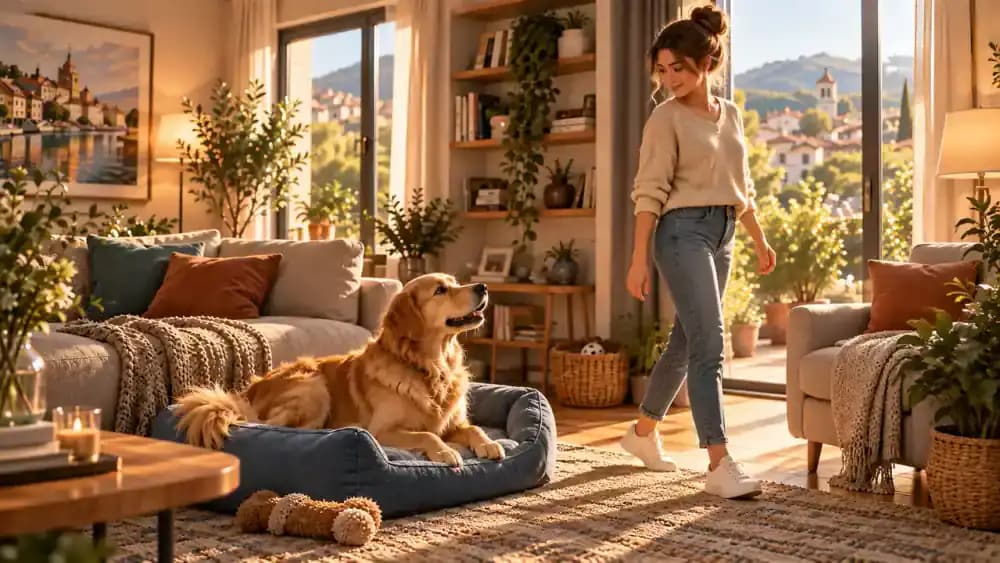
If your dog jumps up whenever you stand, reduce the difficulty instead of pushing forward. Try shifting your weight in the chair or reaching toward a nearby book without getting up. Offer a small treat when your dog stays relaxed and willingly accepts food. Build confidence through easy repetitions before attempting larger movements or greater distances.

Walk Away and Return
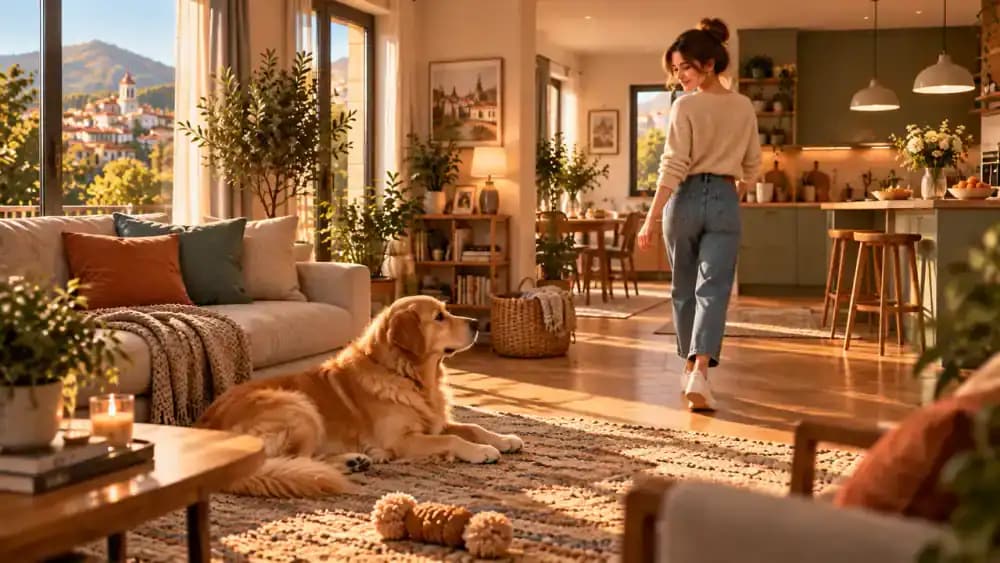
Once your dog comfortably handles small movements, try walking a few steps toward another part of the room. Return before they show signs of uneasiness. Begin with just one step if necessary, gradually increasing the distance over several sessions. Practice a few successful repetitions, then finish while your dog is still relaxed and comfortable.
Introduce Interior Doorways
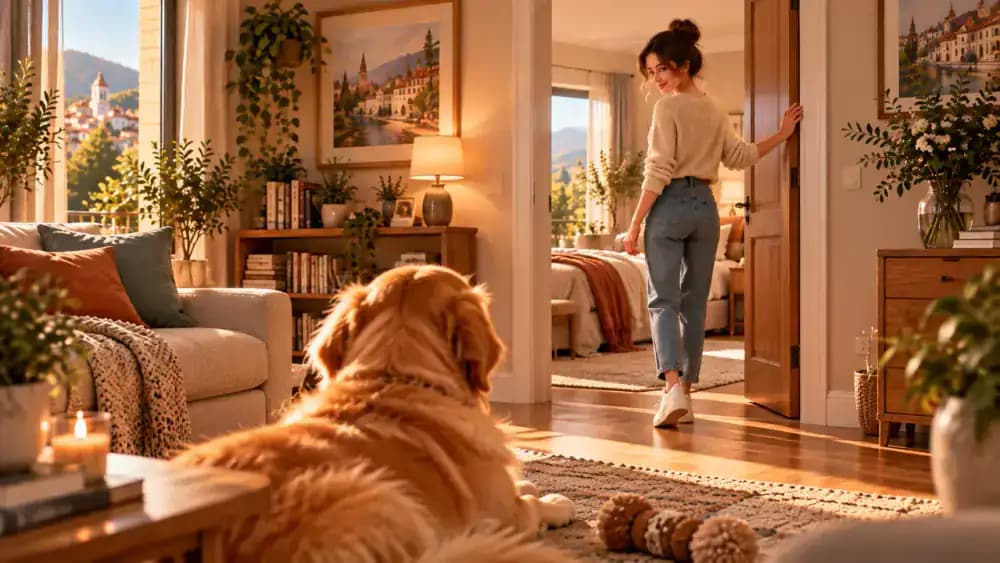
Interior doorways help your dog gradually adjust to losing sight of you. Begin by approaching an open doorway, touching the frame, and returning. When your dog remains comfortable, briefly step around the corner before coming back. Leave the door open initially, introducing partial closure only after your dog consistently handles these short disappearances without becoming unsettled.
Practice Seconds, Not Minutes
Begin with extremely brief moments out of sight, perhaps one or two seconds, and return while your dog remains settled. A stopwatch can help you track duration, but your dog's comfort determines the pace. If they whine, become tense, or follow you urgently, make the next attempt shorter and easier. Increase duration gradually, without rushing progress.
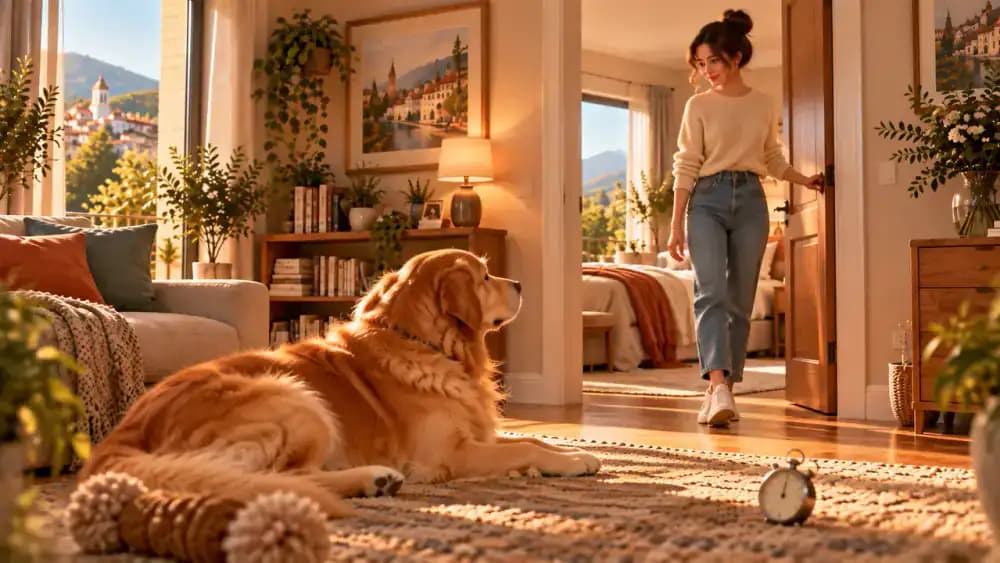
Keep Reunions Calm and Natural
When you return, greet your dog warmly but keep the moment low-key. Use your normal voice, move naturally, and settle into your usual routine. Avoid dramatic celebrations that make your return feel like a major event. Never scold your dog for barking, following you, or having accidents. Instead, consider whether your training needs adjusting.
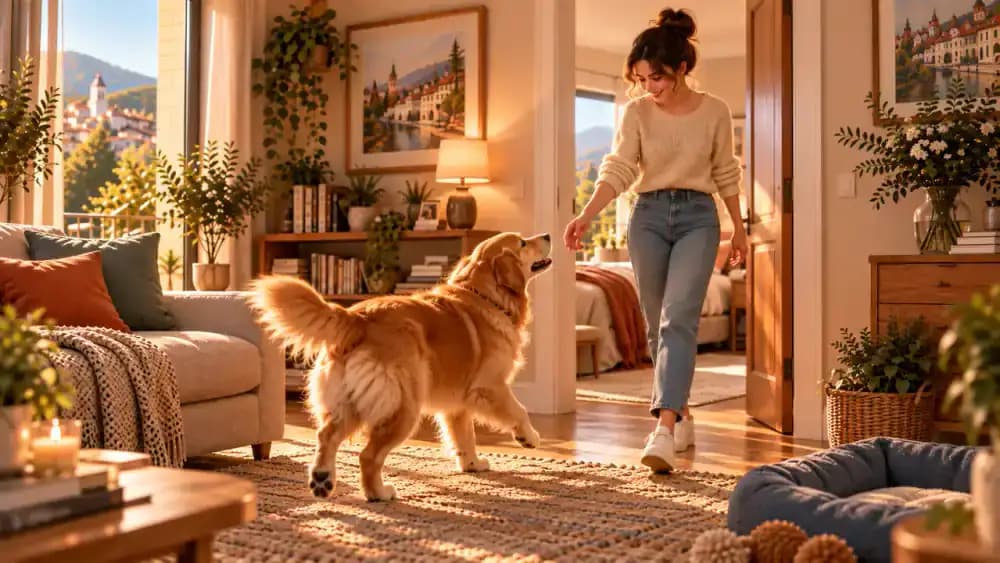
Mix Easy and Harder Repetitions
Avoid increasing your absence every single time. If your dog comfortably handles two seconds apart, follow that success with an easier one-second practice. Occasionally stay visible in the doorway instead of disappearing completely. Alternate familiar, comfortable exercises with slightly harder ones, gradually building confidence. If your dog becomes unsettled, return to a duration that feels manageable.
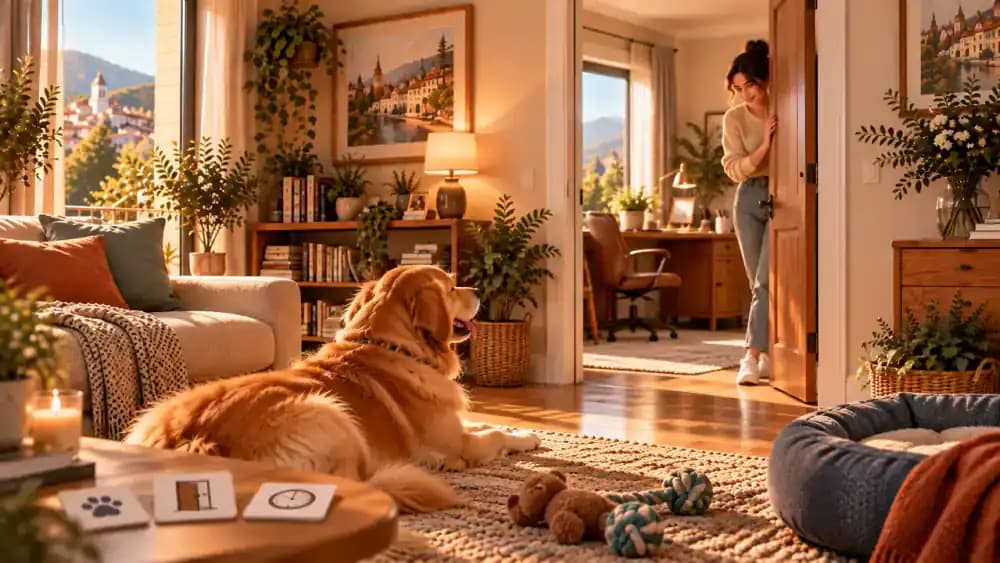
Introduce the Front Door
Once your dog handles indoor separations comfortably, begin practicing near the front door. Walk toward the entrance, briefly touch the handle, and return without leaving. Repeat until your dog remains relaxed, then introduce gently opening and closing the door. Pay attention to reactions around shoes, coats, keys, and familiar departure sounds, making each exercise easier when necessary.
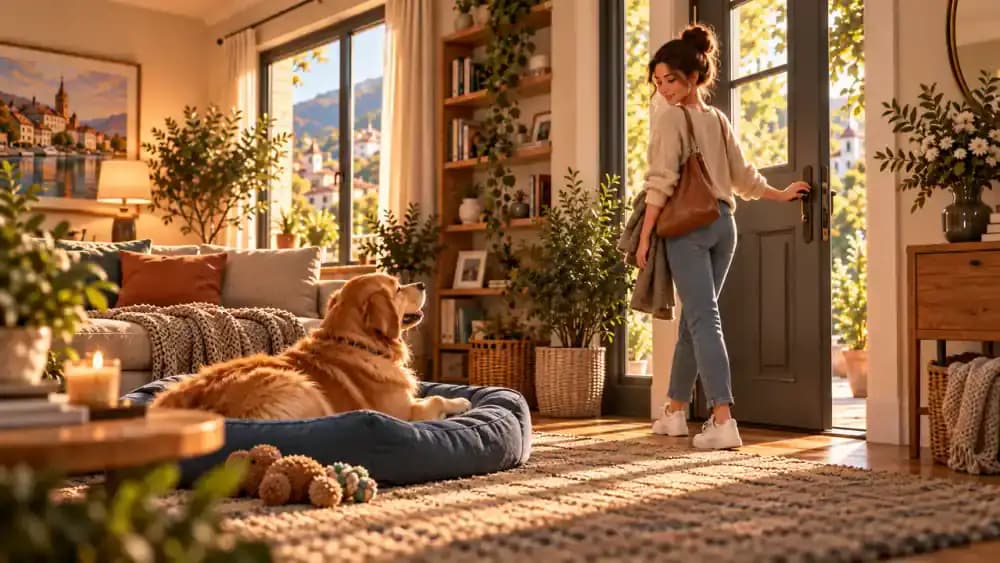
Make Departure Cues Less Predictive
Help your dog learn that everyday departure signals do not always mean you are leaving. Pick up your keys, set them down, and continue reading. At another time, put on your shoes and stay home. Practice these actions separately while your dog remains comfortable. Over time, familiar objects and routines may become less closely associated with being alone.

Combine Familiar Training Steps
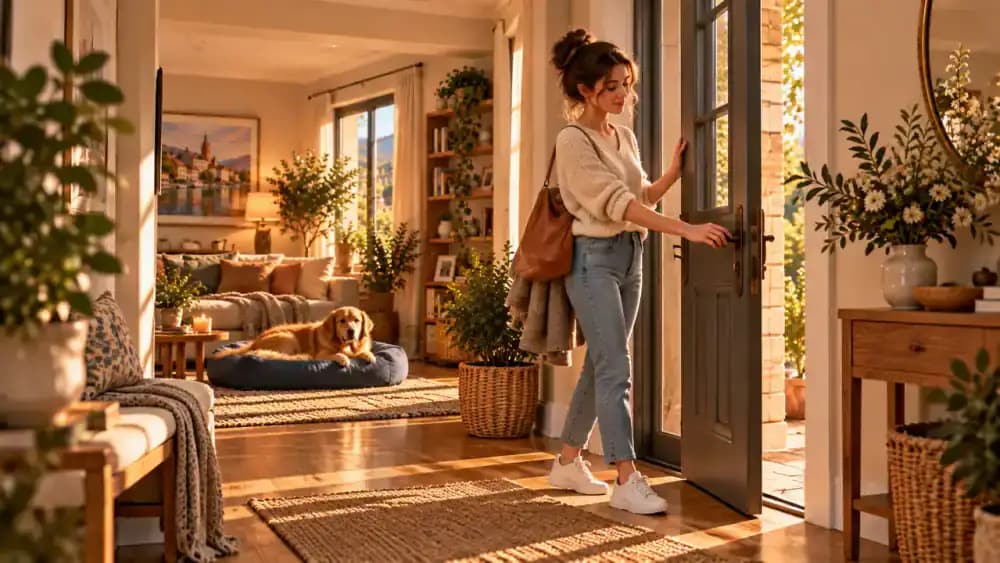
When individual exercises feel easy, begin combining them into a simple departure routine. Put on your shoes, approach the front door, open it gently, and return to the living room. If your dog remains relaxed through several attempts, try stepping outside very briefly. If tension appears, separate the actions again and rebuild comfort before progressing.
Try Your First Real Exit
Start with an extremely brief exit, even if it lasts just one second. Step outside your front door and return before your dog shows signs of discomfort. A pet camera can help you monitor subtle changes in behavior. Avoid extending a successful attempt too quickly. Short, comfortable experiences build confidence more effectively than pushing boundaries.

Increase Duration Carefully
Gradually increase how long you stay outside, using small, flexible increments rather than a rigid schedule. Mix shorter, easier departures with slightly longer attempts to reinforce comfort. Remember that five successful seconds do not guarantee five comfortable minutes. Review your dog's posture and behavior through a camera, adjusting the duration whenever signs of discomfort appear.

Use Food Enrichment Thoughtfully
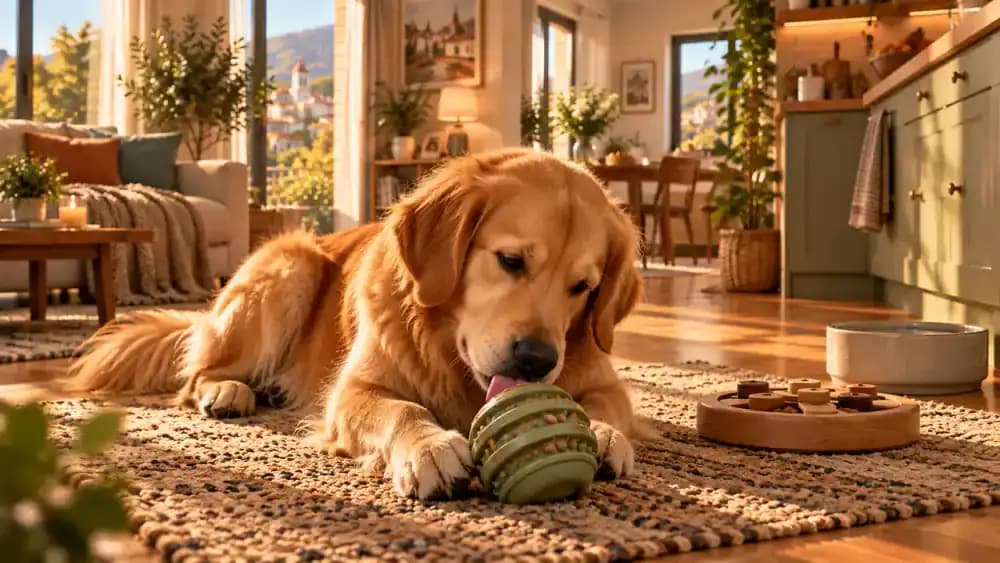
Offer a dog-safe food puzzle or suitable chew during an easy practice session if your dog enjoys enrichment activities. Select products appropriate for their size, chewing strength, and eating habits. Some dogs stop eating when uncomfortable, while others continue despite stress. Always evaluate overall body language instead of assuming that eating or remaining quiet means your dog feels secure.
Support Training with a Daily Routine
Establish a predictable daily routine that includes bathroom breaks, gentle walks, opportunities to sniff, and sufficient rest. Schedule alone-time practice when your dog is comfortable and the household is relatively quiet. Avoid using intense exercise to exhaust your dog before departures. Meeting physical needs supports learning, but fatigue alone does not eliminate separation-related discomfort or fear.

Make the Environment Comfortable
Create a peaceful resting area with comfortable bedding, fresh water, appropriate ventilation, and a consistent room temperature. Partially close curtains if outdoor activity or bright sunlight creates distractions. Reduce avoidable noises when possible, but preserve familiar surroundings. Never introduce sudden confinement in a crate or small room if your dog becomes uncomfortable when enclosed or separated.
Understand Crate Training Limitations
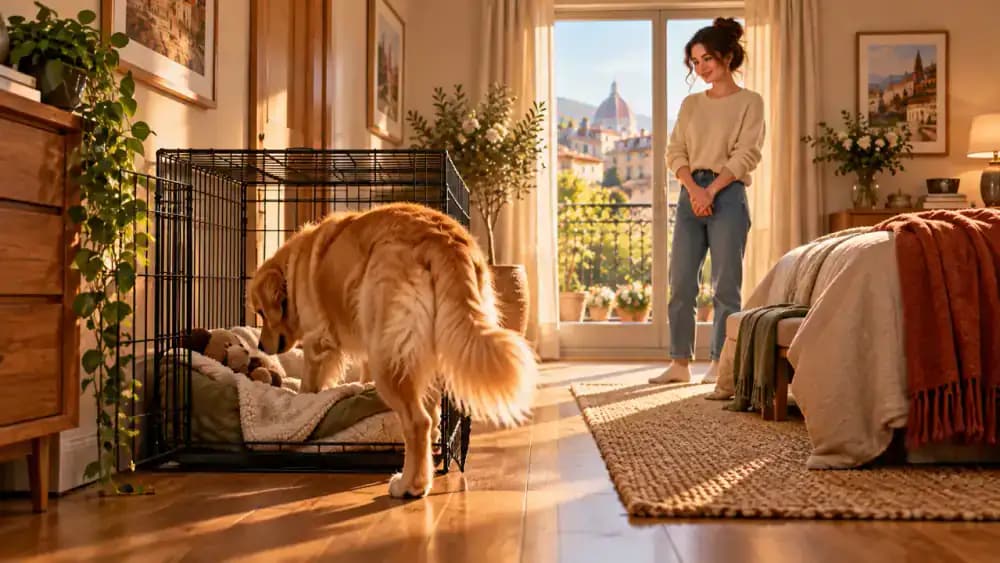
A crate should be a comfortable, familiar space your dog chooses to enter, not a way to contain distress. Introduce it separately with treats, soft bedding, and an open door. Never use confinement to manage panic or destructive behavior without addressing the underlying distress. Some dogs feel safer with more room to move.
Know When to Stop an Exercise
End a practice session if your dog shows escalating distress, such as frantic pacing, repeated howling, trembling, prolonged panting without heat, or intense scratching at the door. Return calmly and make the next exercise easier. Do not wait for barking to stop when your dog is clearly panicking. Progress depends on practicing within comfortable limits.
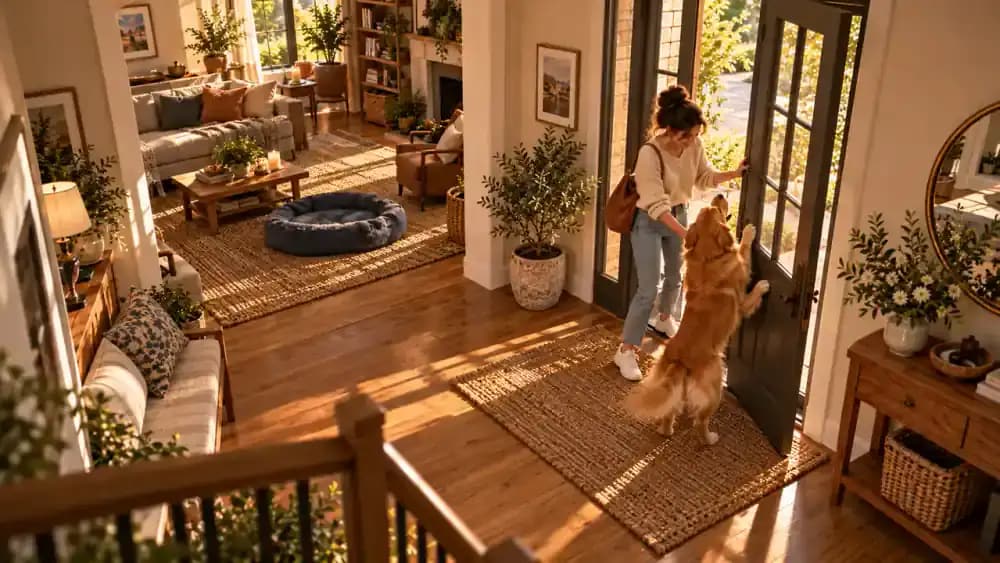
Recover from a Difficult Session
A difficult session means the exercise needs adjusting, not that your dog has failed. Review your camera footage to identify the earliest subtle change, such as a lifted head, stiffened posture, or sudden alertness. Next time, practice something easier, even just approaching the doorway. Build confidence through comfortable repetitions rather than pushing through distress.

Arrange Support During Training
Gradual training is harder when everyday obligations repeatedly leave your dog alone longer than they can comfortably manage. Arrange temporary support when possible, such as a trusted relative, familiar dog sitter, or suitable daycare. Choose care that matches your dog's temperament, since daycare is not right for everyone. Preventing overwhelming absences helps protect the progress you are building.

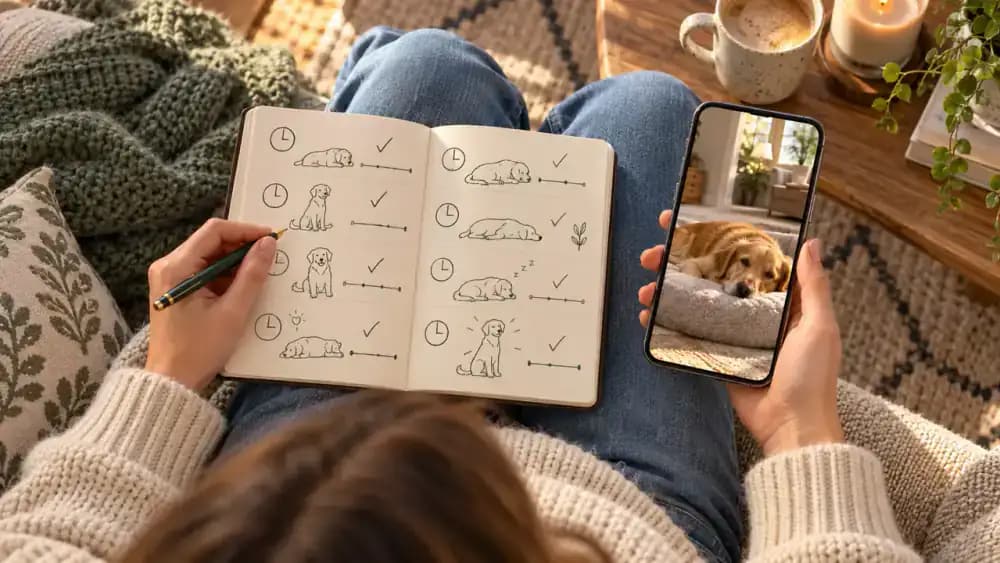
Track Progress with a Simple Log
After each exercise, record what you practiced, how long your dog remained comfortable, and what the camera showed. For example, note a three-second front-door departure with relaxed posture, followed by a comfortable one-second repetition. Include early signs of discomfort when they occur. Comparing specific observations across sessions reveals meaningful progress and helps you adjust future exercises.
Work at Your Dog's Pace
Choose several brief practice sessions when your dog seems relaxed and receptive instead of attempting one long, tiring session. End each practice while your dog is still comfortable. Progress may take days, weeks, or months. If your dog starts showing more distress, shorten the absences and adjust your approach rather than forcing progress.

Understand Different Separation Triggers
Pay attention to the specific situations that make your dog uncomfortable. Your dog might tolerate closed doors but react when a car starts, or remain calm with another family member while you leave. Practice these situations separately, using small, manageable changes. Record what happens so you can identify patterns without assuming every departure creates the same response.

Rule Out Possible Medical Problems
Contact your veterinarian if separation difficulties appear suddenly, particularly alongside changes in appetite, sleep, bathroom habits, movement, or everyday behavior. Physical discomfort, sensory changes, and other health concerns can affect how dogs respond to being alone. A veterinary examination can help identify possible contributing factors before you continue adjusting your training routine.
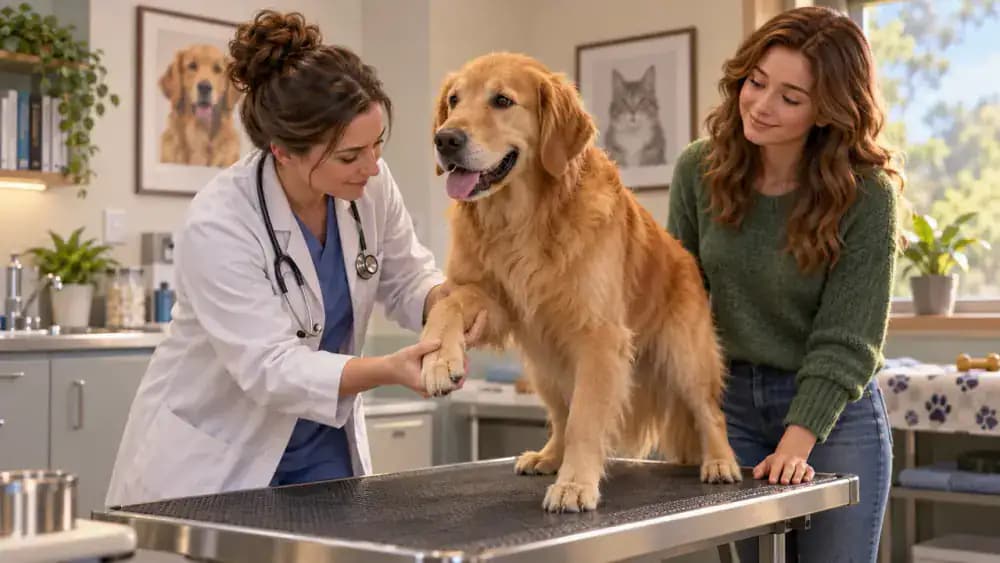
Know When Professional Help Is Needed
Seek professional guidance if your dog repeatedly shows intense distress, attempts dangerous escapes, injures themselves, or struggles almost immediately after you leave. Your veterinarian and a qualified, reward-based behavior professional can develop an individualized plan. Some dogs may also benefit from veterinarian-prescribed medication alongside training. Early support can protect your dog's welfare and prevent repeated overwhelming experiences.
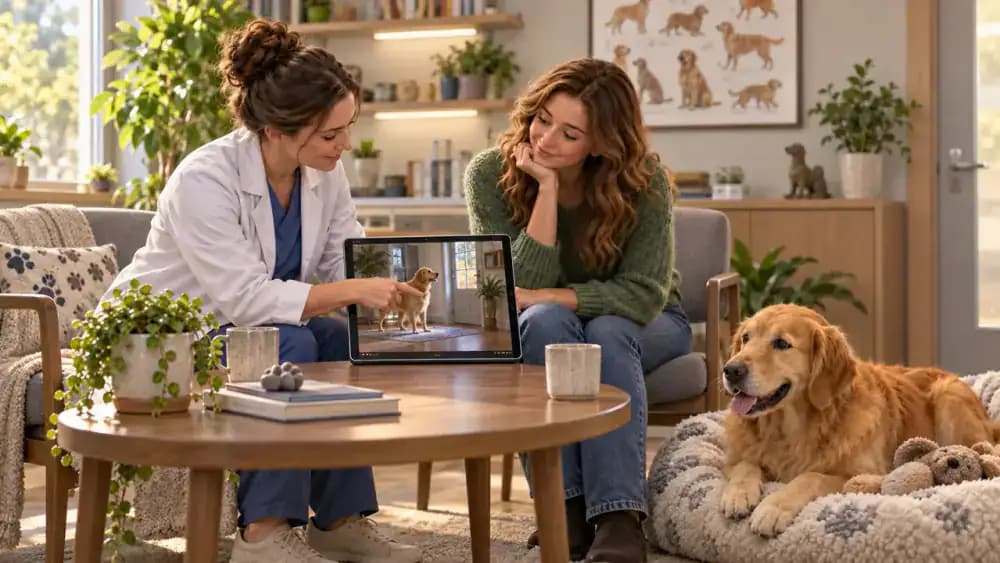
Build Confidence One Step at a Time
Help your dog learn that brief departures are safe and predictable. Begin with an absence short enough for your dog to remain comfortable, then return calmly and observe their response. Repeat successful steps before increasing the duration gradually. Over time, these manageable experiences can build confidence, making everyday separations easier without overwhelming your dog.
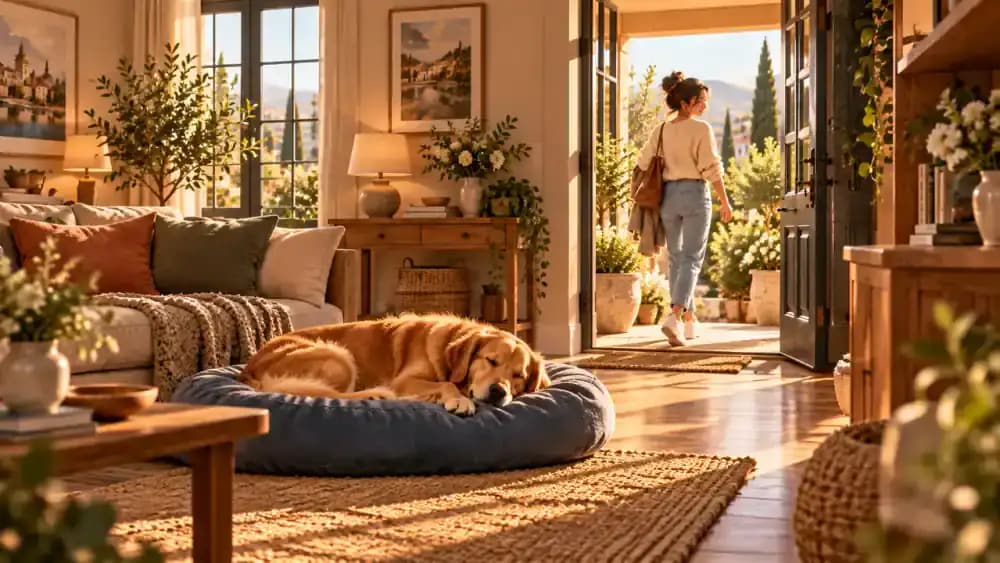
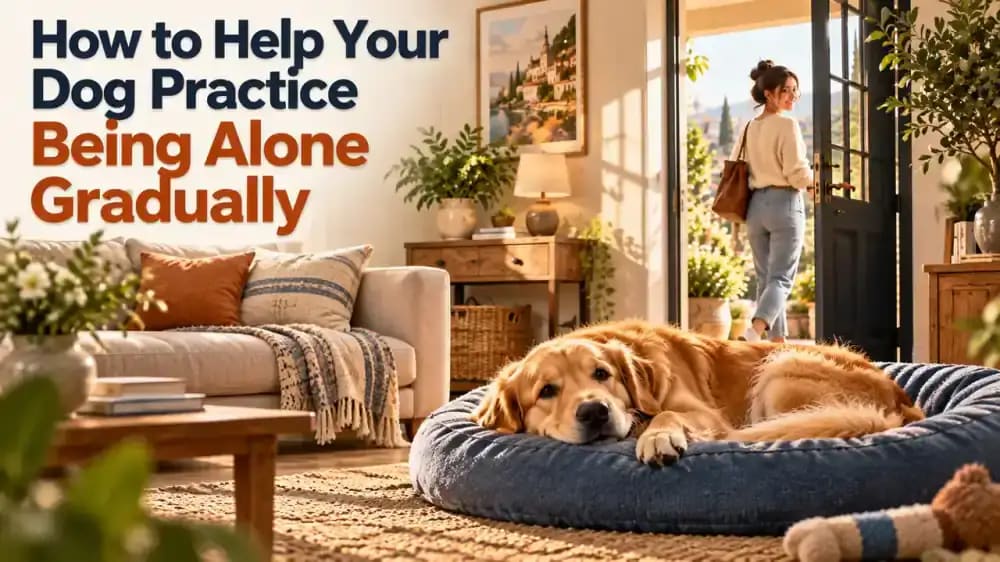
Does your dog follow you from room to room, become uneasy when you pick up your keys, or start whining before you even reach the front door? For many dogs, being alone is something they need help learning, rather than a skill that develops automatically.
Meet Bailey, a friendly golden retriever who loves spending time with his owner, Emma. Bailey feels comfortable when Emma is nearby, but everyday departures make him increasingly uneasy. Instead of expecting Bailey to suddenly handle long periods alone, Emma begins helping him experience small, manageable moments of independence.
The goal is not to teach your dog to endure fear. It is to help your dog remain comfortable while brief separations gradually become more familiar.
This guide explores how to recognize early signs of stress, create a welcoming resting area, make ordinary departure signals less alarming, and practice short periods of separation. You'll also learn how cameras, enrichment activities, and simple training records can help you understand what your dog is experiencing.
Every dog progresses differently. Some comfortably handle a few seconds away almost immediately, while others need considerable support before even a small separation feels manageable. Progress is measured by your dog's comfort, not by a deadline.
With patience, observation, and realistic expectations, you can help your dog build confidence while protecting the trust that makes your relationship special.
Where people go wrong
Increasing Alone Time Before Your Dog Is Ready. A dog who remains comfortable for ten seconds is not necessarily ready for ten minutes. Increasing separation time too quickly can trigger distress and undermine progress. Watch your dog's behavior rather than relying on a predetermined schedule. If tension appears, make future practice easier and return to durations your dog can comfortably manage.
Waiting for Panic Before Ending a Practice Session. Training should not involve deliberately waiting for your dog to panic, bark continuously, or become overwhelmed. Prolonged distress is not a necessary part of learning independence. Aim to return while your dog remains comfortable. If signs of fear develop unexpectedly, calmly end the separation, reassess the difficulty, and seek qualified support when needed.
Mistaking Silence for Relaxation. A quiet dog is not always a comfortable dog. Some dogs show stress through freezing, pacing, rigid posture, repeated swallowing, trembling, or persistent attention toward an exit. Others vocalize. Observe the entire pattern of behavior rather than judging success by the absence of barking. A camera can reveal important signals that are otherwise easy to miss.
Using a Crate as an Automatic Solution. Crates can provide a comfortable resting place for dogs that have been introduced to them positively, but confinement does not resolve separation-related distress by itself. Some dogs become more frightened when enclosed. Never force a distressed dog into a crate for independence training. Choose a safe environment based on the individual dog's behavior and preferences.
Assuming Treats Can Overcome Severe Distress. Food enrichment can make calm practice more enjoyable, but it cannot reliably override significant fear. Some dogs stop eating when distressed, while others finish a treat and become upset afterward. Treats should support a comfortable experience, not distract your dog through an absence that is already too difficult. Monitor behavior before, during, and after enrichment.
Practicing Only When You Need to Leave. If every separation happens when you are rushing to work or running errands, you may have little control over its duration. Independence training works better when practice opportunities can remain brief and flexible. Arrange assistance for necessary longer absences whenever possible, especially if your dog currently struggles. Avoid repeatedly exposing your dog to overwhelming departures.
Ignoring Changes in Behavior or Physical Health. Not every change in alone-time behavior is purely a training issue. Pain, illness, age-related changes, and other factors may affect how a dog responds to separation. Do not assume you know the cause. When distress develops suddenly, becomes severe, or accompanies physical symptoms, consult your veterinarian before intensifying training or changing confinement routines.
Expecting Every Dog to Follow the Same Timeline. Progress rarely follows a perfectly straight line. Your dog might manage a longer absence one day and need an easier session the next. Sleep, environmental noise, changes in routine, and previous experiences can influence comfort. Record patterns, adjust expectations, and avoid comparing your dog with others. Consistent emotional safety matters more than hitting arbitrary training milestones.
Questions people ask
There is no reliable universal timeline. Some dogs become comfortable with short separations relatively quickly, while others require weeks or months of carefully managed practice. Dogs experiencing significant separation-related distress may need professional assistance and a more individualized plan. Measure progress through relaxed behavior and successful repetitions instead of expecting a specific duration by a particular date.
Fixed it?
Get one guide like this every Thursday.