How to Help Your Cat Feel More Comfortable in a Carrier
Help your cat build a calmer relationship with their carrier through gradual home exposure, rewards, safe handling, car practice, and thoughtful travel preparation.
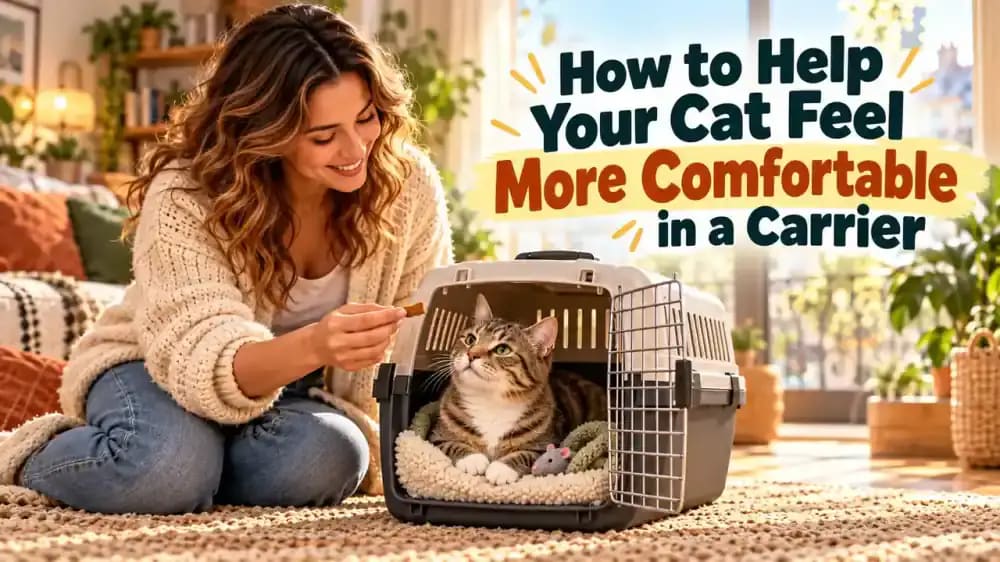
What you’ll need
Tap to tick things off before you start.
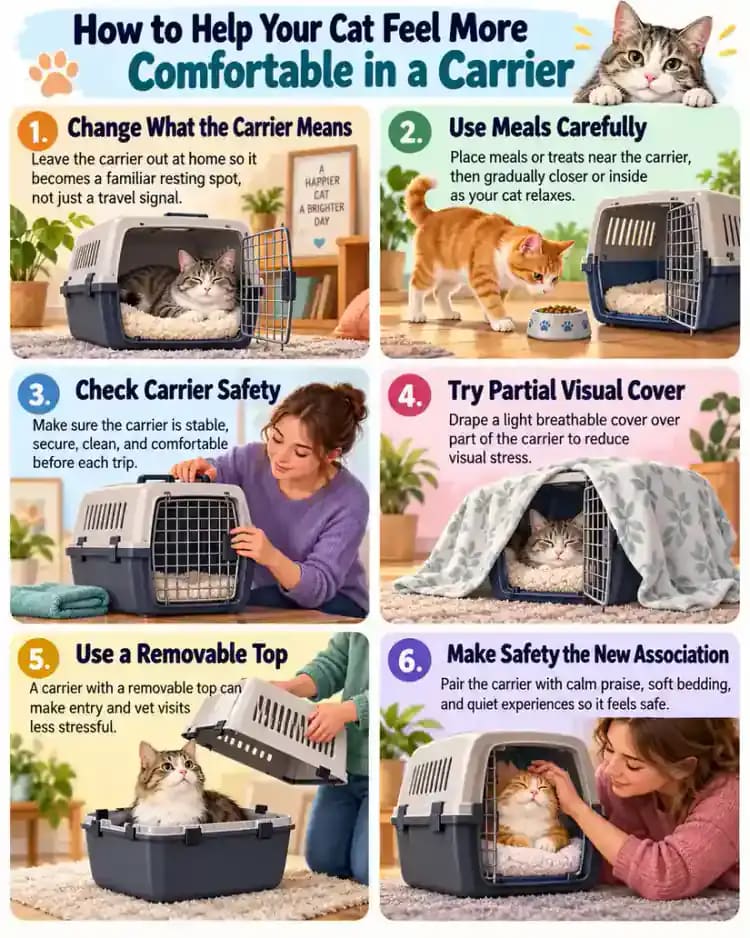
Change What the Carrier Means
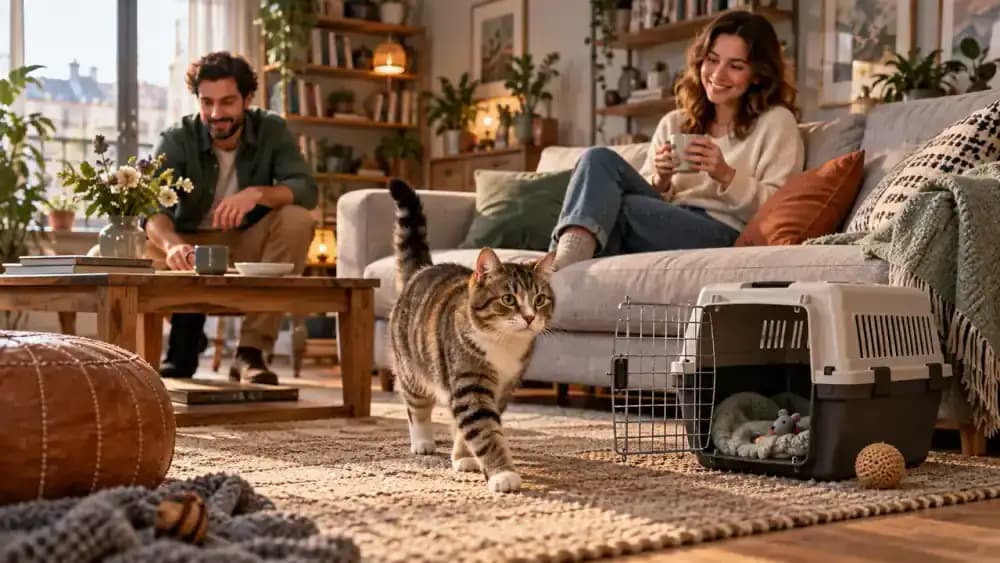
Do not let the carrier appear only when something stressful is about to happen. Leave it out during ordinary home life so your cat can walk past it, sniff it, rest nearby, and discover that its presence does not automatically predict a trip. Familiarity can gradually change the carrier's meaning.
Choose a Permanent Location
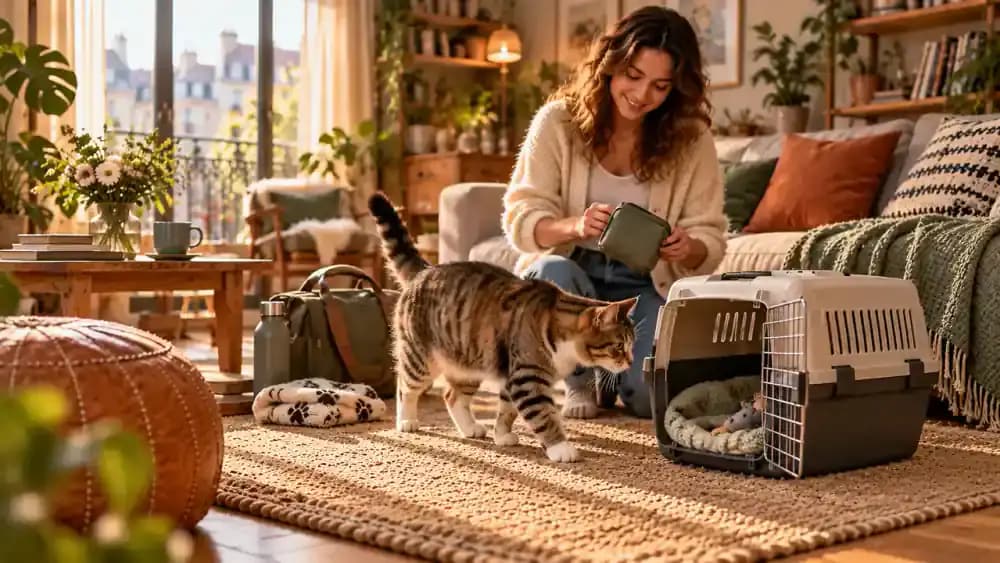
Place the carrier in a quiet, convenient area such as a living room, bedroom, or home office corner. Secure the door fully open so it cannot swing unexpectedly. Keeping the carrier in one accessible location helps it become part of the room rather than an object that suddenly appears before travel.
Add Familiar Bedding
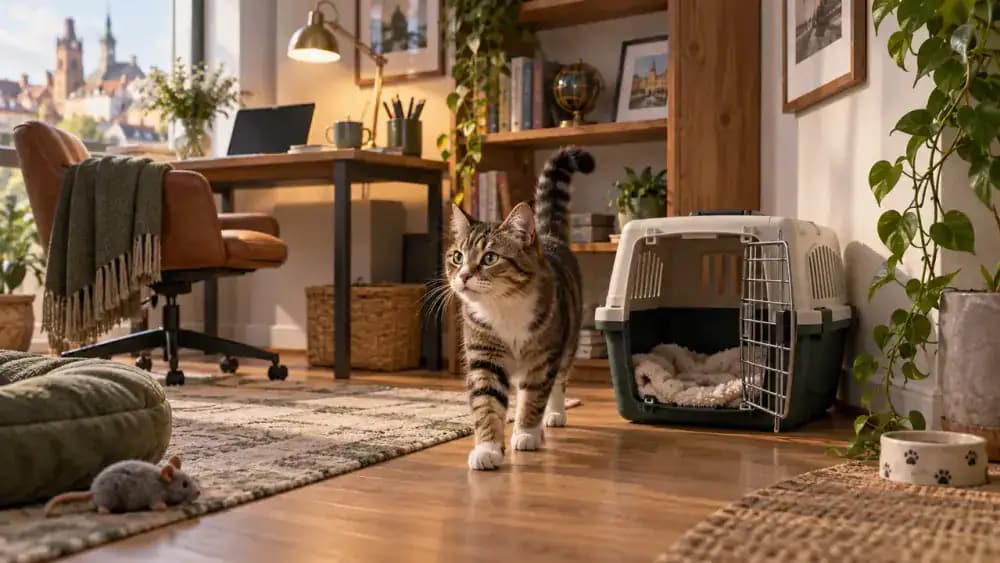
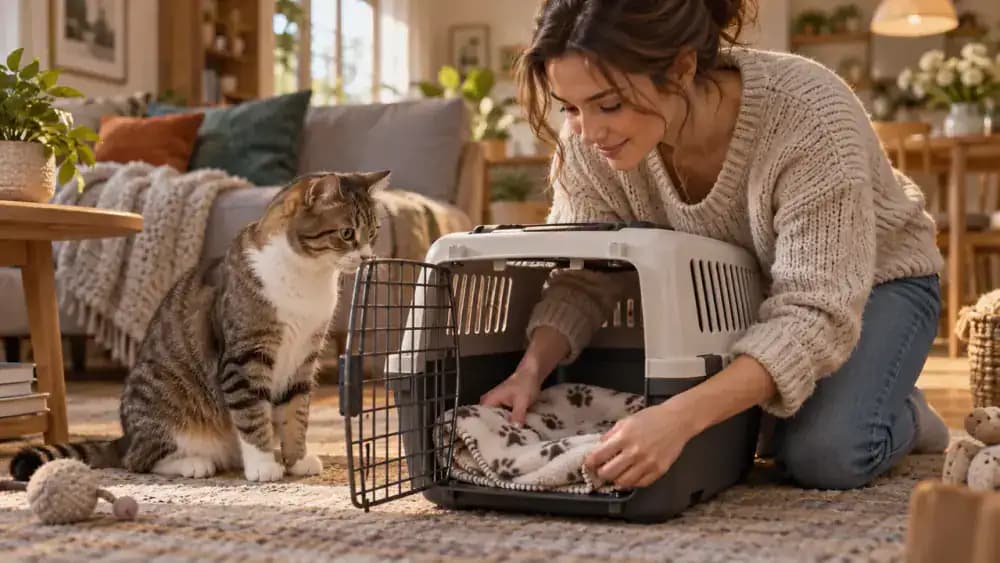
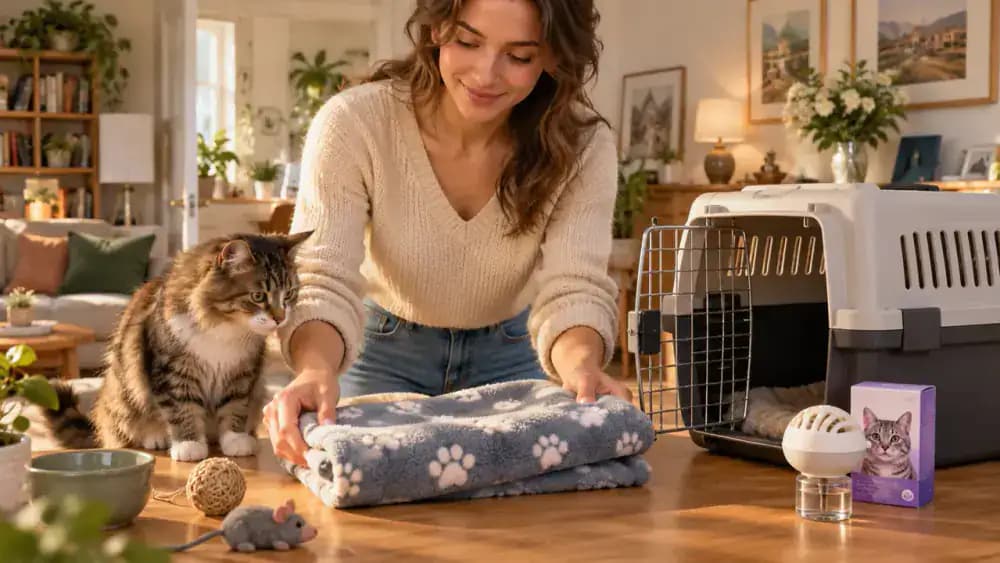
Put a thin blanket, towel, or washable pad inside, ideally something that already smells like home. Keep the interior simple rather than overfilled. Your cat should still have enough room to turn, settle, and rest comfortably, while the bedding remains easy to remove and clean when necessary.
Start From a Comfortable Distance
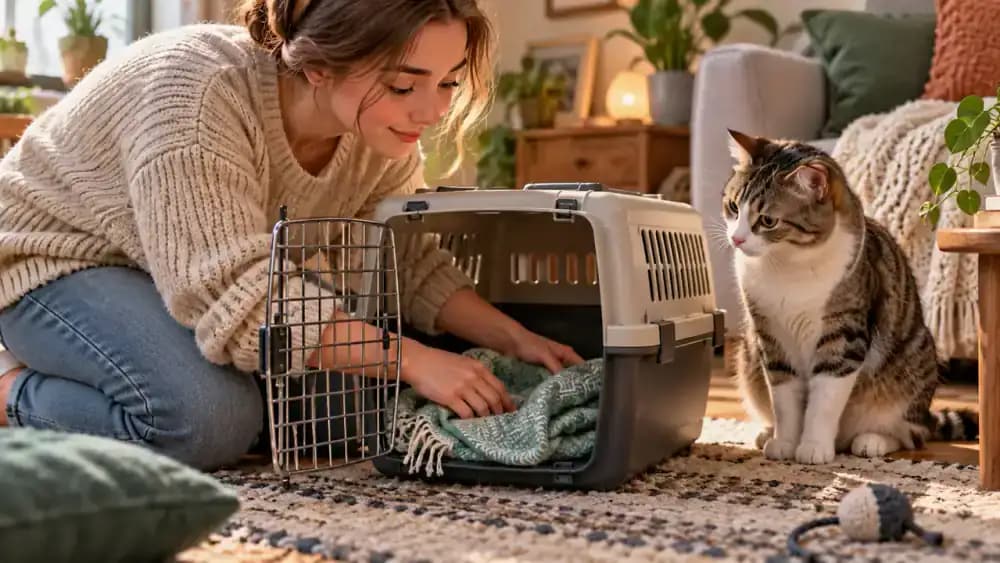
If your cat avoids the carrier, begin farther away. Place treats several feet from it and let your cat approach voluntarily. Across later sessions, gradually move the rewards closer. Avoid chasing, pushing, or placing the cat inside before they are ready, because voluntary investigation is the foundation of calmer progress.
Move Rewards Inside Gradually
Once approaching the carrier is easy, place a favorite treat beside the entrance. Later, move it just inside, then gradually farther toward the back. Keep every session brief and relaxed. Your cat should learn that entering can lead to something pleasant while leaving remains possible whenever they choose.
Use Meals Carefully
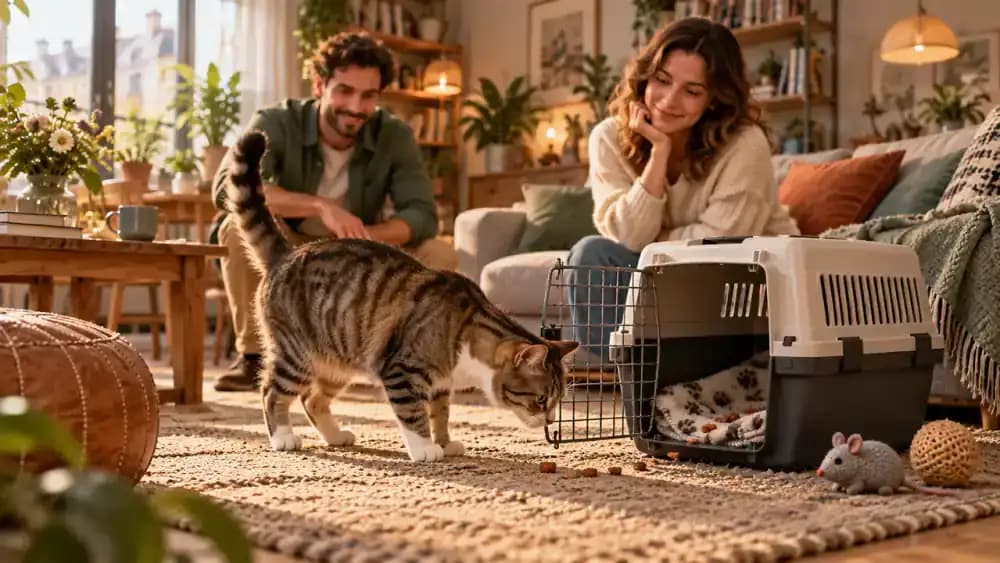
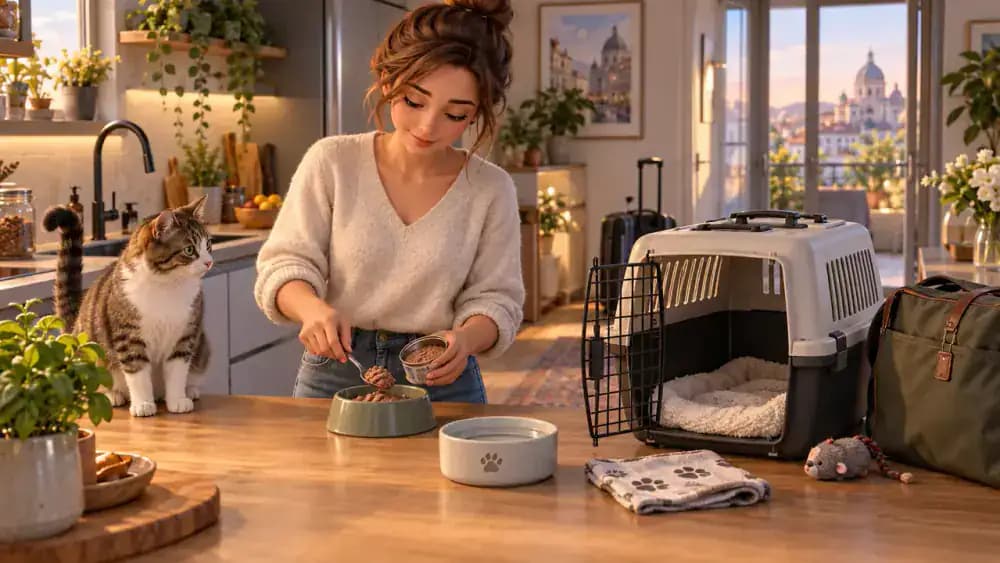
Food can create another positive association when your cat is already reasonably relaxed around the carrier. Start the bowl nearby and move it closer over multiple meals. Some cats may eventually eat just inside the doorway. If hesitation appears, return the bowl to the last distance that felt comfortable.
Turn the Carrier Into Part of Play
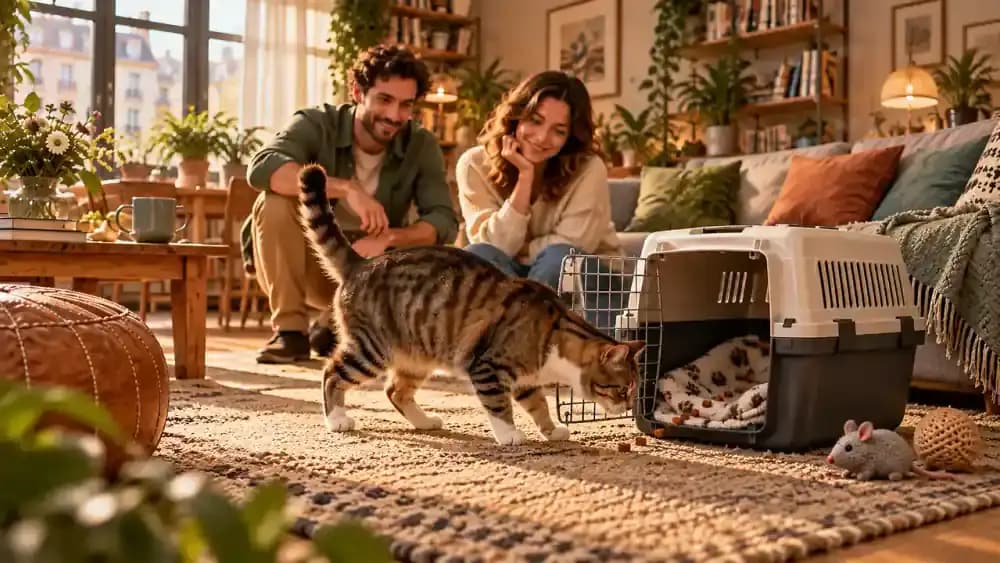
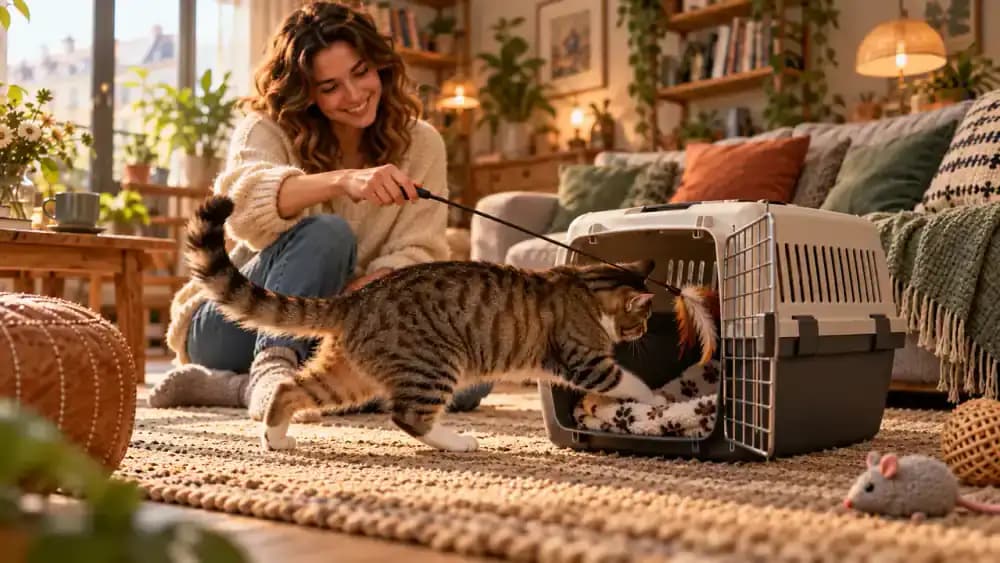
Use a wand toy to create light, voluntary play around the carrier. Guide your cat past the sides, near the entrance, or briefly inside while keeping the door open. Never use play as a trick for suddenly trapping the cat. End the game while your cat is still enjoying it.
Keep Your Behavior Normal
Move and speak normally whenever the carrier is nearby. Avoid sudden rushing, grabbing, or dramatic preparation that happens only before appointments. Cats can learn repeated patterns surrounding travel. Calm, predictable behavior makes it less likely that the carrier itself becomes an early warning signal for an upcoming stressful event.

Practice Closing the Door
When your cat enters the carrier comfortably, begin short door practice. Close the door for only one or two seconds, reopen it, and reward calm behavior. Increase the duration little by little. If your cat becomes distressed, make the next session shorter rather than pushing forward too quickly.
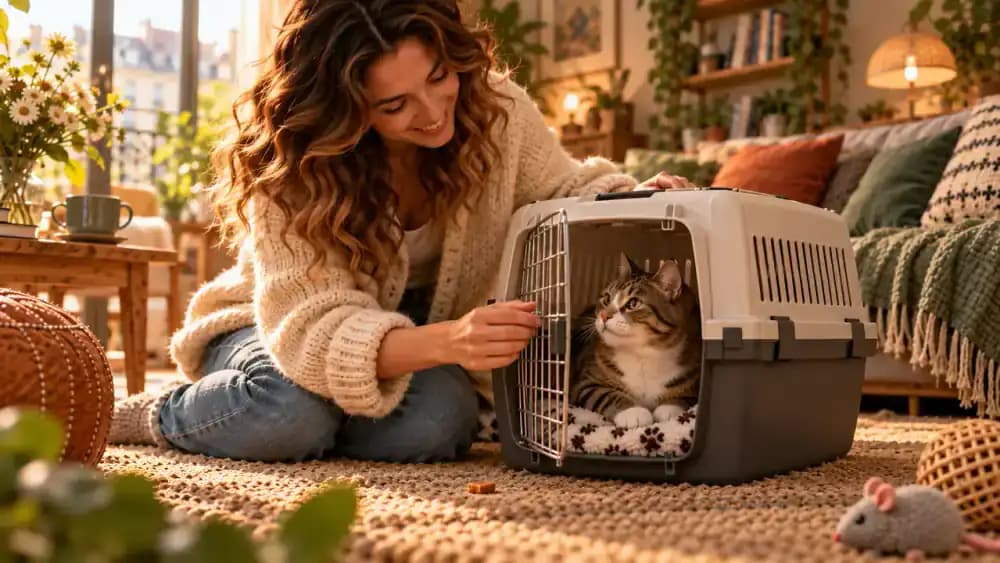
Practice the First Lift
After brief door closures become routine, lift the carrier only a few inches and set it back down. Reward calm behavior afterward. Later, carry it a few steps. These tiny rehearsals help your cat experience movement without every lift immediately leading to strangers, veterinary procedures, or a long drive.
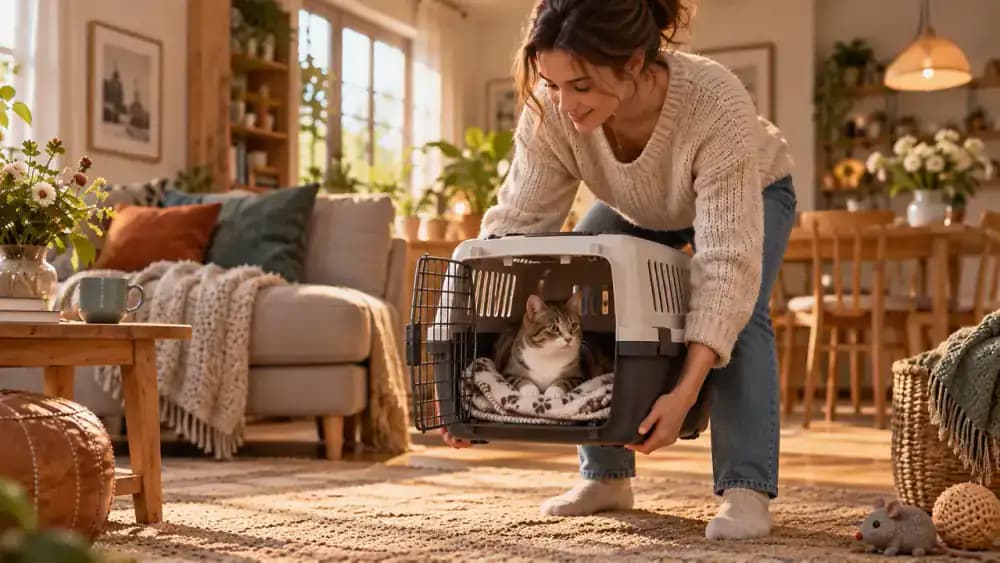
Practice Around the House
Carry the closed, secured carrier from one room to another, pause briefly, then return and open it. Keep the exercise uneventful and move smoothly so the carrier stays level. Repeated short trips around the house teach your cat that changing locations does not always lead somewhere unfamiliar or stressful.
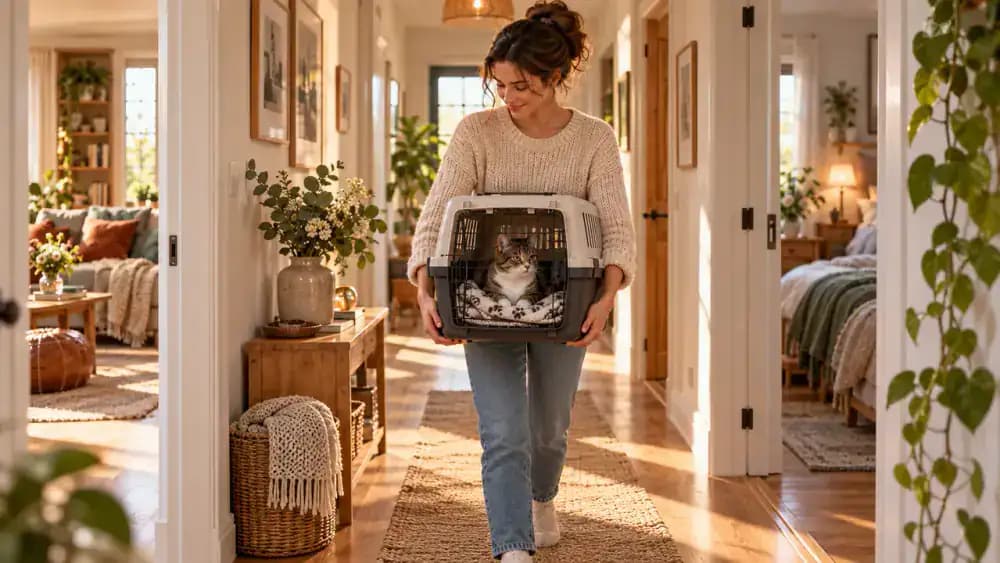
Check Carrier Safety
Before moving to vehicle practice, inspect the carrier carefully. It should be sturdy, well ventilated, large enough for your cat to turn around, and easy to secure. Examine latches, zippers, screws, seams, and other closures. A damaged carrier can create an escape risk when stress is already elevated.
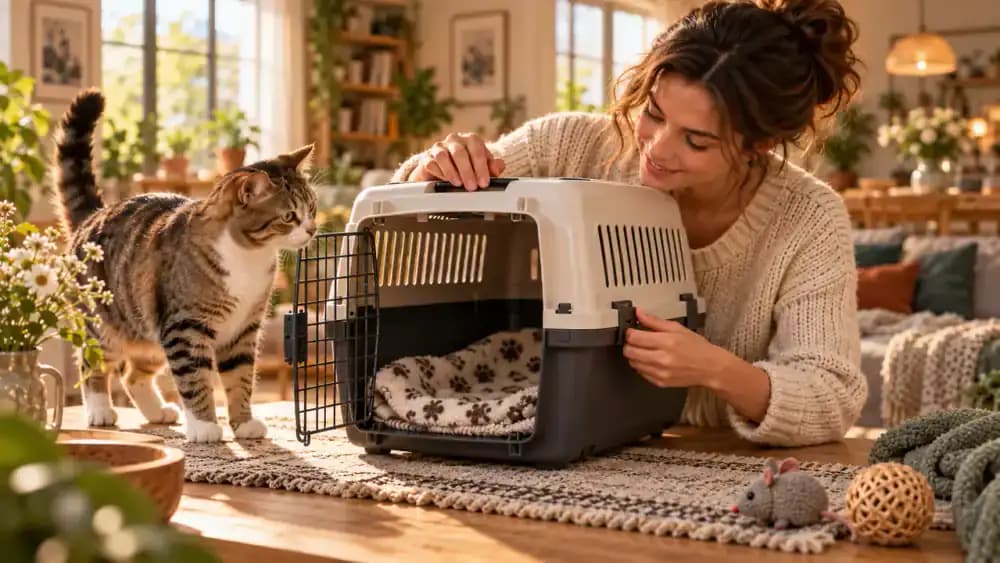
Introduce the Parked Car
Start car training without driving anywhere. Secure the carrier inside the parked vehicle, sit nearby briefly, and offer a treat if your cat is willing to take it. Keep the engine off initially. This introduces the unfamiliar car environment before adding engine noise, vibration, and movement at the same time.
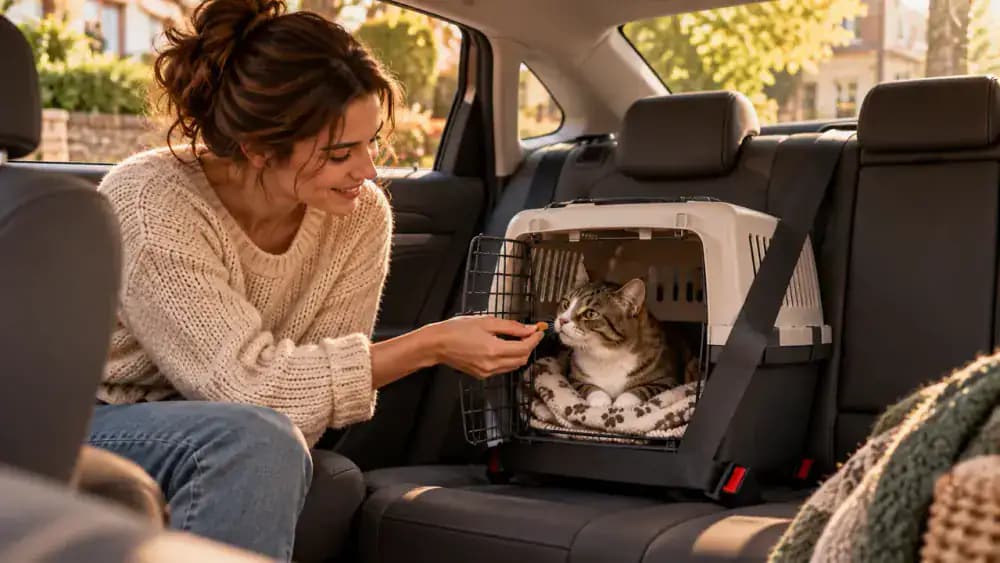
Add Engine Noise
Once sitting in the parked car feels routine, start the engine without driving. Keep the carrier securely positioned and make the session short. Sound and vibration can be unfamiliar, so finish before your cat becomes overwhelmed. Several brief exposures can be easier to manage than one prolonged attempt.
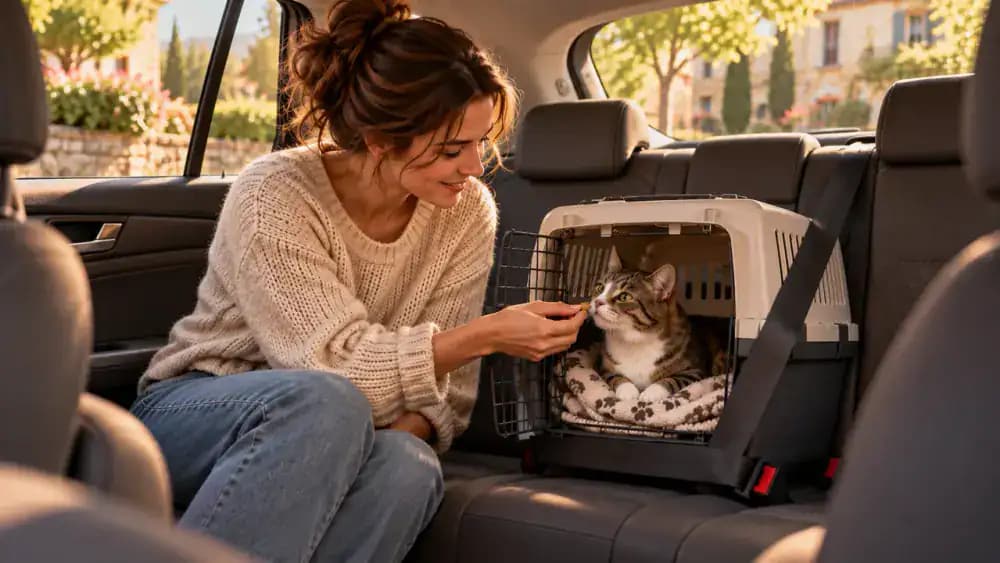
Take a Very Short Drive
Begin driving with an extremely short trip, such as around the block or down the street and back. Keep the carrier secure, drive smoothly, avoid loud music, and maintain a comfortable cabin. Distance is not the goal. You are building experience with motion followed by a predictable return home.
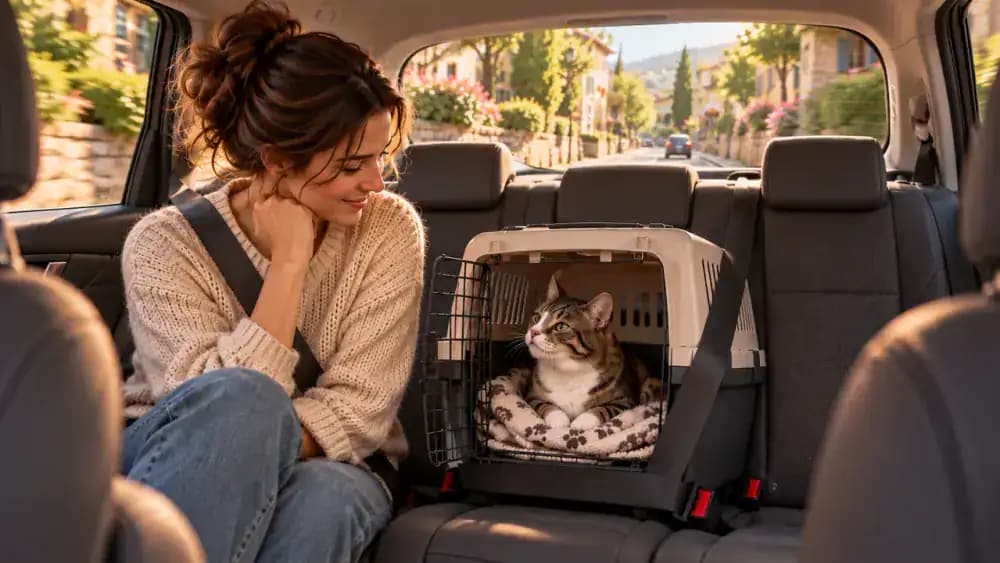
Secure the Carrier Properly
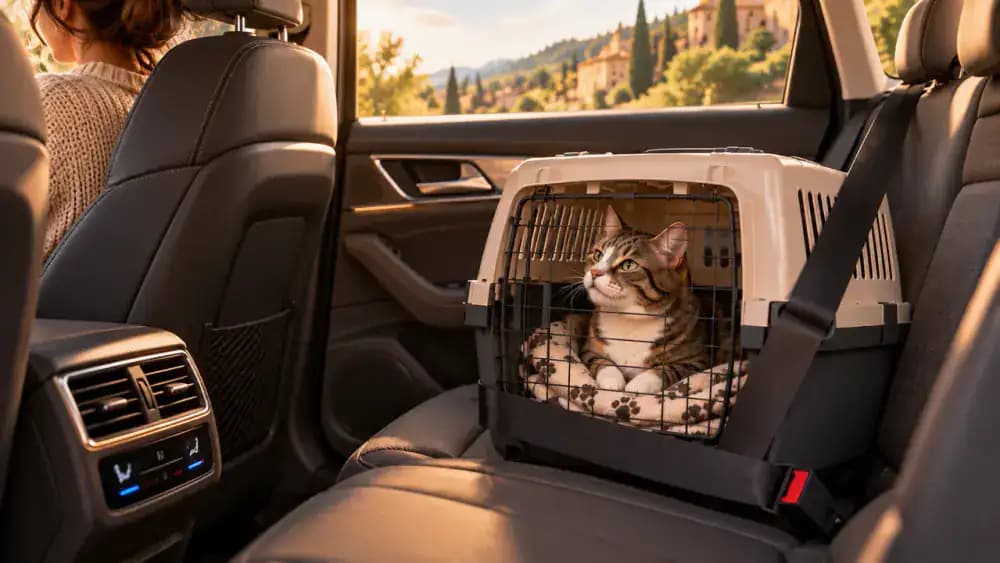
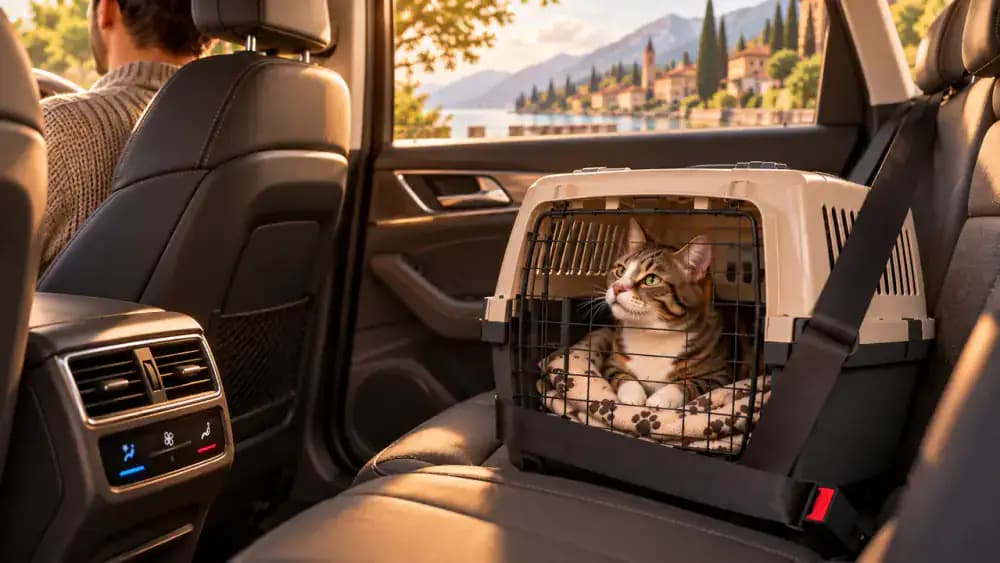
Never let the carrier slide freely around the vehicle. Follow the manufacturer's instructions for seat belt routing or another recommended secure placement method. A stable carrier is safer during sudden braking and limits unnecessary shifting while the car moves. Check that it cannot easily slide or tip before departure.
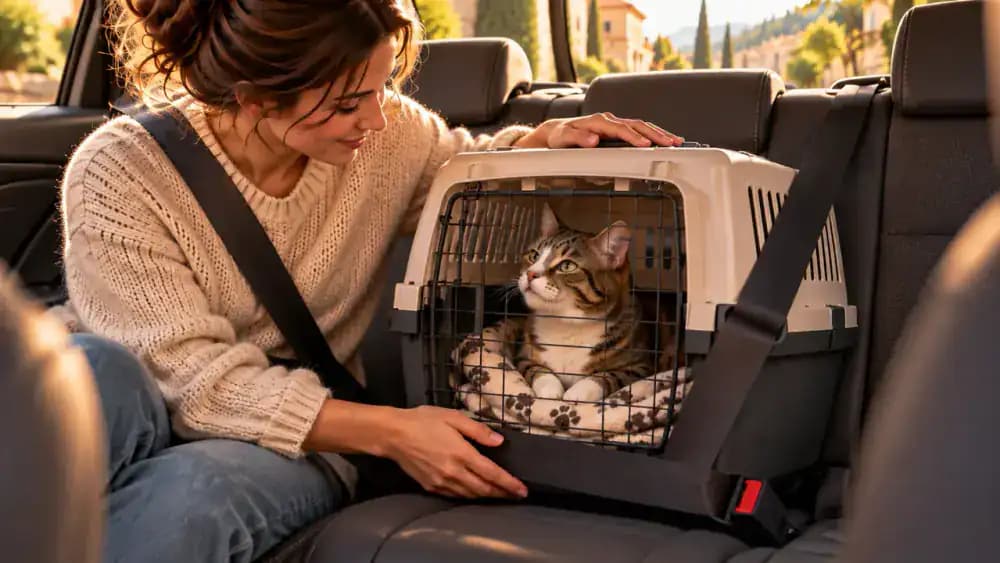
Control the Temperature
Keep the vehicle comfortably ventilated and monitor cabin temperature during travel. Cars can become dangerously hot or cold quickly, even when outdoor conditions seem mild. Never leave your cat unattended in a parked vehicle. Climate control and sensible stopping decisions should always be part of your travel plan.
Try Partial Visual Cover
If visual activity seems to unsettle your cat, try covering part of the carrier with a light, breathable towel while leaving all ventilation openings clear. Observe the response rather than assuming a cover will help. Some cats settle with reduced stimulation, while others appear more comfortable when they can see outside.
Use Familiar Scents
Place familiar bedding from home inside the carrier to preserve a recognizable scent. Some owners also use feline pheromone products according to their label directions. Avoid strong perfumes, essential oils, or heavily scented cleaning products around the carrier. Subtle familiarity is preferable to introducing another intense or unusual smell.
Plan Food Before Longer Trips
Think about meal timing before a longer journey, especially if your cat has previously vomited during travel. A very large meal immediately before departure may not be ideal. Ask your veterinarian for individualized guidance when needed. Feeding and water plans can vary according to trip length and your cat's needs.
Recognize Travel Stress
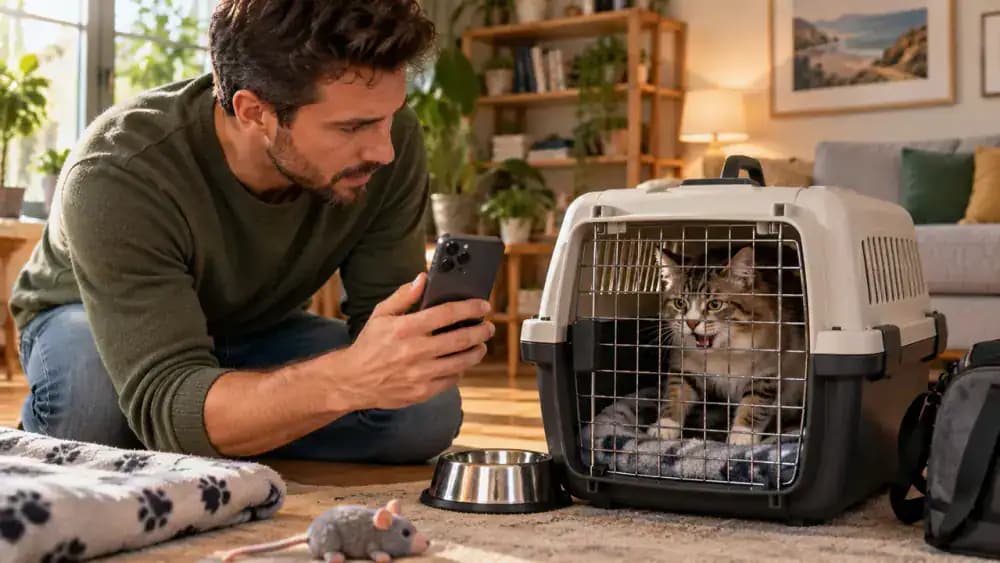
Pay attention to repeated panting, drooling, vomiting, frantic attempts to escape, persistent howling, or unusual lethargy during travel. Stress signs can overlap with illness, so avoid assuming a cause. Record what happens and discuss intense, recurrent, or worsening reactions with your veterinarian before another journey.
Ask About Severe Anxiety
If travel anxiety remains severe despite gradual training, speak with your veterinarian. They can assess whether medication is appropriate for your individual cat and provide safe instructions. Never substitute human medication or leftover prescriptions. When medication is prescribed, follow the veterinarian's directions, including any recommended home trial before travel.

Keep Travel Day Calm
Maintain an ordinary routine on the day of a veterinary appointment or trip. Avoid waiting until the last minute and then chasing your cat through the house. A carrier that has remained familiar is often easier to approach calmly. Quiet preparation helps prevent travel day from undoing earlier positive practice.
Use a Removable Top
A carrier with a removable top can be useful during veterinary visits. Depending on the clinic and situation, your cat may be able to remain in the lower half during parts of an examination. Ask the veterinary team how they prefer to proceed before you open or disassemble the carrier.

Update Identification
Place your contact information on the carrier and confirm that your cat's identification details are current before traveling. If your cat has a microchip, keep its registration information updated. Escape may be uncommon, but accurate identification is most useful when it is prepared in advance rather than afterward.

Give Each Cat a Carrier
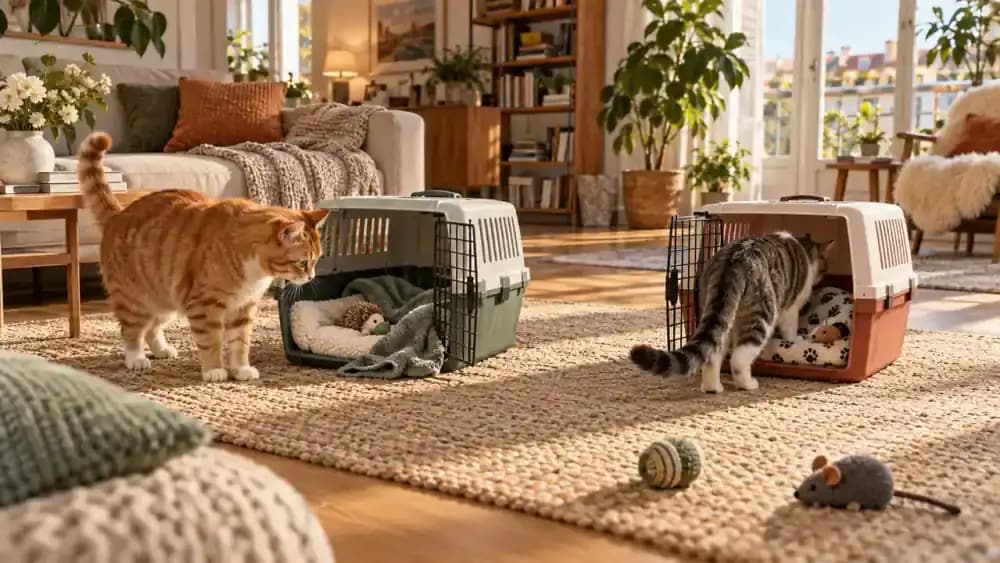
In a multi-cat home, use a separate carrier for each cat when possible. Individual carriers reduce competition over space and scents and make transportation easier to manage. Keep familiar bedding with each cat, and do not assume cats who sleep together at home will necessarily remain relaxed while traveling together.
Clean Without Erasing Familiarity
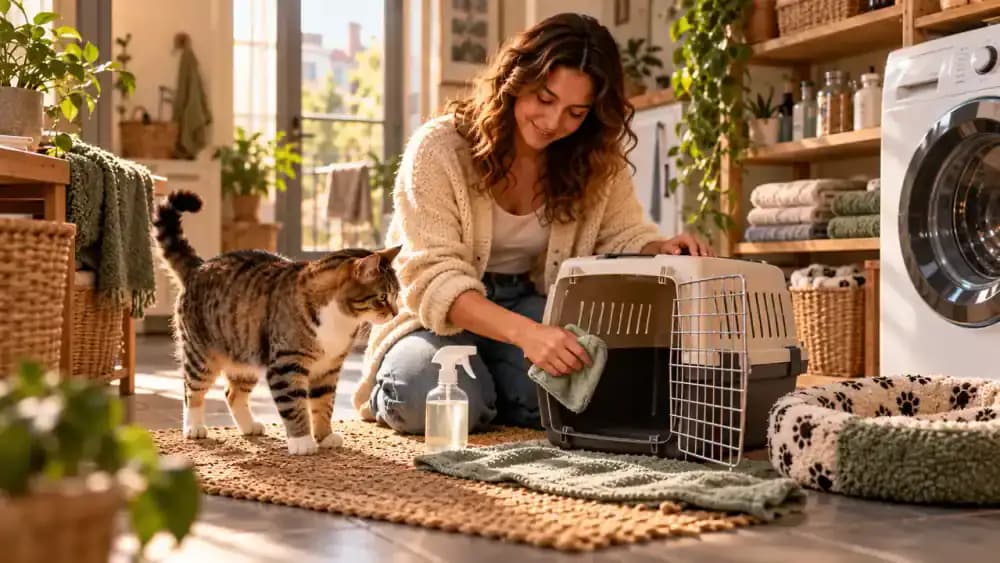
Clean urine, vomit, dirt, or other messes promptly using a cat-safe product, then rinse and dry the carrier according to the cleaner's instructions. Once everything is completely dry, return familiar bedding when appropriate. Good hygiene does not require leaving the carrier smelling entirely unfamiliar after every use.
Keep the Carrier Out Afterward
When you return home, place the carrier back in its usual location instead of immediately storing it away. Open the door and allow your cat to investigate again. Add familiar bedding or a small reward. Returning to normal helps prevent one difficult trip from becoming the carrier's only lasting association.

Expect Uneven Progress
Different cats adjust at different speeds. One may relax inside the carrier after a few days, while another may need several weeks. Judge progress by calmer behavior and reduced avoidance rather than a deadline. Small improvements that can be repeated comfortably are more useful than forcing a faster result and creating a setback.

Make Safety the New Association
Keep the carrier accessible long before the next trip, continue pairing it with comfort and rewards, and occasionally repeat brief door, carrying, or car exercises. The purpose is to make carrier use predictable. When actual travel arrives, your cat will already have experience showing that the carrier can also lead back to safety.

A cat carrier does not have to mean an immediate struggle followed by a stressful car ride or veterinary visit. Cats can learn different associations when the carrier becomes an ordinary, predictable part of home life. The most effective approach is gradual: keep the carrier accessible, add familiar comfort, reward voluntary exploration, practice closing and carrying it in tiny increments, and introduce the car one step at a time. Some cats adapt quickly, while others need weeks of repetition. The goal is not to force your cat into tolerating the carrier on a deadline. It is to reduce avoidance, make each stage manageable, and build enough familiarity that travel becomes less surprising. The following process moves from simple carrier exposure at home to safer real-world transportation and post-trip recovery.
Where people go wrong
Bringing Out the Carrier Only for Vet Visits. If the carrier appears only before stressful travel, your cat can learn to treat its appearance as a warning. Leave it accessible during normal life instead.
Forcing the Cat Inside Too Soon. Pushing, chasing, or trapping your cat can increase avoidance. Progress from comfortable distances toward voluntary entry using short, repeatable sessions.
Increasing Difficulty Too Quickly. Do not jump from brief carrier entry directly to long drives. Practice the door, lifting, household carrying, the parked car, engine noise, and short drives separately.
Letting the Carrier Slide in the Car. A carrier that shifts or tips adds unnecessary movement and can become unsafe. Secure it according to the manufacturer's instructions before driving.
Blocking Ventilation With a Cover. A partial towel may help some cats, but ventilation openings must remain clear. Watch your cat's response and remove the cover if it appears unhelpful.
Improvising With Medication. Never use human medication or leftover prescriptions for travel anxiety. Severe or recurrent travel problems should be discussed with your veterinarian.
Questions people ask
There is no fixed timetable. Some cats may enter willingly within days, while others need several weeks. Focus on reduced avoidance and calmer behavior rather than reaching a deadline.
Fixed it?
Get one guide like this every Thursday.