How to Help a Shy Cat Feel Safer Around Visitors
Does your cat disappear whenever someone visits? Learn how to create a safe retreat, recognize feline stress signals, set guest boundaries, and help your shy cat build confidence without forcing interaction.
What you’ll need
Tap to tick things off before you start.
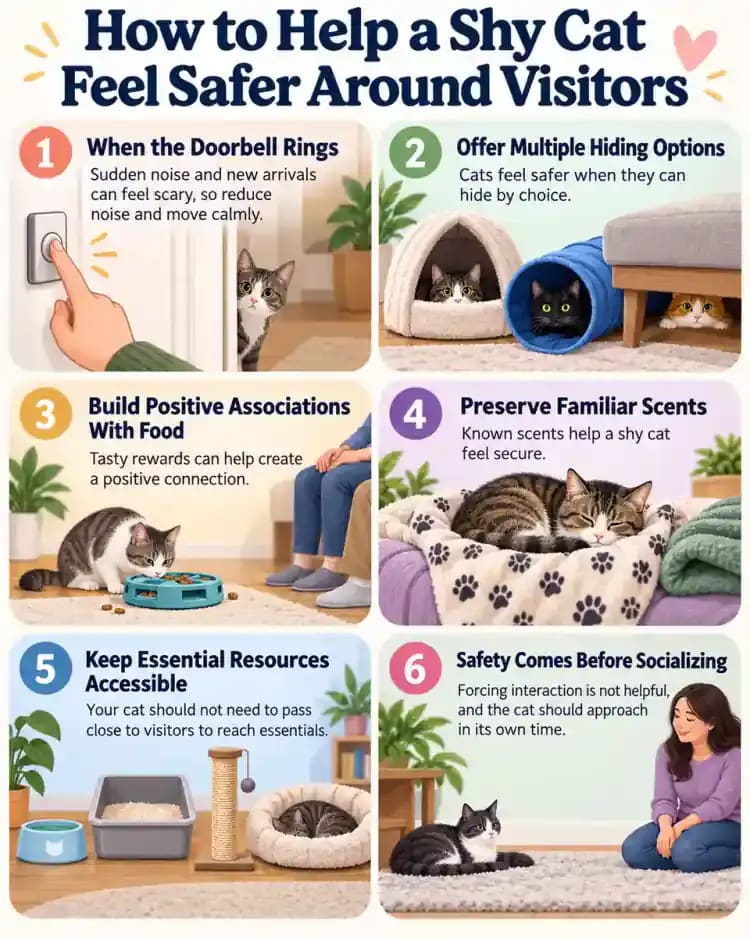
When the Doorbell Rings
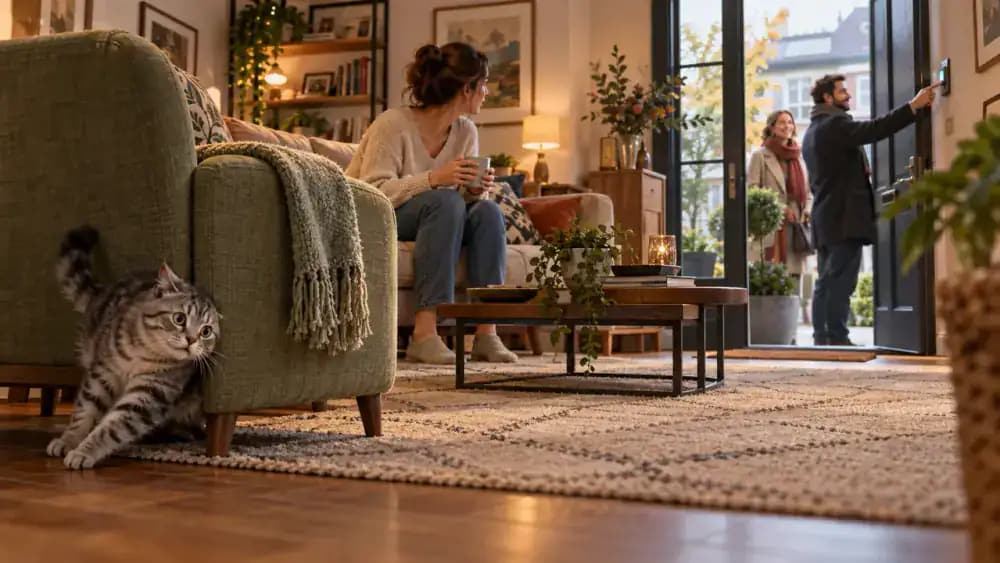
If your cat disappears whenever the doorbell rings, start by respecting that reaction. Unfamiliar voices, footsteps, and smells can make visitors feel intimidating. Avoid pulling your cat out of hiding or insisting on introductions. Instead, focus on creating predictable arrival routines, comfortable hiding places, and opportunities for your cat to choose whether to approach.
Understand the Hiding Pattern
Pay attention to where your cat goes when visitors arrive and how long it takes to settle. Your cat might climb the stairs, hide beneath furniture, or observe from a distance. Notice which locations offer the most comfort. Keep a simple record of these reactions so you can identify patterns and make helpful adjustments.

Recognize Early Stress Signals
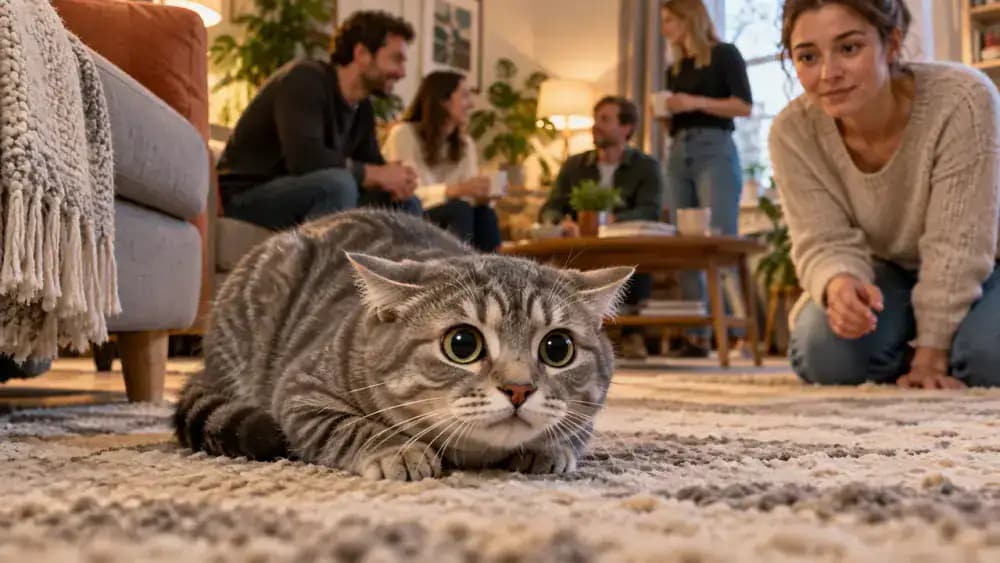
Watch your cat's body language before visitors get too close. Sideways ears, enlarged pupils, a tucked tail, or a tense crouch can suggest discomfort. Changes in eating, grooming, or movement may also provide clues. Consider several signals together rather than relying on one behavior, and give your cat space whenever it appears uneasy.
Create Clear Escape Routes
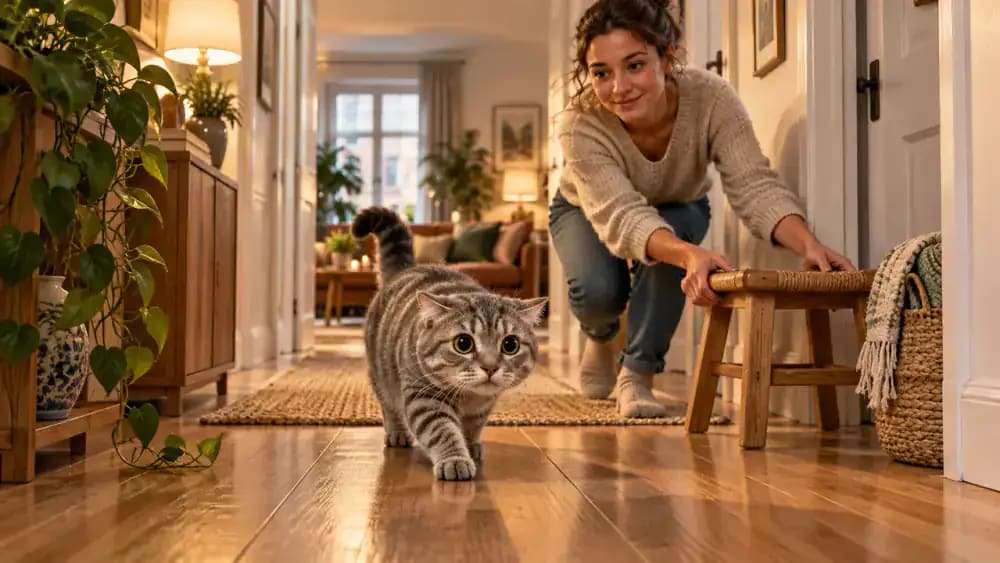
Before guests arrive, check that your cat can move comfortably between familiar hiding spots and quieter rooms. Move stools, bags, or other obstacles away from important pathways. Avoid positioning visitors where they block doorways or hallways. An open route behind the sofa or toward a bedroom allows your cat to retreat without unwanted contact.
Build a Quiet Retreat
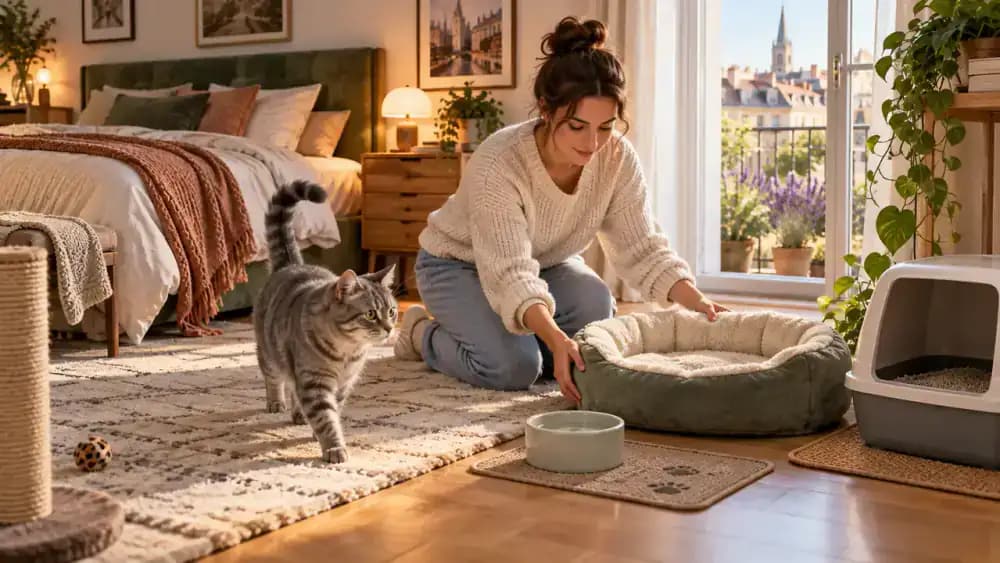
Prepare a peaceful room well before your next gathering. Include your cat's familiar bed, fresh water, and a clean, accessible litter box placed away from food and water. Let your cat explore the space during ordinary quiet moments. Keep the retreat available during visits so your cat has a comfortable place to rest without interruptions.
Offer Multiple Hiding Options
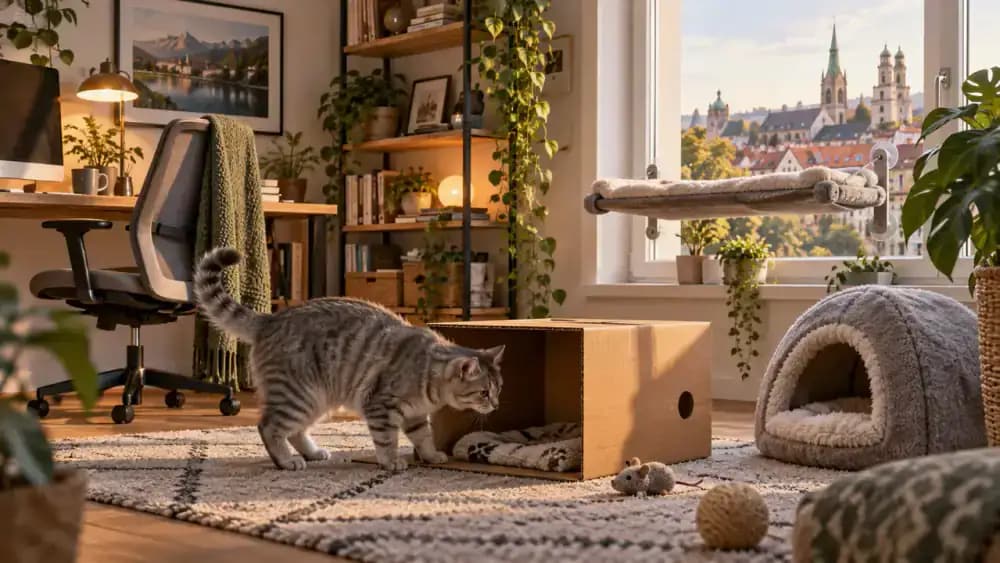
Give your cat several comfortable places to hide so it can choose what feels safest. Place a cardboard box on its side, add a covered cat bed, and provide a sturdy elevated perch for observing the room. Keep every entrance clear, secure anything that could tip over, and let your cat decide where to rest.
Make the Retreat Familiar
Keep your cat's quiet retreat accessible even when no visitors are expected. Leave the door open when safe and allow your cat to explore at its own pace. Occasionally place a favorite toy or small treat near its resting spot. Regular, peaceful access helps the space become a familiar part of everyday life.

Prepare Before Guests Arrive
Get your cat's quiet room ready before the doorbell rings. Close windows that let in street noise, refresh the water bowl, and make sure the litter box is clean and accessible. Keep the doorway open so your cat can enter voluntarily. Never chase or carry a frightened cat through the house just to relocate it.

Ask Visitors to Enter Calmly
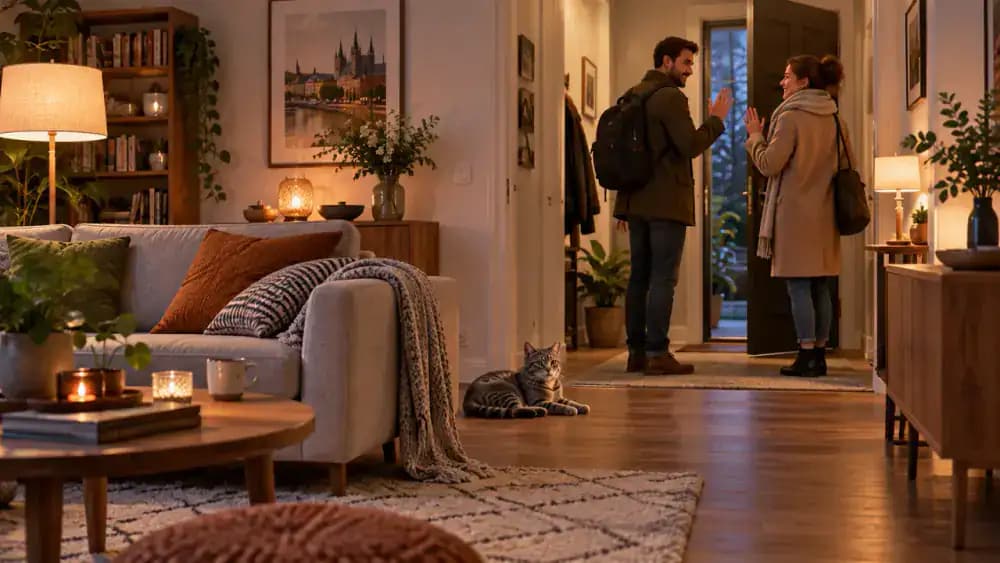
Before guests arrive, ask them to enter quietly and avoid calling for your cat. Encourage everyone to put down bags, remove coats, and settle into their seats before moving around the house. Keep voices conversational and movements unhurried. Your cat may stay hidden throughout the visit, and that is perfectly acceptable.

Never Pull a Cat From Hiding
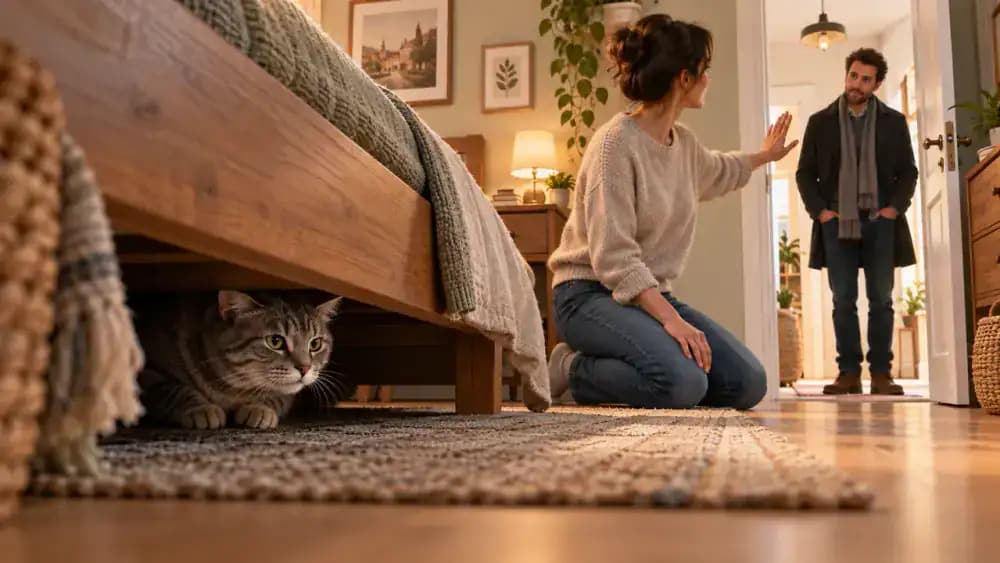
Make one rule clear to everyone visiting: hiding places are off-limits. Never reach beneath a bed, lift a blanket, or pull your cat from behind furniture for introductions. Instead, ask guests to give the cat space and continue their visit normally. Respecting its decision to hide helps preserve a sense of safety and control.
Let Your Cat Observe
If your cat prefers watching from a doorway, respect that choice. Ask visitors to sit quietly, turn slightly sideways, and avoid direct staring or leaning toward the cat. Keep the path between rooms clear so your cat can leave whenever needed. Quiet observation without approaching anyone is a meaningful first step toward feeling safer.

Build Positive Associations With Food
Favorite treats can help your cat associate visitors with pleasant experiences. Have your guest remain seated at a comfortable distance while you place a few treats where your cat can reach them safely. Keep an escape route open. If your cat refuses food, increase the distance or stop. Never use hunger to force an interaction.
Use Gentle Treat Tossing
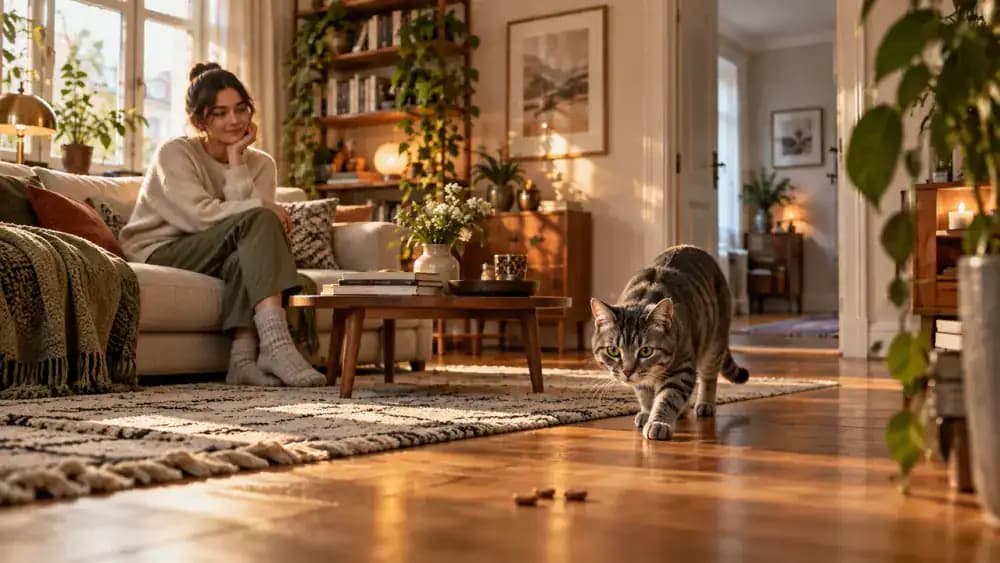
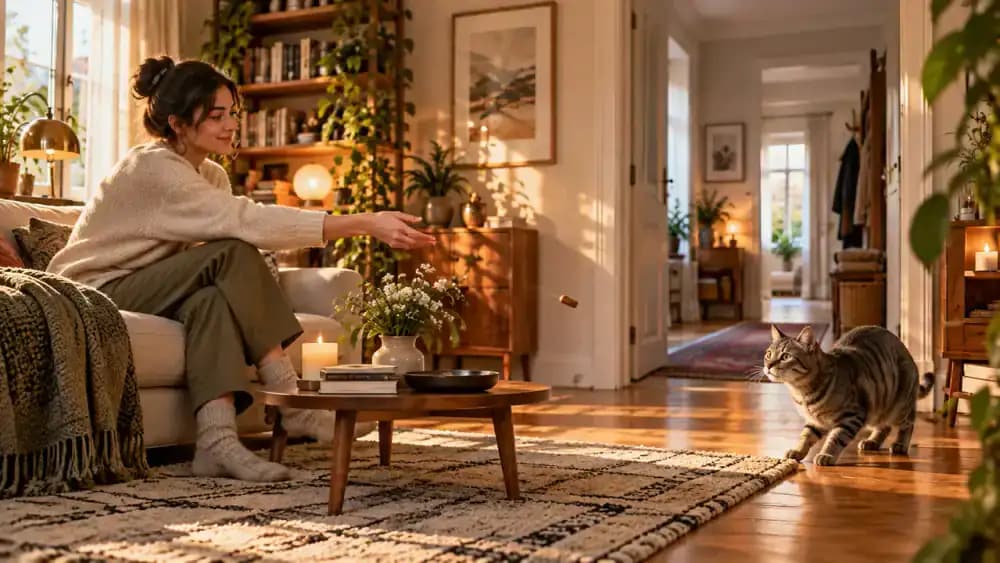
Once your cat comfortably accepts treats with a visitor nearby, invite the seated guest to gently toss one small treat away from themselves, toward an open escape route. Let your cat decide whether to retrieve it. Avoid tossing treats progressively closer to the guest or reaching out afterward. The goal is confidence and choice, not physical contact.
Keep Introductions Short
Begin with brief visits that your cat can handle comfortably. Ask one guest to sit quietly for several minutes while your cat watches, rests nearby, or accepts a treat. Avoid extending the interaction just because things seem to be going well. End while your cat remains relaxed, and repeat these manageable experiences gradually over several visits.
Reduce Doorbell Sensitivity
If your cat runs away whenever the doorbell rings, practice the sound separately from actual visits. Play a doorbell recording at barely audible volume while offering a favorite treat. Repeat only when your cat stays comfortable, gradually increasing the volume across sessions. If your cat becomes uneasy, lower the volume or stop. Never force exposure to frightening sounds.

16. Prevent Front Door Escapes
Before opening the front door for visitors or deliveries, make sure your cat is safely separated from the entrance. Use a closed interior door or secure barrier while packages are brought inside. Never assume a frightened cat will stay in place. This precaution is especially important when your front door opens directly onto a busy street.

17. Provide Safe Vertical Space
Give your shy cat a comfortable place to observe visitors from above. A sturdy cat tree or securely mounted shelf can provide a sense of security without requiring close contact. Position the perch away from heavy foot traffic and keep climbing routes clear. Your cat should always be able to climb down or retreat without passing guests.

18. Preserve Familiar Scents
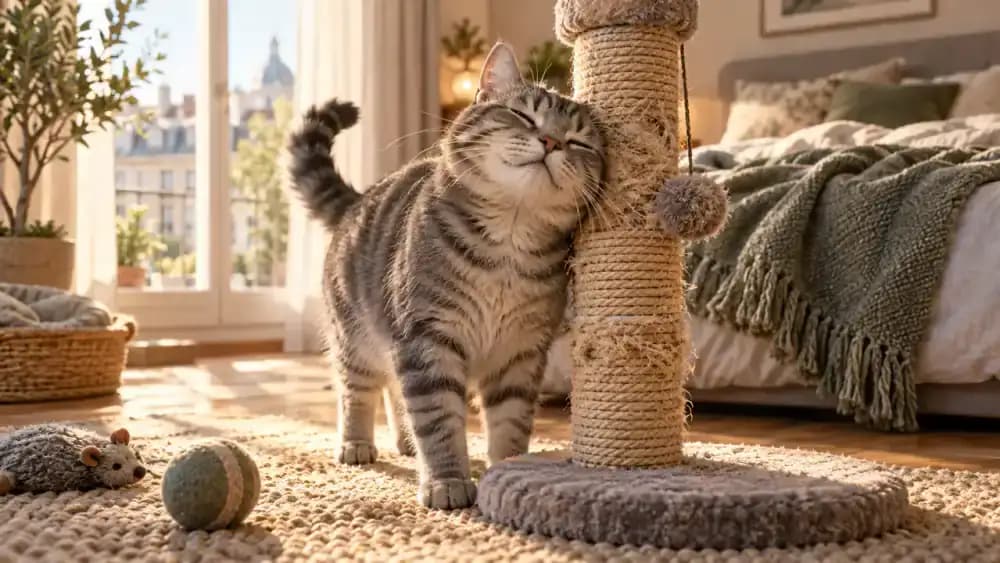
Help your cat feel more comfortable by keeping familiar bedding, blankets, and scratching posts in their usual places. Avoid deep cleaning their favorite resting spots immediately before visitors arrive. Strong perfumes, air fresheners, and scented sprays can also be overwhelming. Familiar household smells offer reassurance, especially when your cat has access to a quiet, undisturbed retreat.
19. Set Rules for Visiting Children
Explain your cat's boundaries to visiting children before they enter the room. Ask them to walk slowly, speak quietly, and keep their hands to themselves unless the cat willingly approaches. Never allow chasing, grabbing, or picking up a nervous cat. Supervise interactions closely, and remind children that watching quietly from a distance is sometimes the best introduction.

20. Manage Visitors Who Bring Dogs
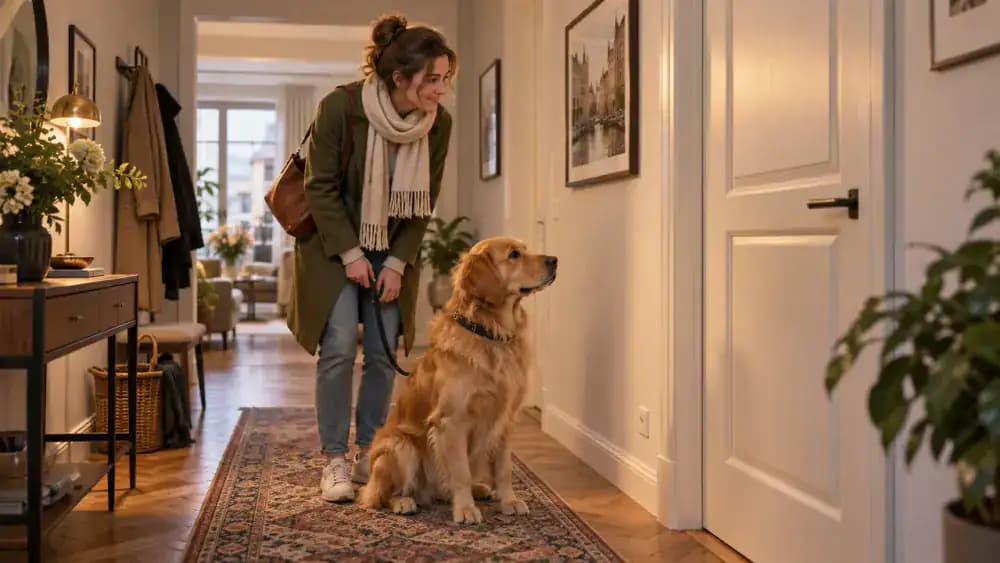
When visitors bring dogs, arrange a secure separation before they arrive. Even a calm, friendly dog may frighten your shy cat through barking, staring, or sudden movement. Keep the dog supervised and away from your cat's private retreat. Unless both animals have a carefully managed introduction plan, avoid direct contact. Peaceful separation is a safe and reasonable choice.
Respect Voluntary Exploration
Allow your cat to explore visitors at their own pace, even if that means taking just a few cautious steps into the room. Ask guests to remain still and avoid reaching toward the cat. If your cat sniffs nearby furniture and retreats, let them leave freely. Each voluntary approach builds confidence without creating pressure.
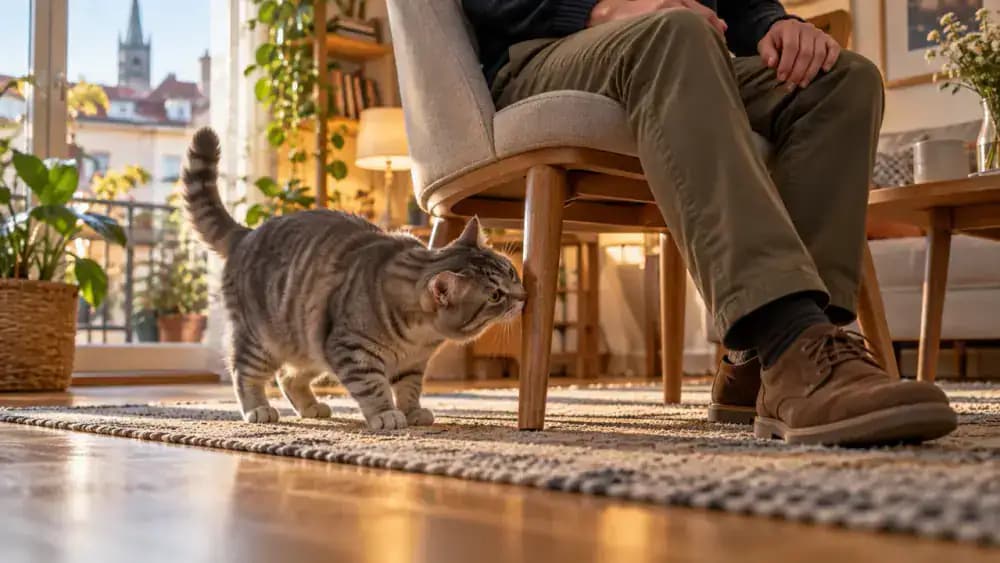
Let the Cat Choose Contact
When your cat rubs against a visitor's leg, encourage the guest to stay relaxed rather than immediately reaching down. Rubbing can indicate curiosity or friendliness, but it does not necessarily mean your cat wants to be held. If the cat welcomes petting, use gentle, brief strokes and pause frequently to see whether they seek more contact.
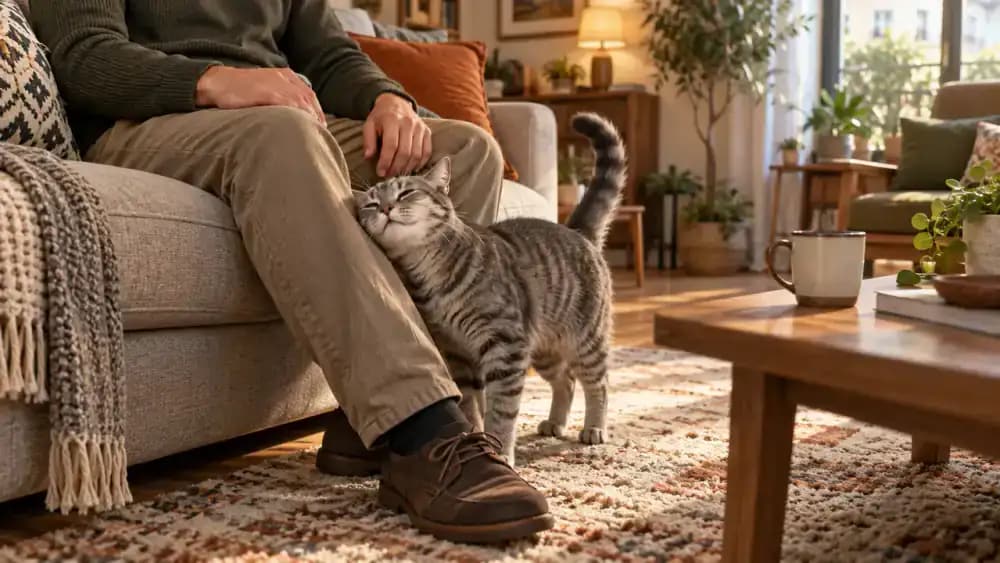
Recognize When Contact Should Stop
Pay attention to subtle signals that your cat wants an interaction to end. Tail flicking, body tension, turning away, or sudden grooming can indicate discomfort. Hissing and growling are stronger warnings. Ask visitors to withdraw their hands immediately and leave an escape route open. Never punish these signals, because respecting them helps prevent stressful encounters from escalating.

Keep Essential Resources Accessible
Before guests arrive, make sure your cat can reach food, fresh water, and a clean litter box without crossing crowded areas. Keep their quiet retreat available throughout the gathering. Check discreetly that everything is comfortable, but avoid repeatedly disturbing the cat or inviting guests into the room. A successful visit does not require your cat to socialize.

Accept Nonlinear Progress
Expect your cat's comfort around visitors to vary from one gathering to another. Watching calmly from the stairs may be progress, even if the cat chooses to hide during the next visit. Larger, noisier groups can feel more challenging than a single quiet guest. Measure improvement by relaxed behavior, reduced distress, and freedom of choice rather than physical affection.
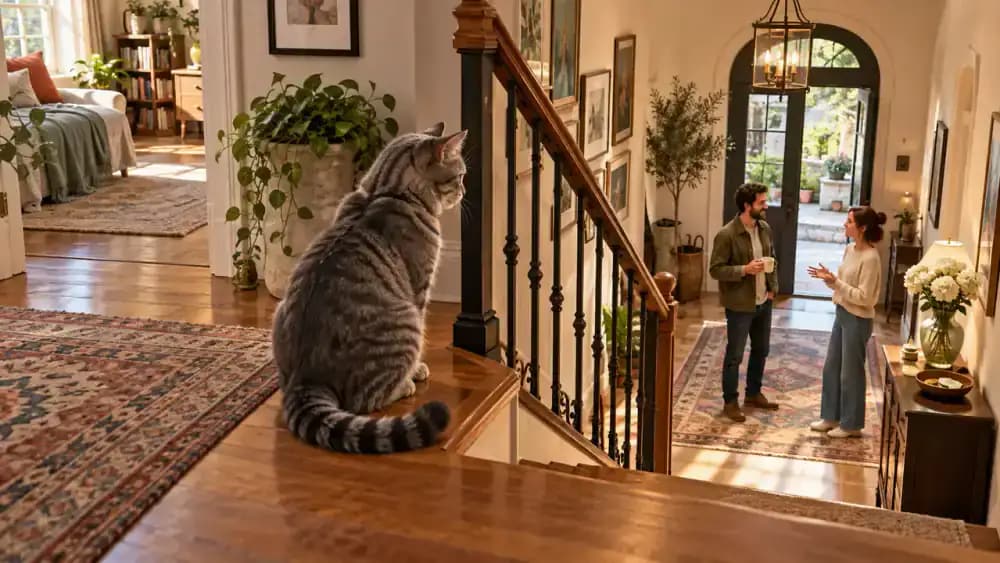
Track What Actually Helps
After each visit, jot down a few details about your cat's behavior. Record the number of guests, unexpected noises, favorite resting spots, and whether your cat ate, played, or explored. Over time, these notes can reveal patterns, helping you recognize real progress and adjust future visits to match your cat's comfort level.

Avoid Forcing Introductions
Never carry your cat toward visitors or block access to a safe hiding place. A cat that freezes or stays unusually still may be uncomfortable rather than relaxed. Keep escape routes open, ask guests to remain seated, and let your cat decide whether to approach. Voluntary interactions create better opportunities for building trust.

Know When to Seek Professional Help
Contact your veterinarian if your cat suddenly becomes fearful, especially after previously enjoying visitors. Changes in appetite, litter box habits, or behavior also deserve attention. If fear remains intense despite a calm environment, ask about additional support from a qualified feline behavior professional. Early guidance can help you develop a practical, individualized approach.

Your Three-Step Visitor Plan
Before your next guest arrives, prepare a quiet retreat with your cat's familiar belongings, make sure the hallway stays clear, and explain that visitors should avoid approaching unless your cat initiates contact. Offer treats near the safe route only when your cat appears comfortable. Repeat this straightforward routine so visits become more predictable.
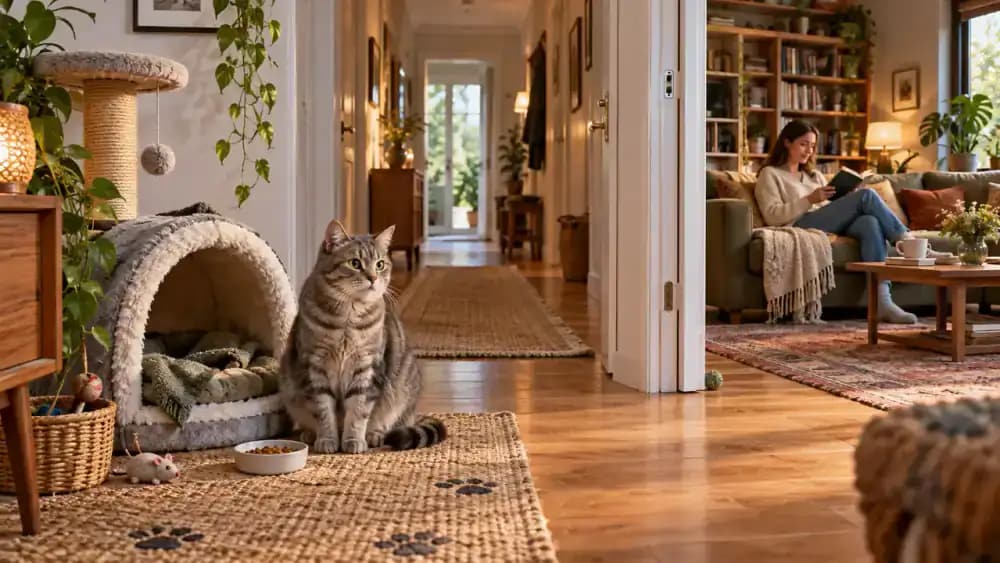
Safety Comes Before Socializing
Remember that a successful visit does not require your cat to greet anyone. Resting in another room, watching from a high perch, or exploring briefly can all be positive outcomes. Focus on providing choices, predictable surroundings, and freedom from unwanted attention. When your cat feels secure, confidence may gradually grow without pressure or forced interaction.

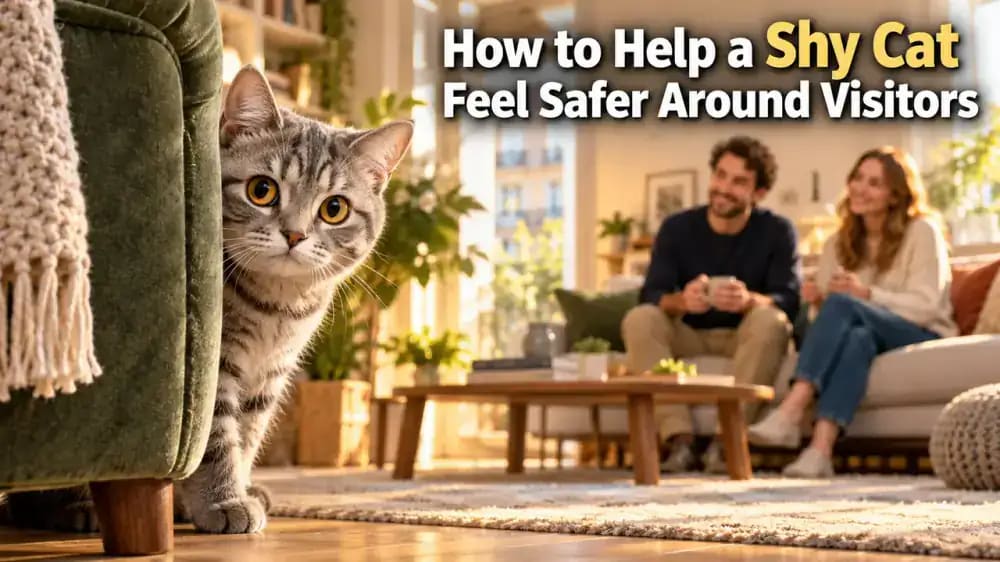
The doorbell rings. Your cat freezes, darts behind the couch, and disappears before your guest even steps inside. Sound familiar? If your cat hides whenever visitors arrive, you're dealing with a common feline behavior that deserves patience rather than pressure.
Cats thrive when their surroundings feel predictable and they have control over their personal space. Unfamiliar voices, footsteps, scents, and sudden movements can make an otherwise peaceful home feel overwhelming. Some cats are naturally cautious around strangers, while others become uncomfortable because of previous experiences, limited social exposure, or unexpected changes in their environment.
The good news is that helping a shy cat feel safer around visitors doesn't require expensive equipment or complicated training. Small adjustments to your home, clearer expectations for guests, and consistent positive experiences can make a meaningful difference.
In this guide, you'll learn how to recognize subtle signs of feline discomfort, prepare a quiet retreat, create safe escape routes, and introduce visitors without forcing unwanted attention. You'll also discover how to handle doorbells, children, visiting dogs, and situations where your cat becomes overwhelmed.
The goal isn't to turn every cat into a social butterfly. It's to help your cat feel secure enough to make its own choices. For some cats, progress means calmly watching guests from across the room. For others, it simply means resting comfortably in another room while company visits.
Where people go wrong
Pulling Your Cat Out of Hiding. Dragging a frightened cat from under furniture removes its ability to choose a safe distance. Even well-intentioned attempts to introduce guests can increase distress and damage trust. Instead, allow your cat to remain hidden, make sure the hiding place is safe, and let any exploration happen voluntarily. A cat that stays hidden is communicating a need for space.
Allowing Visitors to Approach Too Quickly. Many guests instinctively reach toward a cat, make direct eye contact, or follow it across the room. These behaviors can feel threatening to a cautious animal. Ask visitors to sit calmly, avoid staring, and keep their hands to themselves. Your cat should control whether an interaction happens. Watching quietly from a distance is perfectly acceptable progress.
Removing Every Hiding Spot. Some owners block access to hiding places because they believe this will encourage socialization. Unfortunately, eliminating safe retreats can leave a cat feeling trapped and more vulnerable. Provide appropriate hiding spots instead, including covered beds, boxes, or quiet rooms. The objective is not to prevent hiding but to make the environment secure enough that your cat can eventually choose to explore.
Using Treats to Lure a Cat Beyond Its Comfort Zone. Treats can create positive associations, but placing food beside an unfamiliar guest may pressure a cautious cat to approach before it feels ready. Offer rewards at a comfortable distance and gradually adjust only when your cat remains relaxed. Never make approaching a visitor the only way to access food. Confidence develops through choice, not through competing feelings of hunger and fear.
Ignoring Subtle Signs of Overstimulation. A cat doesn't have to hiss or swat to communicate discomfort. Flattened ears, a tense posture, rapid tail movements, dilated pupils, freezing, or repeated attempts to leave may appear first. Ignoring these signals can allow stress to escalate. Watch your cat's entire body and the surrounding situation, and increase distance or end the interaction when discomfort appears.
Expecting Every Visit to Produce Visible Progress. Feline confidence rarely improves in a straight line. A cat may investigate one quiet visitor but hide during a louder gathering the next day. Treating this variation as failure often leads owners to increase pressure too quickly. Track patterns over multiple visits, including recovery time and relaxed behavior, rather than expecting your cat to greet every person.
Letting Children or Visiting Dogs Ignore Boundaries. Running children, barking dogs, and unpredictable movements can overwhelm even relatively confident cats. Never assume a cat will tolerate contact simply because it shares a home with other animals or familiar children. Establish clear boundaries, supervise children, and separate visiting dogs securely. Avoid direct introductions when either animal appears uncomfortable, and always preserve a protected retreat.
Questions people ask
Cats often hide from visitors because unfamiliar sounds, scents, movements, and people make their environment feel less predictable. Hiding gives them distance and control over potential threats. Temperament, past experiences, and social exposure can all influence this response. A cat that hides isn't necessarily behaving badly. However, sudden or significant changes in behavior deserve veterinary attention.
Fixed it?
Get one guide like this every Thursday.