How to Give Your Dog a Calm and Comfortable Bath
Bath time doesn't have to be a struggle. Learn how to prepare a safe bathing space, choose gentle products, recognize stress signals, and keep your dog comfortable from the first splash to the final towel dry.

What you’ll need
Tap to tick things off before you start.
A Better Bath Begins Before Water
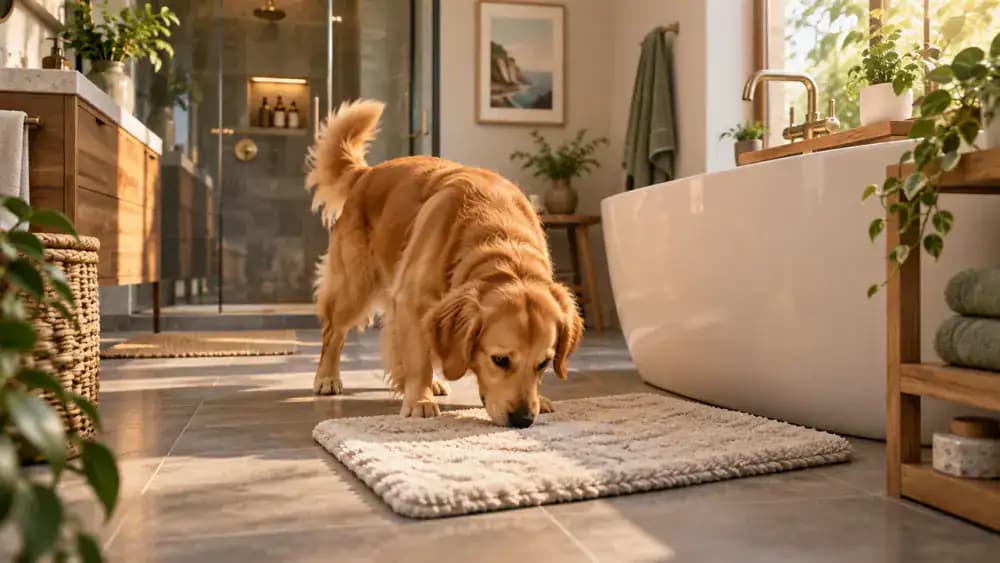
A comfortable bath starts before you turn on the faucet. Prepare a quiet bathroom with a nonslip mat, clean towels, and supplies within reach. Let your dog explore the dry space without pressure. Watch their body language and allow time to settle. The goal is a safe, predictable experience, not perfect obedience.
First, Decide Whether a Bath Is Needed
Check whether your dog actually needs a full bath. Mud, strong odors, or debris caught in the coat may justify washing, while lightly dirty paws might need only a quick wipe. Bathing frequency depends on coat type, skin condition, and lifestyle. Use dog-safe products, and follow your veterinarian's instructions for medicated shampoos or skin concerns.
Check How Your Dog Feels
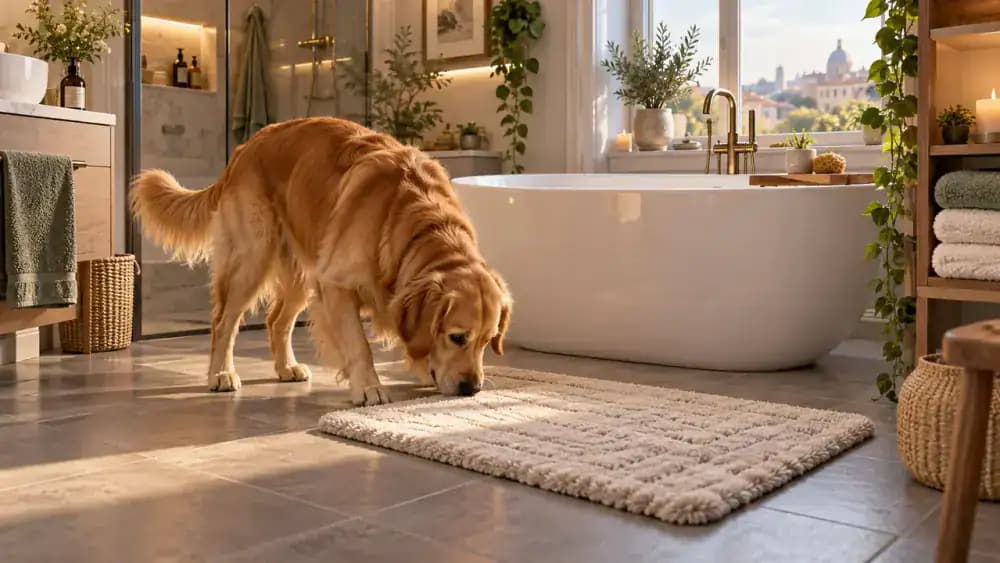
Before bathing, gently check whether your dog seems comfortable being touched and handled. Notice sensitive paws, irritated skin, unusual reactions around the ears, or difficulty standing. Do not force contact with an uncomfortable area. If your dog reacts sharply, stop and contact your veterinarian for guidance. Bathing should never require your dog to endure pain.

Plan Around Energy and Timing
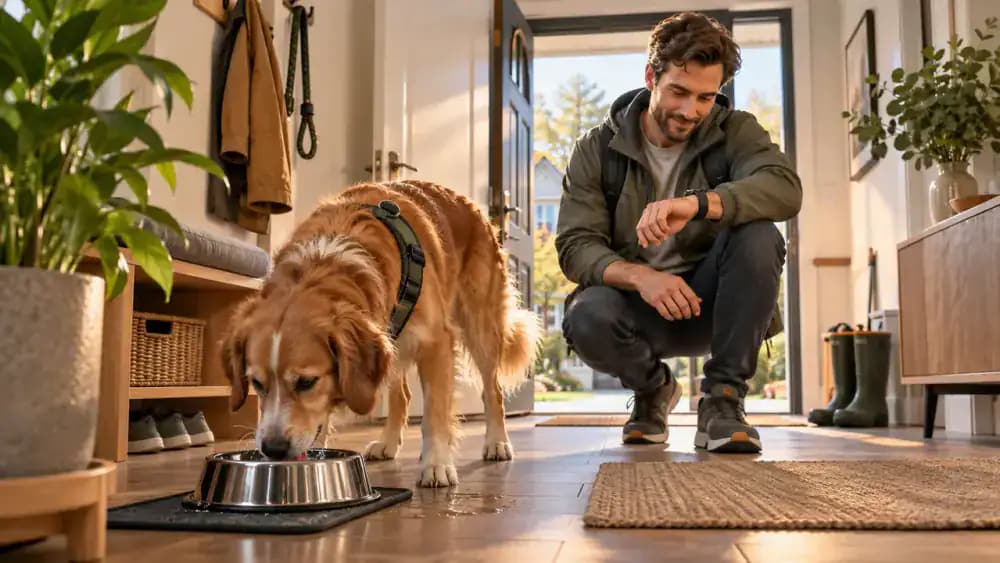
Choose a bathing time when you can work without rushing or interruptions. A relaxed walk and bathroom break beforehand may help your dog settle. Offer drinking water and allow time to cool down after activity. Avoid bathing when your dog is overheated, exhausted, or highly agitated. Keep the process manageable, with enough time for rinsing and drying.
Introduce the Room Without a Bath
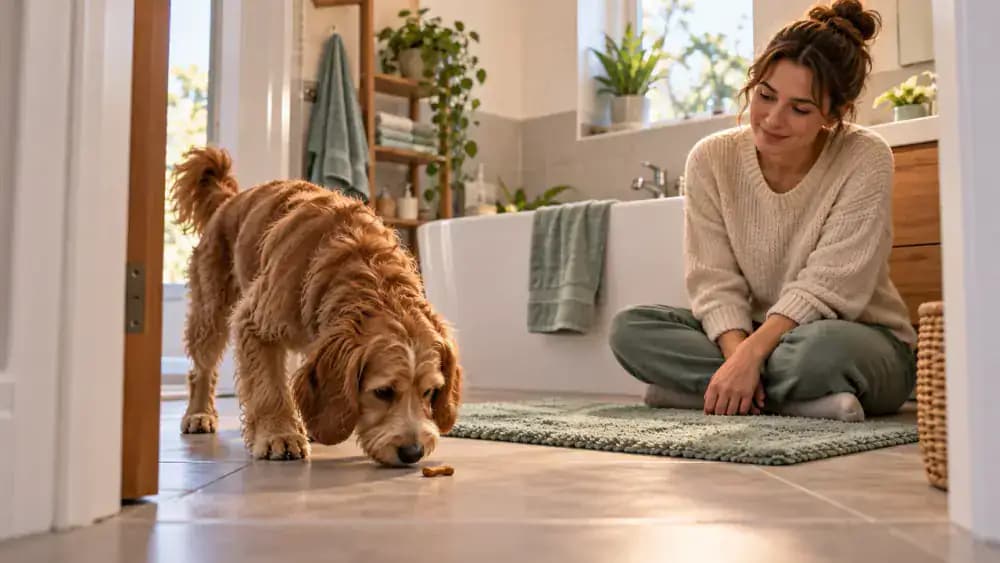
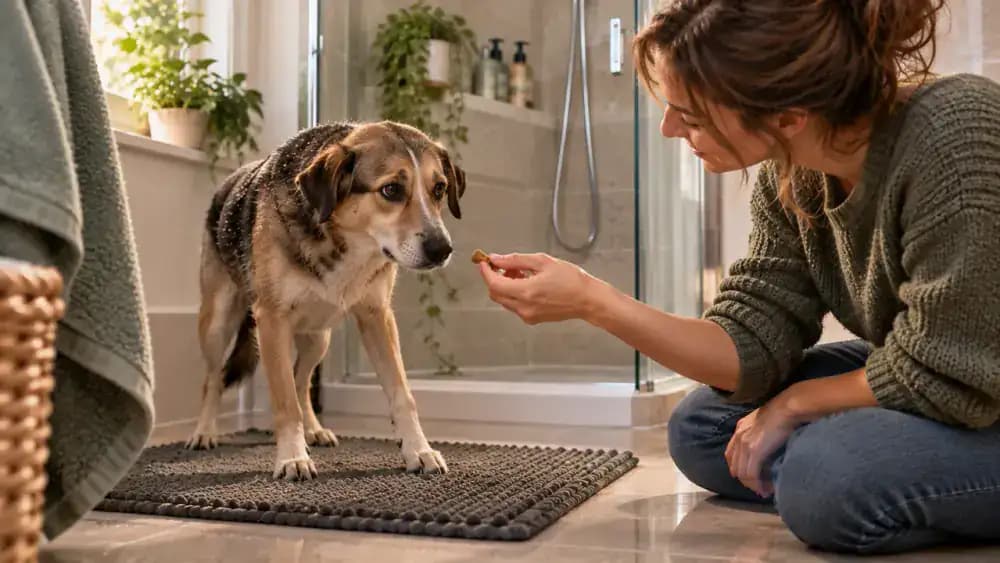
If your dog seems unsure about the bathroom, practice entering without turning on the water. Leave the doorway open and let them approach, sniff, and leave voluntarily. Reward relaxed curiosity with a small treat or gentle praise. Repeat these short visits over several days if needed. Never use treats to lure your dog into an unexpected bath.
Make the Floor Secure
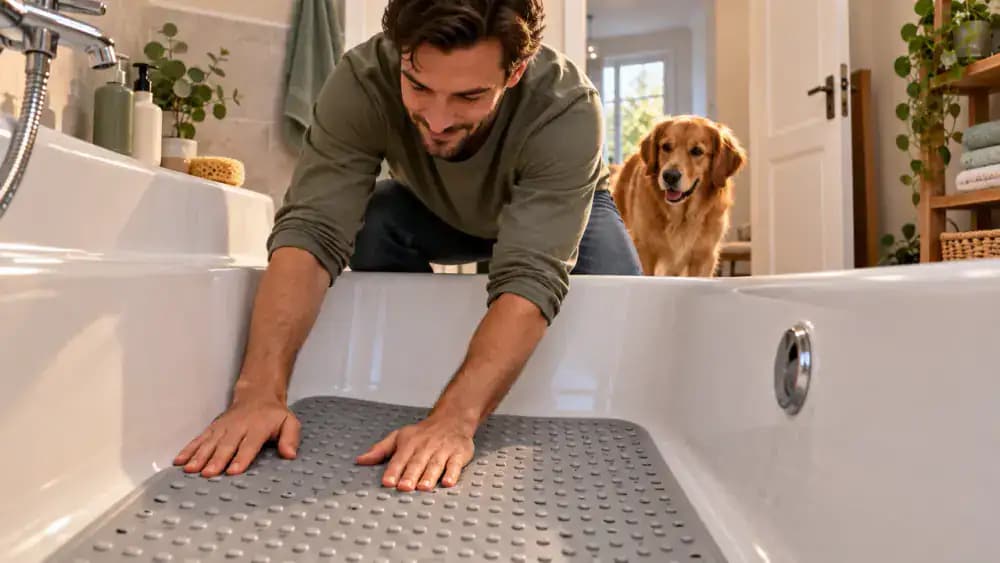
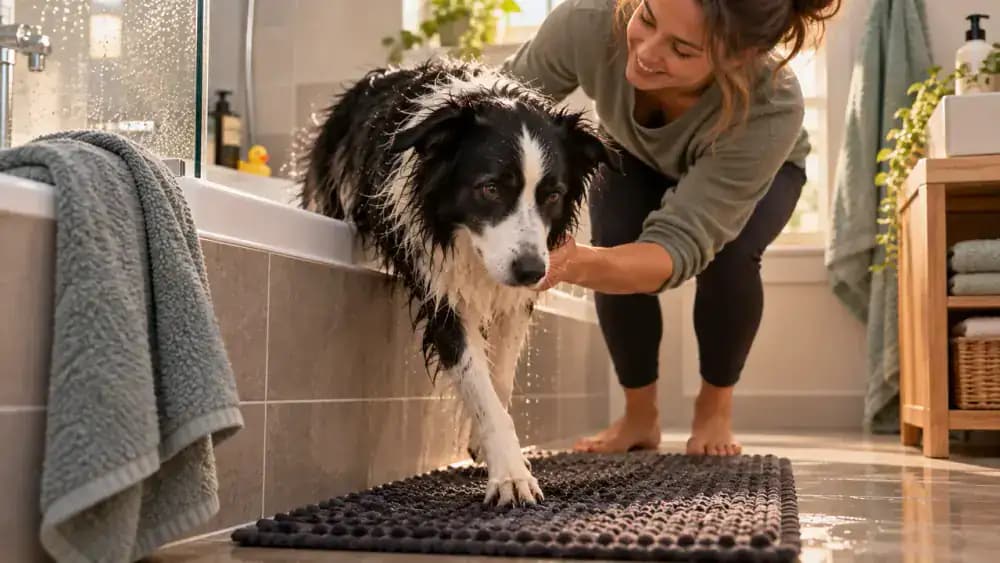
Place a stable nonslip mat inside the bathtub or shower to give your dog reliable footing. Add another mat where your dog steps in and out. Press down and test both mats to make sure they stay in place. A folded towel can provide extra traction outside the bath, provided it does not slide.
Choose a Safe Washing Station
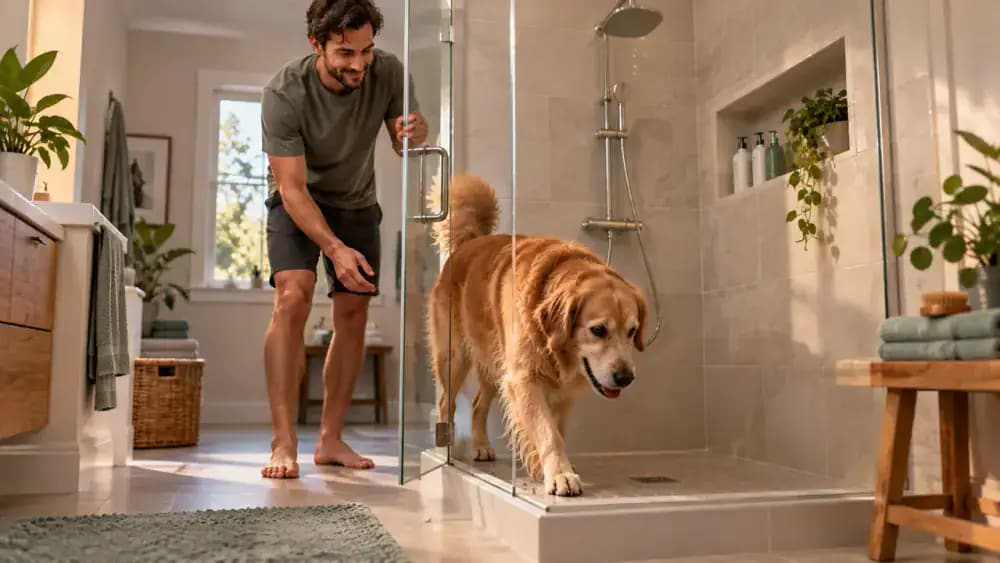
Select a bathing area that matches your dog's size, mobility, and comfort level. A walk-in shower, bathtub, or sturdy low basin may work well. Avoid unstable furniture and elevated surfaces without professional safety equipment. Larger dogs often benefit from ground-level access. Choose a location where you can guide and support your dog without awkward lifting.
Gather Everything Within Reach
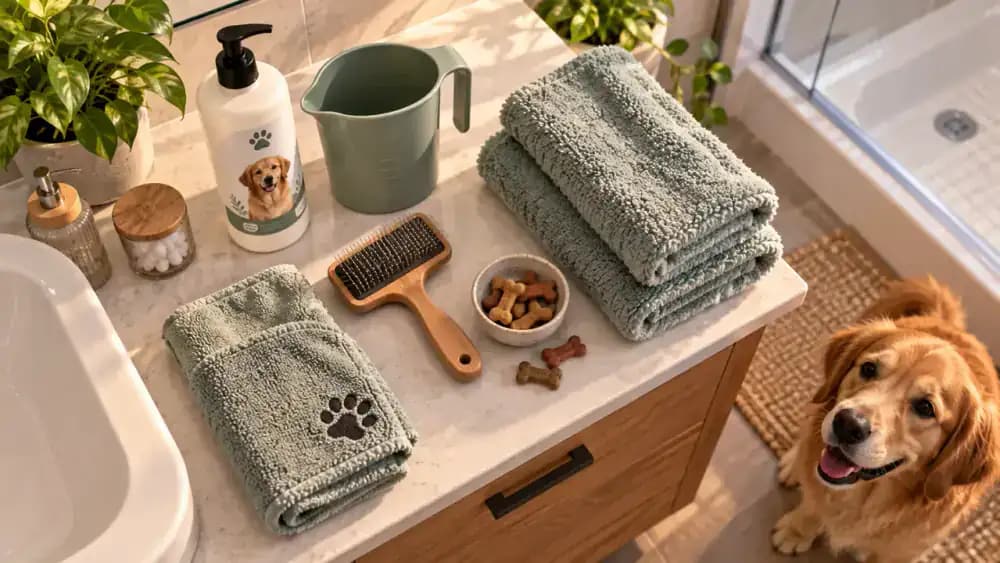
Before starting, arrange dog shampoo, a rinsing cup or handheld sprayer, absorbent towels, treats, and a brush within easy reach. Prepare any prescribed bathing products according to their instructions, and keep electrical devices away from water. Having everything organized helps the bath run smoothly and prevents you from leaving your wet dog unattended.
Brush Before Getting Wet
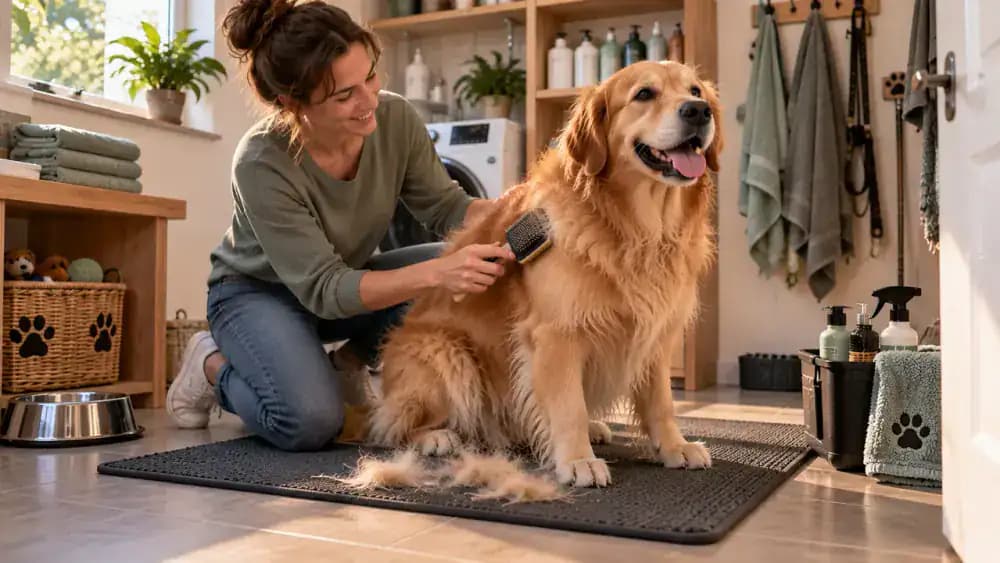
If your dog is comfortable being brushed, gently remove loose fur and minor tangles before introducing water. Wetting tangled hair can tighten mats and make grooming more uncomfortable. Never tug forcefully at knots or use scissors close to the skin. If you discover significant matting, consult a qualified groomer before proceeding with the bath.
Use Shampoo Made for Dogs
Choose a shampoo specifically labeled for dogs and appropriate for your pet's skin needs. Avoid assuming human shampoo, heavily fragranced products, or homemade mixtures are safe substitutes. Fragrance-free formulas may be preferable for sensitive dogs, although labels alone cannot guarantee suitability. If your dog experiences allergies or recurring itching, ask your veterinarian to recommend an appropriate cleanser.

Follow Dilution and Contact Directions
Check the shampoo label before you begin, since concentrated formulas may need dilution while others are ready to use. Measure carefully and mix only as directed. If your dog uses a medicated shampoo, follow your veterinarian's instructions for contact time. Using extra shampoo will not improve cleaning and can make thorough rinsing more difficult.
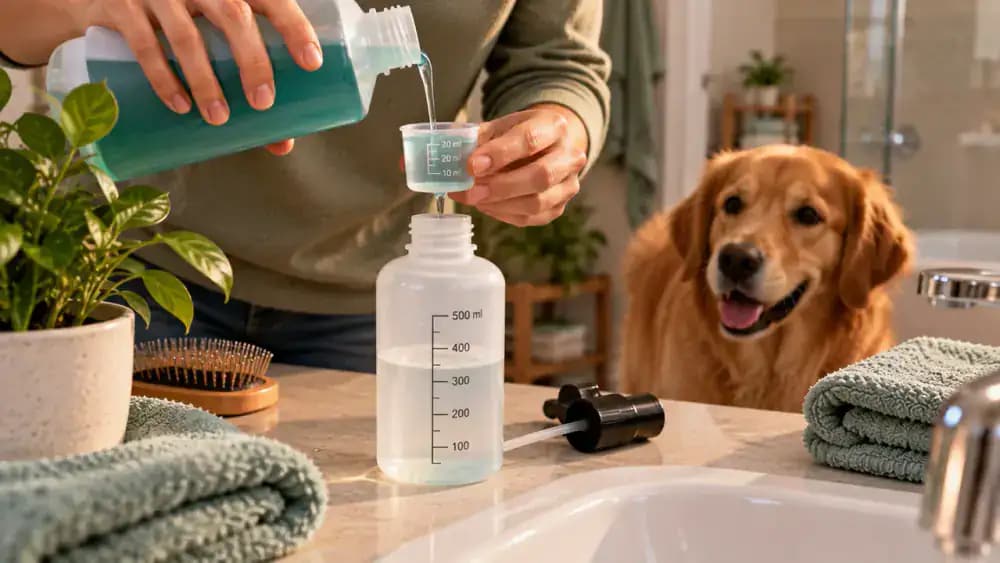
Test the Water Thoughtfully
Set the water to a comfortable lukewarm temperature before bringing your dog into the bathing area. Test the stream against the inside of your wrist, then observe your dog's response. Begin with low water pressure to prevent startling them. Avoid sudden temperature changes, strong spray, or loud plumbing noises that could make bathing uncomfortable.
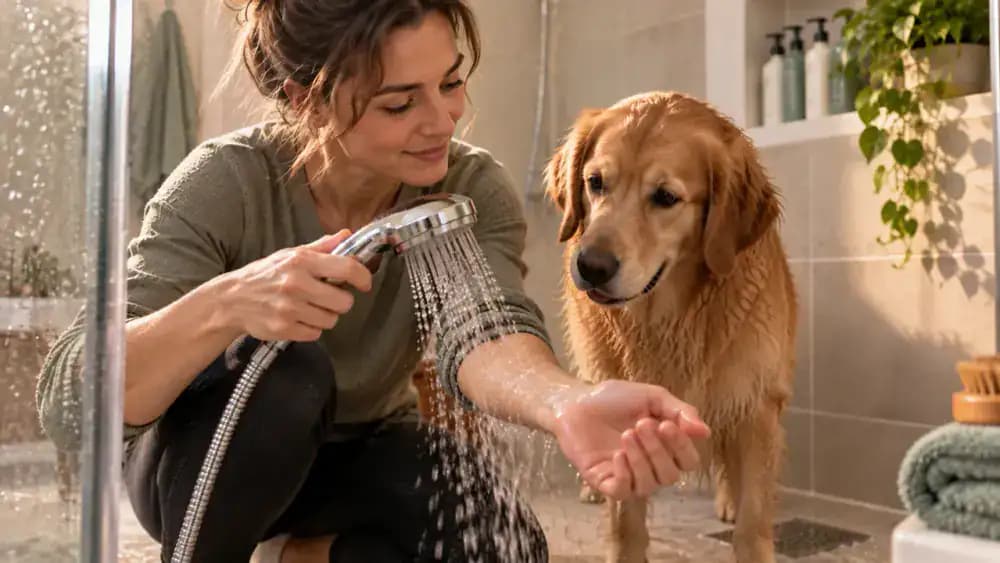
Let Your Dog Approach Voluntarily
Encourage your dog to approach the bathing area at their own pace instead of pulling on their collar. Offer treats, praise, and time to investigate the surface. If a small dog needs lifting, support both the chest and hindquarters, provided lifting is safe. Never pull on their legs or force a frightened dog into the tub.
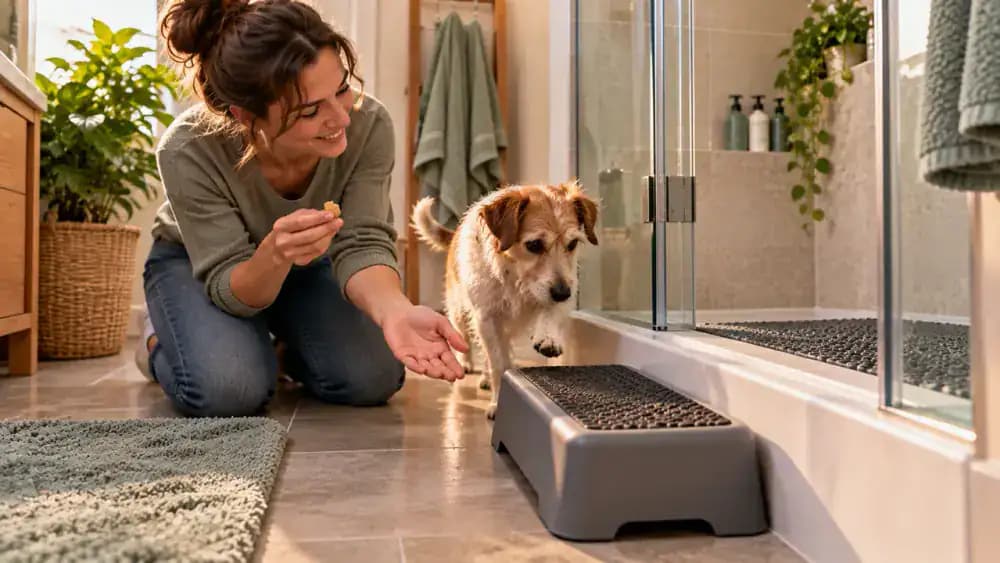
Notice Stress Before It Escalates
Pay attention to your dog's body language throughout the bath. Repeated lip licking, trembling, tucked tails, freezing, or attempts to escape can signal discomfort, especially when several occur together. Consider the situation rather than interpreting one behavior alone. If your dog becomes distressed, turn off the water and allow a break. End the bath safely if panic continues.

Start at the Feet and Body
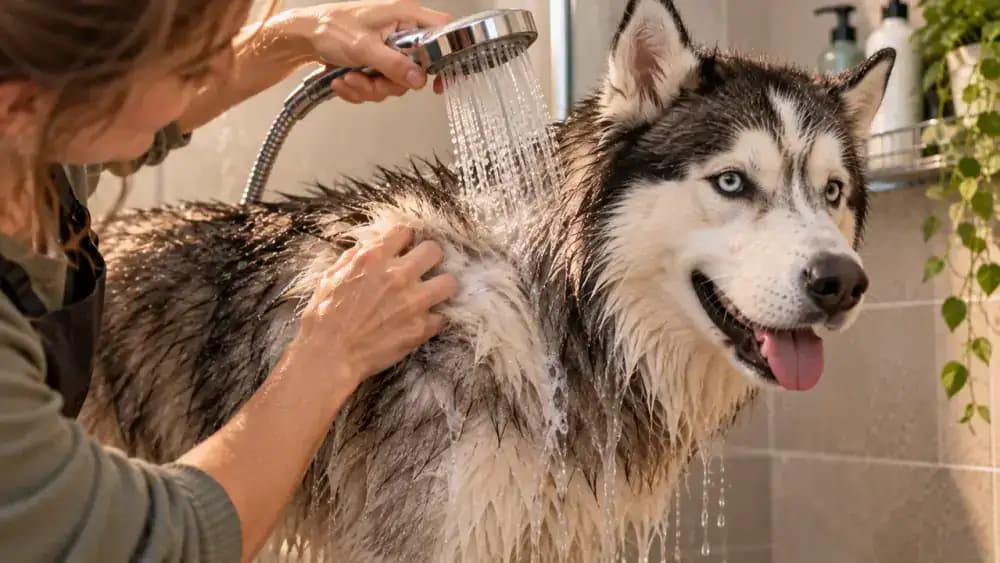
Begin wetting your dog's paws and lower legs with a gentle stream, then gradually move upward along the body. Watch their response as they adjust to the water. Keep the shower nozzle close enough to limit splashing without touching the skin. Avoid spraying directly into the face or ears. If shower noise causes discomfort, switch to a cup.

Protect Eyes, Ears, and Nose
Keep shampoo and direct streams of water away from your dog's eyes, ear canals, and nose. Use a soft, lightly damp washcloth to gently clean around the face instead of pouring water over the head. Avoid putting cotton in the ears unless your veterinarian recommends it. Stop wiping if your dog pulls away or becomes uncomfortable.

Use a Little Shampoo at a Time
Apply a small amount of shampoo formulated for dogs to the wet coat, then gently massage it in with your fingertips. Work gradually across the back, sides, chest, and legs, adding more only when necessary. Avoid vigorous scrubbing or scratching with your nails, particularly around sensitive skin. Gentle, steady movements help remove dirt without making bathing uncomfortable.
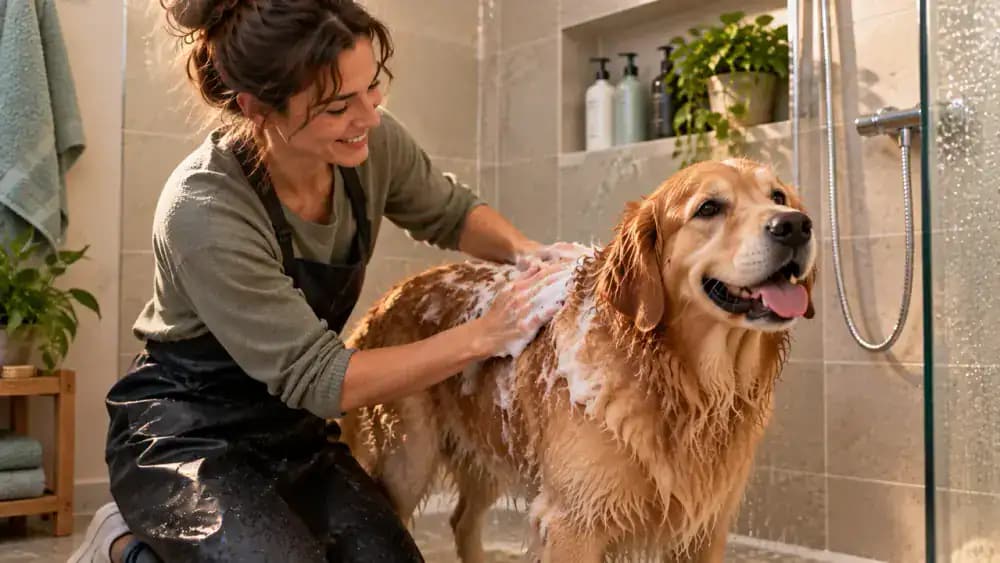
Clean the Tricky Spots Carefully
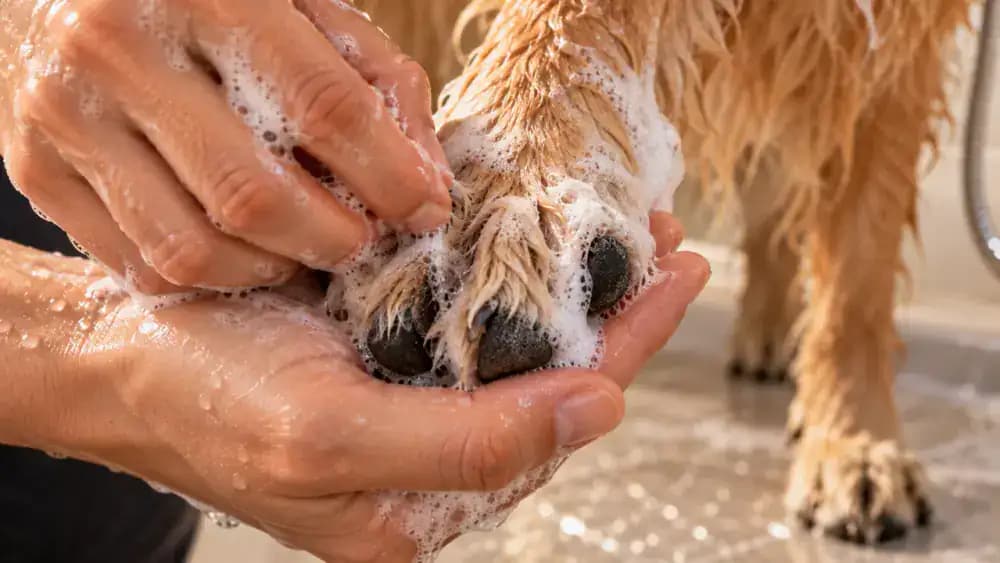
Give extra attention to muddy paws, the belly, and beneath the tail when cleaning is needed. Support each paw gently while checking between the toes, without pulling or twisting them. Rinse these areas thoroughly and avoid sensitive openings. If your dog becomes tense or resists handling, stop rather than forcing contact. A professional groomer can help with difficult areas.
Keep Treats Optional and Safe
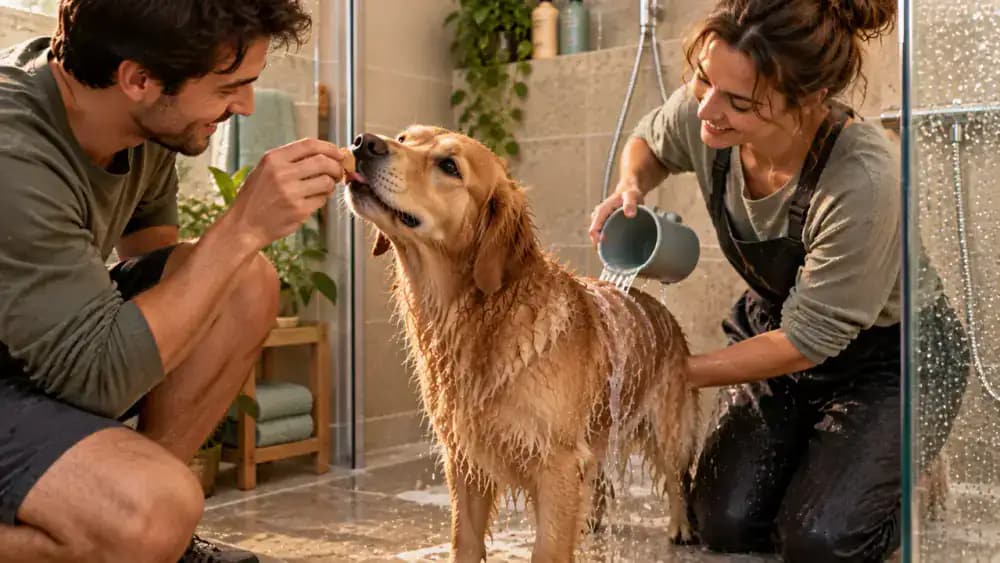
If your dog remains relaxed, ask a helper to offer tiny treats during bathing as a reward for calm behavior. Make sure your dog can chew and swallow safely, and follow any dietary restrictions from your veterinarian. Never force food into a frightened dog's mouth. If treats are unwelcome, use quiet praise, gentler handling, or a short break instead.
Rinse Longer Than You Think
Rinse thoroughly because leftover shampoo can irritate your dog's skin. Start along the back and work downward, gently separating sections of fur so clean water reaches the skin. Check the chest, armpits, belly, and paws for hidden suds. Continue until the water runs clear and the coat no longer feels slippery. Dense double coats often require additional rinsing.
Double Check Hidden Suds
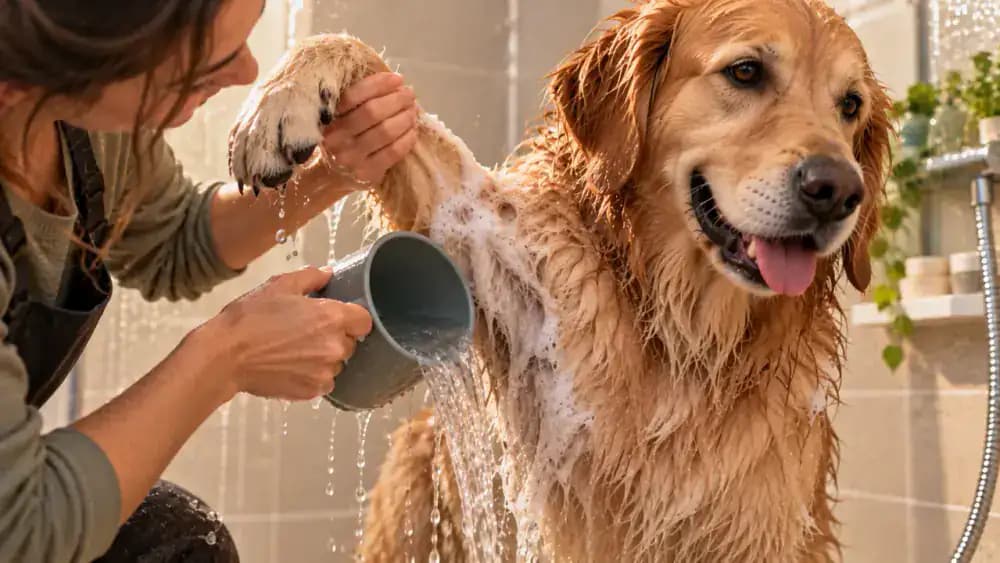
Even after the visible foam disappears, shampoo can linger in hard-to-reach spots. Gently lift each front leg to check underneath, then feel along the collar line and belly for slippery residue. Use a small cup to rinse these areas without splashing the face. Pause whenever your dog needs a break, and prioritize thorough rinsing over speed.
Support Senior Dogs and Those With Limited Mobility
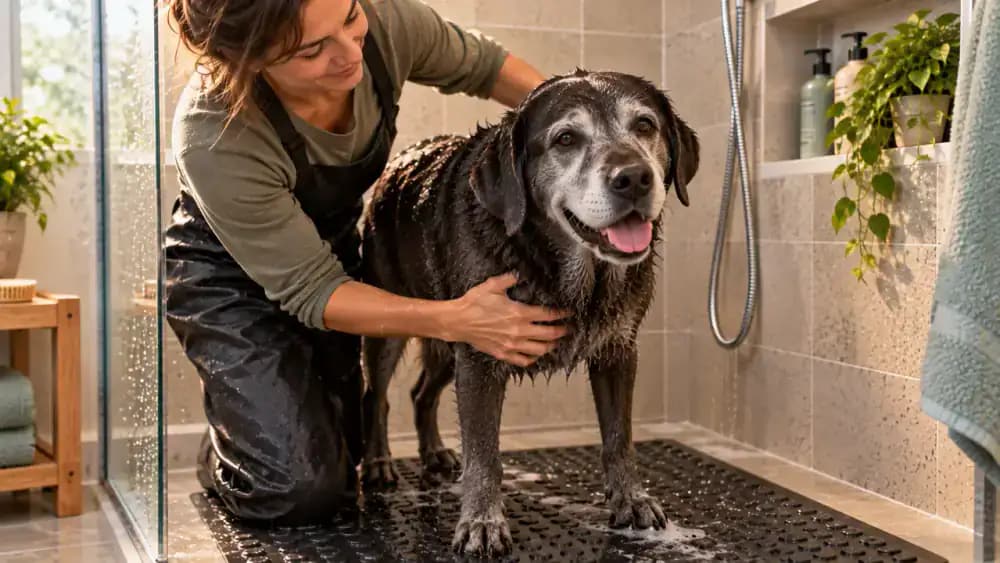
Older dogs and those with limited mobility may need extra support during bath time. Choose a level, low-entry washing area with a thick nonslip mat, and gently steady your dog's torso without forcing an uncomfortable position. Break the bath into shorter sections if necessary. If your dog cannot stand securely, consult a veterinarian or experienced groomer about safer bathing options.
Make Room for the Shake
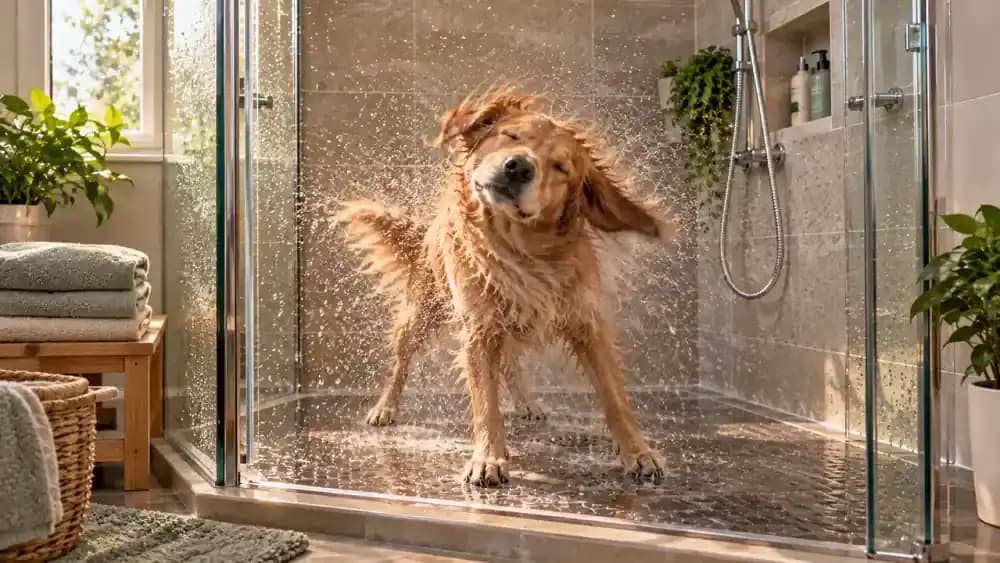
Shaking off water is a natural part of bathing, so expect a few splashes before your dog is dry. Turn off the water, keep the shower area secure, and give your dog enough room to shake safely. Have a towel ready and move nearby items out of splash range. Stay relaxed rather than scolding your dog for this normal behavior.
Dry With Towels First
Begin drying by wrapping your dog in a large, absorbent towel and gently patting the shoulders, back, belly, and legs. Avoid vigorous rubbing, especially with long or easily tangled fur. Switch to a fresh towel when the first becomes saturated. Carefully dry skin folds and other moisture-trapping areas, and keep your dog in a warm, draft-free room while the coat finishes drying.

Use Dryers Only if Tolerated
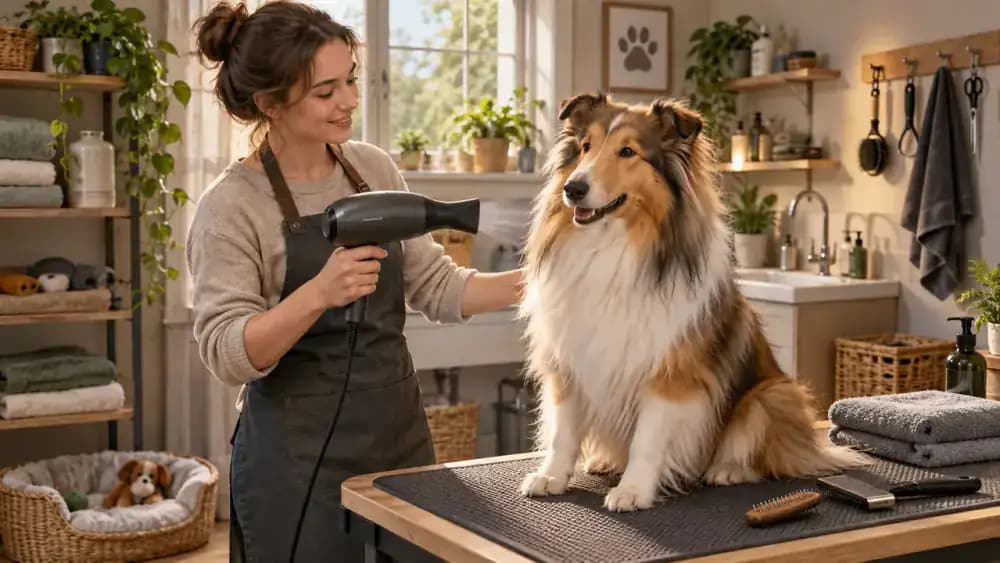
Towels may be sufficient for some dogs, but long or dense coats often require additional drying. If your dog tolerates it, introduce a pet-safe dryer gradually, starting with low airflow and a comfortable temperature. Hold the nozzle at a safe distance and keep it moving, avoiding direct airflow toward the face and ears. Stop immediately if your dog becomes distressed.
Check Skin While Drying
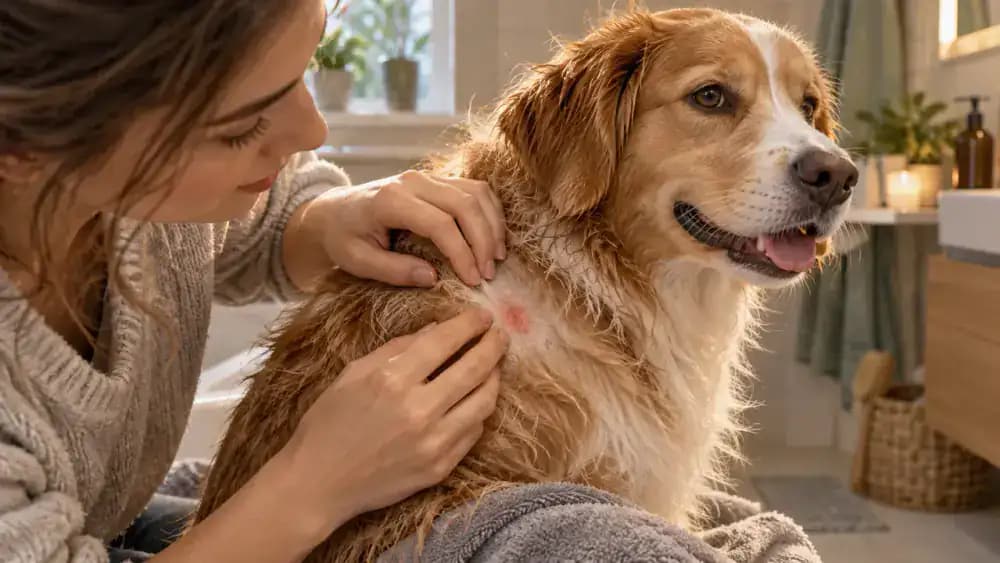
As you gently separate your dog's drying fur, check the skin for redness, bumps, sore spots, or patches that stay unusually damp. Thick coats can hide changes that become easier to notice after bathing. Take a photo of anything concerning and contact your veterinarian. Avoid using creams, essential oils, or powders without veterinary guidance.
Handle the Exit Carefully
Before helping your dog out of the tub, place a secure nonslip mat beside it. Wet paws can easily slip on smooth bathroom floors, especially when an excited dog rushes toward the door. Guide your dog slowly, offering physical support when needed without pulling the collar. Keep the bathroom door closed until your dog is steady.
Finish on a Good Note
Once your dog is clean and comfortable, celebrate with something they genuinely enjoy, such as a favorite treat, gentle praise, or time on their familiar bed. Give them space to relax before attempting more grooming. Remember which parts of the bath went smoothly and which caused worry. Small improvements matter more than achieving a perfectly quiet bath.

Make a Plan for Fearful Dogs
If your dog repeatedly panics, snaps, or struggles desperately to escape, stop trying to complete the entire bath at once. Build confidence through small exercises, such as standing on a dry mat, accepting treats, or hearing distant running water. Keep sessions short and pressure-free. A qualified reward-based trainer, fear-free groomer, or veterinarian can help develop a safer approach.
A Calm Bath Is a Series of Choices
A successful bath comes from responding to your dog's comfort rather than rushing to finish. Prepare secure footing, choose dog-safe shampoo, use gentle water pressure, rinse completely, and dry carefully. Watch for signs that your dog needs a break or a different approach. Consistent, respectful experiences can gradually make bath time safer, calmer, and easier for everyone.
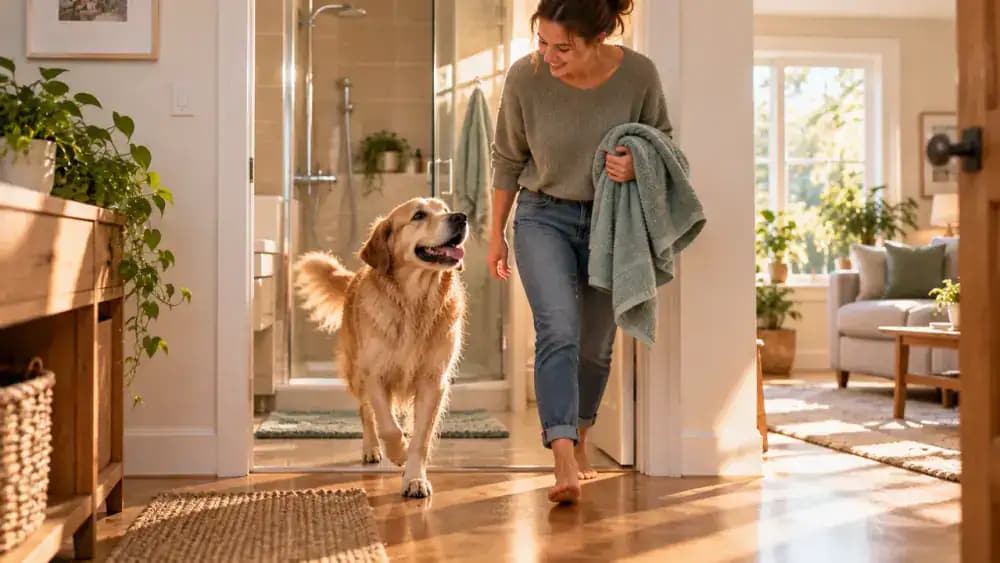
A clean dog is wonderful, but a comfortable dog matters even more. For many dogs, bath time brings unfamiliar sounds, slippery surfaces, strange smells, and the uncomfortable feeling of water moving across their bodies. Even a normally relaxed companion may become hesitant when the bathtub comes into view.
The good news is that giving your dog a bath doesn't have to involve wrestling, rushing, or forcing cooperation. With a little preparation, a gentle approach, and attention to your dog's body language, you can make bathing a calmer experience for both of you.
Not every dog needs frequent baths. Coat type, lifestyle, skin sensitivity, and veterinary recommendations all influence how often washing makes sense. A dog that comes home covered in mud may need cleaning right away, while another might only need brushing or a quick wipe after an ordinary walk. Bathing more often than necessary can irritate some dogs' skin.
This guide explains how to decide when a bath is appropriate, create a secure washing area, introduce water gradually, choose dog-safe products, and avoid common mistakes. You'll also learn how to handle sensitive areas, work around tangles, accommodate older dogs, recognize signs of stress, and make drying more comfortable.
The goal isn't a perfectly behaved dog or a spotless bathroom. It's a clean, comfortable companion who can gradually learn that bath time is safe and predictable.
Where people go wrong
Bathing Your Dog More Often Than Necessary. A dog doesn't need a full shampoo bath after every outdoor adventure. Excessive washing can remove protective oils and contribute to dry, uncomfortable skin. Base bathing frequency on coat type, activity, visible dirt, and veterinary guidance rather than a rigid calendar. Sometimes brushing, wiping muddy paws, or spot-cleaning is enough to keep your dog comfortable.
Using Human Shampoo or Strongly Fragranced Products. Human shampoos aren't formulated specifically for canine skin and may cause irritation or dryness. Strong fragrances can also be unpleasant for dogs with sensitive noses. Select a shampoo designed for dogs, follow its dilution instructions if applicable, and avoid experimenting with essential oils or household cleaners. Ask your veterinarian about products for dogs with known skin sensitivities.
Skipping the Brush Before Bathing. Water can make existing mats and tangles more difficult to manage, especially in long, curly, or dense coats. Inspect your dog's fur before washing and gently brush out loose hair and manageable knots. Never pull painfully at tight mats or cut them close to the skin with scissors. A professional groomer can safely address significant matting.
Using Slippery Surfaces or Uncomfortable Water Temperatures. An unstable bathing surface can make a dog feel insecure and increase the risk of slipping. Hot water may irritate or burn sensitive skin, while cold water can cause discomfort. Use a non-slip mat, test the water temperature before starting, and maintain a gentle flow. Older dogs may need additional support entering and leaving the bathing area.
Spraying Water Directly Into the Face or Ears. A sudden stream of water near the eyes, nose, or ears can startle a dog and make bathing unpleasant. Keep the spray controlled and directed away from sensitive facial areas. Use a damp washcloth around the face, taking care to avoid the eyes and ear canals. Never pour shampoo or water directly into the ears.
Rushing the Rinse or Leaving Shampoo Behind. Shampoo residue can cause itching and skin irritation, particularly beneath dense fur or around skin folds. Rinse slowly and thoroughly until the coat feels free of product, paying attention to the belly, armpits, paws, and underside. Avoid strong water pressure. If your dog becomes overwhelmed, reduce stimulation and allow a break rather than rushing.
Ignoring Stress Signals or Forcing the Bath. Freezing, repeated lip licking, trembling, attempts to escape, and persistent avoidance can indicate discomfort or stress. Continuing with force may make future baths harder and create a handling safety risk. Pause, reduce the intensity, and reward voluntary participation. If your dog cannot remain reasonably comfortable, stop and consider a qualified fear-free or low-stress grooming professional.
Leaving the Coat Damp or Using Excessive Dryer Heat. A damp coat may leave your dog cold or uncomfortable, and persistent moisture in skin folds can contribute to irritation. Gently blot with towels instead of rubbing vigorously. If using a dryer, keep the airflow comfortable, avoid excessive heat, and monitor your dog's response. Never force a frightened dog to tolerate a noisy dryer.

Questions people ask
There's no universal bathing schedule for every dog. Frequency depends on coat type, activity level, exposure to dirt, skin condition, and veterinary recommendations. Many healthy dogs can go several weeks or longer between baths, while others need more frequent care. Avoid washing simply out of habit, and ask your veterinarian for guidance if your dog has sensitive skin.
Fixed it?
Get one guide like this every Thursday.